
From the Travely-Family archive · Pacific Ocean
French Polynesia: Clearing In by Yacht
An original publication from the former Travely-Family website. This English translation was preserved from the technical-site archive without editorial rewriting.
French Polynesia: Clearing In by Yacht
How we turned ourselves in to the gendarmes. Can you enter Polynesia without a visa?
Here’s what we started with:
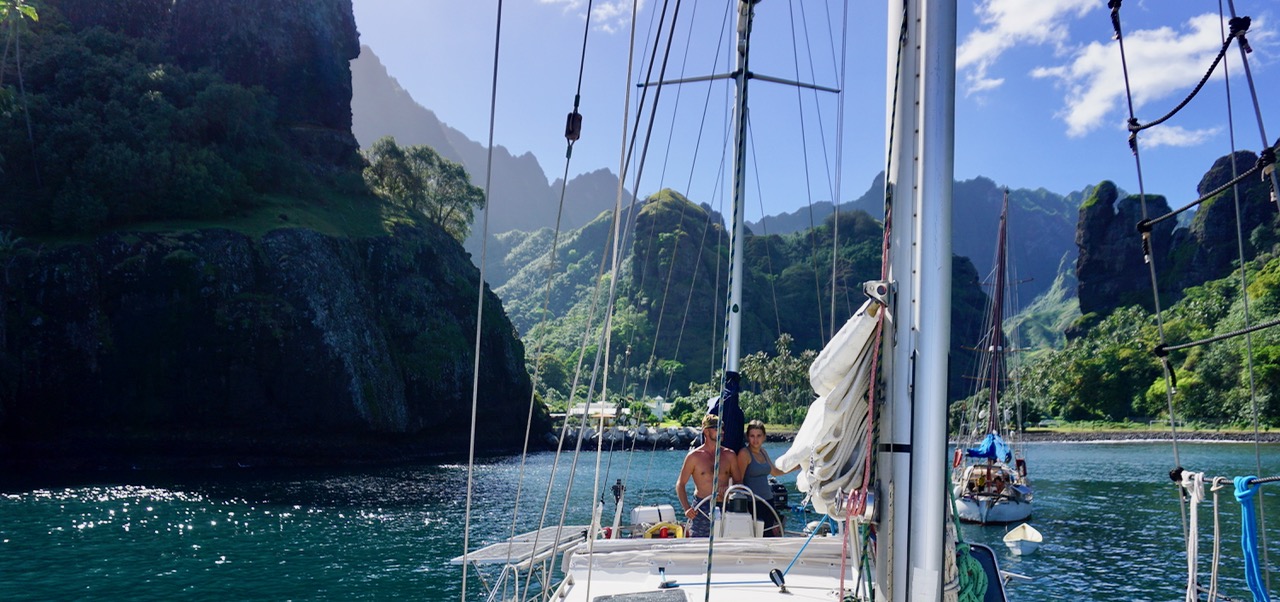
A visa for French Polynesia obtained in Panama, valid for three months out of six (that is, during the six-month period from May 18 to November 18, we can spend three months here).
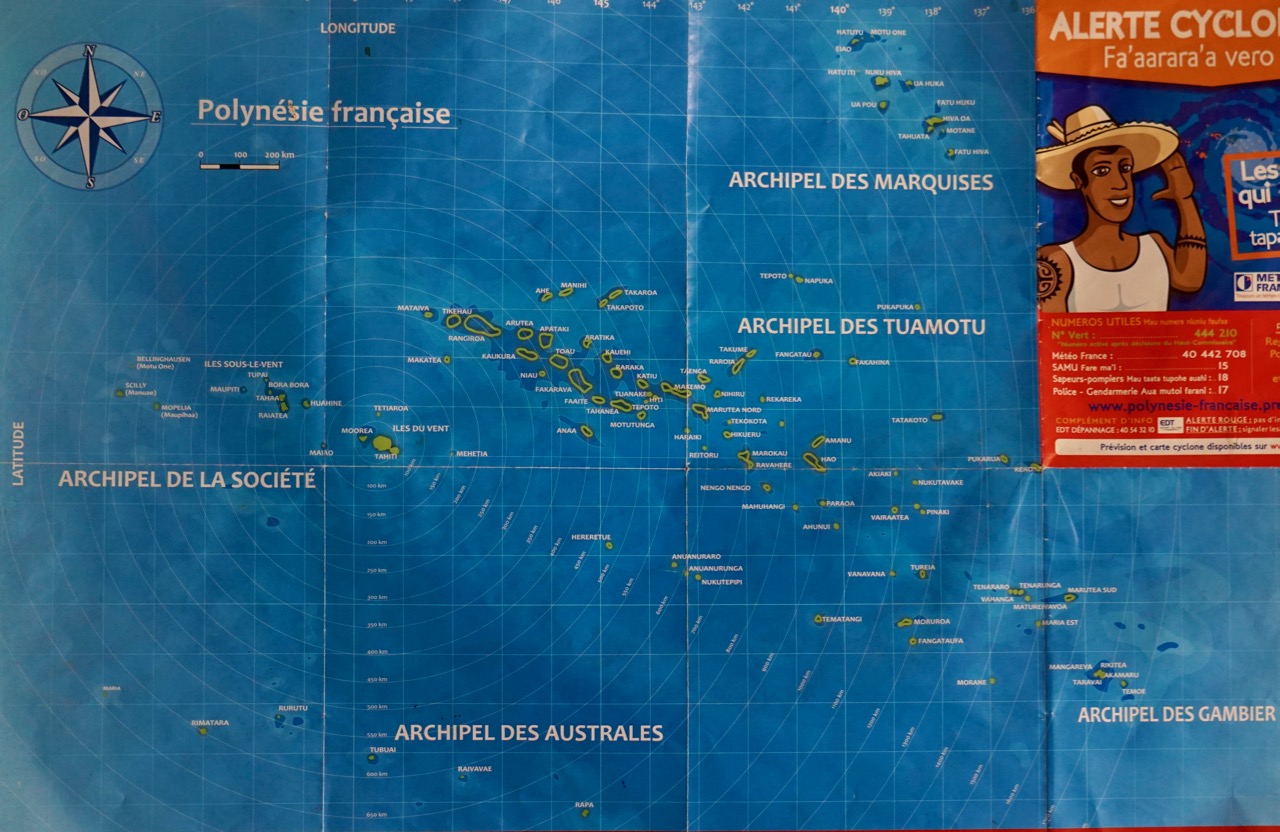
France’s territories in the Pacific are vast. French Polynesia, in particular, includes the Gambier Islands in the south, followed by the Tuamotu Archipelago—dozens of atolls (many of them discovered by Russians, from Krusenstern to Lazarev); farther north lie the Marquesas, and southwest of the Tuamotus are the Society Islands, headed by Tahiti, the main island of all French Polynesia. Bora Bora, Raiatea and others are right nearby. And in the south lie the least visited islands—the Austral Islands, meaning southern.
On the map, French Polynesia fits inside this beautifully coloured oval:
Oceania and French Polynesia
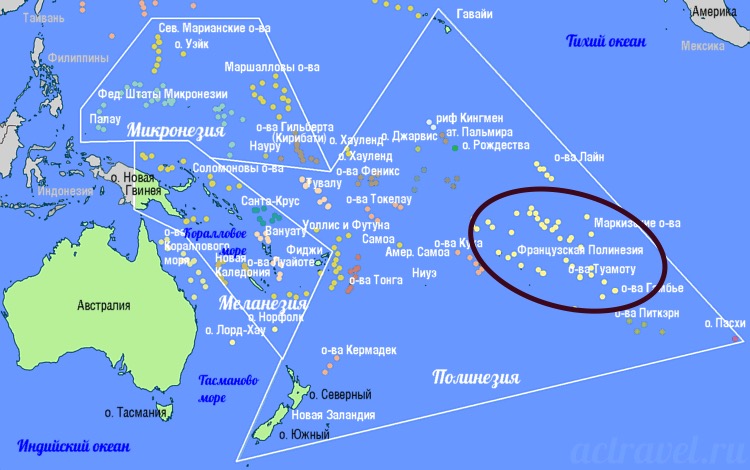
The main flow of yachts comes from the Galápagos Islands or from Panama to the Marquesas. The season runs from March to October. After that comes cyclone season. Cyclones do not affect the Marquesas Islands (8–10° south latitude) or the Gambier Islands (24° south latitude), but the belt between them gets hit with full force. Lady Mary crossed the ocean boundary of French Polynesia from the southeast. From Easter Island and Pitcairn we headed for the cosy and beautiful Gambier Archipelago.
Can you enter Polynesia without a visa?
No. But if you really want to, you can. It helps if you’ve arrived as stowaways but do actually have a visa. Then, if you get picked up by a border patrol boat—which, rumour has it, visits the outlying islands from Tahiti, the main island—you can say, “Oh, we’re actually on our way to get our visas.”
We sailed around French Polynesia without clearing in for more than a month, thereby extending our possible stay here right up to cyclone season.
Three days in the Gambier Islands, a week’s passage to the Marquesas, three weeks on Fatu Hiva and another week visiting other islands and making passages. Not once during that time did any government agency show any interest in us. But it may turn out differently for you. So any departure from the letter of the law is at your own risk and on your own conscience:).
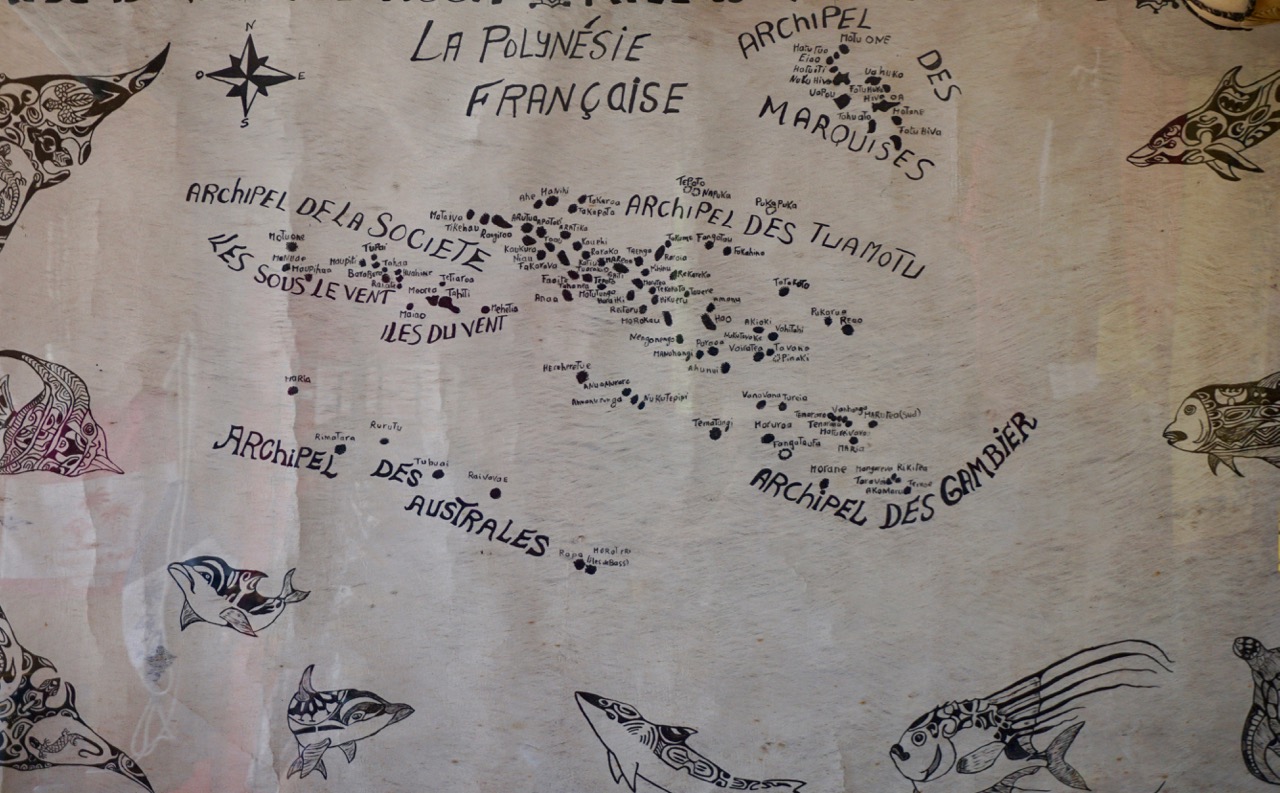
Here’s a map like that too ))
July 6. We dropped anchor off the main island of the Gambier Archipelago—Mangareva.
We breathed a sigh of relief after the exhausting passages and the even more exhausting anchorages at Easter Island and Pitcairn. We spent almost three days in the quiet lagoon, then headed north to the Marquesas Islands. A week under way, followed by three weeks on the wonderful island of Fatu Hiva, far removed from the main bustle of Marquesan life. The Bay of Virgins, by the Hanavave Valley, is the most mystically beautiful bay we have seen so far.
August 11. Arrival in Taiohae, on the island of Nuku Hiva, the capital of the Marquesas. They only process arrivals on weekday mornings. Today is Friday lunchtime. We wait until Monday.
August 14. We have spent three days at the main Marquesan island, Nuku Hiva; it is time to turn ourselves in to the gendarmes. Our visa expires in exactly three months and four days, so we have nothing left to lose: we successfully gained the extra month and a bit that we needed.
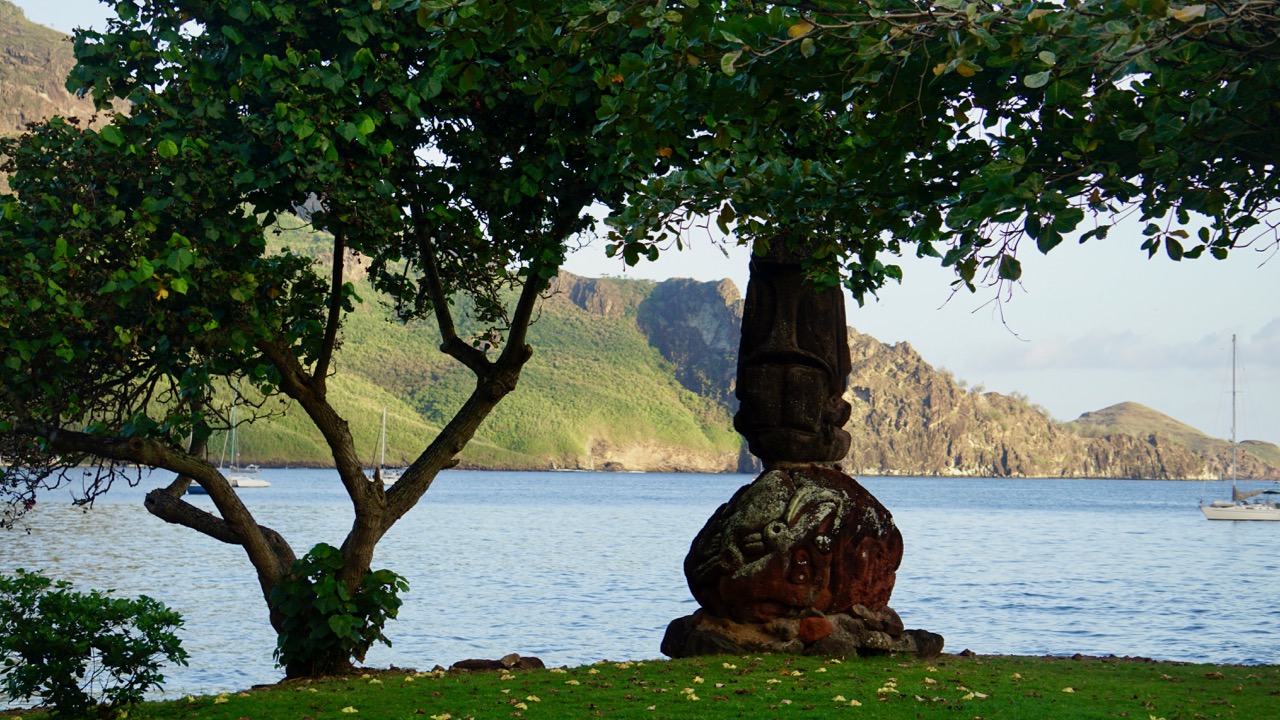
Taiohae, Nuku Hiva
Gendarmerie
At first, while looking for the gendarmerie, we stumbled across the prison. To reach the place we actually needed, turn right from the pier, go uphill past the bright yellow-and-blue post office, and there, opposite the hospital, happiness awaits.
The little building with the coffee-coloured roof handles yacht crews. The Americans who had gone in before us trudged dejectedly off to the bank to pay the bond—to deposit enough money in an account to cover flights home.
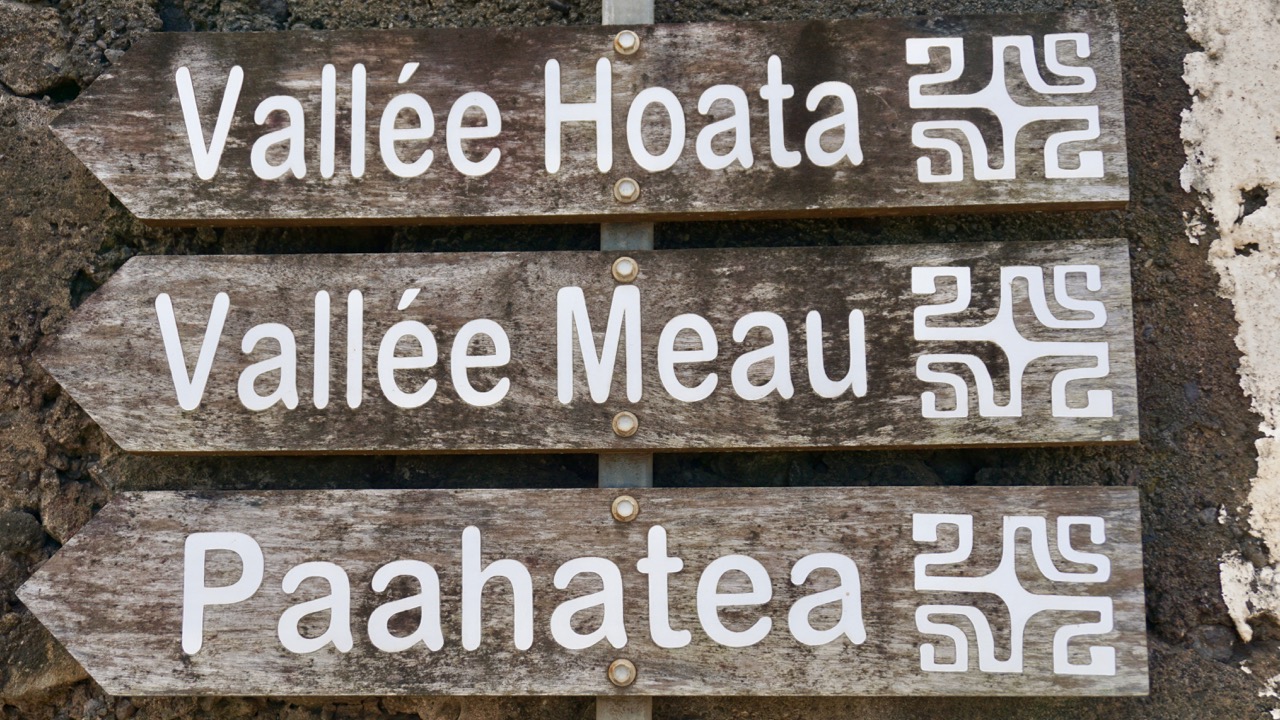
We chose to clear in at Nuku Hiva because the captain had read somewhere that some guys had managed to avoid paying the bond—either the officials forgot about it or let them off.
Hoping they might let us off too, we even brought our young sailor along; she usually has a softening effect on officials. There was only one official, a prim Frenchman with a long face. The entire crew does not need to come to the gendarmerie; the captain alone is enough, provided he has the crew’s and yacht’s documents. So Laduska and I spent the rest of the time catching butterflies in the backyard.
Go there, and go there too )
“OK,” said the official. “Go and pay the bond.”
The captain put on his baffled expression. Our captain has two kinds of baffled expression: baffled-and-loud—something like, “You what?! Really? We have to pay a bond? Well, I’d never have guessed!” And baffled-and-quiet, as now:
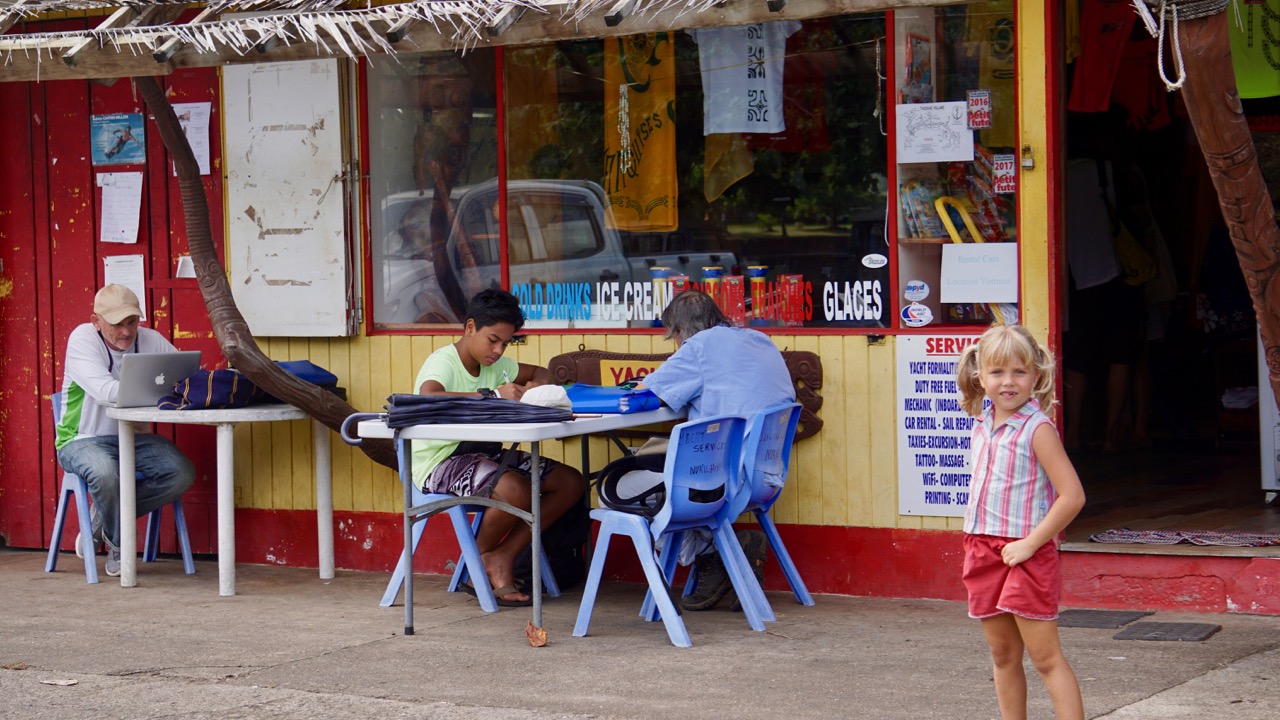
“Hmm... a bond... hmm... what about a letter of guarantee?”
“You have a letter of guarantee?” The long-faced man beamed.
“Not yet, I’m just asking:).”
“Yes, a letter will do.”
And Andryukha went off to the agent to get one.
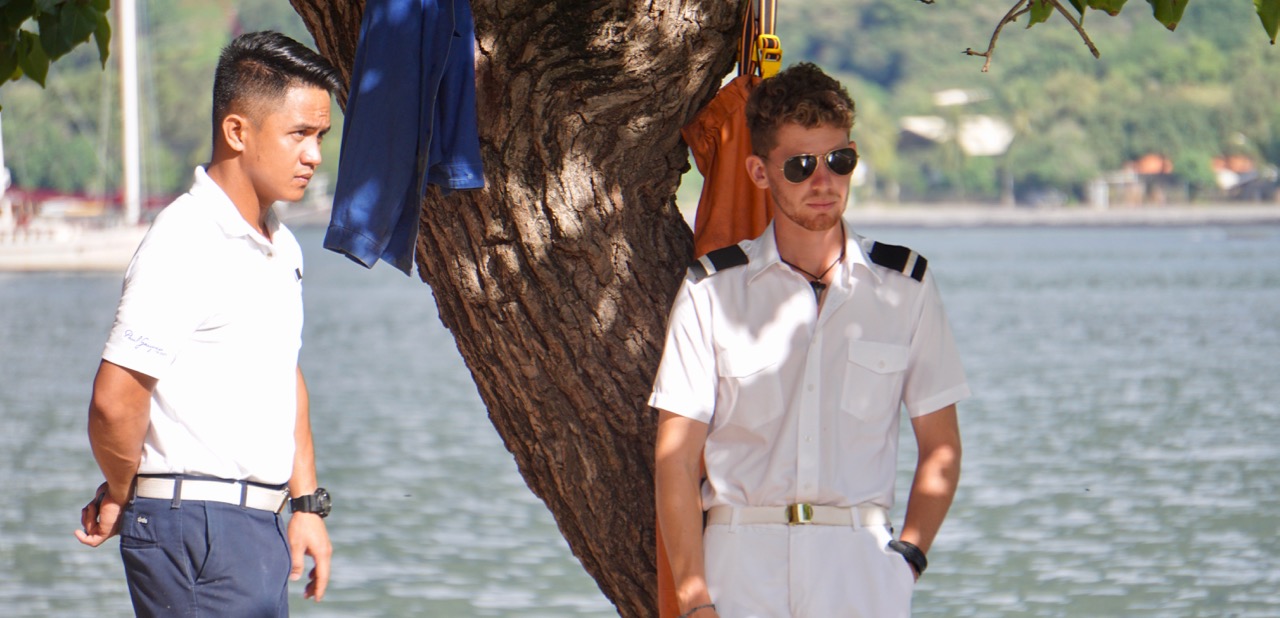
Letter of guarantee
The bond equals the cost of tickets to any city in Russia and, for four people, comes to around 9,000 dollars. It has to be deposited in an account at a Polynesian bank. Even if your money is in euros or dollars, it is first converted into Polynesian francs. The money will, of course, be returned to you. But when it is returned, it will be in francs, IN CASH, and you will have to convert it back into dollars, or whatever currency you want. Plus there is the extra running around: after checking out at the last island, you take your papers from the gendarmerie to the relevant bank, receive a mountain of francs and dash to a bureau de change.
Where they once again convert them at a rate that suits the bank. Apart from having to find such a large sum in the first place, you then have to carry it around. They say the loss on currency conversion can be as much as 10%. That is why people go to an agent.
Agent Kevin’s business shack.
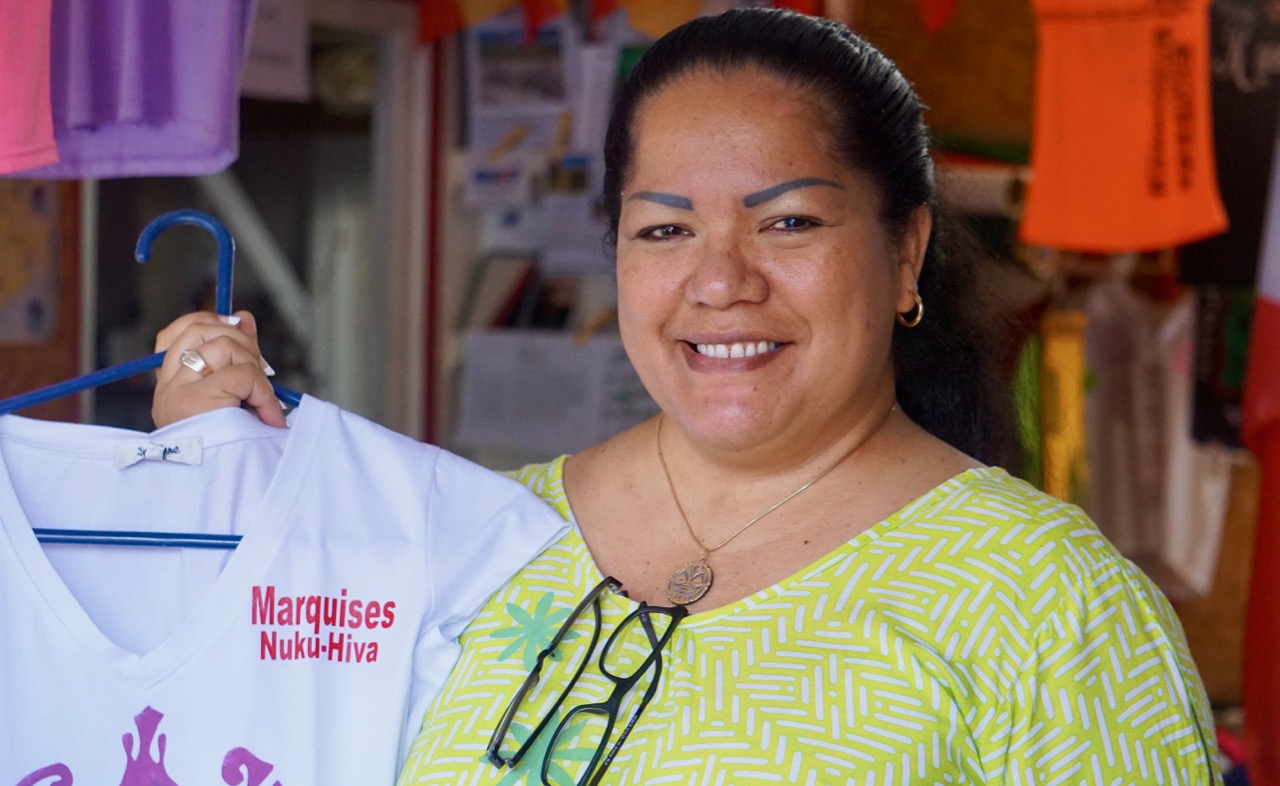
The agent
A dude called Kevin pronounced with an important air: “I take full responsibility for you during your stay, so hand over your passports and an insurance policy stating that the Insurance Company will arrange your repatriation if anything happens.” And 90 dollars per person. The negotiations with the agent and payment took 15 minutes and cost the crew 360 bucks. Kevin printed out a sheet of paper and made a couple of copies.
Armed with the letter of guarantee, the captain paid another visit to the gendarmerie, where they scanned the letter and sent him on his way, with stamps and their blessing, to all the islands of French Polynesia. No more running around. The gendarme did, however, ask us to stop by before leaving for Tahiti and tell them. Just tell them—no paperwork.
The gendarmes also perform the functions of customs and immigration, although formally they have nothing to do with either..
Where to find the agent... and everything else
The dinghy and small-craft dock on Nuku Hiva is laid out very sensibly. It has everything. A little shop, which is also a laundry, an agent’s office, a souvenir shop, a car-hire office... and it looks like this:
The whole operation is run by an American named Kevin and his Polynesian wife, Anabela (who also speaks English).
Anabela
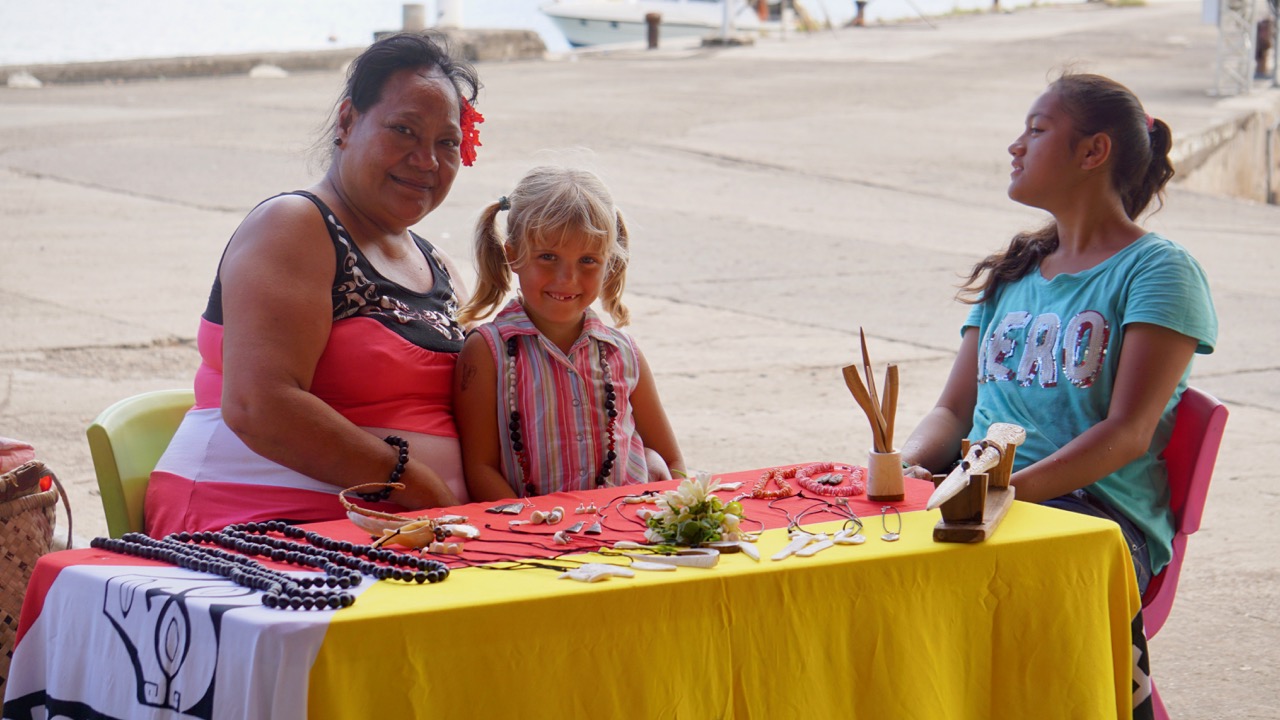
The moment you tie up the dinghy, you find yourself not only at Kevin’s but at a café as well. It looks like a greasy spoon, but the food is tasty. And there’s internet. It is even almost free—the regular yachties often forget to buy anything, yet sit there to their heart’s content until dark. The café owner sees everything but is indulgent, trusting to his customers’ consciences. The owner’s name is Henry, and his brother is there helping out too, carving figurines of Tiki gods. Henry’s wife, Jane, makes necklaces from coloured seeds, and they quietly sell all of these from a small table while daughters and nieces bustle about in the kitchen.
Right by the pier, fishermen sell and clean the morning’s fresh catch. They throw the offcuts into the water, where one-and-a-half- to two-metre sharks thrash about. So besides fish, you also get a show:).
Jane, Lada and Jane’s daughter, whose name is impossible to pronounce
Another map
The previous report on our arrival and first attempt to clear in at Nuku Hiva >>
Visa for French Polynesia >>
To be continued! May everyone’s formalities be easy:).
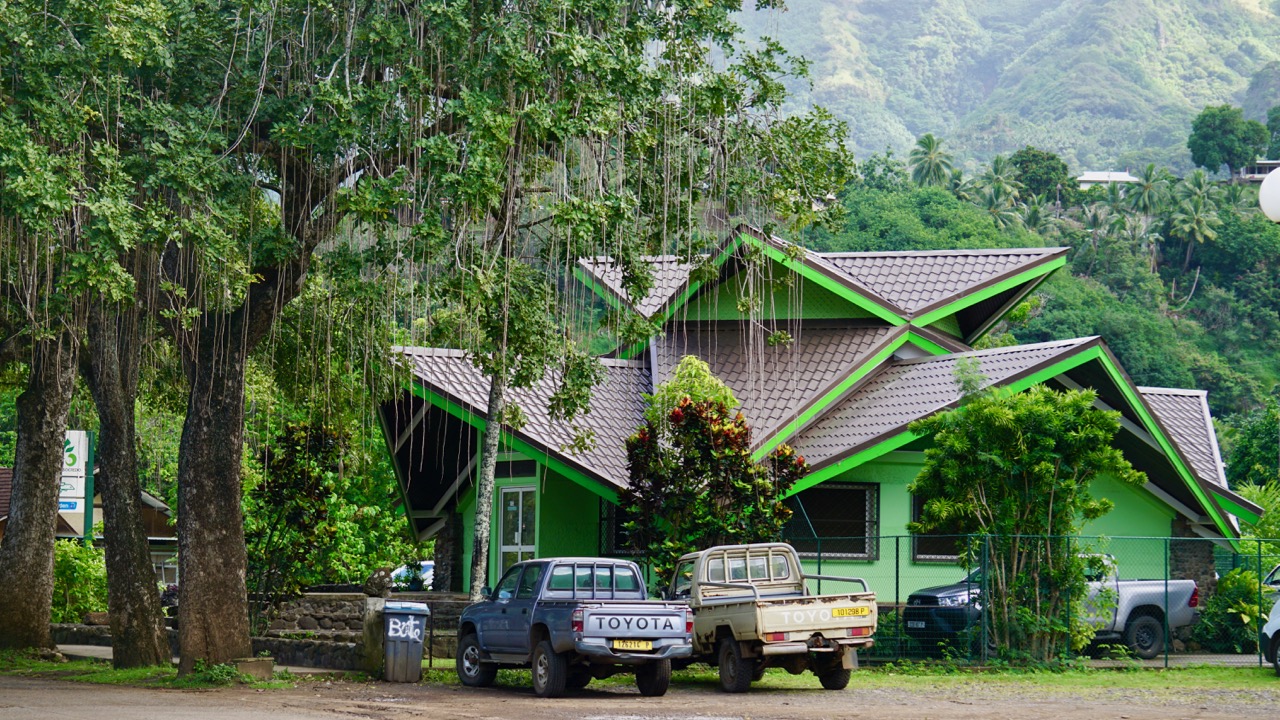
This is the main bank of the Marquesas 🙂