
From the Travely-Family archive · Pacific Ocean
Galápagos Islands, Ecuador
An original publication from the former Travely-Family website. This English translation was preserved from the technical-site archive without editorial rewriting.
Galápagos Islands, Ecuador. Visas, prices, places, excursions.
This is an overview article for the “Countries” section—we’ll gradually add details and amusing adventures to it:).
Galápagos Islands, Ecuador
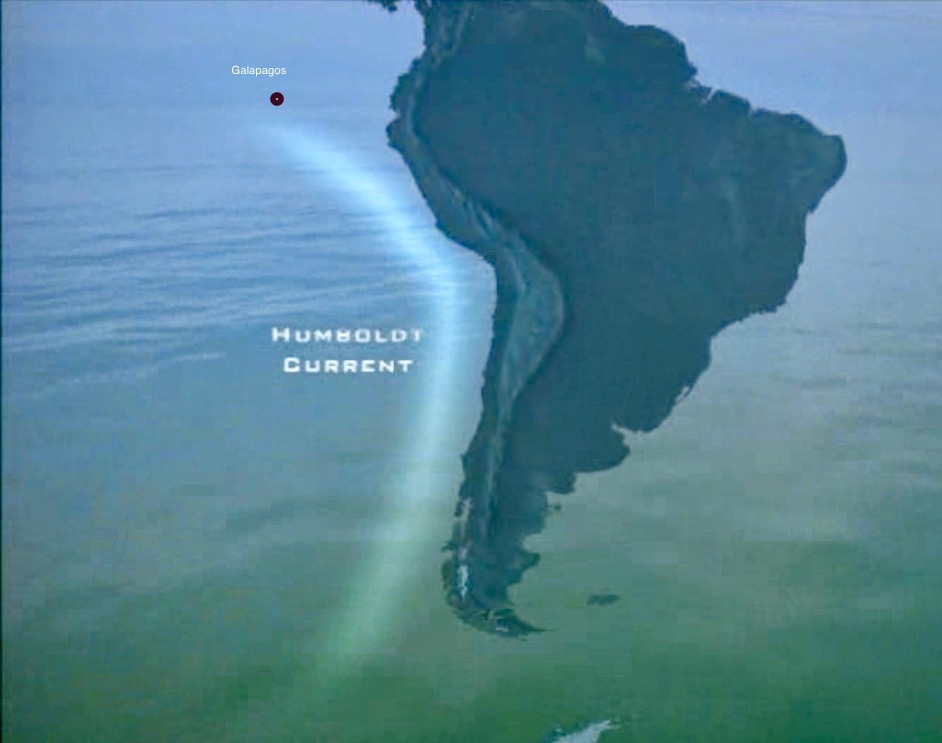
They lie on the route from Panama City to Polynesia, as well as to Easter Island. The distance from Panama is about 900 miles. The route crosses the equator and the Intertropical Convergence Zone (ITCZ), which is characterised by variable winds and calms.
Whales are often encountered after leaving Panama—their migration routes pass through here.
The ocean water is cool due to the influence of the cold Humboldt Current flowing from the south.
\
Weather
There is no exhausting tropical heat in the Galápagos. It is only hot in the sun. There are two seasons here: the dry, cool season from July to December, and the wet, hot season from January to June. We were there in April. It looked like rain twice, and once it even drizzled for ten minutes. The rest of the time it was hot in the sun during the day and cool at night. For the first time in a year, we slept under blankets.
Why all the fuss about the Galápagos?
Because people only began settling the Galápagos Islands fairly late, countless endemic species—plants and animals found nowhere else—still survive here.
In 1967, 97% of the archipelago was declared a national park, after which tourists began arriving in droves. These two circumstances account for the high entry fees and the cost of flying to the Galápagos Islands: without substantial fees, there would be no money to support the scientists and park staff who protect the unique flora and fauna from destruction.
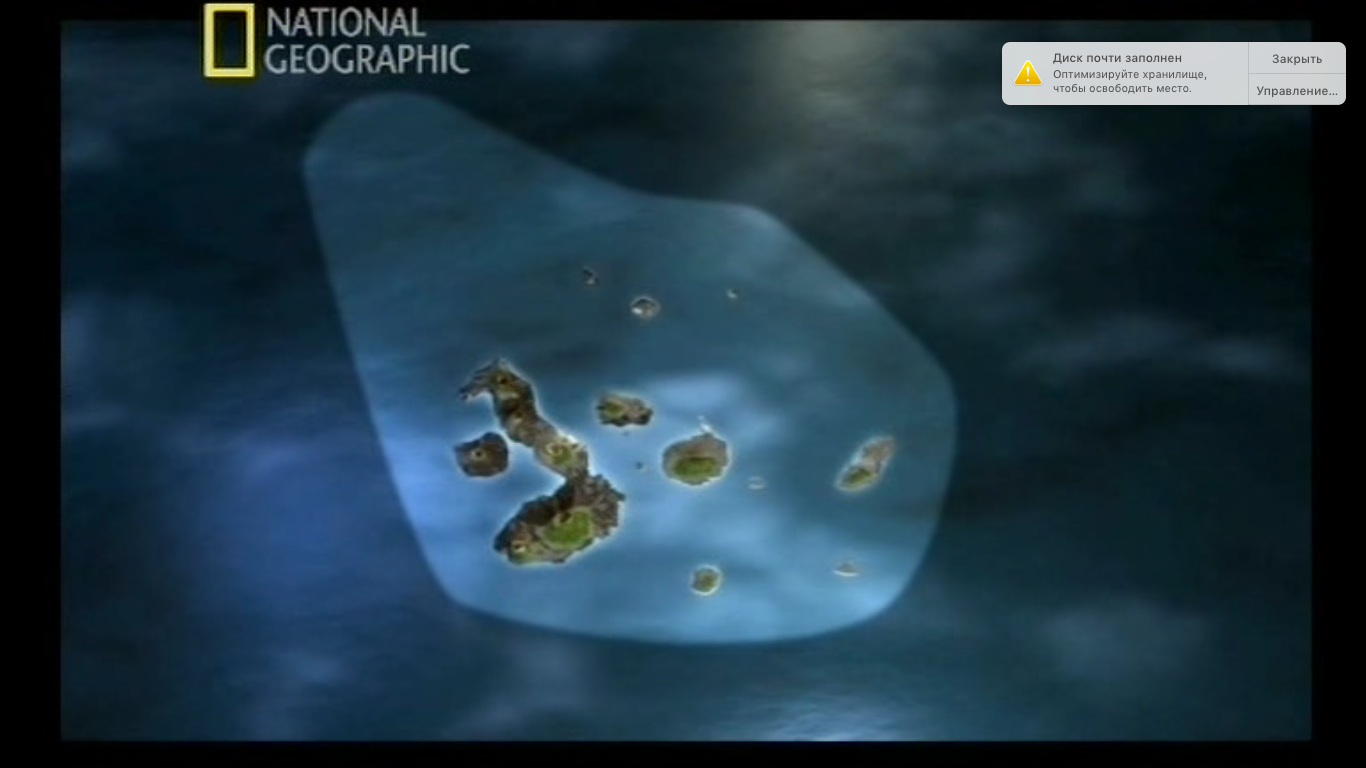
This is what the national park boundaries look like on the map:
Where to anchor your yacht
For financial reasons, our stay in the archipelago was limited to a single island—Santa Cruz ($1,200 to $1,500 for a 20-day permit).
The alternatives for yachtsmen are:
The “Three-Island Anchorage” option—about
$2,000:
San Cristóbal Island
Santa Cruz Island
Isabela Island
The “Five-Island Anchorage” option—about $2,500–$3,000, depending on which agent you end up with.
San Cristóbal Island
Santa Cruz Island
Isabela Island
Floreana Island
Española Island
Workers at the fish market on Santa Cruz Island
Isabela Island
The largest and wilder island. The village is more intimate, small and quiet, and there are vast expanses of wilderness. Most of them, as throughout the archipelago, can only be visited with a licensed guide. Galápagos penguins live on Isabela during the cool season. In the hot season, they all disappear somewhere—apparently migrating farther south, to the mainland. People are also brought here to see large numbers of blue-footed boobies, and sea lions and tortoises, of course.
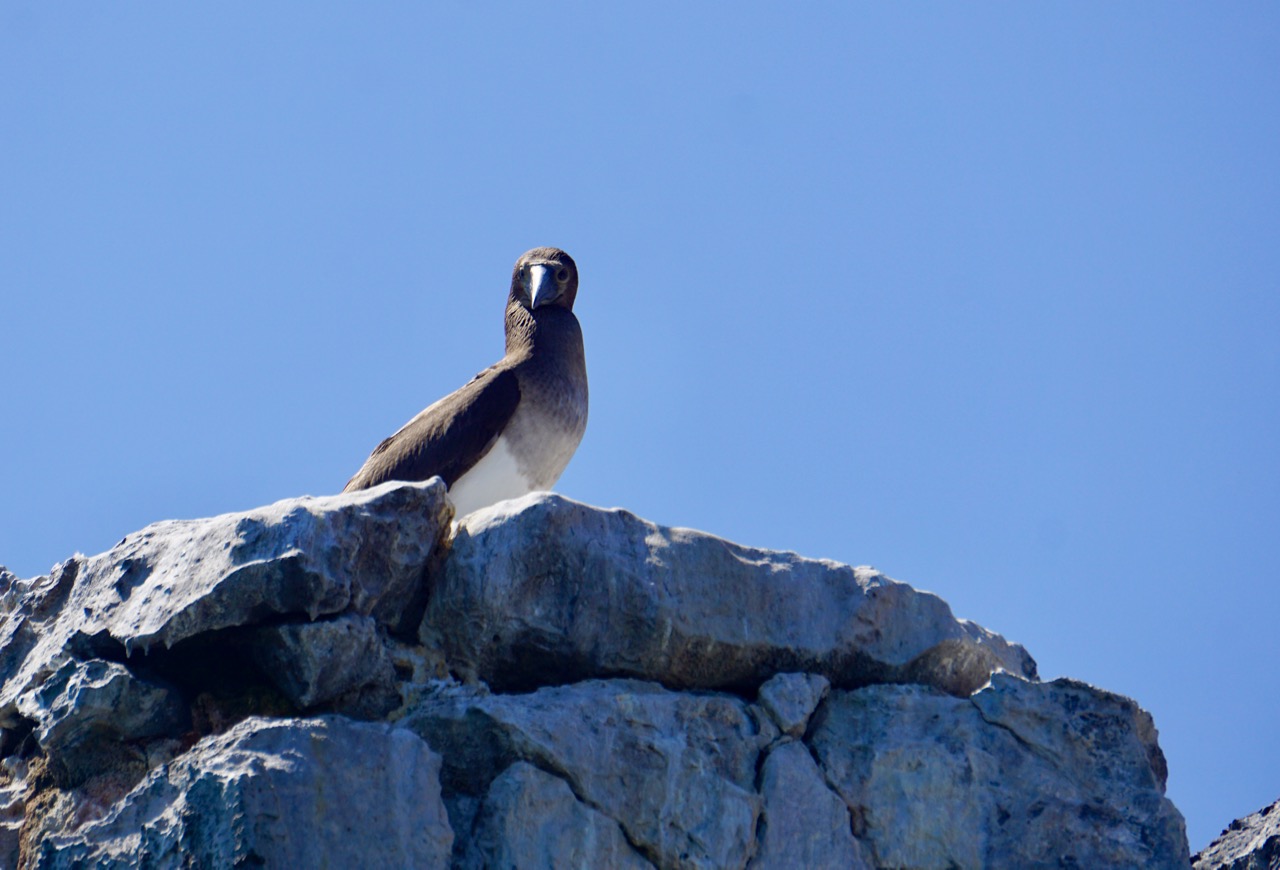
A booby. But what colour are its feet???.
San Cristóbal Island
The most impressive sight is the beach right beside the pier, covered with sea lions and their pups (on the right). The pups crawl over the adults’ bodies looking for their mothers, mewing, while of course everyone is asleep through it all.
Some friends of ours hired bikes on the island (bicycles; there are no mopeds or cars for hire). They loaded the bikes into a taxi and drove uphill along the road. Then they rode back down on the bicycles, absolutely delighted. Hiring four bikes plus a child seat and the taxi cost $60.
Santa Cruz Island, Galápagos Islands
Having sailed as close as possible to the two southern islands—Floreana (also known as Santa María) and Española (read about our adventures along the way here:
Sharks!!!)—we dropped anchor in Puerto Ayora, Santa Cruz Island.
This is the second-largest island in the Galápagos archipelago after Isabela, and its town ranks first in population.
The actual formalities imposed on our yacht by the Galápagos authorities on Santa Cruz Island are described here:
Galápagos. Strict Rules
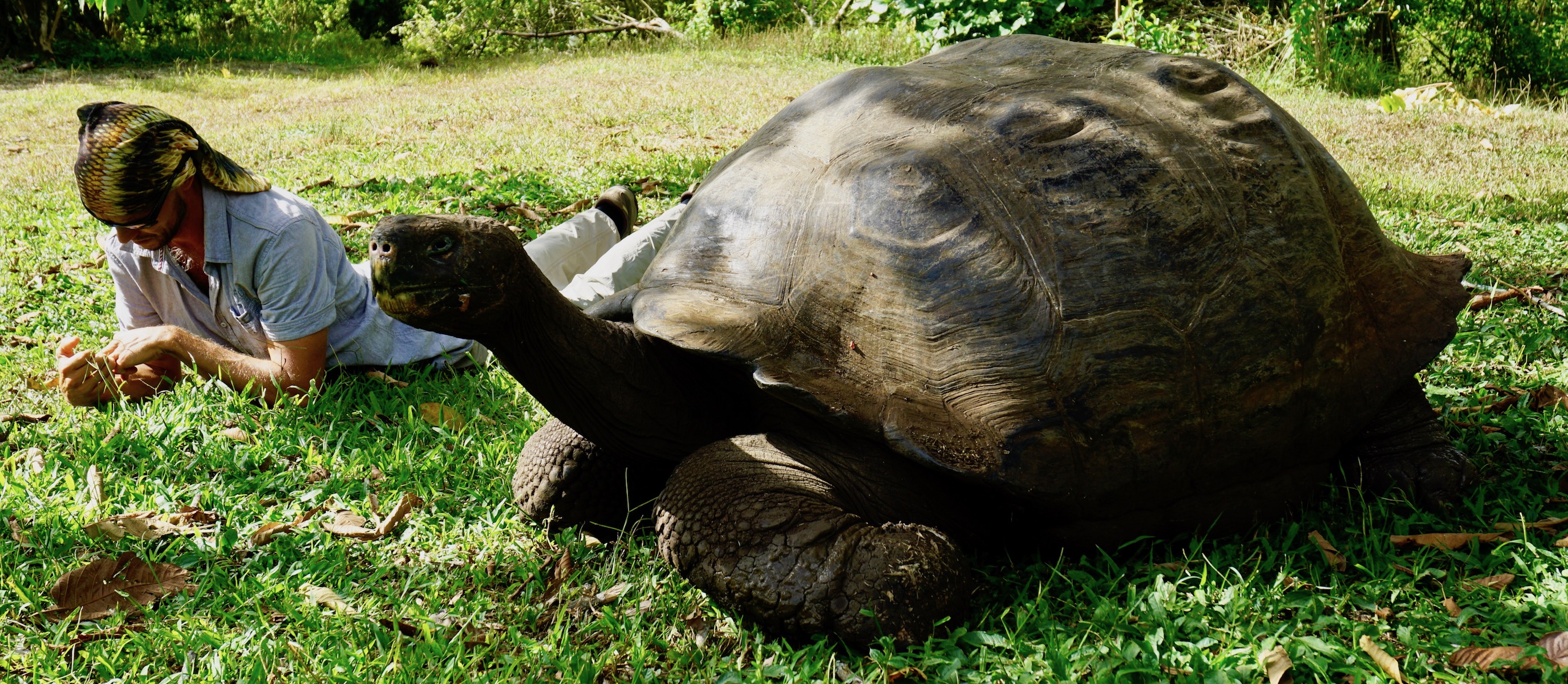
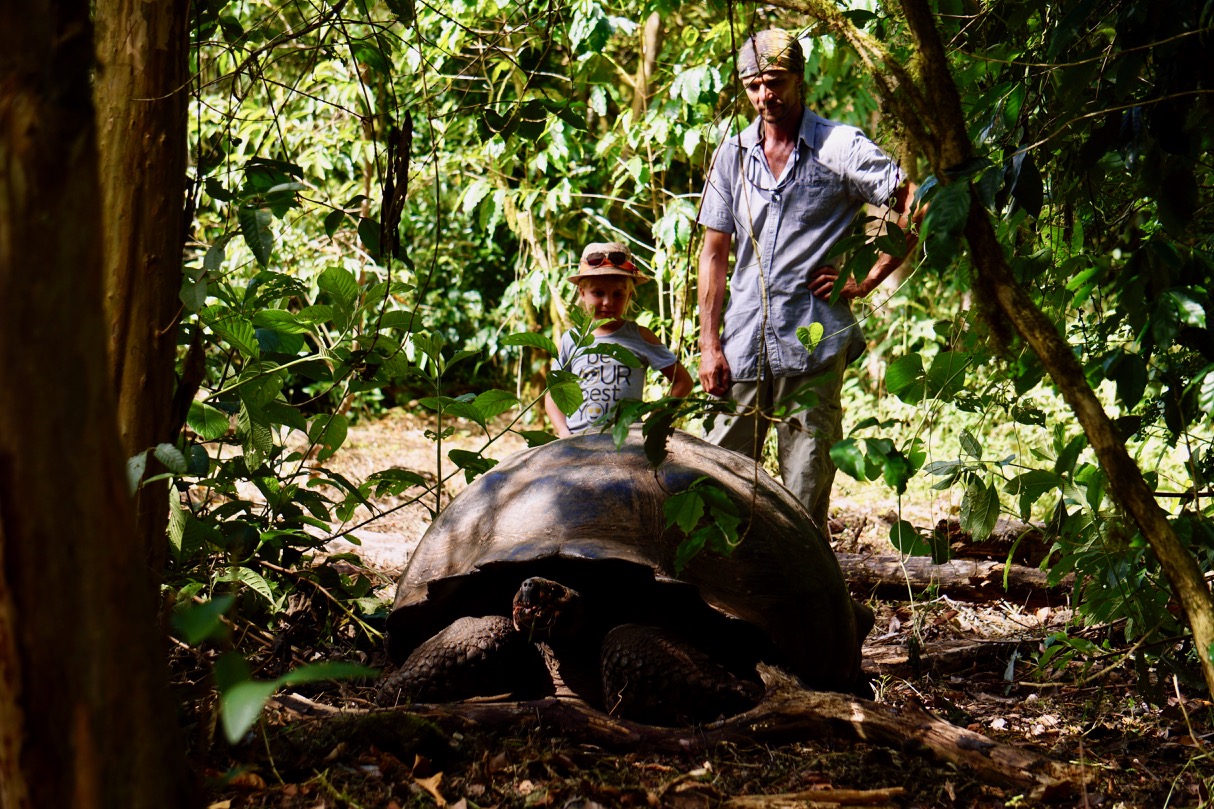
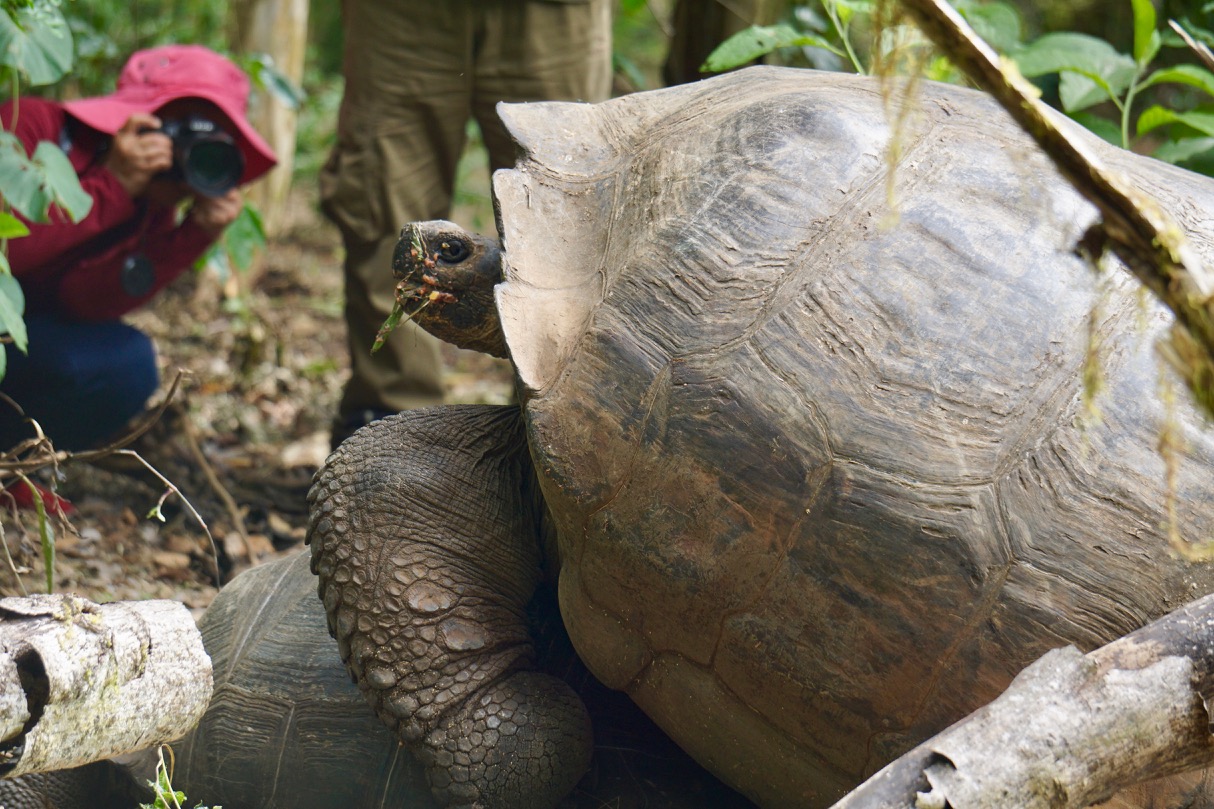
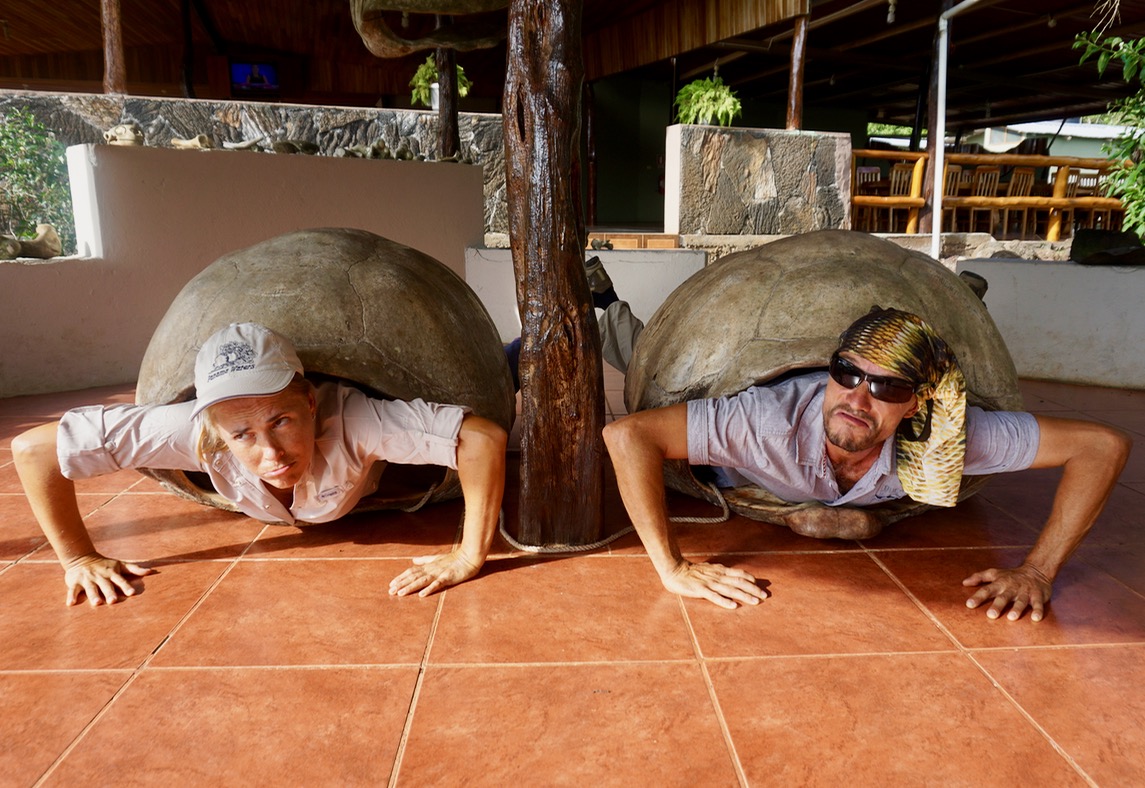
A tortoise farm on Santa Cruz. Check out the scale 🙂.
Puerto Ayora
A small, clean town with a pleasant resort waterfront that ends at the Charles Darwin Research Station.
The main street runs inland from the port, becomes a road and, after a 45-minute drive, ends at the airport. A small island, Baltra, to the north-east has been set aside for it.
There are lots of travel agencies offering island excursions, diving and one- to five-day tours to neighbouring islands. A day trip to Floreana Island, for example, costs $90–100. At travel agencies, you can find someone who speaks English—or at least understands the key words. If you haggle, they may give you a discount.
Most tourists are from North and South America. American yachts make up the largest share at the anchorage. But there are Europeans too.
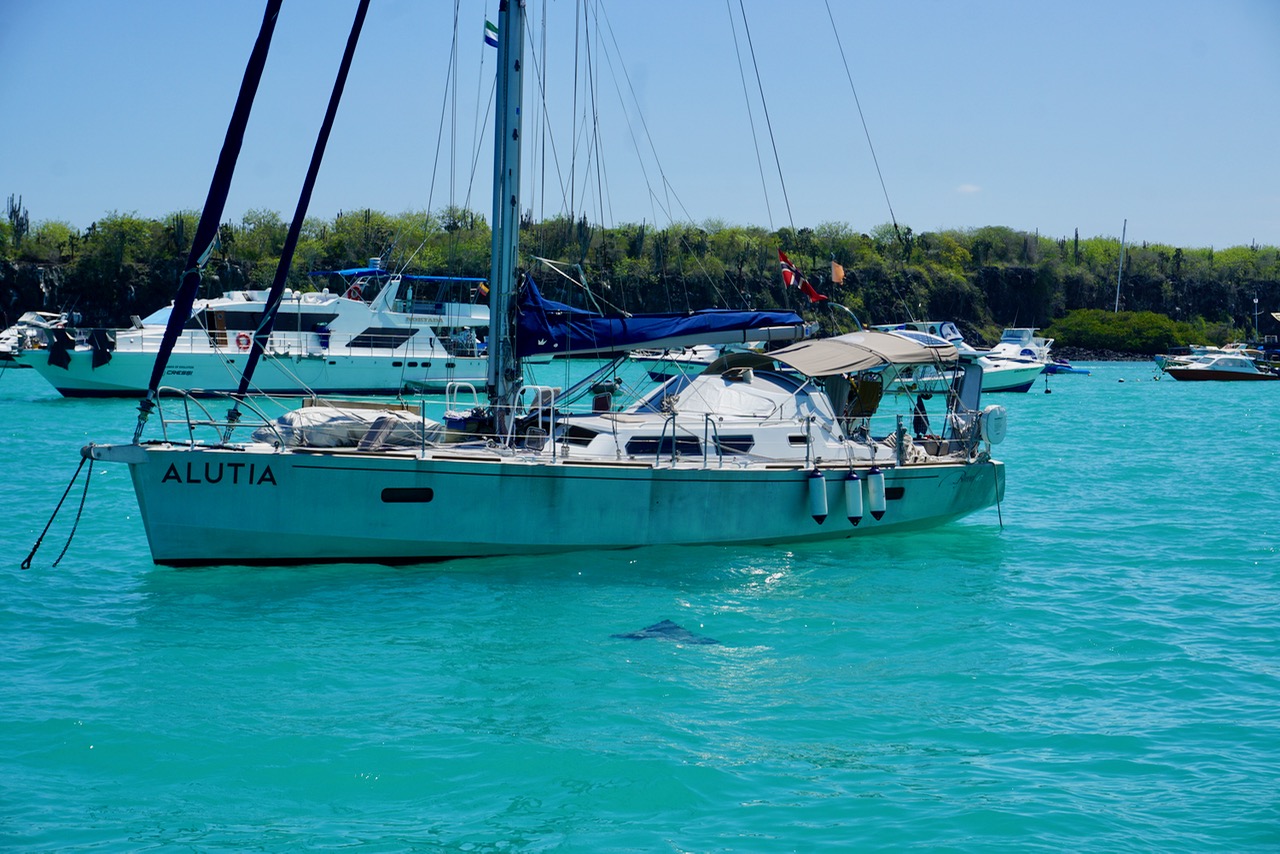
A sheet of a stingray glides beside a friendly Norwegian yacht
What to do on Santa Cruz Island
Watch animals. That is what the Galápagos Islands are for:).
From the yacht—pelicans, boobies, frigatebirds and some other birds too (finches, yes). Why finches is explained here— Zootopia. Galápagos Islands.
Carry on watching animals
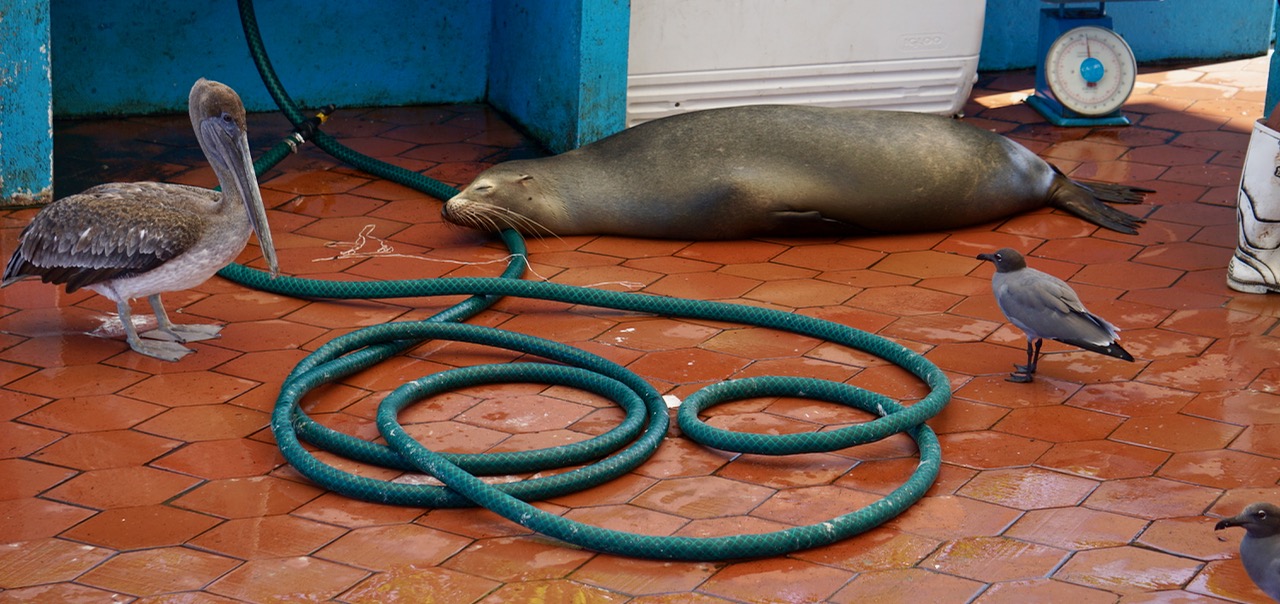
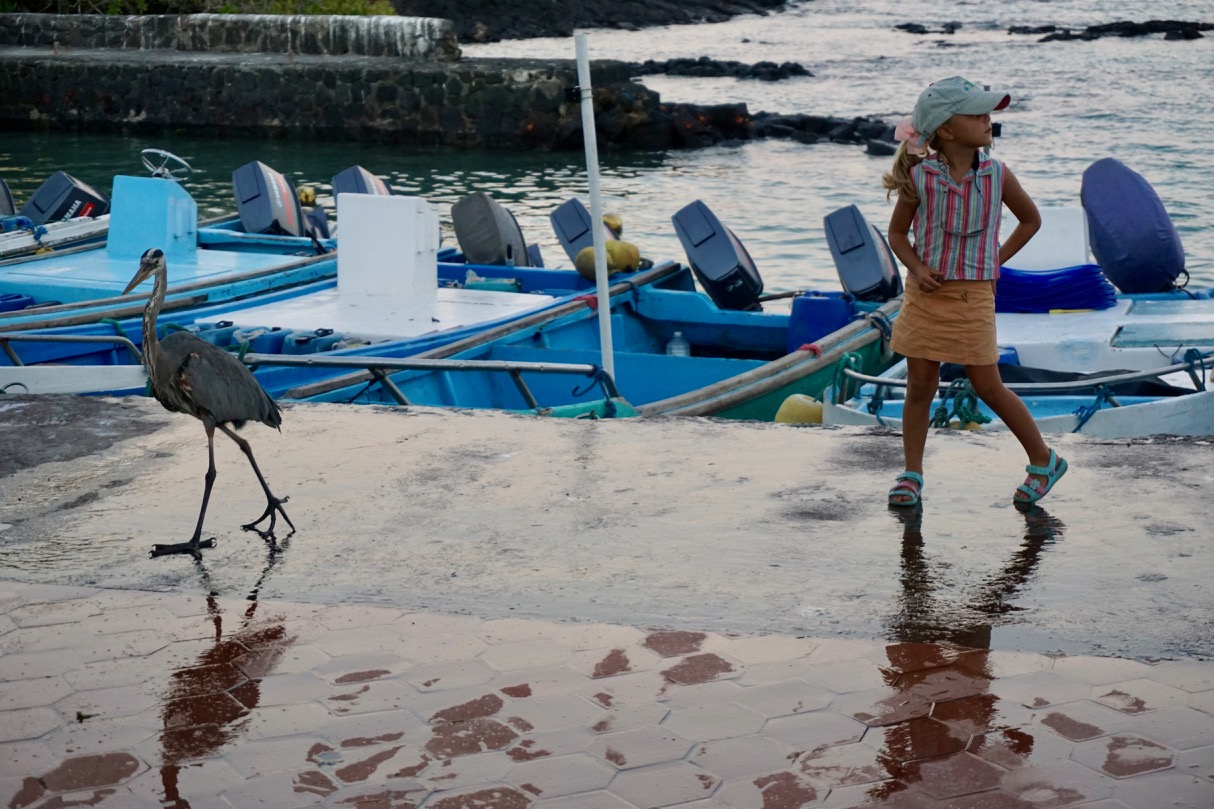
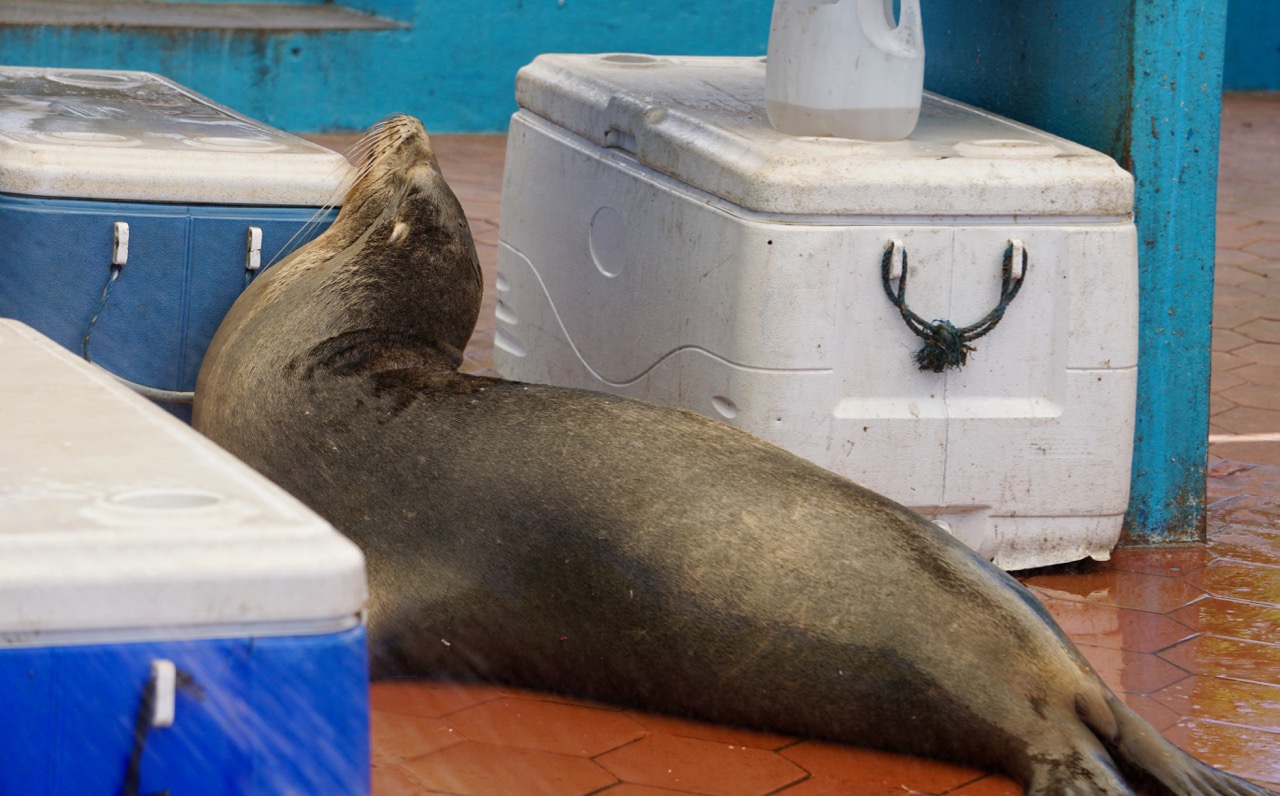
Sea lions snooze on and beside the pier (commonly called seals:). At the fish market—about 500 metres to the right along the waterfront from the pier—wild animals and birds walk around, fly about and queue among the people.
Lada and a heron at the fish market
Visit the DARWIN RESEARCH STATION
Charles Darwin Research Station
The main exhibition attraction on the island and in the Galápagos archipelago. Admission is free.
More than 200 scientists and staff conduct research, care for baby tortoises and guard their nests, ring birds and vaccinate sea lions in order to preserve the Galápagos ecosystem. It is best visited during your first few days. The station is about 1.5 km from the pier, along the waterfront to the right of the port.
It covers a large area, with sheltered rest areas and information panels in Spanish and English. There are enclosures with tortoises, baby tortoises and iguanas, the tomb of “Lonesome George” (see Zootopia. Galápagos Islands), and a modern museum with interesting exhibits.!
Take a sun umbrella with you. And water! And a snack:). Then you can wander around for ages.
At one point you can reach a beach where waves break beautifully, surfers glide by, and black iguanas bake on the path.
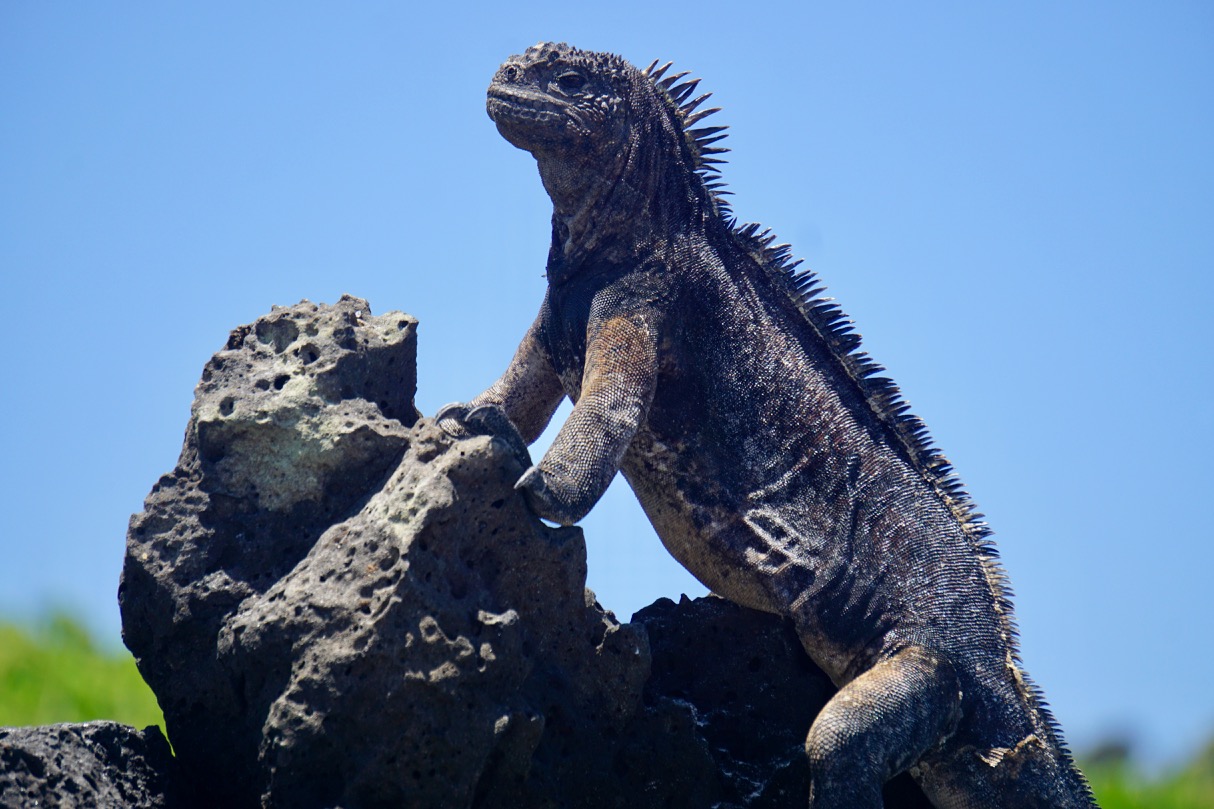
The common Galápagos iguana ).
We also recommend visiting:
Rancho Primicias (El Chato Reserve)...
Admission is $5. Children are $3.
The tortoises are enormous. They wander and mate at liberty, in ponds and through a garden whose boundaries cannot be seen. They eat guayaba (guava), with its sweet pink flesh, which has fallen generously from the trees. This heavenly fruit is in season in April. We did not miss our chance and stuffed ourselves with guayaba, then filled an entire sack to take with us—why let good fruit go to waste?
When you go to see the tortoises, wear closed shoes—you will need them in the lava tunnel too—or at least bring socks to wear under your sandals. The tiny, ferociously biting red ants are just waiting for you to stop so they can climb onto you and bite your legs all over.
The mystery of love, performed by giant tortoises
Agencies offer two main excursions around Santa Cruz Island. The price is $30–40.
Bay tour (Bahía tour, in Spanish)
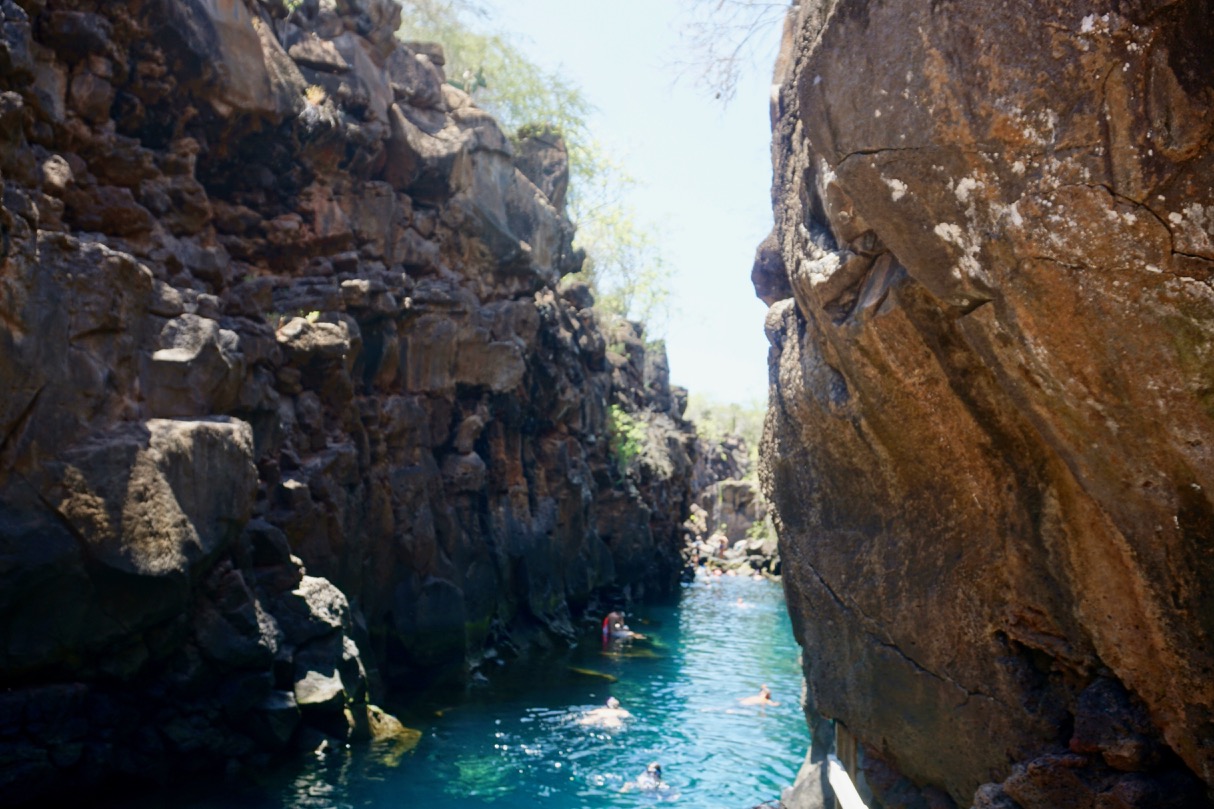
The covered boat holds 16 people. They take you to see the sea lions on a rocky islet, but in heavy swell it is impossible to land there. Then it is on to Shark Bay—though we did not actually see any sharks—followed by a landing and a walk to a beach with iguanas and, if you are lucky, sea lions. There is another landing and a walk along a path past the salt workings—a marshy estuary where salt is harvested. But then you snorkel in an amazingly beautiful natural pool enclosed by high basalt walls. There may be various fish and creatures such as sea lions there. In reality, however, there are only parrotfish and human soup. The latter problem is insoluble, because several tour groups swim in the long natural pool at the same time.
The only photo with relatively little human soup 🙂.
Next comes swimming with turtles. We swam with two large ones. Since we had brought fins—masks are provided, though we had our own—we managed to swim alone with the turtles while the rest of the group slowly made its way back to the boat. With our fins, we quickly caught up with them. The water was so cold that our young sailor burst into tears and returned to the boat halfway through the fun. On the other hand, while we were swimming, she got a close look at some blue-footed boobies. On the way back they give you water, soft drinks, a biscuit and half a banana.
Overall, we were glad we went. But when it comes to animals, it is the luck of the draw. The only thing you can reliably predict is the human soup in the natural pool.
2. To the two craters
You absolutely must visit the two craters, between which nearly all the island’s terrestrial endemic species grow and live. A group bus tour, with a lunch stop at that same Rancho Primicias with the tortoises, will also cost about $30–40 per person. But if there are more than two of you, that is not the way to go...
For $50, a taxi driver took us to the two craters and waited for more than an hour, then drove us to the tortoise farm and waited there too, after which he took us to the lava tunnel and picked us up on the other side. We enjoyed ourselves many times more than the groups tied to a guide and a schedule.
Secret paths by the craters ).
The craters
The craters are not volcanic vents or the volcano’s highest point. These craters collapsed beneath massive lava flows. A walking trail about a kilometre long runs around and between the craters. In the middle are blackberry thickets. When ripe, the berries are veery tasty! It is beautiful and majestic. Take the branch off the main trail that runs along the crater. As our young sailor declared, that was where she felt like an explorer.
Lava tunnels
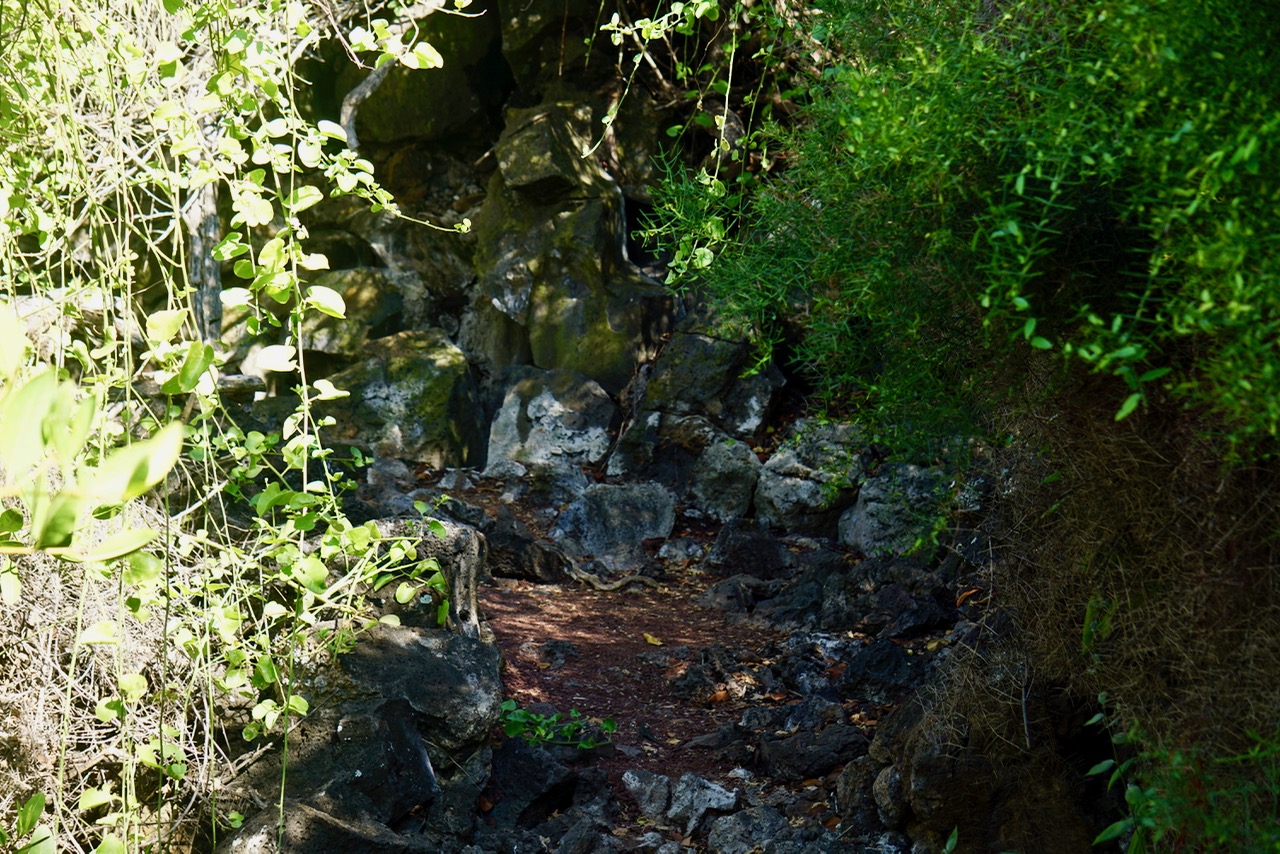
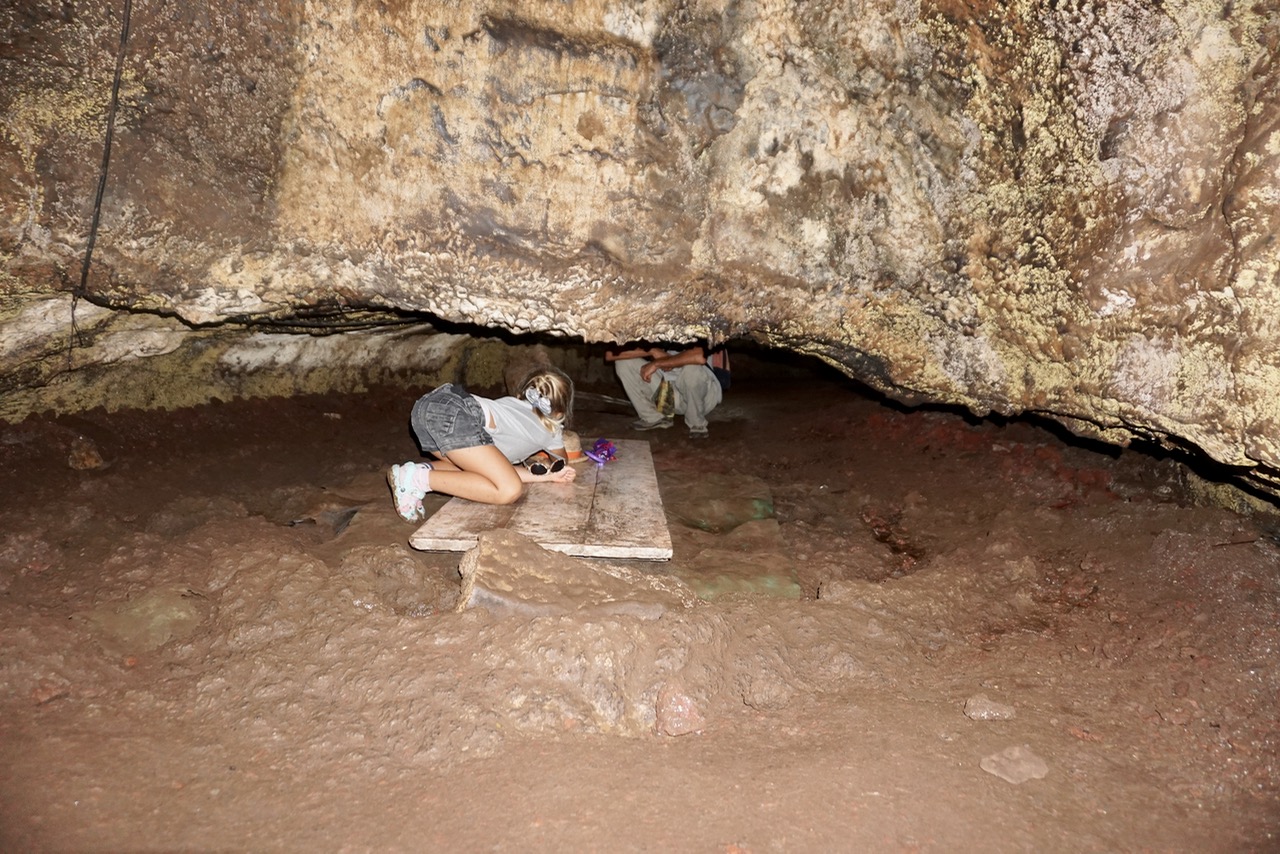
Beside the tortoise farm, about 400 metres long. It begins like a high-vaulted corridor in an underground castle, then the ceiling decides it would rather lie down on the floor. Like this:
The main lava tunnel
Opposite the entrance to the illuminated tunnel is another one—mysterious and dark. To venture inside, bring a torch and be sure to wear trainers. The captain was the only one of us wearing trainers, and we all deeply regretted it, because we were not going to venture deep into the mountain in flip-flops.
Las Ninfas Lagoon
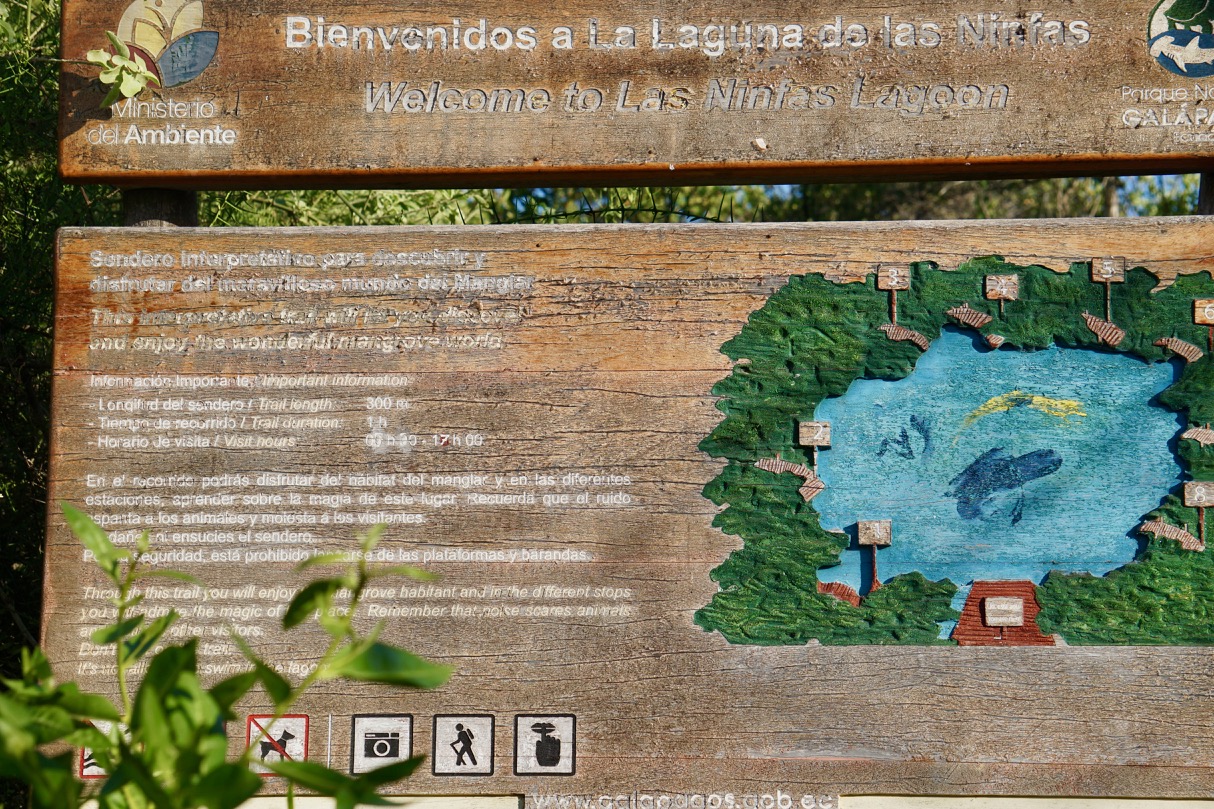
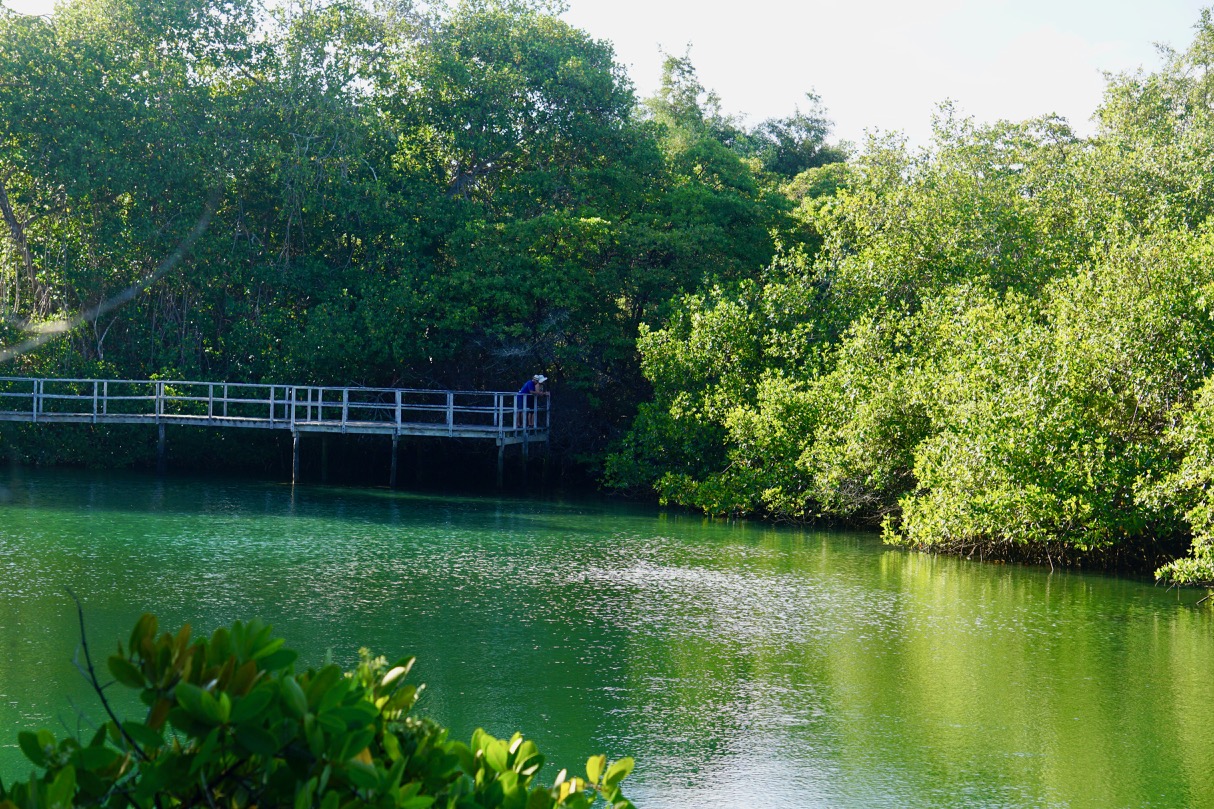
Not far from the port—less than a kilometre through town, to the left from the pier—is a mangrove lagoon connected to the sea. If you manage to come when there is nobody around, it is simply wonderful! We were lucky and enjoyed a peaceful walk along the boardwalks among the mangroves, listening to the chirping of endemic birds and the rustle of the water.
Approaching the lagoon
The lagoon’s calm surface..
Tortuga Bay
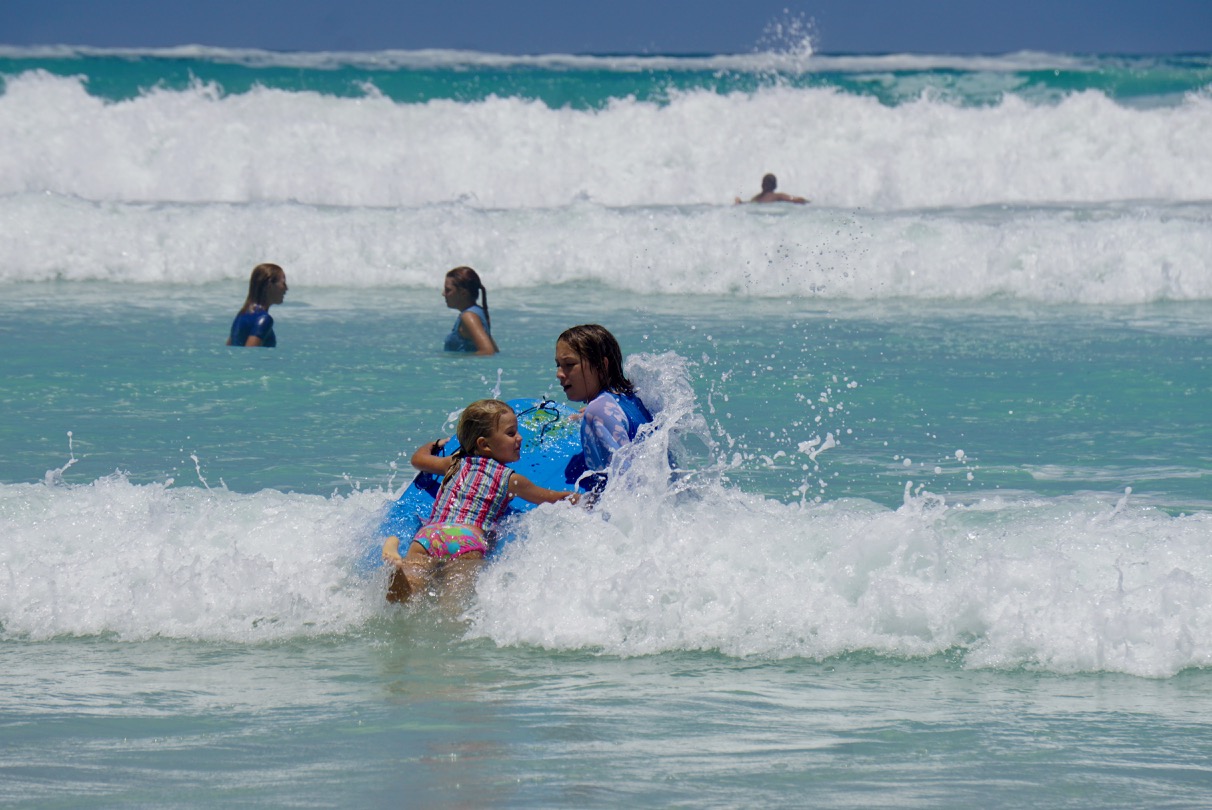
A bay where sea turtles lay their eggs. There is a very long beach—a surfer’s paradise—and beyond a headland guarded by iguanas, there is a passage into a quiet cove for pensioners and mothers with small children. Being dedicated pensioners ourselves, that is where we went on our first visit. The second time, already in the company of friends, we enjoyed the waves, and our young sailor learned to glide on a board:).
Our young sailor’s first attempts. Now she is asking for a board of her own )).
Internet
A nightmare. Some hotels have good Wi-Fi. In most cafés you may manage to open something, but uploading a video is impossible. Our best signal came from mobile internet. Claro, 2 GB for $10. Available in shops displaying the operator’s logo. Incidentally, those same shops also have phone booths—almost like in a Soviet childhood.
Laundry
Laundries are scattered throughout the town and along the main street. $1 per kg. They usually return your washing the same day. The washing itself is pretty nominal—like in most laundries... One of them failed to return Nastya’s little backpack—obviously they put it in someone else’s bag. Nastya was not particularly upset and is now cheerfully planning to save up her pocket money for a new one:).
Supermarket
About 200 metres to the left from the port is a two-storey supermarket with basic groceries. Among the fruit, there are almost always apples at $5 per kilo. Sometimes there are tomatoes and green peppers at $5 per kilo, and red and yellow peppers at $7.50 per kilo. Kiwifruit is $7 per kilo, plums $8 per kilo. The rest of the fruit and vegetables are available at the market, about 800 metres from the port along the main street. The market is open every day, but the Saturday morning market is the most wonderful place to buy provisions. It opens at almost 4 a.m., and by 10 there is nothing left. The lowest prices are here.
Eating out
There are pleasant cafés serving tasty food along the waterfront. Ceviche or a vegetarian quesadilla costs $12 and up. There are special offers—for example, three mojitos for $10, or ceviche for $8 before 11 a.m. But travellers in the know go to a special food street a couple of blocks from the waterfront, running parallel to it. After 6 p.m., tables are set up in the roadway, and for $10–15 you can stuff yourself with delicious meat or fish, rice and fried bananas. Which is exactly what we did before sailing away ))).
Wishing everyone a delicious spring!
And we are weighing anchor and setting off for Easter Island:). Follow our updates via satellite link.
A few more photographs )
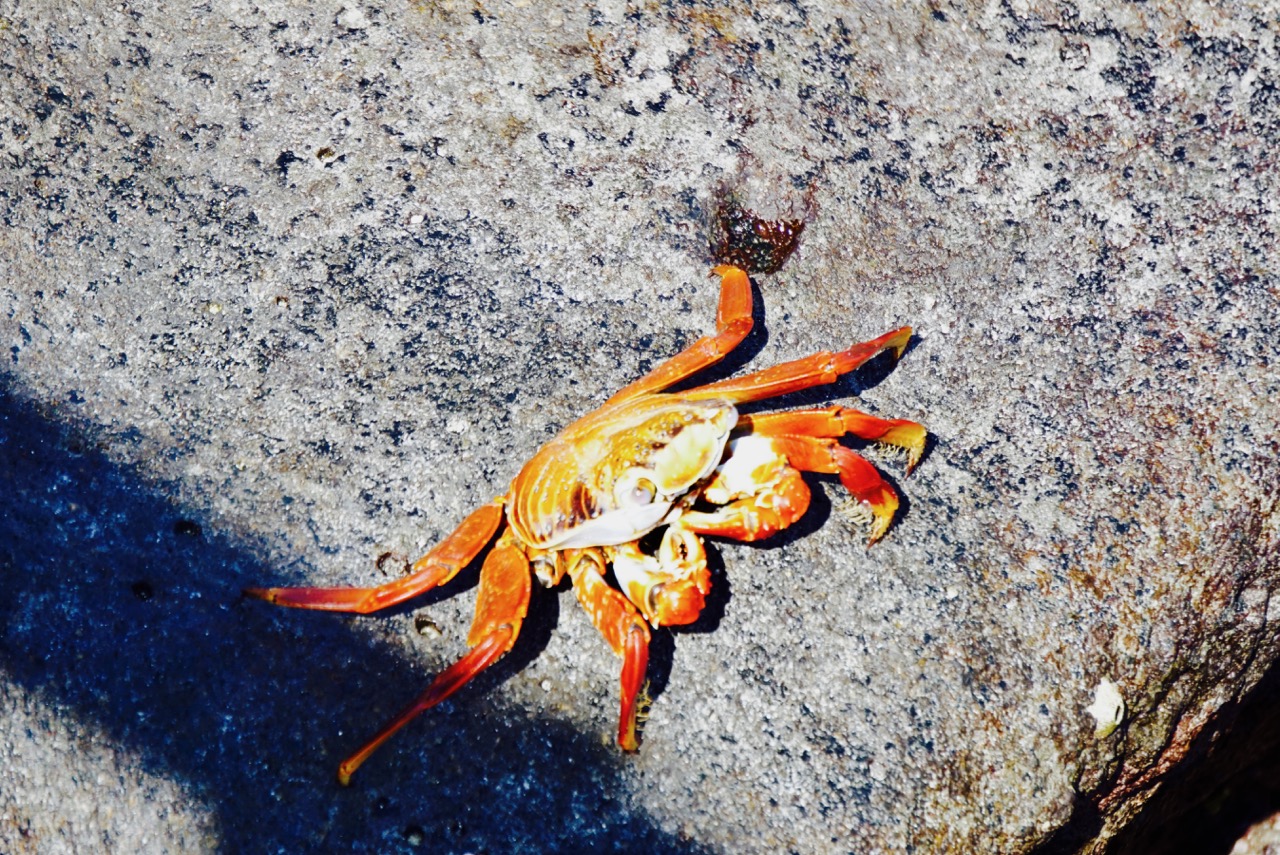
Crabs scatter the black volcanic rocks like bright beads
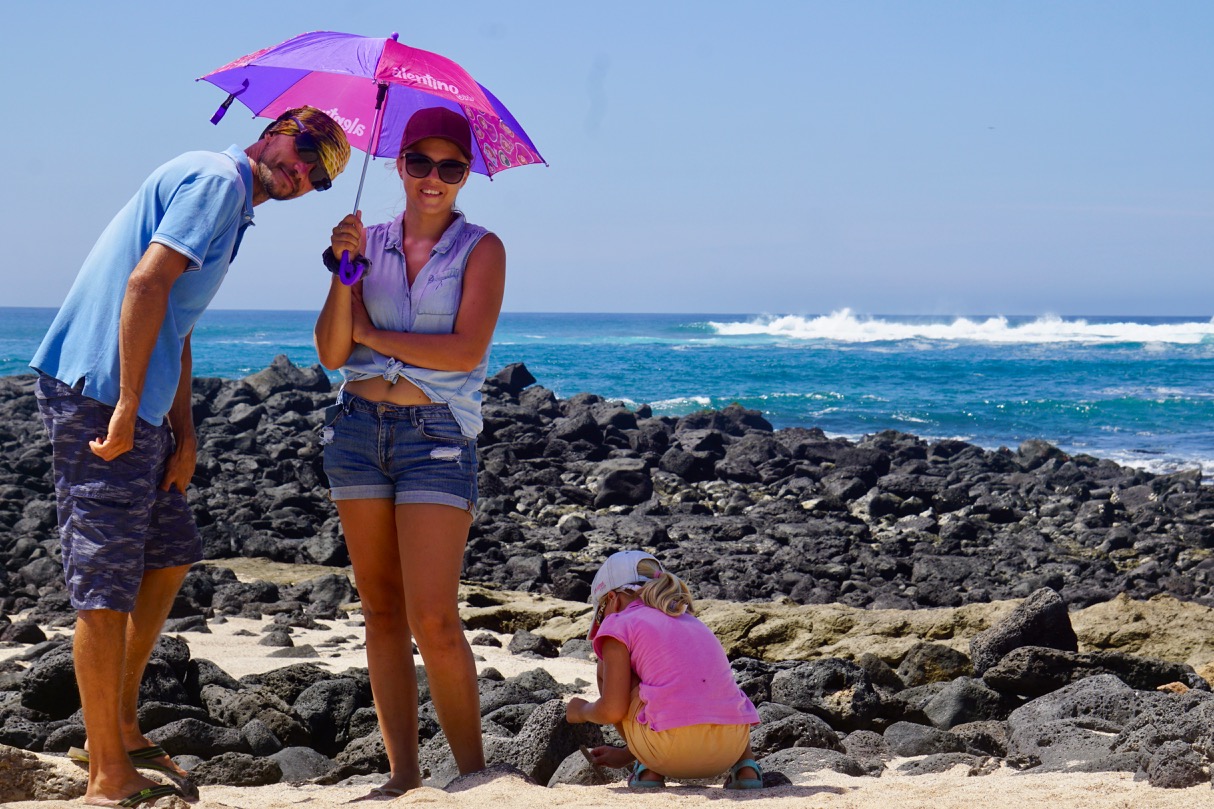
Walks along the beach
The archipelago’s star tortoises
Well, now that we’ve eaten, we can have a nap...
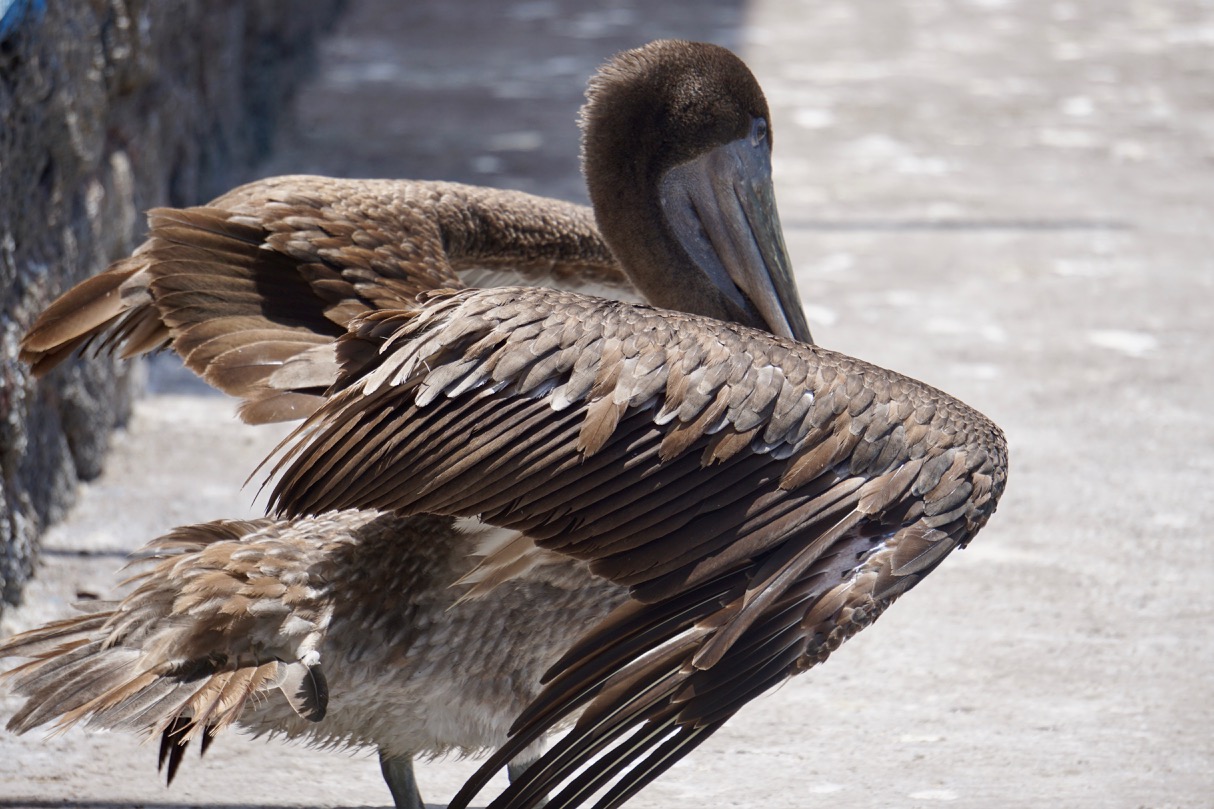
Urban pelicans )