
From the Travely-Family archive · Central and South America
The Marina with Crocodiles
An original publication from the former Travely-Family website. This English translation was preserved from the technical-site archive without editorial rewriting.
The Marina with Crocodiles.
Whether to replace the rigging. A cult from the Panamanian army, roaring jungle, crocodiles in the marina, and a dead town — all this is Shelter Bay Marina
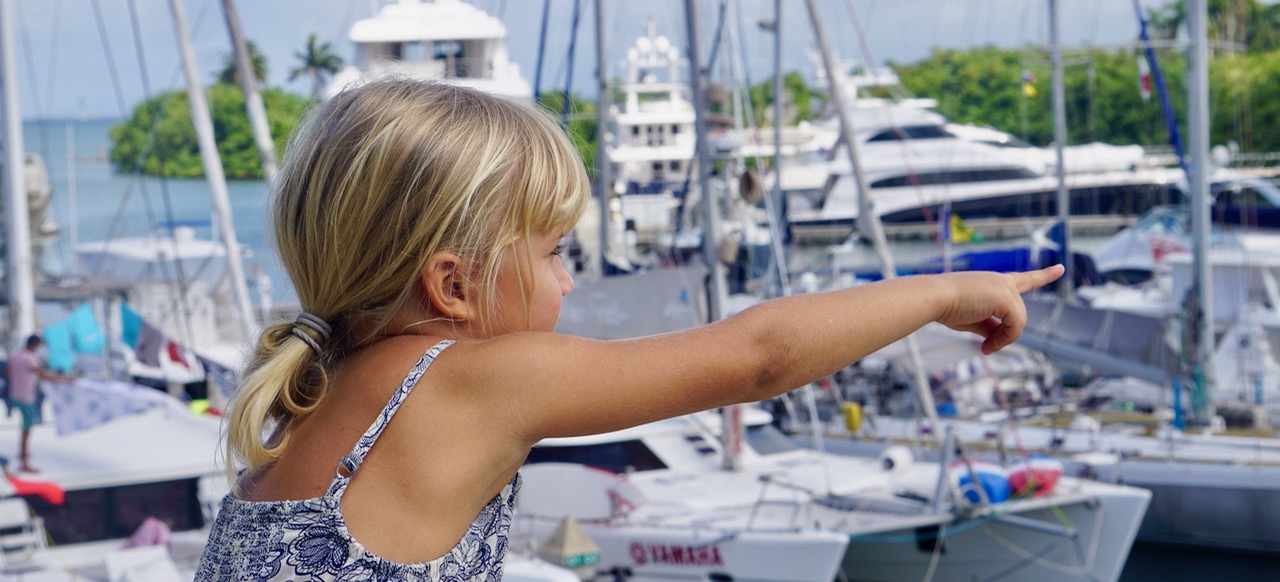
At the Atlantic entrance to the Panama Canal, we planned to replace all the standing rigging on the mainmast. But after a thorough inspection, the rigger delivered his verdict: replace only two shrouds bearing the proud name “upper spreader shrouds.” One of them had broken during the passage from Cuba to Mexico, and since then it had been replaced by a low-stretch synthetic line every bit as strong as the wire shrouds. That saved us a tidy sum, and in celebration we decided to splash out: in honour of Christmas and New Year, we would spend about three weeks in a marina with hot showers, water, food, and a friendly crowd.
Shelter Bay Marina is an amazing place, not to say mystical. The splendid traditions of the local liveaboard community, wild jungle concealing all manner of creatures, a dead town hidden within it, crocodiles... and now yet another unnatural phenomenon, which woke the first mate today.
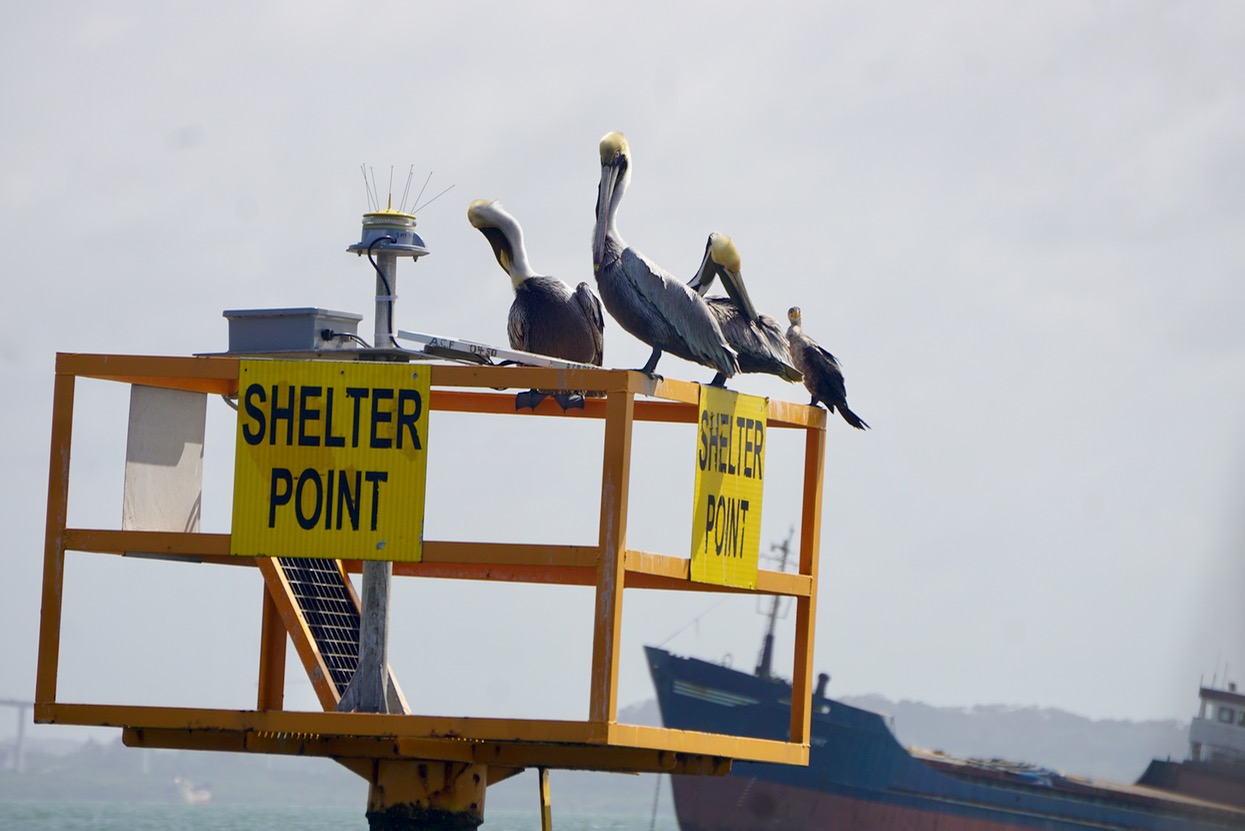
Guards at the exit from Shelter Bay Marina towards the Panama Canal
A Cult of Revolutionary Warriors
At 5:30 in the morning, the pitch darkness rang either with pagan group mantras or revolutionary chants. I remember one like this from childhood:
Leader: — Oh, ore! \ All together: — Oh, Ore!
Leader: — Oreki tiki tumba! \ All together: — Oreki tiki tumba!
Leader: — Ova ova yova! \ All: — Ova ova yova!
Except here it was something like:
A-tama tula baya!
A-tama tula baya!
Well, I thought, this is it. They’re about to overthrow us. Then it’s onto the ritual bonfire.
Maybe they’re having some sort of pagan festival....That is probably still better than a revolution. Because if it is the latter, we, the local yachting community, will be the first beneath the machetes of the oppressed Indians’ righteous wrath. There’s no one else around — the town is an hour’s drive away.
The deductive method suggested that the mantra-chanting crowd consisted of burly men: no one else could have run all the way around the marina in ten minutes and now be declaiming in rhythm from the opposite side. As soon as the rhythmic chorus, interspersed with Spanish words, came within firing range, the first mate armed herself with binoculars and, by the light of a lamp, made out something resembling a military uniform on the leader. The cultists were running four abreast, about 15 ranks in all.
“Well, if it isn’t a revolution, it must be an army marching-song review. They won’t storm us,” she breathed, and prepared the big lens just in case — the sky was beginning to brighten, and the road ended beyond the marina, so the revolutionary cultists would have to turn back along the same route anyway.
And so they did: the gallant soldiers ran back to their barracks (what we had previously considered part of the abandoned town is now suspected of involvement with a unit of the Armed Forces of the Republic of Panama).
We’ve been here since last year, and never once have we had reveille at 5:30. The generals must have come for an inspection. Or perhaps they are expecting a statue of the Holy Virgin. Here in Latin America, the arrival of a miraculous statue is often accompanied by troops in formation and cannon fire. In Mexico they were always firing them.
We’ll wait and see.
Contrasts, Jungle, Crocodiles
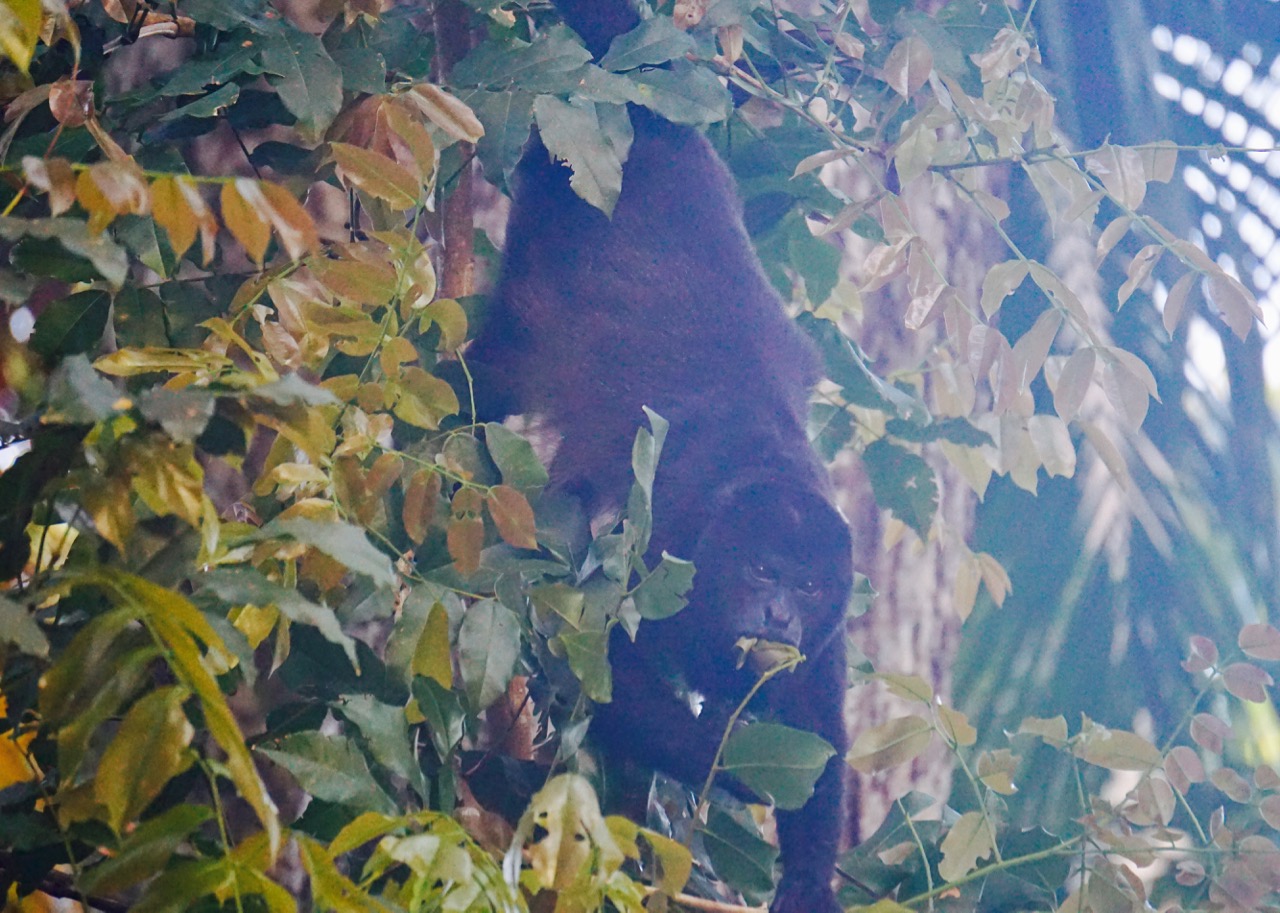
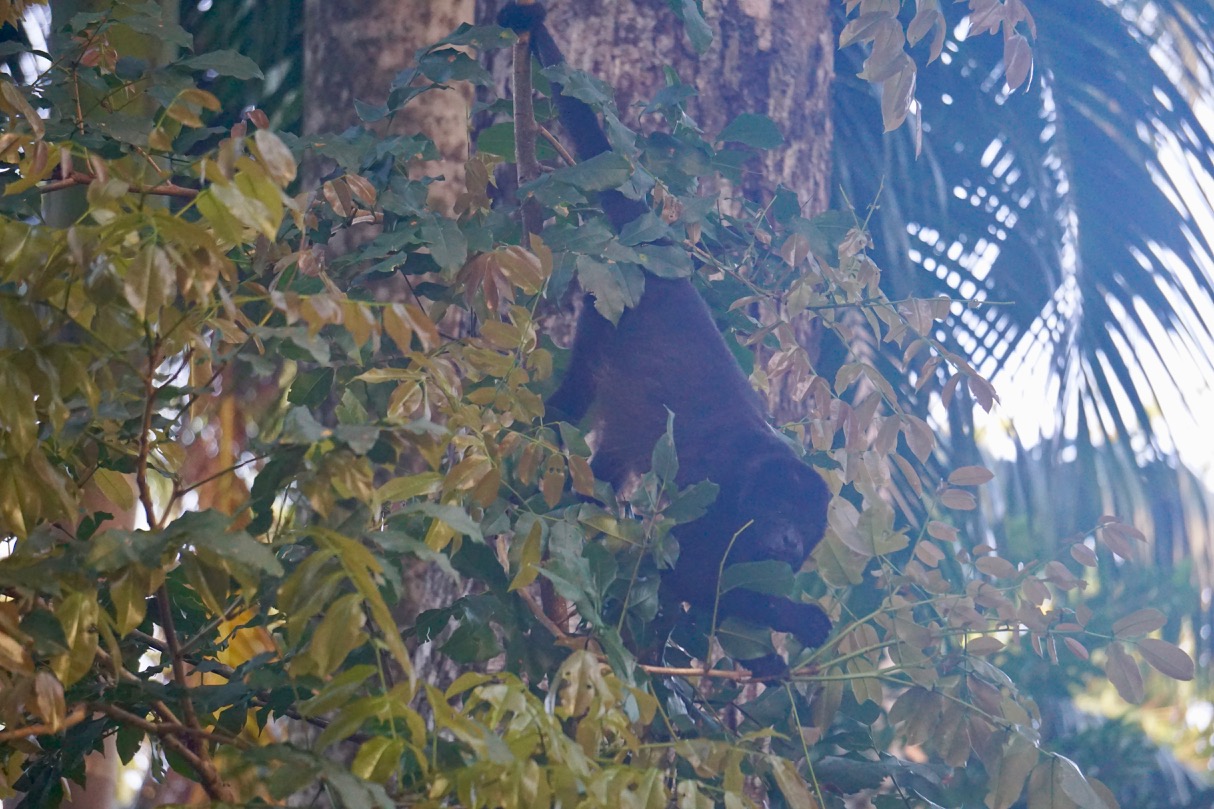
The chanting of fifty sturdy throats woke the howler monkeys, hiding in the jungle. Every morning they hold their own singalong, but this time they started bawling before dawn, also welcoming the statue together with the paramilitary cult. Howlers make a terrifying racket, like jaguars, only louder. If you found yourself in the jungle at night and didn’t know what it was, you would definitely lose your mind. Occasionally, from aboard, we see them sliding down palm fronds, shaggy and black. But until today, we had never seen them up close or while they were howling.
A howler. We thought they were bigger )
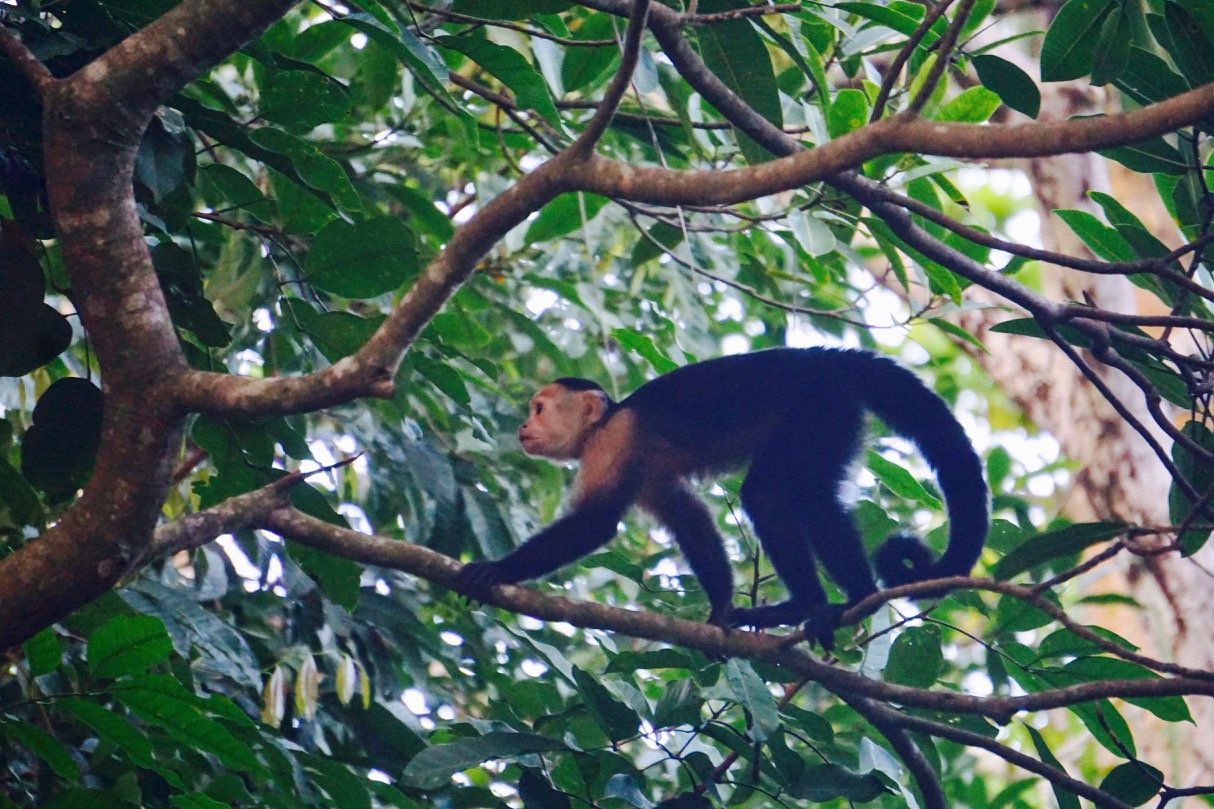
We have met capuchins, though: funny little monkeys, sometimes fighting, sometimes cuddling, sometimes clucking like hens. Yesterday Laduska and I armed ourselves with a tripod and camera and rode to the abandoned town to film them. Every evening when we turn up without the camera, the whole troop rushes out to greet us. They stare curiously, call their friends, and leap about the thick branches with delighted cries of “Ooh! Ooh!” (exactly as people always do when asked to imitate a monkey), expressing their joy at seeing us. But the moment you bring the camera — nothing but leafcutter ants. We waited almost until sunset, but they merely set up a clucking racket and retreated deep into the rainforest again.
A capuchin
Anywhere in Panama, as soon as you leave town, you are straight into wild jungle. And Shelter Bay Marina is very far from town, but close to a national park. It is a very strange combination: dozens of ships at anchor waiting their turn to enter the Panama Canal, a hundred yachts berthed in the marina, and all around, not some industrial zone but nature reserves. There is even one in the middle of the Canal, in an artificial lake.
All the conservation work is directly linked to the Canal: the ecosystem is preserved to ensure that the mighty locks have enough water from the rivers flowing into the flooded valley. And at the same time they study the little creatures — all sorts of bats, and where their droppings carry the seeds of the giant Dipteryx.
Our cycling route from the marina leads either along the national park road or towards the abandoned town. Wild jungle overhangs the road. An agouti darts past, then a sharp-snouted, lemur-like coati bounds across the road, then a toucan sets a branch swaying. You just have to ride quietly and periodically freeze to watch. Laduska usually comes rattling along behind, so “Mum, all I saw was the agouti’s bottom” is a common occurrence. When we want to observe rather than simply ride through, we leave the bicycles behind and, like Indians, creep along the road on tiptoe, trying not to tread on dry leaves.
The iron steeds await their riders
Over the open ground where there was once either some facility for pumping water into the Canal or an American military base, butterflies now flutter and vultures soar. Massive valves jut gloomily from the grass, palms are taking over the plateau, and vines are entwining the foundations of mysterious structures and the chain-link fencing. The empty embrasures of a massive structure — either a dam or a fortress — are being swallowed by the jungle; at first glance, you do not even notice the handiwork of man beneath it. The asphalt roads have cracked and reeds have grown through them, and among the reeds closer to the sea there are crocodiles. We haven’t seen them, but they’re there.
Children, don’t go...
With her cheerful nature, Laduska has charmed the entire marina. All day long our young sailor tears up and down the pontoons on her bicycle, and everyone smiles as soon as they hear the clatter of its little wheels (she still cannot ride a two-wheeler and does not want to learn; she likes the noise they make). Following the racket, our little frog-in-a-box appears, singing and calling out a joyful “Hello!”
Lada’s favourite friends are Joan and Manuela, aged 50 and 55.
“I’m a grandmother now,” Manuela laughs. “I never was before, but now I have a granddaughter.”
And once again she adds in Russian: “Babushka.” Lada follows her around like a shadow. When Manuela goes to sew under the awning, our young sailor takes a book and her embroidery and settles down beside her. When Manuela goes to the pool at 3 o’clock in the afternoon, our young sailor jumps into her swimsuit and follows.
Lada gives her friends little bouquets of flowers and chewing gum, and they treat her to pancakes and sweets.
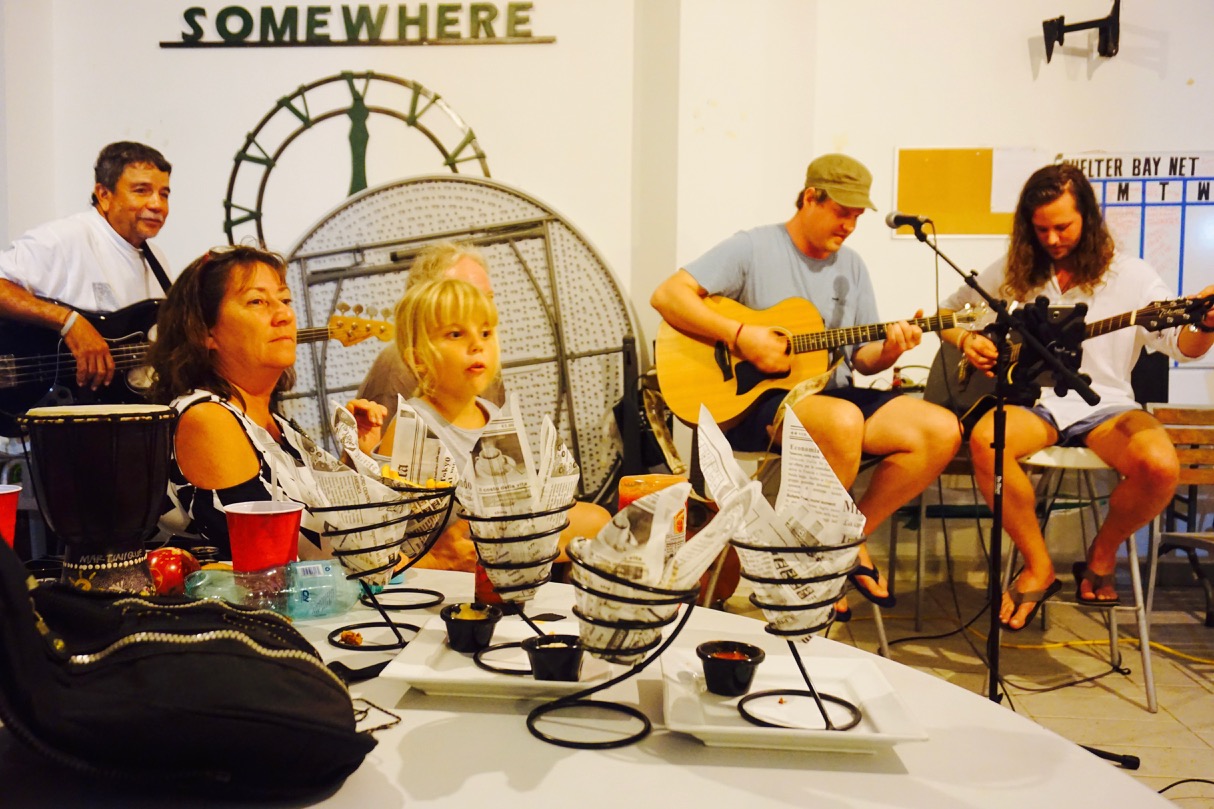
Lada and Manuela at the weekly yachties’ talent show
The other morning Joan saw a crocodile in the marina; it was drying its toothy jaws and bothering no one. Right there on the grounds. Afterwards Manuela warned me: “Don’t let your Lada play by the ditch; there are crocodiles here. (And then came a turn of phrase to chill any mother’s blood) — She is small enough to be eaten. The rest of the marina is safe.”:)... Ha-ha. — And just so you know, the ditch is right in the middle of the marina.
From Russia, this seems wild and unreal, but here it is ordinary life; people barely pay it any special attention. They just take precautions.
P.S.: Our dear grandmothers, Lada does not play by the ditch, so don’t worry. Her bicycle scares away not only crocodiles but hippos too, if there were any here. We are deliberately keeping the training wheels on:).
The Abandoned Town
To reach Shelter Bay Marina, you have to drive from the unappealing city of Colón along a road connecting two continents, crossing by ferry or swing bridge. Then the road winds through the jungle and ends at a checkpoint. There, while politely stroking their holsters, they ask where you are going and let you through. Inside the fenced area are Shelter Bay Marina, San Lorenzo National Park and the ruins of the fort of the same name, as well as the military zone that shared this morning’s run with us:).
Immediately beyond the checkpoint begin rows of identical three-storey buildings. The buildings are almost new, but walls have been systematically knocked out, and there are no doors or windows. Three hundred people could easily live here. Once they did, but....
But this is not what we call the abandoned town.
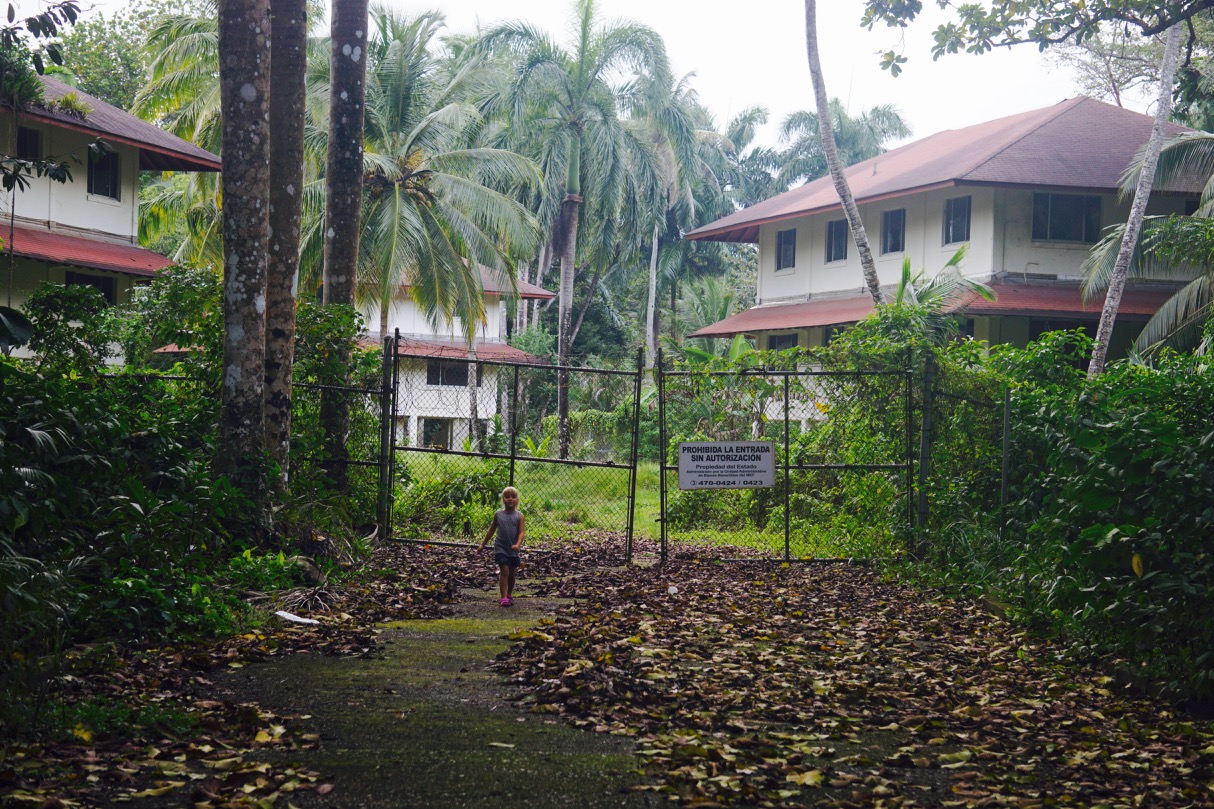
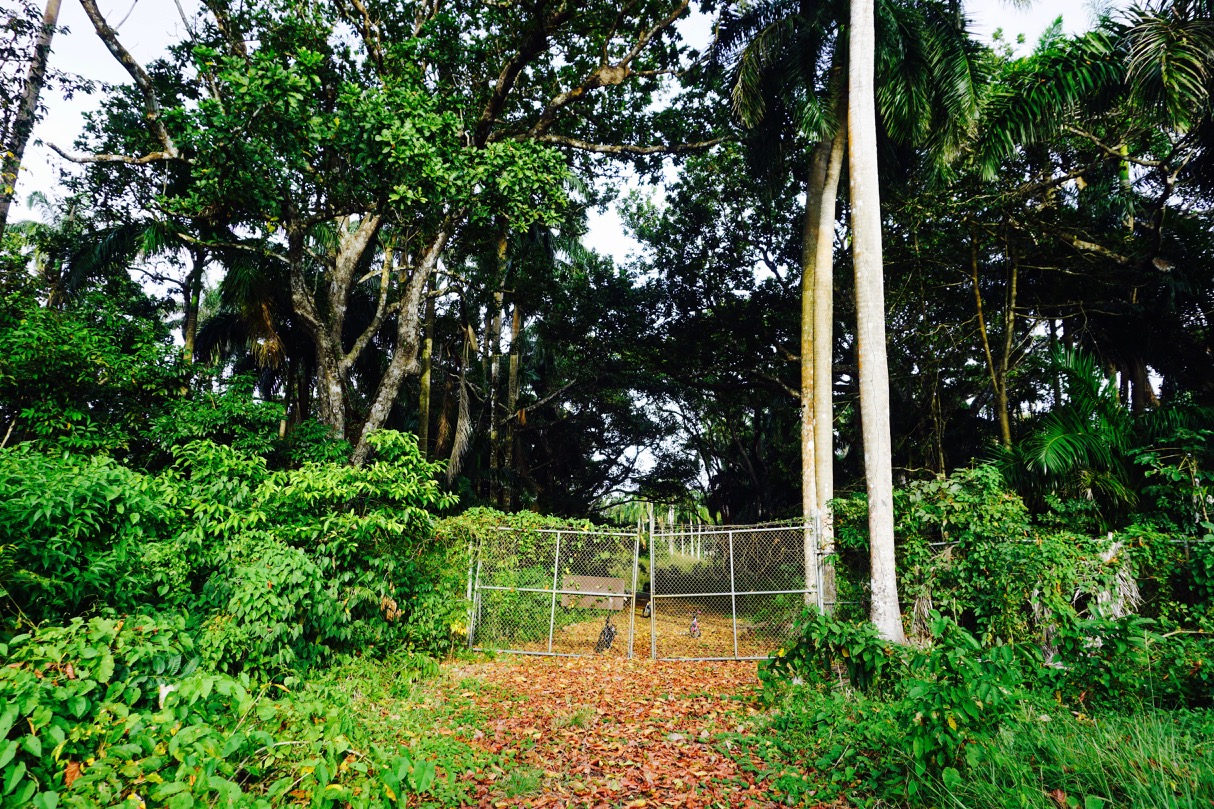
Ladunya and I found a truly strange settlement by chance during a bicycle expedition through the jungle. A broad asphalt turn-off from the main road ended at a gate bearing the words “No Trespassing.” We all walk beneath the same sun, so how could we be trespassers? — and in we went. Milky-yellow walls of almost-new buildings, terracotta roof tiles, a basketball court, a bus stop, and thickets of flowers and bananas.
In the three-storey apartment blocks forming several neat streets, the doors and windows are locked. Sunlight still filters in ribbed bands through the forgotten blinds, just as it did two or three years ago when people lived here... The gates and steps have not yet rusted through, the lamps in the streetlights are intact, and the sign at the bus stop still gleams with enamel. The plumbing, taps, and fittings are almost intact, as are the rust-touched electricity meters with bunches of severed wires. It feels as if all you need to do is flick a switch, turn a key in the lock — and move in.
Lada cleared the path to the dead town
People left the town quite recently; otherwise, in this hot, wet climate, everything would long since have crumbled to dust. So far we have two theories about who used to live here:
families of workers and engineers who maintained the vanished plant that stood on the plateau where vultures now soar. Most likely the old system of pipes supplying the Canal ran through here, and there was some sort of pumping station.
families of servicemen from the US Armed Forces base. For some reason the base was closed down, and a nature reserve was established nearby.
Now everything is empty. Only the roars of animals and the chirping of birds disturb the peace of the dead town.
And the town seems frozen, waiting for its residents, waiting and waiting. Stubbornly refusing to surrender to the jungle.
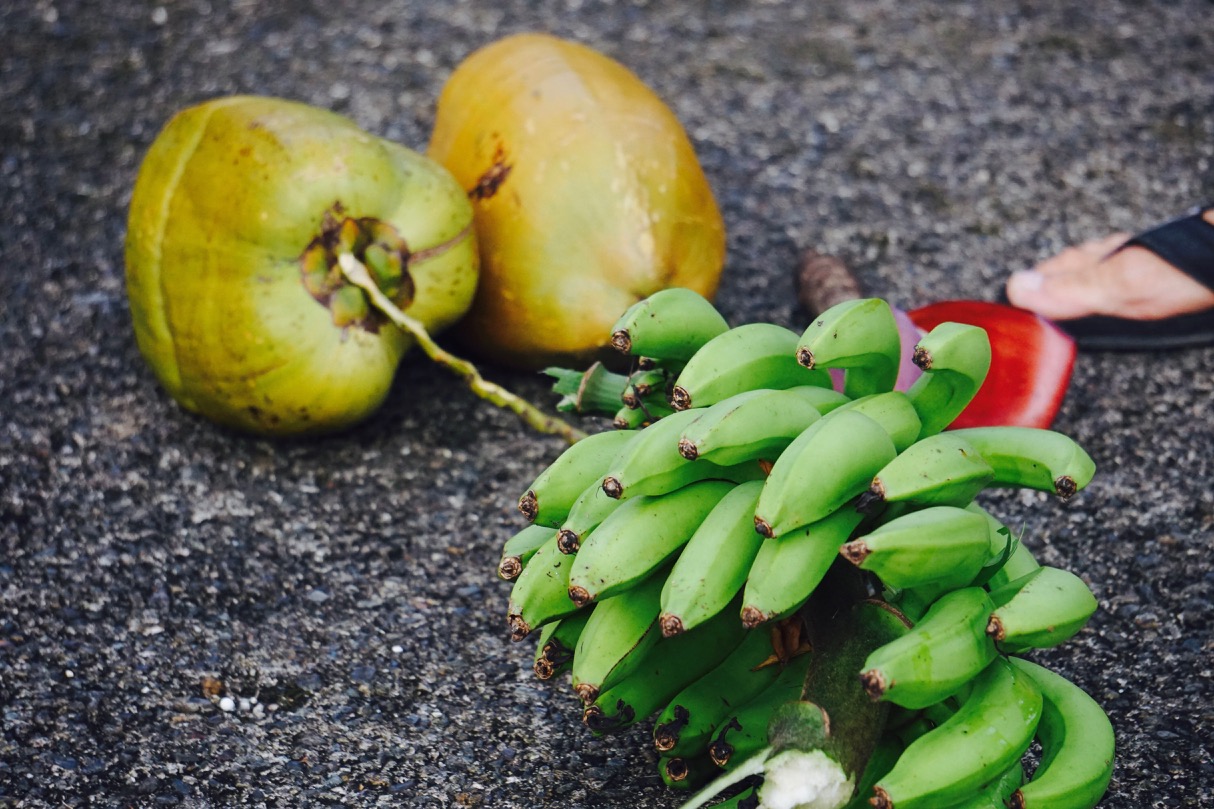
We walked along the abandoned streets and decided to bring Dad next time so it would not be so scary to peer through doorways and wander down the back alleys. As always, the captain approached the matter with all his customary practicality, and we left the town carrying a gigantic stem of bananas and two enormous coconuts.
The captain’s haul
The bananas turned out splendidly — they do not ripen all at once on the stem, but in batches of about 6. Tomorrow we’ll go again — for food and a photographic catch.
We wrote for the My Planet portal about another dead town-prison visited by the crew in French Guiana:
Instead of an Epilogue
Shelter Bay Marina is a strange place, you could even call it mystical.
When you arrive from the sea, you think: “Oh... And they said it was an amazing marina.... But everything here seems rather plain and small.”
Then you go into dirty, unwelcoming, crime-ridden Colón, and when you return you step into your own clean shower with hot water, sit by the pool, grill barbecue under the awning or listen to a local talent show in the area beside the restaurant, cycle through the jungle, and realise — Wooow!!! This is amaaazing!
Photo Gallery 🙂
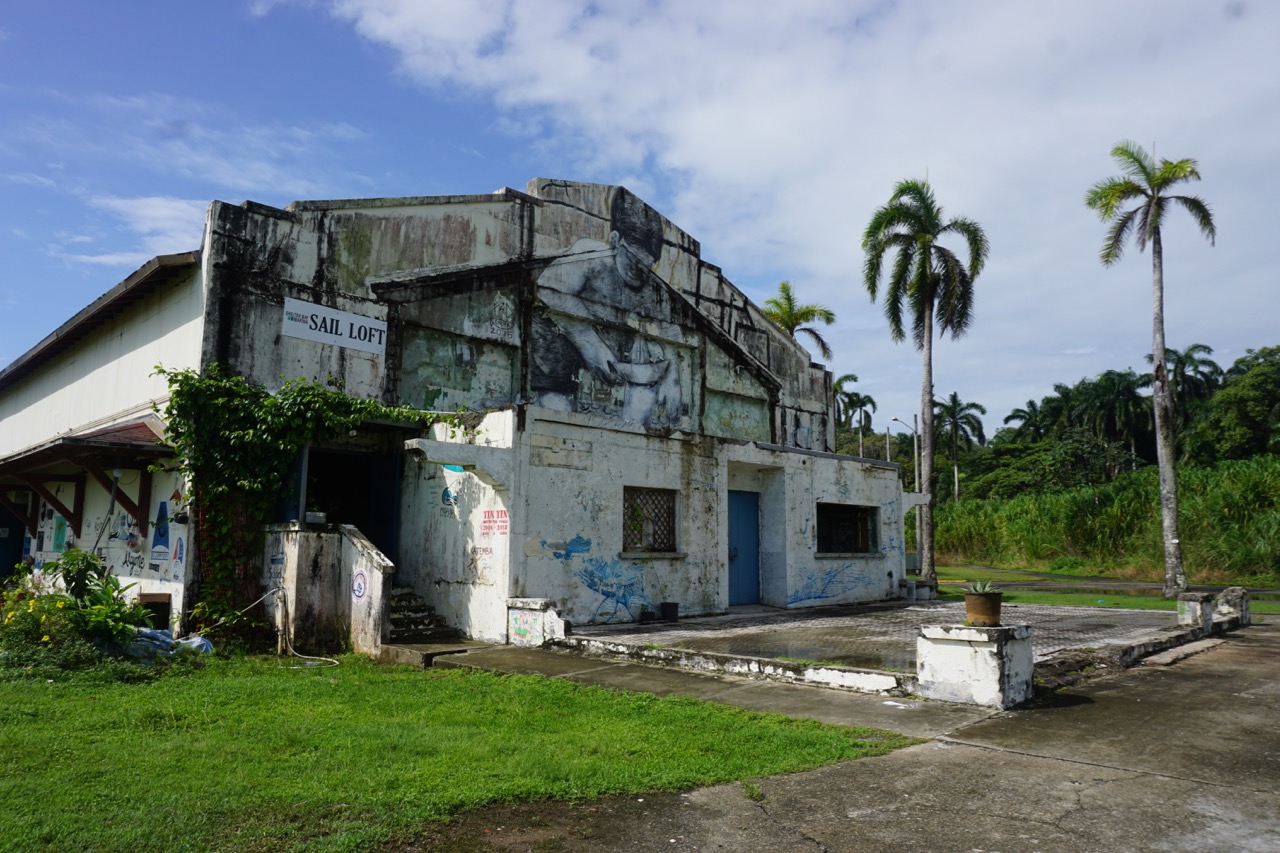
Now the sailmaker April reigns here, but once this was the Palace of Culture named after the abandoned town
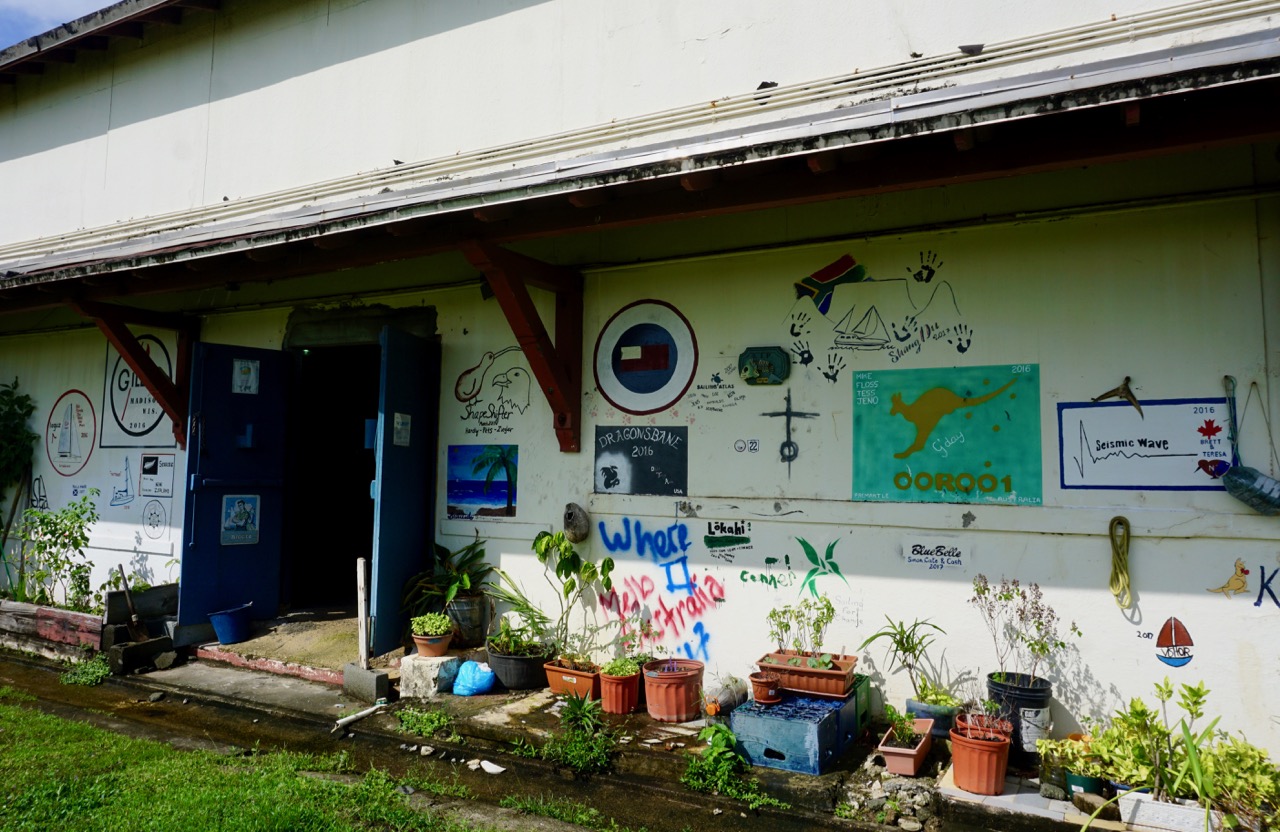
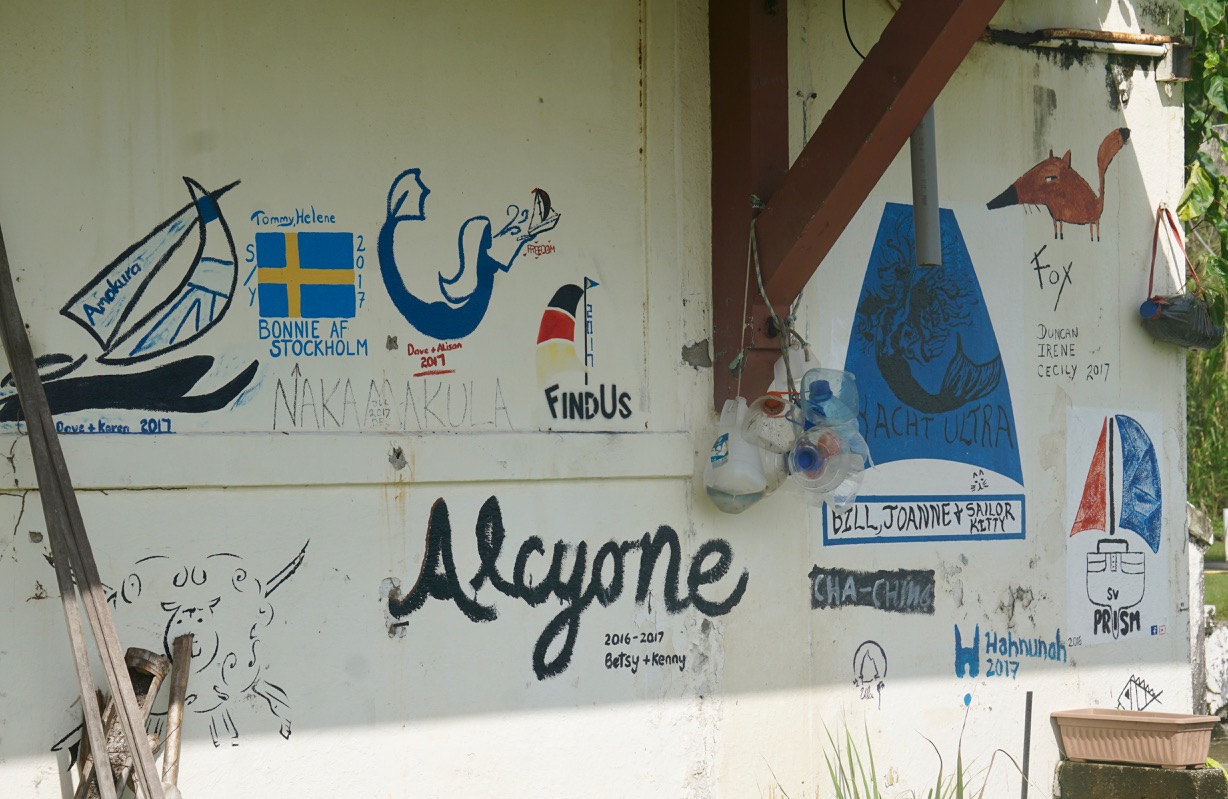
It is customary to leave commemorative inscriptions on the walls of the sail loft recording the yachts that have visited. We did not find a single Russian yacht among them. Looks like we’ll be the first 🙂 An autograph to remember us by 🙂
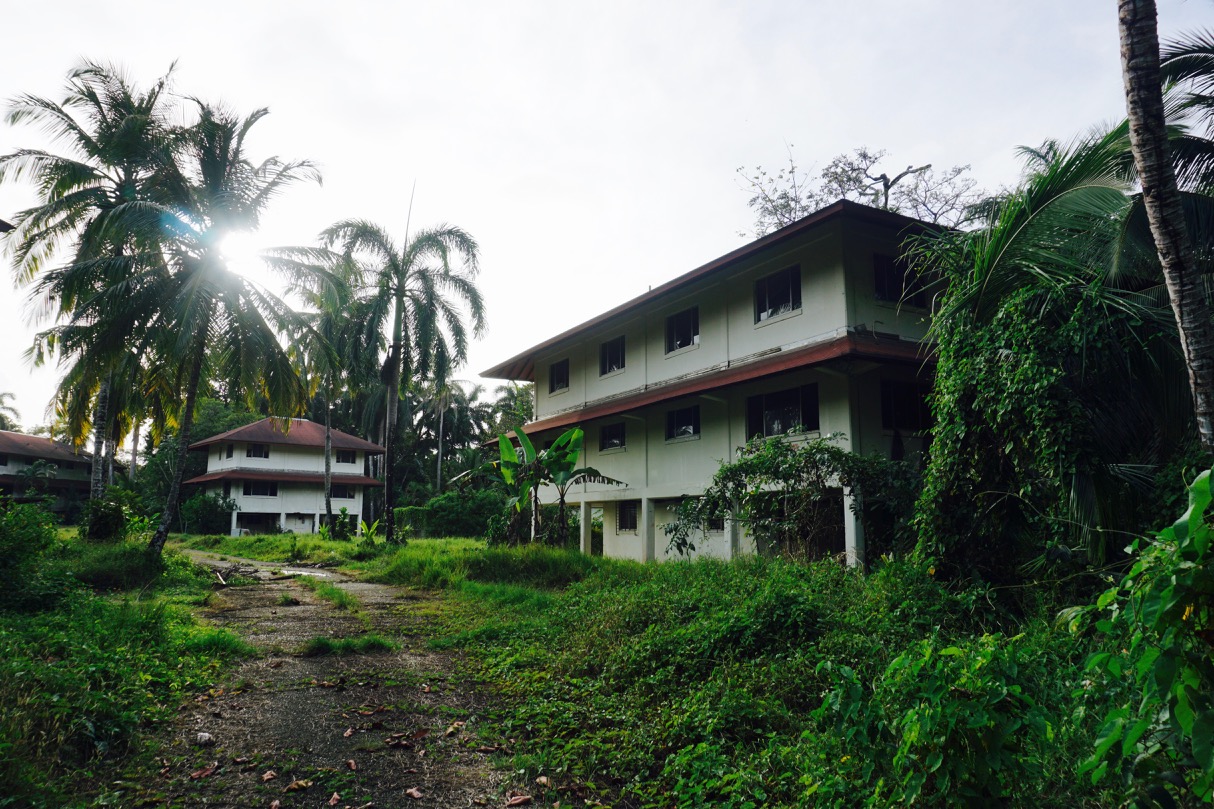
Entrance to the lost town
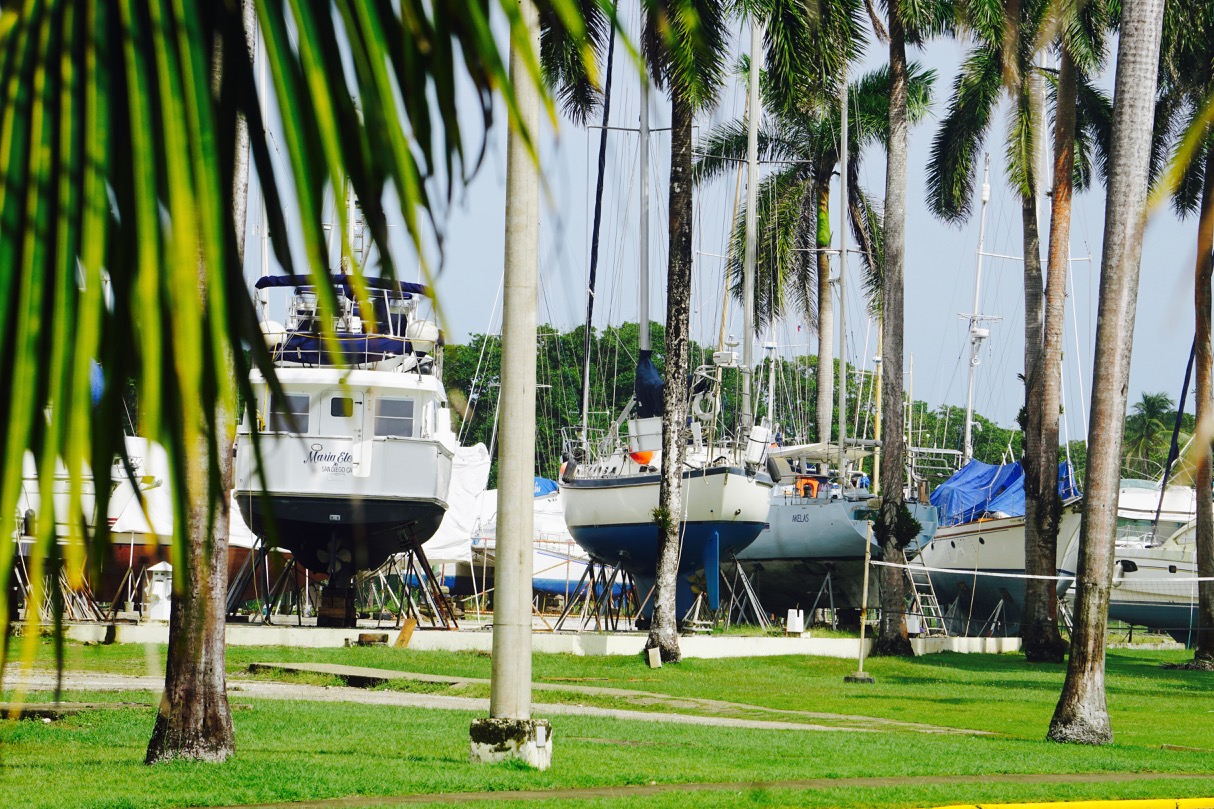
The shipyard at Shelter Bay
A howler monkey at its meal
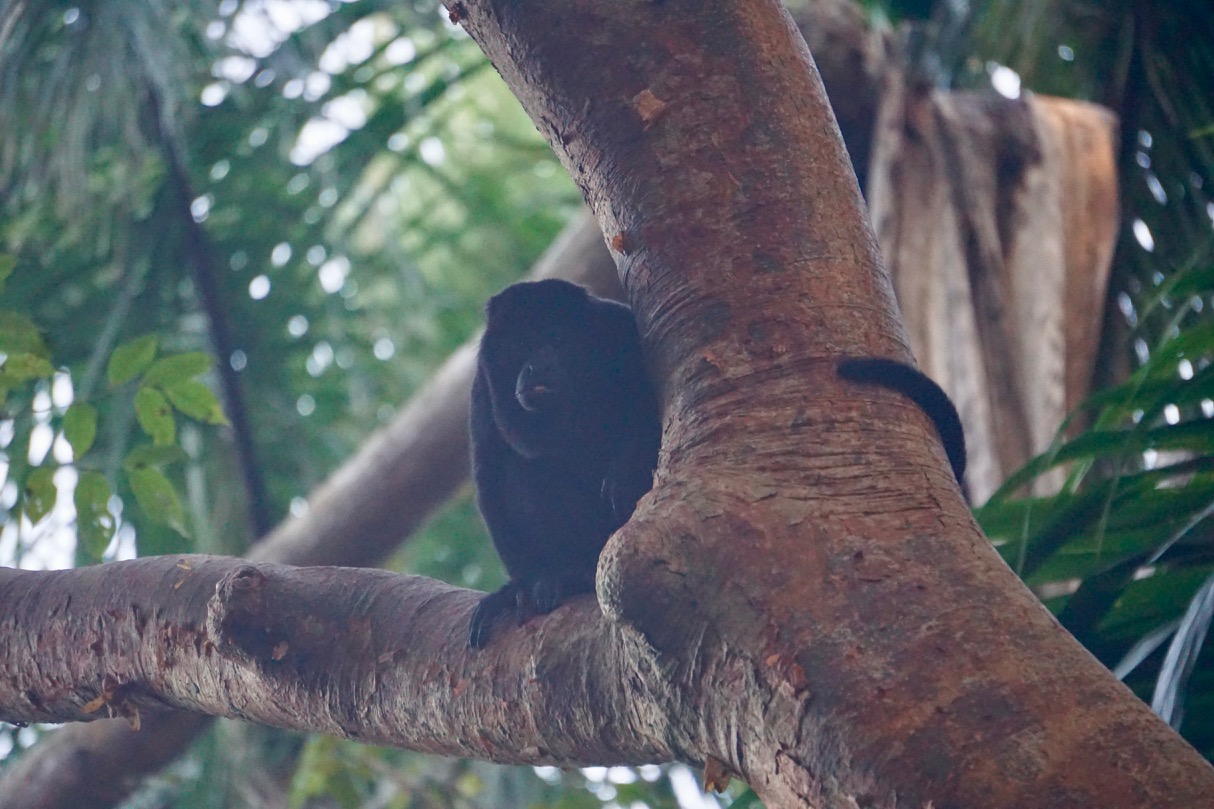
A male howler decides whether we are worth bothering about
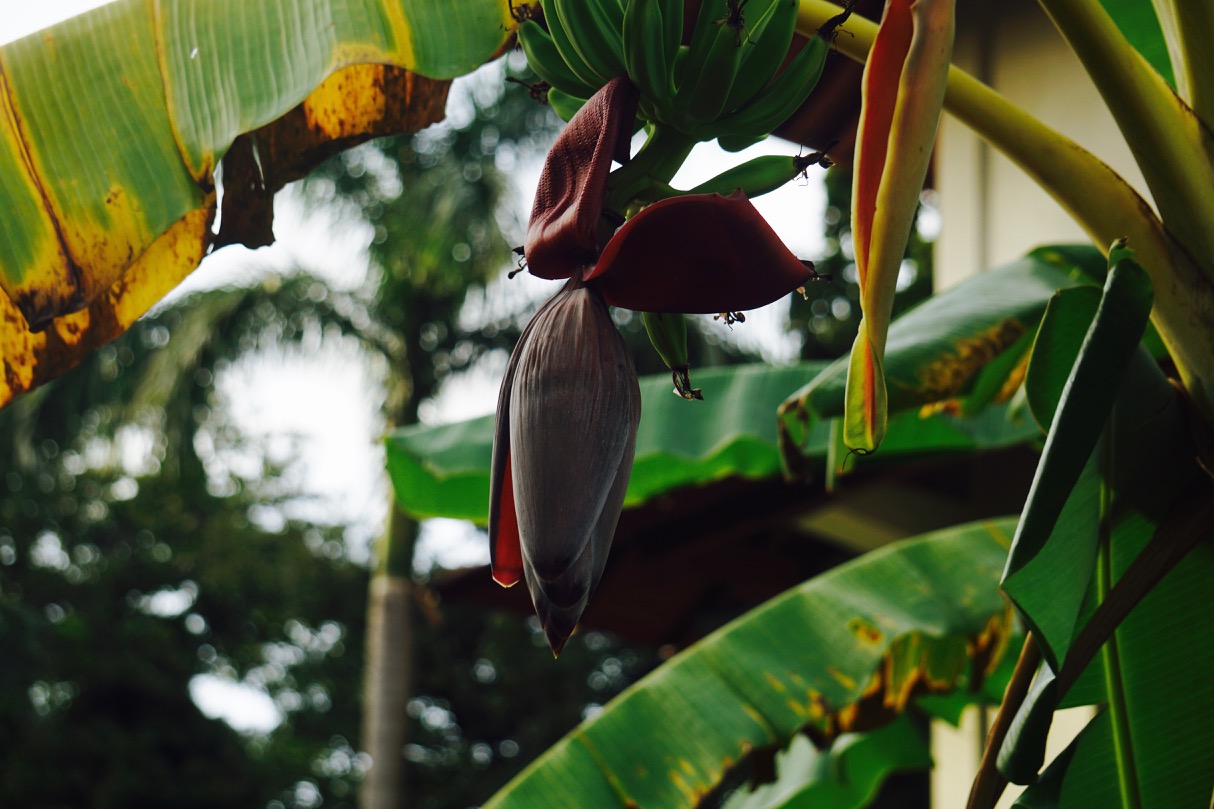
A banana flower in the lost town
A street in the abandoned town
The road out of the abandoned town
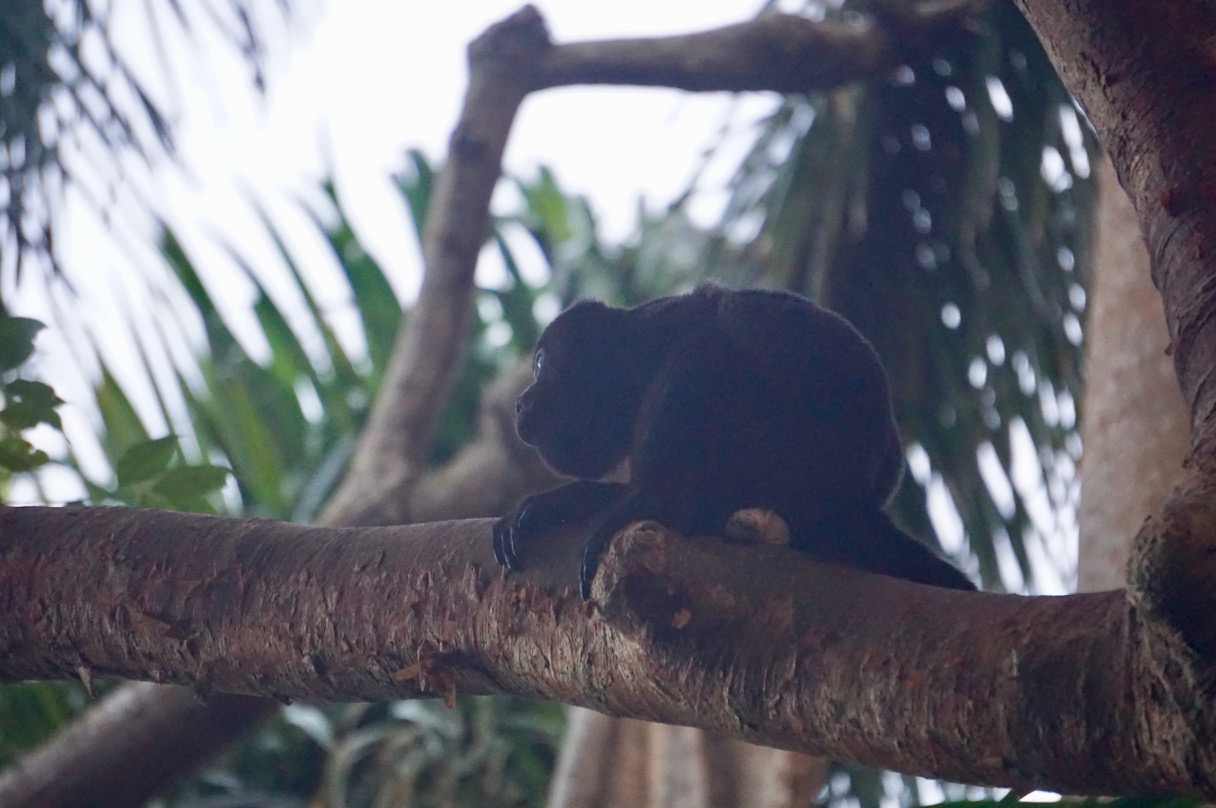
A howler relaxing )
To be continued. Wishing everyone wonderful discoveries!