
From the Travely-Family archive · Australia and Tasmania
How to Overcome Fear
An original publication from the former Travely-Family website. This English translation was preserved from the technical-site archive without editorial rewriting.
A road trip across Australia, mountaineering with children—climbing the world’s tallest lookout trees. How to overcome fear, climb to the height of a 20-storey building without a safety harness and... with Mum’s permission
Courage is not the absence of fear; it is the ability not to let fear paralyse you
Fifty metres above the ground, people turn into ants, while I press myself against the trunk of a giant tree, replaying Paulo Coelho’s words in my head.
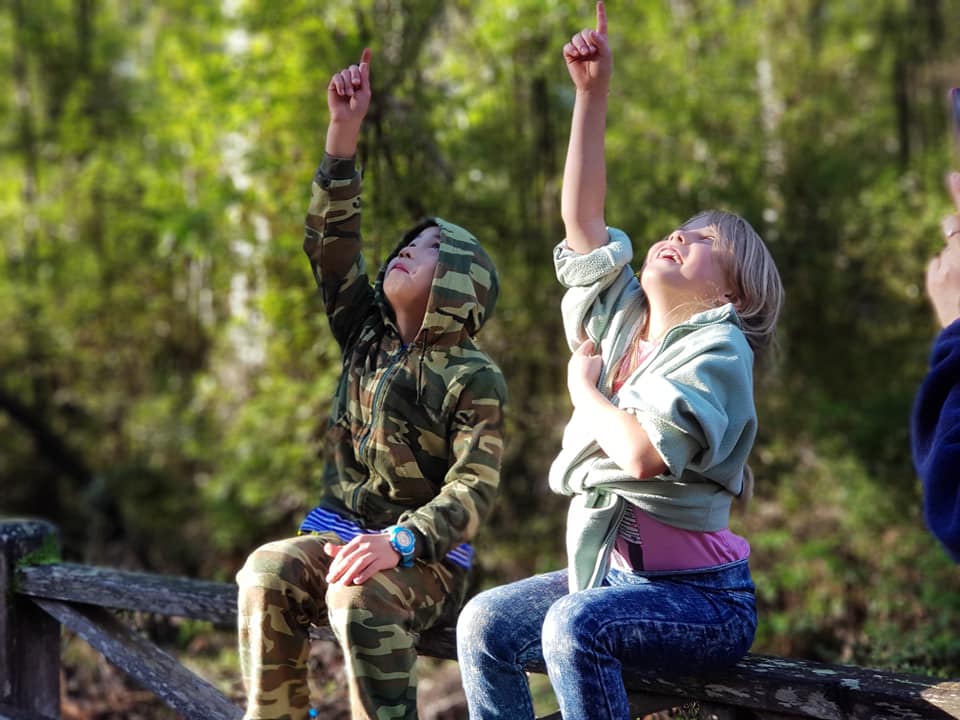
The tallest of the giant trees
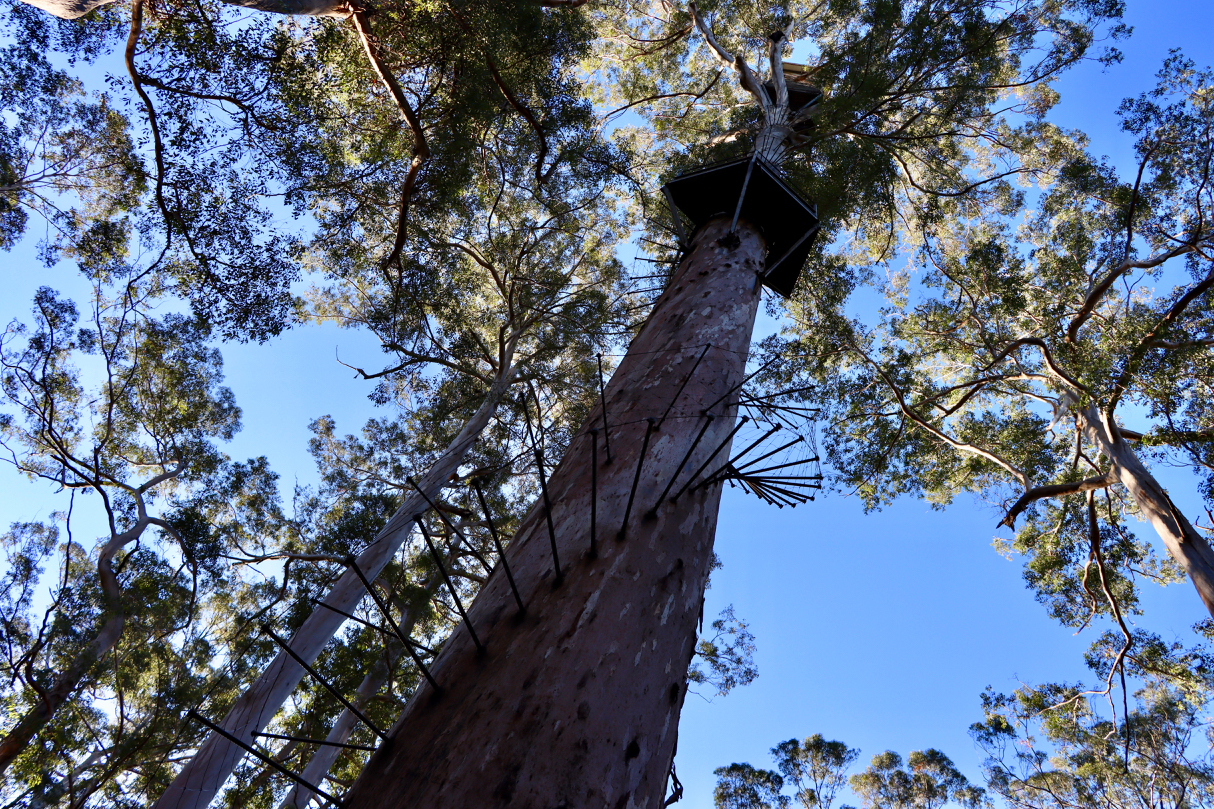
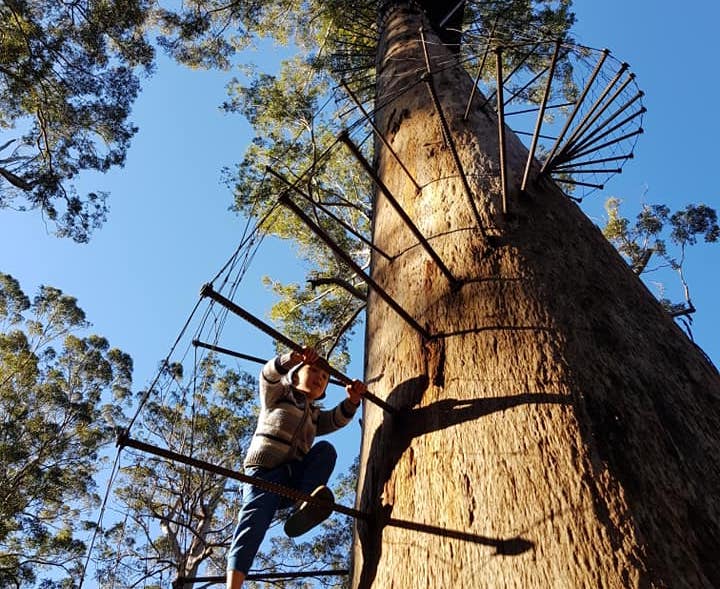
Half-metre steel reinforcing-bar spikes snake around the enormous karri tree. There is a nominal safety cage, but only above the rungs, whereas... you fall downwards. And the gaps between the bars are wide enough to fly straight through—even embracing your neighbour, never mind on your own.
Nastya is somewhere above. Ladunya is climbing behind me. Following in my footsteps.
Mum, I’m scared!
Hold on tight. Put the middle of your foot on the rung. Closer to the trunk. Don’t look down, only at the rungs.... Well done... I’m proud of you... Stop. Control your hands; grip the bar tightly. Look around. Look down too....You need to catch your breath and overcome your fear.
Instinctively, I stop the stream of word-thoughts in my head, pause and look over the crowns of the giants. There is another three-storey building’s height to the platform, only about 10 metres. Just a little way, considering that we are already at the height of the 15th floor. We can rely only on the strength of our hands; there is no point praying for a safety line, because there isn’t one.
Perhaps you’ll say this is madness?
Climbing that high and taking a child with you? You know, I think so myself. There are three giant trees around Pemberton, standing 51 metres (the Diamond Tree), 61 metres (the Gloucester Tree) and 75 metres tall (the two-hundred-year-old tree named after Dave Evans). The Diamond Tree was closed to climbers in 2019; we climbed the other two. It is strange that children are not prohibited from climbing the giants. There is no safety cable, nor a guard in a fluorescent yellow vest. Just a small queue of people beside the Gloucester Tree, all wanting to overcome their fear of heights.
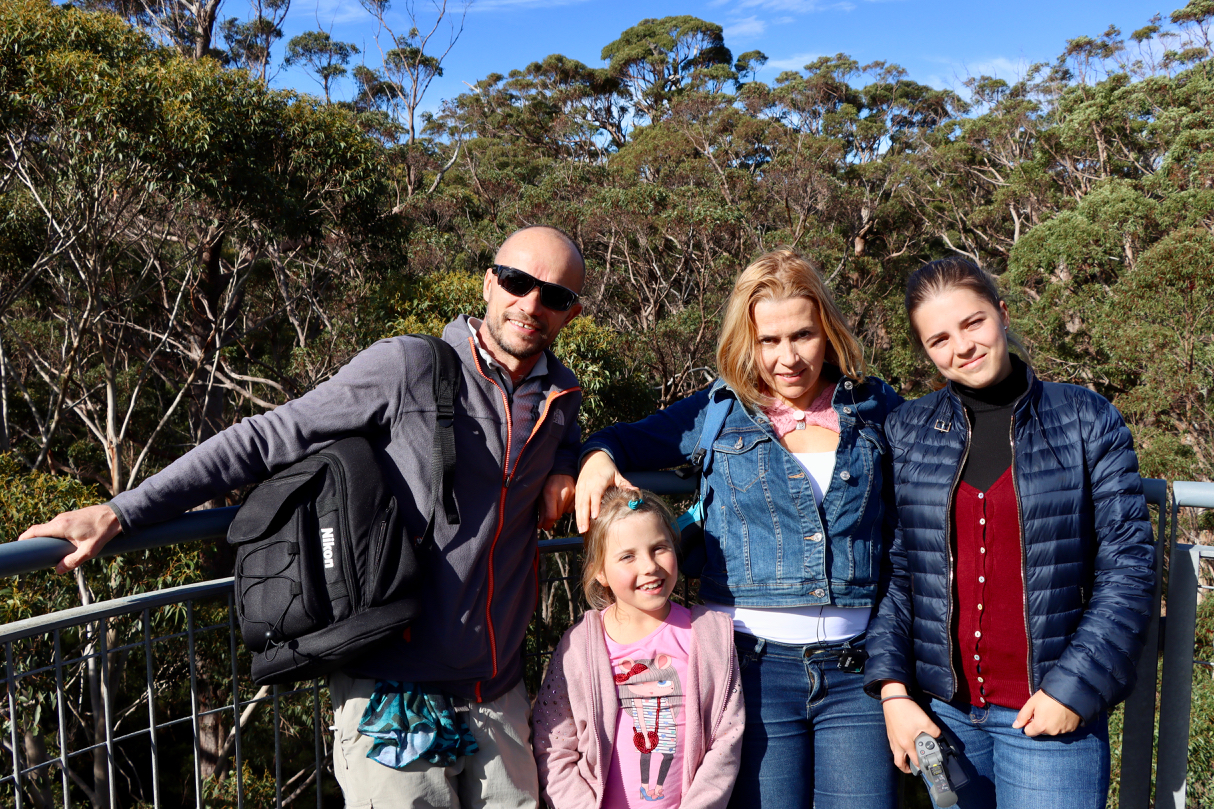
In the forest of giant trees
I had no idea that, in our age of safety-conscious attractions, this sort of climbing freedom was officially permitted. It takes you back to a fearless childhood, when, swaying on the tower of a construction crane, you were afraid of only one thing—your parents finding out. True, they did not build twenty-storey blocks in our city, so we never climbed higher than the ninth floor. But even that was enough to overcome fear.
I climb the final 10 metres, comforting myself with the thought that Lada is neither the first nor the last child to scramble to the top of this former fire lookout. And if the tree is open, then nobody before us can have fallen from it. So I simply teach my daughter to control every muscle involved in gripping.
Phew!—the young sailor gratefully slithers onto the timber platform. We did it! I was sooo scared!—the metal mesh feels pleasantly cool against my cheek. At last I can lose myself in the endless waves of eucalyptus forest without being afraid of ending up plastered against its roots.
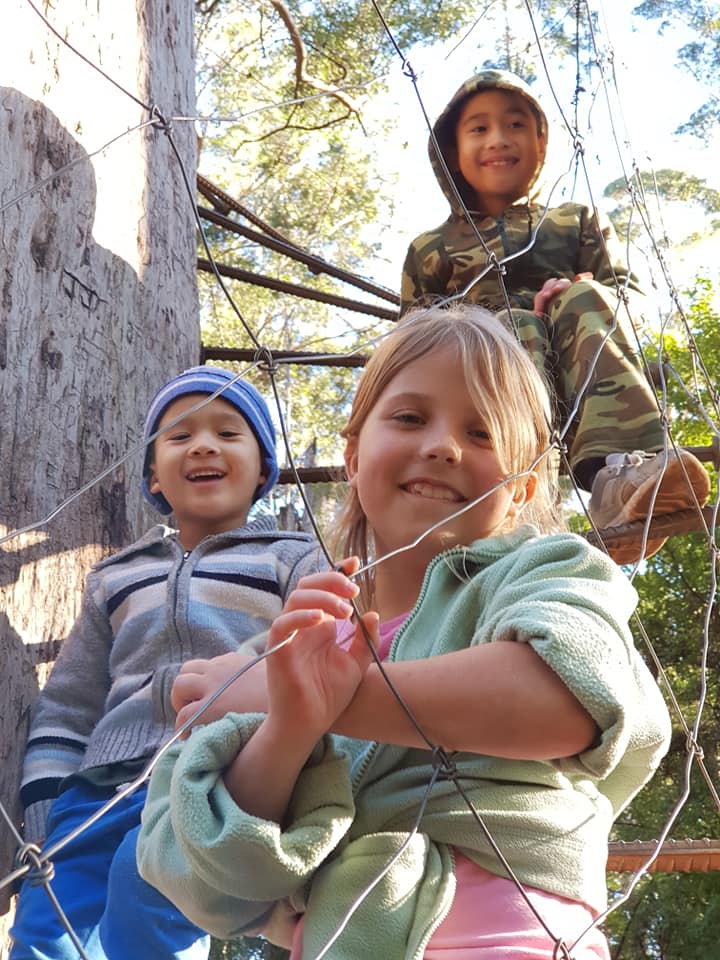
And we still have to go back down!.
The brave person is not the one who is fearless, but the one who manages to overcome fear. When I said I was scared, many people were surprised, remembering our wealth of extreme experience.
After mentally soaring above the tallest forest in Australia’s largest state from the lookout platform beneath the giant’s crown, we headed down. In the same position, facing the spikes, feet first, we back down the ladder. And with every step it gets a tiny bit easier.
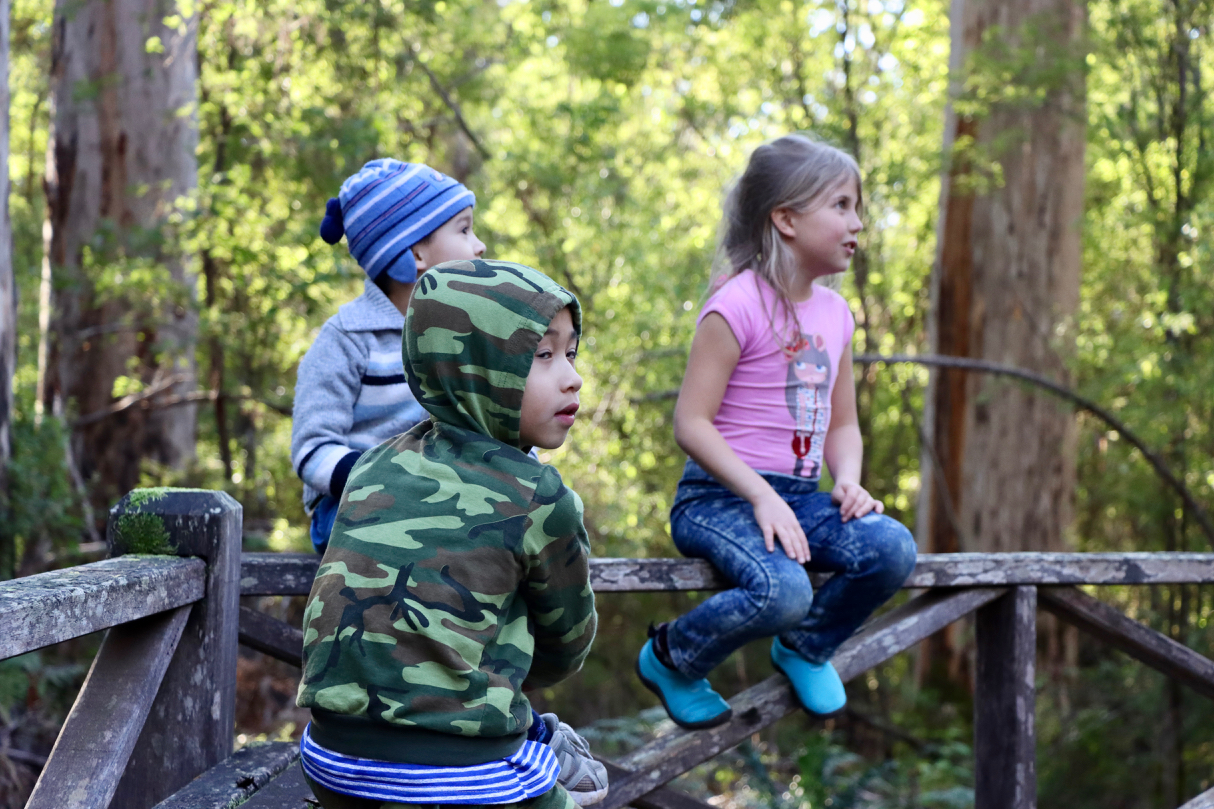
The children also started climbing the tallest, 75-metre tree, but only went halfway. There was a sign on the platform saying it was better not to continue. So Lada and the two sons of our friends Brian and Yulia—thanks to whom this amazing caravan trip happened—waited for us below, having already dashed up and down the spikes twice to a height of 25 metres.
Photo by Brian Yeo.
On fearlessness
You may be surprised, but fearless people do not exist. In other words, doing frightening things frightens everyone. But there is a force that can overcome fear. It kicks in when you tell yourself:
Damn it, if they could do it, why can’t I?
“They” could be someone climbing a 70-metre tree ahead of you right now, or a world gymnastics champion, or Magellan and Amundsen, for that matter, plus Bill Gates. You can always find an example of someone who succeeded. It is easier to go second. Firstly, there is a positive example; secondly, there is ambition, a test, a “challenge,” as it is fashionable to say now.
And when you manage to overcome fear, a reward comes. It is almost ecstasy. By conquering your fear, you rise one step above the person you were yesterday, and you see clearly that you are capable of more than you previously thought.
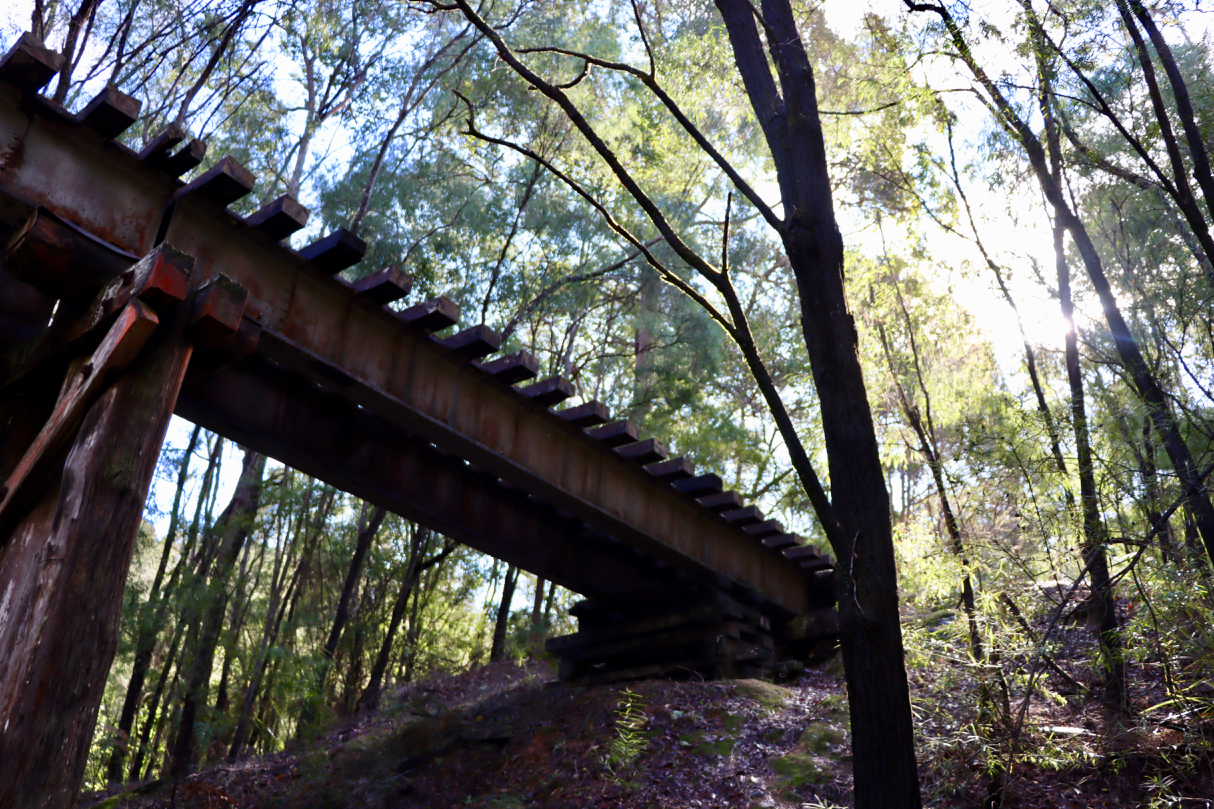
An abandoned narrow-gauge railway bridge. Photo by Brian Yeo.
How to overcome fear. My method
When fear pressed me closer to the trunk and my hands trembled from the strain, I felt the full depth and sheer unpleasantness of that chilling fear. That feeling when you are physically unwell. “Don’t let it paralyse you.—Remember, from Paulo Coelho?—I’m strong, I’m tough, I’m brave...” —And the next step comes more easily.
The main thing is to choose the right words and force yourself to keep repeating them in your head. When positive affirmations push out the bad thoughts, it really does become easier. Believing that you are strong, brave and lucky slowly becomes second nature. Without noticing it, you start behaving as though you really are that person. After all, if you do not believe in yourself, who will?
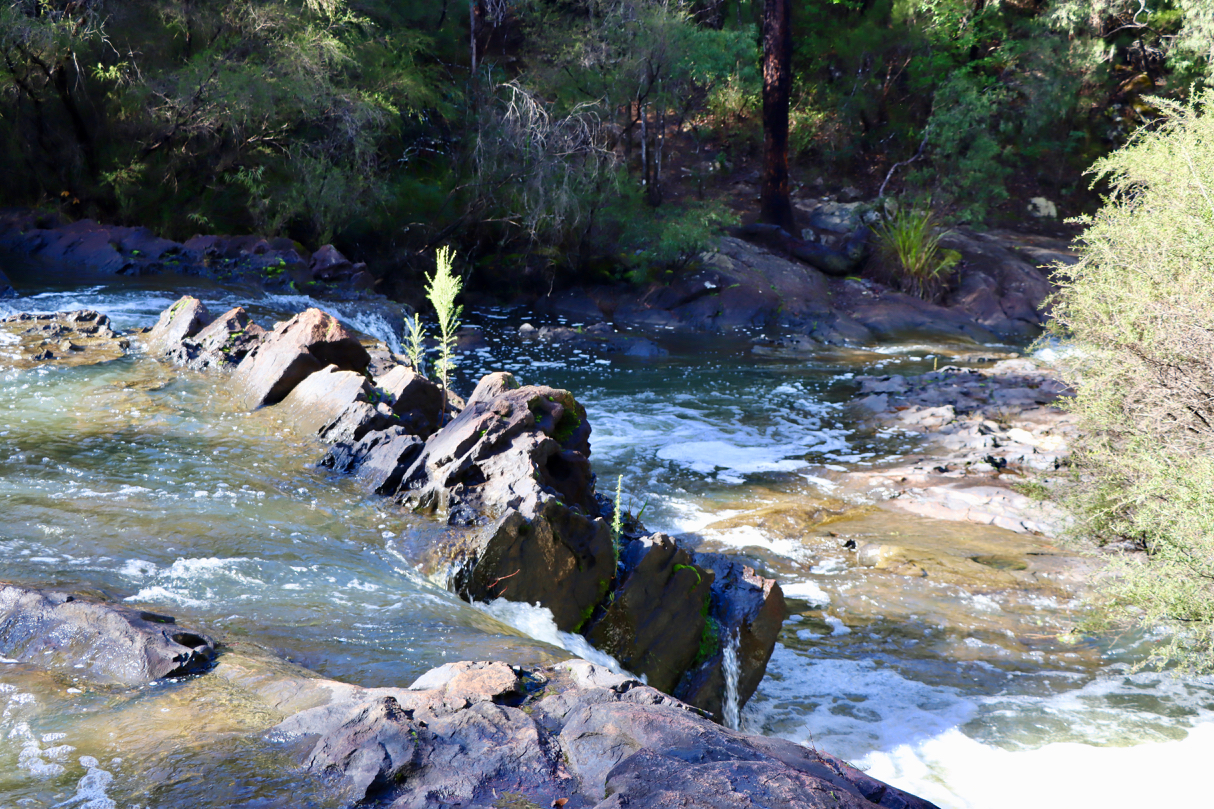
Terrifying monsters live in this river—50-centimetre leeches with teeth. They bore into a fish’s head and hang there until their catch kicks the bucket... horrifying
But let us return to the fear of heights. What helped specifically with that was intuitively shifting the focus of my attention between different senses. If fear is fuelled by thoughts in words, you need to switch, for example, to visual perception. I would stop and, clinging to the bars, look around. A minute later, and you are almost back in your comfort zone.
There must be no rushing, as in any undertaking where your life depends on your concentration. Mistakes are made when you are agitated.
For marathon-length stretches of fear, a different method works. I used it when we decided on a 62-day passage through the stormy latitudes from the middle of the Pacific Ocean to Cape Horn. I remember waking up the morning after we turned for Antarctica in horror: “Lord, what have I got myself into? #ButImAMother!
I divided that marathon into stages, with an opportunity at each stage to turn back if something went wrong. And it became less terrifying.
This is Ilyusha; he is 5 years old:). Photo by Brian Yeo
Guys, tell us: are you afraid of heights? And what do you do when you begin to feel afraid? Do you carry on or turn back? What usually tips the balance?
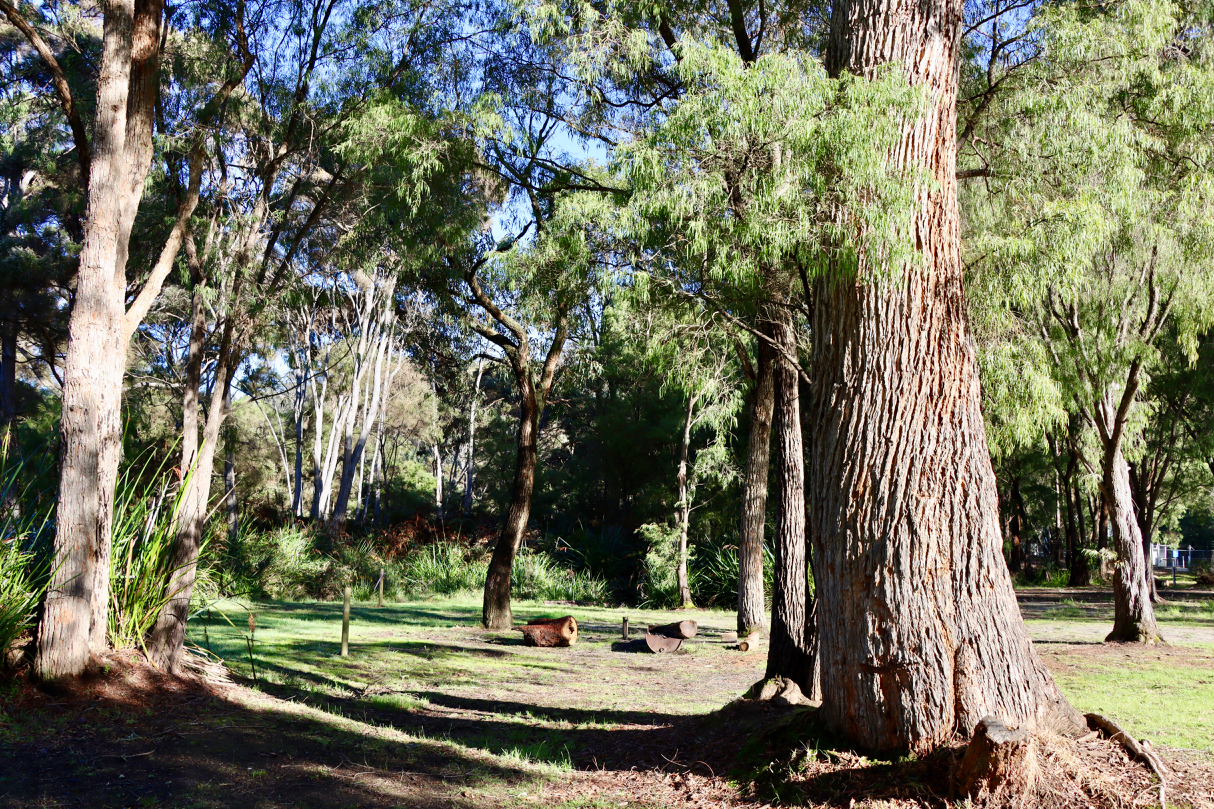
How fires were spotted before the helicopter era
The tallest forest in Western Australia is named after the town on its outskirts—Pemberton.
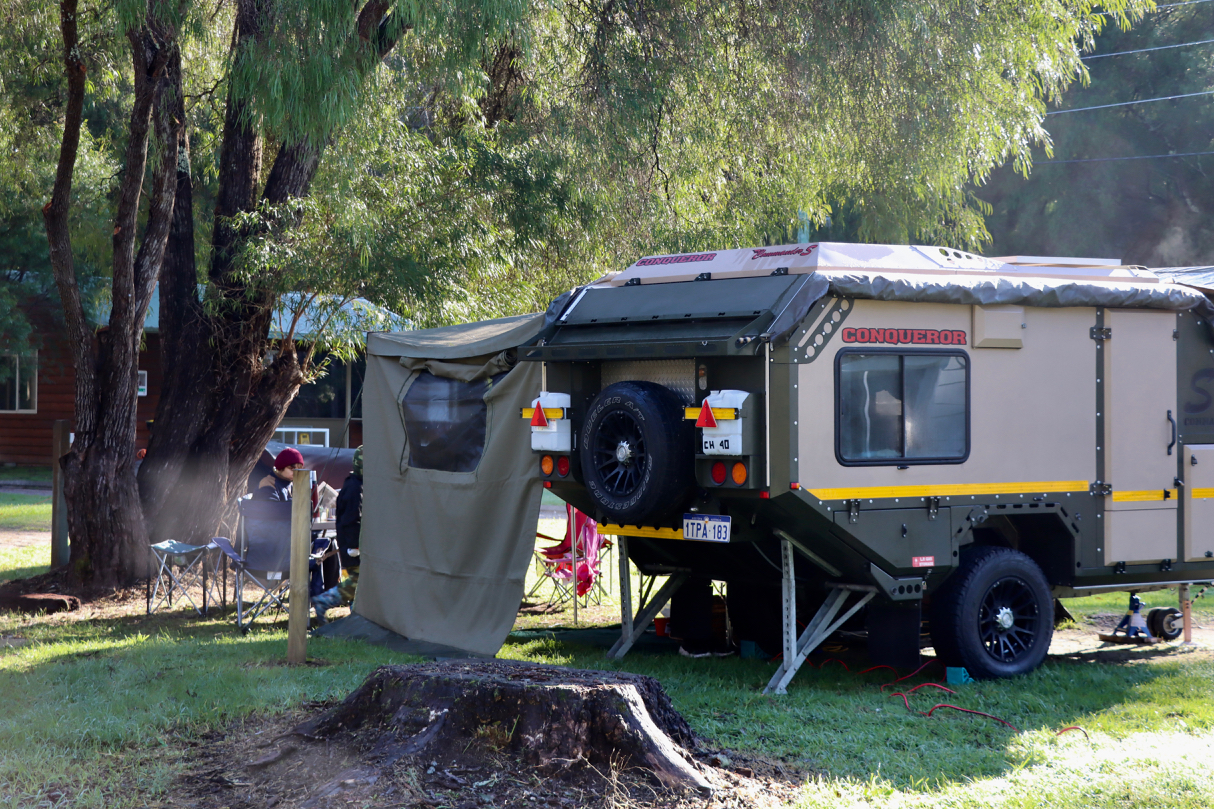
Besides the pleasure of staying in an equipped caravan park for at least AU$40 a night, there is plenty to see in the area. Here, the world’s tallest (!) climbable lookout trees prop up the sky. They grow in Warren National Park. This is a very old, immensely tall karri forest (karri is one of the endemic eucalyptus species).
Eucalyptus trees in the caravan park
The champion of the three giants is the tree named after local politician Dave Evans. It was adapted for climbing in 1988 to mark Australia’s bicentenary. Incidentally, the tree itself is approximately the same age as the country (not the continent). Wikipedia gives its height as 65 m (213 feet); elsewhere I saw 75 metres. Presumably, these are the heights of the platform and the crown respectively.
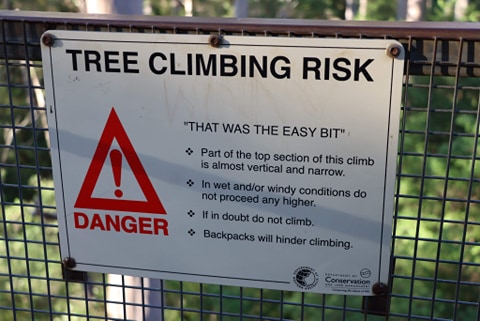
The world’s tallest lookout trees
All three giants (there used to be nine) were used as fire lookouts. The former fire lookout towers have now become an awesome tourist attraction. There are 165 spike-rungs leading to the upper platform, followed by several more ladders from one platform to the next. Things are easier with the shorter tree—there is only one platform, and it is 10 metres lower. Our young sailor climbed that first tree all the way to the top. Halfway up the second tree, there is a sign saying that up to this point it has been child’s play, but from here on things get seriously hairy. So you had better turn back. We had to send the children down.
As a bonus, everyone who reaches the top of the world’s tallest climbable tourist tree is treated to a view over the karri forest and, beyond its crowns, glimpses of the white Yeagarup sand dunes. If you strain your eyes, you can even make out a sliver of the Indian Ocean.
That was day 2 of our caravan-and-tent trip through southern Western Australia. On day 3, we hurried along a road-bridge suspended in mid-air beneath the crowns of other giants. The bases of the trees pretended to be caves, while the world’s most smiley marsupials hid in the grass—quokkas, either miniature kangaroos or rats with pouches. Until then, we had thought they lived only on Rottnest Island.
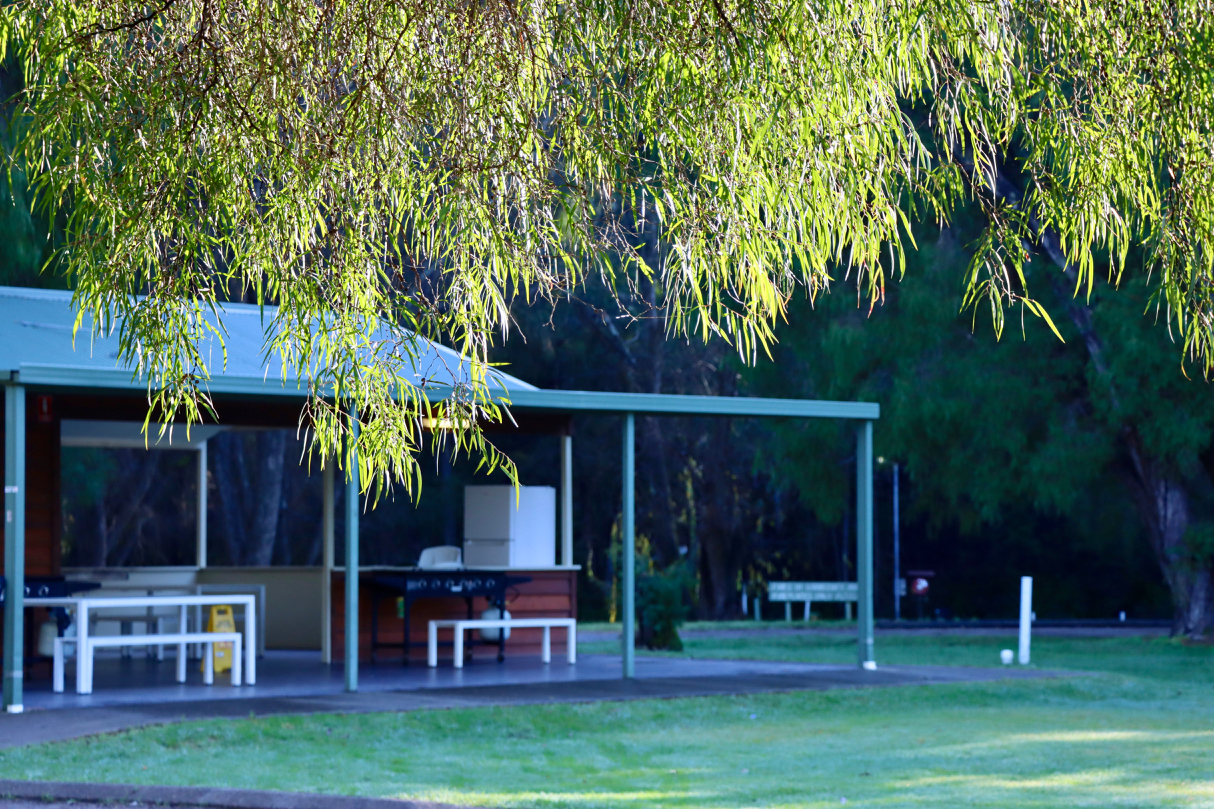
Australia by caravan
Travelling by motorhome is Australians’ most popular way to travel. The country is vast; everyone flies to Bali or New Zealand for their holidays. Or they do not fly, but clock up the kilometres around this enormous country because flights are so expensive. Although... flying to Bali is cheaper than touring the country in a motorhome. That is because a night at a caravan park for a family of four, a car and a tent costs from 45 Australian dollars. Well, at least that is how it is in southern Western Australia. On the upside, you get access to all sorts of facilities.
And the trip to Pemberton and the surrounding area inspired us so much that, barely back at the boat, we are setting off again the very next morning—only this time inland, heading east.
Unfortunately, Brian will not be able to come with us. So our captain takes charge of the road train (a Cruiser with a trailer) and a crew consisting of his wife and daughters, plus Brian’s wife and their boys. We are going to places where gold is mined. They say you can still find a nugget or two there if you search thoroughly. That is what we are going to do. Our route will take in as many free caravan parks as possible, so we can see how they differ from the very expensive ones. We are bringing food and fuel with us. Tinned food and heaps of fresh fruit are our choice for snacks. And when we return, we will write a detailed post about travelling around the Green Continent in a motorhome or with a caravan. Would you be interested in a guide like that? Please let us know in the comments.
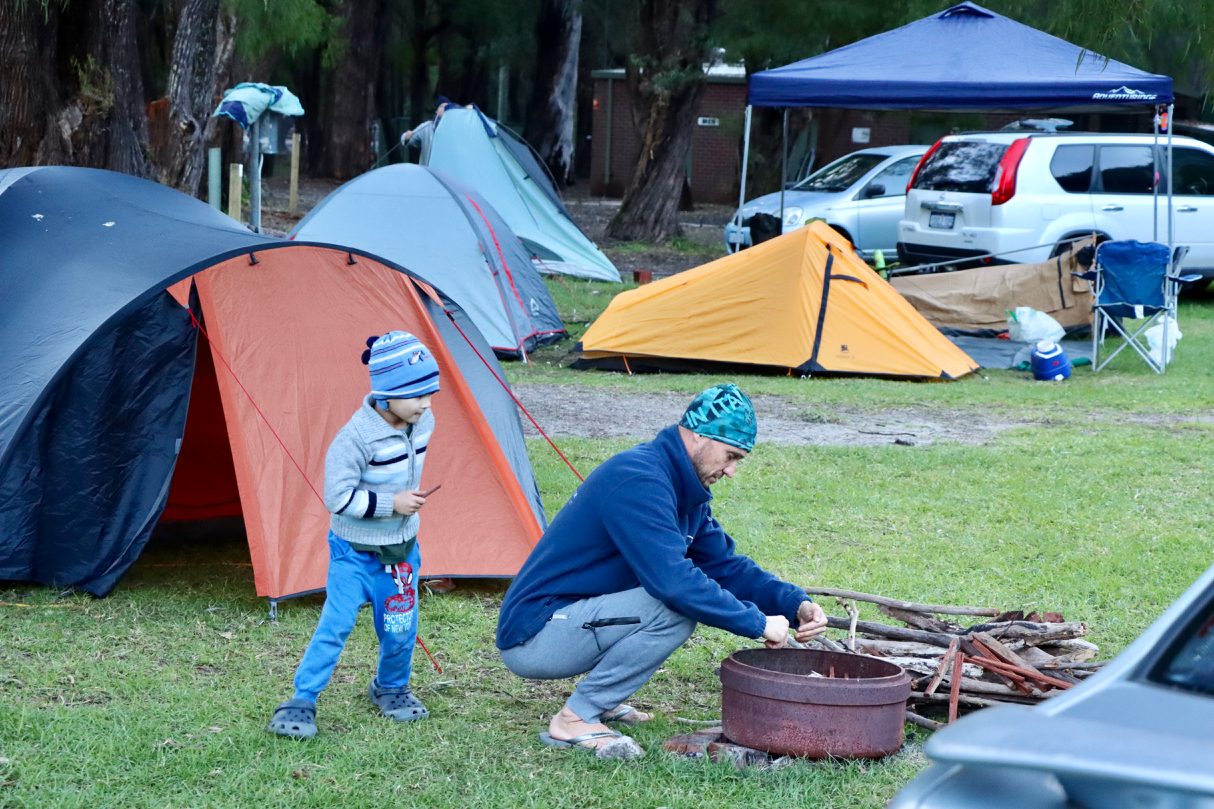
At the caravan park
Yes, for the duration of the trip we have activated our Iridium satellite tracker from MVS-Telecom. Thank you to them for that. You can now see us and the weather around us on the map. Right here, under the “Route” tab:
Hugs, friends!
Our heartfelt thanks to everyone supporting the expedition through
PayPal and Yandex.Money. Your support is very precious to us; it tells us that you find our material useful and interesting. That is tremendously encouraging. Thank you, our dear shore-based support team!
Our caravan (Brian and Yulia’s)
Cover photo—Photo by Brian Yeo