
From the Travely-Family archive · Australia and Tasmania
Koalas, Aboriginal People, and the Primal Instinct
An original publication from the former Travely-Family website. This English translation was preserved from the technical-site archive without editorial rewriting.
Only in Australia are the Aboriginal people (the original inhabitants) actually called Aboriginal people. While the indigenous peoples of the human world often closely resemble members of the Negroid race, the indigenous inhabitants of the animal world here look like no one else. But there is one feeling shared by this world of unlike creatures. Perhaps it is a primal instinct...
Rainy Season
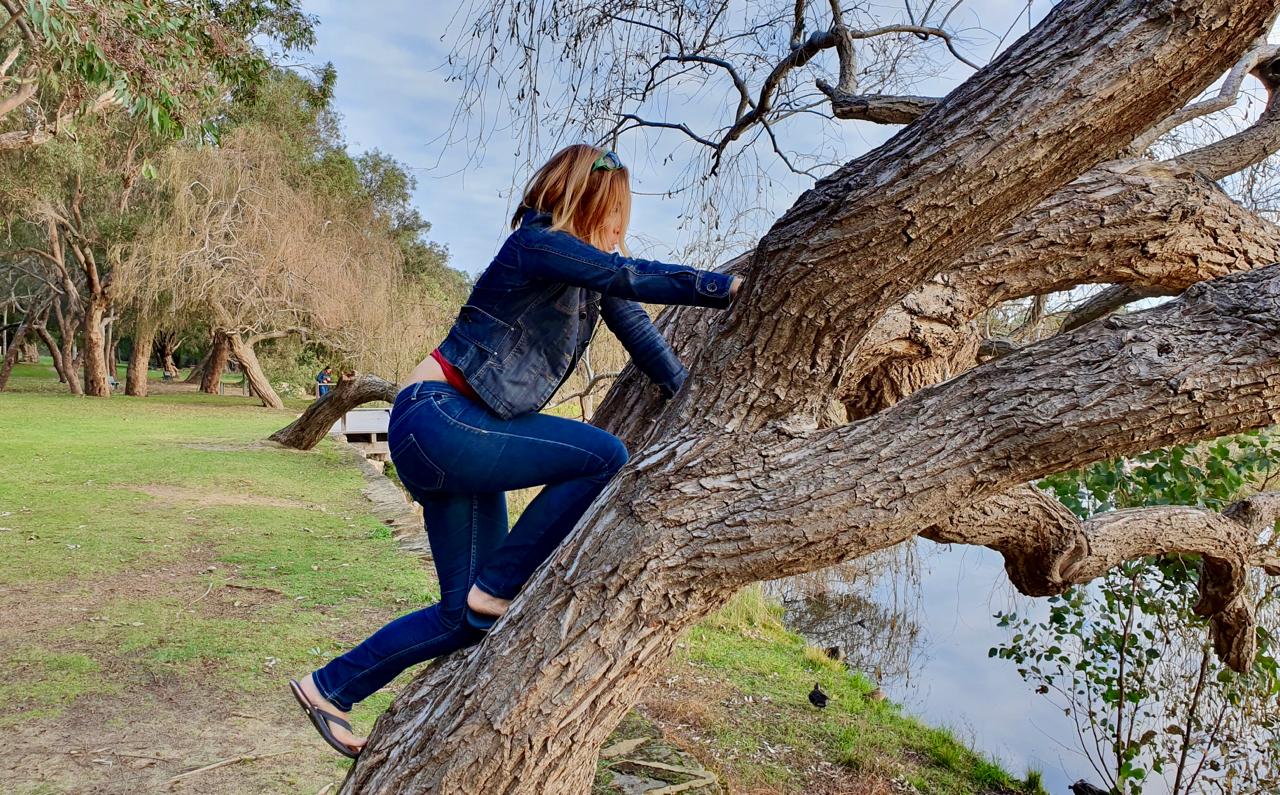
It is winter in Australia, and the rainy season is gathering strength. So far, this does not mean that the village of Gadyukino has been washed away. Because of the dry climate, the local wet season is nothing like the one somewhere in Central America. In sunny, humid Panama, especially on its Caribbean coast, once it starts pouring, it really gives it everything it’s got. Here, so far, it is moderate and even pleasant. The greenery has perked up, and the flowers are blooming, unaware that they are supposed to sleep in winter. The downpours, of course, arrive on the very days when we decide to emerge from our den and go somewhere.
or not go, but climb )
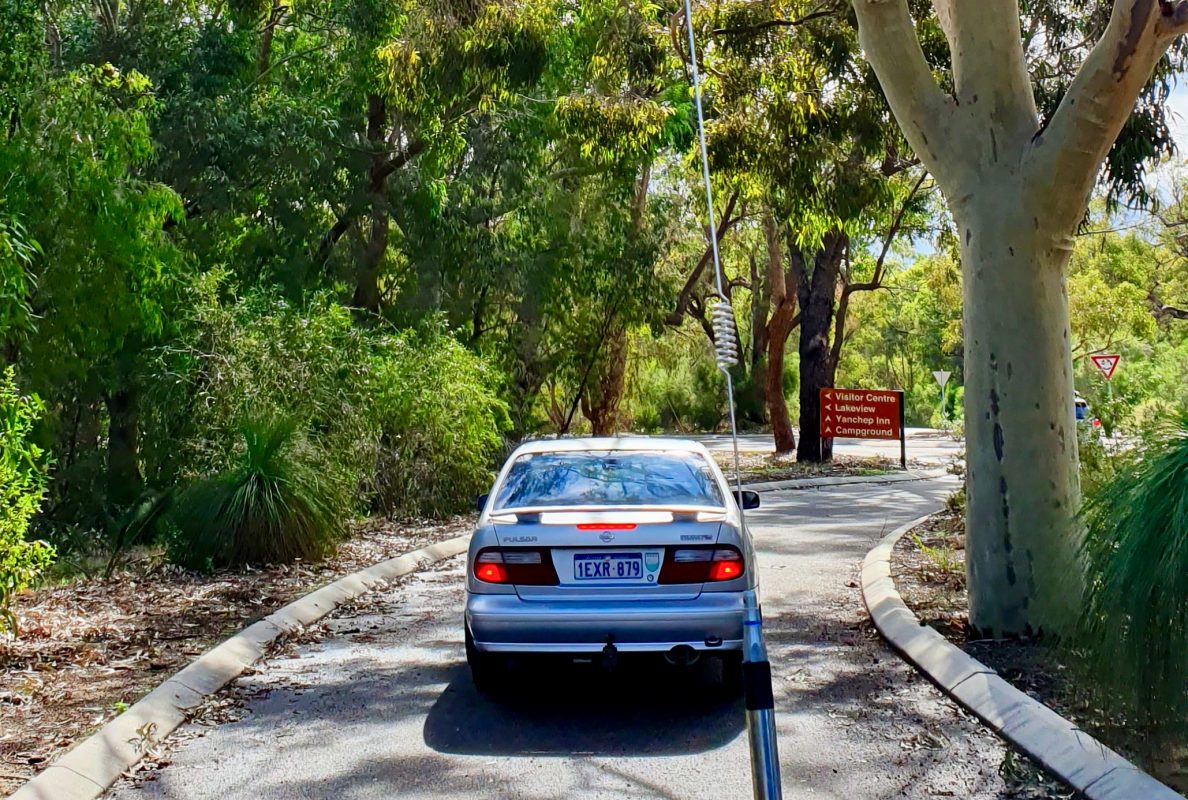
That is what happened last Sunday. After a week and a half of sunshine, we spent the night at our friends’ place so we could set out at the crack of dawn for Yanchep National Park, about 60 kilometres north of Perth. Instead of the alarm clock, a thunderstorm crashed overhead. A wall of rain engulfed the city and even tried to wash away the area around our yacht club (we discovered this only the next day from the puddle on the saloon sofa and the drifts of old needles and leaves on the grass and cycle path).
Praise Google, we knew the downpour was not forever, so we packed a basket of food and headed north..
Yanchep National Park
Until last Sunday, our young sailor was the only member of the crew who had seen not only a kangaroo, but also a koala. To eliminate this social inequality, our friends Brian and Yulia arranged this road trip, picnic, and walk. Sipping lattes bought at a petrol station, our convoy rolled towards the wilderness. The children in the back seat alternated between being bored and fighting for their place in the sun. The string of pretty houses gradually disappeared into an army of eucalyptus trees. Besides koalas and kangaroos, Yanchep is home to loads of local birds, including various cockatoos, as well as caves and a treetop ropes course beneath the eucalyptus canopy. But we will visit those another time.
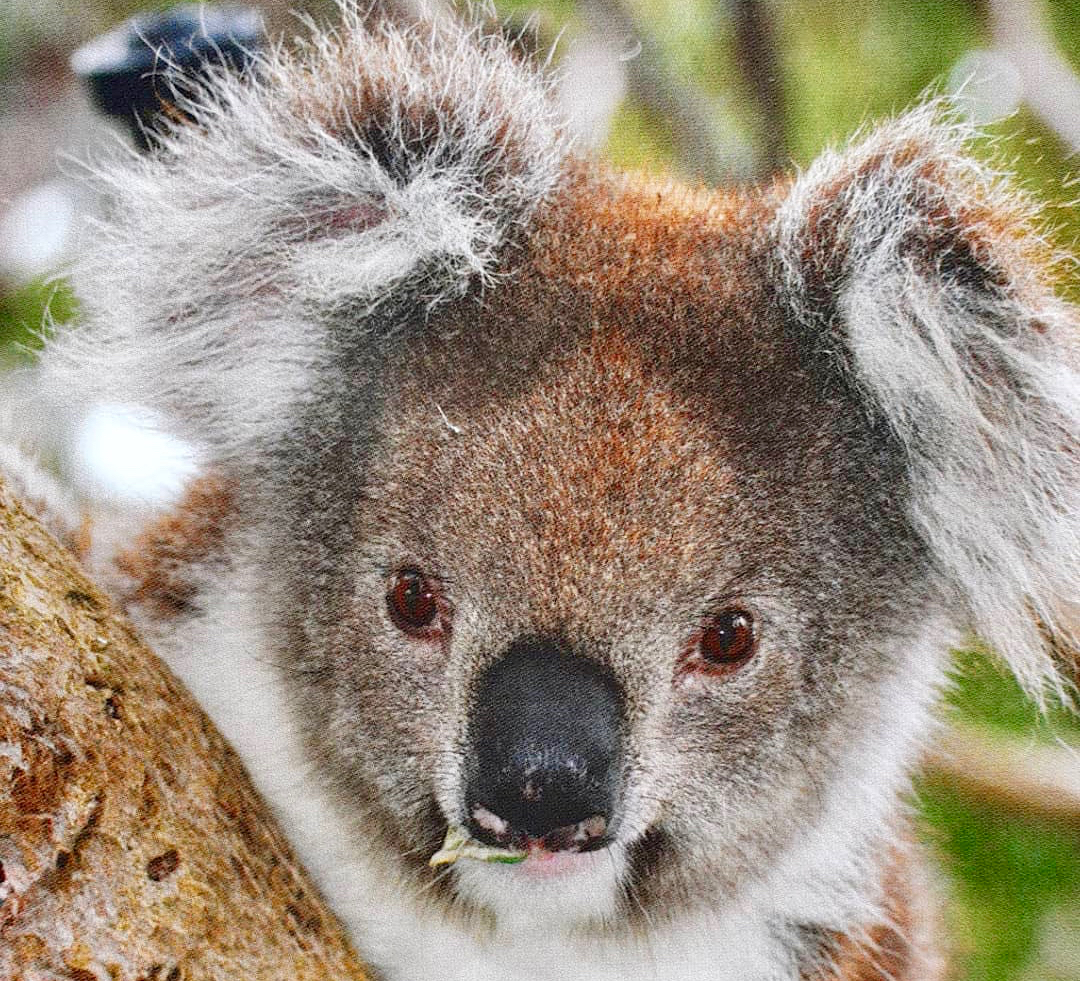
Koalas exist! 🙂
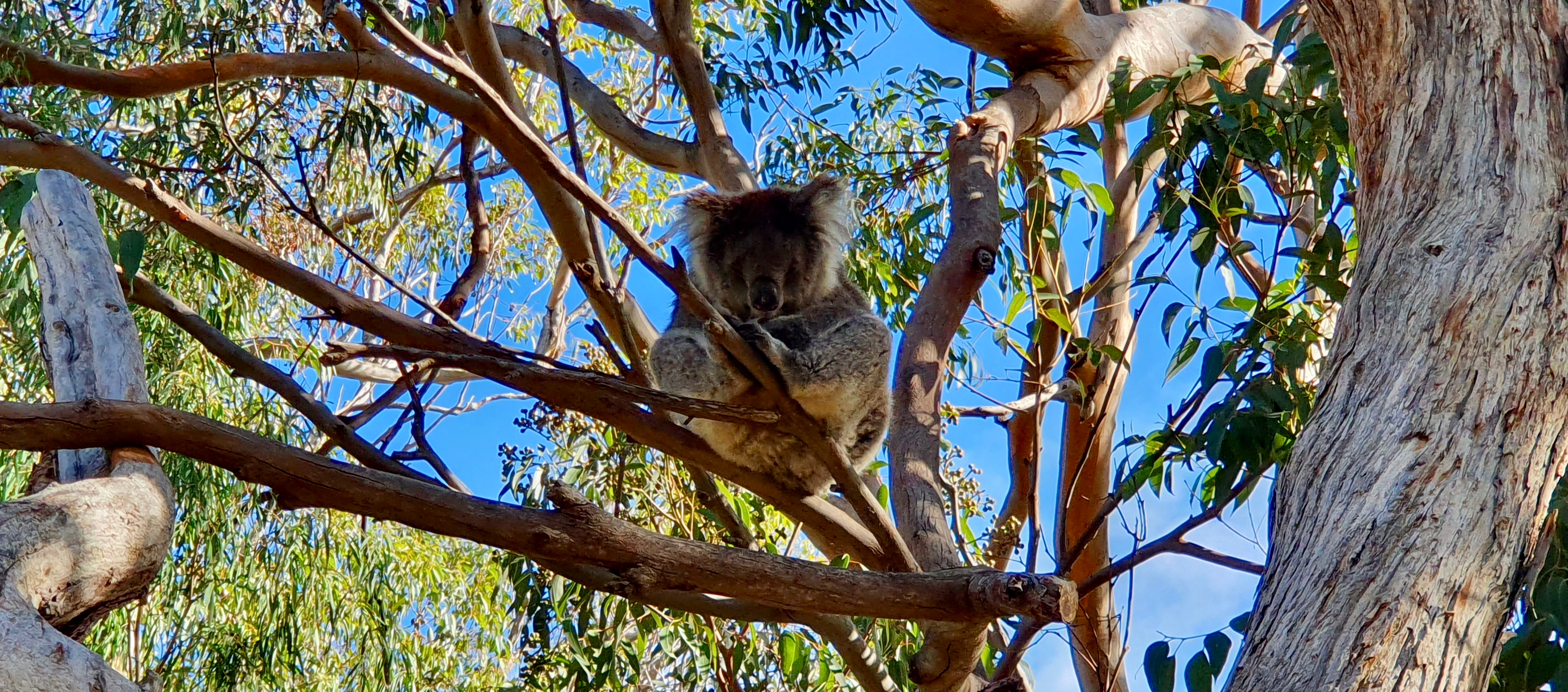
These indigenous inhabitants of the animal world sleep for 18 hours a day. The rest of the time they eat. But it turns out that they prefer to eat at night, so that they are not carried off by an eagle or a wild dingo. Down below, these national-park koalas are given eucalyptus bouquets so that at least some of the canopy survives on the trees inhabited by these eucalyptus-eaters. And apparently, under cover of darkness, the little creatures crawl down to the feeders and munch lazily without fear. We have yet to meet a single person who has seen a koala move more than a couple of metres. We, meanwhile, had the pleasure of watching the animals yawn, sit, and scratch their tails with a paw. Cute, cuddly, and funny.
Adult koalas weigh up to 13 kg. Their pregnancy lasts only 35 days, after which the 5-centimetre baby stays in its mother’s pouch for up to 8 months. Then it begins riding on its mother’s back and making independent forays onto the neighbouring branch.
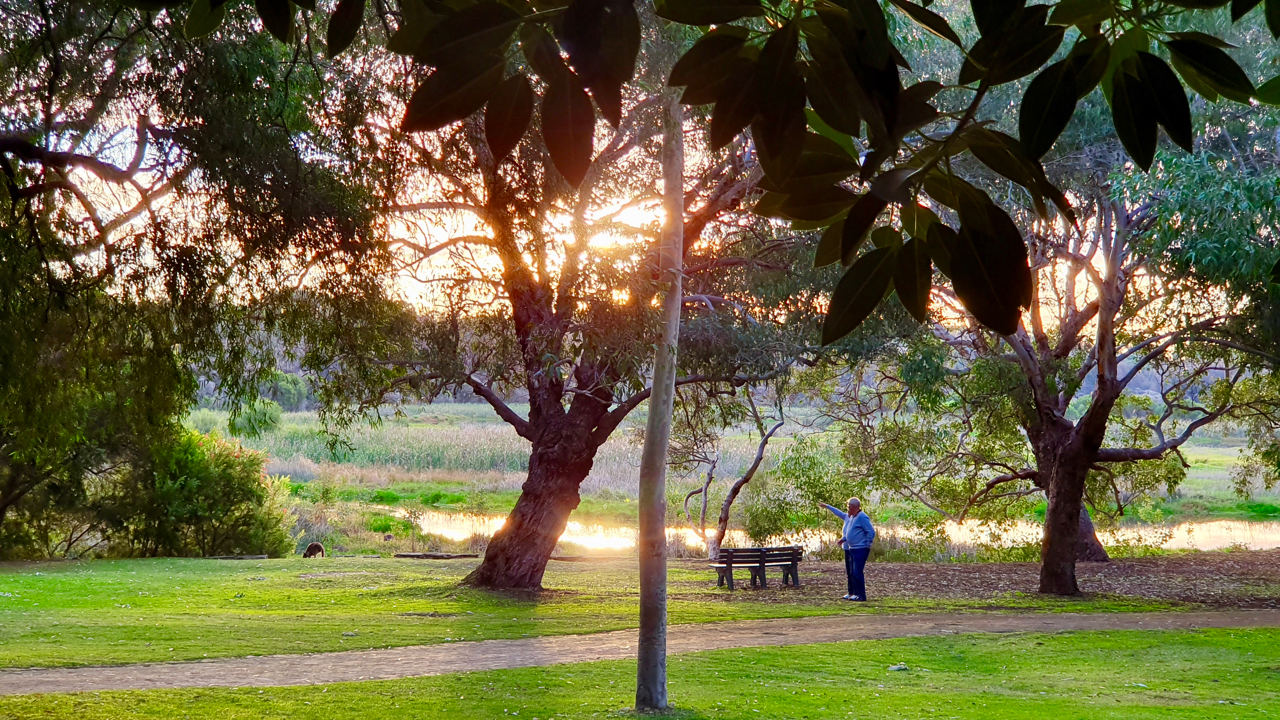
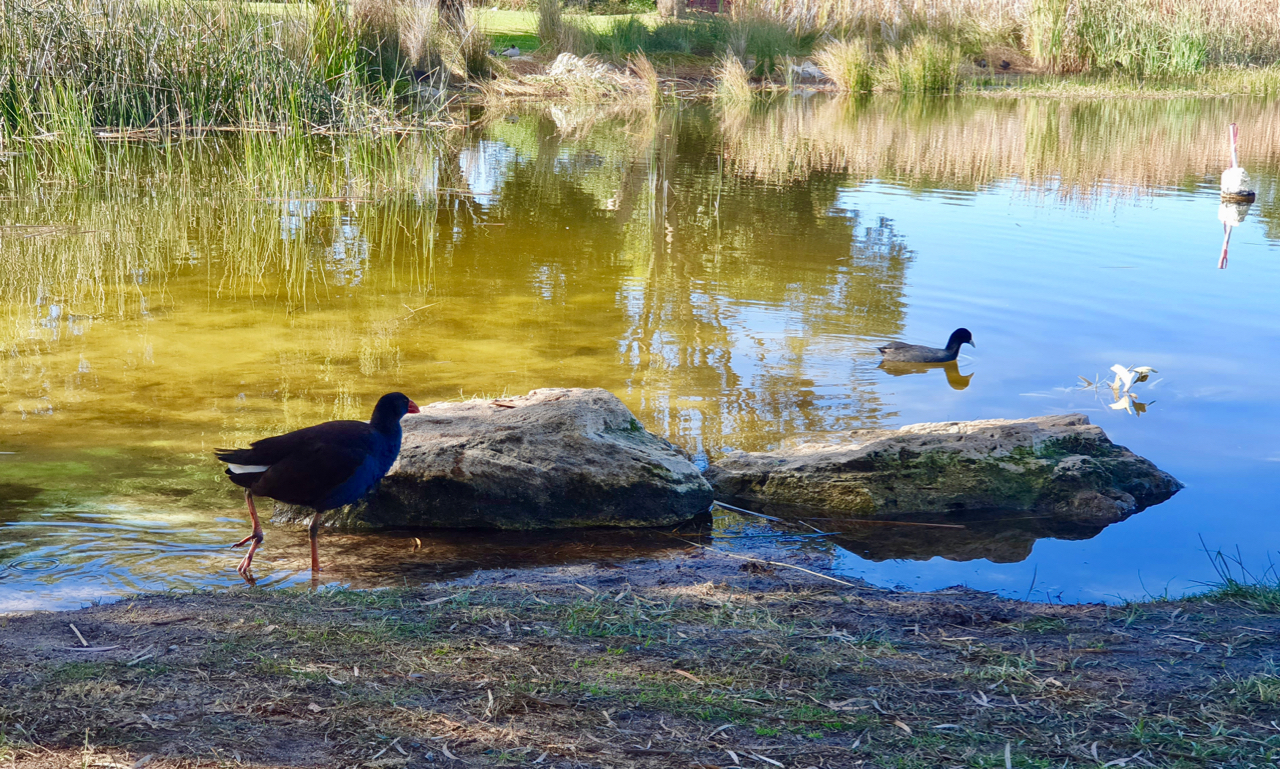
Small kangaroos graze pensively in the bush. A kookaburra cackles somewhere high above. And blue swamphens, called pukako in New Zealand, answer it from the reeds.
rukako in the foreground
Pelicans and green parrots with rings around their necks fly above the branches. There are also variegated parrots—that is, green ones with bright red breasts and blue bellies, or something like that:). Our young sailor suggested asking our readers: what are the most unusual animals you have encountered? Please share your impressions:).
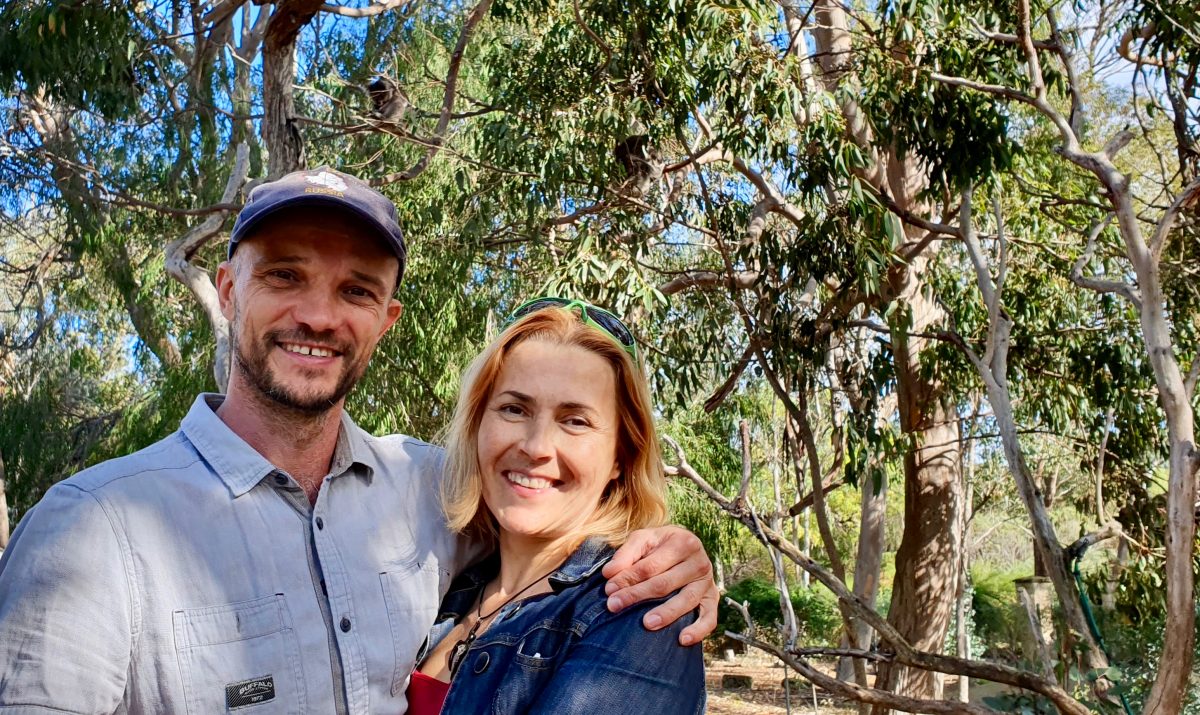
There are two koalas in the background—can you see them? 🙂.
The Aboriginal People of Western Australia
Have you ever felt something animal rise from the depths of your being, something instilled by ancestors a couple of hundred generations before you?
Australia’s Aboriginal people settled the Green Continent 40–50 thousand years ago. They are said to have come from Southeast Asia. They have almost black skin, and the most striking members of the people resemble Neanderthal chiefs. Or African shamans. Today, Aboriginal people make up only 2.7% of Australia’s total population. That is somewhere around 550 thousand people. After the arrival of the Europeans, the lives of the Aboriginal people, like those of most other colonised peoples, became thoroughly unenviable. And despite the fact—or perhaps precisely because—Australians have spent recent decades actively apologising to the Indigenous population for persecution and other hardships (with benefits sufficient to live on and social housing), the present-day existence of most Aboriginal people hardly fills one’s soul with pride for the people.
In the south-west of the state of Western Australia, where we are currently living, lived the Noongar. The Wongai inhabited the central desert, while the Malgana tribe settled around Shark Bay. They still live here today, though their lives are far less romantic, if no less underground.
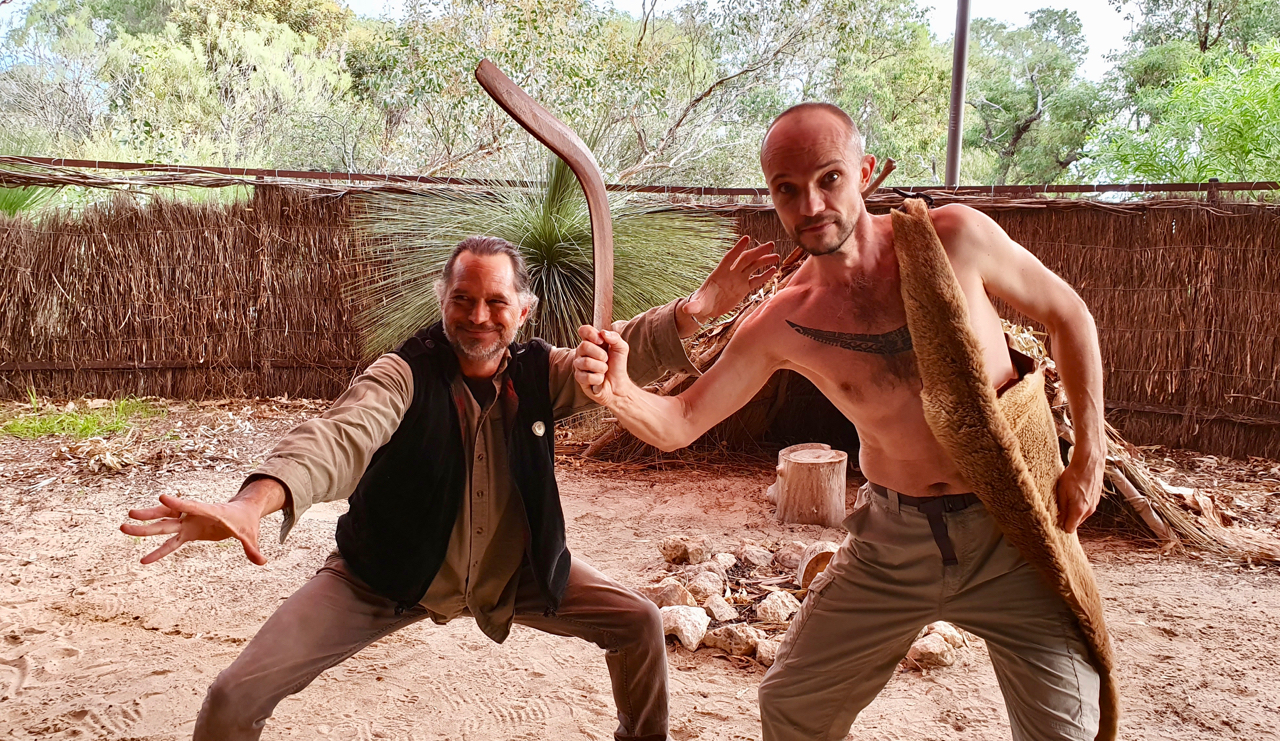
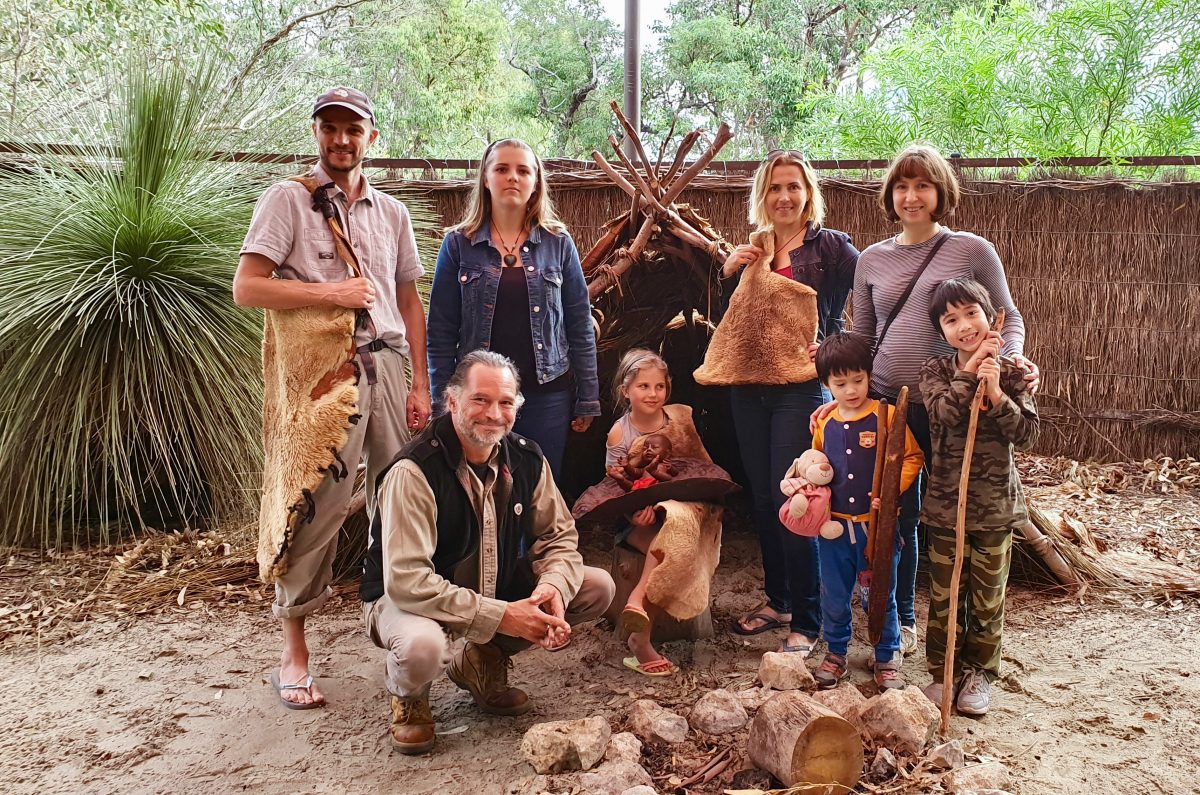
In Yanchep National Park, there is a reconstruction of part of an Aboriginal village. There, a mixed-race man with the English name Derek and an unpronounceable Aboriginal equivalent told us about Australia’s tribes and their hundred languages. His mother was Noongar. And we turned out to be the first group to drop in after quarantine! For which we were congratulated:).
The Aboriginal people did not live in villages quite as we usually imagine them. So on one side of the “lecture hall” nestled a micro-village for women, and on the other, one for male warriors. It turned out that young men lived separately from married men and mostly saw women from a distance, for want of any better options casting longing glances at their brothers’ third wives. But if an elder brother died in battle or between a crocodile’s teeth, the younger brother inherited all his wives, with the youngest as a bonus. The eldest wife as an inevitability. And a whole bunch of children.
The Primal Instinct
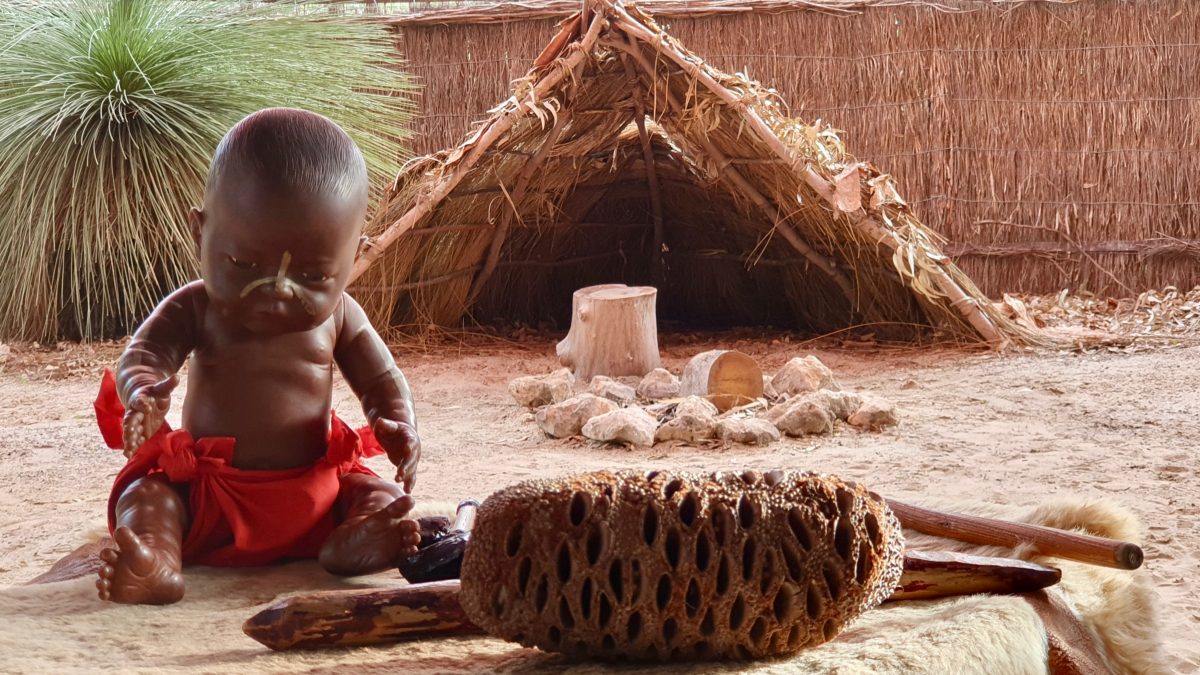
Derek, his eyes gleaming with the brown of an ancient tribe, showed us all sorts of curious things. Here is a spear that flies for dozens of metres, and this is how you throw it—and the slender shaft vanished into the grass with a whistle. These “half-pieces of bark” are used to clean and cut vegetables and grind spices, but sweep all that away and line it with a kangaroo skin, and it becomes a baby’s cradle. Here is a club made from a tree root; you can smash a skull with it.
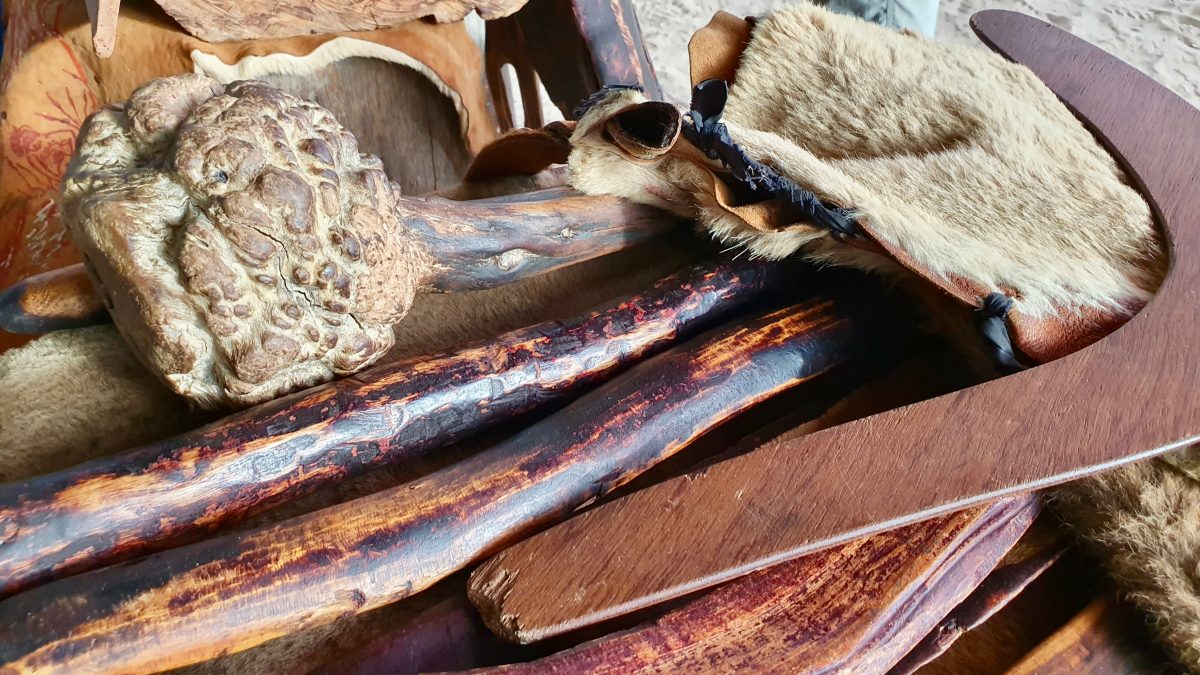
And here is the didgeridoo itself. Derek raises the long, hollow wooden pipe to his lips. The turtles painted in dot patterns draw their heads into their shells: any moment now, guttural sounds will pour out beneath their bellies. The earth trembles and the soul trembles. And within a minute, spellbound, we are all ready to break into a rhythmic dance, ancient as the vaults of the local caves... You could not call this music beautiful. It is mystical. Like any primal instinct clothed in dance. At such a moment, you feel a slender yet unbreakable bond with the Universe, and with every person to emerge from a wild tribe...
I am trying to gather in my thoughts the rituals that evoke this sense of belonging to one human race. Didgeridoo and drum music, folk dances, meditation and breathing practices? Or perhaps an ayahuasca ceremony... What comes to mind for you, friends? And which of these and other ritual practices have you experienced?
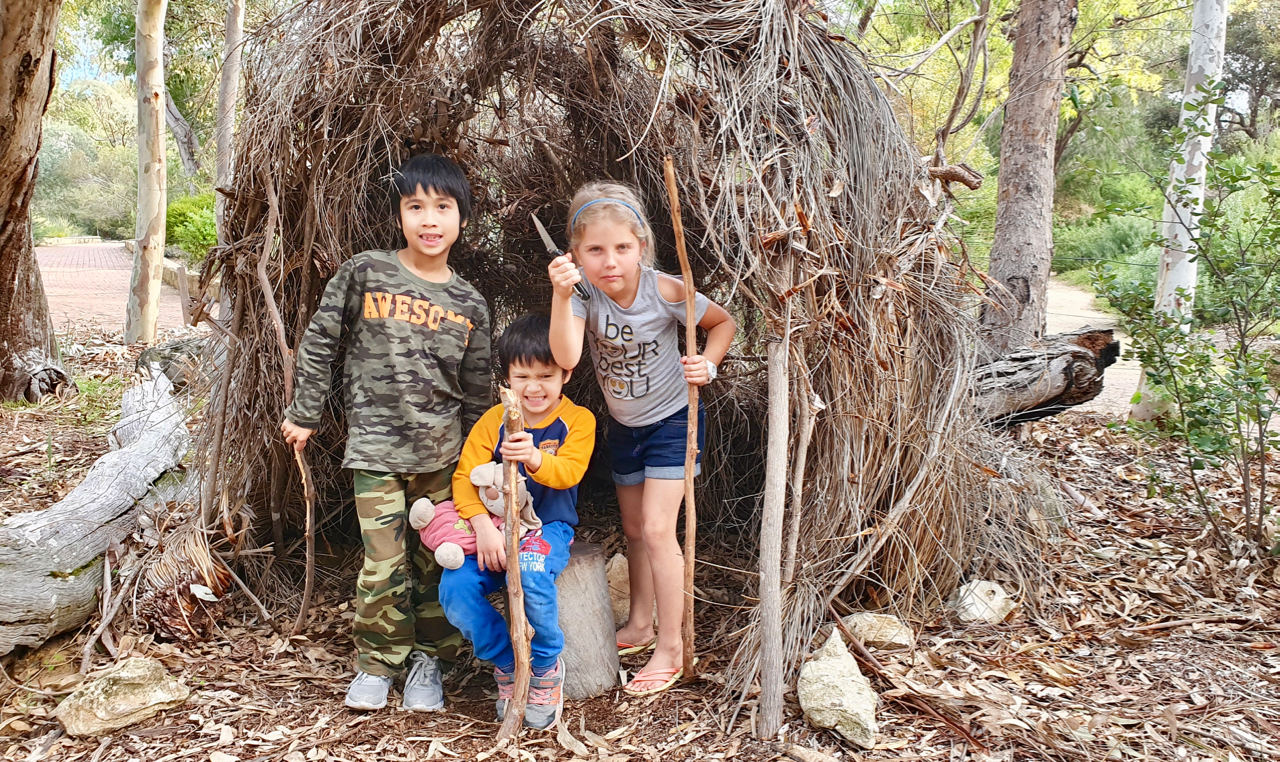
Our young sailor is holding the very thing that turns from a dish into a cradle
We are writing our next report and waiting to hear what associations you have with primal instincts (no, we are not talking about sex just yet:)). And we would like to thank everyone who supports the expedition through PayPal and Yandex.Money.
Thank you to all the sponsors on our
YouTube channel!
Thanks to all your support, we grow wings, more and more interesting content appears, and soon we will definitely have a new camera. And at last we will stop filming on a phone:).
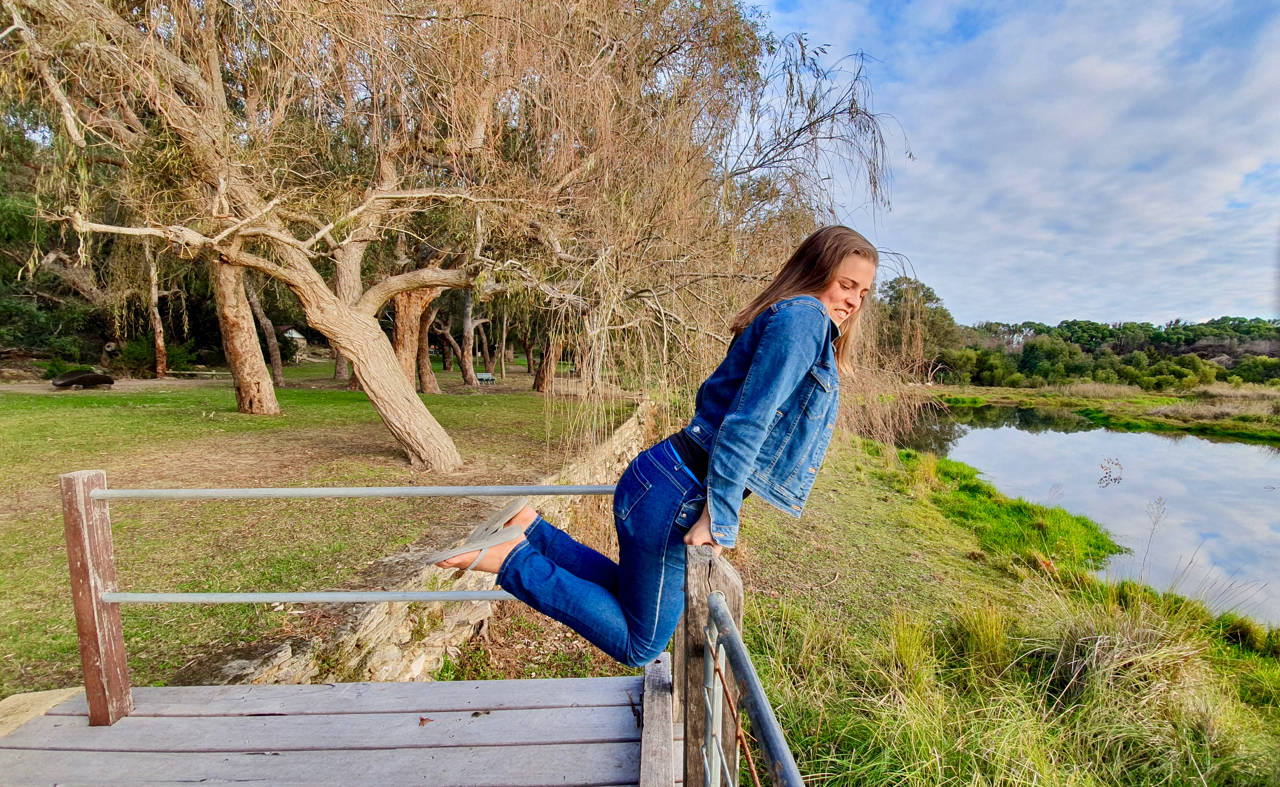
Hugs from Australia! Write and tell us how you are doing there, in this mad new world.
And this is a hello from Nastya 🙂