
From the Travely-Family archive · Family, Children and Life Aboard
Around the World and Antarctica with Children. Our Story and Lady Mary
An original publication from the former Travely-Family website. This English translation was preserved from the technical-site archive without editorial rewriting.
Around the World and Antarctica with Children. Our Story and Lady Mary.
In our Soviet childhood, it was impossible to imagine that one day we would sail around the world. We might just as well have dreamed of flying to Mars...
Andrei and I—one of us in the Urals, the other in Siberia—devoured adventure books. One of our favourites was Jules Verne’s novel In Search of the Castaways. That was how it all began...
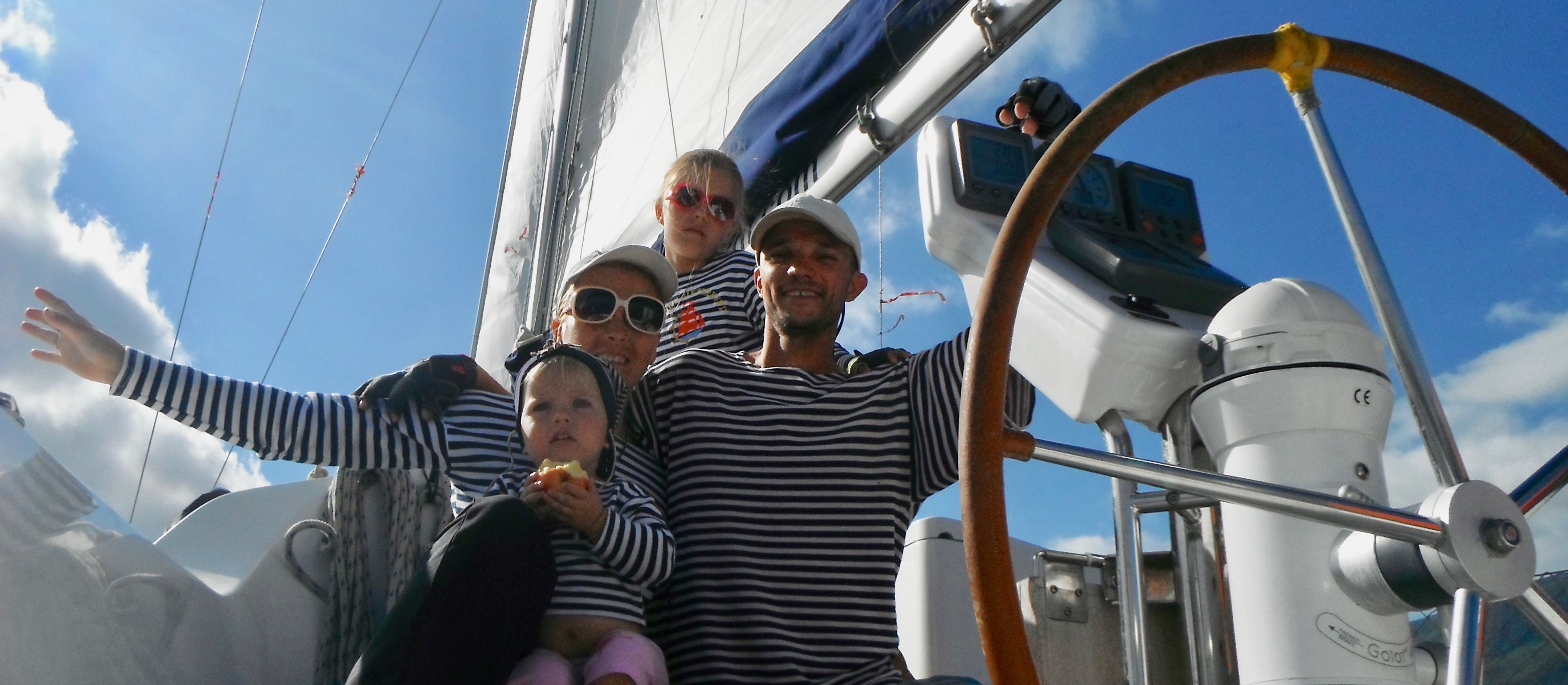
By the time our daughters were born, we were already dividing our lives between two homes—our native Novosibirsk and the Altai Mountains. Our elder daughter Anastasia was often ill, so we moved to a mountain village and began spending the winters on warm seas. Then, five and a half years ago, we bought a yacht in southern Spain. Our elder daughter Nastya was 12, and the younger one was 2. The move was hard for me: at first, my elder daughter and I missed home and our friends terribly, and we suffered from seasickness. During our first winter aboard, we made it as far as Montenegro; the following winter, we sailed from Montenegro to the Canary Islands. Those two winters under sail in the Mediterranean remain the hardest period in our sailing history.
Things became easier in the Atlantic—we were less seasick, the weather grew warm, and we realised it was time to sail around the world..
Leaving Our Comfort Zone
On 8 March 2016, after lengthy preparations for our circumnavigation, we set out from the Canary Islands for West Africa. We sailed 100 kilometres up Senegal’s Saloum River. Then onward to The Gambia, where we travelled 350 kilometres upriver. It was a hot summer among hippos, chimpanzees and... tsetse flies:). Arriving in Cabo Verde after Africa, we concluded that this was practically Europe—there were even pavements.
After crossing the Atlantic Ocean, we found ourselves in French Guiana, where the children made friends with other sailing children. After sailing all the way around the Caribbean Sea, we entered the Pacific Ocean through the Panama Canal. After the Galápagos Islands, the main fleet of yachts headed for the Marquesas, while we turned upwind for Easter Island. To this day, Easter Island and Pitcairn remain among our most vivid memories. On Pitcairn, our youngest sailor, Lada, made friends with the local girls and began speaking English.
After Pitcairn came the Marquesas Islands, where we followed in Thor Heyerdahl’s footsteps and both my husband and I came down with ciguatera. For almost a month, the children were in charge aboard the yacht—they cooked, cared for their sick parents, foraged for fruit ashore and socialised with our few neighbours in the anchorage.
After the Tuamotu Archipelago and the Society Islands, we were planning to head to New Zealand. That was when things really became interesting.
We organised our expedition to the phantom islands of the Pacific almost by accident, while on our way to Samoa. A light wind was setting us south instead of north-west, and it was becoming clear that we would not reach New Zealand before cyclone season.
Sheltering on equatorial atolls for the whole summer sounds romantic. In reality, it means heat from five in the morning, rain, humidity, irritation and... boredom.
From the diary, 22 November 2019:... The wind continues to set us south of the course plotted for Samoa. While Anastasia sleeps after her night watch, Andrei and I carry on joking:
What remarkable thing are we doing right now? After Easter Island and Pitcairn—nothing. But we could follow the 37th parallel and head for Cape Horn...
Andrei, what’s our longitude?
153 W.
Wait, I’ll fetch the sailing directions. And I bring In Search of the Castaways down from the bookshelf.
In Jules Verne, the Maria Theresa Reef is at longitude 153 (!) west. That’s 1,200 miles due south! Shall we turn?
Andrei takes out the paper Admiralty chart:
Listen, according to this, it’s at 137 W. And the electronic chart says the same.
Why don’t we sail down the 153rd meridian to the 37th parallel, then follow it to the 136th and personally check whether Maria Theresa Reef exists or not?
We jokingly discuss how we will then round Cape Horn and call at Antarctica... And somehow, almost of its own accord, our course is already southbound.
In all our years of travelling, we had met only two families with children who had rounded the southern tip of the Americas. Both were French cruisers whose children were between 5 and 10 years old. One had sailed through the Beagle Channel—through the middle of the Tierra del Fuego archipelago—while the other had waited for suitable weather in Ushuaia and then rounded Cape Horn with a fair wind. In my eyes, they were heroes.
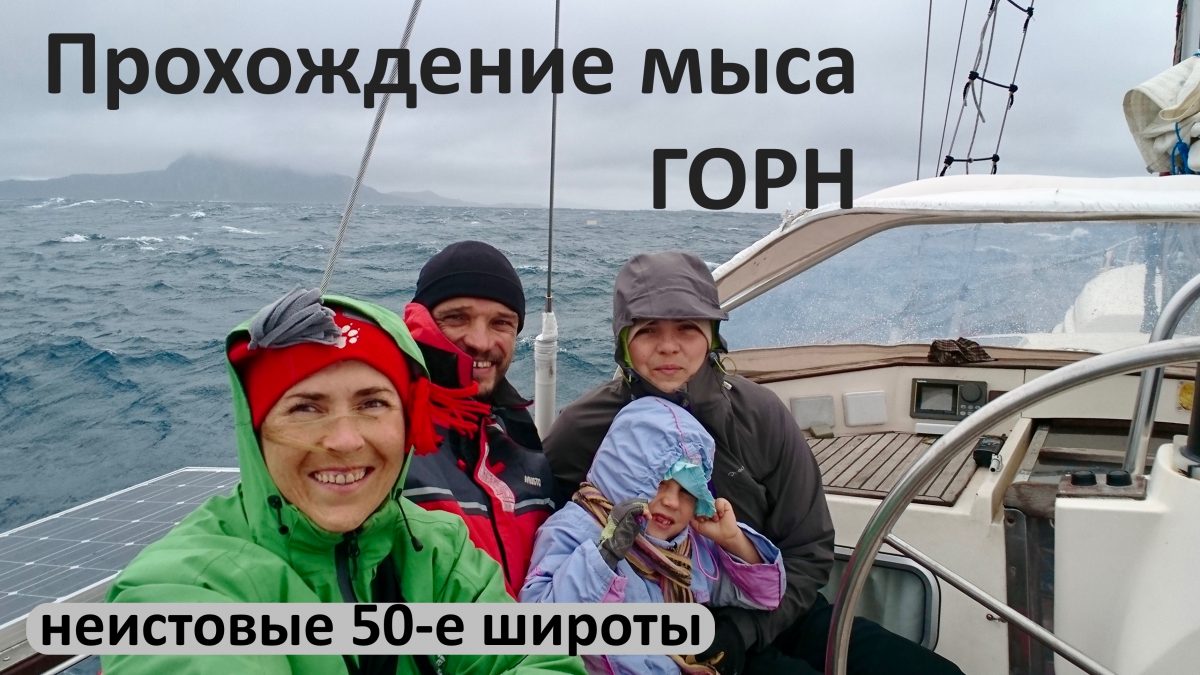
Cape Horn, in the Drake Passage, is considered the stormiest place on the planet. Here, the waters of two oceans meet; winds and waves encounter no obstacles anywhere on their journey around the planet and build to tremendous force. Since Captain Drake brought his ship through these waters, more than 800 vessels have sunk in the storms of the Drake Passage. It is impossible not to think about that when passing Cape Horn for the first time.
Our younger daughter Lada took our crazy idea in her stride. Our elder daughter Anastasia was horrified at the thought of the coming 60 days at sea without seeing land. Until then, our personal record had been 23 days on the ocean. When we told Anastasia that at least there definitely would not be any heat, she quickly agreed....
And so the sails carried Lady Mary south to the 37th parallel in the Southern Hemisphere. Ahead lay a two-month non-stop passage of 6,200 nautical miles.
We wanted to establish in practice whether the legendary Maria Theresa Island really existed, or whether the internet was right in saying that the island had never been found. Along the way, we passed through the positions of other phantom reefs in the Pacific Ocean between 32 and 37 degrees south. We found no trace of the phantom reefs Wachusett, 1957, Ernest Legouvé or Maria Theresa.
All our celebrations—Anastasia’s 17th birthday, Christmas and New Year—took place during the passage.
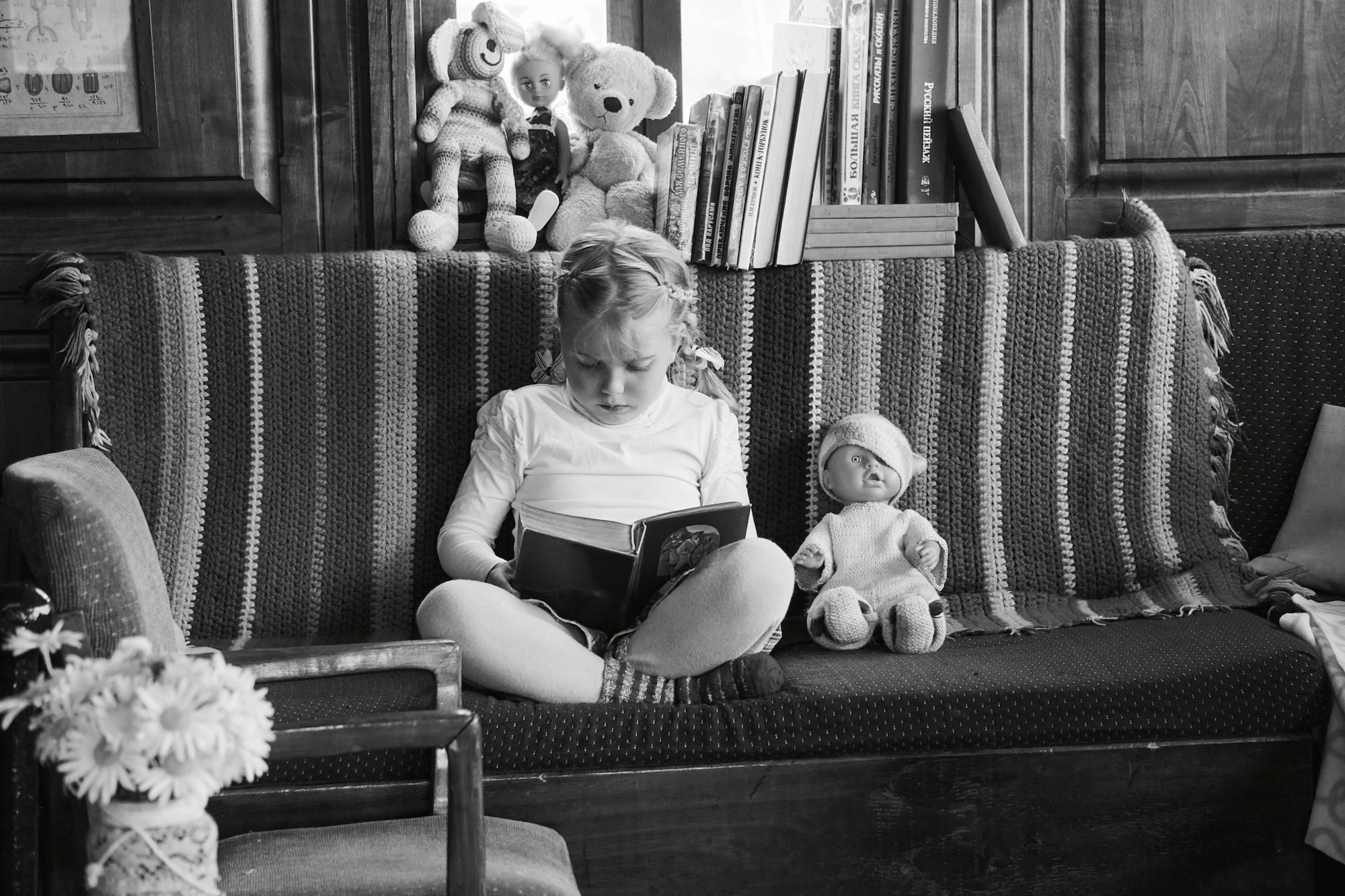
We settled into a routine of watchkeeping and daytime activities. The children read a great deal; in calm weather, they played board games and cooked. At the age of 7, our younger daughter Lada made soup for the whole family twice, and on other occasions baked cakes to have with tea. We watched cartoons in English with Russian subtitles, and every evening we had our obligatory film night. In bad weather, Lada would build herself a nest out of blankets and pillows on her parents’ large bed and settle down there to read. During the passage, she read five of the seven Harry Potter books.
The windvane self-steering gear did most of the work of keeping us on course. We avoided severe storms by heading north or slowing the boat. We rode out one Force 9 storm hove-to. And in the 50s latitudes, we flew along for three weeks under a small jib alone.
The Everest of Sailors
Here is a video about how the first post-Soviet family with children passed through the most dangerous place on the planet.
On 19 January 2019, the 60th day of the passage, we rounded Cape Horn. The wind was 35 knots, gusting to 45, with waves of around 6 metres. The Drake Passage greeted us gloomily, but not aggressively. We even managed to make out the Great Cape through the veil of fog so common in these parts. Lady Mary entered the Beagle Channel and first stopped at Puerto Williams —the southernmost settlement in the world. A couple of weeks later, we crossed to the Argentine side of Tierra del Fuego—to Ushuaia.
Expedition yachts set out from here for Antarctica. There are no cruisers with children at all, but a record number of seasoned sea dogs are based here, taking small groups to Antarctica. A berth on a three-week yacht cruise costs from 6,000 dollars.
The sailing yachts Mon Coeur and RusArc Aurora are here, with the exceptionally experienced captains Nikolai Litau and Daniil Gavrilov. Both captains hold several world records. Nikolai Litau was the first to sail the Northeast Passage and completed the first two meridional circumnavigations, which went down in history as the “Litau Figure Eight.” Daniil Gavrilov was the first captain of a yacht to sail both the Northwest and Northeast Passages in a single navigation season. Our young sailors are delighted to socialise and make friends with the first Russian-speaking crews they have met in a year and a half, visiting one another and going for walks together.
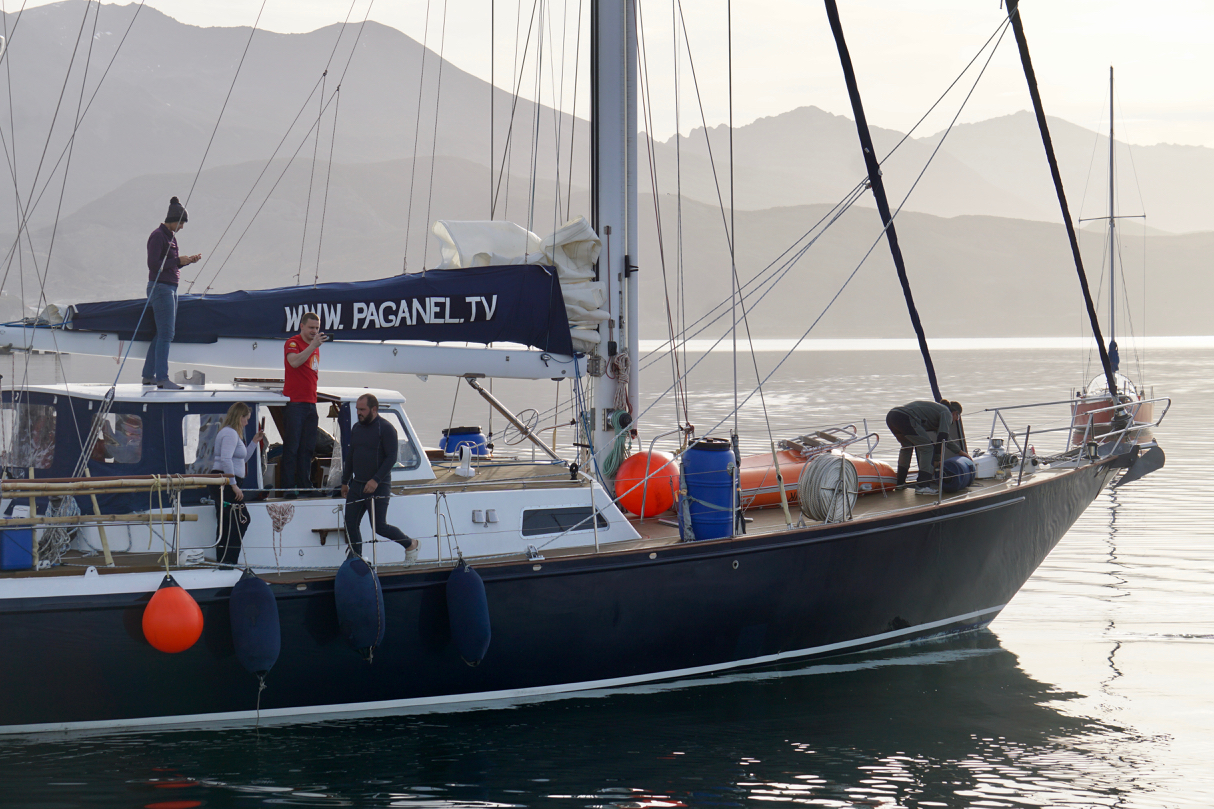
Mon Coeur, under Captain Litau, sets a course for the Drake Passage
Watching the crews prepare to depart for Antarctica, we become even more taken with the idea. We buy provisions, carry out the necessary repairs, and find rubber boots and warm clothes. Most importantly, we acquire two 120-metre floating lines for securing the yacht to the shore at anchorages in Antarctica.
Even our young sailors are no longer afraid of going to Antarctica. Since we are here, in Tierra del Fuego, where else would we go? Besides, a bicentenary year is beginning—two hundred years ago, Bellingshausen and Lazarev’s first Russian polar expedition departed from St Petersburg. And in January 1820 they discovered the last continent, Terra Australis Incognita—Antarctica.
The children want to see penguins and visit Russia’s Bellingshausen polar station.
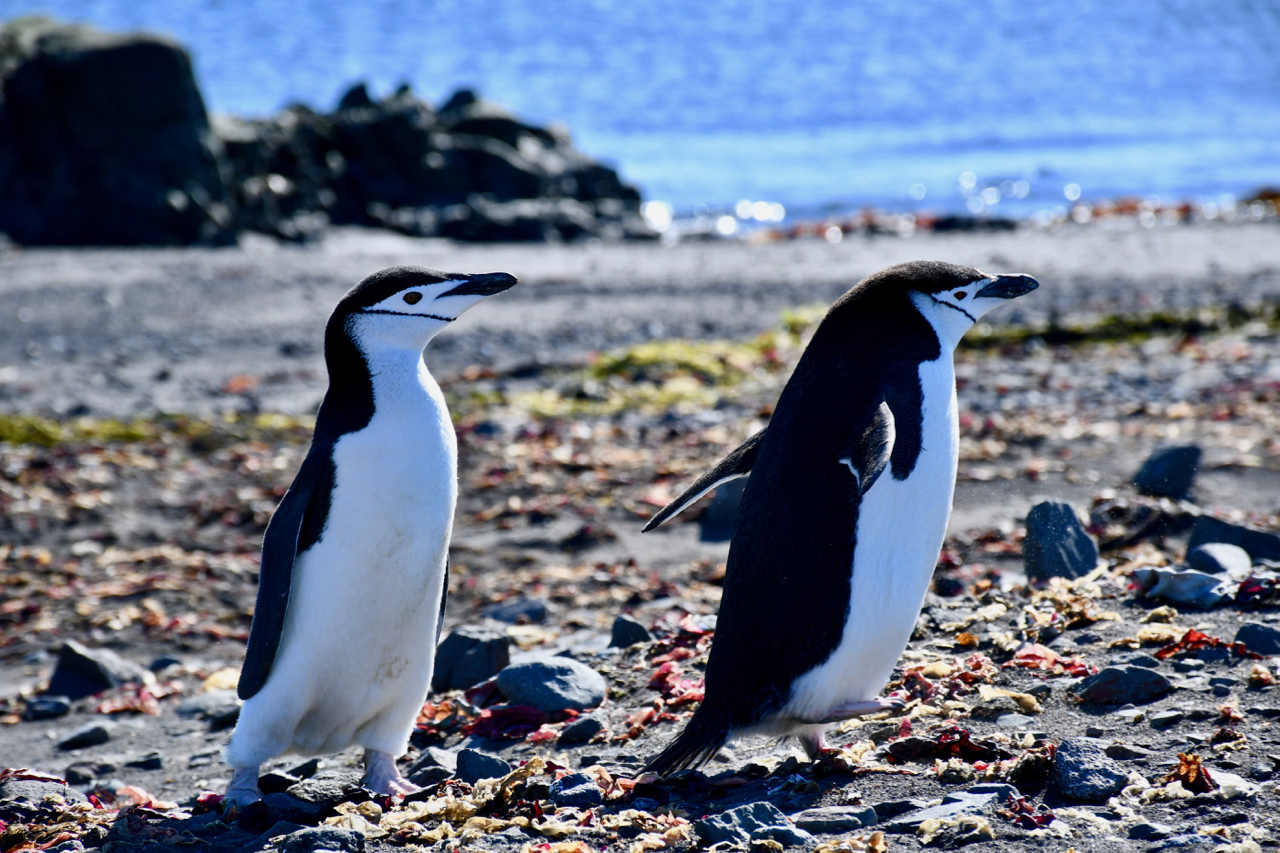
Penguins are the policemen, as polar folk call them
Antarctica
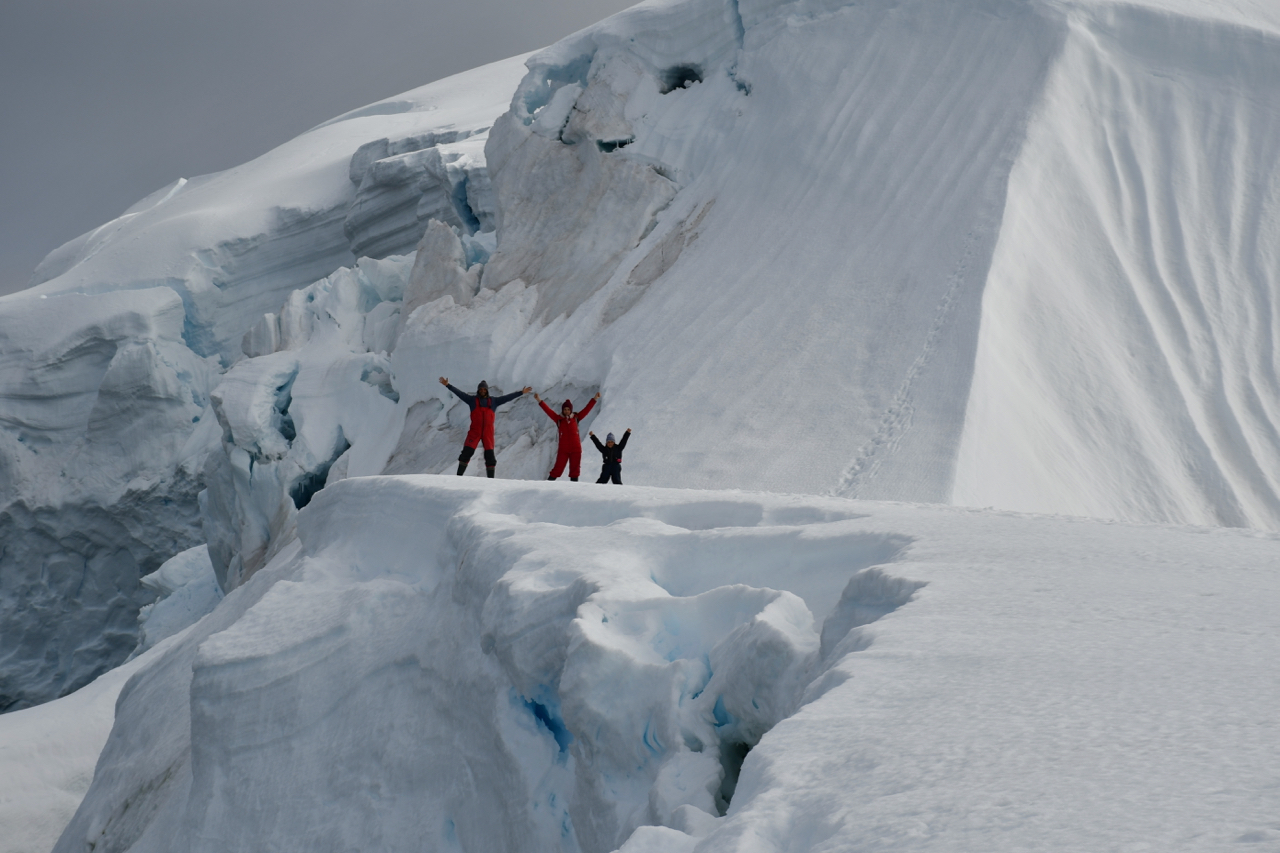
It is about 600 miles to the first Antarctic land—the South Shetland Islands. On the very first night, off Cape Horn, we are caught in a squall; gusts of 60-knot wind almost knock the yacht on her beam ends. Overnight, we leave up only a small jib and try to beat into the southerly wind so that we can make it before the next low-pressure system arrives. On the sixth day, the first islands appear to port—black cliffs and snow domes. King George Island has a record number of polar stations—nine in all. Russia’s Bellingshausen Station is home to the southernmost year-round church in the world. Across a stream is the Chilean station, with an airport, post office and even a school, though it is closed this season. In the past, the children of Chilean polar personnel studied there, arriving with their families for two-year postings.
The Russian polar team immediately welcomes us into their family. We drink herbal tea in the mess, go to the dining hall for dinner, sing songs accompanied by a guitar, and take readings from the meteorological instruments together...
The children are thrilled by the continent of Antarctica. Penguins wander calmly along the shore, seals roam about, and elephant seals sleep. Several icebergs float around the vast bay.
Andrei, there’s something almost mystical about this! Could you ever have imagined that we would come to Antarctica on our own and walk among penguins, building little towers of agate and coloured jasper while Lada strolls hand in hand with a veteran polar explorer? I still cannot believe that we are here, in Antarctica, aboard our plastic family icebreaker, Lady Mary.
After riding out a storm at anchor, four days later we moved on towards the Melchior Islands. This was the most nerve-racking passage: the polar day was over, and at night we had to be especially vigilant to avoid colliding with an iceberg. We kept the radar running. For the first time, we would have to moor with lines to both shores. The coves are very narrow, and when the current swings the yacht around, she could end up on the rocks. The narrow fjord beside the seasonal Argentine station is about 50 metres wide. Our elder daughter pays out the line from aboard, the captain is at the helm, and I take the dinghy ashore to secure the loop around a rock.
There are almost no marine animals here, only snow-white birds and three little houses. A notice on the locked polar station building says: if you are in distress, enter through the orange door. And behind that door there is everything from food to beds—you will be all right.
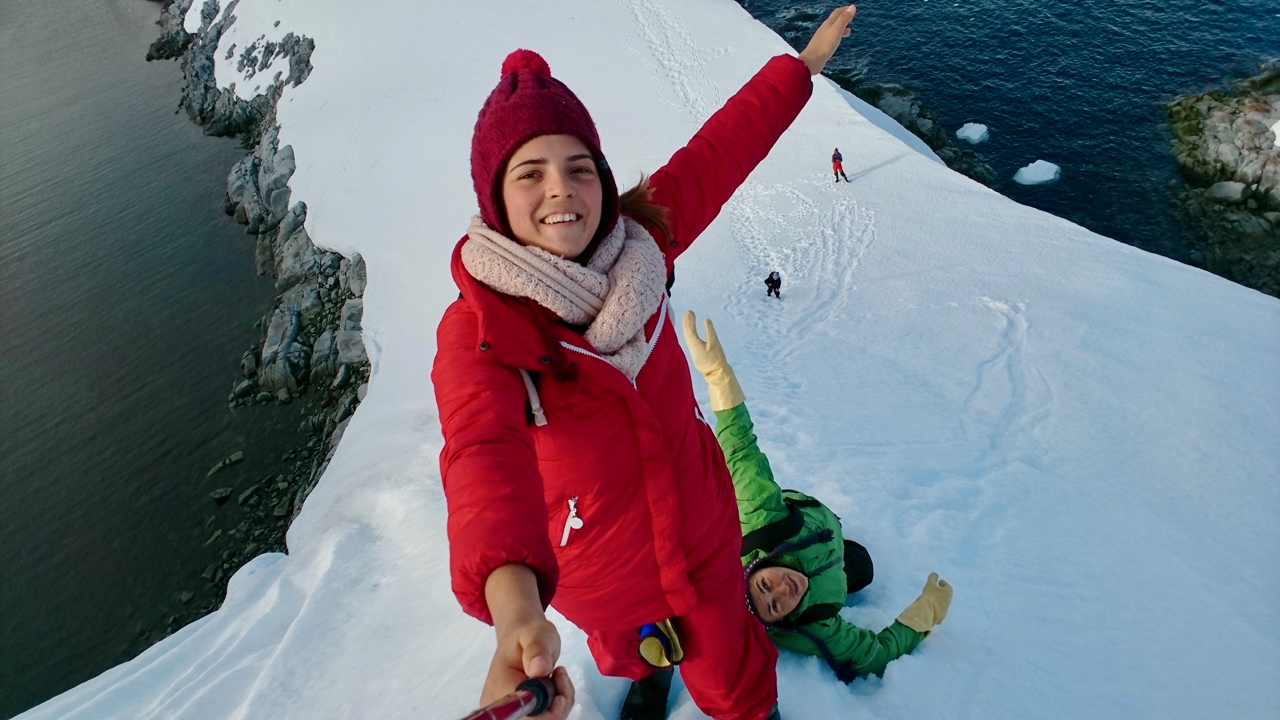
The children and I go for walks, have snowball fights and sledge down a hill that looks very high.
The Southern Continent
The cruise ship Fram is stationed at the entrance to Paradise Bay, and her crew is asking Brown Station for permission to land passengers on the continent.
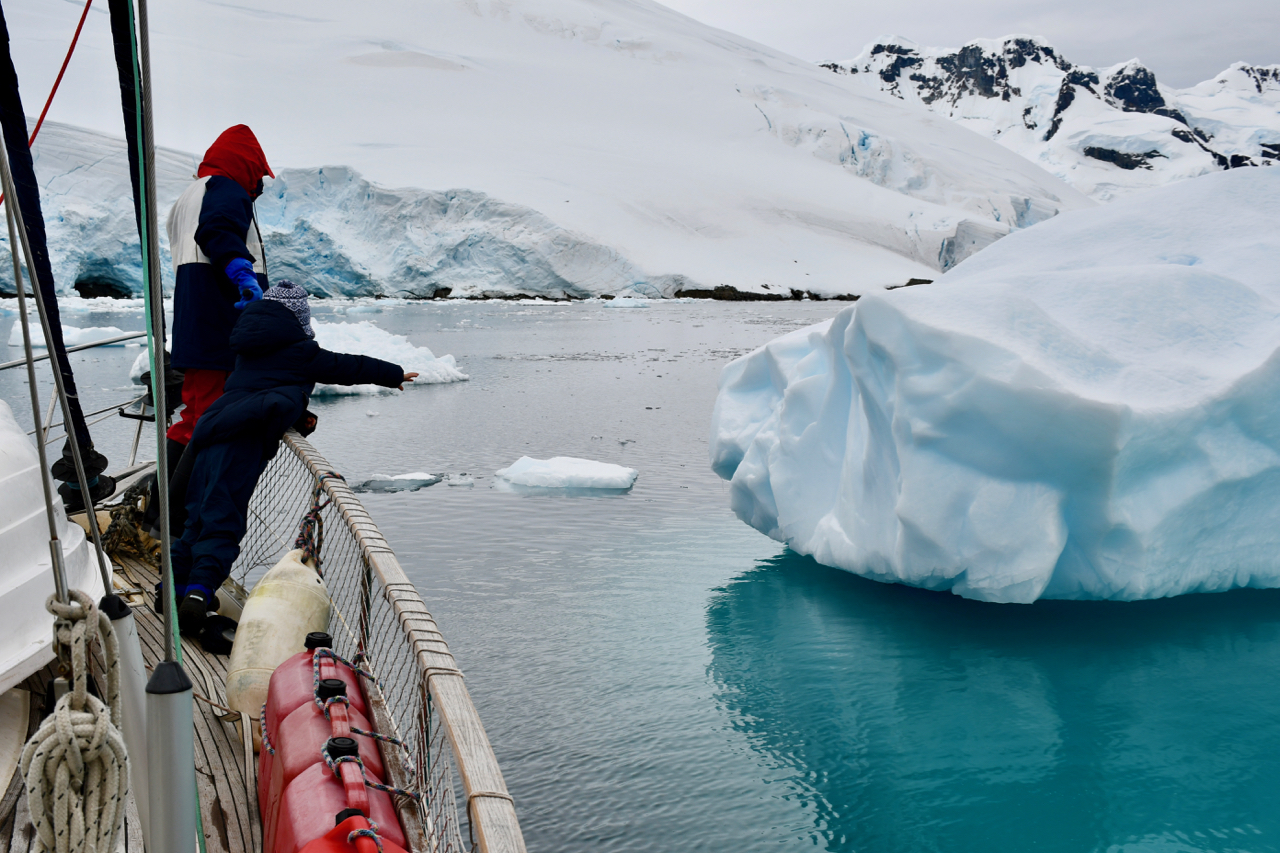
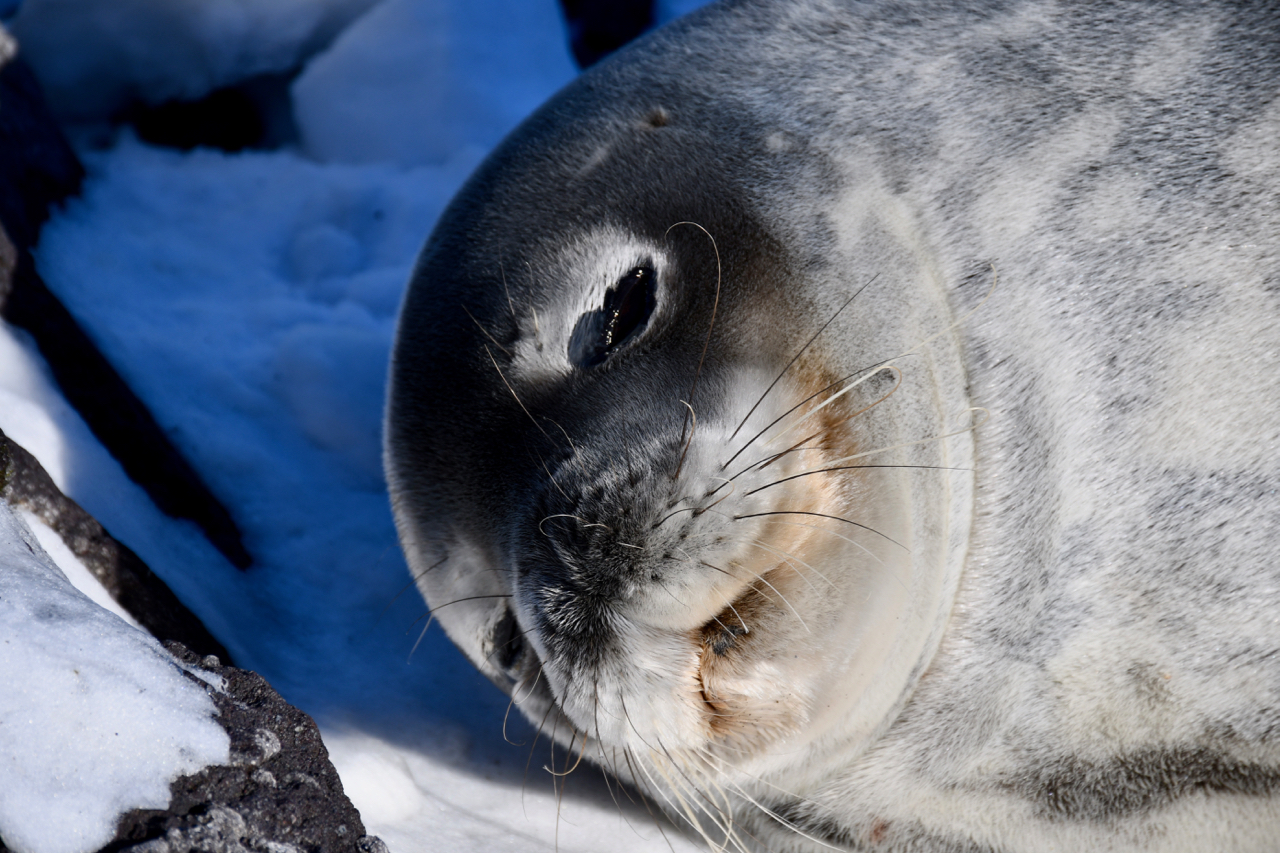
We spent two or three nights in this blue bay. Zodiacs from the cruise ships came to see the enormous blue glaciers and the icebergs where seals slept lazily.
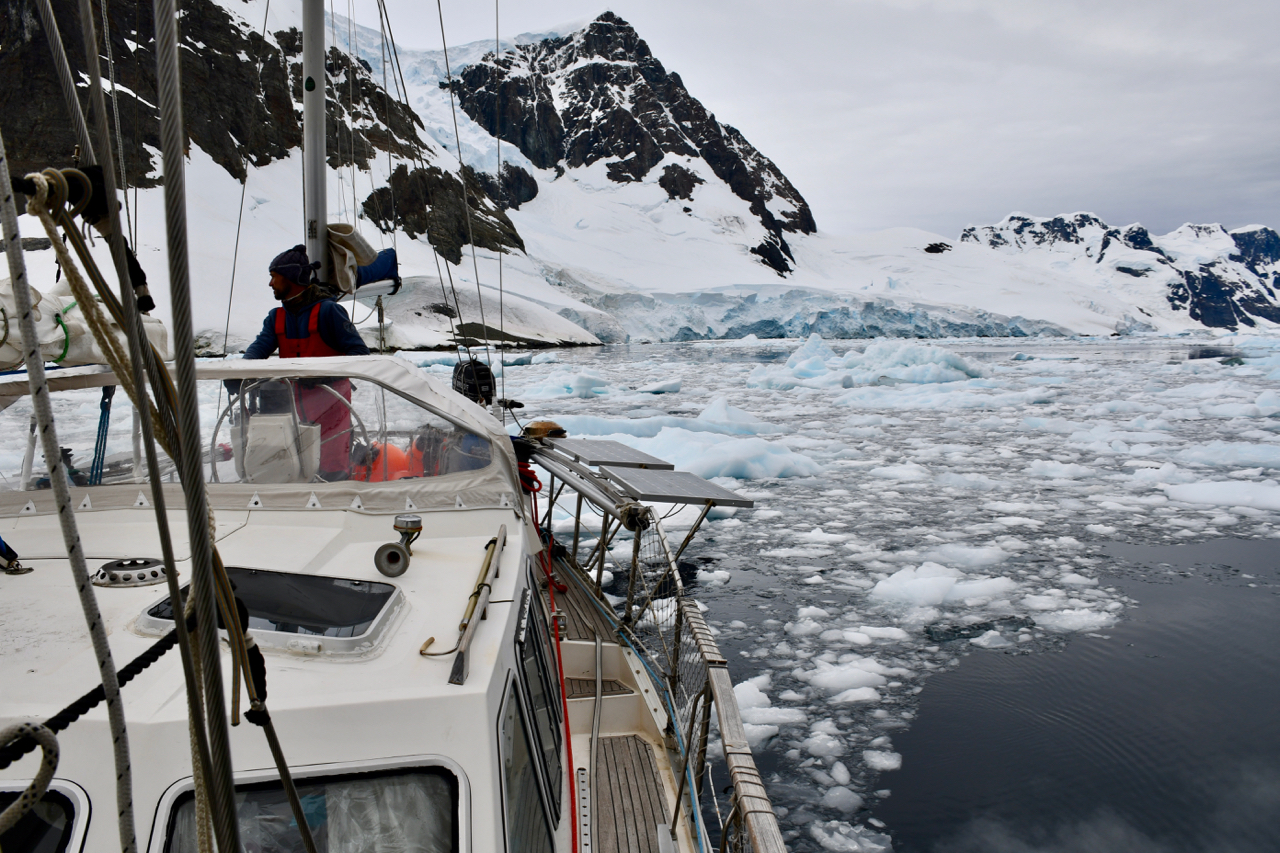
We glide along under oars in our brave dinghy, and the girls are entranced by the Snow Queen’s realm. But in this realm, we must stay alert. The glaciers crack, and avalanches thunder high in the mountains. In an emergency, we must be ready to cut the lines and abandon the anchor if a large iceberg suddenly calves from the glacier. The captain is on edge, so my daughter and I let him sleep through the night. We keep watch ourselves and go out to push the ice floes away. But one night, I do not have the strength to fend off an iceberg the size of our yacht. The captain has to start the engine and use the lines securing the yacht to push against the heavy ice.
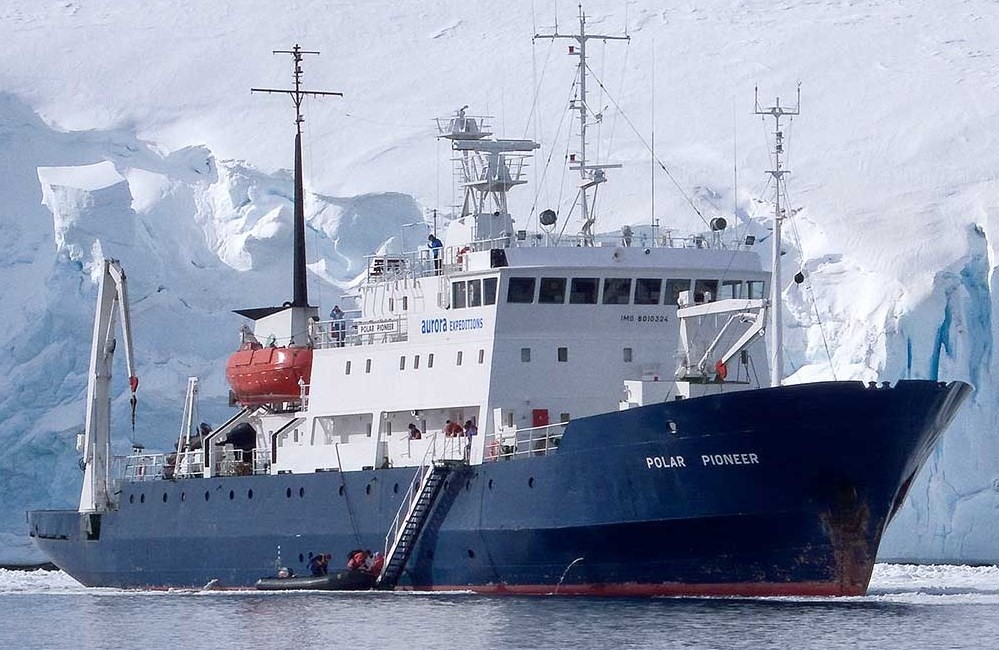
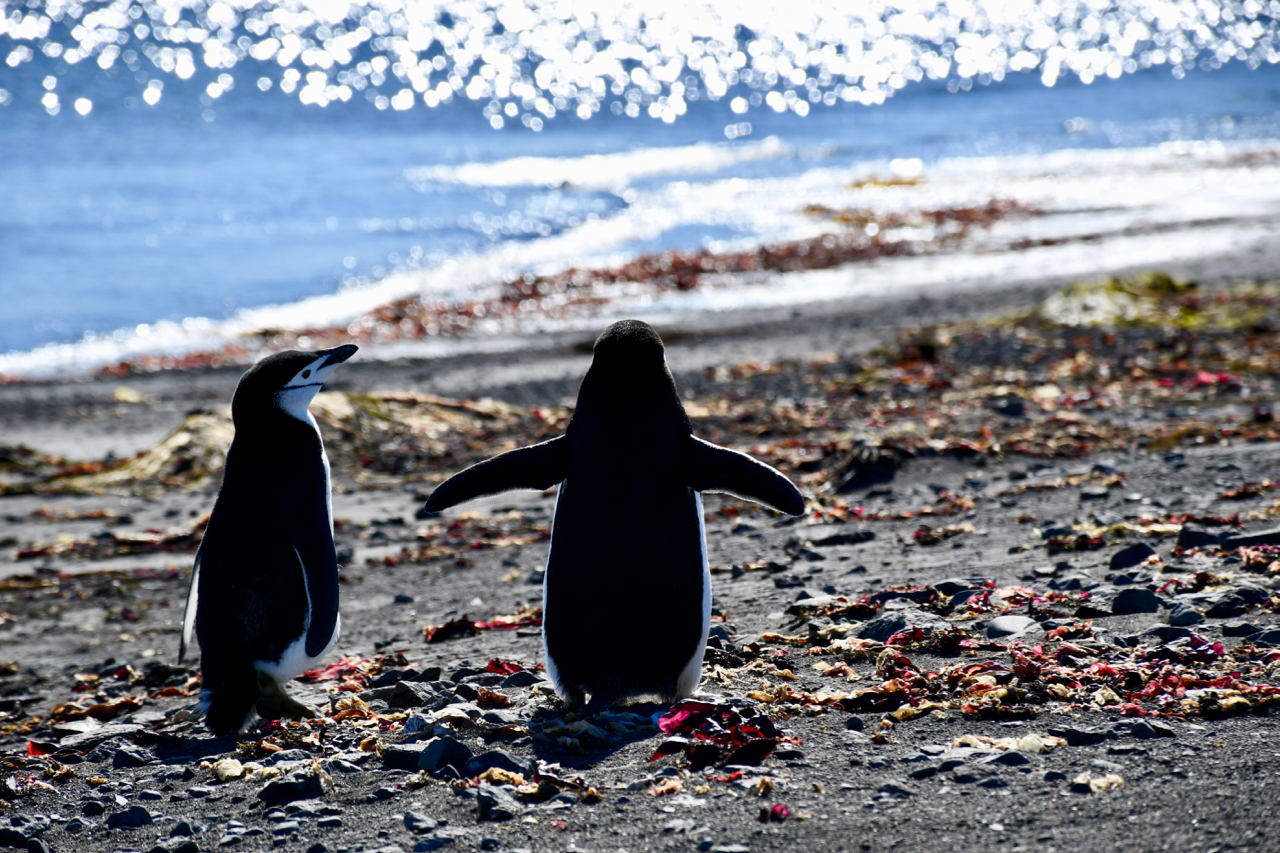
Our ultimate goal was to reach Ukraine’s Vernadsky Station, which lies close to the Antarctic Circle at 66 S. The last stop before Vernadsky Station is the British base at Port Lockroy. The polar team has already closed the station for the winter, and only the talkative penguins crowd the rocky islets. The Russian expedition ship Polar Pioneer, chartered by an Australian company, is anchored in the bay. We contact them by radio and manage to pay a visit aboard. We are shown the bridge and the captain’s cabin; then our young sailors are treated to cake and fruit, while our captain descends into the very heart of the ship—the three-storey engine room.
At night, my elder daughter and I use a boathook to push away the occasional ice floe, and in the morning we set off through the most beautiful Lemaire Channel. The channel gleams blue with fragments of ice, while whales breathe heavily beside its sheer walls. The cheerful penguins look like schools of torpedoes flying out of the water. And curious sea lions gape at us from the icebergs. Halfway through the channel, we pass through two ice fields. The captain climbs the mast, then does so again, and after surveying the route, declares:
We won’t get any farther. A large iceberg is blocking the bottleneck of the channel. And the ice field around it is made up of very large floes—too large for us.
We fell just 12 miles short of reaching the Ukrainian polar team. Bitterly disappointed, we turn back towards Port Lockroy so that we can enter the Drake Passage the next morning. We need to reach Tierra del Fuego before the storm..
Base—Tierra del Fuego
We are now in Ushuaia, waiting for new sails to replace those torn in the Drake Passage and the Furious Fifties. We are also waiting for the famous Russian adventurer Fyodor Konyukhov, who is accomplishing a heroic feat as we speak. He has already been rowing across the Pacific Ocean for five months. In two or three weeks, he will pass Cape Horn. We think it may be a little easier for him to overcome the hardships knowing that here, at the end of the world, a family of compatriots is waiting for him.