
From the Travely-Family archive · Other Entries
How We Went to a Russian Camp in Africa
An original publication from the former Travely-Family website. This English translation was preserved from the technical-site archive without editorial rewriting.
How we went to a Russian camp in Africa and how it all ended:). The first thing I learned about South Africa from a Russian-speaking Facebook group was that there is a Russian camp in Cape Town.
“I’m going to a Russian camp. I’ve already packed my best knickers!” the young sailor announced during the Strait of Magellan–Cape Town passage.
Caught up in the excitement, Nastya and I decided we wanted to go to the Russian camp too.
And so, last Monday, three of us set off from our yacht for the Russian camp: a Young Pioneer, a camp counsellor and a kitchen worker. Fifty kilometres by car in cheerful company, and we arrived in the area known as the wine triangle.
The large house is perfect for a small camp. In the centre are a common room, dining hall and spacious kitchen, with two two-storey wings on either side. One group lived in one wing, and the second group in the other. All the children were within sight, so there was no need to round them up from God knows where in the evenings. The grounds have two swimming pools, a high-ropes course and an obstacle course, a patch of woodland, clearings and a football pitch. If you’re planning to stage something spectacular, you’d be hard pressed to find a better place.
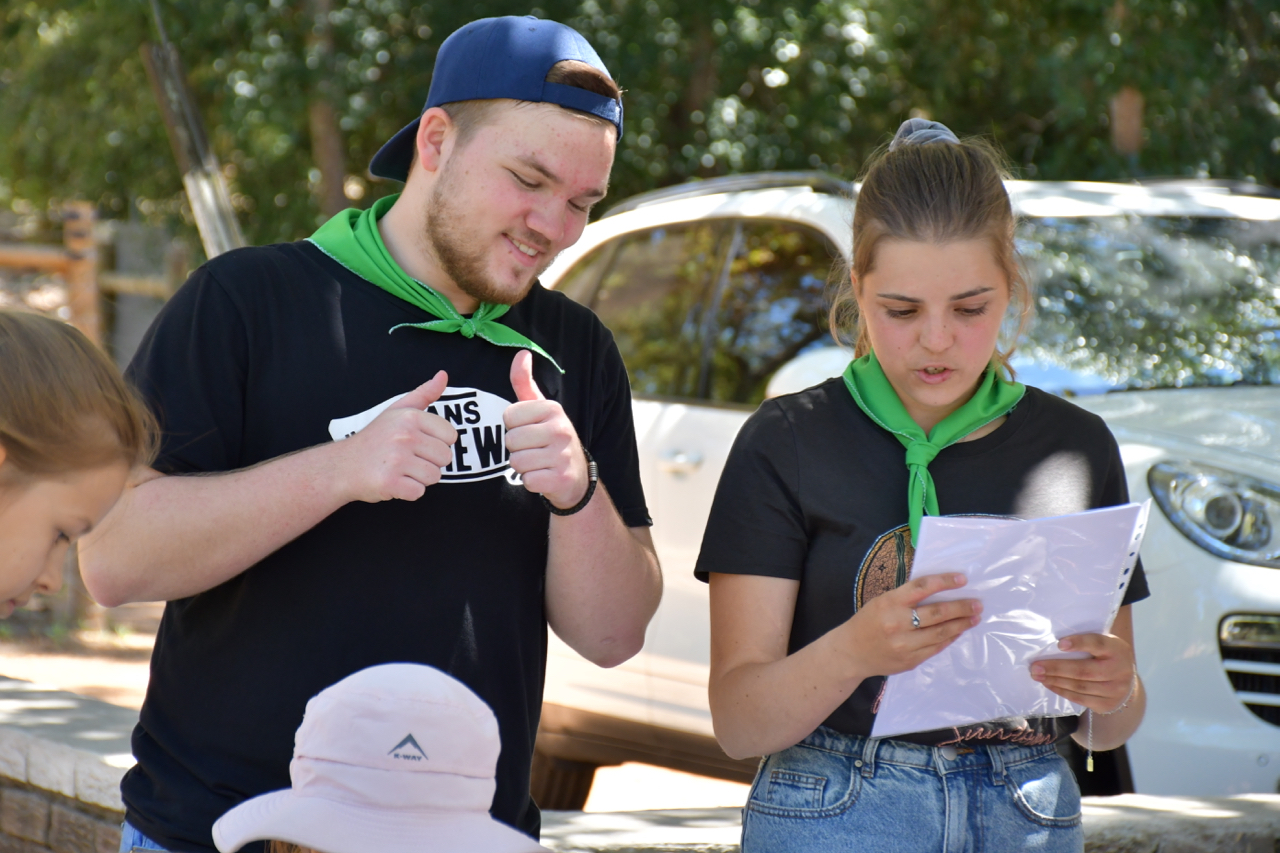
There were just two groups of fifteen: the younger children, aged 7–10, and the older ones, aged 11–13. The groups included not only Russian-speaking children but also some who did not know a single word of Russian. There were also fourteen-year-old assistant counsellors..
Off we go!
Everyone was settled in quickly, and the children were put straight to work. There was an assembly, and each group chose its name and motto by general vote. There was a proper chant when entering and leaving the dining hall. Soup, main course and fruit drink—something for every taste, for vegetarians and meat-eaters alike.
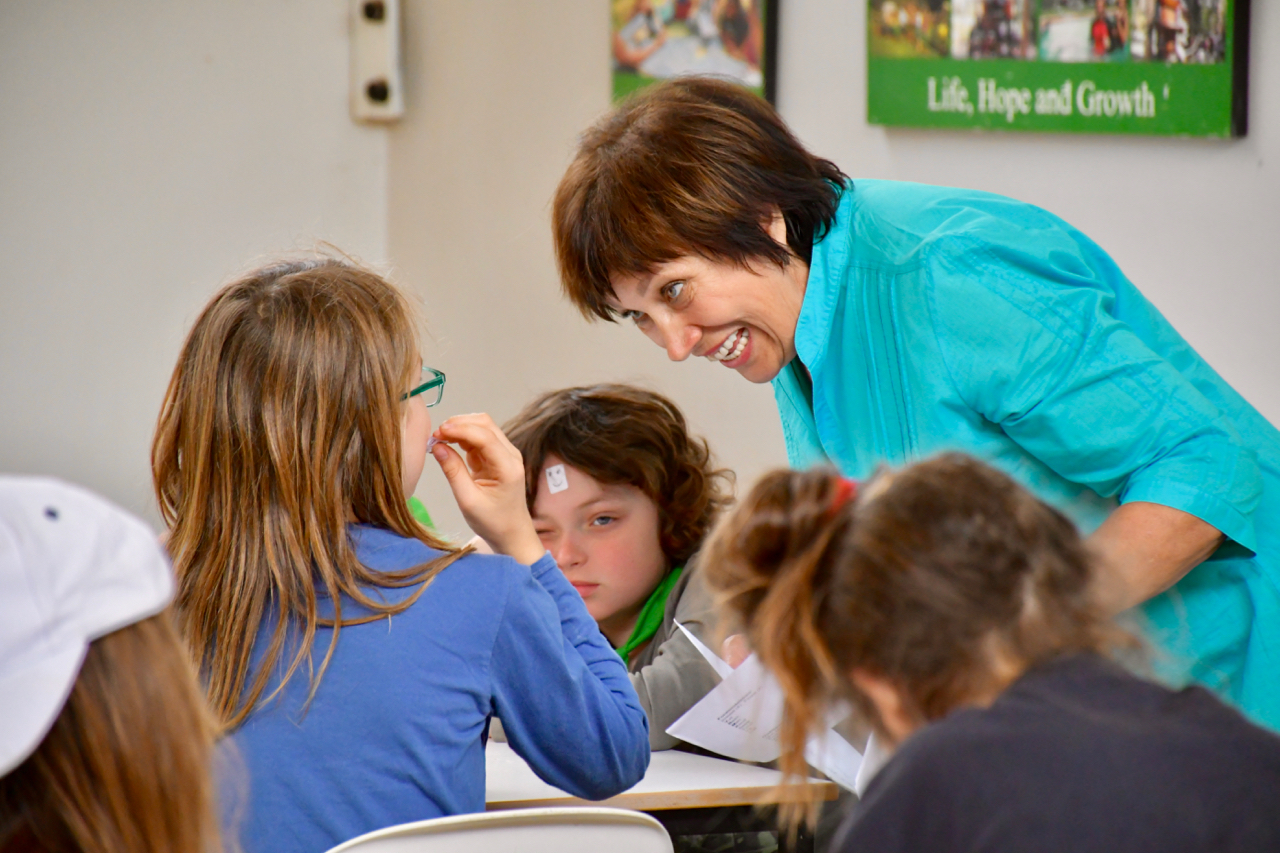
In the kitchen I was greeted by Natalia, the deputy in charge of logistics. She hugged me like family, and it was as though you could hear her saying, “Welcome to the family.” We’ll get along just fine, I thought, happily grabbing a knife.
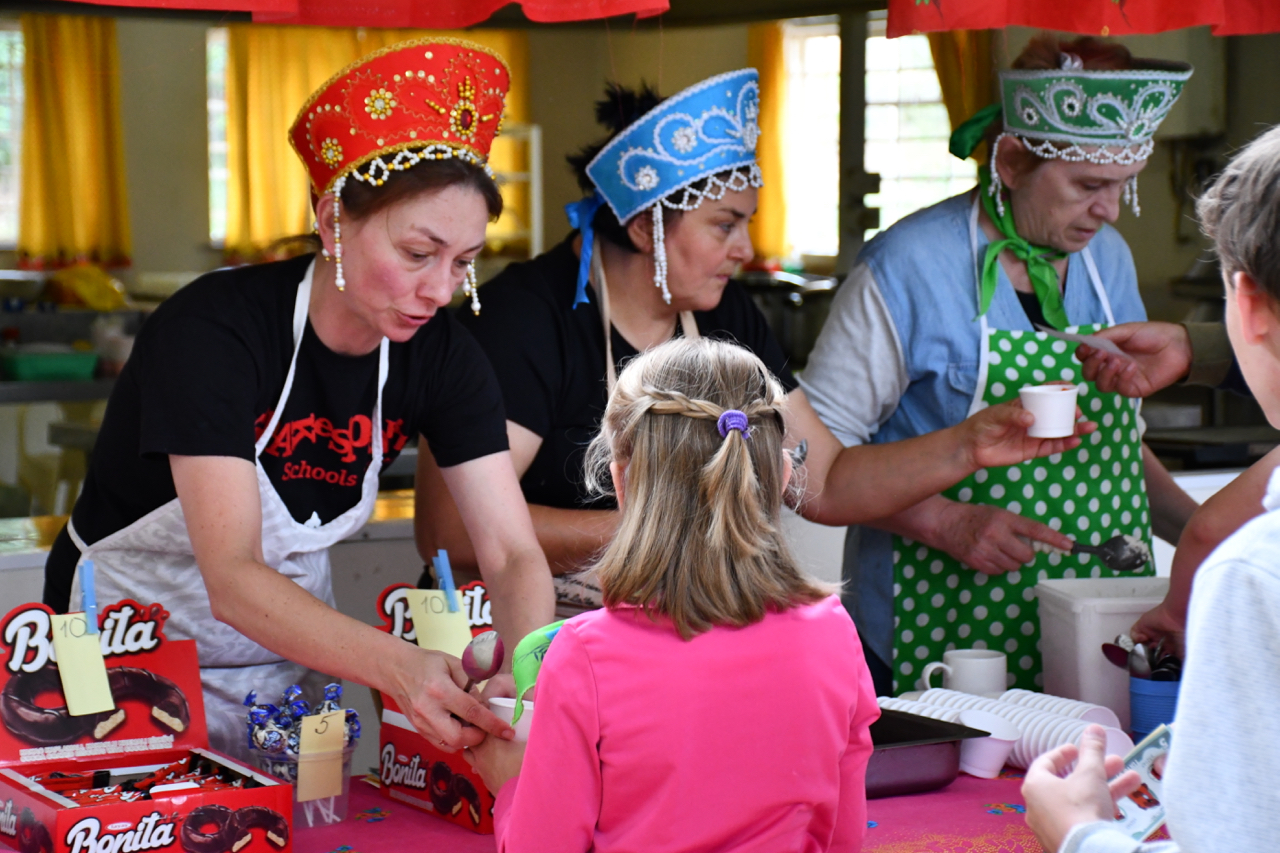
Lada Komissarova—the director, driving force and head chef, whose dishes make Michelin-starred chefs weep with envy in a corner—managed to slip a cucumber beneath my chosen implement, and work for the sake of a happy childhood began in earnest.
After lunch, instead of the nap time we hated as children, they simply have “quiet time” here. You can chat with your roommates or watch a film. The hall is comfortably darkened, the projector shines onto a light-coloured wall, and the children lie attentively on mattresses.
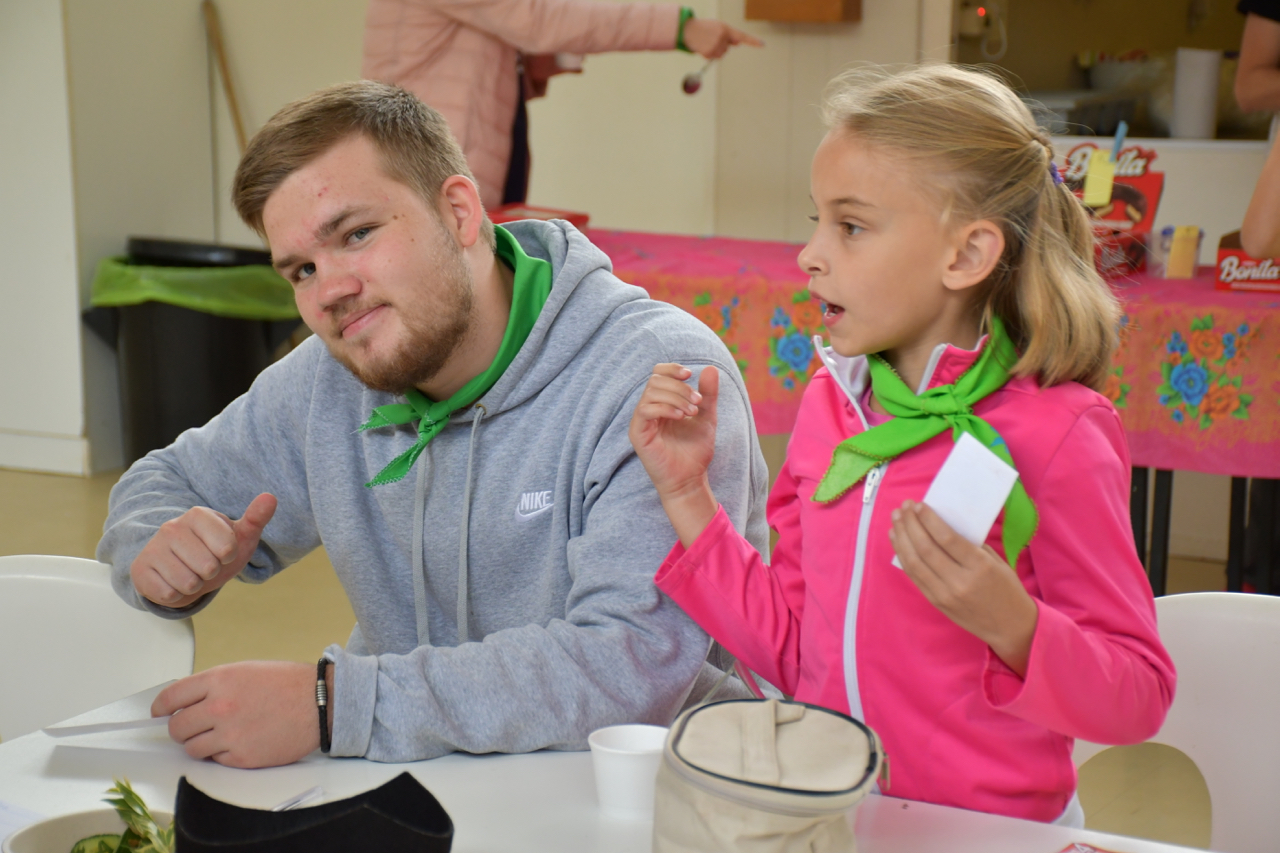
And this is a Russian lesson taught by the wonderful Vera, a teacher from Russia.
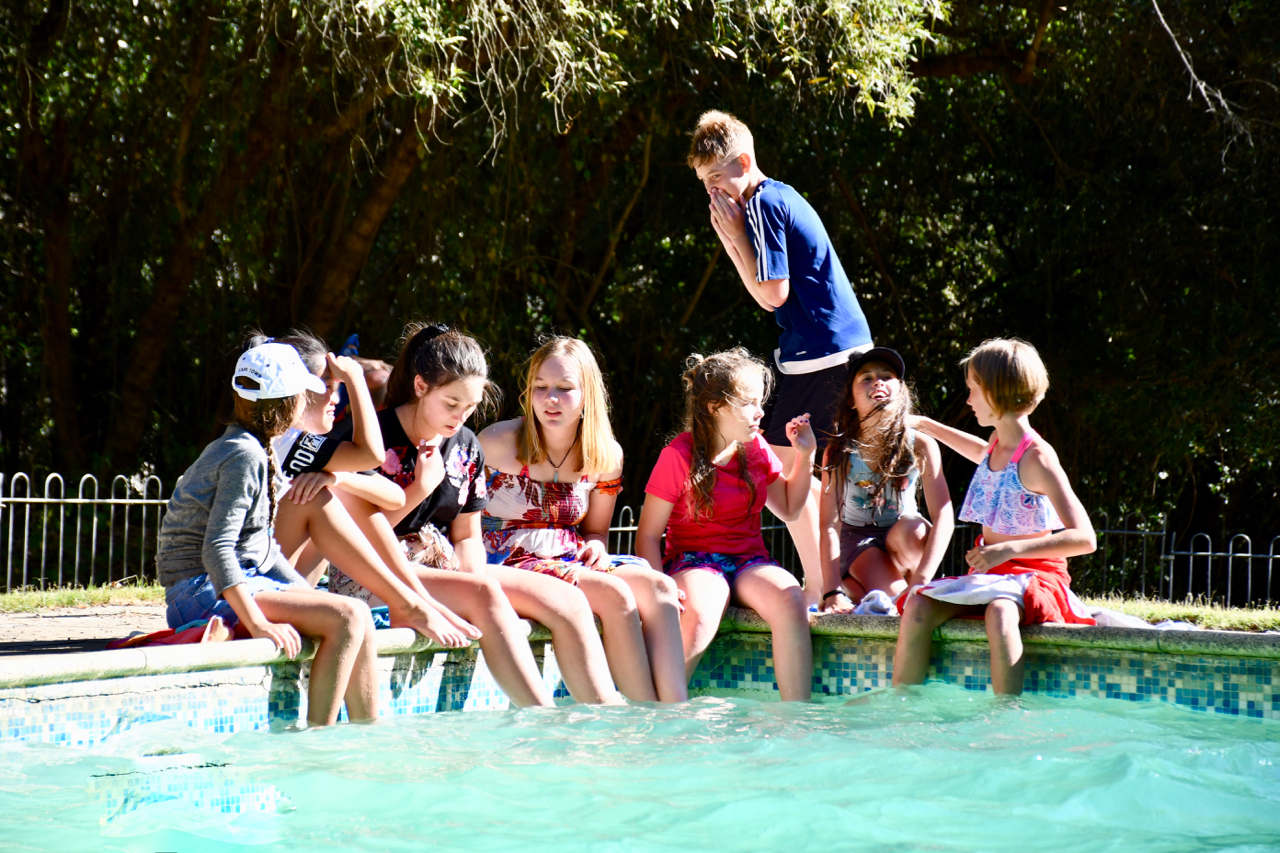
Then everyone follows the path to the pool and, right there beneath the eucalyptus trees, enjoys fruit, Lada’s magical muffins and drinks for their afternoon snack.
Fresh from their swim, the groups go straight to drama club. It is run by director and actress Ksenia Bruton. Games, dancing, sketches... happy children’s faces. Their lively activities make you want to join in, pretending to be a Young Pioneer yourself....But first the dishes need washing. Luckily, I can see all the action from my workplace—the kitchen.
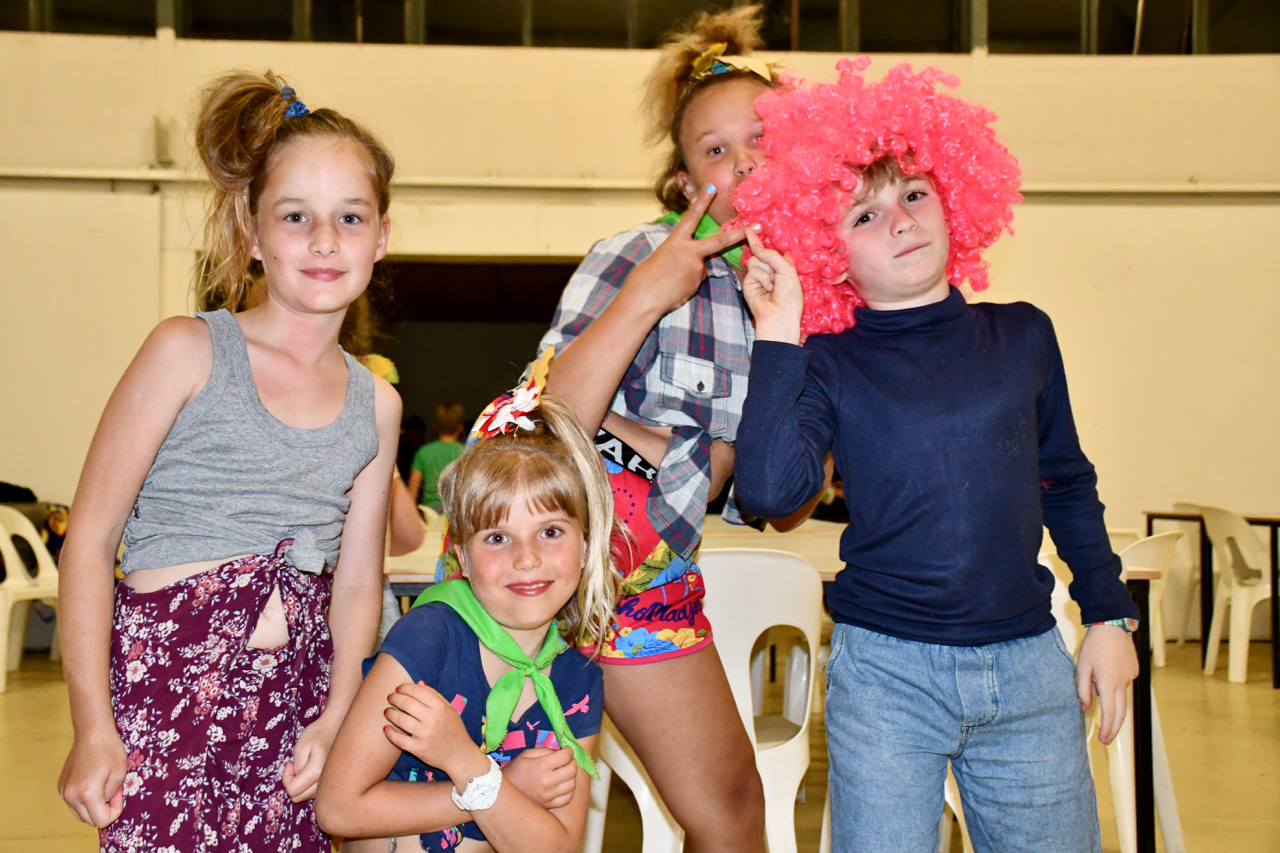
And on the very first evening, appearing onstage—ta-da!—the talent show. Several of the bravest children from each group performed songs or sketches, stand-up comedy and dances.
“Reading is terribly exciting!” Ladunya declared theatrically from the stage, opening a book.
The young sailor was so convincing that she took first place and won a prize. In fact, after those four days at camp, nobody went away without a present.
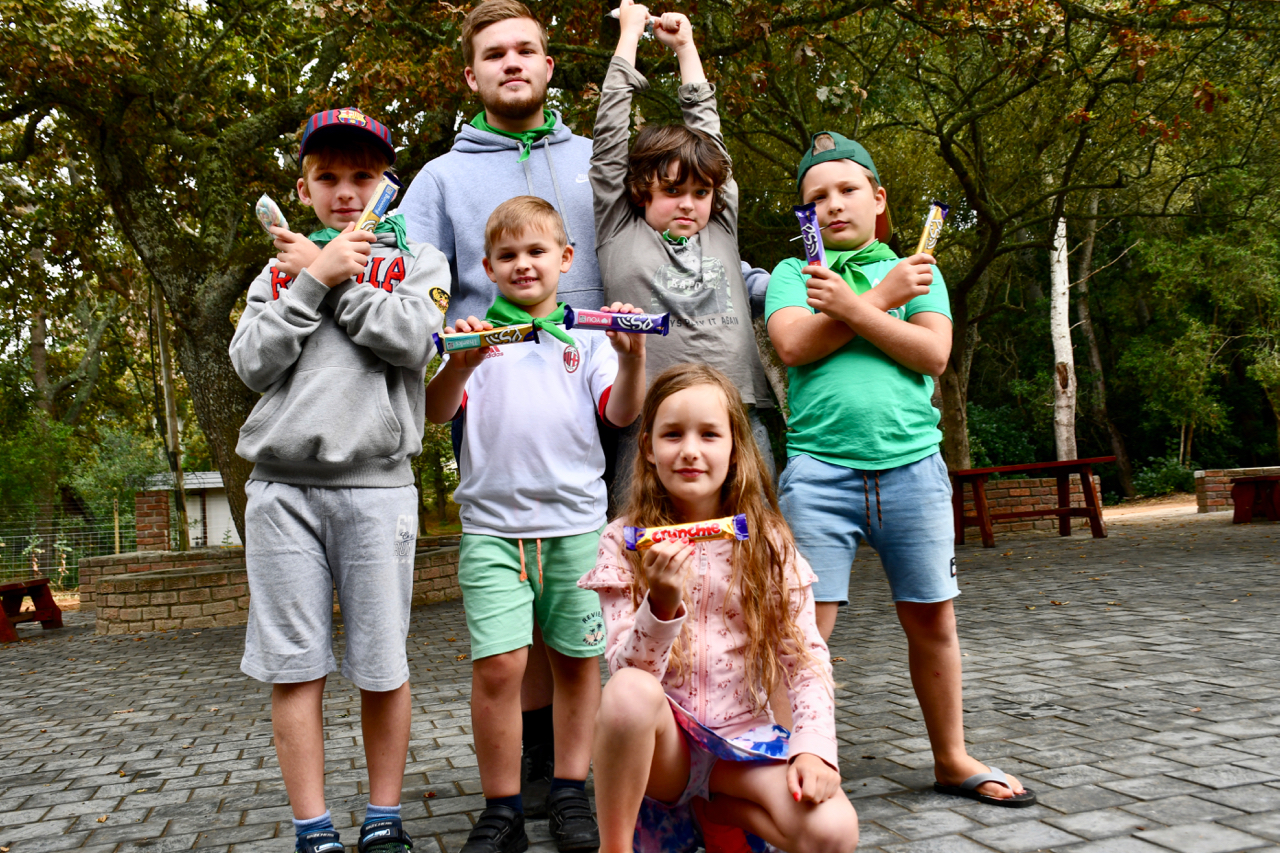
Then the disco kicked off. Andryusha from Group 1 sorted out the disco lighting with a laser torch. The counsellors, Masha and Nina, and I relived our youth and really let rip. At nine o’clock, the first group was sent off to build up its strength for the next day. The older children stayed up a little longer to hang out..
The Candle
Nastya ran into the room we shared to fetch the talisman. It would be passed around during the evening “candle” circle. Everyone sits around a burning candle; each person takes the talisman in their hands and says what was good about that day. A miniature bird from Easter Island served as the talisman every day. Now it can be a protective charm in its own right—it has absorbed so much warmth from the children’s hands.
The next day, Dmitry, press attaché at the Consulate General, gathered an attentive audience for an illustrated talk about the great country of Russia. On the third day, I took Dima’s place and spoke about our round-the-world expedition. Lada and Nastya provided support, while Nikos from the older group translated most of our stories into English, as he did throughout the camp session..
More about talents
On the evening of the second day, everyone prepared for “Eurovision.” With the younger group, we staged a proper Madagascar dance to “I Like to Move It, Move It” (I provided inspiration and costumes). We previewed a clip on YouTube, stuck leaves in their hair and added bright loincloths—it was all riotously good fun.
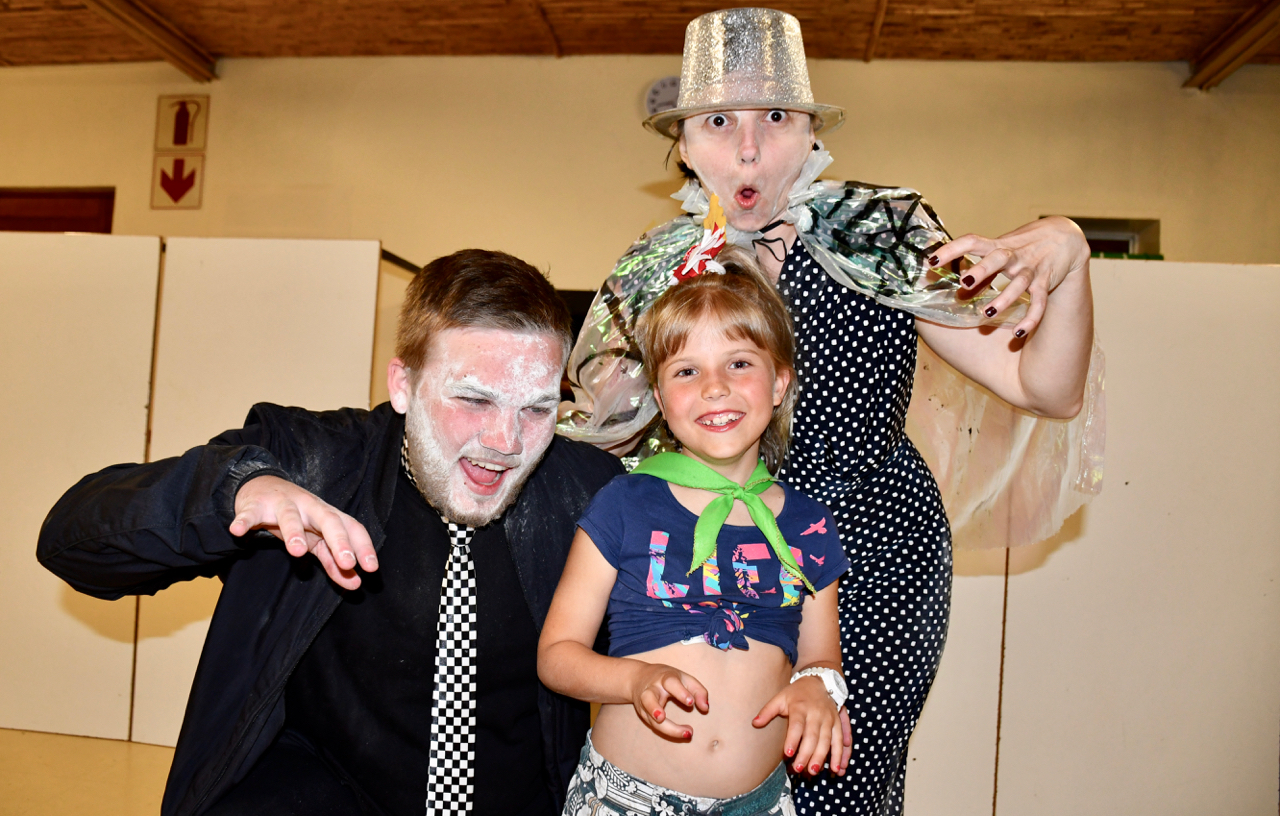
Of course, on the eve of the performance I managed to mislay my camera somewhere, I don’t have a phone, and so we were left without any photos or video. We hope to find some, as surely someone in the audience filmed it. The adult group also took part in Eurovision—it was a song about zombies, complete with a love story and a te-e-errible but comical ending. Nina—the senior camp counsellor, fount of ideas and chief organiser of camp activities—was irresistible as a zombie maiden. And counsellor Danya, Nastya’s colleague, was drop-dead good.
Well, take a look—isn’t it delightful?:)
A zombie and a Madagascan girl
On the third day, in addition to the Russian lesson and our presentation, there was a business game. It was an entire saga, rather like playing Civilization. The children started their own businesses, set up a corner for each and offered services ranging from floor-washing to massage and bookmaking. Then they cheerfully spent the money they had earned at the adults’ restaurant business. For the occasion, a crate of ice cream and two trays of fruit jelly had been prepared.
The Last Bell
“I’ve never gone on a real hike this far before!” a girl from the younger group says, making us laugh.
And we walk along the path, singing songs and chanting. Everyone is in pairs, while the three of us walk together, holding hands with Lada (the camp director) and Tanyusha. Then we form a single file, and ten minutes later our cheerful Russian camp reaches the pool. Every day there had been swimming and afternoon snacks here. Twilight creeps over the little wood, and from this new angle the very same pool takes on a mysterious air.
We all quietly sit down around the water. Nina turns on haunting, piercing music. And, as each person makes a wish, they find their own magic in the moment. Candles are lit, and one by one each child sends a tiny floating light across the water—so that their wish is sure to come true. I am certain they are wishing to return to the Russian camp for the next session in six months’ time. To give themselves another four or five days filled with activity, new encounters and the joy of discovering their own and other people’s talents.
By the pool during the day
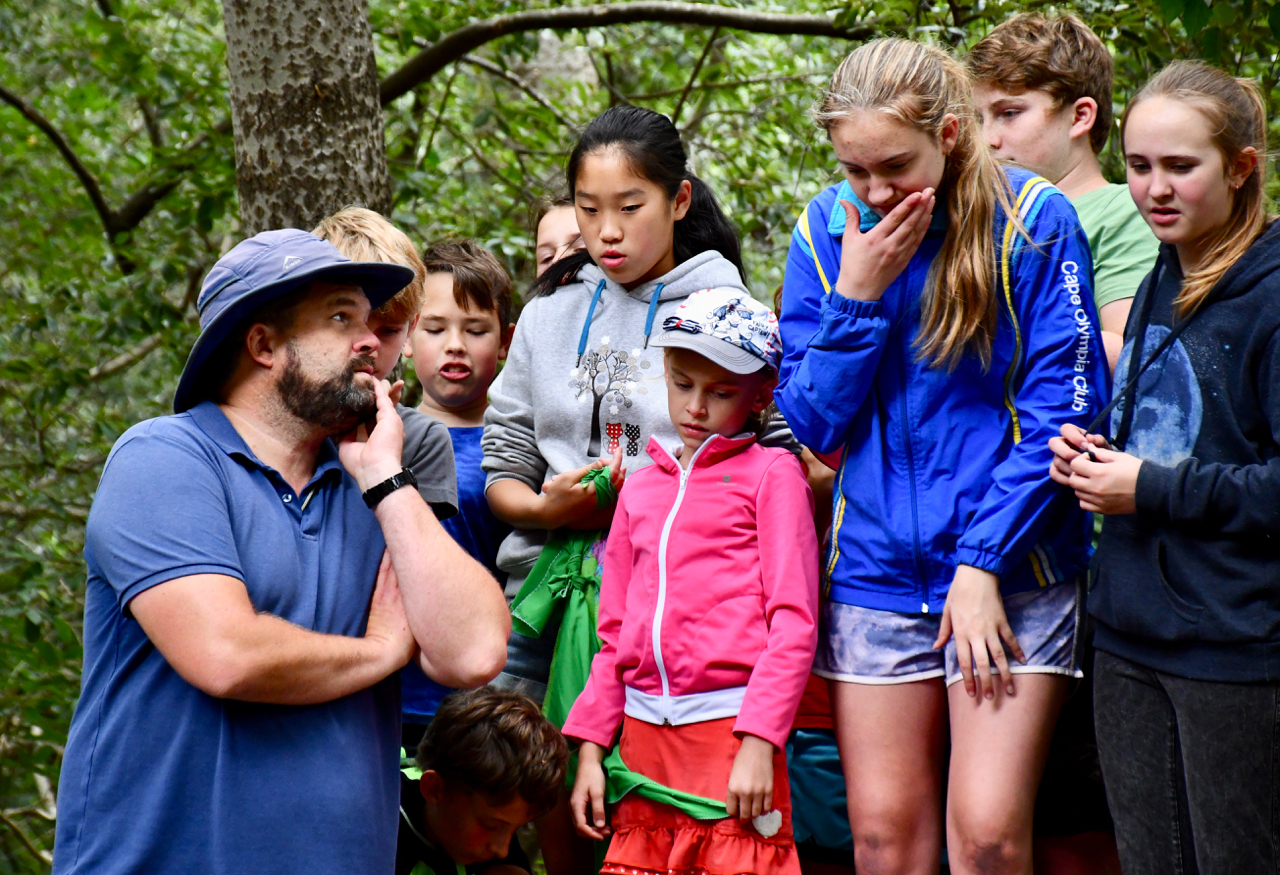
Leaving the floating lights to wink at the stars from the pool, we go to the campfire. Some gaze spellbound into the flames, some are sad or fooling around, and almost everyone roasts marshmallows. The “old hands” make an attempt to sing along with a guitar. And they even manage it:). Ah, it’s a shame our captain isn’t here with us. He is the chief guitarist in our crew.
“I live from one camp session to the next,” the children say at the evening candle circle. “I love you all and I’m going to miss you.”
And we will miss them too. And we girls—the counsellor, the Young Pioneer and the kitchen worker—honestly do cry as we say goodbye to the team and the children...
But that is not all.
Training the Boy Scouts
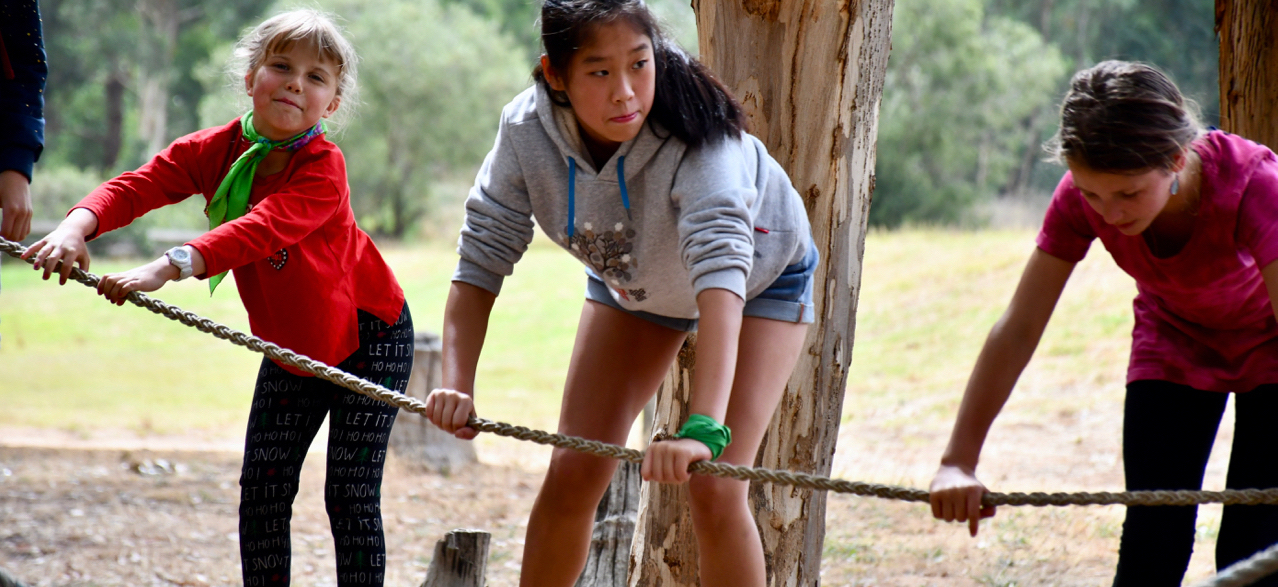
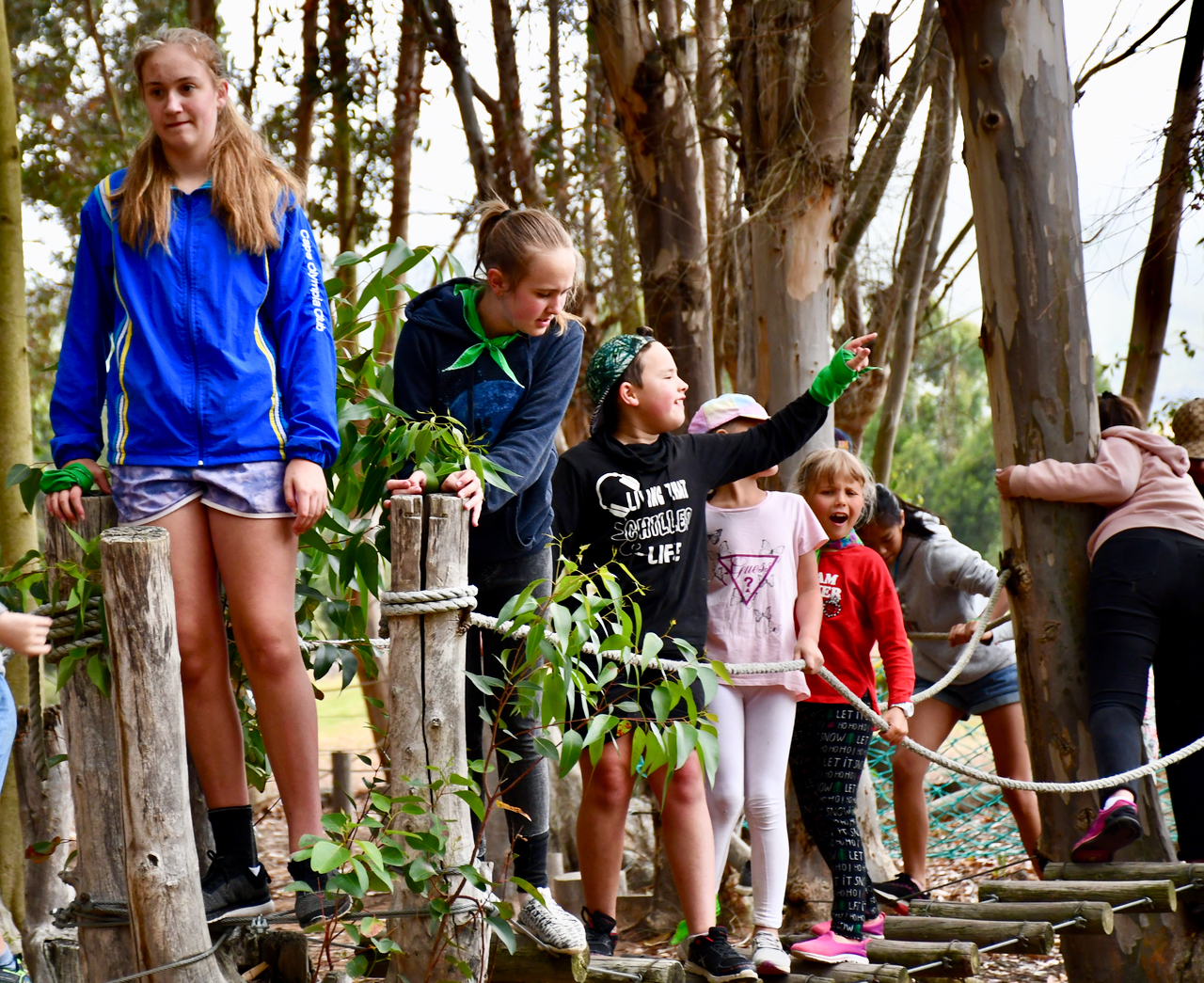
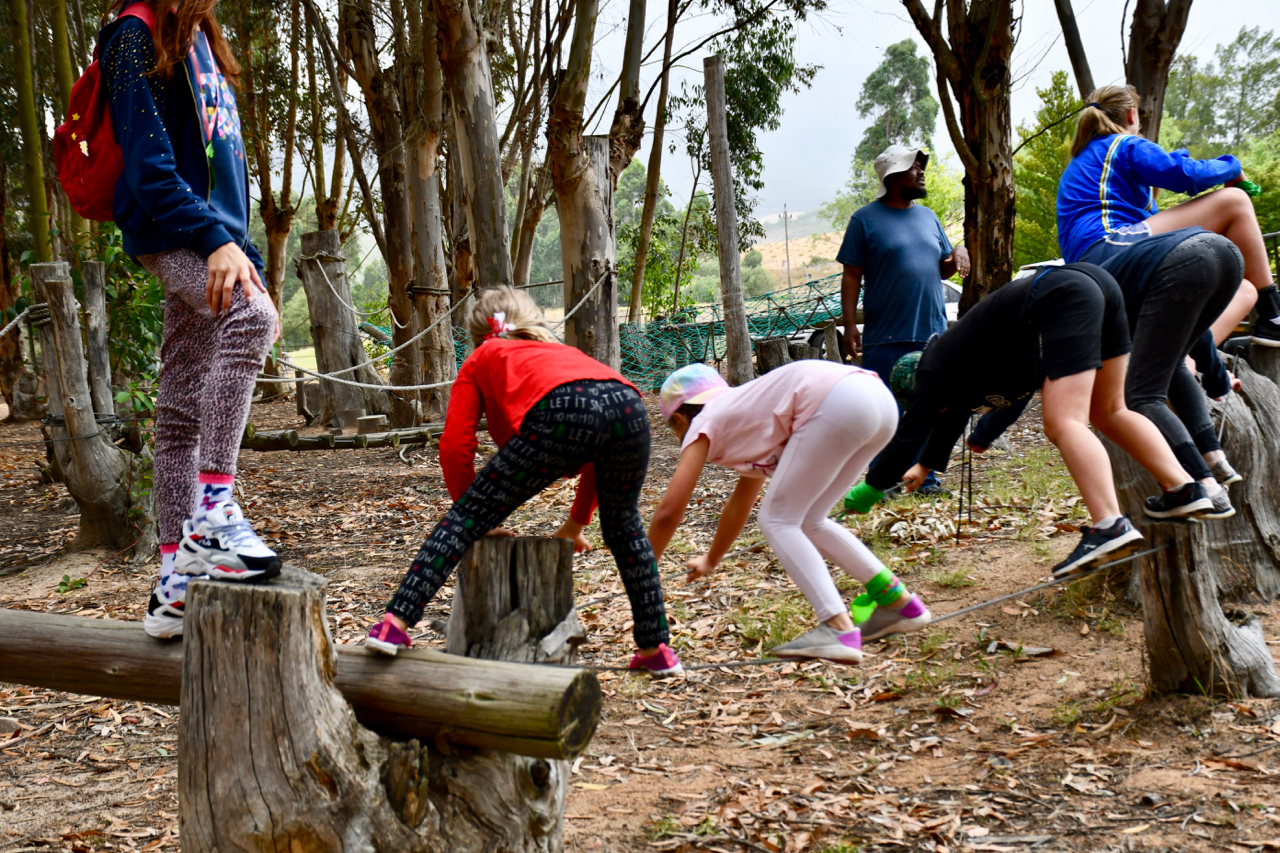
The next morning, after wake-up dancing, exercises and breakfast, the Russian camp races to the obstacle course—or is it the high-ropes course? Or are they training secret agents here? Some of the children have to cross a water-filled pit, while others must negotiate a route over tree stumps, ropes and swinging planks, with and without netting, without touching the ground.
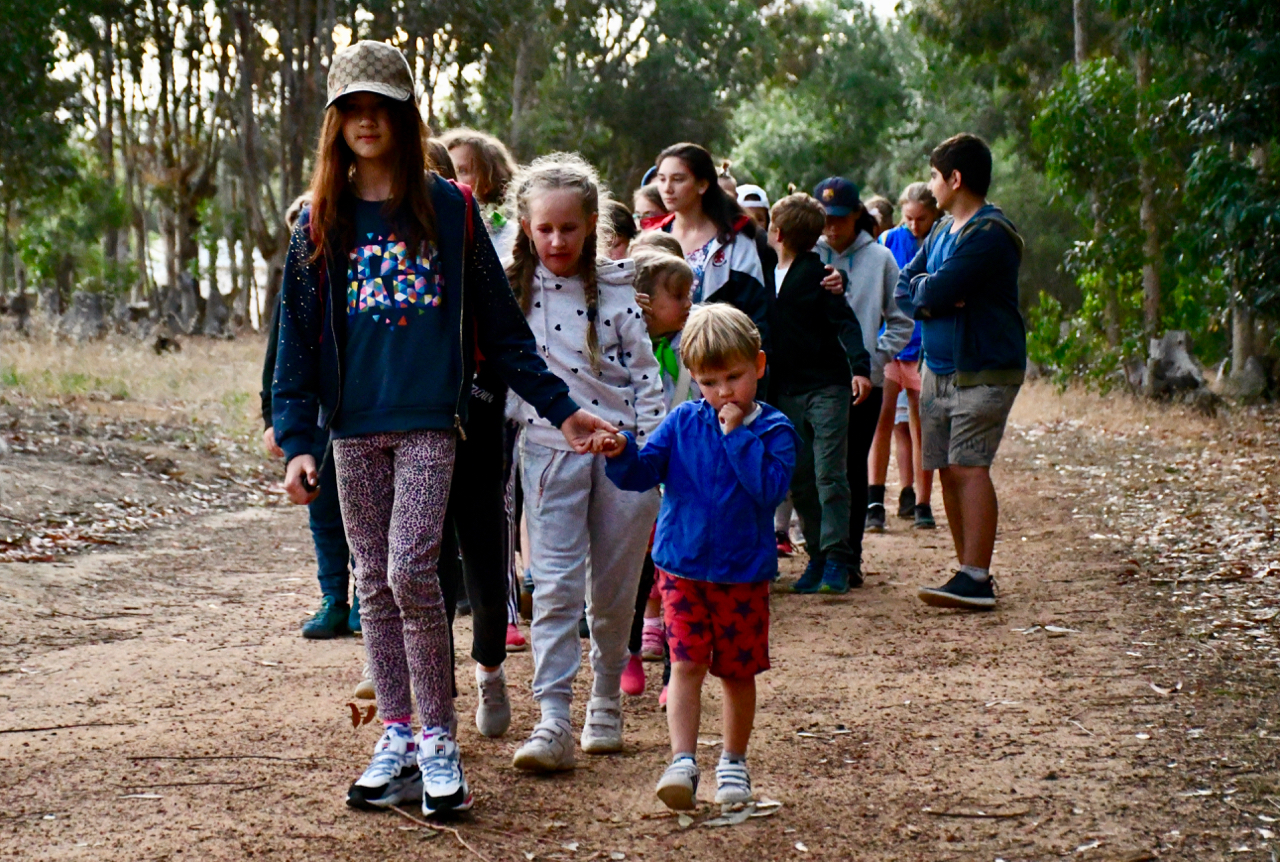
The little ones cannot climb onto the bridge without a friend’s helping hand...
It isn’t enough simply to jump across: first you have to catch the rope dangling over the pit. With what?—a question for the collective mind.
Our young sailors, hardened by the sea, refused to jump over the pit. Nastya, supposedly, was above such things because of her status—she was a counsellor, after all—but the young sailor surprised me: she was fighting to keep her clothes clean.
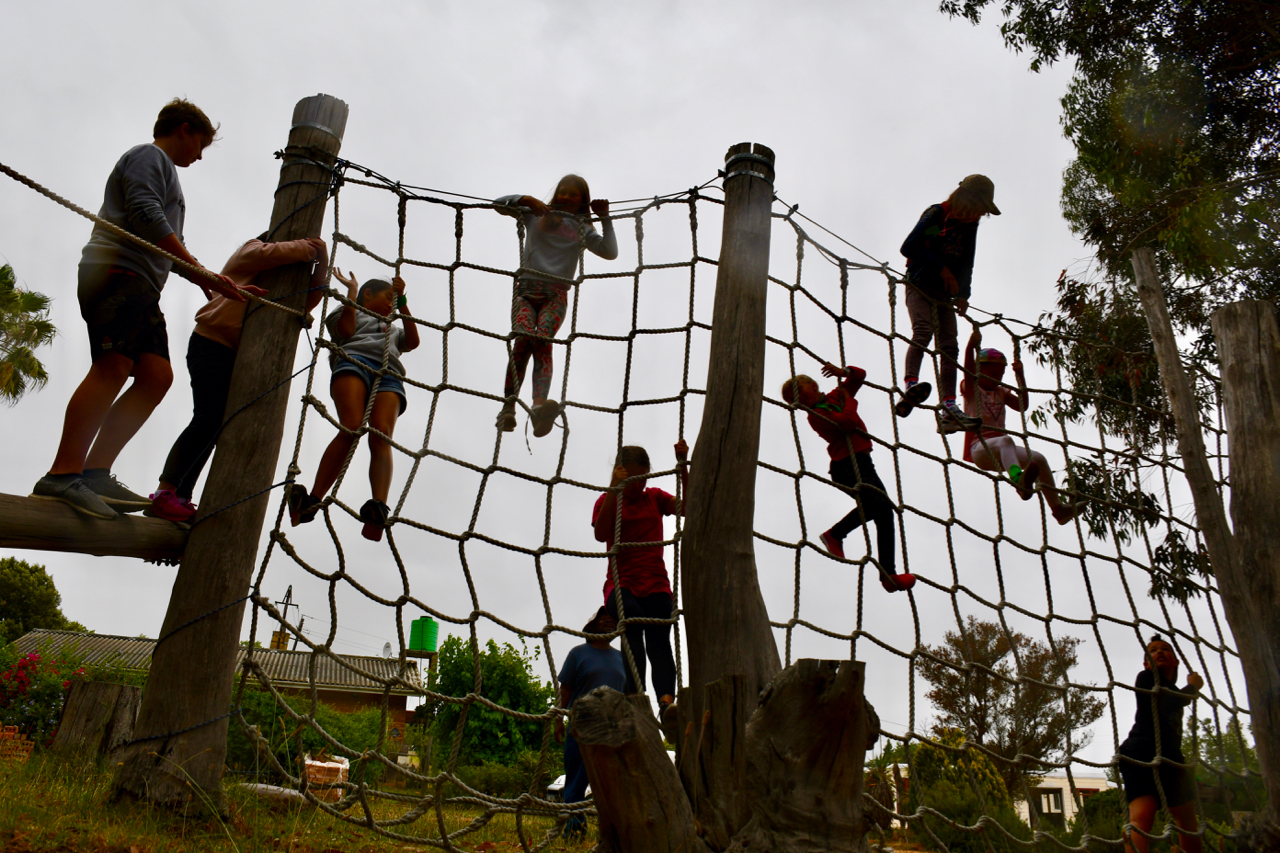
And who was it who said she was adventure-loving, eh? I ask.
In those four days, an entire life, packed with events and emotions, flashed by. Little sleep and lots of warmth. Activity and positivity. Friendship—the kind that exists only in youth.
We’re off on a hike with songs
Oh yes, by the way, the Russian camp near Cape Town is called “Druzhba”—“Friendship”—and it lives up to its name completely.
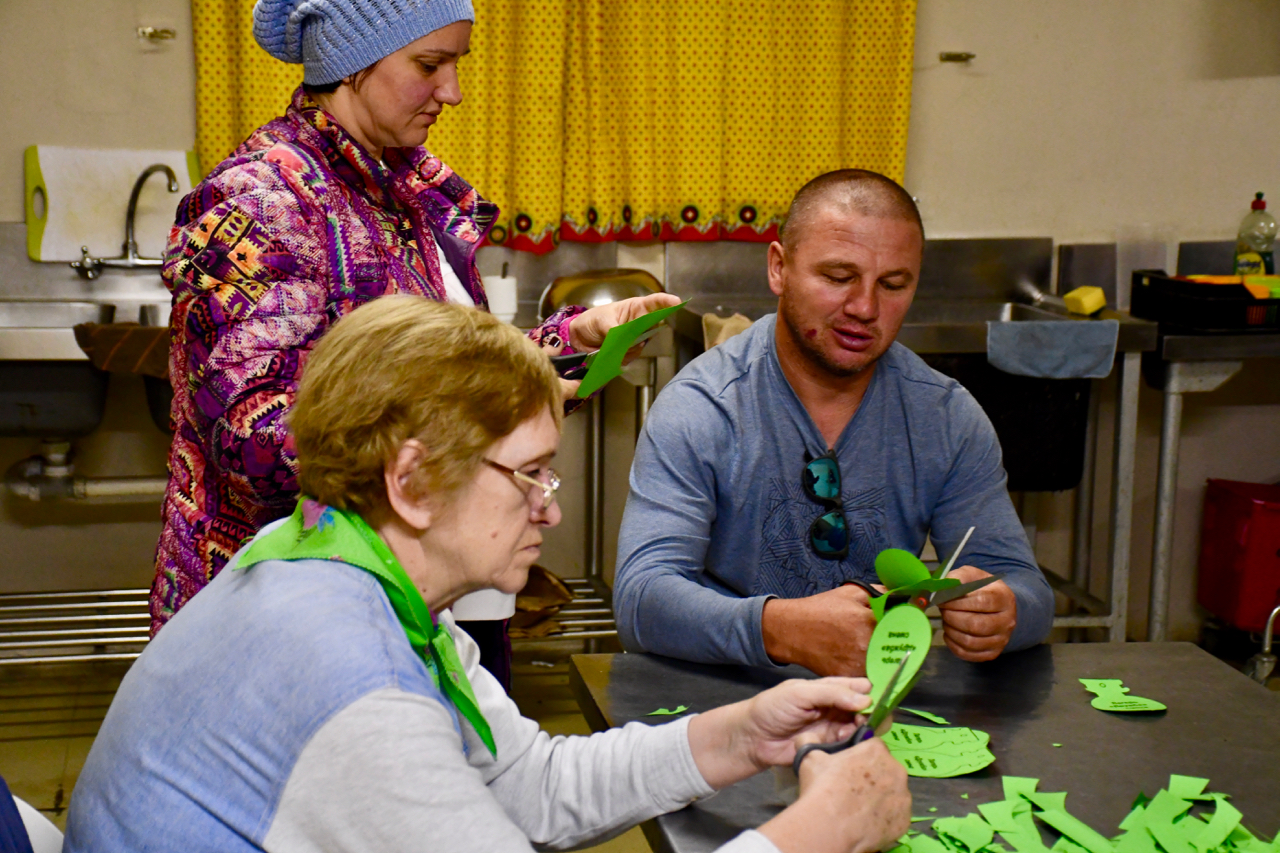
Midnight draws near... and in the kitchen they are making medals for every “Young Pioneer.”