
From the Travely-Family archive · Yacht, Sea and Equipment
Homeschooling on a Yacht
An original publication from the former Travely-Family website. This English translation was preserved from the technical-site archive without editorial rewriting.
Homeschooling. Children on a Yacht
“Mum, give me the tablet, quick—I can’t wait to do another French lesson now!”
This isn’t a dream. It’s just that I’m sitting in the cockpit learning Spanish with a special programme, comically repeating phrases in every possible way and chanting Spanish verbs, making the whole crew laugh. Nastya decided she wanted to study French in the same way. There are many former French colonies around the world, such as Senegal, or French Polynesia, so she is responsible for the language of Molière aboard our boat. Our daughter learned English through practice, thanks in large part to the utterly magical teacher Nika, whom we met on Koh Samui. Their Skype lessons are more like two girlfriends having a chat, and Nastya is not afraid to speak English.
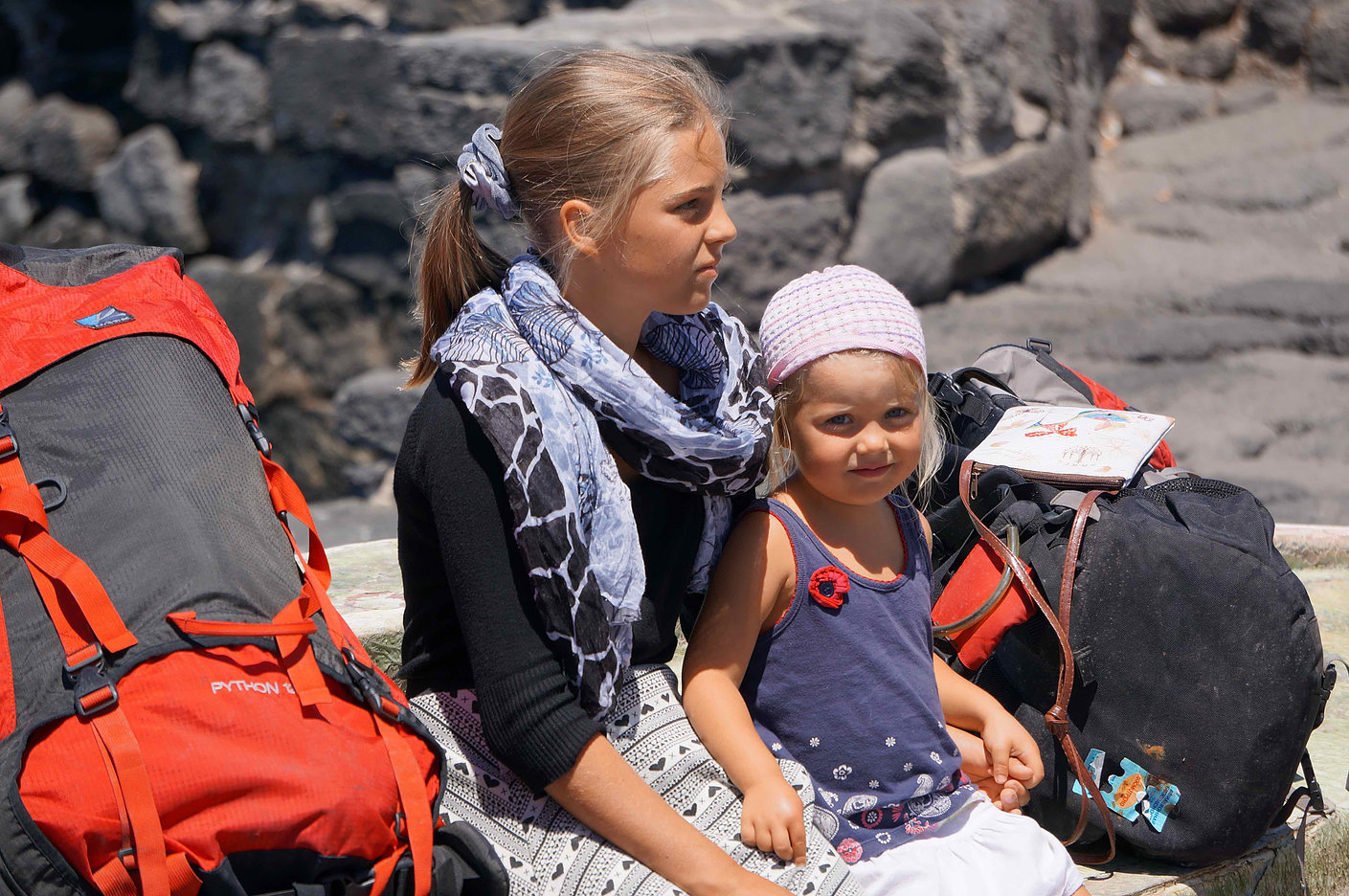
Homeschooling (yachtschooling) in the Other Subjects
Nastya completed Year 6 while enrolled at an ordinary rural school in the Altai Mountains, where our Gingerbread House® is located. In practice, from Year 2 onwards, she attended school for no more than two terms in each academic year. Every year we submitted a request asking that she “be excused due to both parents being away on an extended business trip,” promising that she would catch up. In Year 6, she was absent for seven months under such a request. Homeschooling went well, and when she returned, our daughter passed her tests and assessments and was promoted to Year 7.
How Do We Study?
Homeschooling. Our method is by no means perfect. If anyone has any ideas about how to make it more effective and enjoyable, we would be glad to hear them in the comments.
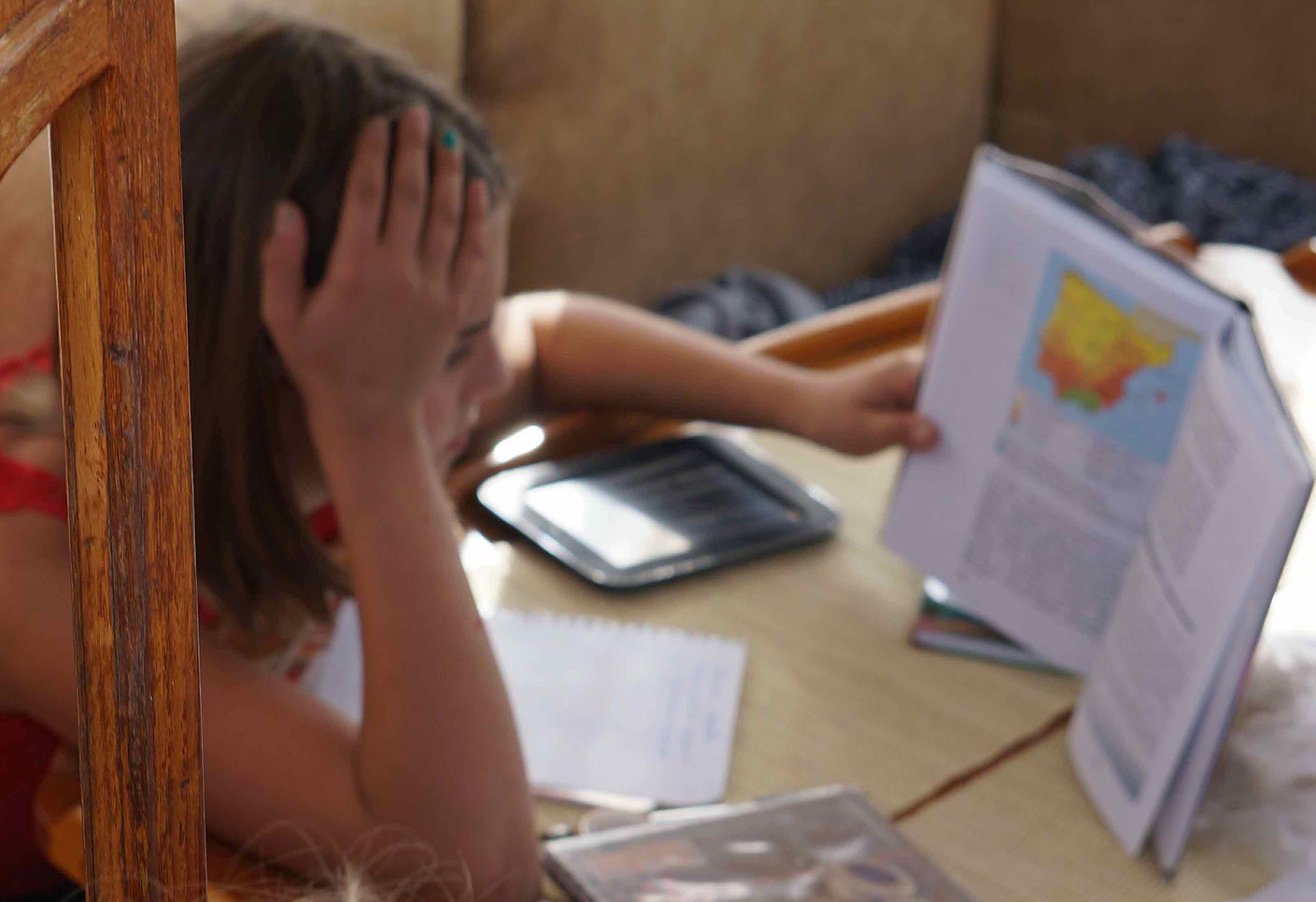
Our daughter studies subjects IN BLOCKS, using textbooks and workbooks from the standard Russian school curriculum. A large body of material can be covered in a short time if you immerse yourself completely in the subject. Favourite subjects go quickly and enjoyably; disliked ones, accordingly, do not.
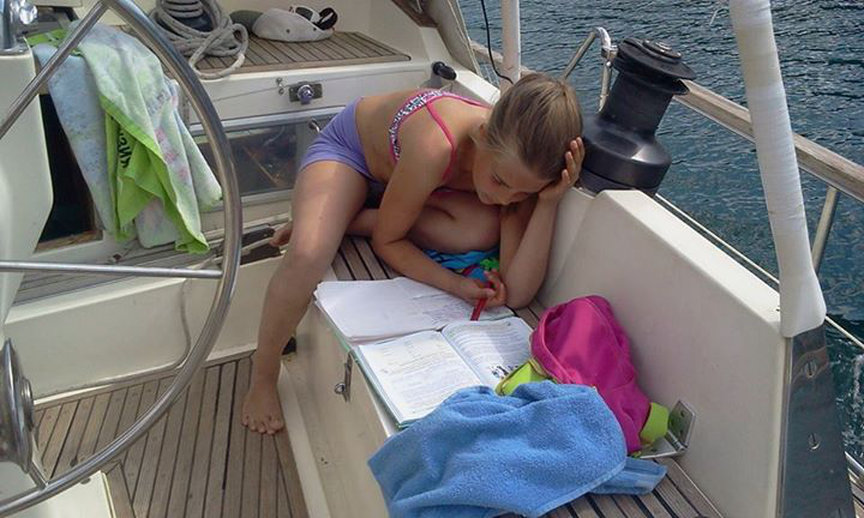
First, she reads the textbook section herself and asks questions. We explain the new material. She completes all the textbook exercises in sequence.
Personally, we greatly missed having explanations from a teacher—not because we cannot explain things ourselves, but for the sake of a qualified approach and variety. The website interneturok.ru solved the problem. It has video lectures, interactive tests and lesson notes. It is a great help for homeschoolers.
Now Nastya listens to the teacher first, then reads the textbook, and only then do we move on to working through specific problems.
What Next?
Our crew’s future cruising plans required us to make an official switch to a different form of education. After the first half of Year 7, we withdrew her papers from the school and departed into the unknown: family-based education, without being enrolled at any school. Under the Law on Education, annual assessments are a pupil’s right, not an obligation. So she only needs to attend the school where she registers for the compulsory state examinations: the GIA in Year 9 and the Unified State Exam in Year 11.
We are studying Russian legislation while also looking into distance-learning schools in Moscow and St Petersburg. They have a well-established system for teaching online, but so far our homeschooling has not yet found its way into that system:).
The Challenges of Homeschooling on a Yacht
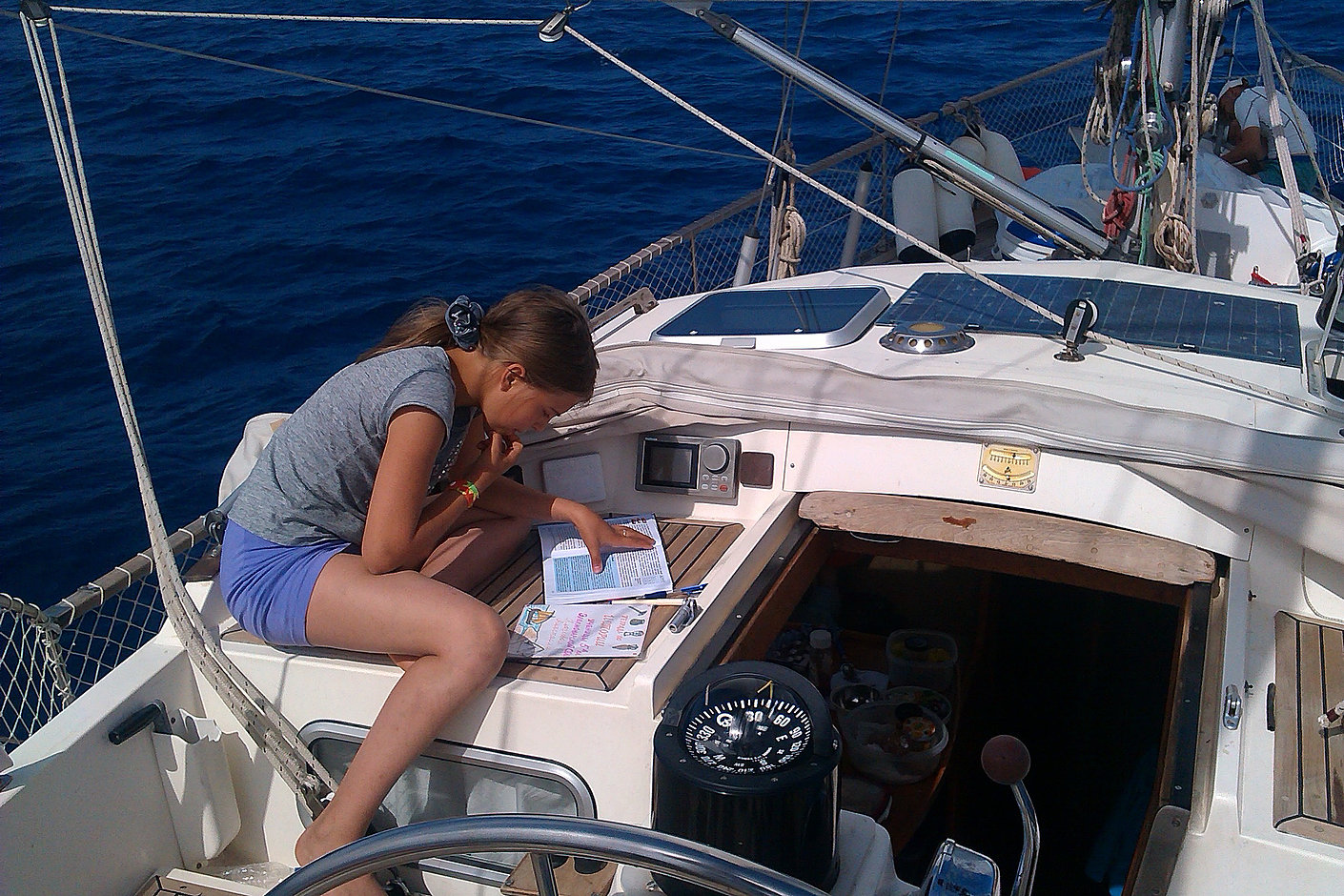
Self-discipline. Life aboard a boat in warm latitudes is anything but conducive to discipline. When it is hot and you want to swim, when we are off exploring the local area, when you are seasick during a passage—who would want to sit at a desk?
The lack of a role model, a sense of belonging to a group, and competition. When all the other children go to school and then sit down to do their homework, it prompts a child to do the same. When homeschooling, children feel as though it is always the holidays. And who can make them sit down to study during the holidays?
The lack of a peer group. Group learning is highly effective for studying many topics and even entire subjects. By working on a problem in small groups, a child learns to work as part of a team, assign roles, discover ways to achieve a common result, brainstorm, and much more besides.
The hardest thing about homeschooling is getting down to work, especially after a long break. A child can spend an entire month putting off the start of lessons until tomorrow, stretching an unplanned holiday out even further. The affliction is cured with a magic kick up the backside. To get things moving, Mum and Dad simultaneously—and, importantly, regularly—start frightening their negligent offspring with the consequences of a life of ignorance, failing exams, and so on. Every conceivable and inconceivable feat of eloquence is brought into play.
But once the youngster finally starts studying, the parents must not relax, because the kick only lasts for about a week. After that, the fear of the future begins to fade, and the pupil feels that they have already done sooo much! and that it is time to ease off. And the pace drops to zero. Until the next kick.
Homeschooling is a headache for lazy parents (the exception being parents of an inquisitive, curious genius who begs to get on with the lessons). For hardworking parents, homeschooling is a new path towards creative interaction with a growing individual. As for which group my husband and I belong to, we shall keep quiet for now 🙂 Homeschooling: The Advantages
Studied in immersive blocks, subjects are learned more deeply and quickly, without unnecessary filler or endless repetition. The child spends as much time on a subject as they want. They are not tied to school, compulsory routines or a one-size-fits-all system, and they plan their own time (or at least learn to do so).
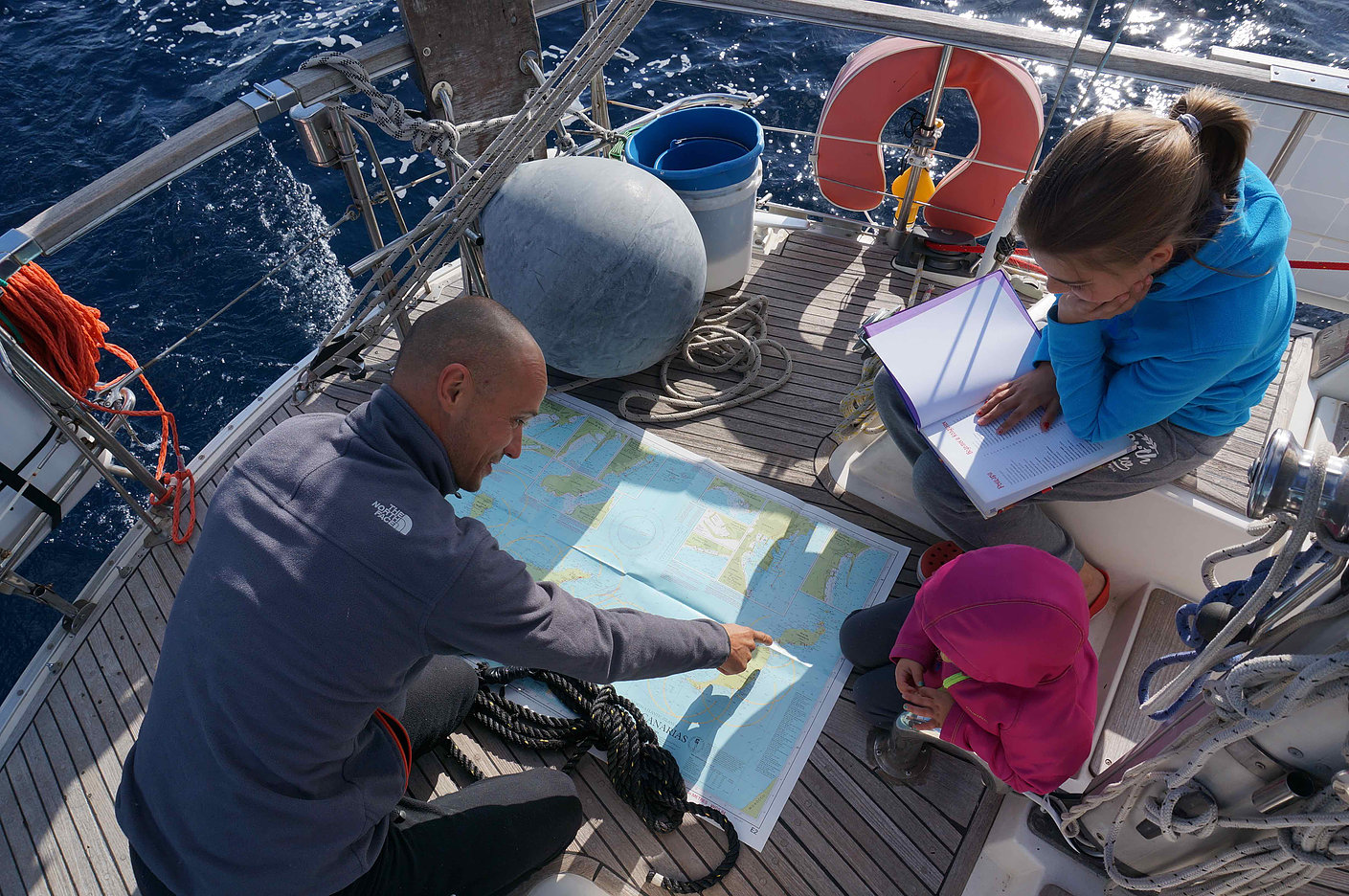
Children learn geography, history and foreign languages as they travel. They can “touch” the things they read about in books. This first-hand experience leaves a stronger impression and stays in the memory better than any theory.
A broader outlook. It becomes broader even if you do absolutely nothing to make it so.
Freedom. Simply freedom. That is the main advantage.
In the next article, we will talk about socialising, leisure and children’s safety aboard a yacht.
If you found this article useful and would like to thank the authors but do not know how, click the button below 🙂