
From the Travely-Family archive · Other Entries
Senegal
An original publication from the former Travely-Family website. This English translation was preserved from the technical-site archive without editorial rewriting.
Visa for Senegal — the rules change often. Sometimes no visa is required, sometimes it is issued at the border, and sometimes you have to obtain one in advance at home. We entered Senegal aboard a yacht, and paid €25 per person for a transit stamp in our passports allowing an unlimited (!?) stay. Local Russians say that was rather expensive.
Language of Senegal — French and Wolof
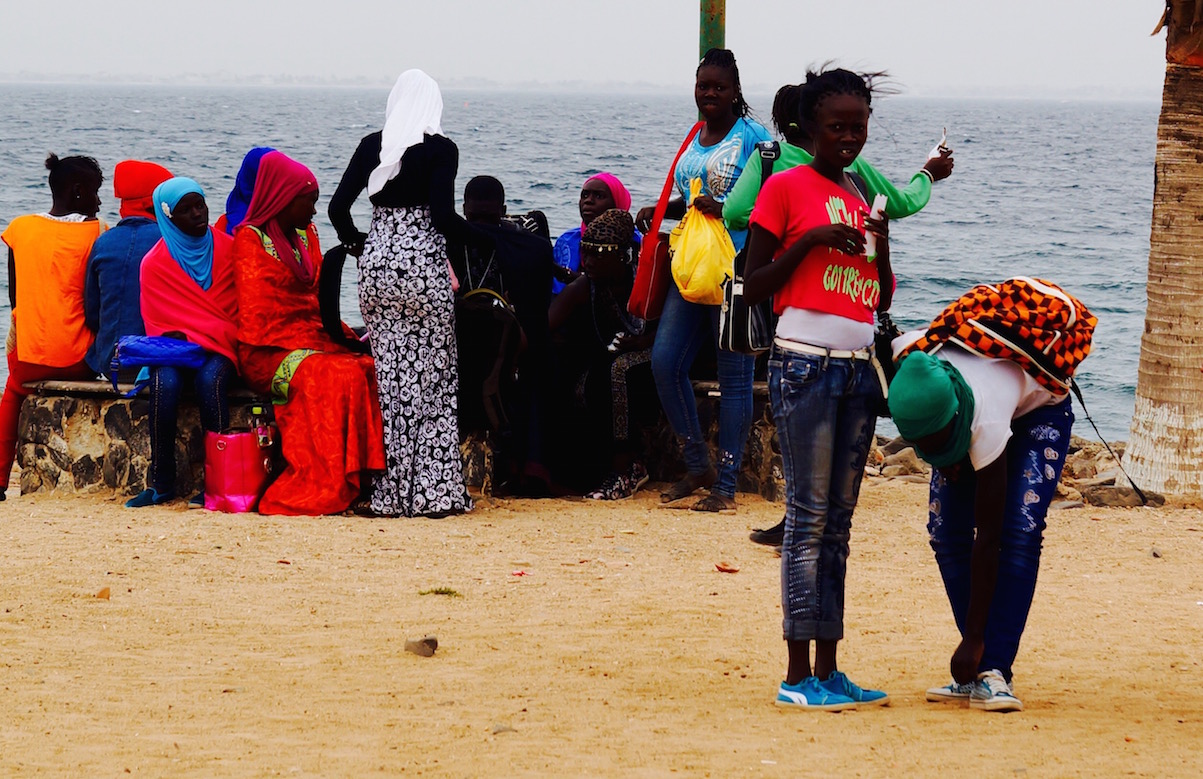
Population and borders of Senegal — 99% Senegalese, 1% white, mostly French. There are Russians in the capital too (which surprised us). The people are very friendly.
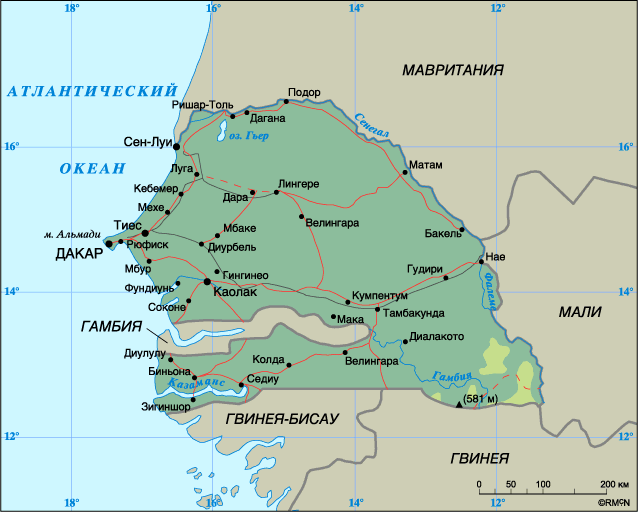
This former French colony borders Mauritania to the north and Mali to the east; in the middle of the country lies the smallest state in mainland Africa—the Gambia. To the south are Guinea and Guinea-Bissau.
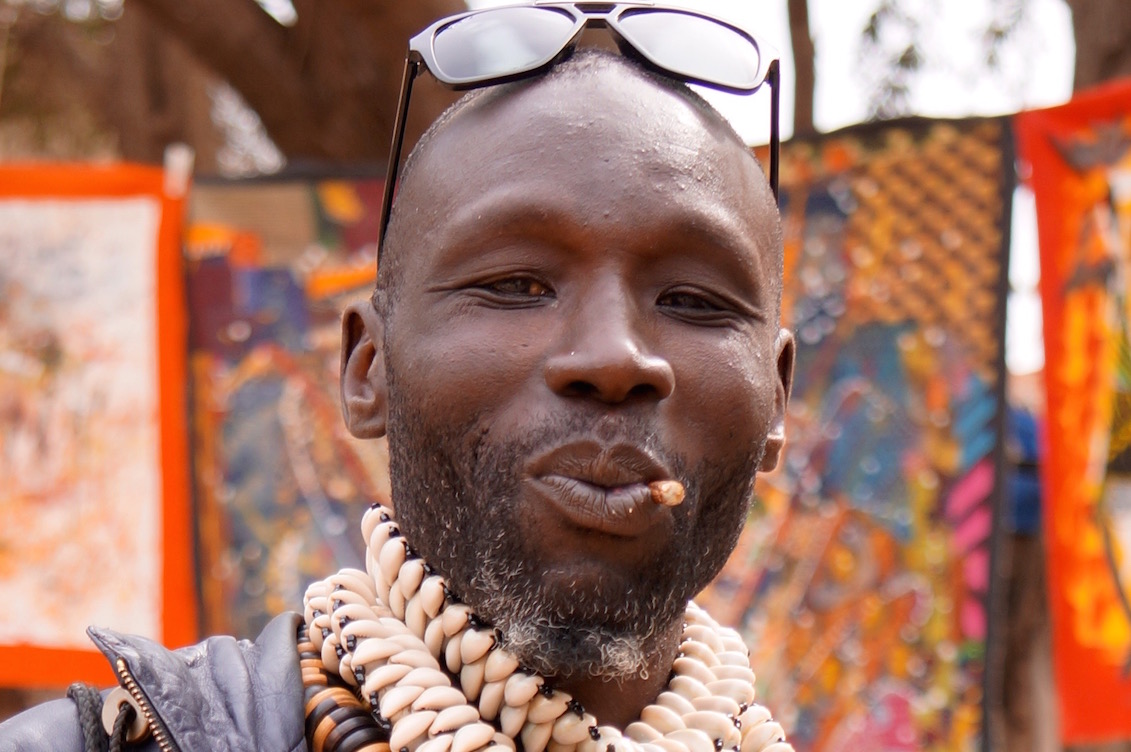
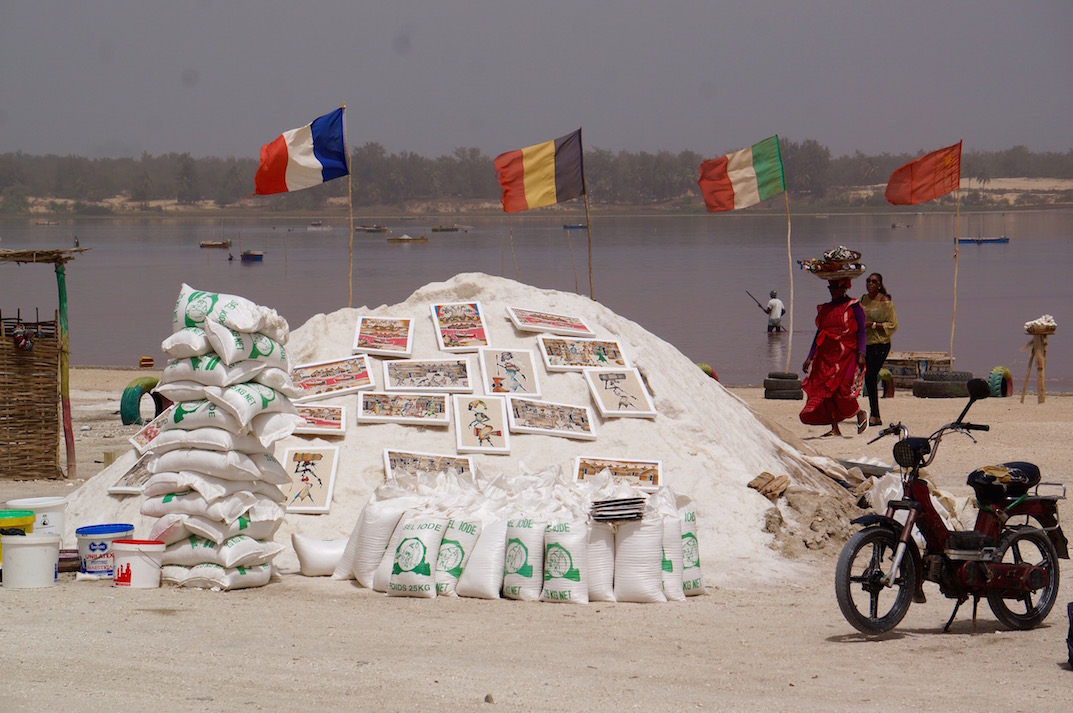
A souvenir vendor from Gorée Island
Is Africa scary?
South of Morocco, for most Russians, begins the Africa that is “too scary to visit.” The only exceptions, perhaps, are Kenya and Tanzania, though even those are for seasoned travellers and climbers: that is where the continent’s highest point, Mount Kilimanjaro, is located.
So far, we have visited only four countries on the Dark Continent: Egypt, Morocco, Senegal and the Gambia. And let us put it this way: no, Africa is not scary. There are people here too, and they are neither bandits nor even cannibals. There are hotels, restaurants, shops and markets. The streets are somewhat reminiscent of Russia in the wild 1990s: one endless flea market. You can even sense a certain glut of goods on the market.
Only Wikipedia has anything coherent to say about Senegal (from a cultural and historical perspective), while tourist websites mostly shout about long beaches and luxurious hotels.
So, here is a brief guide to Senegal.
The capital of Senegal is Dakar
This is where Africa’s westernmost point, Pointe des Almadies, is located, and a few kilometres away lies another cape, Cape Verde, known from the country named after it: “the islands of the Green Cape.”
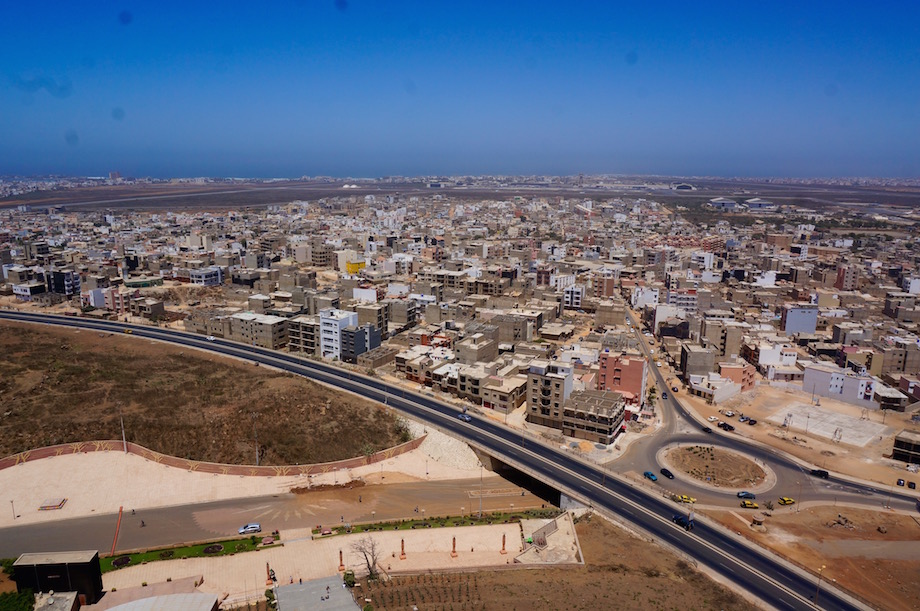
Dakar is dusty and rather dirty, like many capitals on the continent. There are no pavements in some places. People often sit right on the sand beside the roads, interspersed with goats, ironmongery and various things for sale:). It is clean only in the official districts, where the diplomatic corps lives and works and where the embassies, consulates and national leadership are located. Oh, and also in the guarded, expensive neighbourhoods fenced off from the rest of the world.
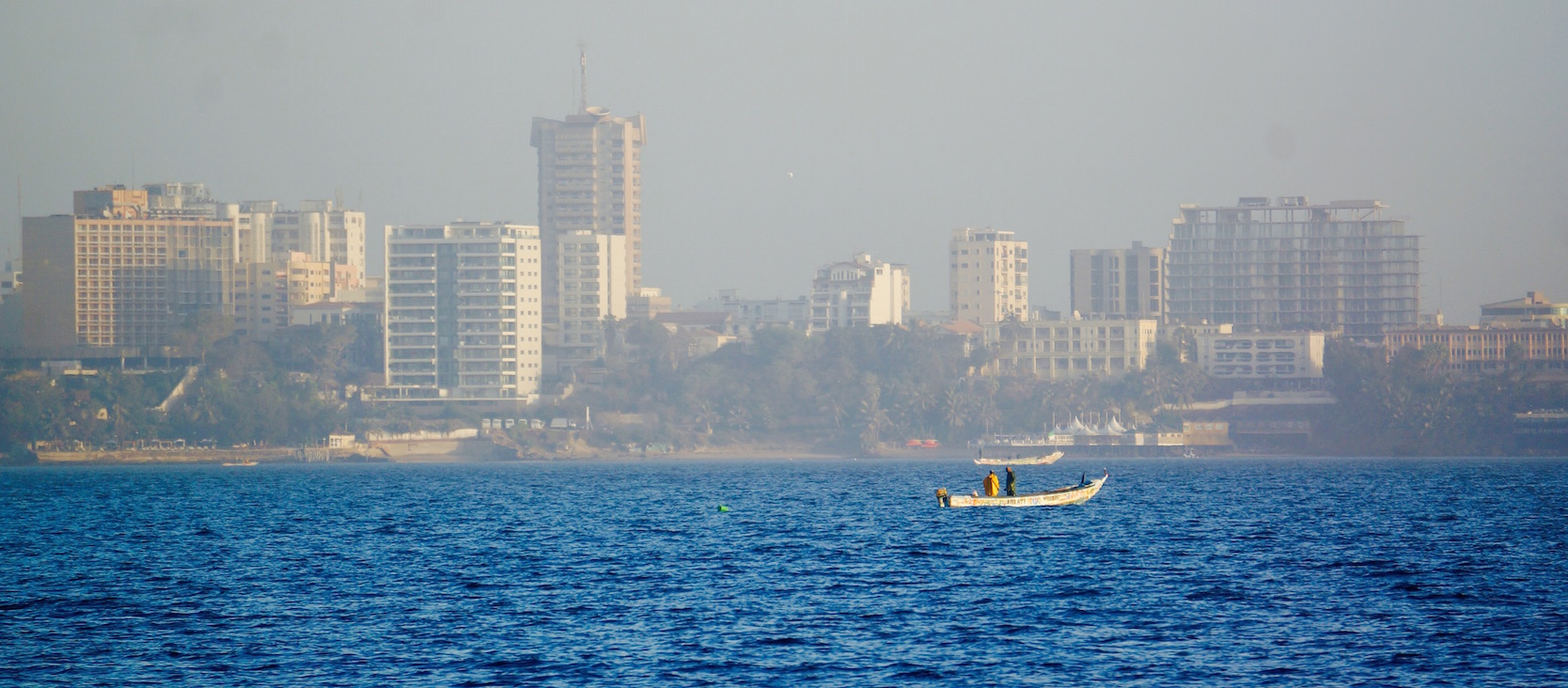
View of Dakar
Sights of Dakar:
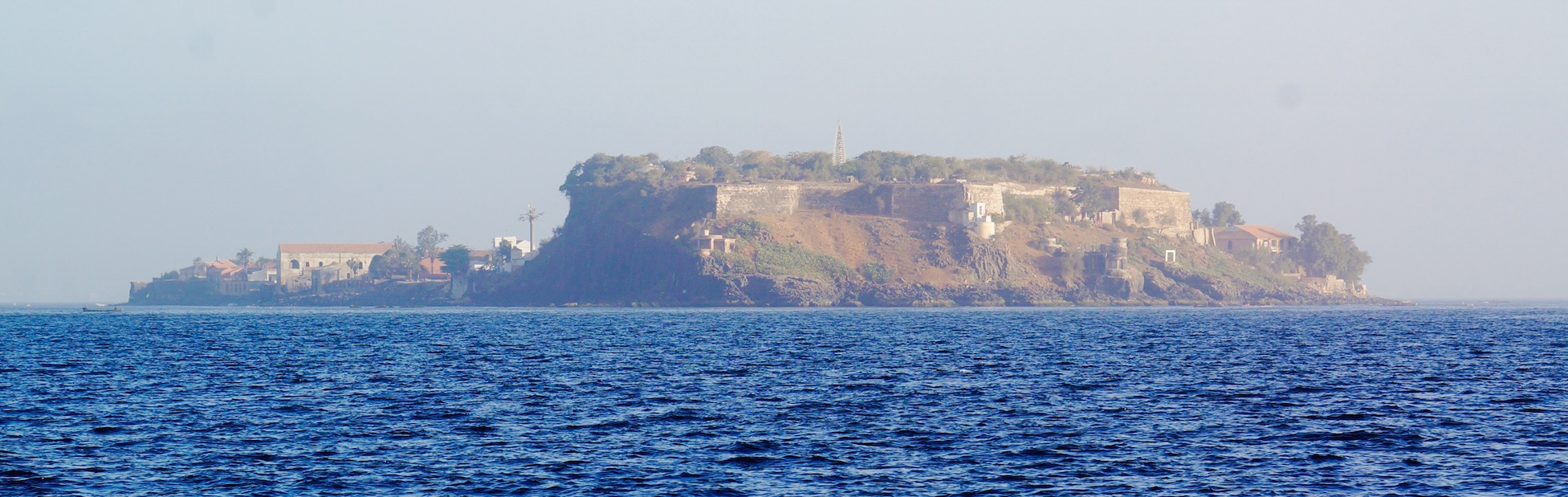
Gorée Island
(!)—an island 4 km from Dakar. Portuguese architecture, a couple of museums, including a maritime museum. Souvenir shops and galleries displaying the work of local artisans. An anti-aircraft gun at the highest point. Definitely the most beautiful place in Dakar.
Gorée Island
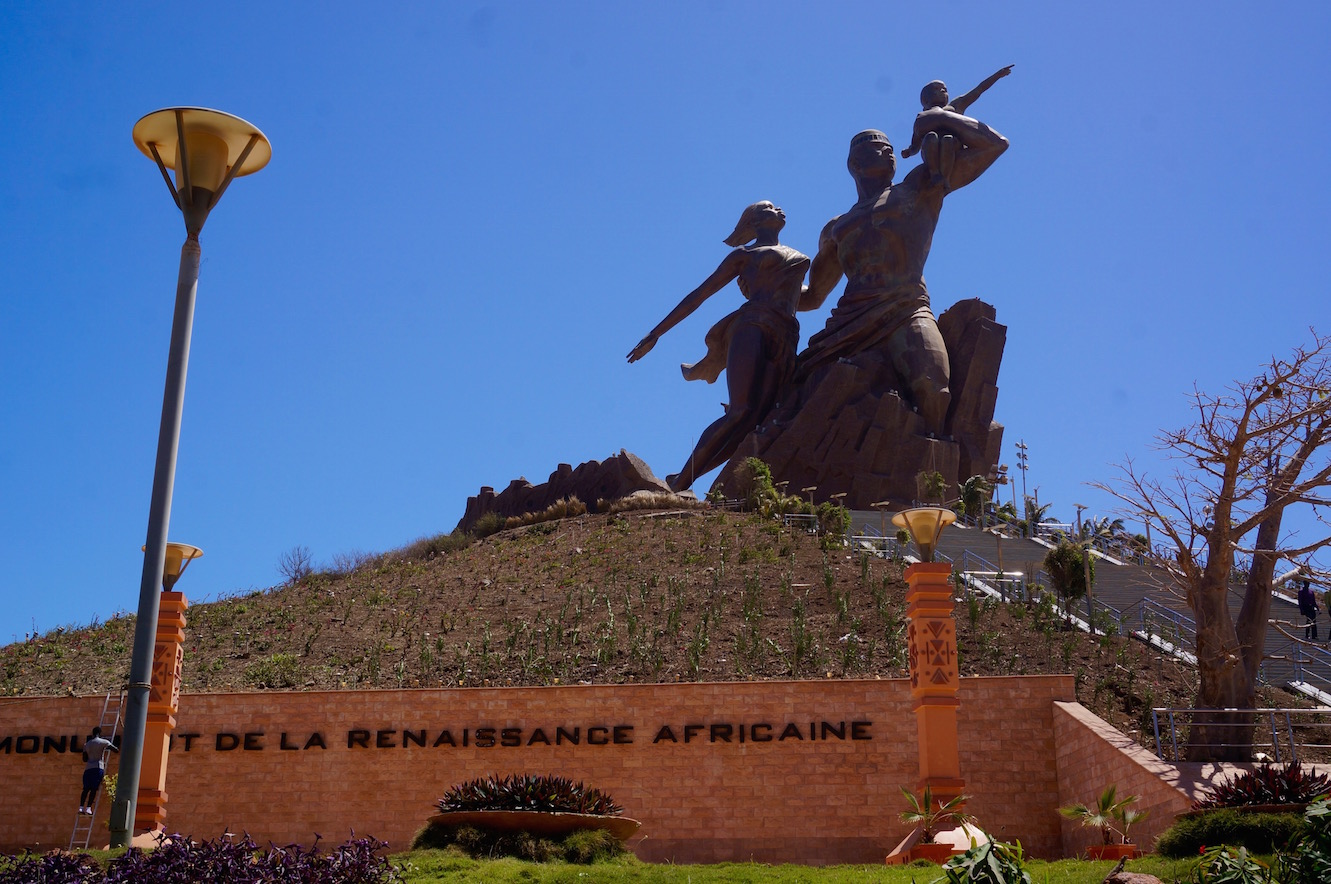
African Renaissance Monument —a huge sculpture on a hill, as tall as our Motherland Calls statue. Inside, there is a museum of contemporary art and an observation deck.
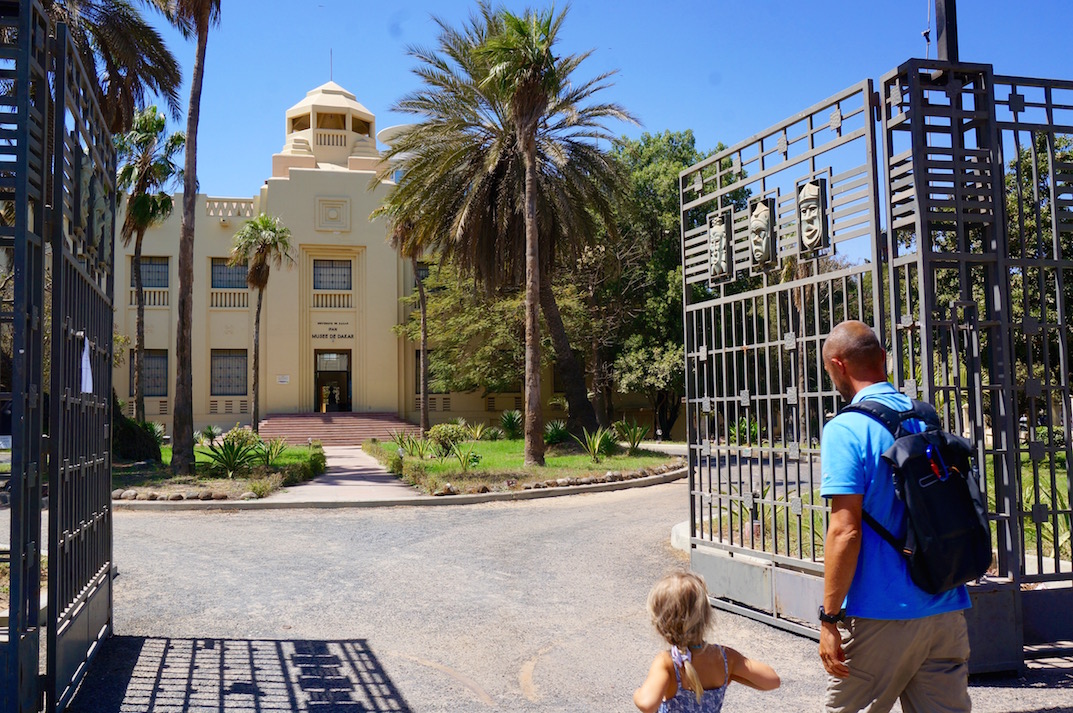
Dakar Museum. Not the richest collection, but an interesting display of ritual African masks and other ceremonial and everyday artefacts.
Market. For example, Castor —a typically African market. You will not be pestered by touts here, because this market is not geared towards tourists.
The largest supermarket is Casino. It is located in the most upmarket shopping centre, Sea Plaza, next to the Radisson Hotel.
Where to eat
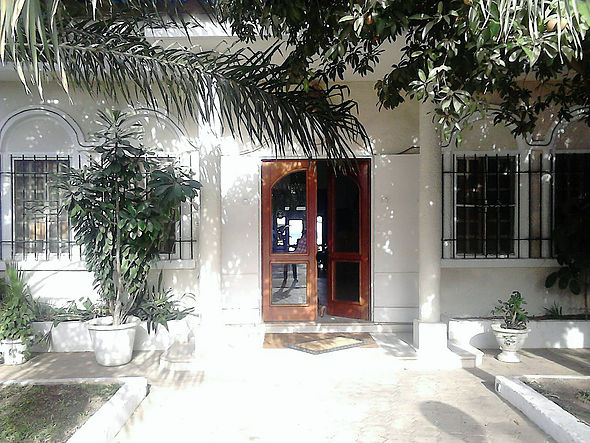
A restaurant in Dakar. We asked, “Where can we eat around here without getting food poisoning?” We were recommended
La Corvette, a restaurant serving French and Russian (!) cuisine. The owner is French, and the hostess is a wonderful Russian woman named Natalia. An incredibly cosy and beautiful place, with delicious food and good service. Location: Hann Marina district, right on the beachfront. There are entrances from both the road and the beach.
There is a small yellow
“La Corvette” sign on the lamppost by the entrance.
Lake Retba in Senegal —is the country’s main natural attraction. About 20 km north of Dakar by car.
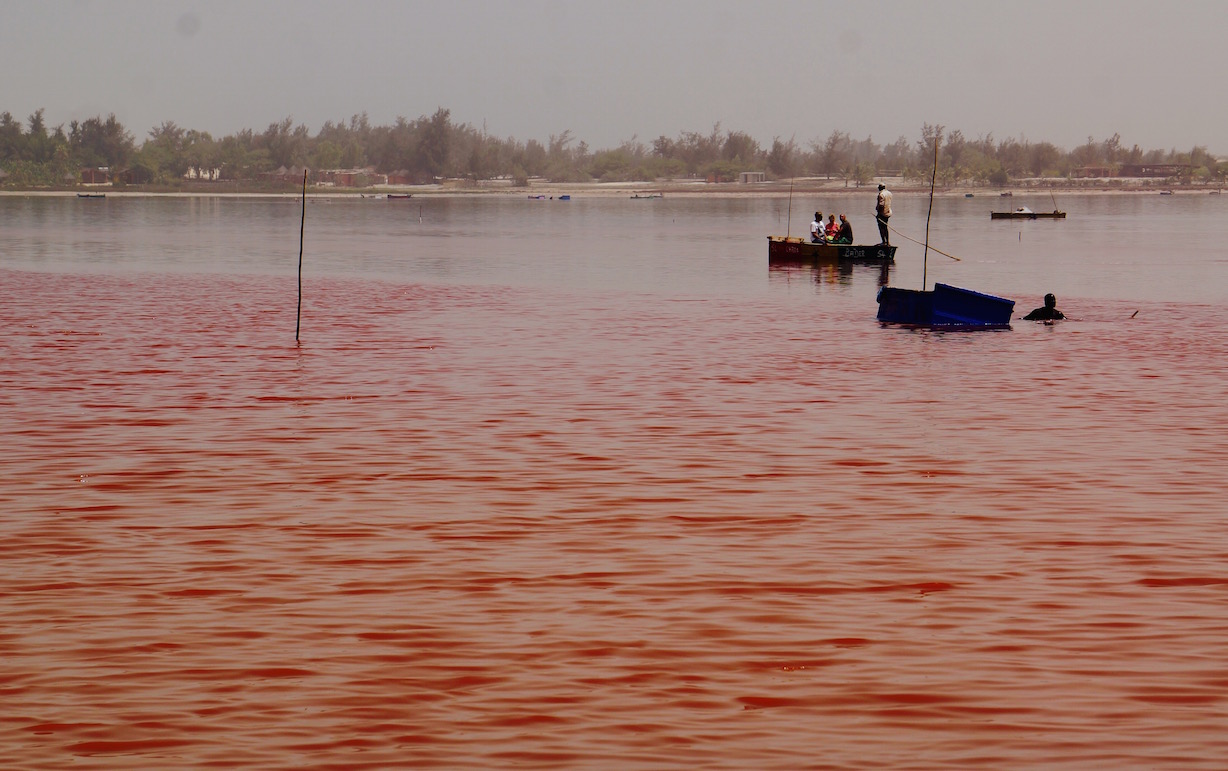
The lake is pink only in sunny weather and is essentially a salt quarry. It is impossible to drown in Lake Retba without making a determined effort to do so—the water is extremely dense, probably like the Dead Sea. Once you wade in deeper than chest height, you become a float. Men stand chest-deep in the thick, salty water all day, loading pirogues to the brim and pushing them towards the shore.
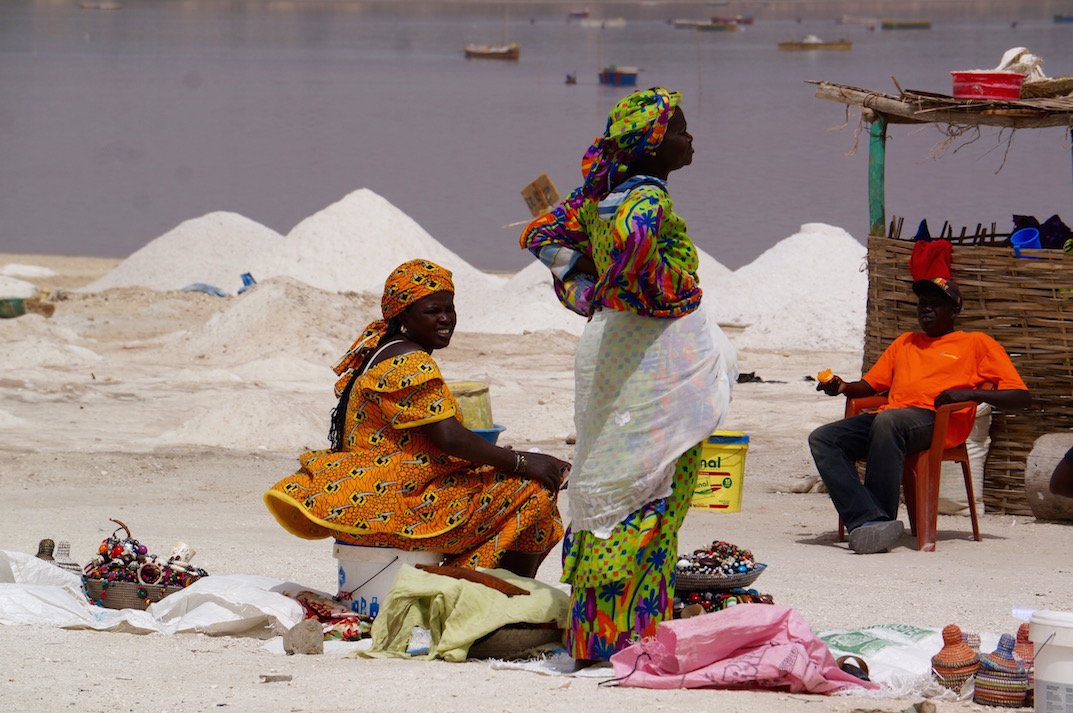
On the shore, among the mountains of salt, you will encounter souvenir mines and cheerful sellers of beads and bracelets.
Many thrust a slip of paper with their address into your hand, evidently hoping that at first you will send letters and money, and eventually take your Senegalese comrade away to a more prosperous country altogether.
The Saly coast —is where those luxurious beaches and hotels are, about 30–35 km (20 miles by sea) south of Dakar. It is clean and quite presentable there. The “other” Senegal—the resort version 🙂 Rivers of Senegal
(the major rivers are listed in order from north to south):
The Senegal River. It forms the natural border with Mauritania.
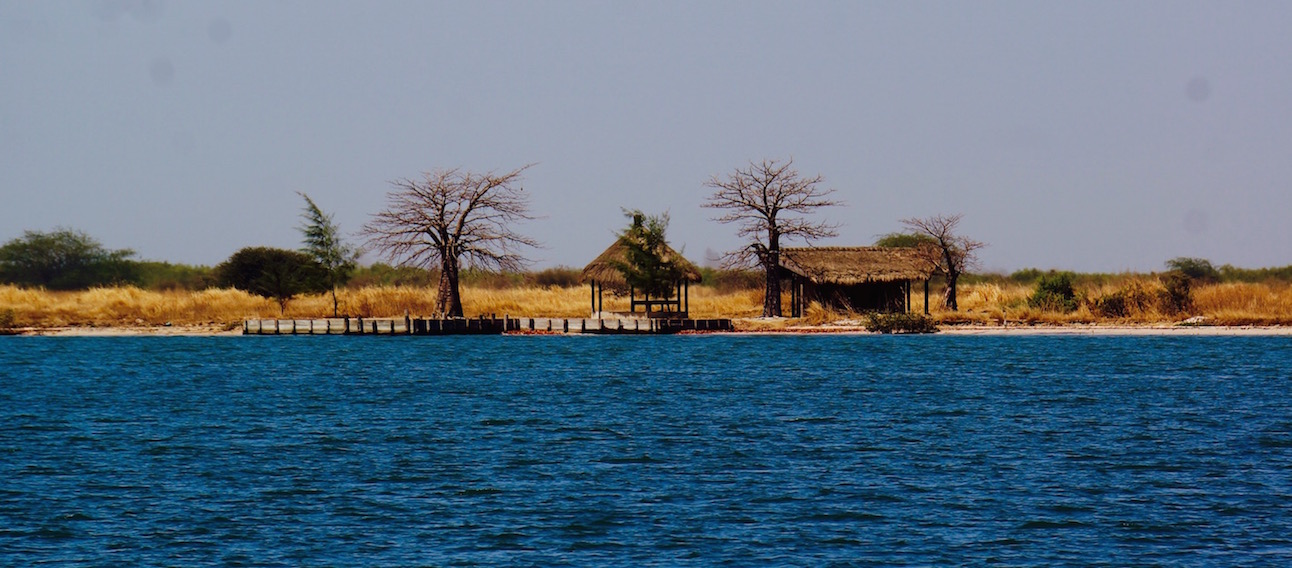
The Saloum River. Very wide but shallow, navigable for 150 km from its mouth—as far as Kaolack.
The Diombos River. It is connected to the Saloum by rivers and channels.
We were unable to take our yacht from the Saloum into the Diombos
(our 180 cm draught would not allow it).
The Casamance River—the widest and most picturesque river in Senegal. It is navigable. Its banks are green. It is located in the southern part of the country, south of the Gambia.
From Senegal’s history
From the 17th century until the end of the last century, Senegal was a French colony. In 1960, the people declared independence but did not really understand what to do with it. According to Europeans living in Senegal, the country gained freedom before it was ready for it.
Waiting for the ferry
White people left by the thousand. After which the Senegalese successfully allowed everything the French had built through backbreaking labour to fall into decay.
Modern Senegal
What the majority of the population wants most today is to live like they do in Europe (or simply to live in Europe). So those who can leave for Europe, firmly convinced that their former colonisers owe them forever and ever. This belief is generously nourished by the guilt felt by the descendants of colonisers and slave traders.
Some find work in Europe and send money to their relatives; others live on benefits in camps for African migrants.
Since the 2000s, agriculture and industry have been reviving in the country, and Senegal is considered one of the most developed nations on the continent. There are even Russian companies here.
The currency is the African franc (CFA). €1 = 656 CFA
Approaching Dakar by sea from the Canary Islands
This page contains only reference information about Senegal. To learn more about the country and its people, read the details of our two-month journey through Senegal here:
The Tale of How We Sailed to Senegal Without Visas
Gorée Island
Dakar: The Country and Its People
Dakar: The Anchorage
Up the Saloum River:
1>>, 2>>, 3>>, 4>>, 5>>