
From the Travely-Family archive · Other Entries
Samui Reference Guide
An original publication from the former Travely-Family website. This English translation was preserved from the technical-site archive without editorial rewriting.
What to Do on Samui (as Anywhere Else, Really)
Rent a motorbike or a car and set off to explore the island, discovering your own “places of power.” You can find a map of the island at the stands in the airport and at any travel agency.
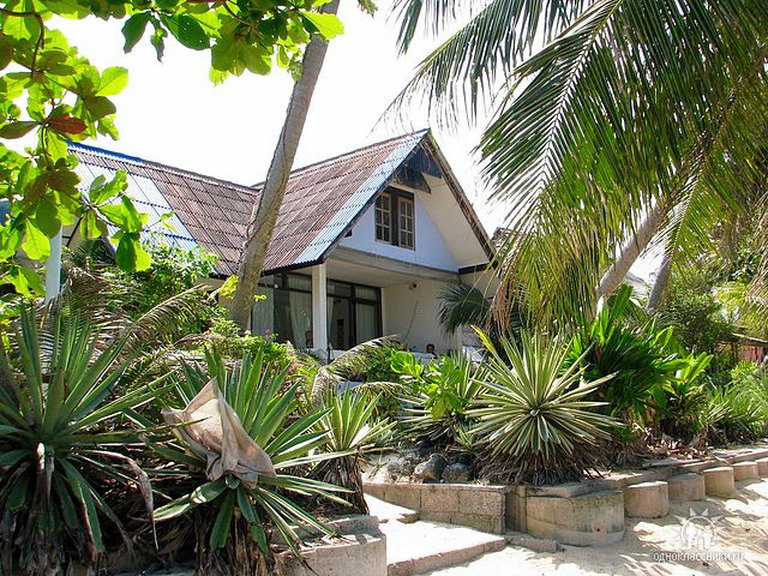
What to see: the children and we really like Paradise Park in the island’s interior. It has a cool swimming pool overlooking the sea through the jungle, and a zoo where you can walk among the animals and feed them. The beaches in the little coves between Lamai and Chaweng are lovely, as is Radiance restaurant in Lamai. As for accommodation and beaches, we used to love renting a beachfront cottage on Bang Por for several months. That is the island’s north coast. For several years running, the prices were surprisingly modest, while the beach was uncrowded and picturesque. Then demand grew, and prices followed suit.
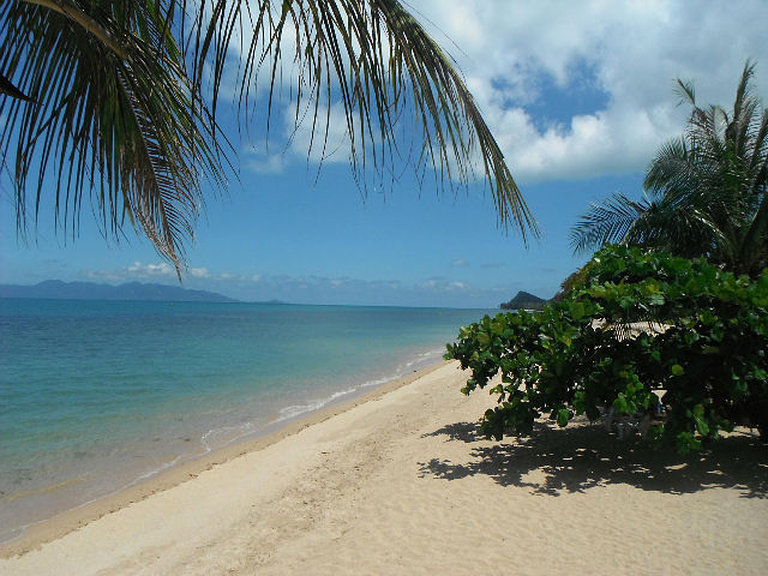
The Sea Around Samui
The north of the island: Bang Por and Mae Nam beaches.
Bang Por’s only drawback is the coral reef. After mid-March, swimming becomes more difficult because high tides are low and low tides are pronounced. Since the reef begins close to shore, swimming becomes problematic.
There is no reef at Mae Nam, and swimming is good in any season, though the seabed slopes away rather steeply.
In the northeast, Big Buddha, Bophut, and several small beaches are quite swimmable in any season.
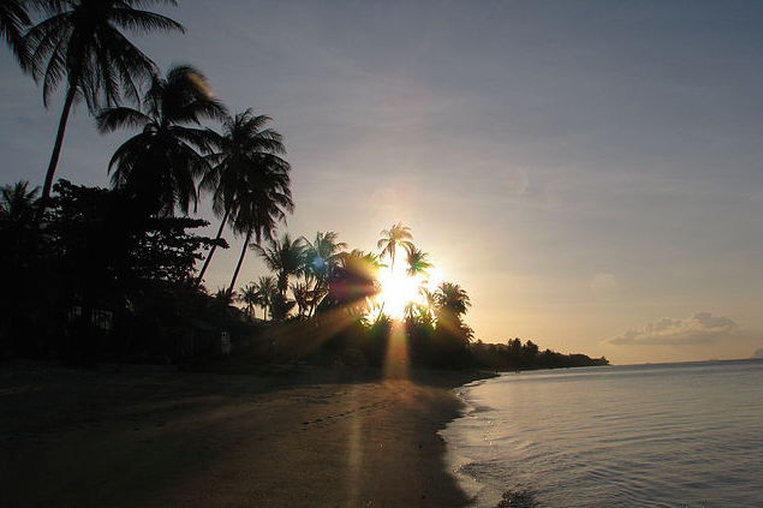
Chaweng and Lamai, as well as the little coves between them, are on the island’s east coast. The sea can be slightly rougher there than at the other beaches because they face the open sea.
The west coast: Nathon has a port, and there are practically no places suitable for swimming.
At Lipa Noi, the water stays shallow for a long way out. Farther south and southeast around the island, all the way to Lamai, the beaches are unsuitable for swimming, but the sunrises are beautiful.
Renting Accommodation on Samui
In the areas more or less frequented by tourists, you can always find somewhere to stay, with varying prices and levels of comfort. If you need accommodation for a month or more, it is better to look once you are there: agents often do not have up-to-date information and charge a commission for their services, while barely half of the available houses and rooms are listed online.
Still, you can book somewhere online for the first few days. After you arrive, stay for several days in a room booked in advance, and use that time to look for something cheaper and more suitable for a long-term stay. Driving around the area by car or motorbike for several days in a row will, of course, wear you out, but you will get to know the market and the area, and become more adept at dealing with the locals. We always found something within three or four days.
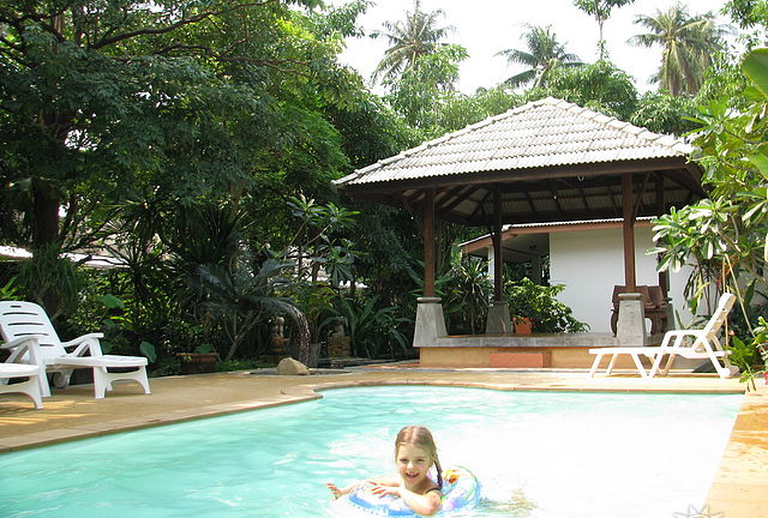
A Wonderful Place for the First Few Days — Baan Bida Manda. Mae Nam Beach, a 5–7-minute walk from the sea. A small, green property, a swimming pool, and birdsong. The smallest cottage used to cost 700 baht per night, while the larger one with an almost-kitchen cost 1,300. Monthly rates are different. But we only ever negotiated those in person—and even haggled J.
Another place is Baan Bai Fern. Prices used to start at 7,000 a month; now they start at 20,000. (Quite a difference:))
A website for booking accommodation in Thailand: http://www.sawadee.com
And another one—http://samuidays.ru or.com—is a Russian agency run by people who live on Samui. They swear blind that they do not charge commission. Possibly.
But just to be safe, it is better to google for yourself.
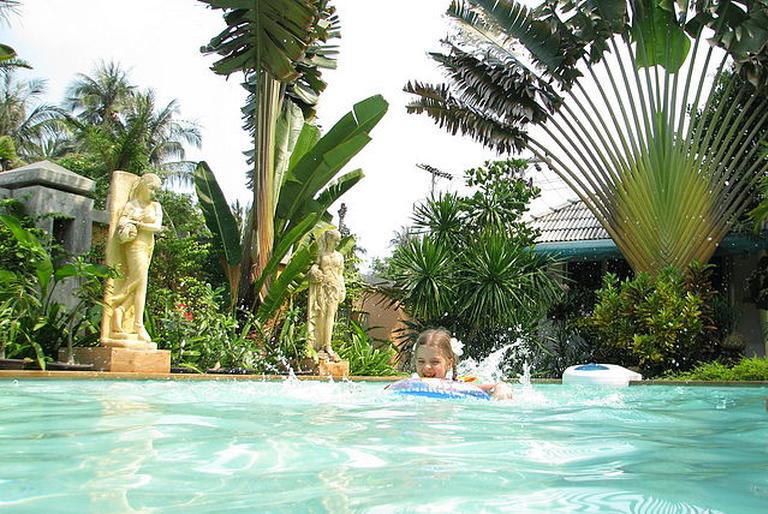
Houses with Kitchens for Long-Term Stays
There are many such houses in the island’s interior. Some are in gated communities, others not. The houses are mostly built of masonry, and vary in size and comfort. If you do not have small children and there is a swimming pool on the property, this is a perfectly good option.
With toddlers, it is better to live by the sea.
There are plenty of houses with kitchens right on the beachfront at Bang Por, Lipa Noi, and Mae Nam. However, prices have risen considerably over the past three years, so you will no longer find a house by the sea for 10,000 baht. It is sensible to budget from 20,000 per month (daily rates are higher, and so are rates in high season).
During our first few winters in Thailand, we stayed at “Bang Po Village.” A family business, as is customary in Siam. Back then, they did not yet market themselves as a resort. Many Russians lived in the village, and two of the houses were occupied by Russian guys for several years. The wonderful owner, Sutiya, was willing to give discounts on houses and motorbike rentals and helped with every issue. She often asked permission from her very elderly parents, who lived in the large house in the centre of the village.
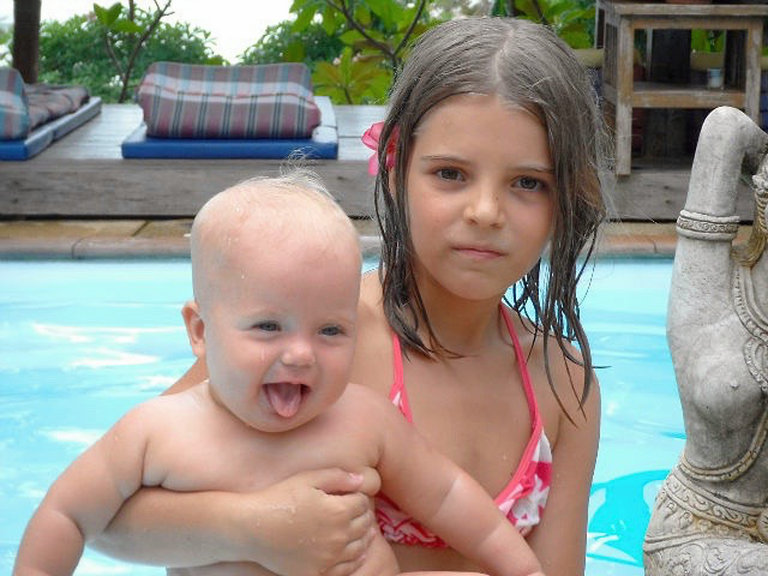
Three years later, her younger and more enterprising sister graduated from university and took the reins.
The result: the owners created a website, renovated the interiors, and began renting the houses by the day. The price of 10,000 a month vanished into the abyss of oblivion. Though, to be fair, that is the trend across the whole island.
Here is their website: http://bangpovillage.com. Note: the children playing in the photo of Bang Por Beach are ours J.
Another place on Bang Por is Krisada Beach Resort. Very decent beachfront cottages, a swimming pool on the property, and here is their Facebook group: https://www.facebook.com/pages/Krisada-Beach-Resort/154304178005509
High season in Thailand runs from December through February. The absolute peak is, of course, the Christmas and New Year holidays. Accommodation prices rise every year because of the tourist boom.
Getting to Samui
By air from Bangkok and Kuala Lumpur; by bus from Phuket and Bangkok. In Bangkok, take a taxi to either the Northern or Southern Bus Terminal.
The bus ticket includes the bus journey itself, the ferry from Don Sak or Surat Thani, and food along the way. Sometimes you come across canteens with delicious Thai food. In others, they serve slop of unknown origin. There is no way to tell in advance.
Warning! On VIP buses, the air conditioning is set to the absolute lowest temperature allowed by the manufacturer. So bring jackets, socks, and even hats for the journey. They will most likely refuse to make it warmer: after all, Thai people need somewhere to wear their winter clothes.
The ferry from Surat Thani or Don Sak will carry you and the bus either to Raja Pier or to Nathon. The company operating ferries to Nathon is Seatrain. Their ferries are larger and more comfortable. The ferries at Raja Pier are a bit grubby, but you can put up with them for an hour and a half. Curiously, no matter what time of day they board the ferry, all the Thai passengers instantly begin buying instant noodles—or pulling them out of their bundles. They obtain boiling water from the ferry café-kiosk, and the enchanting aroma of monosodium glutamate whispers tenderly to you through the diesel fumes: “You’re in Asia, my friend!”
You can also make your own way there. For example, you can rent a car at Bangkok Airport from a chain agency such as Hertz or Thairentacar and drive it to Samui. Large agencies allow you to return the car at your destination.
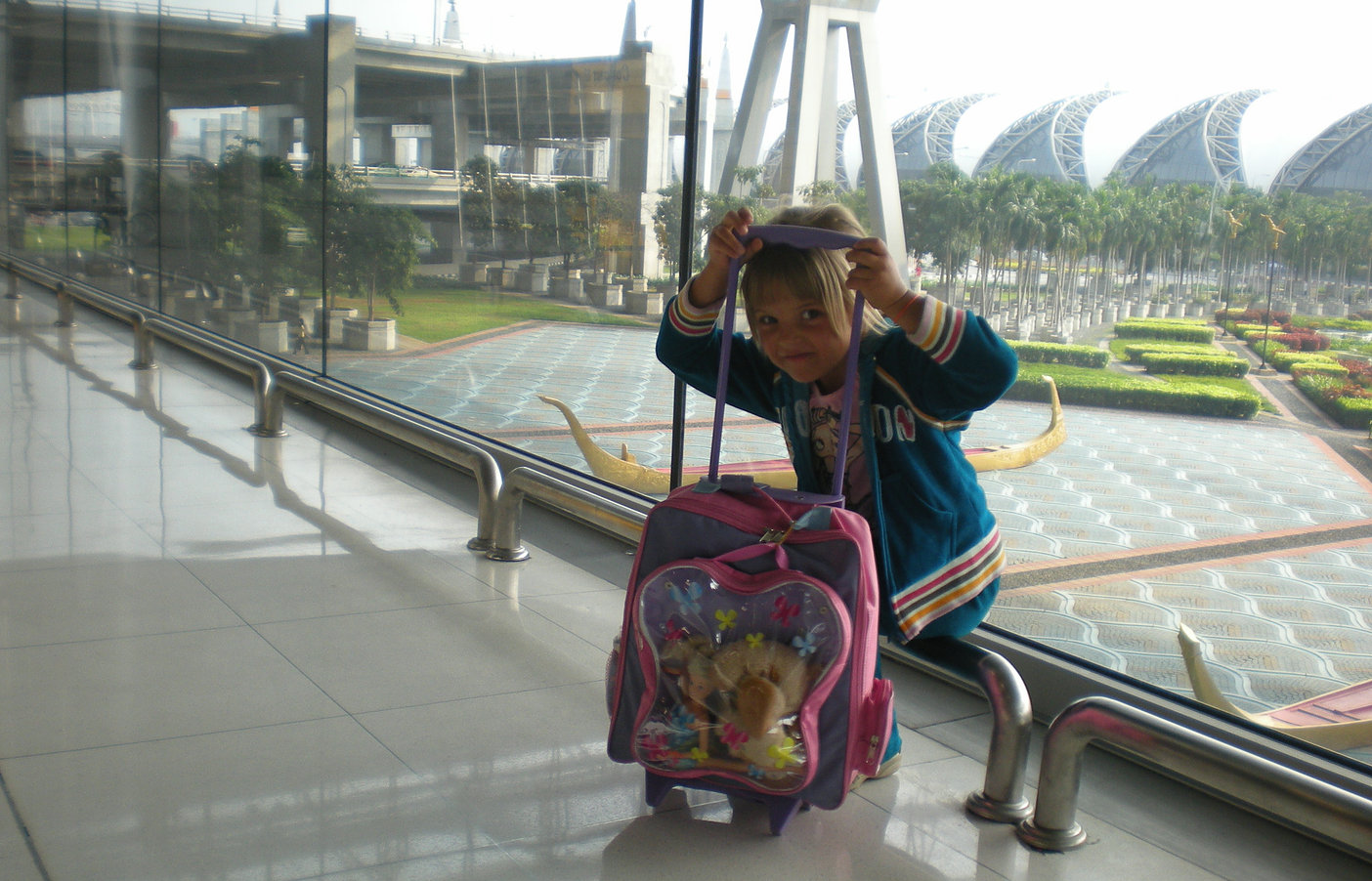
P.S.: some of the photos bear the distinctive logo of the Odnoklassniki social network—this is because the disc containing our photo archive passed away, unable to withstand the hardships of a nomadic life:).
The Thailand overview post is here>>>
Warmth to everyone!