
From the Travely-Family archive · Other Entries
What You Need to Know About Australia. Or: We’re Going Where Three Bodies Were Found
An original publication from the former Travely-Family website. This English translation was preserved from the technical-site archive without editorial rewriting.
Why people die on a sacred mountain, what the Australian continent consists of besides its coastline, and how well prepared you need to be before venturing into its interior. Let’s go!
Sacred Mount Augustus
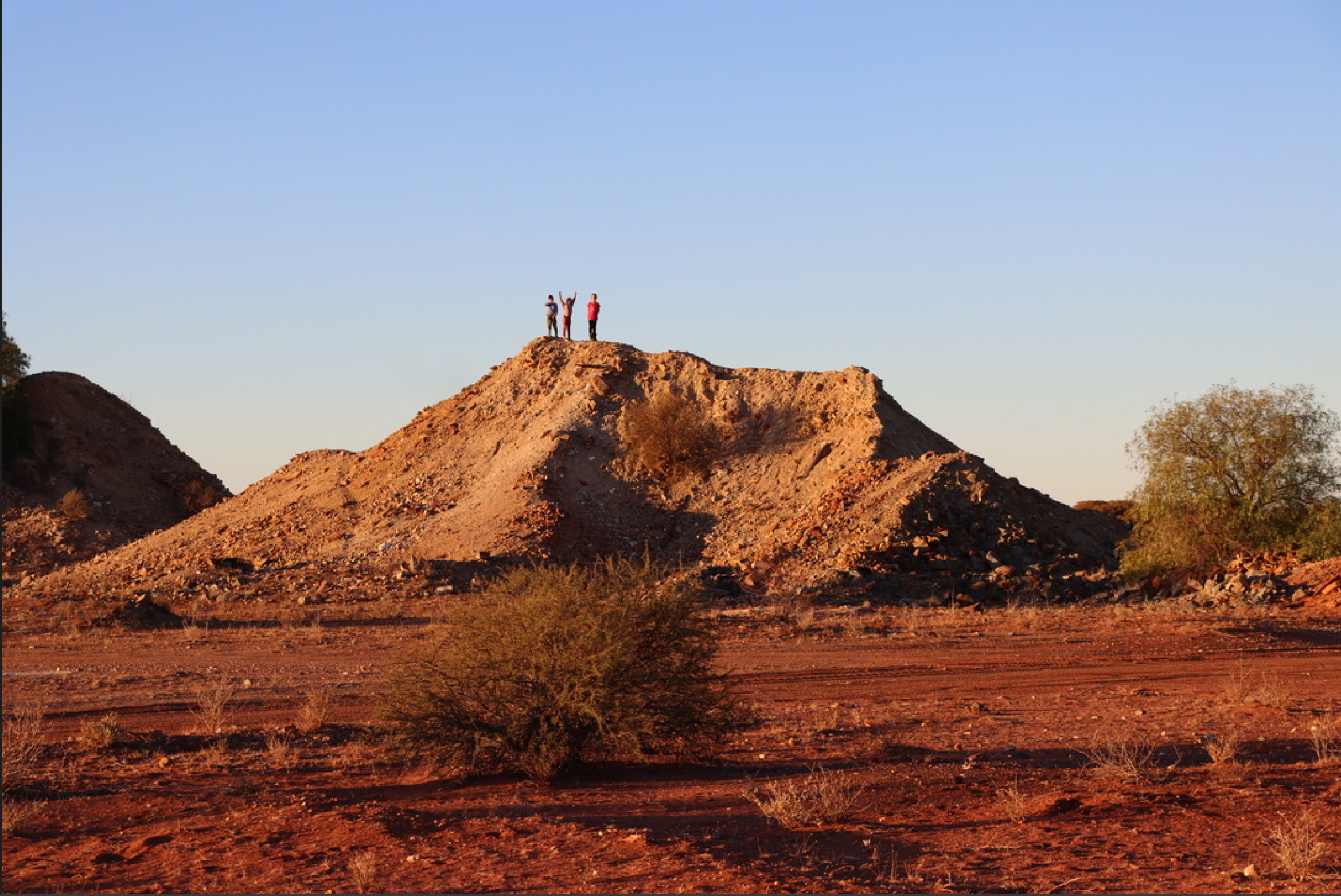
The school holidays will begin in Australia soon, and our friends Brian and Yulia and we want to head into the interior again with their caravan—a kind of folding home on a trailer.
Besides the famous sacred mountain of Uluru, there is also Mount Augustus, known to the Wajarri Aboriginal people as Burringurrah. The mountain is, naturally, sacred. It is also the largest monolith in Australia, and rumoured to be the largest in the world. I just can’t understand why Uluru, in the Northern Territory, is more famous, then.
As befits such a monolith, the mountain stands in semi-desert. Put simply, the bush (remember bushmen? All my life I thought they were indigenous people of Africa, but in English it simply means people from the bushes—that is, the bush. And the bush is still the bush in Australia).
This is what we drove through with the caravan
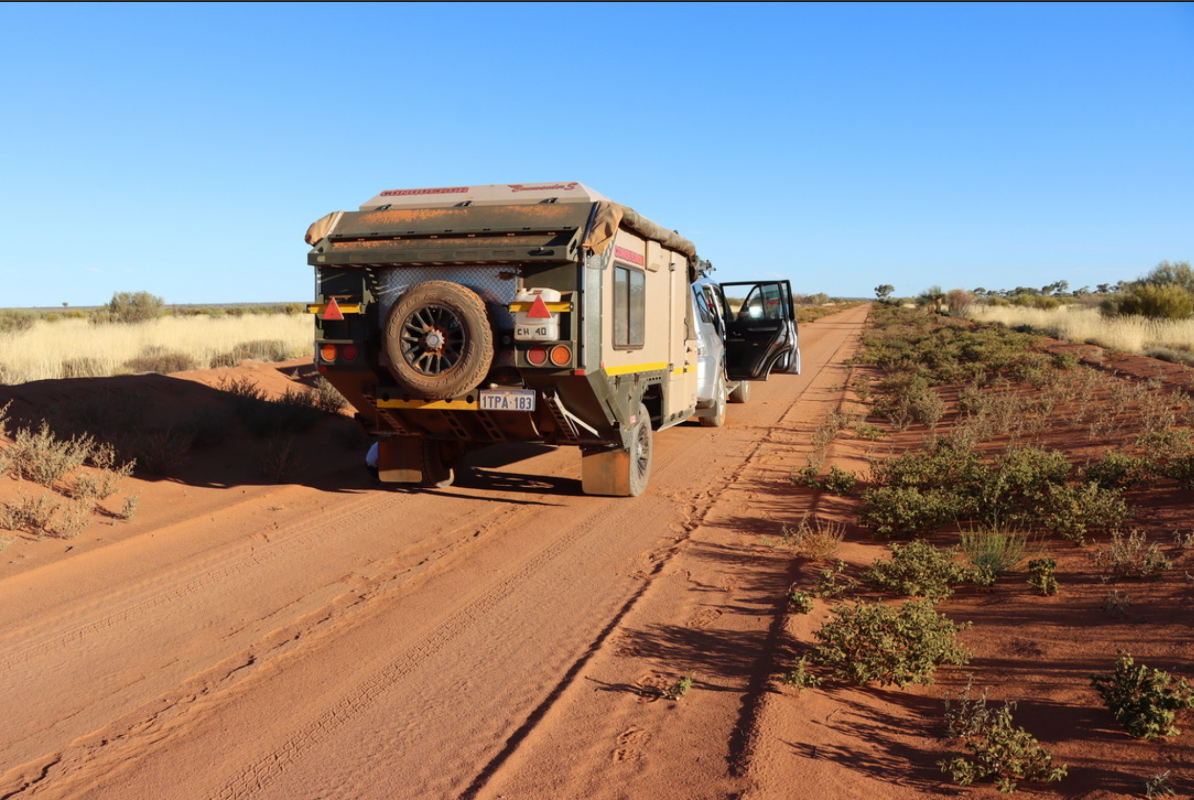
The Great Dry Land
Last time, we travelled into the interior, visiting abandoned towns and gold mines (did you read our posts?). What blew our minds first and foremost wasn’t the ghost towns, the mines, or the gold everywhere (well, it must be down there somewhere underground). We were shocked by how dry the air was. I mean, nothing much gets to us, but our bodies were very surprised. You drink endlessly and slather cream on your face and hands, yet it feels as though even the film over your eyes is about to crack from the drought. And this was at the height of the rainy season. Now the dry season is creeping towards Australia on its bony little legs. When hiking in the bush, you need to drink about 4 litres of water a day, or you’re done for.
So, here’s my point. The other day, near sacred Mount Augustus, where we’re planning to go in about 10 days, three bodies were found one after another, right beside the trail, with no signs of violence. They will, of course, be tested for coronavirus, but the most obvious cause of death is dehydration. It can make you lose consciousness, and then that’s it:(. So if you associate Australia only with Crocodile Dundee, surfers, the Great Barrier Reef, and kilometres of beaches, add a vast, desiccating desert, in parts of which people live—or wander around in search of adventure. And probably snakes and spiders, too. There definitely aren’t any crocodiles there.
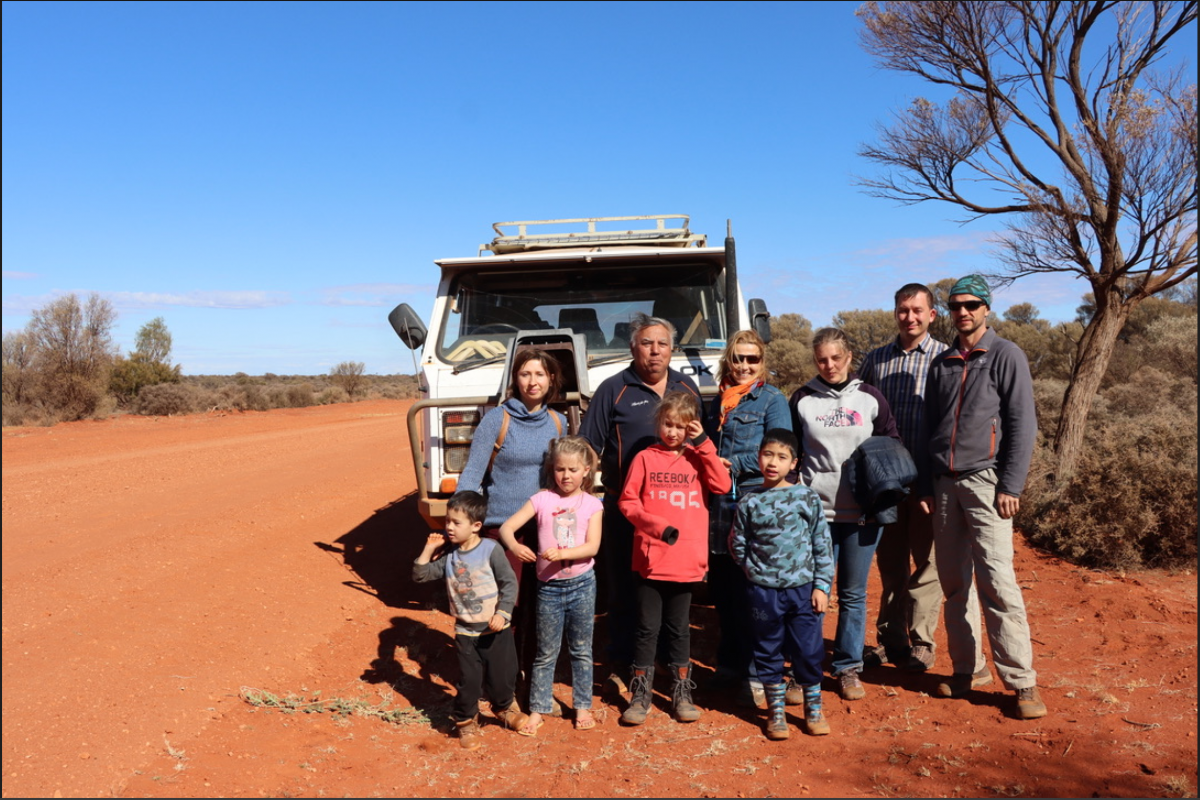
On our last trip, aboard an off-road bus, visiting ancient Aboriginal campsites
Precautions
The authorities warn that if you do head into those harsh bloody @rse-ends of nowhere in the interior, with rugged terrain and humidity approaching zero, you should go prepared. You need not only a sturdy vehicle and hands growing from the right place in case something goes wrong on a dirt road, but also no less than 4 litres of drinking water per person per day. Temperatures in the interior are already close to 40, and it will be hotter in a couple of weeks. Even before the holidays begin, the number of holidaymakers with motorhomes and tents in Western Australia, closed off from the rest of the world, is already off the charts. It will be even more crowded later. And all the paid caravan parks are already booked a month in advance? The school holidays start soon.
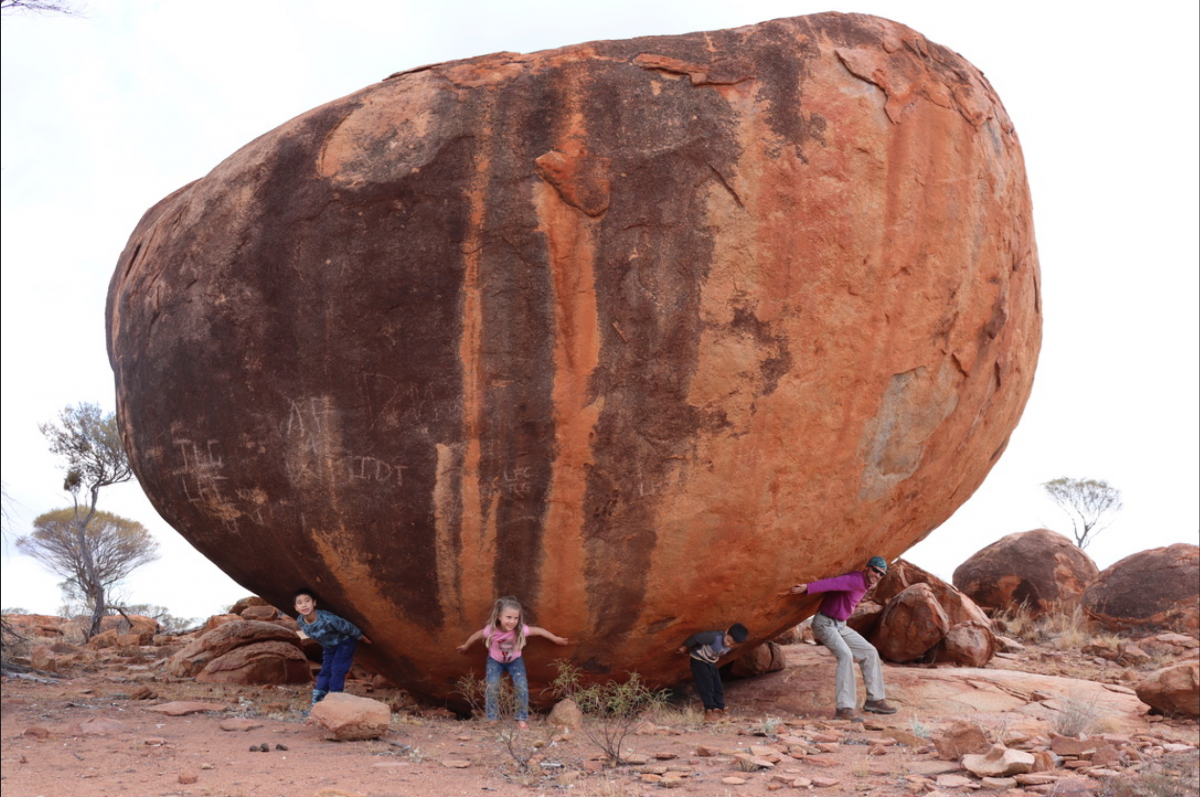
Atlases hold up the sky on their stone shoulders.
Wonders of Australia
So I’m wondering whether, to hell with it, we’d be better off heading south into the cold rather than north? What would you choose to explore in a country completely surrounded by blue ocean? It would be lovely and useful if you threw some ideas our way.
And the photographs are from our last winter adventure in the red-hot heart of the Green Continent.
By the way, yesterday marked a significant date for us—exactly six months ago, we moored in Fremantle Marina on the coast of Western Australia. In all our travelling life, we have never stayed put, lived anywhere, or left the boat anywhere for so long without budging.
Would you go into the desert, or to hell with that?
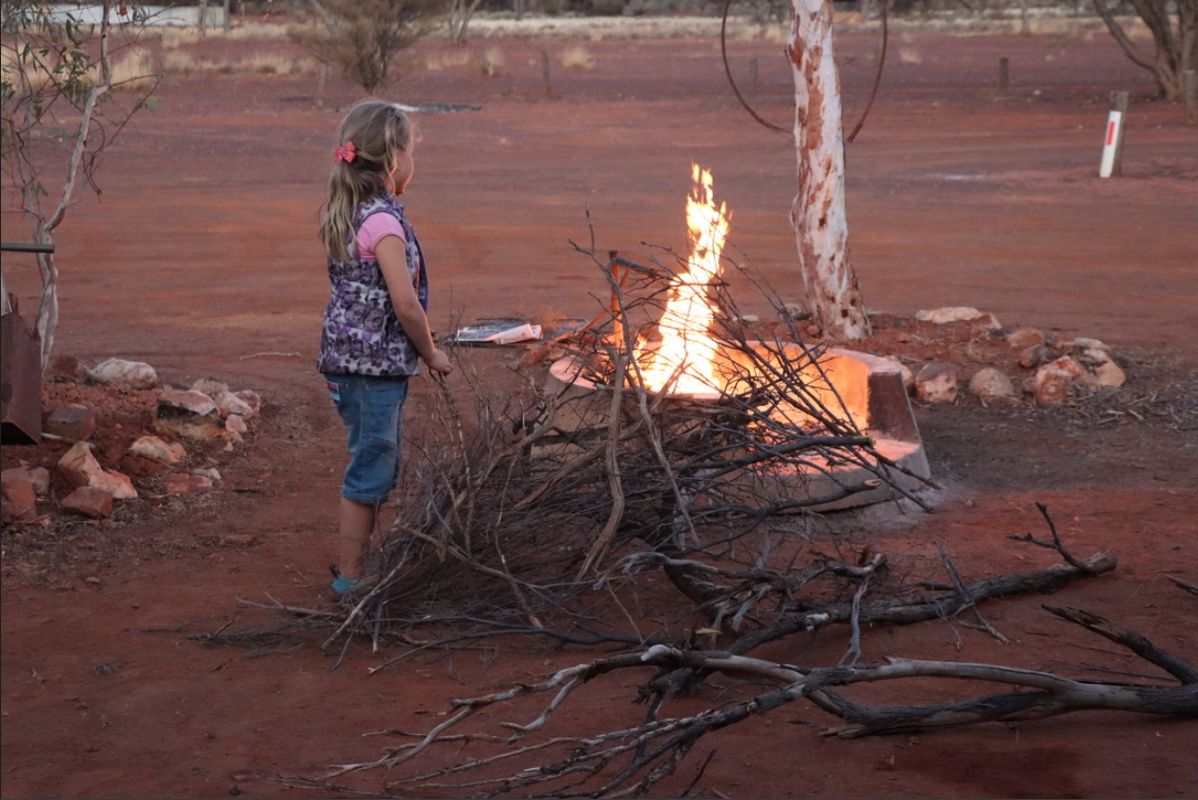
And in this photograph—our overnight stop at a free campsite that used to be a sheep farm. Now there’s no one there, but the little houses and dry, red-brick farmyard look as though you’d been teleported there in a time machine. A fresh local newspaper lies on the dusty table, there is running water, and you can fire up the banya:).
Hugs! Wishing everyone water and life...