
From the Travely-Family archive · Australia and Tasmania
Dead Town
An original publication from the former Travely-Family website. This English translation was preserved from the technical-site archive without editorial rewriting.
A GHOST TOWN in the goldfields of Western Australia—and its ghosts. Why did the people leave? What became of the gold, the houses, the cars and the hotels? Flooded mines and a night among the ruins
Fourteen kilometres from the Aboriginal farm of Morapoi, where our friends and we pitched a tent and set up the caravan, stands Kookynie, a dead town steeped in memories. Its rise and fall were a brilliant flash across the cracked brow of the red savanna.
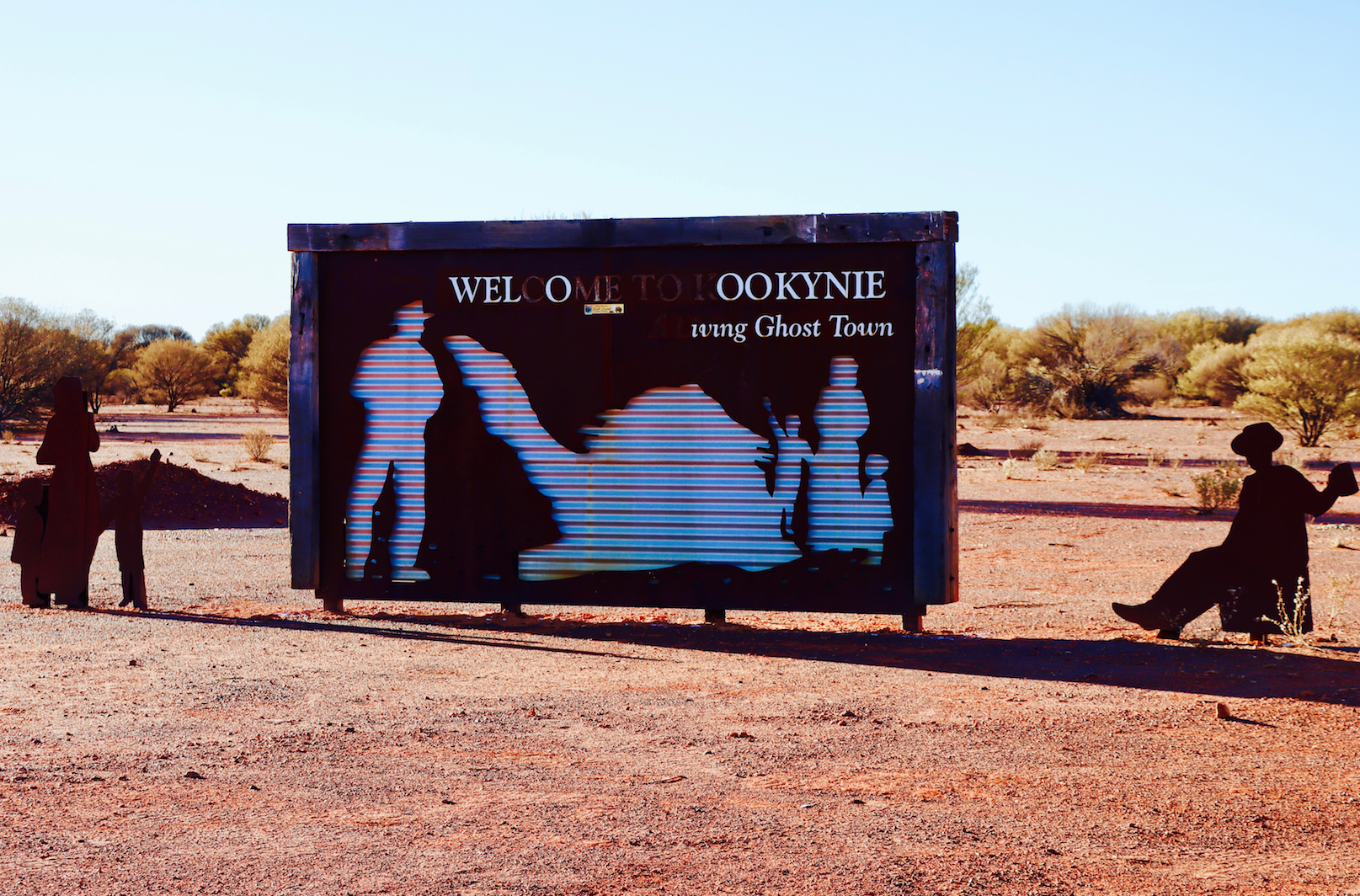
In 1895, a group of prospectors discovered gold here. A mine soon sprang up, and people were seized by gold fever. Prospectors, with their families or alone, on foot and in carts, poured in to open up the continent. Some struck lucky; others plodded on like a donkey chasing a carrot, condemned to hellish labour in harsh conditions.
They supplied the now-dead town with provisions
Four years later, Kookynie was officially proclaimed a town, as reported in the Government Gazette. The name Kookynie is believed to mean “body of water” or “spring” in an Aboriginal language.
A blessed place in an arid land! Remarkably, the town lived up to its name: water was also its undoing. But—shh, let’s not get ahead of ourselves. For now, the gold prospectors still have time and high hopes.
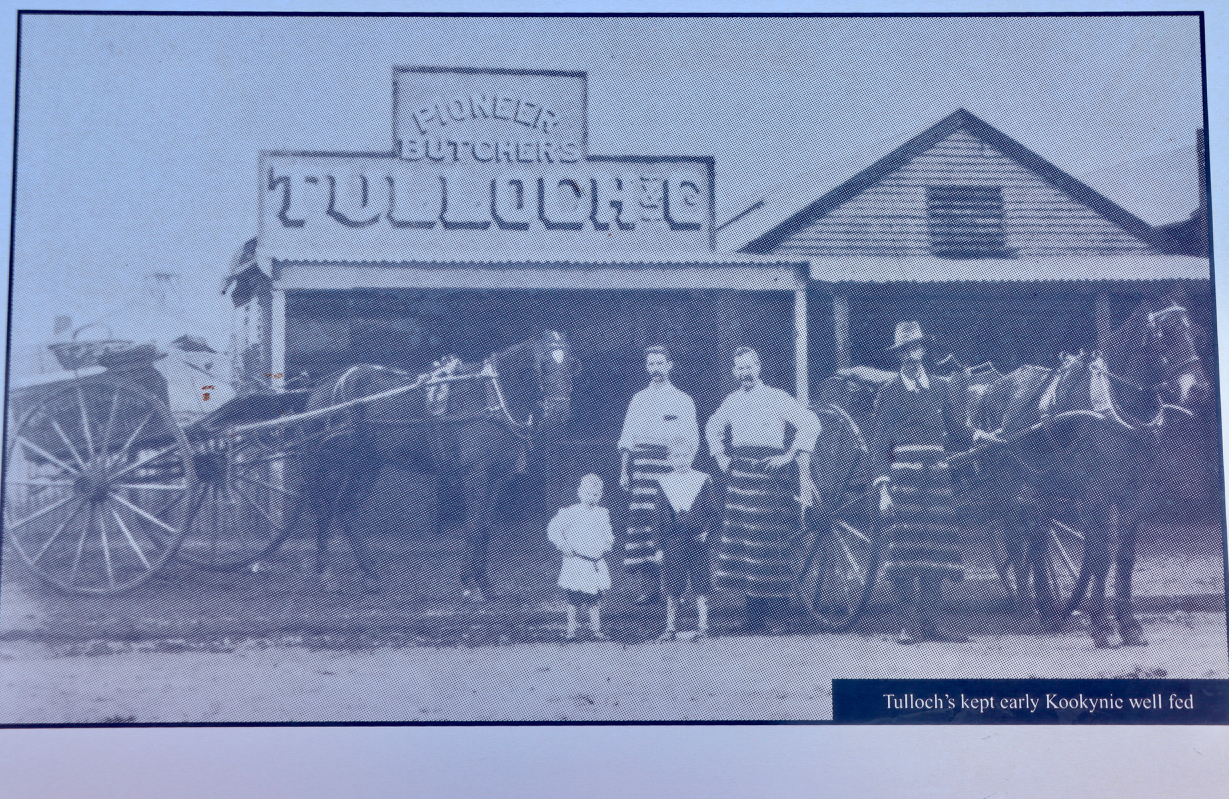
By the end of 1905, Kookynie had approximately 1,500 men and 500 women. The town had electric lighting, and the Cosmopolitan Proprietary mine employed five hundred people.
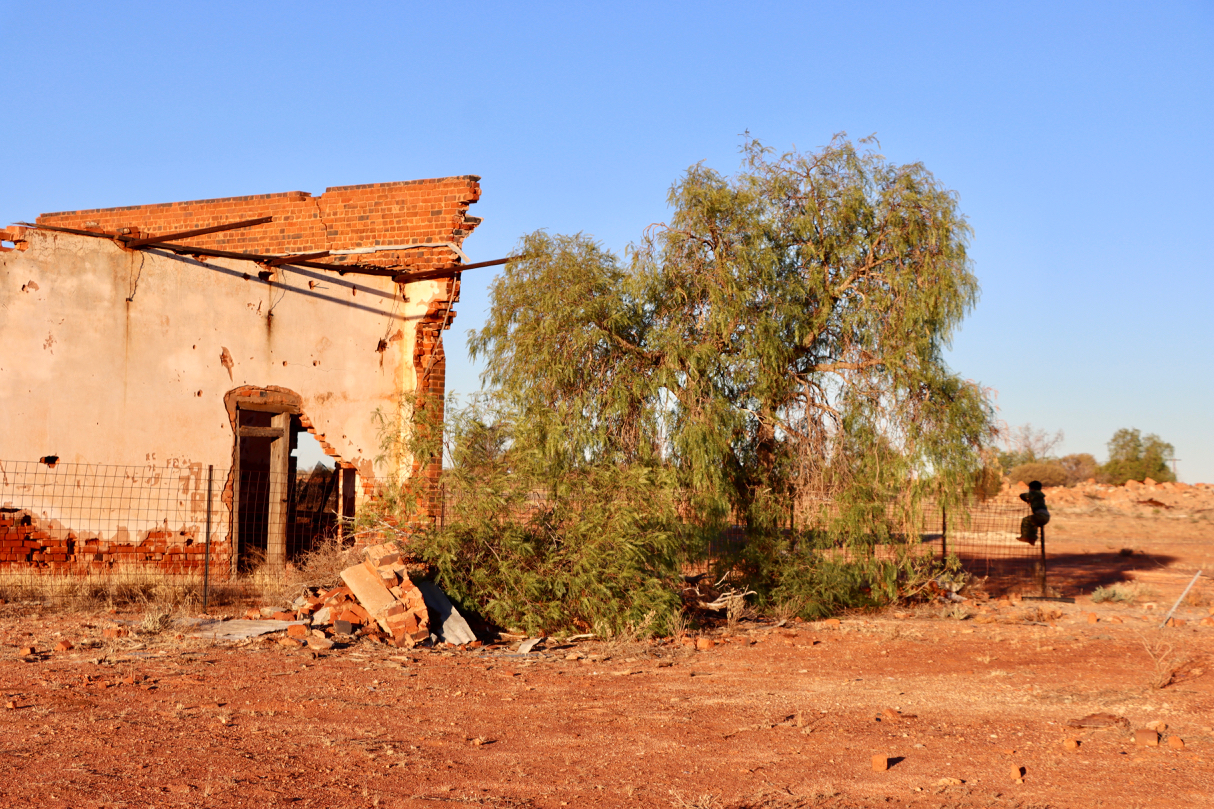
Ruins of the bank. Photo by Yulia Galushina
Eleven hotels, a brewery, a football club, a swimming pool (!), a school, a hospital, a pharmacy, a bank and a post office. And four trains a day from Kalgoorlie, the mining capital of the goldfields. People were putting down roots in earnest, building the city of the future. This New Vasyuki was growing at an astonishing pace and aiming for the very heart of life on the continent. Two years later, it already had 3,500 residents.
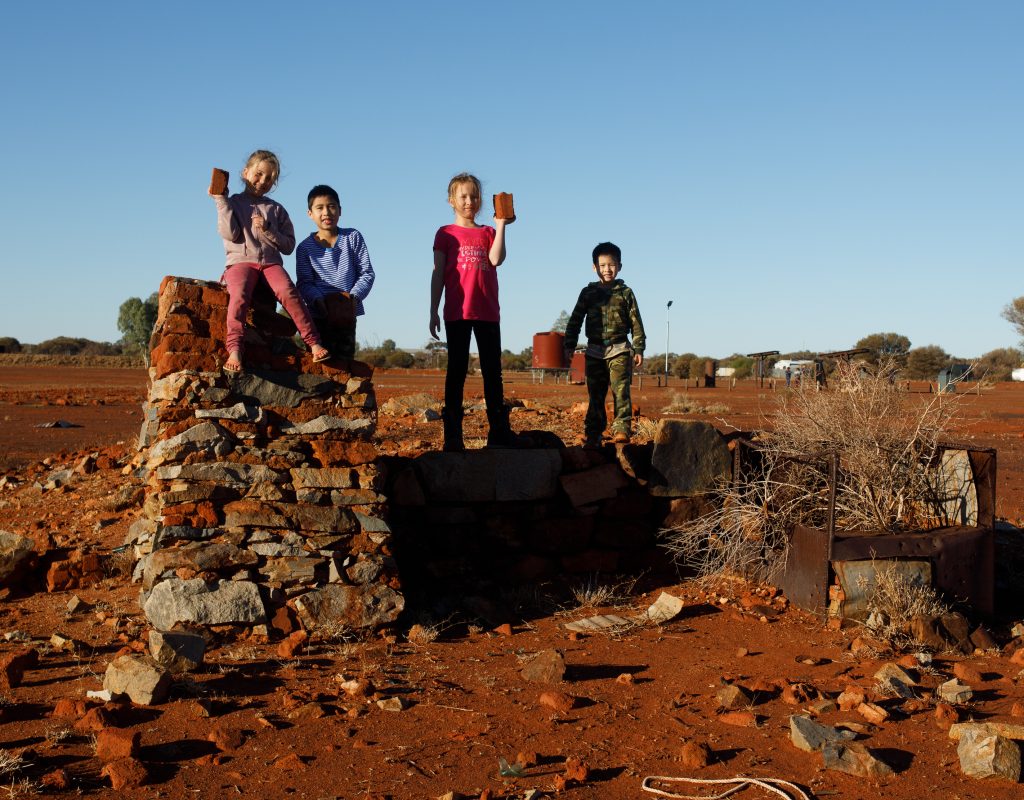
God allowed them just twenty years to dream of and build their garden city... Then the mine closed, with the gold still lying half a kilometre underground. The very groundwater that had given the town the region’s first swimming baths also destroyed the mine. Its force was greater than the pumps, stronger than human muscles and spirits, more precious than gold.
How the town died
Most of the miners left at once. Those who had nowhere to go stayed, hoping for... something. And as you wander through the red sands of time, the styles of the buildings and the shells of the cars show you how long different residents clung to the dead town.
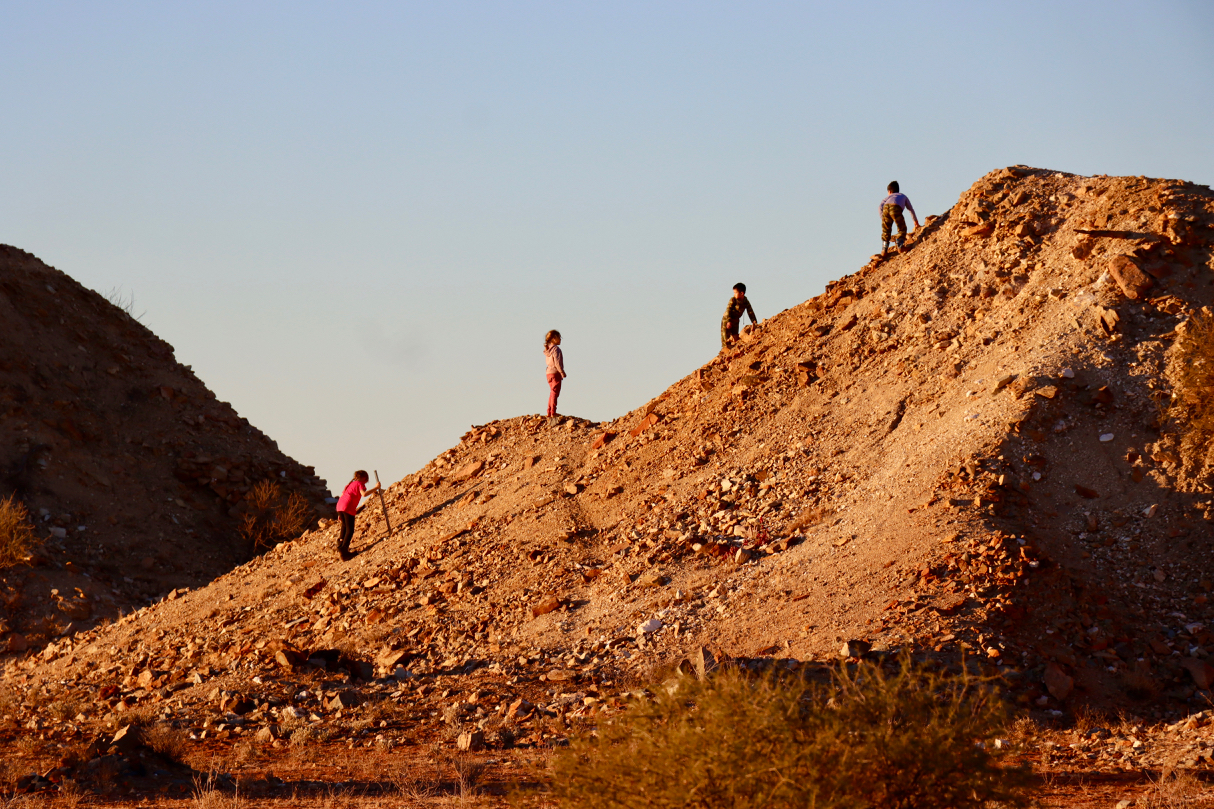
The youngest prospectors on our team survey the mine site from the top of a mullock heap brought up from the adits A mullock heap from the abandoned gold mine
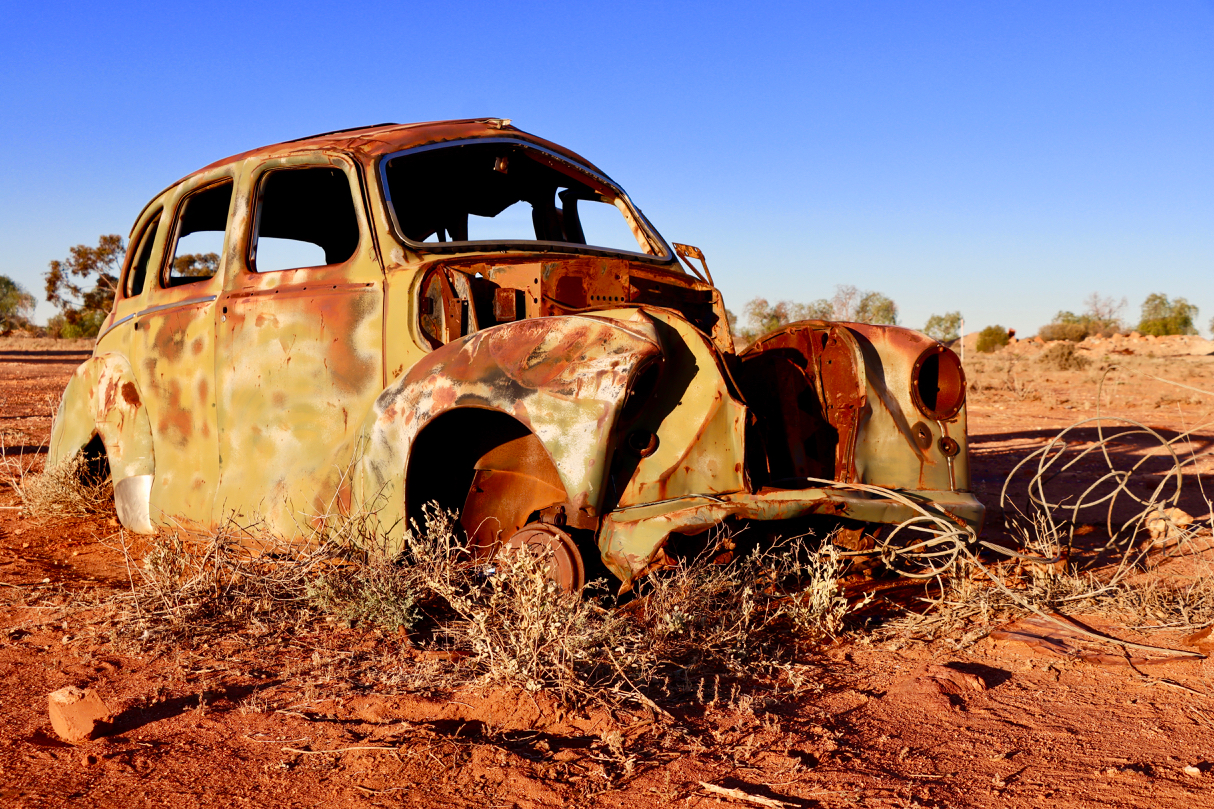
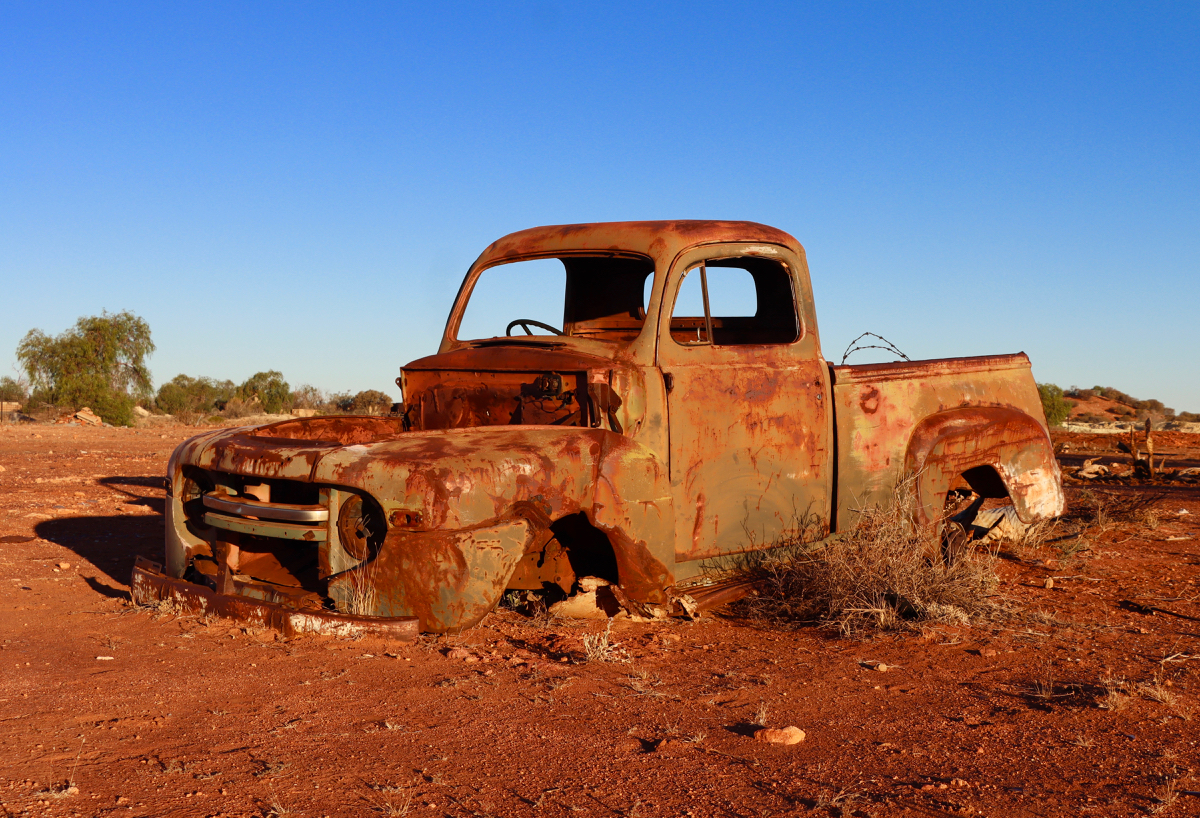
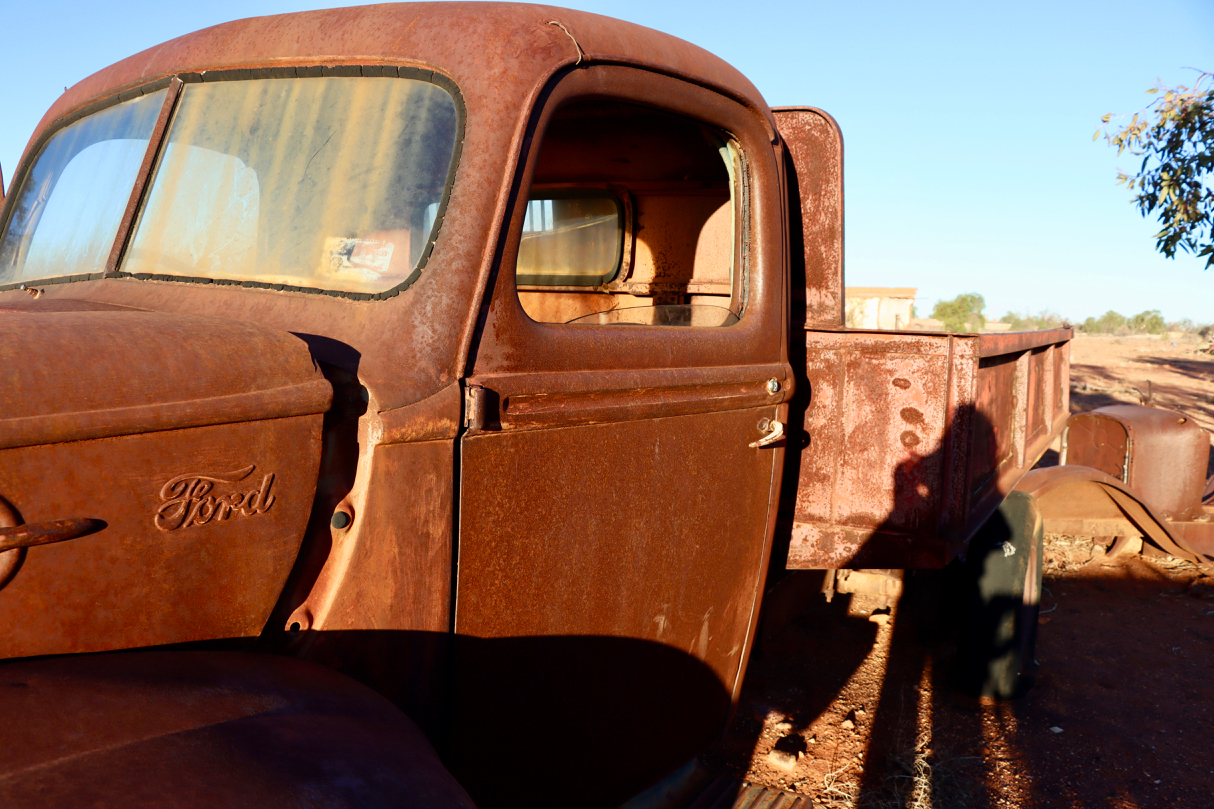
Skeletons of cars like these adorn the town, singly and in groups. If you have any idea what years these cars are from, please share!
And here’s another thing I keep wondering: there surely weren’t that many cars in those days, and they cost a fair bit. What made people abandon their cars in the desert when they left?
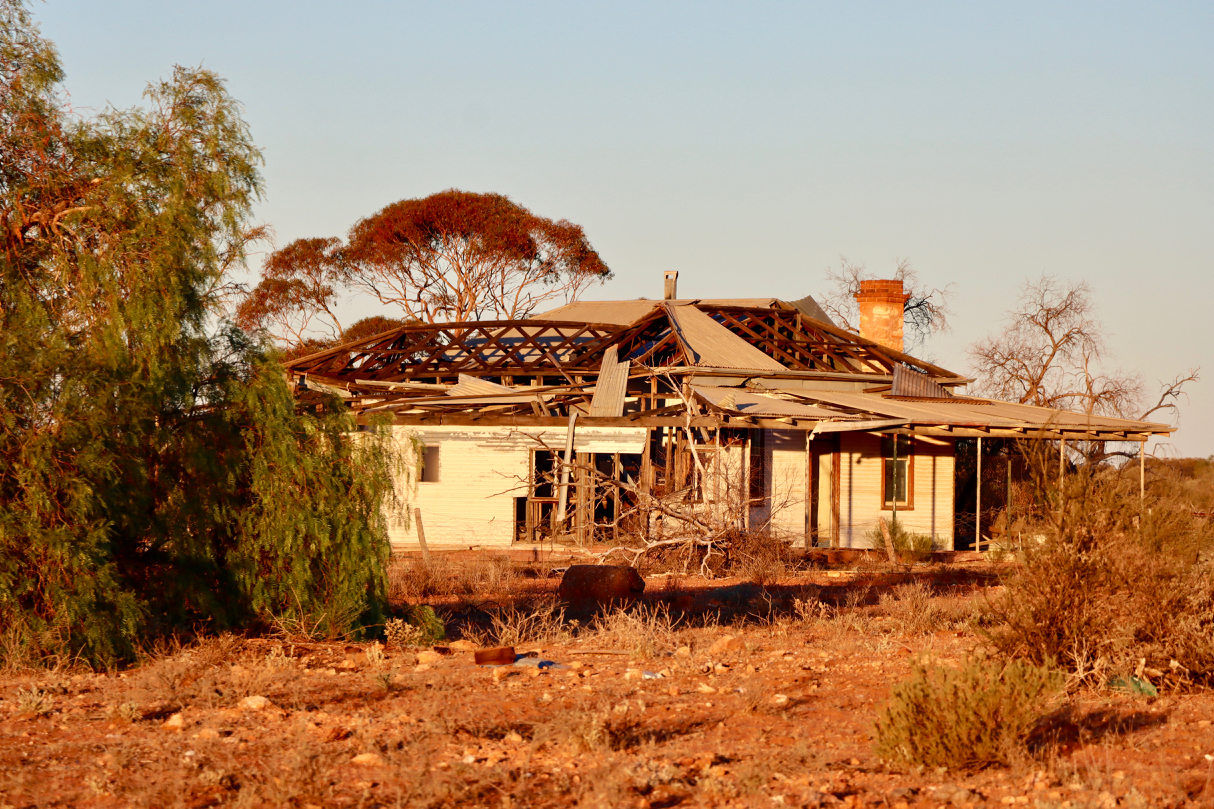
Here is the ghost of a relatively recent house; people were still living in it in the 1980s. Some furniture remains inside, along with perfectly intact fireplaces.
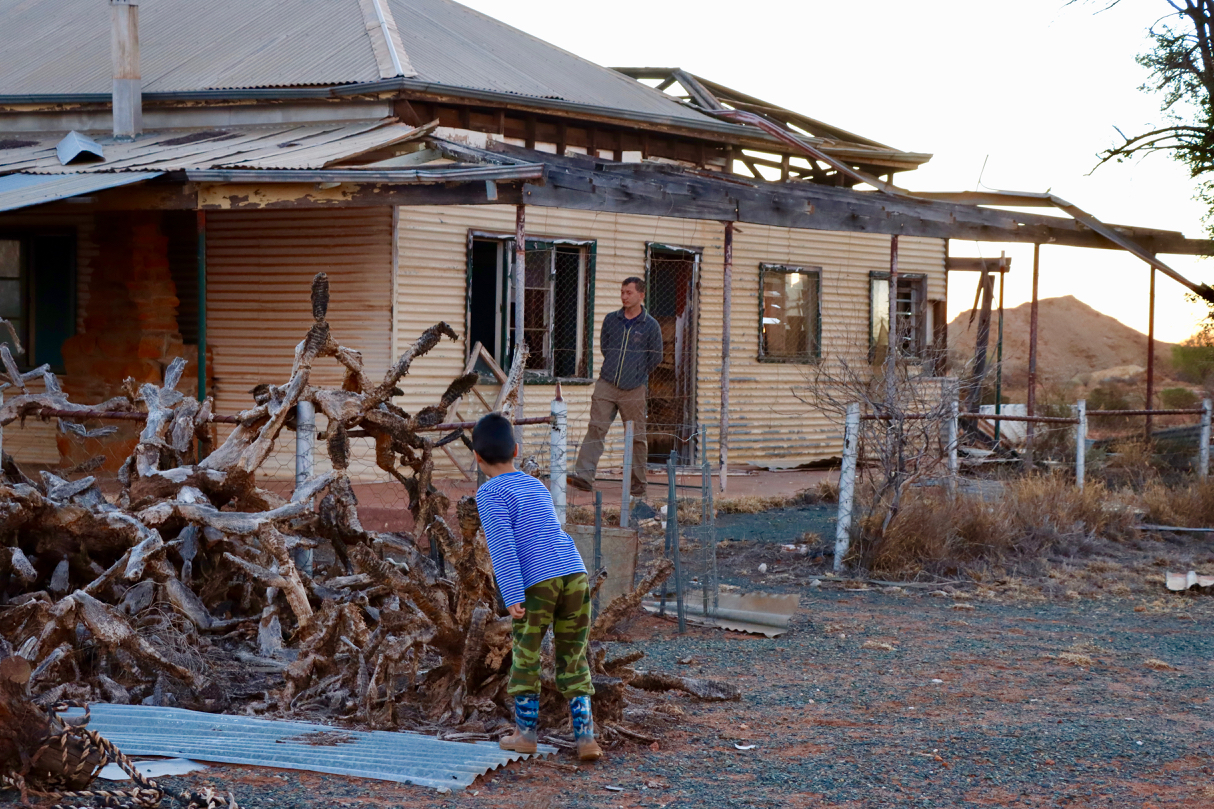
This is one of the “new” houses
Ghosts of the past
Present day. Eastern Goldfields, the dead town (ghost town) of Kookynie, Western Australia.
Life lingered on even after the gold mine closed. The newer houses bear witness to that. All that remains of an extension—a modern toilet—is the toilet bowl set into concrete. A 1990 newspaper lies forgotten on the bed frame...
People were still living here thirty years ago, until they finally surrendered to the dry winds and the lack of prospects.
The surviving buildings rise from the bush like shadows of the past. A dog’s skeleton on the threshold of an old house sends a chill down your spine. Shards of century-old medicine bottles lie everywhere.
The old fireplace seems to be waiting for an armful of dry wood. And because of the high ceilings, the small rooms feel like wells. The old houses are built of brick, while later additions are made of corrugated iron. These houses hurt with their acute sense of poverty. Like the slums of Latin America or the townships of South Africa.
Here is a hotel whose owner, after the town collapsed, took some of the building materials from its old walls to build a new house in Perth. Someone else did the same after moving to Kalgoorlie. Cars from the 1920s and 1960s. A Ford truck, a couple of phaetons, rounded cars made of thick metal. They, too, became ghosts of the past beneath the blazing sun and dry continental wind, which the dead town has withstood for a century now.
One of the eleven hotels
Today, there is only one inhabited place in Kookynie—a large fenced yard with buildings, right at the entrance. A generator rattles there day and night, and there is an inn with a bar where, according to rumour, some very famous horse hangs out. We didn’t see the horse, but we’ll find out the secret of its fame. Ten years ago, thirteen people lived here. In any case, this inhabited place is so far from the main part of the ghost town that you forget about it.
And here are the half-buried adits. Remnants of the iron pipes used to pump out the water. Sinkholes in the dry yellow-red earth... We all wandered thoughtfully through the skeleton of the town until sunset. The children went off to conquer the mound, since they weren’t allowed near the adits.
And we returned to the dead town... at night. Scary? What follows is almost a horror film ).
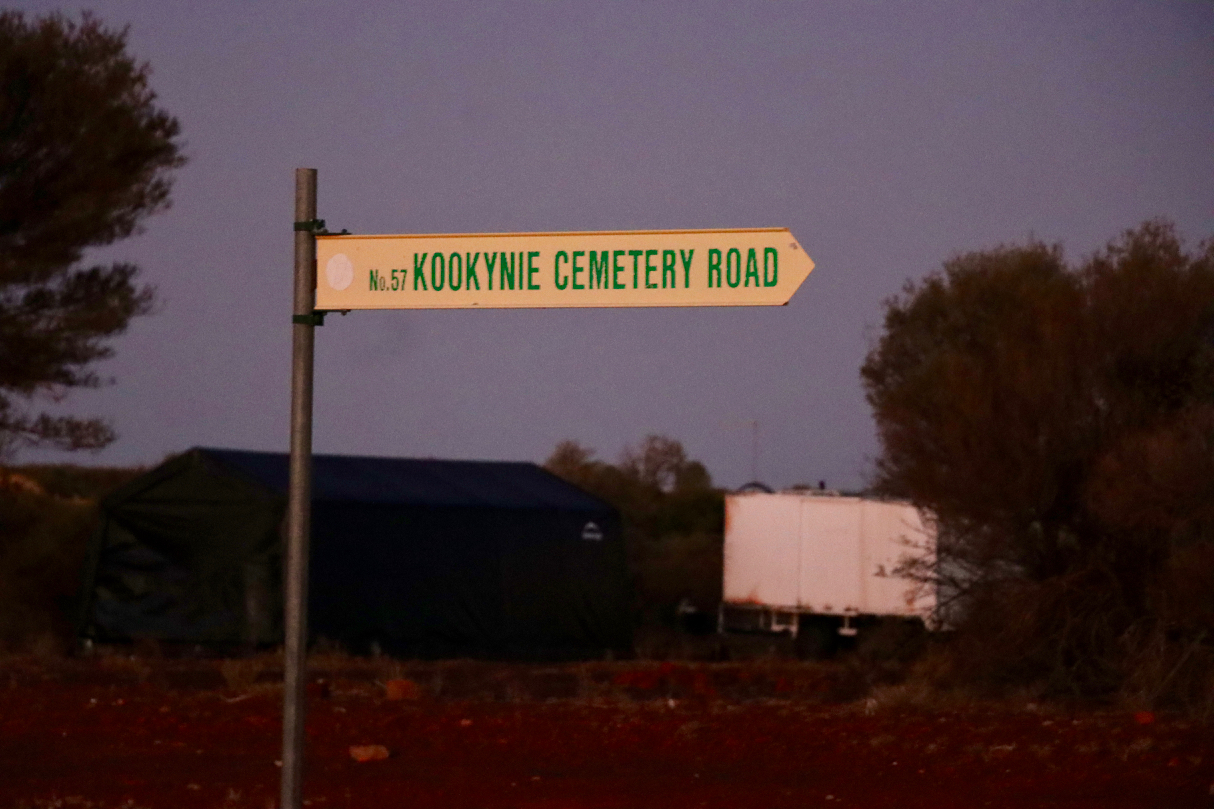
The road to the cemetery.
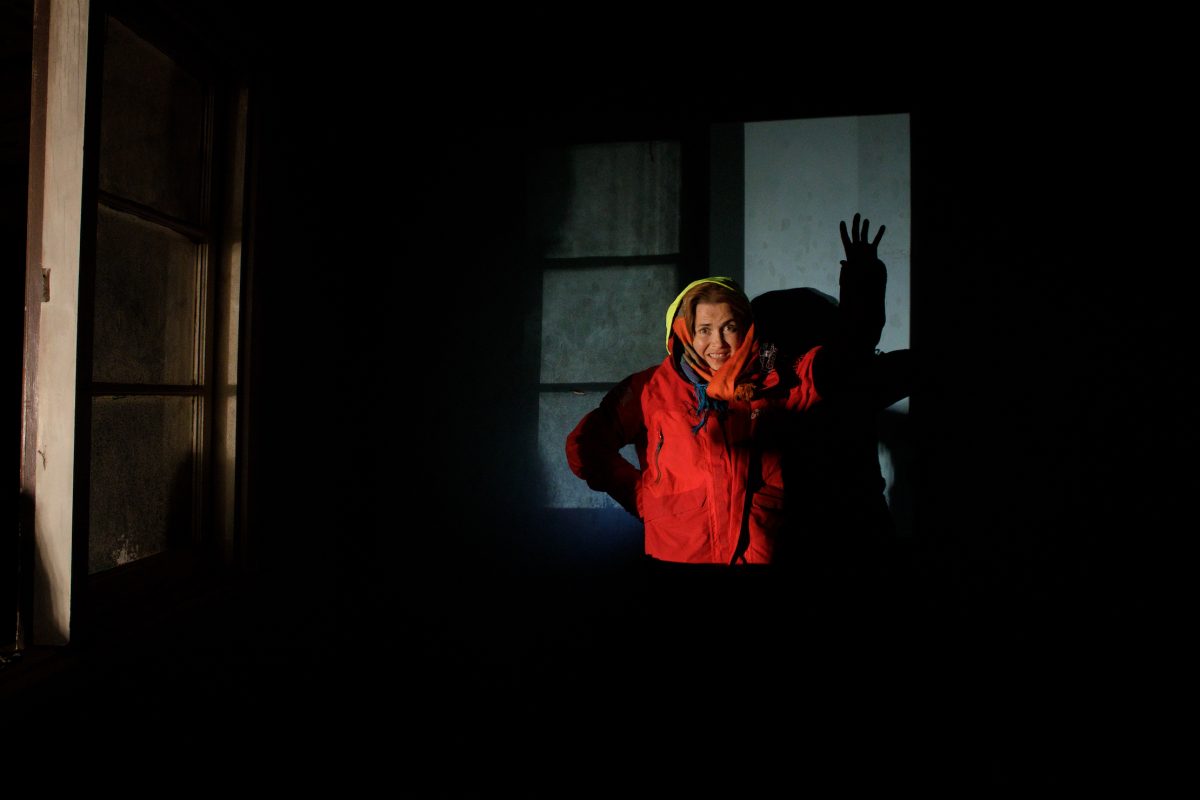
A night in the ghost town
Yulia, he doesn’t cast a shadow!
We are in the sitting room of a half-ruined house at midnight. A soot-blackened mantelpiece and a broken armchair, darkened paint on the walls, a door torn from its hinges. And silence. Even the crickets have stopped chirping, frightened by the arrival of living people in a place where only shadows roam at night. We are in the ghost town of Kookynie, in the heart of the Australian continent.
Sergey went to move the car closer to the abandoned house where Yulia, the photographer, is capturing the vanished era of the gold prospectors. The headlights shone through the gaping window openings, bringing mystical shadows to life. Now the car is no longer a hundred metres away on the dirt road, so perhaps it won’t be stolen out of the darkness.
I dutifully earn my keep in the night-time town:
“And then the zombies appear!” I howl, stepping into the beam of light. Yulia is choosing an angle in a dark corner. We laugh.
At night in an abandoned house. Photo by Yulia Galushina
Who gets the last laugh?
“Listen, this is exactly how horror films begin: thrill-seekers climb into an abandoned house at night, start scaring one another, and then...”
“Muuum!” Thank God, Seryozha is coming back.
“Listen, but he... doesn’t cast a shadow!”
And we crack up again, though now we keep glancing over to see whether he really doesn’t... and when we find his shadow, we breathe a sigh of relief.
High on the list of films about Australia is the horror film Wolf Creek; it’s a film about a serial killer, based on real events. Don’t watch it if you’re planning to go to Australia. They say it puts you off remote places. After that, you definitely won’t want to visit a dead town.
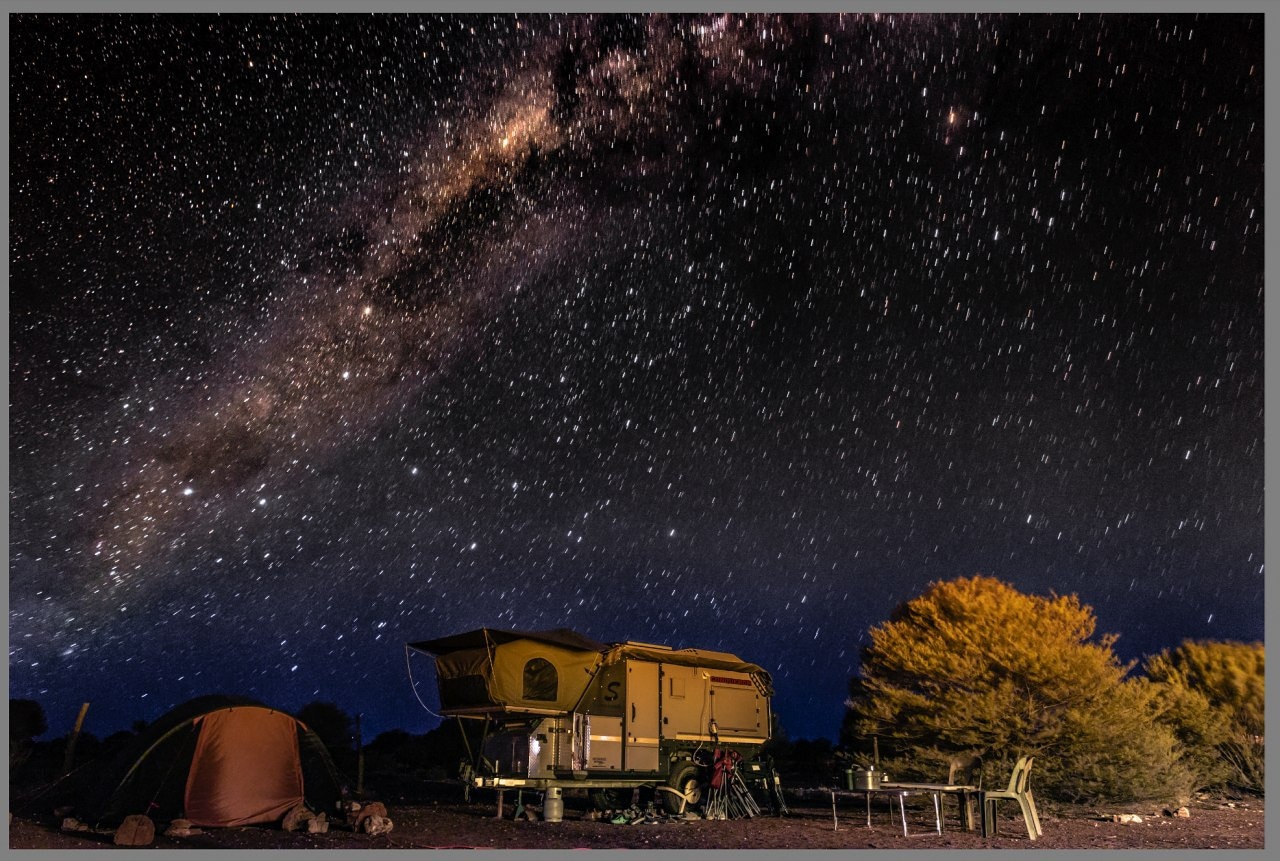
Our own horror film had a happy ending. After telling scary stories in the headlights, we returned to the caravan and tent at one in the morning. Right here, beneath the Milky Way itself, in this magical photo by Yulia Galushina
The Milky Way above the Australian bush near the ghost town of Kookynie
Ghosts of the past, whether an abandoned town or a lost expedition, switch on a time machine in my head. With a strange, aching feeling, I see shadows of people and houses approached on horseback. I hear the first honk of a brand-new Ford, the noise of pumps and the strike of a pickaxe. Tell me, have you ever been to places like this? Does the feeling overwhelm you there too?
A newer house
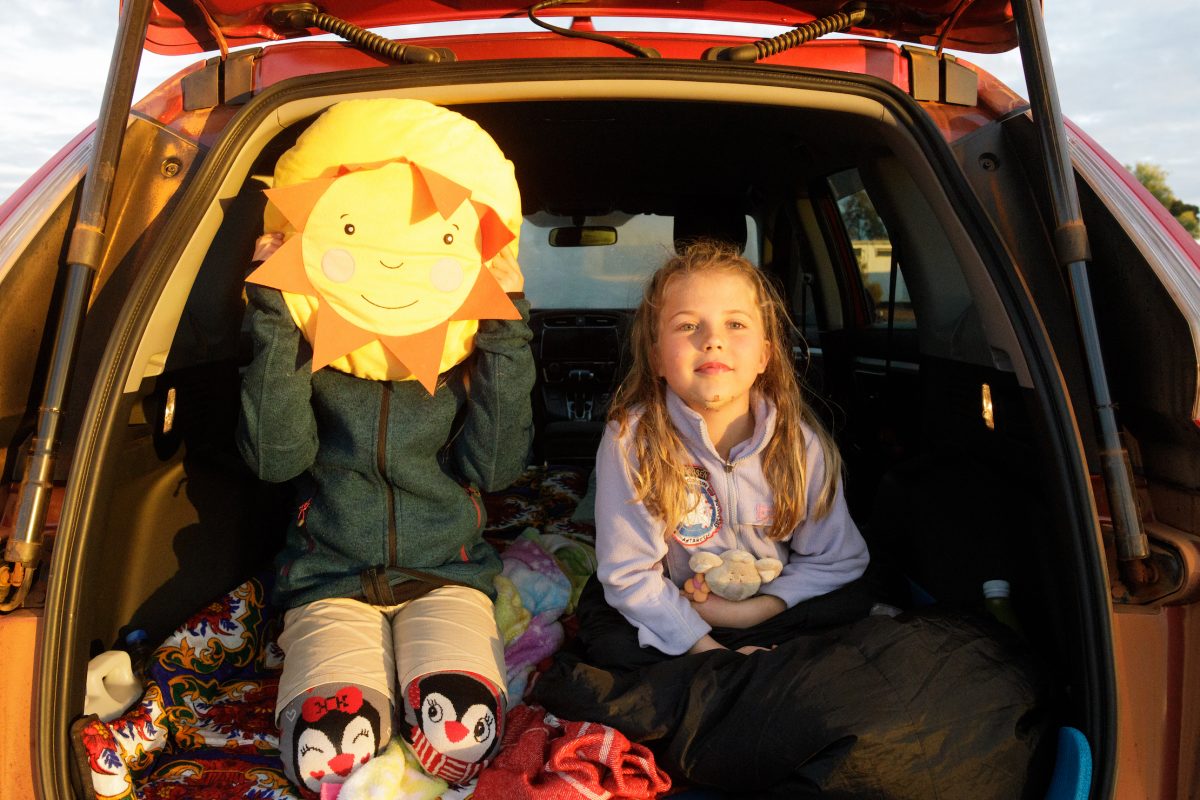
The children spend the night in the car
Shall we take it for a spin?
What year is the Ford?
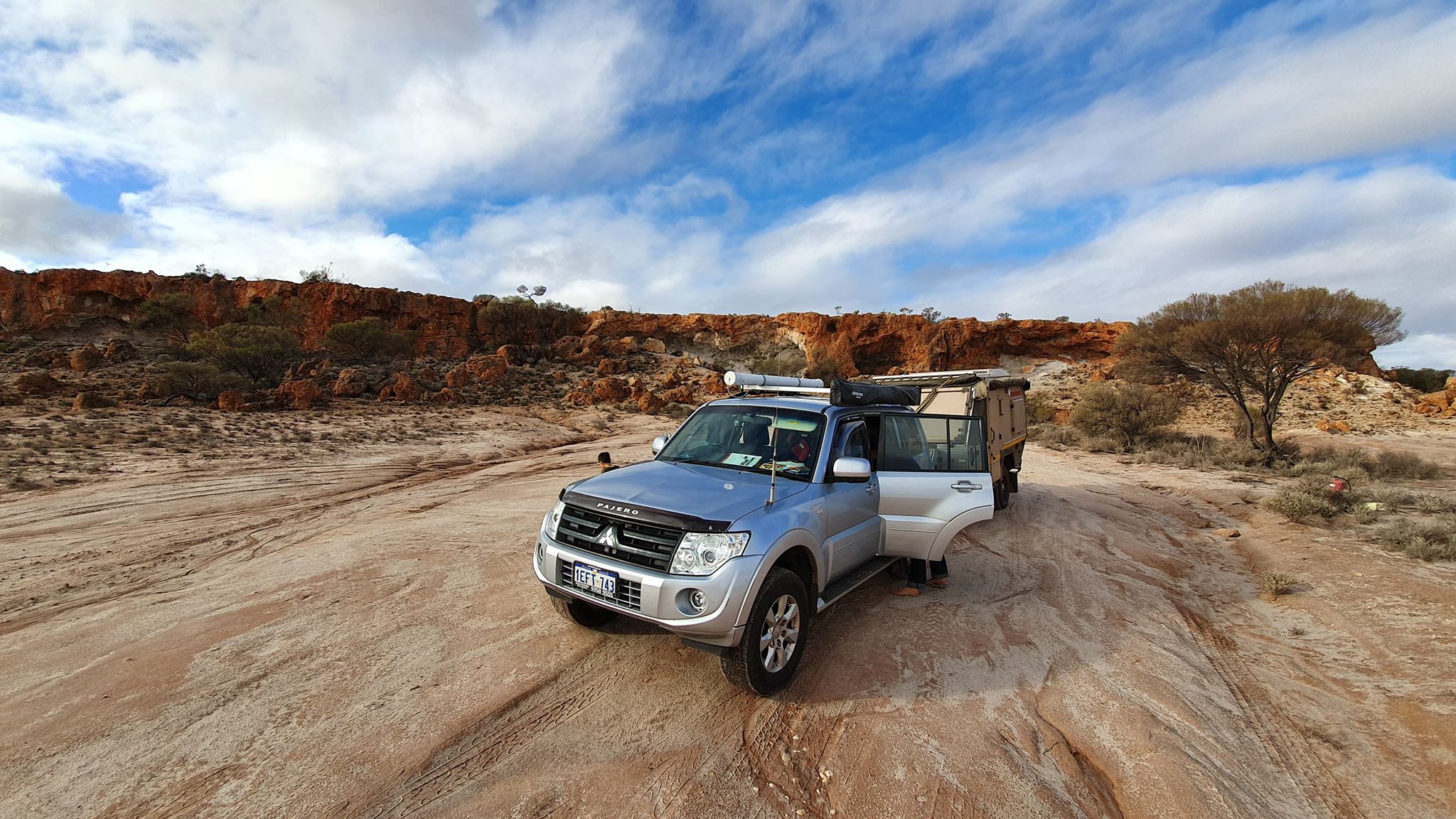
P.S. We still haven’t told this story—travelling through Australia’s interior with a caravan. We will! Stay tuned.
We’re heading into the heart of the continent!