
From the Travely-Family archive · Australia and Tasmania
Australia by Yacht. Travely-Family’s Visa and Entry Formalities. Sailing Around the World via Antarctica and the Great Capes with Children
An original publication from the former Travely-Family website. This English translation was preserved from the technical-site archive without editorial rewriting.
Obtaining an Australian visa in a third country, the particulars of entry formalities, and the impact of the coronavirus pandemic on border crossings.
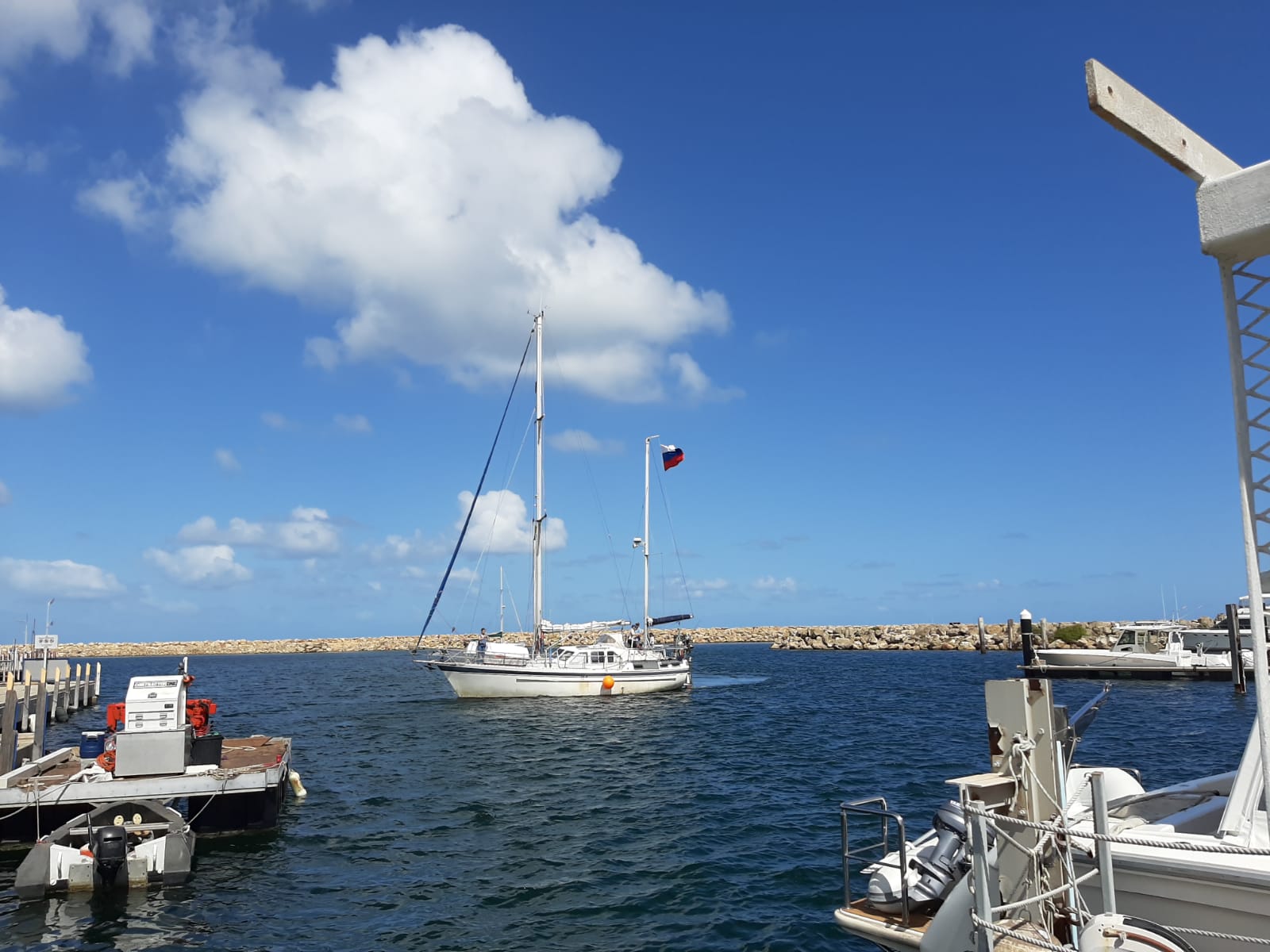
And so, at 11 a.m. on 18 March, we entered the harbour of Fremantle Sailing Club on Australia’s south-western coast. Our breakdown-packed 53-day passage across the southern Indian Ocean was over. Hallelujah.
Obtaining an Australian visa in a third country
We applied for our Australian visas in Cape Town. The procedure for obtaining an electronic visa for sailors is no different from the usual procedure for overland travellers.
A one-year tourist visa allowing visits of up to three months costs AUD 145. The biosecurity inspection costs AUD 335 per yacht, payable on the spot by Visa or MasterCard. Immigration and customs are free of charge.
The application form can be found at homeaffairs.gov.au.
After completing and submitting all the documents, you need to book an appointment and visit the visa application centre to have your fingerprints taken. This is called “biometrics.”
At the Cape Town visa application centre
On 2 January 2020, when part of the world had not yet recovered from New Year’s, we set off for the visa application centre. At the entrance to the waiting room, there was a sign prohibiting photography, filming and mobile phones. A kind young woman in a booth asks a couple of questions and, just to be on the safe side, checks your date of birth. Our young sailor was asked whether the lady beside her really was her aunt—did she have a mother? And what was the name of her grandfather on that same “aunt’s” side?
After a pleasant chat, we departed for the yacht to prepare for sea.
We put to sea
On 25 January, still without any news of our Australian visas, Lady Mary hoisted sail and cast off for the shores of the Green Continent. The good news arrived three weeks into the passage: “You have been granted an Australian visa.” This was in February 2020, a month before the worldwide Covid-19 lockdown.
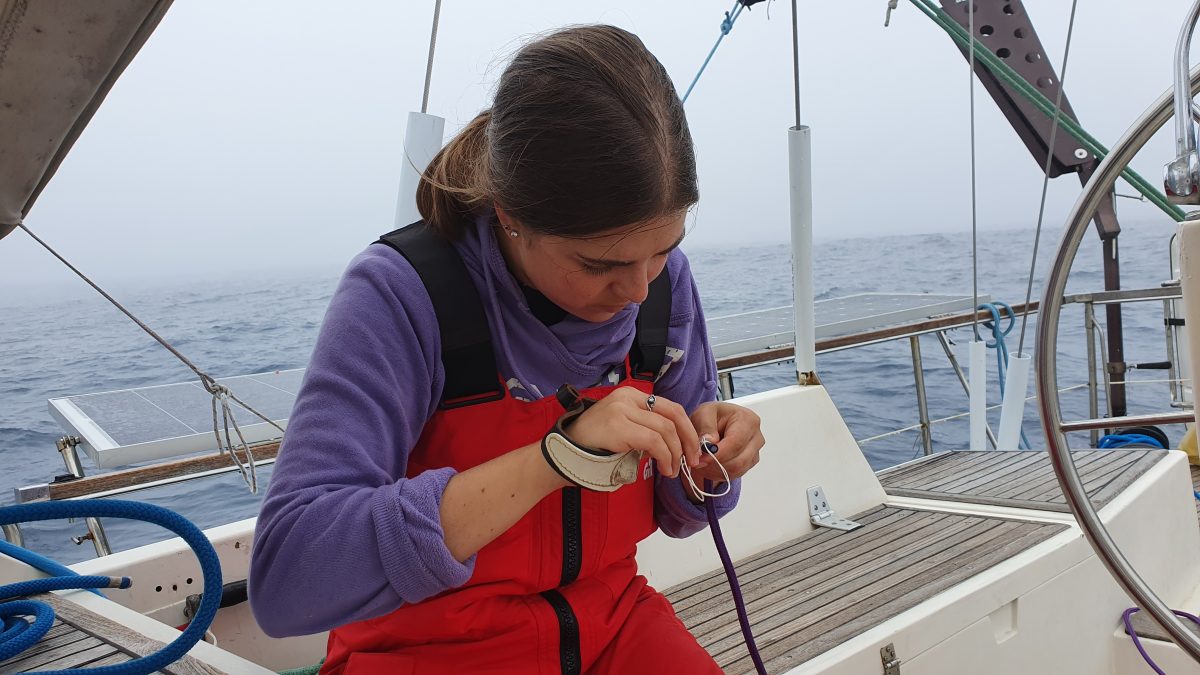
Midshipman Nastya mends ropes during the passage
Fortunately, our 53 days of self-isolation at sea counted as natural self-isolation, allowing us to enter the land of kangaroos under the standard rules for yachtspeople.
Rules for entering Australia by yacht
Western Australia, where we arrived, has several ports of entry. We were considering Albany and Fremantle, and chose Fremantle because of its proximity to a large Russian community.
The captain must notify the authorities by email four days before arrival in port. Between 90 days and 96 hours before arrival, you must submit details of the yacht and crew and report whether there are any plants, animals, weapons or sick people on board. In addition, every vessel has the right to request a government interpreter on shore—well, you never know when you might need one. We filed these virtual papers straight from the ocean, sending them both to the Coast Guard and to Fremantle Sailing Club marina.
A few days before arrival, during a calm, the captain cleaned the hull along the waterline, removing the accumulated algae and large shells with “ducklings” attached, just in case.
Our welcome on the Green Continent
And then, at last, came the scene we had been awaiting throughout the long 53-day passage. Lady Mary approaches the quarantine berth at the very edge of the marina. On the pier, two bins for waste from ocean-going arrivals shine yellow, while two Biosecurity Department officers stand out darkly. A vehicle belonging to customs and immigration gleams white, and a couple of onlookers—shipyard workers—are loitering nearby.
The first procedure is biosecurity control. Its purpose is to prevent alien flora and fauna from being brought onto this isolated continent—that is, bugs, rats and other cockroaches; all the insects that live in beans. And the beans themselves for good measure, in case they sprout. All products of animal or plant origin that are unprocessed and not sealed in factory packaging fall under suspicion. Raw meat and fresh fruit and vegetables may not be brought in. So we had to make an emergency effort to finish off the pumpkins and apples that had survived to the finish line, with garlic on the side.
After giving us time to moor calmly, the first pair of officers approached the boat.
“Hello!” we say.
“Good afternoon. How are you?”
“Oh, we’re delighted to set foot on Australian soil,” we begin answering the perfunctory question, as Russians are wont to do.
The captain tries to greet them with a handshake.
“No,” the inspector replies, then waits for some unknown sign from above.
We check the mooring lines and secure one more. This apparently serves as the sign, after which the two specialists in the flora and fauna of provisions come aboard Lady Mary.
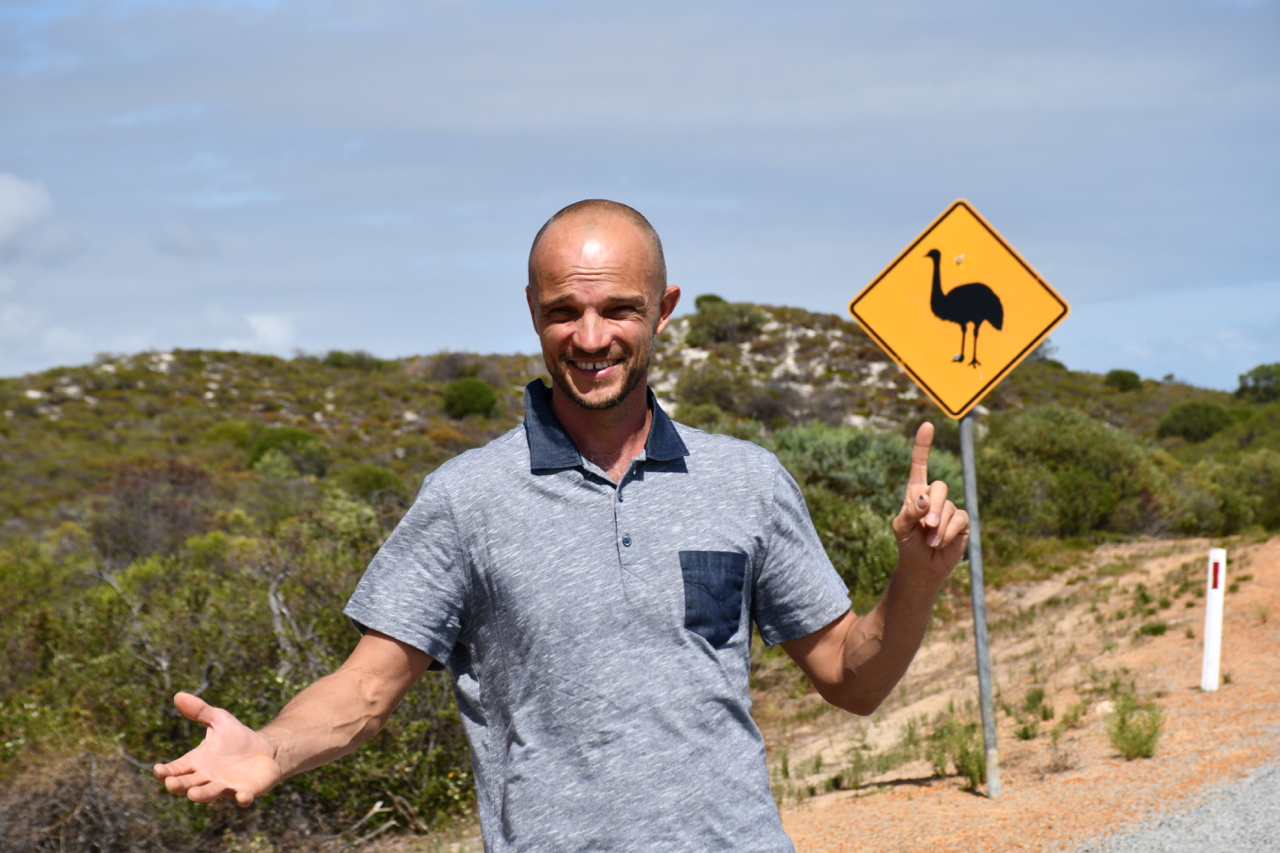
That isn’t them. This photo is just to set the mood 🙂.
Biosecurity
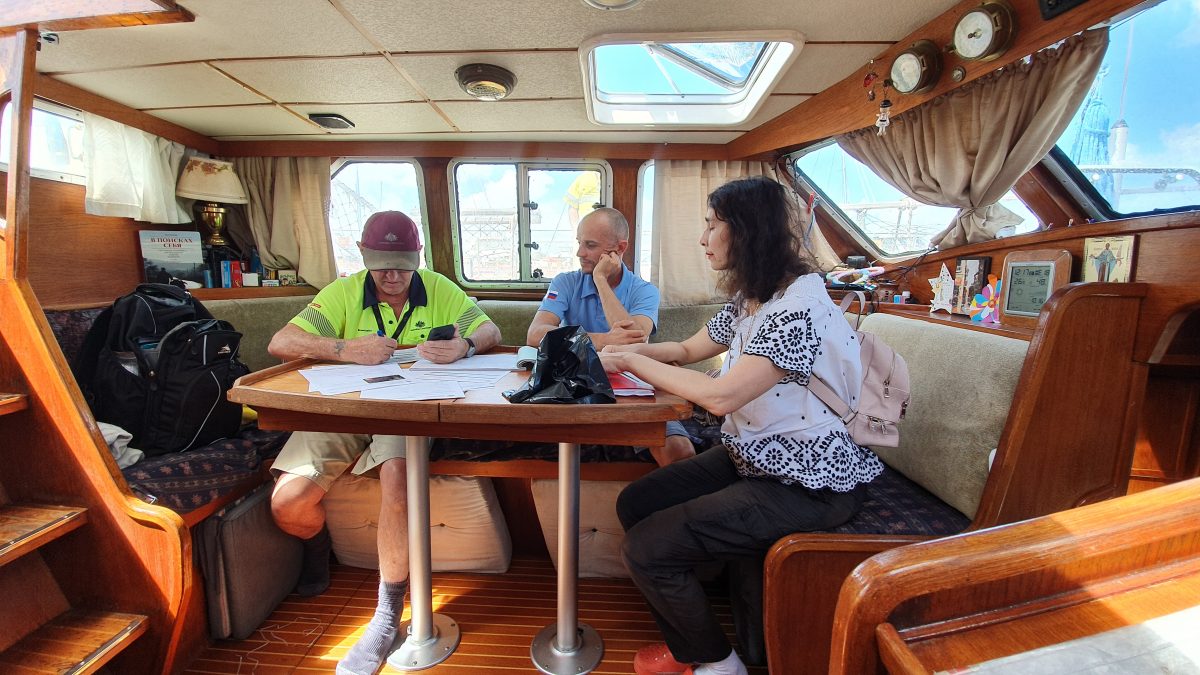
The friendly elderly biosecurity inspector even agrees to take off his shoes, leaving his companion—obviously wearing less-than-fresh socks—on deck. After a couple of questions at the table, the inspection of the interior begins. The inspector is most interested in the galley cupboards and the refrigerator.
The inspector is attentive and polite. He warns us that if we have hidden anything deeper away, it would be better to unhide it at once; otherwise, they will come back later with a dog to search and fine us $50,000 for any prohibited items they find. Frightened, I began bringing out first a forgotten packet of quinoa, then some flaxseed. With a heavy heart, I open the cupboard containing cereals, peas and beans. All the legumes are consigned to destruction amid cries of “Why?!” Buckwheat, however, is saved by our assurance that it has been roasted.
The inspector is also uninterested in the rice poured into six-litre bottles. Sealed factory packages of grains may be brought in. But we slipped up with an open packet of buckwheat. The man questioned us particularly closely about honey: did we have any or not? We had a jar with a little honey in the bottom, and I immediately drank tea with it so that not a drop would fall into enemy hands.
Individually wrapped processed cheese portions and all kinds of tinned food are not punishable by confiscation.
All told, large and small, about 30 kg of provisions were confiscated from us. By then, we had boiled, baked and eaten all the fresh food. It was so hard to get through it all that our midshipman Nastya still does not want to see another apple.
The captain, the biosecurity inspector, and Lyuda from Perth’s Russian community, who volunteered to act as our interpreter and welcome us 🙂
Our collections from around the world—the young sailor’s and mine—we successfully hid away in the deepest cupboards. And the all-seeing eye of justice beheld only a box of wooden scrubbers and one pine cone. The scrubbers had been travelling with us since The Gambia and were the fruit of some kind of tree. The pine cone had joined us in the Canary Islands. All of it passed into eternity. But the precious skeletons in the cupboard remained—if that is what you can call the shells of a Tierra del Fuego crab and an African tortoise, as well as pieces of coral from the Tuamotu Archipelago.
At the same time, the inspectors showed no interest whatsoever in our assortment of teas and spices. Curiously, the hibiscus tea in jars and bottles passed the face-control test, while the unfinished miracle-working buchu collected in South Africa—fragrant twigs with healing properties—seemed suspicious. We never found out why buchu was more dangerous than hibiscus, fearing that if the inspectors started thinking about it, they would confiscate the hibiscus as well.
It was fortunate that our long-suffering pets—the flowers Hatter and Alejandro—did not live to see Judgement Day. The first died after the storm in the latitudes south of 50° in the South Atlantic; the second, rather battered, remained in South Africa to await our return on a friend’s balcony. Otherwise, an inglorious end would have awaited them: plants and animals are barred from entering Australia.
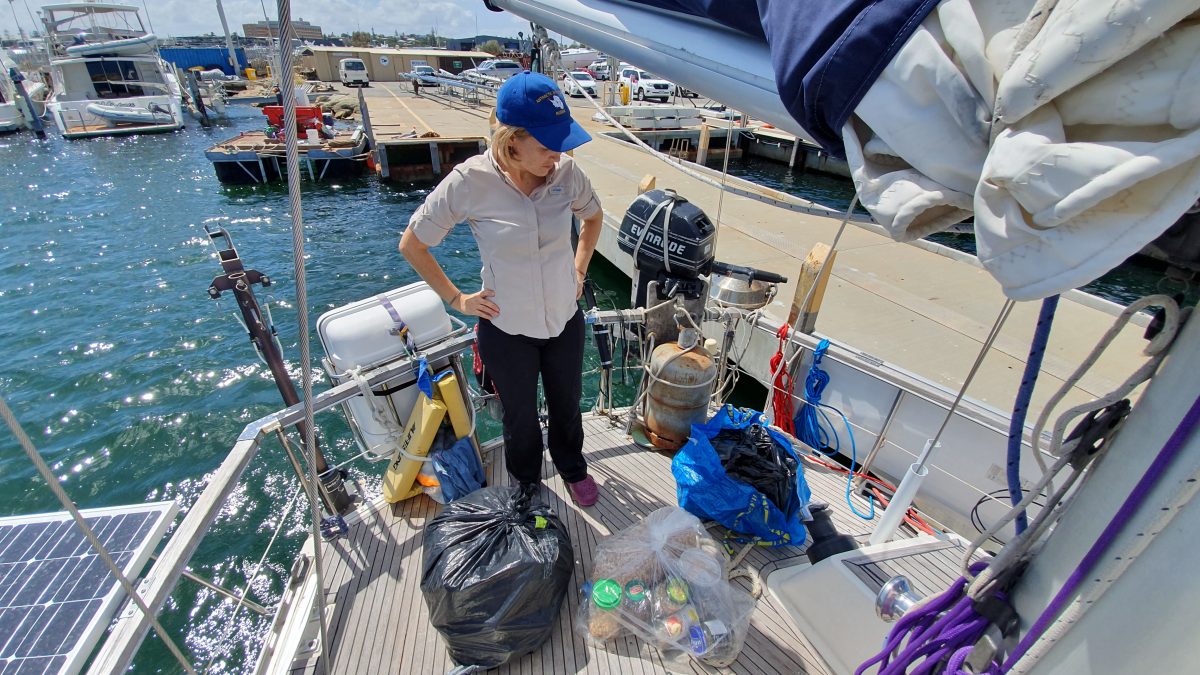
This is not rubbish; these are provisions that were turned into rubbish destined for destruction Customs and immigration. Australian visa
The inspector filled out paperwork confirming that we had surrendered everything we had, then dissolved into the continent’s eucalyptus-scented air. He was replaced by two immigration officers. They checked whether we had Australian visas, compared our faces with our passport photographs, and asked whether we had had any contact with other vessels or people during the 53-day passage. Then they had us sign a declaration concerning our health and completed all the necessary formalities, after which they cheerfully departed. At sea, we had not been aware of the measures being taken to prevent infection, so we assumed that the blue rubber gloves worn by the officers were part of their uniform. Incidentally, the Australian visa is entirely electronic—nothing is pasted into your passport, and no stamps are added.
Dog Waltz
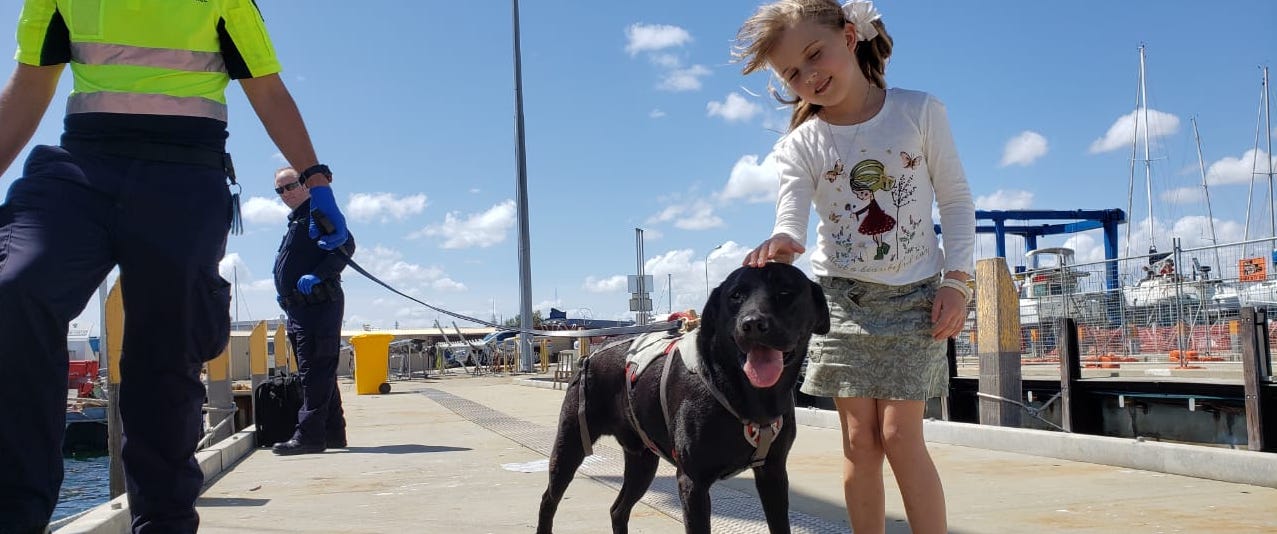
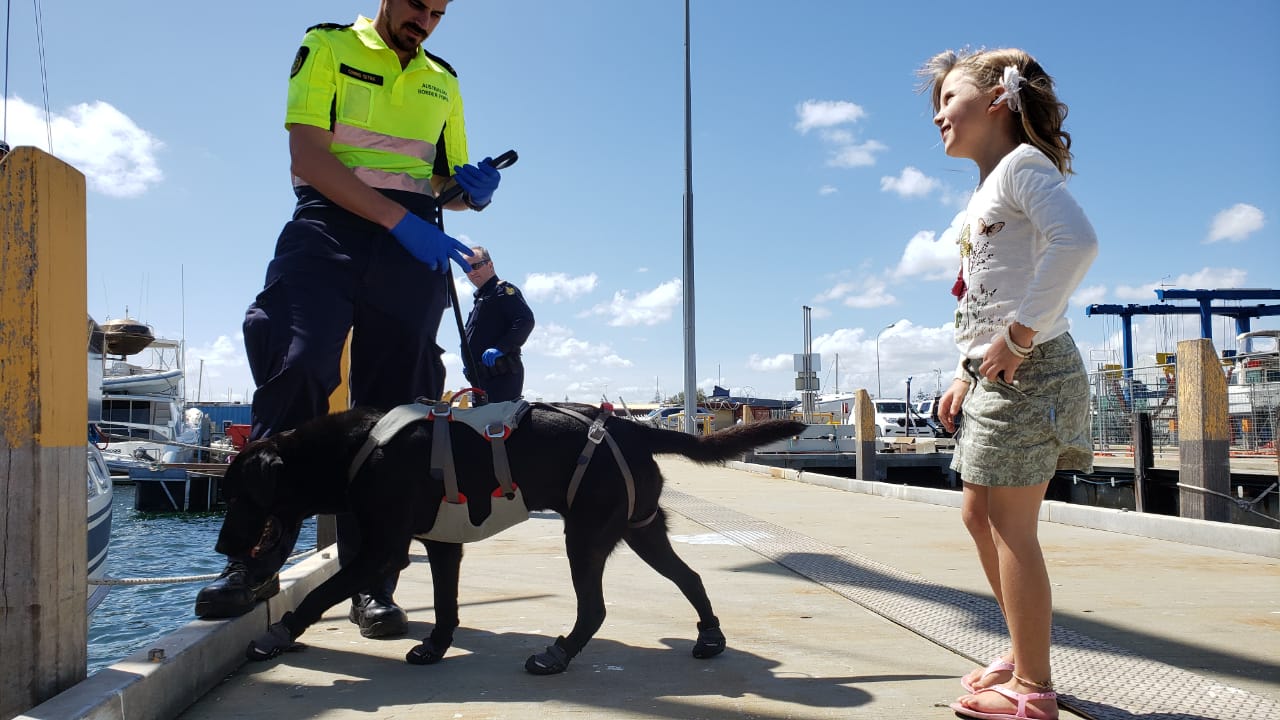
And then came the most exciting moment: a young dog went on duty whose name sounded like that of the ancient Greek philosopher Ecclesiastes. The philosopher wore Velcro booties on his paws. A young handler in a handsome fluorescent outfit infiltrated the yacht with him. Everyone not needed was asked to leave so as not to distract the dog from his work. We therefore watched his labours through the hatch.
Ecclesiastes did not sniff out anything suspicious, but he did enthusiastically discover a biscuit on the table, prompting jubilation among those assembled. The dog looked into every locker, delicately bounded across the beds, and said to his master:
“Hey, bro, was it really worth keeping me in the paddy wagon for two hours? Everything’s clean—let’s go.”
At which point the fluorescent handler carried him ashore. Our young sailor timidly asked permission to have her photo taken with the four-legged inspector, and this is what came of it:
The officers accidentally ended up in the shot, even though they were not supposed to. And a satisfied Ecclesiastes departed once more for the boot of the official vehicle.
Every cloud has a silver lining
By the evening of the following day, our Australian visas would already have been of no use, as the country officially closed its borders to all arriving foreigners and their yachts. This, it seems, is what they call “catching the last carriage of a departing train.”
On the passage from South Africa, we had planned to call at the Kerguelen Islands, which lie almost on the 50th parallel south. But because of the storm and problems with the engine and heater, we sailed past. Had we called at those islands for three days as planned, we would now have been bobbing about in the vast ocean, waiting for a miracle.
But we really were lucky, and after a couple of hours of formalities, we were invited to remain at the quarantine berth until morning—just because, not on account of quarantine. This did not restrict the crew members’ freedom of movement in any way.
“Welcome to Australia!” sang the endemic parrots from the endemic eucalyptus trees.
And indeed, the yacht was immediately registered at the marina, we were given electronic gate keys, and then set free to go wherever we pleased.
Land!
There are all sorts of rumours about clearing into Australia. So we are curious: did you think getting here by yacht would be easier or harder than we have described? Please share your thoughts in the comments.
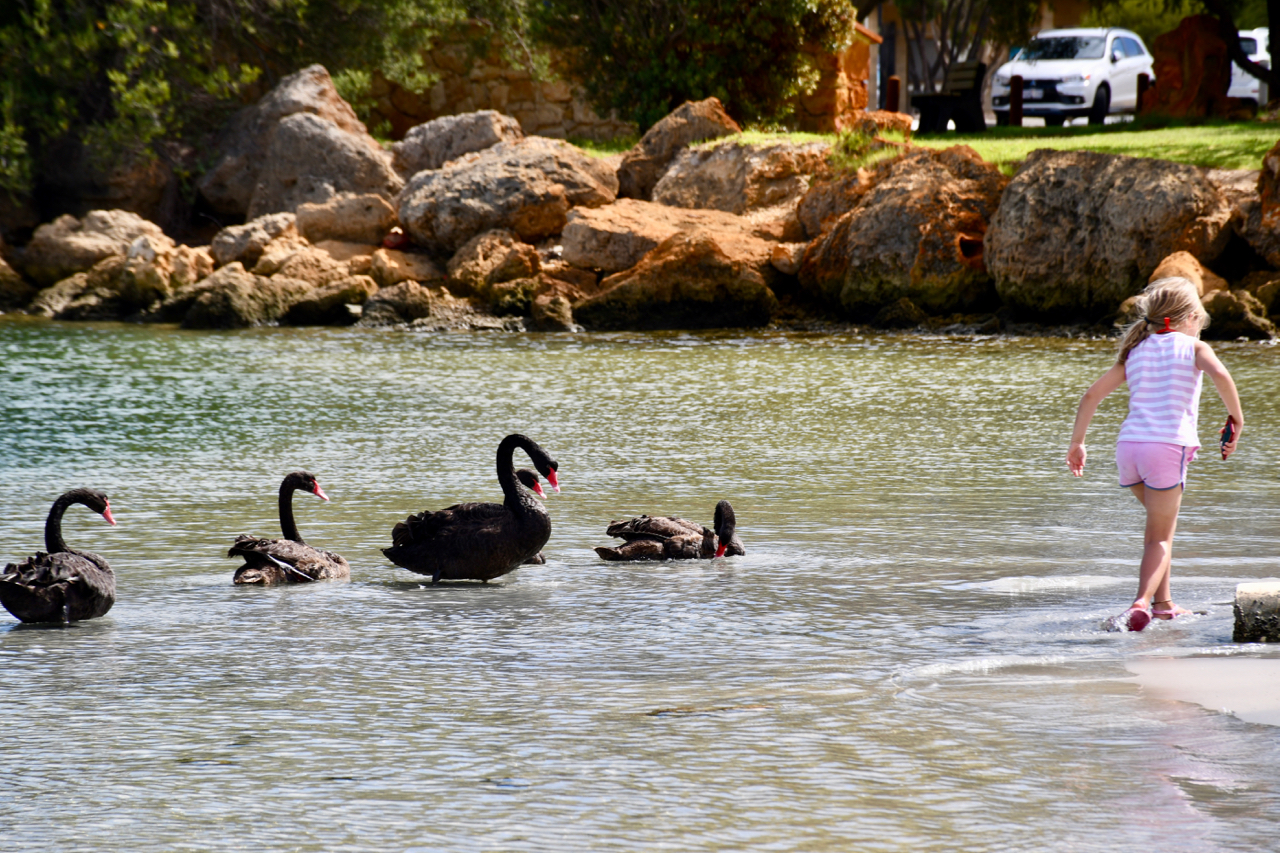
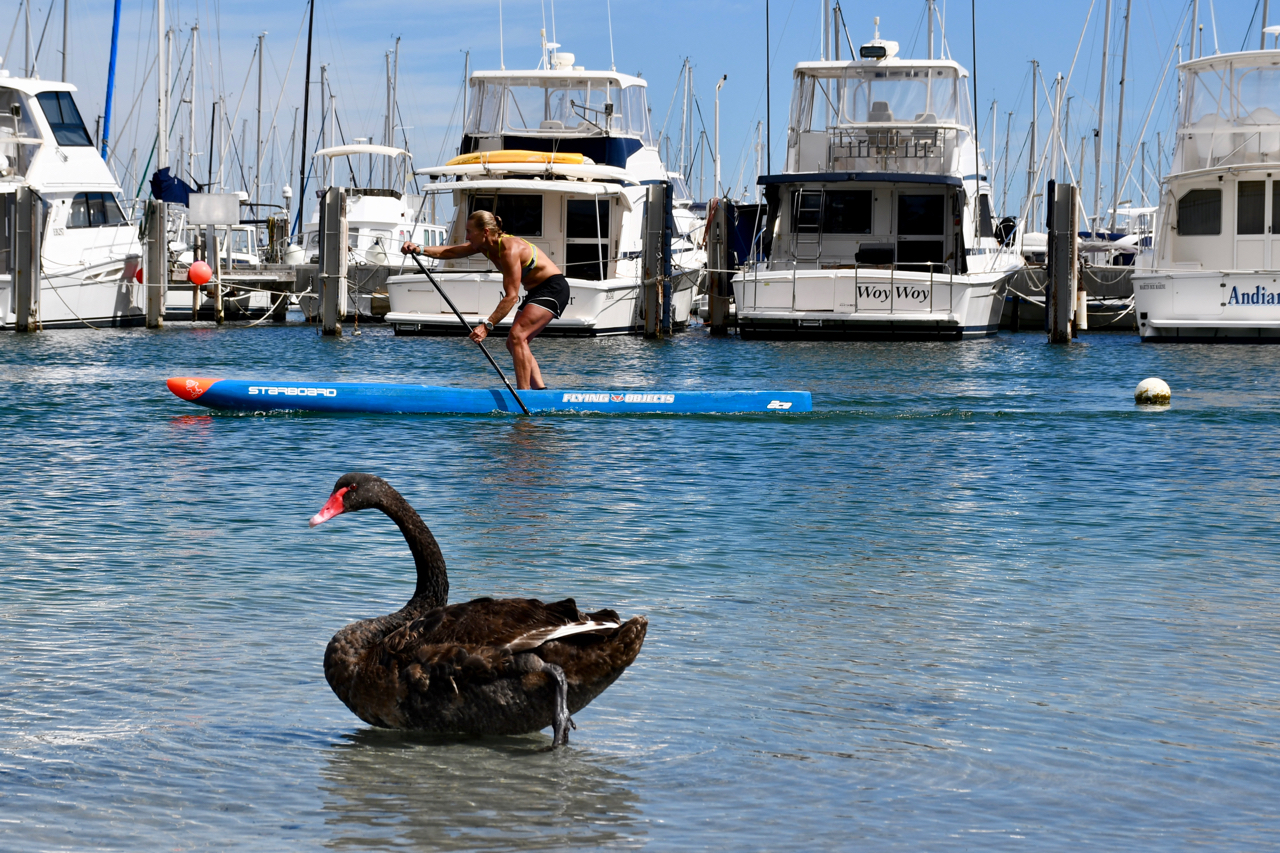
At Fremantle Sailing Club marina
All the events described under the heading “Australian Visa” took place more than a month ago. But, as usual, the whirlpool of life ashore and current tasks has engulfed us so completely that once again there is no time to write posts for the website.
Despite everything, lively updates on the current situation regularly fly into our groups:
Facebook:
https://facebook.com/travely.family/
VKontakte:
https://vk.com/travelyfamily
INSTAGRAM https://instagram.com/travely_family.official.
Live broadcasts about what matters most
And on our YouTube channel, in addition to the new film about our expedition to Antarctica, our live broadcasts on current topics now air regularly on Thursdays at 10:00 a.m. Moscow time.
The broadcast on 23 April was devoted to technical aspects of yacht maintenance and the repairs that descended upon us during the passage.
A week earlier, we talked about medical treatment while travelling.
Before that, we discussed how to survive quarantine—the secrets of peaceful life in self-isolation.
Join us for a live broadcast on 30 April! It will be about homeschooling children and their socialisation. The time is 10:00 a.m. Moscow time!
Subscribe to our YOUTUBE channel so you do not miss anything:
https://www.youtube.com/c/travelyfamily
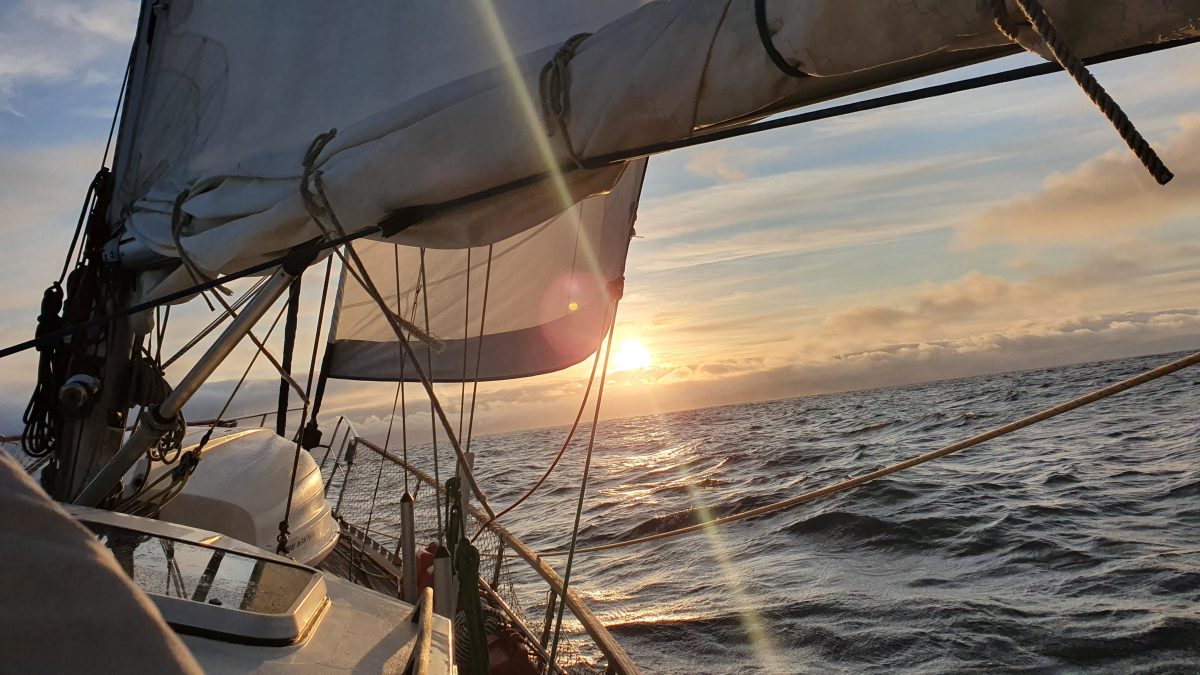
Approaching Australia