
From the Travely-Family archive · Other Entries
Life Aboard a Yacht in the High Latitudes
An original publication from the former Travely-Family website. This English translation was preserved from the technical-site archive without editorial rewriting.
Life aboard a yacht in the high latitudes. The practicalities of everyday life in the high latitudes.
The captain’s flights for the glory of the Russian space programme, putting instruments through their paces, a job offer for Nastya the sailor, an insight from a hot frying pan, ice on the coachroof, and the reasons we are postponing our departure for the Strait of Magellan.
Metalwork, water, and fungi
Besides turning bolts—which makes your limbs ache when you’re not used to it—there is plenty of work aboard. We emptied and scrubbed out the forward cabin, which since the ferocious fifties had served as our cold-storage room. The young sailors had been moved out of there back in December because condensation was streaming down the walls, and the heater was not powerful enough to push warm air through the ducts all the way to the bow. After our voyage to Antarctica and our stay at the edge of Tierra del Fuego, the condensation turned into wet mould in all its various forms.
For a couple of weeks I could not bring myself to shine a torch on the walls. As soon as I finally dared, I fainted, obviously. But I recovered surprisingly quickly, donned chemical-protection gear and, as we say back home in Altai, Alga! The main thing is to throw yourself into the battle; once you’re in it, nothing looks quite so terrifying anymore.
Nowhere to put anything and nothing to wear
Even on her best days, a yacht bears little resemblance to a cottage in an exclusive gated community, and right now she is basically a permanent storeroom. Everything has to be dried, washed, scrubbed, sealed... After washing the curtains, I still have to finish sewing them and soak them in a special solution that removes the black mould spots. The method is still experimental; if you’re interested in the result and the name of the miracle product, I’ll share them once the experiment is over... A kind person on Instagram advised me to use, on the wood, not our horrible chlorine-based mould remover (horrible because it contains chlorine), which I have been applying to the walls from time to time for over a year now, but a high-quality antiseptic that is lethal to mould yet harmless to us.
The fact that chlorine does not kill mould fungi at all but does destroy the wood was a revelation to me. But since this was not said by some random person off the street, but by an architect who designs and builds houses, including wooden ones, there is no reason to doubt it. And that is without even mentioning chlorine’s effects on health and the environment. Now only one small matter remains: we need to get a parcel sent from Moscow all the way here, to Tierra del Fuego, because that same kind person is willing to share some with us.
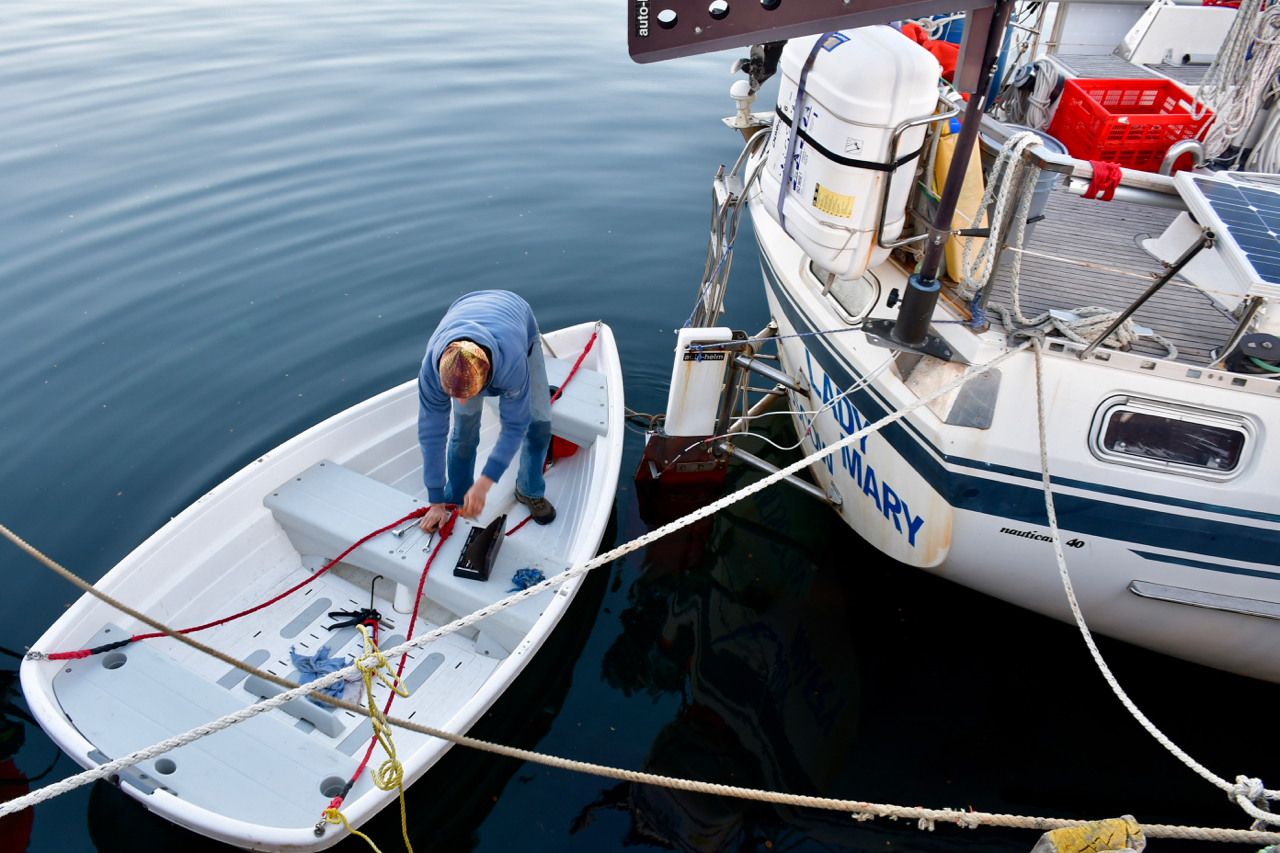
Turning bolts
While the sun is out, we manage to dry a few things. On overcast days, besides our “office work” (by the way, today we are finishing the edit of an awesome new episode of our film about the expedition to the phantom islands for our YouTube channel), we empty, scrub, and dry the remaining lockers one by one.
Mould and damp on the walls are what you have to be prepared for if you sail in the high latitudes—from the fifties onwards. It is a good thing we made “secondary glazing” out of cling film and tape for almost all the windows and hatches. At least the water has stopped streaming in; now there is only a cheerful drip-drip. To give you an idea of what the condensation is like here: yesterday I was taking jars of tea and herbs off a shelf in a galley locker. One lid looked more like a saucer—concave, about a centimetre and a half deep. The moment I touched it, it let fly—like Vasilisa the Beautiful conjuring up a lake in all its breadth.
Fresh water poured over the edge; the jar was rusty, naturally. There was already a puddle covering the entire shelf. It had run down the wall. In short, the thinner the partition between the yacht’s outside and inside worlds, the more water runs off it. Have I mentioned the word “mould” yet?...
Our fairy godmother Roxana recently gave us some leftovers from the storeroom—a roll of thin plastic, the sort yachts heading to the polar circle use to make secondary glazing. We were delighted and got ready to tear the polythene off the windows and cut out neat little “panes”, temporarily securing the plastic on deck. But not everyone in the crew knows how to tie reliable knots (hint: the children and I do), so during the next storm the roll flew off into the night. It was not found on the rocky spit towards which the wind was blowing at the time, and the captain’s brilliant idea of diving with a tank to look for it on the bottom is still gestating.
He is probably waiting for the first frosts so the diver can feel as if he is in Antarctica. A lot of our ideas gestate like that, ripening right up until the roasted rooster —our totem animal, so to speak—materialises in the vicinity of our backsides.....
Space and earthly matters
The captain celebrated Cosmonautics Day belatedly: he blasted off to the masthead and did not come down for three hours, glorifying the achievements of the Russian space programme. The wind howled into his pockets and the holes in his sweatpants, while his assistants below grew tired of wrapping themselves in their chilly scarves.
Muuuum, noooo! cried the brand-new wind transducer when it realised that its future would have nothing whatsoever to do with lying in the clean warmth of a white box.
Its fate was to stick up into the sky at the masthead and be the first to take the blows of the elements. Once aloft, the captain explained this to it clearly one more time. Only one small job remained: rerouting the wires from the mainmasthead down through the mast into the cockpit, then between the headlining and the coachroof. In short, the headlinings in both communal areas of the yacht were stripped out all day; vines of wiring hung from their damp innards, and the wind squeezed through the hole drilled to the outside, apparently hoping to warm up.
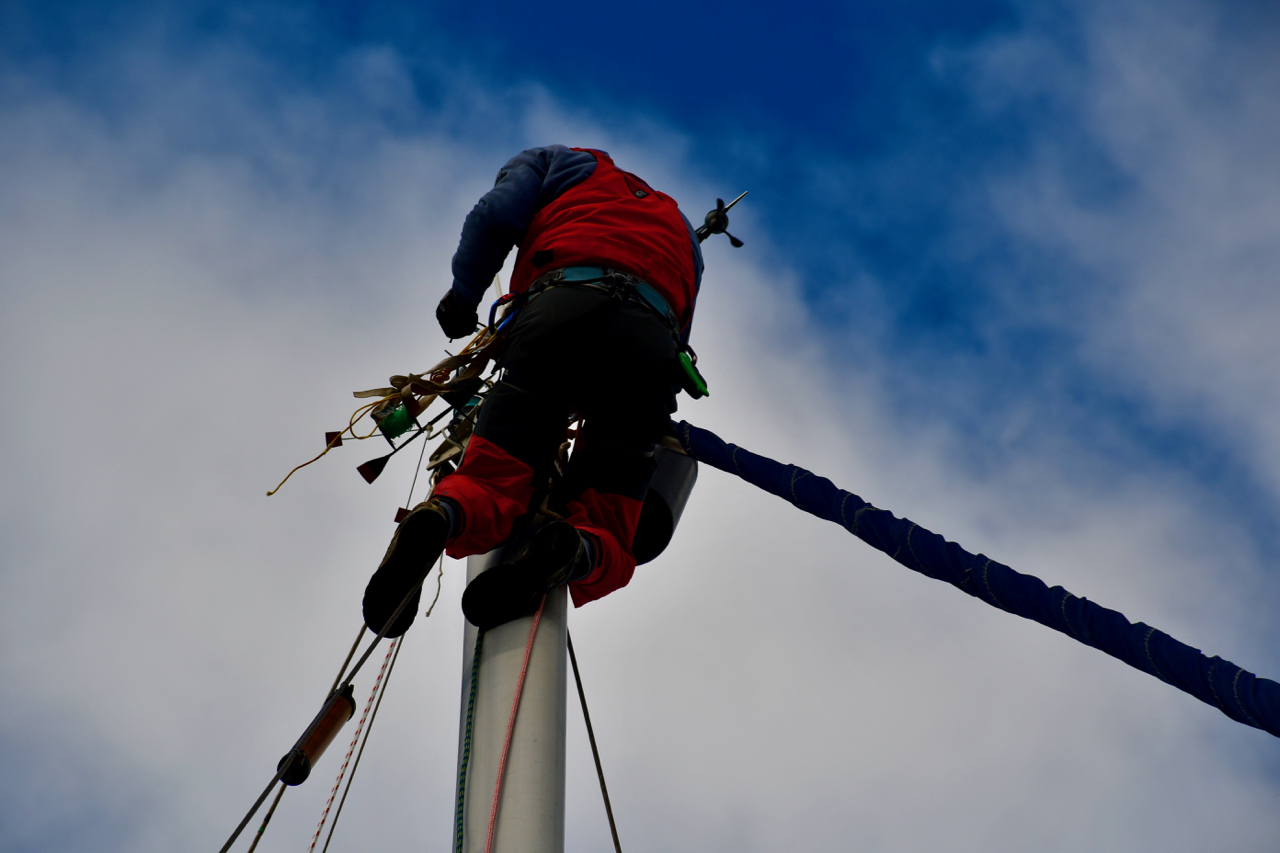
But on the outer side of that hole our new wind instrument fitted as if it had always belonged there, and the wind went off in sorrow to roam the hills of Tierra del Fuego. And now, with our new Raymarine instrument (thanks to Dmitry S. from Leningrad Region), we even know how much wind is blowing on the Beaufort scale. Yesterday it was Force 7. By then the captain had already come down from the mast onto the deck and sat there for a long time, glassy-eyed. Even hot tea did not help straight away.
“Perhaps,” I say to Dmitry S.
from Leningrad Region, “we ought to embroider your name on a sail?”
“No,” Dmitry says, “that would impair the sails’ performance. Better let me be the first person to buy your book, with a dedication, from the very first print run.”
There was no wriggling out of it after that: I sent the young sailor off for a sleepover, and the captain and sailor off to the library. I promised everyone I would be along shortly, then hid aboard the yacht instead. I’m writing.
An insight from the frying pan
Meanwhile, Nastya is torn between Instagram and the galley. Physically, that is. Mentally, she is torn between wanting to sail with us to the Cape of Good Hope and other far-flung backwaters, and the first seriously impressive job offer she received the other day. She has been invited to work for six months aboard a top-class expedition sailing yacht, with a top-class captain, on the most incredible route in the world.... The crew is wondering whether our seventeen-year-old sailor is ready to endure six months of strict regime with honour, without shore leave to the warm company of her parents and sister.
Nastya is probably imagining with dismay how she could possibly miss being dragged along with us for the next 5,000 miles nonstop across the South Atlantic and the southern Indian Ocean. After all, it is such tremendous fun to spend two months flying from one side of the yacht to the other.
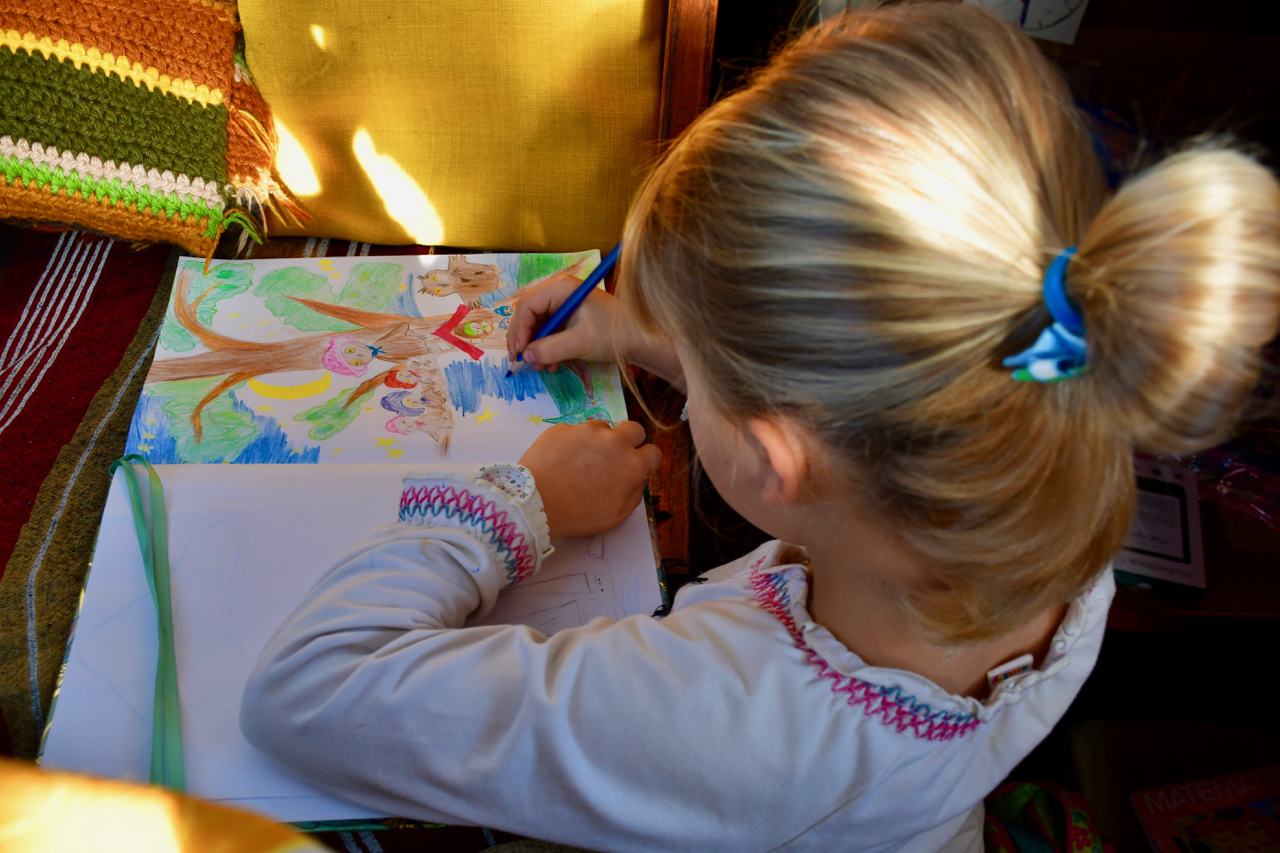
The young sailor’s artwork—an owl family
To relieve the stress of difficult decisions, the eldest child works her magic in the galley. This time, from the chef’s pen— ladle—comes the most delicious ratatouille with spaghetti.
And the other day I too unleashed a creative explosion in the culinary department: I made “lazy pasta”. First you fry onions in a pan, then add some fresh mushrooms. You chuck in water, spices from a packet, and the pasta goes straight into the lot. At first it looks like thick soup, especially after you pour in half a glass of cream. But then the soupiness disappears and voilà—succulent, aromatic pasta in a creamy mushroom sauce. One less saucepan to wash, no need to rinse anything, and it vanishes from the plates in one fell swoop. Of course, perhaps you worked this out ages ago and always cook pasta this way. It took me 44 years to reach this breakthrough. So I consider it my greatest achievement today.
And now for the weather
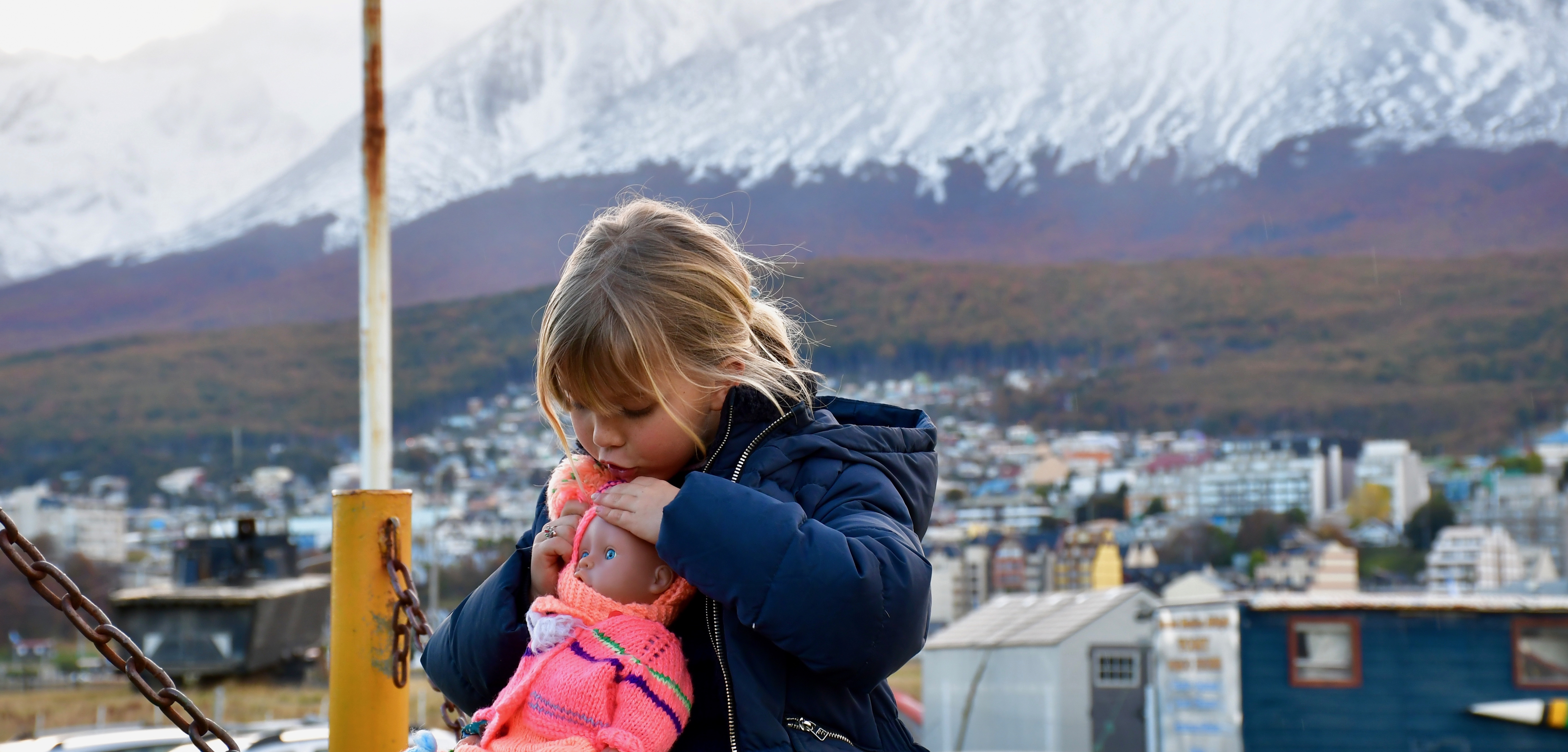
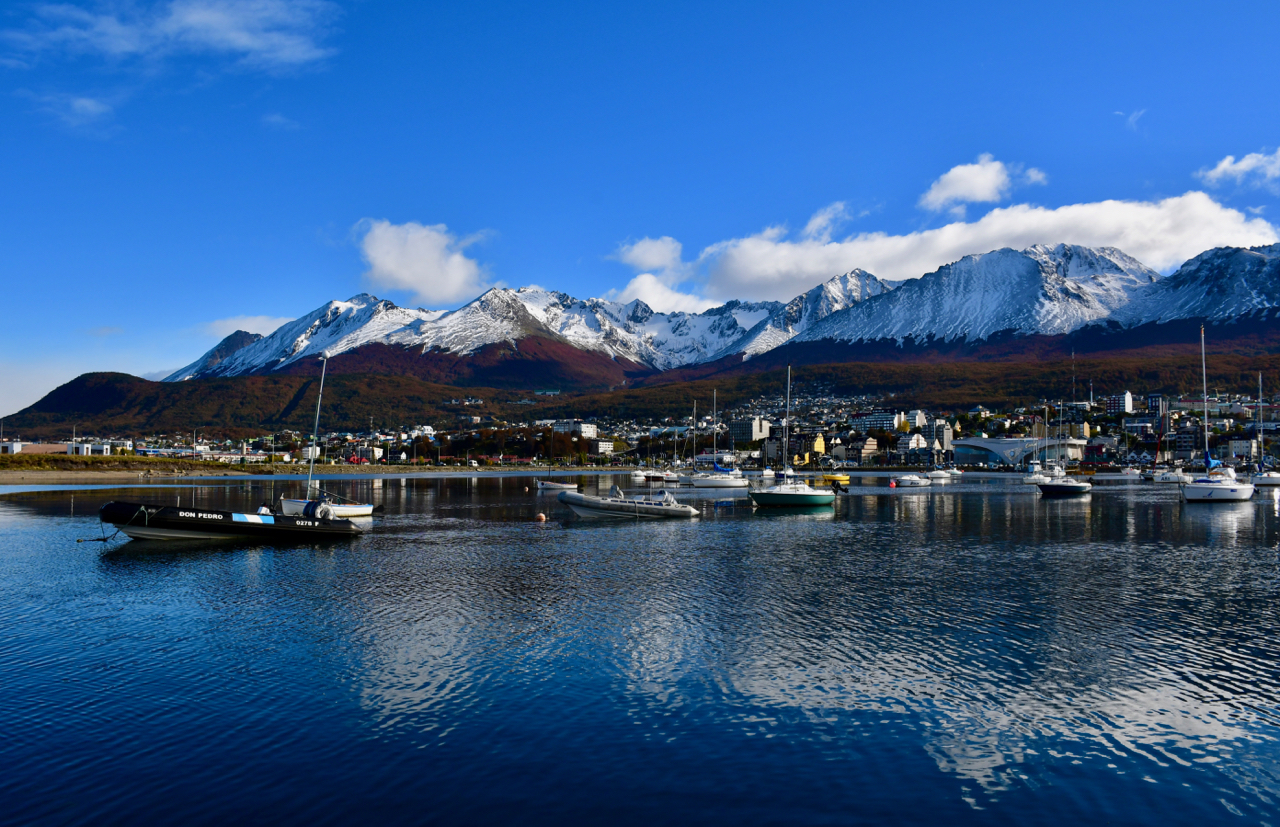
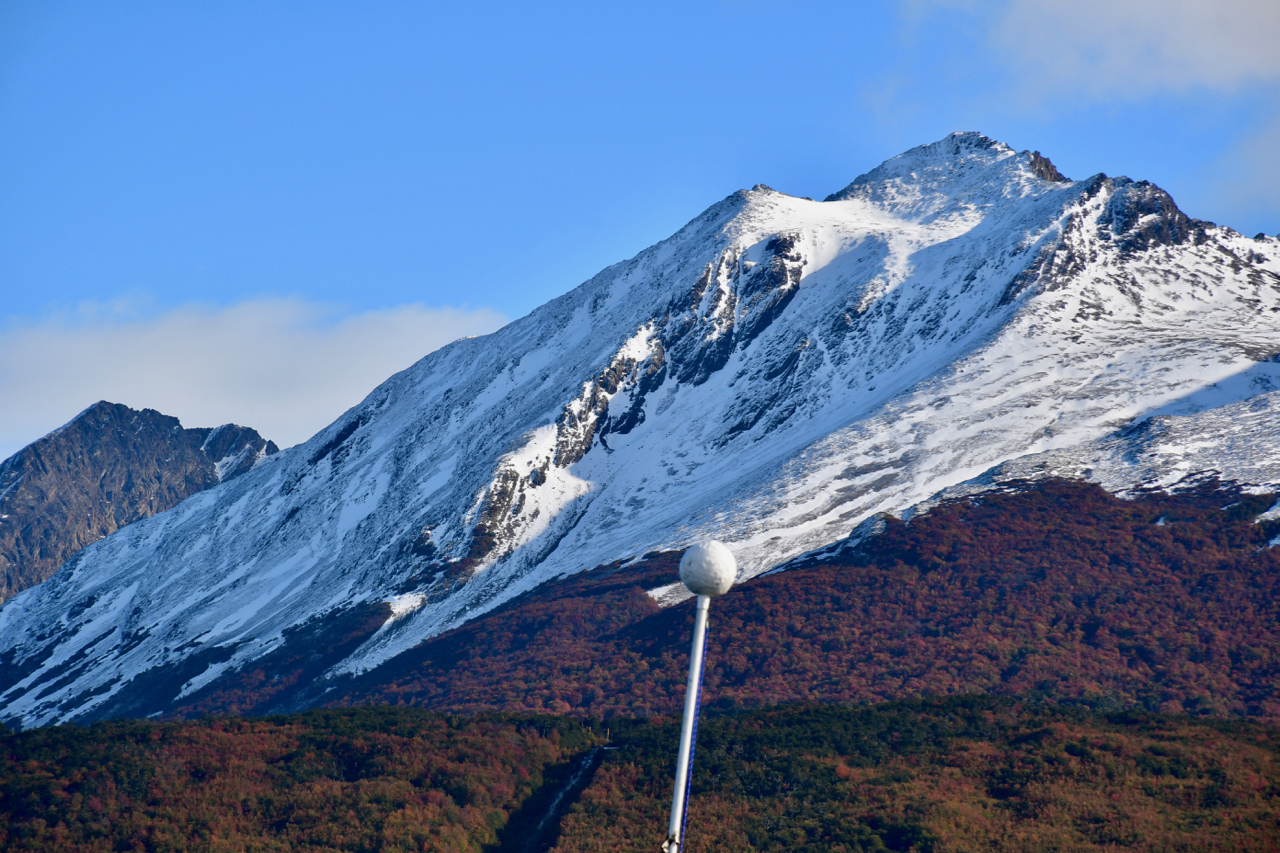
Winter is coming. Overnight, the coachroof became covered in ice. Until now there had only been frost on the jetty planks and ice in the little boats ashore that had filled with rainwater. The snow on the mountains used to melt reliably. Now snow-covered ridges descend straight into the waters of the Beagle Channel. Winter has moved down from the mountaintops closer to the water; the red of the slopes has darkened and crept into the belt that was barely beginning to turn yellow a week ago. The birch trees in town have begun shedding their leaves.
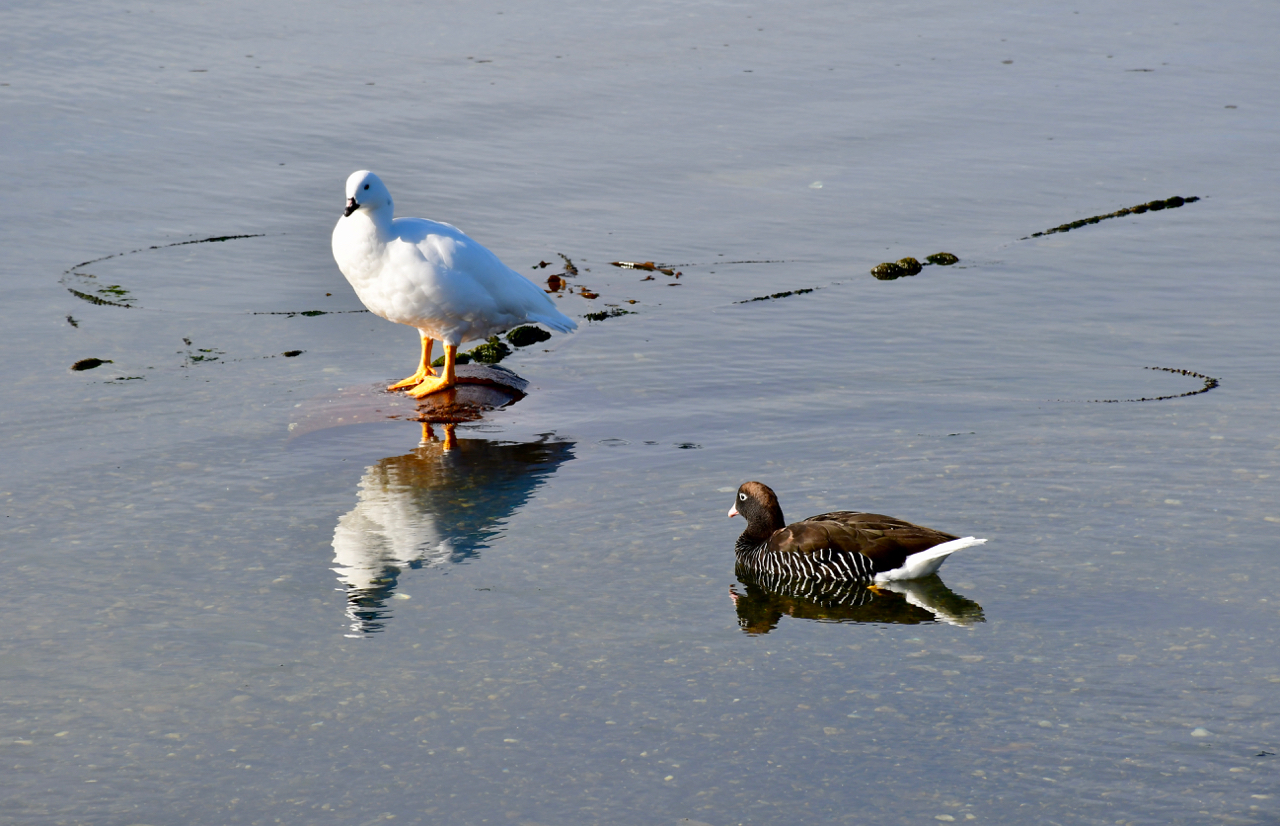
Two cheerful geese are still splashing in the shallows—one grey, the other white. And they still are not flying south. That is a good sign—it must be warm. We are staying in the marina so the young sailor can run around ashore whenever she likes, rather than once a day when the whole crew heads out in the dinghy. Besides, this is the only way we can access the yacht club’s internet. Two heaters now run aboard around the clock. If we switch the second one off overnight, it is +14°C inside the boat in the morning. I am afraid to see the electricity bills.
We are not leaving the far south just yet. There are two reasons for this:
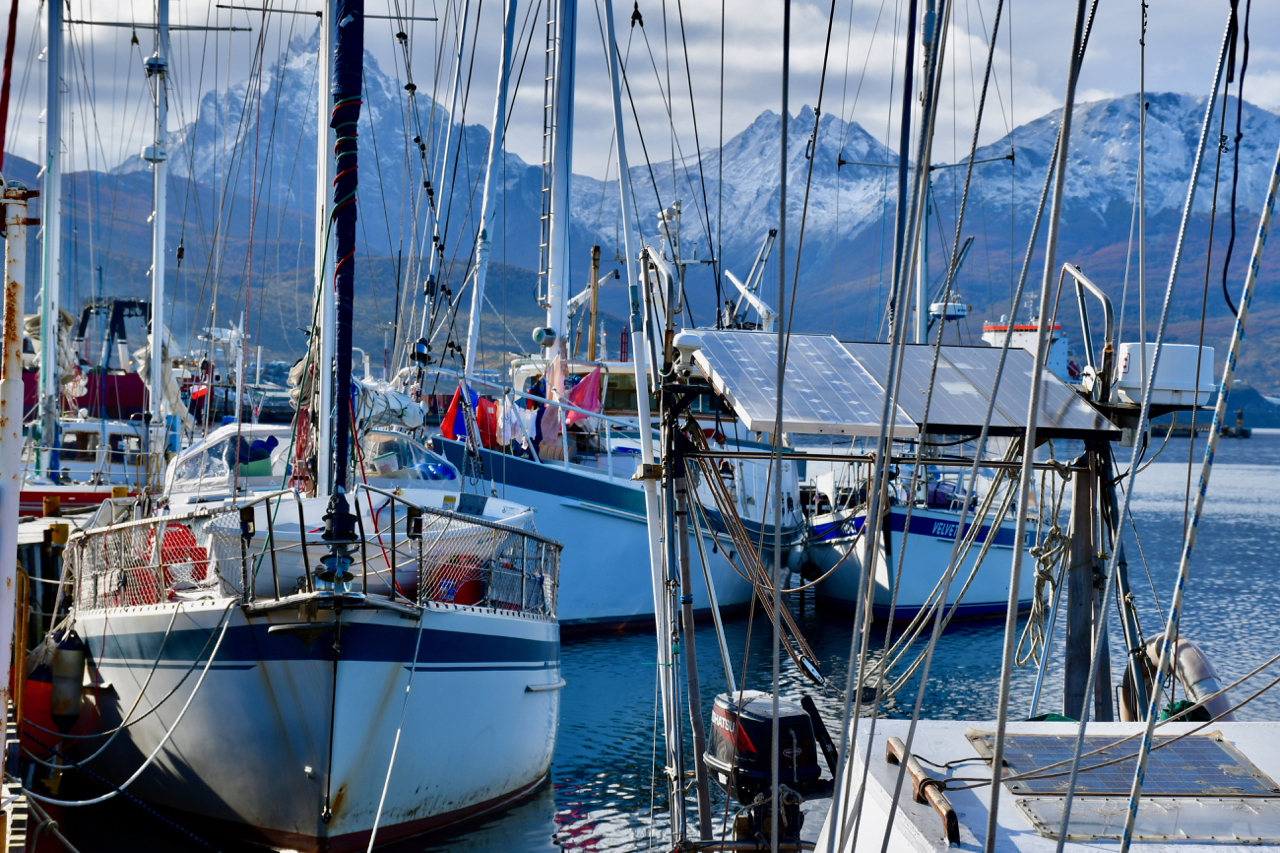
We are waiting for the sails we ordered in Hong Kong (in Hong Kong, for crying out loud!). It turned out to be easier and cheaper to order two headsails there and have them delivered than to have them made in Buenos Aires, which is 600 km away overland. A little over 4,000 dollars gone from the budget. And we only have four sails in total. The large headsail tore on the way through the Roaring Fifties of the Pacific Ocean. And the small staysail did not survive the ordeal of the Drake Passage.
The second reason for the delay is that we are waiting for Fyodor Konyukhov.
All told, we will remain in Ushuaia for another month. Why, despite winter drawing near, did we decide to wait for Fyodor?... More on that in the next report..
Thank you!
Thank you to our real shore team for supporting the expedition fund via
PayPal.me/TravelyFamily.
Thank you to Vladimir P. from Moscow, Artur Ch. from Moscow Region, Dmitry S. from Leningrad Region, and Robertas! You motivate us not to let our wings droop, to keep following our chosen course, and to inspire others.
Thank you to our support group! With you beside us, even winter doesn’t loom quite so large:)...