
From the Travely-Family archive · Atlantic
El Hierro. Arrival at the Edge of the Earth
An original publication from the former Travely-Family website. This English translation was preserved from the technical-site archive without editorial rewriting.
To the edge of the earth
At 1:45 on 9 April, Lady Mary cast off from the marina on La Palma and, with a steady light beam wind, set a course for the island of El Hierro—the very edge of the earth, as it was believed in Columbus’s day.
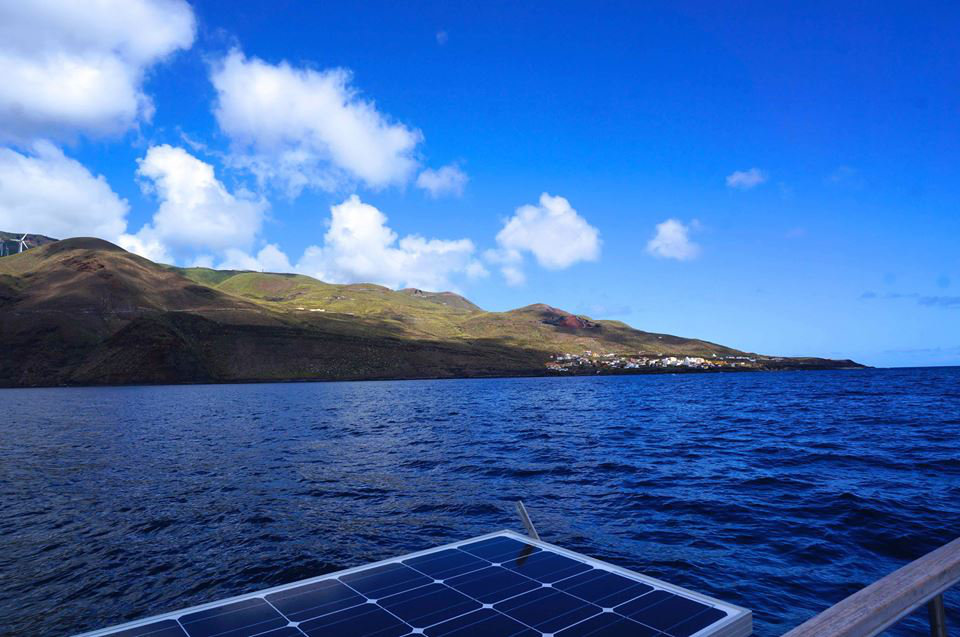
By 11 a.m., the coast was laid out before us as clear as day.
After we rounded the island’s north-eastern tip, someone unexpectedly flipped the wind switch off, and Lady Mary’s sails sagged 12 miles from La Restinga marina.
After turning in circles for a while to the slapping of the jib, we altered course by 90 degrees and headed inshore. Coming almost right up to the land offers fresh aesthetic pleasures: you can make out every grotto and wrinkle in the volcanic cliffs. The bushes and even little trees that the “northern climate” allows to grow stand out vividly green. It is astonishing that just 12 miles to the south, you will not see so much as a scraggly tuft of grass on the slopes.
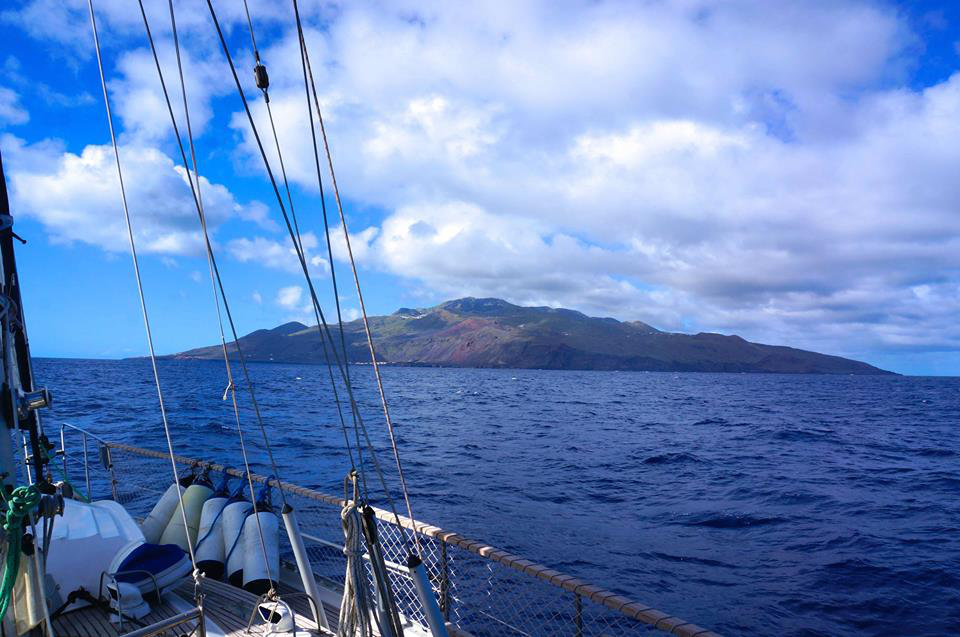
Dead ahead lay the small bay of the urban-type settlement of La Caleta.
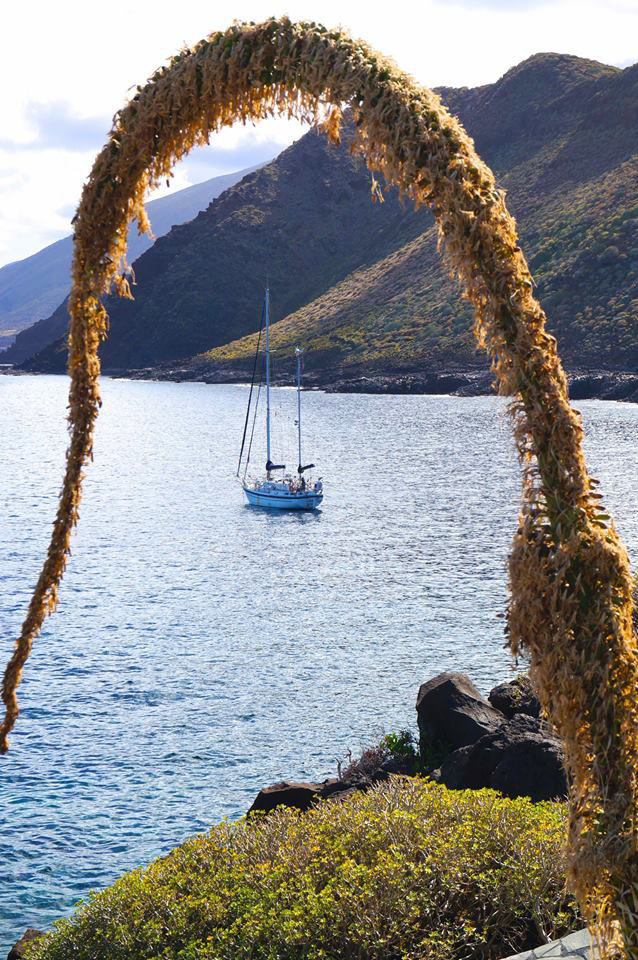
The anchor took a firm hold in the sandy bottom at a depth of 10 metres, and in our delight we immediately launched the dinghy.
Ashore
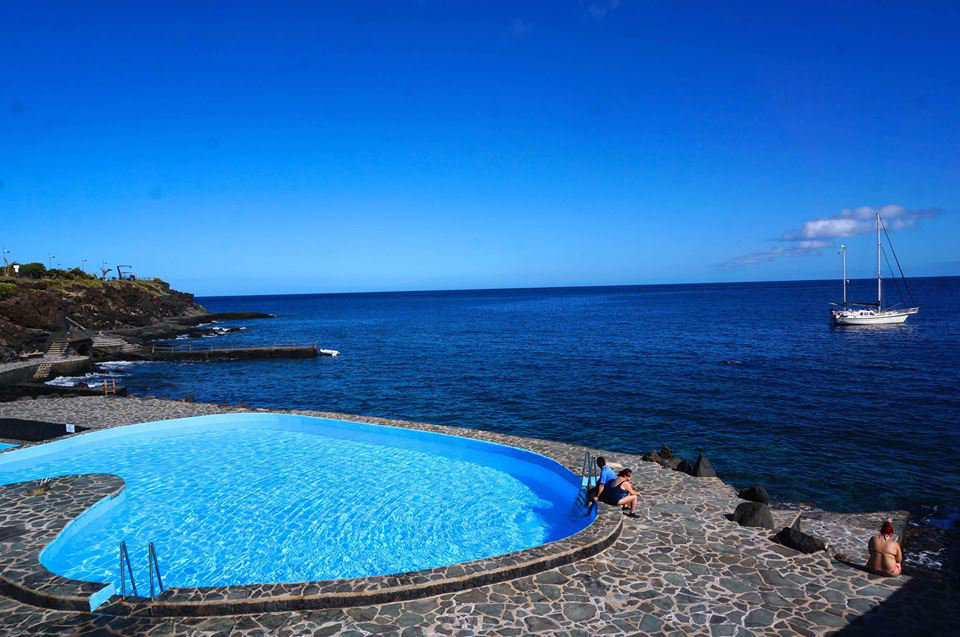
From the sea, we could see neatly stone-laid terraces, walls and ramps leading up to the road and houses. Several stairways, in varying stages of rustiness, descend into the ocean. Nastya could not resist and rowed ashore for a quick look. On her return, our young sailor was jubilant: “Mum, Dad, there are swimming pools there! I want to go—let’s go!”
We cooled our daughter’s enthusiasm a little, suggesting it might be private property of some kind where outsiders were not allowed to swim. But we went to investigate all the same.
To the children’s immense delight, the beach turned out to be public, clean and unusually well appointed. The amenities include a shower, greenery and three seawater pools (including a children’s pool) with blue walls. Signs strongly advise against diving from the poolside and ask that pets be left outside. Beneath a canopy is an altar to the Virgin Mary (so people have somewhere to pray if the need takes them right there on the beach).
Fortunately, there are very few people. Several quiet groups are sunbathing, while a trim elderly lady clocks up the kilometres with a professional front crawl.
While the children swam until they turned blue and the captain read aboard the yacht, the first mate retied the dinghy several times: it happened to be moored to the very ladder from which kayakers (one) like to launch their craft and divers (three) like to enter the water.
During these mooring drills, I met Peter, a German from Frankfurt who was spending the winter on El Hierro. Laughing, he told me that this island was the best place in the world because it was not far away, clean in the European manner and, most importantly, sparsely populated. He warmly offered to give us a lift to the airport to collect a hire car (it seems they are available only there). I politely declined, citing the captain. And so, while we chatted, my skills in tying knots and rescuing the dinghy from the shore break were honed and fixed in place for good.
Our crew welcomed the dusk in the cockpit. We lit the brass anchor lantern (the same antique, heavy one that likes to wrench the cupboard door off in a heavy swell) and settled down on the soft cushions to lounge about, make music and chat to the cries of the gulls.