
From the Travely-Family archive · Other Entries
Leaving for Chile. Farewell to Ushuaia
An original publication from the former Travely-Family website. This English translation was preserved from the technical-site archive without editorial rewriting.
Leaving for Chile. Farewell, Ushuaia.
How we caught luck by the tail and made it all the way to wild guanacos! Beaver dams, icy lakes, a curious fur seal. How much it costs to send mail from the end of the world. People and strikes—and how they affect departure time.
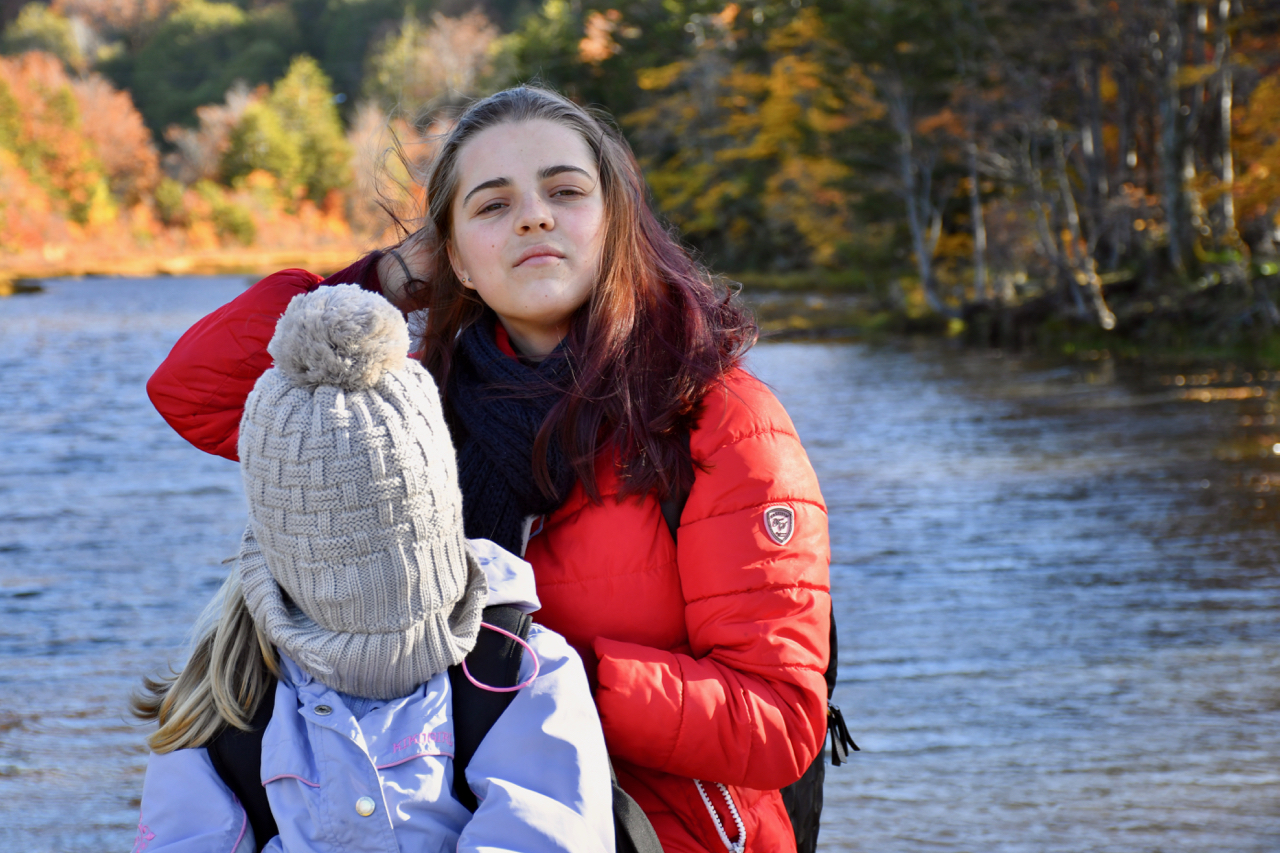
A few words about the road trip. It begins— here >>
It’s winter, all right. The sprayhood over the yacht’s companionway is sticking up stiffly in the frost. The metal steps down to the pier are coated with a crust of ice. The hoarfrost is fluffy and Christmassy.
Careful on the pontoon! I shout to our young sailor.
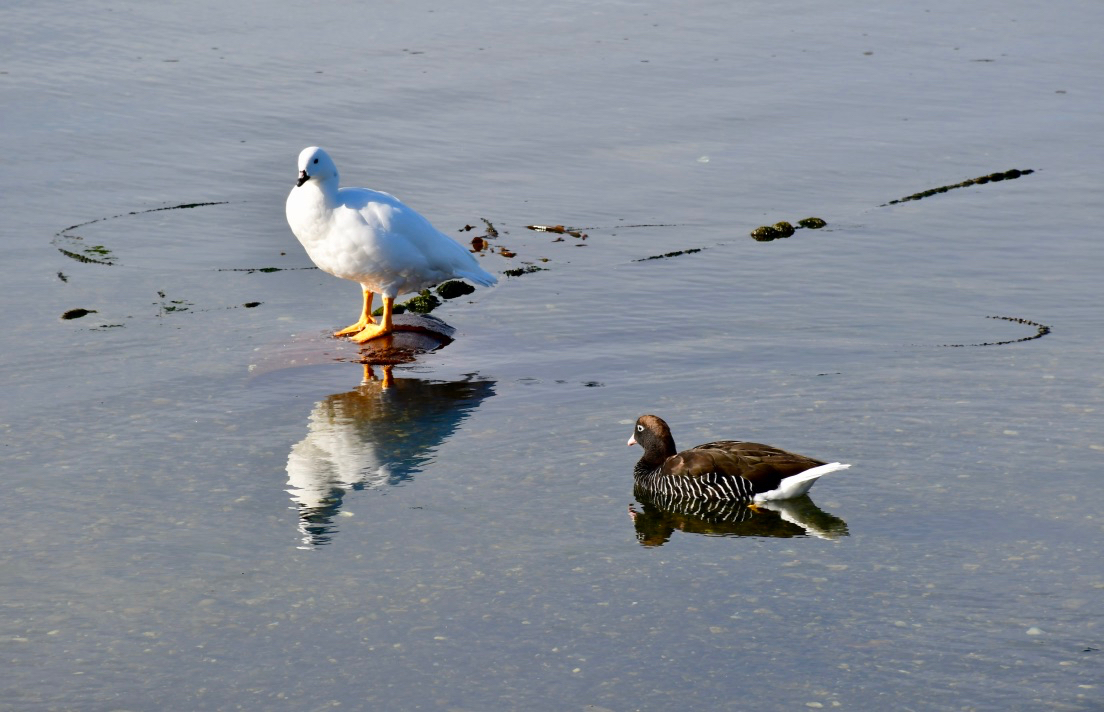
Her boots sliding apart, she skates towards shore. A bittern takes off right from under her feet, out of its lair beneath the decking. Of course, it may not be a bittern, but it’s definitely not a heron. Grey, big-beaked, well-fed, mottled, long-legged, and fond of hiding under the pontoon boards. What is it? We call it a bittern. The local “bitterns,” upland geese and other herons are special. They live right in town and aren’t afraid of people. Well, hardly. Unless someone comes clomping along their favourite pontoon in heavy boots.
We skate along the pontoon boards. A thermos under one arm, oranges and apples in a bag. The map is in my head. The anticipation of hot coffee makes my stomach rumble.
On shore, a frost-covered car awaits us, along with that long-forgotten business of “warming up the car.” The frost on the windows reluctantly begins to melt, and we roll through the crisp morning to the bakery on the main street. There are puff pastries and takeaway cappuccinos in paper cups.
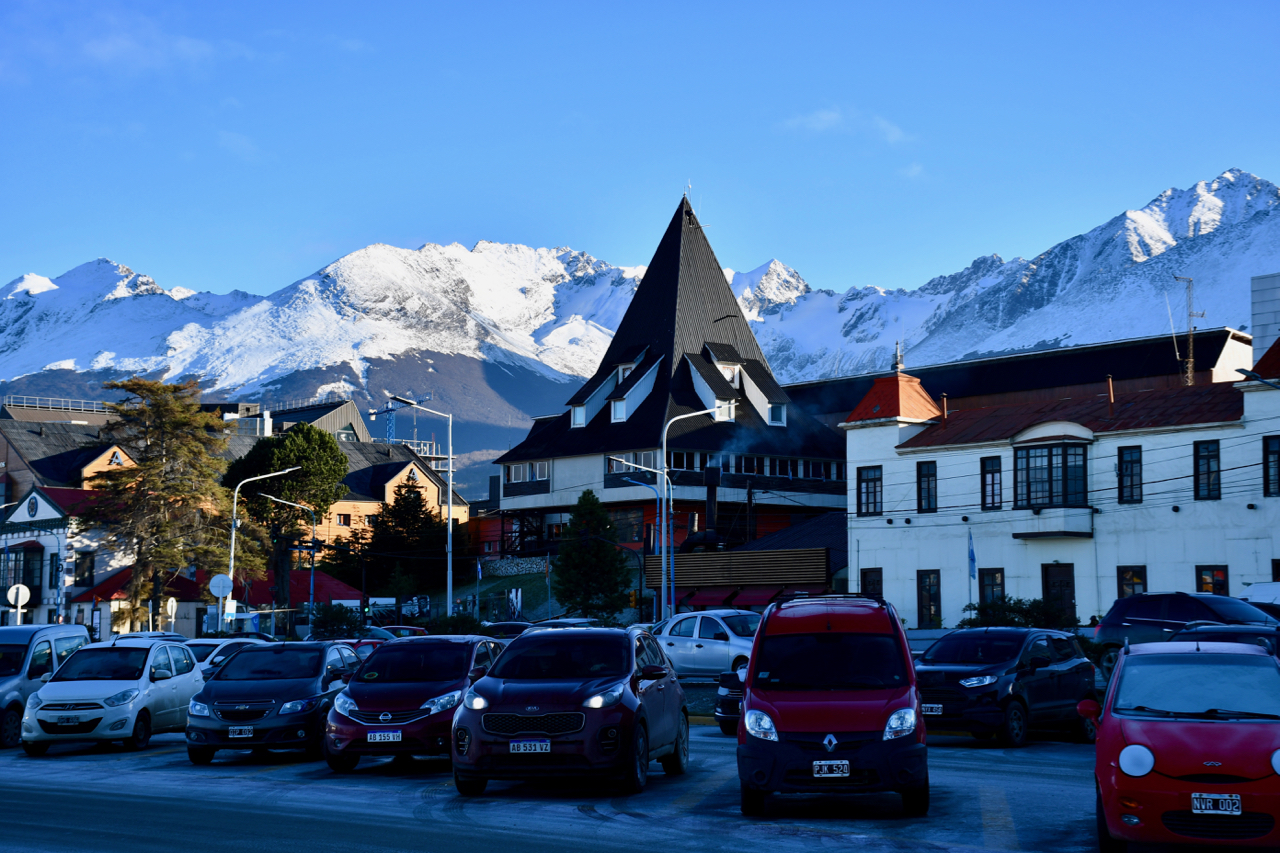
Frosty Politics
It’s a good thing we chose the last two days for the trip: the nighttime frost is only just getting going and doesn’t bite too hard yet. During the day, the road thaws beneath the lazy southern sun, so we can avoid surfing on black ice. Specifically, “daytime” amounts to about seven hours—eight at a stretch—out of the entire twenty-four. In a month, it will be a couple of hours shorter. But for now—step on it! We need time to see the oldest estancia in these parts (a hacienda, in other words), feast our eyes on dams and beaver lodges, and reach the southernmost tip of Argentina. The southernmost, that is, if you don’t count the chunk of Antarctica whose sector the Argentinians have elegantly declared their own.
The yellow sector is Argentinian
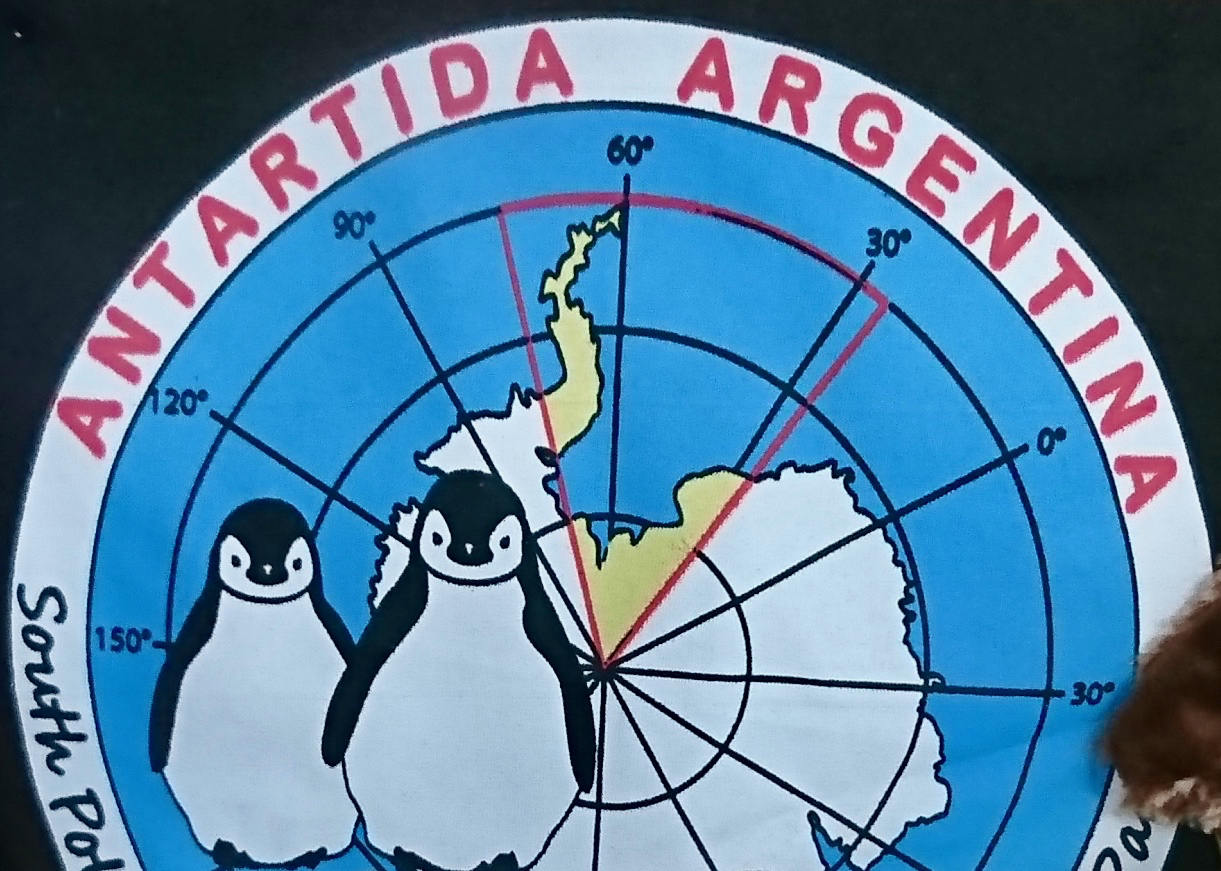
What about us—are we chopped liver? the Chileans retorted. And they marked off a wee bit for themselves between the 90th and 60th meridians. For growing tomatoes!
So what happened? The sector of Antarctica that the Chileans declared their own partly overlaps Argentina’s sector of the Antarctic Peninsula. Compare the two pictures:).
The Chilean sector
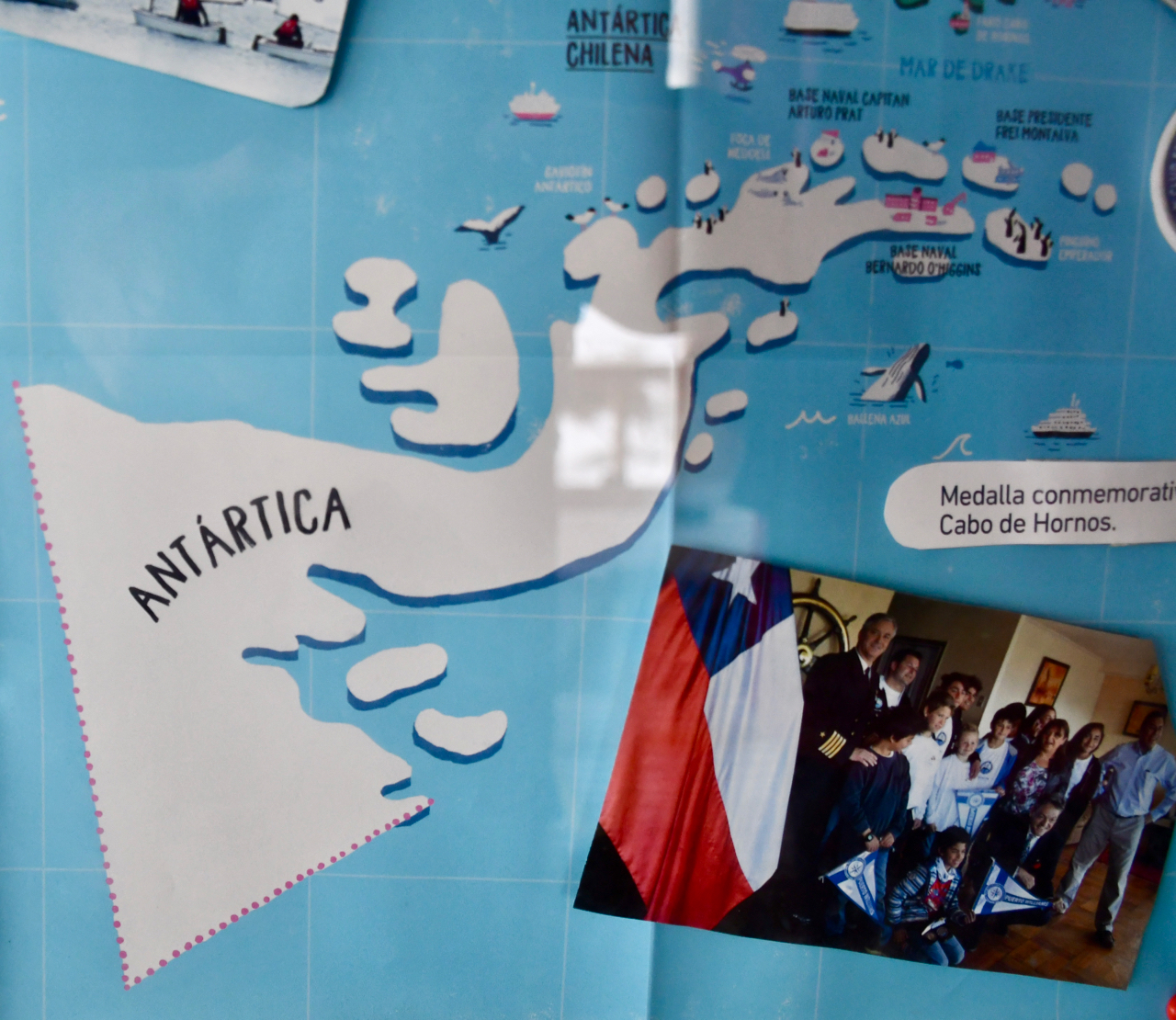
We don’t know who will win. In the meantime, the two great Antarctic powers behave like neighbours pretending they barely know each other. But Argentina genuinely wants nothing to do with the United Kingdom. There’s even a sign on the main pier in Ushuaia: “Mooring prohibited for English pirate vessels.” Yep. That’s because the Argentinians call the Falkland Islands the Malvinas, consider them part of Tierra del Fuego Province, mourn them ceaselessly, and refuse to forgive Elizabeth for their unlawful annexation. Though it seems the only weighty argument for why the islands should be Argentinian rather than British is their physical proximity to Argentina.
Meanwhile, our pickup truck is heading south along a dirt road, while a request for guanacos is beamed straight from it into the cosmos—the very creatures whose meat turns bitter if they have “run too long” (Jules Verne, In Search of the Castaways). In summer they’re often spotted around here, but in winter they’re almost impossible to find.
“Guanaco, come to us!” we shout through the open window, waving a student ID card. Well, students will surely remember that old joke about calling for good luck before an exam..
The Oldest Estancia
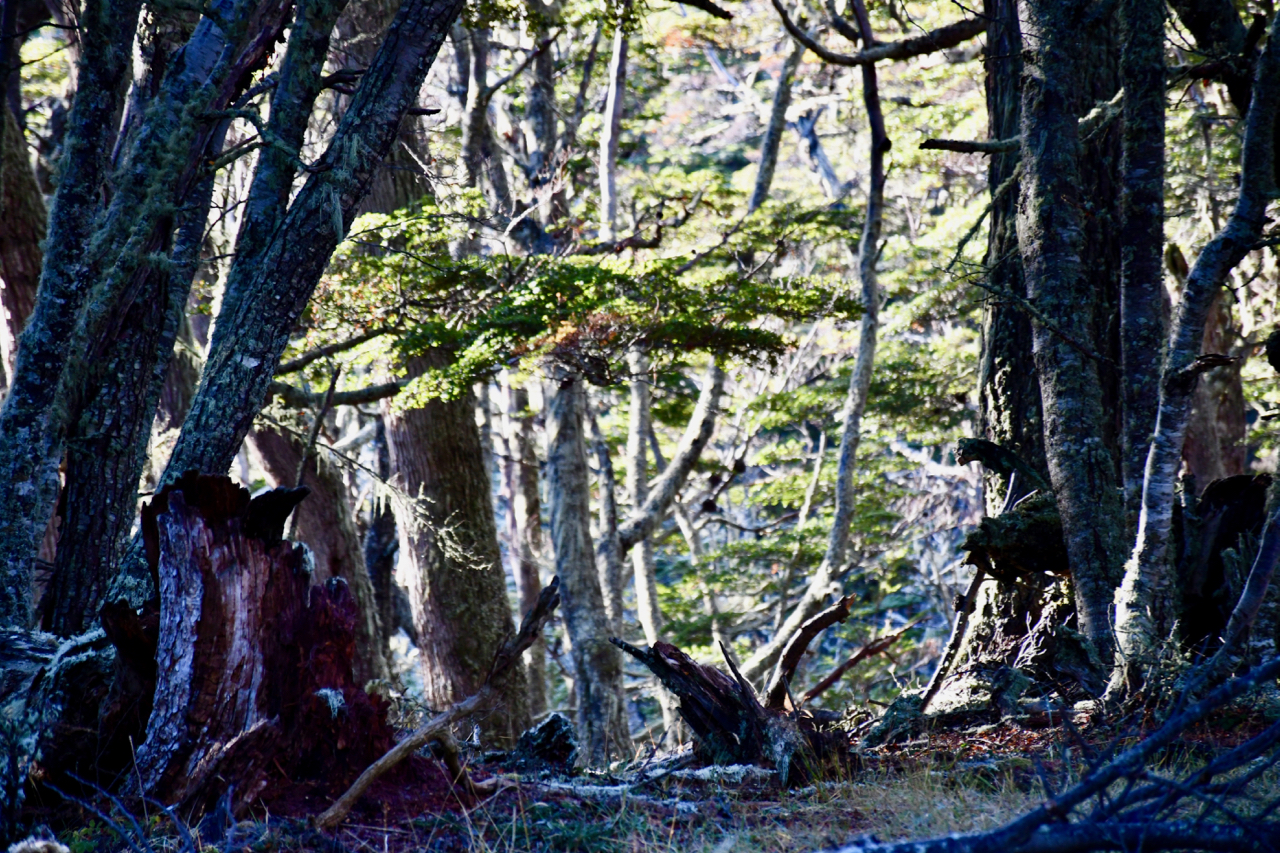
The estate with the non-Spanish name Harberton is reflected in a cold mirror. Over time, it grew from a single house and now occupies a good half of the shore. Somewhere out there, a whale skeleton lies on the grass, while inside you can sample a guided tour and local fare. But at the beginning of winter daylight ends at five in the afternoon, so we drive past without saying hello.
The silence rings. The dense air hangs serenely over the lake. You’d never guess that a mile away, on the shore of the Beagle Channel, fierce winds are still bending the flag trees, carrying airborne kisses all the way from New Zealand towards Cape Horn, and seasoning the squalls with currents of air spilling down from the Andes.
Beavers Are Kind to Their Kits
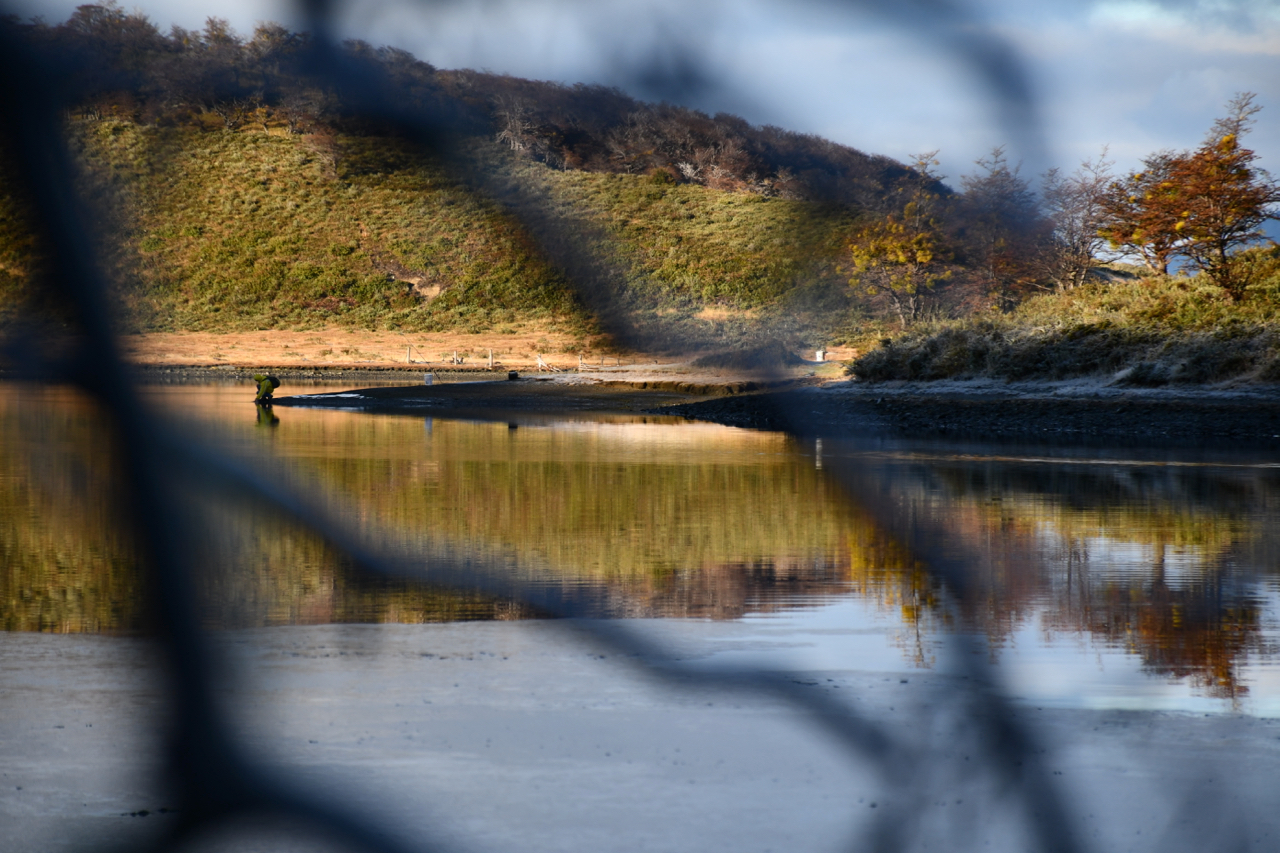
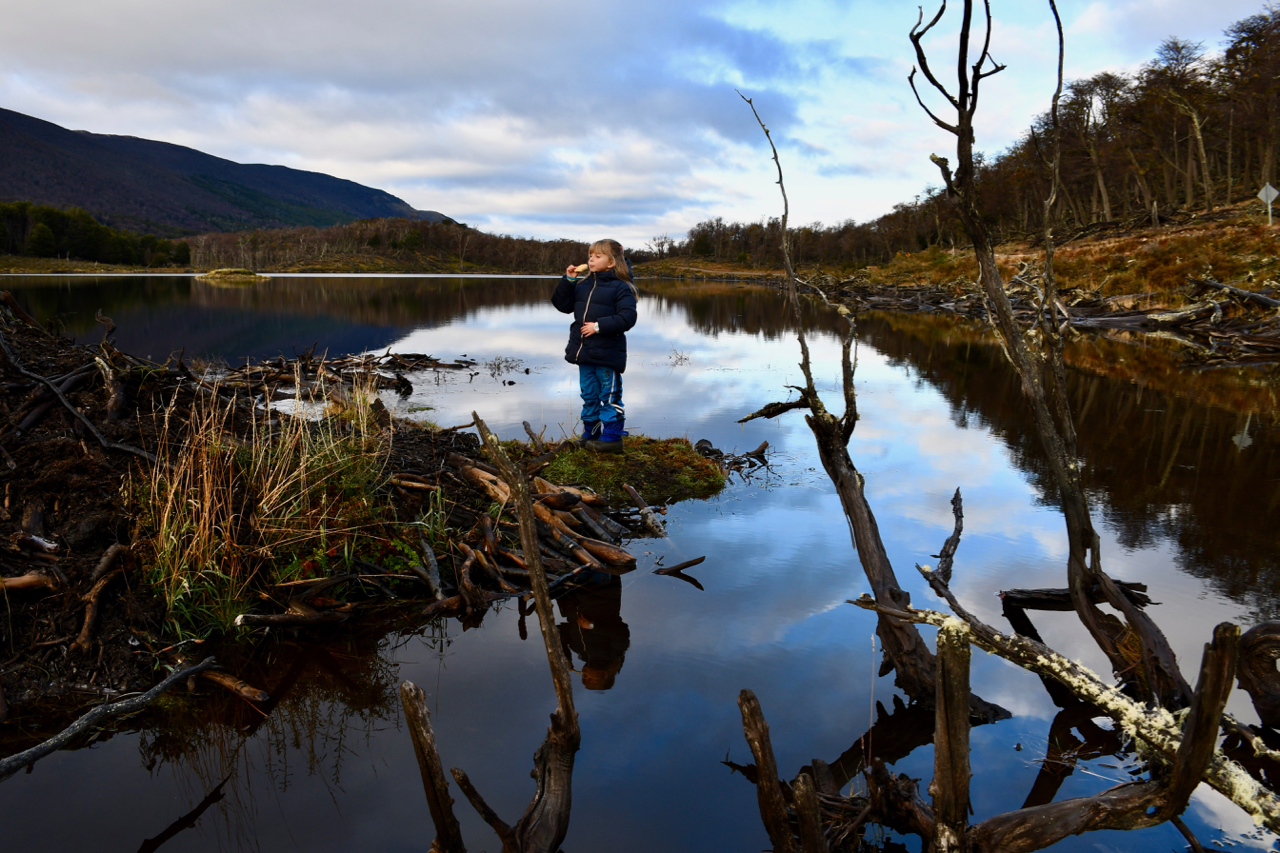
Two forests, one evergreen and the other bare, embrace the dirt road together. The fallen trees inspire the first mate to give us a mini-lecture on windthrow. Though the hand of the storm isn’t obvious here; it looks more like the work of beavers. Beaver dams and lodges hint at the presence of someone highly intelligent. And thick trees jut ominously into the sky, balanced on slender sections of trunk that haven’t quite been gnawed through.
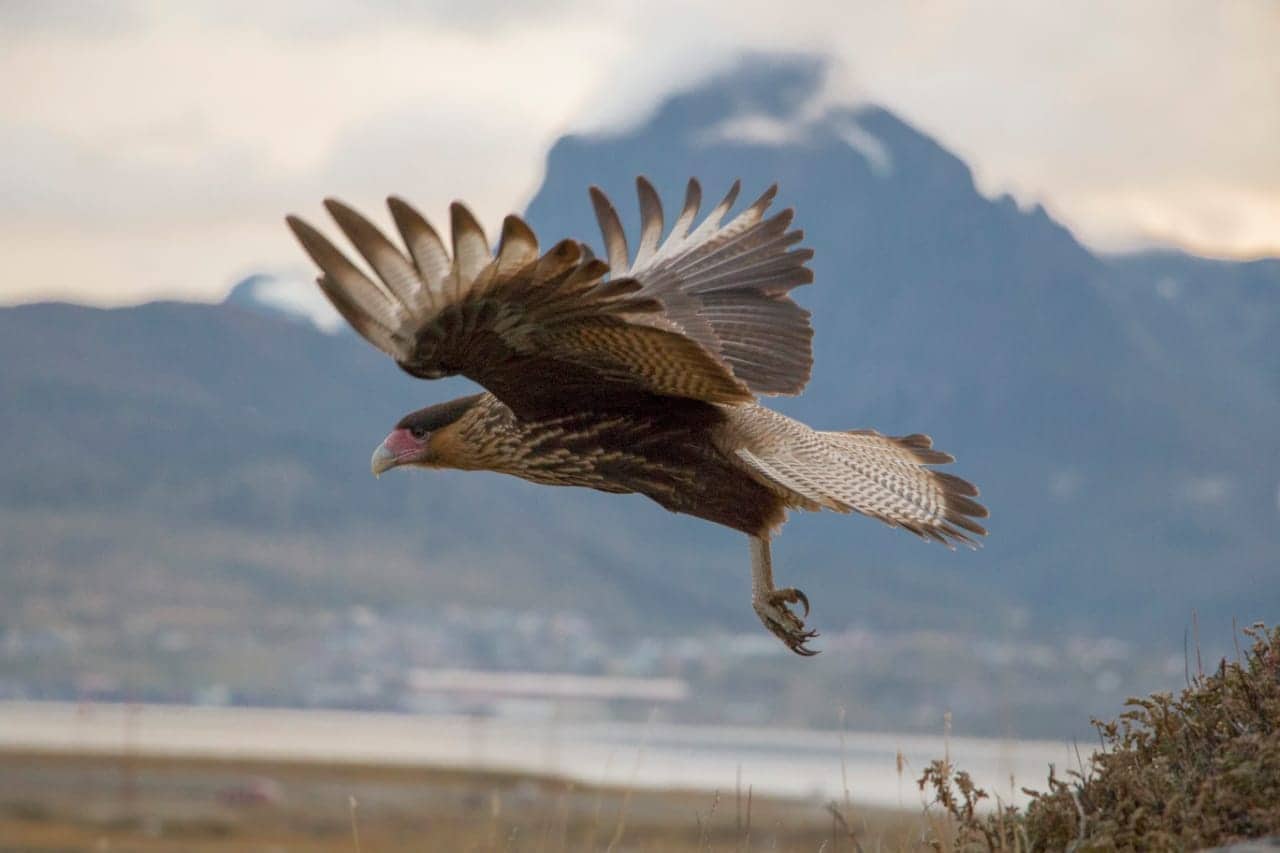
What a spokesman for Blend-a-Med toothpaste! To saw through a trunk so thick you can barely get your arms around it, you’d have to brush your teeth with some calcium-enriched stuff in a state of pure ecstasy. If only we could look one of them in the eye—or rather, in the teeth. But only small southern crested caracaras rise from the withered grass. With the speed of arrows shot from an Indigenous bow, they vanish beyond the treetops.
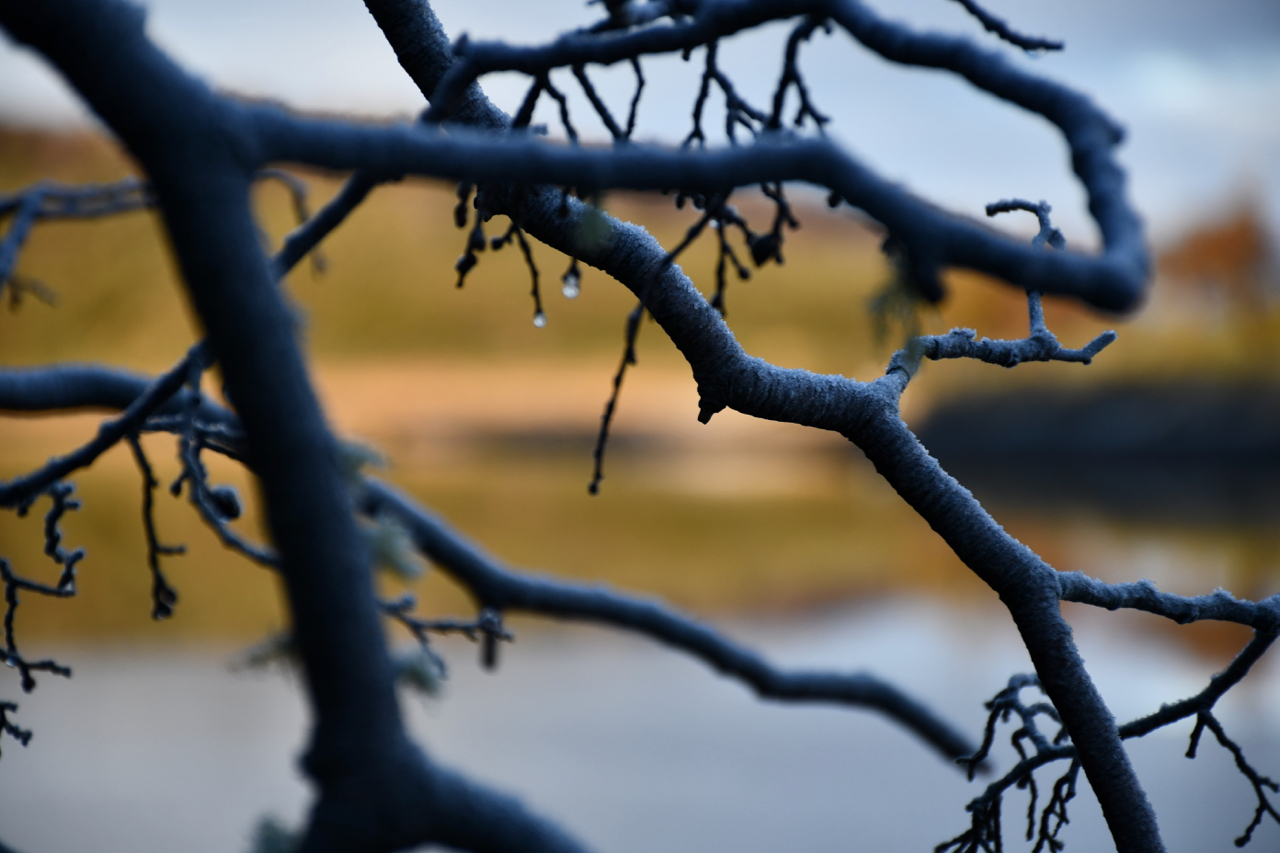
Photo by Sergey Ostrovsky
The coves conjure up images of Yaghan and Selk’nam canoes. The road emerges onto a cliff. On the far side of the Beagle Channel drifts the southernmost village in the world, on whose outskirts lives the last of the Yaghan people. In just a few days, we’ll leave Ushuaia and sail there, to Puerto Williams.
About the Fur Seal
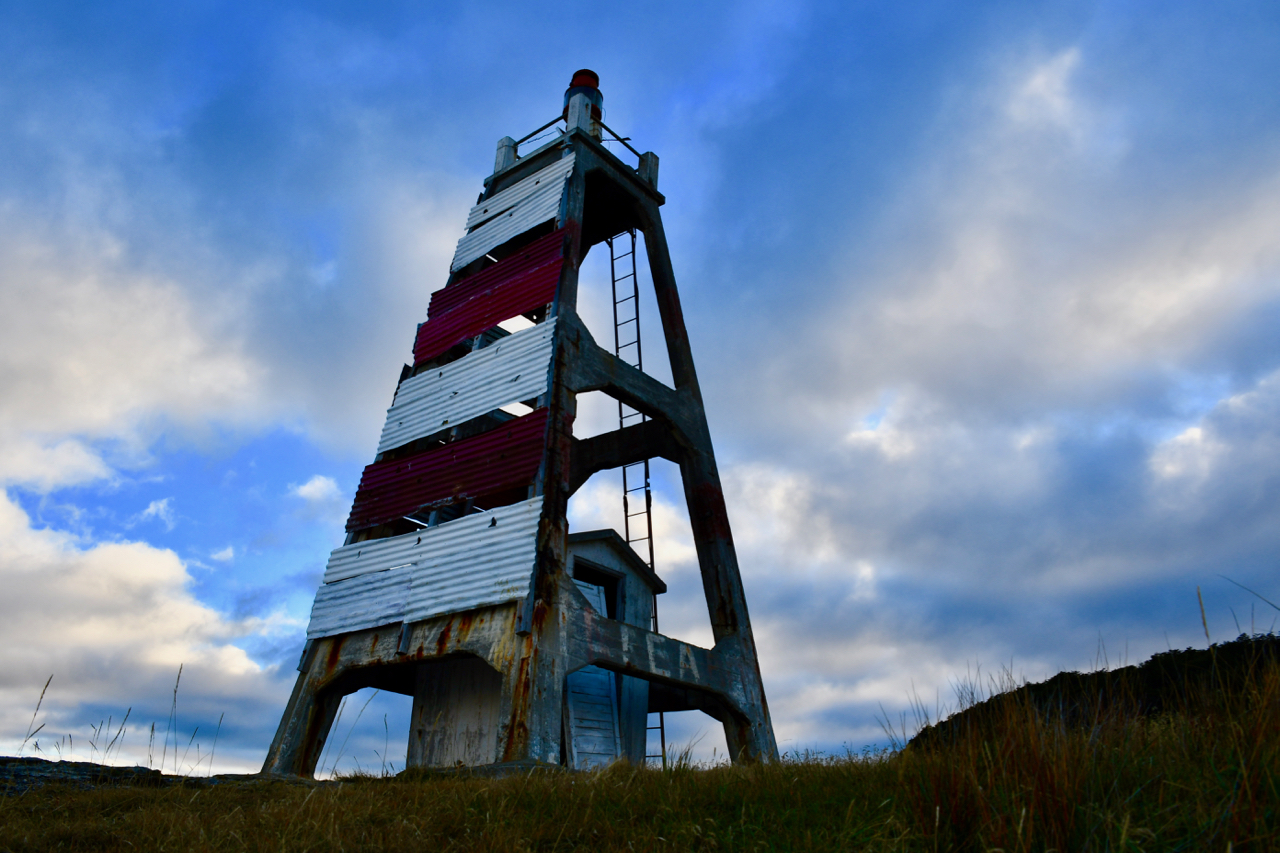
The dirt road silently continues its advertising campaign: “The Most Beautiful Views of the Beagle Channel.” The southernmost accessible lighthouse is also here, at the end of the world.
The southernmost lighthouse in the world
And a little concrete pier with steps leading down into the channel beckons the walruses among us to go for a swim. While the captain walks across a carpet of black mussels, the curious face of a fur seal surfaces a metre away. It stays there for ages, half out of the water, until Andryukha finally realises he needs to turn around and see who’s there. After looking the captain in the eye, the fur seal immediately loses interest in him and dives into the sprawling jungle of seaweed.
Our young sailor by a beaver lodge
Guanacos
On the way back, the captain finally gives the long-awaited cry:
“Guanacos, guanacos!” And through the windscreen we see two graceful Patagonian camelids, which of course don’t wait for us to aim our cameras at them.
Then heavy lorries emerge from one of the cleared construction sites and scare away every living thing. But we forgive them as we recall the shaggy backside and graceful neck of the guanaco disappearing into the evergreen beeches.
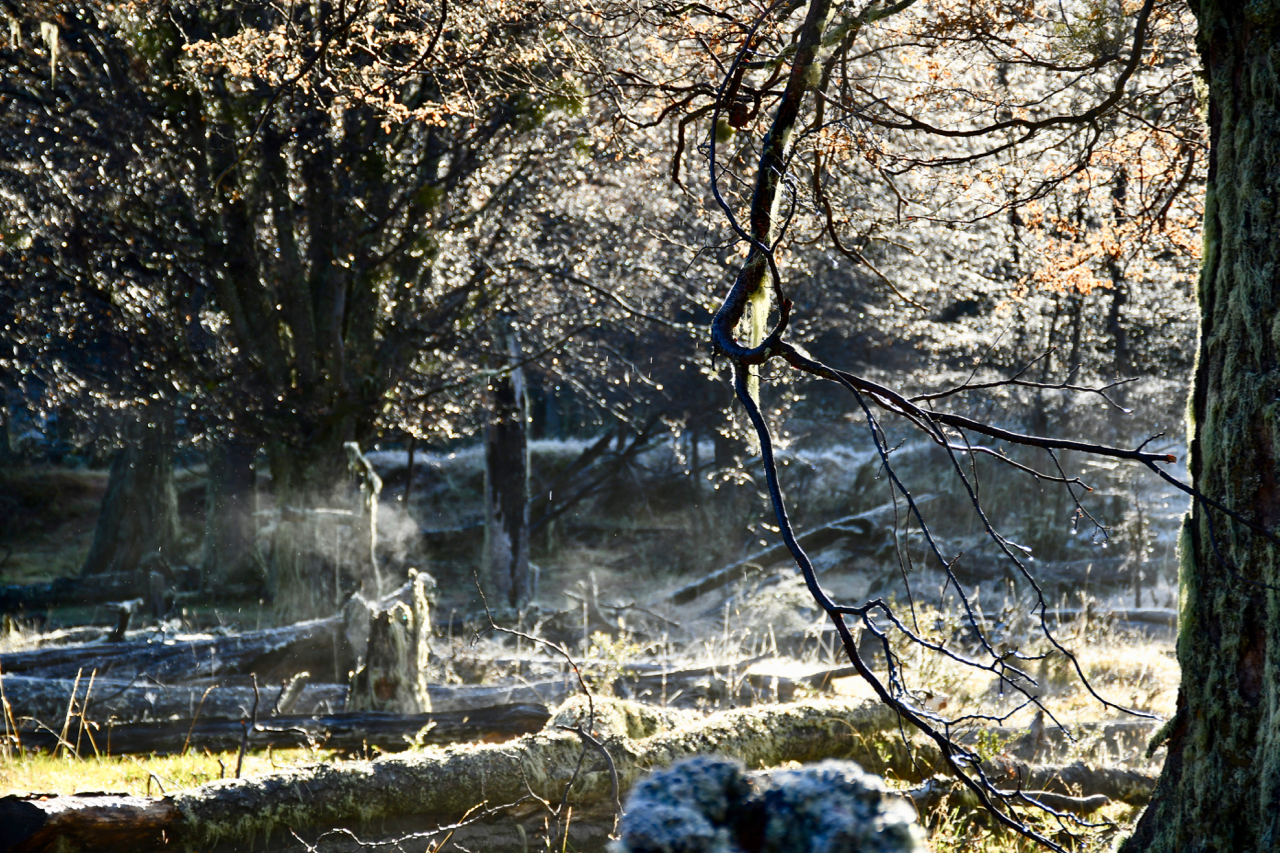
Well, you understand why there’s no guanaco here, and only a branch swaying, don’t you? 🙂 Ushuaia and Plans
We return to the city in the evening, and for one last time before leaving civilisation, our young sailor drags us to the shopping centre’s amusement arcade. Together we race a motorbike, then Ladunya tops herself up with bowling, virtual reality and assorted basketball arcade games. I sit there thinking what a blessing it is that evenings like this are rare for us—if you spent every weekend amid this frantic noise and crush, when would your soul ever get any rest?
It says this is the end of the world 🙂
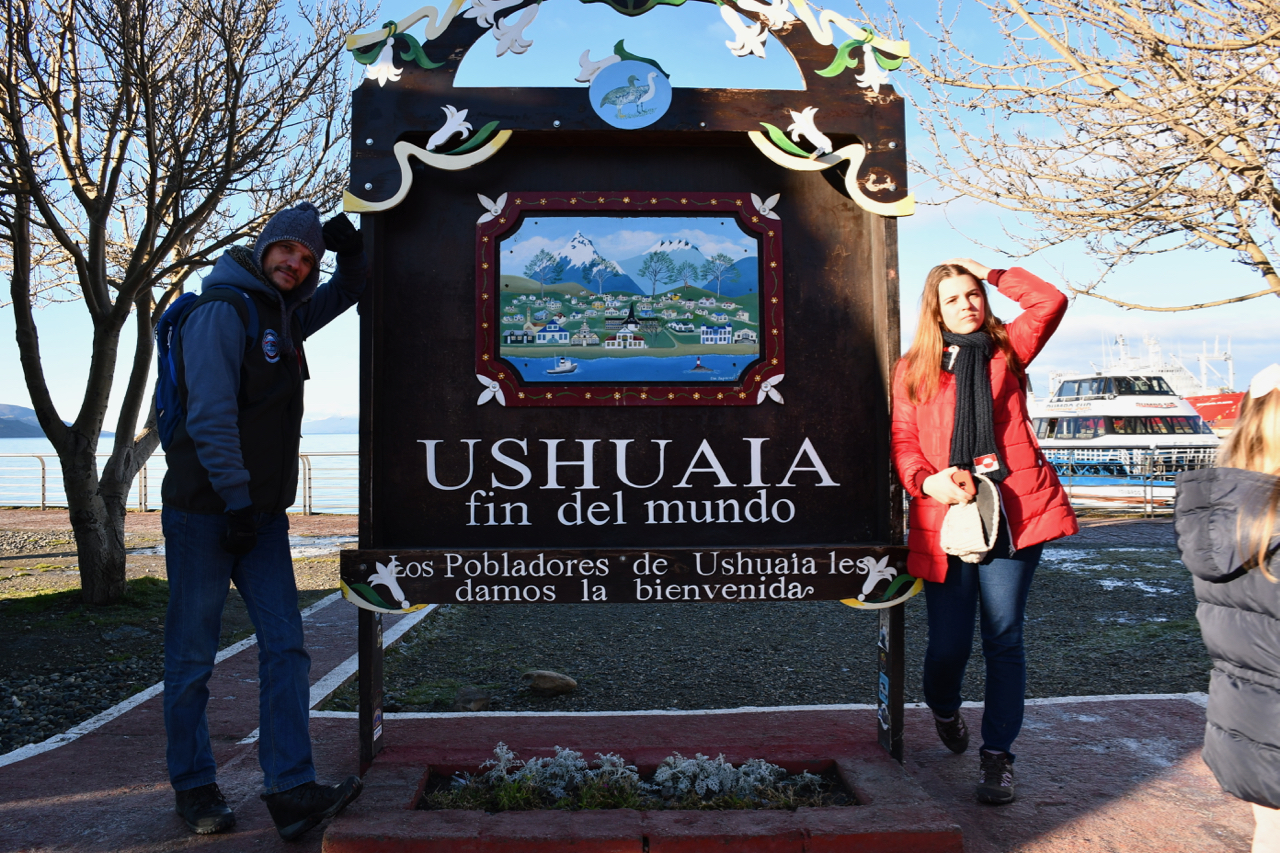
The final flourish with the car is to fill the holds with provisions for about four months. The forward cabin has become a storeroom again. The next major restocking will be in Cape Town. For now, thinking about it makes me anxious—where we are, where South Africa is, and what season it is now... all of it is worrying. If, during the passage of more than 5,000 miles (10,000 km), we can’t stop at the islands of Tristan da Cunha—which, incidentally, lie on the 37th parallel, beloved by both us and Jules Verne—the passage will once again stretch to almost two months. And two months in the Southern Ocean in winter is not for the faint-hearted.
The Russian Community and the Visa Question
Before leaving Ushuaia, we manage to make friends with the small Russian community and enrol our young sailor in ballet. Tatiana, the honorary consul’s wife, has been teaching choreography to the girls of Tierra del Fuego for twenty years. What a pity we only woke up to it on the eve of our departure! And Sergey and Lorena have two wonderful sons, native-born Argentinians Viktor and Nico. Lada grew very fond of them. She hadn’t met any Russian-speaking children since Tahiti. The boys don’t come across Russian junior sailors all that often either. As a farewell gift, Sergey gave our young sailor a stuffed penguin. We named him Nico Viktorovich after the boys, and now Ladunya can’t fall asleep without him.
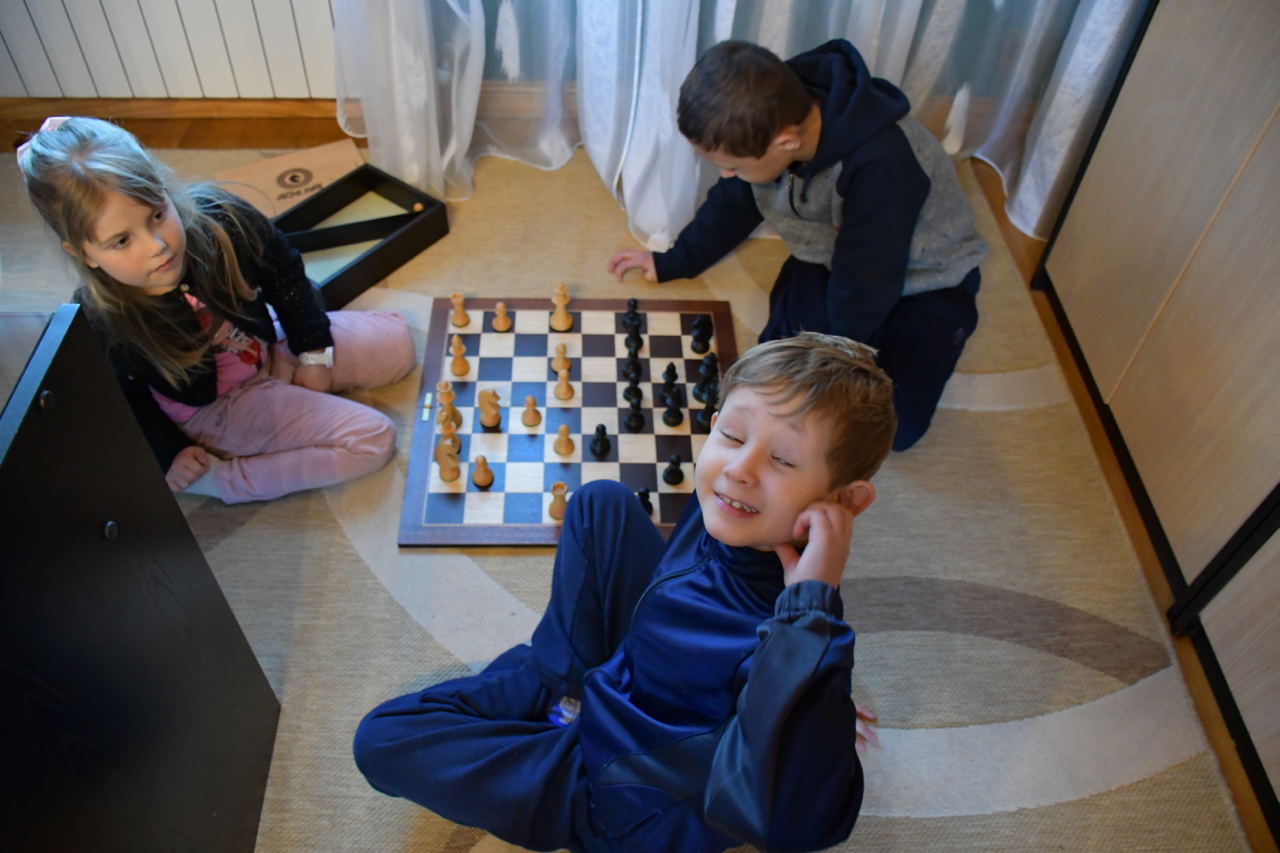
Lada, Viktor and Nico—future grandmasters—visiting the honorary consul in Ushuaia
The Russians at the end of the earth deserve a separate report—their stories are far too interesting. But for now, we cast off and leave for Chile: our visa-free stay in Argentina for this year has expired. We’ve used up every day allowed under the visa rules.
To extend our stay, we’d have to pay 2,700 pesos per person for the next three months. That’s about 20,000 roubles. A bit much for the two weeks we’re planning to stay.
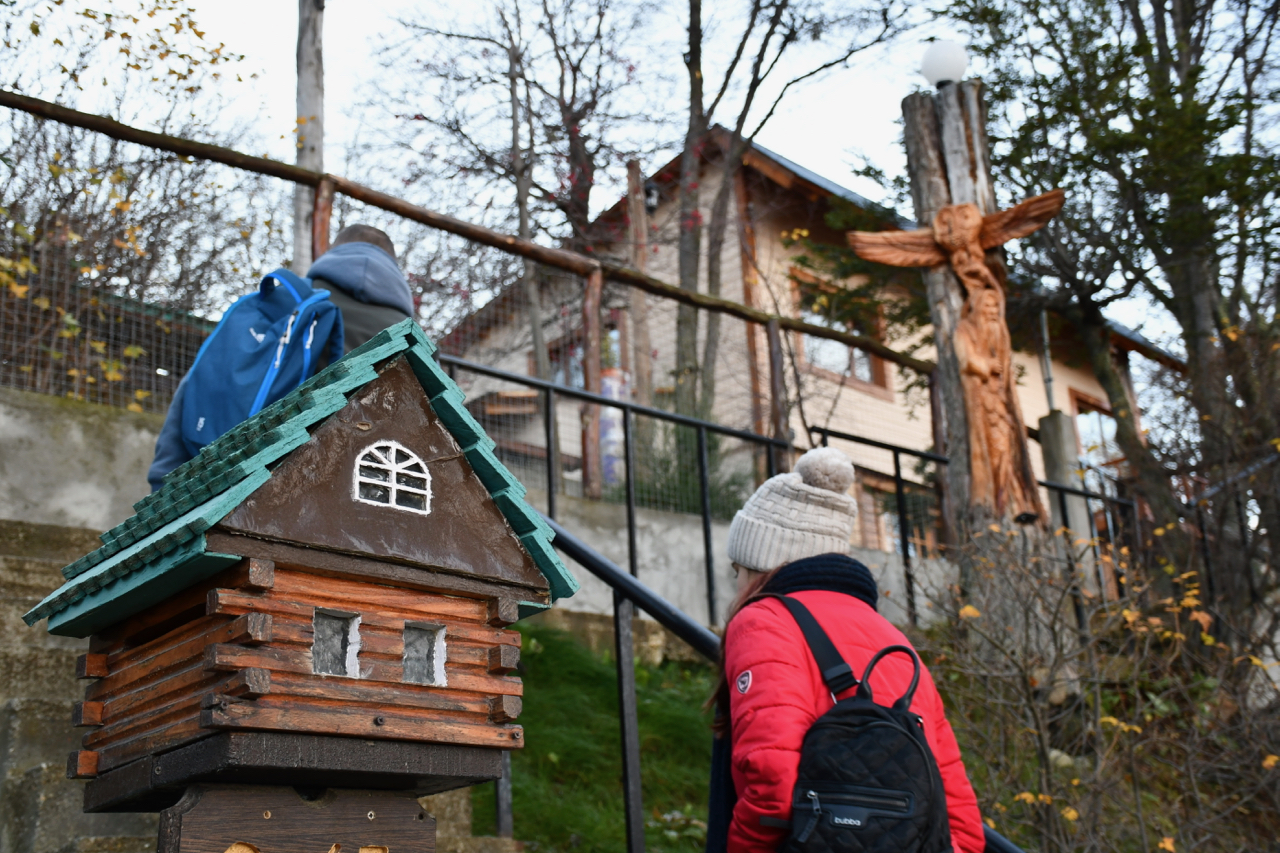
Outside Yuri’s house—the honorary consul in Ushuaia
The Strike, Farewells and Russian Post
The day before our departure, there was a strike in Ushuaia. They’re in a crisis, and the people are rebelling in a civilised fashion.
Today we’re dealing with the aftermath of the strike: the queue at the post office is as long as the one for Lenin’s Mausoleum, while Immigration has simply gone into hibernation. It’s not the season, after all—why sit on duty in the office when you can sleep at home until about eleven? It doesn’t get light until ten anyway.
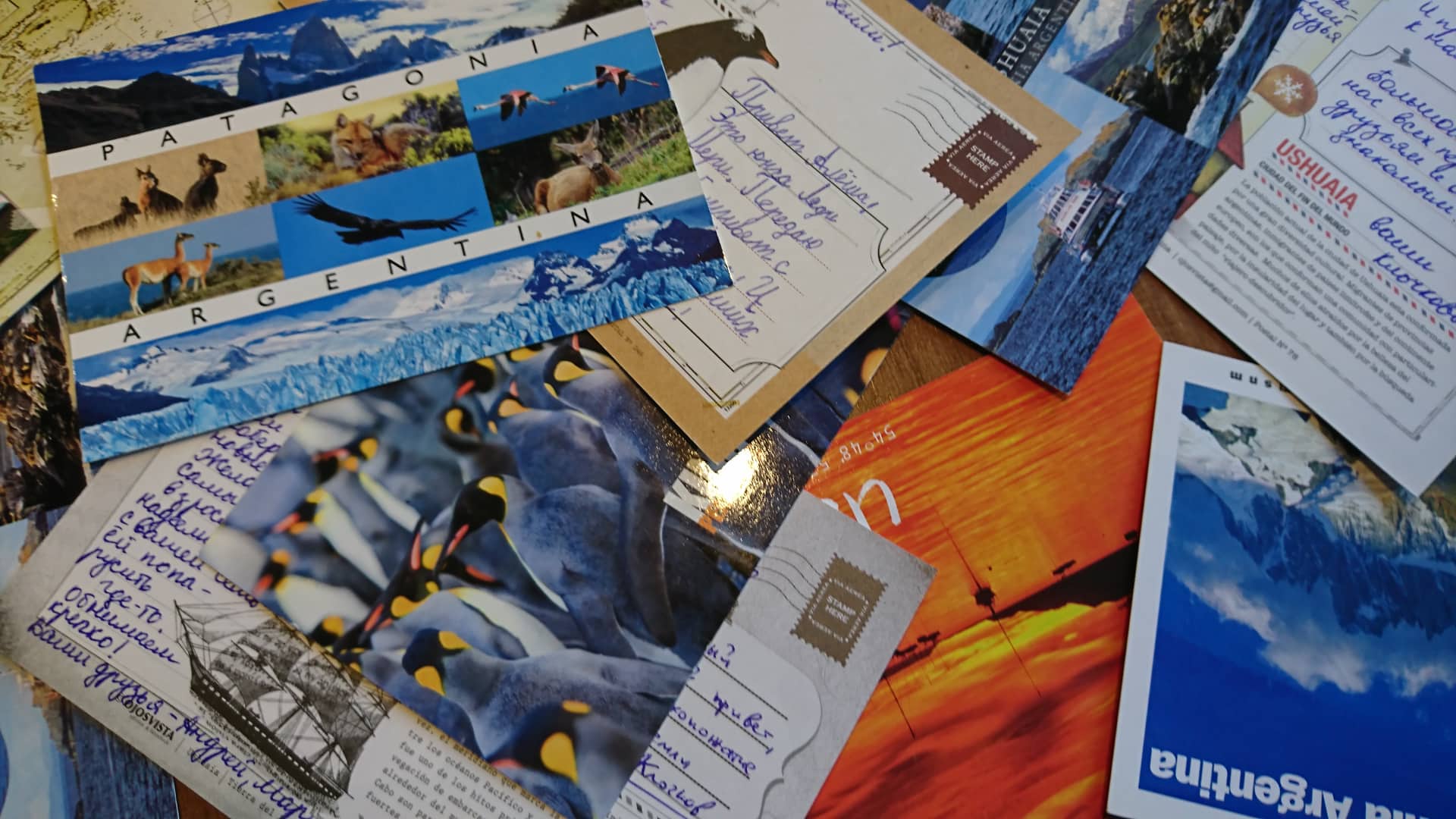
In theory, we should already have cast off and be tossing our caps into the air to the strains of Farewell of Slavianka. In reality, we’re standing outside Immigration and industriously licking five stamps for each of fifteen postcards.
Do you know how much it costs to send fifteen letters from the end of the world? The stamps alone cost 3,000 pesos. That’s about 5,500 roubles. Plus 50 pesos per postcard, and an envelope. Eight thousand in total 😊. And there’s no guarantee they’ll arrive. From what we’ve seen, about 30 per cent of the postcards never reach you, all our dear ones.
Maybe we should go on strike too?
Mail from the official end of the world
We said goodbye to our beloved Roxana, and only Sergey Ostrovsky stayed to see us off. He also took these rare photographs of us aboard the yacht from the outside. We left for Puerto Williams, Chile. Thank you to everyone who made our time in Ushuaia and Antarctica so unforgettable!
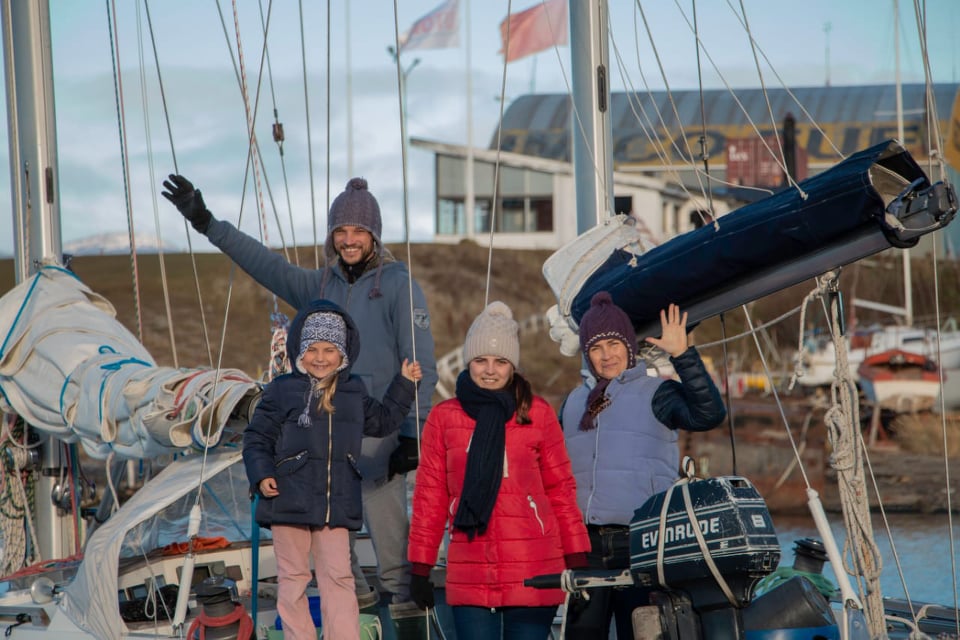
The children and we are sniffling...
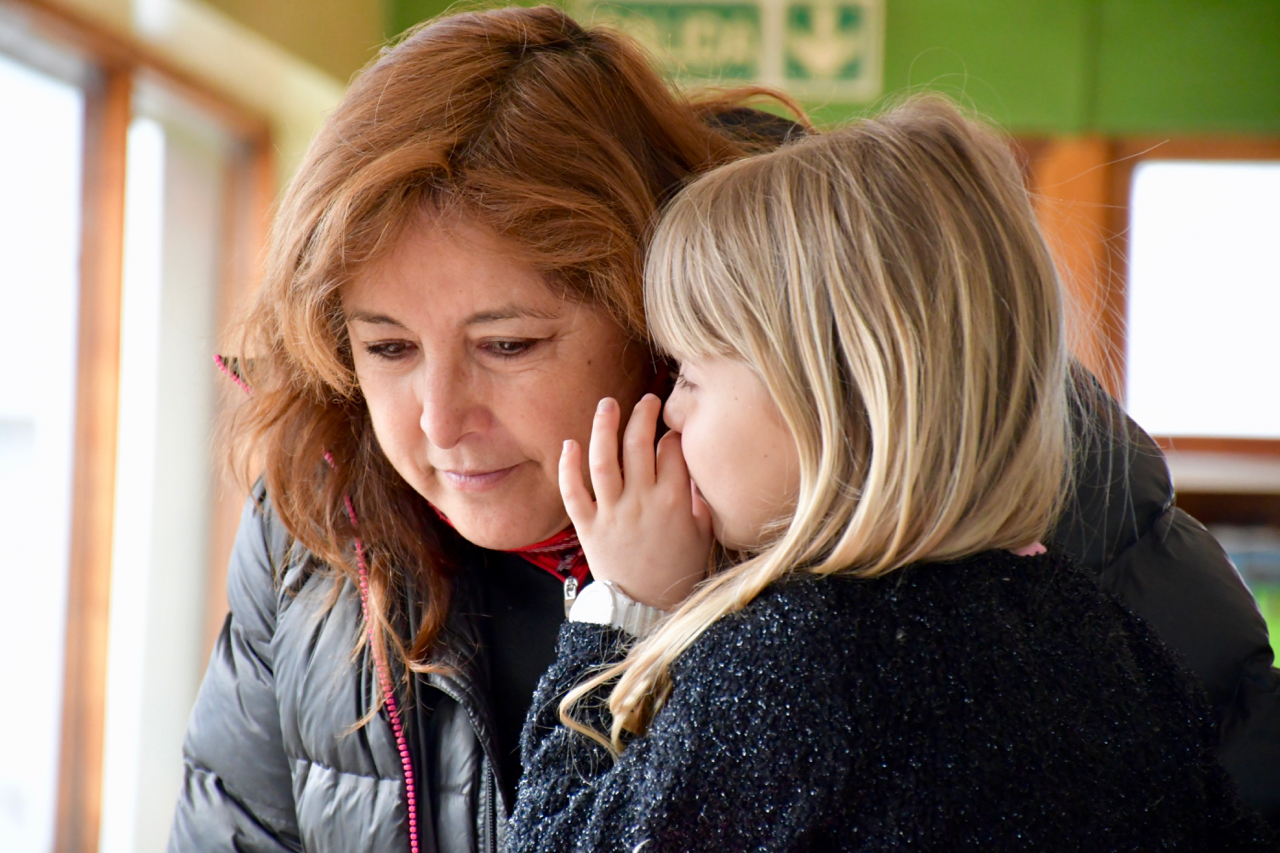
Ladushka and Roxanushka whisper secrets to each other in English
Thank you, all our dear ones, for your comments and letters. The feeling that we have so many kindred spirits and friends warms us deeply and gives all this meaning.
Our heartfelt thanks for supporting the expedition through PayPal.me/travelyfamily go to Artem K. from St Petersburg, Vladislav E. from Simferopol, and Anna D. from Kazan. Guys, you truly are our shore team, our solid support back home. It’s thanks to people like you that the boldest projects become reality! Hugs from the southernmost settlement in the world. May your dreams come true!
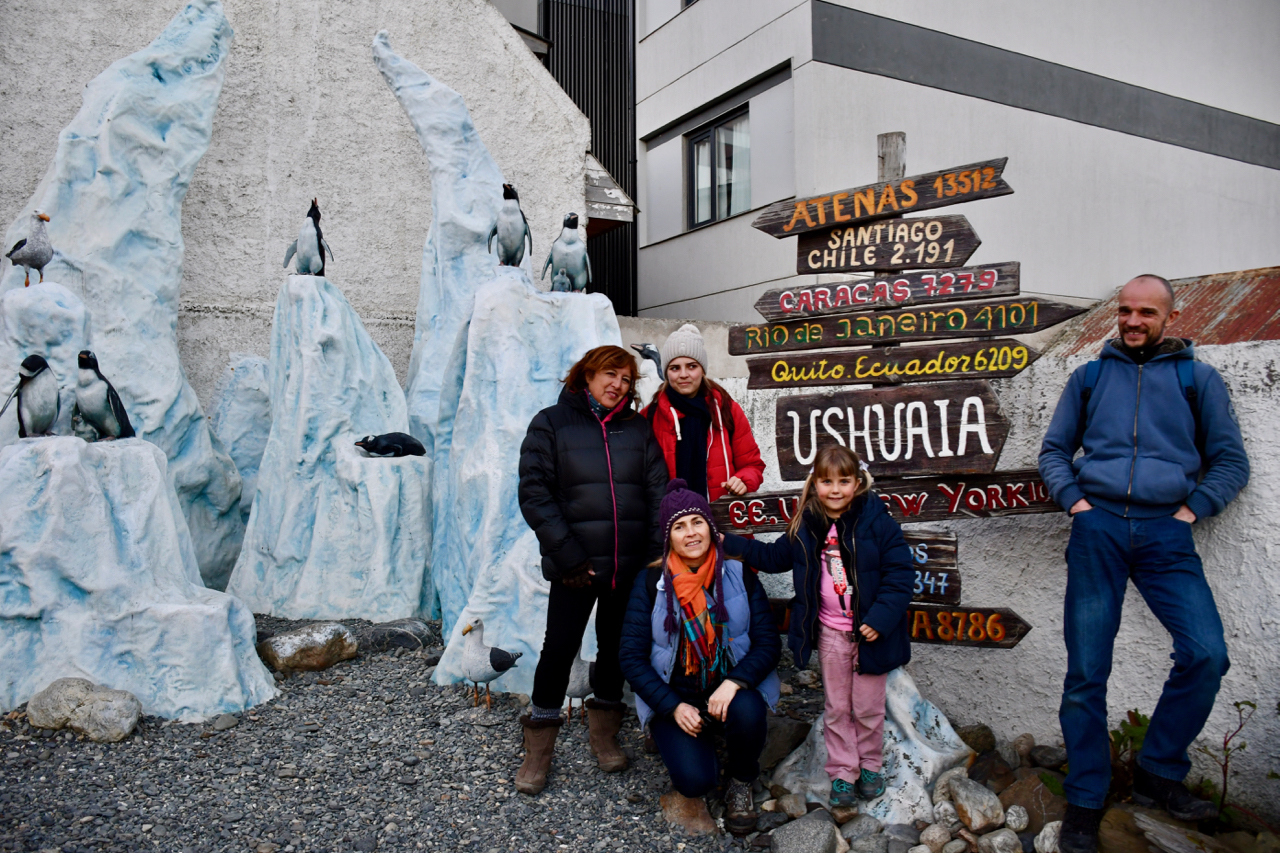
With Roxana—the fairy godmother of AFASyN Marina, Ushuaia