
From the Travely-Family archive · Other Entries
The World’s Southernmost Tundra by Car
An original publication from the former Travely-Family website. This English translation was preserved from the technical-site archive without editorial rewriting.
The world’s southernmost tundra by car. A landward foray by a seagoing crew. In two days on the road, we found ourselves both in winter snowdrifts and in a cold summer. Where did the indigenous people go, how did the ski slope collapse, and why are only half of them naked...
Out into the pampas!
Winter is enveloping the waters and lands around Cape Horn. The jetty is covered in three days’ worth of shaggy hoarfrost. Tierra del Fuego smells of December and wilderness crisp with frost.
On 30 May we left Argentina, waved our hankies to our beloved fairy godmother Roxana and the wonderful Russian community. With a light following wind, we motored as far as Puerto Williams and tied up four boats out at the pontoon of the Armada de Chile—the most distinctive and cosiest yacht club in the world. In the world’s southernmost settlement, we are waiting for new sails, which have already made it into Chile and are now crawling towards us at the speed of a hibernating tortoise (well, it is winter!). As soon as we get them, we’ll set off through the Patagonian fjords—one of the most inaccessible and beautiful places on the planet.
For three days now we’ve been slipping about on deck, shaking snow off our soles, and stoking the yacht club fireplace, which heats the dozen or so cubic metres of air around it veeeery slowly. On the very first day, the young sailor and I went to collect firewood. Along the forest road, we tugged soaked, gnarled branches out from under moss and horse manure, stuffed a whole grocery bag full, and then lit the stove. An hour later the captain arrived, sighed at our Boy Scout antics, and brought in firewood from the dry woodshed. But our wet sticks had caught by then anyway, so we’re practically real Boy Scouts.
And right now the captain has already been stoking that same fireplace for a couple of hours in the decommissioned-warship-turned-yacht-club; the young sailor and the deckhand have armed themselves with sandwiches, brushes and paints, as well as a history exercise book, and migrated over to their father. And it’s time for me to run over there too. There’s a chance I might defeat the frostbitten internet and upload this post to the website.
And in it I’ll tell you how we finally drove around Tierra del Fuego, despite repairs, lessons, work, meeting Fyodor Konyukhov, and our friendship with the wonderful local people. I’ve even prepared the photographs. I’m wondering how many hours it will take for pre-winter Patagonia to fly from our laptop to your screen. The clock is ticking!
/
Tierra del Fuego by Car
It would hardly do to leave the Argentine part of Tierra del Fuego without ever having driven around it. At the last minute, Andrey rented a pickup from an agency on the waterfront whose name ends in “...Liza.” Because it was off-season, the vehicle cost $160 for two and a half days instead of three hundred. At least there was some advantage. Because daylight hours had become about two and a half times shorter.
The Skiing Fiasco
On the way out of Ushuaia, the police politely ask for our documents and wish us a safe journey. The road ducks beneath the double arch of a ski slope. Its first span was less fortunate: instead, a gaping void hangs over the highway. The ski slope collapsed several years ago, immediately after the World Championships, waiting only until a lorry had passed under the bridge. The driver still lights candles to God, weeping with happiness at what an incredibly narrow escape he had. The ski resort was built with government money, which, naturally, melted away a little on its journey from the capital to the provinces, so the slope had to be built on a wing and a prayer—minus one wing. Evidently there wasn’t enough left for the second “wing,” and so it collapsed. There’s still no money for repairs.
Empty chairlift seats move mournfully uphill, so apparently there are people here after all. All the infrastructure is here too, from cafés and cabins to snow cannons. Because of global climate change, less and less snow has fallen in recent years.
No sooner does the road climb higher than we ask to stop—a small waterfall is roaring on the right, and if there was once a path to it, it is buried today. The deckhand and the young sailor leap into the snow, crying:
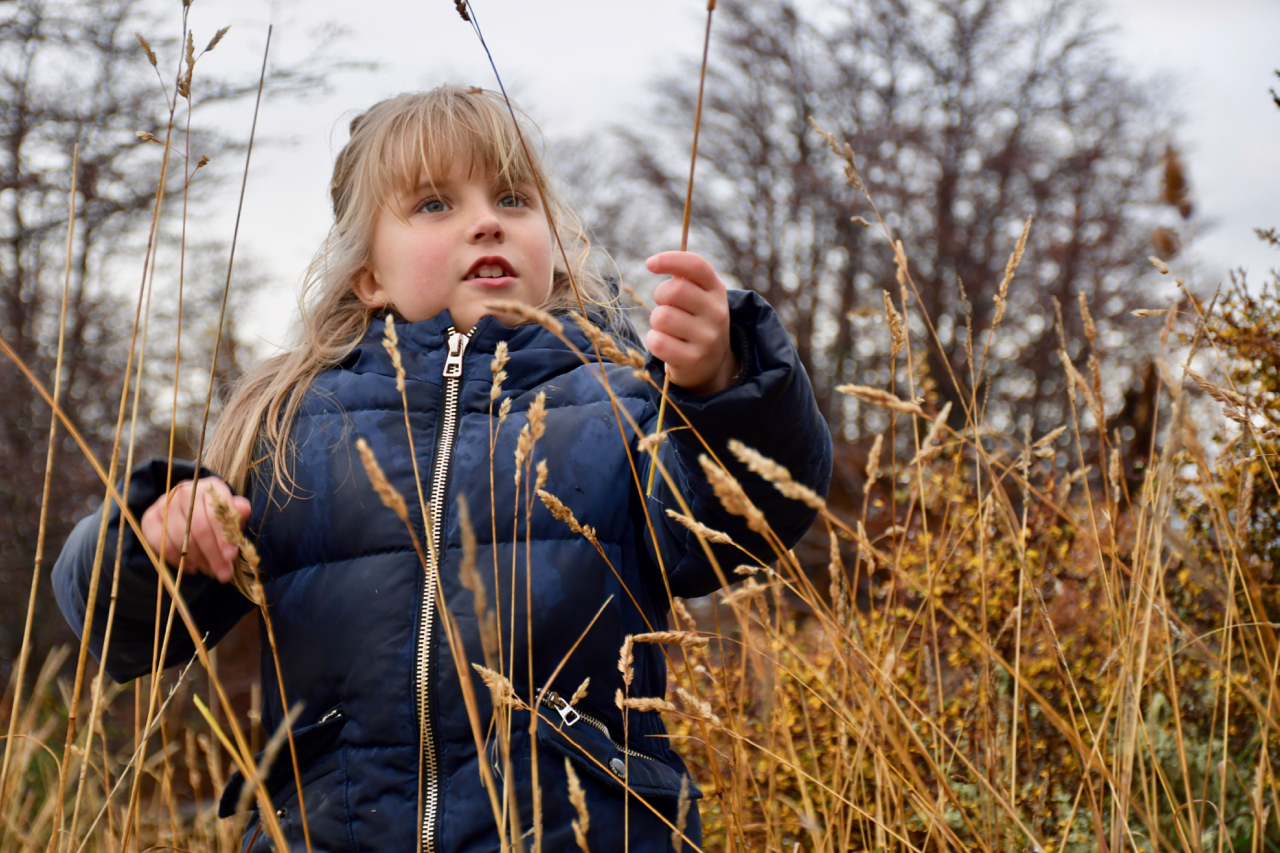
“What beauuuty!”
“Children worn out by tropical paradise,” the captain and I laugh:). However you look at it, none of us misses the hot tropics. Weeell, almost none of us. Except the captain, perhaps.
Tundra and forest tundra, and in places almost pampas—that’s closer to the Atlantic. The road winds northeast towards Río Grande, a fairly large and highly crime-ridden town on the way to the Strait of Magellan. We decided to drive at least as far as Tolhuin (Tolvin?), a little township dozing beside a large lake in the middle of Tierra del Fuego. As it turned out—after we had already returned to Ushuaia—a Russian family with an eight-year-old girl lives there in Tolhuin....Naturally, we didn’t go there a second time; we sent our regards through fellow Russians.
Fog and Pavlik Morozov
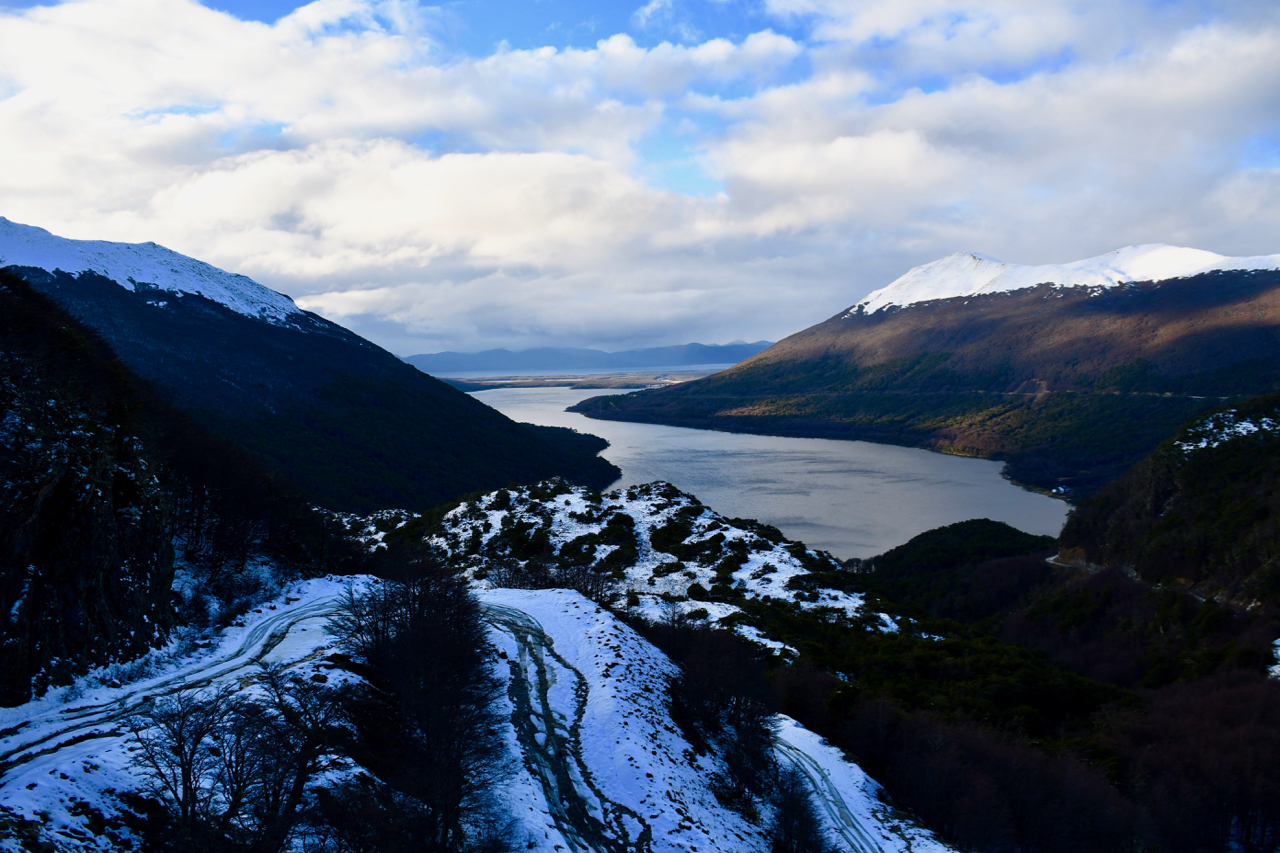
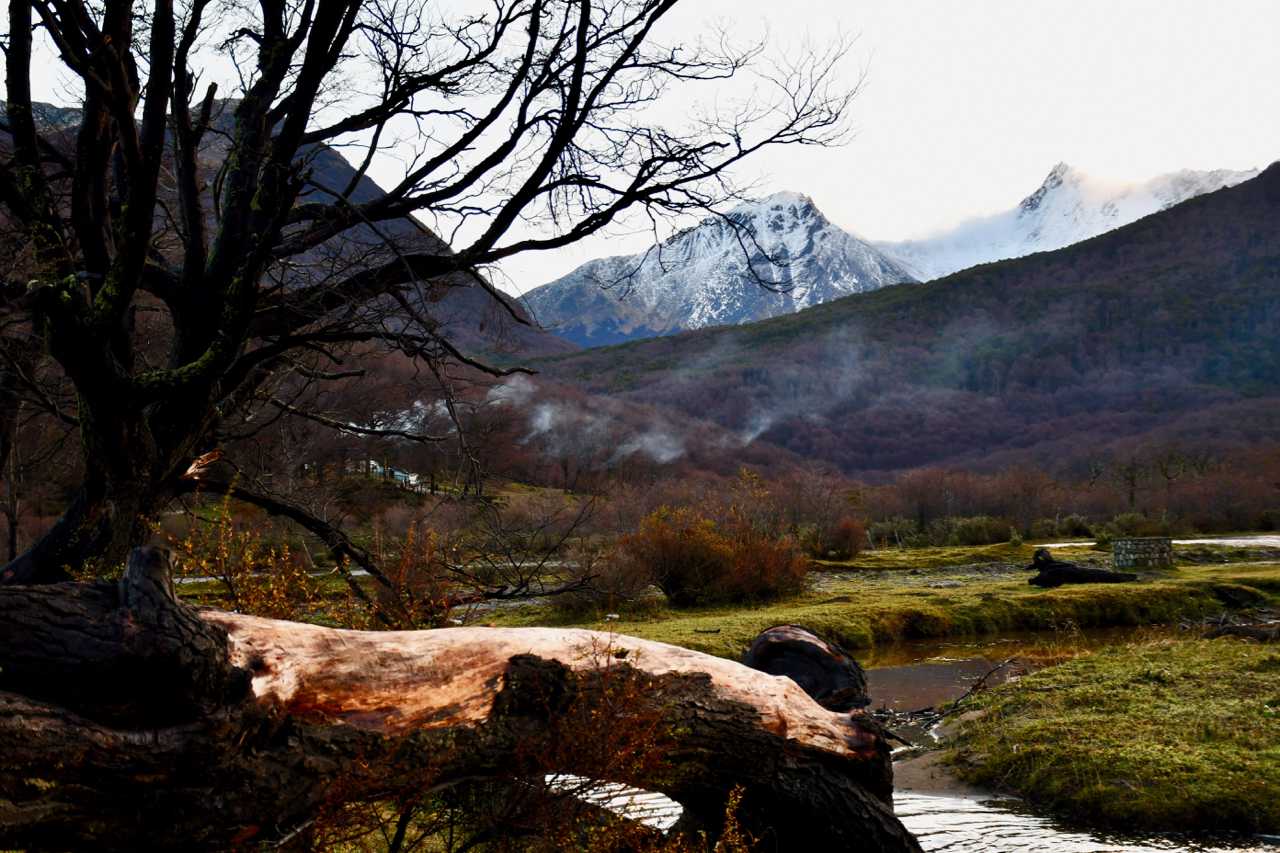
Paso Garibaldi, at an elevation of 400 metres, is covered in wet snow; the air rustles with the approach of winter. The mountains are covered in utterly tundra-like forests. This forest tundra still hasn’t quite decided whether it is winter or summer—the trees all look exactly alike, bent low by savage winds, with tiny leaves, some standing half naked, others still dressed in those same little leaves. There is no visible difference at all, except that some have shamelessly dropped their clothes while others are still pretending it’s summer. It turns out that Tierra del Fuego has three kinds of beech forest. And one of them is evergreen. Collectively, they are known as flag trees, because of the way those powerful winds bend and twist them.
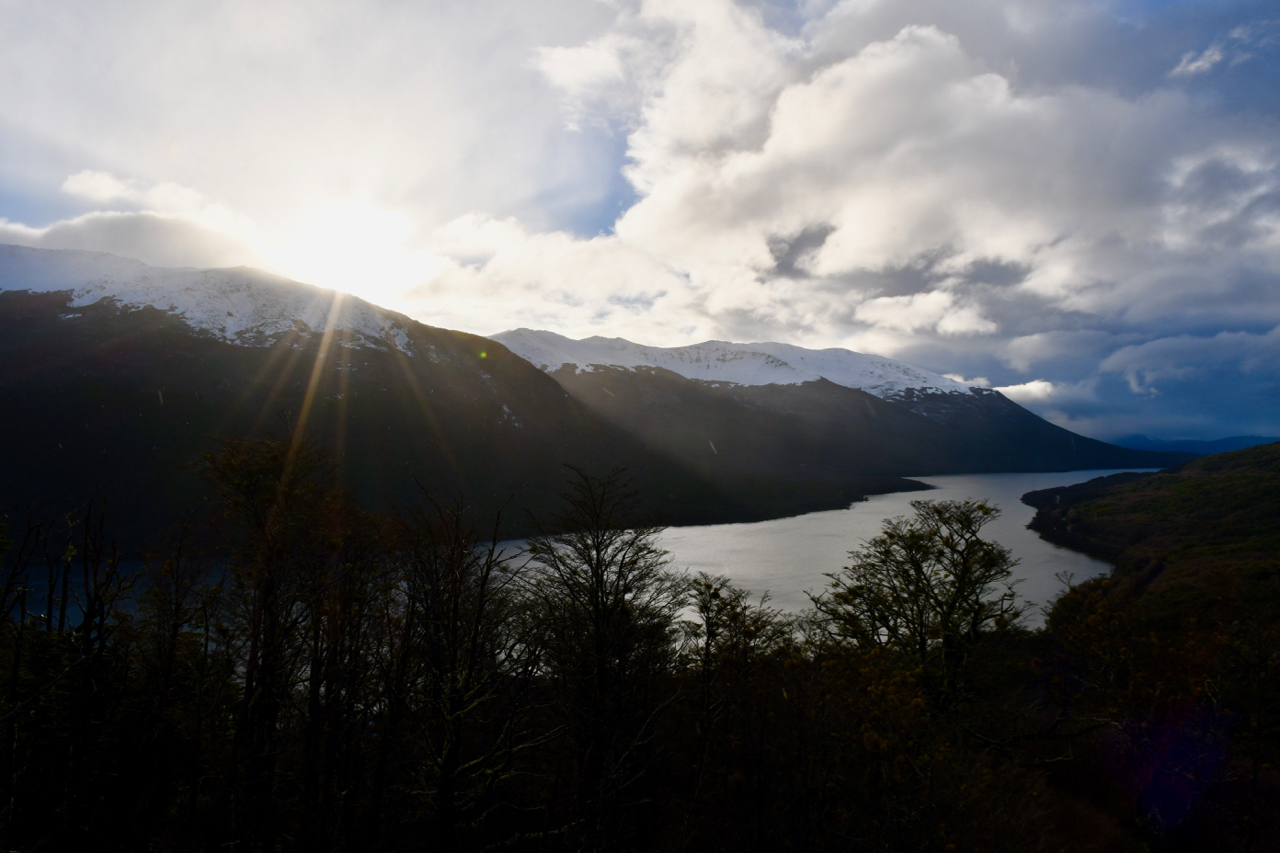
For half the journey, sleety rain drizzles down. The weather forecast promised—and correctly—fog near Río Grande, so visibility beyond the pass is so-so. The viewpoint on the pass consists of two storeys of glass and tiled concrete hanging above a narrow inlet. A couple of cars cautiously creep down towards the water along a snow-covered dirt road. We decide against it and drive on.
They say the first Europeans crossed this pass only 84 years ago. Before then, the Indigenous people had managed to protect southern Tierra del Fuego from the all-devouring newcomers. The only way to reach the southern tip of the archipelago was by sea—through the stormiest waters on the planet, which did little to encourage people to dart back and forth. But then, in 1935, some Pavlik Morozov by the name of Luis (Paco) Garibaldi, the son of a gold prospector and an Ona woman, showed the Europeans a trail to the other side of the mountain range. By 1956, the first car had crossed the pass. And somewhere in between, the peaceful Yámana who inhabited the far south disappeared even from the very corner of the continent. Paco Gari Baldi himself lived to the age of 92 and died with honours in the city of Río Grande 13 years ago.
Today, just one full-blooded Yámana woman, 91-year-old Cristina Calderón, is quietly living out her days on the outskirts of Chilean Puerto Williams. When she is gone, all trace of this ancient people will remain only in pictures.
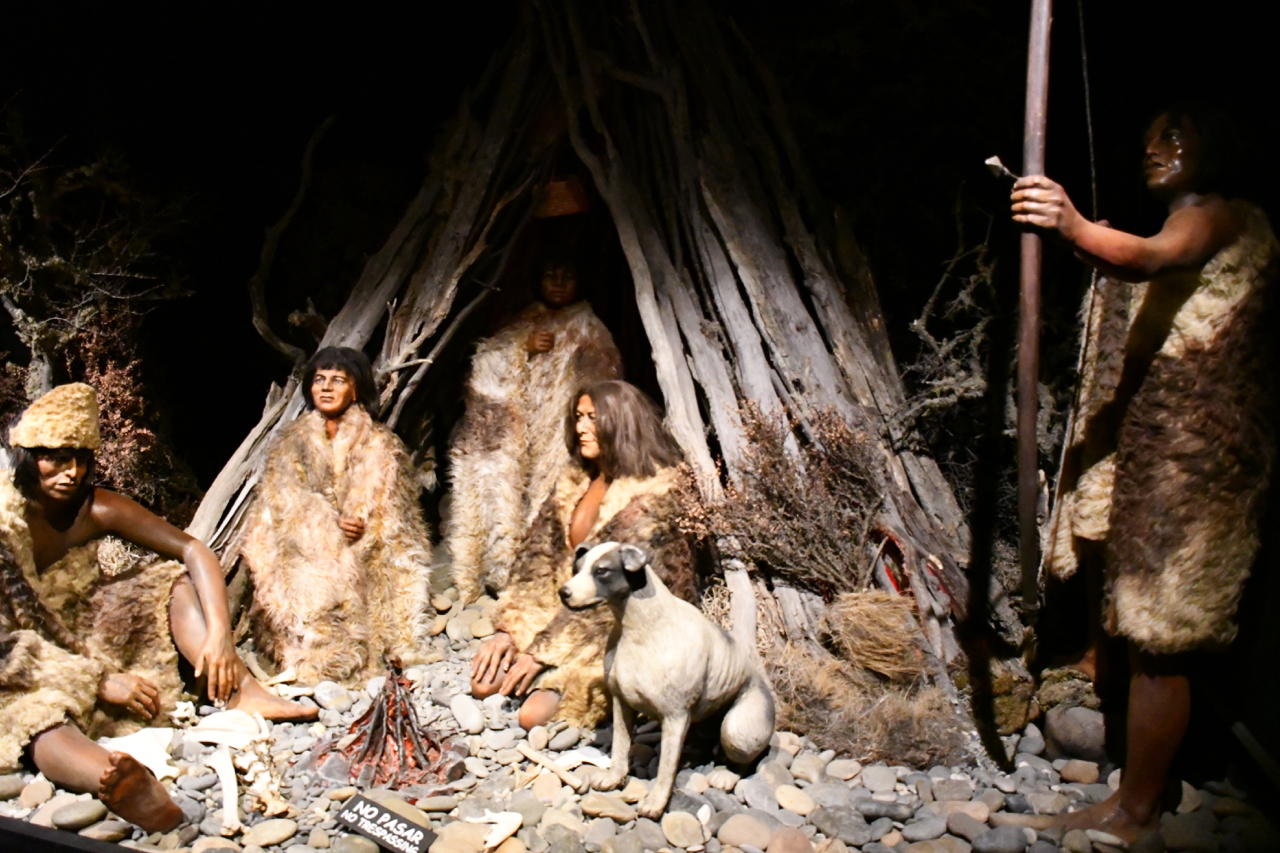
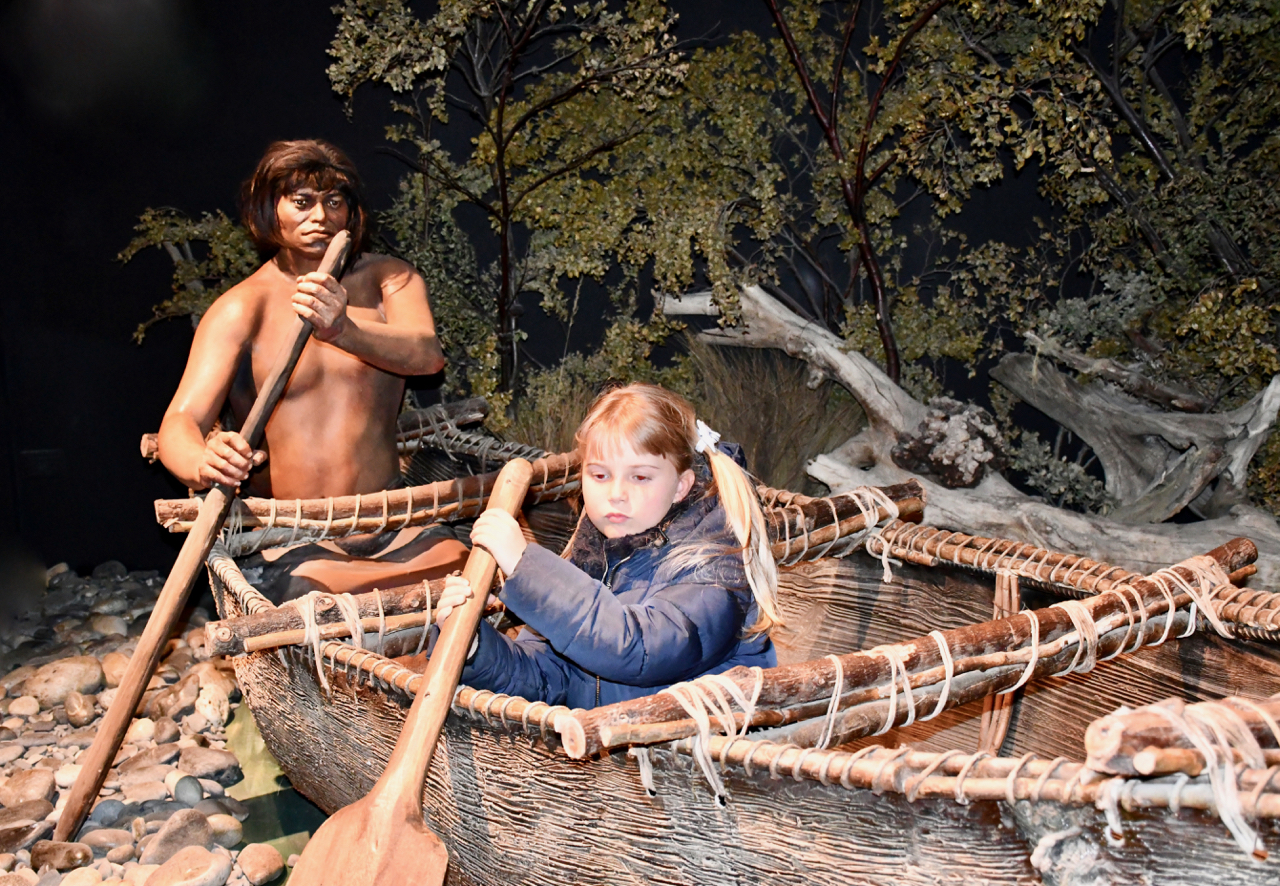
(The photo below shows the Indigenous inhabitants of Tierra del Fuego beside a ramshackle shelter resembling a hut. In the west of Isla Grande, huts were rounded; in the east, they were conical. But the Fuegians spent most of their lives in canoes made from the bark of the local southern beech. A small fire always burned on stones and sand in the bottom, tended by the children; the man fished, while the woman steered the canoe. Or vice versa.
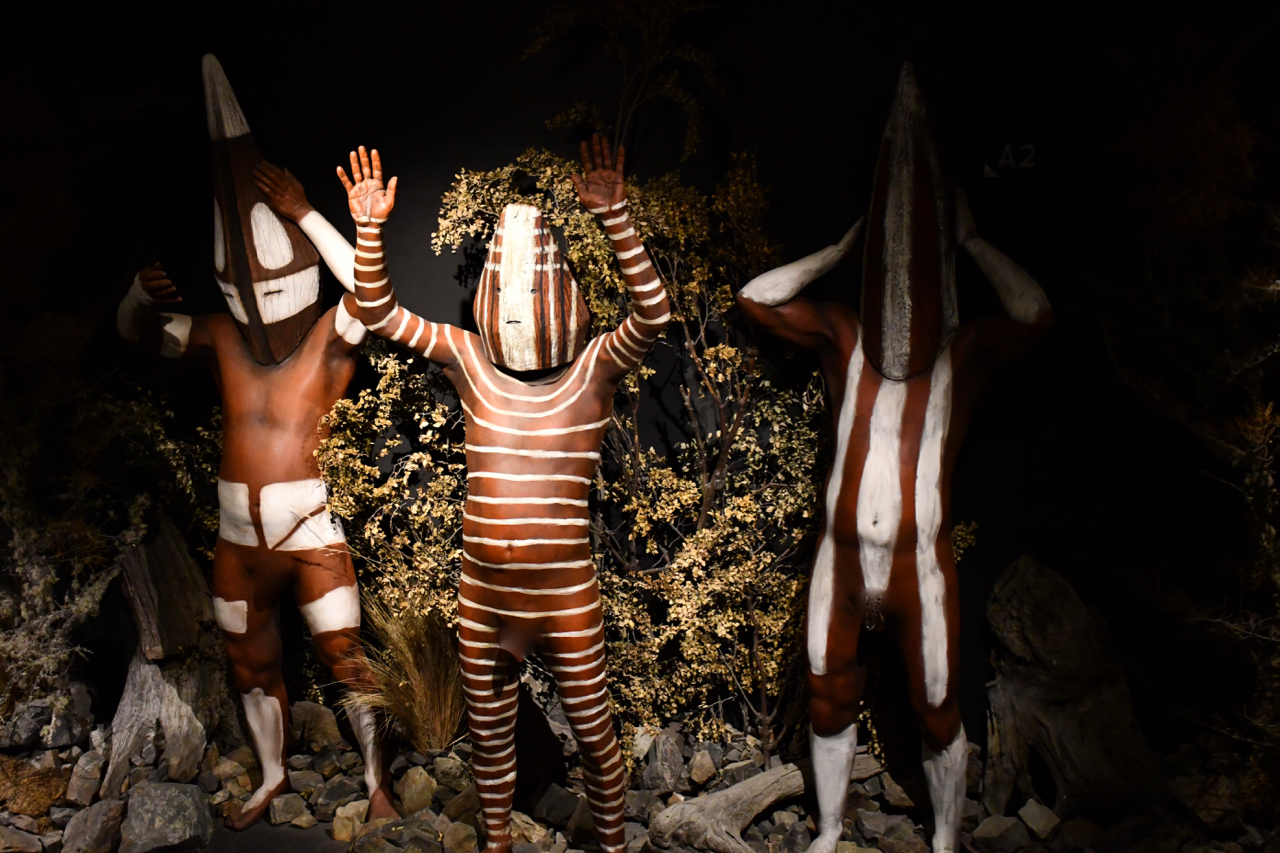
The main photo for this report shows men of the Yámana (Yaghan) people during an initiation rite. Their private parts have been blurred for ethical and censorship reasons, but they were painted with a design continuing the one on the abdomen.).
By the Mountain Lake
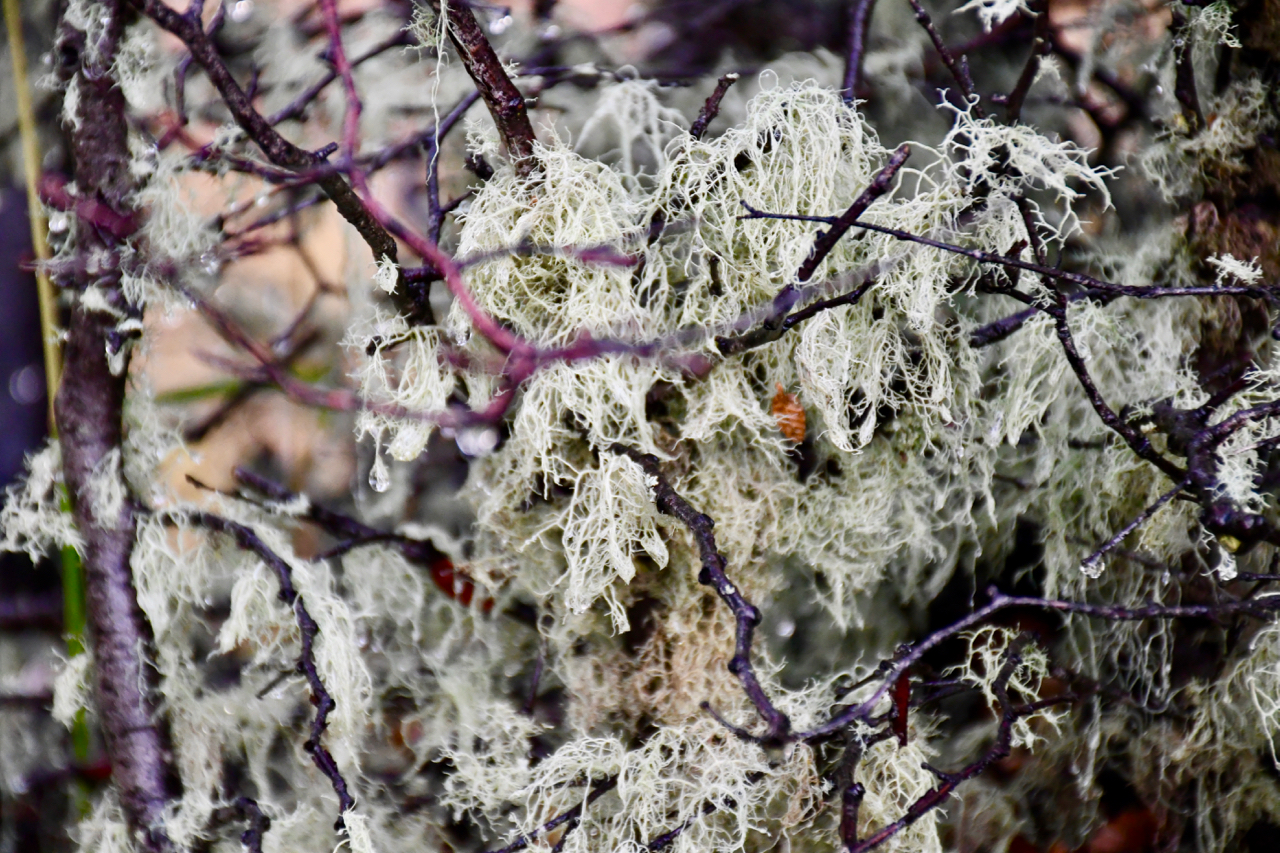
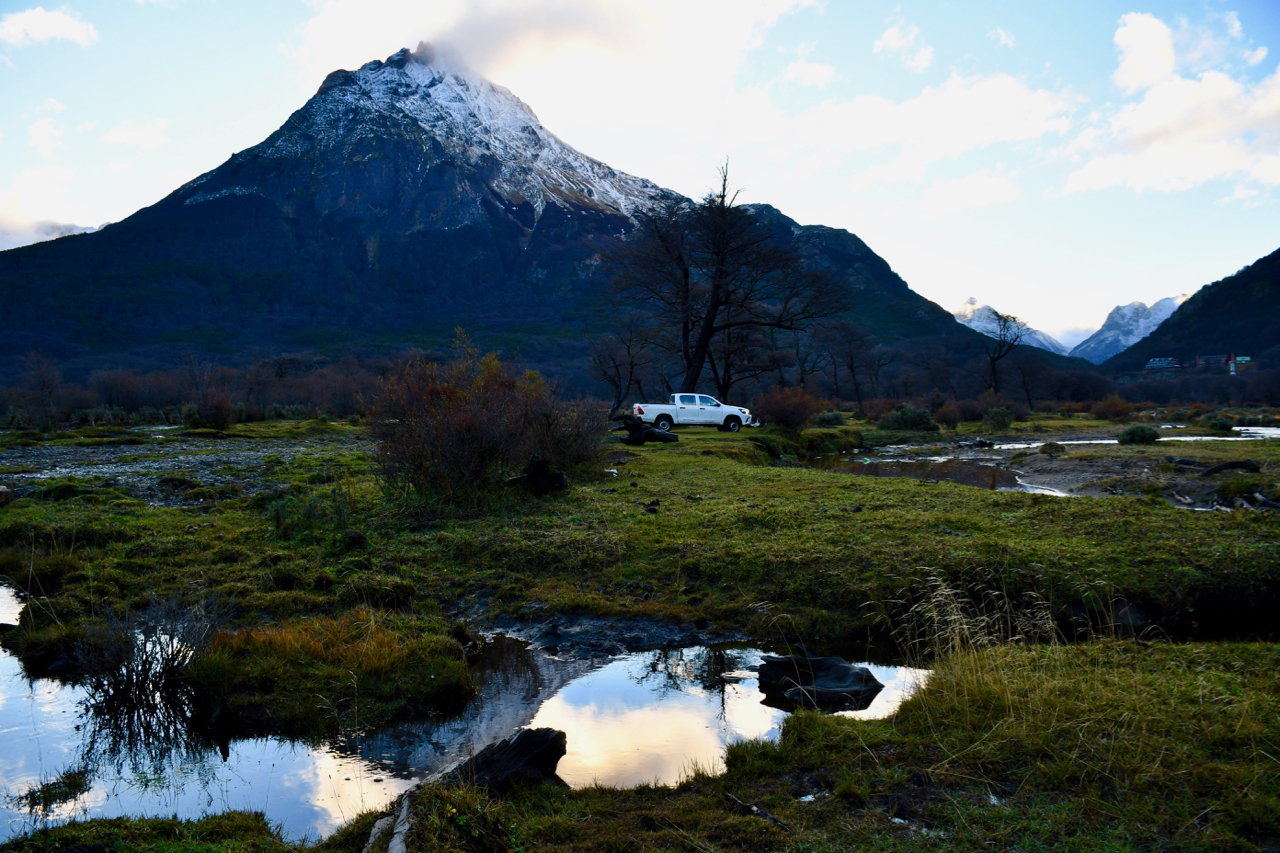
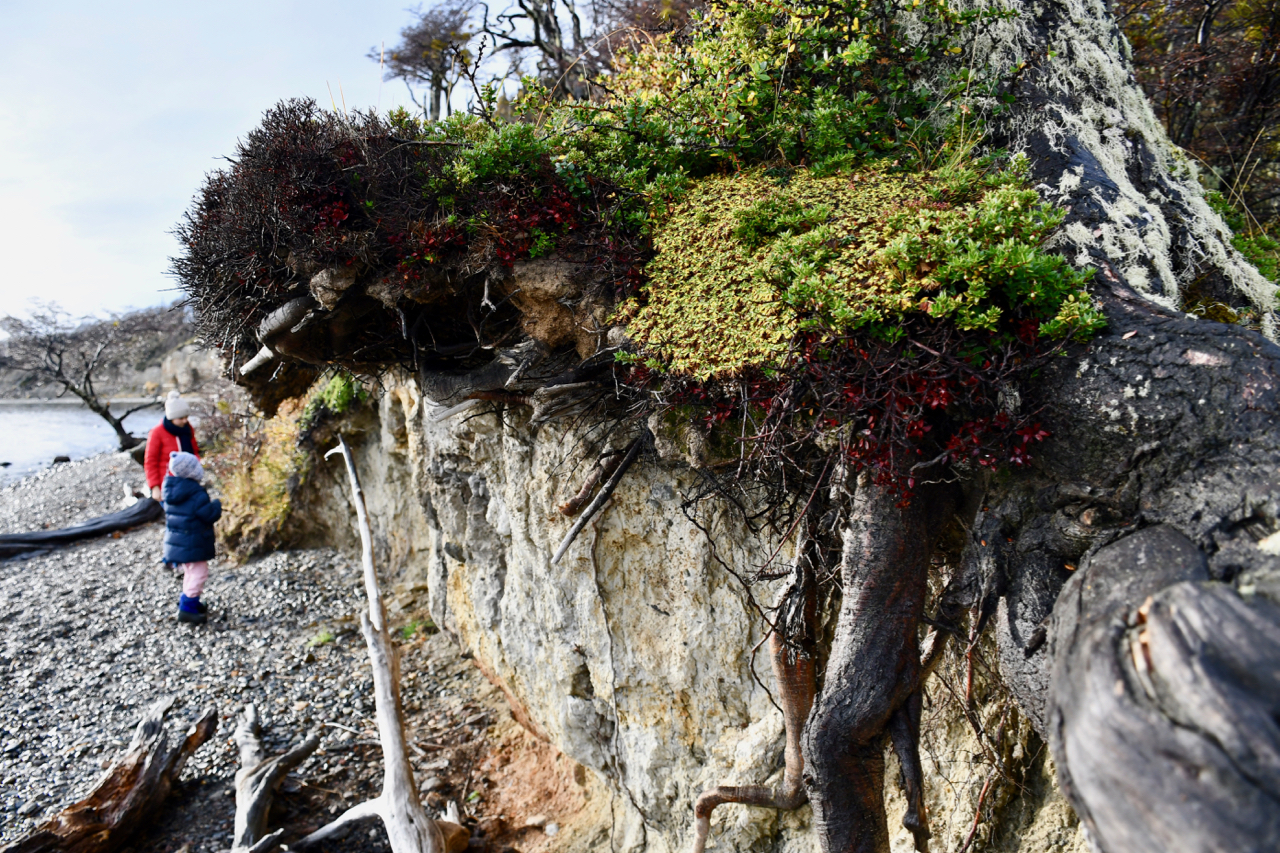
The opposite shore of Lake Fagnano—the largest freshwater body in the archipelago—is lost in the fog, barely discernible by its glassy black reflection at the very edge of the cotton-wool air. The canoes of four Indigenous peoples once cut across its surface. People smeared their naked bodies with seal fat and draped guanaco hides over their shoulders only in the coldest winters. The faces of Yámana chiefs hide somewhere among the gnarled curves of mossy branches, reflected in the water gently lapping the shore of their sacred lake...
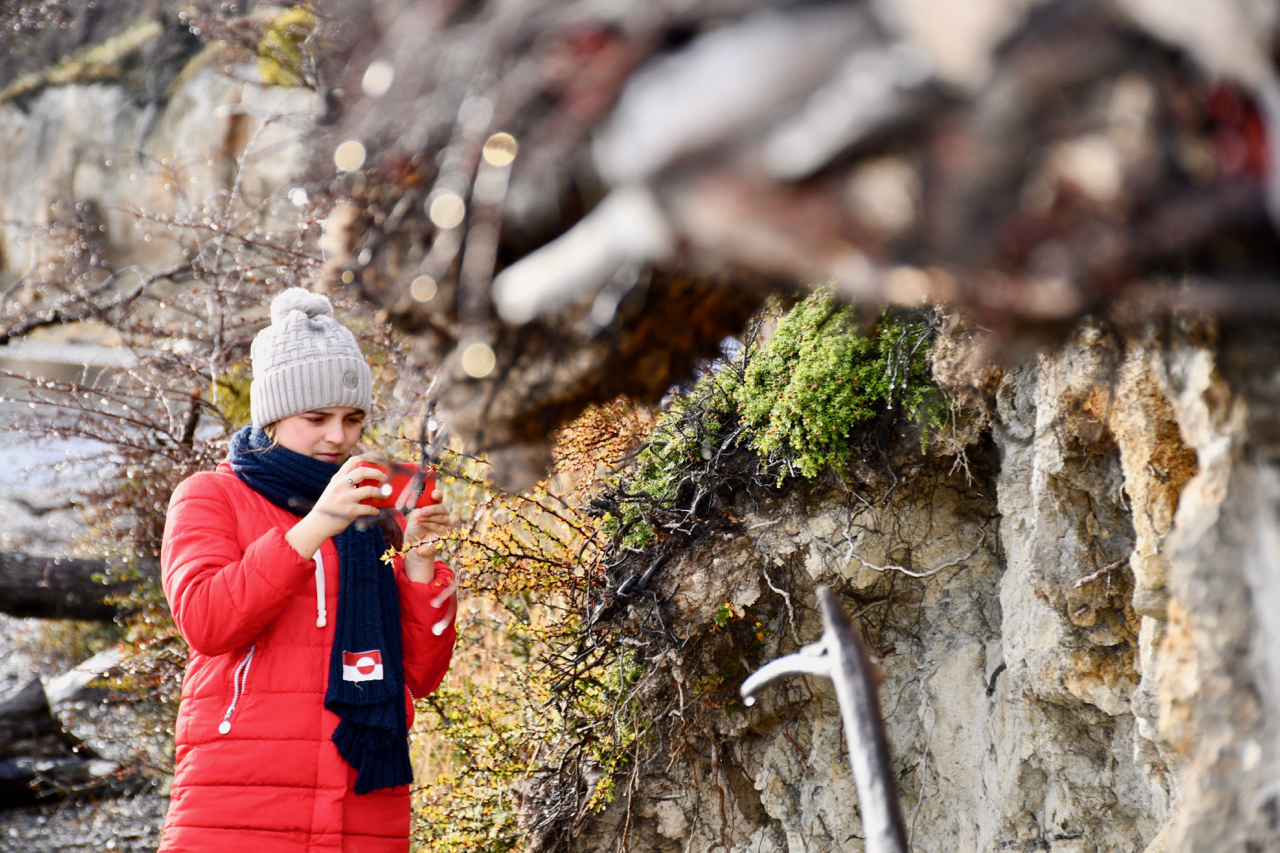
We wander pensively over pebbles and frozen puddles. Prickly shrubs laden with black berries beg to be eaten and turn out to be very sweet. It seems to be another local variety of crowberry, except that unlike the previous one from Tierra del Fuego National Park, this one is black, as it is back home in the Urals, rather than red. Tundra is tundra through and through... 🙂
The sticky early dusk spreads across the valleys, and we turn our iron cart around (because it has a bed) and head home. The guanacos are hiding somewhere in the open woodland, or lying curled up in the harsh pre-winter grass, puffing into their armpits to keep warm. We haven’t given up hope of seeing them tomorrow, when we head for the southernmost part of Argentina—along the dirt road beside the Beagle Channel.
We’ll tell you about that in the next instalment..
Thank You, Friends!
Do you know how wonderful it is to have you with us during your summer and our winter? From our snow-covered yacht, it feels so good to glimpse your faces as we read your comments, letters and messages. We treasure and love you very much! Hugs from the southernmost edge of Tierra del Fuego.
And special thanks to the support team who keep the expedition going through
PayPal.me/travelyfamily
Many thanks to Ksenia B. from Thailand, Artur Ch. from Moscow, Vladimir G. from Kyiv, and Maksim O. from St Petersburg! You motivate us to do more and share more often.
Summer to you all!
Somewhere among these mosses wander the souls of vanished peoples...
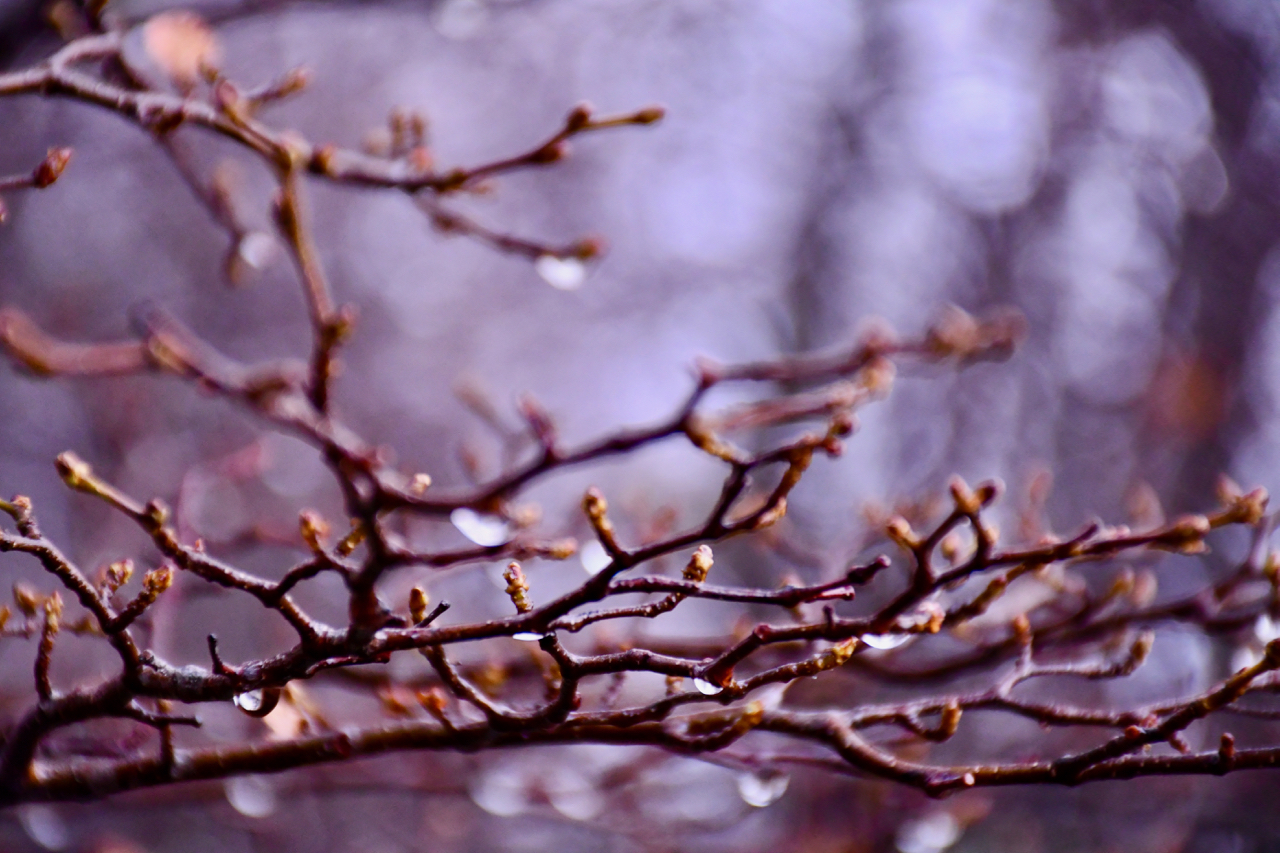
The droplets froze into tiny icicles
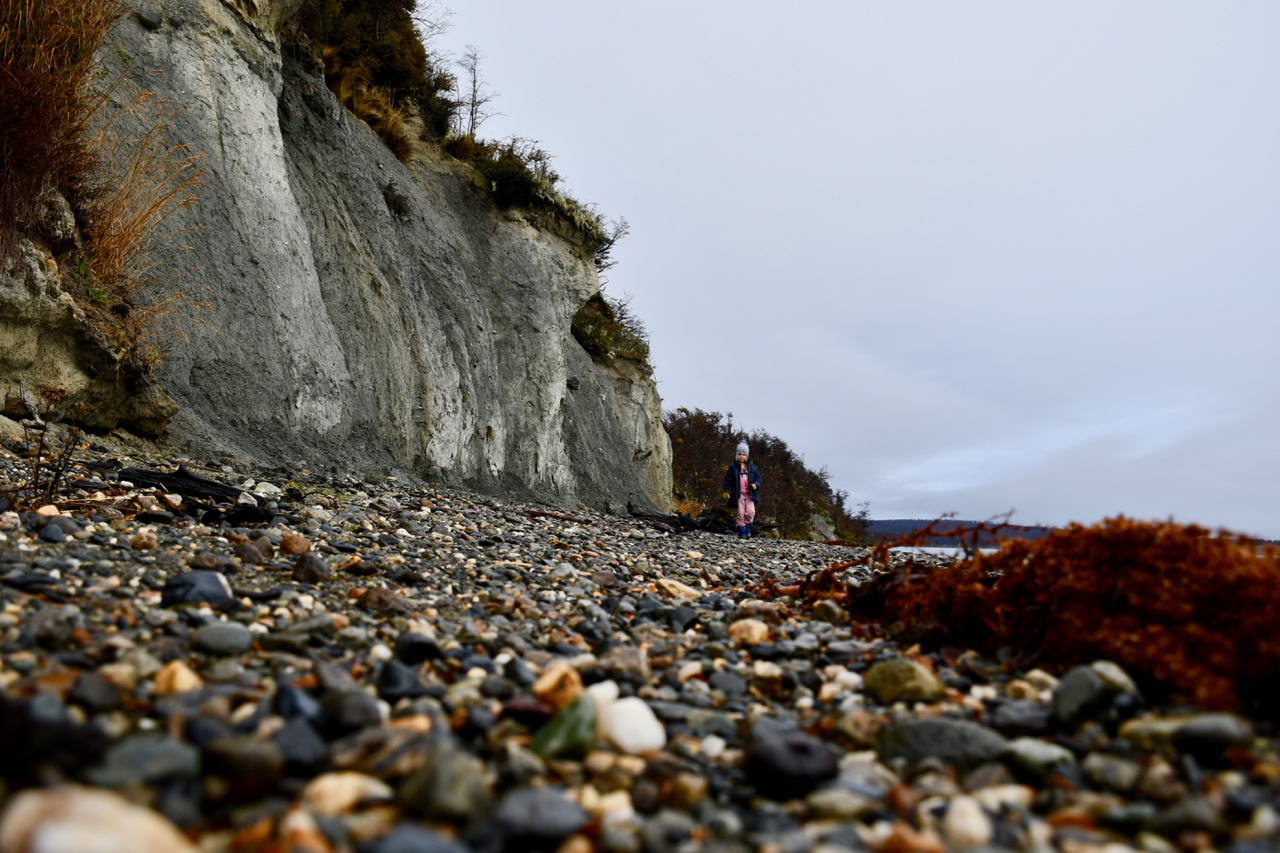
The lakeshore
Lada and the Yámana