
From the Travely-Family archive · Yacht, Sea and Equipment
Dengue Fever
An original publication from the former Travely-Family website. This English translation was preserved from the technical-site archive without editorial rewriting.
Tropical Fever (Dengue)
We encountered this scourge in Thailand, on the island of Koh Samui, well settled by families from all across Russia, where we spent the winter with our children and friends. It was a prolonged rainy season; the rain came down in buckets almost without a break. Once, they even closed the airport and the ferry service for about three days. But that’s not what this is about.
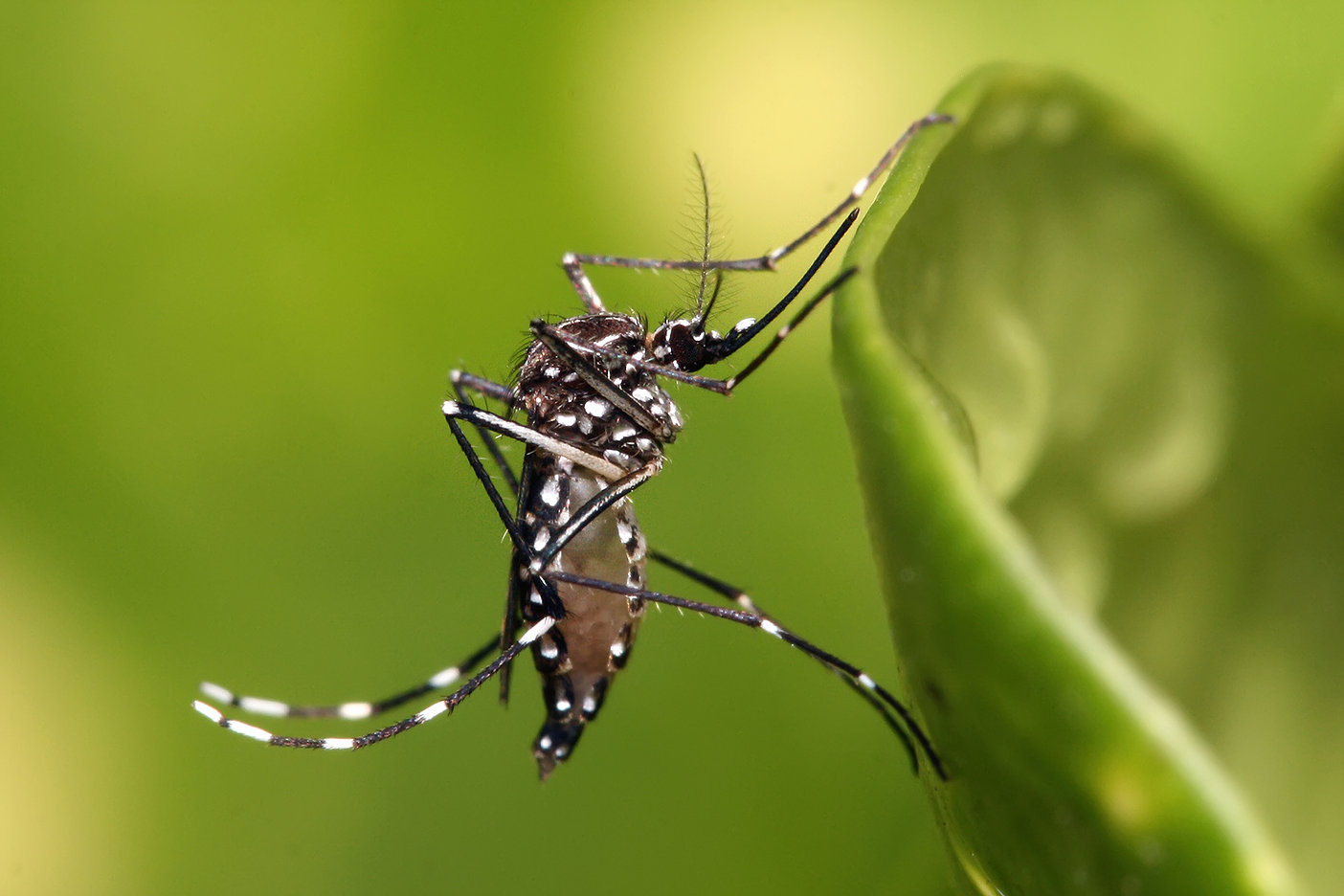
Aedes aegypti mosquitoes, which carry the dengue virus, bred like mad in these favourable conditions and began biting everyone even more actively.
How infection occurs
First, a mosquito bites someone who is ill, then moves on to someone healthy. The result: now there are two sick people. The incubation period is from 3 days to a week. There is no vaccine against dengue fever, and you do not develop immunity to it. This means you can fall ill again at any time, as long as the right kind of mosquito happens to be nearby.
Dengue is generally not life-threatening. There is a haemorrhagic form that can be fatal, but this form affects only the local population.
Symptoms
A high temperature of around 40°C, a severe headache and aching bones. After the 3rd day, a rash appears, often not very pronounced. The illness usually passes within 5 days. At around the third day there may be some improvement, but that’s just a decoy. During that rainy autumn, 7 people in our village came down with dengue, including our friend and her 7-year-old daughter. Our friend had a severe and not entirely typical form of the fever (not haemorrhagic). The high temperature caused her to lose consciousness. Delirium, hallucinations, a complete break with reality. Plus vomiting and all that.
Treatment
Koh Samui has three large hospitals: Bangkok Hospital, with sky-high prices; Samui International Hospital, where the prices are merely up in the clouds; and plain Samui Hospital—a public hospital for the local population. Since neither of our two patients had medical insurance, our friend was sent to the public hospital.
The inpatient ward in a Thai public hospital is a large rectangular room divided lengthwise by a glass wall. On one side of the glass sit the nurses, keeping a watchful eye on the patients’ condition. On the other side, in the larger area, lie about 15 patients. This section is divided into 3 wards—men’s, women’s and children’s—by partitions that stop about a metre short of the ceiling. Each bed is screened off from the others by curtains. Friends and relatives visit patients at any time of day or night. They bring food with them and hold picnics right there on the floor, with heart-to-heart conversations and laughter. Some visitors spend the night there too, on the floor. The belief, quite rightly, is that close contact with loved ones supports patients on their road to recovery.
At the hospital they put patients on IV drips with saline and something restorative and fever-reducing. They also give antibiotics, of course, supposedly as a precaution, because in Thailand they treat almost everything with antibiotics.
Not everyone who falls ill is admitted to hospital. If the patient stays at home, the road to recovery lies through drinking megatonnes of water. You have to drink a great deal and endure the pain. Endure and drink.
What a severe case of dengue looks like
For the first 2 days, they could not diagnose our friend: the delirium and unconsciousness obscured the whole clinical picture. She was taken to Bangkok Hospital for a brain scan, because the case was so completely atypical. The rest of the time she had to be tied to the bed, because she kept trying to get away and pulling the catheters out of her veins.
For the first three days, our captain, Andrey, stayed with her constantly. He dealt with everything and held her hands tightly.
Her daughter stayed at our house. We took her to a doctor, who gave us two bottles of liquid. One contained vitamins; the other, something like a fever reducer. He said, “I’m not going to prescribe any antibiotics; let her body fight it.” For five days, the girl took paracetamol. It brought her temperature down from 40°C to 38°C. At 38°C, the child was up and about, playing on the grass. On the 5th day, seeing that her temperature rose again without paracetamol, we scared her with the prospect of hospital and told her to drink 3 litres of water that day, because she could not take any more fever reducers. Thoroughly frightened, the little one gulped down 3 litres in a day, and the illness retreated )).
Her mother was discharged after 5 days weighing 43 kg (don’t be alarmed—she had been very petite even before going into hospital). Fortunately, she remembers none of the horrors she went through.
In 5 days, we got the daughter back on her feet, and the doctors did the same for her mother. Treatment at the public Samui Hospital in Nathon cost 18,000 baht, including the trip for the brain scan. For comparison, at the time dengue treatment at Bangkok Hospital cost about 30,000 baht per day (at an exchange rate of 1.1 roubles to 1 baht).
Precautions
After the rainy season in Thailand, hotel grounds and other residential properties are treated with acrid smoke. But they do not always get to it in time.
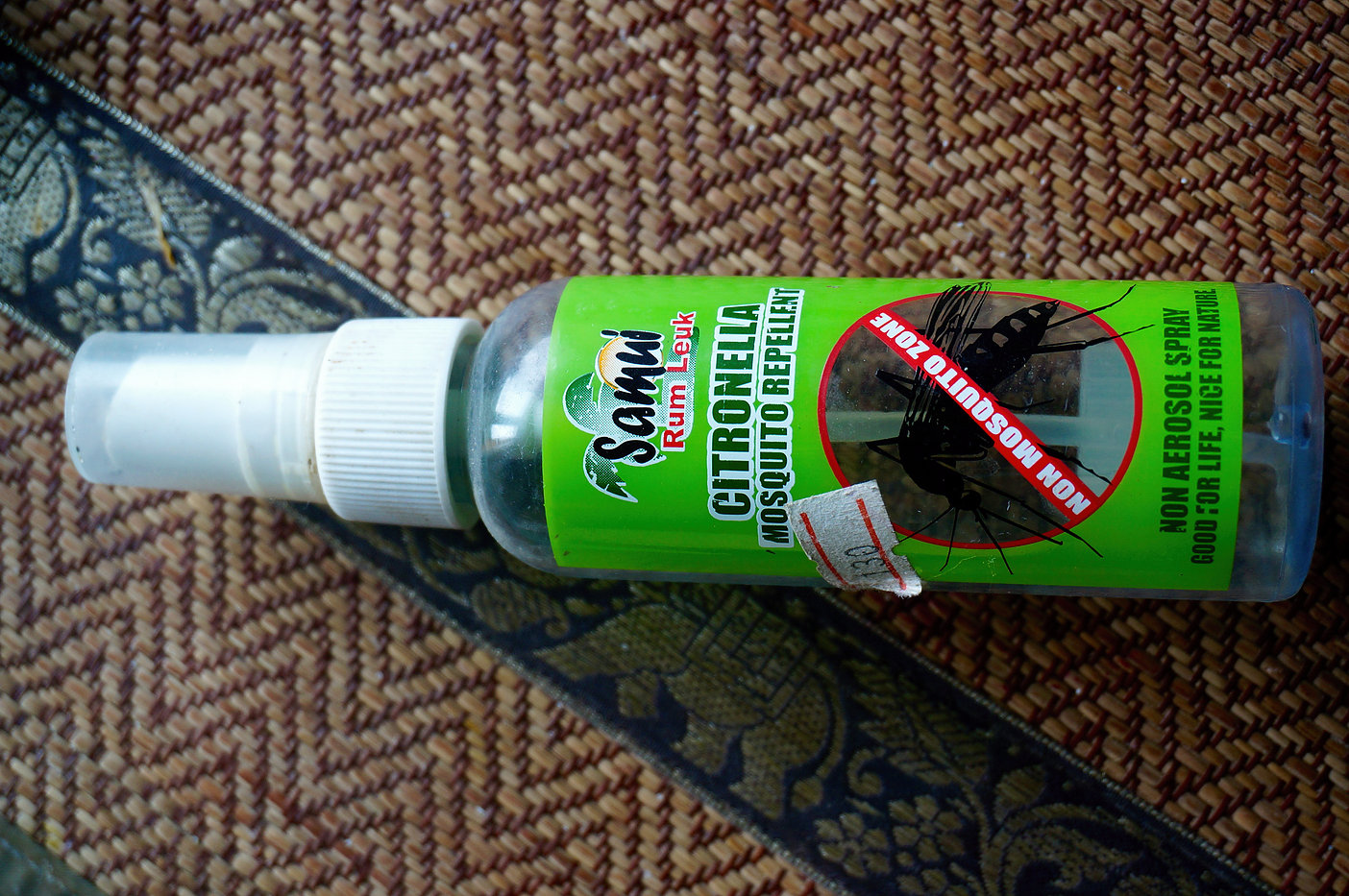
Stock up on repellents and mosquito coils, and wear long sleeves and trousers in the evenings. In Thailand, we always bought the natural repellent Citronella (lemongrass oil). It may also be available from pharmacies.
Dengue fever is most widespread during the rainy season.
Wishing everyone warmth and good health!