
From the Travely-Family archive · Atlantic
The Joy and Sorrow of Gorée Island. Senegal by Sailing Yacht
An original publication from the former Travely-Family website. This English translation was preserved from the technical-site archive without editorial rewriting.
Lady Mary off Gorée Island
The best place in urban Senegal! A staging post for slave traders. Who lives inside an anti-aircraft gun, and do Russians surrender when the only berth is occupied, the yacht is packed with children, and everyone needs to get ashore?:) Repin’s painting “They’ve Arrived”.....
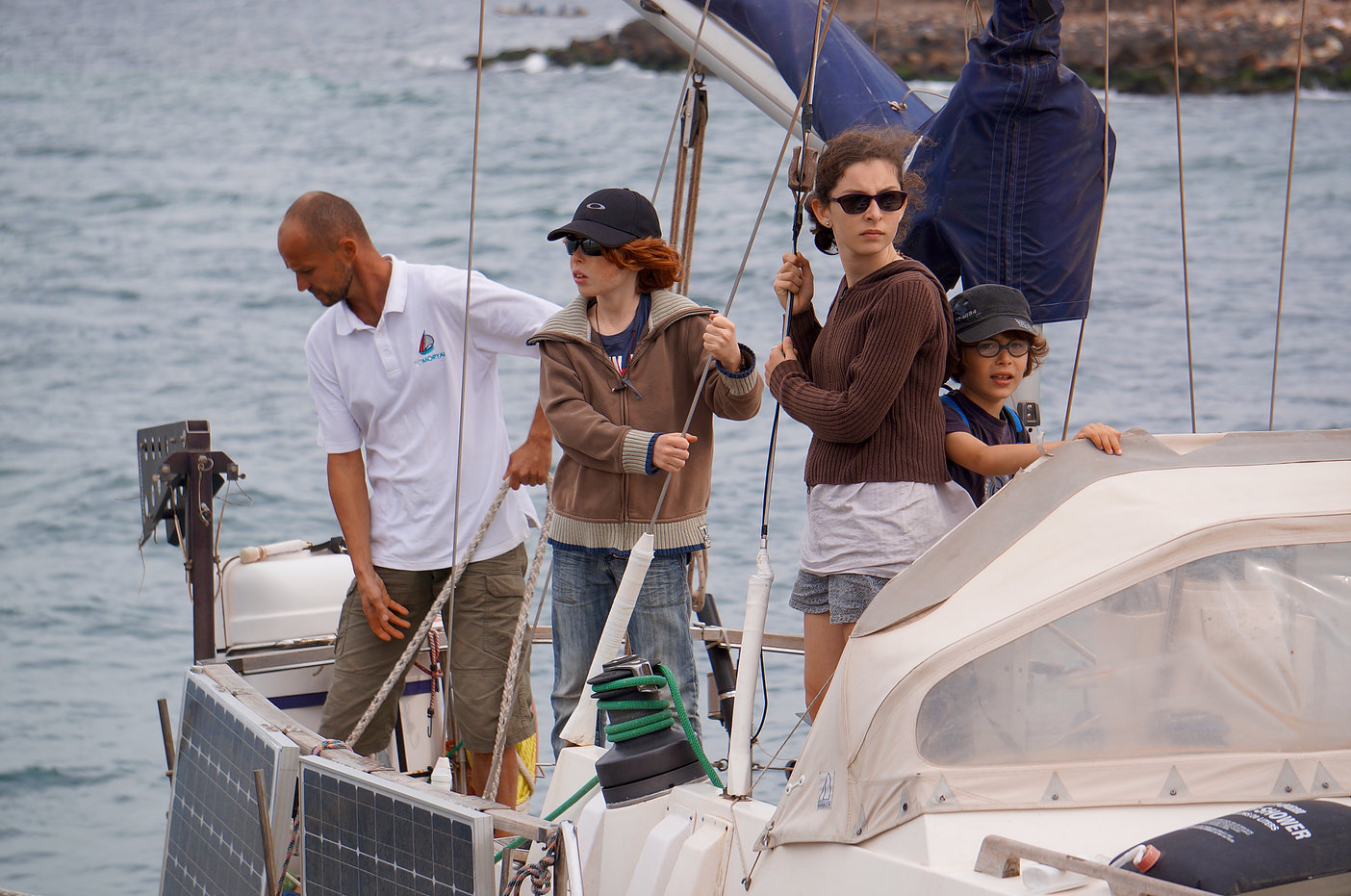
Are we really not going to get alongside? That is the question occupying every passenger and crew member aboard our yacht.
Clouds loom gloomily overhead, and the restless ocean pounds against the concrete. For half an hour now, Lady Mary has been tossing about in the high waves within a tiny patch of water hemmed in by rocks along the shore, two piers, a small ferry, and boats. Not an ideal situation, and the only possible berth—which we had spotted in some pilot book—is occupied by two enormous pirogues. Their owners are on the pier, signalling with every part of their bodies that we should not even think of coming alongside as a third boat outboard. We can neither steal nor stand guard. Neither berth nor back away.
Leaving Gorée Island empty-handed and heading back to the anchorage would be decidedly not comme il faut: it would scupper our entire Russian-French friendship picnic, for which we had been preparing for almost a week..........
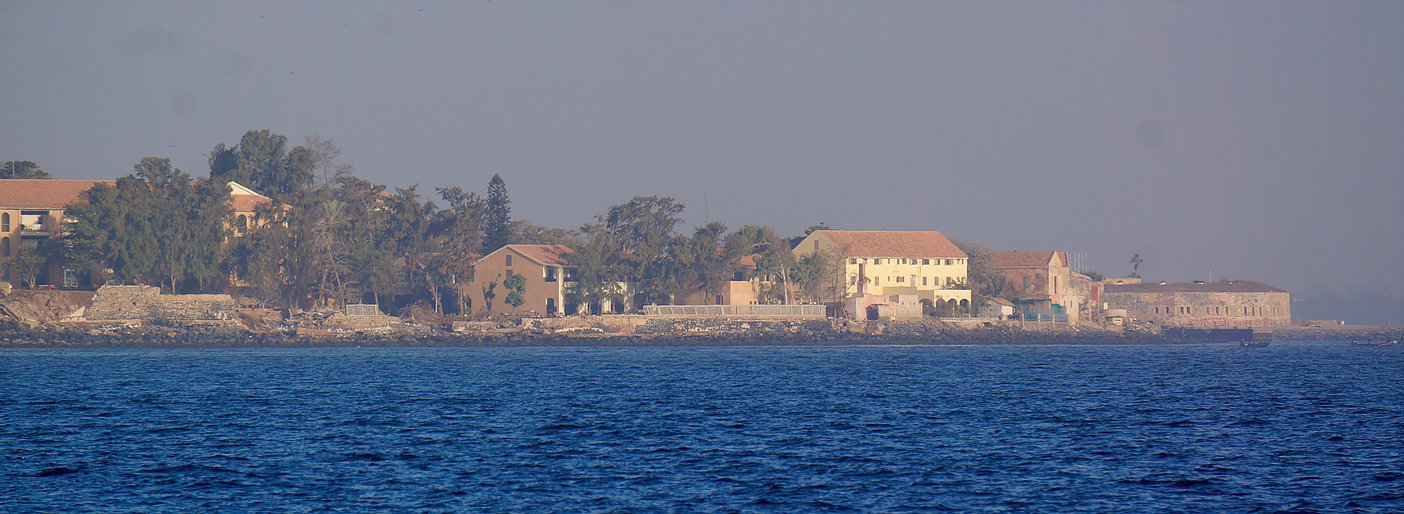
From the anchorage on the outskirts of Senegal’s capital to Gorée Island is no more than 4 miles. At 10 a.m., the crew of the friendly French yacht BABA—a family with three children—came aboard, and we began weighing anchor. It took us half an hour to strip off the long, slippery flags of weed clinging to all 30 metres of chain. The water in the bay is thick with this surely edible seaweed, but we still did not try eating it—it is clearly not floating around here alone, but in the company of an entire army of E. coli. Someone more enterprising could probably have made a tidy fortune selling the weeds and shellfish we removed from the chain. We set sail, with the captain at the helm. The Frenchman Ben and I scanned every square metre of the bay as we tacked between fences of fishing nets.
An hour of fine sailing—and there we were, circling in Gorée Island’s tiny harbour without the slightest chance of parking.
We did get alongside after all:)
“Well,” said Ben, “it’s no disaster if we postpone this excursion until another day.”...He had simply forgotten that Russians do not surrender. Our captain was bound to think of something... Andrey had already ordered us to prepare the stern anchor and two bow lines when grace finally descended upon the fishermen—or perhaps they counted the children aboard and took pity on us. Their anger turning to mercy, these good Samaritans untied their boats and hauled them elsewhere, muttering something along the lines of:
All right, have it your way, get alongside 🙂
Once again, we rearranged the mooring lines and came alongside. In our excitement we had to make a second approach: the berthing crew had forgotten to reeve one line through the fairlead, and the aft solar panel had been left unsecured, so the moment had passed.
In place of the fishermen, a brisk office worker in a neatly pressed shirt appeared on the pier and announced cheerfully:
“You can stay here for the rest of your lives, as long as you pay 10,000 thousand francs (...euros) per half-day...”
We finished berthing..., thought it over..., reberthed..., watched the waves..., paid extra, and finally disembarked on the island.
Fort Museum and Traces of Former Military Might
A very cultural programme
Where can an international contingent of four adults and five frolicking children go? To a museum, of course! It was lying in wait for us in the round fort right beside the pier. Museum admission: 5,000 for an adult, 1,000 for a child. Children under 5 (or 6?) do not count as children and get in free. Photography is prohibited.
A circular courtyard, a tree in the centre, and about a dozen doors leading into separate rooms connected as a gallery. Absolutely all the captions, as is customary in Senegal, are in French only.
Having found a couple of familiar words and dates, we concluded that this was a museum of the colonisation of Senegal and the history of various influences and faiths.
A separate room is devoted to each conquering nation. First the Portuguese, then the British, and then the French. The pictures tell of the terrible period of slavery, when Dakar was a staging post and slaves were held in this very fort before being shipped across the ocean.
One room is about how the people were converted to Islam. Among the exhibits are mid-19th-century boards resembling skateboards, with the Quran inscribed on them in flowing Arabic script. The exhibition is lent gravitas by antique tableware, a scarlet executioner’s cloak, and a heavy wrought-iron chest. There are also arrowheads from various eras, from the Stone Age to the century before last.
The most mind-blowing display case contains real skulls representing almost every stage of human evolution, from Pithecanthropus to Homo sapiens. A couple of the skulls had lain in the ground for a full 3.5 million years!
A Post-Portuguese Domain
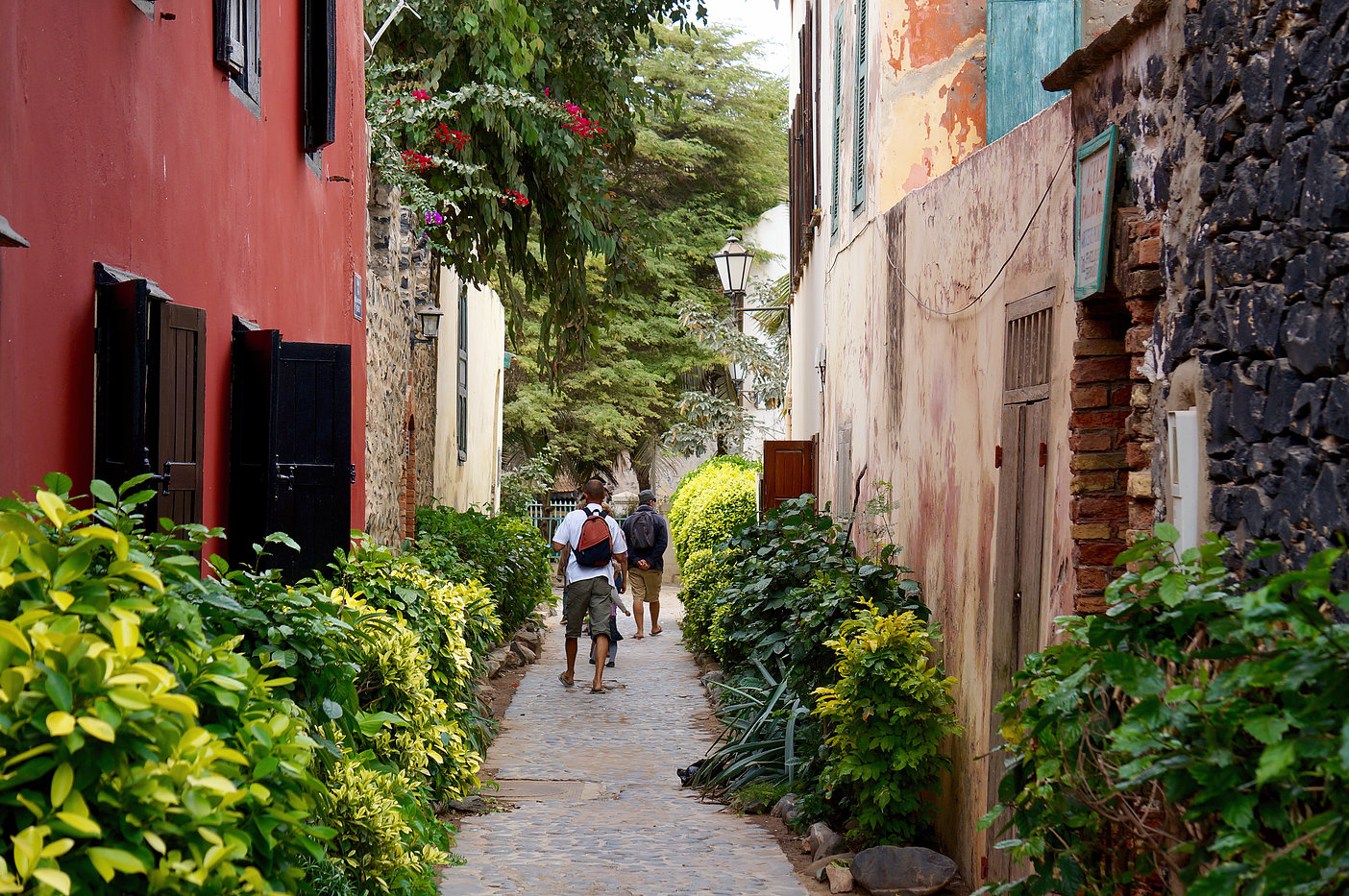
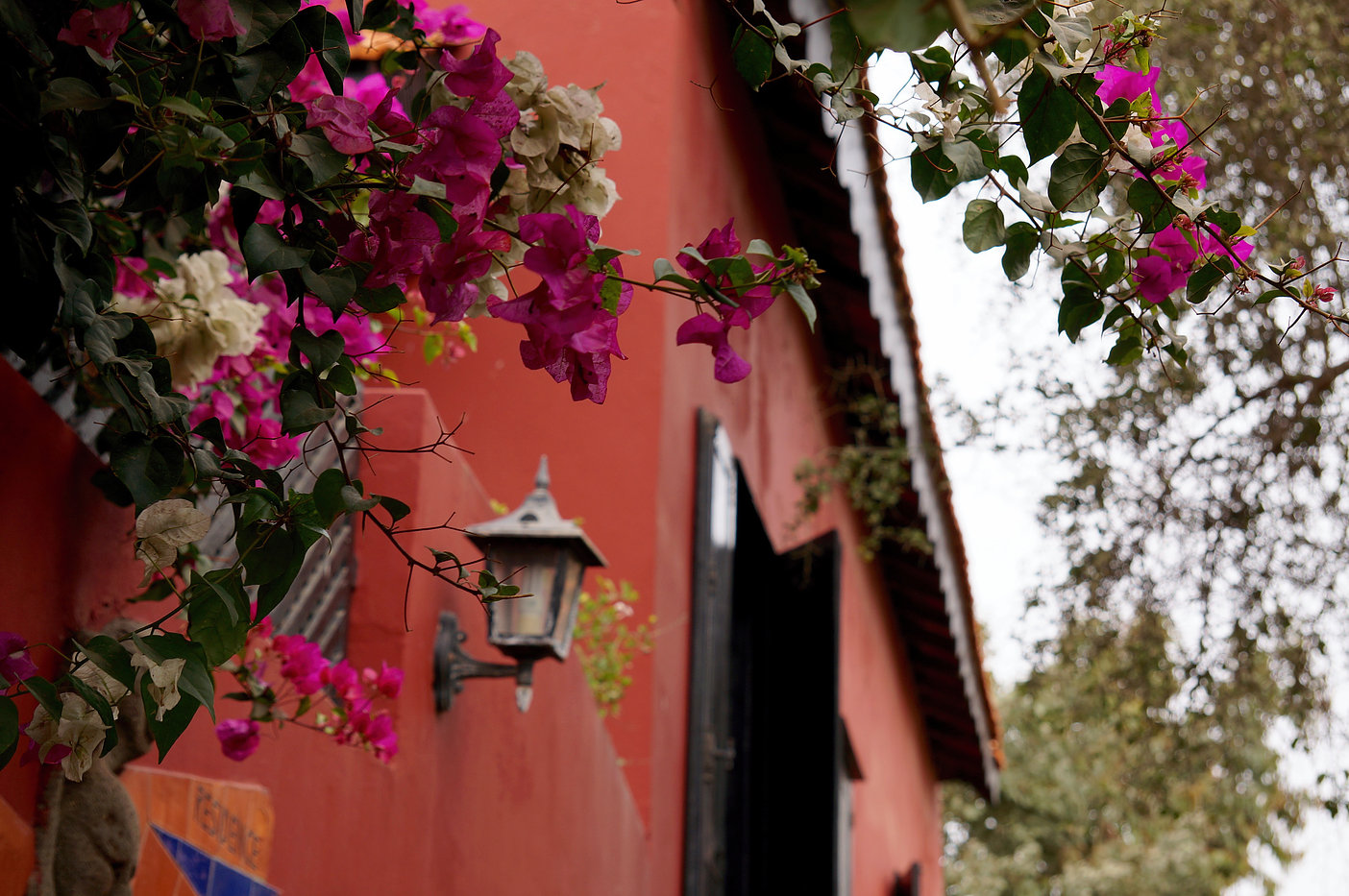
At a general council, we decided that the day’s museum programme had been honourably completed, and set off to walk around the island. The streets are clean, and you might accidentally forget that this is Africa, not Portugal. Even the skin colour of the local residents does not bring your thoughts back to Dakar.
Here and there are pleasant little shops and even cafés. In the other houses, the courtyards have long since become backyards inhabited by families with hordes of children. Stern mothers call the children indoors and shut the doors in our faces: evidently, not all tourists and their cameras behave with tact. And living in a “behind glass” reality show is not much fun when no one is paying you for it.
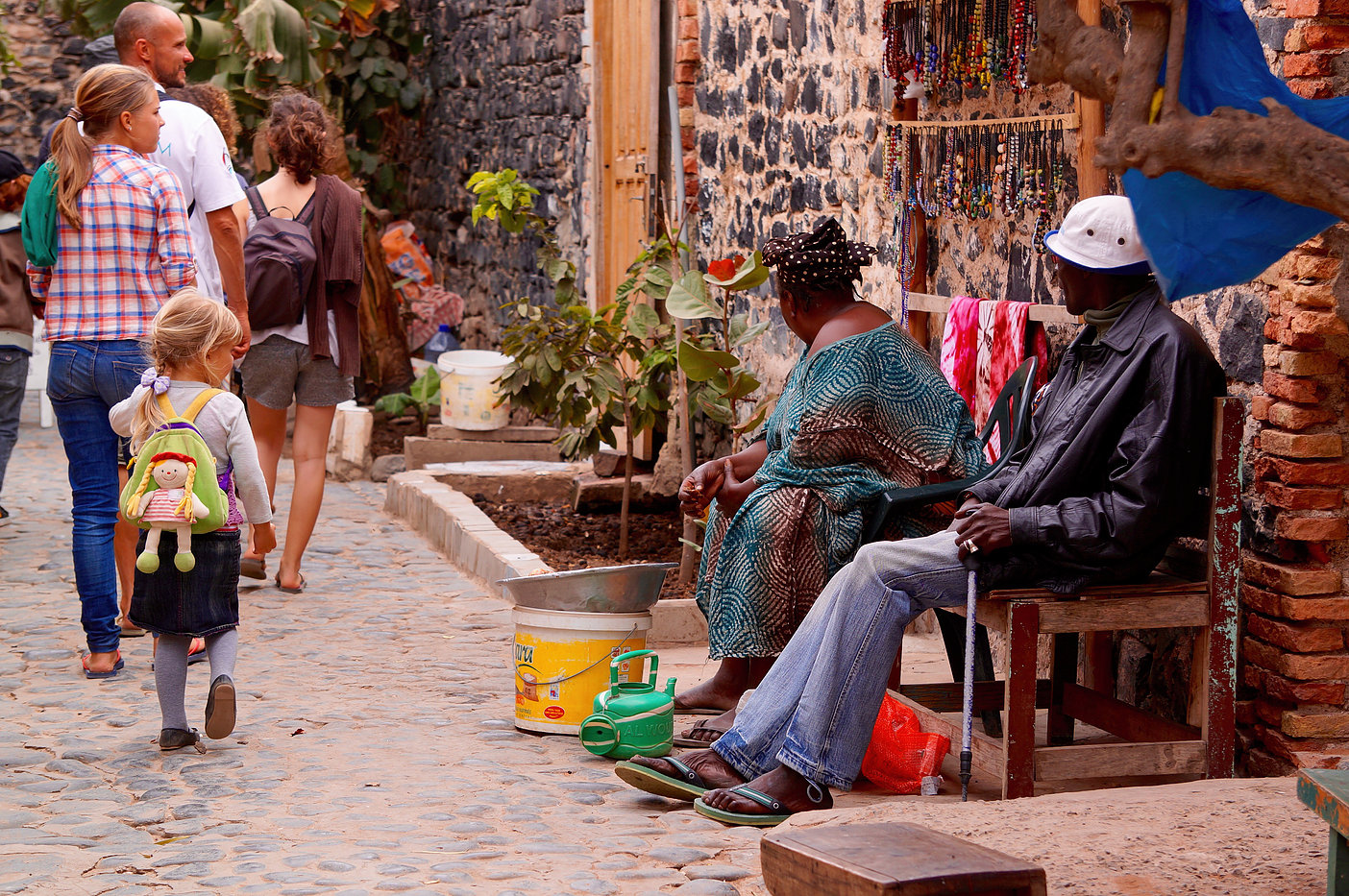
There are no beggars or panhandlers. The numerous traders, however, eagerly secure your friendship so they can lie in wait on your return and, as an old friend, drag you into their shop.
The easiest way to escape the traders—if you do not want to buy everything—is to remain silent. You have to glance indifferently over the wares and keep walking. Personally, when a perfectly respectable person addresses me, I am not very good at pretending they do not exist... But somehow I manage to fend them off and catch up with the others.
Auntie Januária began waving her arms indignantly as soon as she caught sight of the camera moving: “No! No!” So you will not see a gallery of elegantly dressed African women here. A police station accidentally ended up in the frame, and its staff did not want to go down in history either. We had to apologise and beat a hasty retreat.
“Montmartre” and the Anti-Aircraft Gun
The path climbs uphill past an exhibition of traditional arts and crafts. There is something here reminiscent of the ascent to Montmartre in Paris.
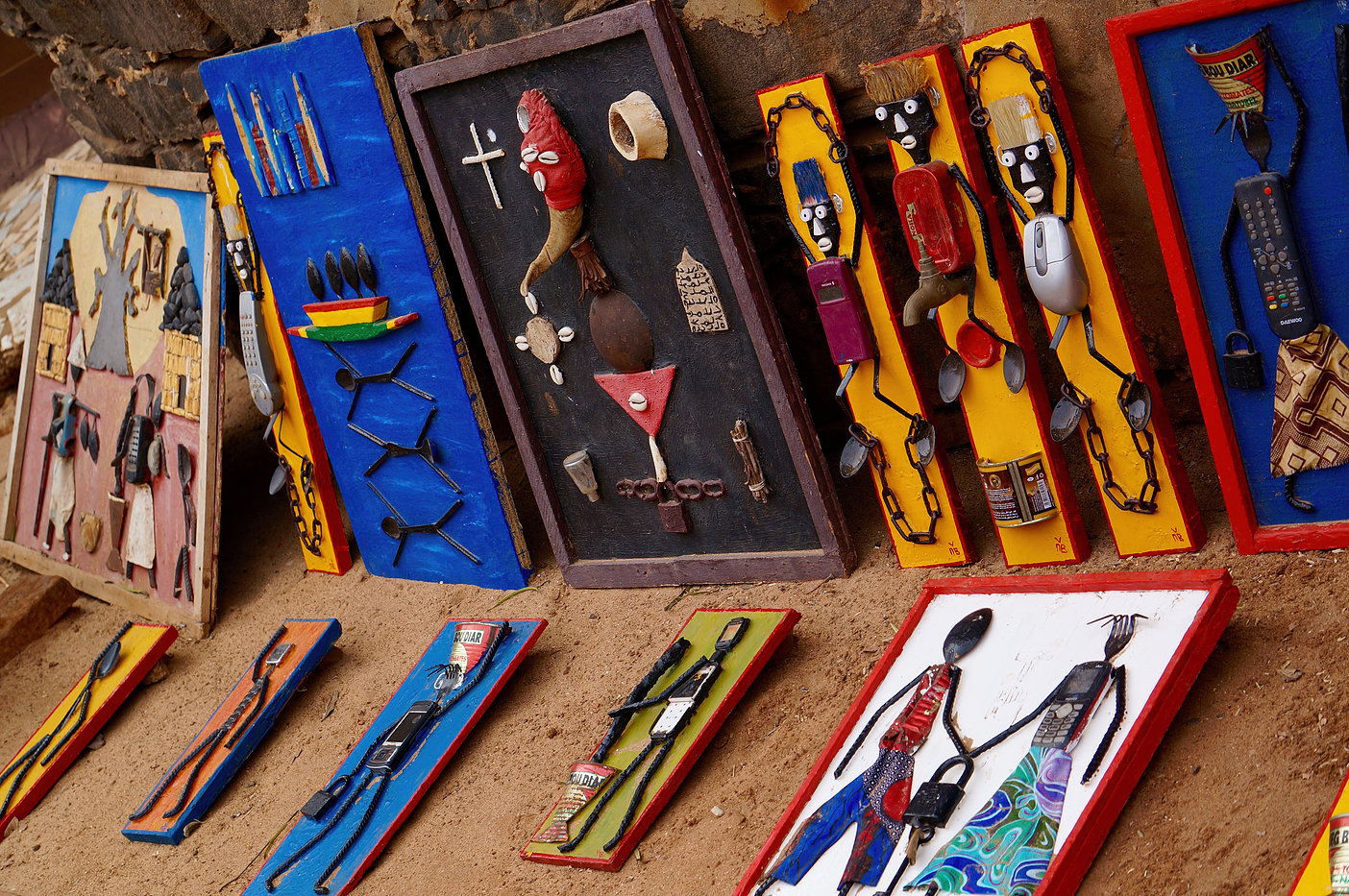
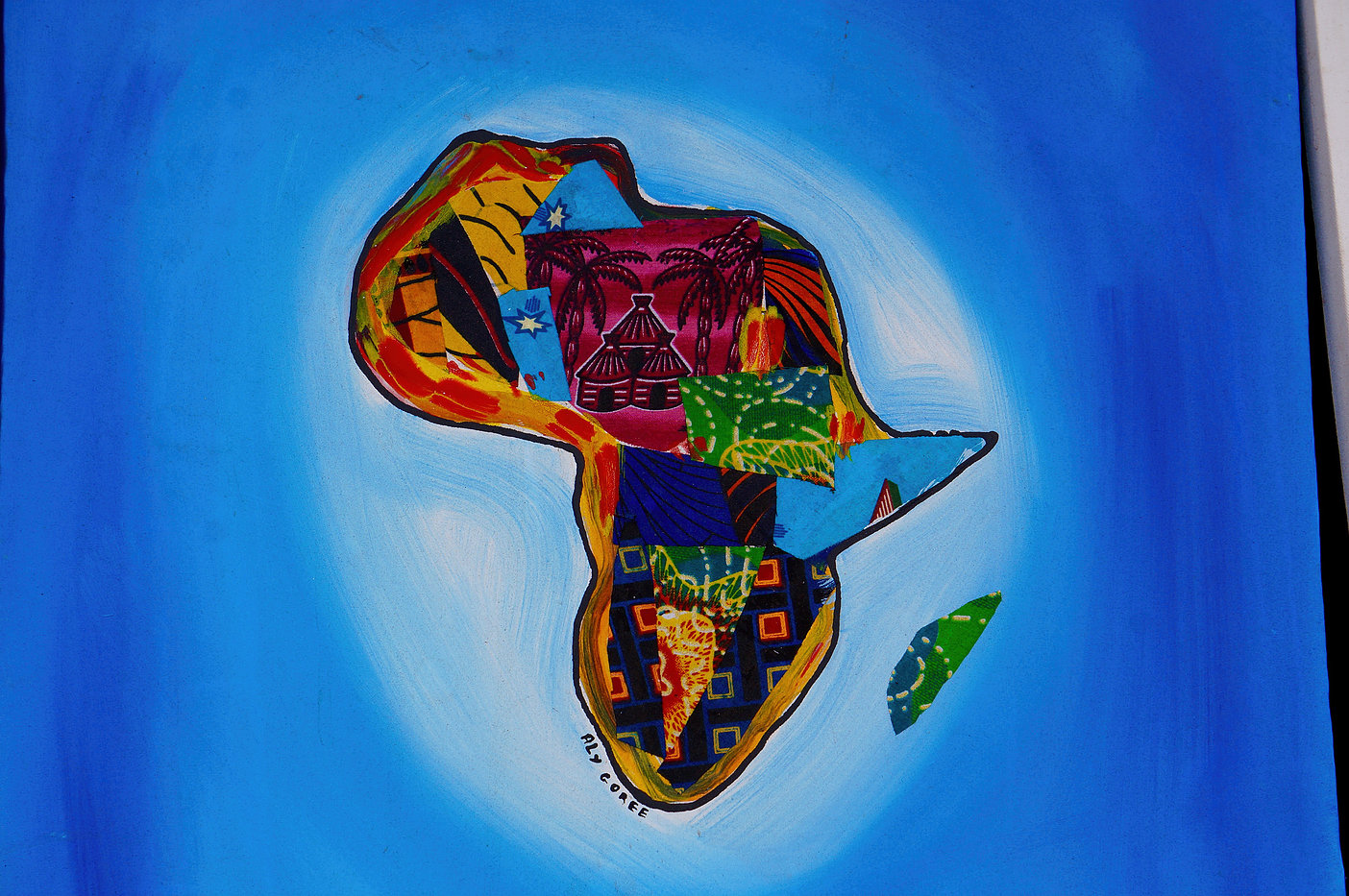
Paintings I would never buy lie on the ground. They would make a decent modern-art gallery: enthusiasts for putting rubbish to use turn telephone parts, bits of wire, and bottle tops into cheerful or melancholy man-eating monsters. Stacks of amusing panels made from anything and everything give way to rows of vivid paintings, mostly depicting the Dark Continent in ultramarine and scarlet-green.
Peaceful Residents of Gun Turrets
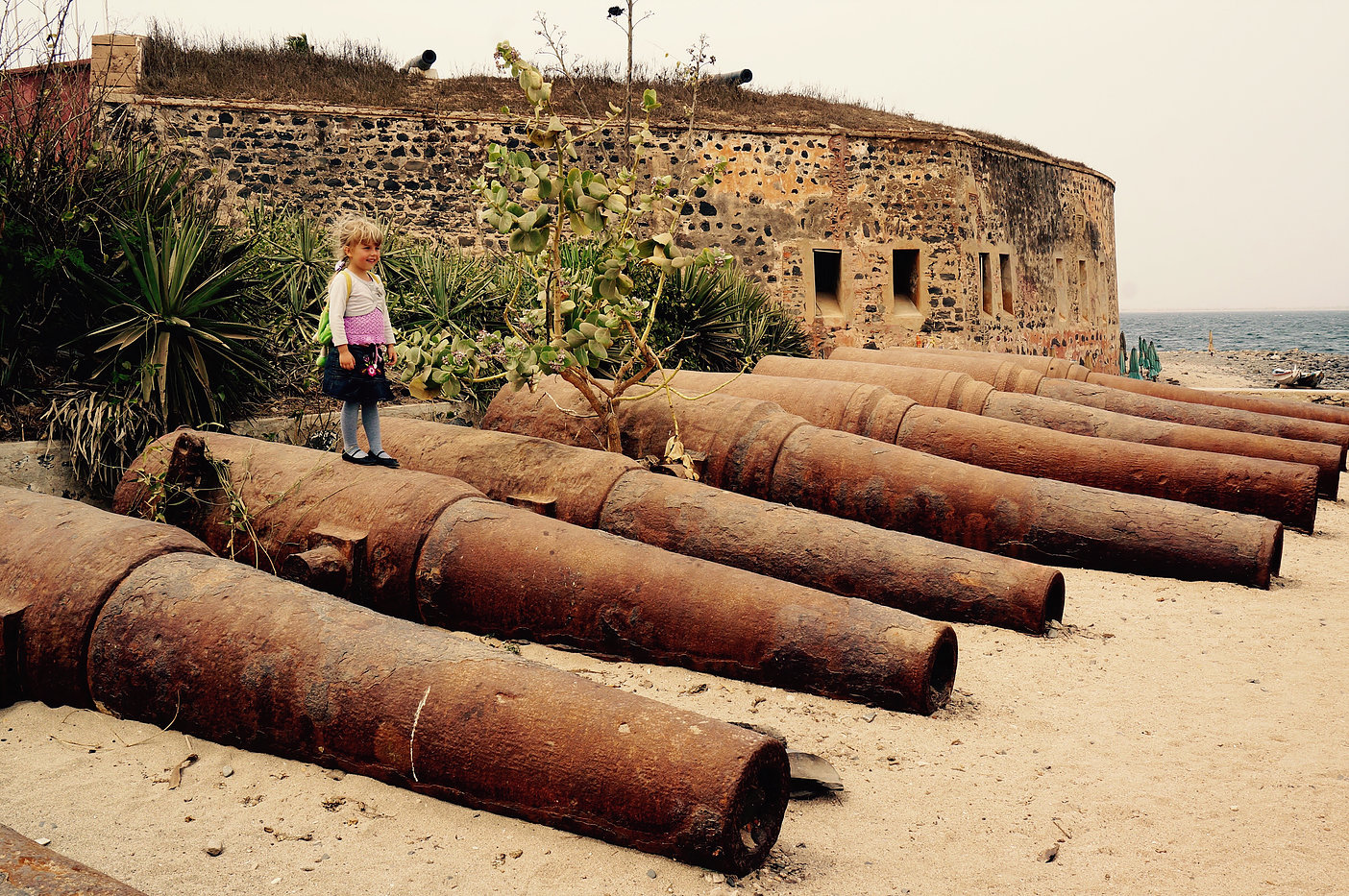
There are quite a few defensive structures and other relics of the Second World War on the island’s summit. Local craftsmen have adapted them for housing and trade. Some things have been hauled away; others have been patched up with plywood and sheet metal, and people have settled in quite happily.
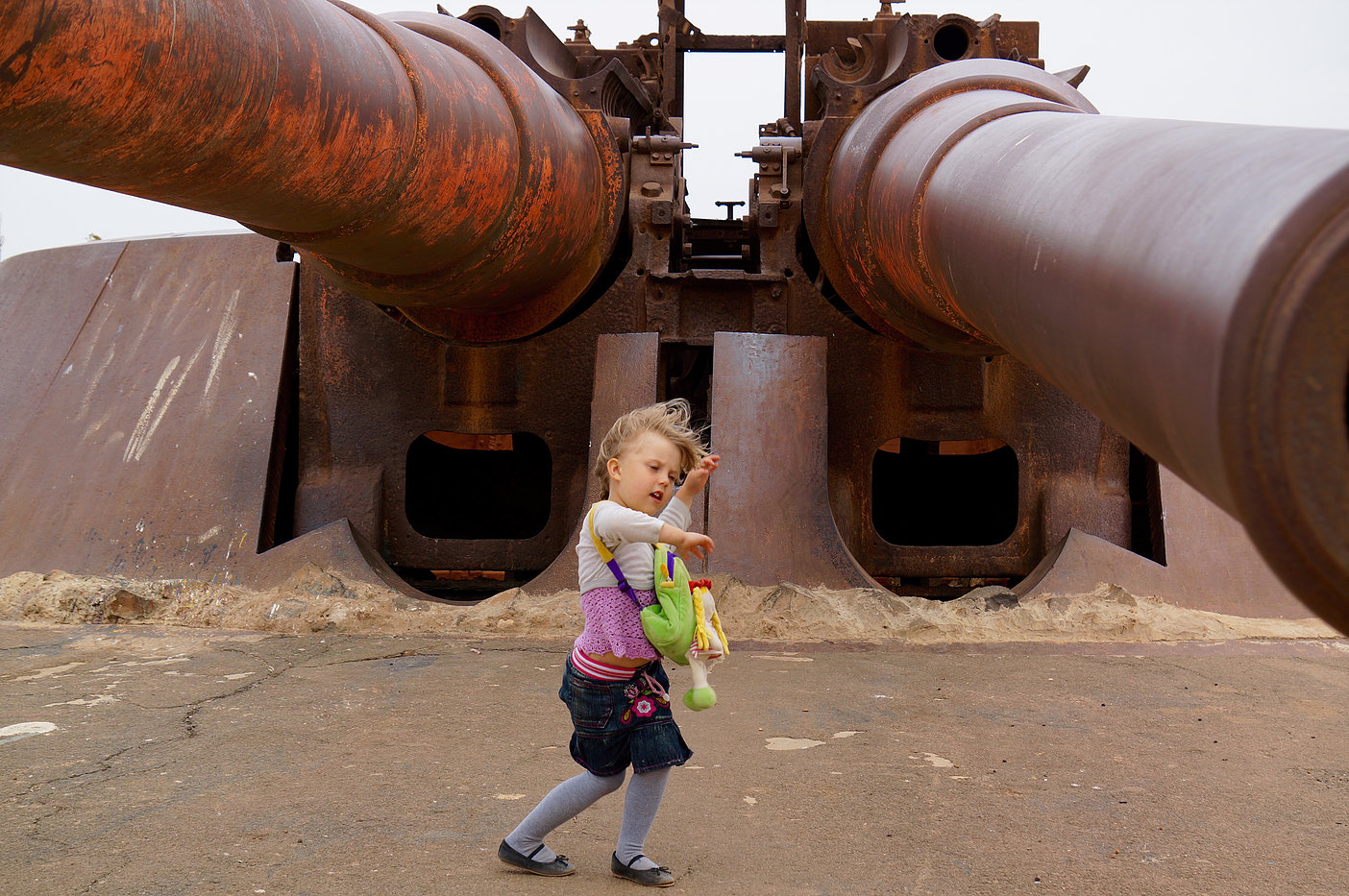
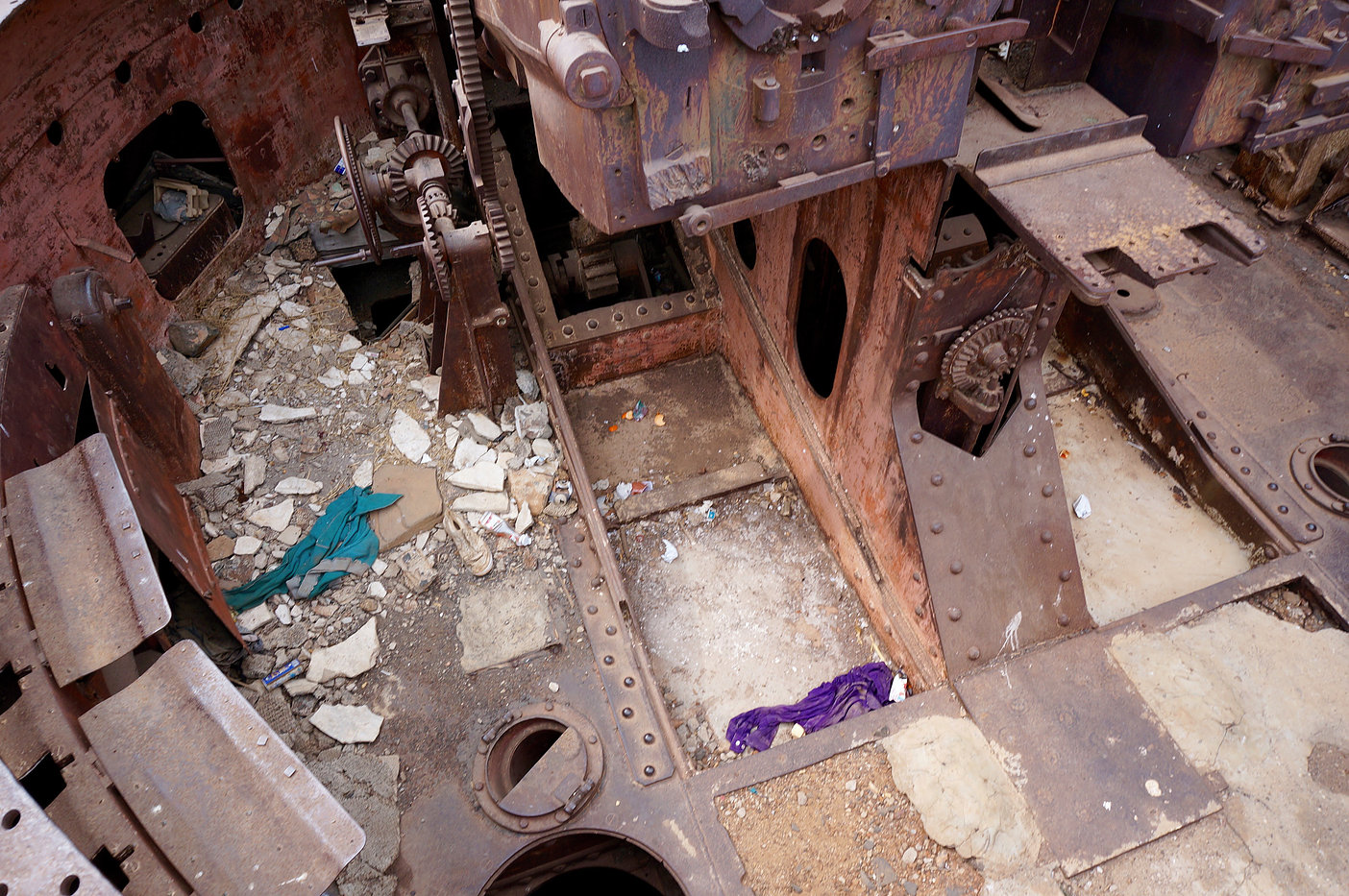
The hilltop is crowned by a stele and an anti-aircraft gun emplacement. The stele juts sullenly into the sky, while the gun descends almost 8 metres underground. A family lives on the lower level of the emplacement: through the hatch you can see brightly coloured toy cars, a sleeping platform, and some bundles. We did not manage to photograph the entrance hatch, only the exteriors:
The enormous barrels of the anti-aircraft guns on the summit of Gorée Island
Almost the top floor of the “apartments”
Another road leads down from the hill. There are almost no stalls along it, but there is a playground where the local boys happily push our young sailor on the swing. Lada took the attention for granted and never mentioned this first experience of socialising again.
A Vocabulary Exchange and the Return
We cast off without incident and, after an hour of sailing close-hauled with the wind on the bow, reached the anchorage in two tacks. At a steep heel, the children slid across the floor into the walls and were smacked by doors as they queued to wash their hands and get a bread roll.
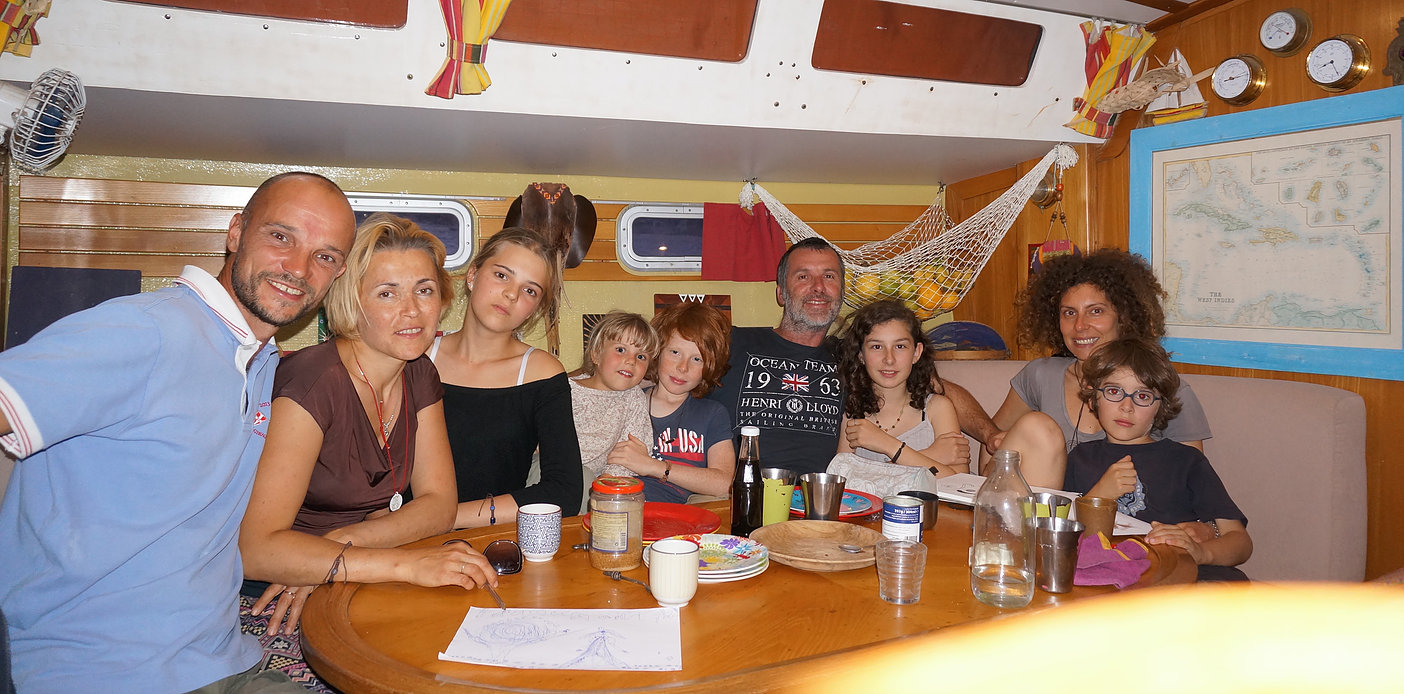
The day ended with a traditional Russian tea party in the wheelhouse while we waited for the last water taxi. Our French friends added the following words to their vocabulary: “Spasibo,” “poka-poka,” “na zdorovye,” “pozhaluysta,” “matryoshka,” “Petrushka,” and “khorosho.” And in addition to the expressions she already knew, Lada now regularly says, “Viens avec moi, s’il vous plaît.”
Casting off from Gorée Island 🙂
More photographs:
The crew of Lady Mary visiting BABA 🙂
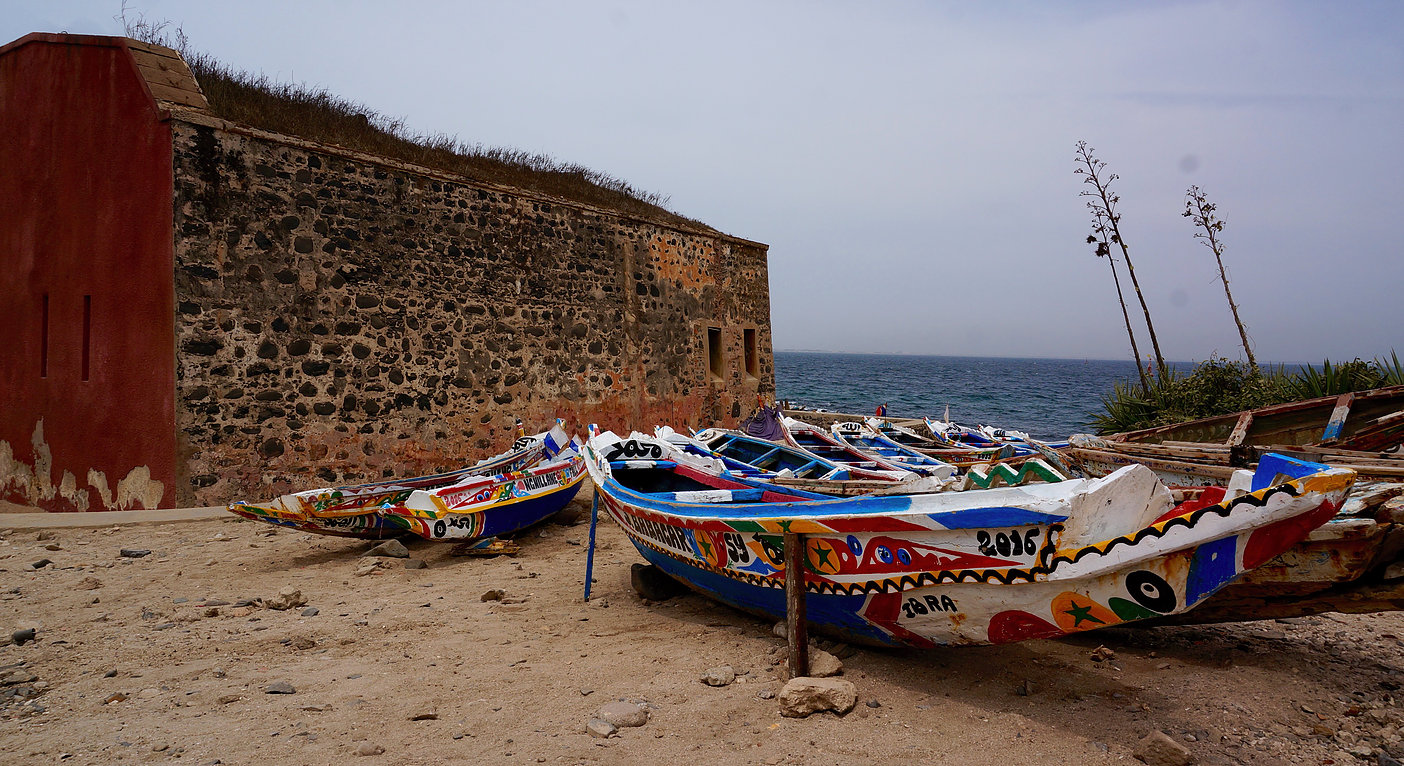
The old fort-prison for slaves and the new pirogues
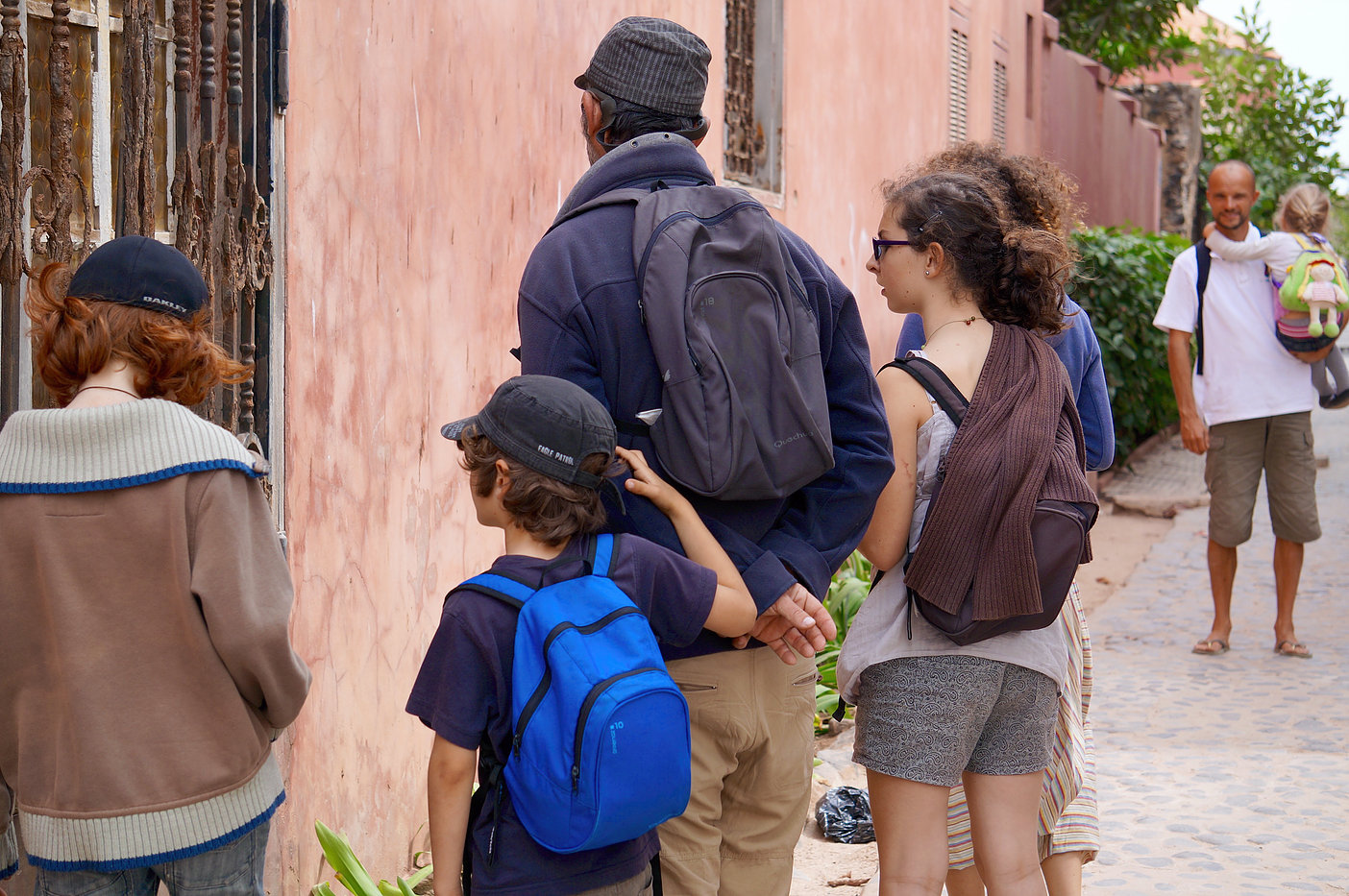
The crew of the yacht BABA examining the fanciful wrought iron, while our young sailor is a little tired Quite European-looking streets
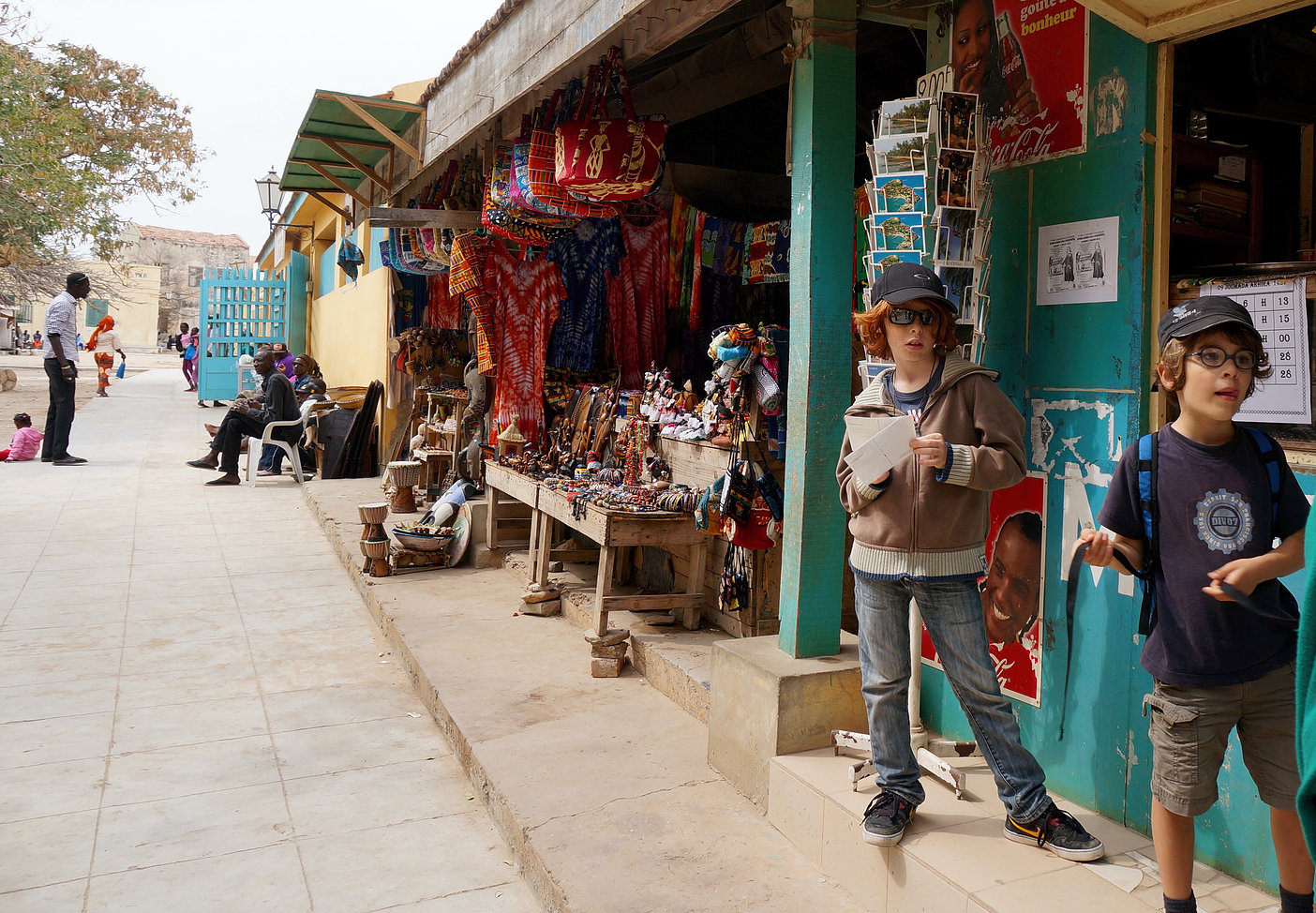
Our French boys choosing postcards for their grandmothers at the market stalls
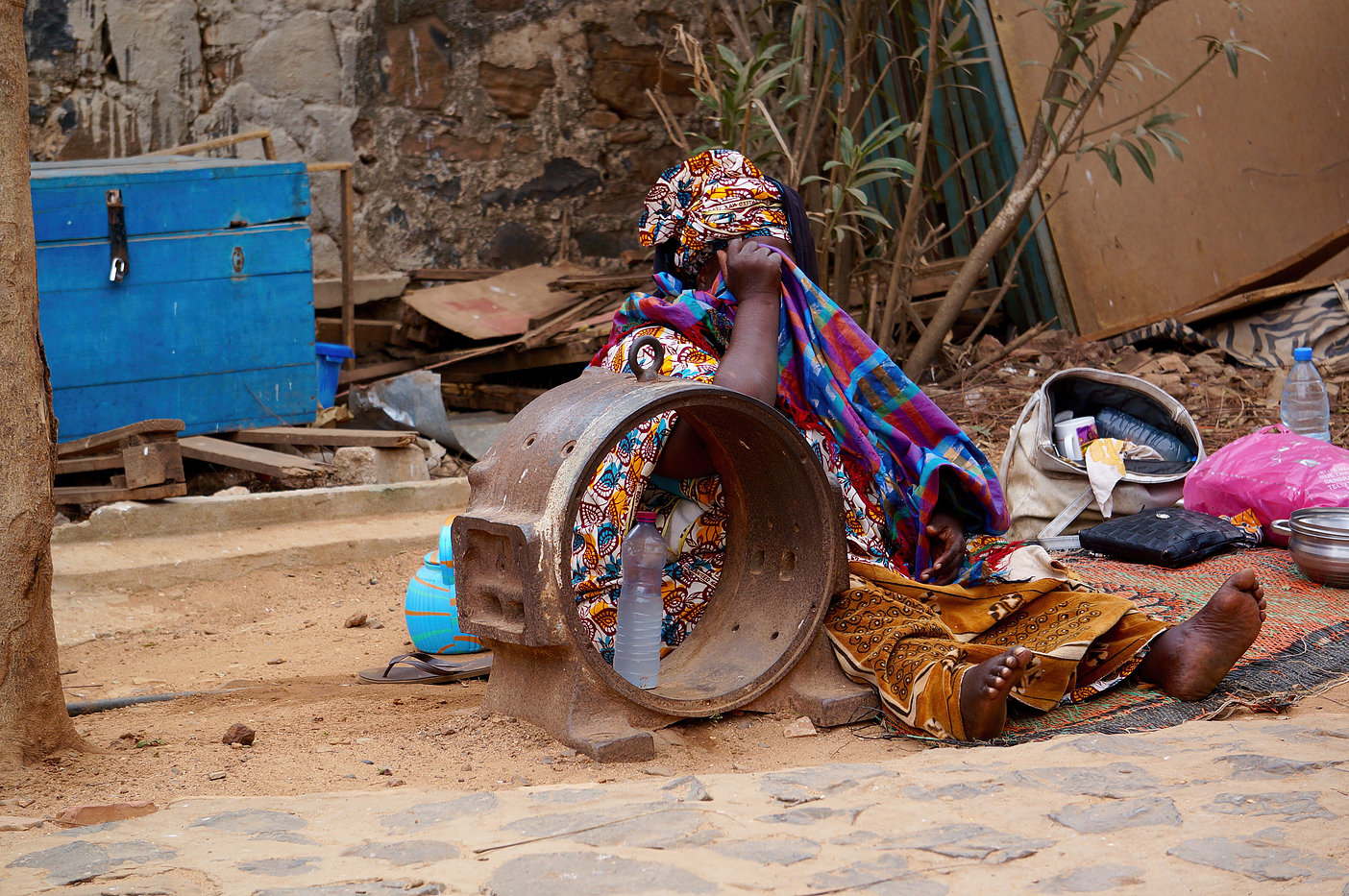
Many of the women traders are clearly tired of tourists’ attention and cover their faces at the sight of a camera.
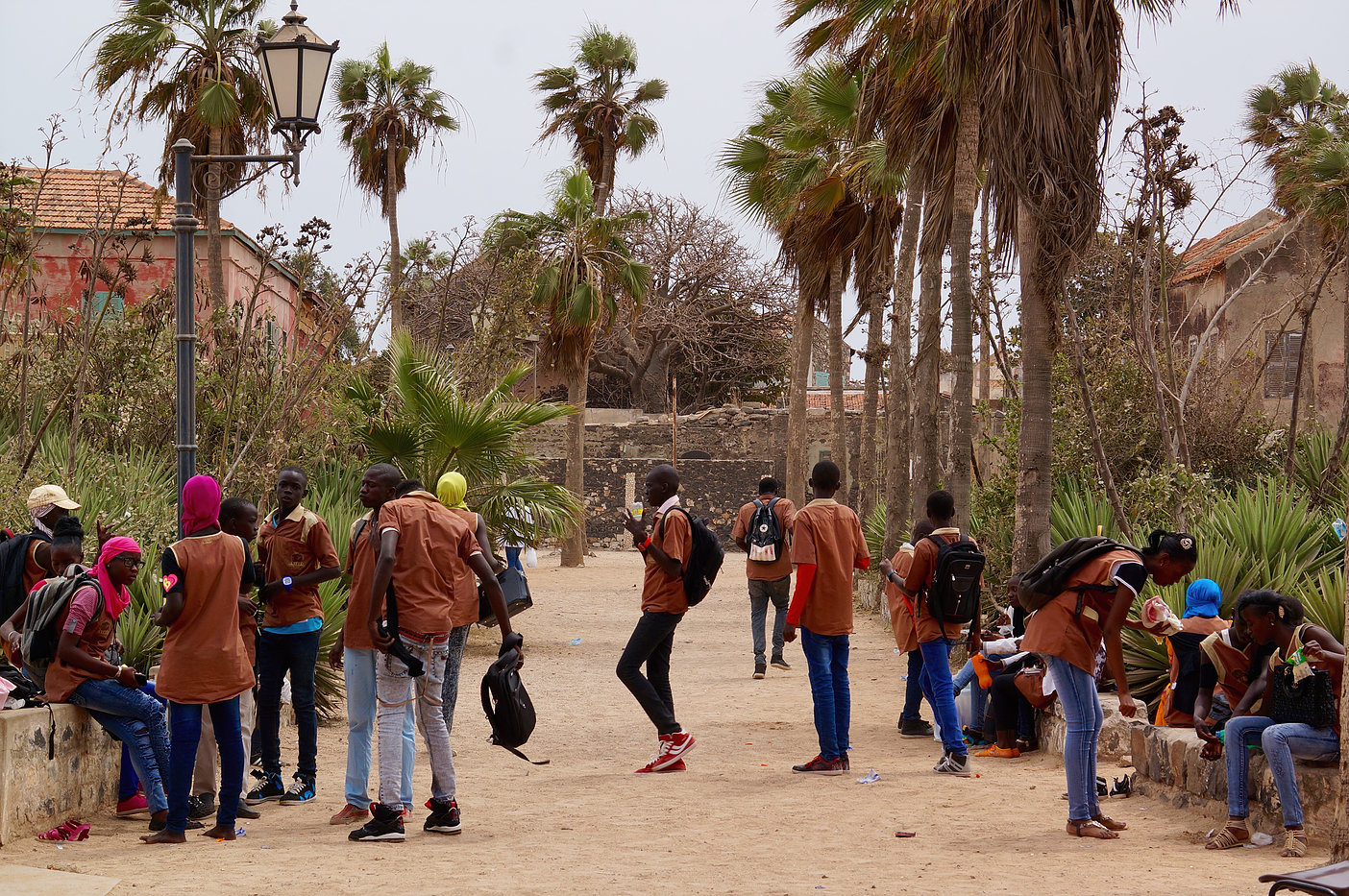
There are many students on the island—they look too old to be schoolchildren. Perhaps there is some sort of college here as well as a school. A ferry regularly runs from the mainland carrying tourists and locals.