
From the Travely-Family archive · Atlantic
Passage to Cuba. Police Off an Uninhabited Island
An original publication from the former Travely-Family website. This English translation was preserved from the technical-site archive without editorial rewriting.
Passage to Cuba. Police Off an Uninhabited Island. Waiting for the Wind with the Inhabitants of a Coral Reef
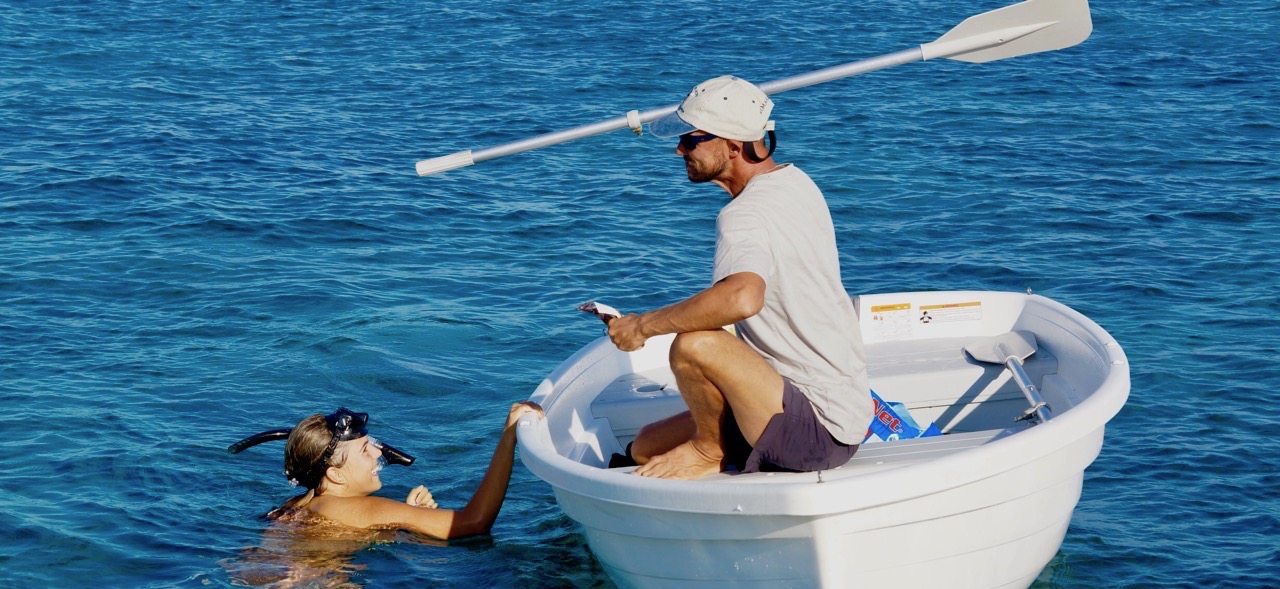
Having worked out the number of days and stops remaining before Havana, the captain quite reasonably concluded that if we called at the inhabited Turks and Caicos Islands to formalise our relationship with the state, then a) we would have no spare days left, and b) we would not make it to the north-west of Cuba to clear in.
In Cuba, controls are extremely strict—the Iron Curtain is alive and well—and the route along the coast is more than 500 miles, with currents running in different directions and traffic separation schemes. Anything could happen; we might suddenly have to enter territorial waters.... Therefore, from the Turks and Caicos we are heading to Cuba’s Puerto de Vita, while visiting the aforementioned realm of the world’s finest diving and forty islands exclusively by paths less travelled.
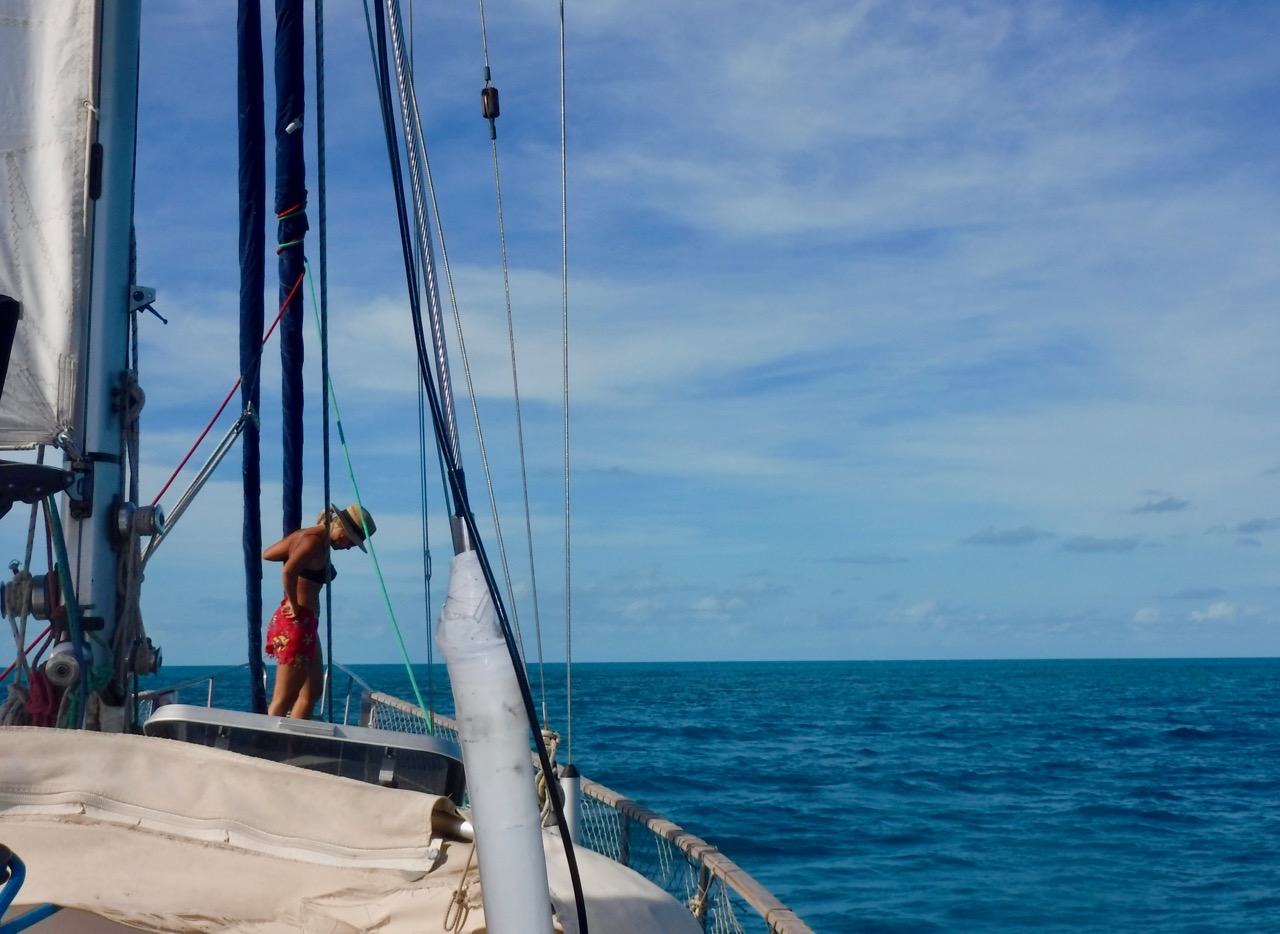
Today the first mate is the lookout
From the uninhabited Big Sand Cay to the utterly uninhabited White Reef and Indian Reef—30 miles of a perfectly calm passage, apart from half an hour spent peering tensely at the coral seabed, which looks twice as close as it really is because the water is indecently clear.
And it is painfully sad, amid the pristine turquoise shallows, to encounter bottles that once held some kind of chemical, a striped bag, and an entire neo-ecosystem in the form of a huge piece of plastic tarpaulin stuffed with ropes and seaweed, all floating miles and miles from the nearest habitation. You could not even haul something like that out: where would you put it? It would take up the entire stern:(. People, we only have one planet! Don’t kill it.
Back to the point
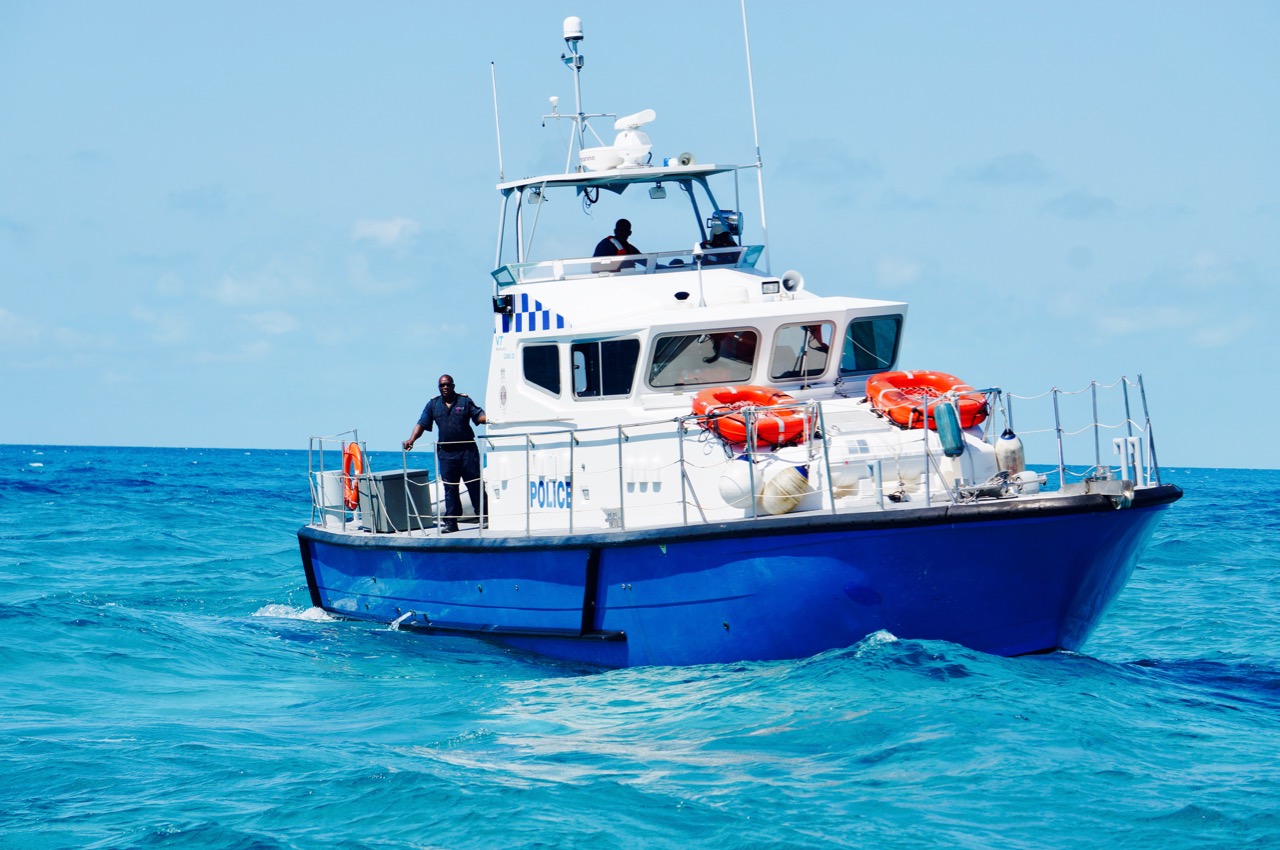
So there we are, illegal aliens at anchor, enjoying our morning coffee. The first mate is working on an article, the elder young sailor is reading, and the captain and the younger one are battling it out at backgammon. And then, attention, attention: out of the blue sea, like Aphrodite, gleaming with champagne spray, a launch marked “Police” glided briskly towards us. We did not attempt to flee, because that very maths problem about relative motion from the previous chronicles had been solved (go on, check it yourself—the problem is there) and the answer was not in our favour;).
For about ten minutes we watched the cloud of foam fly straight towards our side, but some 200 metres away the launch turned sharply to inspect the rest of its uninhabited dominions. The crew returned to their coffee and backgammon. An hour later, no longer concealing its intentions, the patrol returned from its rounds, and a big Black man began waving at us. While one waved, lulling us into a false sense of security, the second steered, and an unseen third man ordered us over the radio to switch to Channel 14.
Who might you fellows be?.
“But the captain calmly told us: ‘It isn’t over yet, it isn’t over yet!’”
The standard questions:
Who are you? Where from? Last port and next port?
What the hell are you doing here, and how long have you been doing it?
Who is aboard? Names? Ages? Family relationships?...
And do you have any weapons aboard? What, travelling with your family and you didn’t even bring a weapon? Uh-huh... — All this in a very stern voice. — And what did you say your name was?
Well, the captain reported the whole truth: that we ourselves were from Russia, all the way from Moscow /sailing/, that we had stopped here only yesterday, that we planned to leave tomorrow, that we were not going ashore, that we were keeping as quiet as mice and waiting for the wind to change, because a southerly gave us absolutely no chance of sailing to Cuba with this particular rig. (Fortunately, Cuba is a big island, and it genuinely is difficult to reach its southern coast against a southerly wind. But the north is just right. It was lucky the police did not find our route from Saint Martin to southern Cuba odd.
In their place, I would have wondered why anyone would make a 200-mile detour, climbing north towards the Turks, only to drop south again afterwards, against the wind. But geography does not seem to be their strong suit. Their job is to defend the motherland, not study geography.
Landing on the Coral Reef
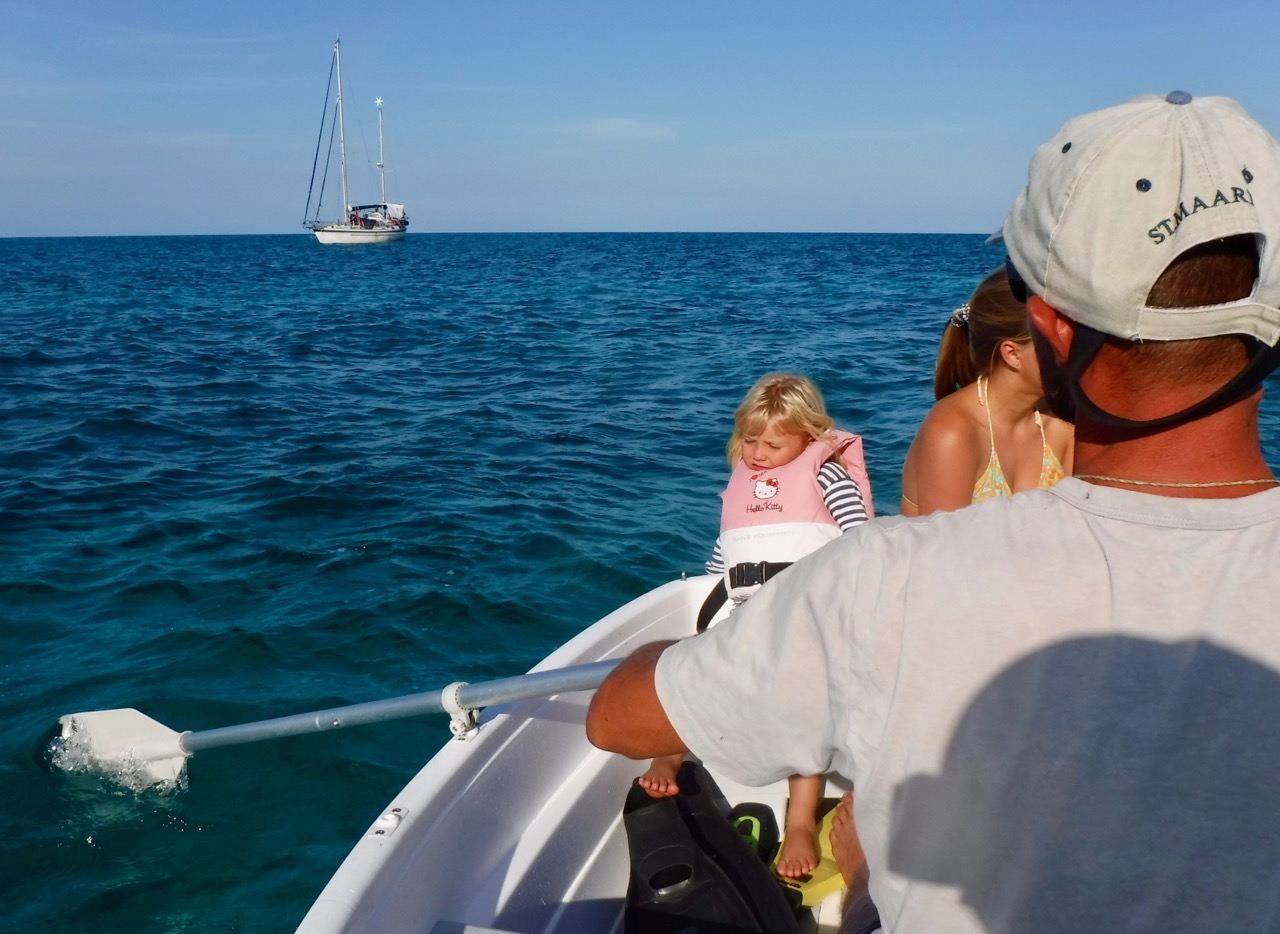
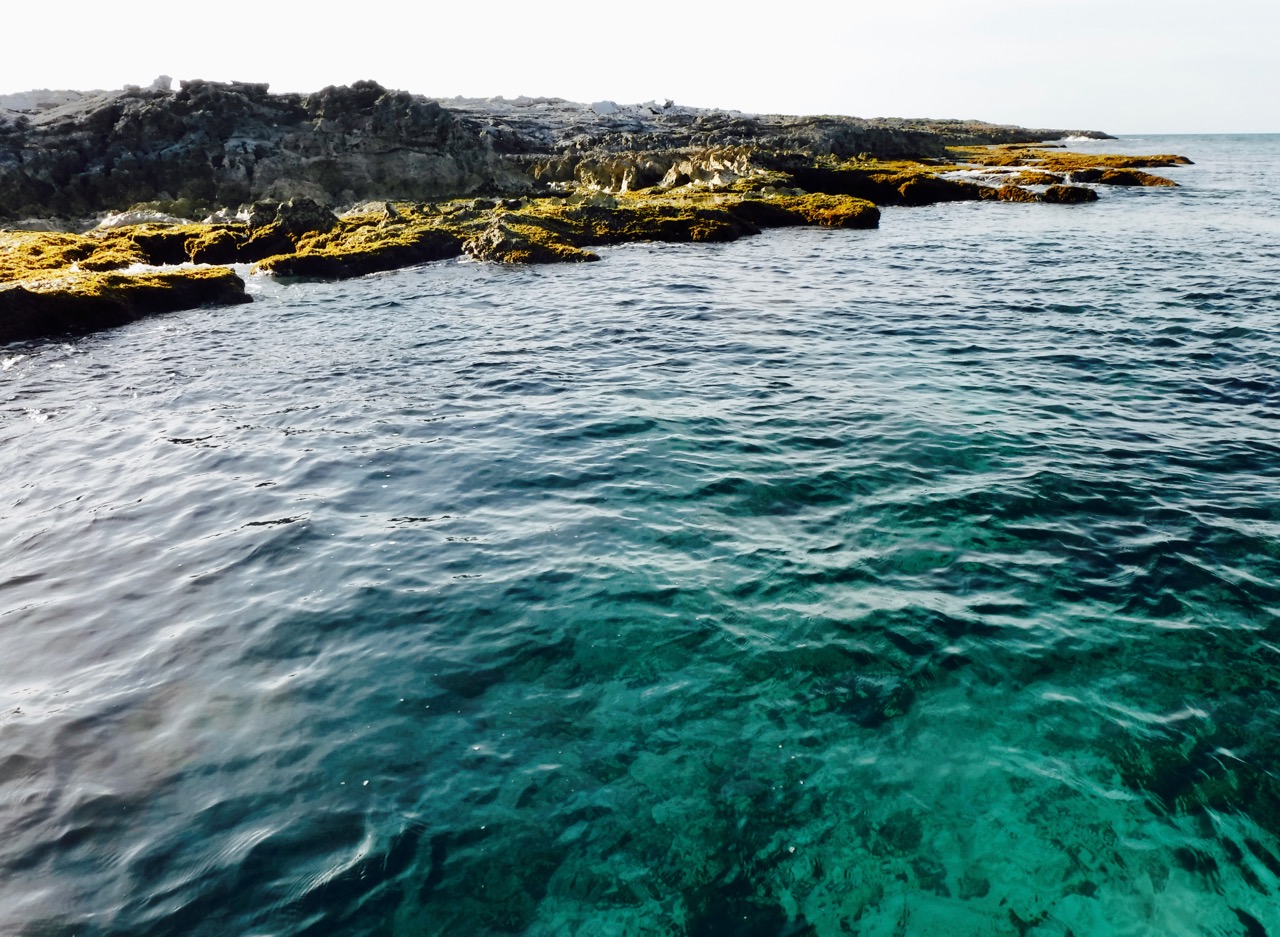
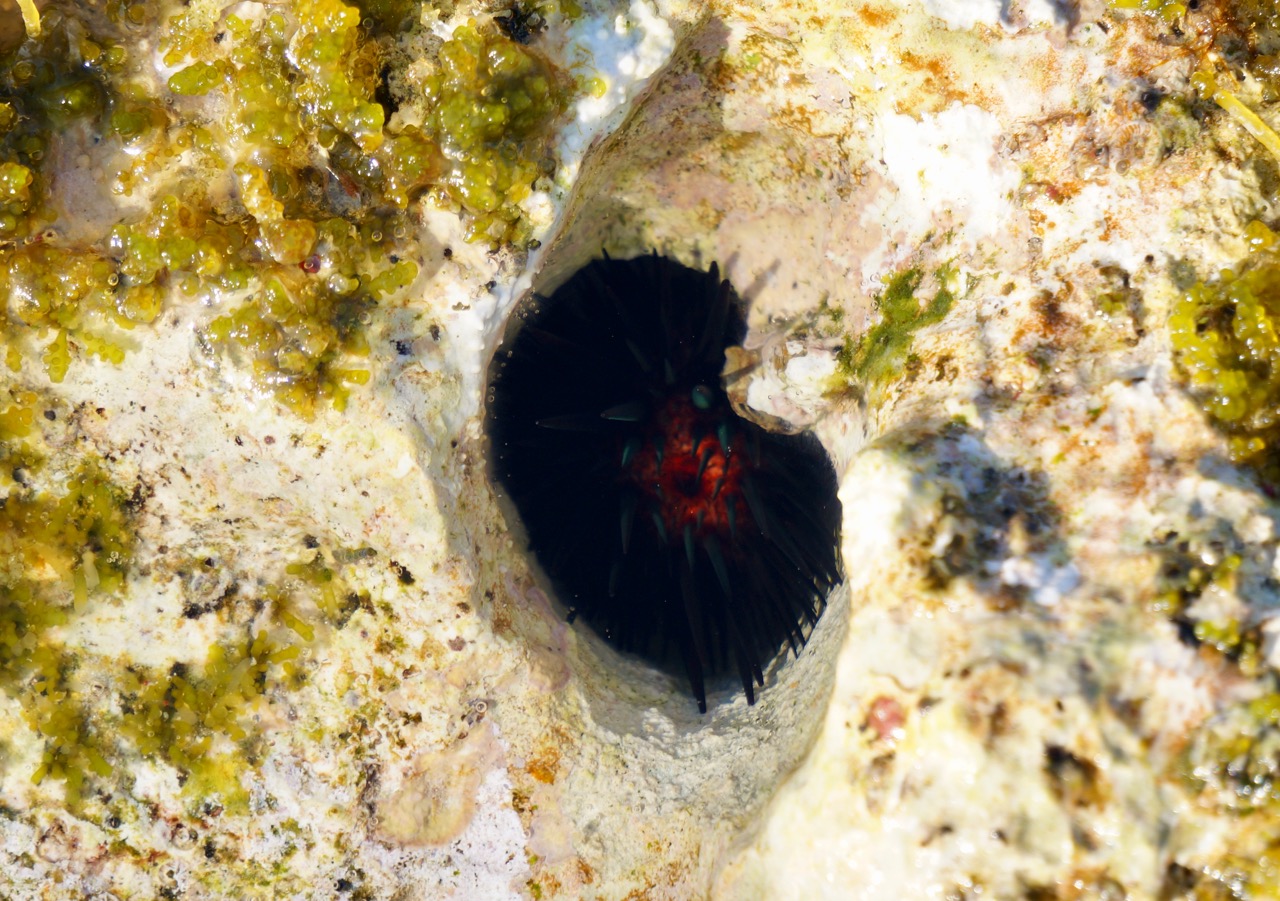
So, after examining us through binoculars in our peaceable Panama hats, and Lada’s little blond head, the police wished us well and disappeared into the blue distance, still sparkling with foamy spray. We waited a couple of hours and then went ashore on the deserted reef after all. Or, more precisely, only the first mate landed, scattering crabs and sea urchins so she could tie the dinghy to a bizarre coral loop.
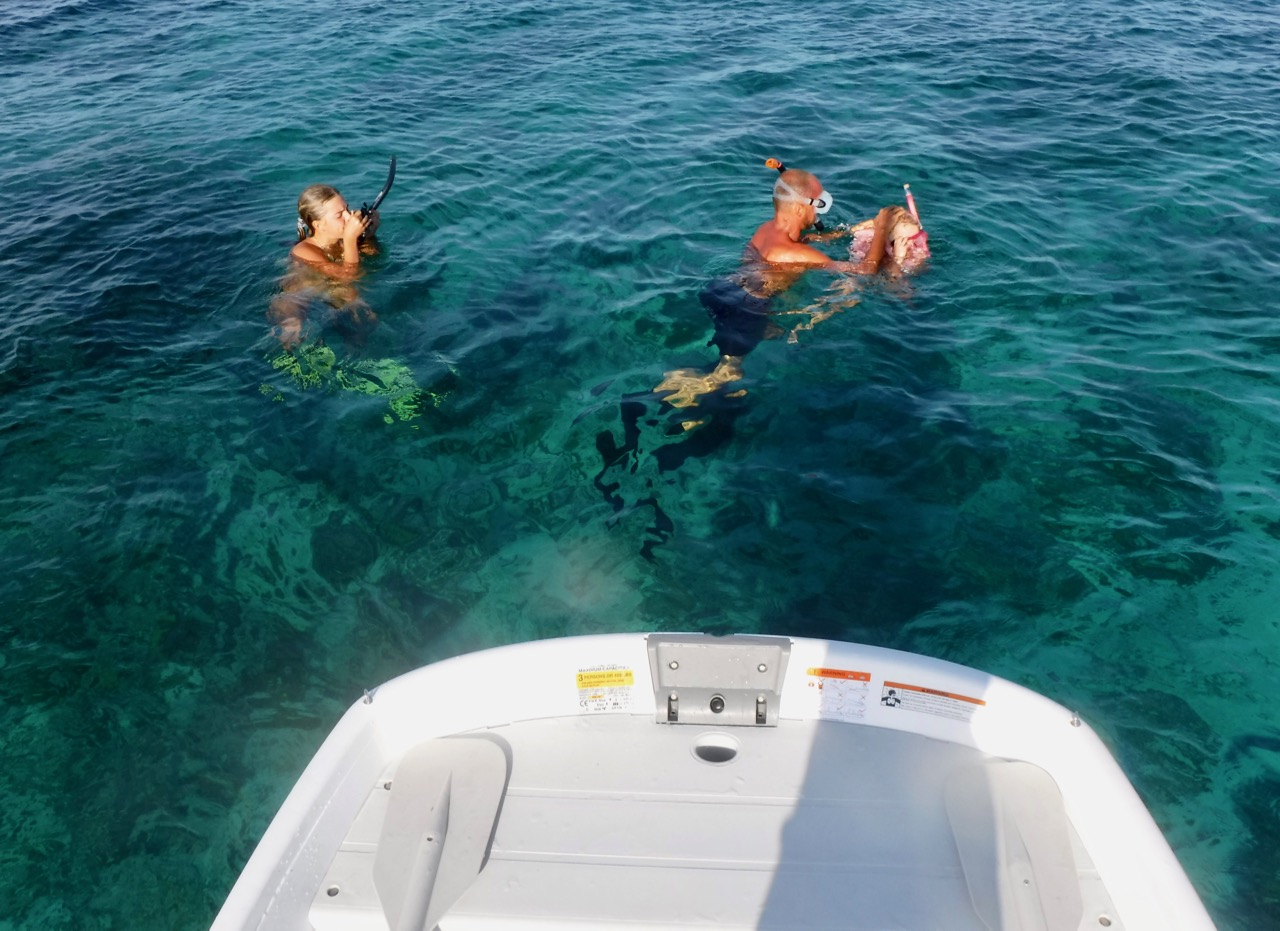
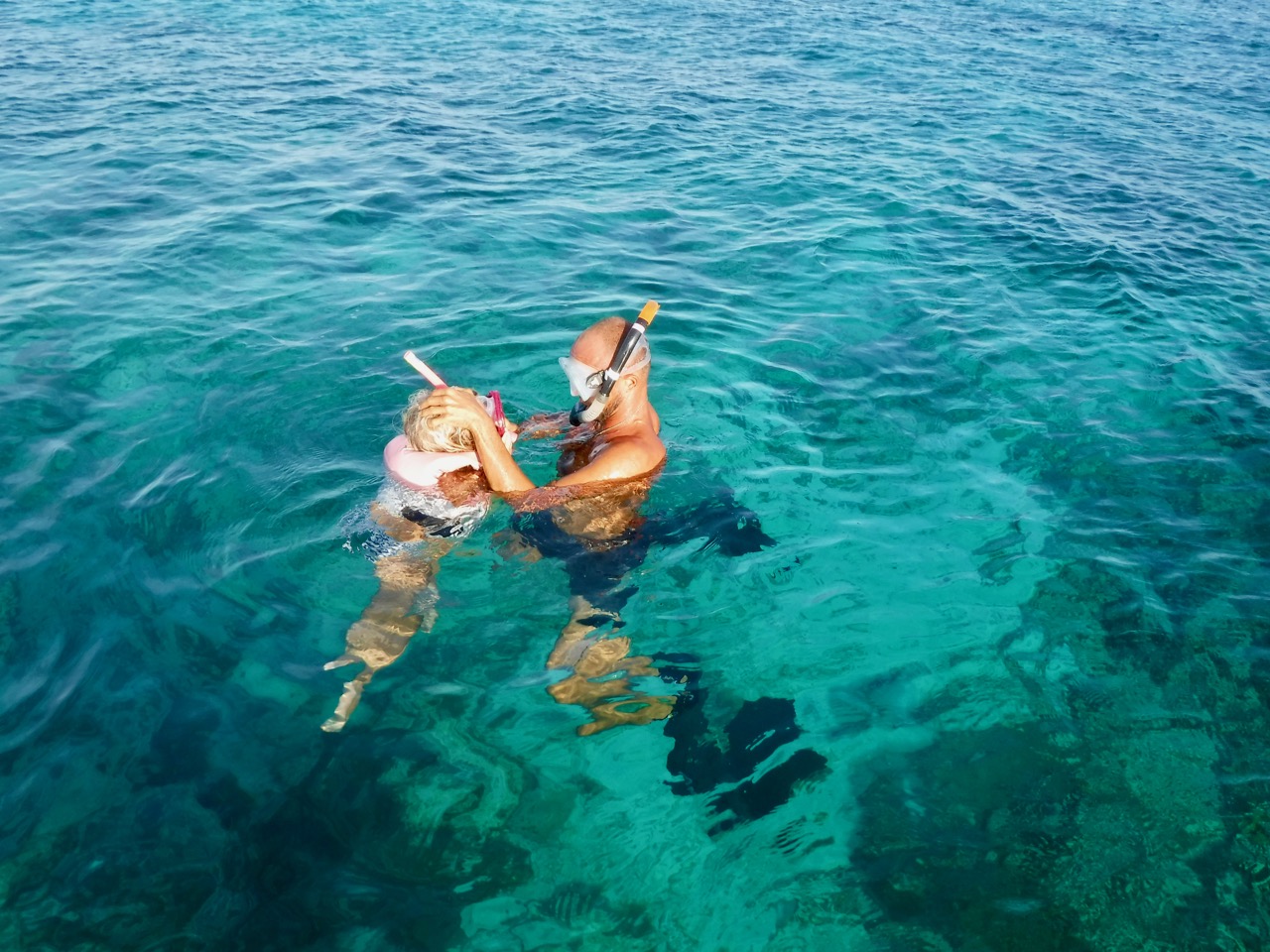
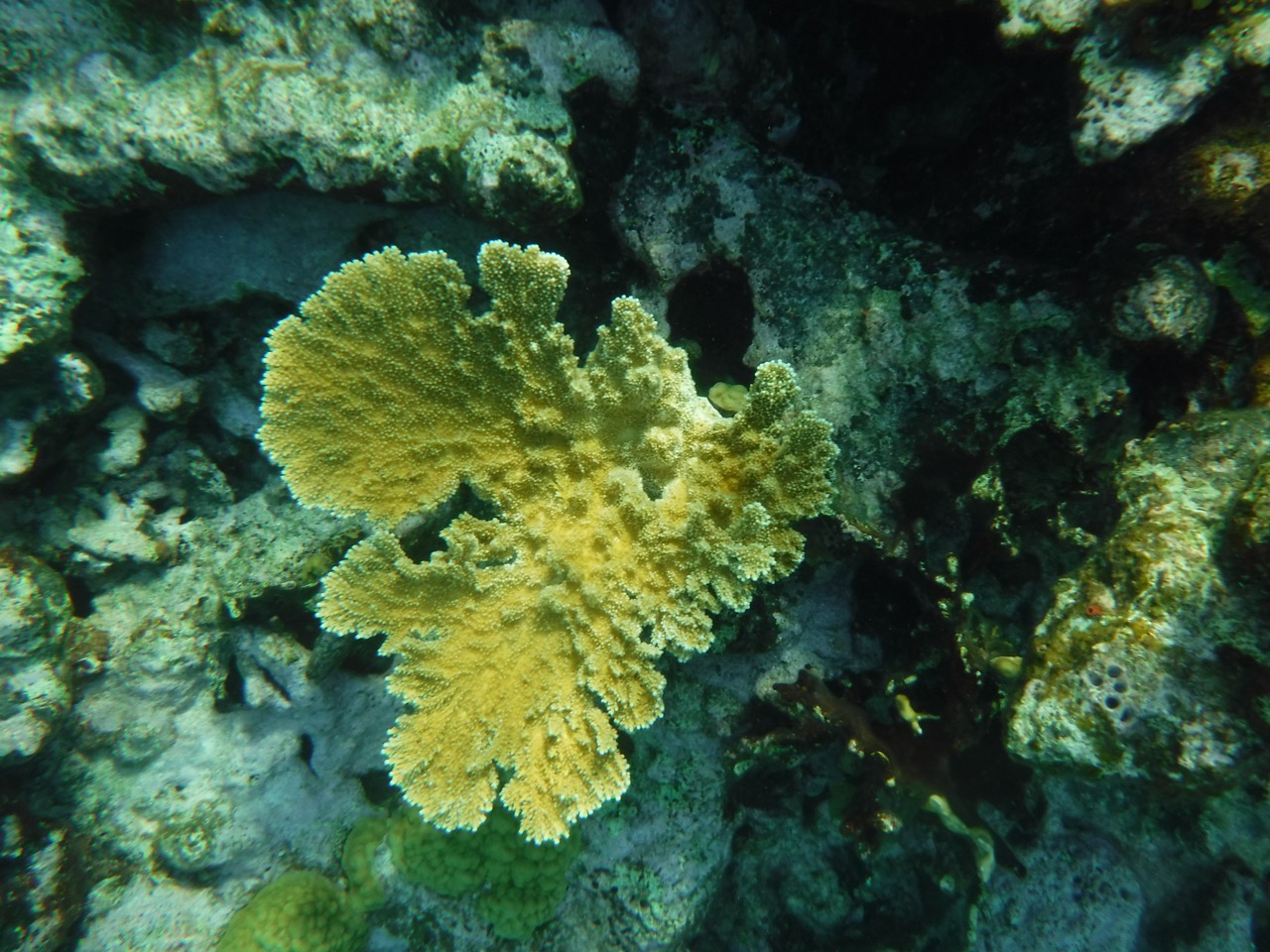
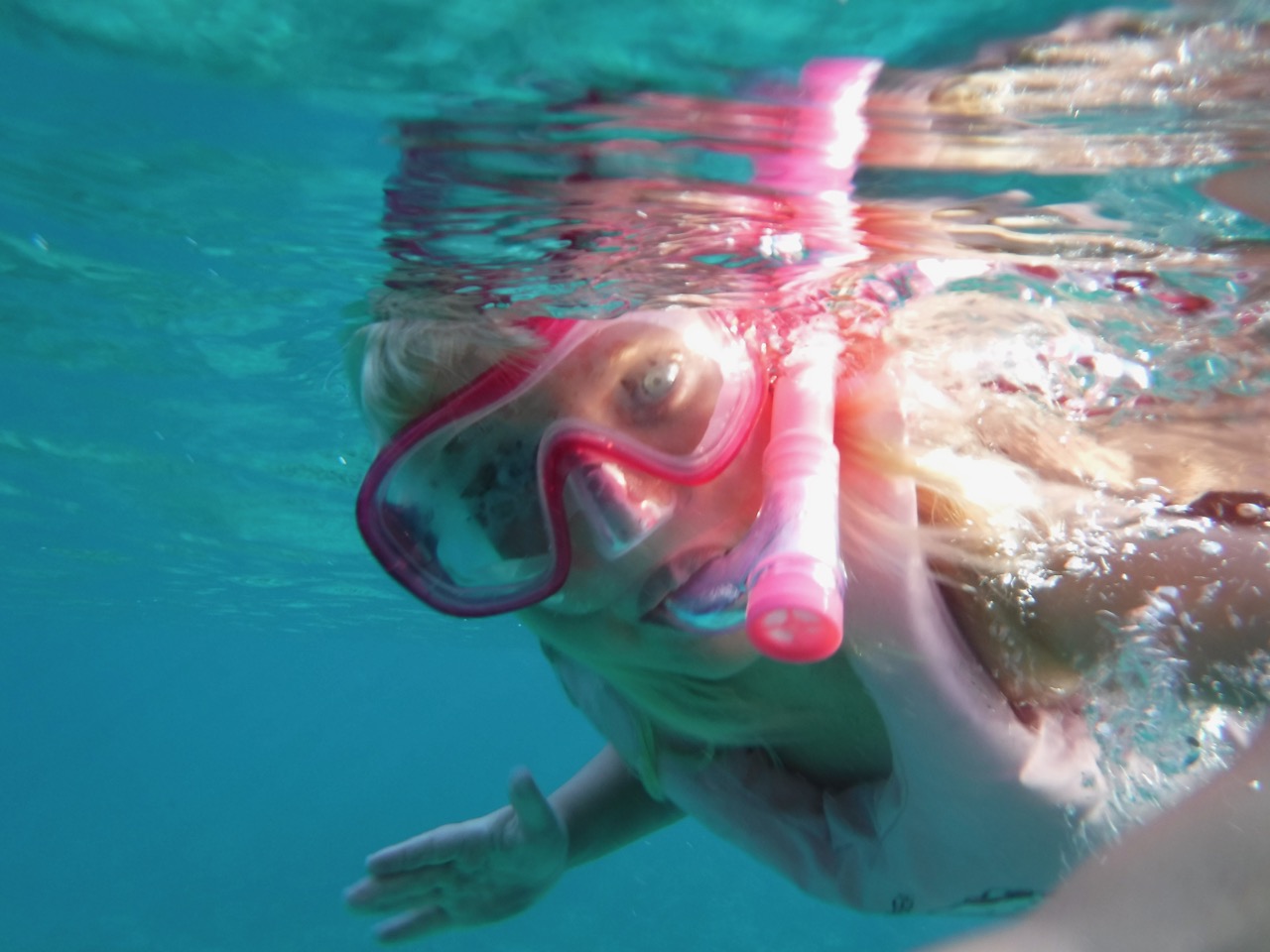
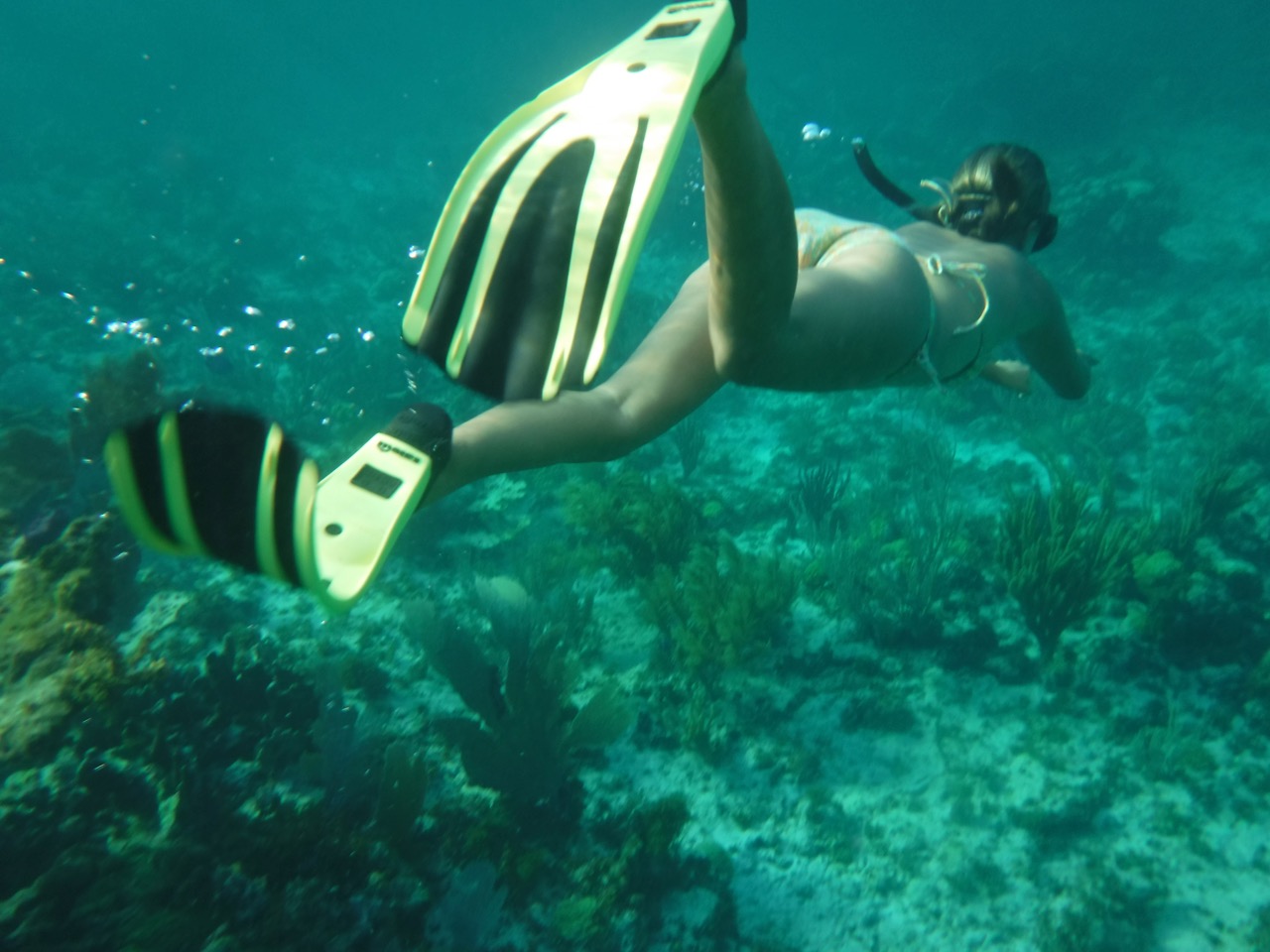
Having pulled on masks and fins, the entire crew splashed into the water to gaze at the multicoloured coral world of Indian Cay. For the first half-hour, Lada squealed with delight straight into her snorkel. For the second half-hour, everyone else squealed too. And the soft coral fans swayed in time with the surf, rocking blue and yellow fish, shoals of fry, colourful branches, and a family of four illegal divers.
And now for the photos 🙂
The first underwater explorers
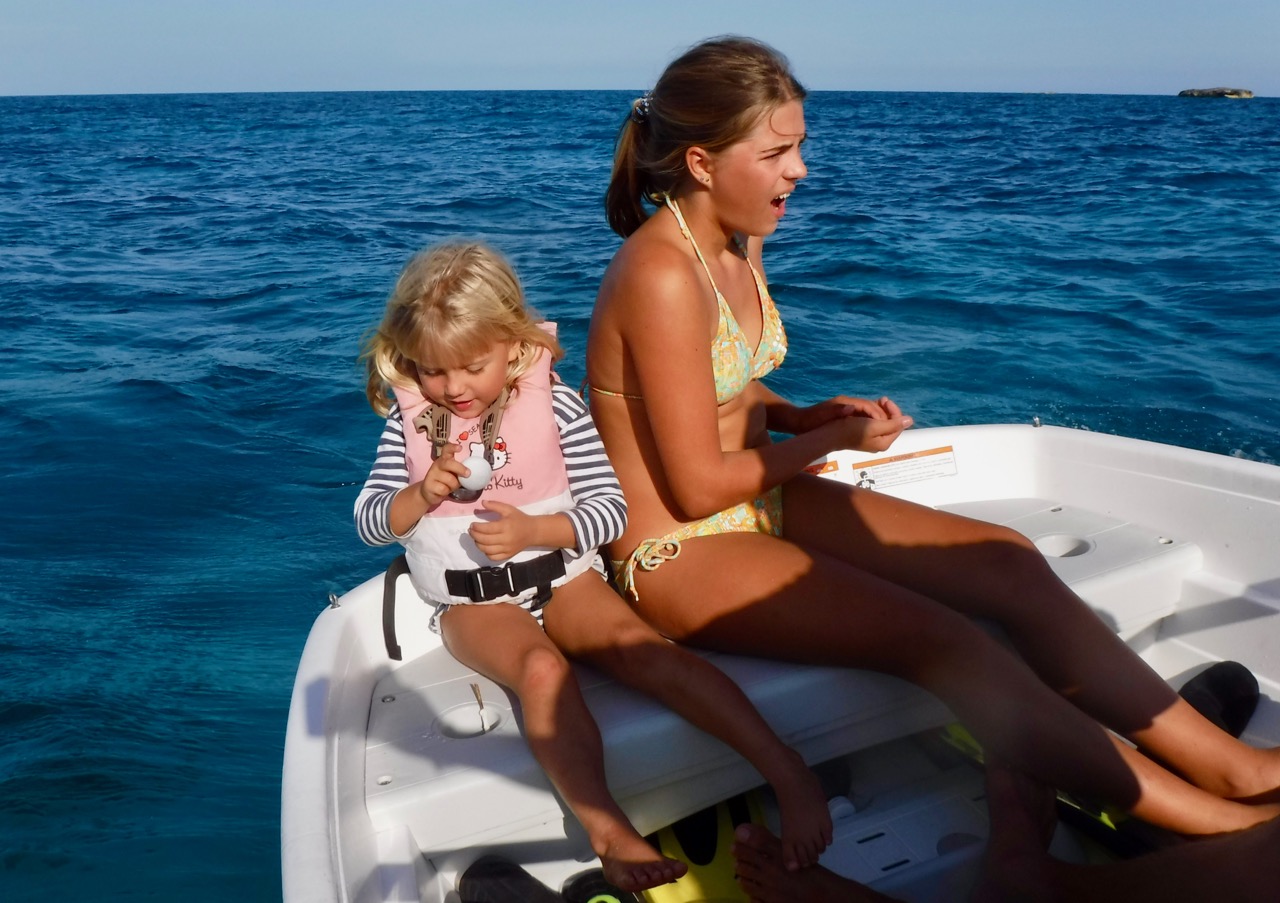
Preparing the diver
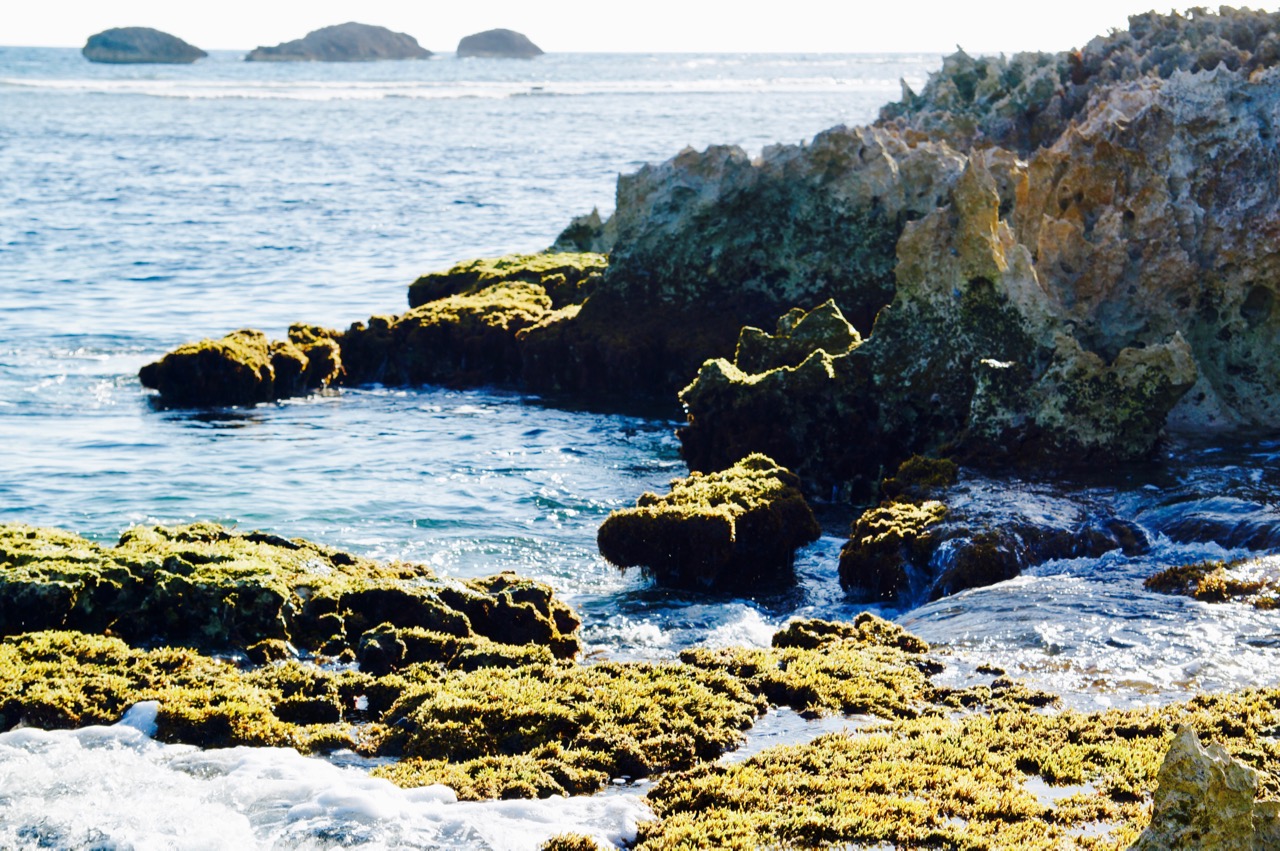
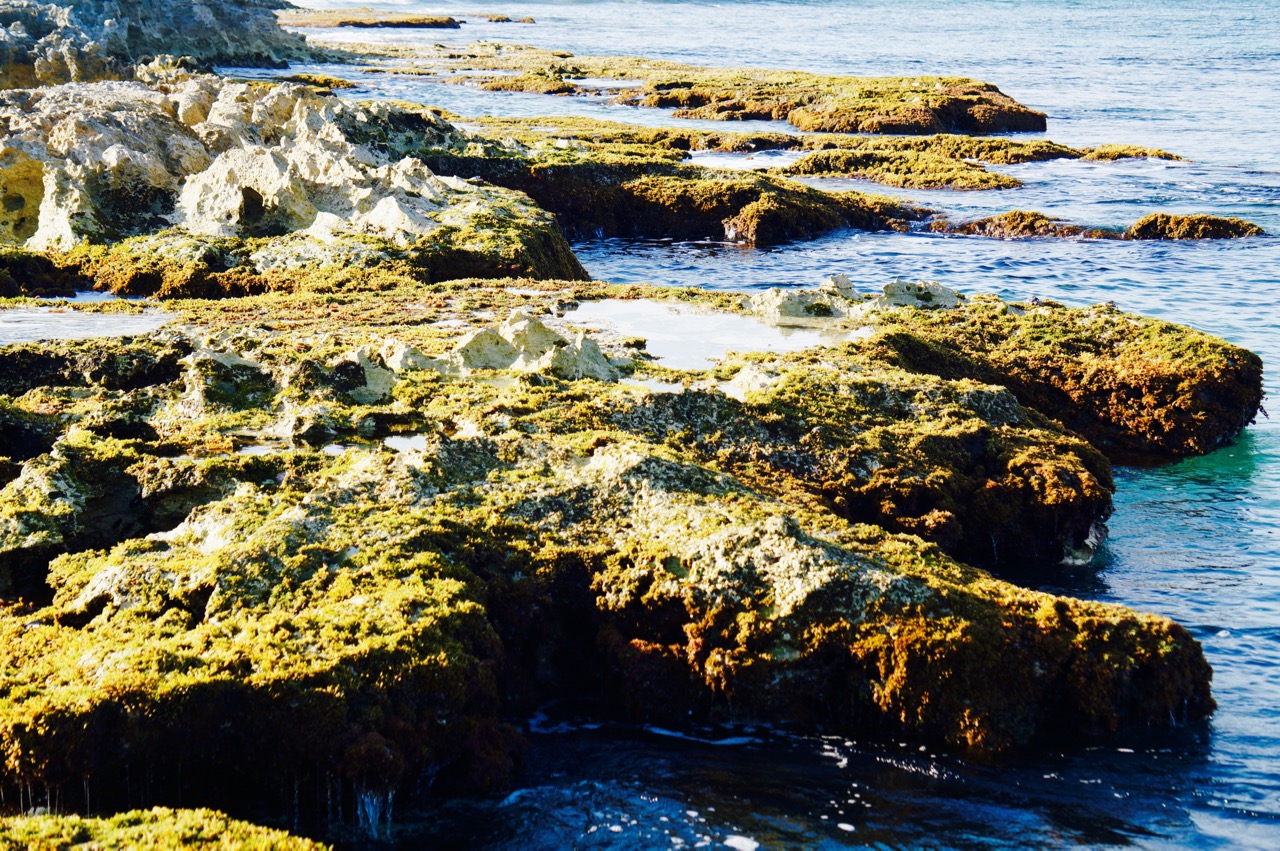
These seaweed-covered shores are teeming with unknown (and known) creatures
This coral seems to be hard
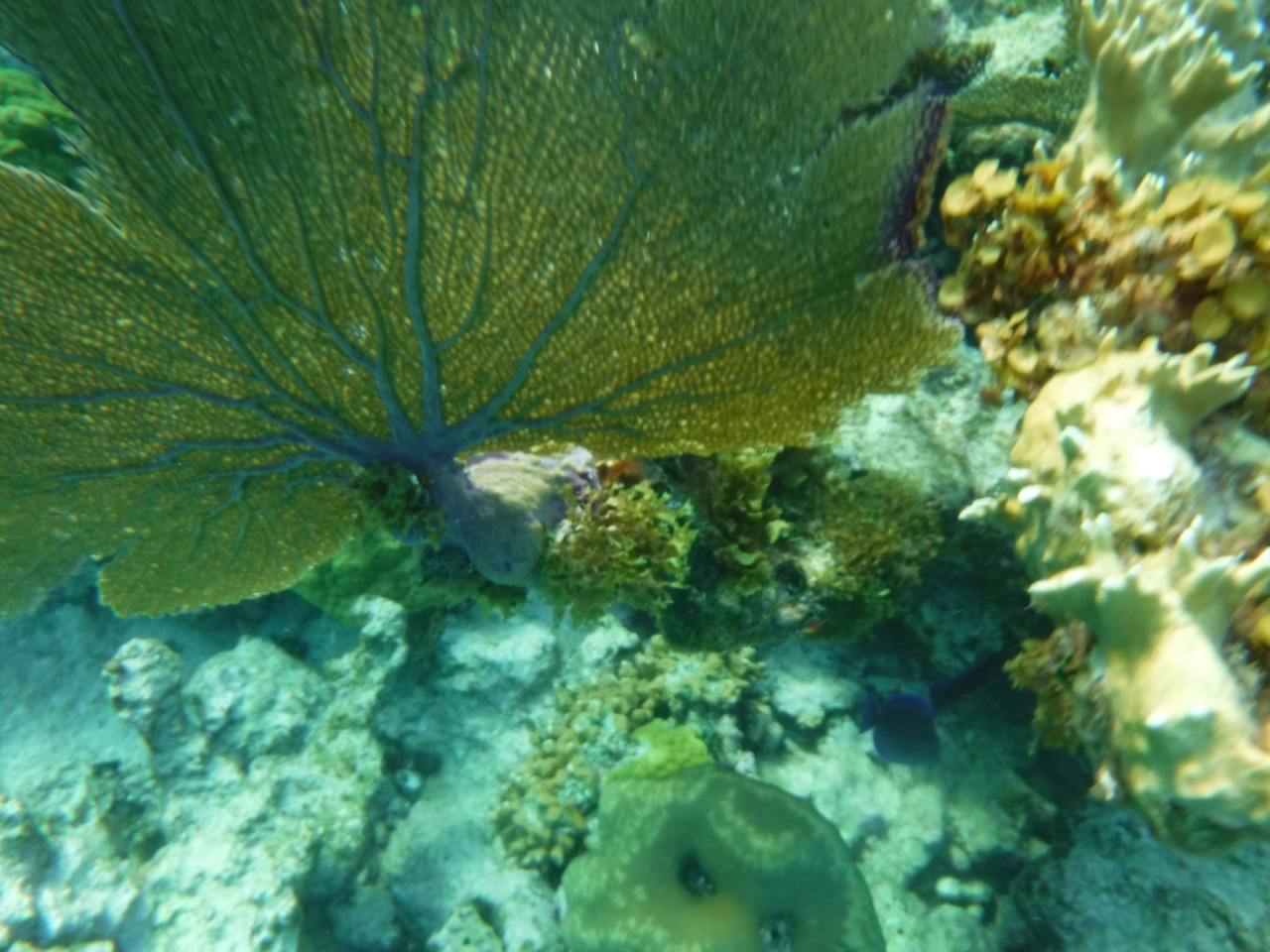
A frightened little sea urchin
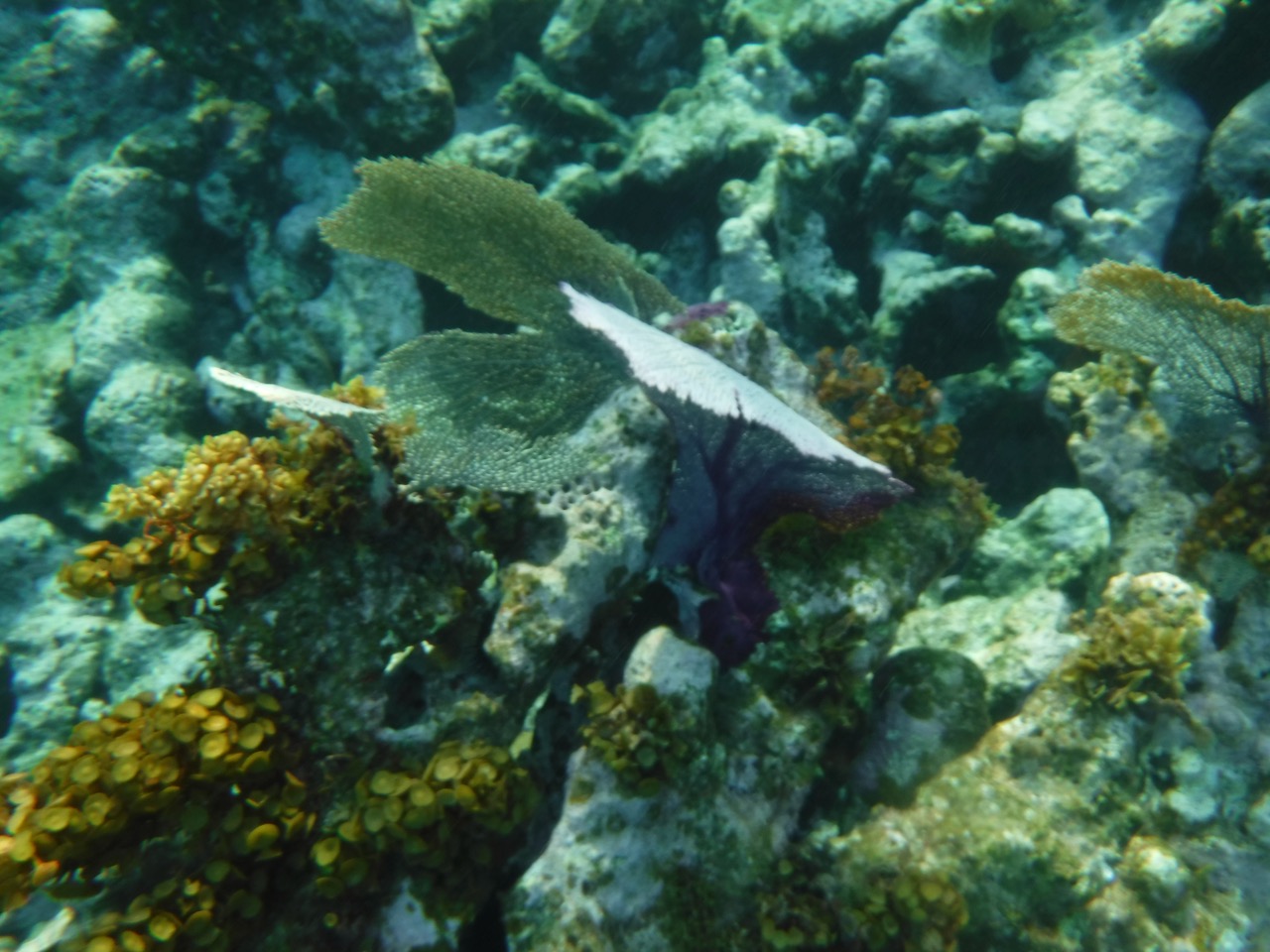
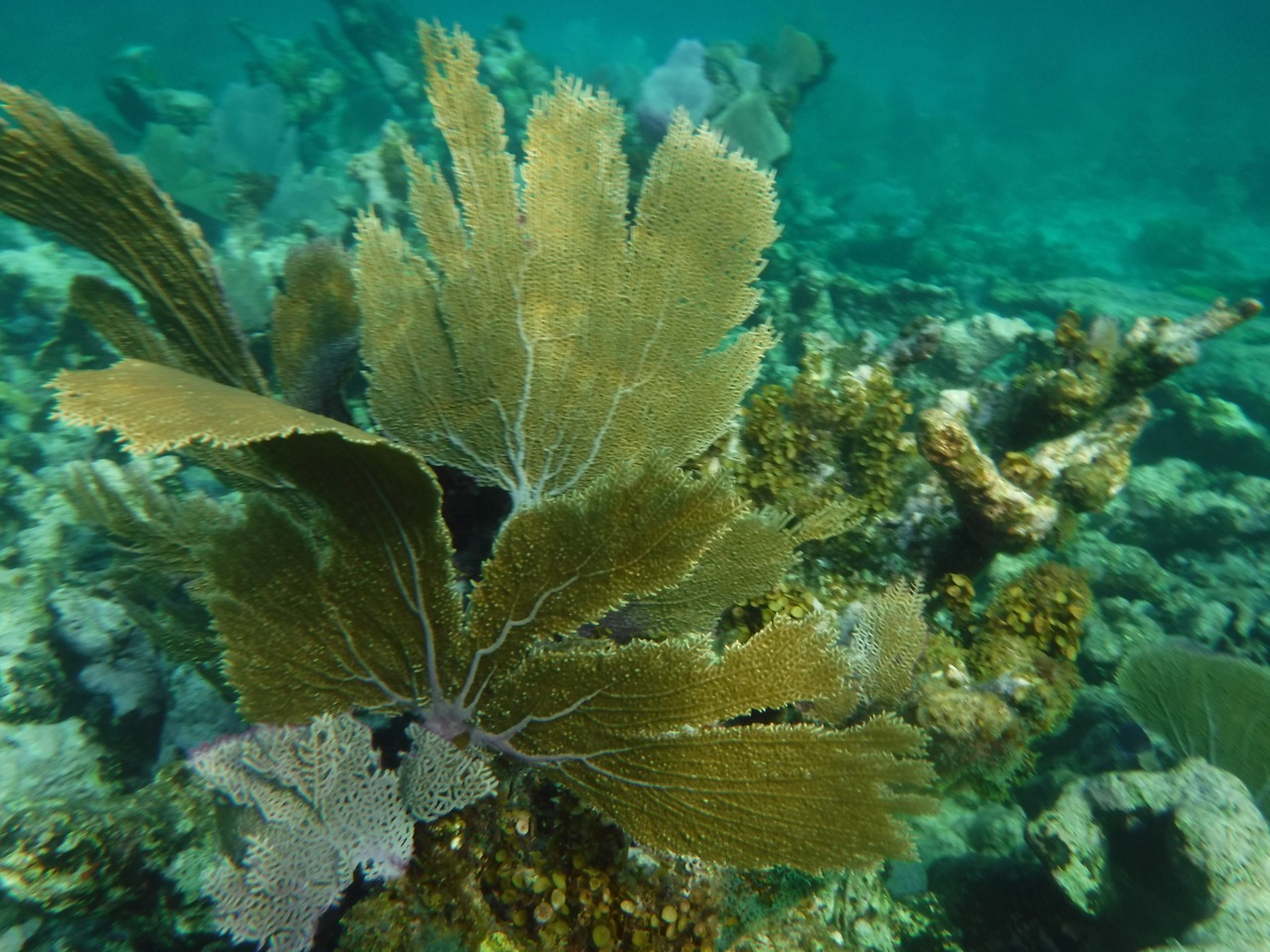
Fan-shaped corals
Little Lada quickly mastered swimming with a mask. Now she swims for long stretches without a life jacket The crew’s chief mermaid
Almost ready to dive
Another fan
And now two 🙂
Our sharp reefs, and the neighbouring ones, just as uninhabited )
Here you can only see seaweed, but in fact there are sooo many creatures down there!
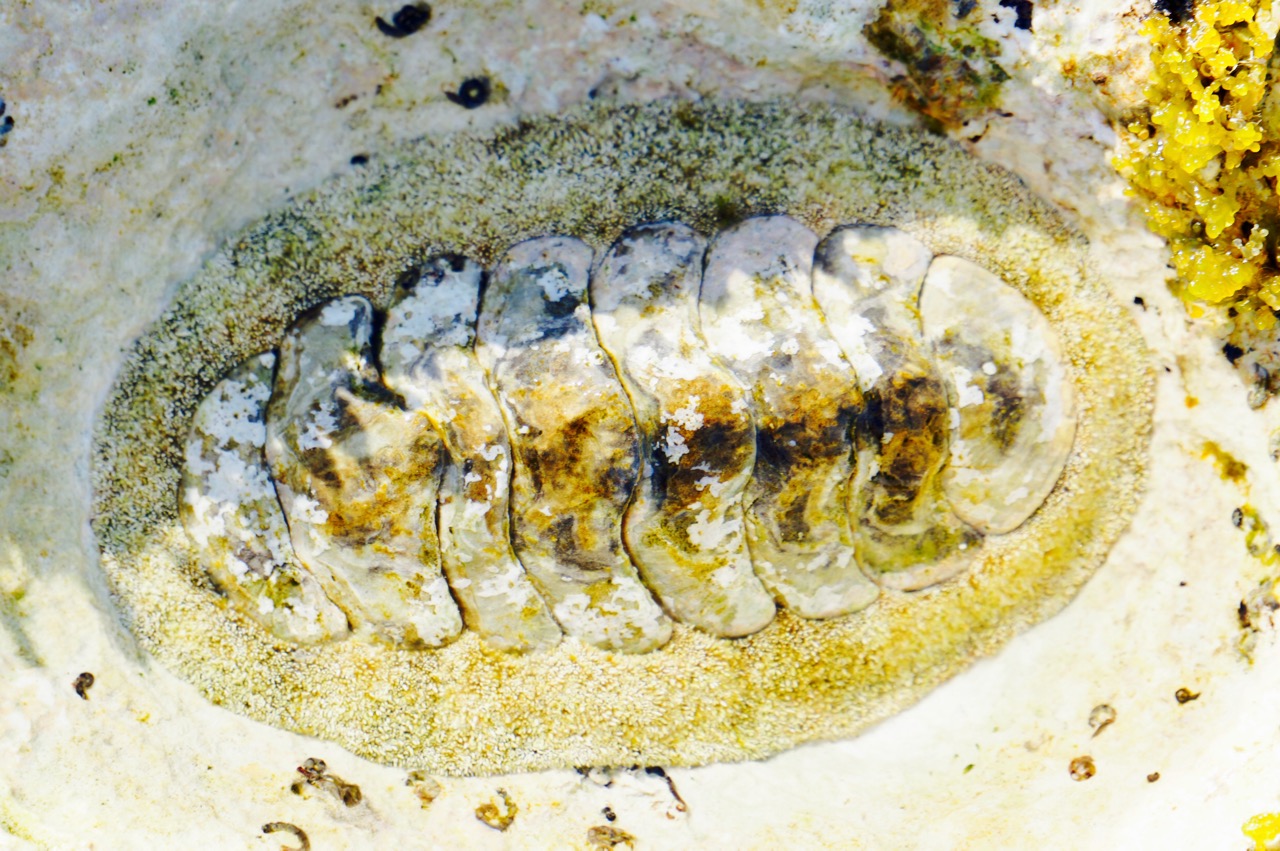
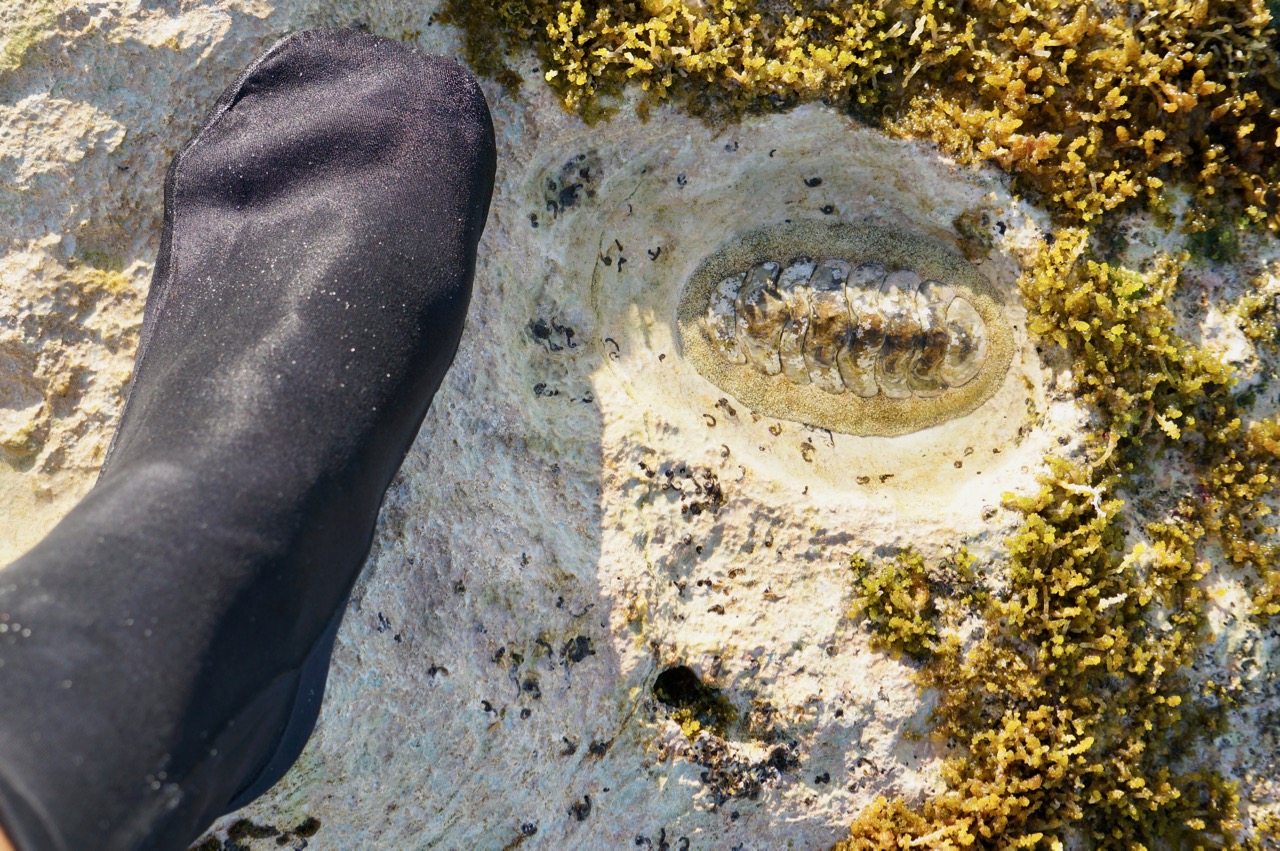
For example, this. What is it? It looks like something prehistoric
And here, for scale, is a size 37 foot )
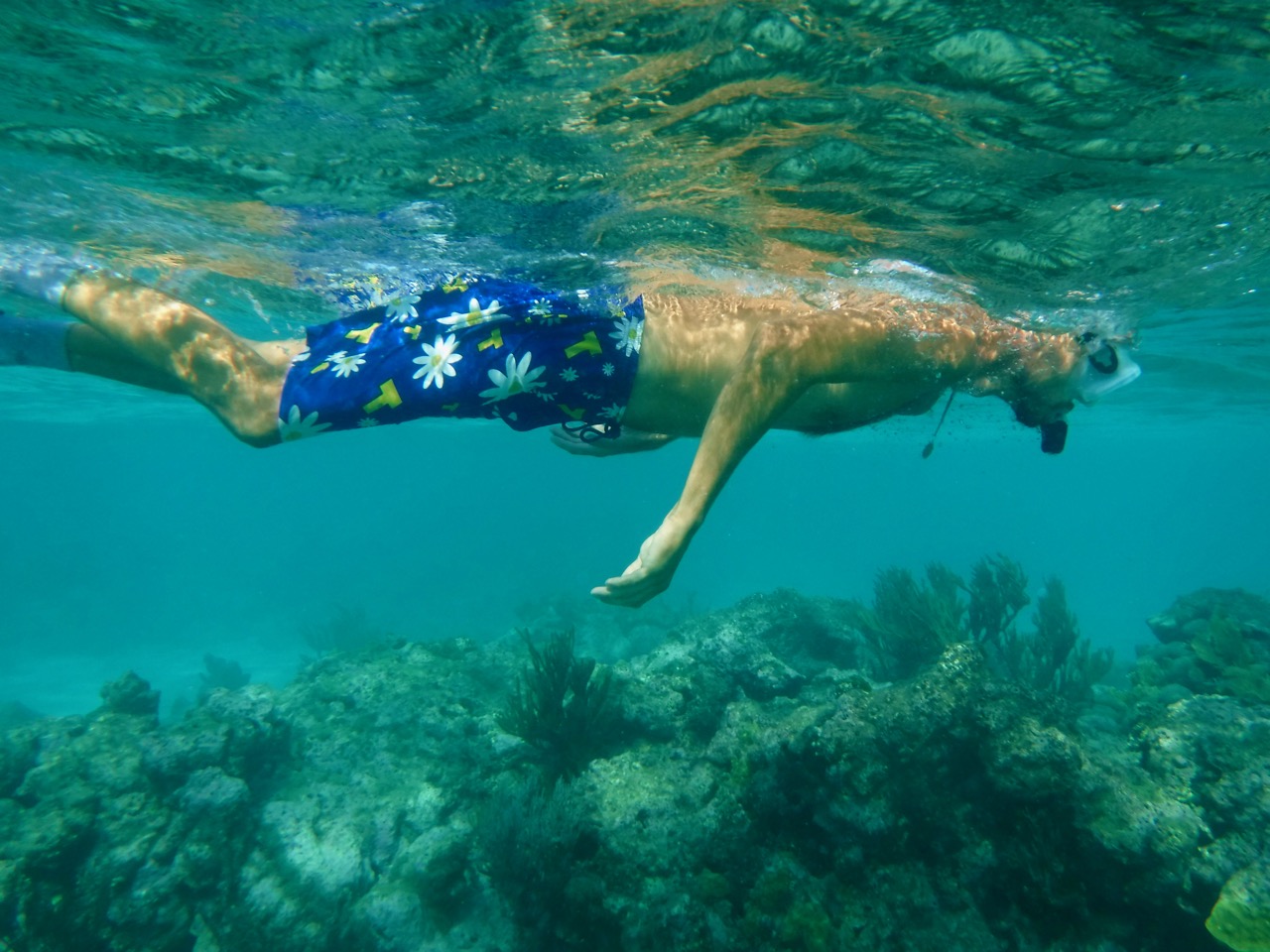
The crew’s chief diver, wearing the shorts of the Elekmonar village football team 🙂
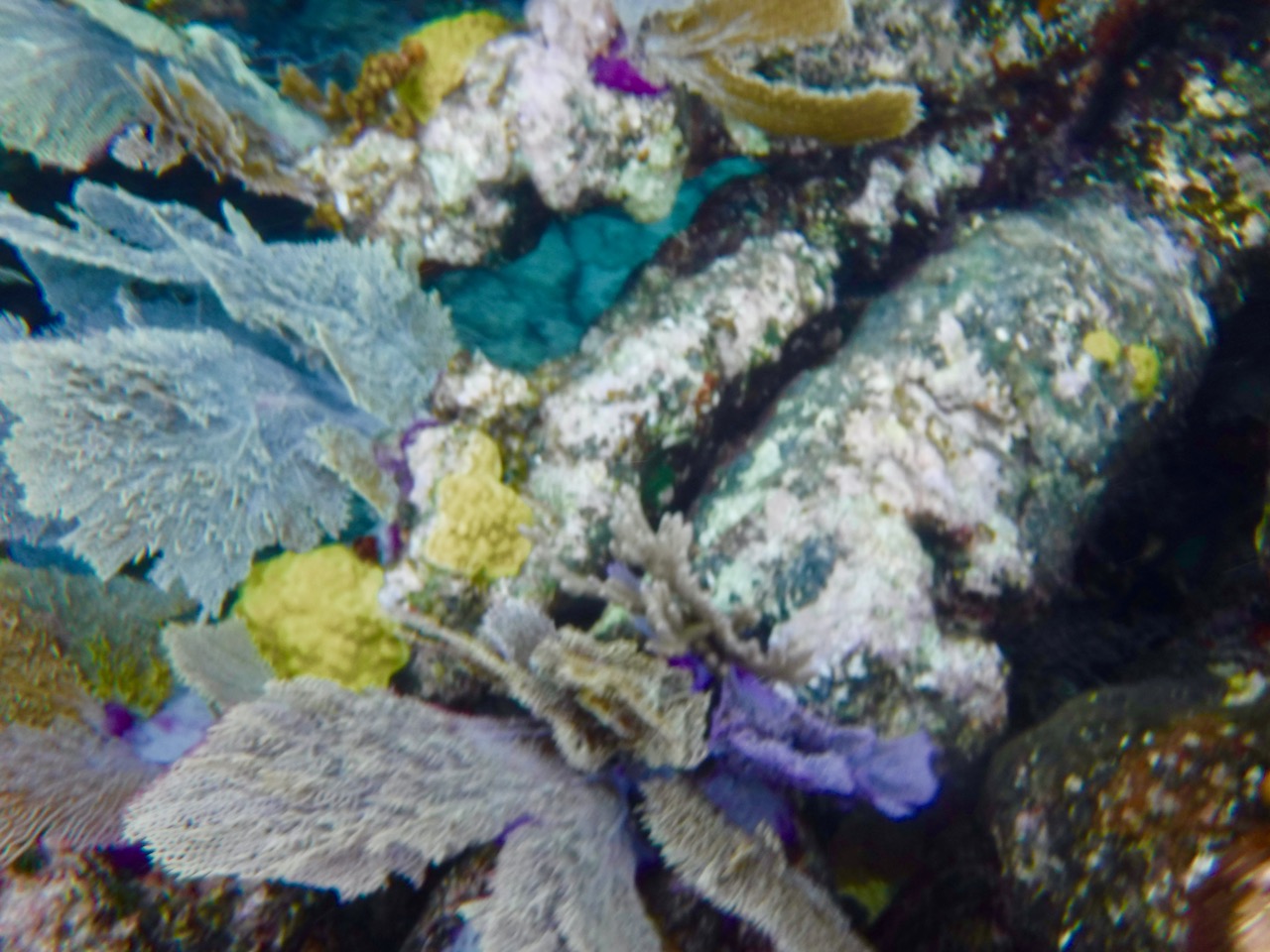
This photo was not taken underwater, but through the water in a shallow spot. A little murky, but colourful Rainbows to everyone!