
From the Travely-Family archive · Atlantic
Turks and Caicos. Who’s Painting the Water Here?
An original publication from the former Travely-Family website. This English translation was preserved from the technical-site archive without editorial rewriting.
Turks and Caicos. Who’s painting the water here if the island is uninhabited? Spearfishing, life à la Robinson Crusoe, and a not-quite-real picnic
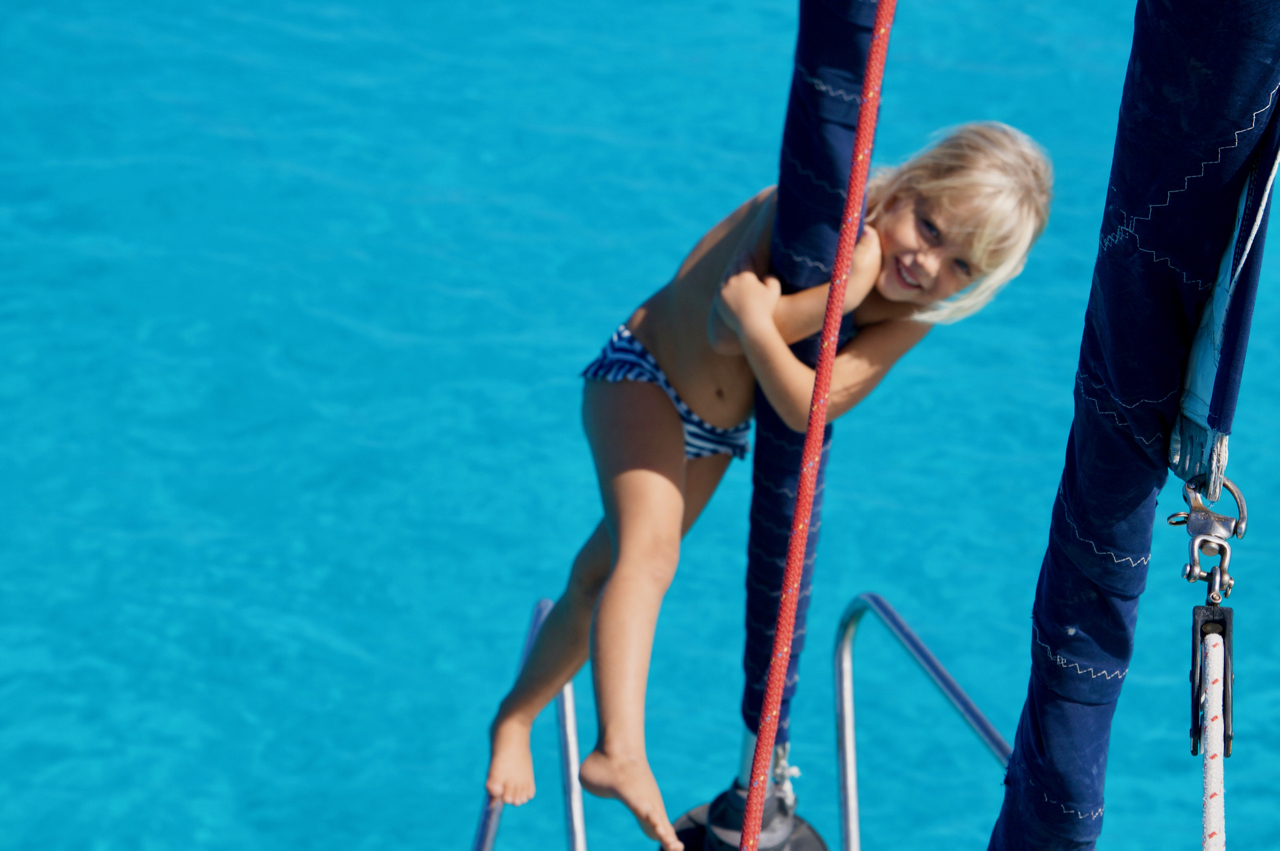
As we approach the first island in the Turks and Caicos, the senior young sailor heads halfway up the mast to keep watch for shallows. The echo sounder shows a depth of 15 metres, yet we can already see the bottom! Posting about places like this without being able to upload photos is a crime. After all, seeing it once is better than never seeing it at all. But from the ocean we can only send text, so at first the passage chronicles look a little different from how they do now, with photographs:).
The second lookout supports the “mast-top sailor” from the bowsprit
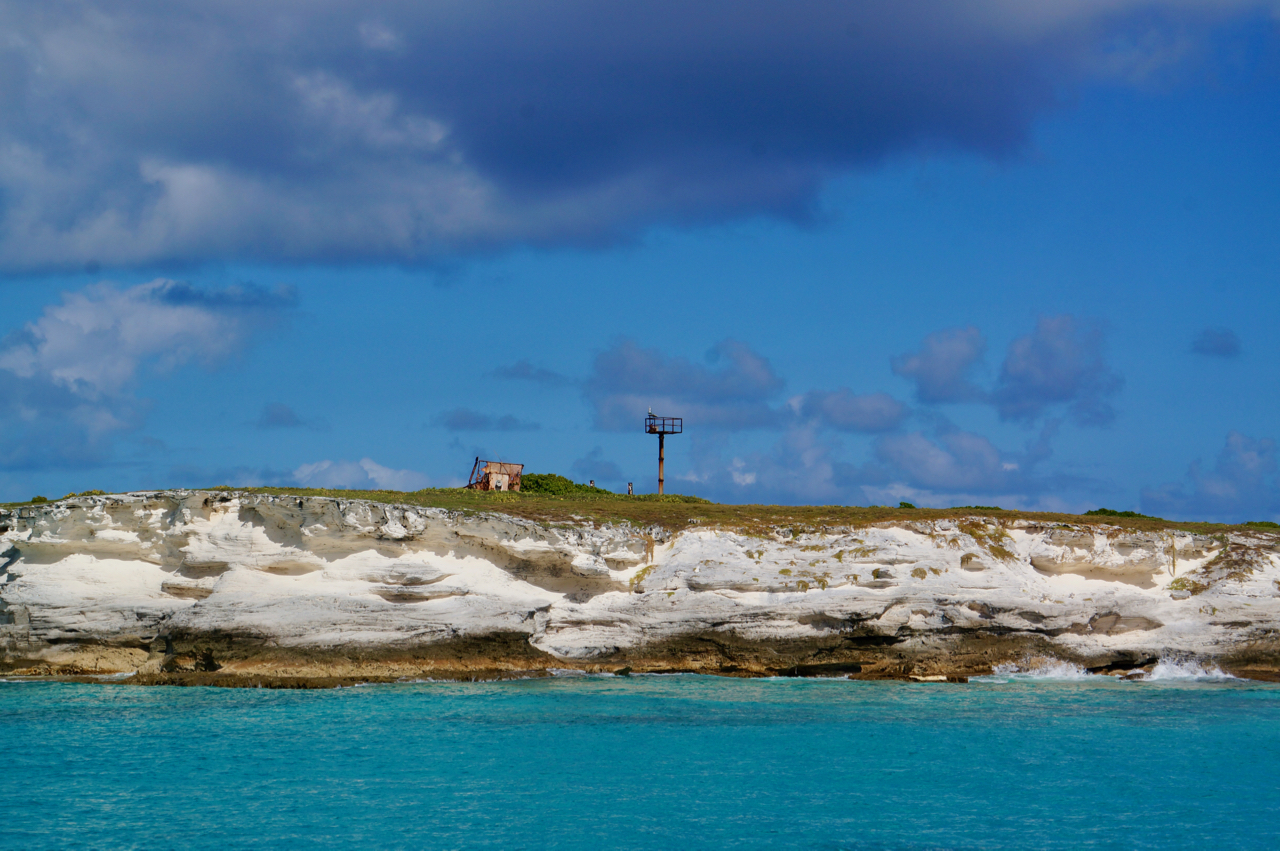
In short, we’re not the only ones who like it here—even the whales do. They come to the Dominican Republic to mate, making friends here in the Turks and Caicos on the way. After all, they need to get to know each other better before becoming more intimately acquainted. Yes. You can easily spot the whales by the tall spouts of water rising on the horizon beside the cliffs of the tiny uninhabited island of Big Sand Cay. Snow-white cliffs, modern ruins, and a defunct lighthouse on a rusty tower. The island is covered in low scrub, the white cliffs plunge into bright turquoise waves, and the narrow sand spit looks exactly like something from a tourist brochure.
The remains of human handiwork
Apart from a few birds and turtles, whose tractor-like tracks in the sand are visible from the deck, we have the island to ourselves. We had a somewhat similar feeling on uninhabited Santa Luzia in the Cape Verde Islands. The same silence and emptiness, except that for some reason it is the scenery here that brings pirate films to mind. Appropriately opening Nastya’s wonderful book, “Pirateology,” the first mate discovered an old map of the Caribbean region. Just south of the Turks, not far from Haiti, lies the island of Tortuga—if the books are to be believed, the most piratical island of all!
There are several Tortugas in the Caribbean, but only one is marked on our genuine pirate map. So it is no wonder that these sheer white slopes evoke thoughts of Captain Blood and Jack Sparrow. It looks as though they have been here.
The crew sets off to go spearfishing
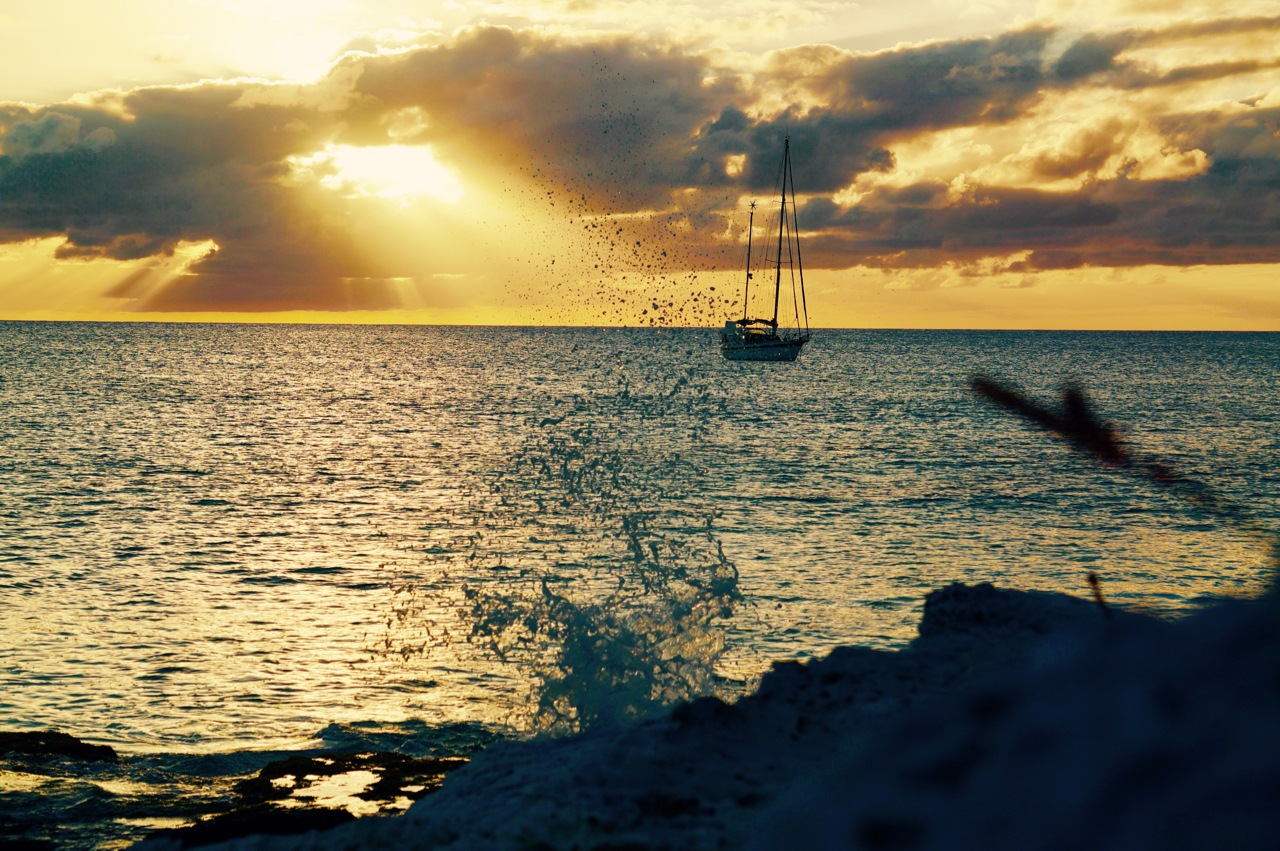
Two boats anchored not far from us, one sailing yacht and one motorboat. A few hours later, the sailing yacht headed off somewhere to the southwest, while the motorboat weighed anchor after dark. Perhaps their captain knows something about the local tidal currents.
An almost full moon makes the water silvery and transparent all night long. As in the Grenadines, the liquid turquoise here glows even in the dark. It’s all because of the white coral sand.
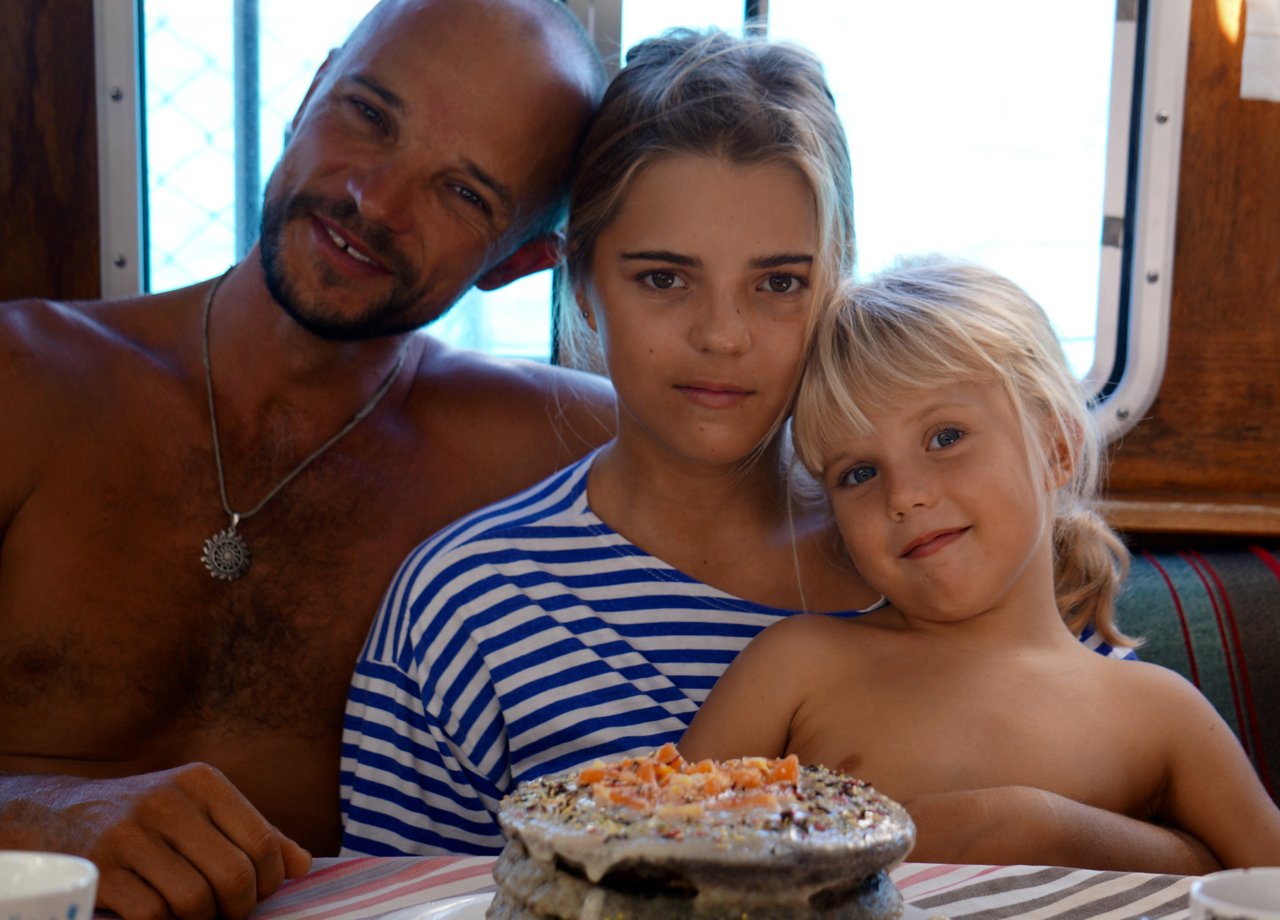
The evening aboard Lady Mary was shrouded in mystery and filled with the vanilla scent of baking, while the entrance to the galley was guarded by Lada and a curtain made from a towel—a precaution against inquisitive parents. Looking in the fridge was forbidden until morning. And then, in the morning...
A Valentine’s Day cake from the young sailors.y.
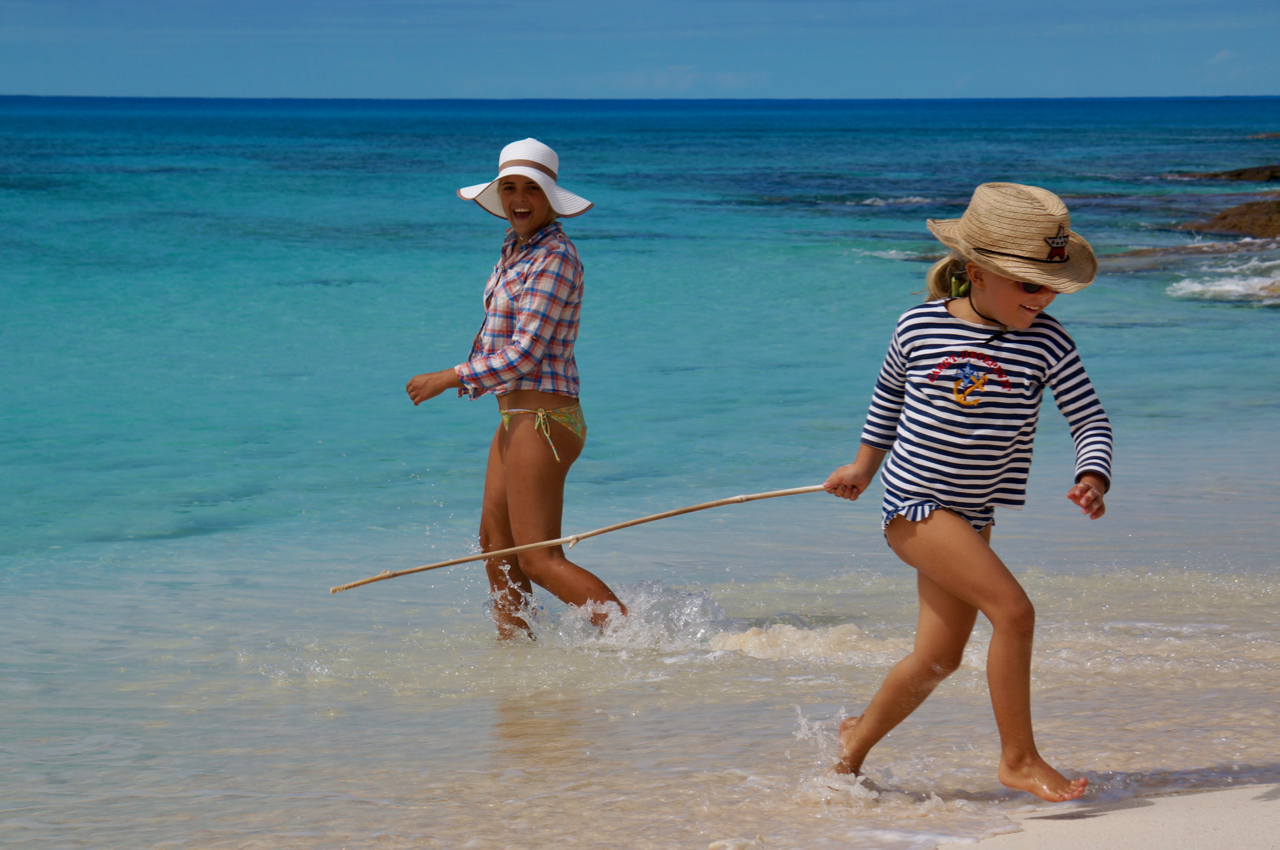
Happy Valentine’s Day!
The morning was sweetened with Nastya’s secret cake: chocolate, with fruit and custard. Mmmm... Since it was a holiday, it would be nice to continue it in some extraordinary way—say, à la Robinson Crusoe, on a desert island. No sooner said than done!
Exploring the uninhabited shores of Big Sand Cay in the Turks and Caicos continued until well after dark. By the light of the campfire, Lada explained that a picnic was “when we’re at home in Altai and light a campfire with our friends, cook something over the fire, and Mikhalych sings his songs with a guitar. But this isn’t a picnic. Well, I mean, it is a picnic, just not a real one.”
After landing on the island, the senior crew set up camp while the junior crew worked up an appetite y
An uninhabited island
The landing party’s expedition ashore was thoroughly prepared. Although she had no idea yet that the crew would remain there until nightfall, the first mate nevertheless put a few provisions in her rucksack: instant noodles, a flask of boiling water, a pineapple and apples, tea bags, and biscuits.
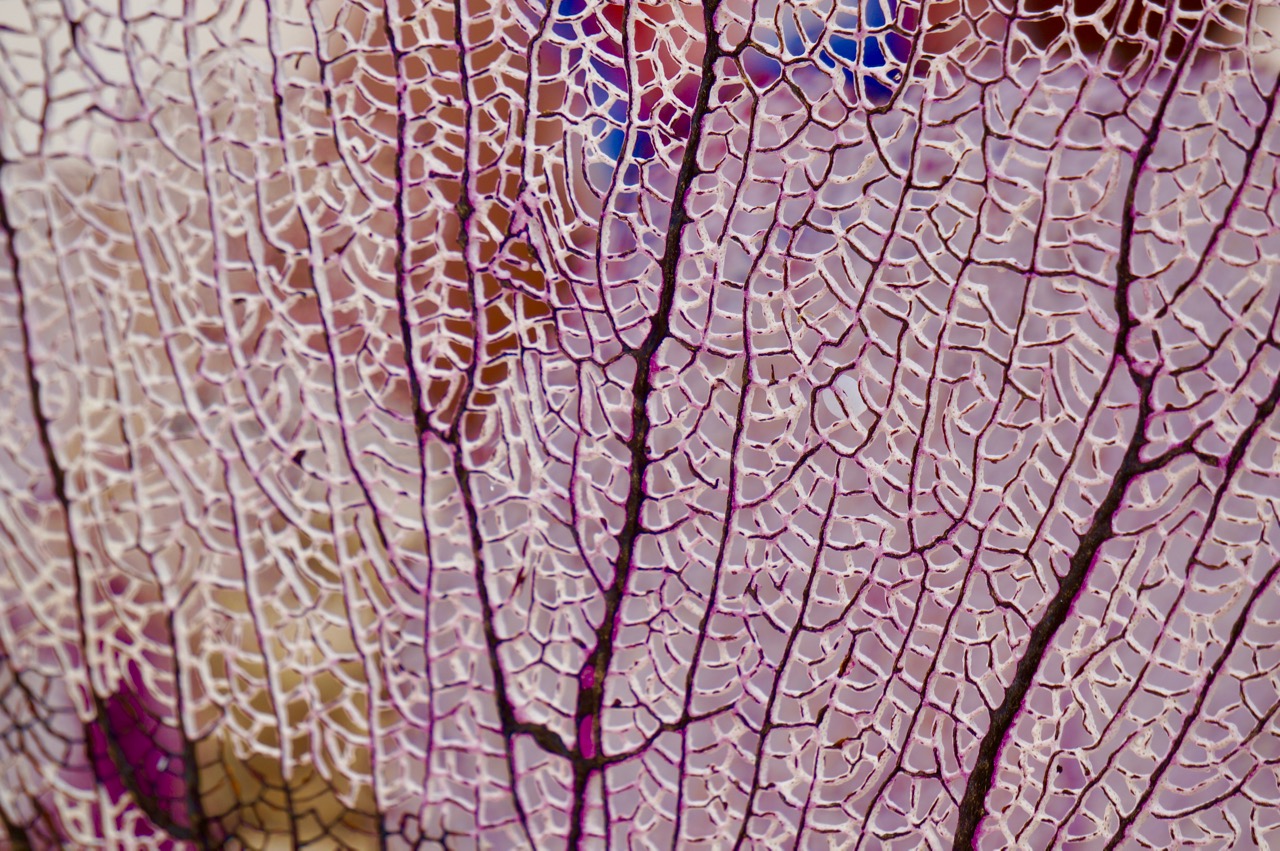
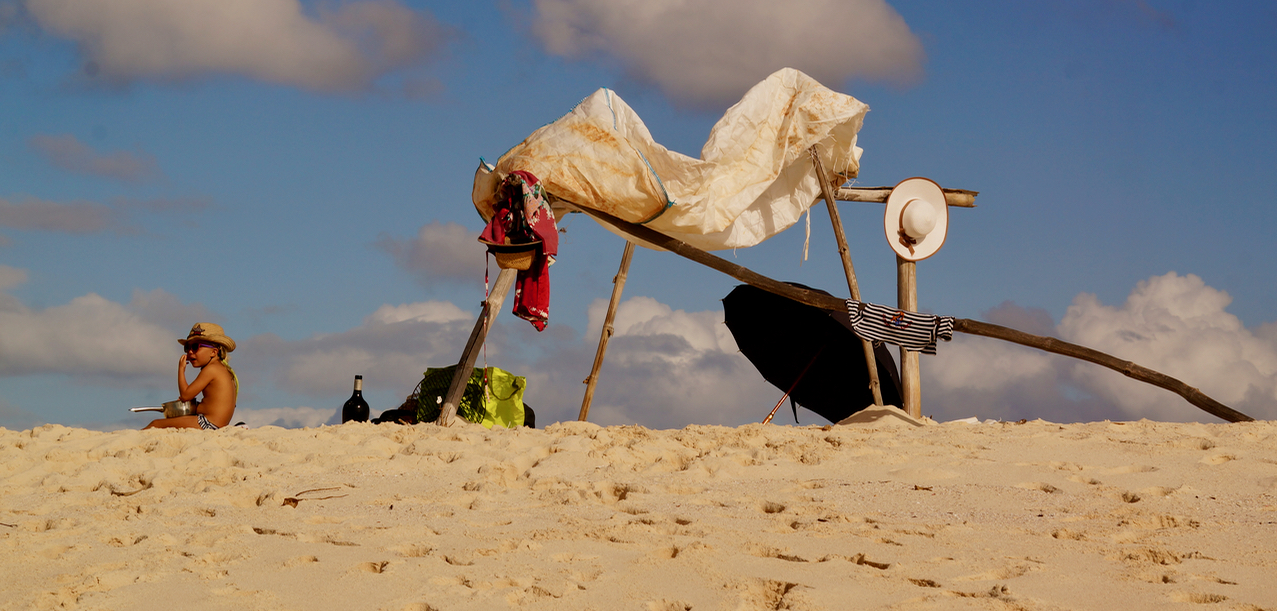
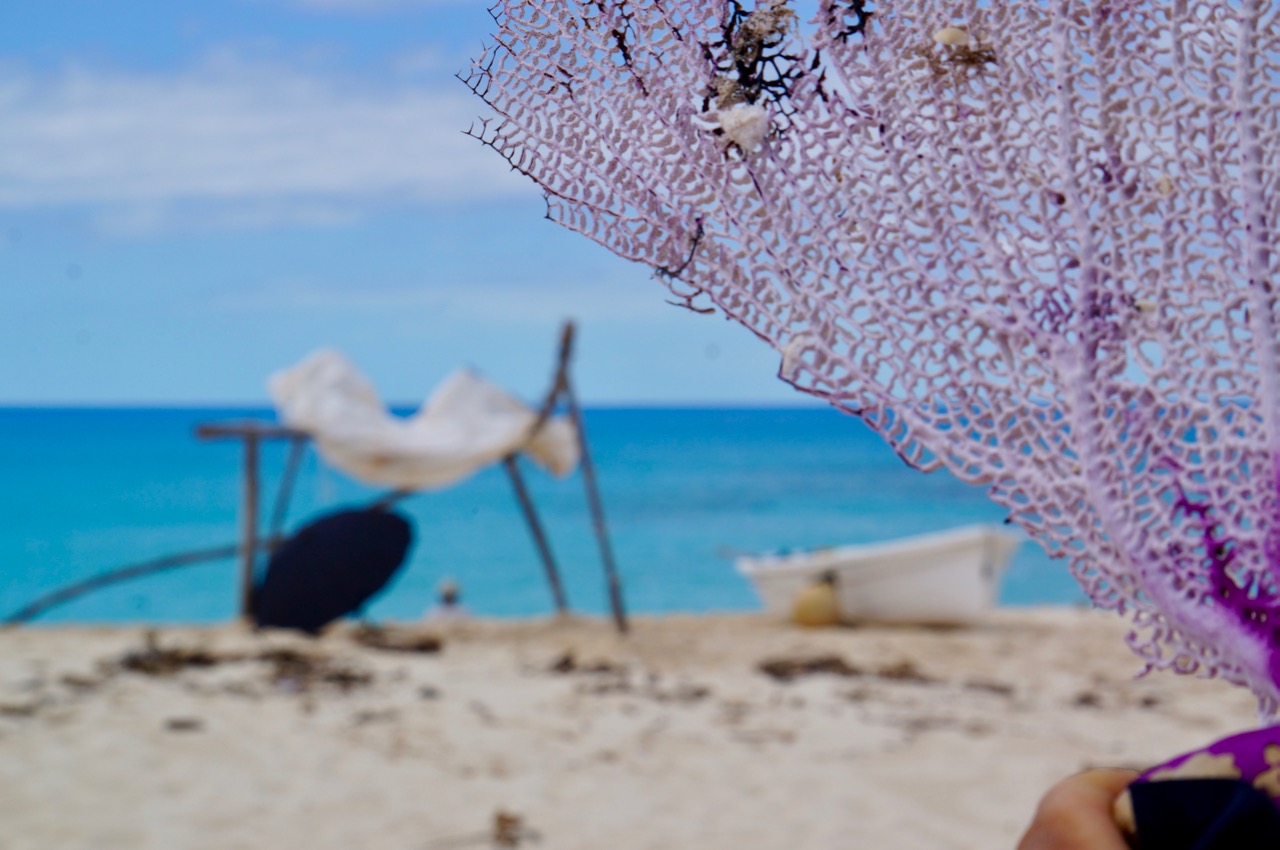
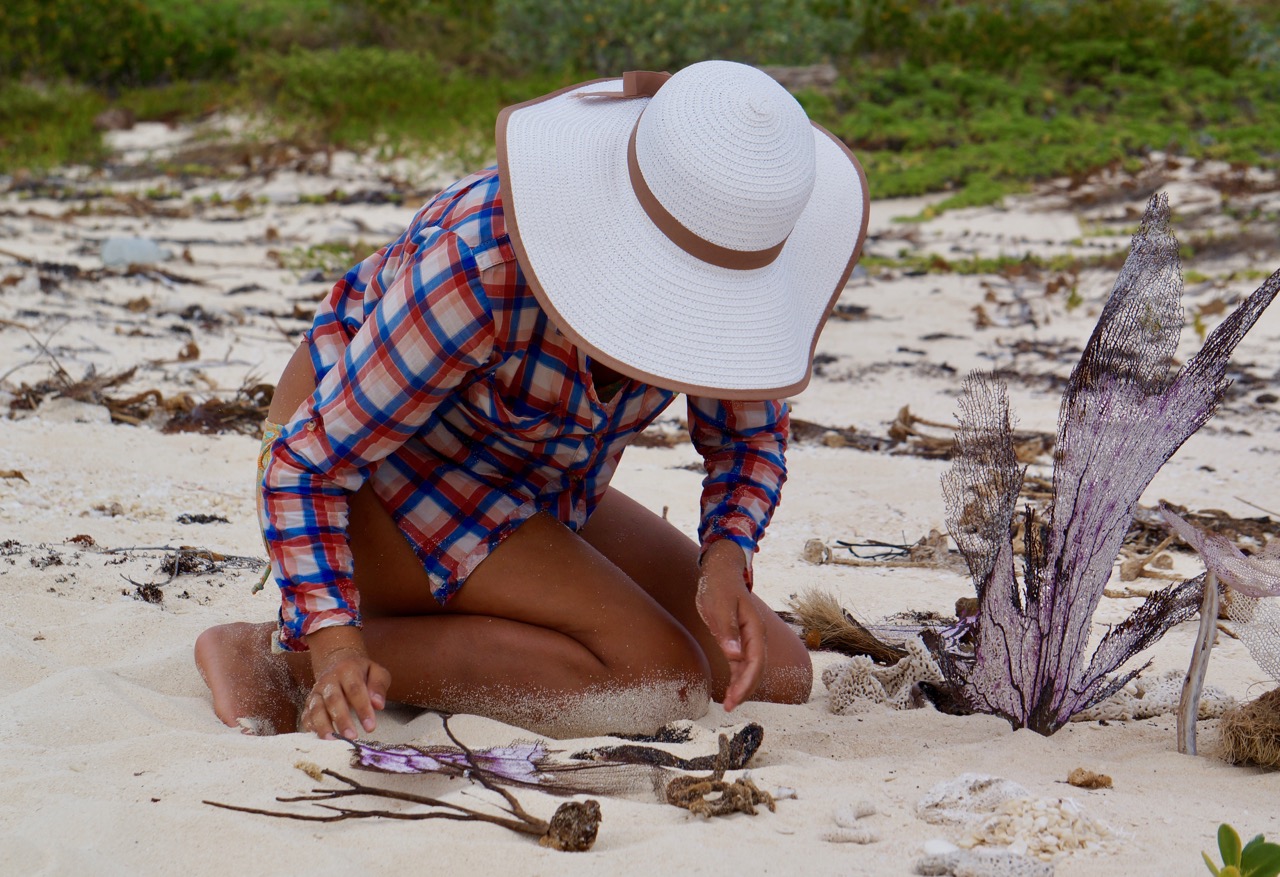
Despite the lack of trees, hefty clubs are scattered along the sand spit, some of which had even served as someone’s shelter from the sun. Since the old shelter was far from the beach, and the meagre vegetation around it painfully drove thorns into every soft spot, the shelter was moved onto the sand and modified. An old sack that had lain on the islet for goodness knows how long was transformed into a sunshade.
A view of the camp from behind a soft coral fan )
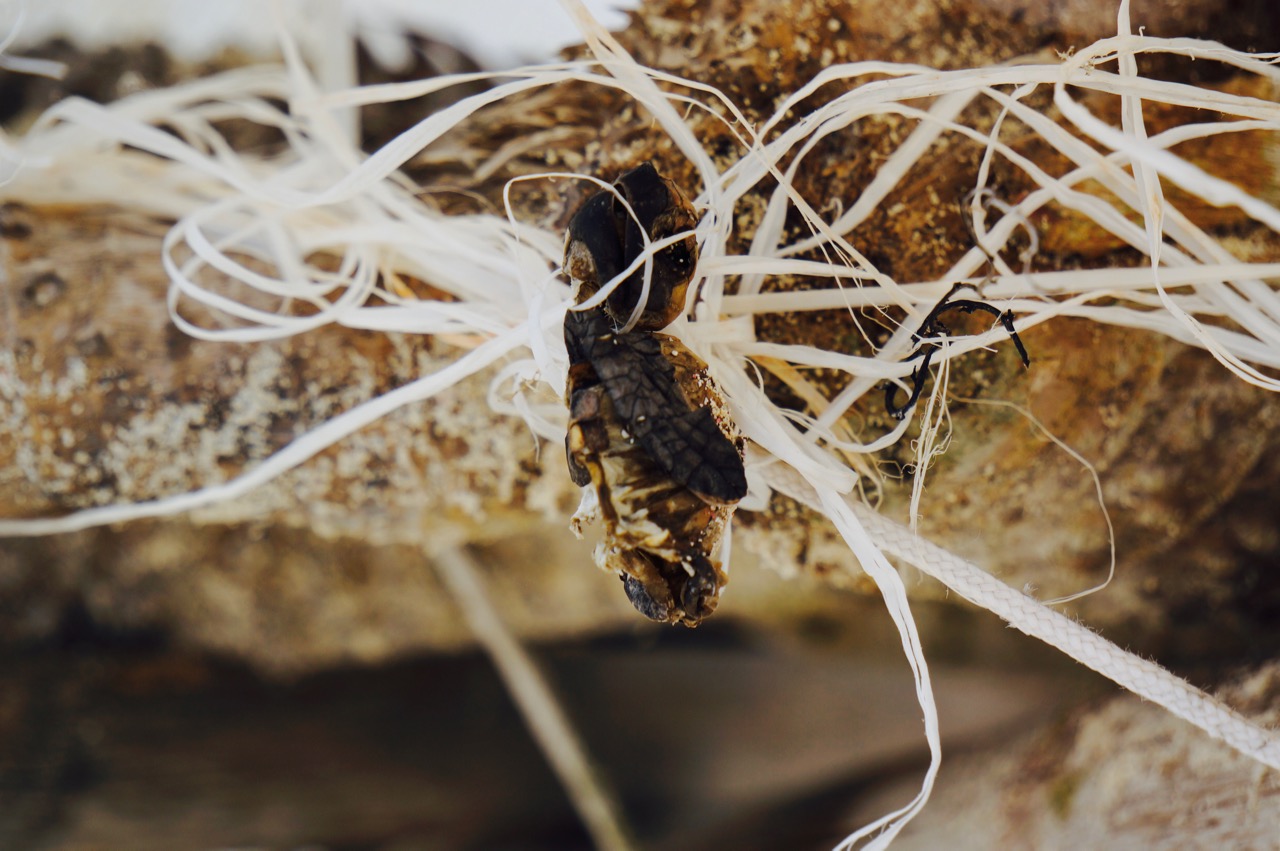
Before that, the sack had lain in the sand for a long time and caused the death of a tiny turtle hatchling. Turtles bury their eggs in dry sand far from the surf line. As soon as they are born, the hatchlings race towards the ocean before something eats them or the sun scorches them. This little turtle became tangled in the sack’s threads and never reached the life-saving water:(.
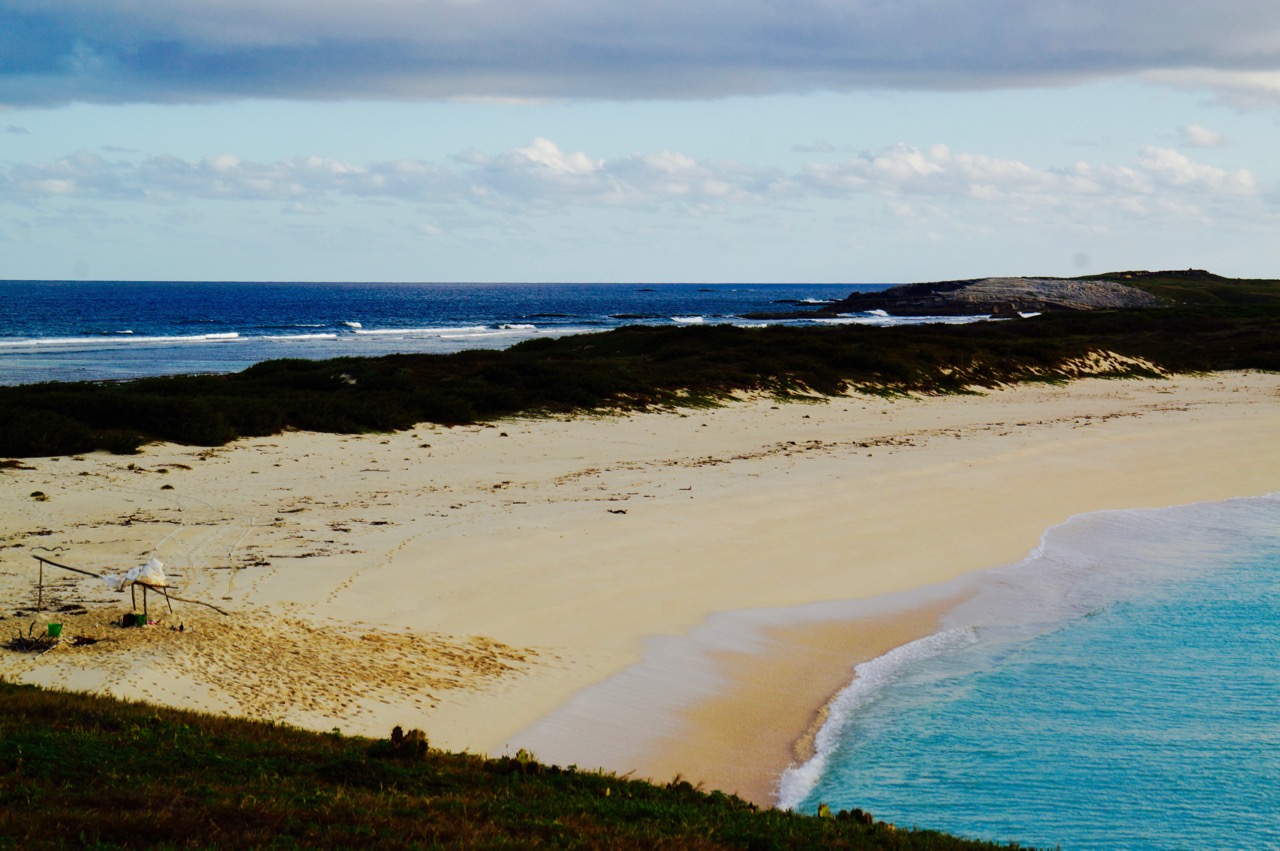
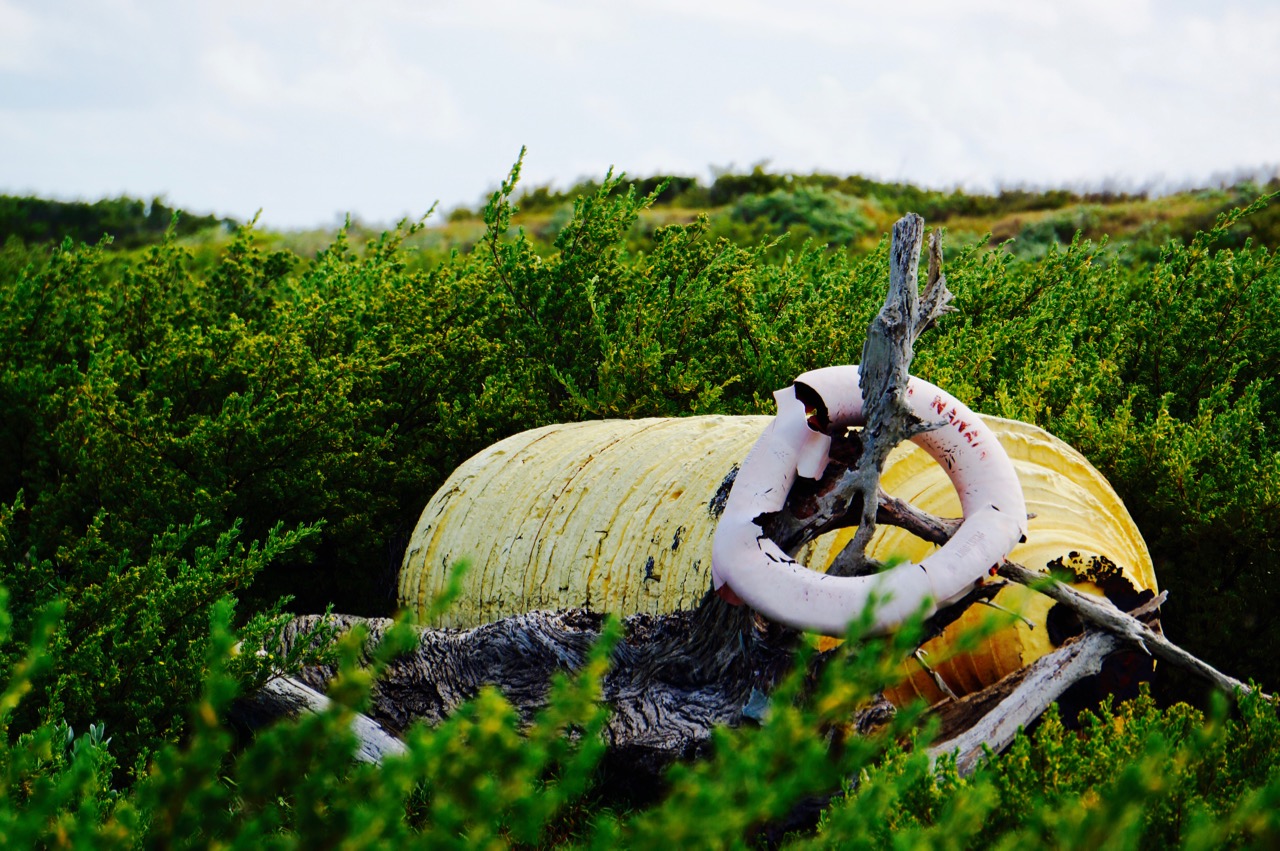
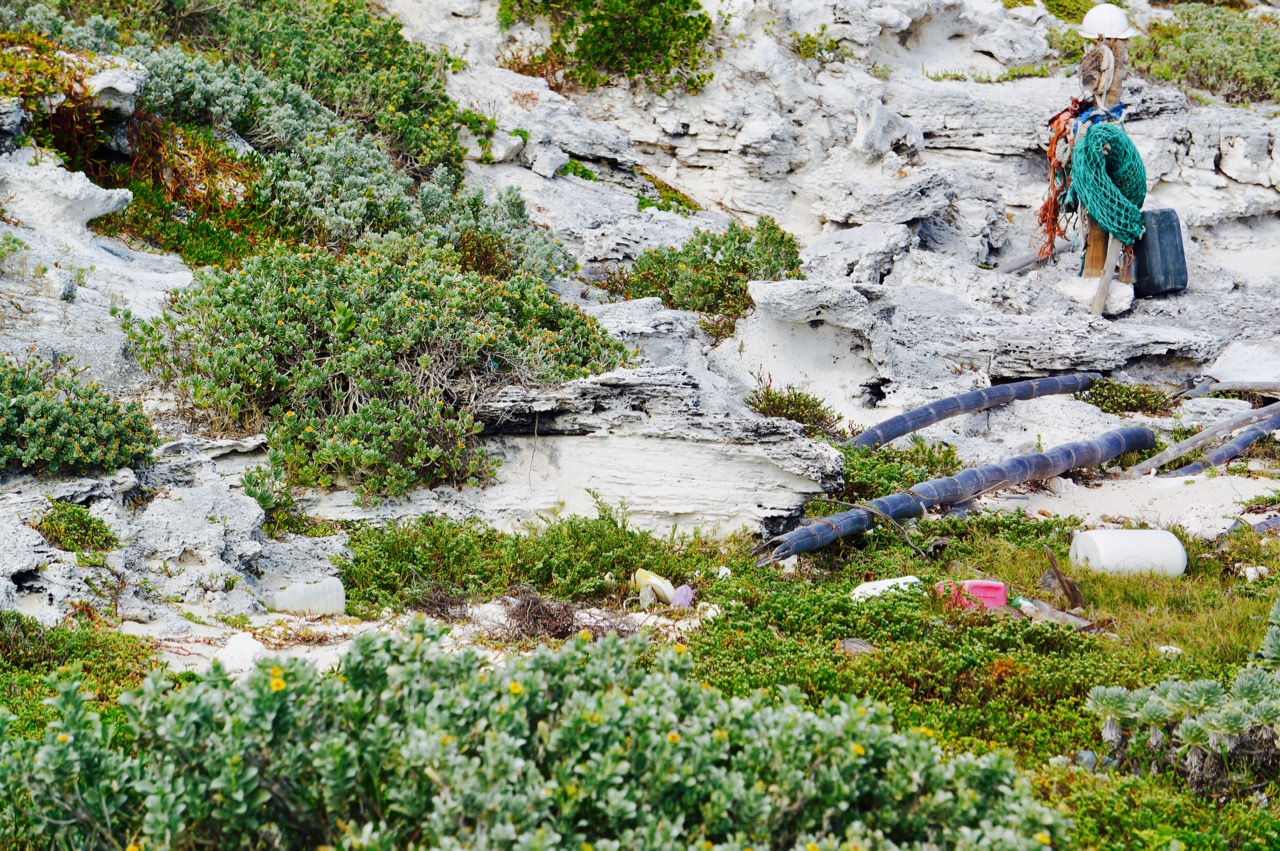
To the north, the strip of white sand gives way to pale, layered cliffs, while a couple of small houses and a lighthouse were once built on the plateau above. Besides low thorny scrub, cacti, and coarse grass, there are occasional spindly creeping vines and modest yellow flowers. The eastern shore of the uninhabited island is strewn with fragments of either fishing boats or spaceships, scraps of netting, and other things lodged firmly among the bushes.
The mummified turtle hatchling that never managed to reach the sea
Overall, with its vegetation and white cliffs, the islet looks more like the Mediterranean coast and nothing at all like the southern islands of the Caribbean. Ocean waves break against the gently sloping “far” shore of Sand Cay, and we return to our cosy, calm beach..
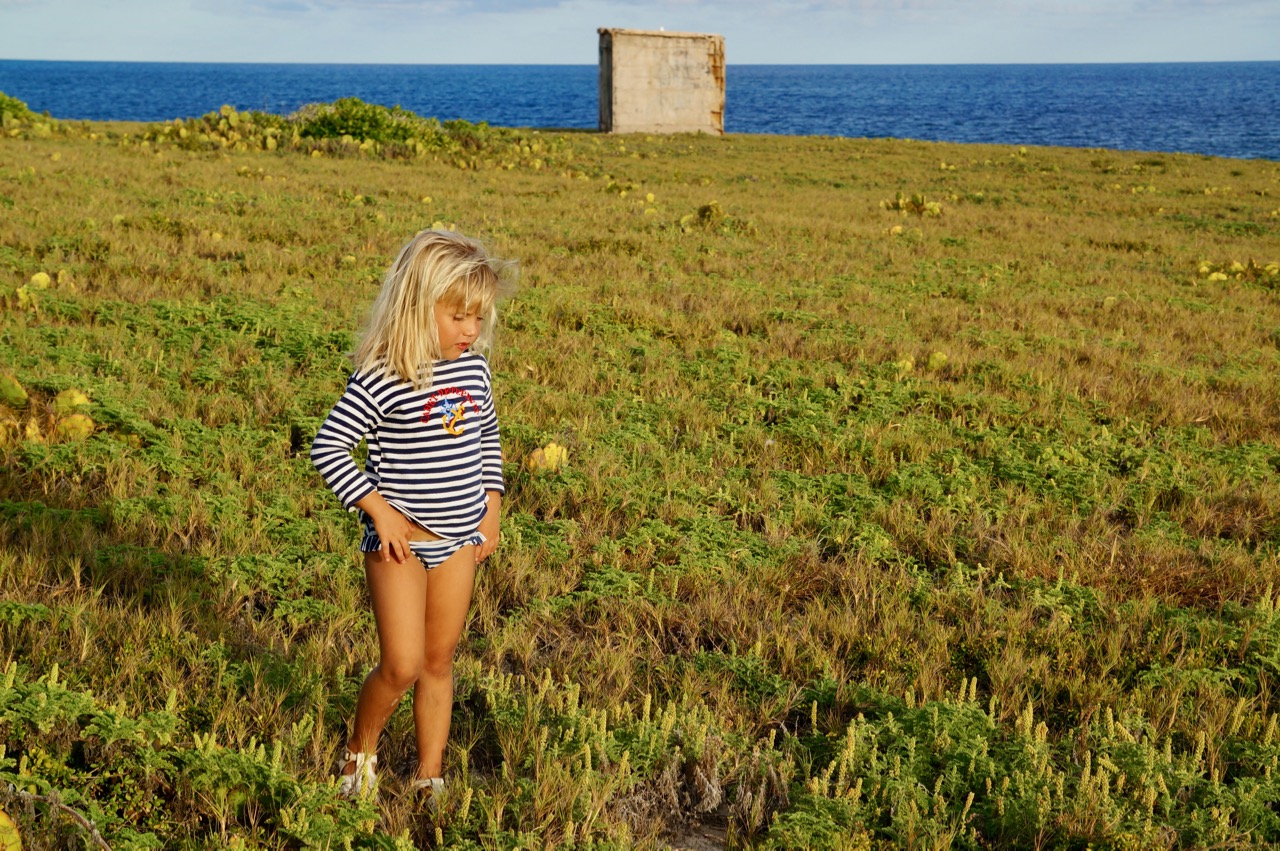
A not-quite-real picnic
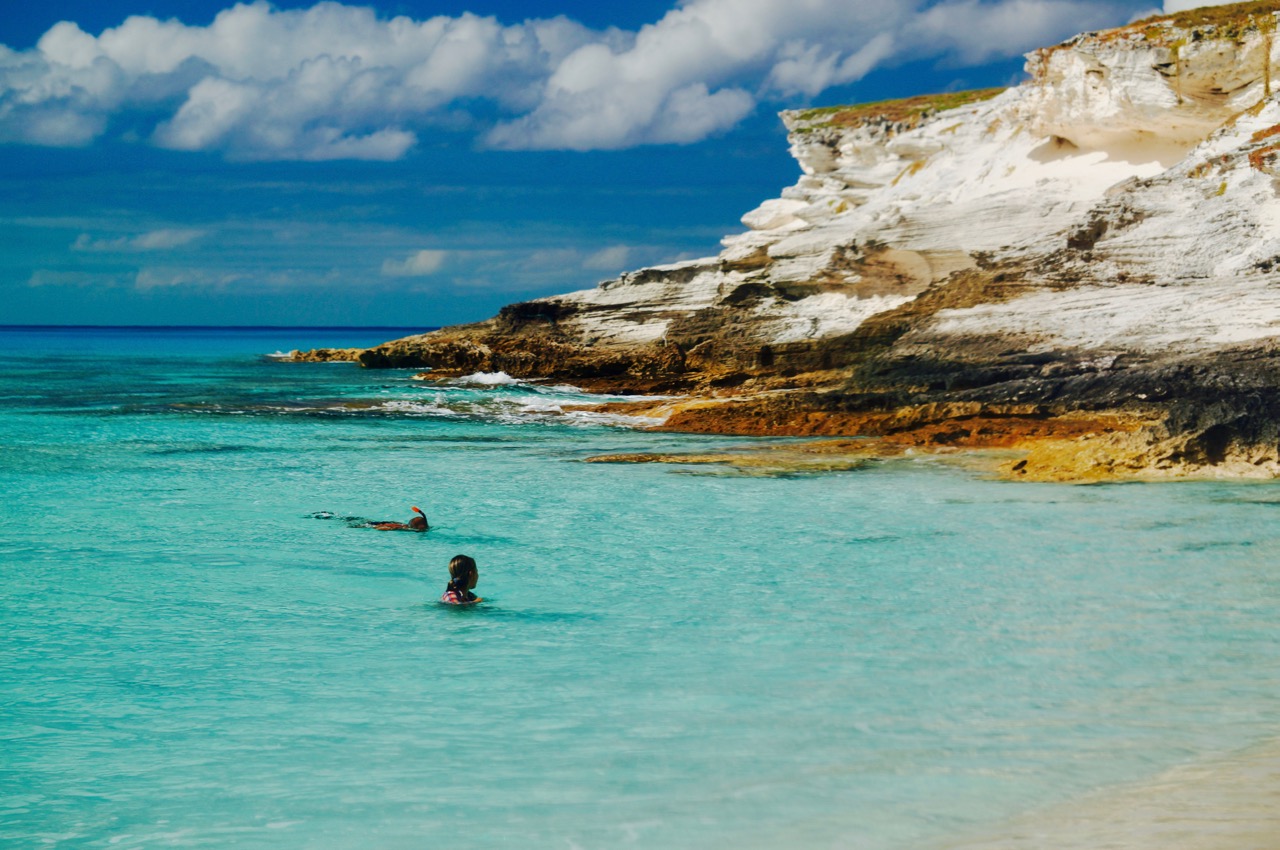
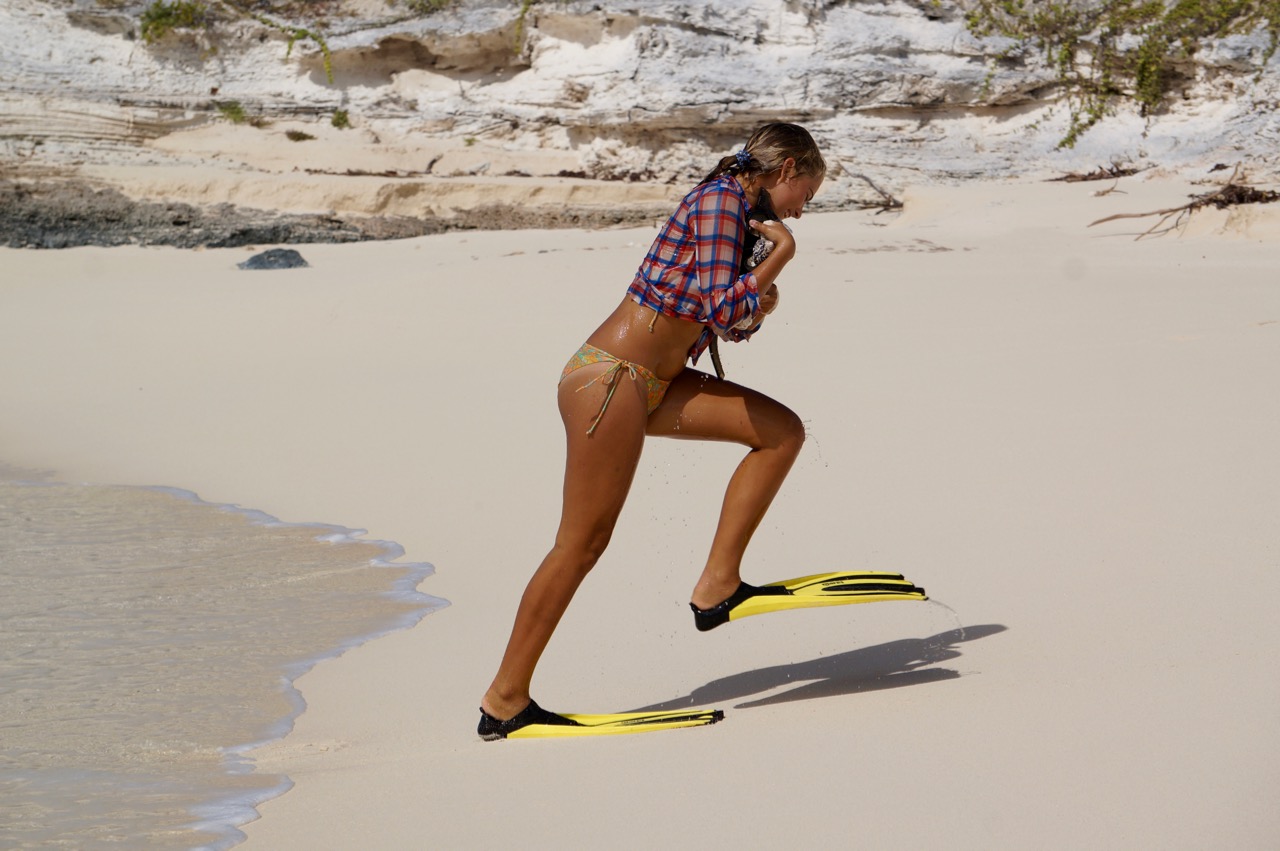
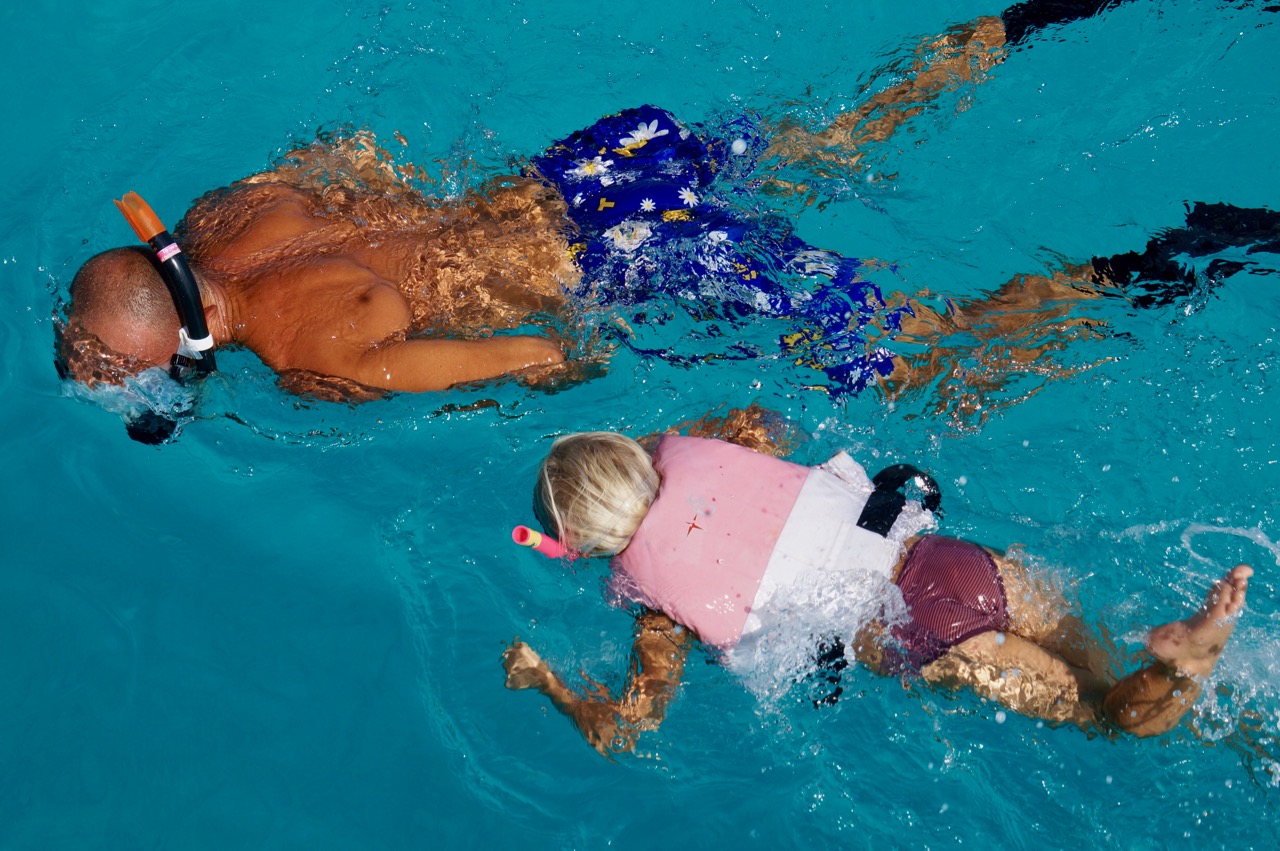
In the course of a single outing, Lada learned to swim confidently with a mask and without a life jacket, and even to chase colourful reef fish. After their swim, we failed to herd the children beneath the makeshift awning, so the young sailors began building mermaid houses from flexible coral fans and other construction materials.
This is coral. Soft and colourful
The chief builder
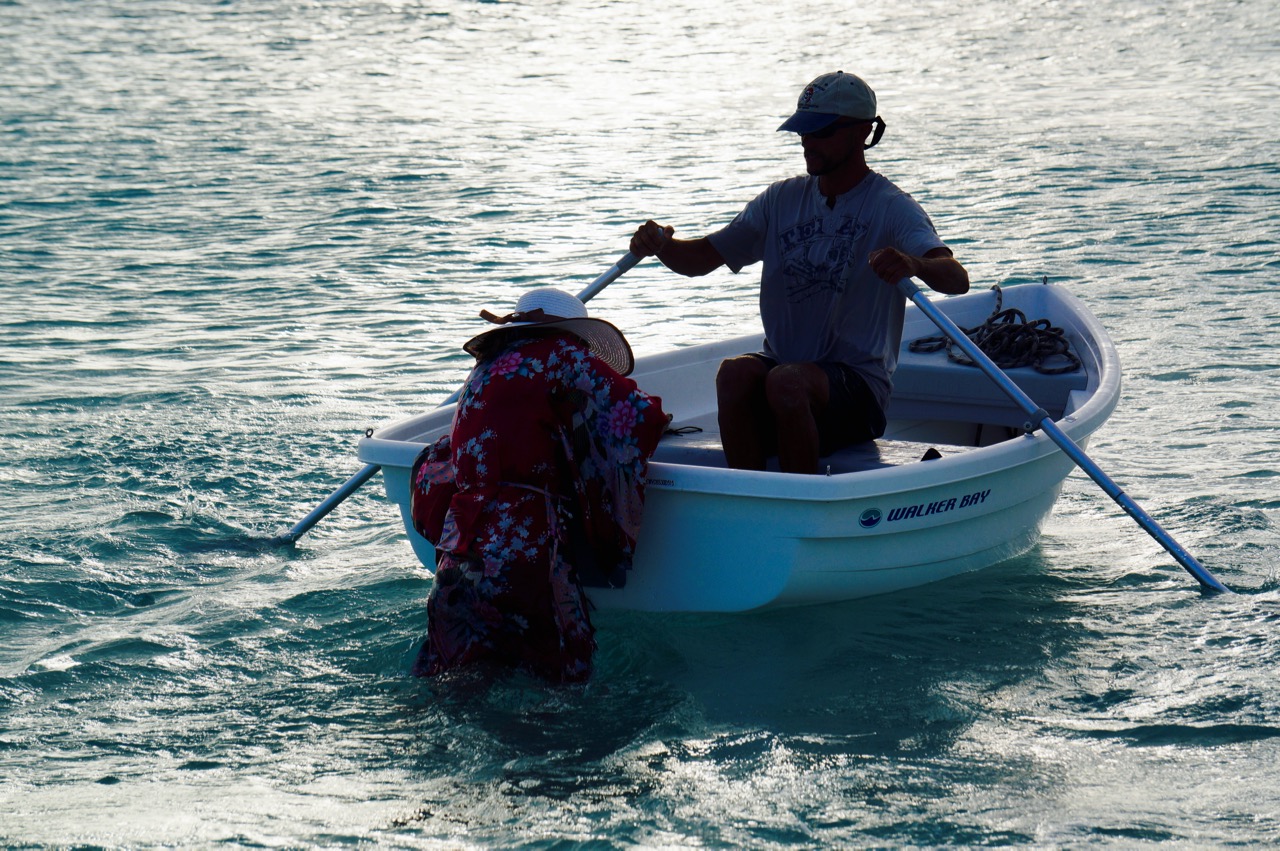
After midday, the captain decided there was no point simply snorkelling around the reefs and brought the speargun ashore from Lady Mary. This was the first time since our previous catch that the crew had wanted fish for dinner. The hunters—the captain and the senior young sailor—set off for the hunting grounds in the new dinghy (I just can’t bring myself to call this one a “dinghy” either; it is more like a launch). Nastya drove the catch towards the sharp-shooting captain, who picked it off. The launch waited at anchor.
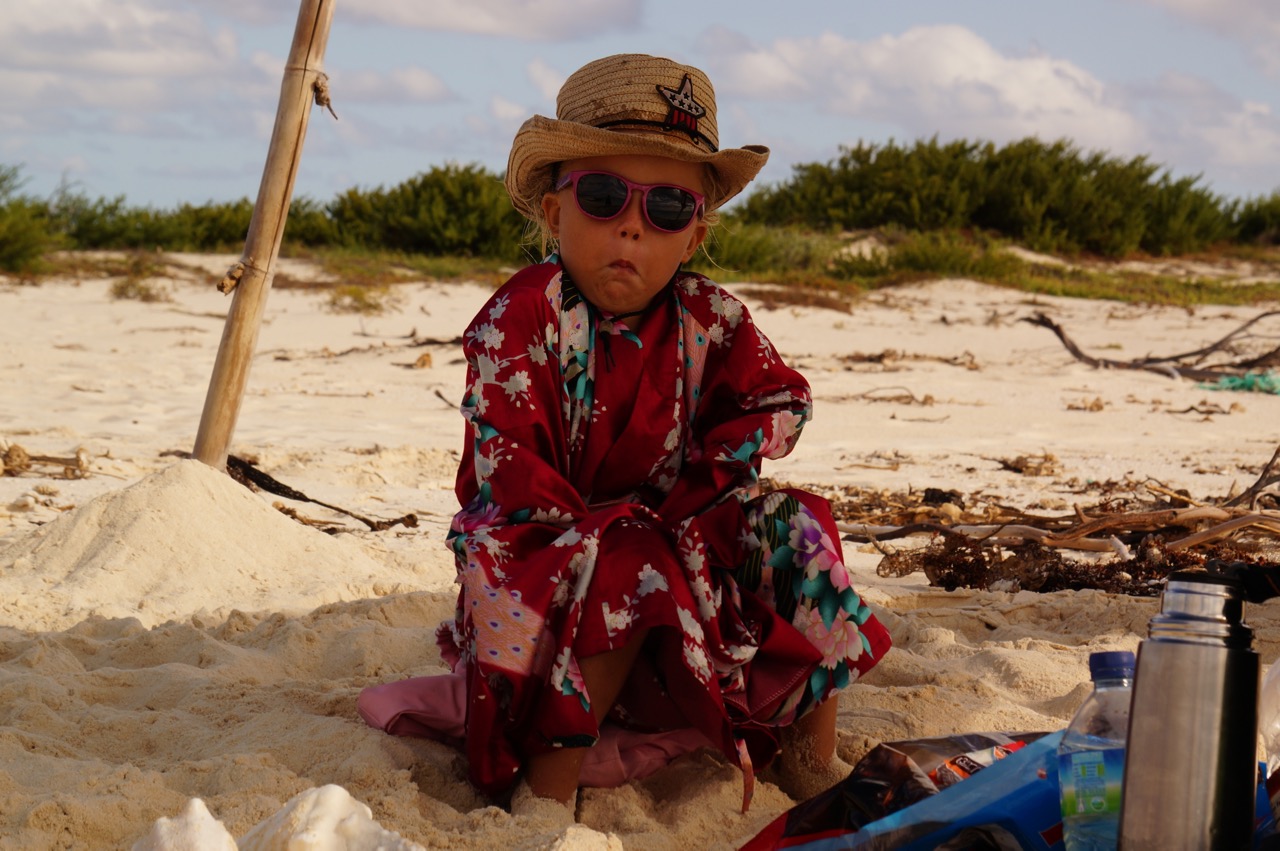
Meanwhile, on shore, the younger young sailor calmly chopped up instant noodles, wrapped in her mother’s silk dressing gown, which had been brought for protection from the sun. Half an hour later, thoroughly chilled, the spearfisherman’s assistant summoned Mum to relieve her, then sat down, shivering, to finish her second helping of noodles.
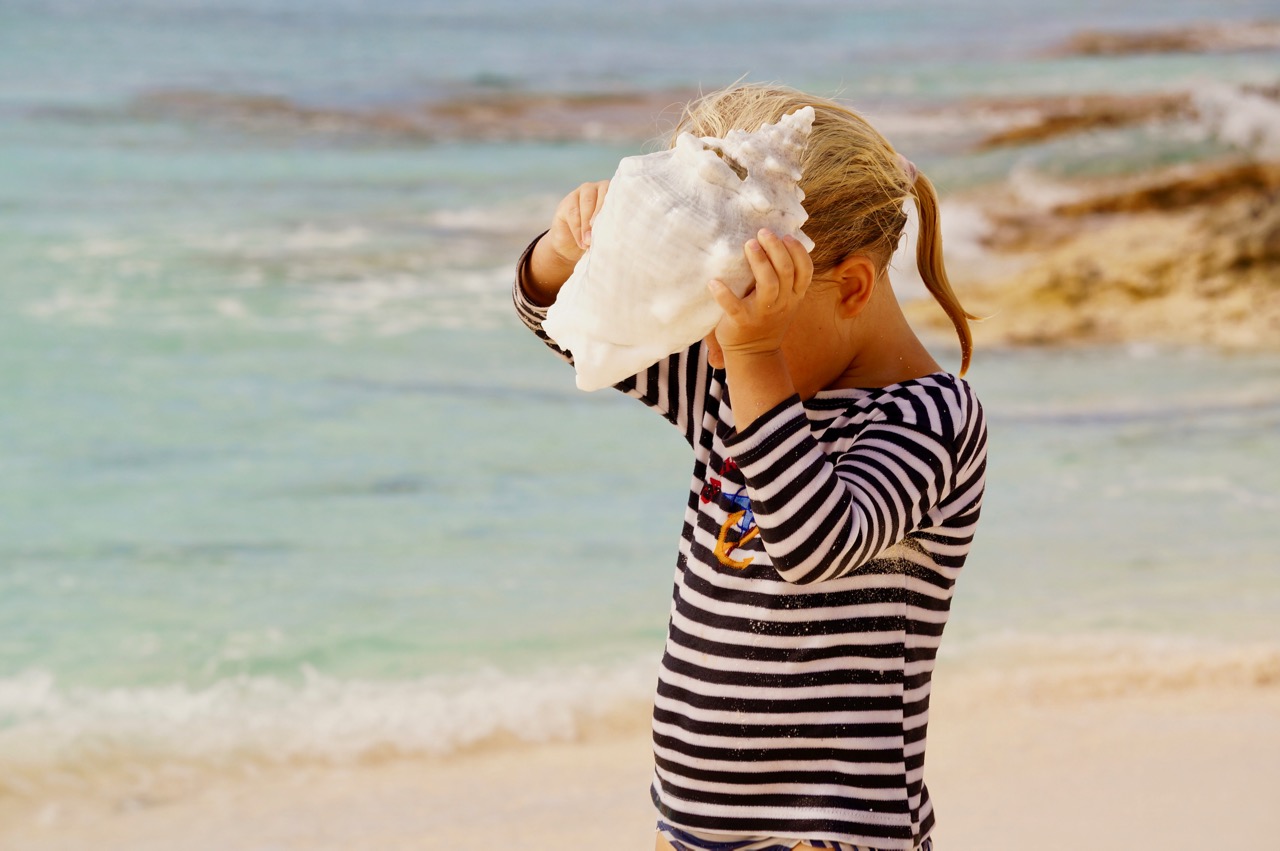
Back from the hunt with a haul (these are beautiful shells) 🙂.
Hunting trophies and snake scarers
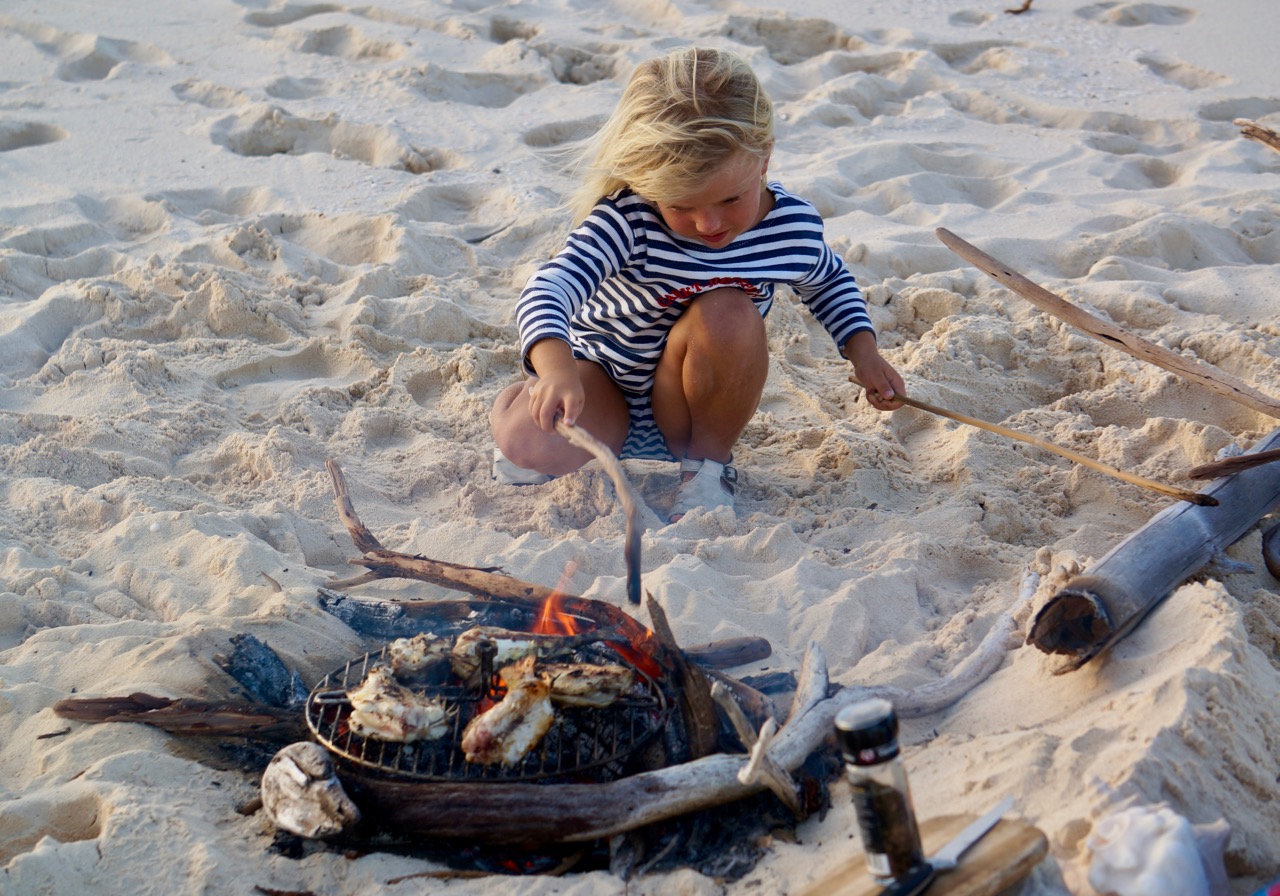
All the parents got from the instant noodles was the hope of the fish that had been caught. We decided to grill the catch, so a grill rack, spices, and a bar of chocolate were also brought over from the yacht.
While part of the crew rowed back to the yacht, the other part—the first mate and the younger young sailor—threw more branches onto the fire and set off to explore the upper part of the island. Stepping over lizard burrows, we decided, just in case, to make a racket the sand cay had not heard since the days of Captain Morgan. We were deliberately trying to frighten the wildlife—what if there were snakes here? Lada had the time of her life: she was allowed to shout, growl, howl, and grunt while slapping her sides. Stomping was impossible because of the cacti sticking out everywhere and the spiky, ball-shaped seeds of an unknown plant. While we made our noisy way through the thorns, another yacht—a fairly large ketch—dropped anchor.
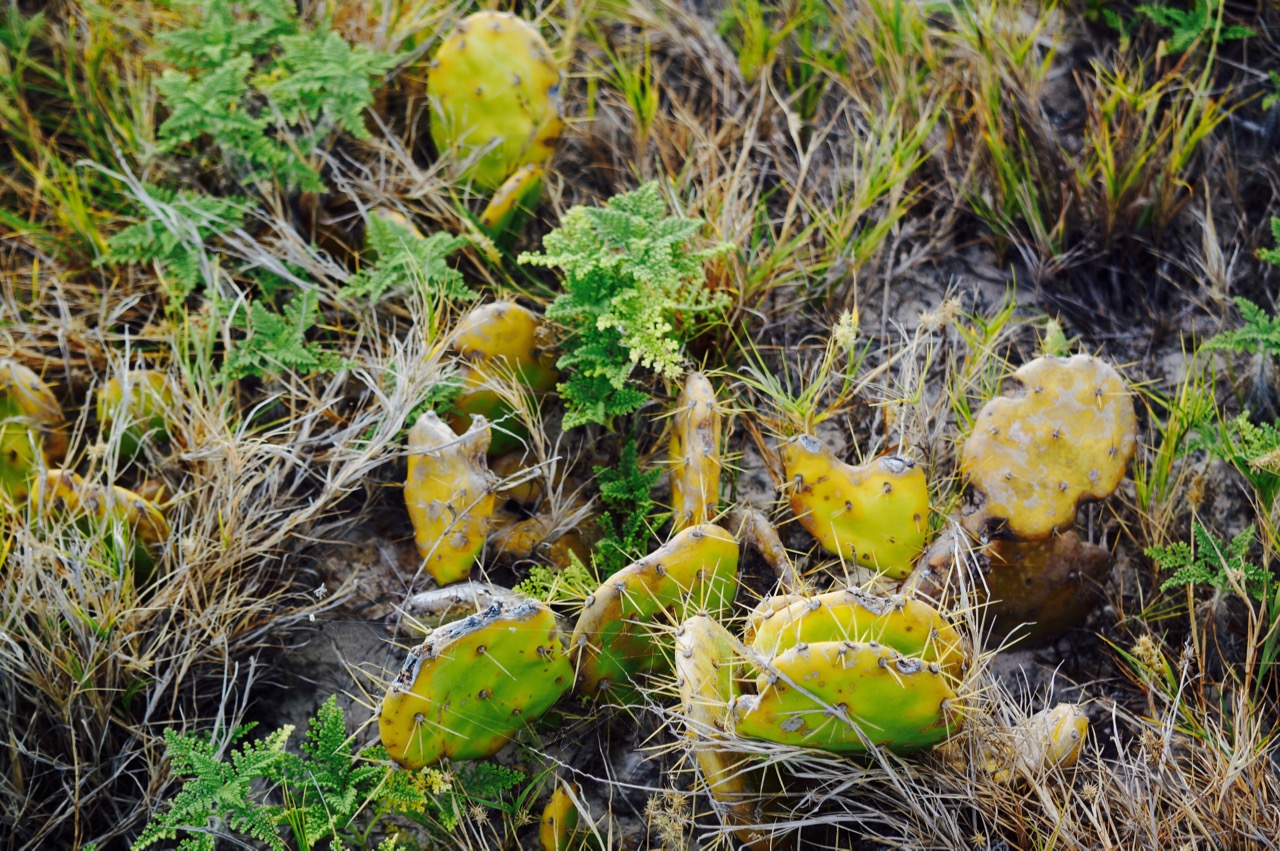
In the middle of the island, you have to watch carefully where you put your feet to avoid landing on thorns
On the way back, the first mate and young sailor came across several more large polished shells, which were now destined to sail with us to Cuba and then fly to Siberia for the holidays.
The catch went down a treat. How wonderful it is to sit on the sand, watching the sun sink into the ocean, chewing smoky fish and sipping hot tea from a billycan, telling funny stories and dreaming!
Chief fire keeper
We were lucky the fish had not eaten any toxic plankton before they died, and dinner was a success. We put out the fire by starlight, no one suffered any ill effects from the tropical fish, and the guitar songs came later, back home. It was a wonderful celebration.
And, you know... The impossible is possible! If you stop being afraid.
More photographs
Everything comes home with us. The first trophy )
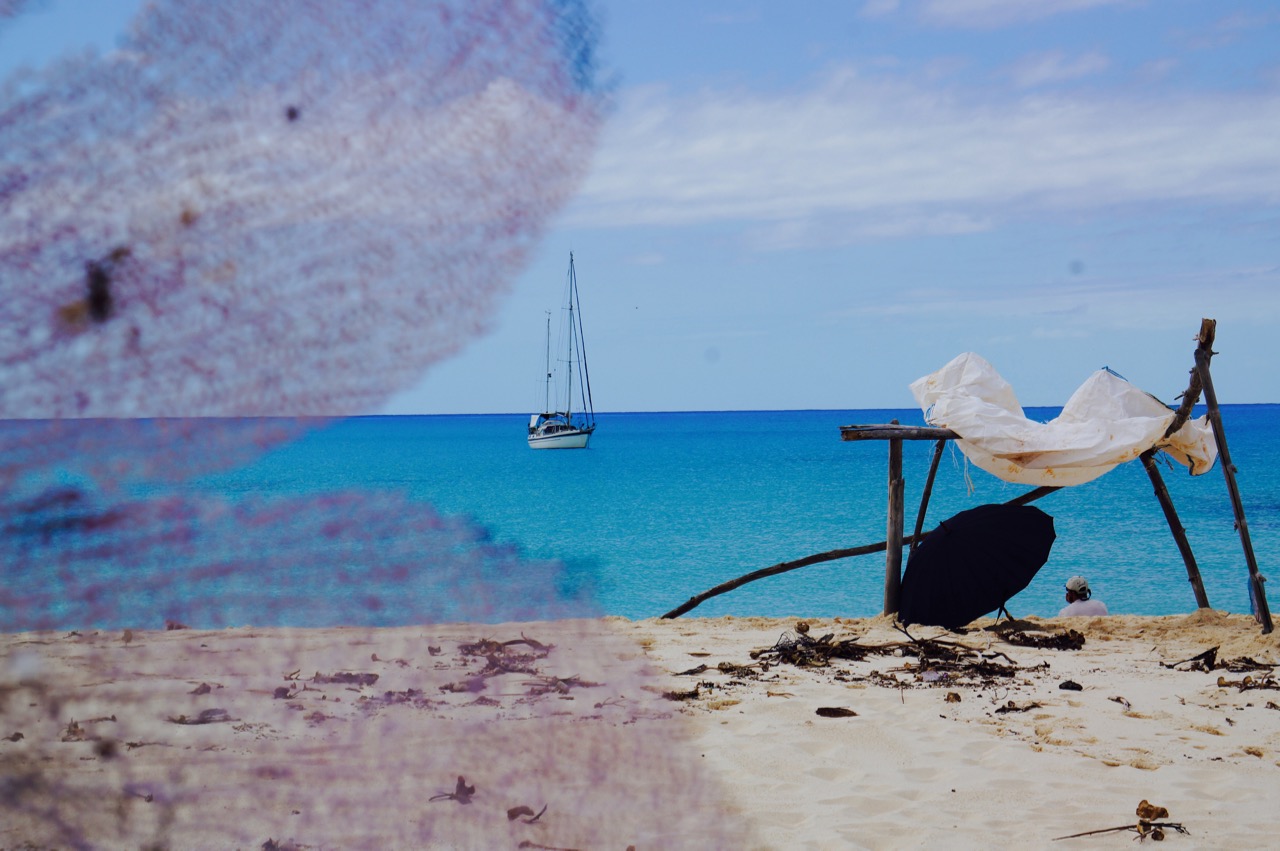
Anchorage off uninhabited Big Sand Cay
From the hill, you can see both shores of the islet and our camp with its awning and little fire
The young sailor warms up in the shade while waiting for lunch
Launch pusher
Cacti hiding among the thorns
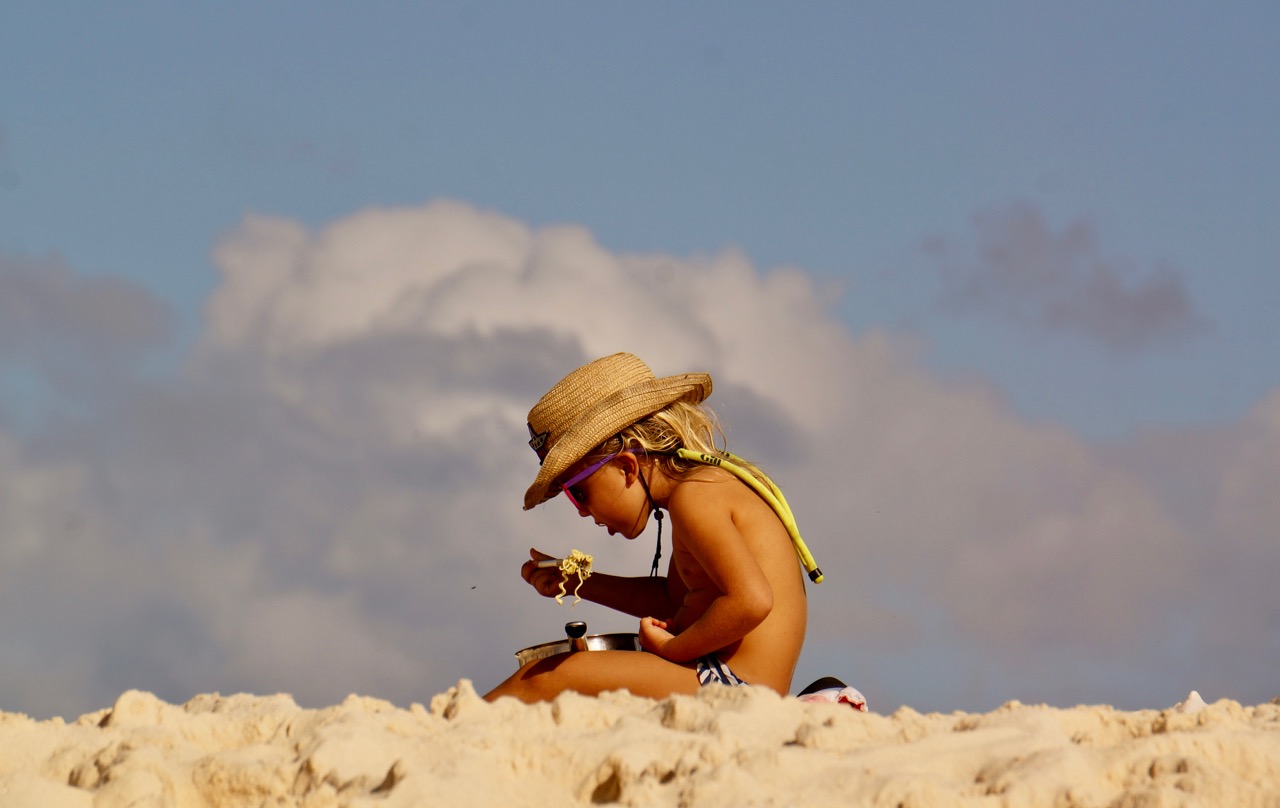
Mmmm... Noodles!
Through a veil of coral (strangely enough, that’s what it is)
There is no truly uninhabited land left. In one place a rocket has fallen, in another a submarine, and elsewhere there’s simply a pile of plastic bottles and torn trainers...
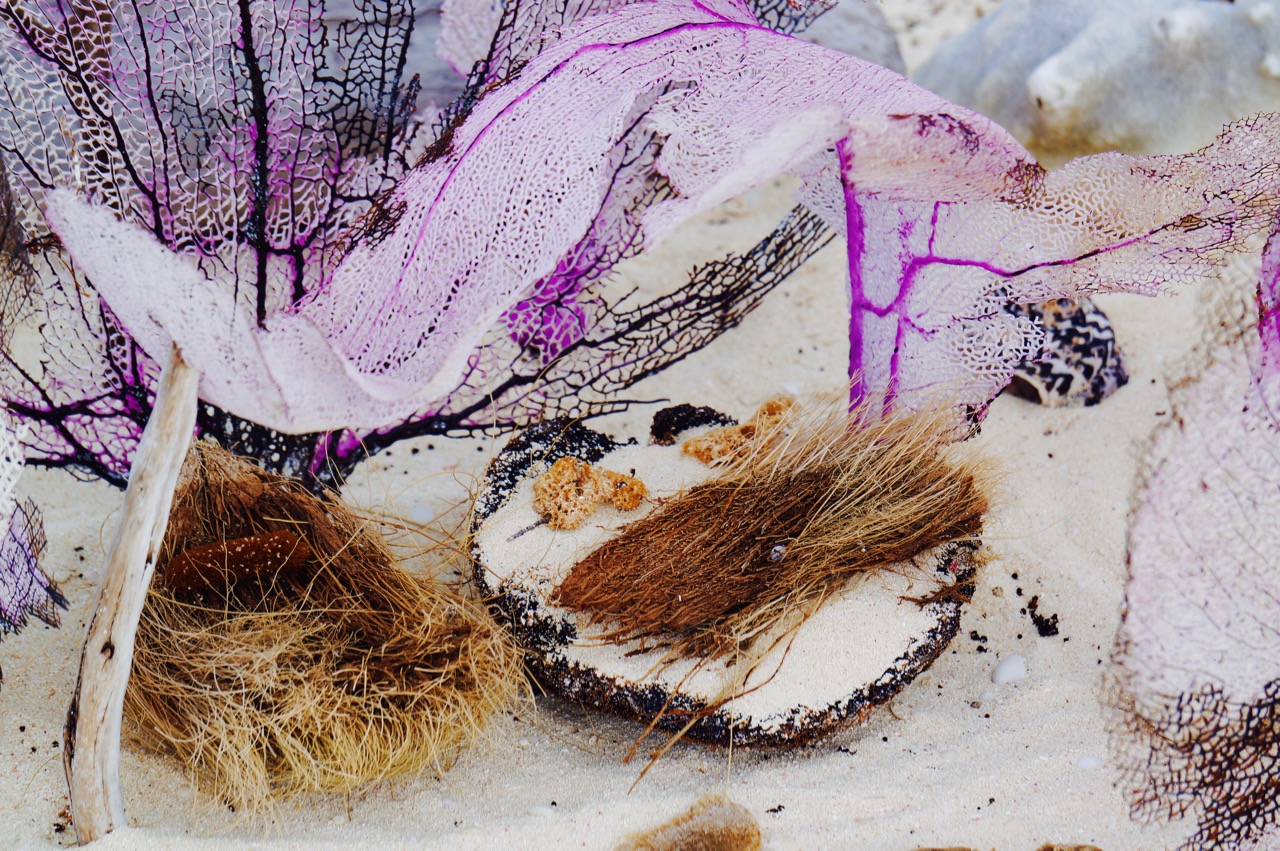
The island’s rubbish guardian
The first swim under the captain’s guidance
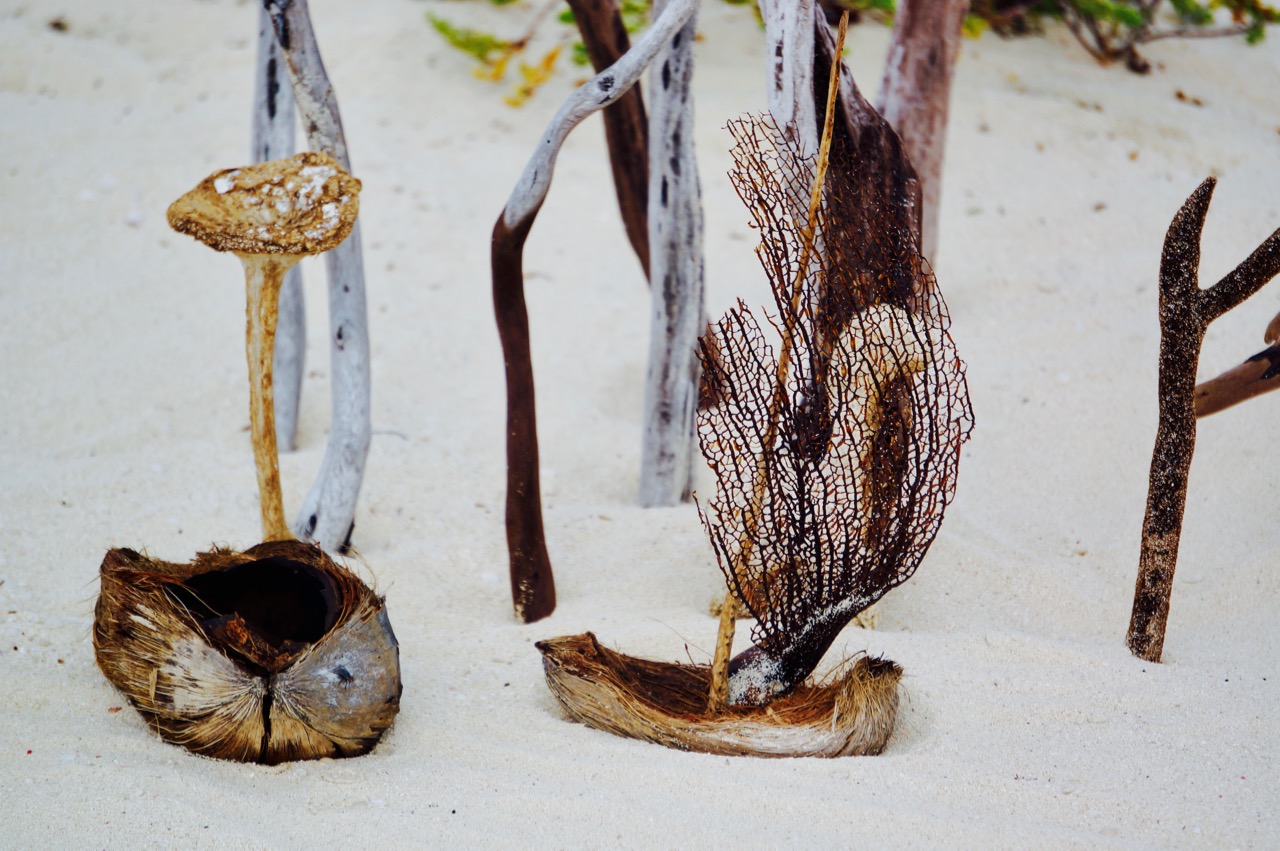
The sea nymphs’ castle in the air
Ships in my harbour