
From the Travely-Family archive · Atlantic
La Palma: In Search of a Quiet Haven and Life at the Bottom
An original publication from the former Travely-Family website. This English translation was preserved from the technical-site archive without editorial rewriting.
La Palma: In Search of a Quiet Haven
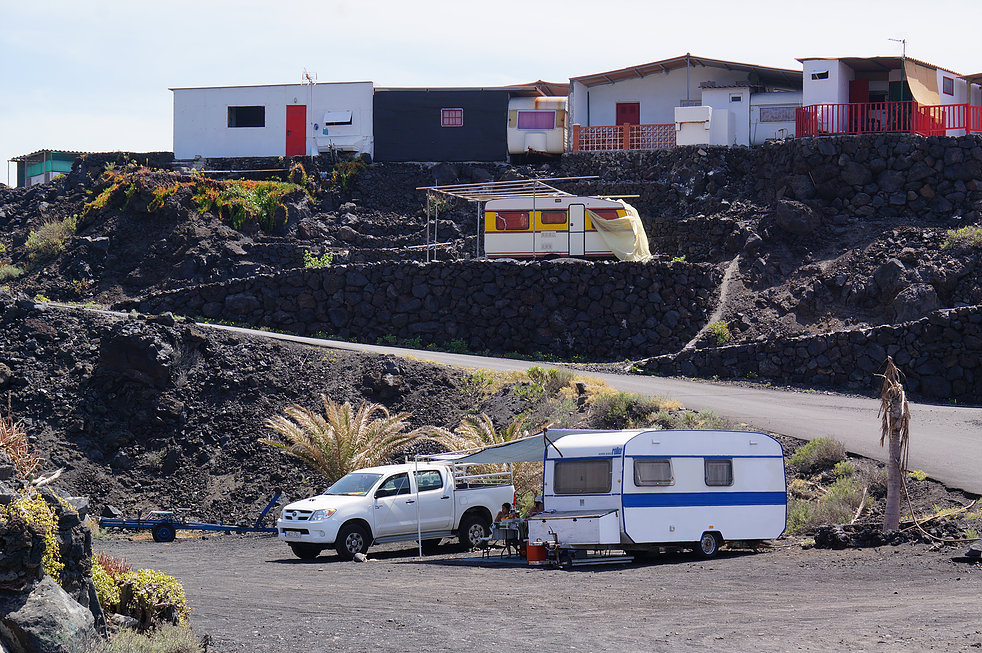
Clocking up the miles by car around La Palma, the captain and first mate never gave up hope of anchoring off the island. We drove around the south in search of a suitable bay. Fishing villages on black rocks and caravans tacked onto houses look amusing, but hardly inspire any desire to anchor there. Besides, on those days there was no shelter from the wind on either the southern or eastern coasts.
La Palma’s Eastern Coast
We headed east. La Palma’s eastern coast was no more abundant in sheltered bays, so, abandoning the idea of finding an anchorage, we continued exploring the eastern side of the island by car.
After the blazing sun on the tarmac, we plunged into a shady gorge as though into a vat of icy water. Dense foliage and vines closed overhead in a thick canopy. It looked like a portal into the humid jungles of northern Thailand. But our teleportation to Asia was short-lived, and a few seconds later, emerging from the damp greenery, we continued our descent towards the ocean shore.
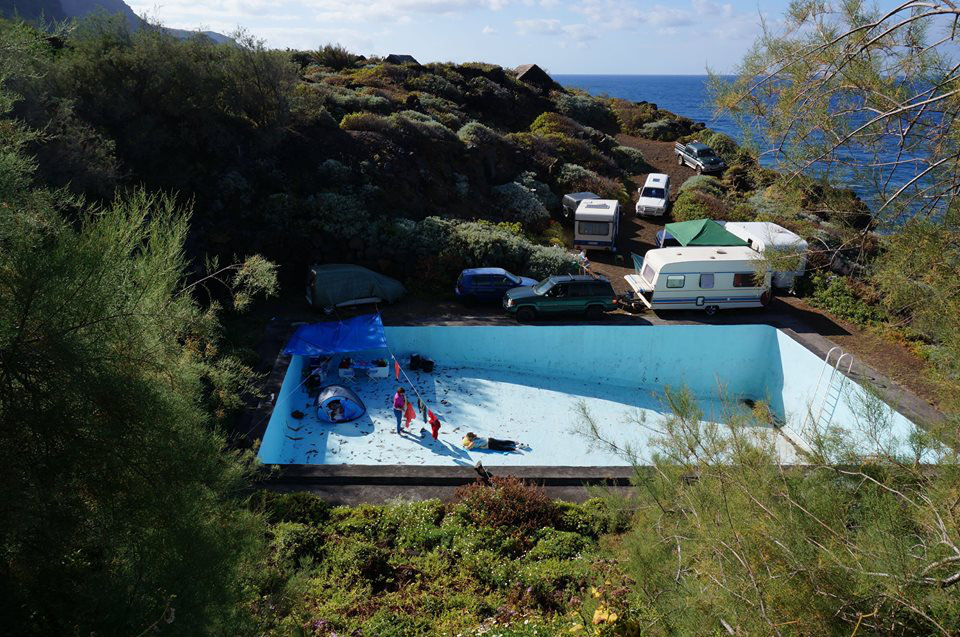
Down below, hidden behind forest and banana plantations, we came upon some unexpected places—a campsite beside an empty swimming pool, a colourful fishing harbour and the remains of a medieval quay.
At the campsite, on a tiny scrap of land between the bananas and the ocean, camper vans and cars jostle together. What was it about this particular spot that attracted them all? On the bottom of a peeling rectangular swimming pool, lovers of natural exotica had set up a bivouac, complete with tent, awning and the other trappings of camp life. Two buxom ladies were sunbathing right on the blue concrete floor. From that position, the only nature they could see was the sky and the azure, two-metre-high walls. How romantic! When they spotted our camera poking out between the rocks, the ladies began waving their arms. So we beat a retreat without waiting to see what happened next.
The Ruined Port
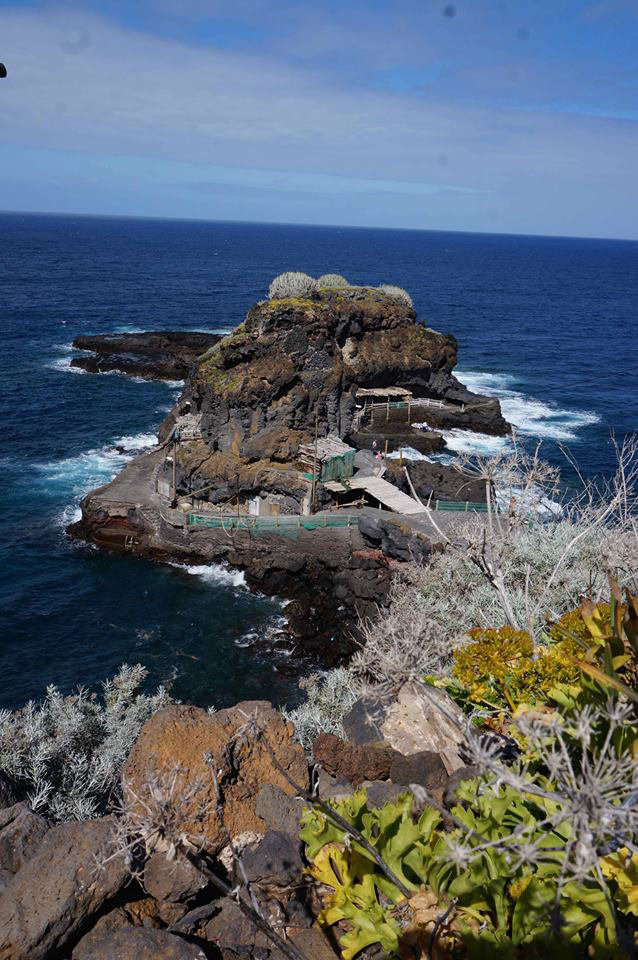
The path plunged into the bushes and emerged above the ruined port of Fajana de Franceses. On one side, a rocky promontory is bounded by a narrow inlet with high walls; on the other, by a small harbour with a reef jutting out of the water. Large ships once moored here, manoeuvring between the reef and the promontory.
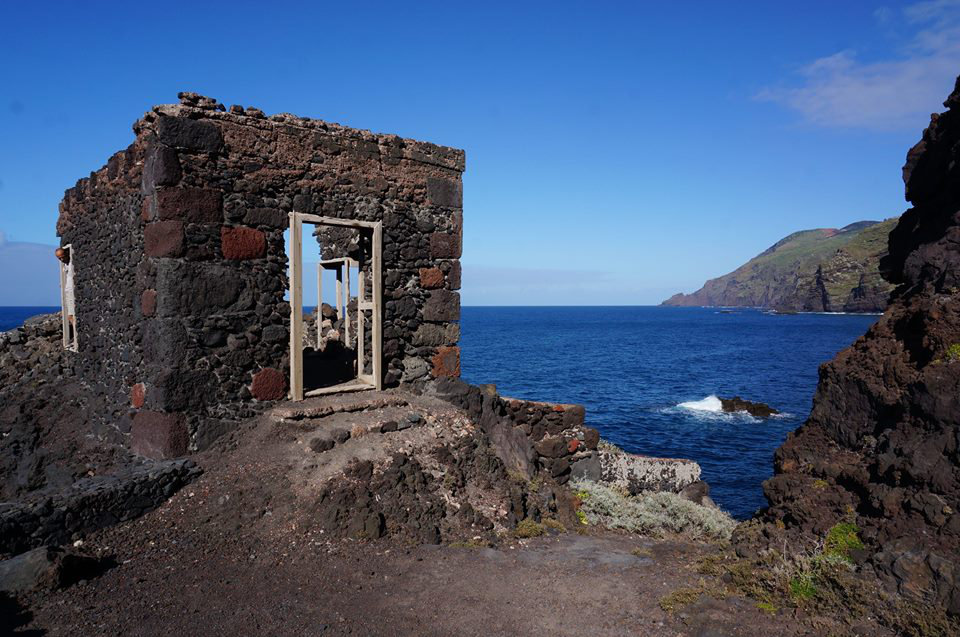
From the 16th to the 18th centuries, the port was of major economic importance. Brigantines were loaded with the bounty of the forest and the farms and carried these goods to various destinations. But once a road had been built through the gorge, transporting produce by sea quickly died out. Today, the place is visited only by fishermen and local holidaymakers.
The port’s simple, single-storey building was constructed from blackish-brown volcanic stone. Someone lives in its crumbling shell—perhaps even more than one person. Having covered the holes in the roof with palm leaves, the present-day “harbourmaster” makes his living from fishing and looks perfectly content.
The Fishing Harbour
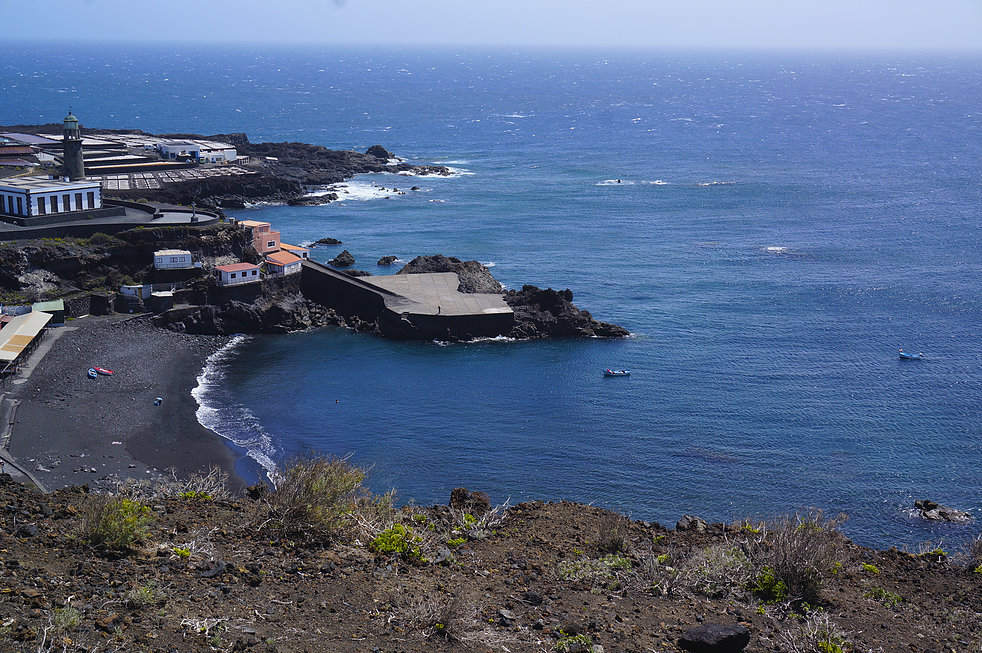
And on the other side of the campsite, we found a fishing harbour that is still in operation. Thank God for that! we sighed when we saw it. We were beginning to think the local hobbits managed without a fairy-tale industrial estate of their own ☺.
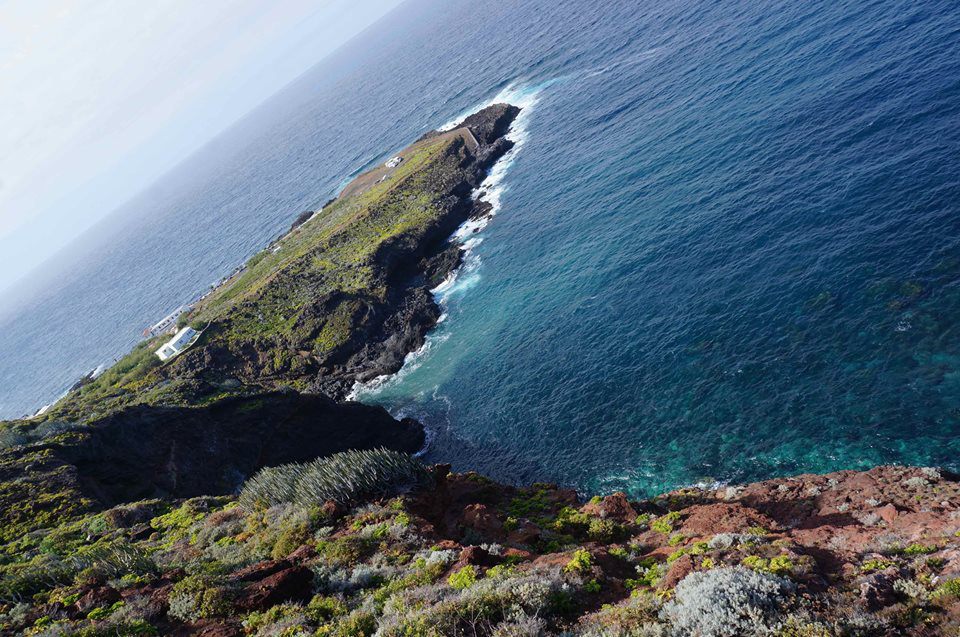
The miniature hill and the area beneath it look more like a refuge for little tourist boats. Though they don’t bring tourists here... It’s impossible to describe—just look at the second and third photos ☺.
The mountainous landscape of La Palma is also a blessing because it has left no room for mass tourism to develop: there are few natural beaches here, so there isn’t much scope for it. Package tourists therefore amuse themselves on Tenerife, popping over to La Palma for a day’s stroll. That is why the island remains so charming and kindly disposed towards everyone else.