
From the Travely-Family archive · Yacht, Sea and Equipment
Children on a Yacht: Socialisation and Safety
An original publication from the former Travely-Family website. This English translation was preserved from the technical-site archive without editorial rewriting.
Socialisation and safety
Socialisation is one of the fundamental concerns people have about homeschooling children. Take a child out of school, tear them away from their peer group—and there you have it: no more socialisation. And if you also take them aboard a yacht and put them out at sea, things are worse still: the child will grow up into a feral little Mowgli.
Balm for the sceptics’ souls: yes, that is exactly what will happen!
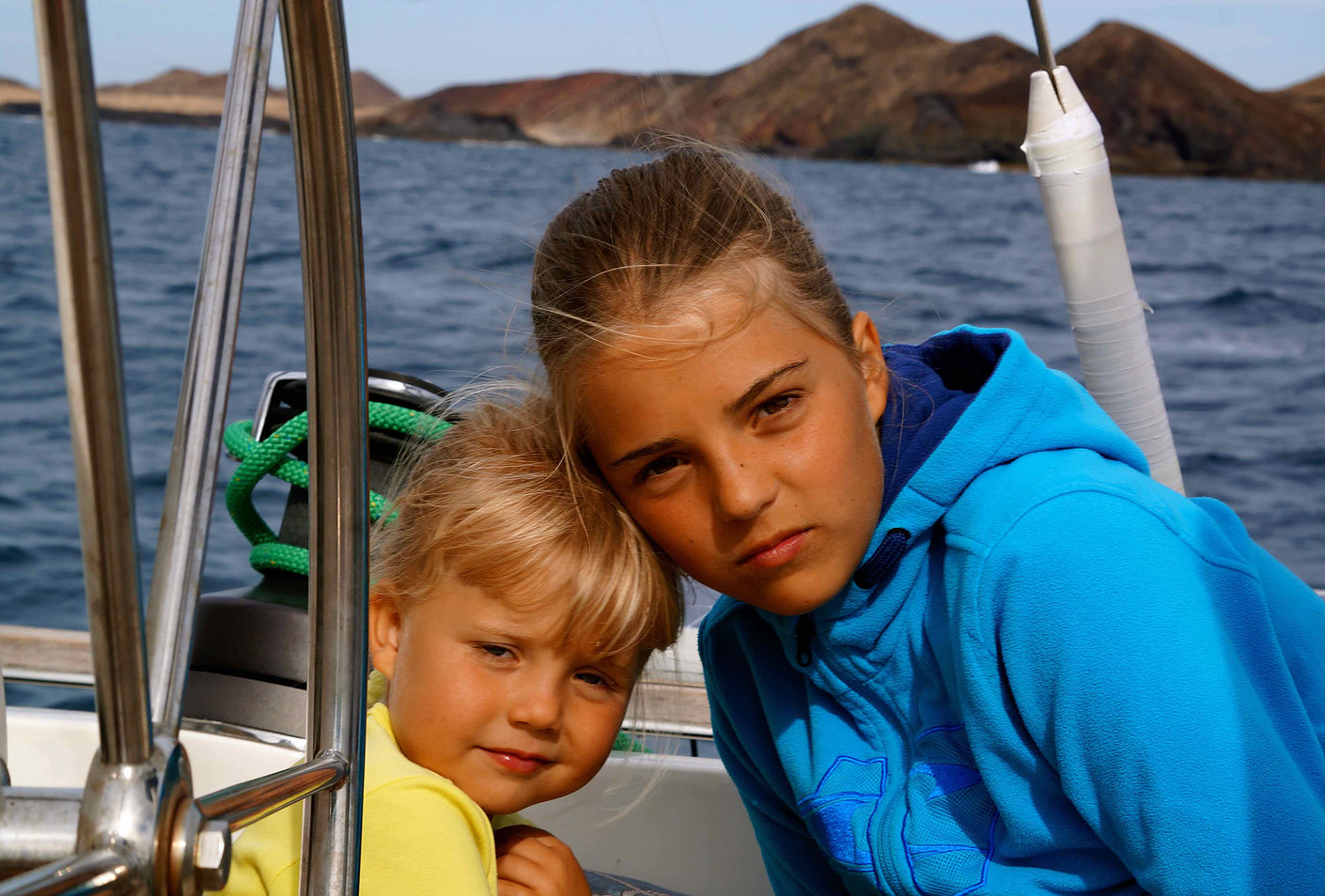
If:
you and your child are constantly roaming the ocean, putting in to shore only to replenish your water and food supplies.
you have only one child your sea is far from concentrations of yachts, settlements and other living people you have no phone, laptop, Skype or... well, nothing but a compass and a wheel you know nothing about the world and are not particularly fond of people..
Russian yacht children
Most Russian sailing families cruise in the very densely populated Mediterranean. What is more, they mostly cruise in summer. We say this with confidence because we ourselves spent two winters travelling around the Mediterranean and, apart from us and a few lone sea dogs, met almost nobody ☺.
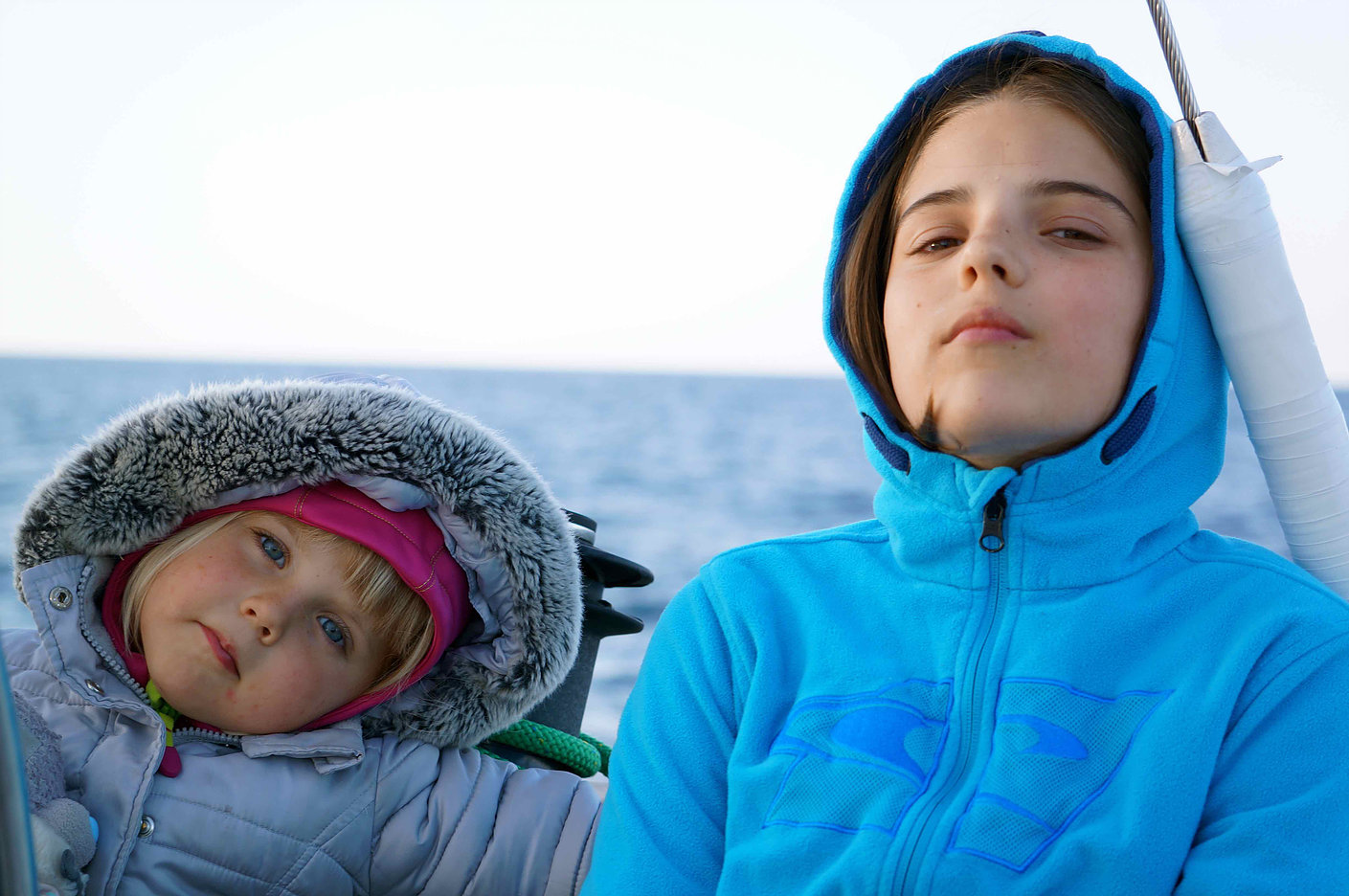
In winter the yachts are laid up in a very busy marina, with crowds of people, cafés and shops, clubs and activities, nurseries and, if desired, schools. In this case, a yacht child’s life differs from an ordinary one only in that their home is moored to a pontoon on the other side of the waterfront, and their peers do not speak Russian.
During the summer season families with children can be found in practically every marina and at many anchorages. With time being limited, the children size one another up, meet and become friends very quickly; later, they may run into one another elsewhere and keep in touch online.
The same thing happens in other parts of the world, except that Russians with children can be counted on one hand. But there are foreigners and local people, and communicating with them helps break down language barriers.
On long passages, whichever way you look at it, your social circle is limited to the crew. The Russian sailing families we know who roam the oceans with children either settle in one place for a year or two and send their offspring to a local school, or live together as a mixed child-and-adult crew, occasionally socialising with people at anchorages and in nearby villages, or flying back to the mainland..
Personal experience
With friends at Lake Turgoyak, Southern Urals
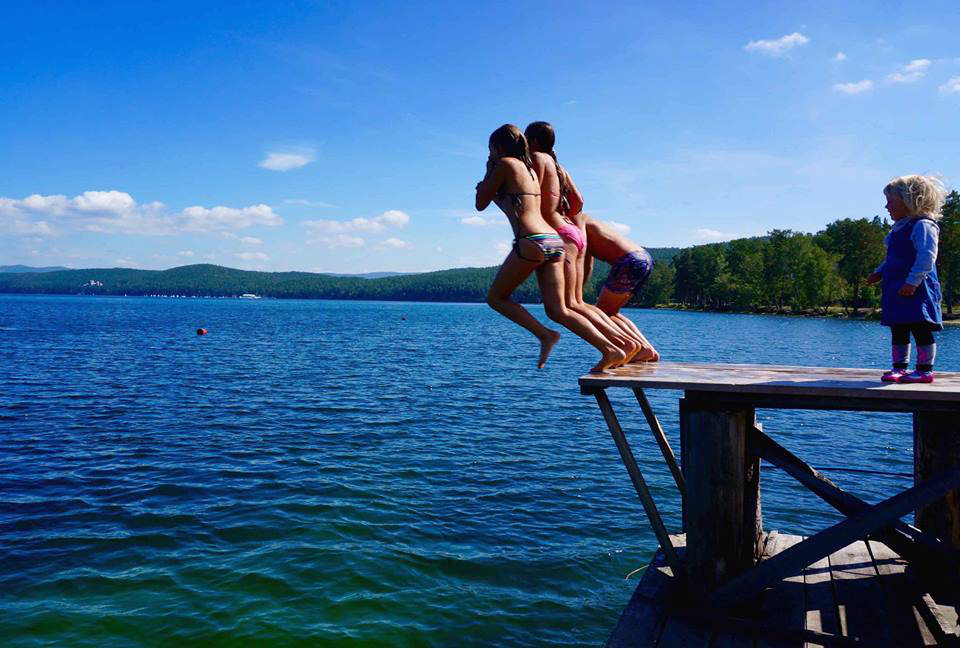
We do not winter or stay in one place for long, so the company of peers is worth its weight in gold. The major drawback of this life is obvious—friends and relatives are accessible only online (praise be to its creators!). And of course I worry that my teenage daughter is cut off from her peer group most of the time.
With no children their own age around and longing for land and people, our girls readily interact with adults and are delighted whenever they meet Russians along the way.
Before setting off on our circumnavigation, we returned home every summer, to Russian society. The girls do not look like wild little Mowglis. Both join in socially and are no different from other children.
Lada with friends after an autumn-winter-spring season living aboard the yacht
Starting in the Caribbean, I adopted the following practice: before arriving in a country, I look for the Russian diaspora on Facebook. The results can be very rewarding, even if we do not find any children of the same age.
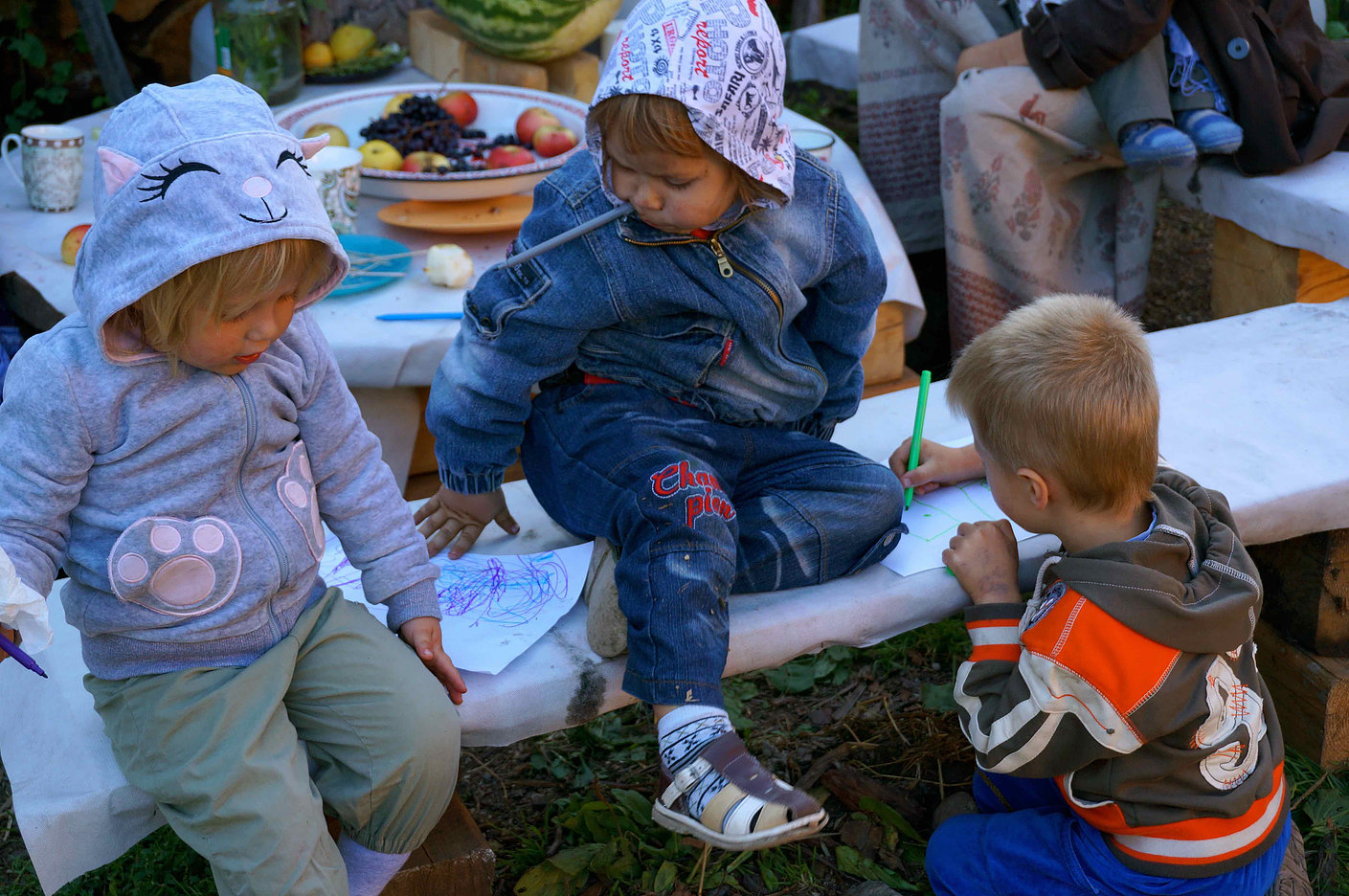
At present, Nastya is actively keeping in touch with her girlfriends online, while young sailor Lada makes friends with local girls.
Senegal. Children from Lady Mary and the French yacht VAVA, with a local boy.
The internet, homeschooling and parents
The internet is a double-edged sword, and not only in ordinary life. During long periods of isolation from peers, social media are the main means of communicating with friends and the primary channel that allows a teenager to “keep up with the times.”
In the sailing lifestyle, children’s socialisation depends enormously on the family and the parents. If a child spends all day at school and after-school activities, the old folks do not have time to worry about it. But when the offspring lives and studies in the confined little world of a sailing yacht, it is the parents who shape their social skills and worldview. That is why it is extremely important for the adults to “keep up with the times” too... and remain of sound mind.
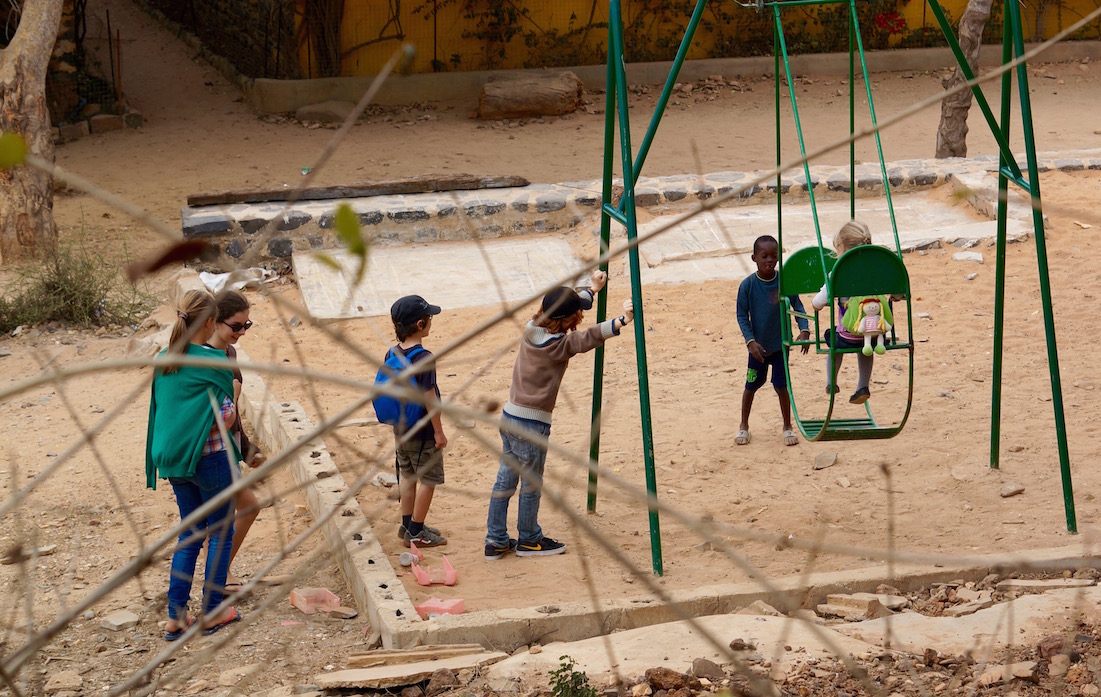
Not all yacht children are hyper-sociable and outgoing, just as not all of them are withdrawn loners. And, by the way, not every one of them is quick-witted or grasps things on the fly. Despite the romantically free-spirited lifestyle.
We are not ardent supporters of homeschooling (home education); it just worked out that way. Although we have many questions about the modern secondary-education system, we have nothing against “ordinary school.”
We met Marija from a German-Serbian yacht in Montenegro
Socialisation does not directly depend on whether or not a child attends school. There are plenty of autistic, unsociable and somewhat feral children in ordinary schools under typical living conditions too.
Friends, if you know any stories about how post-yacht children adjusted to ordinary society after returning to life ashore, please share them in the comments! We are very interested in your experience.
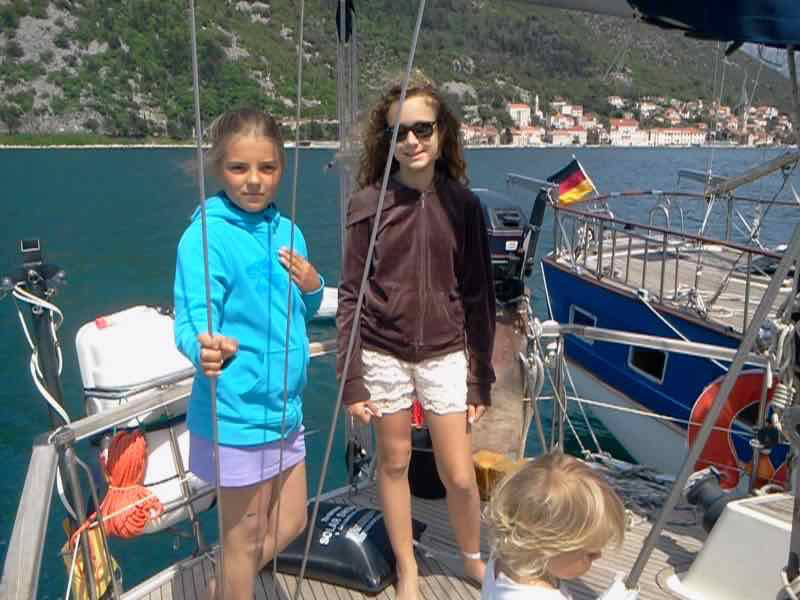
We met Dima and Zhenya from St Petersburg aboard the 8-metre yacht Pandion in the Canary Islands Children’s safety aboard a yacht
To know everything about keeping a child safe aboard a yacht, add another six points to the usual rules:
the child must know how to swim.
the yacht’s guardrails must be fitted with safety netting.
a small child must be taught to move around inside the yacht and on deck independently, and to hold on to everything as tightly as possible, even while moored. This will help prevent unnecessary falls—for example, down the rather steep companionway—and instil a useful habit for life aboard a yacht.
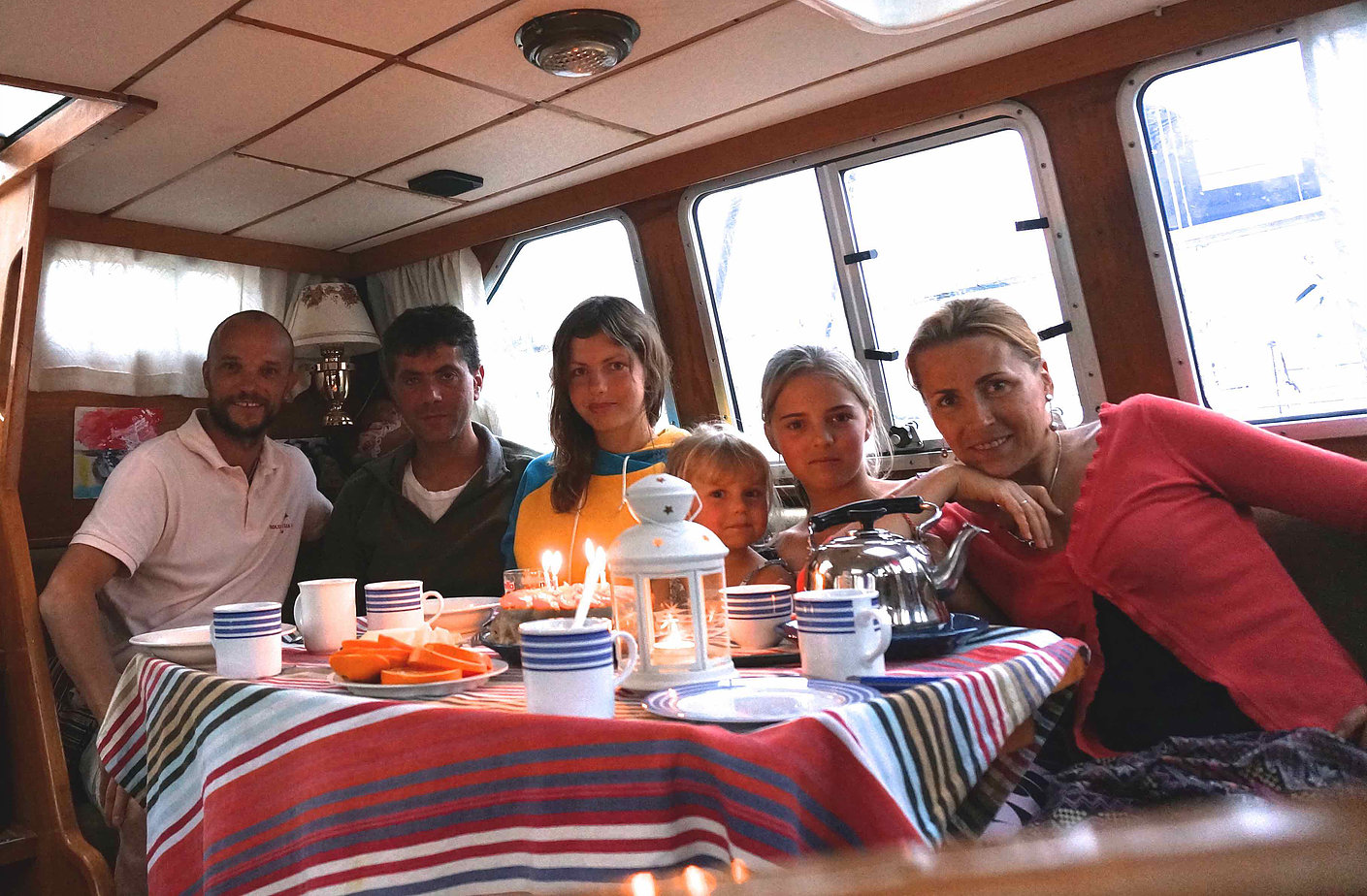
on passages, the sleeping place must be somewhere they cannot fall from. On our yacht, this was the berth in the aft cabin (see Living Aboard a Yacht for a Circumnavigation).
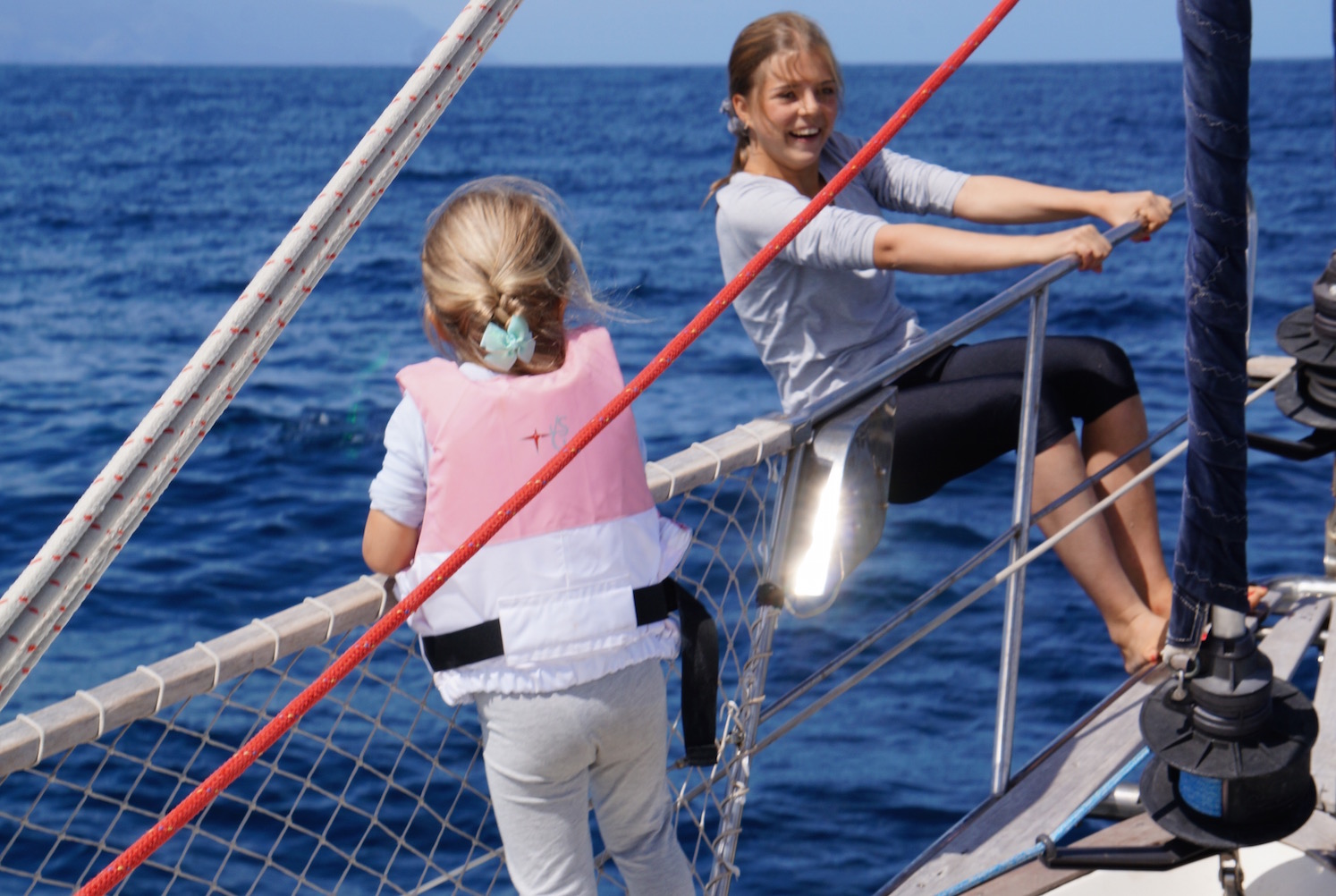
do not leave the cockpit—or even the wheelhouse—during a passage without an adult’s permission (assuming the adults are sensible and do not let the child out on deck during a storm) and a lifejacket, of course
The children communicate with pilot whales
Lada first went aboard a yacht at the age of 1½, when we sailed between the Canary Islands. We spent the next two winter seasons in the Mediterranean, amid storms and cool, wet weather. The captain was busy handling the boat, while the elder young sailor and I suffered badly from seasickness. For the little young sailor, we prepared an easy-to-grab selection of food for each passage:
— sliced fruit and carrots in a container, — baby fruit purée — bread rolls and biscuits — buckwheat cooked in water in advance — milk in a small plastic bottle
Besides food:
audiobooks of fairy tales drawing simple jigsaw puzzles — In short, everything to keep the little one occupied, with it all close at hand.
The usual stations of our micro-sailor:
the cockpit sole (in good weather) the settee in the wheelhouse, hemmed in by an adult’s legs the aft berth, where there was nowhere to fall (in very bad weather)
From the time our young sailor was eighteen months old, we did not use nappies. The potty was placed closer to the heads, depending on the yacht’s tack. The child went to the potty accompanied by an adult (so that the micro-heads did not roll away with the motion of the boat:))).
In the photo, the young sailor is already a big girl—5 years old
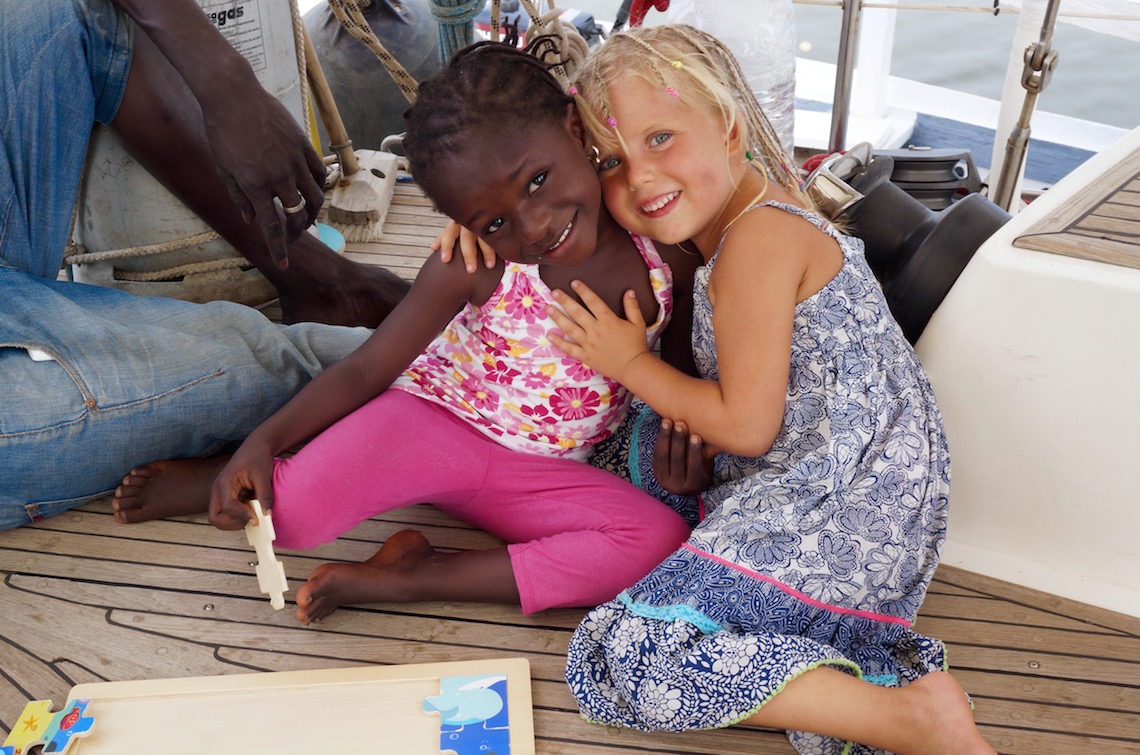
Lada’s friend Nena visiting us. The Gambia.
The remaining safety requirements for children aboard — are the same as everywhere else: wash your hands, do not put unfamiliar things in your mouth, keep away from the road, do not accept food or drinks from strangers, do not run away from adults... and do not go anywhere with anyone without your parents’ knowledge.
A detailed, no-nonsense account of children’s education is available here >>