
From the Travely-Family archive · Yacht, Sea and Equipment
Liveability of a Yacht for a Round-the-World Voyage
An original publication from the former Travely-Family website. This English translation was preserved from the technical-site archive without editorial rewriting.
Is It Comfortable to Live Aboard a Yacht
By liveability, we mean how comfortable it is not merely to holiday aboard a sailing yacht or sail for two or three weeks, but actually to live aboard.
Lady Mary is a two-masted ketch, a 1988 Nauticat 40. Technical details are here — Our Home: A Yacht for a Round-the-World Voyage.
Our reasons for choosing this particular model for living and travelling, along with the story of how we chose her, are here — Choosing a Yacht for Family Life.
Summing up almost three years of family cruising aboard Lady Mary, we shall set out the pros and cons of the yacht’s layout and size for a family with two children living aboard full-time.
As far as size and space are concerned, any modern catamaran will beat any monohull of a similar length hands down. A catamaran is almost square and resembles a house with a living room and a large covered terrace—read: cockpit. And that house barely heels on passage.
However, this post is about the liveability of a monohull yacht, which, alas, does not possess the advantages listed above.
General Layout
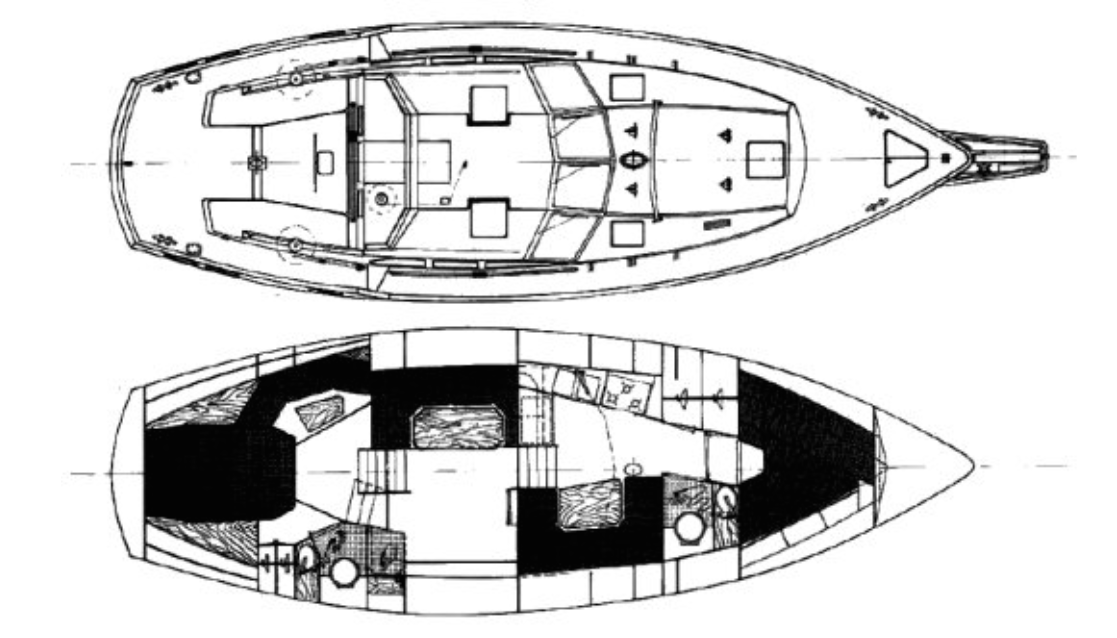
Our 40-foot yacht resembles a little floating country cottage, with everything needed for ordinary life. She has two separate cabins—a large aft cabin and the children’s cabin forward—a saloon combined with the galley, a wheelhouse that also serves as the deck saloon, and two heads.
The upper drawing is a top view of the deck. The lower one shows the interior layout. The beds and settees are marked in black
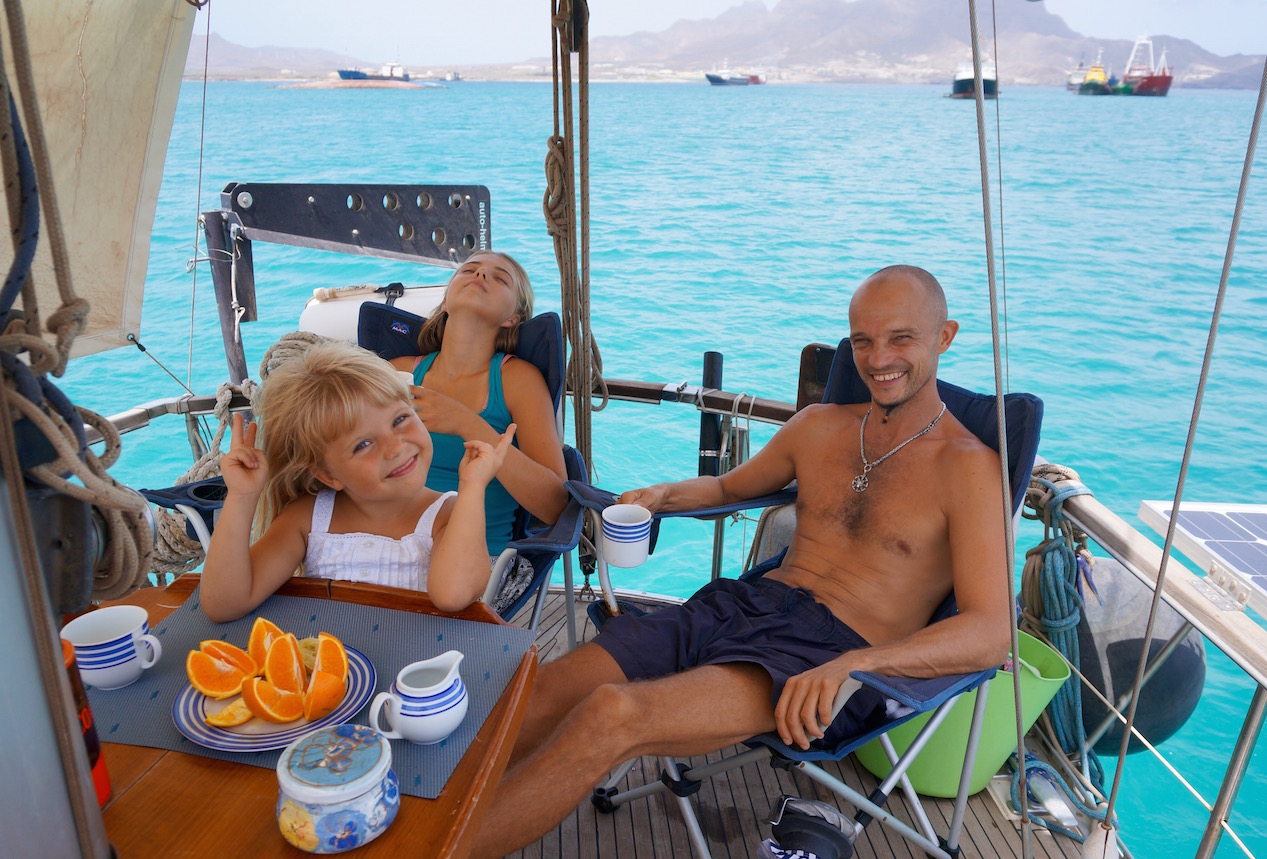
Five companionway steps lead from the wheelhouse to the cockpit—the place where the helm and seat lockers are located and, while at anchor, a table and folding chairs as well, creating that very “yachting” scene from a magazine picture, with champagne and pastries cocoa and oranges..
Breakfast on the summer terrace in the cockpit
Once you have grown used to the modest dimensions of a sailing yacht after a couple of months, you stop experiencing any obvious inconvenience. And you begin to appreciate the advantages of those dimensions when it is time to clean.
The Galley and Saloon
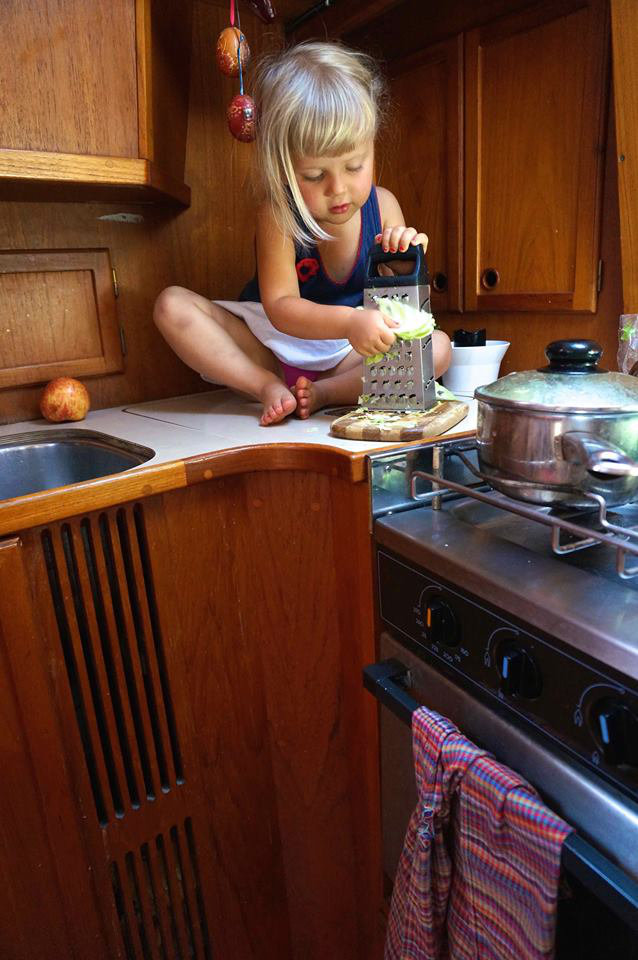
Lada helps prepare lunch while sitting on the fridge
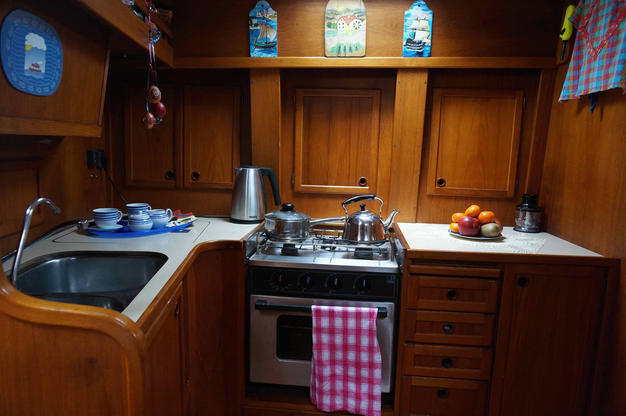
They are located on opposite sides of the mainmast step and together form a kitchen-living room.
The galley has a three-burner gas cooker with an oven, a top-loading fridge built into the worktop, cupboards, a sink and work surfaces.
Lada liked preparing lunch mostly while sitting on the fridge.
Overall, the galley fittings resemble a miniature fitted kitchen. The cupboards hold crockery and food used frequently. The rest of the provisions are hidden in lockers along the sides and beneath the cabin sole in the bilge..
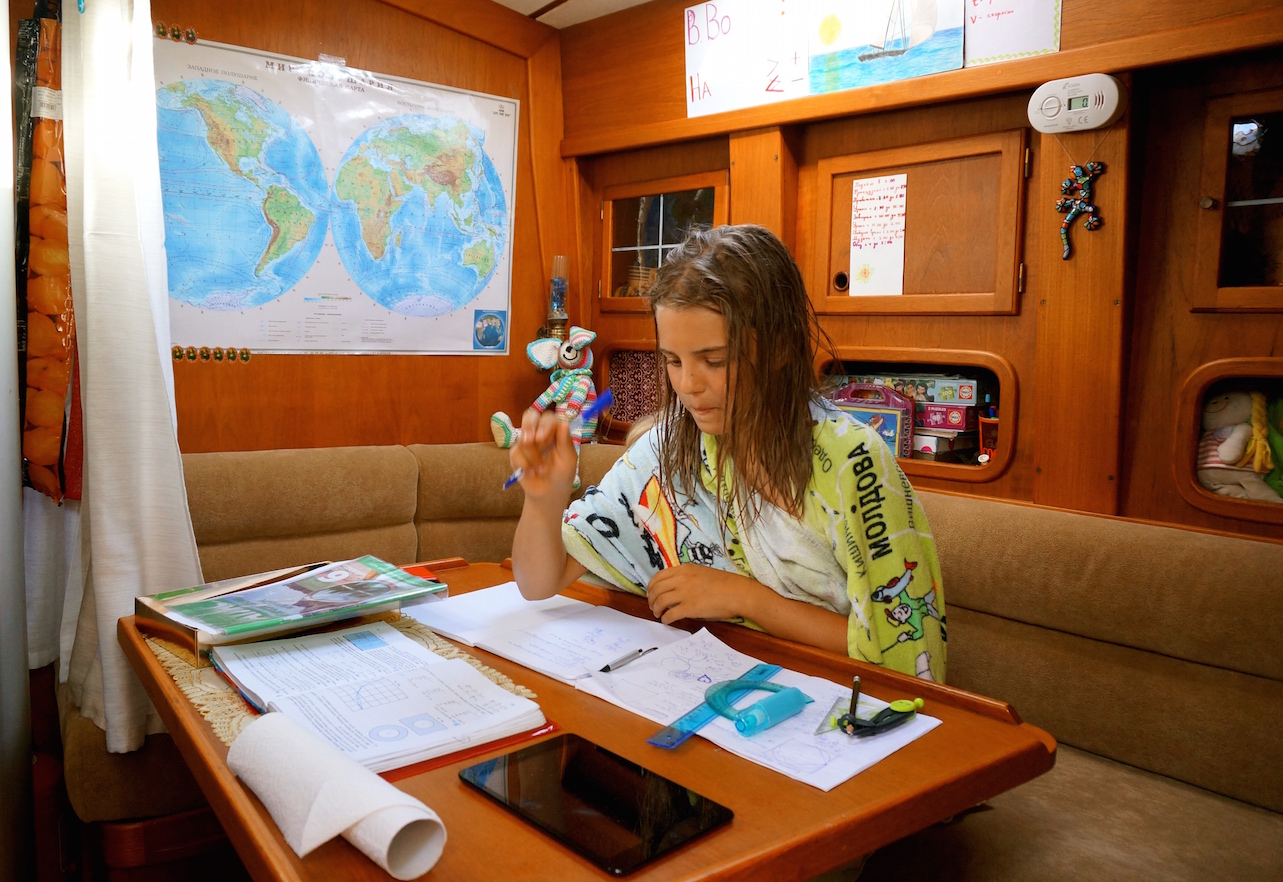
This is what the galley looks like at anchor and (importantly!) after tidying up:))) In the saloon, the children draw and do their schoolwork.
This is the children’s study, with cubbyholes and three roomy cupboards for all sorts of useful things. Two hold china and the drinks cabinet; the third holds textbooks and exercise books.
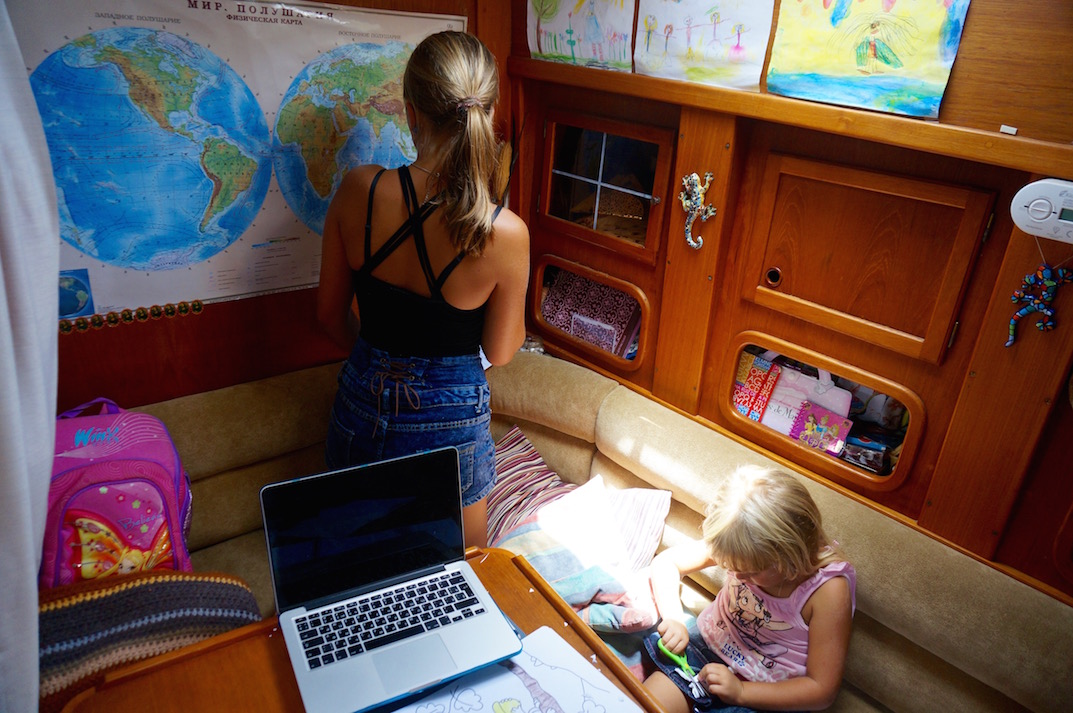
The desk-table converts into a bed where two people can sleep if they wish, but only at anchor or on a port tack. On a starboard tack, the cushions fly into the galley together with whoever is lying on them. The berth/study can be screened off from everyone with a curtain, turning it into a little den:)..
A maths lesson
The older daughter’s geography lesson combined with the younger one’s handicrafts lesson 🙂 Heads and Shower
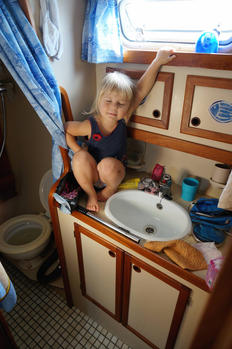
The young sailor cleaning the aft heads
Our yacht has two heads compartments. The forward one is between the living room-kitchen and the children’s room. Ladunya nicknamed it the “children’s toilet.” It has a sink, a roomy cupboard and, of course, a manual pump-through marine toilet.
The aft (larger) heads, christened the “grown-ups’” by our younger young sailor, is in our bedroom. There is a shower that can be screened off with a curtain, and a little bench folds down over the toilet. It is convenient for sitting or standing a small child on while washing them. As you would expect, there is a sink and cupboards beneath and above it.
The grown-ups’ toilet is ventilated through a window; the children’s through a vent in the ceiling.
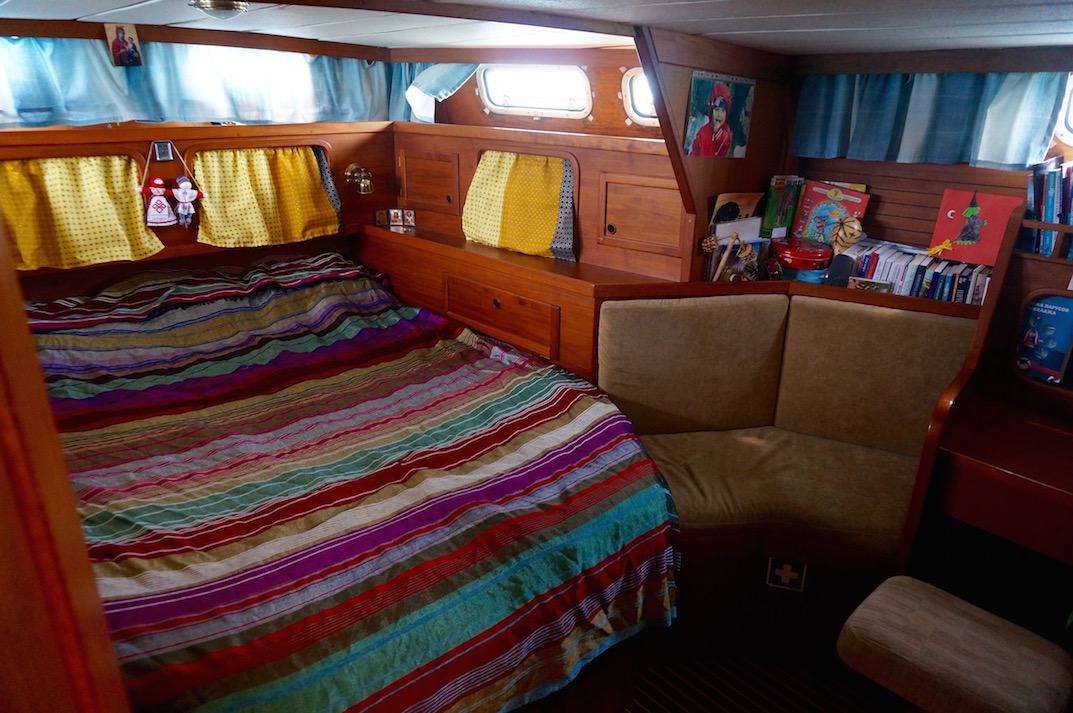
There are also vents in the galley, above the children’s study and in the forward cabin.
On passage, it is important to remember to turn the external cowls on deck towards the centreline and plug them from inside with a large sponge. Otherwise, waves washing over the deck turn the vents into showers.
In hot weather, the indoor shower is barely used. We rinse off on deck either with plastic bottles or with a special camping shower bag.
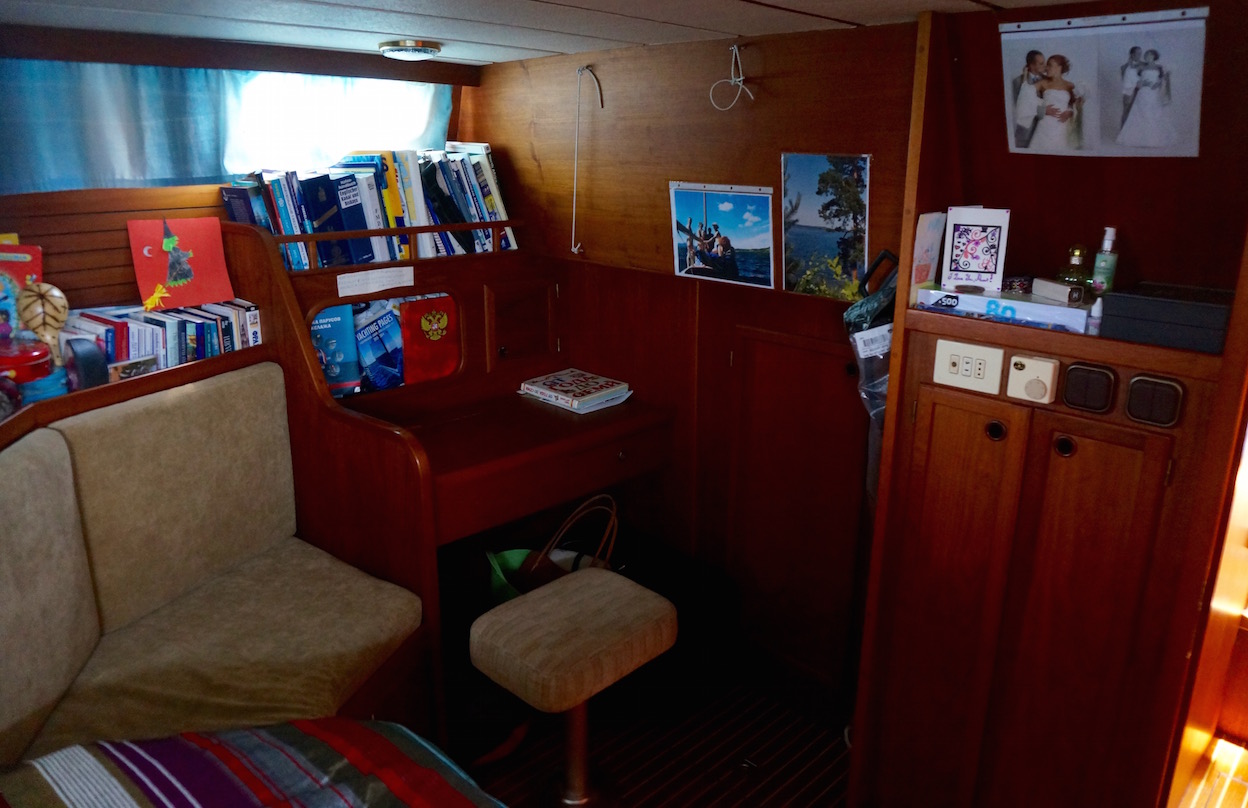
The Aft Cabin
We give Lady Mary’s liveability top marks with distinction when it comes to the aft cabin while at anchor:). It is a proper bedroom with full standing headroom and a double bed measuring 2 m × 1.7 m..
The aft cabin aboard Lady Mary
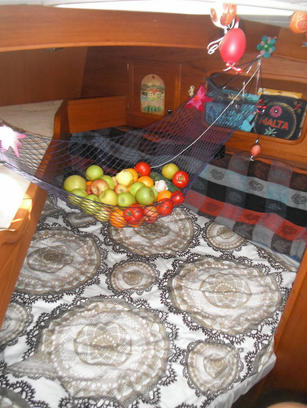
The bed is bordered on both sides by the hull sides with lockers, so there is nowhere to fall off it (not every yacht’s large bed can boast this virtue). The cabin has a dressing table (which we use as a second chart table), numerous shelves, cupboards and lockers crammed with food and clothing:)..
The aft cabin. Dressing table and shelves (A guitar usually hangs where the ropes are on the wall) The Forward Cabin
Also known as the children’s room. On passage, however, the children sleep in the aft cabin with one of the adults (the other is on watch), because there is less motion there.
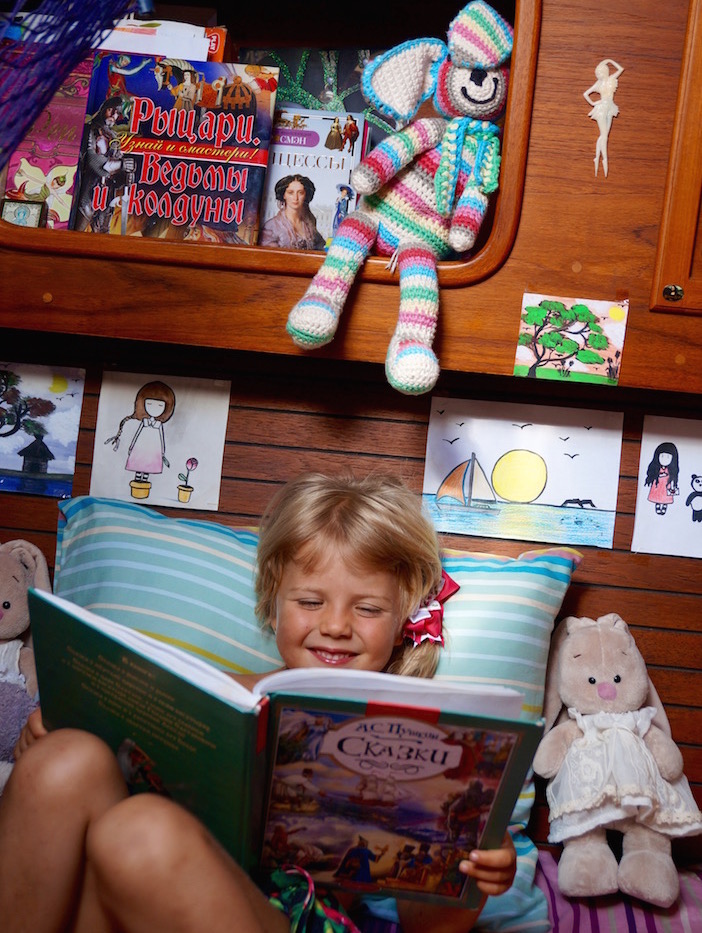
The cabin resembles a tapering railway compartment, only without a table. There are two single berths below and an upper bunk, providing a third berth. The children keep a cupboard and a dolls’ house on it.
The walls of the children’s room are covered with their favourite posters and photographs. There is a cupboard and a shelf with the girls’ bits and bobs and books. Almost like home 🙂
The lower berths can be turned into one continuous triangular berth by inserting a special piece of plywood and a section of foam. The whole family can lie down on this bed; three fit comfortably.
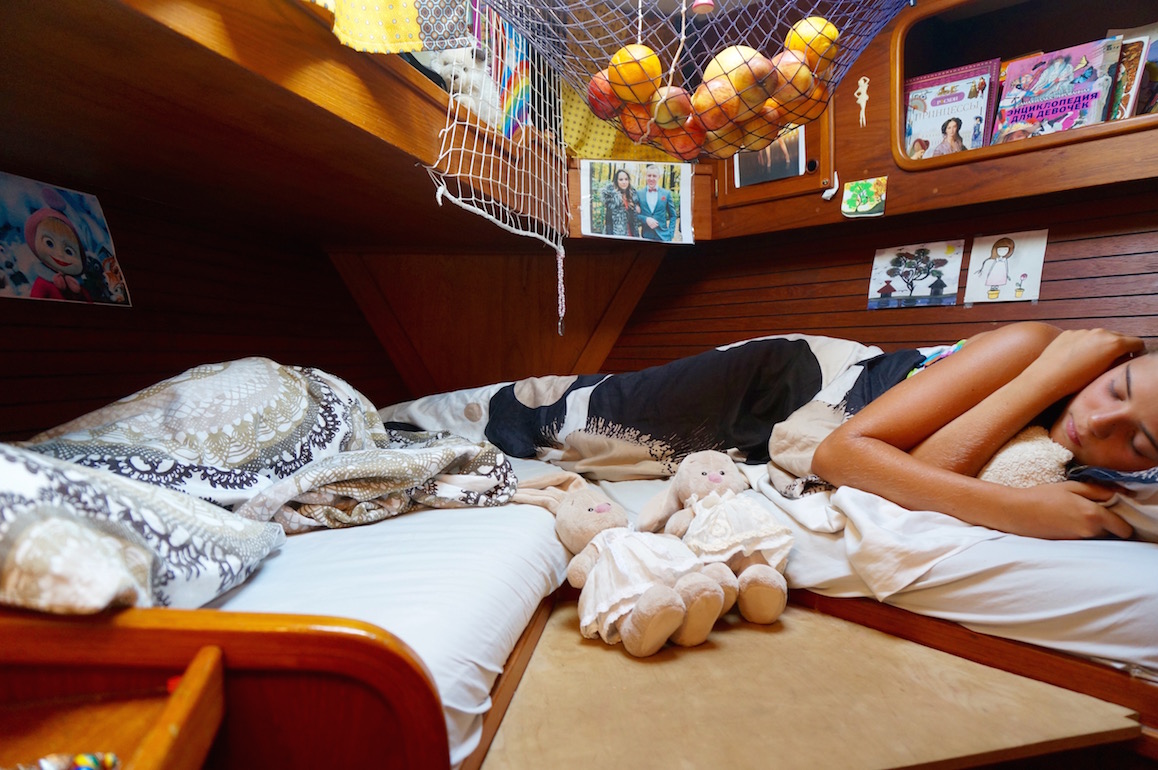
So, depending on how close the passengers and crew are, the yacht has up to ten berths: four in the forward cabin (three for people who are not related), three aft (well, or two), and two in the saloon (one if you do not fancy sleeping with strangers).
If you wish, you can sleep in the wheelhouse—even two people can, curled up to fit the shape of the settee. That is what we do when standing watch in heavy seas..
The forward cabin. The children said, “Take the photo like this,” and pretended to be asleep The Wheelhouse
This is the epicentre of life aboard the yacht. It is effectively our deck saloon. In cold weather, it is the dining room, the living room and cinema, as well as our office. In the wheelhouse, we entertain guests, work and play music on the guitar or keyboard..
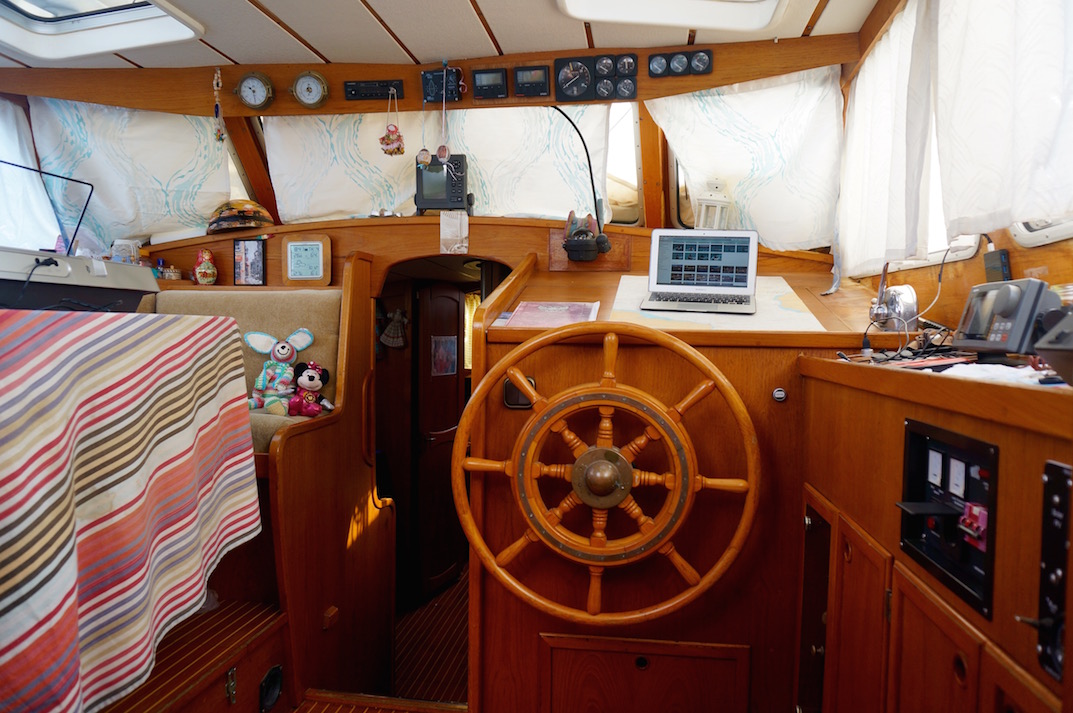
The wheelhouse
The wheelhouse is also used for its intended purpose:).
It has a second set of navigation instruments, a helm and a throttle lever.
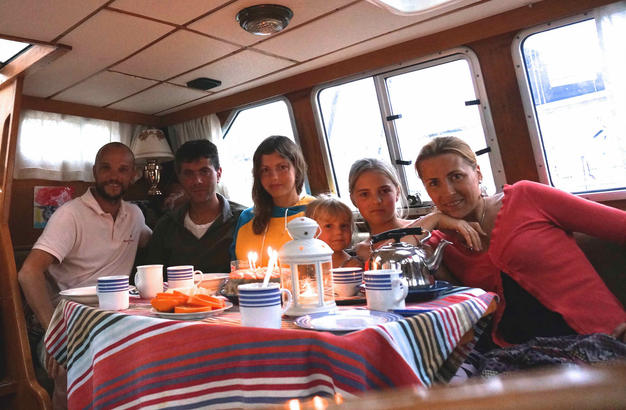
This is where we stand watch.
The drawbacks: having a wheelhouse, raised above the cabin sole, divides the yacht’s large shared space into two small ones. On yachts without a wheelhouse, the saloon is more like a kitchen-living room in a house. It feels airier and more spacious.
The advantage: the wheelhouse allows us to steer the yacht from inside. Honestly, I do not know how we would manage without one, because in rain and rough seas on passage with children, it is the only place where it is more or less comfortable to be. And when at anchor during the colder months, of course, it is the same story: from almost everywhere else aboard, you can hardly see the outside world. Here, however, there are large panoramic windows.
Flora and Fauna
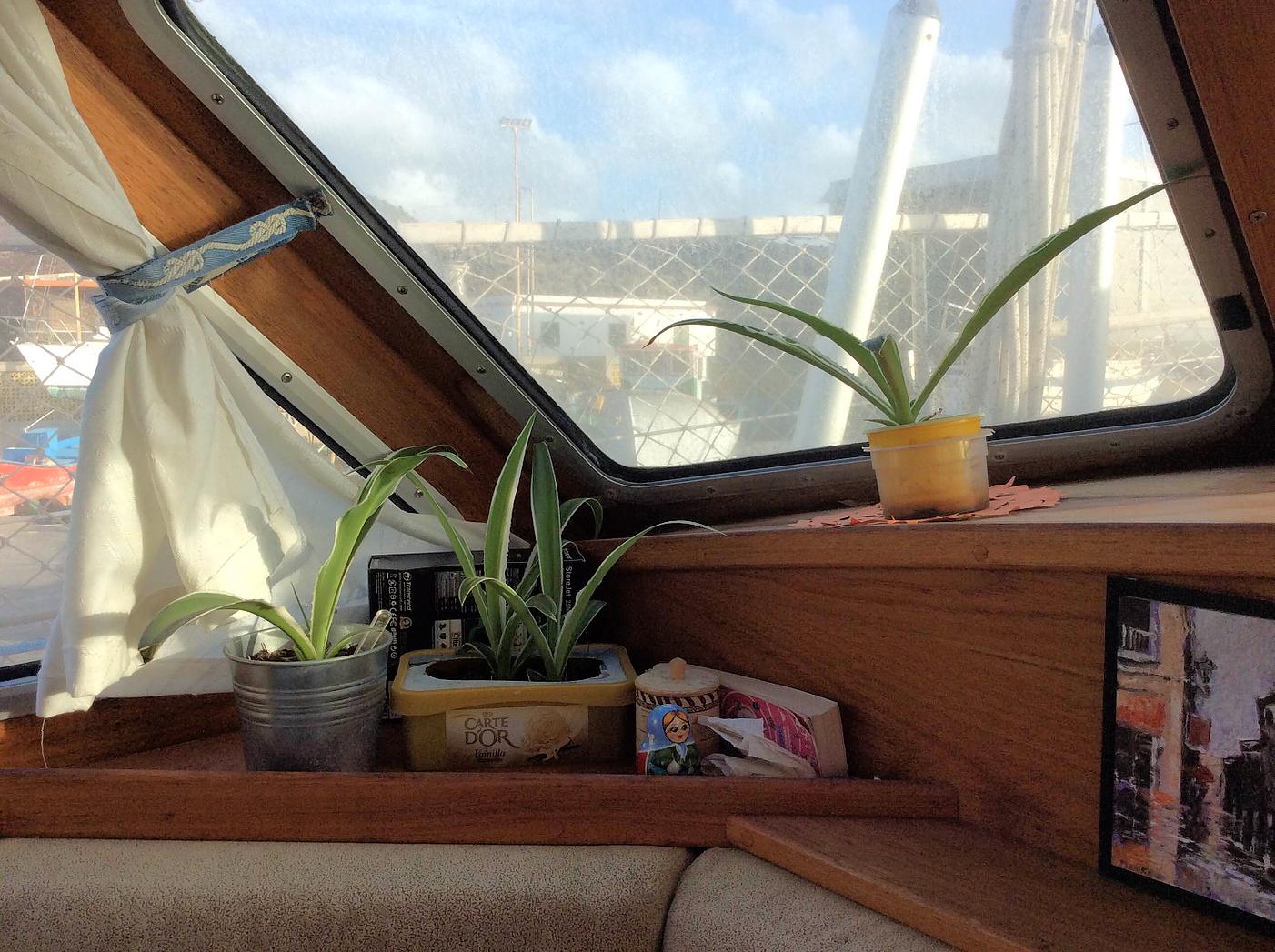
There are handy shelves above the settee in both corners. On one of them, the children and I even set up an experimental garden: we dug up some soil in a forest in the Canary Islands and plant whatever comes to hand in little pots, then watch what happens. Once we noticed that a seed inside an apple had sprouted, so we planted it together with the core. For a while the sprout stuck up perkily, then it really took off, and now it looks more like a pumpkin, although we definitely did not plant one.
When the boat changes from “anchorage” mode to “open sea” mode, everything, including the flowerpots, gets packed in much more tightly and, fortunately, has not gone flying yet.
This is what grew from some unidentified bulbs
At the time of publication, only one plant had survived in the garden—a Canary Island agave named Alejandro. Fauna took up residence in the rest of the flora, so we had to part with it. Now we are planning to sow some parsley or other...
In warm weather, the dining room and living room move into the cockpit. It is especially cosy there with an awning and a table around the mizzenmast, but we often sit around right on the cockpit sole.
The Water Park on Deck
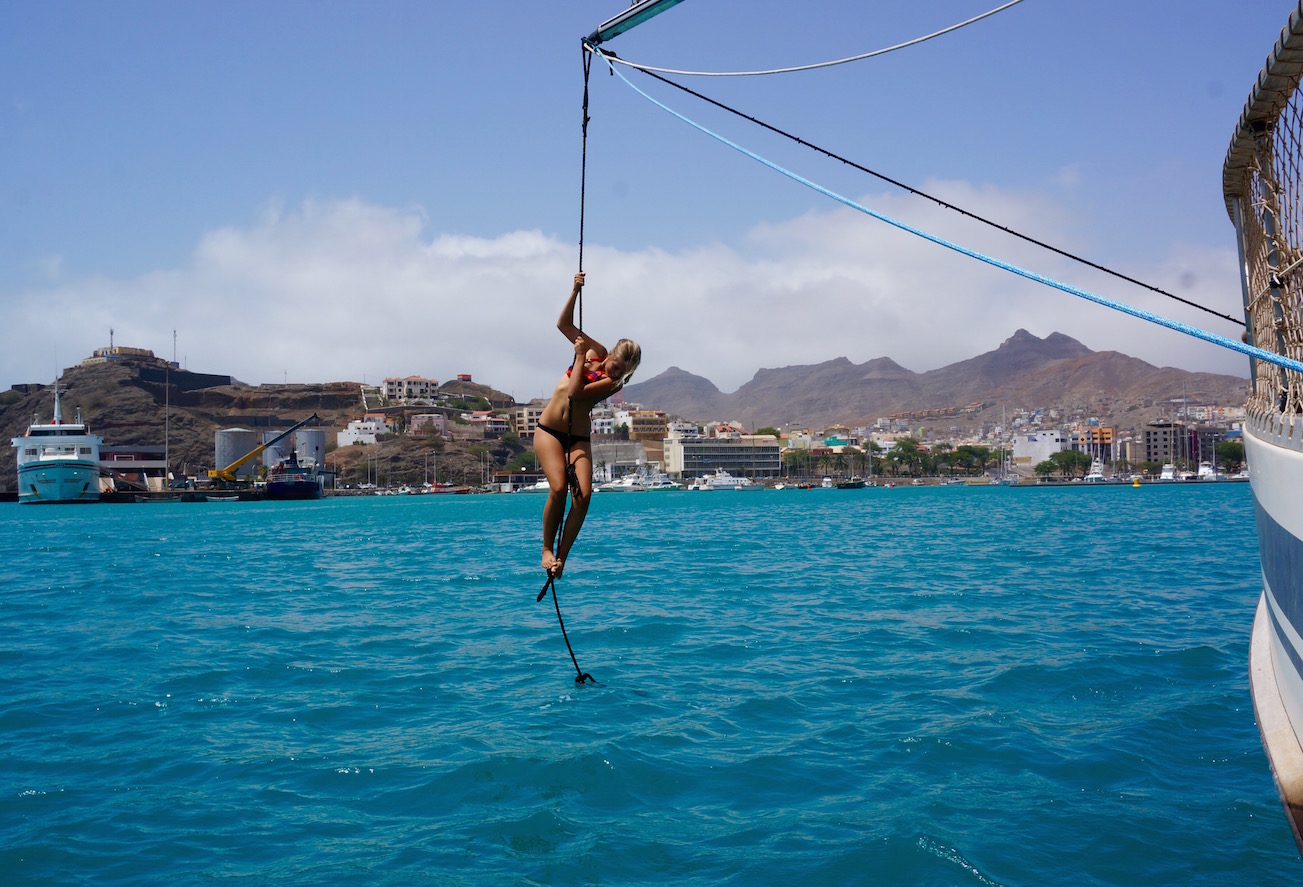
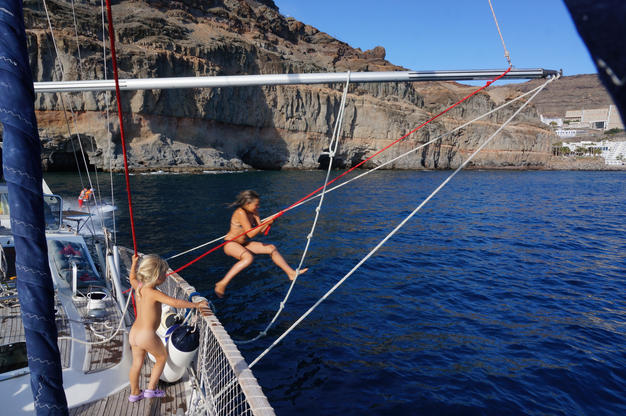
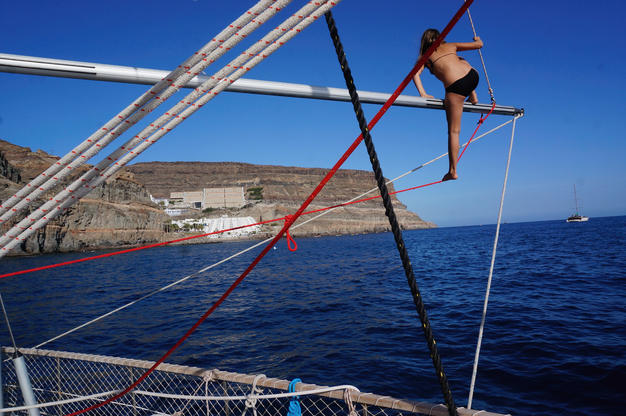
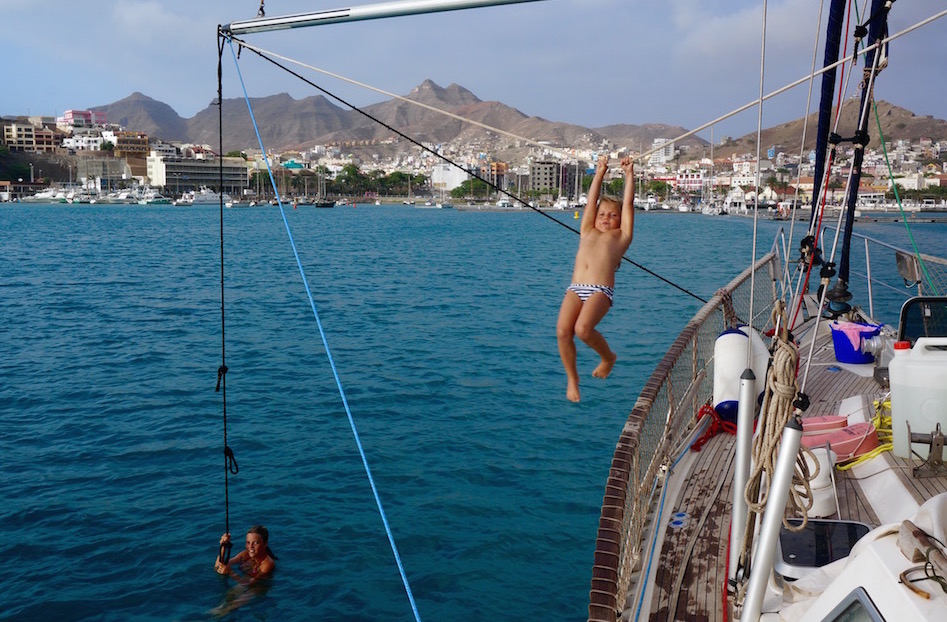
The outdoor attractions also make the yacht more liveable. There is room on deck for a children’s swing and a small water park—a combination of a diving platform on the rigged-out spinnaker pole and a rope swing. The platform is almost four metres above the water. A lifebuoy tied to the yacht and a rope with loops hanging down to the water add to the fun 🙂.
The rope swing in action
And now—up to the platform!
A large square hatch opens from the forward cabin onto the deck—an emergency exit from the children’s room. The children shut themselves in the forward cabin and quietly climb out through the hatch onto the deck beach. Then they giggle together because we have not noticed a thing..
The younger young sailor has mastered the water park too
When the yacht puts to sea, she becomes less like a cosy home and more like a means of transport in which you simply have to survive the journey:).

The final drawback to life aboard is the constant battle with damp, mould and “the yachtsman’s smell” (when everything smells of pond weed). We manage to defeat the latter scourge through frequent ventilation and passive deodorising (there are scented candles and fragrance sticks in every cupboard).
You can read about how family life aboard a yacht works during difficult passages here — Children. Sleep. And a Sailing Yacht..
Belly dancing in the wheelhouse
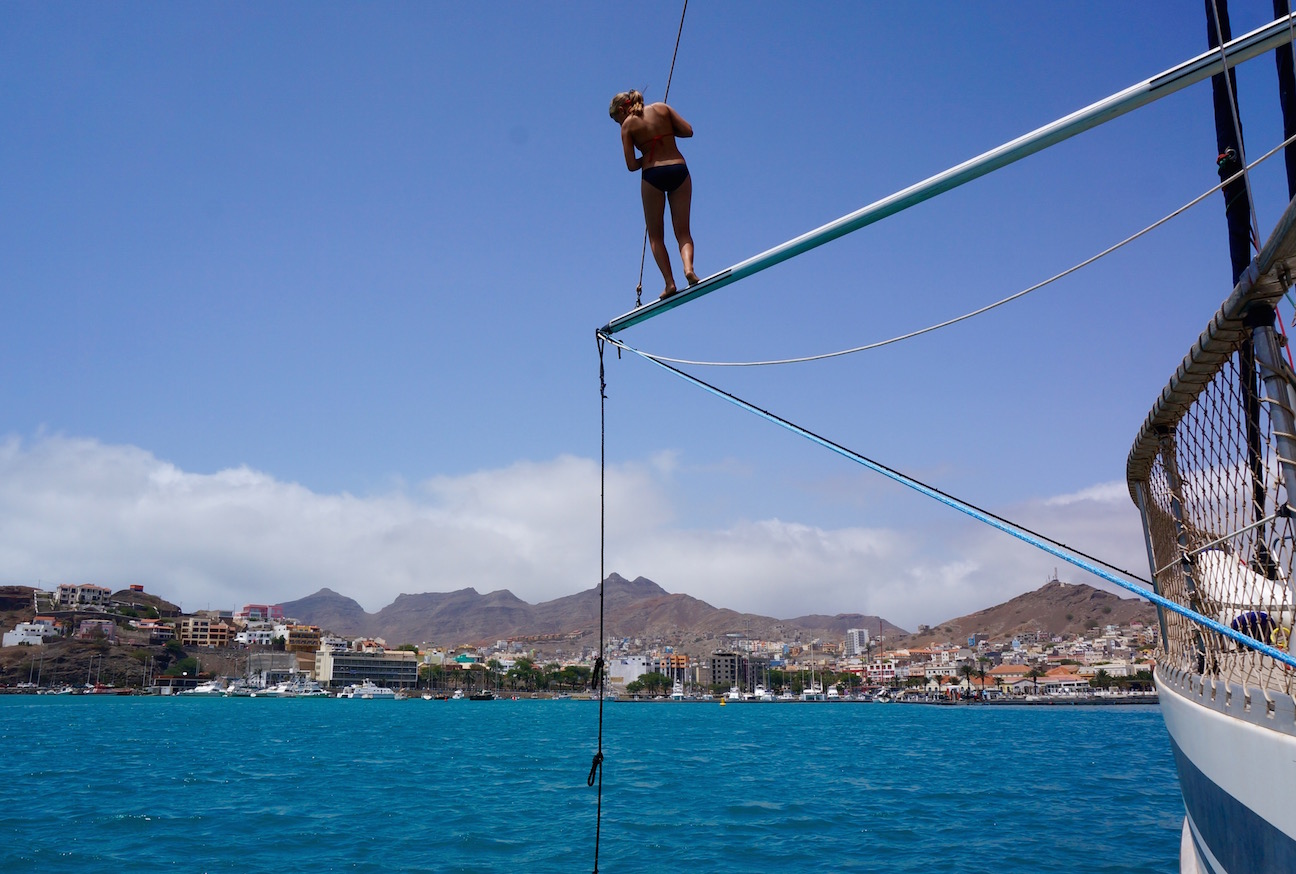
Preparing to jump
If you found this article useful and would like to thank the authors but do not know how, click the button below 🙂