
From the Travely-Family archive · Atlantic
Big Changes. Senegal by Sailing Yacht
An original publication from the former Travely-Family website. This English translation was preserved from the technical-site archive without editorial rewriting.
Big Changes
Changing Scenery
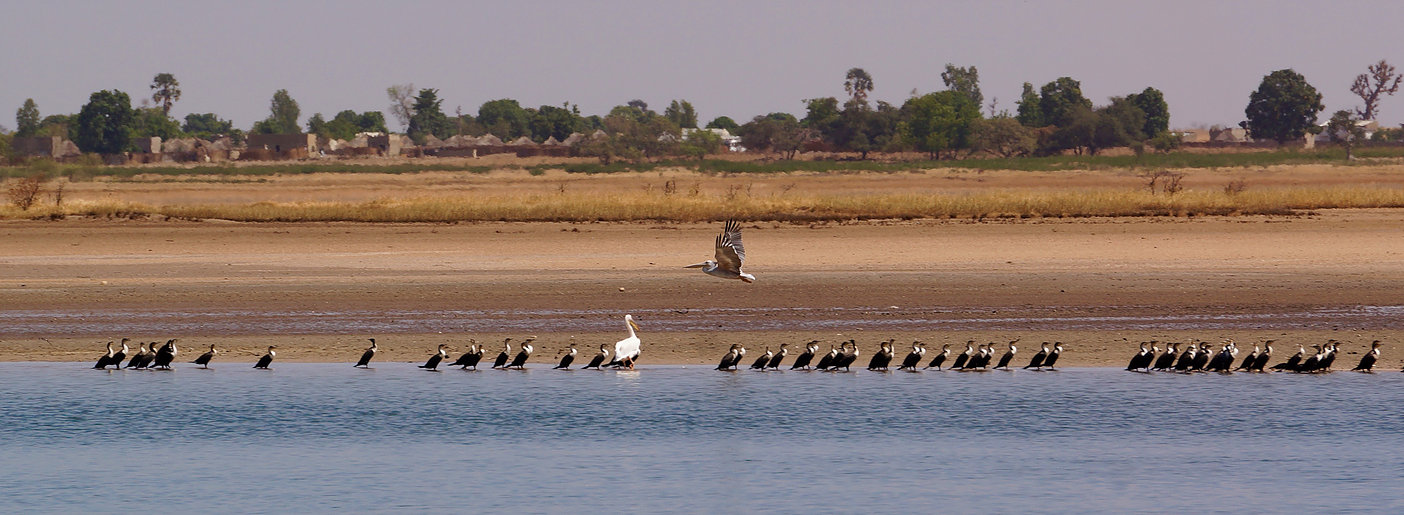
After the town of Foundiougne, the mangroves came to an end. “The baobabs came out onto the hillside,” and the great dry land began.
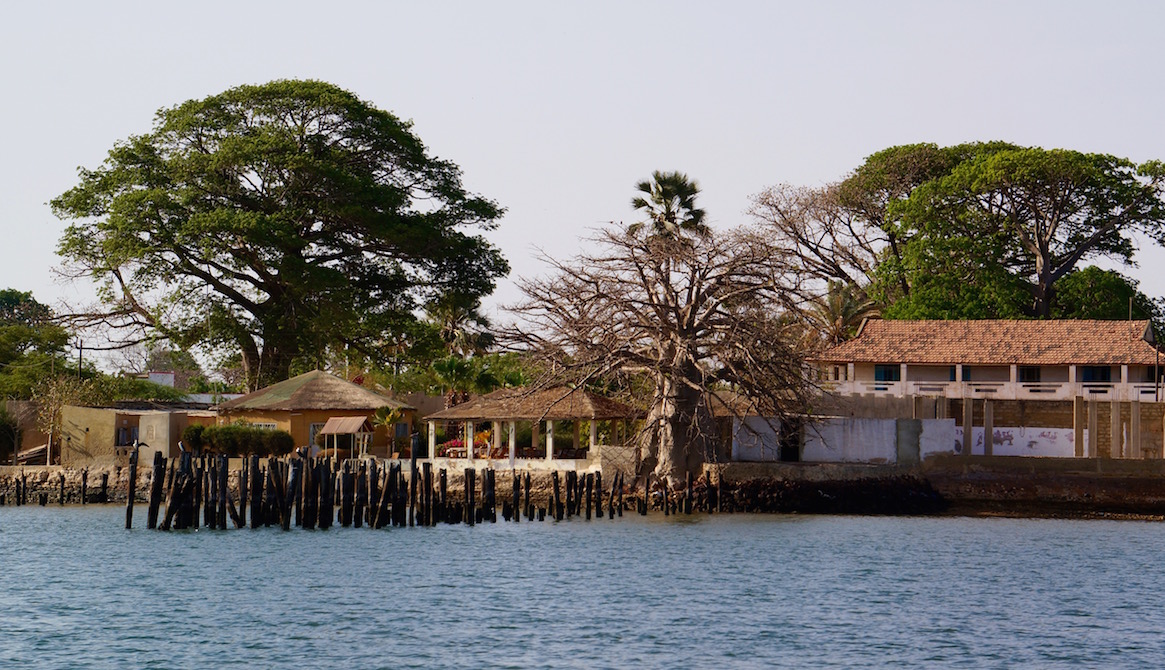
The jetty in Foundiougne
The farther we get from the ocean, the hotter the air becomes, the weaker the wind and the lower the humidity. The tidal current increases our speed to 8.5 knots. A hundred kilometres from the ocean, the river water is still salty, though no longer turquoise, and the ebb and flow of the tide create currents running in opposite directions.
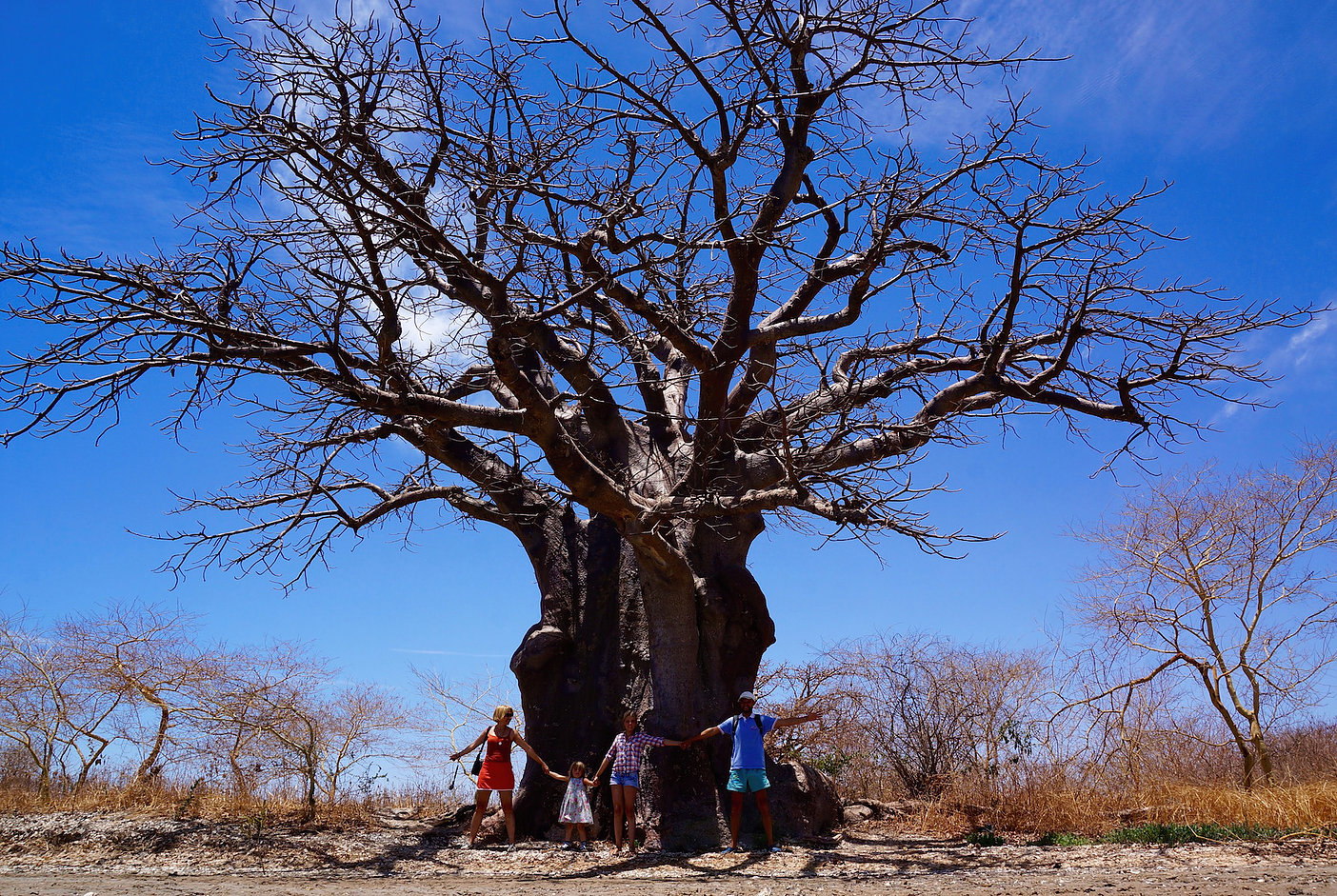
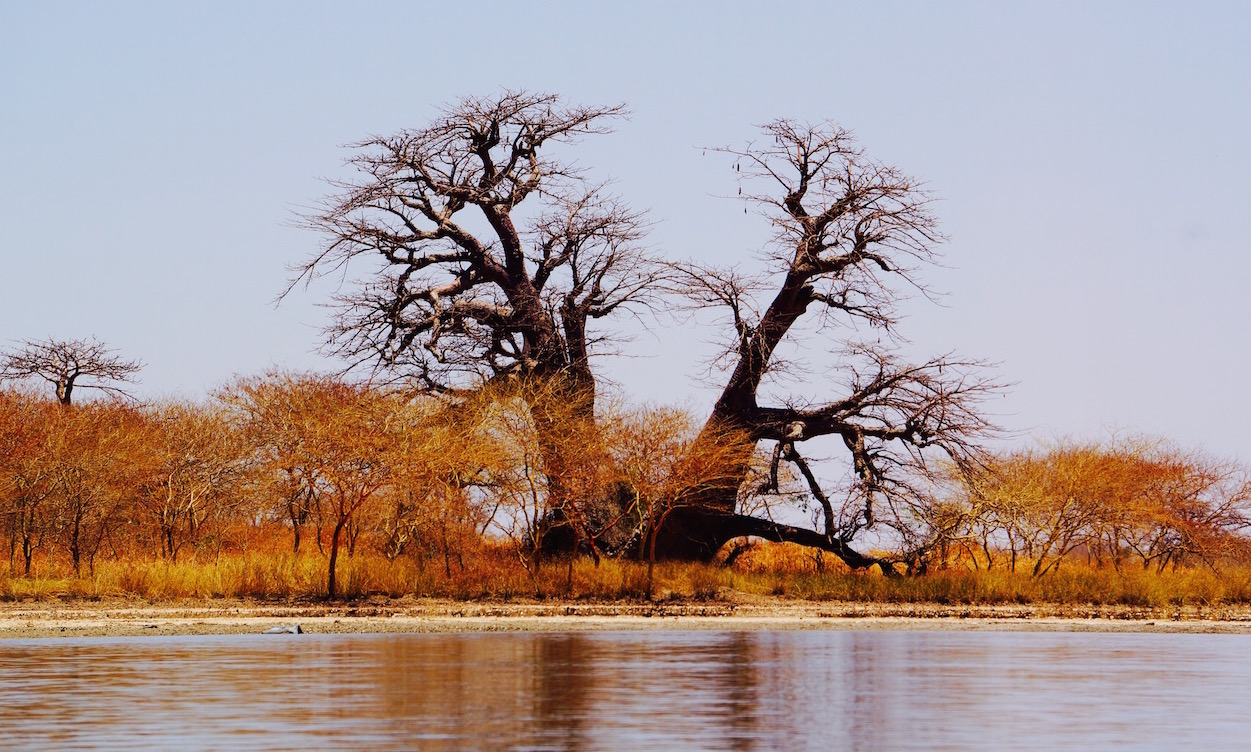
The river’s right bank is covered mainly in mangroves, while scrub and baobabs grow on the left. But the mangroves have already given way to savannah. The heat has scorched all the vegetation—and it is only spring. The baobabs stand leafless. An African folk saying goes: when leaves appear on the baobab, expect the rainy season. That is when everything bursts into bloom.
The water is shallower along the baobab-lined banks, and until today we had not really seen the sacred trees up close.
To the Pythons and Baobabs
After our customary poking around among the shoals, we anchor off some islands covered in scrub and baobabs and watch an enormous ship making its way along the fairway. How does it squeeze its displacement through there?
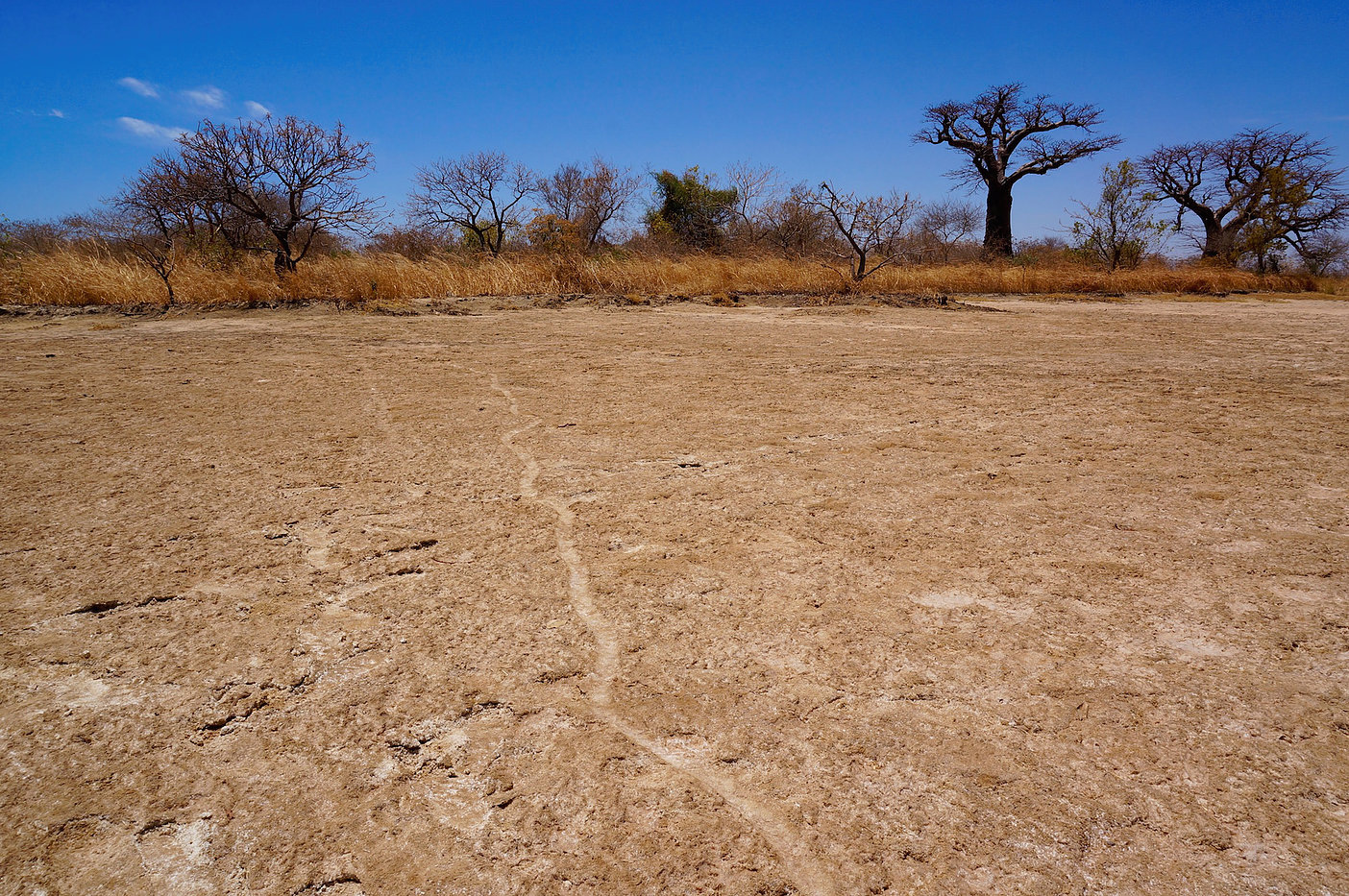
The island’s soil seems to consist of shells interspersed with dry clay. Along the high-water line lies a strip of dried crabs and desiccated fish. Evidently, there had been some sort of discharge into the river. The ebb tide carries away most of the rubbish, but the traditional assortment of plastic bags, bottles and the sole of a plimsoll is present here too.
Having inspected Senegal’s national tree from every angle, taken one of its fruits with us and been thoroughly roasted, we return to the dinghy. On a spit flooded by the incoming tide, we spotted two tracks. Nothing but snakes could have made them. Snakes as thick as an arm. And the tide had only recently gone out; the tracks were fresh.... To be honest, despite our curiosity to see what it was, we were not too upset that this mysterious creature had already slithered away.
The Art of “Shoaling”
From now on, every passage is dominated by the struggle against shoals. After a swim, we were just about to have lunch. And then it began...
After an hour of darting between “shallow” and “very shallow,” we ended up firmly aground: every attempt to get off under engine merely entrenched our position. The depth sounder froze in fright at 2.6 and refused to show the true picture. We had to try another tactic.
We tied the dinghy to the masthead, level with the guardrails. Nastya and I climbed inside to act as a counterweight and heel the boat. Ladka kept asking to join us until we almost fell out. We bounced up and down in the dinghy for extra leverage, whereupon it suddenly tipped at right angles to the surface of the water. We squealed a little and carried on. But however much we helped the engine, the yacht did not budge.
“Dinghy in the water—haul yourselves towards the anchor!” the captain ordered.
Clumsily negotiating the current, Nastya and I manoeuvred the dinghy beneath the anchor, rather afraid that it might crush our bare feet. The anchor, thickly coated in clay, dropped into the inflatable dinghy, followed by the chain. We rowed away from the yacht, regretting that we had abandoned our daily press-ups. As it paid out from the yacht, the chain pulled us back. Our arms trembled with the strain, while the dinghy moved towards the yacht despite our vigorous rowing in the opposite direction. Nastya then began paying the chain out of the dinghy. We finally managed to row about 20 metres away, heaved the anchor overboard with great difficulty and returned home. The manoeuvre proved successful and helped drag the boat off the shoal.
Dragging the yacht off the shoal. The keel scrapes the clay bottom of the Saloum River.
The Secret Fairway
For a while, Lady Mary found the fairway again. Then she found half a dozen shoals and depths of 2 metres stretching for many long miles. You would never think it, would you, looking at such a wide river?
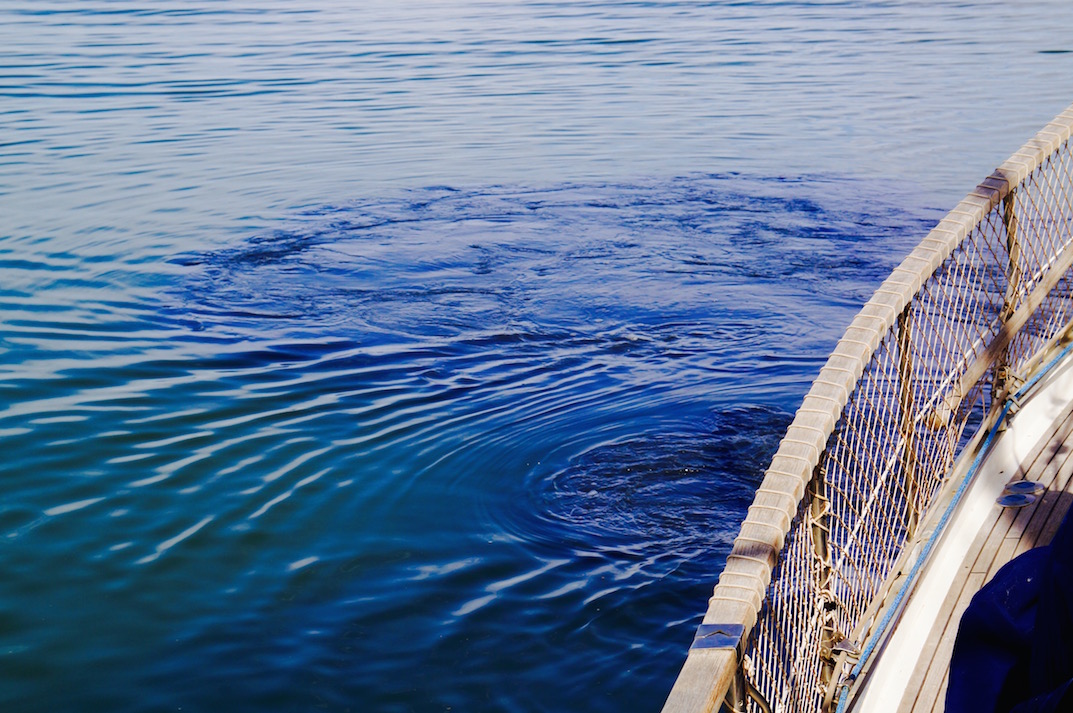
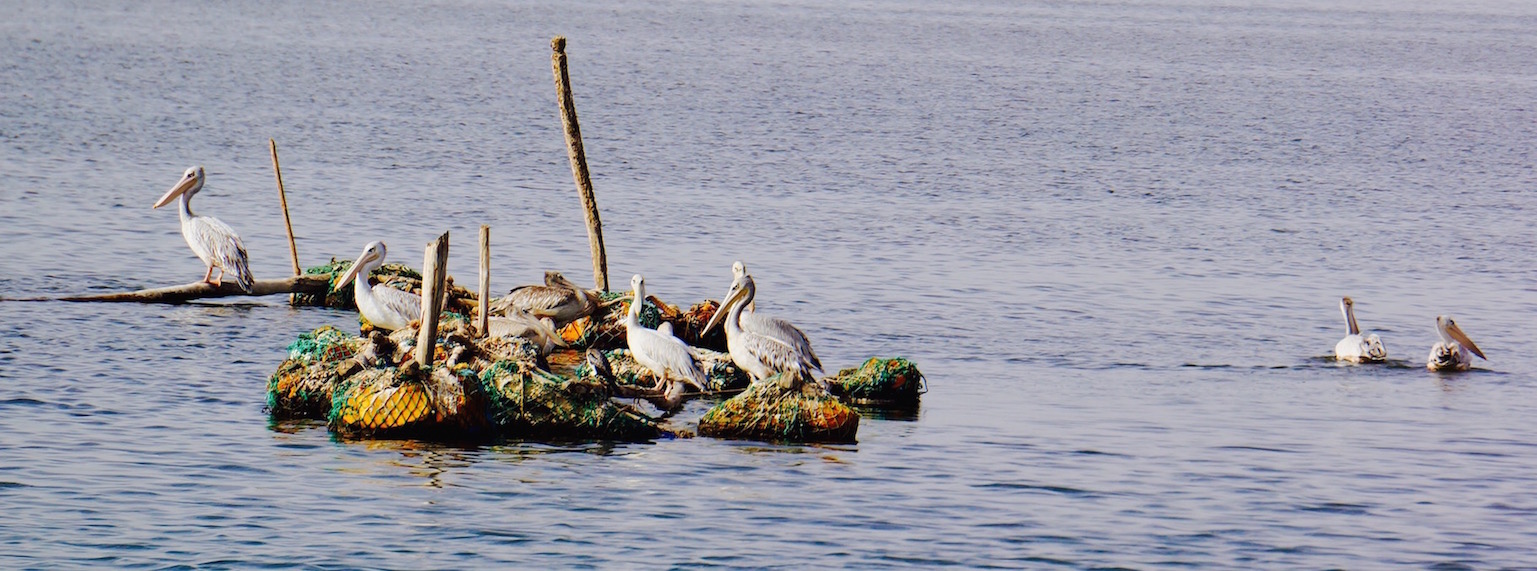
The fairway of the Saloum River is a narrow trench dug into the riverbed. In places the depth reaches 20 metres; elsewhere we run into the bottom, seemingly right in the middle of the channel. The channel is marked by the occasional buoy and pole, where pelicans drowsily wait out the heat.
By the time you work out what each pole means, you will have run aground another five times. The buoys—if there are any—seem to have been positioned on a whim. The same colour may mean you should pass it to starboard, then next time, for some reason, to port.
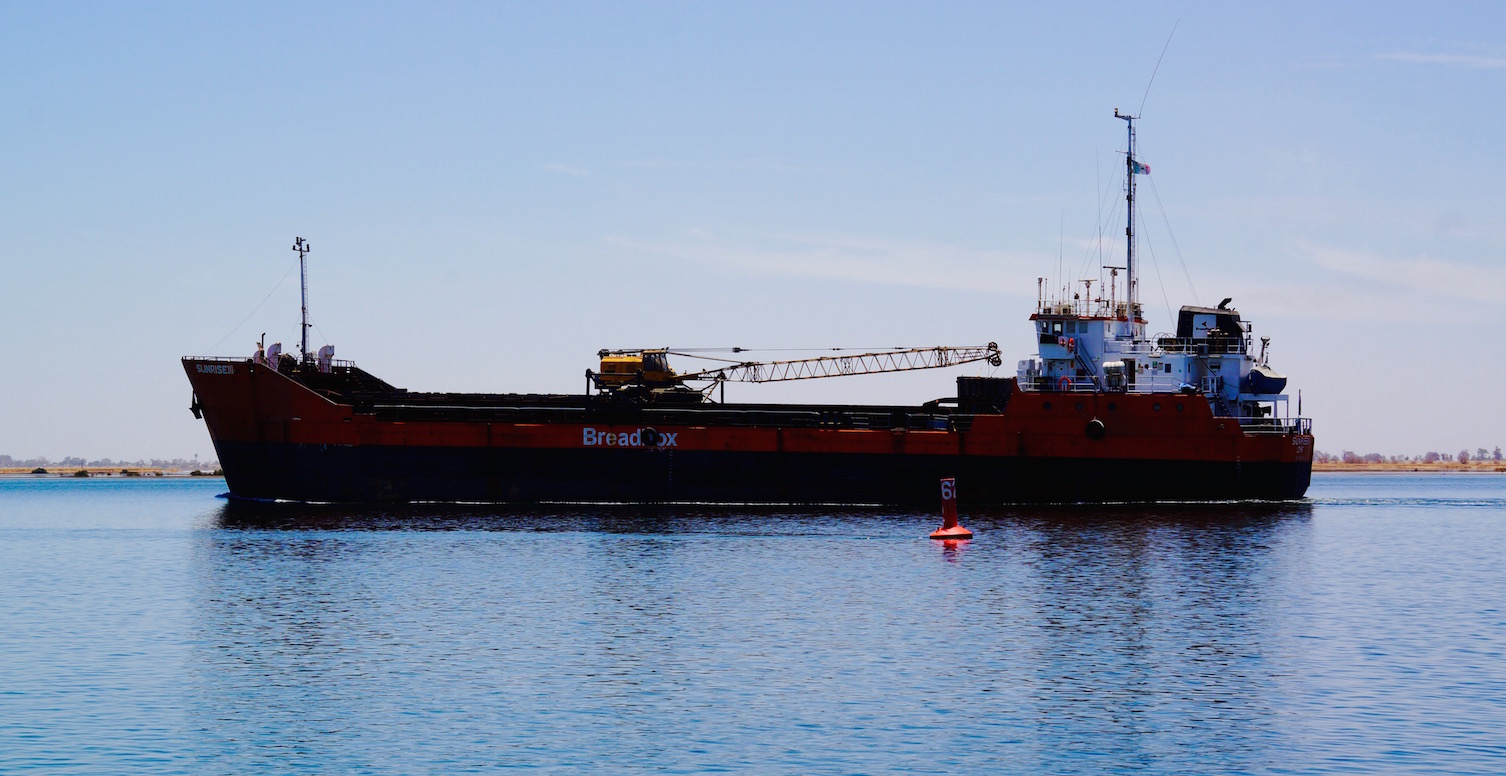
“Looks as though that big ship sank on its way to Kaolack,” the captain suggested. “Otherwise, where could it possibly have got through?”
“Yeah—or it flew...”
“Who flew?!” Lada perked up.
Boom!—aground again. We howl with laughter instead of answering...
“...The secret fairway,” Andrei muttered, engaging full astern as usual.
Over the course of that exhausting day, the captain mastered the art of zigzagging ahead of a shoal, together with a system of stopping, going astern and turning based on the depth-sounder readings. By evening, our skill at weaving from side to side rivalled that of hares fleeing from foxes.
Large cargo ships travel along the Saloum River’s secret fairway. Small sailing yachts run aground there ) Wearied by the Sun
We passed a town with an industrial port area, enjoying a whole 500 metres without fear of shoals—it is deep by the port.
The river became fairly narrow, with lifeless banks of brick-red mud. Despite the awning, by evening the children were sunburnt and lying in the cabin with wet towels over their scorched skin.
The utter calm of the savannah supplied us with a horde of importunate passengers—flies that were either lazy or entirely unafraid of people. The crew’s remaining strength was spent battling the swarms.
Wearied by the sun, we dropped anchor right beside the fairway, our stern almost touching a buoy and our bow pointing towards a deserted, gently sloping bank. Not a blade of grass, not a living creature.
The engine fell silent and will no longer start—the after-effects of the flooding have now reached the starter as well.
An inseparable pair of baobabs on an island in the channel of the Saloum River Continued here >>
🙂