
From the Travely-Family archive · Pacific Ocean
Arrival in the Marquesas. From Ship to Ball
An original publication from the former Travely-Family website. This English translation was preserved from the technical-site archive without editorial rewriting.
Arrival in the Marquesas. From Ship to Ball. Can you reach out and touch the shore from the deck?
At dawn, the captain and I came up to the helm, and there... I would have written “what a glorious sight,” but the first thing that came to mind was déjà vu. We looked, and there was Pitcairn again, dead ahead. Rising out of the mist like an old friend, all sheer dark brick-red cliffs dusted with green. Well, I thought, this is it—we’ve really arrived now. But the chart said this was no Pitcairn at all, but Fatu Hiva.
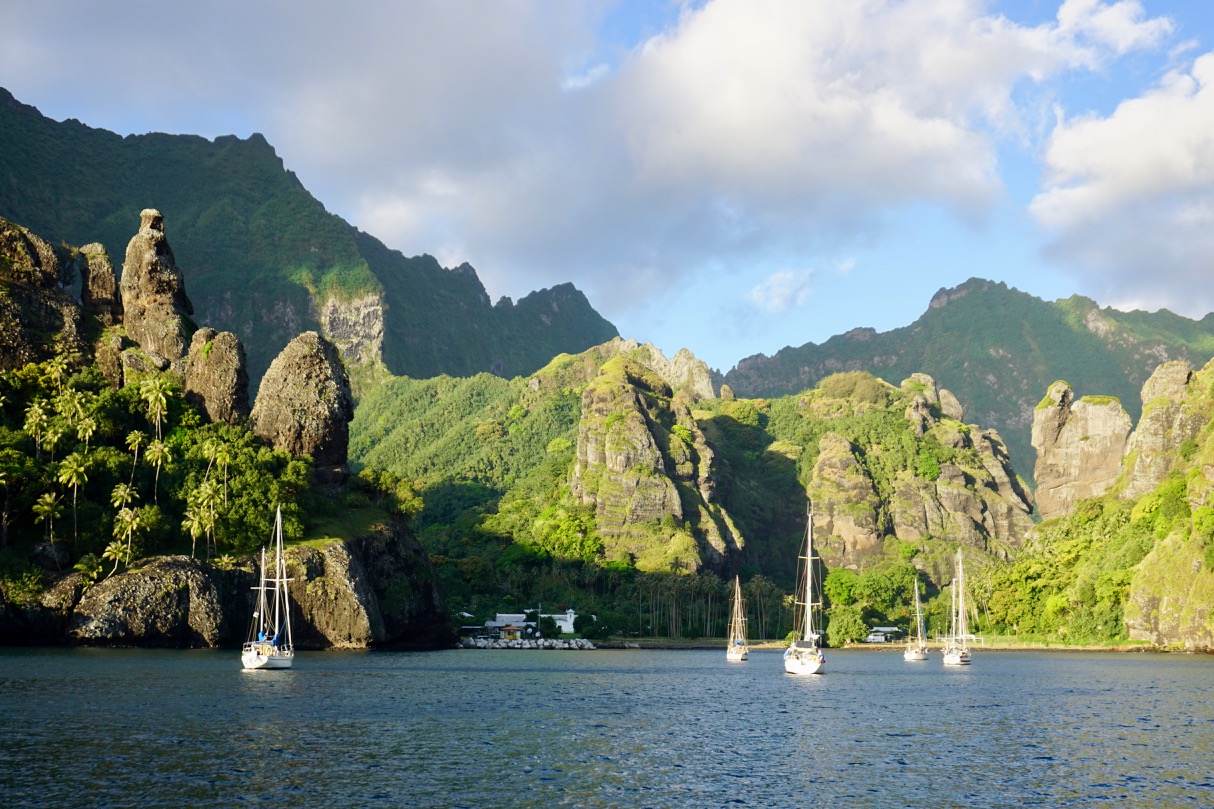
I had expected its cliffs to be more sprawling and jagged. As for the beauty—do you know why we didn’t write anything for so long? Because it seemed a shame to tear our eyes away from the shore and stare at a computer. I didn’t even remember that we hadn’t checked in for three days until the captain started making the satellite modem squeal.
The bay is called the Bay of Virgins
About the people
There are only two villages on the island. Eighty years ago, about 100 people lived in Omoa and 50 in Hanavave. That was the island’s entire population. Today, Fatu Hiva has around 800 inhabitants: roughly 3/5 live in Omoa, and the rest in Hanavave. A red supply ship is anchored in Omoa Bay. Could we really have arrived on one of those rare days when it calls here? And there is just one yacht—the French family with children whom we met in the Gambier Islands. Their contact details, written in pen on a scrap of paper, were hopelessly soaked along the way together with the captain’s shorts. After the downpour, the paper was pristine and blank.
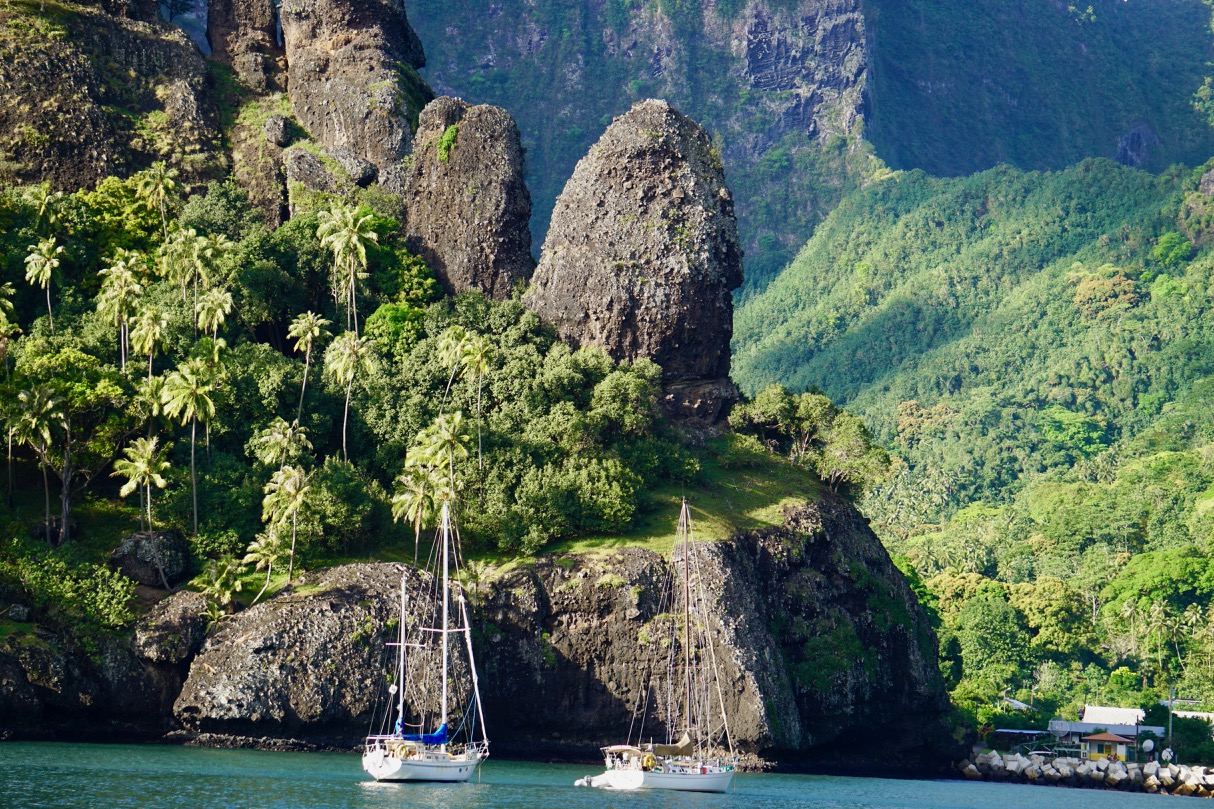
We come right alongside and shout:
“Hello!” But our friends are asleep.
Their 15-metre boat is faster than our unhurried old lady; although they left after us, they arrived a day earlier. We move off, with no doubt at all that we’ll meet tomorrow.
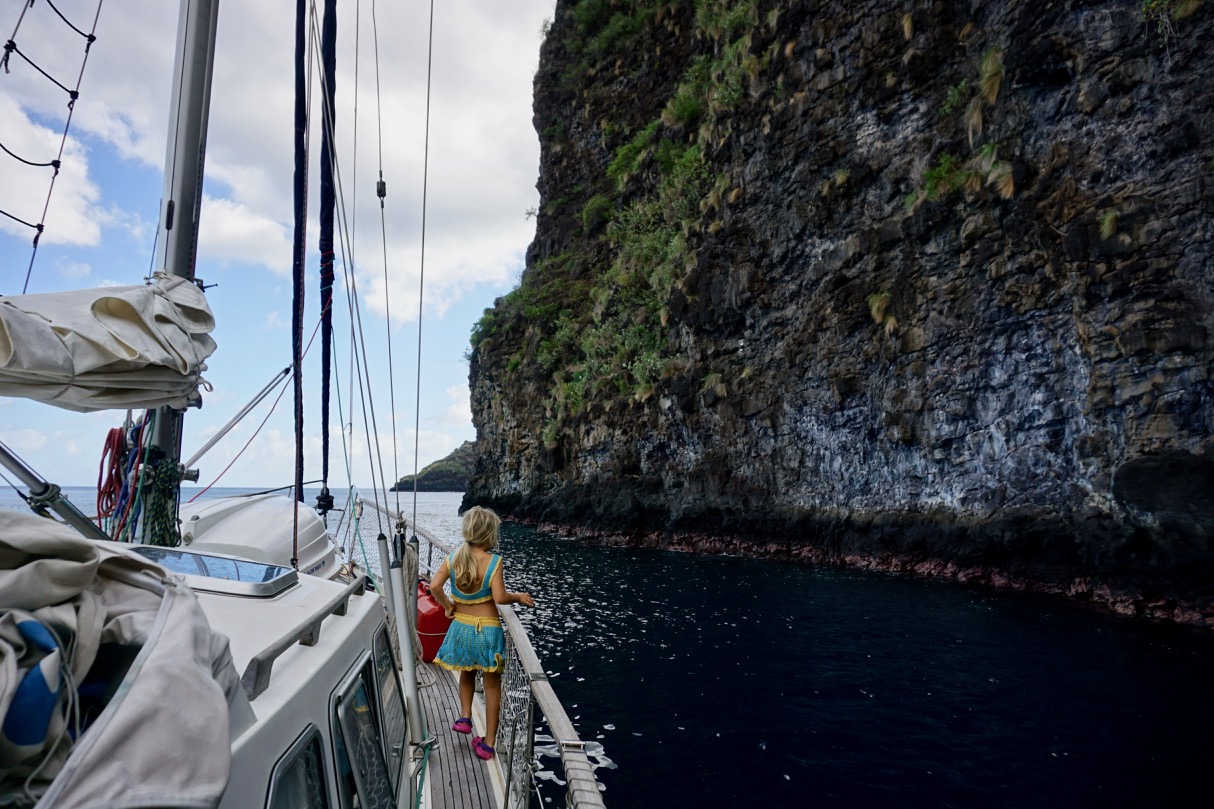
Touching the land from the deck
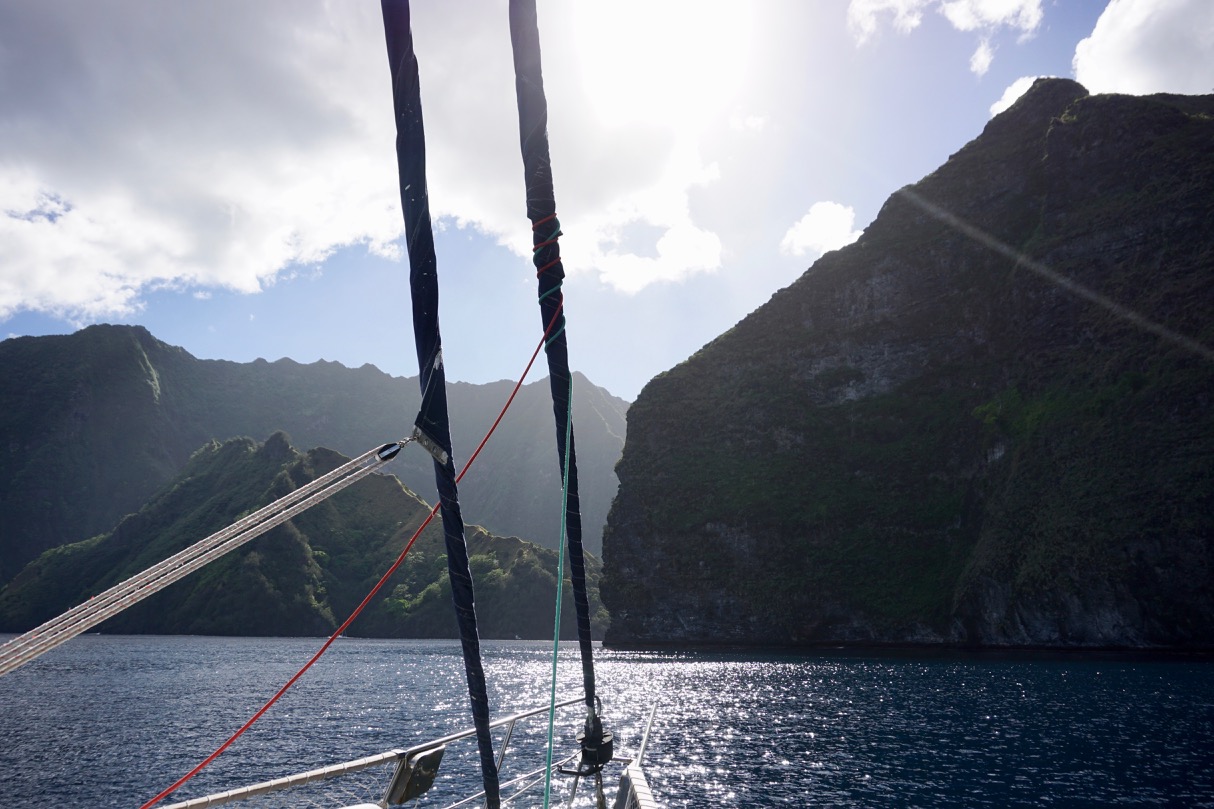
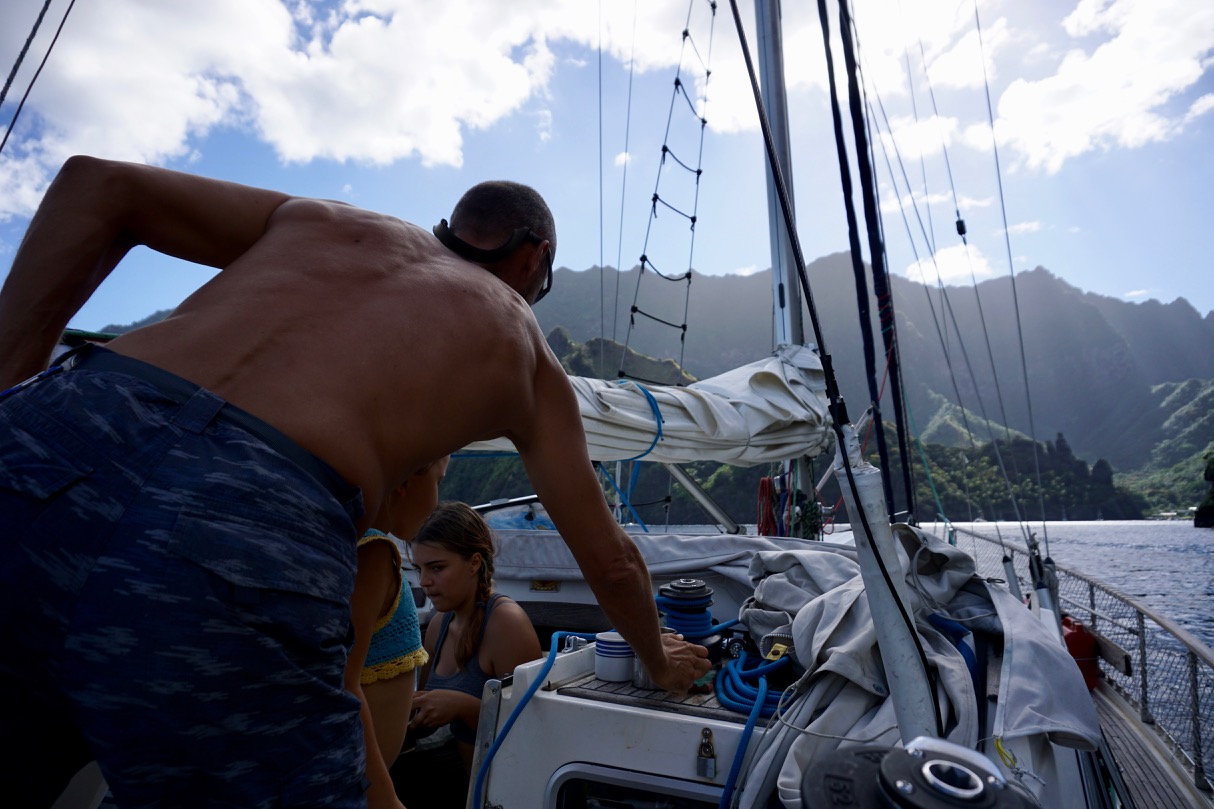
The forbidding coastline is folded like an accordion—or perhaps it looks more like the teeth of a gigantic saw, ripping open the ocean swell with sharp headlands and tiny coves. Most of them have neither a valley nor a beach. Just a strip of palms pressed against sheer walls, and pebbles. And you can’t even anchor everywhere.
Among the folds and walls
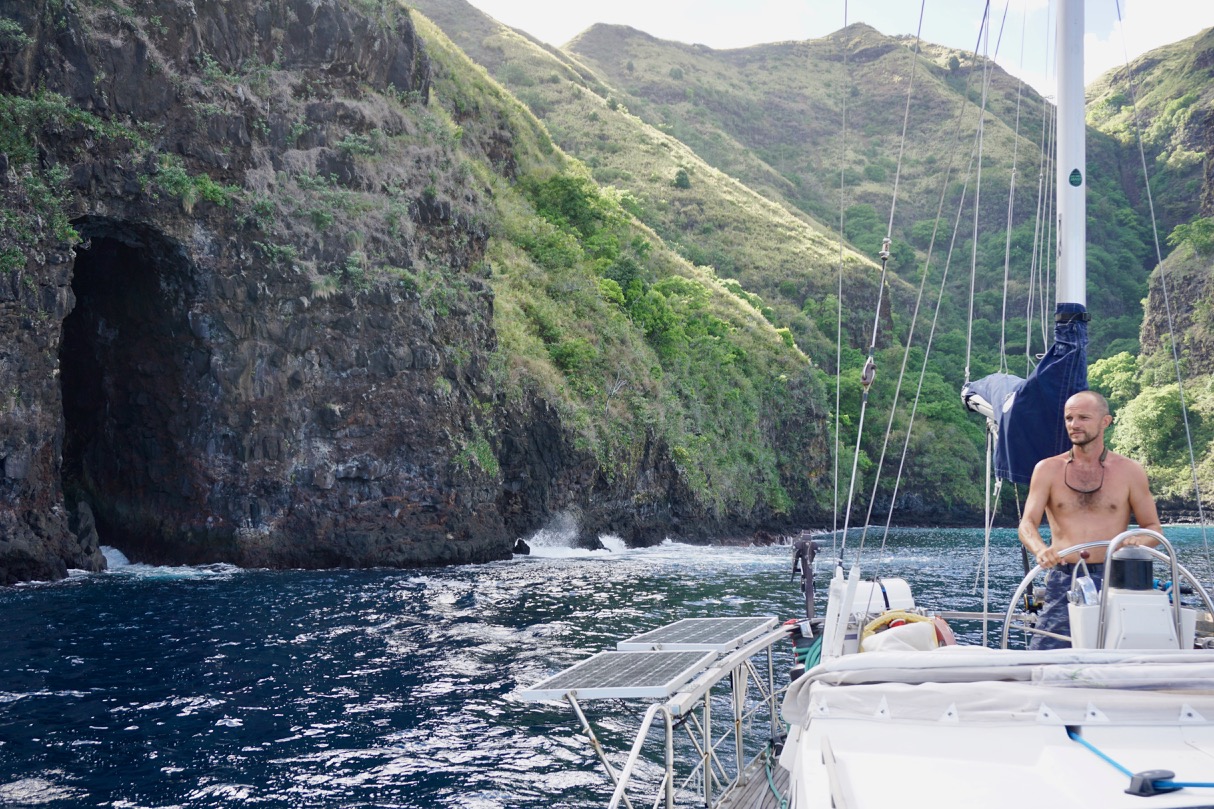
Fatu Hiva is a rock rising from the ocean floor. Its walls plunge to the bottom at almost the same sheer angle as the kilometre of rock towering above the surface. For a long time, we sail along the island’s leeward side, ten metres offshore. In places it seems you could reach out and touch the wall. Yet the depth sounder shows 42 metres—beneath us is a depth of water equal to a 14-storey building. In one of the little coves, a passage cuts right through a basalt fold into the neighbouring bay. The surf pours roaring into the narrow corridor. It feels as though beyond that little village there is no one else anywhere along the coast—only us, the sheer walls and the thunder of the waves. And seabirds that, for some reason, cry:
“Meow! Meow!”
Eyes wide, we creep along within arm’s reach of the folded cliffs. Suddenly, a mast appears in the next accordion fold, and another farther in. This is Hanavave. Lady Mary quietly peeks around the corner and... one, two, three... nine, ten yachts! And by no means all of them are flying the French flag. Sweden, the United States, Switzerland, Italy, Belgium—and now Russia too. It seems we have charged headlong into the most beautiful bay in the most beautiful archipelago.
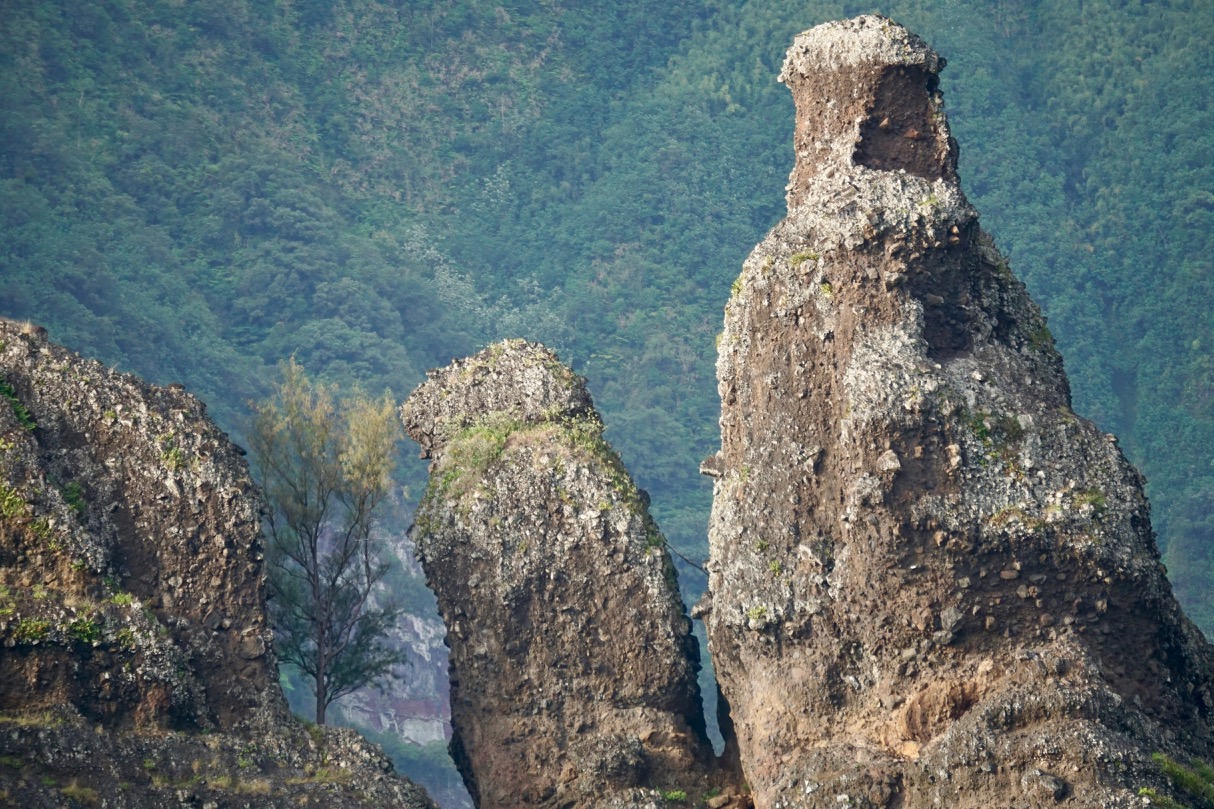
The Creator spared neither materials nor colours when sculpting the colossi of volcanic tuff that guard the entrance to the tiny bay. By some sorcery, trees and shrubs manage to grow on the sheer walls of the rear tier. The middle tier conceals the entrance to a narrow valley. The stone curtains part—and there they are, the gods of the Polynesian people. Any moment now, the 500-metre cliff will shake the dust from its lowered eyelids, square its shoulders and stride in all its massive bulk towards the edge of the surf. The circle of coconut palms will toss their curly heads, tiptoe back towards the very precipices and peer out curiously to see whether they truly have awakened—the Tiki, the great gods of Polynesia.
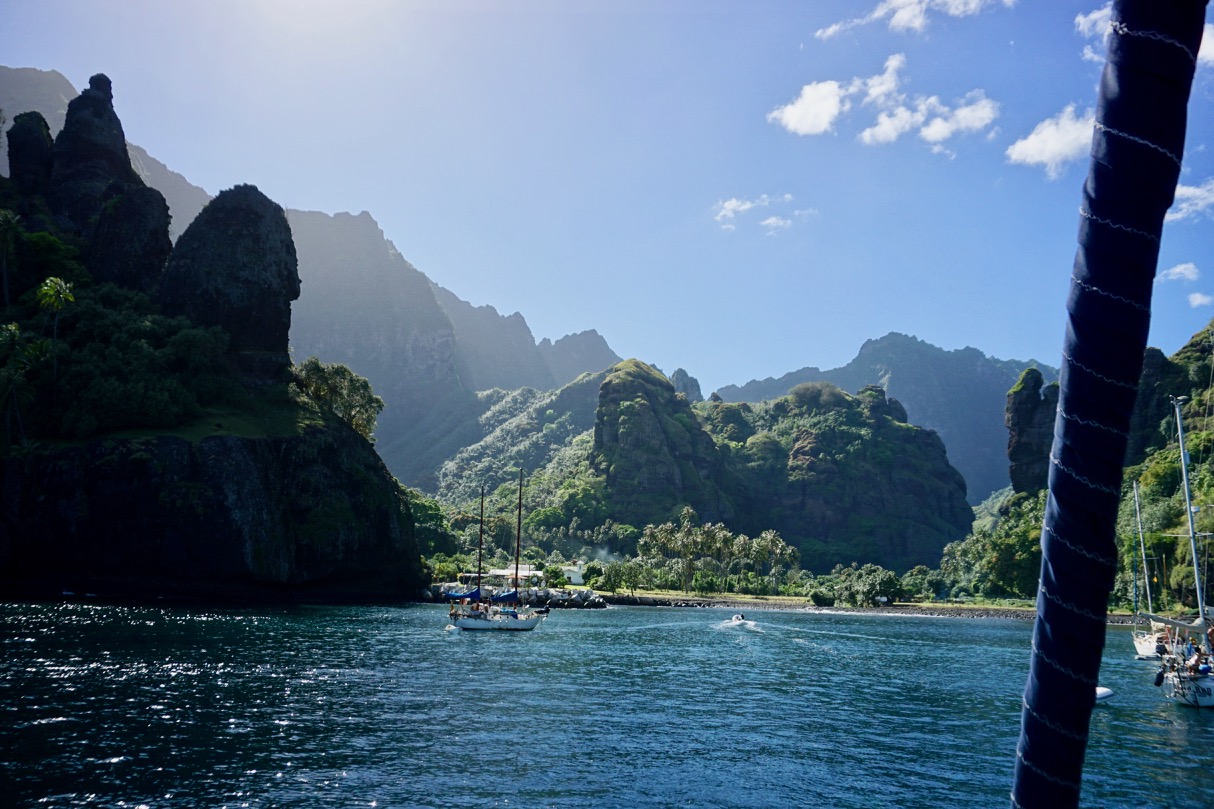
In short, if those ancient fellows from Easter Island had found themselves here, they would have carved their finest statues from these ready-made natural pillars, which need only the slightest finishing touches, and... scholars all over the world would spend the next ten centuries wrestling with their mystery. But the people of Fatu Hiva never thought to make use of the cliffs that had grown so conveniently, though they did erect smaller statues somewhere deep in the island. We haven’t reached them yet.
This is all the same bay, home to the most beautiful anchorage
A one-legged fellow on a catamaran waves cheerfully:
“Have you just arrived?”
“Yes, from the Gambier Islands.”
“We’ve only just arrived too.”
“From where?”
“The Galápagos.”
“Oh, that’s a long way.”
“Nineteen days.”
The fellow’s little son, about a year and a half old, comes over to him. Hmm... 3,200 miles... in 19 days—not bad, if you ask me. And now Nastya and I want a catamaran again.
“There’s a big celebration ashore today at seven in the evening—a very important day for French Polynesia. Will you come?”
“Of course we will.”
And so we prepare to venture ashore after dark.
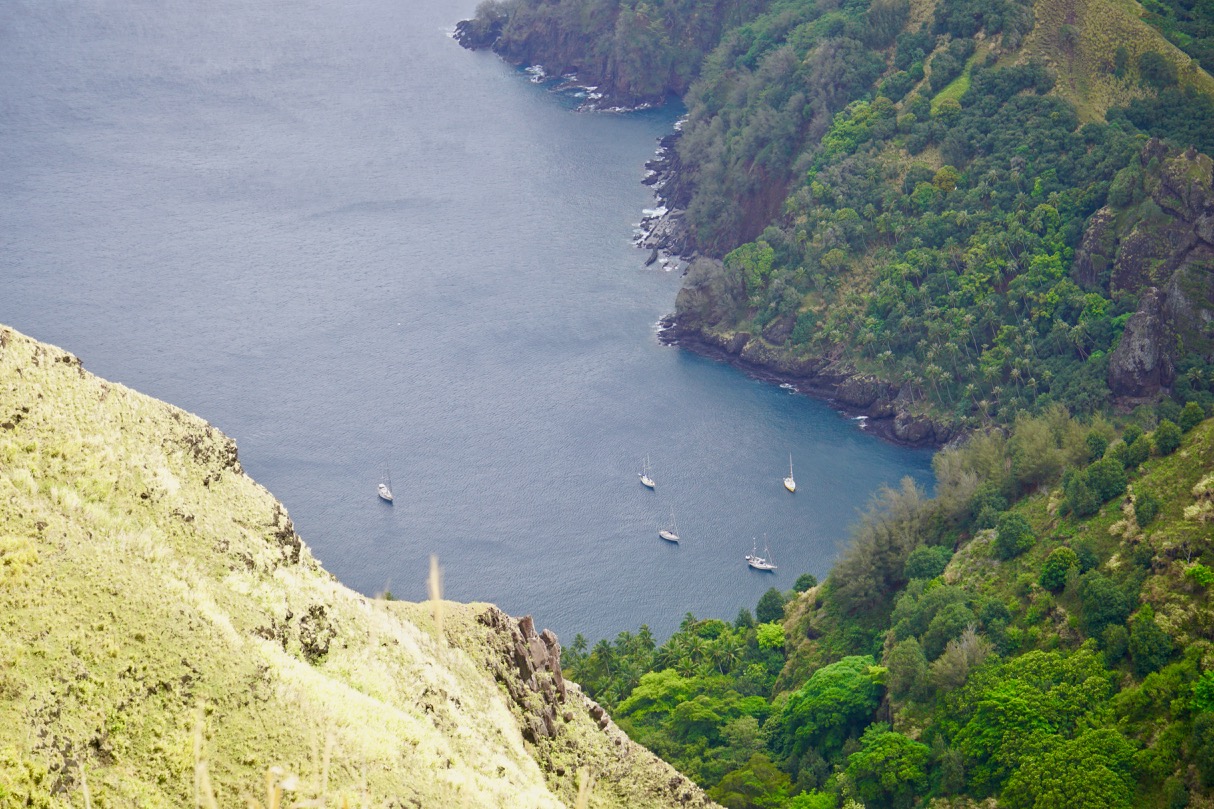
The Bay of Virgins (Hanavave Valley) from above
The little inlet before the Bay of Virgins, with its arched channel
Approaching Hanavave Valley
Entering the bay
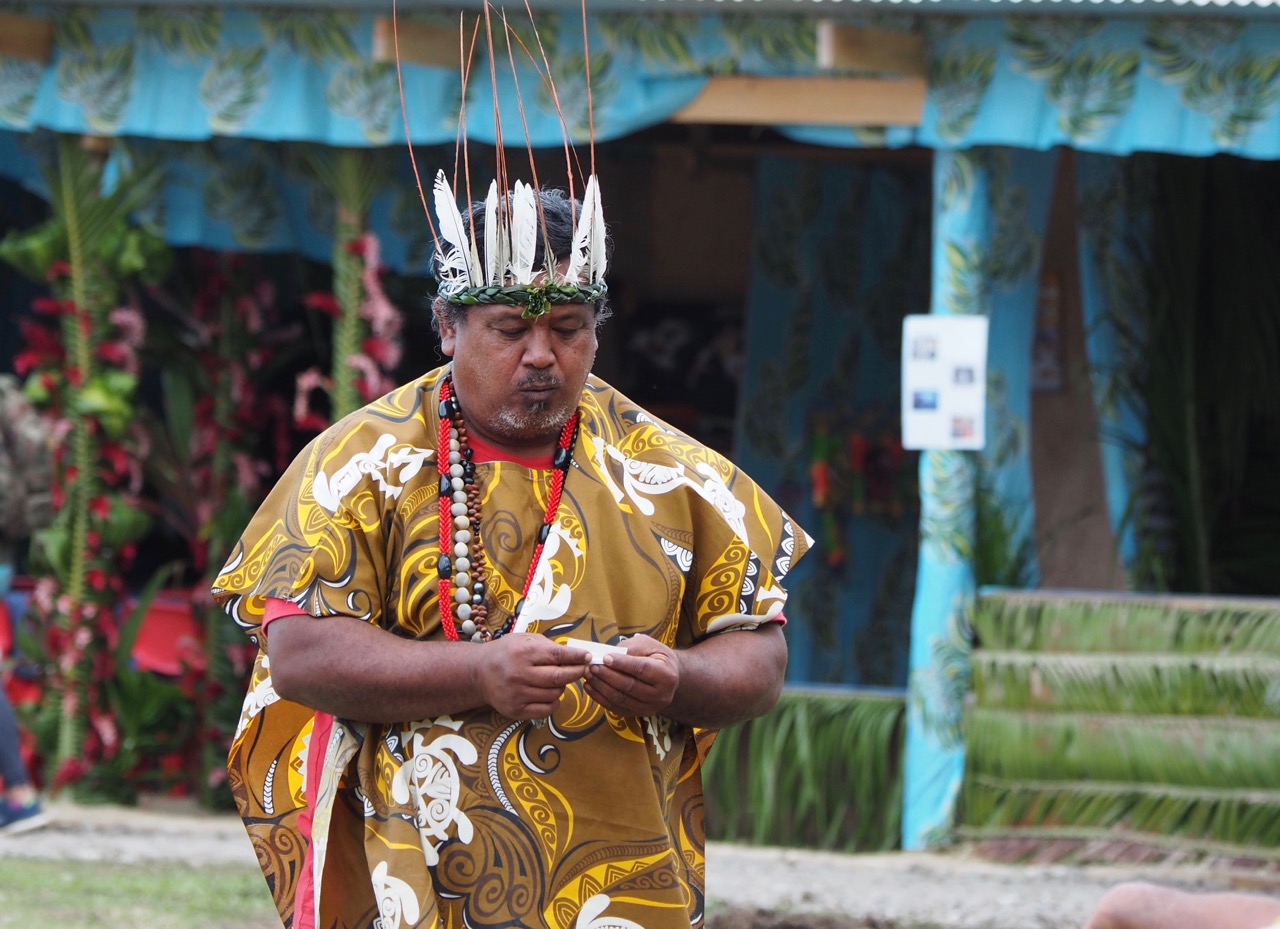
How the descendants of cannibals celebrate Bastille Day—in the next report:).
Perhaps he’s the chief, or a shaman, or an elder, or... a pastor—Polynesians are devout. They are Catholics, and they believe in Tiki 🙂