
From the Travely-Family archive · Pacific Ocean
Now That’s an Atoll! Anchored in the Tuamotus
An original publication from the former Travely-Family website. This English translation was preserved from the technical-site archive without editorial rewriting.
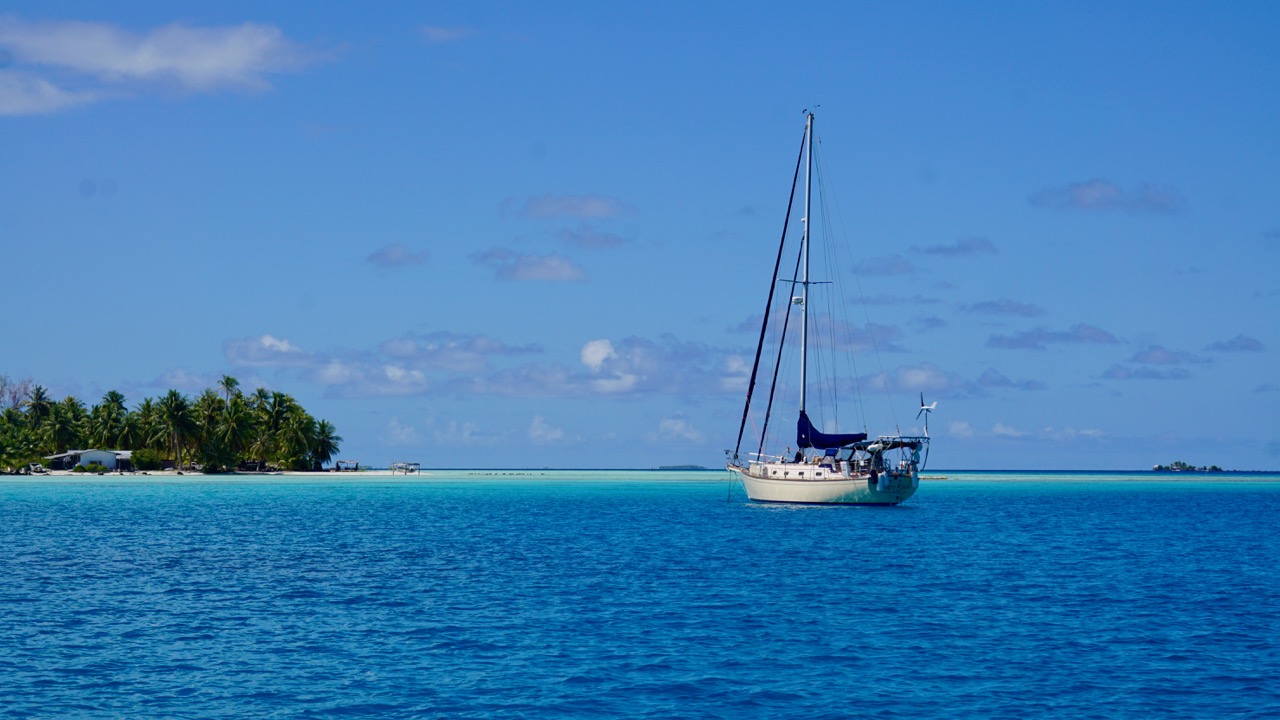
Now that’s an atoll! Anchored in the Tuamotus.
That evening, the captain assigned the watches in a more exotic fashion than usual. Nastya was told to stay up until 2300, I was on until 0200, and then I was to wake Andryukha so he could steer between the closely spaced atolls. This was so that both the young sailor and I would be up and about from early morning. The captain himself retired to his bed at 8 p.m. for the same reason.
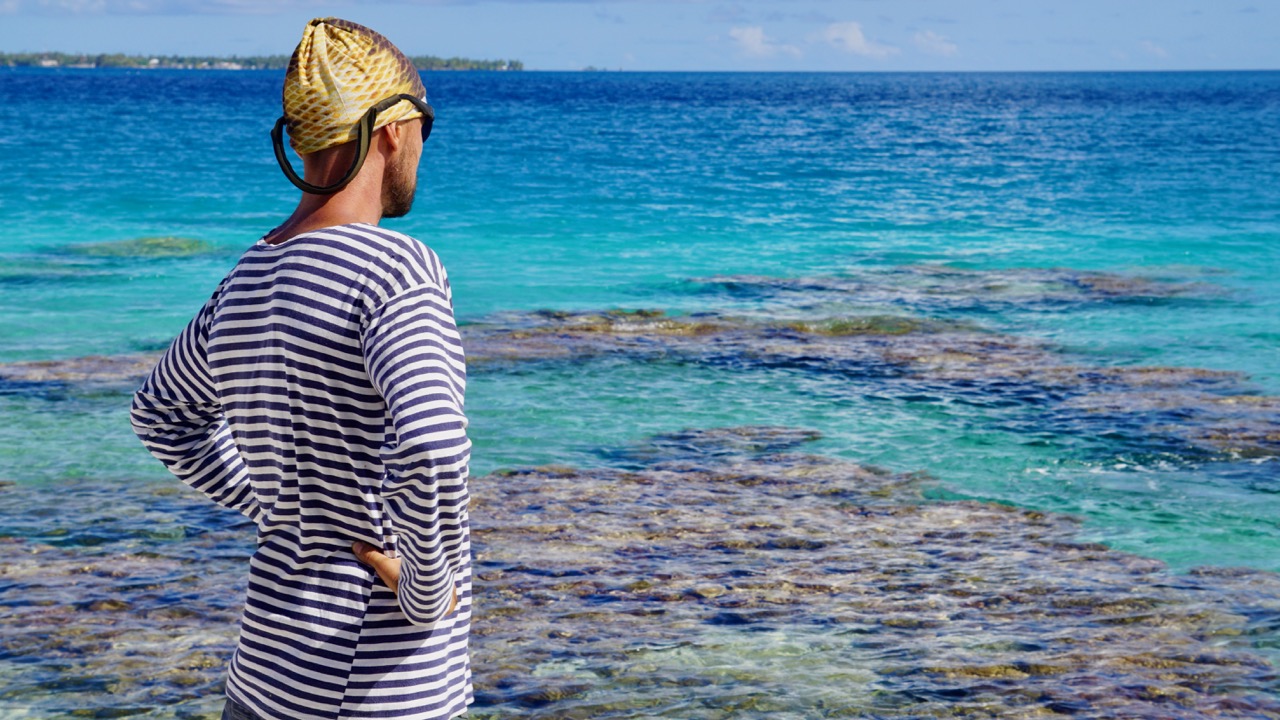
I spent my three-hour watch at the helm. The wind had weakened and was setting us south, almost right up against the neighbouring atoll. The moment I came a degree to starboard, the sails began to flap and the boom to swing about. The only way we could make decent progress was on that close-hauled course I hate so fiercely. But at half past two the captain got up, put a spell on the wind, and off we went in the right direction. At six in the morning, I found the captain awake in the wheelhouse and Kaeuhi Atoll stretching out its palm-frond arms towards us.
At the lagoon entrance
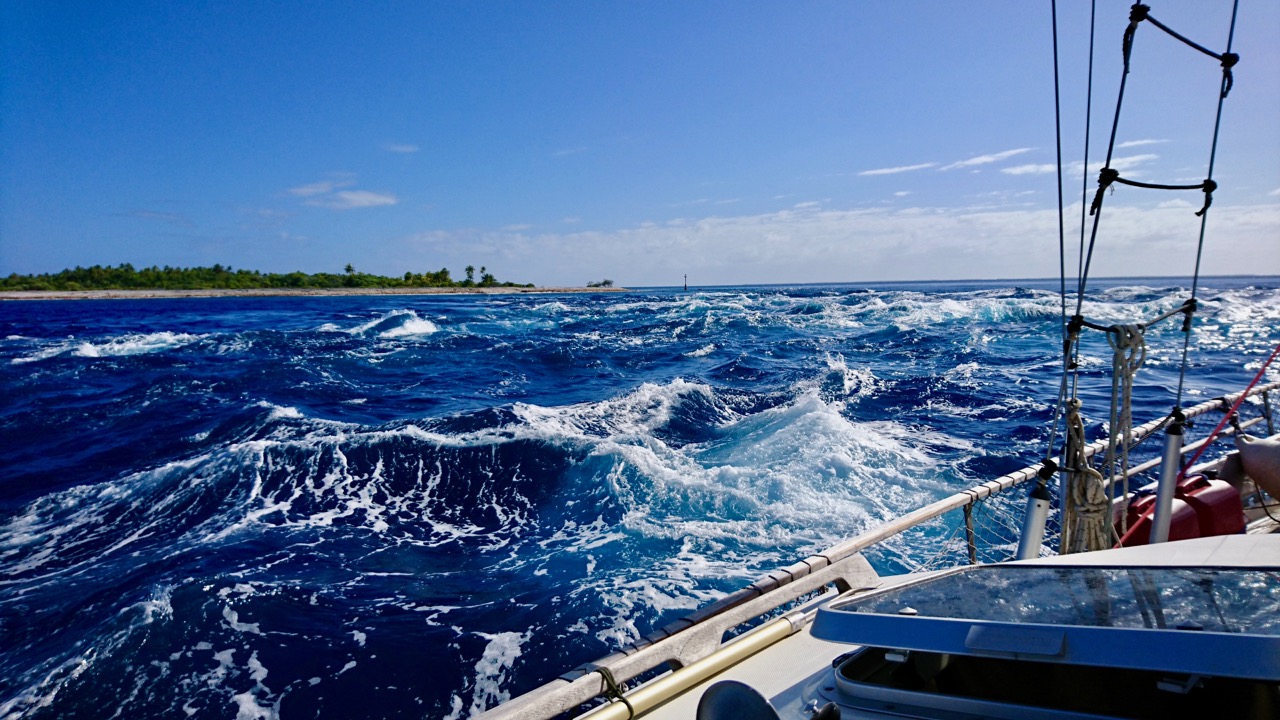
We ease gently towards the entrance to the lagoon. The chain of low sandy islets is broken by a deceptively open, wide expanse. But the electronic chart shows a band of reefs and only one channel leading in. How did the early explorers navigate here? Until you get right up close, you would never suspect that every passage is booby-trapped with coral..
The current: who will win?
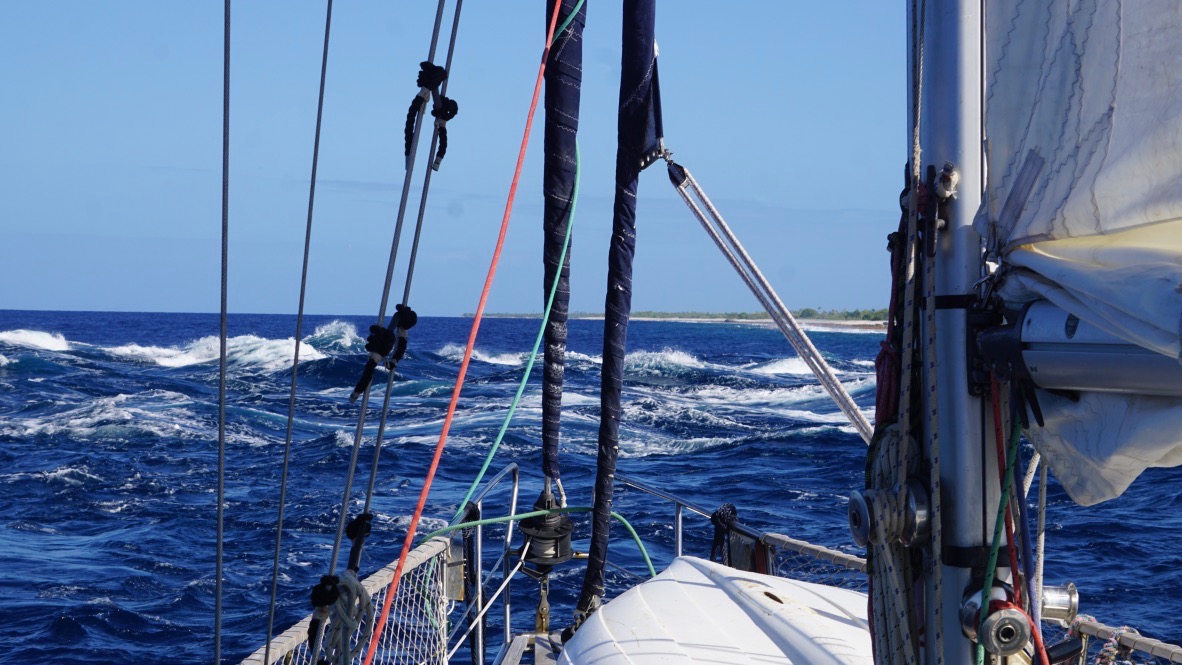
At the entrance to the pass, breakers are foaming—not over reefs, but in the ebb current. The captain’s taste for extreme thrills kicks in, and with sails still set and no engine, he steers the yacht straight into the thick of it.
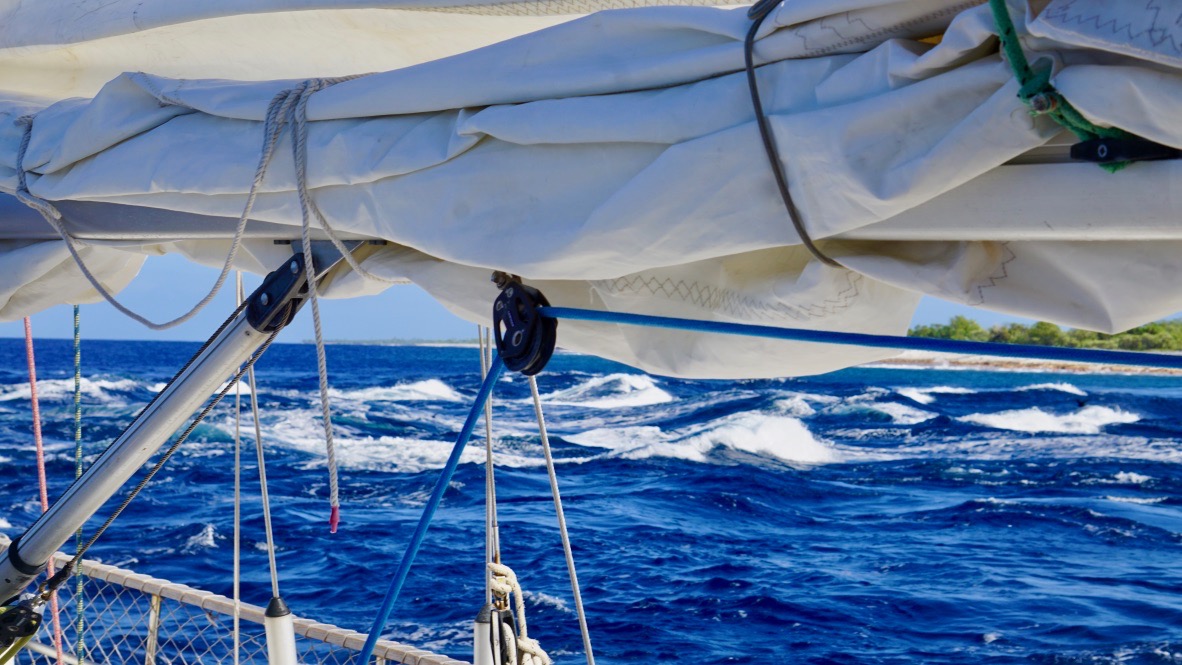
Have you ever seen rapids on a great mountain river? The most powerful mountain river I have ever seen is the Katun. At high water, even the rapids in its middle and lower reaches are terrifying to look at. Here, at least four Katuns are raging at once, and the yacht is already bucking, the mast swaying from side to side, while all the most entertaining bits are still ahead.
Well, that’s it, I think. We’re done for. Any moment now it’ll suck us onto some reef.
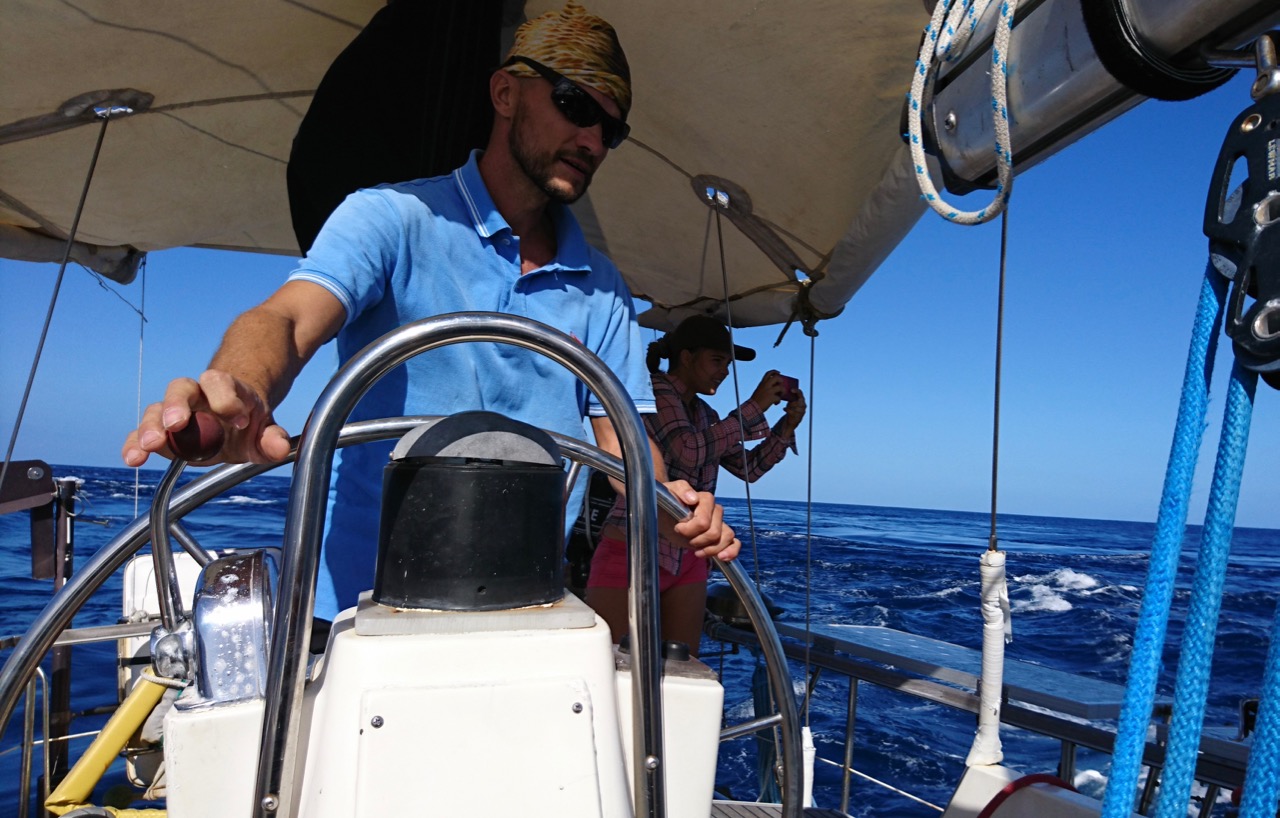
“Furl the genoa!” the captain commands. We furl it.
“Start the engine!”
Thank God. For a while longer, I genuinely struggle to work out whether our captain has lost his marbles: after all, we have read a hundred times about entrances, violent currents, and so on... While I am thinking along these lines, he finally turns away. Ten minutes later, he explains that he had never intended to enter that maelstrom; he merely wanted to take a look.
And there really is plenty to look at. In between the captain’s commands, Nastya and I filmed the breakers amid the flat calm of the sea, genuinely unable to believe our eyes: can a current really be like this?
For about an hour, we drifted under the mainsail at the edge of the swirling water, and the breakers became an everyday sight. An hour later the waves subsided, and with the mainsail held proudly aloft, we made a fine entrance into the pass.
Pearls and turquoise
I had thought the lagoon would be smaller. But here you cannot see the shores; in places, it feels as if you are not in a lagoon at all, but among small islands scattered across the ocean. And the water... Lord, the water here! We have not seen turquoise like this since the Caribbean. At Easter Island and Pitcairn it was clear and clean—unlike in the Marquesas—but it was not set off by white sand, and so it looked deep blue rather than delicate turquoise.
We proceeded decorously under sail all the way across the lagoon, passed a little hut on chicken legs in the middle of the water—a pearl farm—and dropped anchor off a small village on a narrow spit.
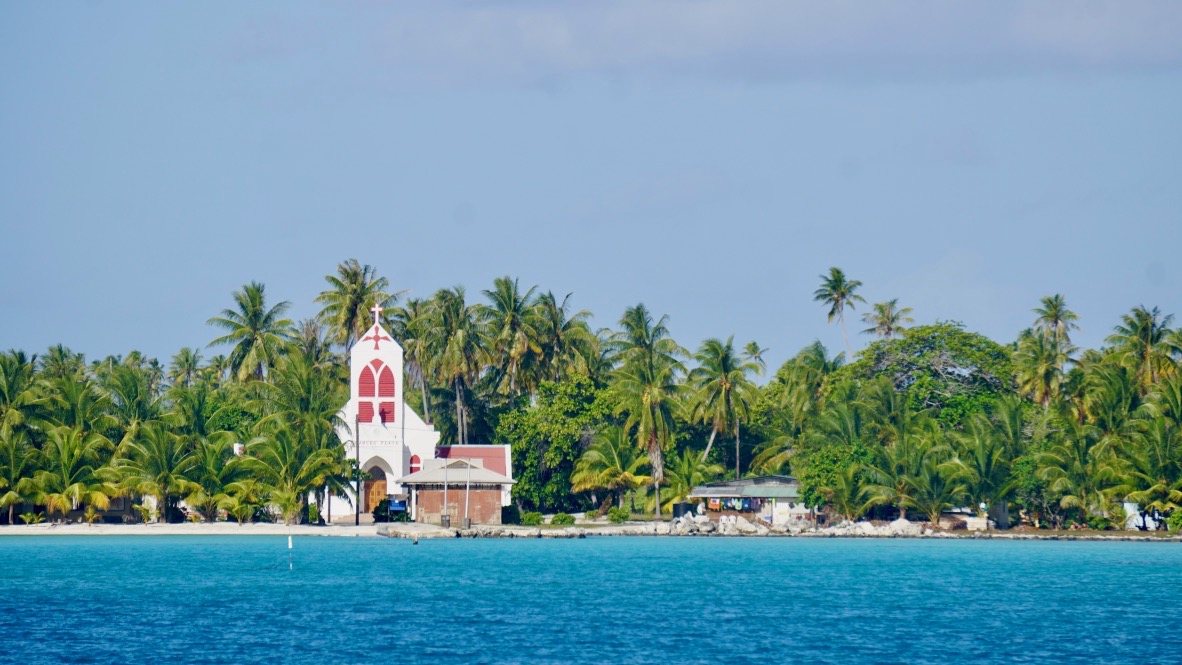
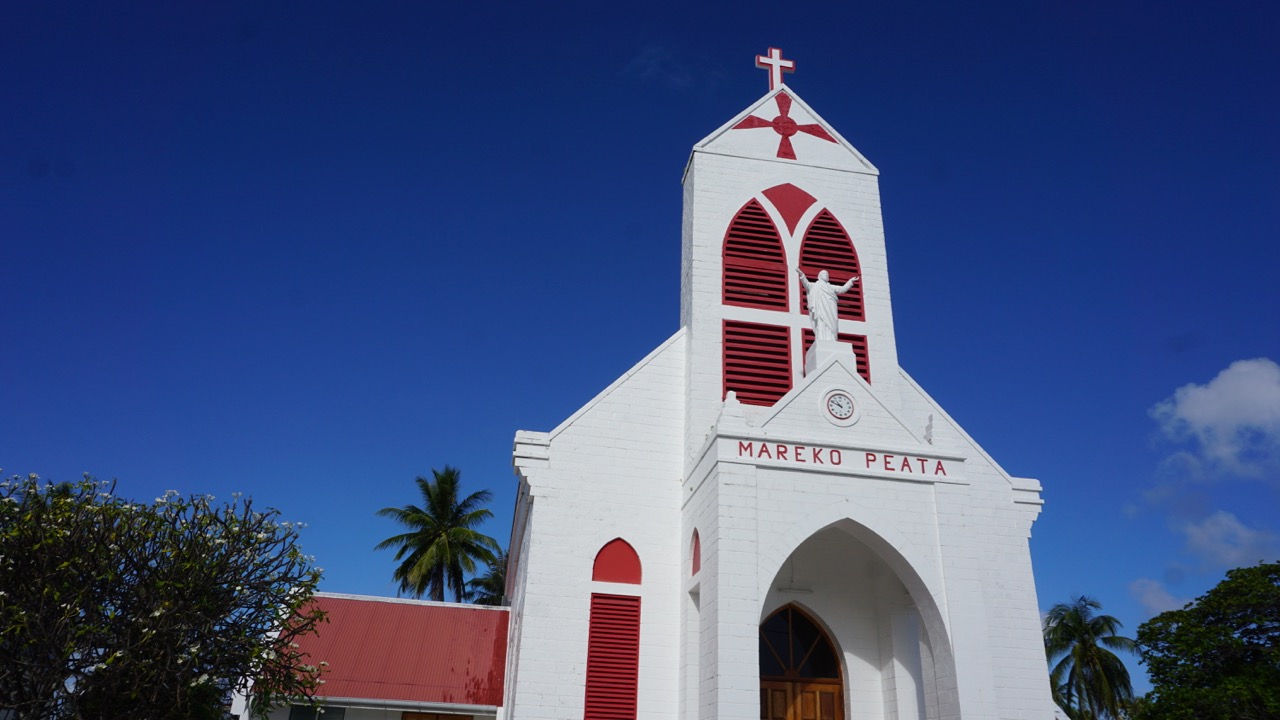
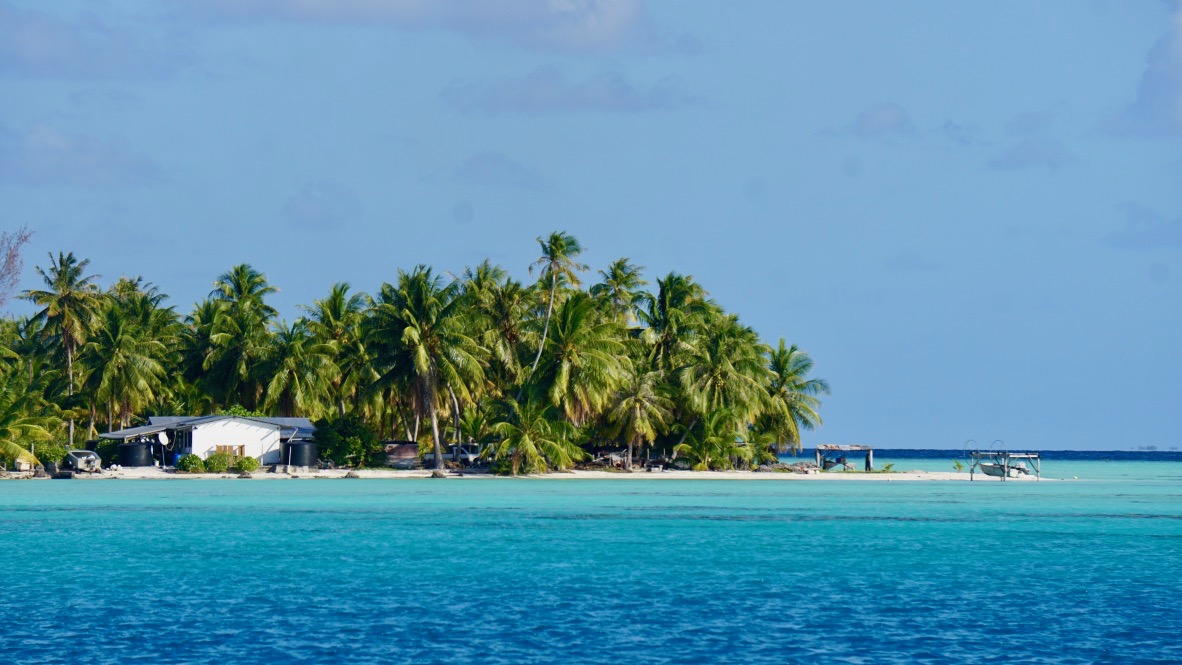
A dazzling snow-white church and about a dozen squat little houses with corrugated-iron or palm-thatched roofs. Fishing boats chugged close past us three times, revealing our first Tuamotuans, considerably darker-skinned than the inhabitants of the Marquesas Islands.
During the passage, the yacht became more salt-encrusted than ever before: the ropes securing the dinghy had turned rigid, and every protruding shackle, handle, and screw was covered with a half-centimetre layer of salt. It is the dry season in the Tuamotus now, and the rains that could wash the salt off us will not arrive until December.
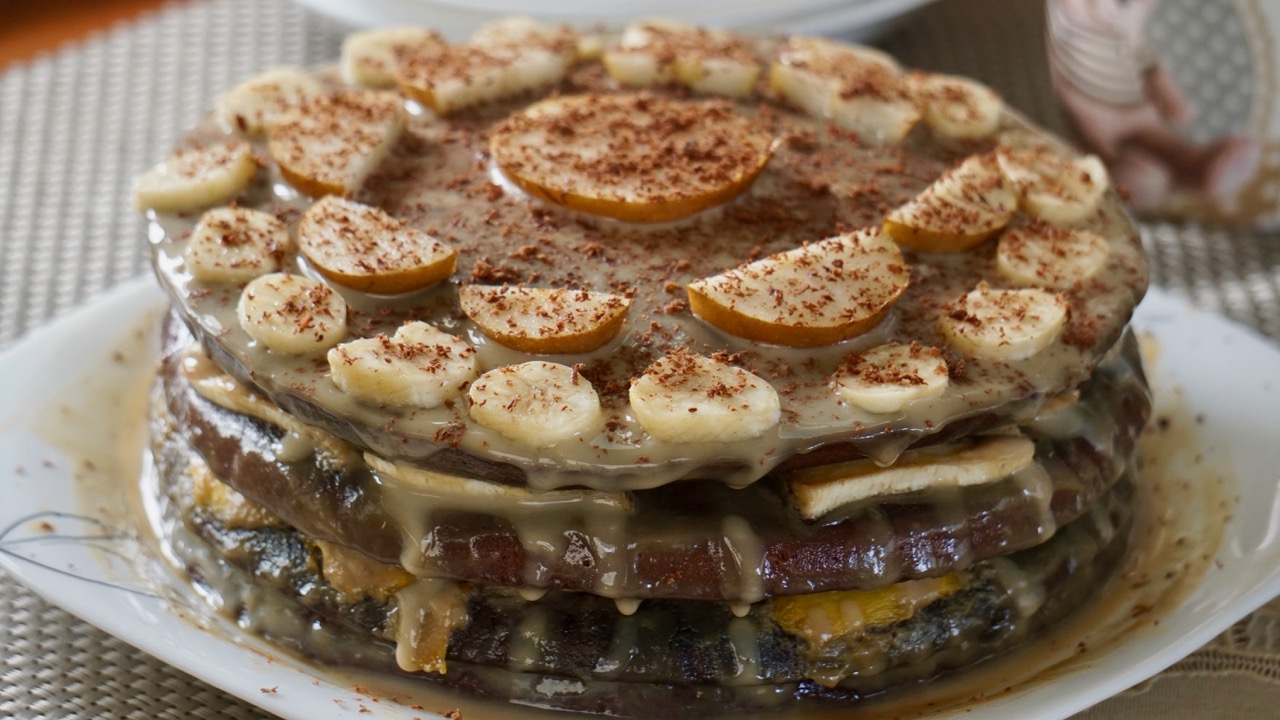
By the time we had rigged the awnings, launched the dinghy, repaired the ropes, and had lunch, night had fallen over the atoll. The church bell is ringing, an orange moon is rising from behind the shaggy coconut palms, and someone ashore is laughing or singing. And in Lady Mary’s galley, Nastya is conjuring up a little cake to celebrate our arrival in the Tuamotus.
A cake to celebrate our arrivozzle
The captain and I are thinking about how to arrange our plans ergonomically so that we do not miss all the most interesting things. After all, we were supposed to have arrived in Tahiti a week ago, where repairs and some shopping await us. Because illness struck down the crew, we are nearly a month behind schedule. We are adjusting our plans for before, after, and during hurricane season.
A few more photos
The church looks dazzling in the midday sun
The queen of the fields has launched her attack
The edge of the village