
From the Travely-Family archive · Atlantic
Along the Edge of Hurricane Irma—Under Sail. Days 7–8. About Birds
An original publication from the former Travely-Family website. This English translation was preserved from the technical-site archive without editorial rewriting.
Along the edge of the hurricane—under sail. Days 7–8. About birds. Mass deaths among swifts fleeing Irma, and smuggling aboard an oil tanker
It’s a good thing people can’t fly the way birds do...
On the sixth day of the passage, the number of our pets rose to four.
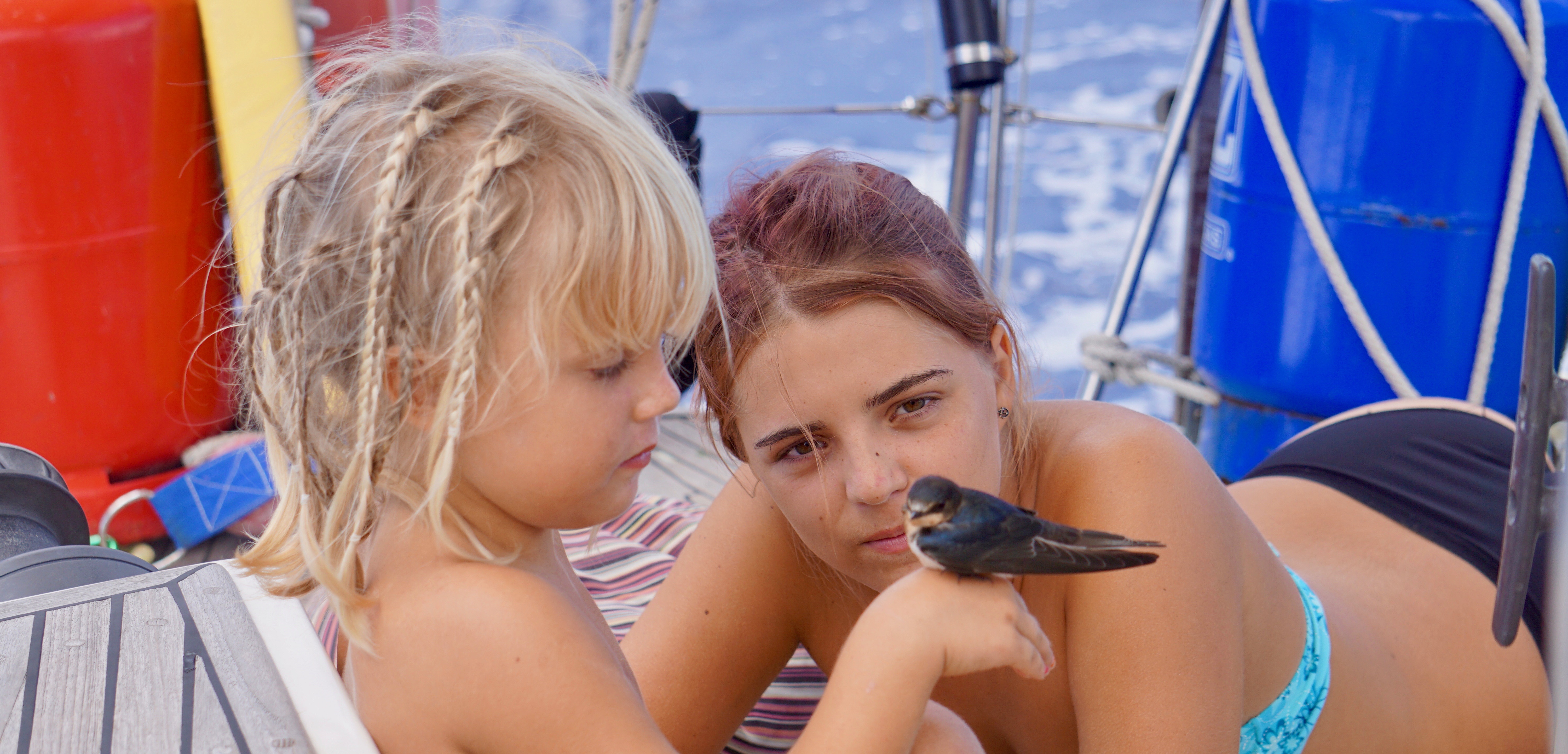
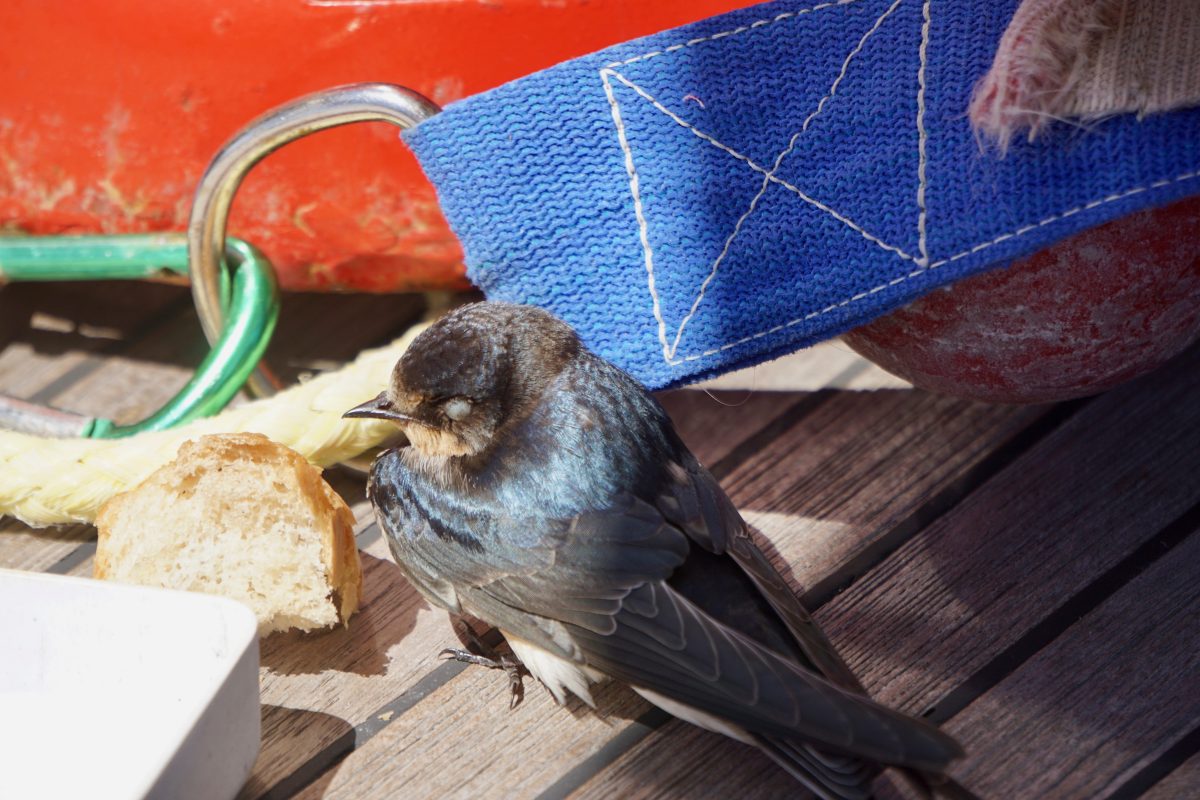
The Fixies, of the swallow-swift variety, befriended one another along the way and exchanged funny little chirps. For a while. One boldly swooped down onto the first mate’s shoulder and dozed off. Later, by some miracle, Nastya managed to give it a drink. The second newcomer turned out to be completely listless. Both perched side by side in the cockpit beneath the mizzen. They aren’t afraid at all and let us move them around—not a very good sign... The fifth(?) arrived barely alive, flopped helplessly onto its belly and lay with its beak pressed against the teak deck.
The children gave them all names. For the short time they were with us, the weakest were called Ginger and Scruffy. How can they be so utterly devoid of instinct, these creatures of God...? They fly somewhere across the sea, but when they find blessed solid ground beneath their feet, they refuse to drink. Even though they are clearly dying of exhaustion and dehydration.
No matter how much we tried to give the weakest ones water, no matter how we dripped it right under their beaks, two of them died one after the other (. The third and fourth are turning their heads briskly and periodically flying off to stretch their wings..
As we approached Pedro Bank’s Northeast Reef, another newcomer appeared, and all three proceeded to get soaked in the rain. After the downpour, one more tiny corpse went overboard.
Watching helplessly as a little body shudders and life drains out of it, we ponder the laws of nature—how, for example, birds whose bearings are off die while migrating to warmer climes. The fittest survive, the ones with normal navigational abilities—that’s what the captain said.
We chased the remaining two off to live on the island. We’ve had enough natural selection.
\
Why ships stop in the open sea
The captain stood watch until six in the morning, then decided to have a spot of tea with the next watchkeeper.
“Why aren’t you going to bed?”
“I’m waiting for the wind.”
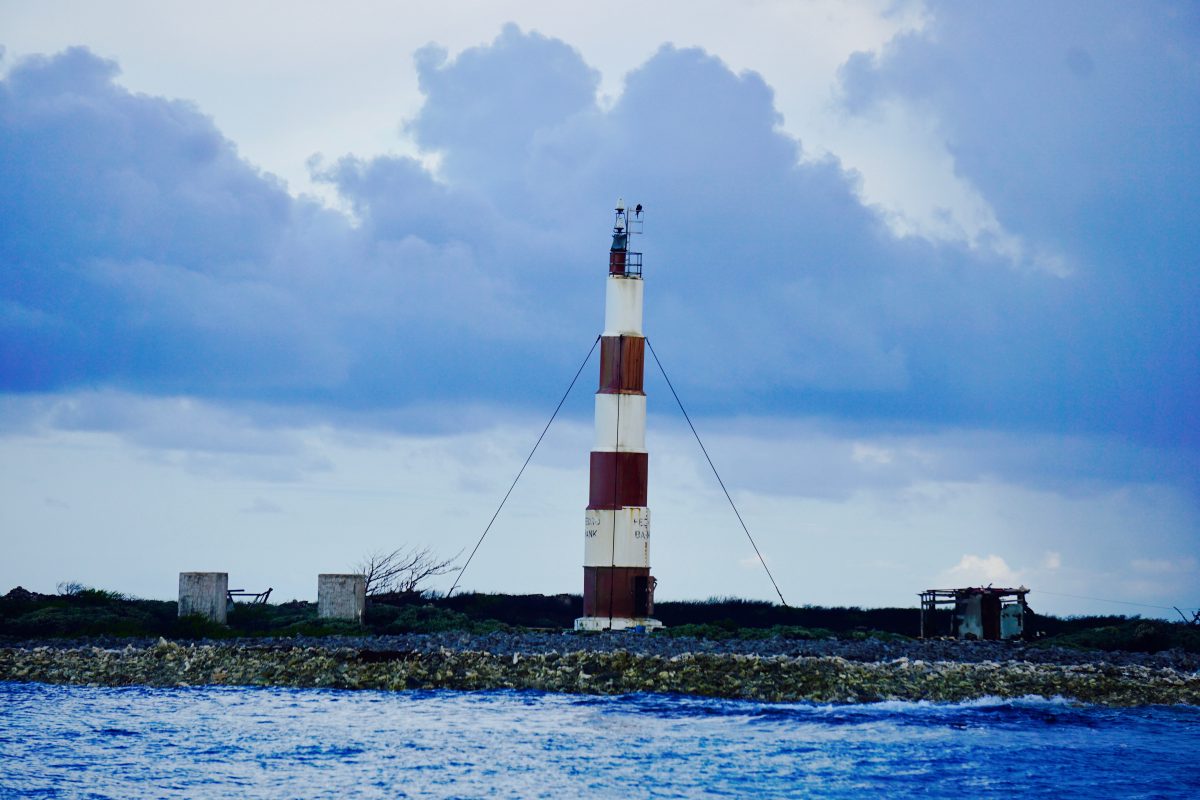
And there is no wind. None whatsoever. We motor a little during the night, and now again in the morning. The day promises to be an absolute scorcher.
About six miles from our leisurely promenade, an oil tanker is sitting there. Just sitting in one place. The captain suggested it might be an illegal carrier taking nearly free Venezuelan fuel to Jamaica, since 16 (sixteen) TONNES of 92-octane petrol there cost... $1 (One. US. Dollar.) Don’t believe us? Ask Valery Timofeyev—he knows:).
“Let’s call the tanker on the radio,” says the captain.
“As in, ‘Give us lots of petrol, nice and cheap’?”
“Yep.”
“Yep, and then he turns out to be part of the petrol mafia, and we’re witnesses. And that’s the end of us.”
So we decided not to call him after all. Let him carry on hawking contraband fuel on the high seas. We have sails—what do we need petrol for?
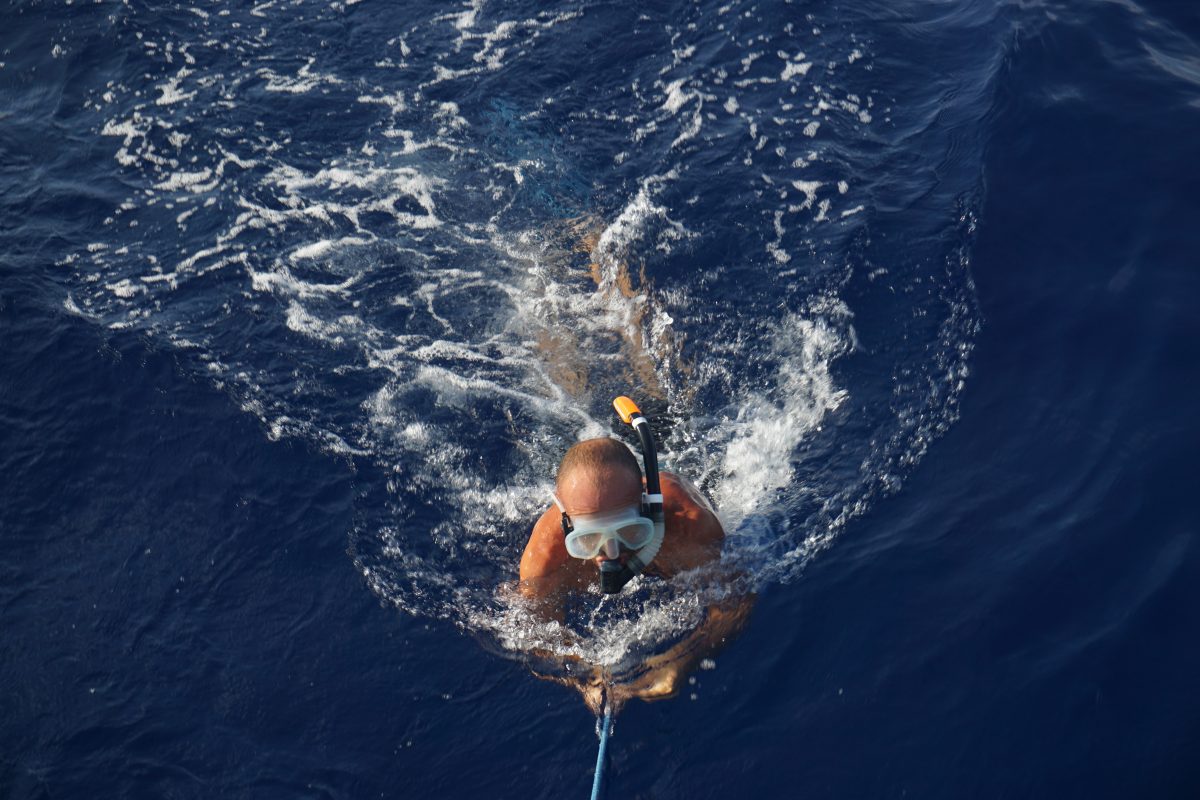
But since there is very little wind in the sails, we cool off by going for a swim 🙂.
The ornithologists’ cruise continues
Another “Fixie” has been discovered on the solar panel. But its appearance no longer fills us with tenderness. Who knows, it might decide to die too. I wonder if it’s the one from yesterday, the one I sent to live on the island? Strange devotion. I poured some water onto the solar panel for it, but it didn’t react. So what now—is it going to sail with us for a week without eating or drinking?
We forced water into it and even gave it a light dousing. Nastya is training her already. The bird doesn’t eat or drink by itself; we just drip water into its mouth, as though it were a fever patient.
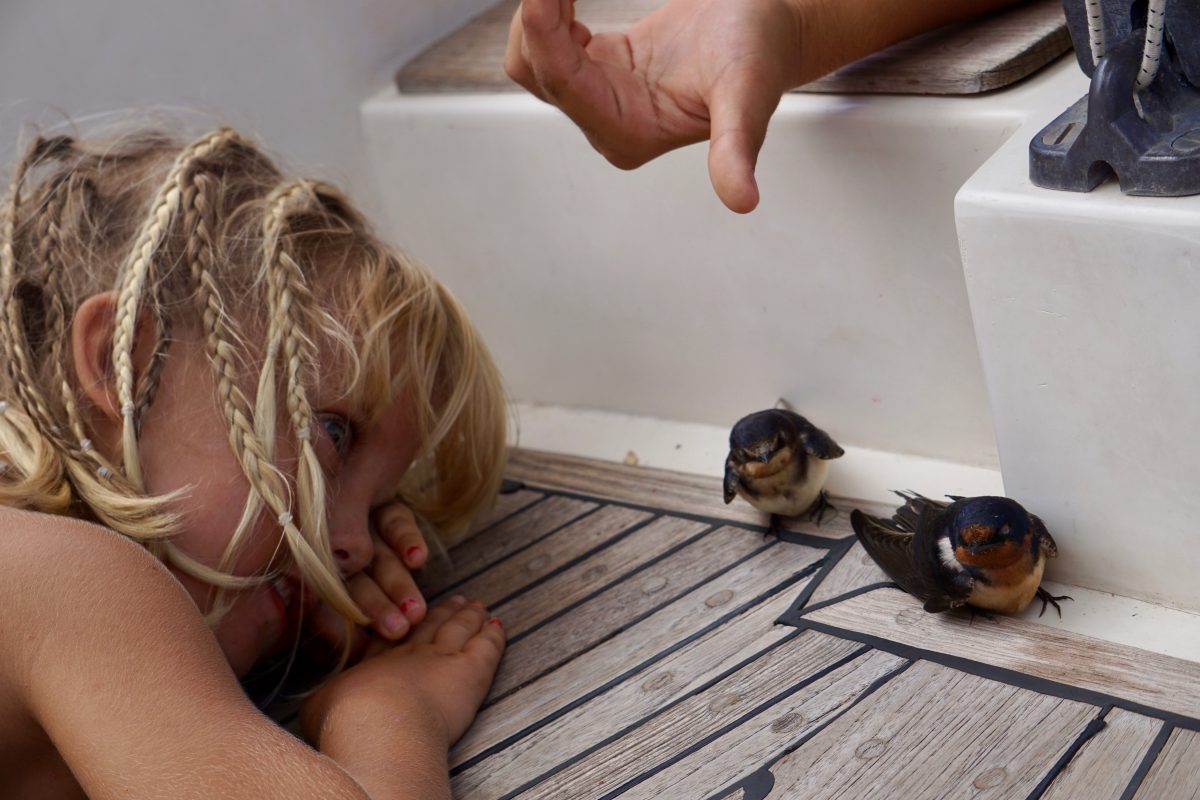
The first mate found her a micro-bug near the flowerpot and offered it to her for dinner...
“Well, did the bird eat your bug?”
“No, hmm... our bugs are the wrong sort.”
“Maybe she eats like a camel—once a month?” Lada suggested.
“Little girls?”
“Dad, don’t scareify me!”
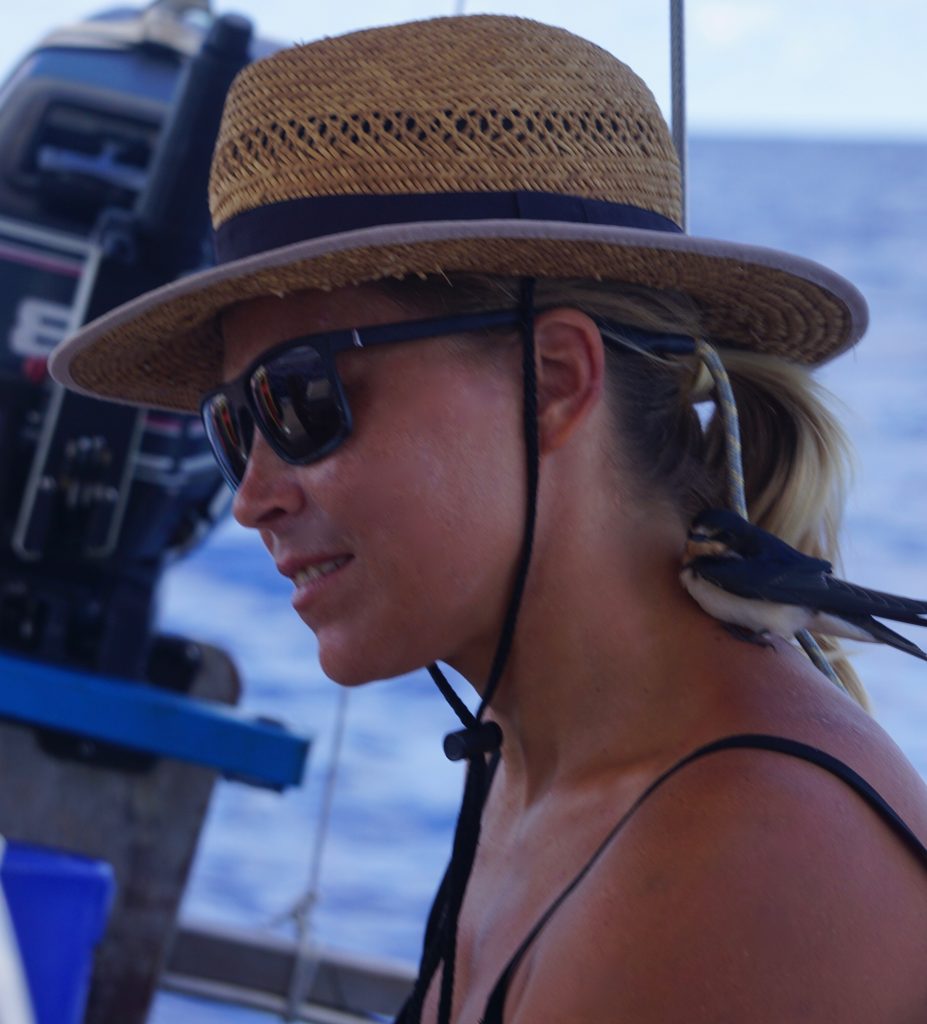
The hapless migrant calmly perches on our hands all day and doesn’t stir even when it sees a sailor’s backside descending onto the bench. It has started flying into the wheelhouse and settling there on the sly. This creates two dangers:
that we might squash it that it might crap there (and it did).
Over the course of our twelve-day ornithological observation, we established that such fearlessness toward humans in a wild bird is a bad sign. It means it has nothing left to lose and will soon give up the ghost.
For the night, the Fixie tried to settle in the wheelhouse, but it was carried out into the cockpit and placed in front of the instruments. We put down a plate of water. That was where it passed away (. The fourth tiny corpse of the passage. It seems this unprecedented number of birds aboard the yacht is connected with the hurricane—perhaps they were fleeing it as best they could?
Some sort of “proudly-soaring-storm-petrel” also flew in to spend the night. It guarded the bowsprit all night, taking off with indignant croaks whenever a crew member approached. In the morning, weaving between the masts, the storm petrel departed for parts unknown.
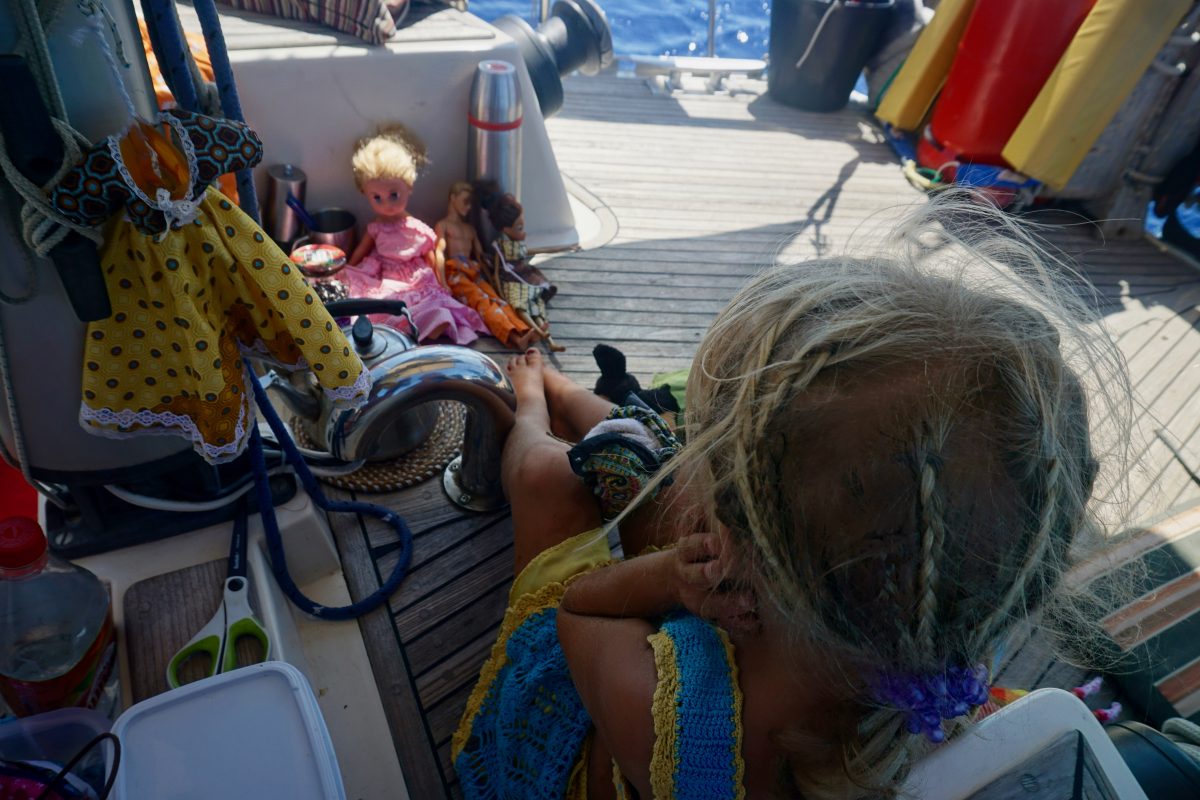
The bird on the shoulder—that’s what matters most in this photo 🙂
Let’s close the subject of birds by saying that another five or so flew in and flew away, while over the whole passage, five little swifts (or whatever they were) out of fifteen breathed their last aboard. Their bodies were consigned with full honours to the watery deep, and we never did find an answer to the question “why?”
Shipboard routine
By eight in the morning, Ladunya was up, hungry for bread and circuses. The wind is light; the sea thinks it’s a placid lake. To take our minds off the heat, we set up a sewing manufactory in the cockpit—covered the whole floor with scraps of fabric, spools and buttons, and set about making dresses for the dolls. Ladka is already quite proficient at sewing on buttons and making buttonholes. After her new dress was finished, the former Snow White was appointed a singer, and it immediately became clear that a singer doll needed socks—it wouldn’t do for her to sing barefoot; she’s no Cesária Évora. And there sits our young sailor, sewing socks..
Nastya is writing an essay on the topic “The Russian Revolt, Senseless and Merciless, as Exemplified by The Captain’s Daughter.” She writes well; I’m trying to teach her how to work with a text and handle words. I think something will come of it in time. She has a good feel for language and makes few mistakes.
In the evening, we made contact and were surprised to learn from Mum that our posts, which we regularly send by satellite, had not been appearing on the website. That’s why they are only going live now:).
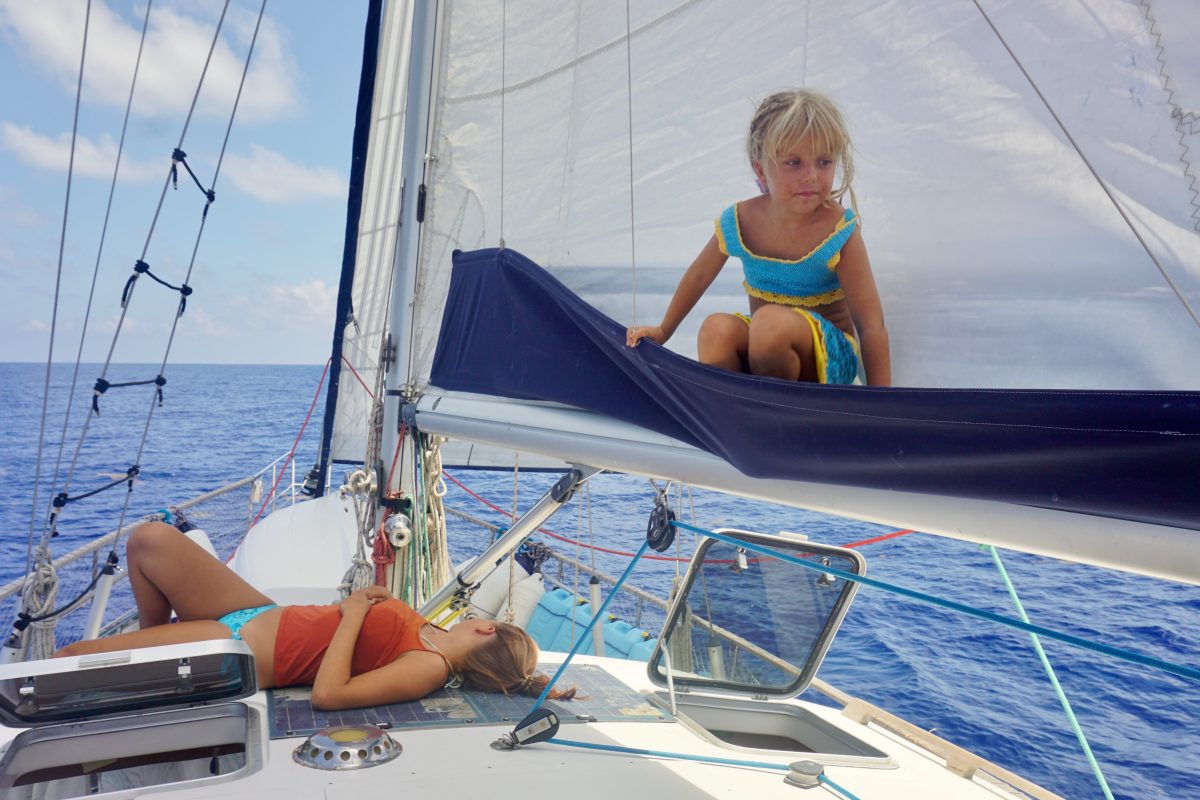
We still have another three or four days to go before Colombia, and we’re in no hurry because we don’t want to arrive on Saturday, when it will be impossible to complete the formalities properly.
Ahead lie calms, a whole night of dancing lightning, and a storm.
To be continued!