
From the Travely-Family archive · Other Entries
Patagonian Seafarers’ Daily Life
An original publication from the former Travely-Family website. This English translation was preserved from the technical-site archive without editorial rewriting.
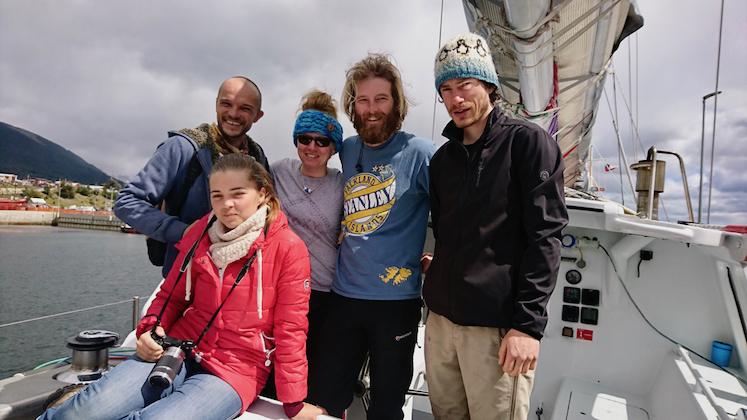
Patagonian seafarers’ daily life.
What happens after two non-stop months in the ocean. The answer to “How are you enjoying your holiday?”—a favourite question from old acquaintances. The moment they hear the words “yacht and ocean,” many people wonder how we are enjoying our holiday while the rest of the world is working. The answer is simple: when I worked in an office, I had more time off. In this report we’ll explain what nonsense I’ve dreamed up here about working on a cruise ))). And a little more about repairs, children, bonfires with axes, and famous expeditions.
Patagonia. Puerto Williams. 12 days after Cape Horn
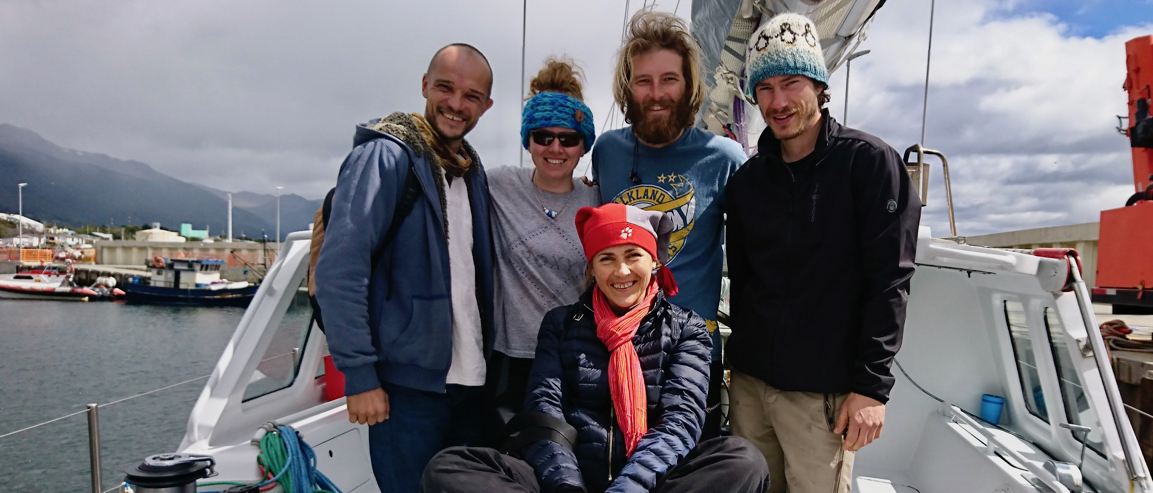
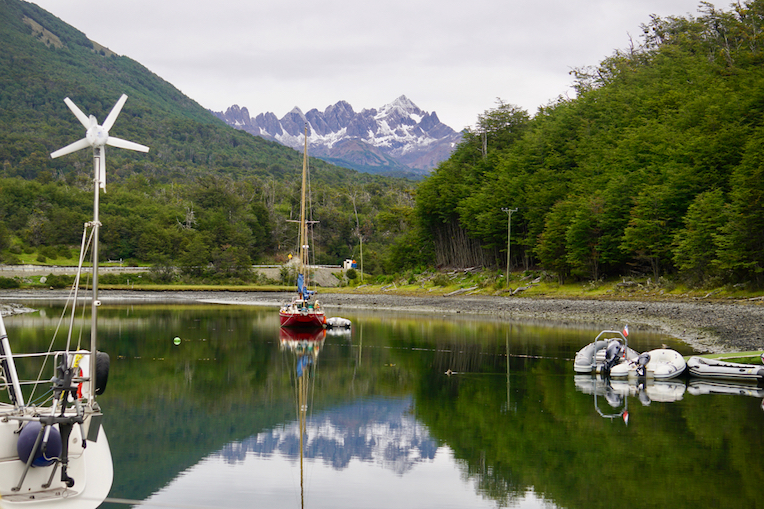
Patagonia is beautiful in its wild subantarctic way. It is very cold for the height of summer; we keep our down jackets and hats on even inside the yacht club if the heating isn’t on. That’s where we spend most of the day. We take a bag of food—sandwiches, chocolate and the like—a thermos of tea or coffee, a stack of exercise books for our young sailor and gadgets for ourselves, and go “out to work.”
T his lets us forget about the confined space where cushions and blankets are permanently piled up, because they get damp everywhere except the saloon. The forecabin has become a storeroom, and the gas, which arrived after five days instead of the promised two, still hasn’t been connected.
S o our miracle stove is at the yacht club too.
T oday we moved up to the second deck of a former naval vessel, and I can’t get over the fact that someone created such beautiful interiors, while God’s assistant made them free. Along with the internet, which could have been slow for money but is slow as a public service instead.
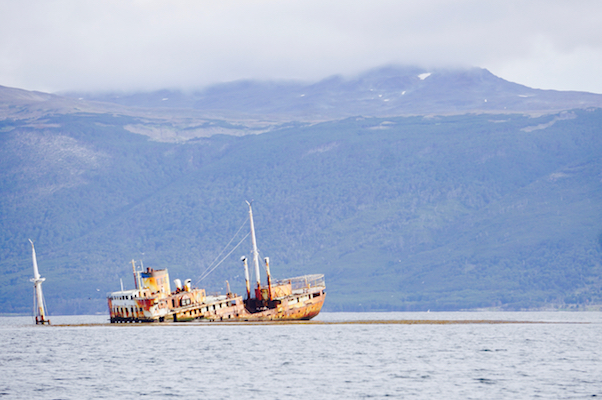
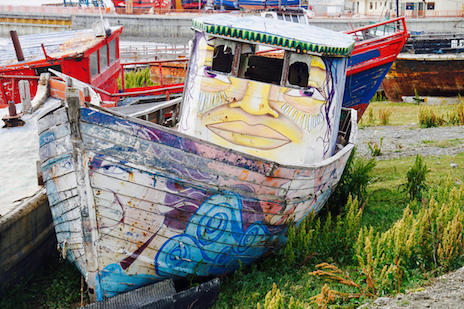
This isn’t our sunken ship, but another one 🙂
Work and the miracle berry
Over two months in the ocean, a lot of tasks piled up that simply can’t be done among the waves at a 20-degree angle to the horizon. I actually feel as though I’m working all the time. Either I’m studying something related to writing, travel or promotion (after all, we also have to keep the Gingerbread House filled with fun), or I’m writing. I write a lot, from diaries and posts to articles and a book. We also found a lighting unit at the club, hauled over some food, a tripod and the remains of equipment that more or less still works, and staged a filming day. Some of the footage will go into videos about the expedition to the ghost reefs and our forced march to Cape Horn. But most of it will become parts of two films that we still have to a) grow into and b) get around to.
Disorganised photo and video archives are impossible to tackle if you don’t deal with them straight away. We still haven’t been to a single café during these days to celebrate our triumphant arrival, Nastya’s birthday and New Year, all of which took place in expedition mode. But the young sailor and I have made a rule of going out for a walk every evening. We gather a miracle berry called “calafate” from thorny bushes—that’s the only name we know for it. Horribly sour, but quite good with honey. Calafate berries grow mainly on the dustiest roadside bushes, while for some reason the bushes in the woods are almost bare, or their berries are still green.
The brief polar summer has turned towards autumn. Ducks and large birds that look either like wild geese or turkeys are taking their growing chicks out and about. Before the cold sets in, the youngsters still have to get airborne and fly off to warmer parts of the Andean foothills. In the morning, a fur seal was splashing beside the boat; they rarely swim into the little bay where the yachts are. It gets dark closer to midnight, and by 5 a.m. it is already light—the polar day is breaking records. We are too. In the tropics we went to bed at 9:30; now that’s about the time we first remember dinner.
O h, no—yesterday we remembered at around 11 p.m. We came home and found Nastya, our cook-cum-sailor, had prepared tomatoes with cheese and garlic and switched on the fairy lights, so we had a New Year’s rehearsal. What other day would you sit down to dinner at eleven at night?.
Repairs, children and bonfires
One important thing: on the large deck of the landing stage, we spread out our long-suffering genoa—the largest sail, which we did not use during the final four weeks in the ocean for two reasons: strong winds and the fact that the sail was torn. The captain brought over the sewing machine and stitched every spot with rips, tears, and ambitions towards either. But there’s no guarantee it won’t start coming apart somewhere else the very first time we hoist it. Everything points to our needing to replace the genoa with a new one.
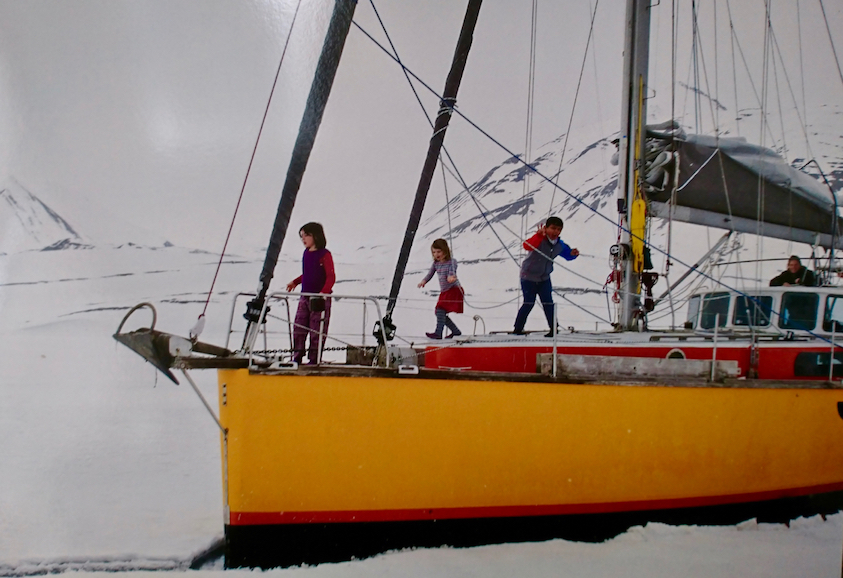
The captain is busy studying sailing directions, visa matters and various kinds of information and technical preparations; I don’t even get involved. Patagonia awaits. The young sailor brings textbooks or colouring books to the club, and if there’s no one to talk to, she writes or draws something. She chats actively on WhatsApp with Sam and Petya, her boy friends from Mexico; they send drawings and Lada painstakingly reproduces them. To everyone’s delight, an Australian-French family yacht with girls aged seven and nine on board first anchored and then came alongside us.
They became friends in five minutes, and now they’re racing all over the place, finding all sorts of ways to amuse themselves. Including lighting bonfires on their own. As a responsible mother, I didn’t forbid it; instead, I explained the safety rules and told them a couple of frightening stories about what happens when those rules aren’t followed. The children took it to heart, picked up a giant axe and began chopping kindling. All their limbs appear to be intact.
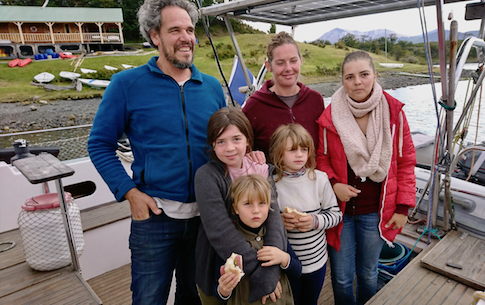
The family of our young sailor’s friends, and the young sailor
Oh, and here’s something else that happened. One evening I got cold at home, so we decided to turn on the heater. It won’t blow warm air without a kick from the engine, and the engine suddenly wouldn’t start.
W e opened the bilge to see what was going on and discovered knee-deep water inside.
K nee-deep for us.
W aist-deep for the engine.
W ell, there’s simply a slight leak around the propeller-shaft entry, and the pump patiently pumps it out.
I t’s been leaking for ages—no less than five years.
B ut for some reason, as we entered the marina, someone (we shall not speak his name aloud) switched off the pump.
A nd forgot about it for a week.
I n a week—half a cubic metre of water.
S o the children and I spent the whole of today working in the sunken cruiser without Andryukha.
H e was repairing the engine in the sunken yacht.
H e hasn’t announced the results yet ))).
Visiting and berths
At a sailors’ party in the yacht club, while I sat there like an owl writing my opuses and everyone else sipped wine, my crew met the guys from the famous expedition sailing vessel
“Pelagic Australis”. Its owner is the renowned seafarer Skip Novak. They sail to Antarctica with crews from the likes of NatGeo and Discovery, or with Antarctic tourists.
Captain Edd, his mate Charlie (who is also the captain’s girlfriend), and second mate Simon visited our yacht and invited us over in return, and we lost no time in accepting. We enjoyed our first visit to an expedition vessel, but tomorrow there’ll be a second: at lunchtime, eight people are arriving from Russia to rediscover Antarctica in honour of the 200th anniversary of its discovery. Beside ourselves with delight, we invited ourselves over again and were so persuasive that the guys couldn’t refuse us:). We’ll tell you about meeting our compatriots in the far south in the next report.
Meanwhile, I’m agonising over whether to try attaching photos to the report or not, because uploading them will take at least two hours, and it’s already bedtime. The plan is to get up at 5 a.m. and make another attempt to email the photographs to the editorial office. The fewer people in Tierra del Fuego who are awake, the more likely the attempt is to succeed. I’d also very much like to change the website settings somehow so the photographs open across the full width of the text. But that option isn’t visible in the standard settings, and the additional settings won’t open either. Still, long live the internet! Just think where we’re writing this to you from right now! From the very farthest edge of the earth...
Hugs to you all, dear friends! Write to us—it is a great joy to read greetings from home.
The entire crew would like to give special thanks to our shore-based team members—those who support the expedition via PayPal.me/TravelyFamily.
Marina Sh. from Germany, Artur B., Konstantin R., Dmitry S. from the Leningrad Region, Mikhail P. from Novosibirsk: your tangible contribution to the expedition inspires us to keep moving onward and upward, and to inspire others towards positive change!
May everyone have strong support back home!
Lada’s friends in the snow. The first is Zoë, aged nine; the second is Margot, aged seven Previous reports:
Rounding Cape Horn
Between Tierra del Fuego and Cape Horn
The End of the Earth and the Aftermath
Tierra del Fuego. Clearing In by Yacht