
From the Travely-Family archive · Pacific Ocean
Discoveries on Nuku Hiva
An original publication from the former Travely-Family website. This English translation was preserved from the technical-site archive without editorial rewriting.
Discoveries on Nuku Hiva
We have found paradise. And we also had a culinary revelation—a revelation about the whole truth of the breadfruit tree and why it caused such a stir 200 years ago. Hakaui Valley and Vaipo Waterfall That Is the Question
“And why does everyone on Nuku Hiva stay in the main bay? About 20 yachts, and every last one of them is there. Well, sure, there’s internet. And a few shops. But if those things matter so much, why the hell sail all the way to the middle of the Pacific for them?”
That is what we are quietly wondering as we return from a hike to a 350-metre waterfall. We are alone in the bay by Hakaui Valley. And a family lives in the valley—a few houses hidden among gardens. The energetic Auntie Kao, her uncles, brothers, sisters, nieces and nephews. Before we left Nuku Hiva’s main bay, she supplied us with provisions—25 pomelos, known here as pamplemousses. The large ones cost a dollar, the small ones half a dollar, plus avocados, passion fruit and a gigantic bunch of bananas (once they all ripen at the same time again, hello banana diet:).
Almost all the key discoveries in the world happen by accident. An apple accidentally fell on Newton’s head (if a coconut had fallen on his head, perhaps it would have taken people another hundred years to figure out gravity).
A certain Álvaro de Mendaña de Neira, while sailing from Peru to the Solomon Islands (in 1595), accidentally stumbled upon the southern Marquesas (we have almost finished writing the story of the exploration and settlement of the Marquesas in a separate post).
In exactly the same way, we accidentally discovered the truly miraculous properties of breadfruit.
The Mystery of Breadfruit
For us, quick-witted souls that we are, this required living for almost two years in places where the thing grows... And it is all because the captain is our provider. He likes foraging for various kinds of food in forests and “ownerless” gardens. We know what bananas and assorted mangoes look like, but breadfruit was a mystery to us. We came across either fruit that was already soft—the resulting dough was used to make fritters, which the captain loves and the rest of us tolerate—or fruit that was completely green, with milky-white sap.
By the time you peel and chop one, you are exhausted. And then it still needs another two hours of frying or boiling. In short, we did not value breadfruit very highly. Because we always foraged for it ourselves—we saw something and assumed it must be edible. Until yesterday, when the hospitable owner of the valley with the island’s largest waterfall treated us to a large, firm, but yellowish fruit. Though first he charged us 10 bucks each to visit said valley—the money goes towards maintaining the trail, which, incidentally, is beyond praise.
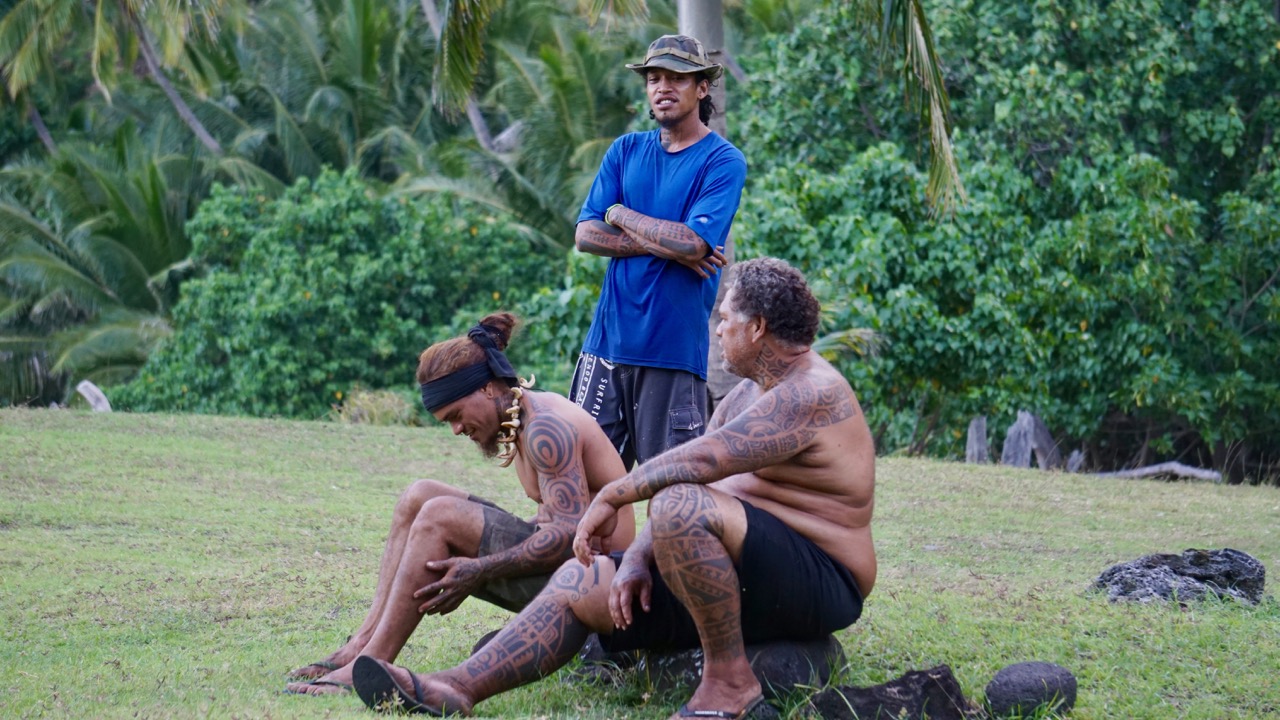
The very man who opened our eyes—sitting on the right
And now, about our daily bread: that springy fruit, easy to peel and effortless to cut, yielded two large frying pans of wonderful fried potatoes. For some reason, it did not even need salt. And these potatoes took about 10 minutes to fry. And that was an insight—a revelation and an enlightenment. So thaaat is why the whole tragic-romantic story of Captain Bligh and the mutiny on the Bounty happened! So thaaat was the point of it all! No wonder they equipped an entire expedition to fetch this miracle fruit. Just imagine if potatoes grew on trees: no watering, no earthing up, no digging. You would not even have to plant them. Reach out your hand, spend two minutes peeling—and there you have half a bucket of fluffy potatoes. That was what I was thinking as I cooked dinner in Lady Mary’s galley.
But why everyone remains at the Taiohae anchorage when there are sooo many other fairy-tale bays all around Nuku Hiva, we never did understand. After our hike to the waterfall, we popped back in to buy tomatoes, say “Au revoir” to the gendarmerie (well, they did ask us to stop by when we were leaving), and upload this report to the website. And now we are heading north, towards nearly wild bays resembling fjords. So our next internet connection may not be until the Tuamotus, or even Tahiti..
Vaipo Waterfall
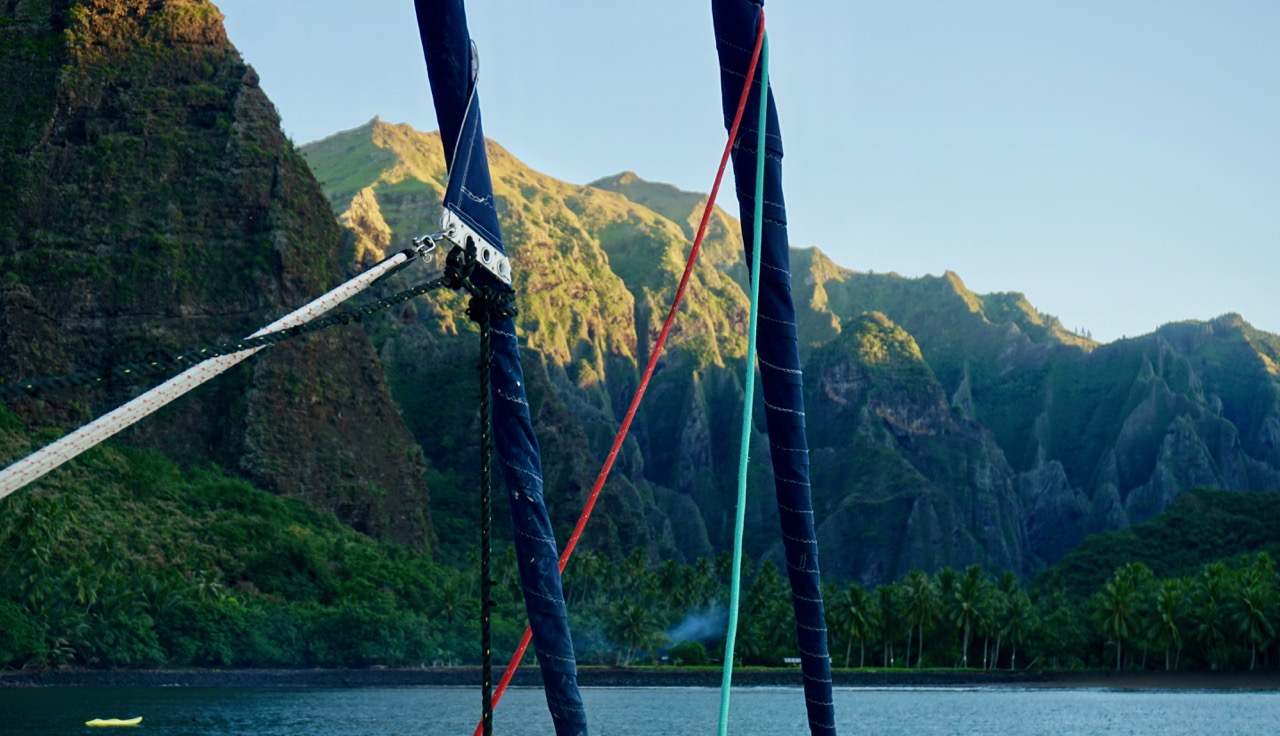
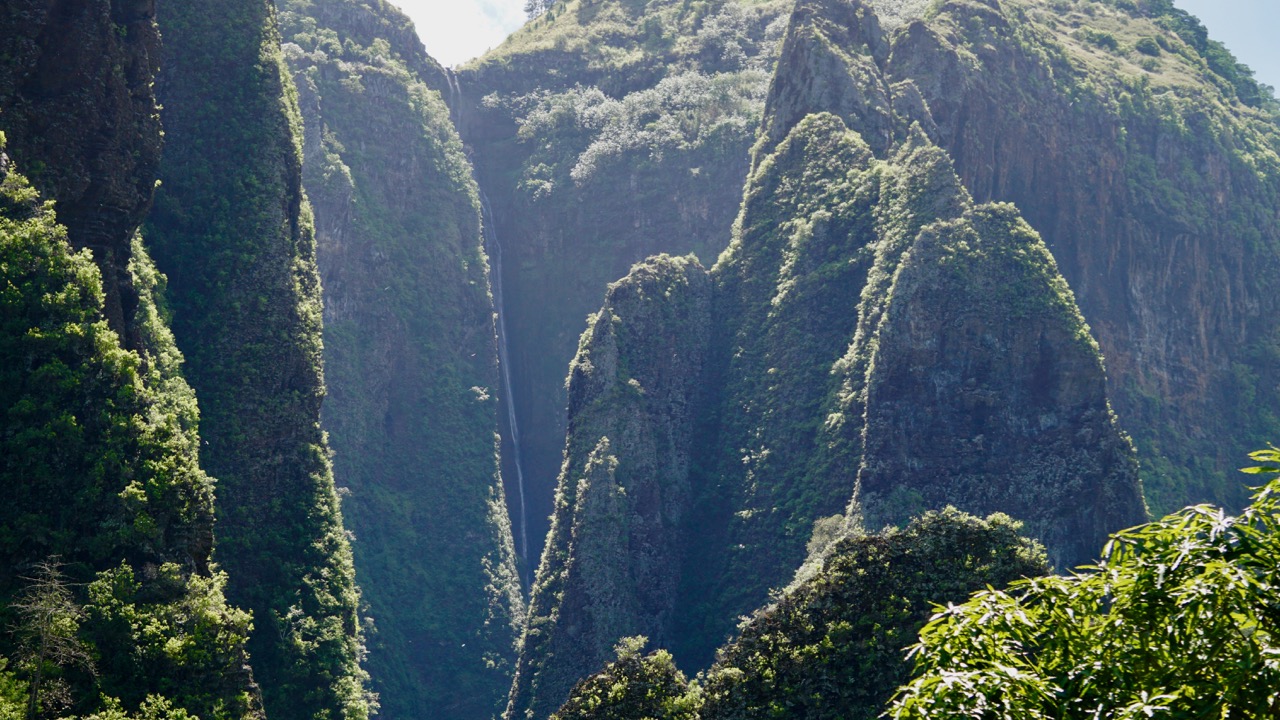
The cliffs framing the valley with the main waterfall rival Hanavave on the island of Fatu Hiva in beauty and mystical aura. The bay splits into two smaller ones—in one there is a golden-sand beach (a great rarity in the Marquesas); in the other, the beach is divided between rocks and grey sand. But that is where the entrance to the valley is.
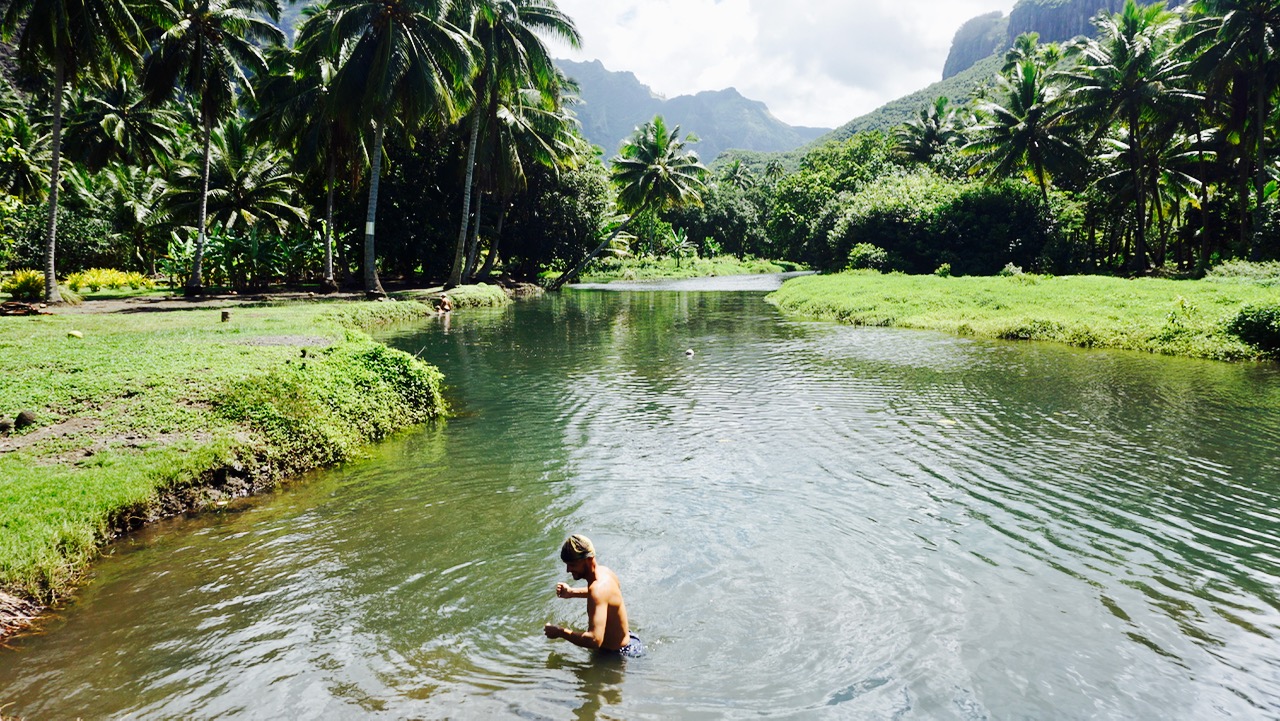
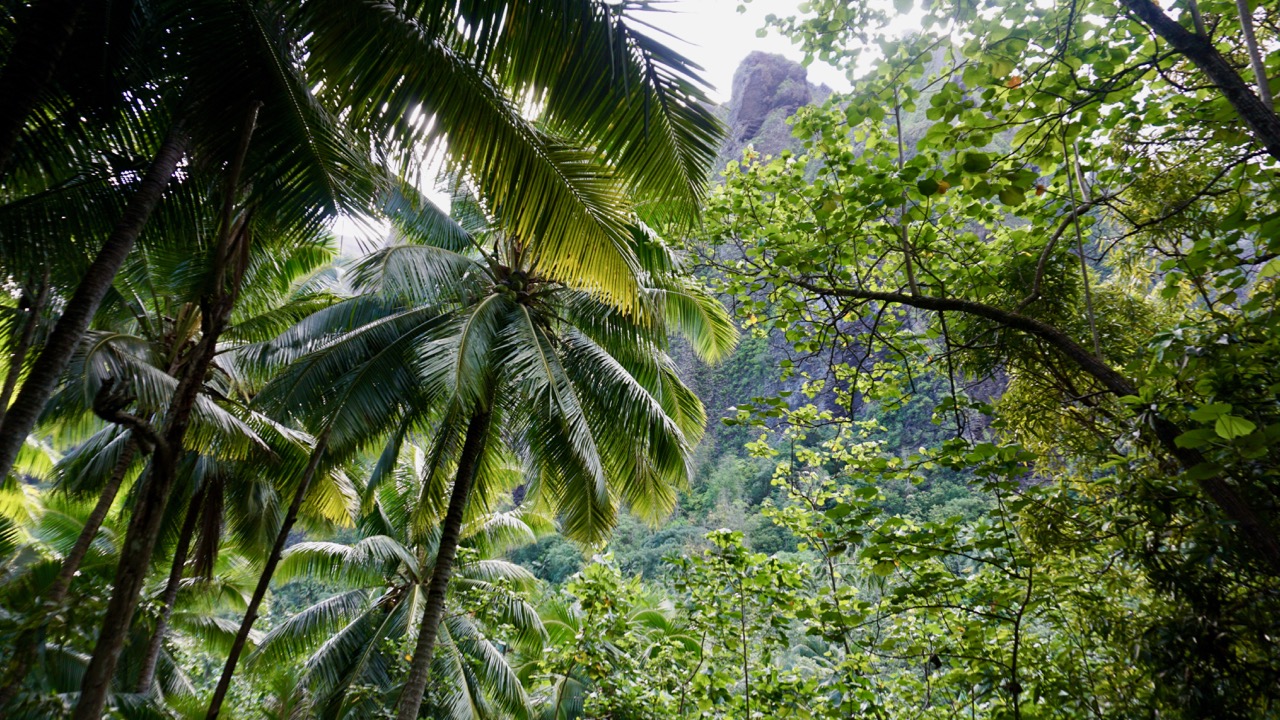
When we landed on the shore, we found ourselves in paradise. No, really—in paradise. A river babbles between the trees, but instead of flowing into the sea, it is somehow naturally dammed and forms an idyllic little lake. With grey herons and cool fresh water beneath the shade of palm trees. (For some reason, it is more beautiful in real life than in the photo.)
The captain scared off all the herons
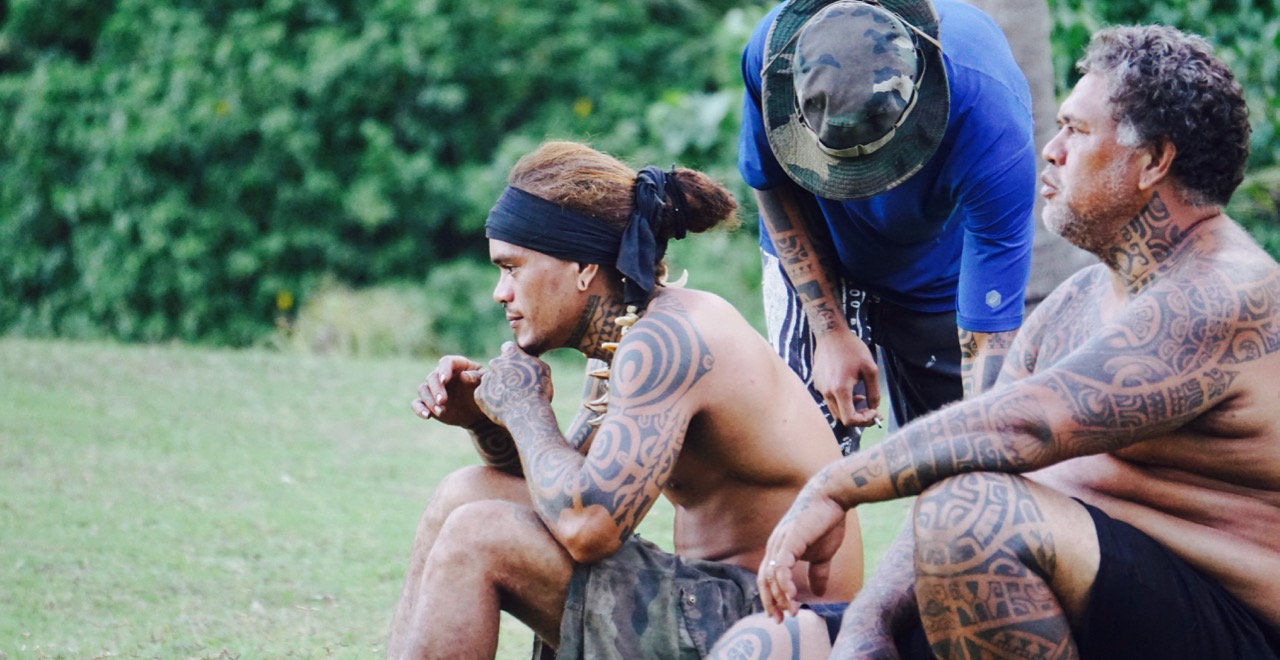
A neat shelter, well-tended gardens, horses grazing... A hefty tattooed man greets us warmly and names the entrance fee for paradise. Then his niece appears—the very same Kua from whom we bought fresh fruit. It turns out this is her farm. Kua invites us to a Polynesian dinner that evening, which costs half as much ($10) as a similar one at a house on Fatu Hiva. But the captain has already handed over all our money for admission, so we are left without a local dinner (.
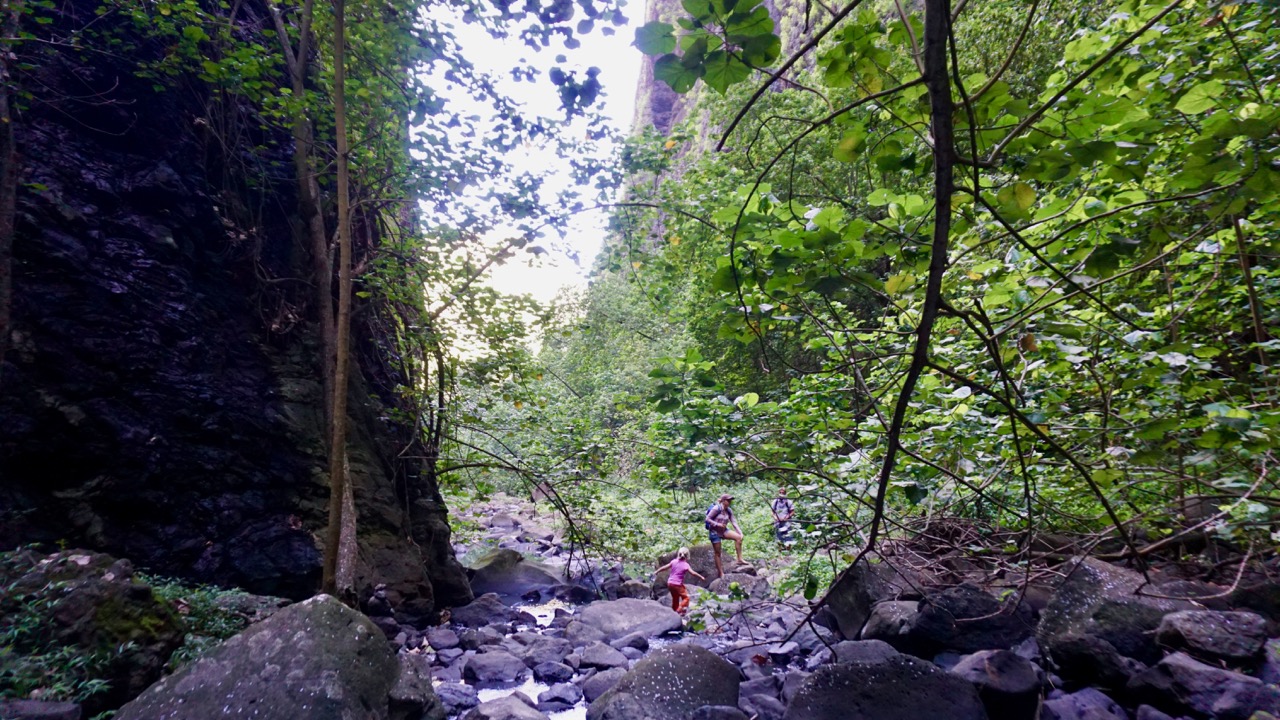
Along the trail, you frequently come across ancient ceremonial platforms and even moss-covered Tiki statues crumbling with age. In pre-European times, a separate tribe lived in each valley. And they fought endless wars with their neighbours. This valley was probably home to two tribes. Or one very long tribe. Because for 4.5 kilometres, remains of ceremonial structures, large and small, keep appearing. These enormous flat stones were placed one on top of another about three hundred years ago by very real tattooed hands, and have not shifted since. And once again, I dream of a time machine—if only I could take one quick peek... Though the captain promises that, in that case, I would not last an hour—they would eat me.
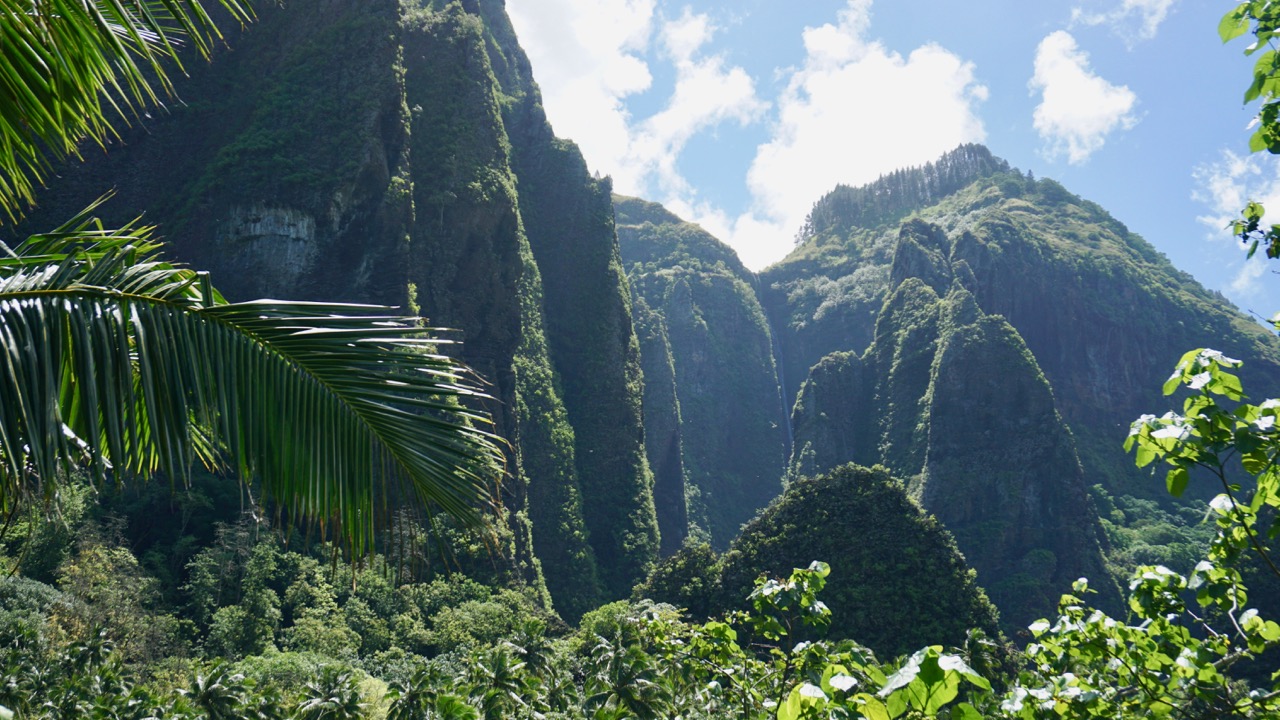
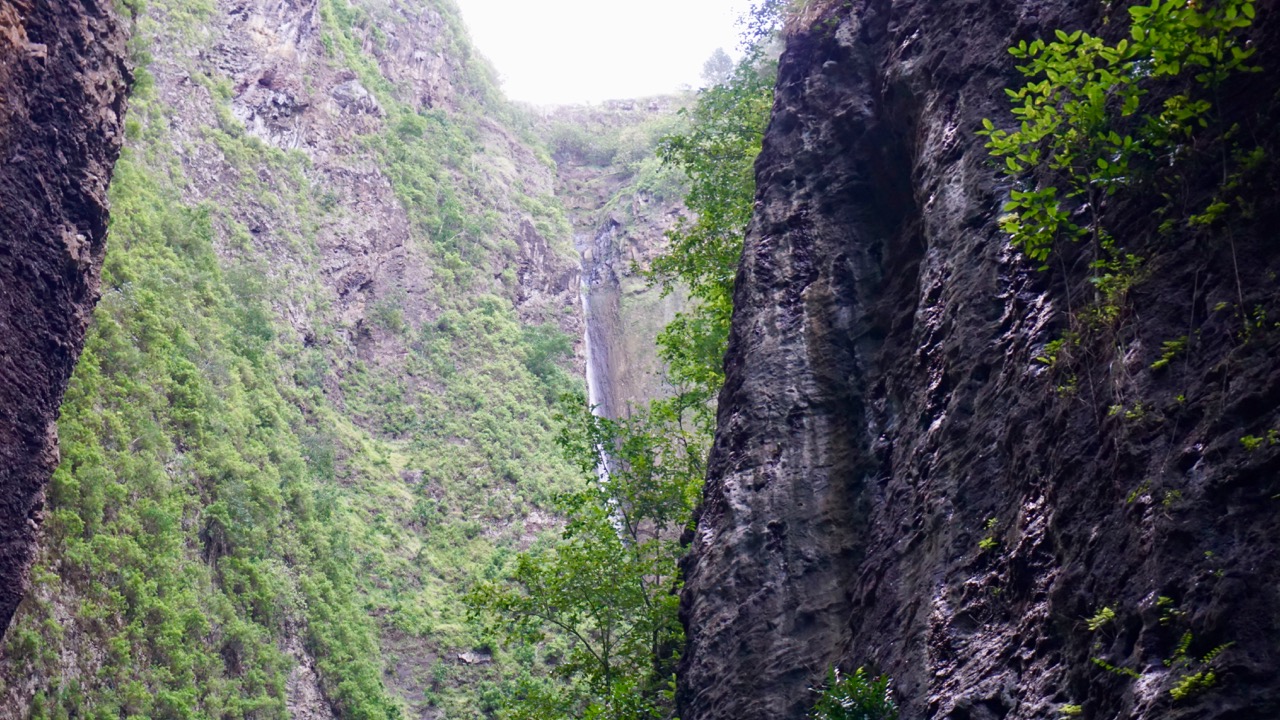
And the waterfall... it is very impressive. But mostly from the trail. Afterwards, you enter a rather gloomy gorge where only a small part of the waterfall is visible, while all its power and height are hidden behind the curtain of a high cliff. And there is no getting closer.
The most unpleasant thing about the whole business is the clouds of mosquitoes and tiny biting midges, which are even more bloodthirsty than the mosquitoes. But we had been warned, which meant we came armed with repellent, matches and smoky coils; and beside the cold waterfall pool we even lit a little fire and smoked ourselves until our eyes watered. The first mate also dressed up like a Ryazan peasant woman—a floor-length skirt and a long-sleeved blouse. Only these measures saved us. However, the vicious bloodsucking saboteurs infiltrated the yacht and, under cover of darkness, finished off the crew.
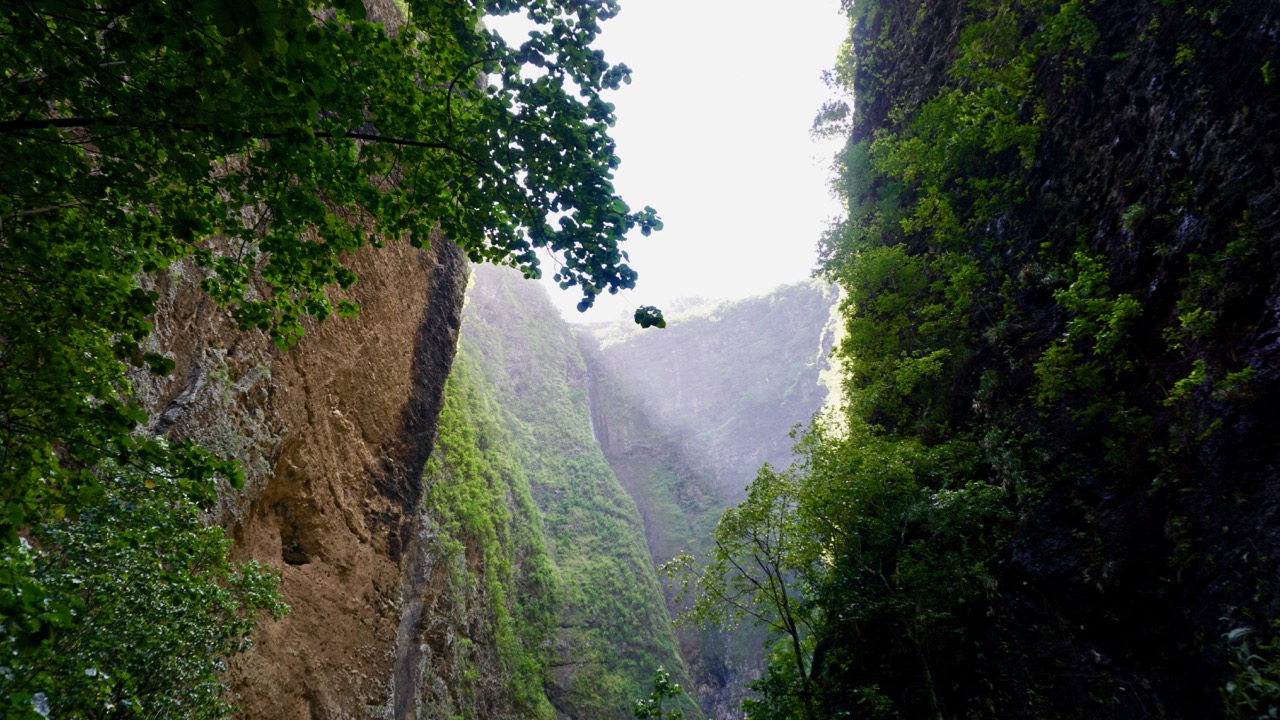
Time is running short; we need to dash if we are to cover the 25 miles to the next anchorage in the north of Nuku Hiva before dark. Here are some photographs uploaded blindly from the camera:).
Vaipo Waterfall, 350 metres
Fords
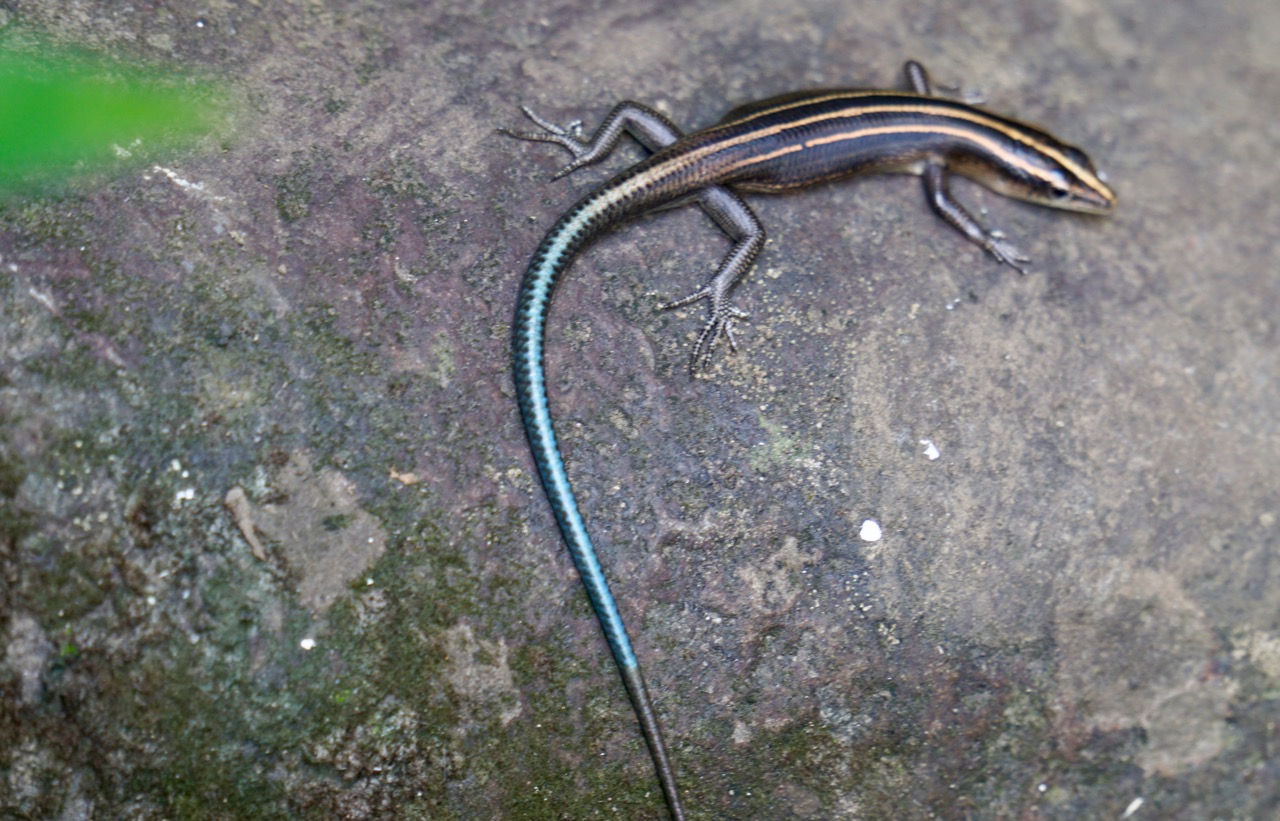
These lizards have been amazing us since Easter Island. They gleam like copper and turquoise metal Entrance to the gorge
The waterfall from the trail
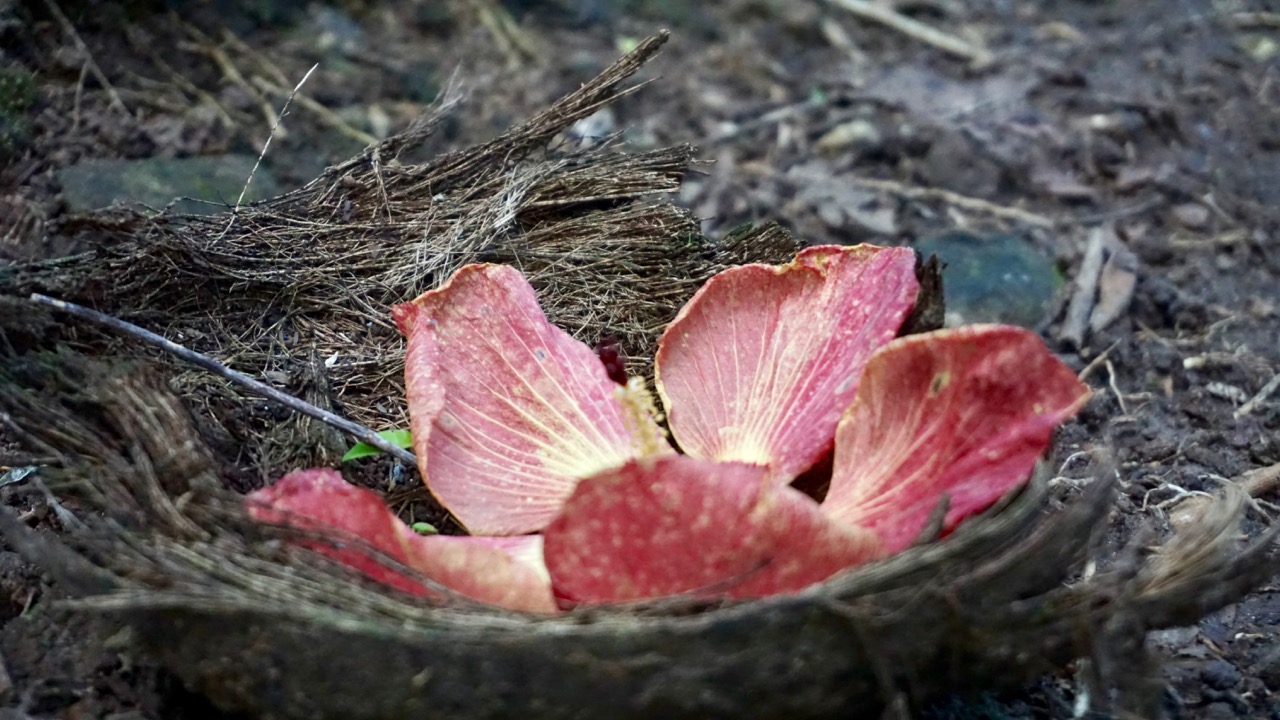
Everything was just lying there on the trail
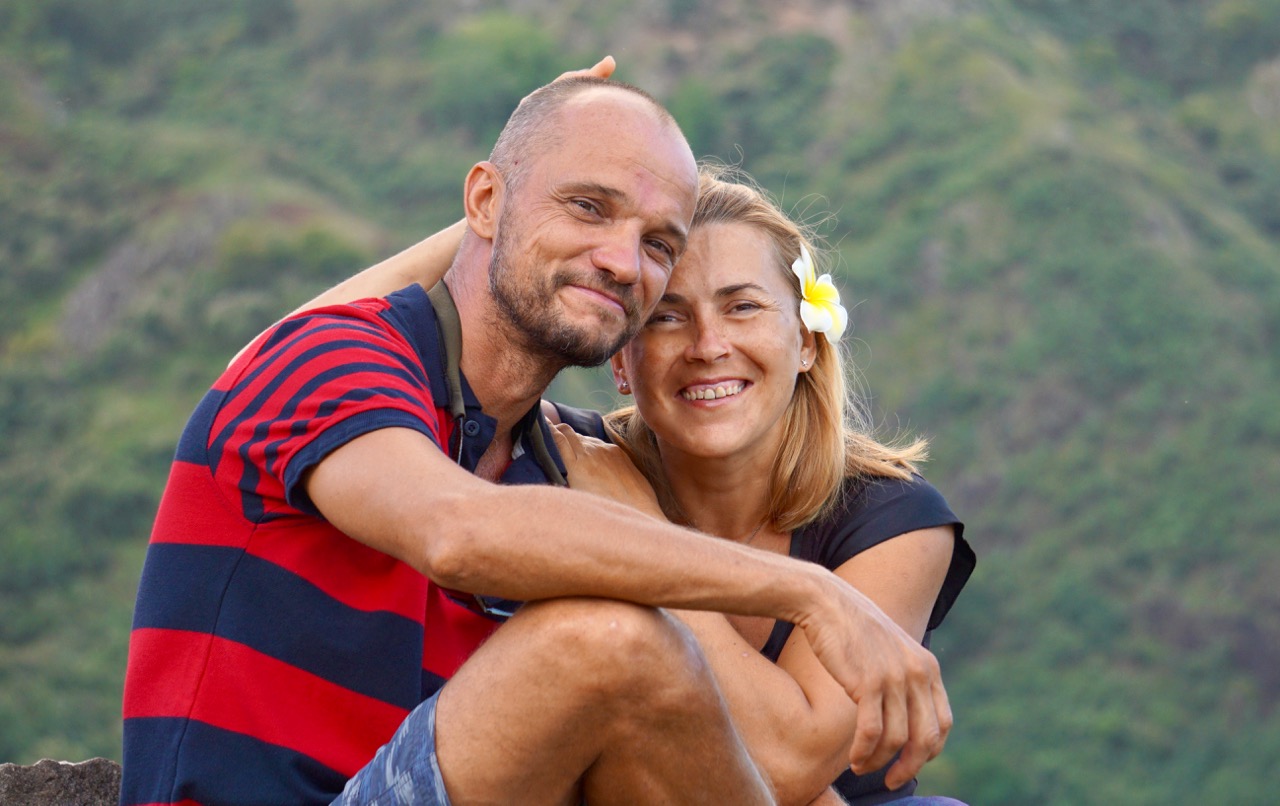
It has been ages since our faces appeared here )))
Until next time, friends!