
From the Travely-Family archive · Indian Ocean
New Threats. Indian Ocean, Day 51
An original publication from the former Travely-Family website. This English translation was preserved from the technical-site archive without editorial rewriting.
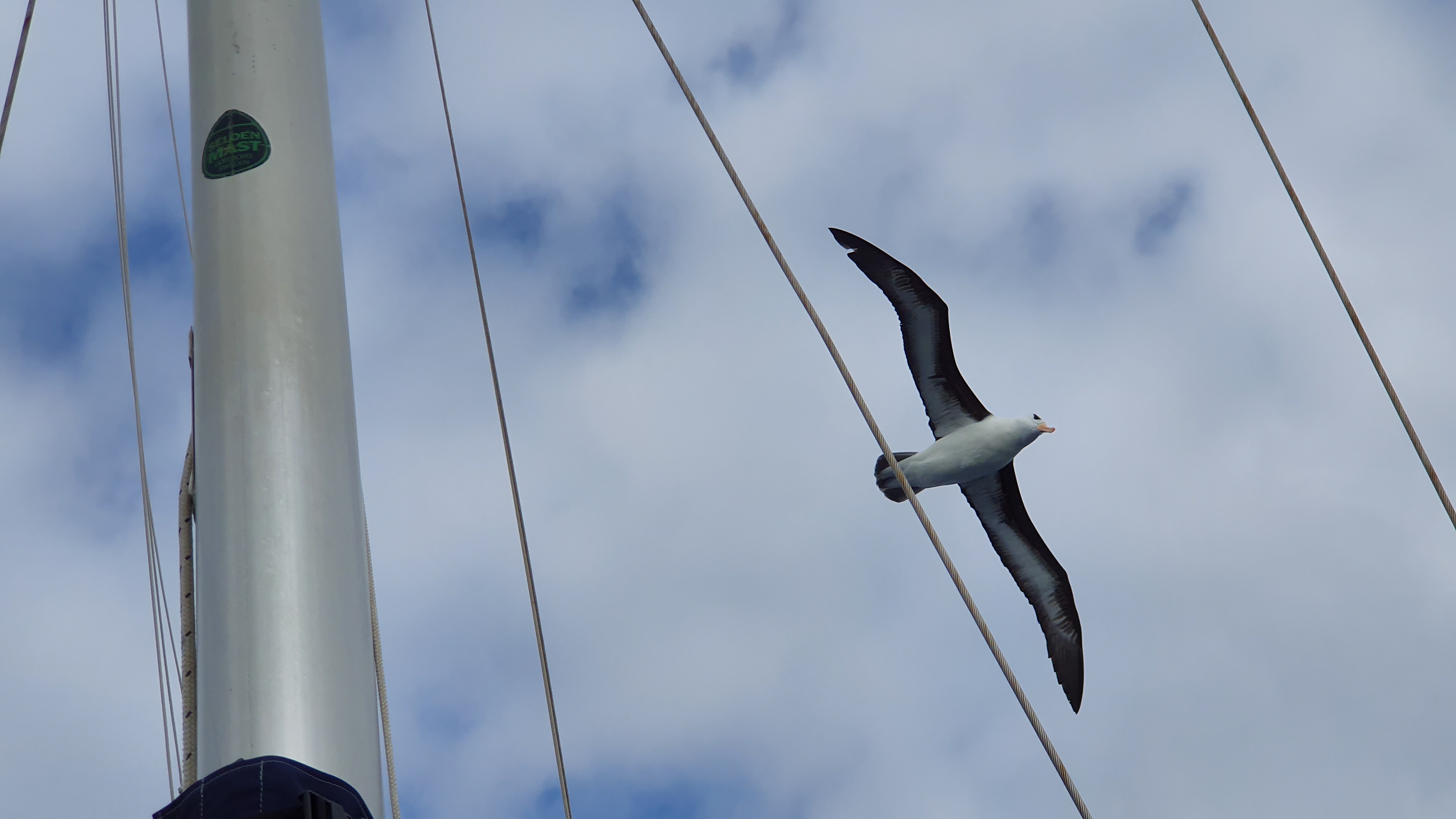
“Sailors are supposed to go ashore looking spick and span,” or so our favourite performer claims in one of his songs (guess who?). So Lady Mary is having a spring clean. Cleaning the bilges (mmm... yum-yum), tables and lockers. The swell has subsided and is allowing us to get the boat into decent shape, but still not enough to climb the mainmast without steps. So we are still sailing without the diagonal shroud and trying not to put too much load on the mast. At the slightest increase in wind, we drop the mainsail and reef the genoa. Naturally, this is slowing our progress. But at least we’ll arrive in Australia with both masts, like civilised people. On this passage, the mizzen has once again proved beyond doubt how indispensable it is.
Biosecurity, Australia
As for provisions, we consulted an authoritative source: fellow sailors we met in Tierra del Fuego. Paul and Christina and their two daughters, aged 10 and 8, live in Tasmania. Six months ago, they arrived there on their yacht from France via (wait for it!) the Northwest Passage. The one above Canada. They sailed down the Pacific coasts of both Americas to Tierra del Fuego, where we became friends. In good weather, they nipped round Cape Horn and even landed on the little island, as evidenced by the beautiful stamps in their passports. We didn’t manage to land on Cape Horn either the first or the second time because of stormy weather.
Anyway, they told us that there are no ports in Australia where provisions can be sealed until you leave territorial waters. So anything that might sprout in Australia’s fertile soil and wipe out its unique ecosystem must be voluntarily surrendered for destruction. That’s free. But if you decide to hide something and they uncover your secret, they’ll give the boat a full-on search and slap you with a hefty fine. Seeing the crafty look on my face, the captain is even frightening me with the prospect of criminal charges. We decided not to find out how real that prospect is.
• What, you want to miss your flight home over a sack of quinoa?!?
A fine alone would be enough to ruin everything. So we’ll surrender voluntarily to the authorities.
Andrey requested the form from Border Force by email, filled it in and sent back a small-craft arrival report, listing the serial numbers of all our electronic devices, from the laptop to the camera. This report must be submitted between 90 days and 96 hours before arrival. We’ll fill in the declaration on whether or not we have grain, meat and other living things aboard once we are in the port of Fremantle. They are already preparing for our arrival, having been notified five days in advance.
They say the thoroughness of the inspection depends on the human factor—what sort of inspector you happen to get. Some merely glance through the accommodation; others order you to put everything on the boat out on the pier. To be honest, waiting to be searched when you haven’t even done anything wrong is rather unpleasant. There’s something humiliating about it. Oh well: if you don’t want an inspection, don’t go to Australia. They say New Zealand is even stricter about this.
A Small Personal Record
Today is the 51st day of the passage, and we have broken our own offshore sailing record. During our 62-day passage from Bora Bora to Cape Horn, we went 50 days without seeing land and 54 days without setting foot on it. The passage from the Strait of Magellan held our longest record for not setting foot ashore—55 days—but on day 33 we anchored off Tristan da Cunha. And that was a huge boost to morale. On this voyage, we were supposed to anchor at cold, not particularly welcoming Kerguelen. But the engine and heater weren’t working, the temperature inside the boat had dropped to +11°C by 45° latitude, and a storm came up from the south.
So we headed north and were left without an intermediate stop. We decided not to call at Amsterdam Island so as not to leave the Roaring Forties too soon, with unpredictable results: the island has no bays at all, and only one possible anchorage in winds from different directions. And secondly, like Kerguelen, Amsterdam belongs to the French Southern and Antarctic Lands, where a visa on arrival costs something like 240 euros for the four of us. Few people would willingly pay that much for a couple of days’ admission, and we didn’t even try.
Food
So we’ve partly answered the questions from the comments that our shore team sent us today—many thanks to them! We have a record amount of provisions, and “eat as many fresh apples as possible” mode has been activated. The same goes for beans and millet. We’re cooking whatever might fall into the enemy’s hands, so there will be less left for them. The pasta has been set aside for better times. Beans and lentils are on the menu. I’m urgently finishing off the South African biltong—dried meat, their speciality. Nastya is baking yet another apple charlotte, which, incidentally, has used up our last three eggs.
Since we stocked up even more thoroughly before this voyage than ever before, three packets of individually wrapped processed-cheese triangles may be confiscated during the inspection. We put them into absolutely everything: soup, every vegetable gravy. It’s a good thing we finished the hard cheeses and Brie a few days ago. On the whole, as our grandmother says, “Better in us than in the bin.” So I’m afraid our daily exercises won’t save our figures from spreading ))). That’s how we’ve decided to beat the Australian system. Obviously, we won’t manage to gobble up six litres of peas; we have already mourned them, along with the beans and lentils. Do you know why I’m measuring them in litres rather than kilograms? Simply because aboard a yacht it’s convenient to store dry goods, from sugar to beans, in large (5–6-litre) plastic water bottles.
Australia on the Chart
For several days now, we have been able to see the Australian continent on our display. For the previous month and a half, there was nothing but water. Australia is 230 miles away (about 400 km). Compared with the 5,000 miles we’ve covered, that’s not much. Yet this “not much” is taking so long that sometimes it feels as if there will never be a shore, and we are doomed to a waterworld. As I write all this, the captain is reading, Nastya is doing her evening exercises, and Ladunka is polishing off her second-grade maths. She has realised that the more she gets done now, the less time she’ll have to spend on schoolwork ashore.
In other news, today, for the first time in a month and a half, we slept with the hatch open and it wasn’t cold. Things are looking up, guys! Wishing everyone spring! And may all illnesses and viruses go away. Thank you for being there, and thank you for your comments and letters. Until you head out into the ocean for a couple of months, you don’t fully realise just how important and precious that is. Hugs from 32 degrees south.
P.S.:
A text message has just arrived on our Iridium tracker: “At 24:00 today, Australia is placing all incoming vessels under quarantine for 14 days, with no going ashore.”... Heh-heh... Talk to you soon, friends!