
From the Travely-Family archive · Other Entries
The Maya: Where They Lived and Where They Disappeared To
An original publication from the former Travely-Family website. This English translation was preserved from the technical-site archive without editorial rewriting.
Where did the Maya disappear to? What have we forgotten, and who do we confuse them with? What does the Soviet scholar Yuri Knorozov have to do with the Maya legacy?
A historical and geographical primer
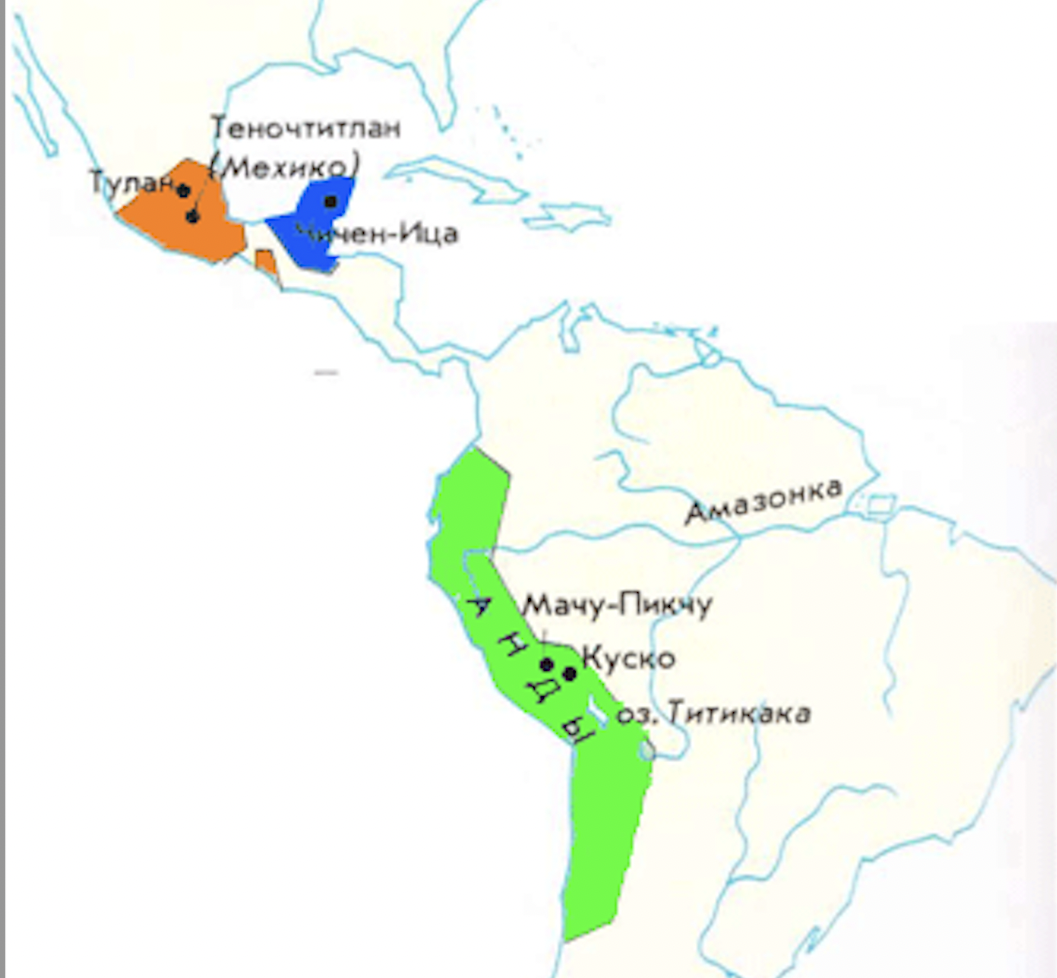
When we hear the word “Maya,” all sorts of things spring to mind—from a civilisation that vanished without a trace and a calendar full of predictions to, for some reason, Machu Picchu. Before our “sail-ival” in Mexico, this map helped us work out who was where:

Geography of the Maya, Aztecs and Incas
So, the area coloured blue is Maya.
Machu Picchu in the Chilean Andes—that’s the Incas.
Mexico on the Gulf of Mexico—that’s the Aztecs, Montezuma’s daughter and Cortés.
Timeline
The heyday of the Maya Empire—the 7th–10th centuries (according to other sources, AD 200–900) Aztecs—the 12th–16th centuries
Incas—the 14th–16th centuries
What they had in common: enormous pyramids, astronomy, sacrifices and a few other little things.
We’ll write about the Aztecs and Incas in detail if we ever get to them. But for now— Who deciphered Maya writing?
The Maya calendar and the end of the world supposedly predicted by the ancients are enormously popular. Attempts to decipher Maya writing had been made for a long time, but it only became possible in the 19th century, influenced by the successful decipherment of Egyptian writing.
Many people are still convinced that Maya writing has not been deciphered, or has only been partially deciphered. And, indeed, that is true.
For a long time, Maya writing was considered impossible to decipher. After fruitless searching, some scholars claimed that Maya writing had a purely symbolic meaning. A certain Eric Thompson, head of the most influential school of Maya studies, zealously insisted that Maya writing did not contain even a hint of phonetics (sound). With a wave of Eric Thompson’s hand, publications by scholars who held opposing views were consigned to the bottom drawer.
A brilliant Soviet scholar unlocked the Maya secret without leaving Leningrad
In the 1940s, the Soviet scholar
Yuri Knorozov began deciphering the mysterious symbols. It was he who managed to work a miracle—to decipher Maya writing without leaving post-war Russia. His decipherment was based on the medieval manuscript by Bishop Diego de Landa, “An Account of the Affairs of Yucatán.” Yuri Knorozov proved the phonetic nature of Maya writing and made a breakthrough in Maya studies. Knorozov’s decipherment allows around 90% of the texts found to date to be read. However, according to scholars, their complete decipherment is still a long way off, and the meaning of a quarter of the signs remains unknown.

The great scholar himself was able to visit Mexico for the first time only in 1992. And the stones of Palenque, Uxmal and Mérida remember his footsteps.
Mexico values the contribution of the brilliant Yuri Knorozov and plans to erect a monument to him next year (2018).
Yuri Knorozov
Where did the Maya go?
In our world, far removed from Mexico, it is generally believed that the civilisation vanished without a trace. And when you find yourself on a coast proudly named the “Riviera Maya,” doubts persistently begin to punch holes in your already rather flimsy (a C-minus at best) knowledge of the subject.
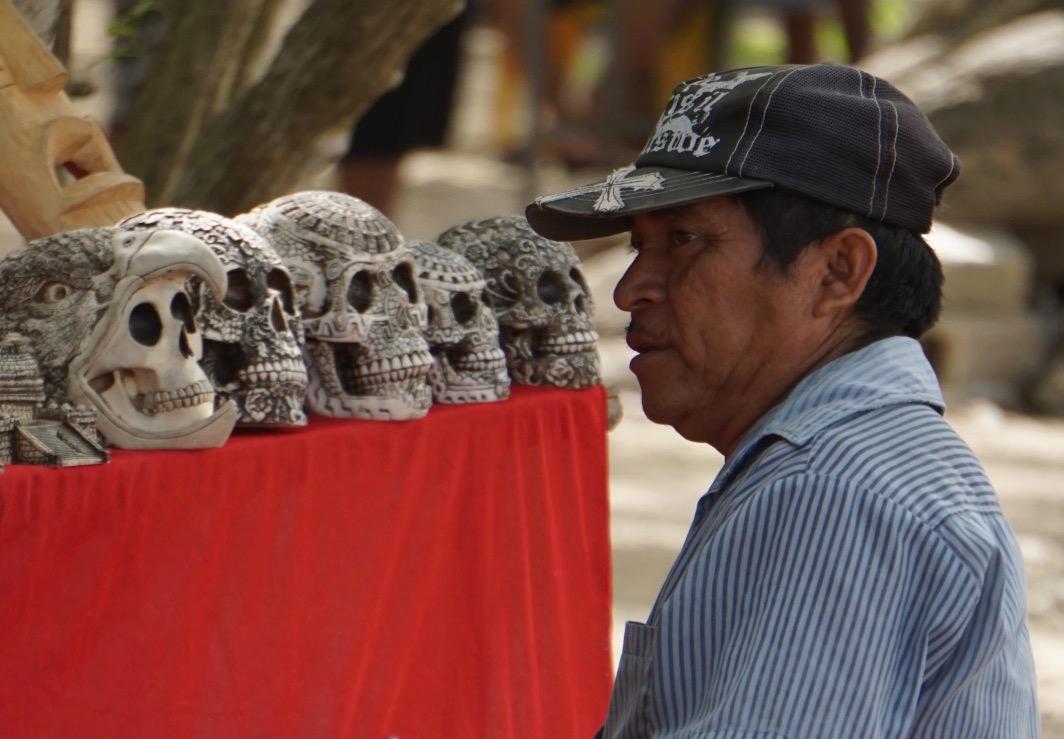
Having made landfall in Mexico where the Gulf of Mexico meets the Caribbean Sea, you discover that the locals not only look like those very same short, stocky Indigenous people of South and Central America, but also call themselves “Maya.”
And that’s when it clicks: the Maya people did not disappear. They are still alive and well today, without mixing much with the descendants of the conquistadors.
A modern representative of the Maya people sells souvenirs at Chichén Itzá
Stocky, slightly square figures, the shape of their eyes, broad cheekbones and short necks, their crafts and trades. The Maya make up around 60% of Guatemala’s population and 10% of Belize’s. Western Honduras and El Salvador are Maya too. Altogether there are more than 6 million of them. And they are the direct descendants of those very same great and ancient people with the calendar.
The Maya themselves would be very surprised to learn that they had disappeared. They would say: it was the ancient civilisation that declined, while here we are.
Science offers two explanations—attacks by villains and natural causes. It has been established that Yucatán experienced a drought precisely between 800 and 950, and everyone who did not die fled the cities en masse in search of water and food. Grand construction projects and great predictions came to an end—when there is nothing to eat, pyramids are the last thing on your mind.
Why are we writing about this here? We are setting off on a journey around Yucatán. To the very pyramids of that legendary people. To be continued!
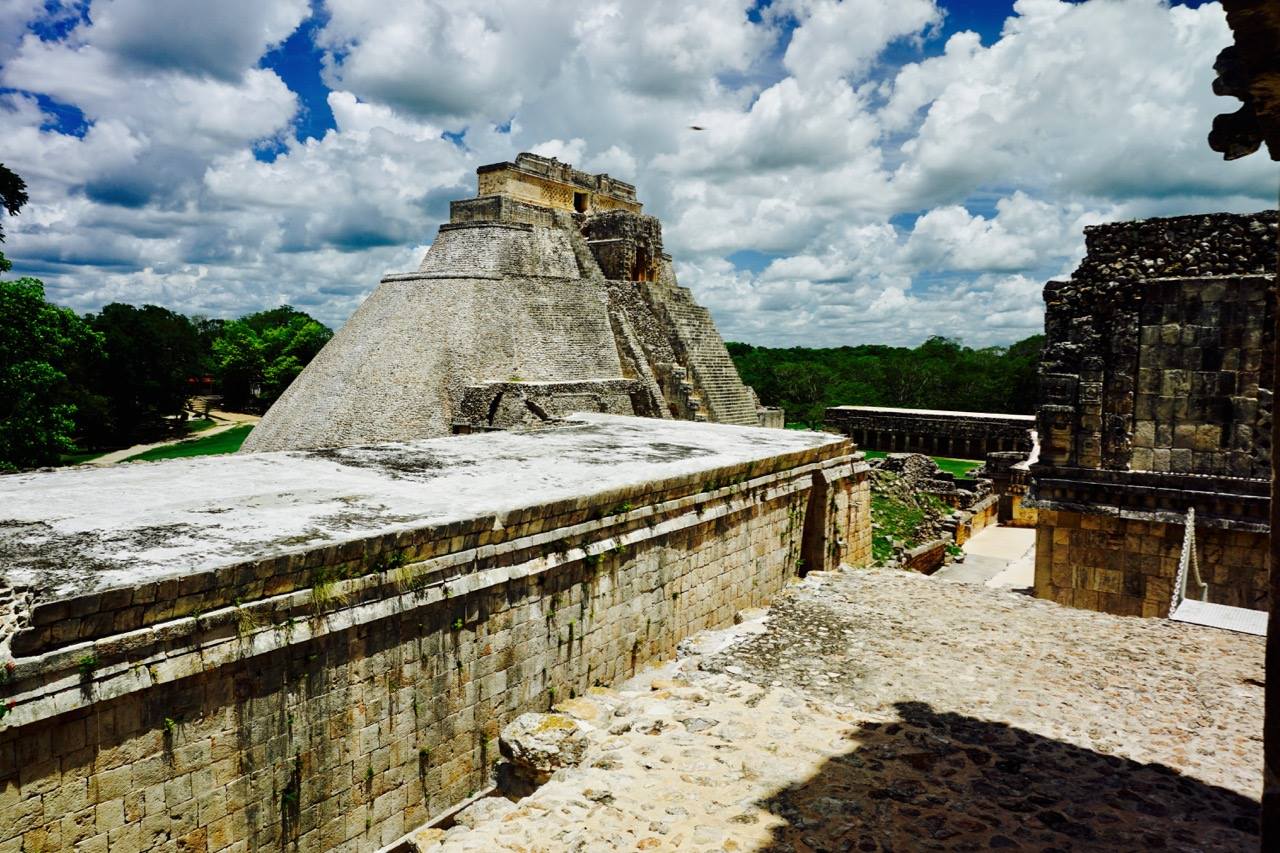
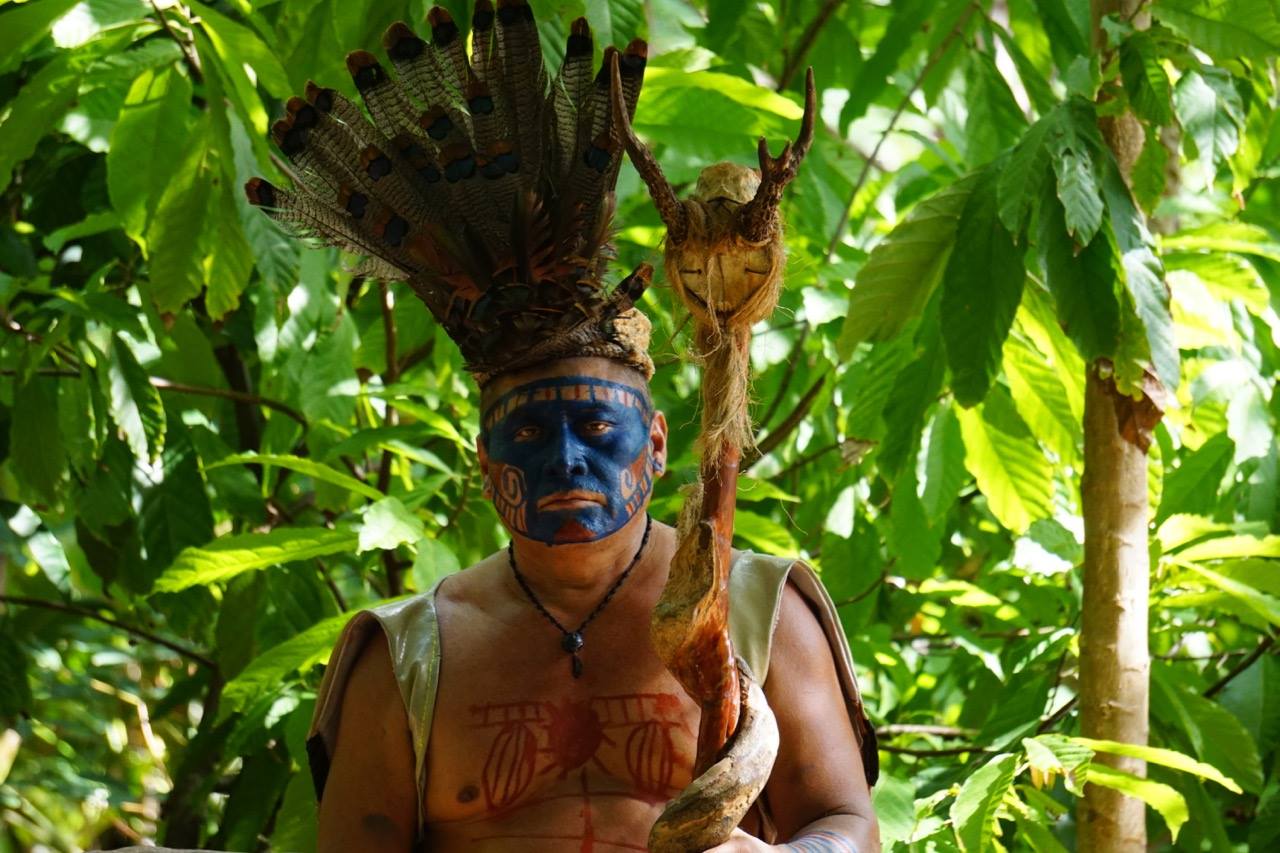
A Maya man (as Russians in Mexico call them). Uxmal, a centre for the study of Maya historical and cultural heritage