
From the Travely-Family archive · Other Entries
The Galley
An original publication from the former Travely-Family website. This English translation was preserved from the technical-site archive without editorial rewriting.
The Galley — an introductory mini-article. Does the crew’s diet depend on the weather at sea? The cook’s tools on a long passage. Plus links on organising meals aboard a yacht.
— Waiter, what is this?? I asked for seafood!
— Well, that’s why I brought you Navy-style pasta.
Food on a long voyage is not only a source of dietary fibre and vitamins, but also fuel for the crew’s fighting spirit. It should be tasty and varied. To prevent a hungry crew, after 10 solid days of pasta, from feeding the bosun to the fishes in the middle of the ocean, make sure you plan a varied menu at the provisions-purchasing stage.
The peculiarities of cooking far from places where supplies can be replenished
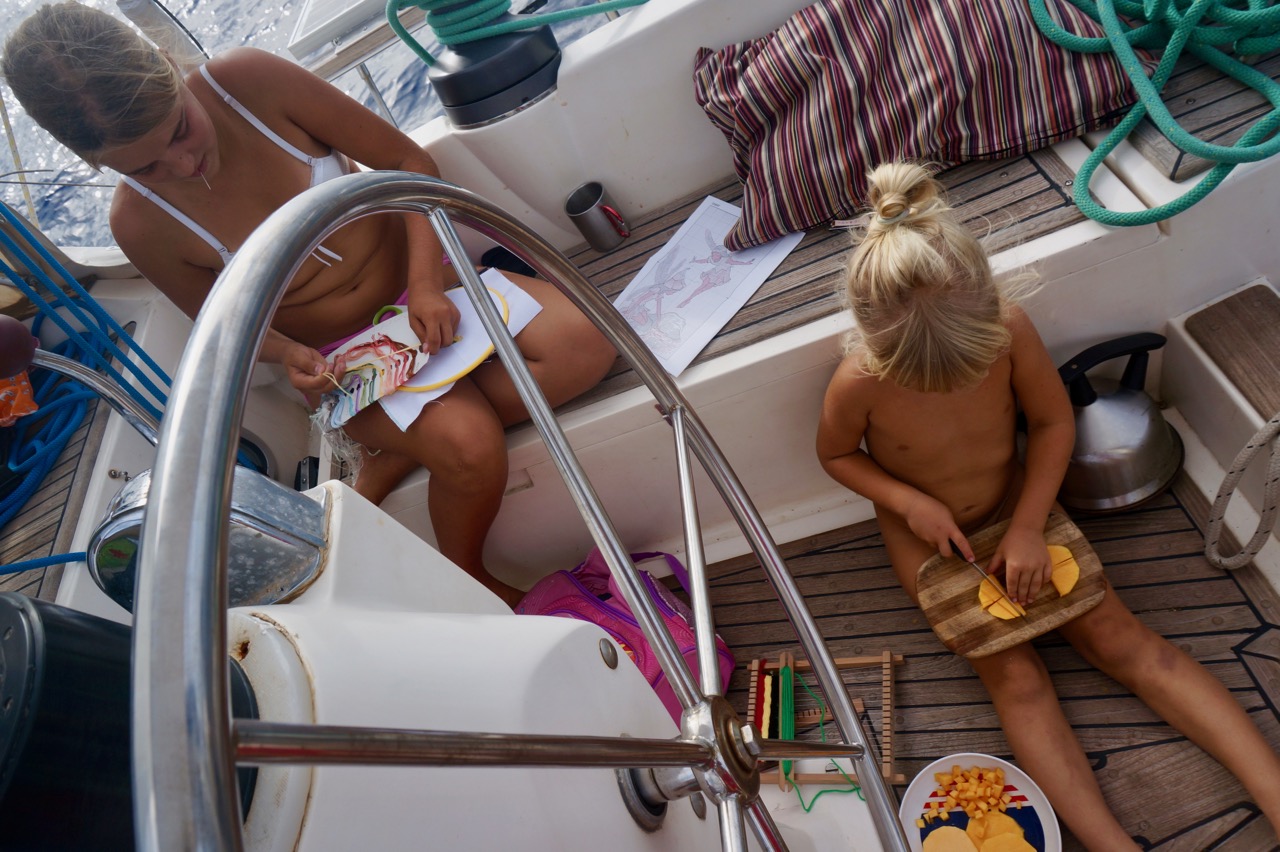
In the ocean (or on a road expedition through a desert or tundra), fresh food, fresh water, gas and electricity are unavailable. The guiding principle becomes conservation and mega-efficient use of resources.
Against this backdrop, the method for preparing familiar dishes changes slightly, and the following items become essential galley equipment:
Pressure cooker
Put all the ingredients in it at the same time (cook the meat and fish with the lid tightly closed, then switch it off, wait for the special button to drop, and add the remaining ingredients in the second stage. Once it starts hissing, switch it off and wait for the button to drop).
Thermos flasks
Two are better: 1 — for tea\boiling water, 2 — a wide-mouthed one for soups and main courses.
Solar oven — sheer luxury! (We haven’t acquired one yet; we’re still pondering the design)..
Menus and recipes for an ocean passage
All expedition meals fall into three categories:
“Just like at home”
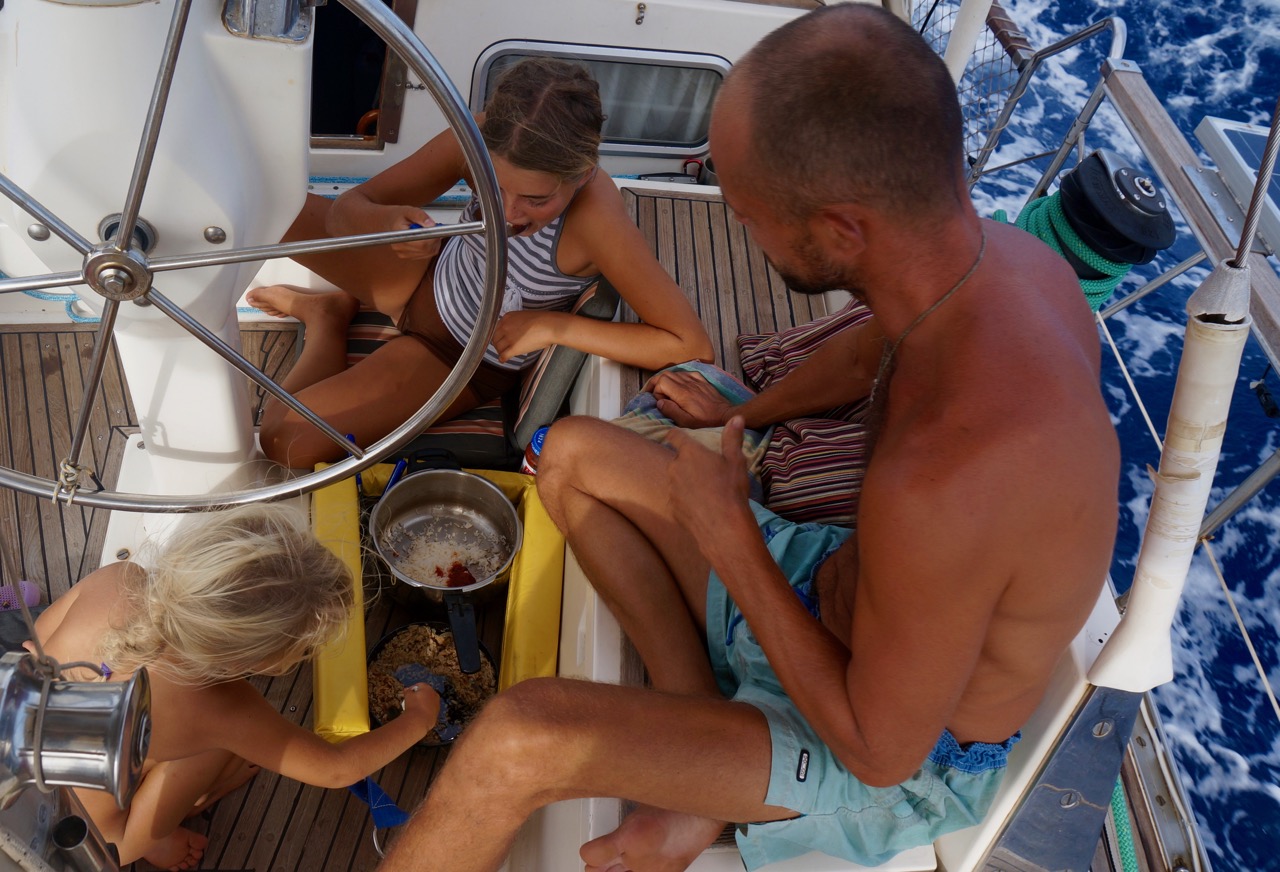
This option works in two cases: at the beginning of the passage, when fresh food is plentiful, and when the additional, second condition is met — calm water. In other words, the crockery isn’t flying about, boiling water isn’t pouring over the cook’s feet\head, and pasta doesn’t have to be scraped off the walls.
“The bachelor option”
Simple recipes for heavy rolling. If you do decide to cook, it will usually be jacket potatoes, pasta, rice, buckwheat, quinoa, lentils, and anything else that does not need constant stirring, seasoning, straining and so on. Sausages too.
“Hello, tinned food!”
This is the answer in storm conditions:
fruit, tinned food and ready meals — prepared food that only needs reheating, or can be made with boiling water: instant mashed potatoes, Doshirak instant noodles, buckwheat....
Porridges prepared the night before in a wide-mouthed thermos. Rice, semolina, buckwheat, cassava, cornmeal and rolled oats are put into the thermos together with salt, sugar and powdered milk, stirred, and covered with boiling water in the evening. In the morning, your miracle porridge is ready.
To complete the picture and delight your taste buds, you simply must read:
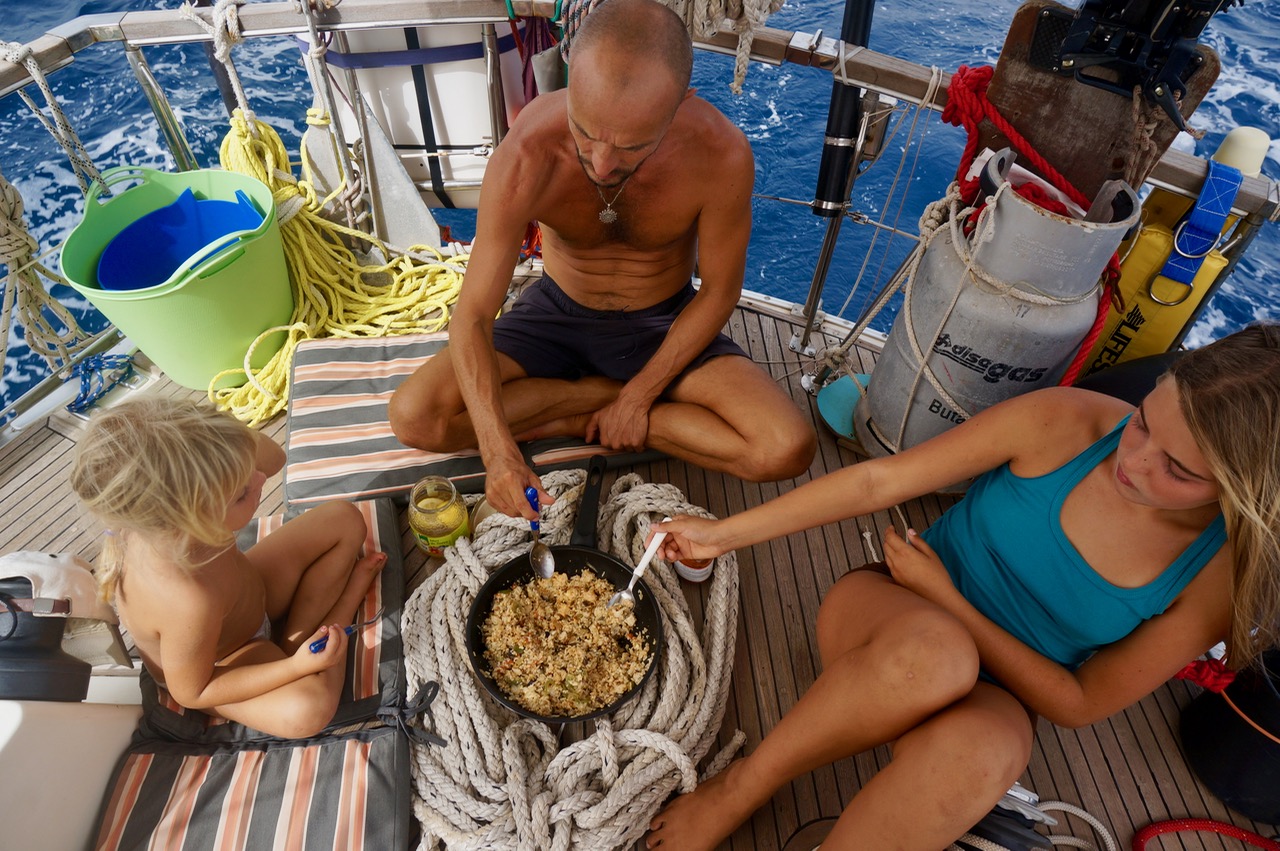
(How not to throw away food that is still edible but nobody wants to finish) Transatlantic Menu
(A diary of an ocean passage, seen from the galley) Transatlantic Provisions List and Shelf Lives
Coming soon!:
Recipes from Around the World, Spotted and Tried by Us
A Fabulous Yachting Menu — Quick and Economical. Tried-and-Tested Recipes Adapted for Storms