
From the Travely-Family archive · Pacific Ocean
How We Spent the Night in the Dinghy. The Climax
An original publication from the former Travely-Family website. This English translation was preserved from the technical-site archive without editorial rewriting.
How We Spent the Night in the Dinghy. The Climax. The beginning of this adventure is in the previous post.
Exposition 🙂...And we set off for home. We-e-ell... Set off how, exactly? The wind was blowing straight from the yacht. Sailing almost 8 kilometres in a straight line close-hauled in a dinghy is no problem. The problem is that the only thing worse than a strong headwind is a weak one. In other words, you can’t pick up enough speed in the direction you need; you tack back and forth, but regardless of which way the tacks take you, the wind and the opposing current sweep you towards the centre of the lagoon. Farther and farther from where we started, but no closer to the finish. After an hour, we’ve been carried a good mile offshore; after two, despite our counter-tacks, another half-mile. Get ready to spend the night, girls. Hopefully we’ll make it in about eight hours.
Whaaat??? — our unprepared minds, mine and the children’s, dismiss this information as fake news.
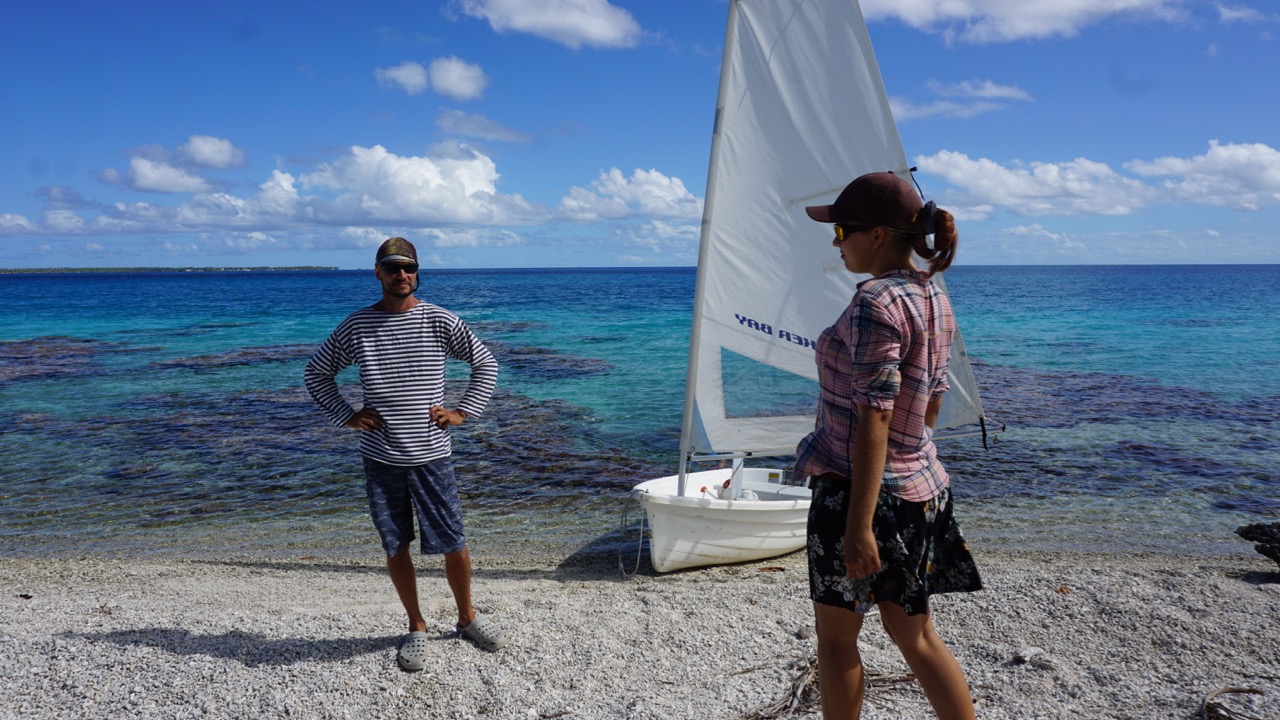
The captain is obviously exaggerating. Three hours, all right, four at a stretch. Hmm... We’ve already been going for two. And the palm trees onshore now look like green dandelions. That same reef with the huge rock on it is barely visible. I use it as a bearing: if it shifts in relation to the palms, that means we’re moving towards the yacht. If not, we’re standing still. Sadly, the reef is still dead ahead. And home is much farther from it than the airfield is..
The main thing is to get used to it and not be afraid 🙂
Slowly but surely, we’re making our way deeper into the lagoon. The sun will set in an hour. Its slanting rays lengthen the shadows, and our young sailor amuses herself by putting on a shadow-puppet show against the side of the dinghy. The other crew member and I are still grumbling. But when we look at where the airport is and where Lady Mary is, we resign ourselves to the inevitable.
A night in the dinghy—what’s the big deal?
Captain Bligh covered 3,618 nautical miles in what was practically a dinghy. Forty-seven days in the ocean. And here we are, grumbling about four, five—fine, eight hours in a dinghy. It’s probably because night is approaching. It gets dark at seven and light at half past five, and we’re used to living by the sun. Usually by nine in the evening the entire crew has surrendered to the embrace of Morpheus—or at least is dozing in bed with a book. And by six, our young sailor and I are already drinking our morning cocoa on deck.
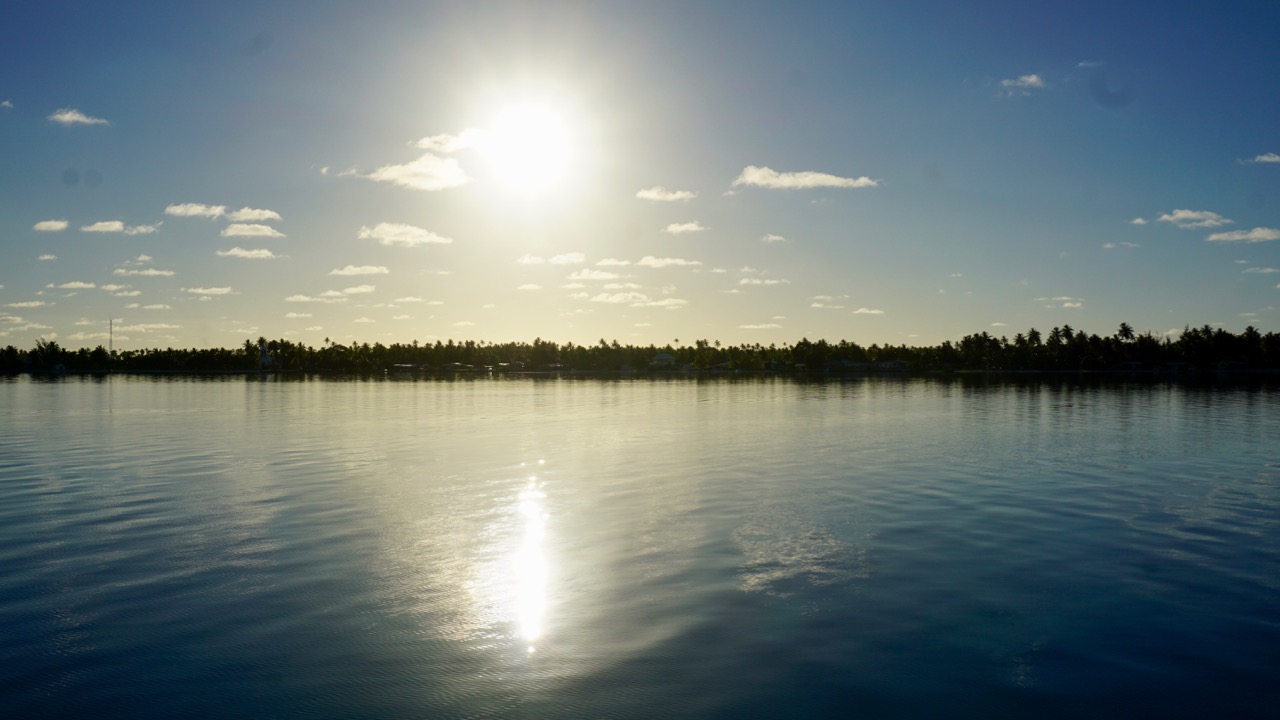
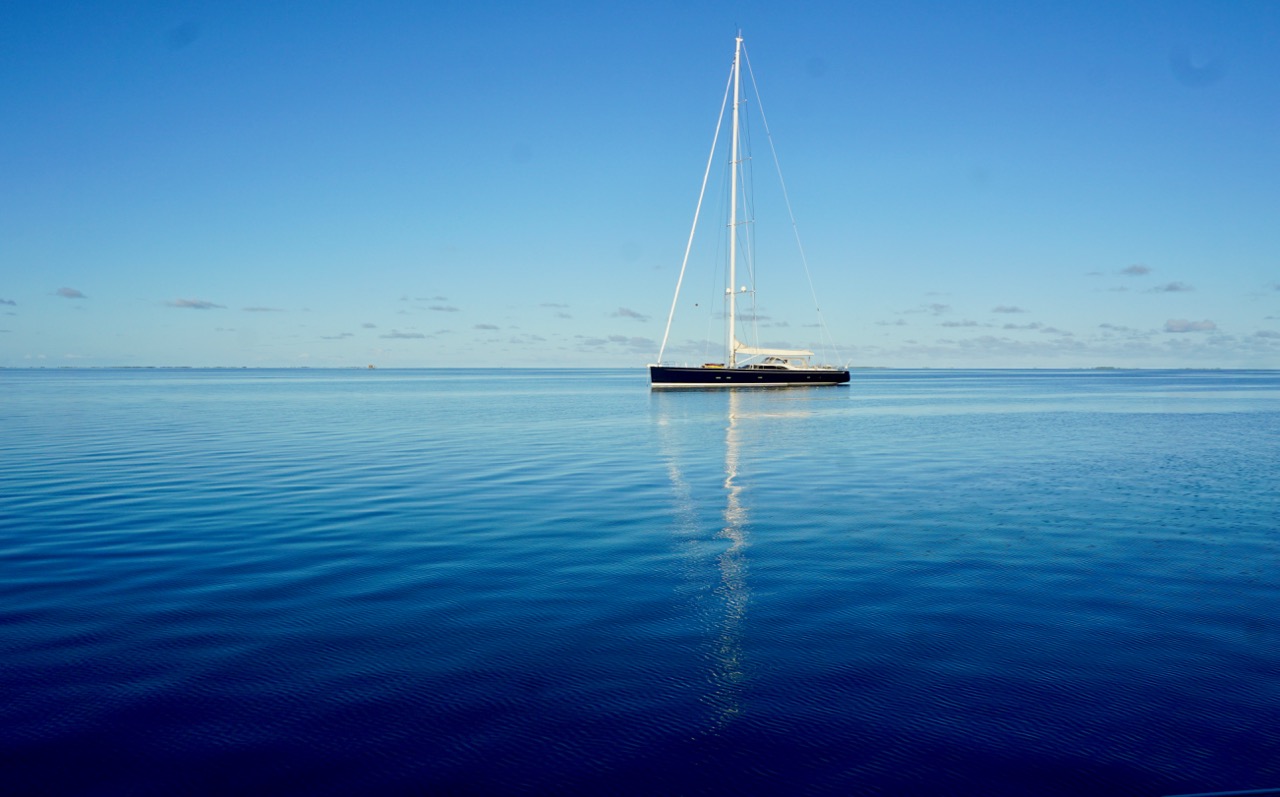
We try singing, then put on some accompaniment as well. Luckily, Nastya has about a hundred songs on her phone. And then... Oh!!! Rescue? — A huge yacht is approaching our anchorage. Its mast is at least three times taller than ours..
A glimmer of hope
Dad, do we have a VHF? — the other crew member asks hopefully.
What for?
Well, we could call that yacht on Channel 16 and ask for help. They could tow us in with their dinghy in five minutes.
But we don’t have a VHF. And no one will miss us. Some people are sailing around at sea; maybe that’s just what they always do—who can make sense of those Russians? That’s surely what the couple of people who noticed us in the middle of the lagoon are thinking, if they noticed us at all.
Our hope of rescue sinks along with the orange drops of sun. It’s getting cold. We sadly watch the last ray disappear and wrap ourselves in a thin scarf. Naturally, there’s almost no clothing aboard. The young sailor and I are wearing only the wet, salty T-shirts we swam in to keep from getting sunburnt. The captain thoughtfully offers us his neoprene socks, which he normally wears under his fins:). The children tuck their feet into rubber shoes; it’s warmer that way. Nastya has a skirt, a dry shirt, and even an undershirt. Andryukha is dry and warmly dressed in a striped sailor shirt and shorts. But while the side of the dinghy shelters us from the feeble gusts of wind, the captain sticks up at the stern like a flag, taking the full force of the meagre headwind on his sea-hardened chest.
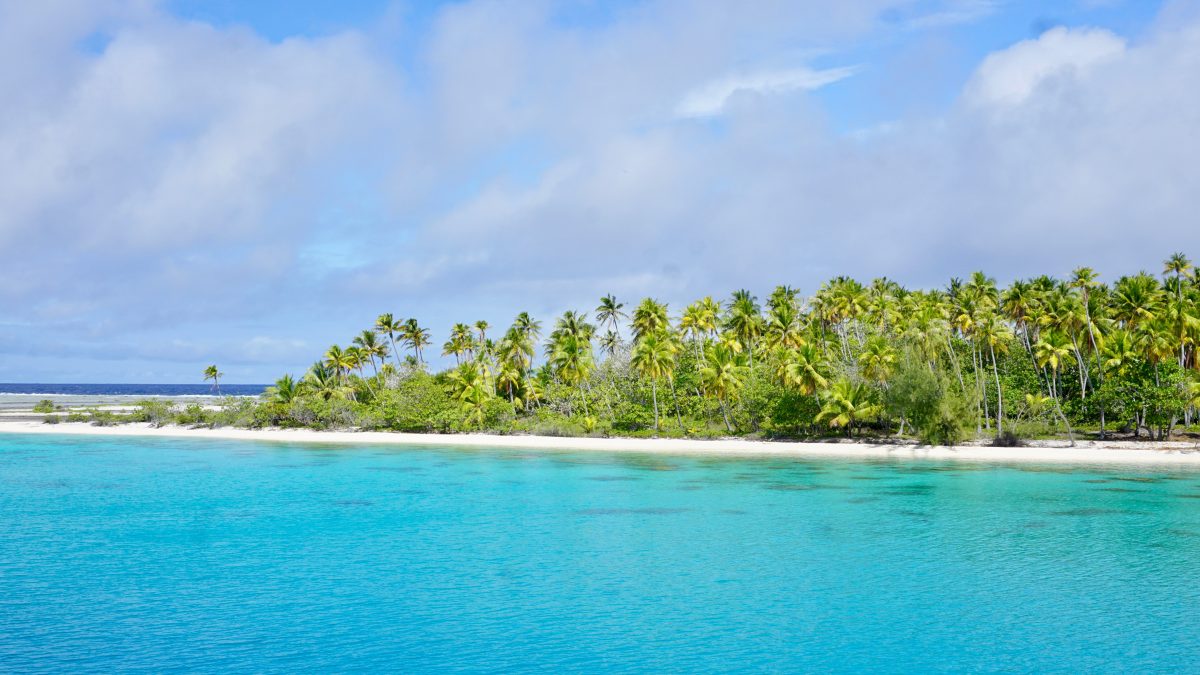
A photo of the atoll—to keep our spirits and optimism up 🙂
We discover a thin microfibre travel towel. It’s slightly damp and measures 50 by 80 centimetres, but Ladunya and I are delighted: now we have a blanket! A mattress wouldn’t go amiss, though. Or at least a pillow. A plastic bench under your head is, of course, slightly more comfortable than the side of the dinghy, but it isn’t conducive to sleep. Are we really talking about sleep already? We are. The sky turns from pink to dirty yellow, then grey, and finally black. If not for the stars, it would be pitch-dark. Seven in the evening.
Never mind, the Moon will rise at about nine; things will feel more cheerful then, Nastya promises.
Five hours after setting out
We’re bobbing about somewhere halfway there. The young sailor and I huddle together, sitting in a salty puddle at the bottom of the dinghy. After ciguatera, spending several hours there with my fear of water means that for another twenty-four hours it feels as though I spent all that time sitting on a lit stove burner:).
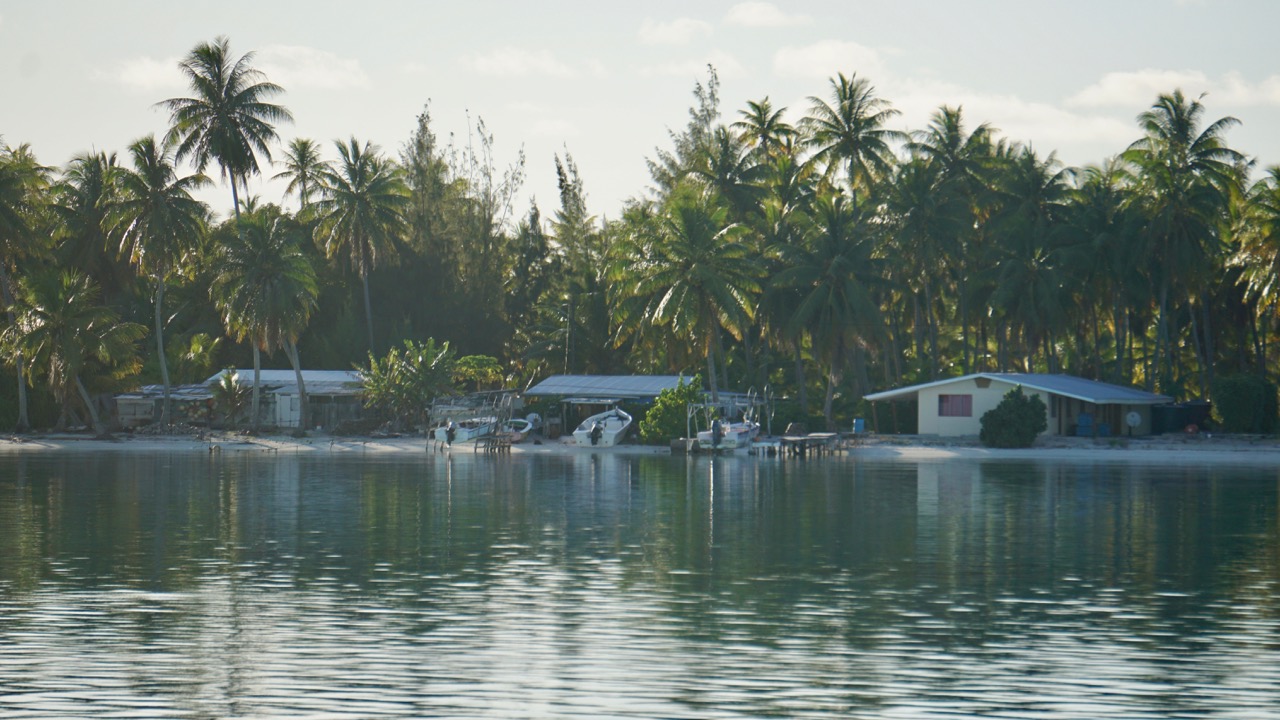
The shore is black, black. Ahead, the village lights are glimmering. They’ve been glimmering in exactly the same place for about three hours, without coming a bit closer. But they’re not getting farther away either, which is encouraging. The wind keeps weakening: it was blowing at about seven knots this morning, but now it’s around two. We try to conjure up at least three knots, but the weather laughs at us. I wonder in horror what will happen if it goes completely calm. Will the current carry us out into the ocean, or will we drift around the centre of the lagoon for a couple of days until the wind picks up? Though the centre is still a long, long way off:). We’re more likely to be washed back onto our shore—if it weren’t for the weak trade wind blowing away from it.
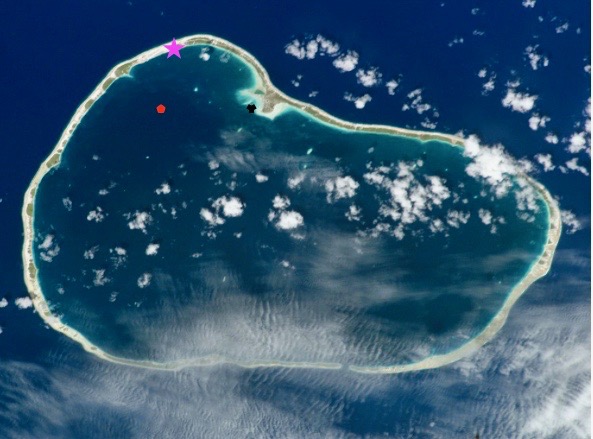
The red dot is us at the point farthest from shore. The lilac star is the airport, from which we made our merry way to the little black thing—our yacht
This NASA map, rotated 90 degrees, shows that we really haven’t travelled all that far. But first, fear makes everything look worse than it is:). And second, the lagoon is still 16 miles (about 30 km) wide and 20 miles (37 km) long.
As a last resort, we do have oars. Seventy centimetres long and not made for oarlocks. Nastya and I suggest rowing. The captain asks with devastating calm how many hours we think we’ll last.
You’ll only interfere with what little wind there is, Andryukha declares authoritatively.
It’s getting harder and harder for him to hold any course other than towards the opposite shore. He meticulously catches every gust to make some headway. The opposing current sometimes slackens where the coral gets in its way, then strengthens again, robbing us of half a knot and sweeping us farther offshore. All right, if it goes completely calm, we’ll take to the oars.
On water in all its forms
We’re almost out of drinking water. We’re saving the last glass, taking one sip at a time. Since getting ciguatera, I drink at least five litres a day. What good is one sip to me? my head says, and begins to ache.
It was already like this in the morning
One more wrinkle: getting rid of the body’s used water. If you’re a bloke, this problem seems contrived. But what are the girls supposed to do? Especially if there’s a man in the boat? And at night, when you’ve spent the last three hours shivering with cold? It’s very simple for girls—you have to hang over the side, waist-deep in the water. And stay there, trying to ignore the Loch Ness monsters and assorted sharks lurking in the night ocean. Then climb back out, teeth chattering, somehow dry off, pull your half-dry knickers or shorts back on, and cover yourself with a damp towel again.
Mum, I want to go home, the young sailor whispers.
So do I, sweetheart, very much. It’s all right, we’ll be there soon.
Lights from a supply ship appear near the pass; they told us about it in the local shop. We watch it anchor off the village and assume it will leave in the morning..
Ten in the evening
I try to doze off sitting in the puddle beside the bench. The young sailor slips into a fitful sleep. At eleven, we begin to hear dogs barking and the metallic racket of the ship. I raise my head and see that the ferry-like freighter, which had carried all sorts of useful things from the ship to the village, is heading back.
Andryukha, let’s switch on the torch in case they run into us!
Yeah, right. Look where we are and where they are. — The apparent nearness of the anchorage is deceptive.
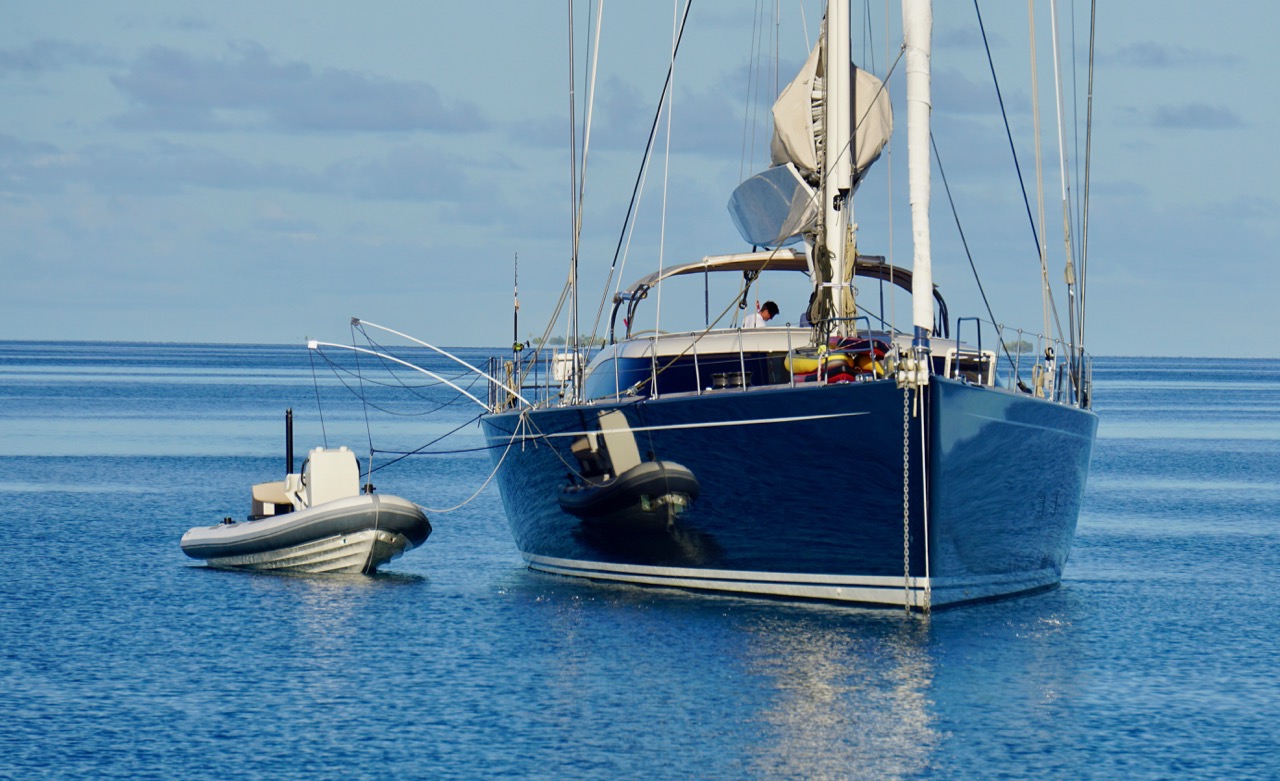
We still have a long, long way to crawl. The anchor chain grinds, and the supply ship hurries to leave the atoll on the night ebb tide. Now the superyacht with the towering mast is clearly visible, and behind it our anchor light winks forlornly at us from Lady Mary.
The superyacht the next morning
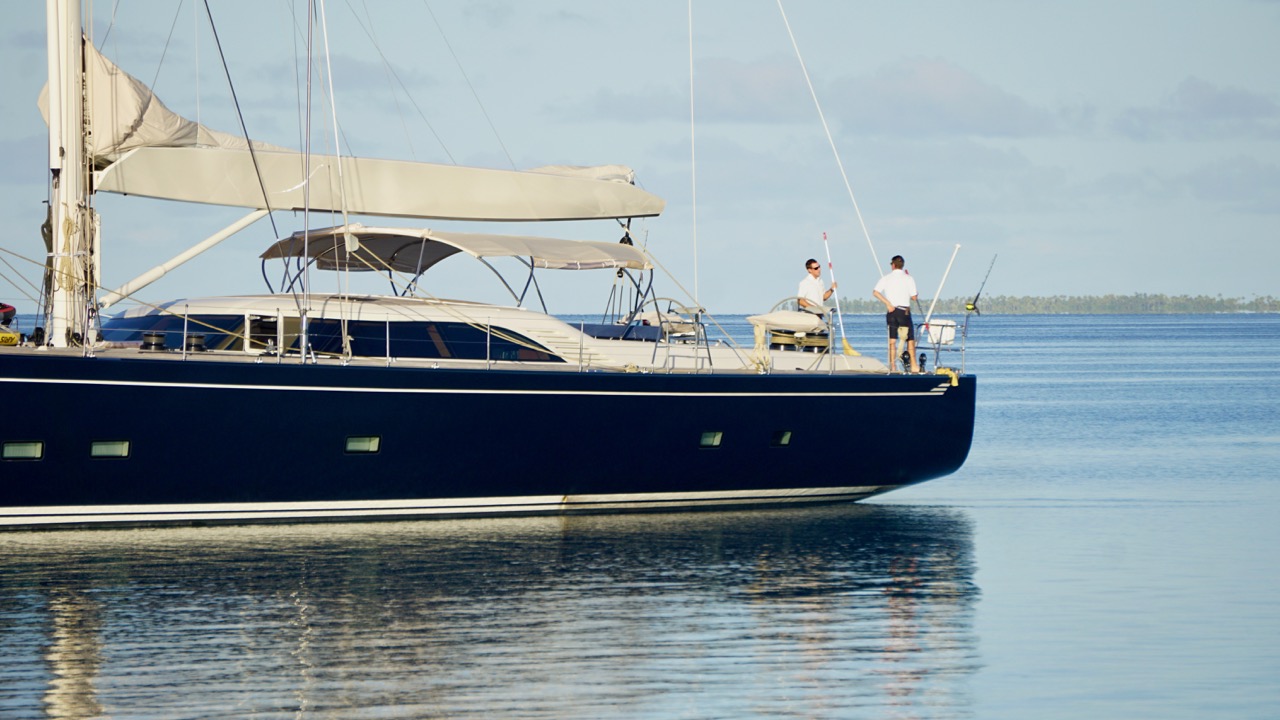
The wind is tending towards zero, and we zigzag opposite the superyacht, thinking, “If only we had a VHF, we could have met them—the millionaires. We’d have been drinking tea ages ago.”
Midnight
The yacht is three hundred metres away; it will take us about an hour and a half to cover them. No way! Nastya and I grab the oars and row desperately. Oh, gods! There she is, our darling! Snap hook, rope, bow. Ladunka almost wakes up and, whimpering, clambers aboard. After ten hours at the helm, the captain is slightly drunk with exhaustion. 00:17. We made it! And most of the night is still ahead of us! The young sailor and I run to wash the salt off her before she falls asleep on her feet. Once washed, Lada collapses silently into bed.
And in the morning she wakes up with a fever. Nastya kisses the deck and spends the whole night embracing her wonderful soft bed. By lunchtime the next day, I take Lada’s illness upon myself and am violently ill until evening. The young sailor and I got overheated, then chilled, and ate too much coconut while whiling away the passage.
And there she is again )
An hour after we returned home, it became completely calm. As I fall asleep, I wonder: could I have done what Captain Bligh did? Three and a half thousand miles under a scorching sun, through storms? Forty-seven days?..
To learn about Captain Bligh and how that adventure befell him, look for our reports from Pitcairn, the island of the mutinous Bounty. I’m off to kiss the deck. May everyone have a cosy home!
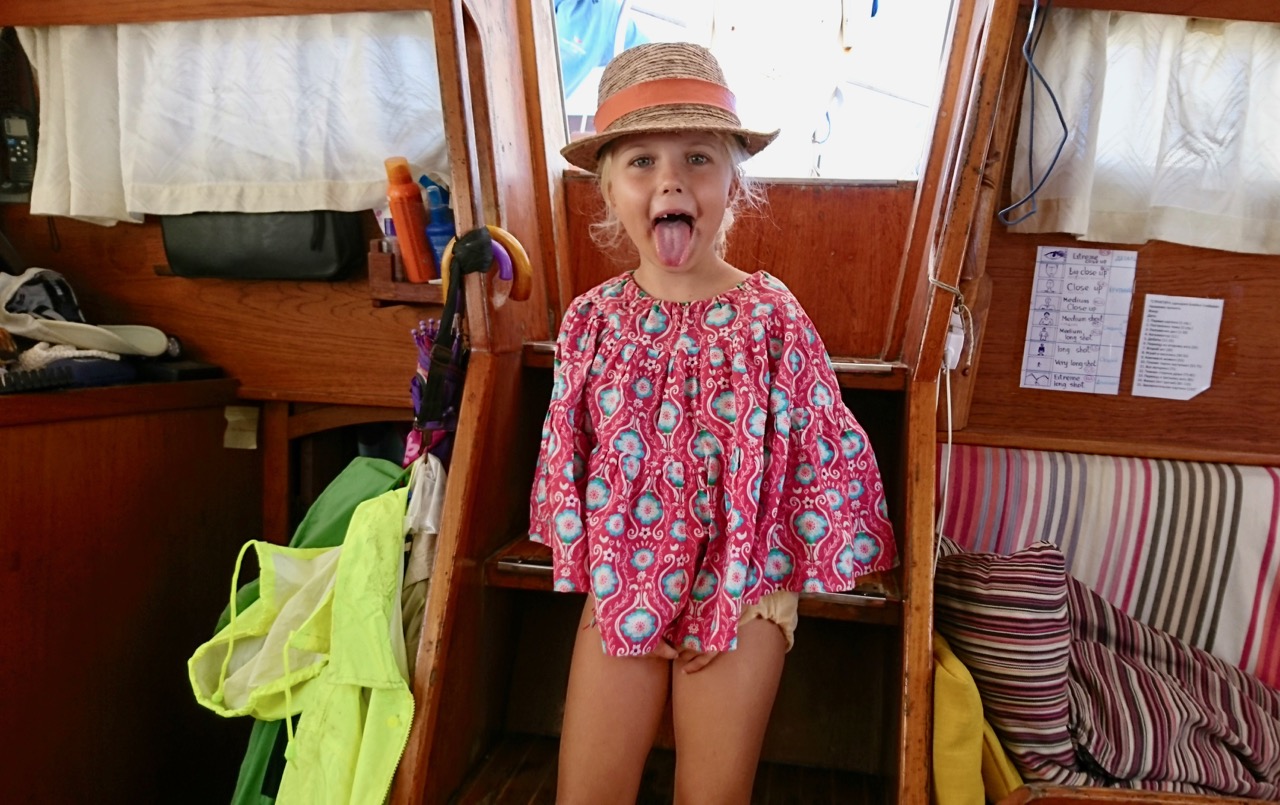
I don’t know why the young sailor stuck out her tongue. It wasn’t aimed at you 🙂