
From the Travely-Family archive · Other Entries
How We Woke Up on a Reef
An original publication from the former Travely-Family website. This English translation was preserved from the technical-site archive without editorial rewriting.
How We Woke Up on a Reef
If Lady Mary’s daily activity is measured by the crew members who are awake, ours is a yacht that hardly ever sleeps: the first mate’s internal alarm goes off at half past five in the morning, while the captain turns in around midnight. That’s if there’s no training course to work on or video editing to do; if there is, he may go to bed at dawn. The young sailor’s sleepy little face materialises closer to seven in the morning; the crew member snoozes somewhat longer. As for the cap, it depends.
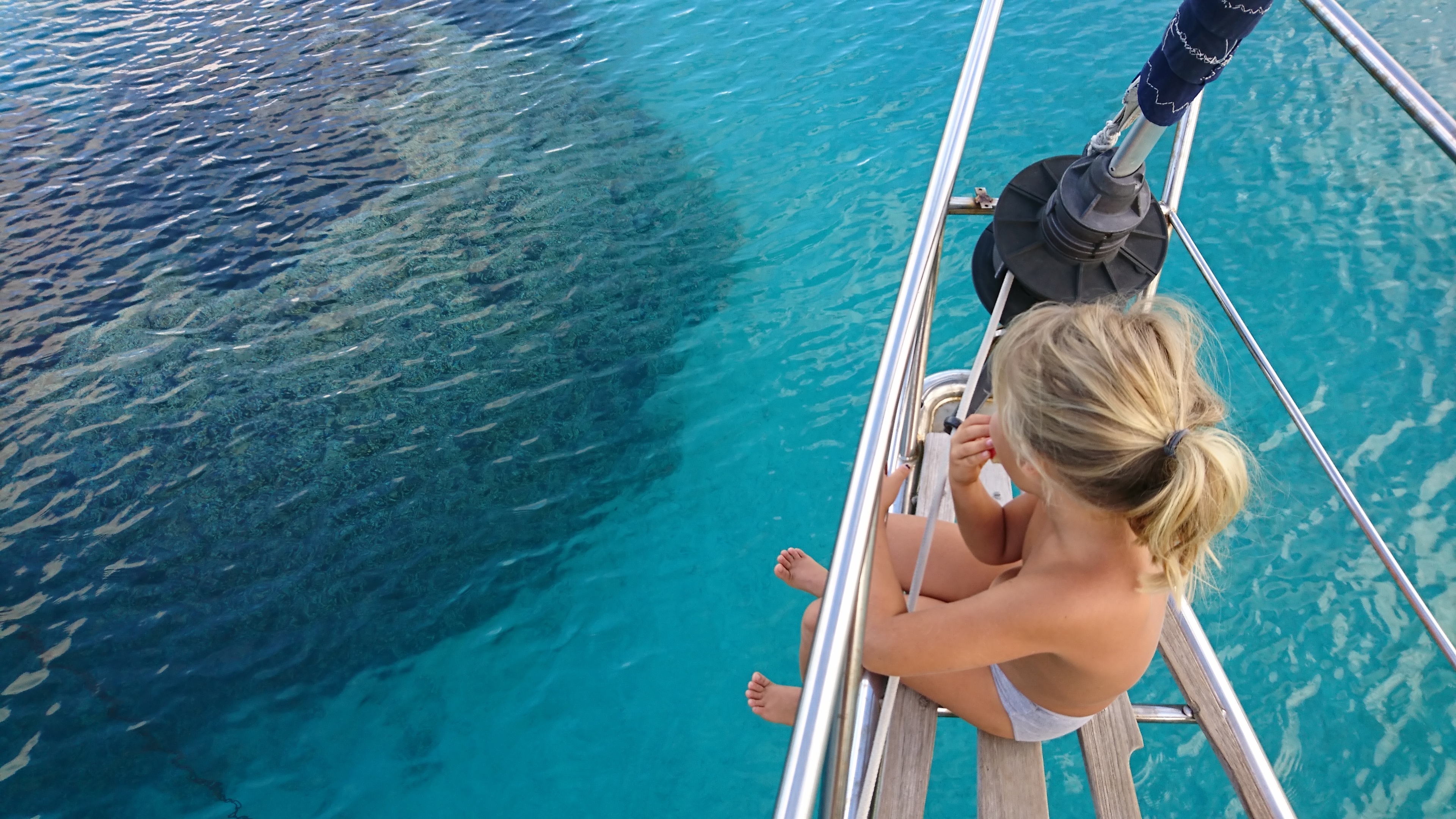
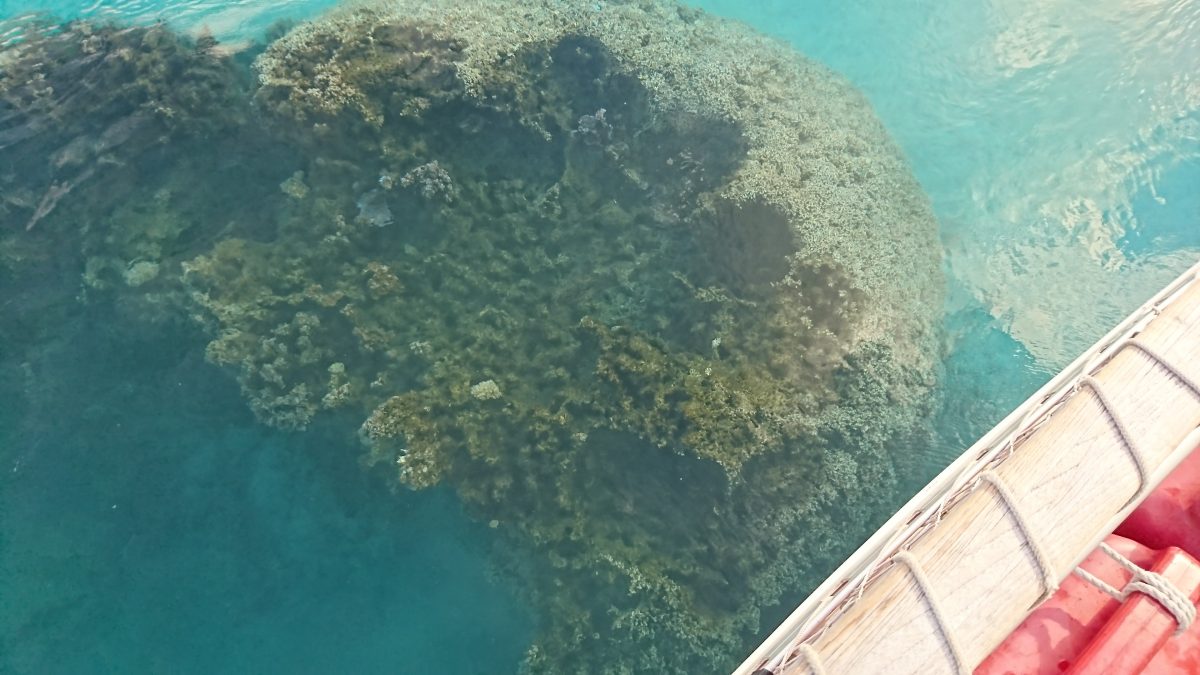
The second morning in the lagoon of Huahine promised to be just as quiet as the first. But something went wrong. The anchor chain, buoyed along its length, suddenly began to scrape. This system is supposed to stop it wrapping around a coral head. The young sailor and I pricked up our ears, then went back to what we were doing. A minute later, the scraping turned into a small thump, and I dashed out on deck. Half bow-on, half broadside, Lady Mary was rubbing, in the Polynesian fashion, against the noses of bright blue fish, while her keel rubbed against a coral outcrop.
Someone had already performed the same manoeuvre before us, so no new coral was harmed; only the old skeleton whispered softly: get out of here, guys, get out. Damn, the wind had shifted to the left and swung us in a direction we hadn’t faced at all over the previous two days.
“Andryukha, all hands!” I yelled. “We’re on the reef! Lada, close the port-side windows!” Otherwise, the engine exhaust would fill the aft cabin.
The cap came calmly out on deck, looked around and started the engine. “Get the windlass ready.” “Are we going to re-anchor?” “Yes.” “Well, then let’s just leave. We’re weighing anchor today anyway.” My suggestion sounded unexpected. We had wanted to go diving again in the morning and take a fresh look at the weather forecast. Andryukha furrowed his brow and agreed. We weighed anchor, retrieving the three buoys attached at ten-metre intervals. The chain obediently settled into the anchor locker, and we backed away into the fairway.
Huahine and the Visa
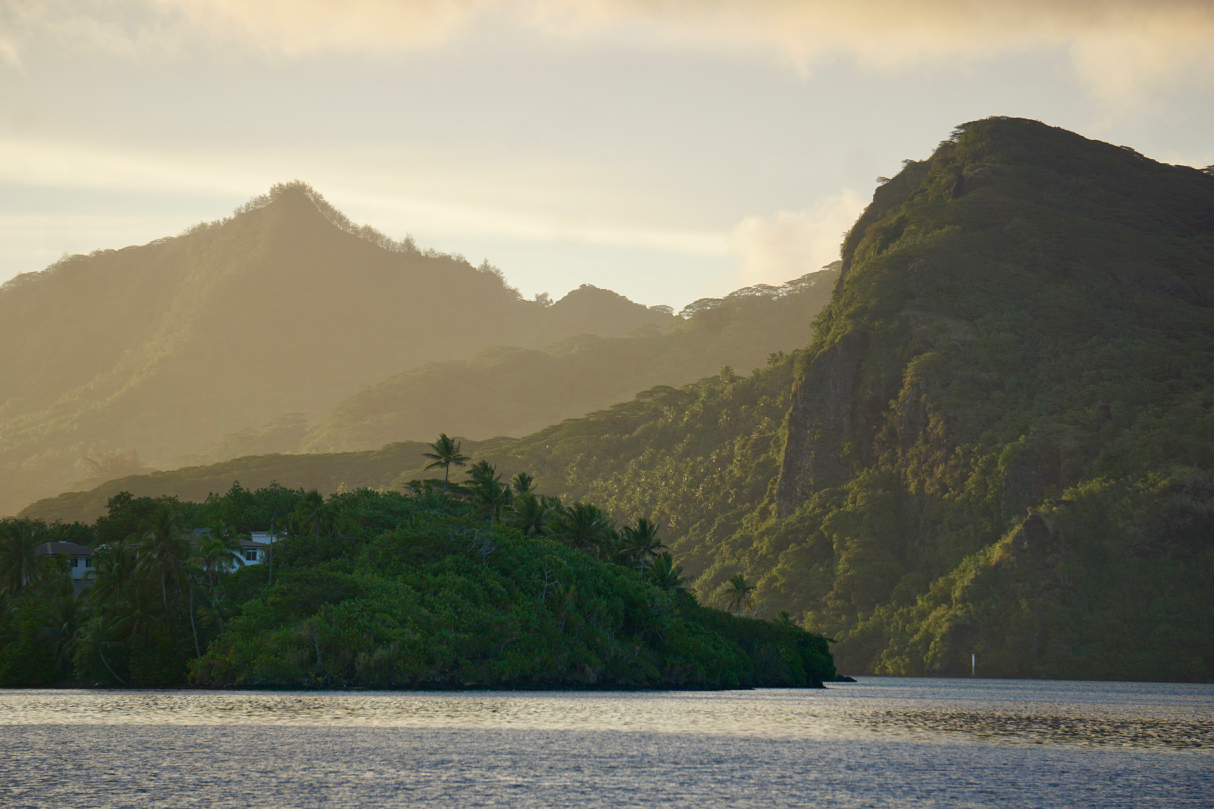
More precisely, two islands—Huahine Nui and Huahine Iti—surrounded by a coral atoll with numerous small motus. The little islands watched us make our way towards the pass—the channel between the reefs leading to the open sea—with regret. More precisely, the islands couldn’t care less. I was the one with regrets. Can you really say you’ve been somewhere if you’ve spent only a couple of days there? You’ve ticked a box, not truly been there. You’ve merely glimpsed what it looks like from the outside: mountains in the mist, sleepy hamlets.
We had to move on for two reasons: we were already there illegally, our three-month French Polynesian visa had expired, and we had officially cleared out on 10 November. It helped that the said visa was stamped a month and a half after we had actually arrived in overseas France. All told, including the coming week, we would spend a full five months in this island paradise. What can you get to know in five months? Hardly anything. It would be nice to live here for a couple of years. Maybe learn French and come back for a second round on a long-stay visa?
The engine was still acting up and didn’t spit out water straight away. It looked as though the yacht’s resident house spirit had moved his belongings somewhere into the seawater intake hose. And had no intention of leaving of his own accord. The captain opened the throttle, then again; reverse, forward. Our Kuzya’s belongings shot out through the pipe, and the offended house spirit retreated into a locker.
On to Raiatea!
The 25 miles to neighbouring Raiatea took us most of the day. Strangely enough, the trade winds here blow almost right on the nose. At least on this point of sail there was plenty of breeze blowing over us, although the boat’s speed of 2.5 knots wasn’t much to celebrate. We needed to enter the pass between the reefs in daylight. At first we hadn’t planned to call at Raiatea at all. But first, our friends from Easter Island were leaving their Manaya there for cyclone season, and we ought to have tea with them before parting. And second, my inquisitive mind had dredged up from its depths the fact that Raiatea had once been home to the most important religious centre in all Polynesia, from New Zealand to Hawaii and Easter Island—in other words, a place of power, stones sanctified by the prayers of cannibals.
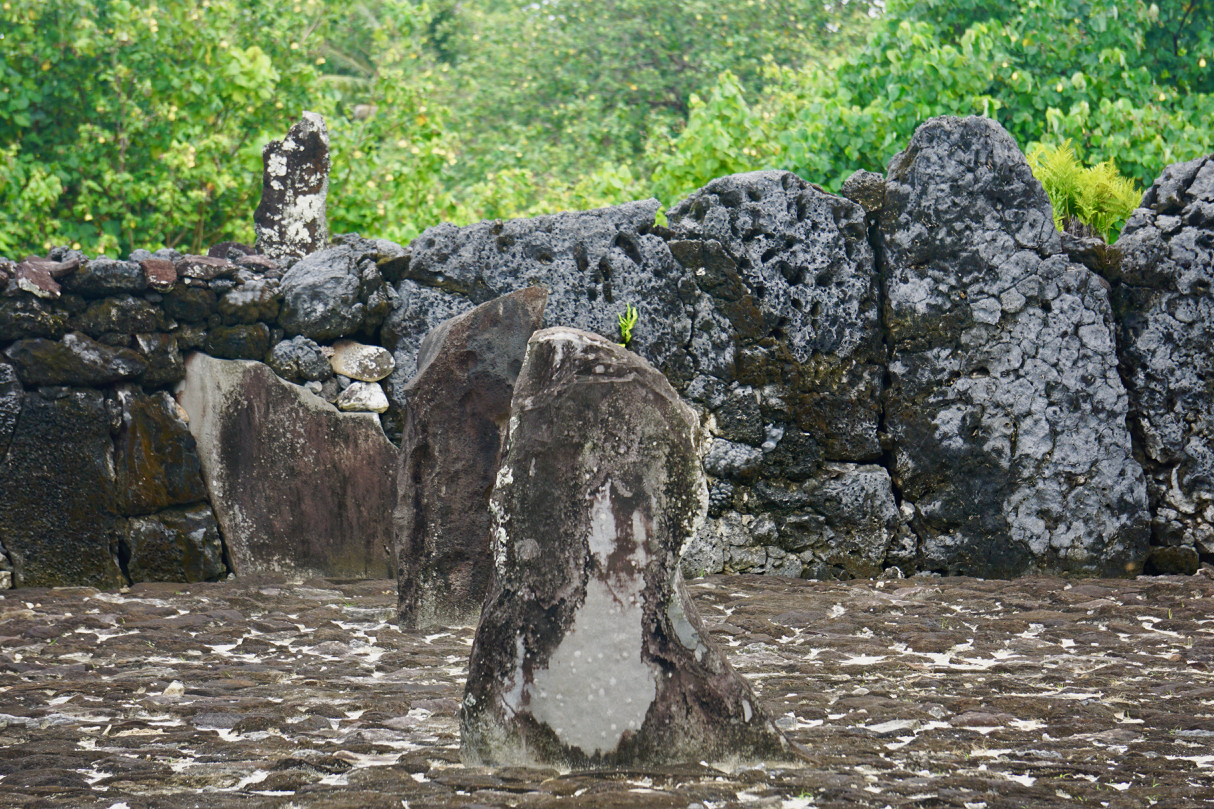
And in former times the island of Raiatea was called Havaiki—almost Hawaii. In short, after an hour of unhurried conversation, the captain realised that we had to go there, to the marae platforms, although he had initially wanted to head for the southern pass.
And how did ships sail around here in the old days, without charts or weather forecasts? Wherever you turn, there’s a reef. And what if you suddenly approach an island at night? I sing the praises of all the Cooks and La Pérouses. And what can one say of the Polynesians themselves? They sailed thousands of miles by the stars and waves in their pirogues, with children and chickens. Compared with them, we’re all children here.
The Sacred Site of the Ancients—No Dice
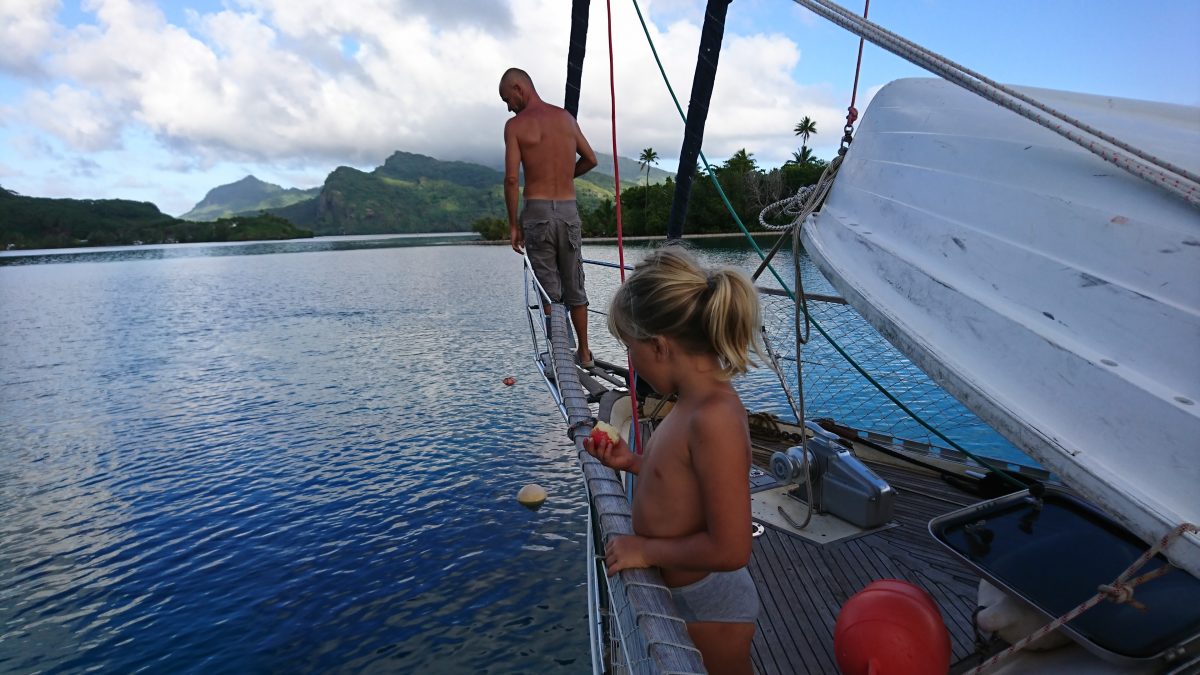
The chief sanctuary of all Polynesia was called Taputapuatea, and it stands right on the headland between two bays. It wasn’t entirely clear where to anchor. The sailing directions mentioned only one place in passing. Supposedly, it was a wonderful anchorage, except that the depth was 30 metres. Andryukha wasn’t eager to drop anchor in water as deep as a ten-storey building is tall. We normally pay out four to five times as much chain as the depth. At 30 metres, we could manage only three to four times. The cautious cap isn’t very fond of such ratios.
We found a little patch between the coral where it was deep, but not too deep. We anchored and threw together some dinner: Nastya conjured up potato patties, I mixed an entire bowl of guacamole, and the captain carried out a final inspection swim all the way around our swinging circle. In one spot he found the coral fairly close, but we were unlikely to swing that way. We took showers and lounged around with a view of unearthly beauty.
But the wind did shift to the other side after all. Until darkness fell, we shortened the chain, pulled ourselves off with the engine, and I stuck my head under the stern and shrieked:
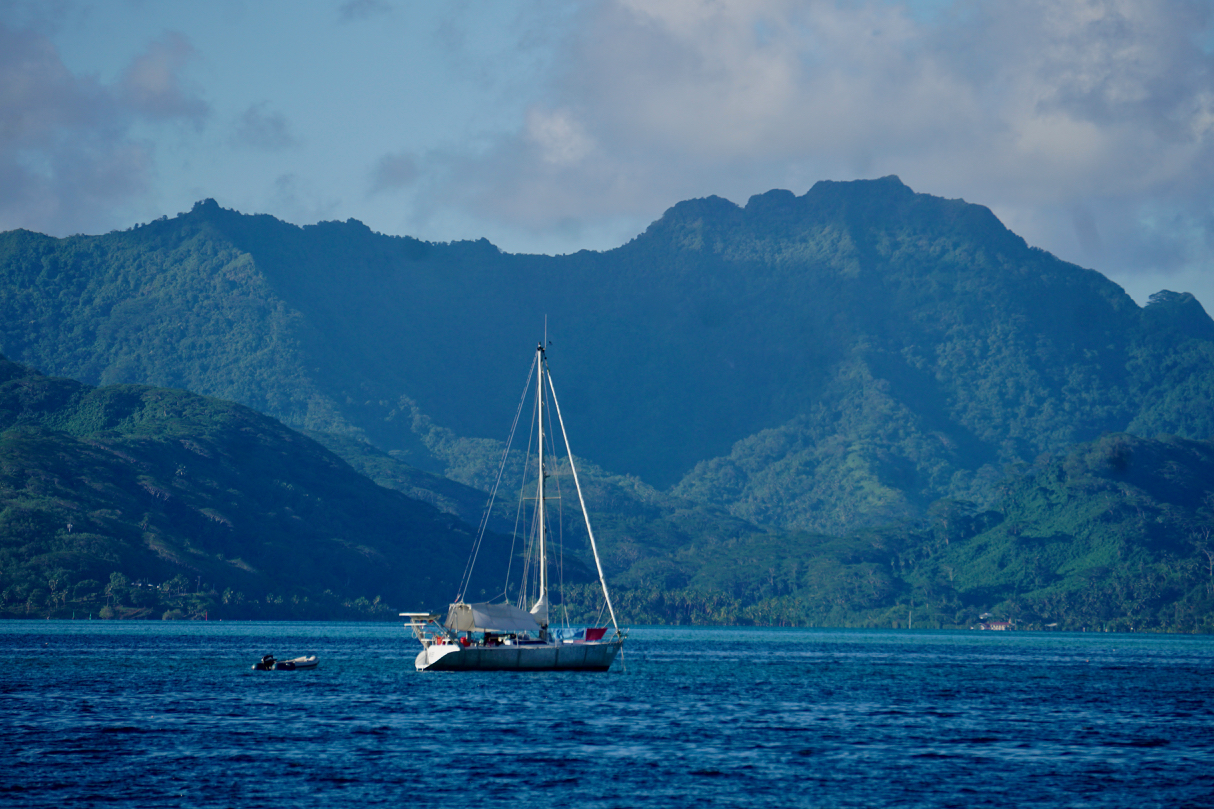
“Whoa, whoa, whoa!”—at which the cap put the engine into neutral.
We were checking whether we would reach the coral head. We ended up exactly 20 centimetres from its edge. And that was how we stayed throughout the following day. In the morning, the cap announced that our anchorage wasn’t secure and we probably wouldn’t be going ashore. In response, nature burst into tears. Torrential rain, the shores invisible—the trip to the sacred sites was a washout either way. But we did watch six hours of training videos, the young sailor memorised a load of poems, while the crew member sorted out her lockers and began playing the guitar almost like a god. Now, first thing this morning, we’ll establish contact with outer space and work out where to go next: to the marae, to Manaya, or perhaps straight to Bora Bora. You can already see it, right there behind this island.