
From the Travely-Family archive · Atlantic
The Flora and Fauna of The Gambia. People, Animals and Fallen Baobabs
An original publication from the former Travely-Family website. This English translation was preserved from the technical-site archive without editorial rewriting.
The Flora and Fauna of The Gambia
I’ll have to add an epigraph:). The internet can’t cope, so the post is being uploaded backwards, in little pieces, with no chance to edit it. And the thorns of the kapok tree mentioned in the second part, as well as the fallen baobab and the magic tunnel, didn’t end up where they were supposed to.... So they can only go here, in the epigraph ))...
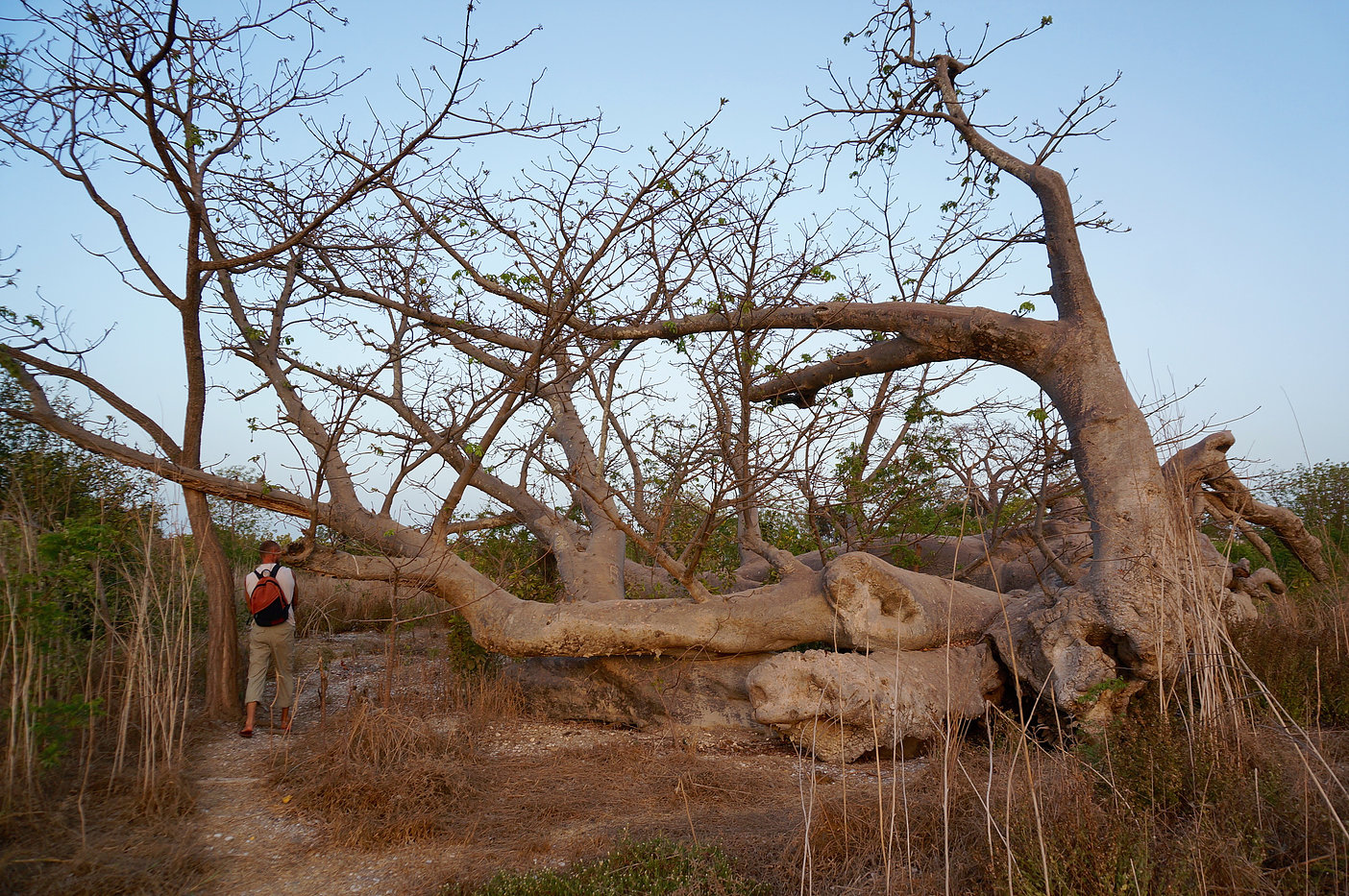
A fallen baobab
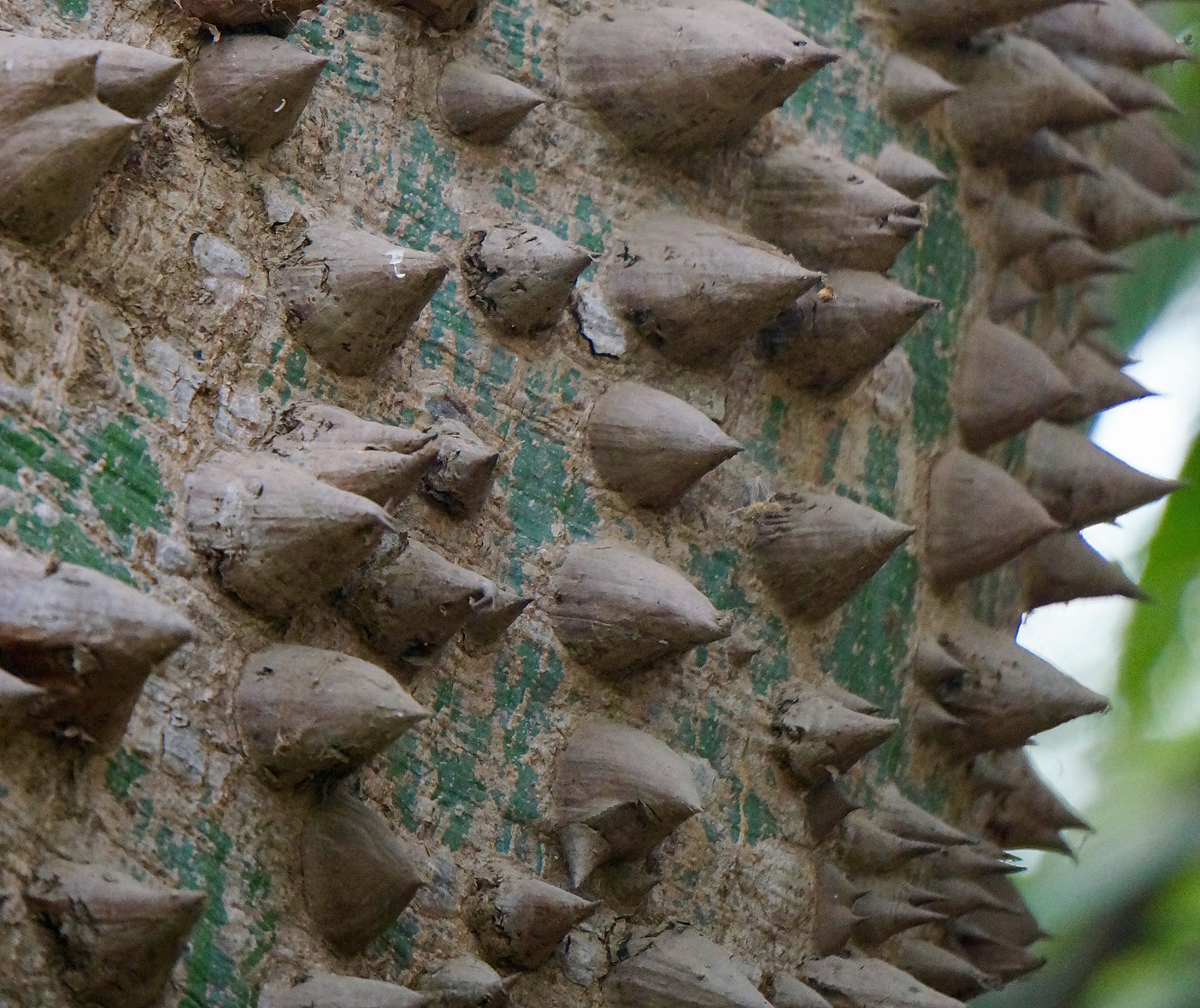
The trunk of a young kapok tree
Heat and Sleep on a Summer Night
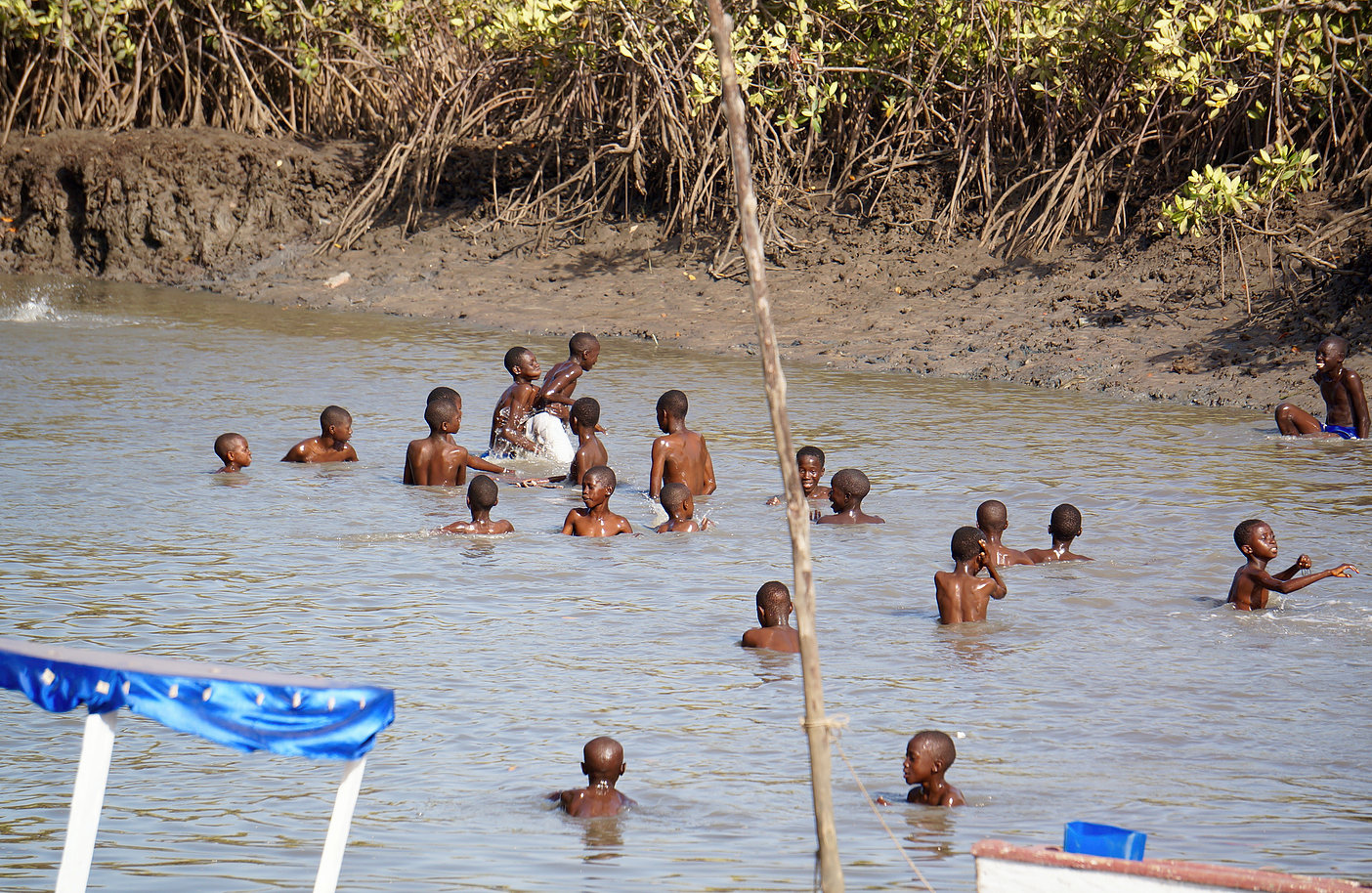
As May approaches, The Gambia begins to melt in the heat, and with only our noses sticking out of the water, we look like lazy hippos. The young sailors, meanwhile, are more like cheerfully diving flying fish.
At low tide, leaves, pollen from flowering mangroves and a little nasty muck drift out of the depths of the creek (a narrow inlet) and through the anchorage off Lamin Lodge.
At this hour, the children and I sail away on Jibin’s surfboard to swim in another channel.
Fortunately, the hot nights have forced the crew to sleep on the coachroof, where even keeping watch at night turns into a magical dream from the Thousand and One Nights. The stars gaze down from the sky and drown in the water, fish splash almost beneath our pillows, and long before dawn the air sings in the voice of the mullah.
At first, listening to a strange crackling on the surface of the inlet, we mistakenly believe that a large fish is cavorting beside the yacht
(it is amazing that not one has taken the hook so far). But Jibo told us that this is how shoals of small fish escape pursuit, all leaping out of the water together in perfect synchrony. While the predator darts about in confusion, the little fish are already rejoicing in the shelter of the mangroves.

The Flora and Fauna of The Gambia. By Pirogue into the Water Tunnels
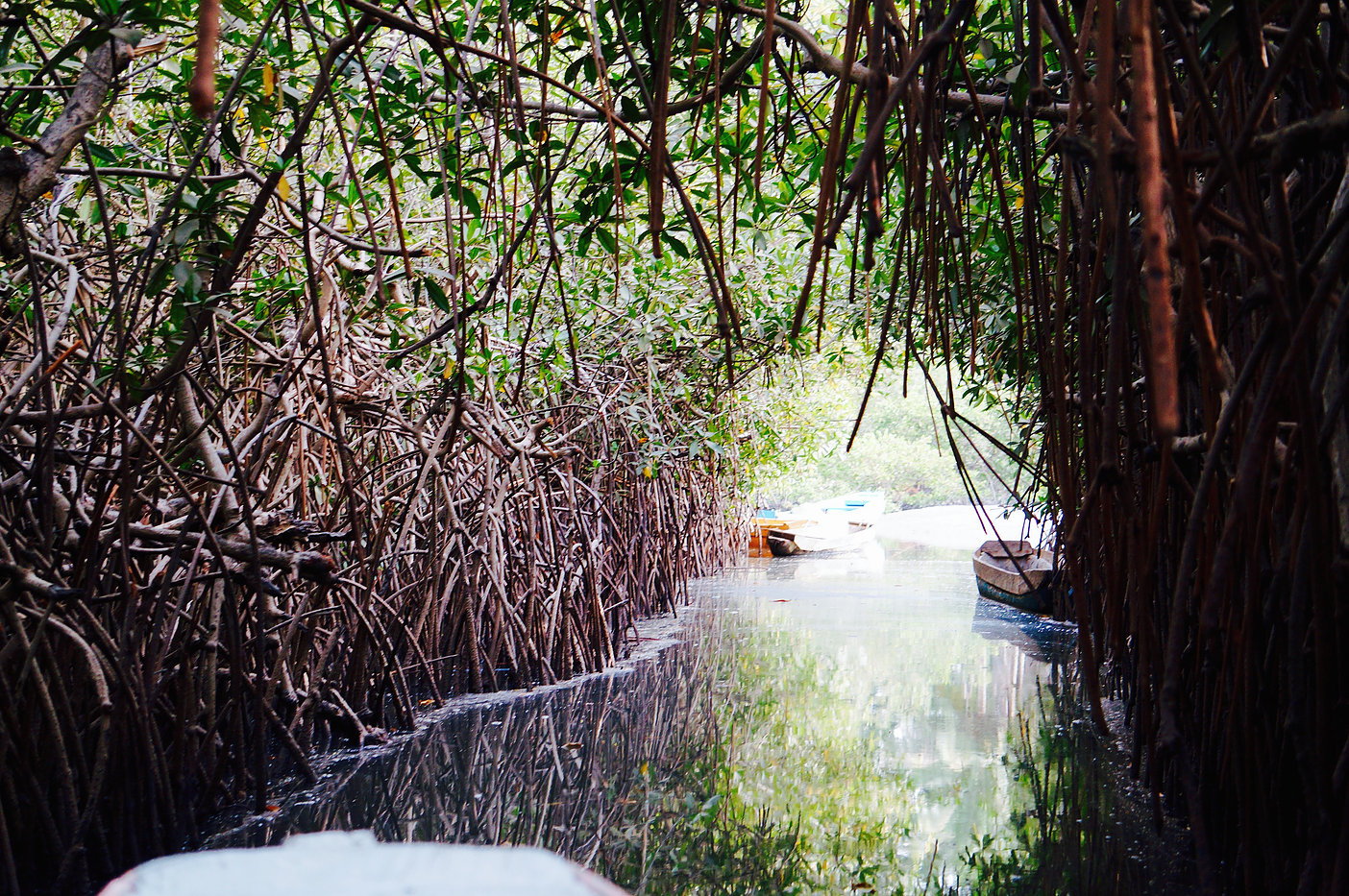
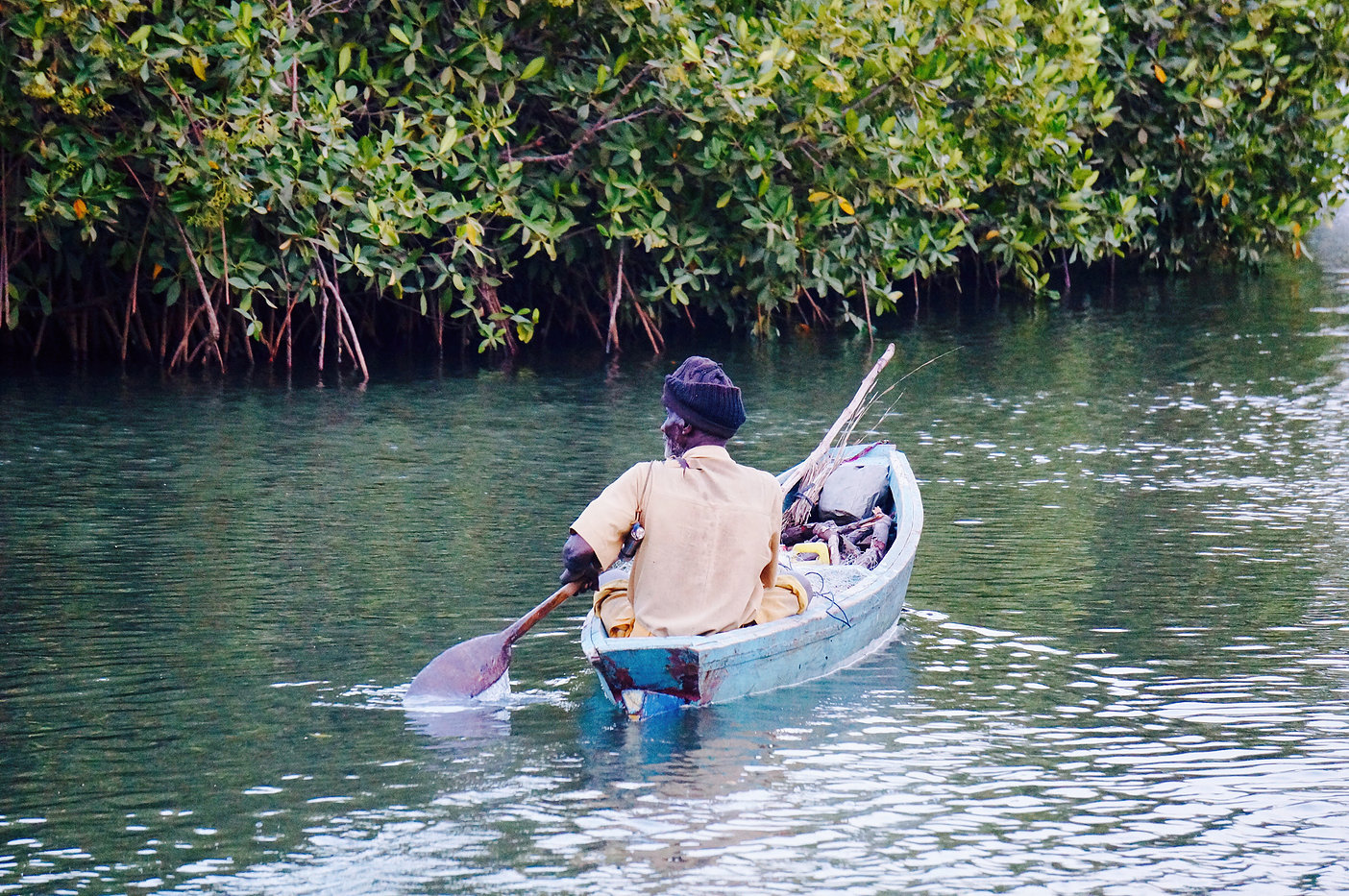
One evening, Jibo took us in his pirogue through the mangrove tunnels to where a giant kapok tree—the kiosk—grows, lilies bloom in the rice fields, and bluebirds of happiness peep out from the mangroves.
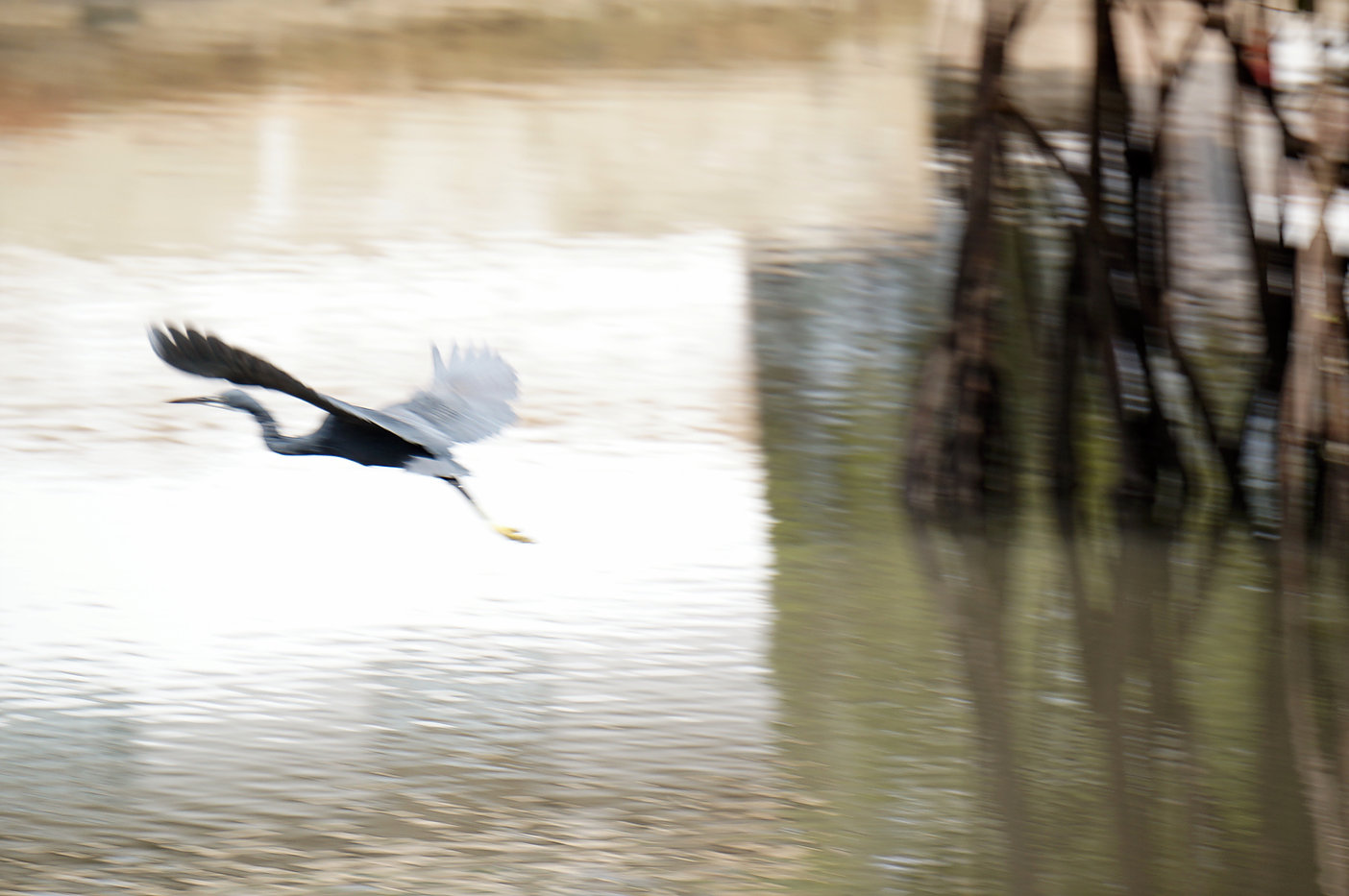
Herons and homoro birds (I need to look up what they are called in Russian) eye us warily from the banks of the broad channel, after which the pirogue dives into a narrow tunnel through the mangroves. The turquoise plumage of exotic birds flashes between the branches. We proceed in whispers so as not to frighten anyone away. They recommend coming here at dawn, when it is very quiet and the birds sleepily poke their heads out of their nests straight into the lenses of the cameras.
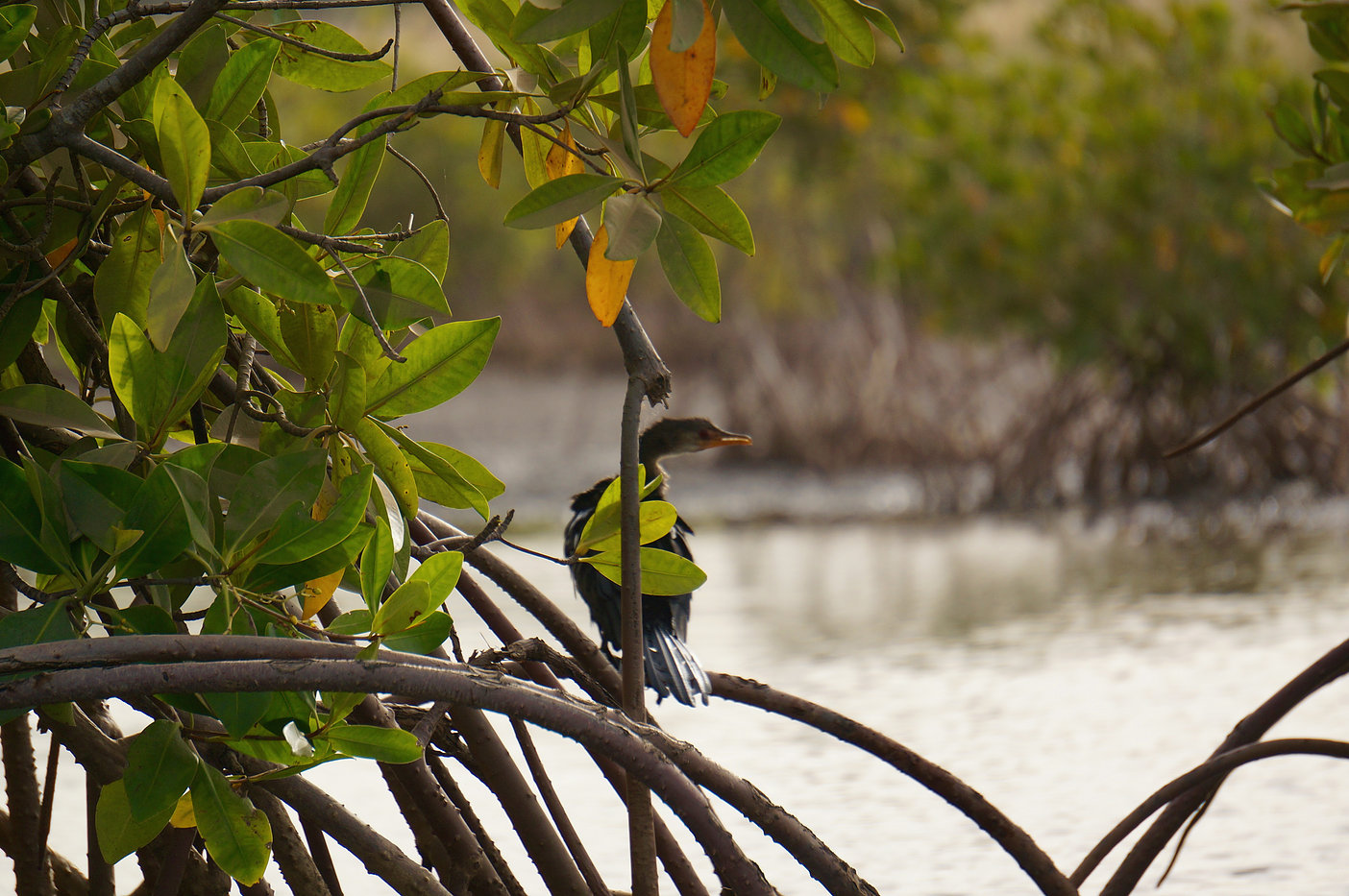
At our approach, tiny bright-purple birds with red breasts dive into the thickets. And where the tunnel opens onto a hidden shore, a grey heron lies in wait. The bird and I raise camera and wings at the same moment, and this is what comes of it:
The tunnel ended at a meadow, where a path led towards termite mounds, a fishermen’s shelter, vegetable gardens and kapok trees. That was where we met Ebo, lord of the hollow in the giant kapok tree.
Notes from a Botany Nerd: Flora
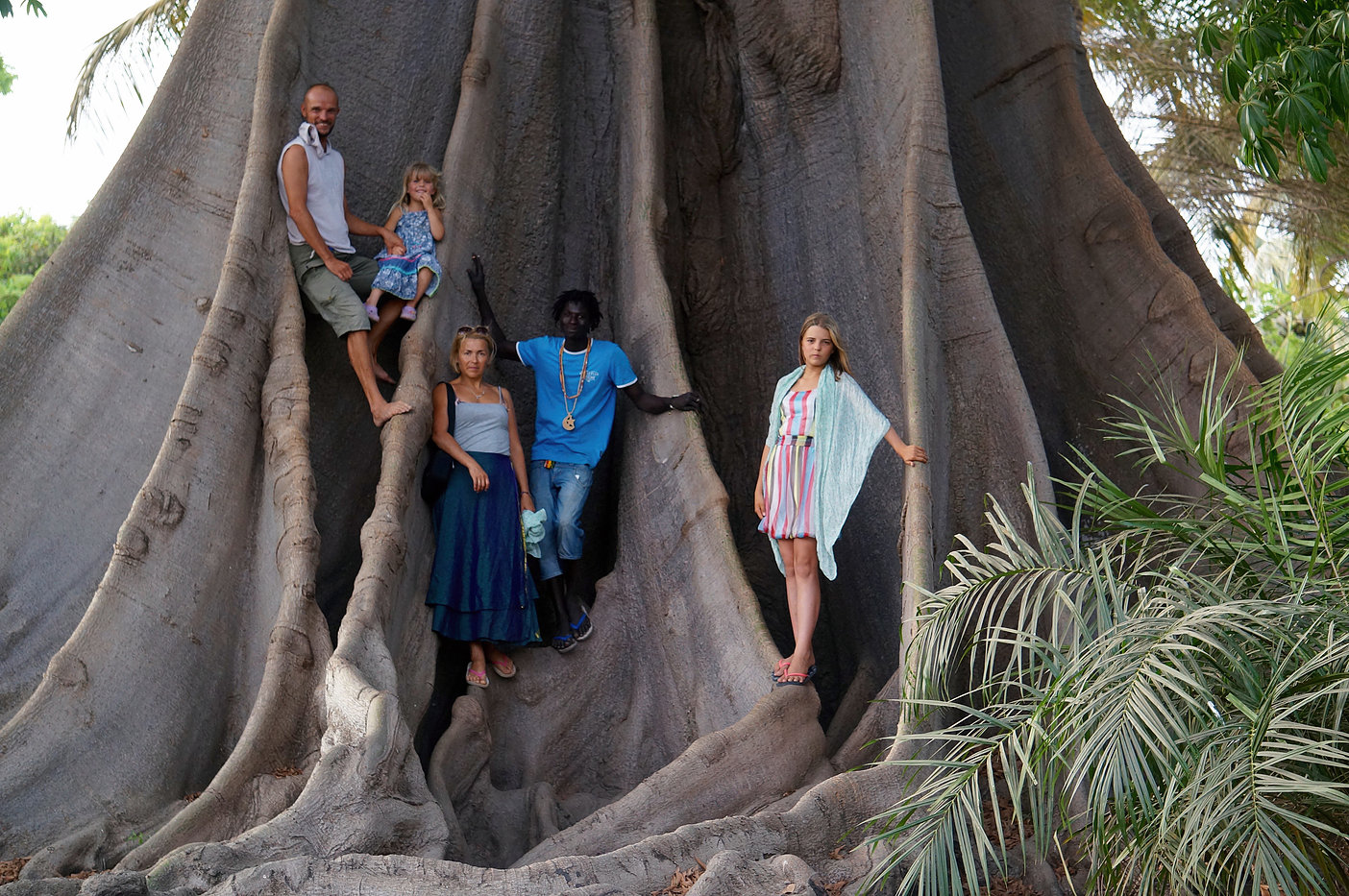
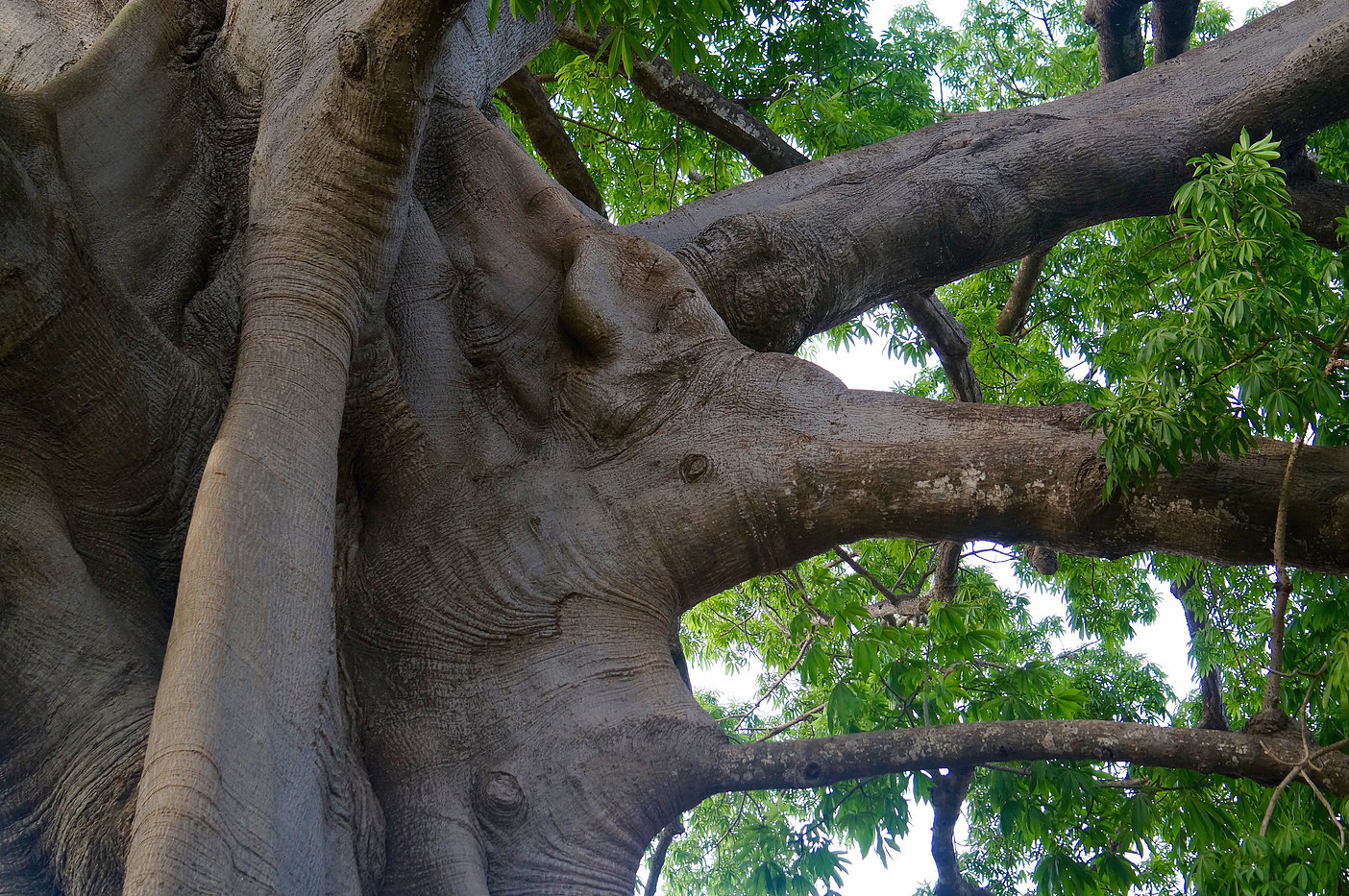
Young kapok trees delight our little sailor: their trunks and branches are completely covered in thick, knobbly thorns. As they mature, unlike human skin, the tree’s skin becomes smooth and the thorns disappear. In some places, however, the roots grow to the size of walls.
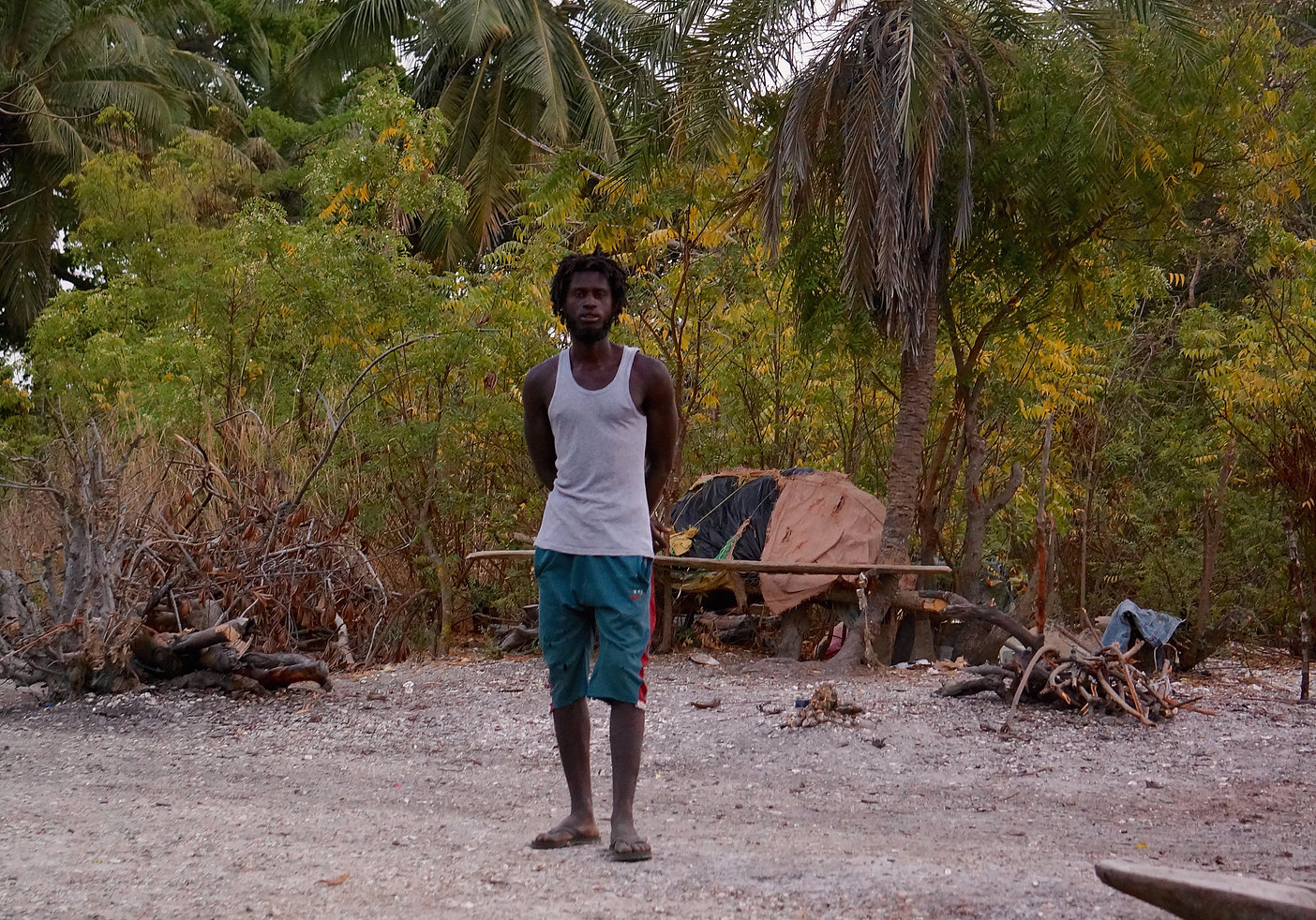
One such giant tree now contains benches and a cooler box filled with drinks. At the entrance to the hollow, we are greeted by a young man with short dreadlocks named Ebo. He sells Coke inside the hollow and, along the way, introduces travellers to the lives of the local people and plants.
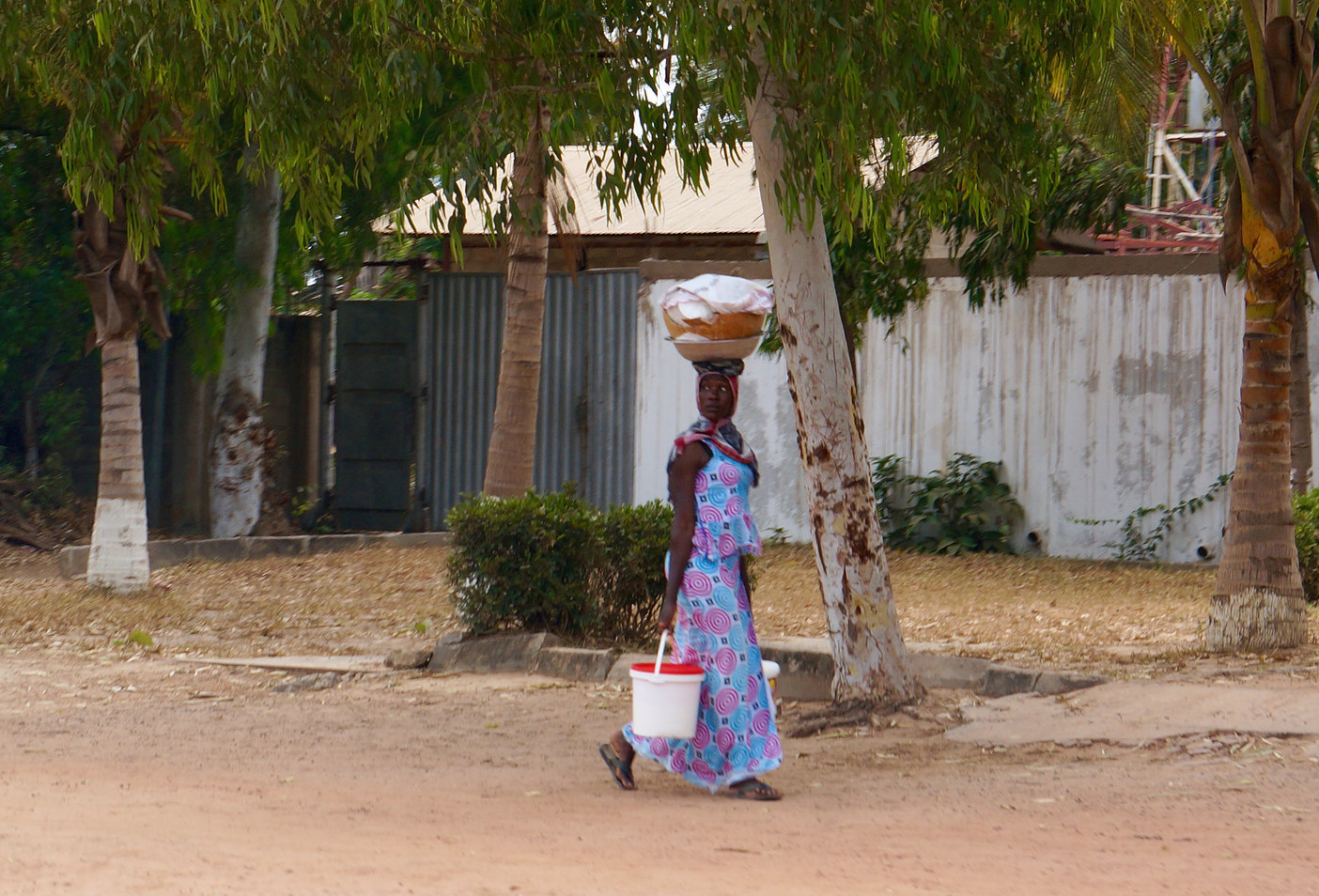
Between the sparse trees, the vegetable gardens languish in the heat. Women work in them, differing from Russian women tending their dachas only in the colour of their skin and their virtuosity in carrying broad buckets of produce on their heads.
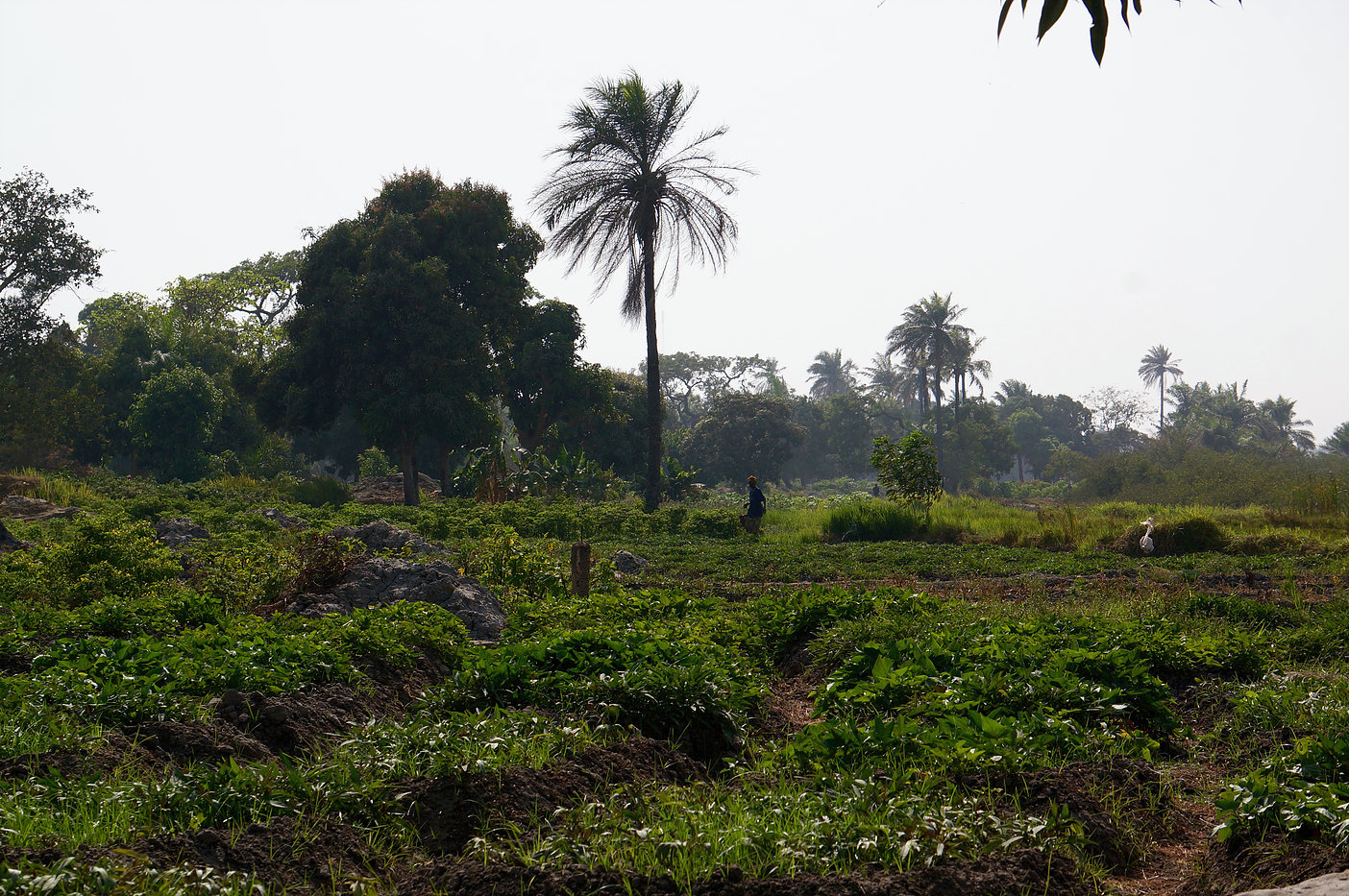
Chilli peppers, onions, rice and sweet potatoes are now growing in square beds. Jibo and Ebo tell us that rice is grown there during the rainy season. The harvested grain is piled on raised ground to dry. Once, the rice in one such store caught fire, and the flames spread to a giant kapok tree. The trunk caught fire not on the outside, but from within.
The Flora and Fauna of The Gambia. Resilience and Symbiosis
By some miracle, the fire was extinguished, but the tree seemed to have almost no chance of survival. Yet the kapok tree displayed astonishing resilience, and the enormous hollow was soon lined inside with new roots that became trunks, taking up hardly any space while continuing to supply the giant crown with everything it needed.
Another example of extraordinary resilience is the baobab. Even after falling to the ground, its trunk puts down roots and continues growing horizontally for another couple of centuries as a strange, almost creeping tree-shrub of impressive proportions.
The baobab is basically Africa’s “everything.” A sacred tree of life, every part of which is used in daily life—wood, leaves, fruit and seeds. The roasted, ground seeds are used to make a drink resembling coffee. The dried fruit pulp is a powerful antioxidant and a source of vitamin C. The fruit contains six times as much of it as an orange. The fruit powder is used to make the traditional medicinal African drink bouye. And we noticed that bouye flavoured with honey turns into kvass the next day. The fruit shells are made into containers and even dishes (although, in my opinion, they are a little too fragile for dishes).
The leaves are used in medicine and cosmetics, in drinks and salads, and even... for greasing one’s hands when working with the horribly sticky glue used to repair fishing pirogues. Incidentally, the glue itself is made from old polystyrene foam soaked in petrol, with ash from burnt shells added (worth remembering!).
Examples of symbiosis are striking, though it is not always entirely successful for one of the parties. A palm entwined by parasites had disappeared completely behind the powerful root-branches of another plant. The parasite had wrapped itself so tightly around its host that the latter could not withstand the deadly embrace and perished beneath the mighty macramé of the new trunk.
Fauna
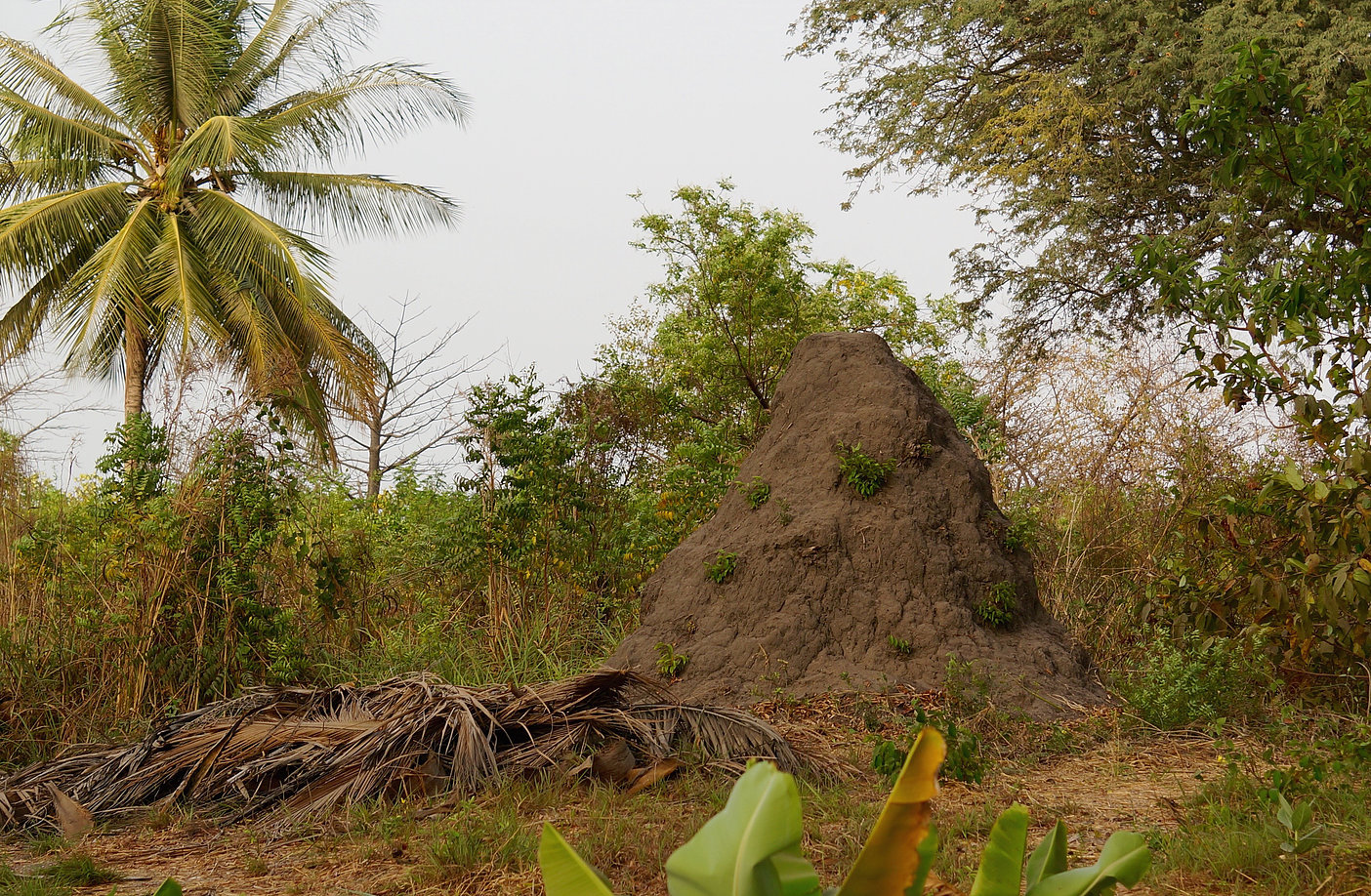
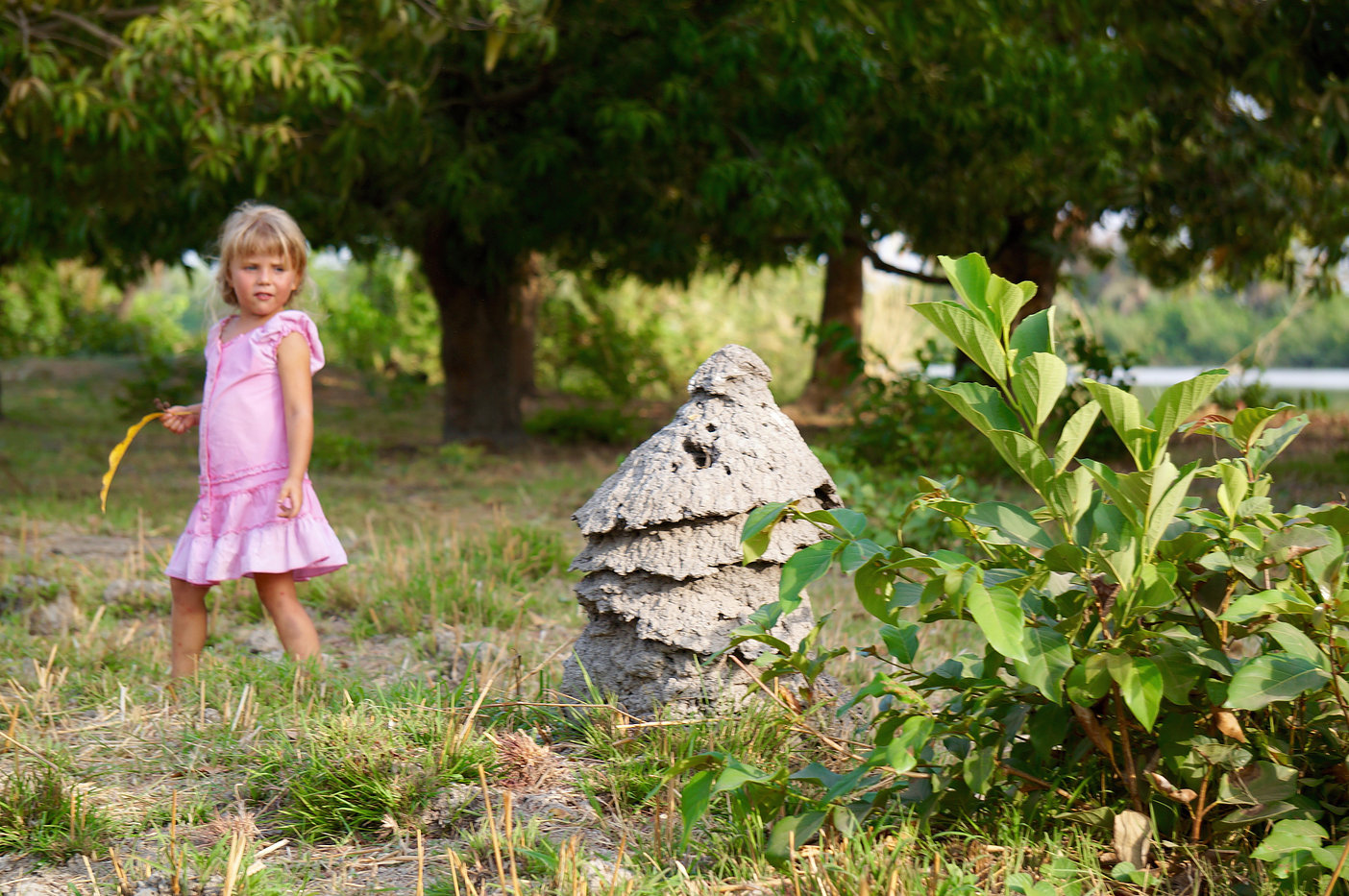
Termite mounds, each one and a half times a person’s height, are scattered all around. Later, while sailing farther inland, we noticed another kind of termite mound standing alongside the type we already knew. Those anthills are home to termites from the clan of alpine gnomes. By day, their homes disguise themselves as giant mushrooms with tiered towers; at night, their tiny inhabitants come out to attend to their termite business.
After a warm farewell to Ebo, we sailed home, taking with us the kapok fruit he had given us.
We need to devise somewhere aboard the yacht to store our natural treasures.
Tomorrow Jibo will bring a picture book about Gambian birds and take us visiting. First to see his family, and then—to the crocodiles.
Under his care, Africa is beginning to feel close and not at all dangerous.
More photos 🙂
After school, the boys race off for a swim. Tossing their schoolbags and uniforms straight onto the grey sand, they charge into the water with whoops and shouts. There is no getting them out again now. Incidentally, there is not a single girl among the swimmers...
The very same “homoro”
The channel by Lamin Lodge
A Gambian fisherman
Ebo, lord of the giant kapok tree, came out to see us off
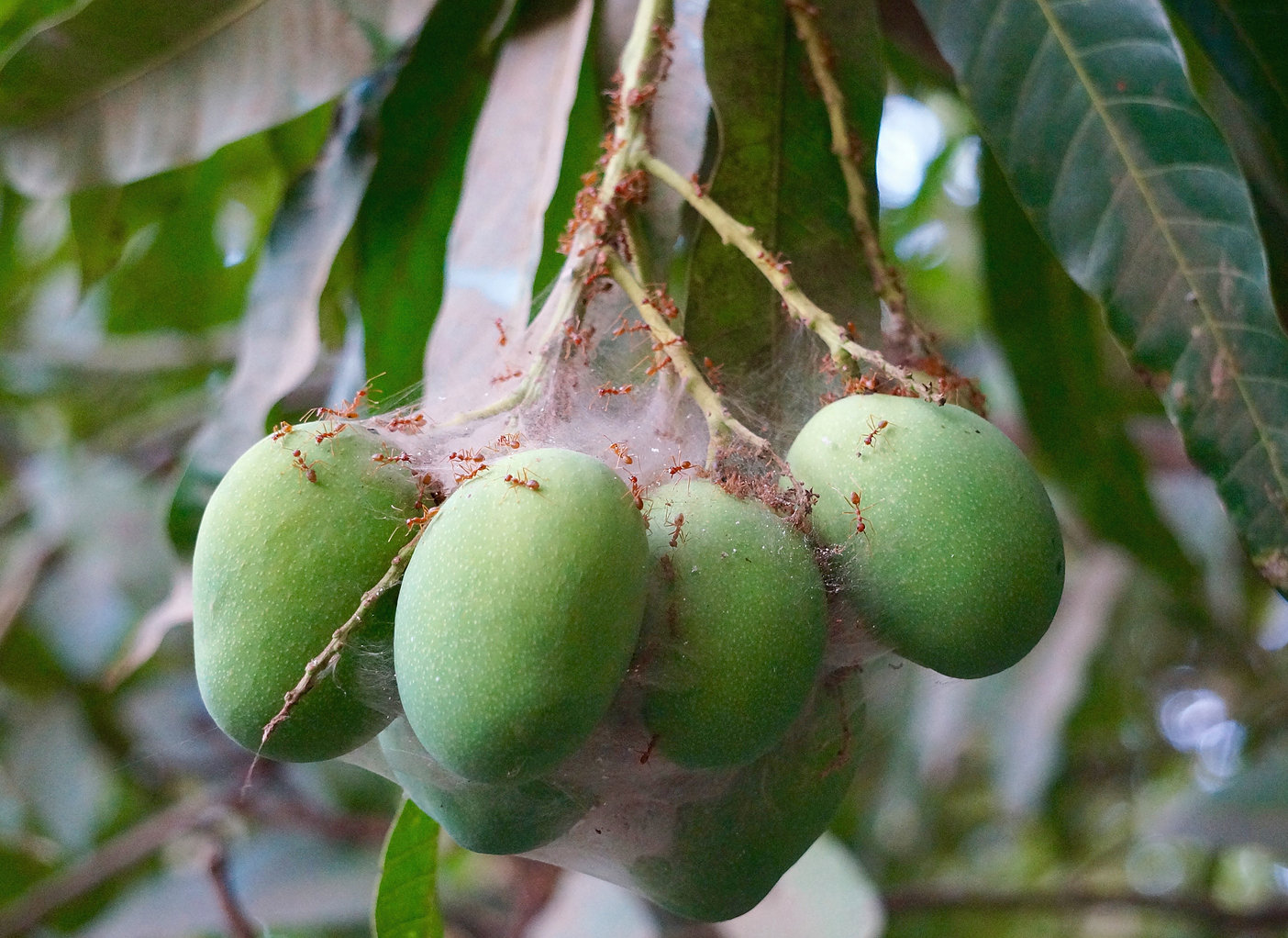
Can termites weave webs?!...or are these not termites...
Who spotted the elephant’s profile? 🙂 A kapok tree
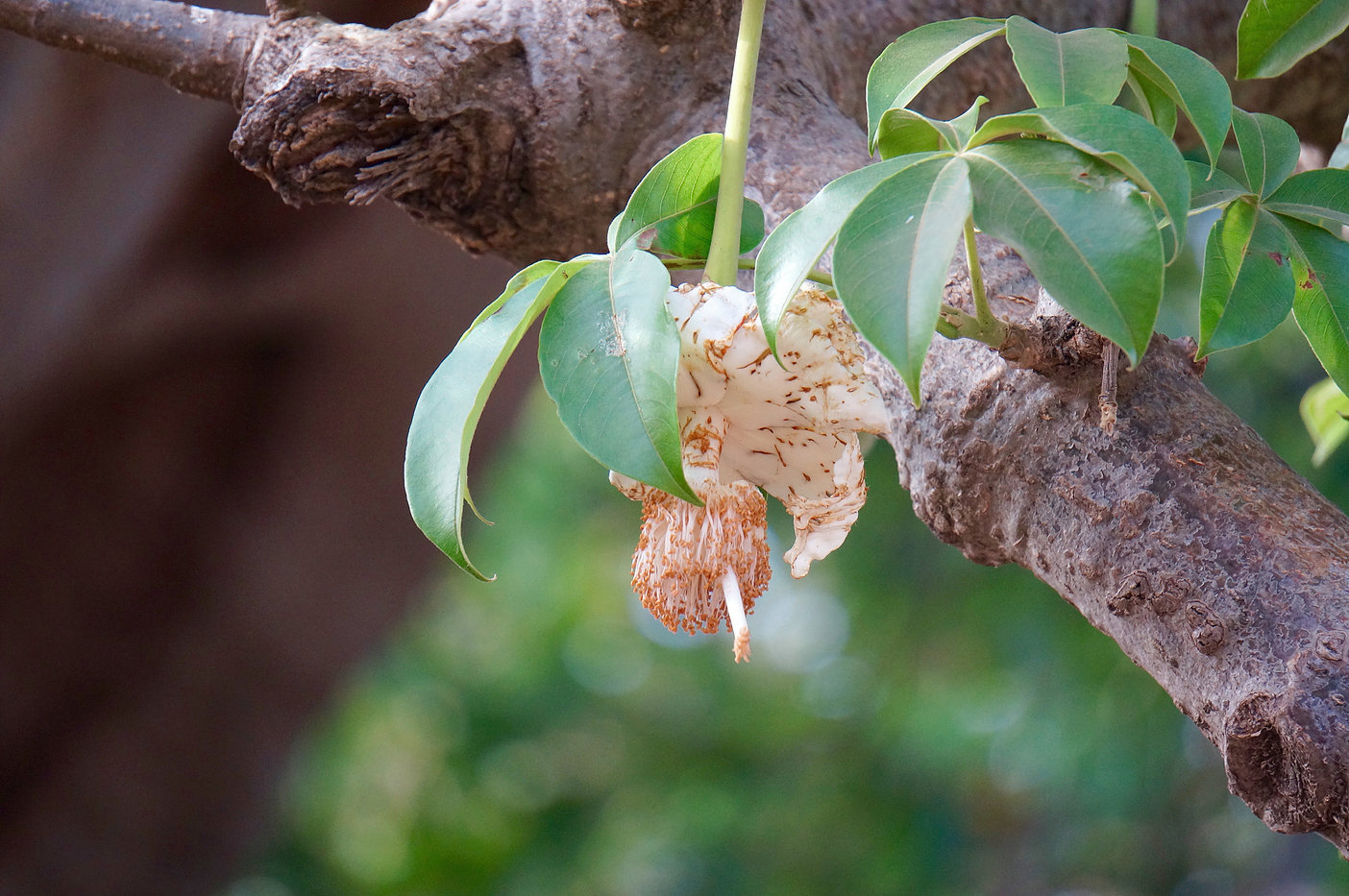
As the rainy season approaches, the tree of life becomes covered in leaves and flowers