
From the Travely-Family archive · Atlantic
Moroccan Transit. The City of Fez. Another Cinderella Story
An original publication from the former Travely-Family website. This English translation was preserved from the technical-site archive without editorial rewriting.
Another Cinderella Story
“Who is that?” we asked Mohammed, pointing to a portrait of a lavishly dressed couple with two children.
“The king and queen,” Mohammed replied proudly. “She’s from Fez,” he added.
“Wow! She’s beautiful! Is she a princess by birth, or a commoner?”
“No, she’s from an ordinary family.”
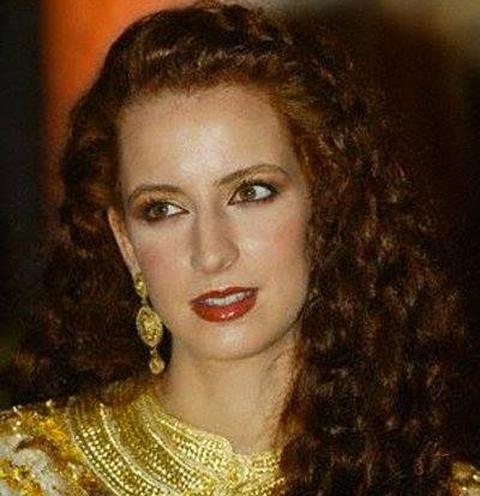
Another surprise from this ancient Moroccan city, another Cinderella story: the daughter of an ordinary teacher, the clever and beautiful Lalla Salma, trained as an information systems engineer and... became the wife of King Mohammed VI.
Lalla did not agree to marry him straight away, but only after making her future husband promise that he would not take a second wife. For the first time in the kingdom’s entire history, the monarch’s wife was officially acknowledged as such. Before Lalla, no one in Morocco really even knew what the king’s wives looked like. No one could remember a ruler choosing his own bride, or marrying for love. She will never bear the title of “queen”; officially, she is styled princess. But! To Mohammed VI, his subjects, and everyone else, Lalla Salma is not merely the first lady and “the mother of the king’s children.” She is the Queen. The beautiful queen from the city of Fez.
Fez
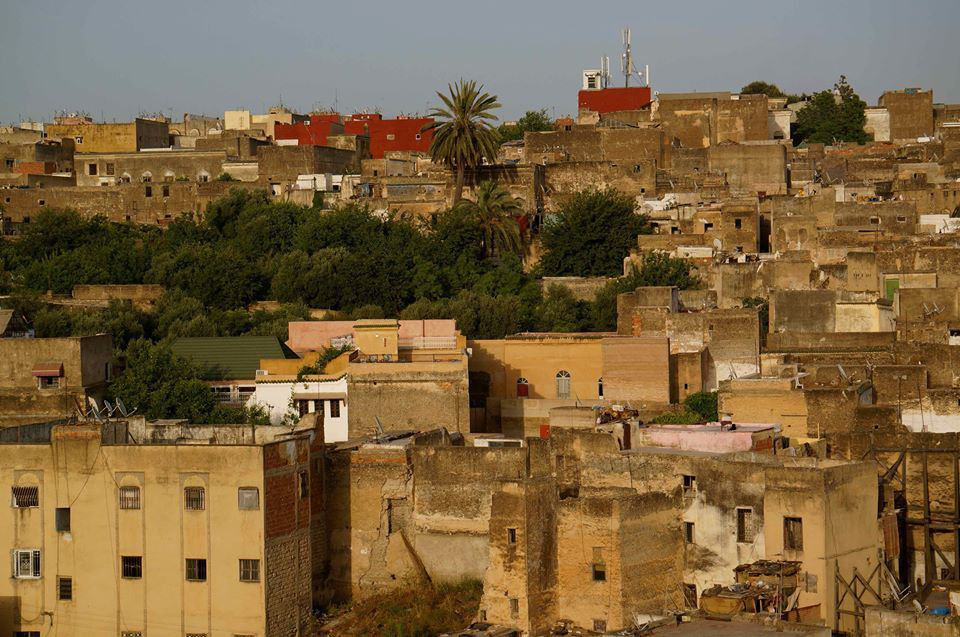
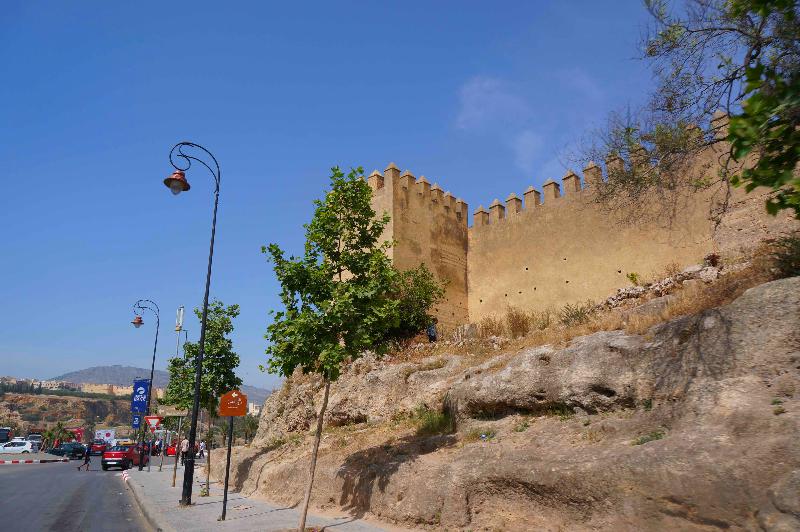
We liked Fez straight away. From the broad, somehow ceremonial avenues lined with handsome government buildings, parks, and so on, right down to the filigree traffic lights. The city’s terrain is varied, its hills adorned with the ruins of a citadel. The medina of Fez has 1,600 (!) streets, and if you cleared the plastic rubbish from them, the city would be indistinguishable from the way it looked a thousand years ago.
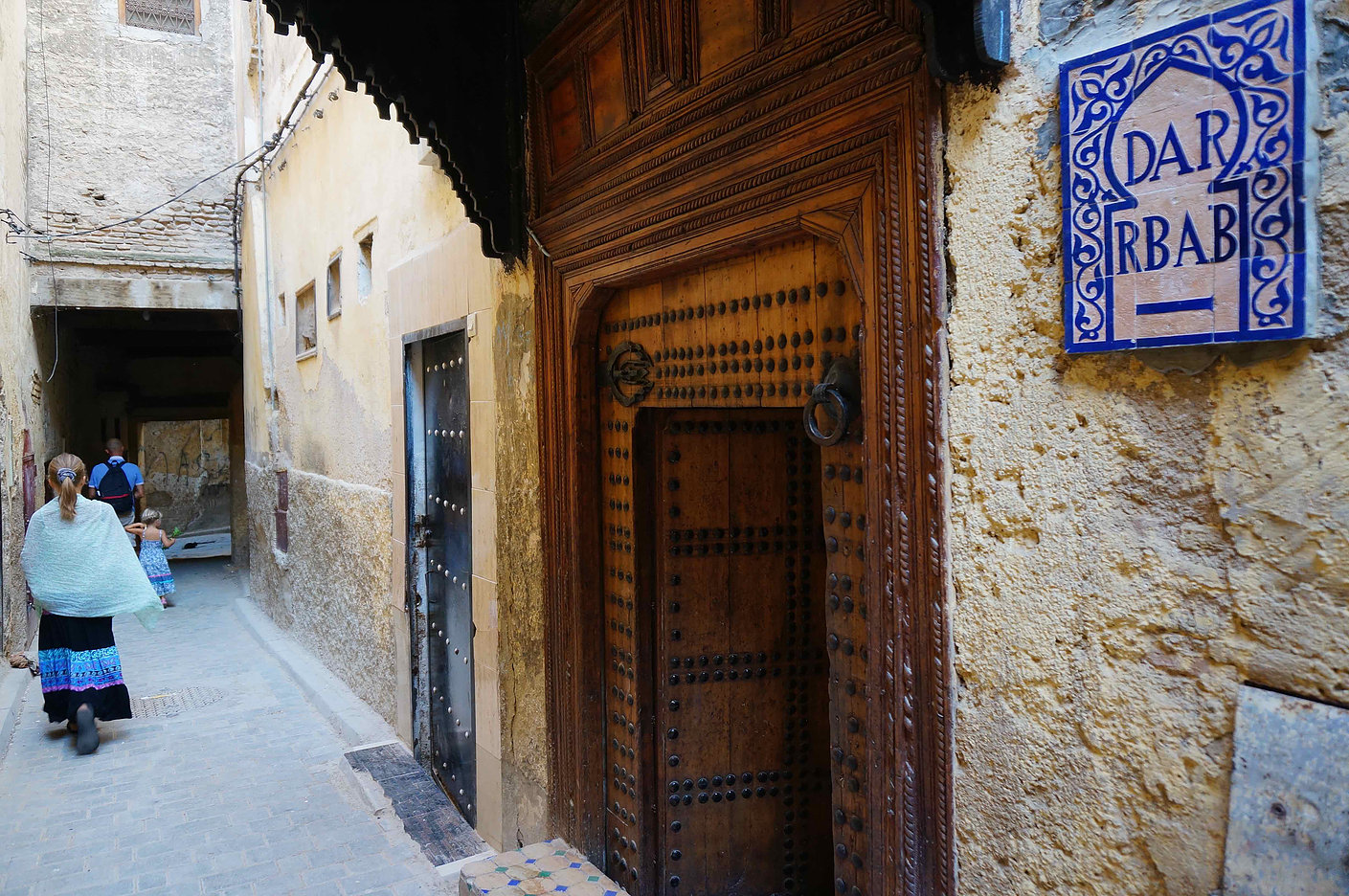
The same donkeys and mules carry impossibly huge loads through the narrow lanes; their droppings are everywhere just as they must always have been, and now and then there is the smell of donkey urine. Behind almost every battered door is an artisan’s workshop: tanneries, metal-chasing workshops, potteries, woodcarving shops, and more. Tailors sit at hand-operated sewing machines, while bakers roll out dough. Towards evening, doors that have remained tightly shut all day swing open, and the streets turn into a labyrinthine bazaar. A riot of colour, dancing lights, and the scents of spices.
I cannot remember a more authentic place.
The appearance of these ancient Arab lanes is as deceptive as the plain veil of a young peri. Beneath the shabby shell of the old narrow streets lie fathomless, burning eyes and brightly coloured cheeks.
Courtyard Wells
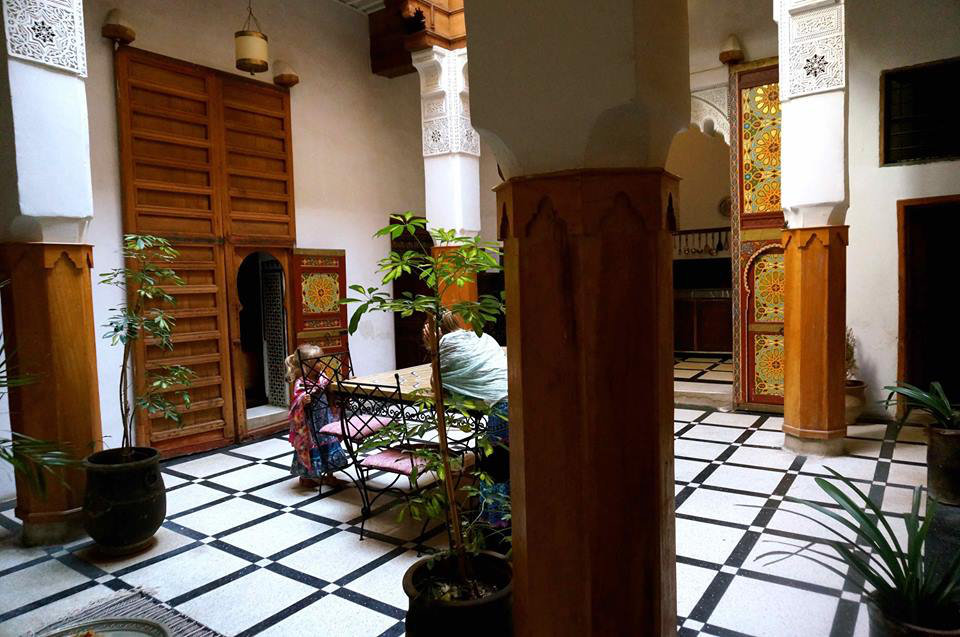
Courtyard wells are not just a St Petersburg thing; they are what houses in Fez are like. You step inside and freeze: from the outside, everything promised a dim, impoverished hovel, but in here.... Antique carved walls, painted doors, and a wealth of artefacts that tell you more about the history of the house than any description ever could. Our lodging is more than 300 years old (though Mohammed, who welcomed the guests, said it was 700). A prosperous family once lived here—the wives, children, mothers, and the master of the house himself, some merchant or other.
A square courtyard-cum-living room rises towards the sky, topped by a barred window; around its perimeter are four spaces: entrances to the kitchen, the library, utility rooms, and a tiny room, dark and utterly “Scheherazade-like.” It looks as though some head servant or gatekeeper might once have lived there. From the living room, a narrow stone spiral staircase leads to the first floor, with a balcony running around it and doors into four rooms. Each has steps leading up or down to a lavatory; each glows with stained-glass windows and an Oriental lantern.
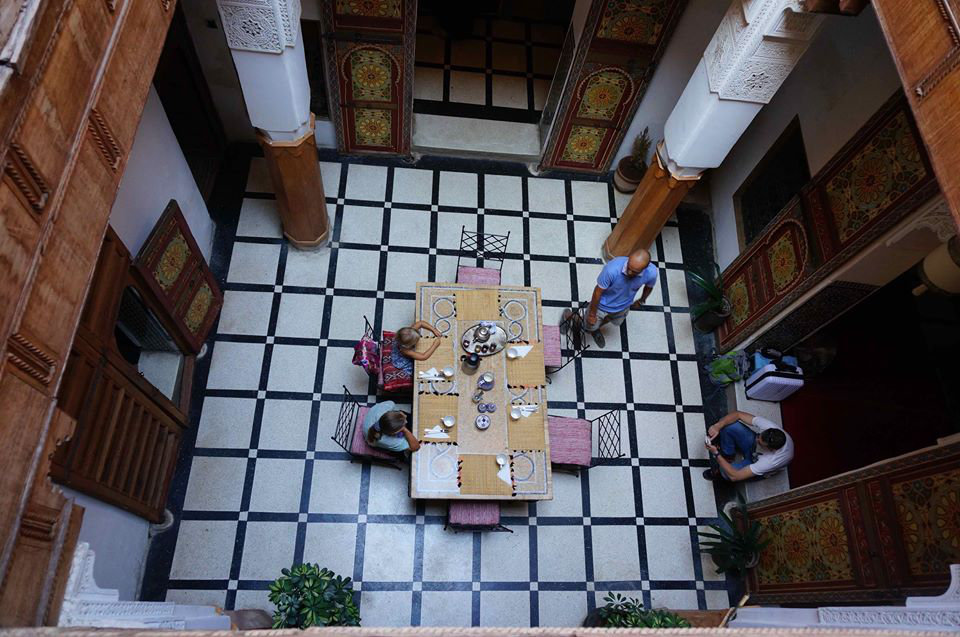
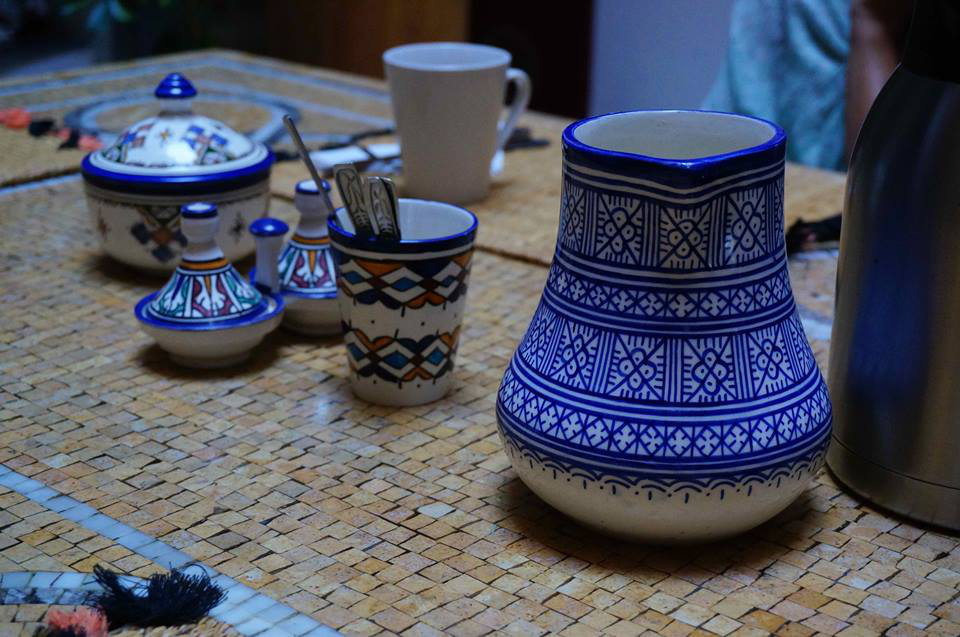
Mohammed gave us mint tea at a mosaic table, showed us his daughter in the course of the conversation, and asked whether Ladka might like to stay and live with them.
To be continued— Moroccan Transit. The City of Fez. Looking Is Allowed, Buying Is Not