
From the Travely-Family archive · Pacific Ocean
An Atoll by Yacht — On Board, Underwater and Ashore
An original publication from the former Travely-Family website. This English translation was preserved from the technical-site archive without editorial rewriting.
An atoll by yacht—on board, underwater and ashore.
Judging by the nationalities of most of the first itinerant Europeans to turn up there, the Tuamotus should have gone to the Netherlands or Britain (like Tahiti). But France took advantage of its rivals’ sluggishness and muscled them out of vast territories. The Tuamotus became a French colony in 1844. The British got their act together over the Cook Islands and New Zealand, while the Dutch had no choice but to hold on all the tighter to Timor and Papua New Guinea. The latter, incidentally, was well and truly fumbled by the Russians, who ignored the proposals of the intrepid explorer Miklouho-Maclay.
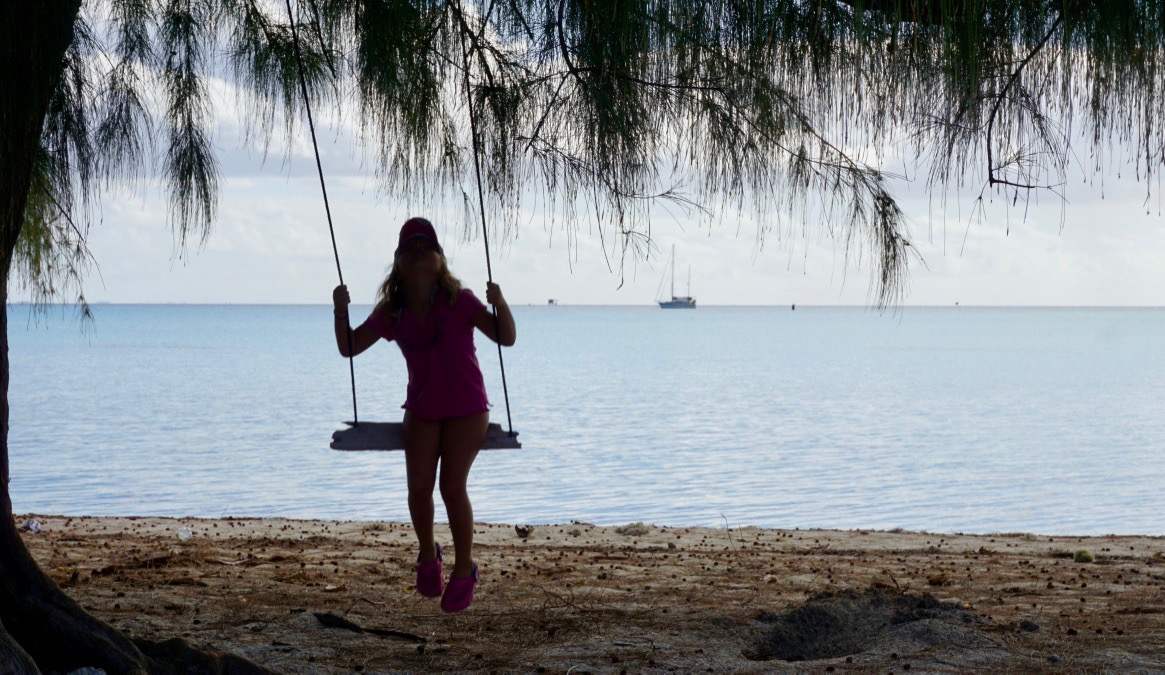
In 1966, on the southern atolls of the archipelago—Mururoa and Fangataufa—the French set up a nuclear weapons testing ground. The tests continued for 30 years, and approaching these atolls is still prohibited. Not that we have any desire to go near them: our down-to-earth Kauehi is far more conducive to a breather at anchor..
The underwater world
After trudging a couple of miles there and back along the capital’s main concrete road, we cast off to go and look at the fish. We tied the dinghy to a buoy-post, but it wasn’t our buoy—it was a booby’s buoy. With an indignant quack, the bird took off from right under our noses, circled around and flew away in a huff. Cap stayed in the boat to divvy up the chocolate biscuits. His body gets electrified by water, you see. We donned our fins, got clobbered on the head by the boom (ours is a sailing dinghy, after all) and jumped into the liquid azure.
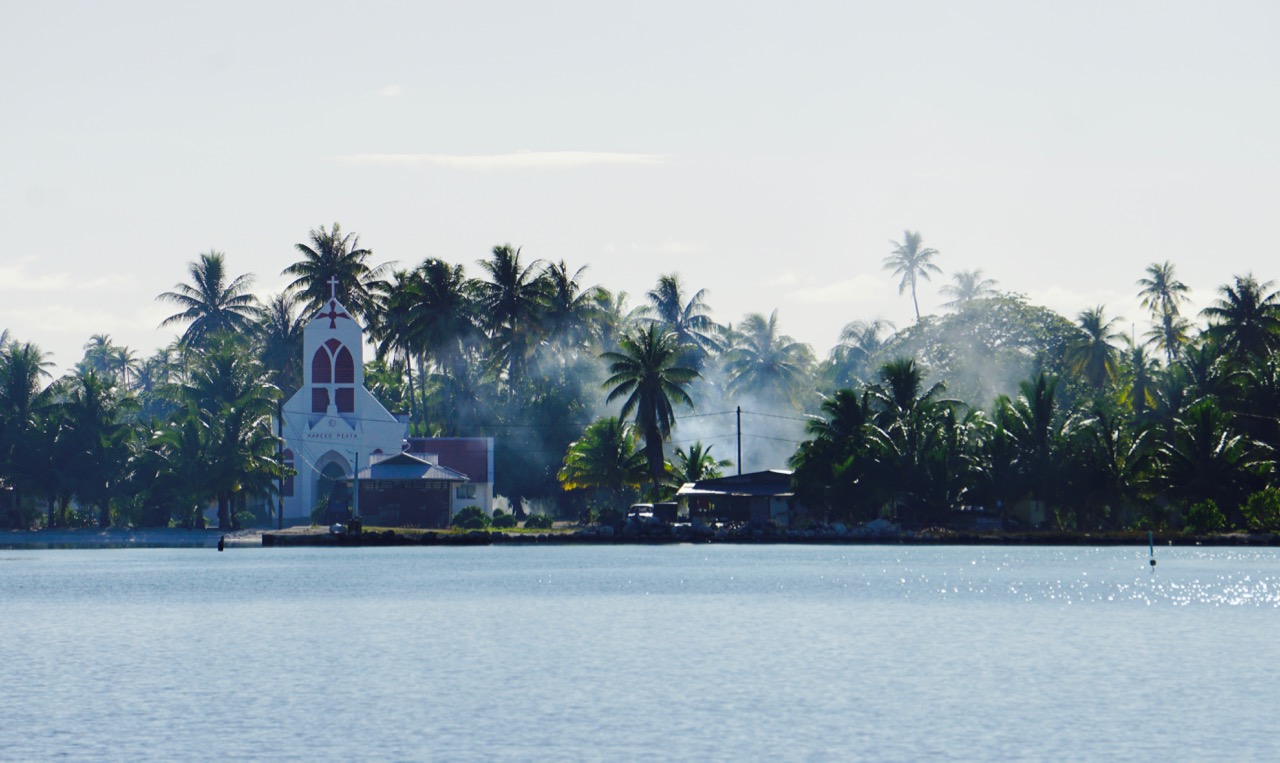
Diving into the water for the first time since the ciguatera... mmm... quite an experience. It feels as though you’ve jumped into the Katun River (the water there is +14°C). You only have to endure the cryo-chamber for a minute, and then the inhabitants of the waters distract you. Scattered coral reefs on powdery sand shelter the old-lady head of a moray eel with a thick, long neck. The toothy granny eyes us sideways with a purple eye, not from some dark crevice, but from beneath a white stone bush shimmering in the sun. Colourful fish circle above the coral flowers like exotic butterflies. Beside another head lies a plump thing that looks exactly like a brightly coloured car cushion. Except it’s five-pointed, like the Soviet quality mark. A starfish? More likely some gigantic distant relative of one.
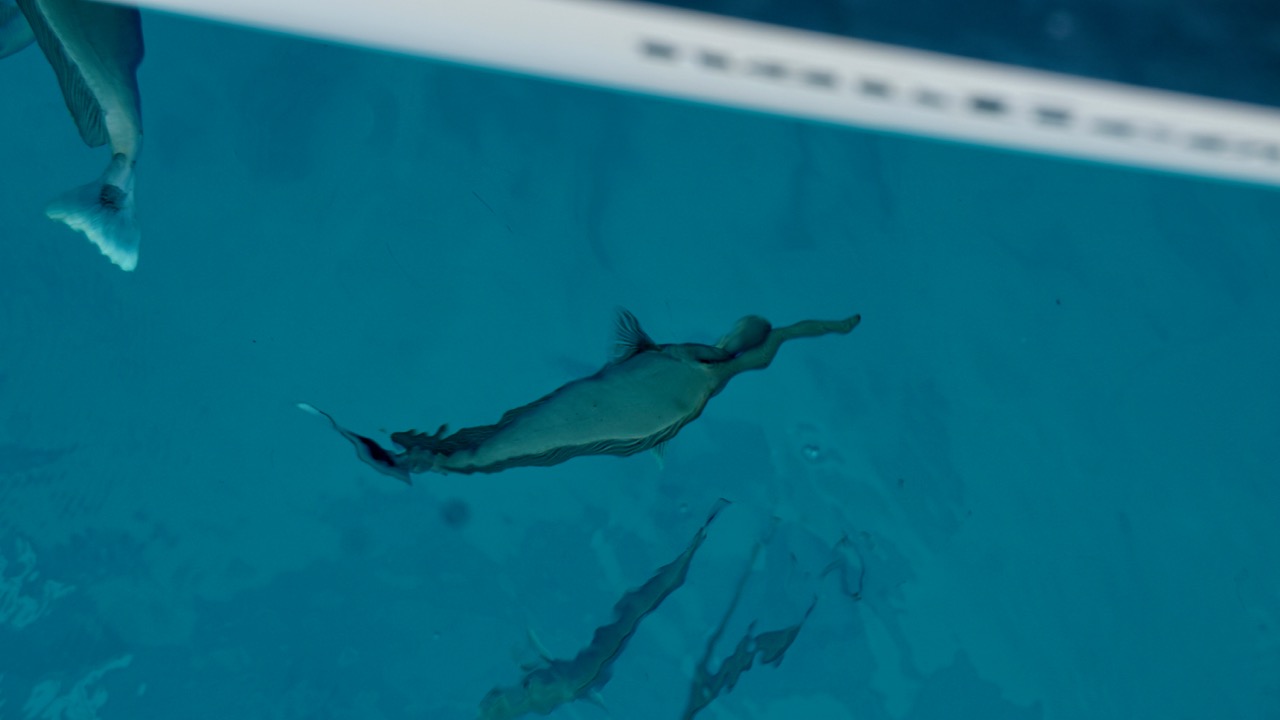
And this is a unicornfish. It really does have a proper horn sticking out of its nose. The fish arrive in a shoal to graze the algae off the yacht’s hull.
At last, the corals here are the very same white, jagged branches that stand on the tables of seasoned mariners and souvenir sellers. Lots of broken pieces lie scattered on the sand. I even picked one up. Why not? Let it give the yacht’s heads a spa-salon ambience. On the bottom we spotted a couple of mossy bottles. One probably contains a shipwreck letter in three languages. In the other, a genie has been imprisoned for a thousand years—possibly even Old Khottabych. We decided not to disturb the genies and to swim farther from the village one of these days. The underwater world out there ought to be worthy of a BBC film.
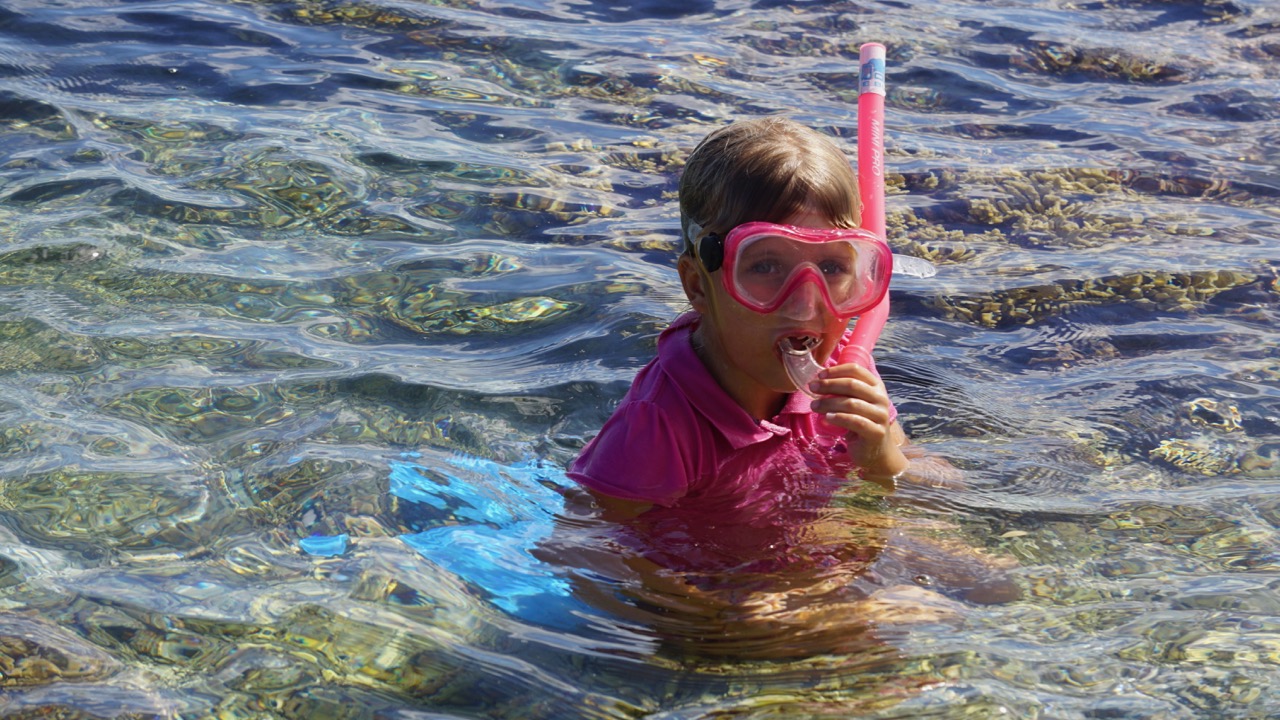
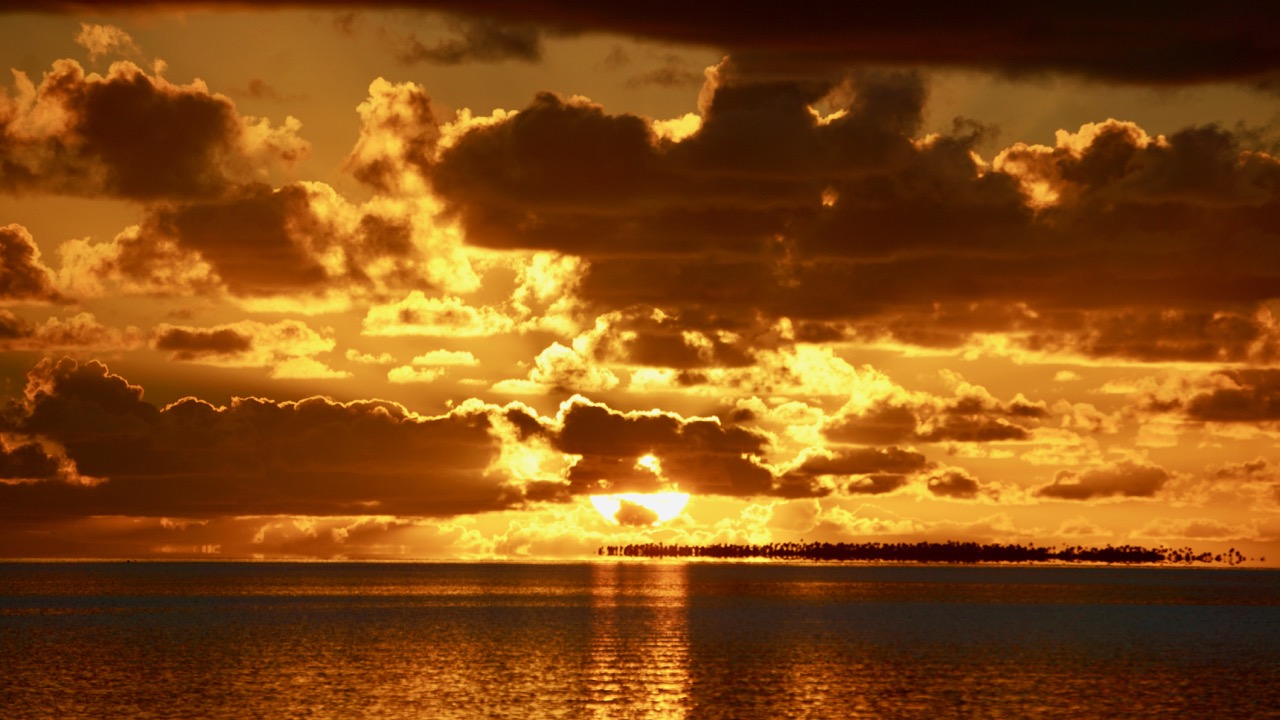
The sun, after dawdling, crawled towards sunset, and we clambered into the dinghy to dry our fins. This morning, for an invigorating start to the day, I watched a film about shark attacks. At dawn and dusk they come close to shore. We’ll swim during the day—better safe than sorry..
A shower on deck—it’s absolutely freezing!
While I’m at it, I wash down part of the coachroof and a bench so the salt doesn’t crunch under our backsides. And then an hour of silence. A silky Chinese robe patterned with birds of paradise, honeyed tea and a book in the cockpit. Our young sailor climbed into bed with her own book, and when she saw me in my robe, she added fluffy socks and trousers to her outfit—it isn’t May yet, after all ))). The captain is either reading too or learning French. I passed the buck to him in the shop today, saying that he was our parlez français man. Whereas I only un peu comprendre (or comprends?)—that is, I can understand, though probably incorrectly.
“Why are you passing the buck to me?”
“Who else?” I said. “You’re the swot around here: you’ve listened to seven audio discs, and I’ve only just started the third.”
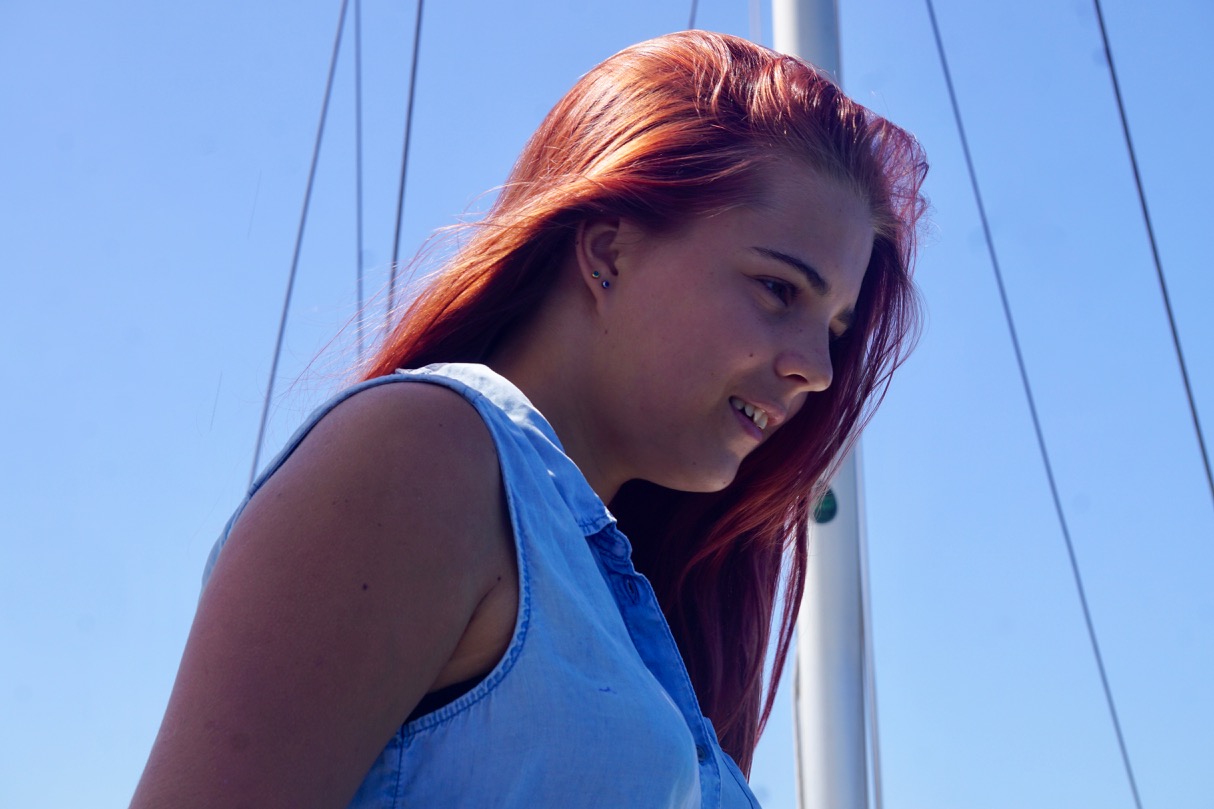
Nastya, incidentally, won’t admit which disc she was on when she gave up on the language of Monet and Van Gogh. She used to want to go to Paris, you see, but now she wants to go to London—very convenient. For London, all she has to do is brush up her English, with no need to strain herself all over again. Never mind, we’ve put French into her five-year plan; she’ll be speaking it before she knows it (or so we naively believe)..
Seasonal delights
What bliss that Polynesia isn’t as hot and humid as, say, Panama or Mexico in summer! Today the humidity reached a record low of 57%. You can live here—and enjoy freezing in the evenings. We noticed long ago that if you’re already wilting from the heat at six in the morning, with the whole day still ahead, the level of everyday irritation becomes unpleasantly high. Because you get on your own nerves: it’s impossible to work and impossible to relax. Your sweaty skin sticks to everything, and every three days you scrub mould off the walls.
And all your dreams boil down to reaching a supermarket and wandering the aisles for hours until the heat subsides. So the entire Pacific, starting with the Galápagos, has inspired nothing but delight in us. Though it has been autumn and winter here, and now the turn towards summer has begun. That’s why we really want to make it to New Zealand and head south there, to Fiordland, where it’s freezing even in summer. Just like Siberia! We’ll see.
And finally, a conversation between the first mate and the captain after dinner:
“When you speak in that obnoxious voice, it awakens my inner snake.”
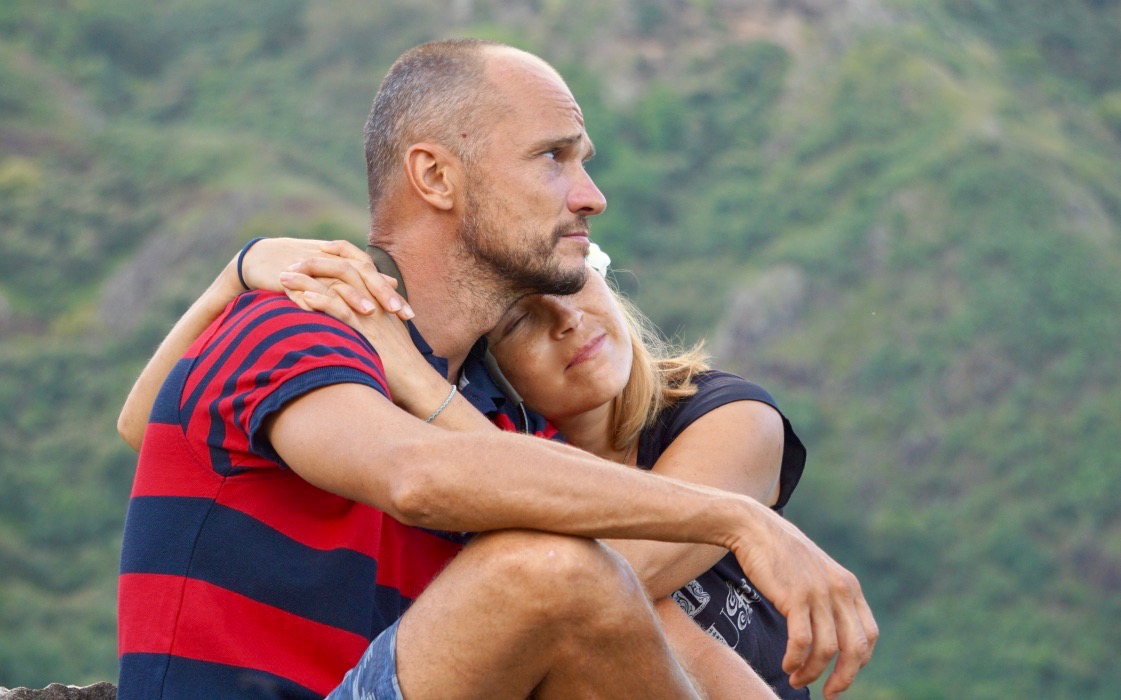
“Does it ever go to sleep?”
Cap’s face is a picture of concern. The first mate struggles not to burst out laughing; the children giggle. Wishing everyone family harmony!
And tomorrow we’ll tell you how the young sailor and I got tired of waiting for Cap, rigged the dinghy with mast and sail and, for the first time in our lives, sailed away, just the two of us..
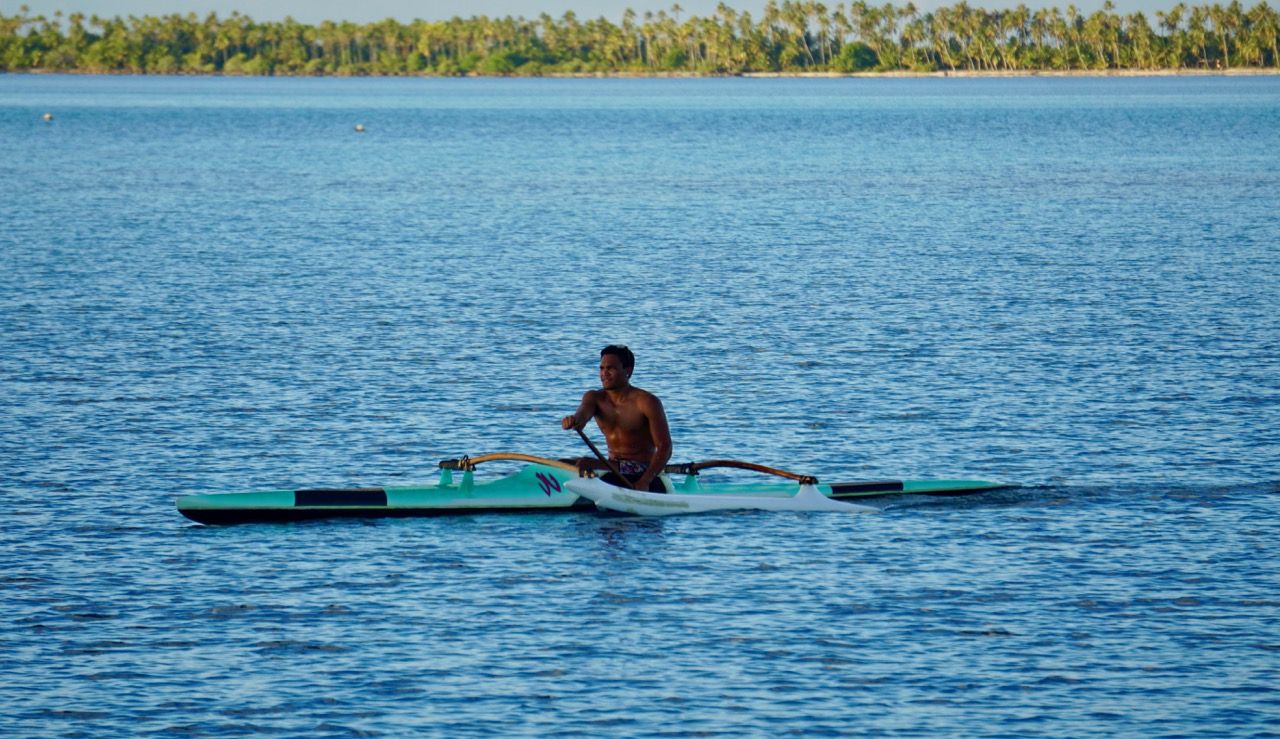
And in the photo—a Tuamotuan rower. He flies past us so fast that we never have time to get the camera out of its case.
Traditional Polynesian boats, whether paddled or sailed, have a balancing outrigger.