
From the Travely-Family archive · Pacific Ocean
Tuamotus: Under Sail with Just My Young Sailor and Me
An original publication from the former Travely-Family website. This English translation was preserved from the technical-site archive without editorial rewriting.
Tuamotus: under sail with just my young sailor and me. How we became self-reliant 🙂
How about we answer some of your questions? We do read all your comments, but the only way we can reply is like this, all at once, on air. Friends, we have no internet. In the Tuamotus, just as on the open ocean, you couldn’t find it if you searched with a lantern in broad daylight. We send our reports by email over a satellite connection (described in detail in the article
Satellite Communications for a Circumnavigation on our website), which is why there are no photographs in the posts.
Instead, between the paragraphs there is an idiotic yet astonishingly orderly combination of full stops and commas—the satellite ignores paragraph indents and even the full stop at the end of each paragraph. What’s more, the satellite encoding has no time for ellipses (so to create spacing between paragraphs we have to type random full stops and commas), and it also drops all punctuation more complicated than full stops, commas and, occasionally, dashes and colons (we have yet to figure out the principle behind its selective disregard for those marks). In short, there are only two options: either not write at all, or write like this. We’re pinning our hopes on Tahitian internet, where we’ll add photographs to the Tuamotus posts and share them with the group again..
And here is the answer to why the water in the Tuamotus is
“icy”:
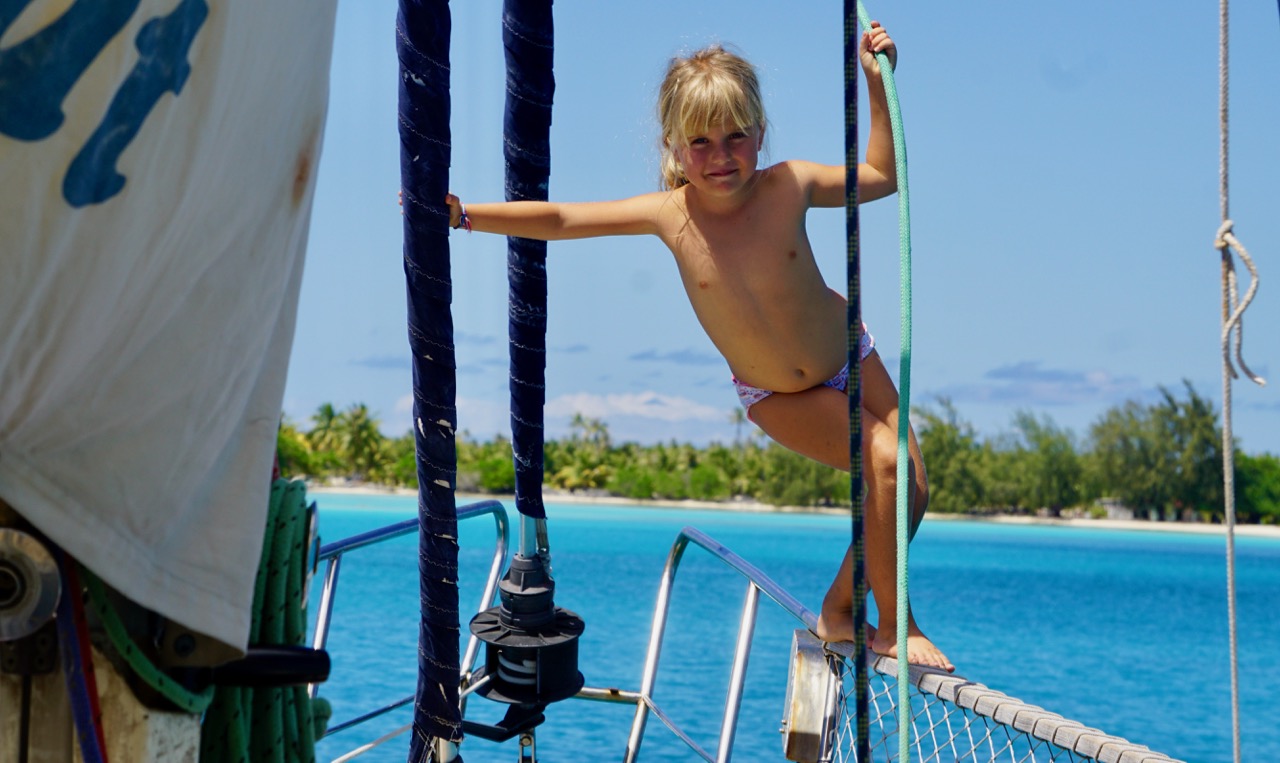
In fact, the ocean here is as warm as fresh milk. But the captain and I have only just recovered from ciguatera
(poisoning from toxic reef fish). Ciguatoxin leaves the body slowly and never completely. An acute skin reaction to water and cool temperatures can entertain the convalescent for several months. Washing your face makes your face and palms burn; when you hug the sailor’s cool shoulders, it feels as though you’ve embraced the Snow Maiden. The captain still isn’t swimming at all—his skin reacts to water as though it were a mild electric shock. I started swimming because of Ladunka, so I wouldn’t have to let her snorkel on her own, far from us and close to the reef sharks. They don’t eat people, but they might frighten our young sailor. Besides the electric water, we are periodically hit by waves of headaches and muscle pain, as well as utter physical exhaustion. But it is getting easier and easier to cope..
When your back is against the wall 🙂
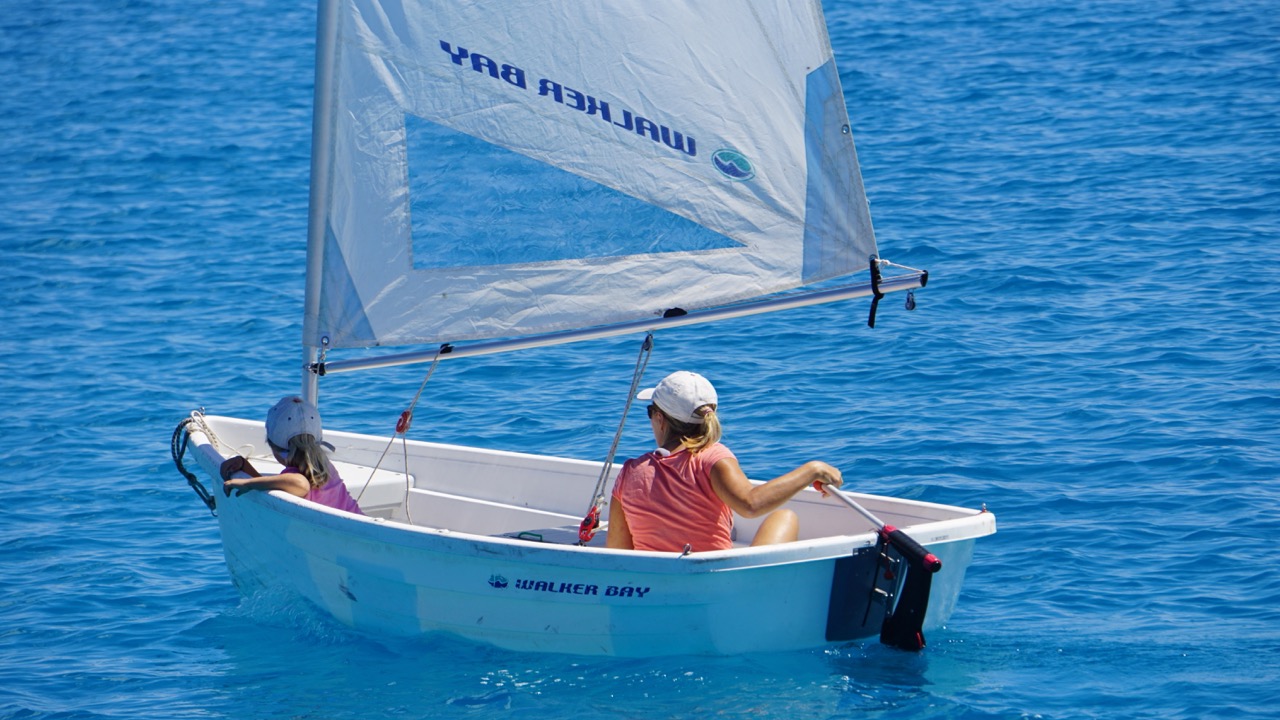
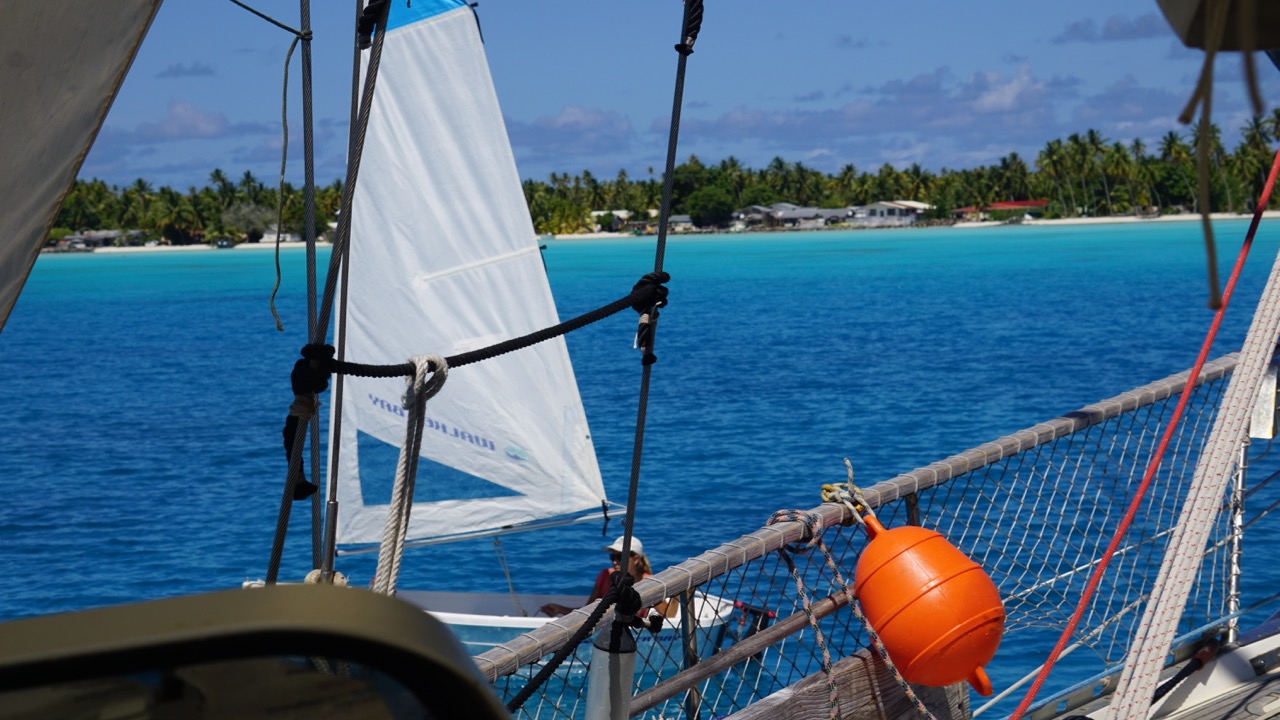
Yesterday morning, the captain was struck by post-ciguatera lethargy, and the prospect of leaving the boat to go anywhere at all began to look like an impossible dream. It is a long way to row ashore, the outboard for our dinghy is broken, so that leaves only the dinghy sails. I had never sailed a dinghy on my own before. But I looked at the situation, with that familiar itch—you know where—and thought: So what, are you just going to sit here all day? It’s time, that’s what it means.
Andrei coached me from the deck while I assembled the mast and boom and bent on the sail. Lada and I took our masks and the radio; the captain handed us our mooring lines and told us not to sail out into the middle of the atoll:
Otherwise you’ll be swept through the pass and out into the ocean, and where am I supposed to catch you then?
Sailing Free
At first, the sheet and tiller argued with each other. Suddenly the radio bellowed in a human voice:
Sail closer to the wind!
I jumped on the bottom of the dinghy and headed up. The captain guided me for a while, then disappeared into the bowels of the yacht.
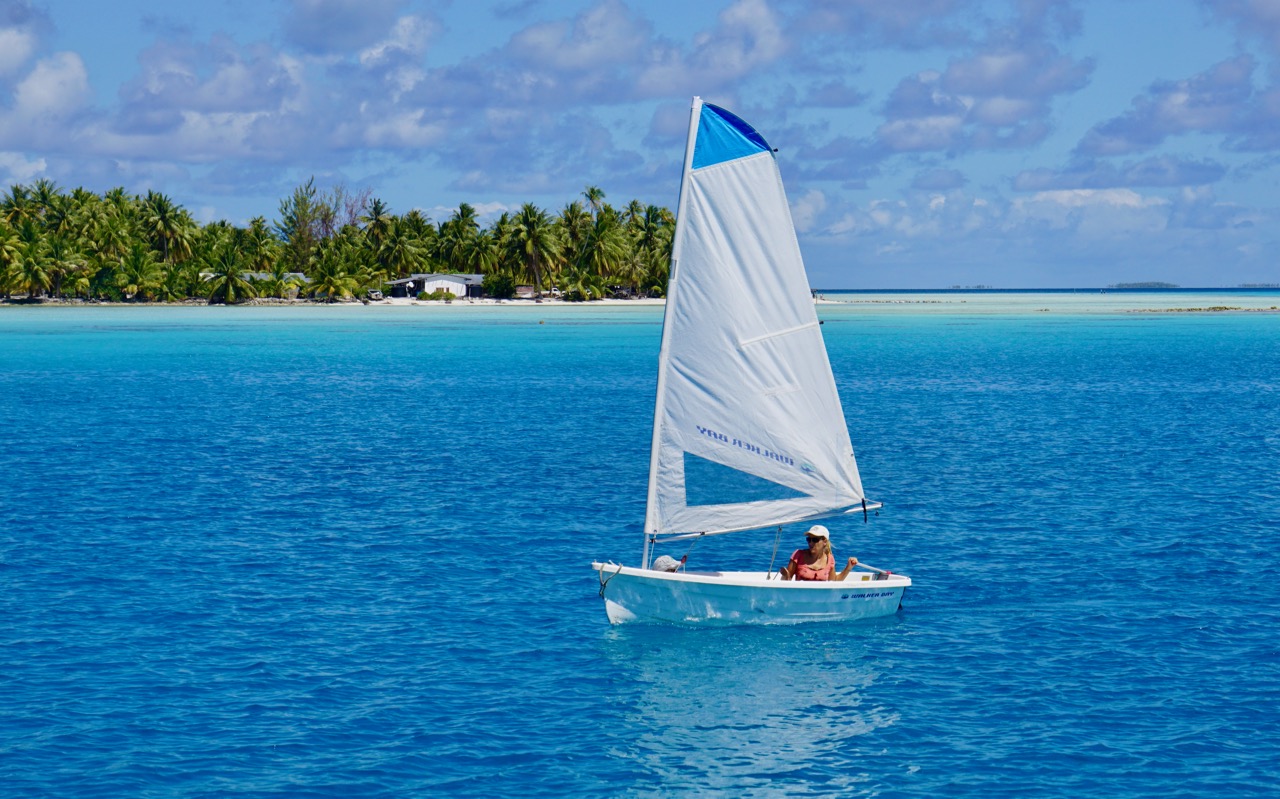
In an hour and a half of experimenting, my young sailor and I did not capsize once or even run onto the reefs. Emboldened, we sailed to the nearest coral heads, where she ventured into the water on her own. I sailed circles around the reef, keeping an eye out for sharks, while Lada happily dived, never forgetting to surface and show me the diver’s “OK” sign.
By the end of Lada’s swim, I had learned to sail in small circles twenty metres in diameter and point the dinghy’s bow precisely at my target. Our young sailor had had her fill of swimming, and we returned to the yacht without incident. Excellent—another small step towards personal autonomy.
By then the captain had found his second wind and his third eye, and agreed to dash off with us to the far shores of the atoll, away from the village.
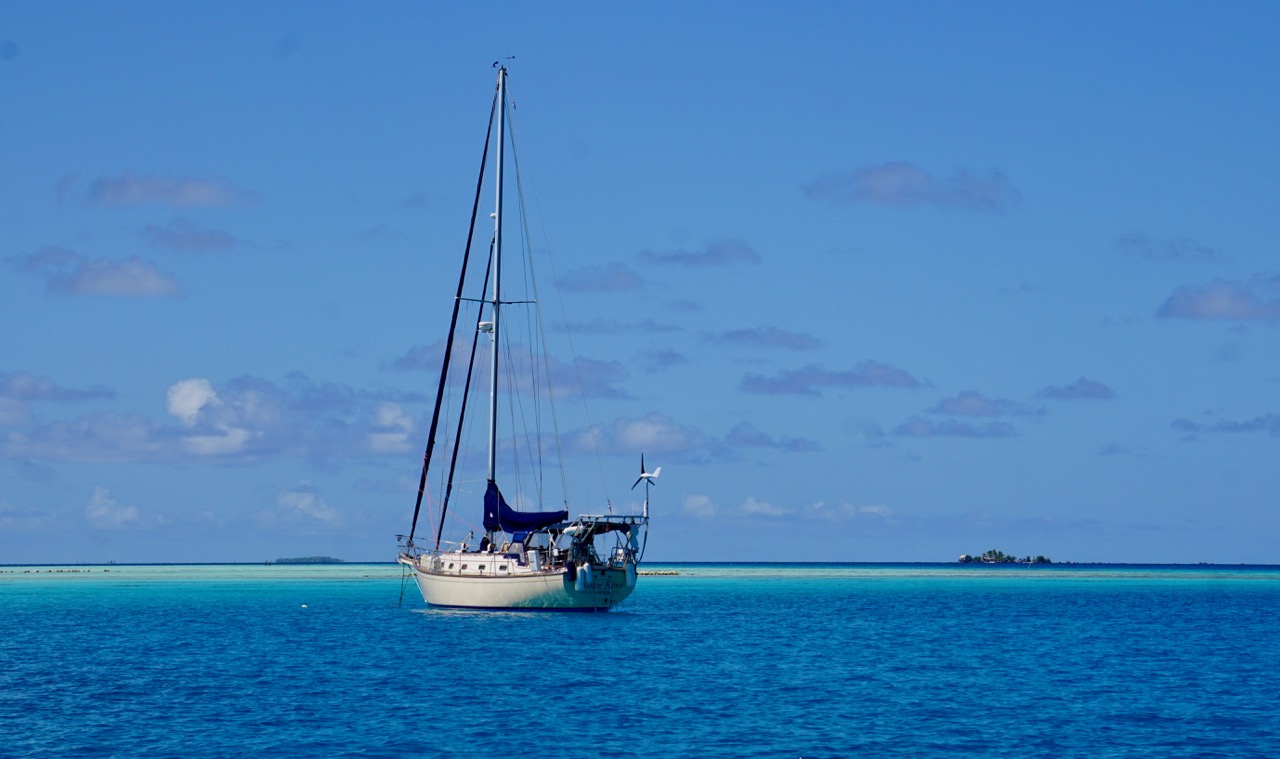
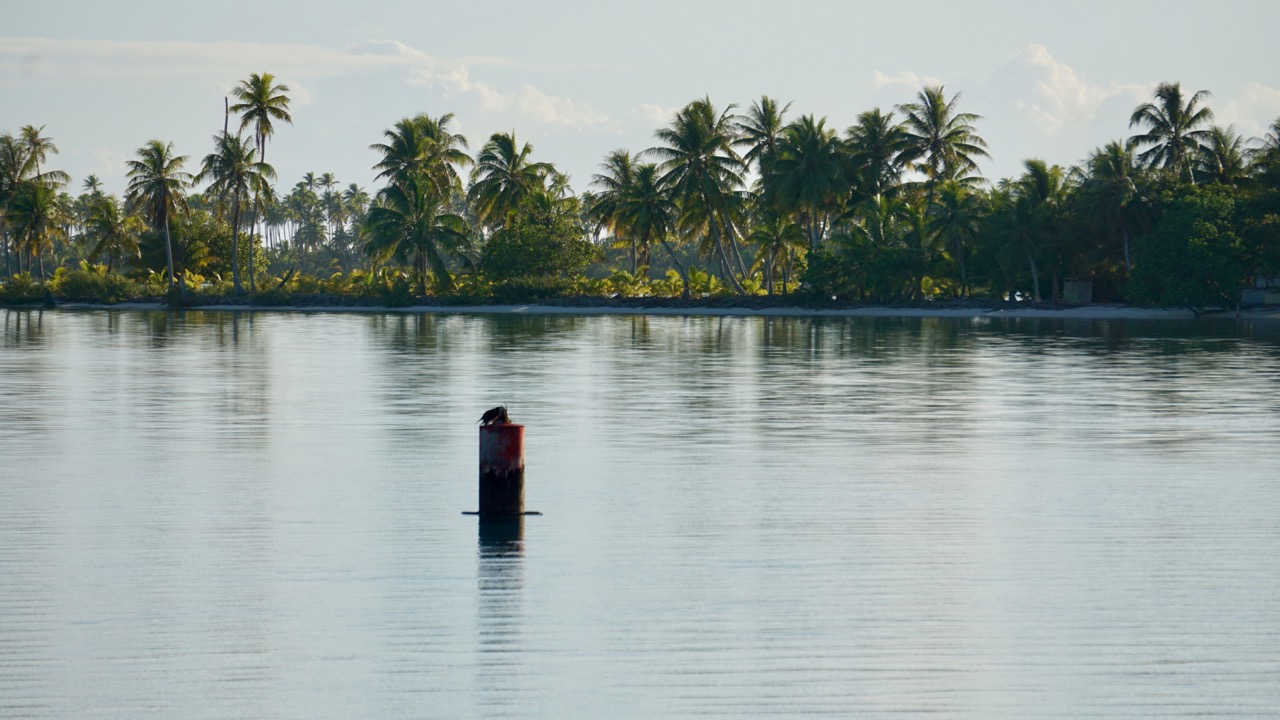
The distant beach was quiet. But across the narrow strip of the atoll we could hear the roar of the ocean. Our young sailor studied the fish while we cracked open a coconut—the captain can do it almost bare-handed. We fed the mosquitoes fresh blood, then hurried, hurried back, spending half the way swatting away a swarm of flies. They had somehow twigged that there was plenty of tasty stuff aboard our yacht, and a pair of saboteurs even infiltrated the boat with us. That was where they met their end.
And tomorrow we’ll tell you how the whole crew managed to land ourselves in some very real trouble. We had to spend the night in the dinghy.