
From the Travely-Family archive · Yacht, Sea and Equipment
Travel First-Aid Kit. What to Pack in a First-Aid Kit for a Seaside Trip with Children
An original publication from the former Travely-Family website. This English translation was preserved from the technical-site archive without editorial rewriting.
The Traveller’s First-Aid Kit
First-aid kit: how to put one together and what to include, plus the finer points and additional medicines needed for long journeys and life with children If your travels take you abroad, buy some of your medicines back home, because in other countries only vitamins and painkillers may be available without a prescription, while obtaining a prescription costs as much as a doctor’s consultation (€30–70).
In everyday life, we personally treat ourselves mainly with water, herbs and activated charcoal, BUT!
Even if you reject pills and chemical medicines, your first-aid kit should contain them in case of an emergency—the kind where normal people call an ambulance.
It is advisable to carry serious medicines both as tablets and in ampoules.
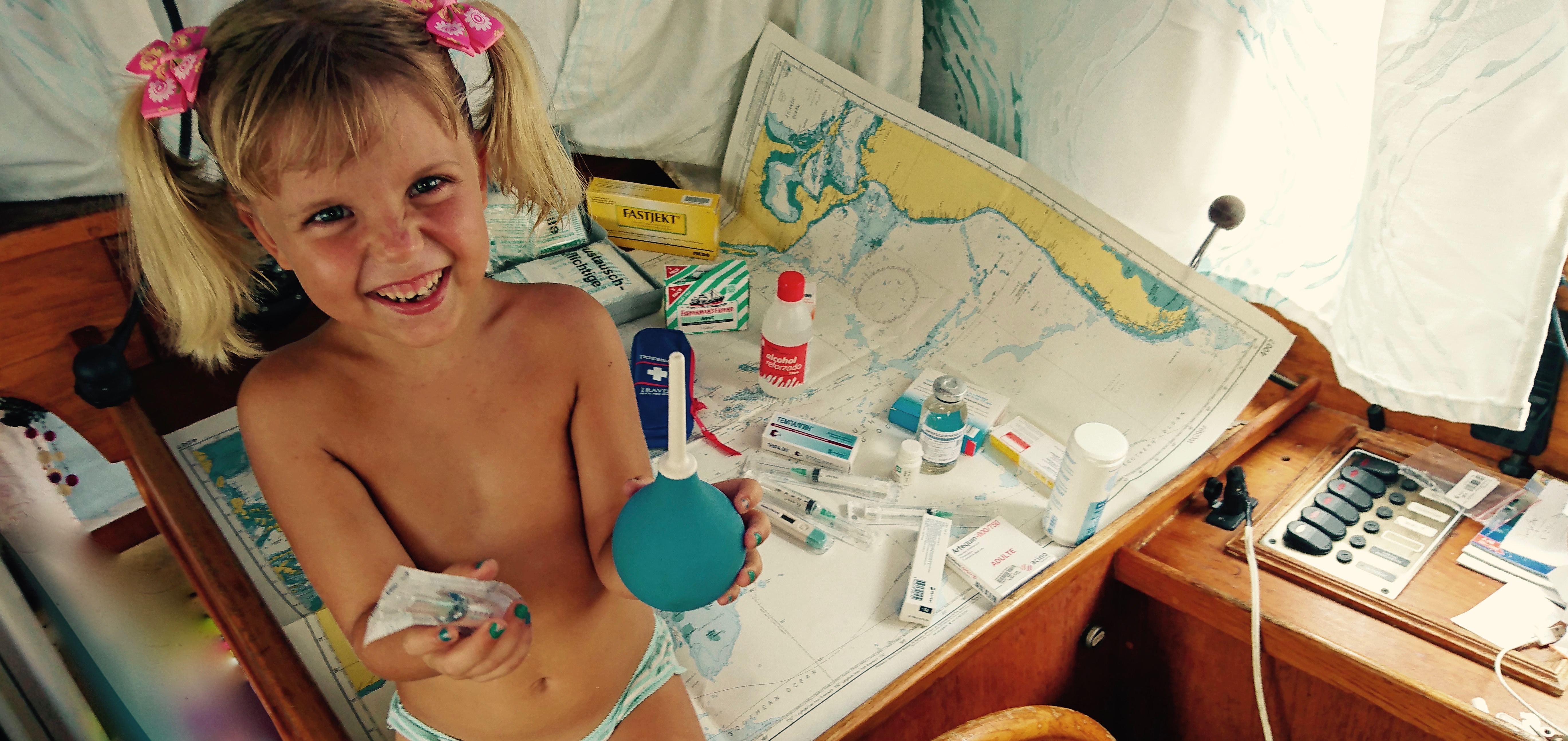
Choose packaging that is as tightly sealed and compact as possible (tablets in a jar with a tight-fitting lid are preferable to paper blister packs à la Soviet Citramon and activated charcoal).
Keep all the instructions!
A traveller’s hiking first-aid kit differs from a vessel’s medical kit in terms of volume: you can take more aboard a yacht than you can carry in a backpack.
The driest, most shaded locker on the boat should be designated for the vessel’s medical kit..
Our first-aid kit. The complete list of medicines — This list was compiled from our many years of independent travel over land and sea, and from advice given by doctors from Russia, Africa and Asia, as well as seasoned travellers.
— The list is not gospel and may differ from what is taught in educational institutions and recommended by the Ministry of Health.
Essential:
1. Antibiotics of the latest generation, with the broadest possible spectrum of action— amoxicillin and medicines based on it.
We also have ampicillin and Monural..2.
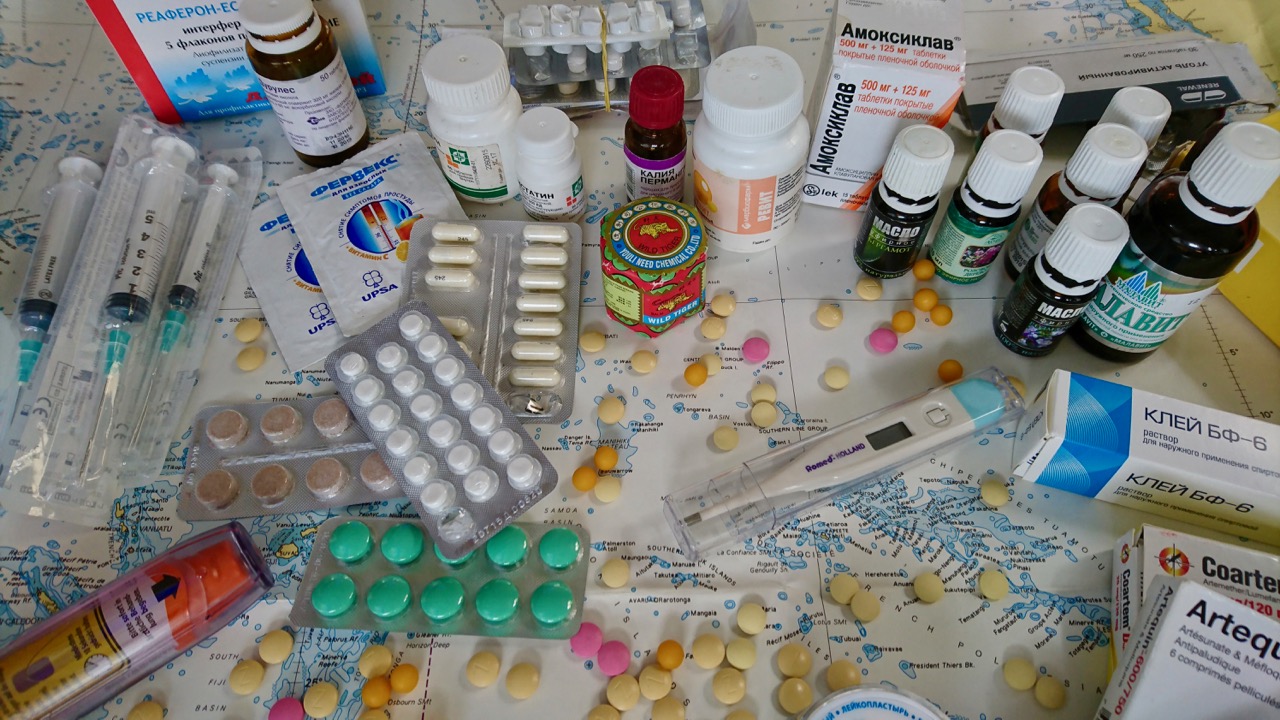
2. Anti-inflammatory medicines (hormonal)
Prednisolone (ours is in tablet form)
Dexamethasone (ours is in ampoules)
3. Fever reducers based on paracetamol and/or ibuprofen
4. Painkillers analgesics something stronger and/or from other categories (Ketorol, Movalis)
In many countries, these are mainly medicines based on paracetamol and ketorolac. Citramon and Noshpalgin are nowhere to be found for love nor money. The solution is to bring your favourite Russian oddities from home..55
5. Antihistamines and anti-allergy medicines
Suprastin, Zodak, Cetrine, Erius (take your pick) we also have Phencarol
6. Topical antiseptics
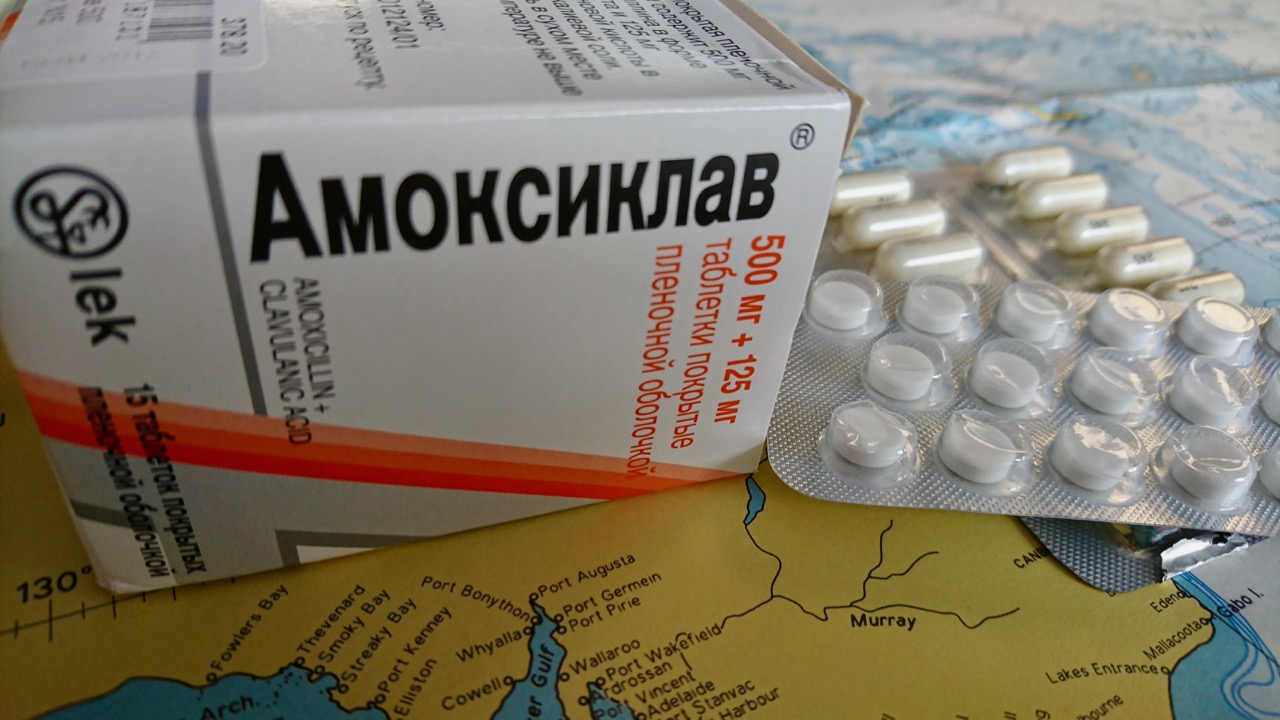
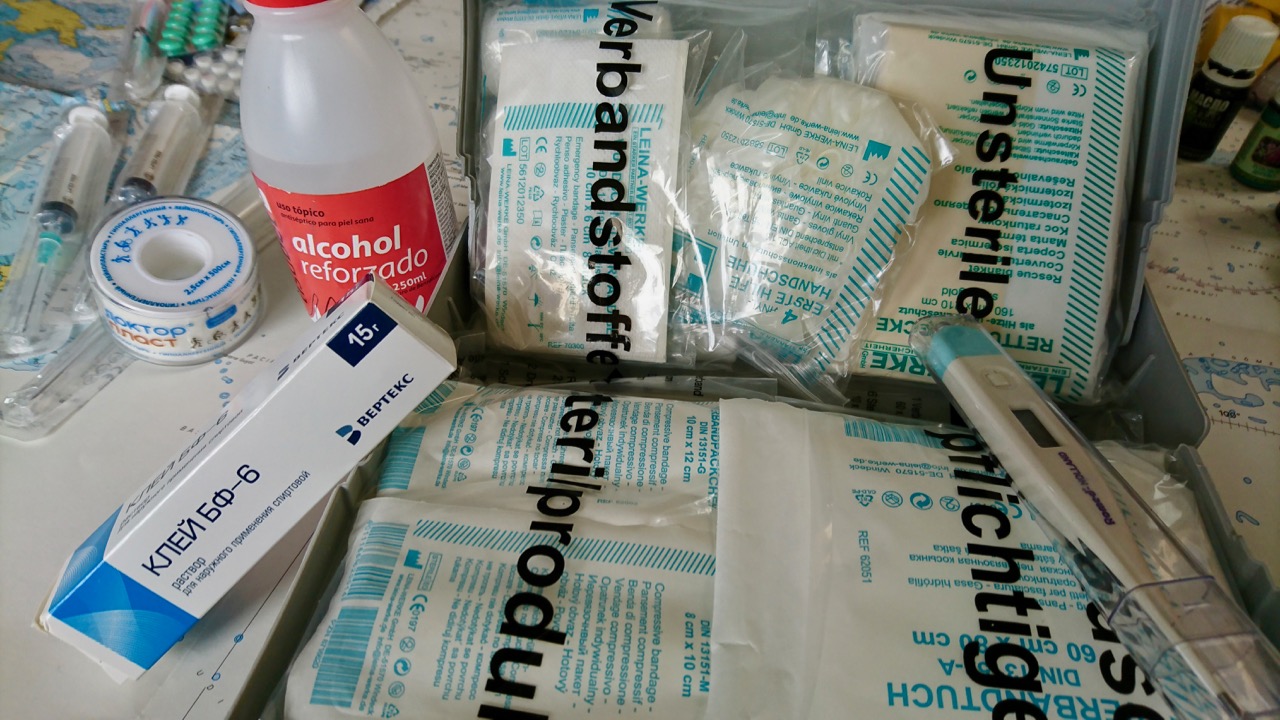
Medical alcohol (a substantial amount), or, at a pinch, rum or vodka
Hydrogen peroxide (hydroperite)
Chlorhexidine
Iodine, potassium permanganate
BF-6 medical adhesive
+ A water disinfectant (ours is a silver-based powder)
7. Saline solution
8. Large syringes for injections (20 ml) and small ones (1–5 ml)..
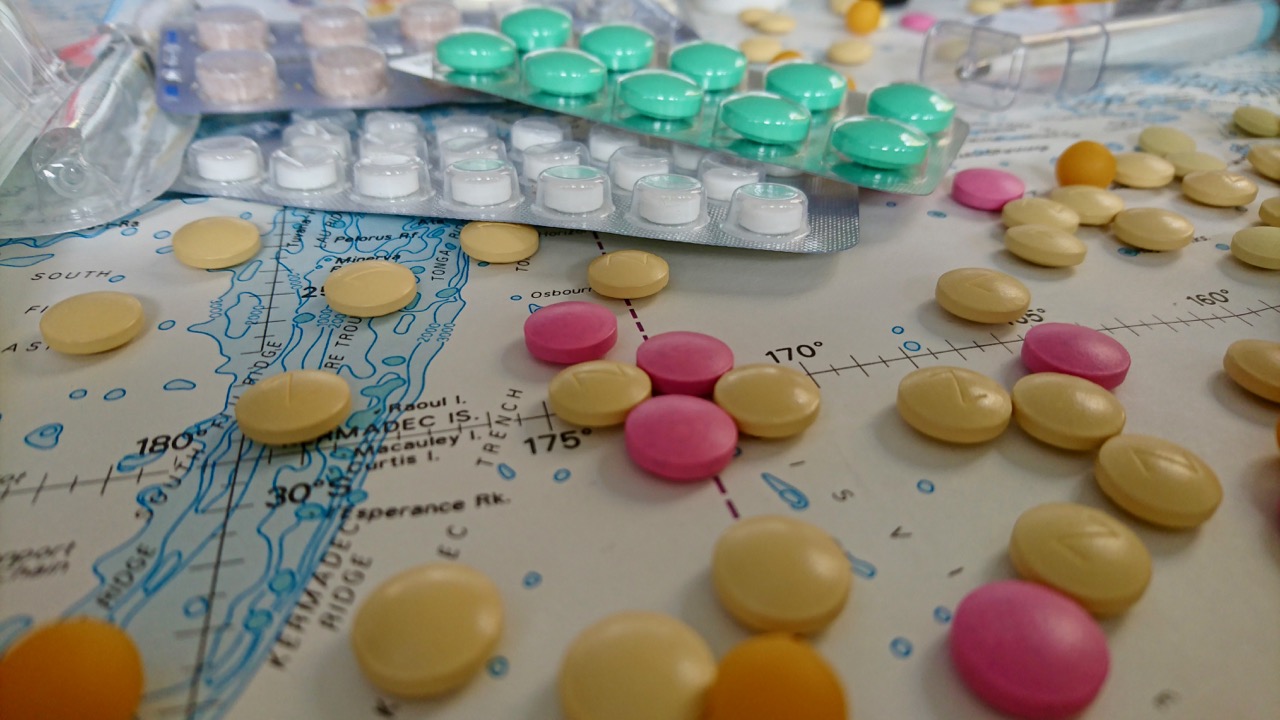
9. Absorbents and antidiarrhoeal medicines
Activated charcoal..., Smecta (available almost everywhere)
Enterofuril
10. Medicines for your favourite (chronic) ailments
Experience shows that during a long journey you may be overcome by anxiety and a sense of not being settled (which strikes mothers who love nesting), and this can aggravate chronic conditions.
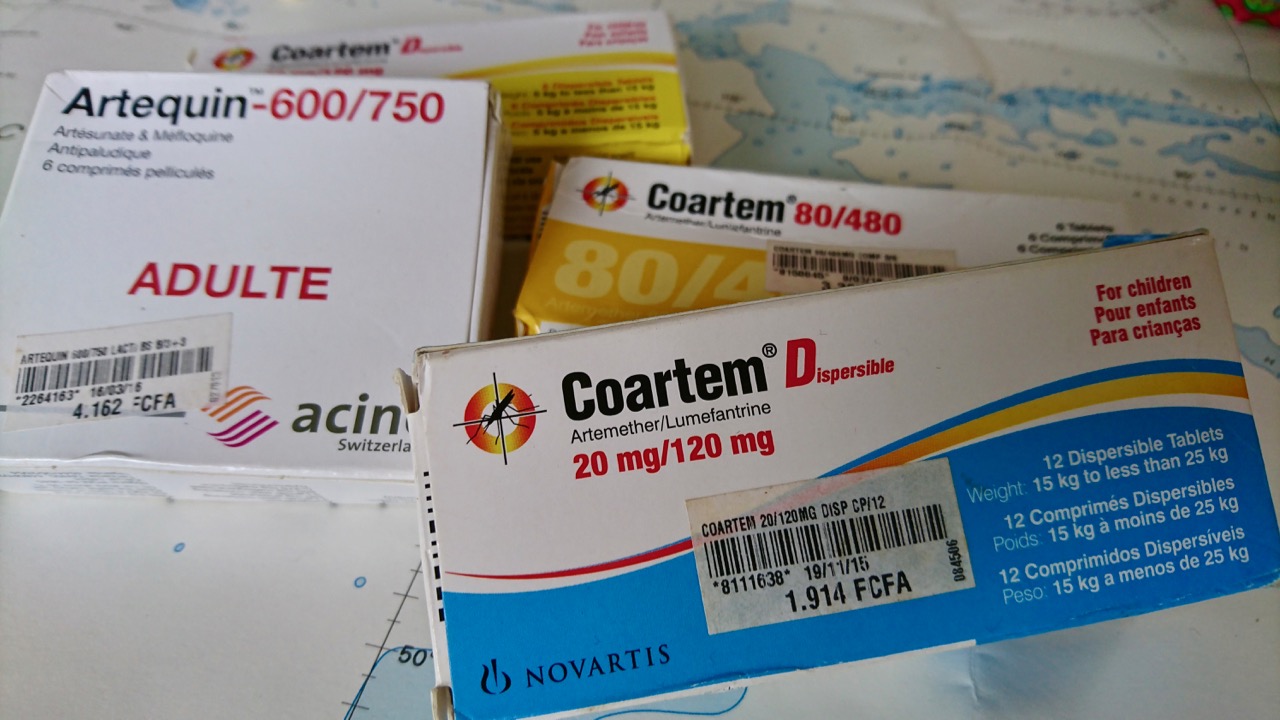
11. Medicines for tropical diseases, if your route takes you to hot countries
We have not had vaccinations against yellow fever or any other fever, nor do we load ourselves up with antimalarial medication in advance. In Senegal, on a doctor’s advice, we bought a new and effective malaria medicine in paediatric and adult doses. It must be taken when symptoms appear. The first symptom is a fluctuating temperature, jumping from very high (39+) to normal several times within 24 hours.
There are also simple malaria tests using a drop of blood. We have not yet managed to obtain any..
12. Trauma kit
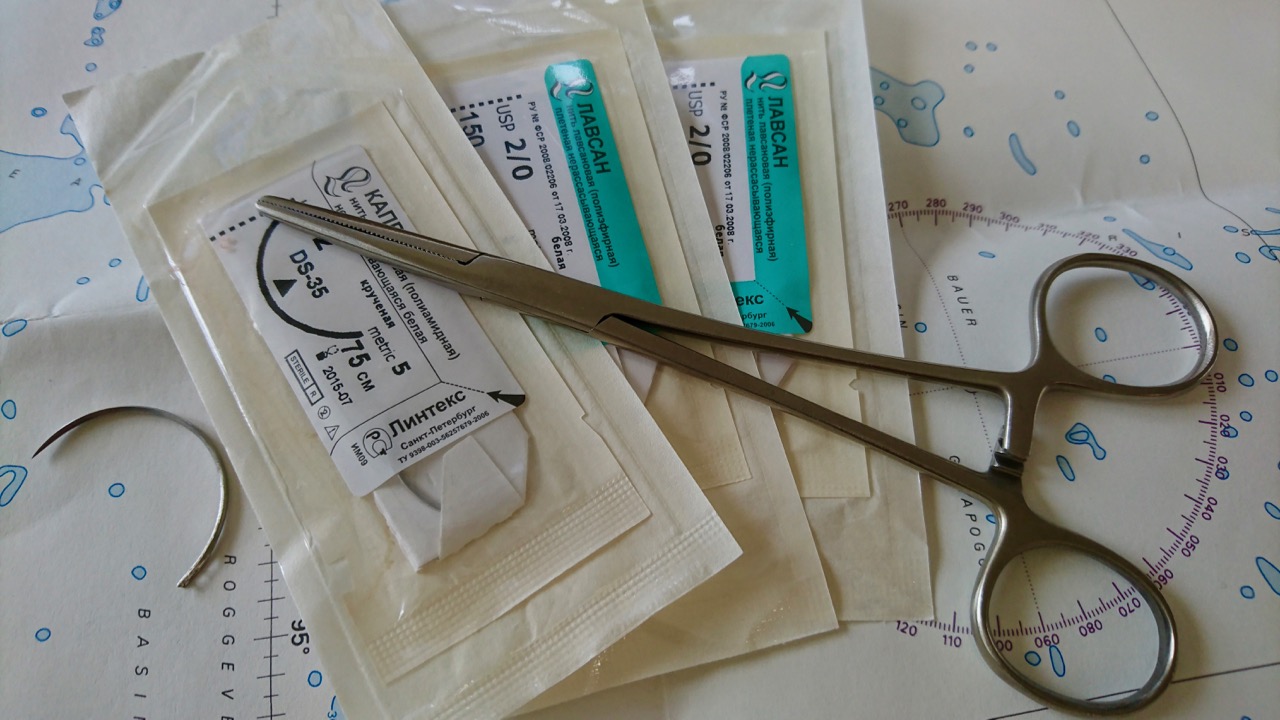
Suture material, needles and a scalpel
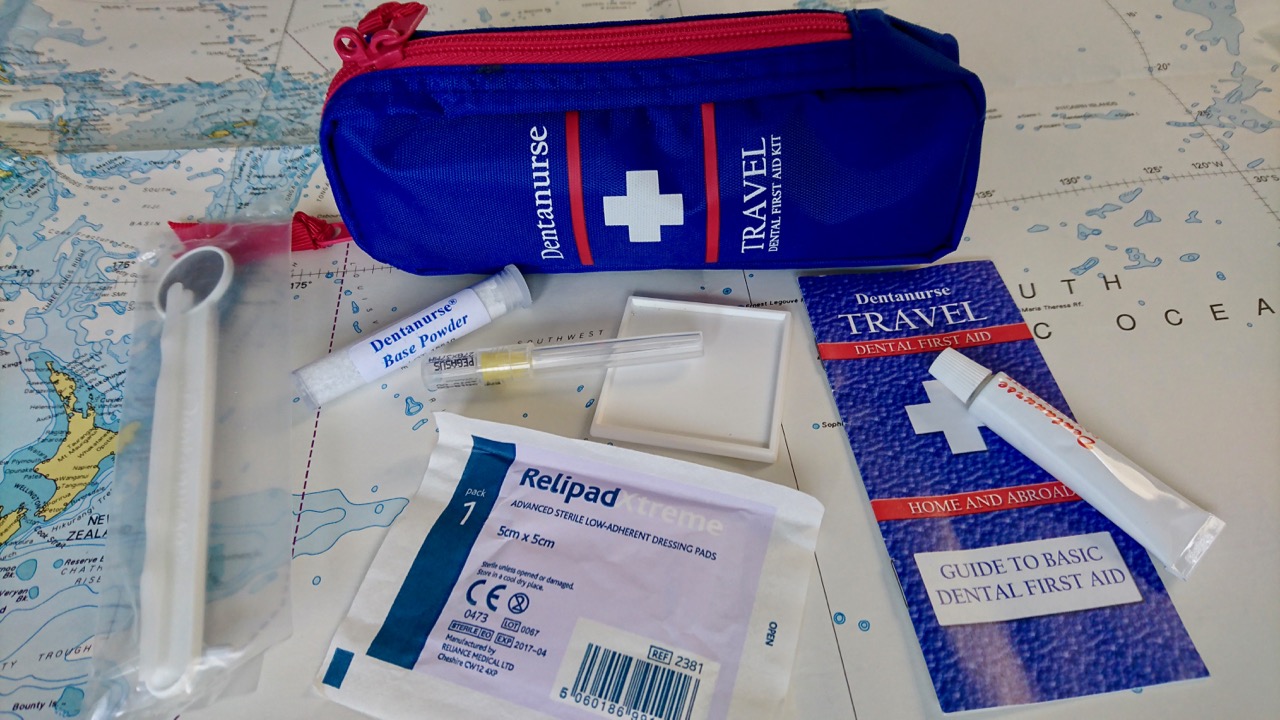
Emergency dentistry kit (filling material)
Haemostatic agents
Vikasol in ampoules
Epsilon-aminocaproic acid
Wound treatment solution
A doctor friend of ours who lives in tropical Africa taught us how to prepare a miracle wound treatment (including for coral cuts). The ingredients are:
Dexamethasone (liquid)
Dioxidine (liquid)
Rifampicin (capsules)
Alcohol
Saline solution
Dressings (bandages, cotton wool, an elastic bandage, sticking plasters—antibacterial and on a roll)
Suture material, a universal clamp and a surgical needle
Junior dentist’s kit.
Good to have
1. Medicines that relieve spasms and muscle pain
No-Spa
Diclofenac (or equivalents in tablets and ointments)
Once, our first mate overdid it on the winches during a storm. Her back seized up for about ten days so badly that it still brings tears to the eyes. This is called a trapped nerve and is treated in hospital. In addition to stretching exercises, ointments and massages from the captain (Andrey spent several years studying healing techniques in northern Thailand), she took diclofenac.
2. Anti-inflammatory eye/ear drops
Sofradex
3. Antiparasitic remedies
Folk remedies (tansy, herbal mixtures, garlic, flaxseed, etc.)
Decaris and others
4. Antifungal and antiprotozoal medicines (against protozoa such as amoebae and trichomonads) Tinidazole (tablets)
Metronidazole ointment
5. Cold remedies
Ear, throat and nose drops (sprays)
Eye drops (Albucid)
For children’s coughs, we have badger fat in capsules, herbs (thyme, coltsfoot), and liquorice syrup
6. Antivirals
7.
All-purpose family remedies that are almost folk remedies:
Essential oils
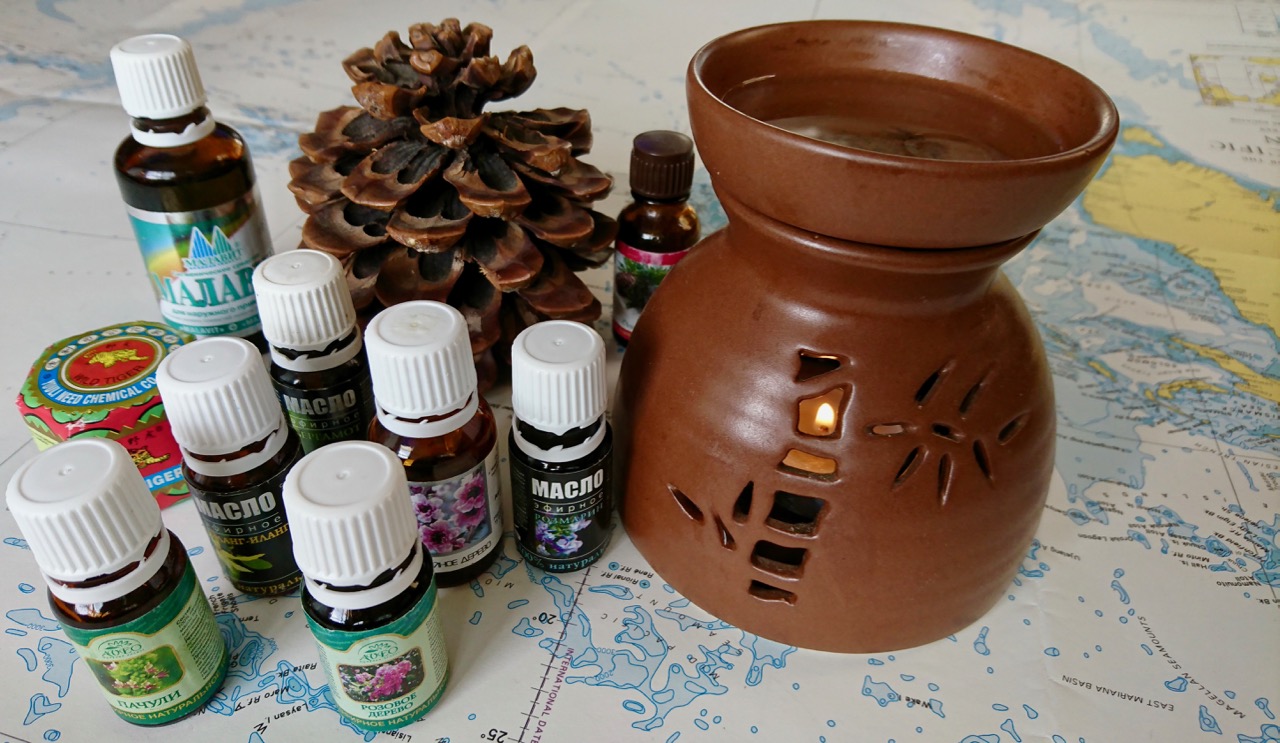
Tea tree, conifer, peppermint, clove and lemongrass (against mosquitoes)
Herbs
Eucalyptus, thyme, chamomile, pomegranate peel (for intestinal upsets and even dysentery) Ointments
Tiger Balm (the Thai equivalent of “Zvezdochka”), Bepanthen, Dikul’s balm, Rescuer balm...
“Malavit”
We always have garlic on the boat.
When other medicines are unavailable, it can be used to treat almost anything, from worms to thrush and colds..
Don’t forget!
Hygiene products
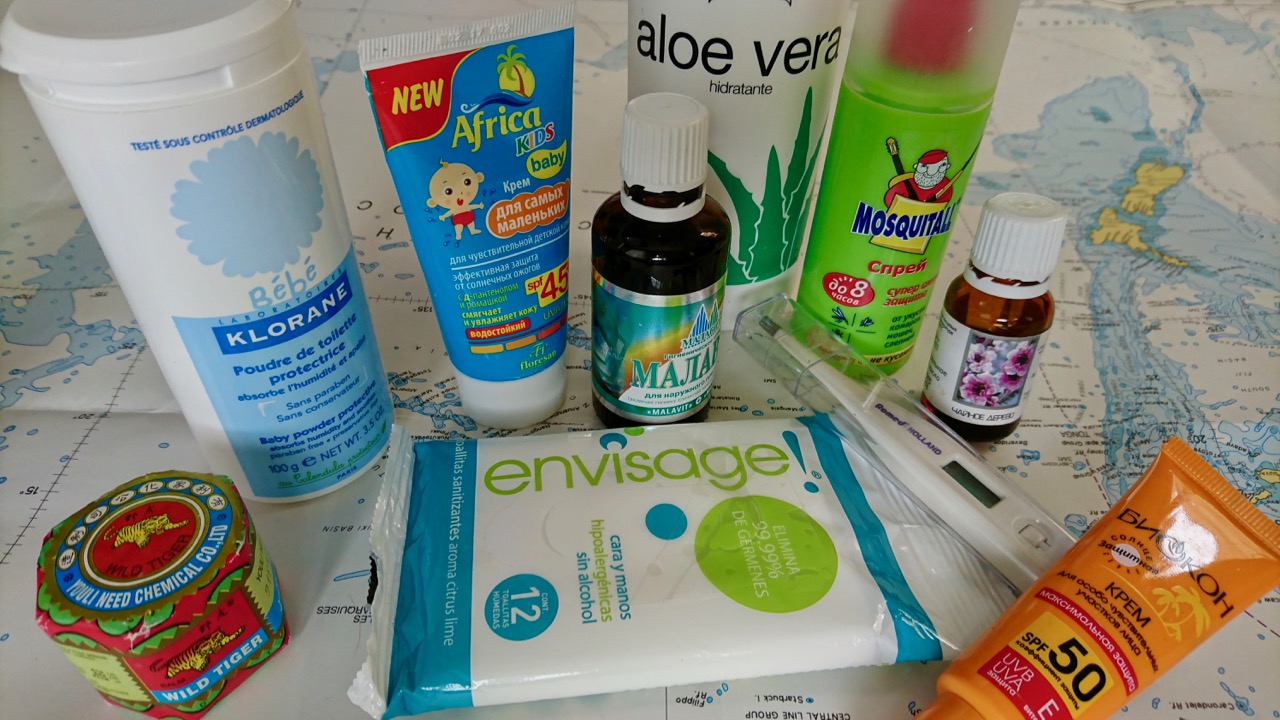
Sunscreen and mosquito repellent, as well as remedies for the effects of both (aloe vera for sunburn)
Baby powder (in the humid tropics, delicate skin develops heat rash. We asked local people how they protected their children from this scourge, and the answer turned out to be powder. We dust even the most dreadful heat rash with talc for a couple of days, and the children’s little faces are as good as new)
Pocket hand sanitiser (to disinfect hands before having an ice cream while out and about) Sterile rubber gloves
Thermometer.
The captain advises taking:
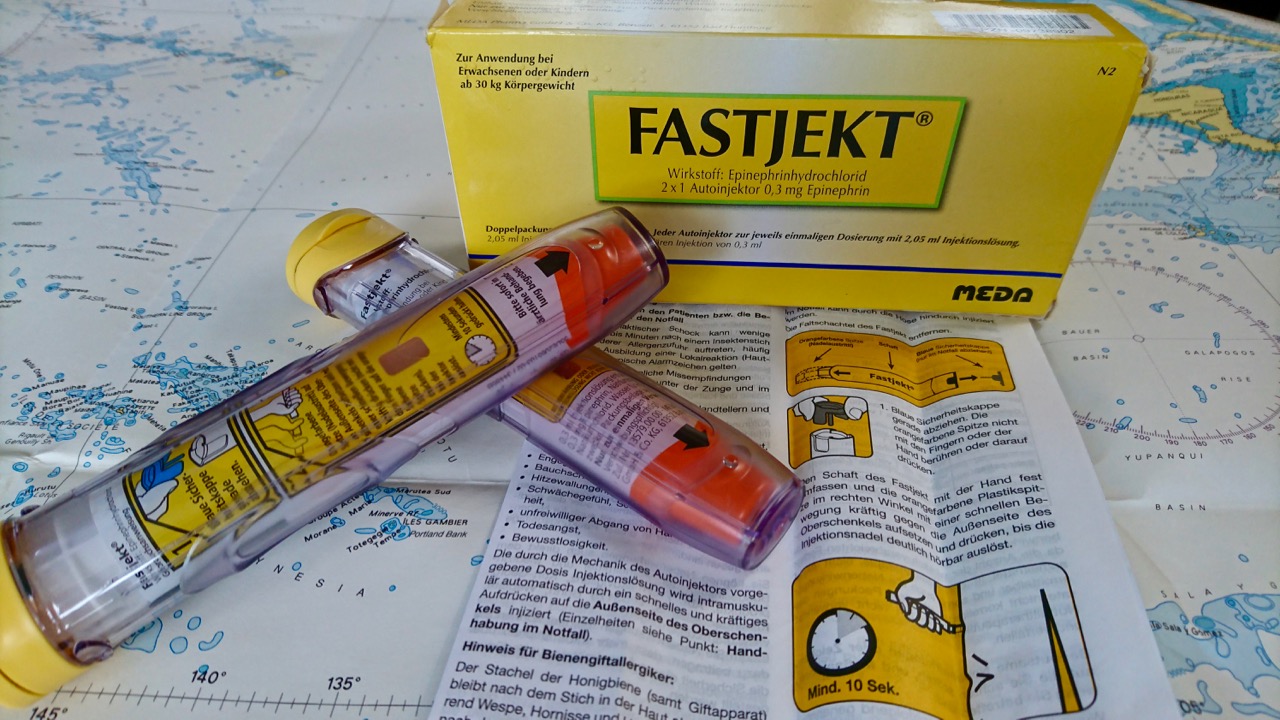
Adrenaline, which in films they inject straight into the heart with a long needle if it stops.
We were recently given a couple of kits (they say they are hideously expensive, something like €600):
Nitroglycerin—for the heart, and you can use it to make explosives, just like in the movies, again 😉 (but now he’s getting carried away...)
Adrenaline. The kit contains everything required to administer an injection....
What we have already needed from this list during 10 years of overland travel and 3.5 years of sea voyages
The antibiotic amoxicillin (after a cold complicated by sinusitis)
Painkillers and fever reducers
Smecta and activated charcoal—for the children
A plastic bottle from which the captain fashioned a splint for the first mate while we were on our way to hospital with her broken arm
Pomegranate peel for the captain’s intestinal infection
Wound treatment when an infection began during the Atlantic passage
Diclofenac (when her back seized up after working in a storm)
Anthelmintic herbs and garlic for our little young sailor’s pinworms
Cough and ear, nose and throat remedies
No-Spa and medicines for chronic ailments
Notes for those travelling with children
If a child is struck down by some mysterious ailment and a doctor is unavailable, mothers tend to look for support online. Save folk remedies for stomach trouble, colds, headaches, parasites, burns and sprains on your laptop (or write them down).
Reading folk-medicine recipes has a beneficial effect on two fronts:
it opens your eyes to new ways of using familiar products it calms a mother’s nerves: we have so much of this stuff aboard! Anything harmless and effective can be mixed, brewed and applied in turn, creating a flurry of activity around the child and thereby relieving your own stress at feeling helpless: look how much I’ve given him—surely something will work now!
“Blowing out the seacocks!”
P.S.:
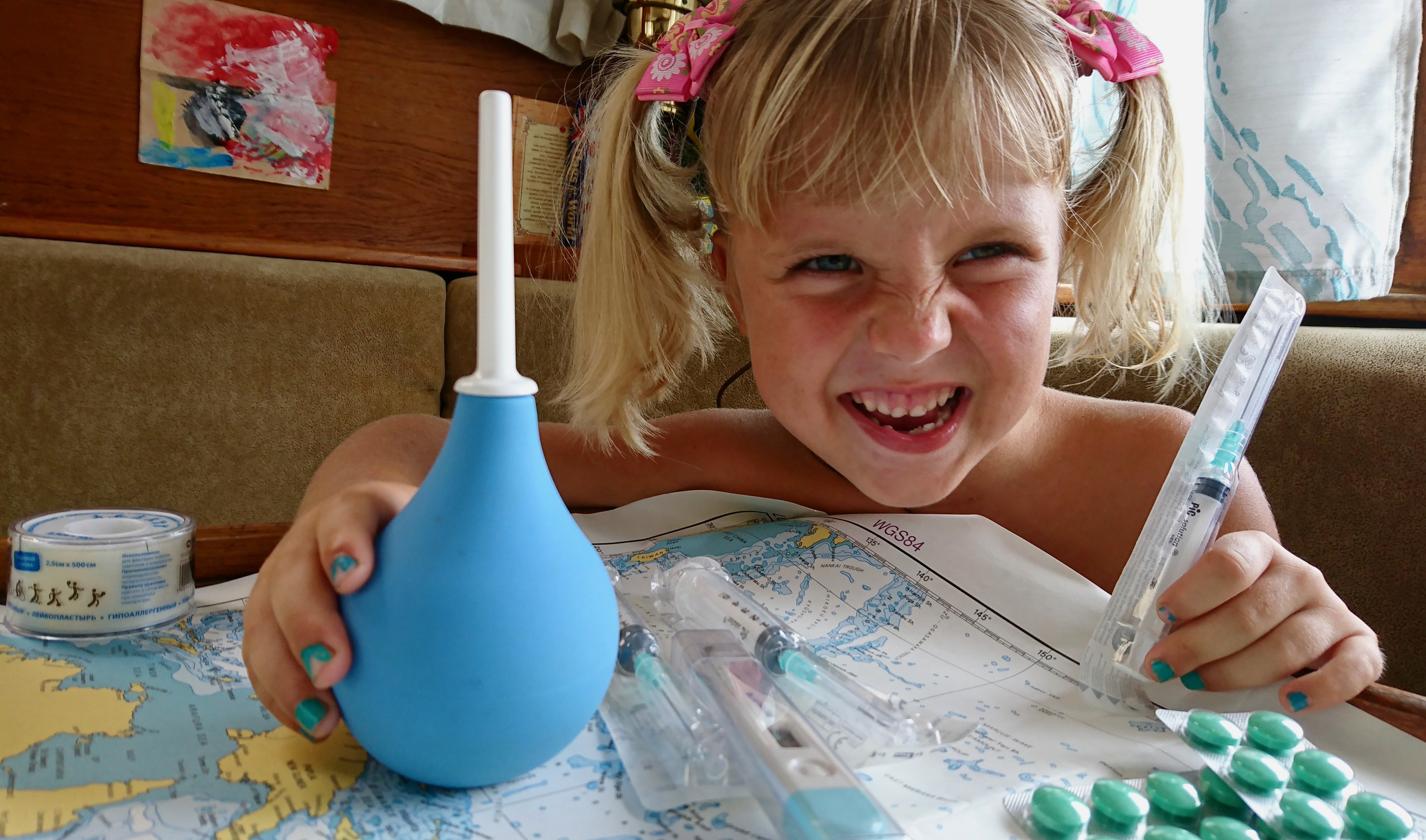
We are already compiling information on the non-pharmaceutical folk remedies used in exotic countries in place of our herbs and vitamins.
Just in case:
having a first-aid kit does not mean you should not see a doctor when necessary and possible.
Stay healthy!
If you found this article useful and would like to thank the authors but do not know how, click the button below 🙂 And we recommend subscribing to our news updates by email!