
From the Travely-Family archive · Yacht, Sea and Equipment
Seasickness Remedies. Seasickness: Symptoms and Treatment
An original publication from the former Travely-Family website. This English translation was preserved from the technical-site archive without editorial rewriting.
Seasickness remedies
They say Admiral Nelson suffered from seasickness all his life. Our captain does not suffer from seasickness at all. And yet...
A condition resembling a hangover of varying severity, with all that entails, periodically overtakes almost everyone who lives at sea.
How the crew feels changes depending on the sea state and the vessel’s course relative to the wind. On a downwind course with a following sea, it is easier to feel cheerful and happy. A headwind and a beam sea increase the rolling and the chances of feeling ill.
On average, the body needs between 2 and 10 days of continuous time at sea to find its sea legs.

What, besides the weather and the individual characteristics of the body, affects how you feel when the boat is rolling:
— Food and water (during and before the passage), — special remedies, — preparatory exercises.
Let us consider everything in order.
— Food.
In the run-up to a passage (for a week or two beforehand) and during it, avoid heavy food, meat, fatty and fried foods, milk and eggs, as well as coffee and cigarettes. At sea, raw fruit and vegetables are more readily accepted by a body unsettled by illness.
— Water.
You need to drink more water before, after and during the passage. Because if you get seasick to the point of hanging over the leeward rail (you know why), dehydration sets in very quickly and can lead to even greater problems.
— Exercises for the vestibular system, swings, and regular spinning around your own axis in both directions.
According to the famous sailor Viktor Yazykov, he and his companions stopped getting seasick as soon as they began practising the following exercise routine:
Stand upright and close your eyes. Perform the exercises slowly and mindfully. Inhale, then hold your breath for 5 seconds and begin moving. Then exhale slowly, continuing the movement until the end of the exhalation. It is advisable to work up to a combined breath-hold and exhalation of about 2 minutes.
1. Turn your head alternately to the right and left
2. Tilt your head to the right and left
3. Tilt your head forwards and backwards
4. Rotate your head clockwise in a circle
5. Rotate your head anticlockwise in a circle
Do the exercises 2–3 times a day, though more often is obviously better 😉
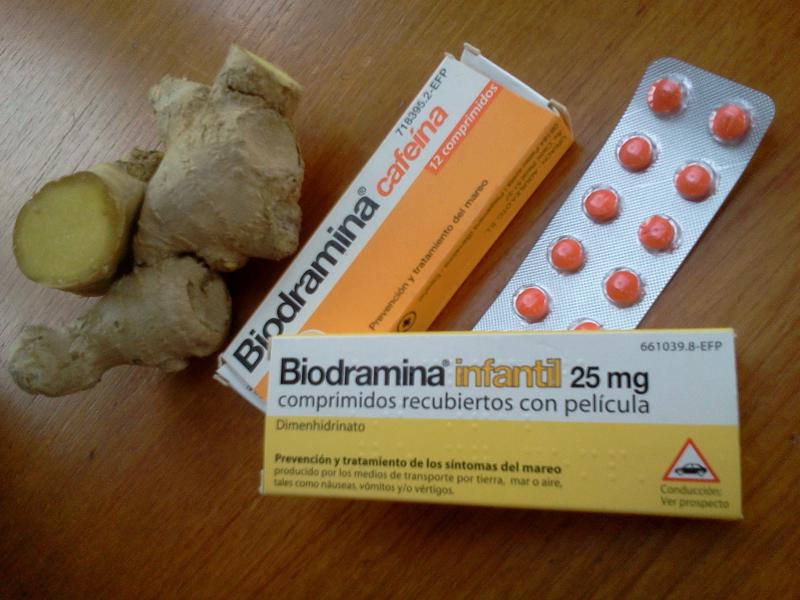
Biodramina — Folk remedies
These include ginger, lemon and cinnamon (weak tea with cinnamon). Take them as often as possible, chewing a little at a time.
— Special remedies:
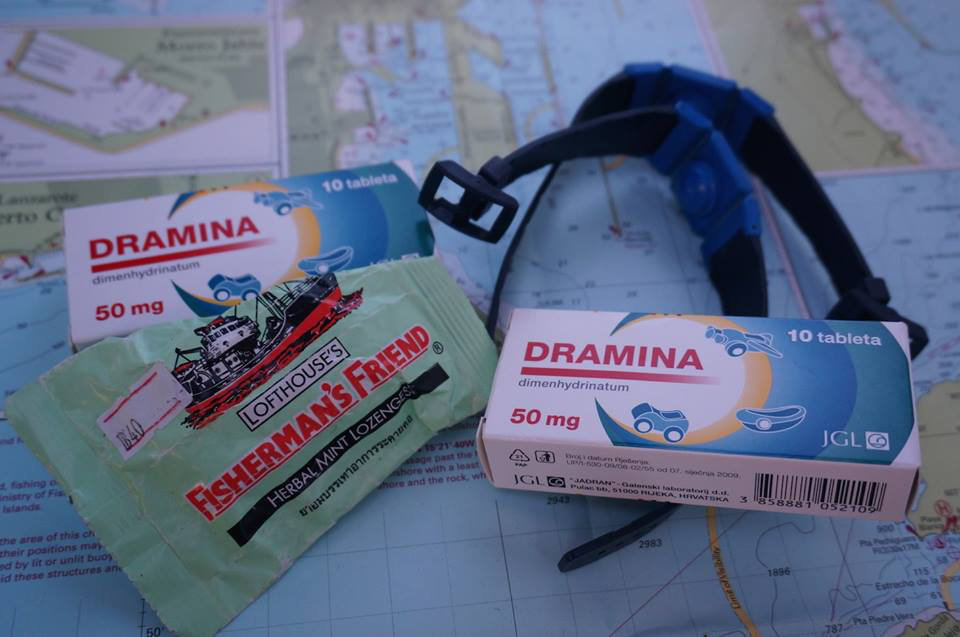
tablets, wristbands and patches. Special wristbands and patches work on the principle of acupuncture therapy—or, to put it simply, by stimulating specific active points.
The wristbands are worn on the wrist with the raised stud facing inwards, three finger-widths below the base of the hand. The patch is applied just below the ear, where the lower jaw meets the neck. It sounds funny, but that is roughly where it is.
Seasickness tablets are dietary supplements and are mainly made with ginger powder. They are recommended an hour before the onset of seasickness, and then at set intervals while it continues. Biodramina is one such product.
Another remedy is Stugeron. They say it is the only tablet-form medication indicated not as a preventative, but after the fact, once you are already seasick. Ah! And menthol lozenges belong here too 🙂 — Unverified remedies
Among the unverified remedies for seasickness that we have heard about but have not tried ourselves is, oddly enough, beer. In Italy, people stock up on this drink before going to sea specifically in case of seasickness. How it works is unclear; perhaps, after consuming alcohol, the body begins swaying out of phase with the vessel’s roll, bringing it into a state of relative calm. Apparently, that was precisely why ships in the old days always carried a large supply of rum, which was issued to sailors during passages.
Another method of preventing seasickness was suggested to us by friends of ours who spent many years crossing the Atlantic on cruise liners:
before the passage you need to drink a lot, but at sea you should refrain from excessive water consumption and switch to dry foods such as crackers and dried vegetables, so that the stomach is neither empty nor overfull.
Choosing a suitable remedy for seasickness is a matter of trial and error. The author usually uses a combination therapy: wristbands, ginger, lemon, plenty of water and, as a last resort, magic pills.
Worth noting:
— To ease the condition, look at objects that move relative to the yacht; if there are none, the horizon will do.
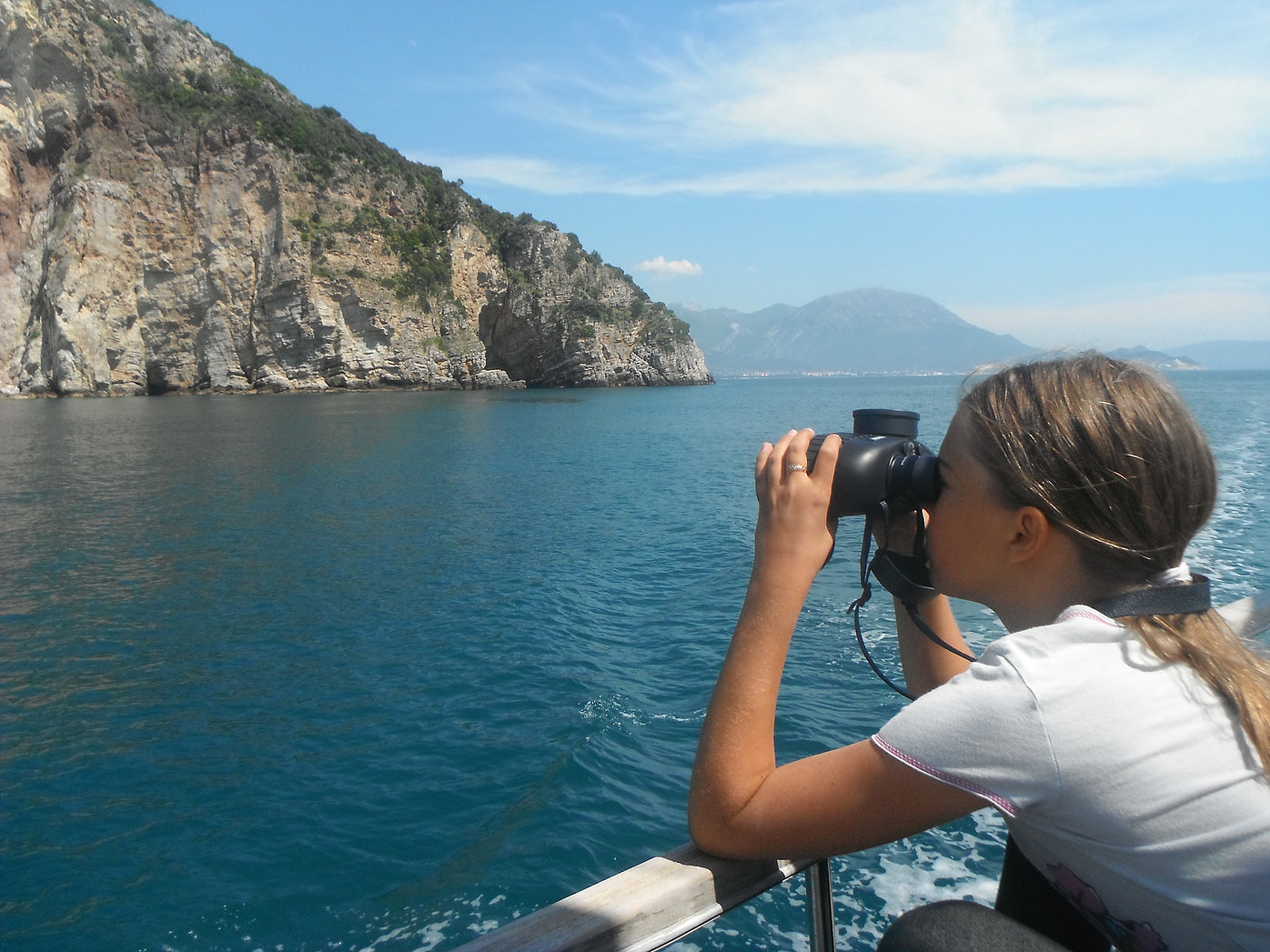
— Keeping active—working the sails, moving fenders from one side to the other, standing at the helm, etc.—takes your mind off the symptoms.
— Seasickness is considerably less severe on deck than down below. The most stable place is the vessel’s centre of effort, by the mainmast.
— Staying inside the yacht while she is rolling is extremely unhelpful: the likelihood of feeling ill increases many times over. The only saving option is to lie on your back and be sure to close your eyes, so as not to torment your cerebellum with impossible tasks. This last resort is also used when all the methods listed above have failed.
We wish all sailors good health and an excellent vestibular system!
If you found this article useful and would like to thank the authors but do not know how, click the button below 🙂