
From the Travely-Family archive · Pacific Ocean
LAND!!!
An original publication from the former Travely-Family website. This English translation was preserved from the technical-site archive without editorial rewriting.
LAND!!! The First Enchanted 13 Days After Leaving Panama City. From the companionway came a thunderous cry of “LAND!!!” What do people do when they see, in the middle of the ocean, the land they have been sailing towards for 13 days? That’s right, they make landfall. But that’s what normal sailors do.
Normal heroes always take the long way round:).
We did not immediately make out the outline of San Cristóbal—the first of the Galápagos Islands—through the haze. Clouds had massed above the yellowish cliffs, which for now could only be discerned WITHOUT sunglasses.
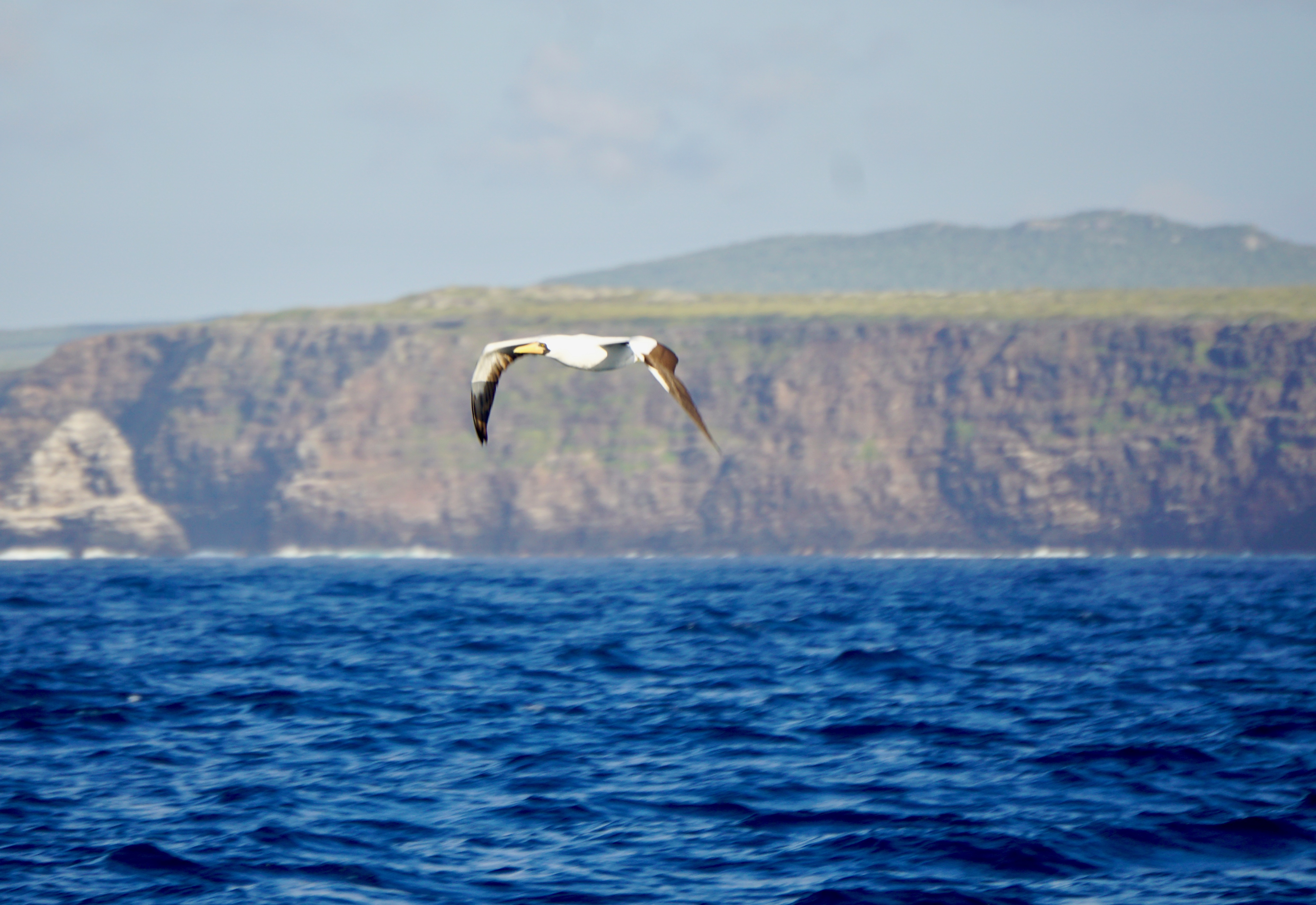
The island is named after the holy martyr Christopher (not Columbus). It is home to the archipelago’s largest freshwater lake, Laguna El Junco. The capital is here too, by the lake. We look at the ship’s clock and ponder: it is about 15 miles to Cristóbal and around 60 to Santa Cruz Island (where we are headed). Which means we will only be able to make out the shores at the very moment when the sun goes off to shine on the other hemisphere.
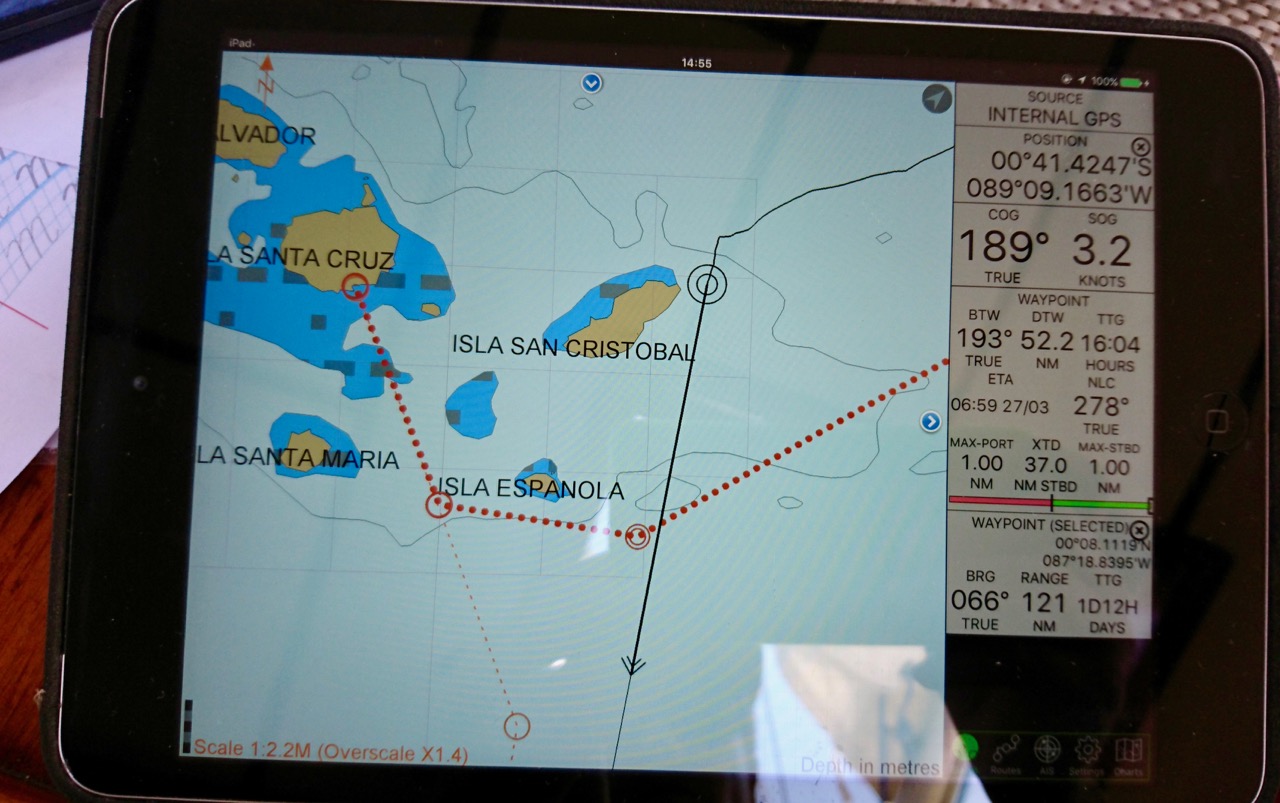
We have set aside about $1,500 to enter the Galápagos (Back off, inner cheapskate!). You are allowed to stay in only one place; for the pleasure of visiting three ports, there is a surcharge of about $500. Five ports cost around $3,000 altogether. Since we have only set aside enough money for Santa Cruz—and a mere one and a half grand at that—it would be a shame to pass the islands along our route in pitch darkness. We decided on a crafty tack: to sail to Santa Cruz, which lies to the west, by heading south, then west along the southern side, and then north, so we could see two more islands. And clean the bottom along the way: it has fouled again since Panama. They might fail us at inspection, heaven forbid, and expel us from the nature reserve.
We resolved to approach the southern islands by morning, pass close to shore, and only then present ourselves at the harbour on Santa Cruz Island. We reef the sails so that the genoa serves as a jib, point higher into the wind and set off in a direction almost opposite to the one we need. Cunning:).
The shortest route is not a straight line:). Our plotted route is shown in red.
Tomorrow There Were Lions
“Lions, guys, lions!” Glancing out of the wheelhouse window, I freeze, pointing at a group of swimmers in glossy black bathing suits. Though perhaps they are fur seals. I am no great expert on sea lions and fur seals; until now I had seen both only at the zoo. One whiskered, gleaming swimmer, as if he had heard me, stretched out his neck and, with all the grace of a character in a Soviet cartoon, smiled over his shoulder—as if he were about to wave a flipper: come on in, Marinka, let’s go swimming!
A pod of about 20 heads peers curiously at a large object with mast poles sticking into the sky and sails longing to embrace the whole wide world.
“Well, that’s it—we’ve met the lions, so we may as well head straight for Easter Island!” the captain announces joyfully. “We’re on exactly the right course.”
But something stops us from giving up on the Galápagos and setting off across the ocean for another month. We very much want to see blue-footed boobies, giant tortoises and the world’s only marine iguanas.
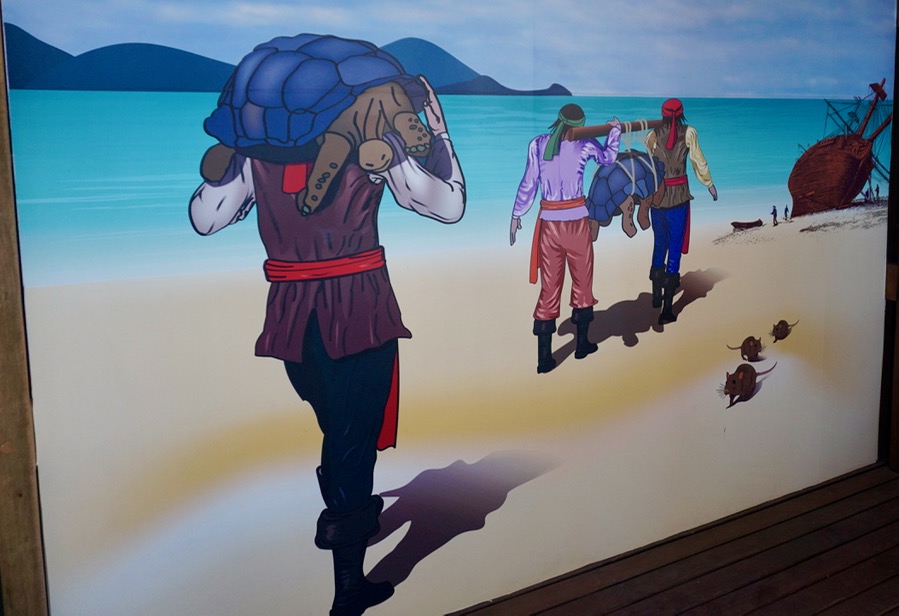
The Galápagos were discovered almost 500 years ago and were initially considered unfit for human habitation, which saved the local flora and fauna. Later, pirates and whalers settled on the islands, and through their efforts many endemic species were wiped out. In those days people were more concerned with filling their bellies, so the rarest birds and giant tortoises became food for humans, while the world’s only marine iguanas were devoured by introduced pigs (sometimes I wonder what sort of grand harmony God had in mind when He placed humankind on Earth?..).
They filled the holds with tortoises. This food stayed alive for a long time and did not need feeding or watering
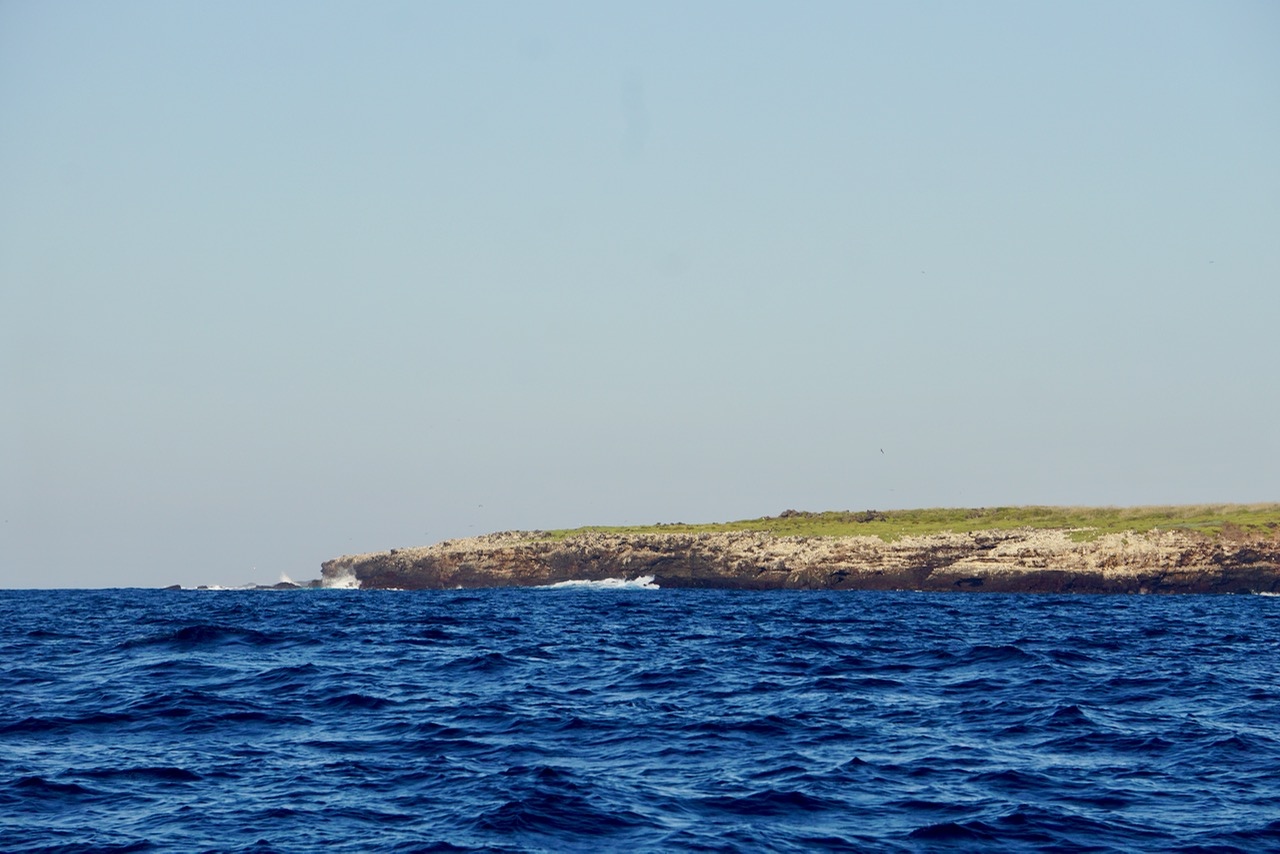
Off the starboard side are the basalt cliffs of Española Island, also known as Hood:). The names of the Galápagos Islands are rather muddled: many still have two or even three names. For example, the second island we will pass is called Santa María, also known as Floreana, also known as Charles.
The pioneer who named the Galápagos Islands was the pirate William Ambrosia Cowley. In 1684, this gentleman of fortune was the first to draw up anything resembling a map of the territories discovered a century and a half before him. The pirate-joker gave the islands the names of his acquaintances: sea robbers, noblemen who supported pirates, and their opponents.
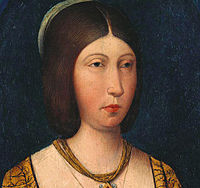
Later, the Spanish appeared in the archipelago and named the islands after great martyrs, saints and assorted Queen Isabellas of Castile. Then, after Darwin, the islands acquired English surnames as well. The islet of Bartolomé, for instance, proudly bears the name of a lieutenant in the British Royal Navy. There is Pinta Island, named after one of Columbus’s caravels, which in turn bore the name of a dockside prostitute and did not change it after passing into Columbus’s hands (sailors are a superstitious lot).
Isabella of Castile
Española Island is uninhabited. Rocky precipices, the roar of the surf, blowholes shooting sea foam higher than a rainbow. Boobies fly over to greet us. Pugnacious frigatebirds, as usual, fight their neighbours over fish. Graceful tropicbirds resemble snow-white lyrebirds—their tails, like slender needles, become forked arcs in the water. And here are the world’s rarest waved albatrosses, which nest only on Española! They are not found even on the archipelago’s neighbouring islands.
With one hand pressed to my chest and the other to the camera, I watch the life of the birds, spellbound. The scent drifting from shore alternates between bird droppings and sweet grasses.
A Fair Maiden Sits in a Dungeon
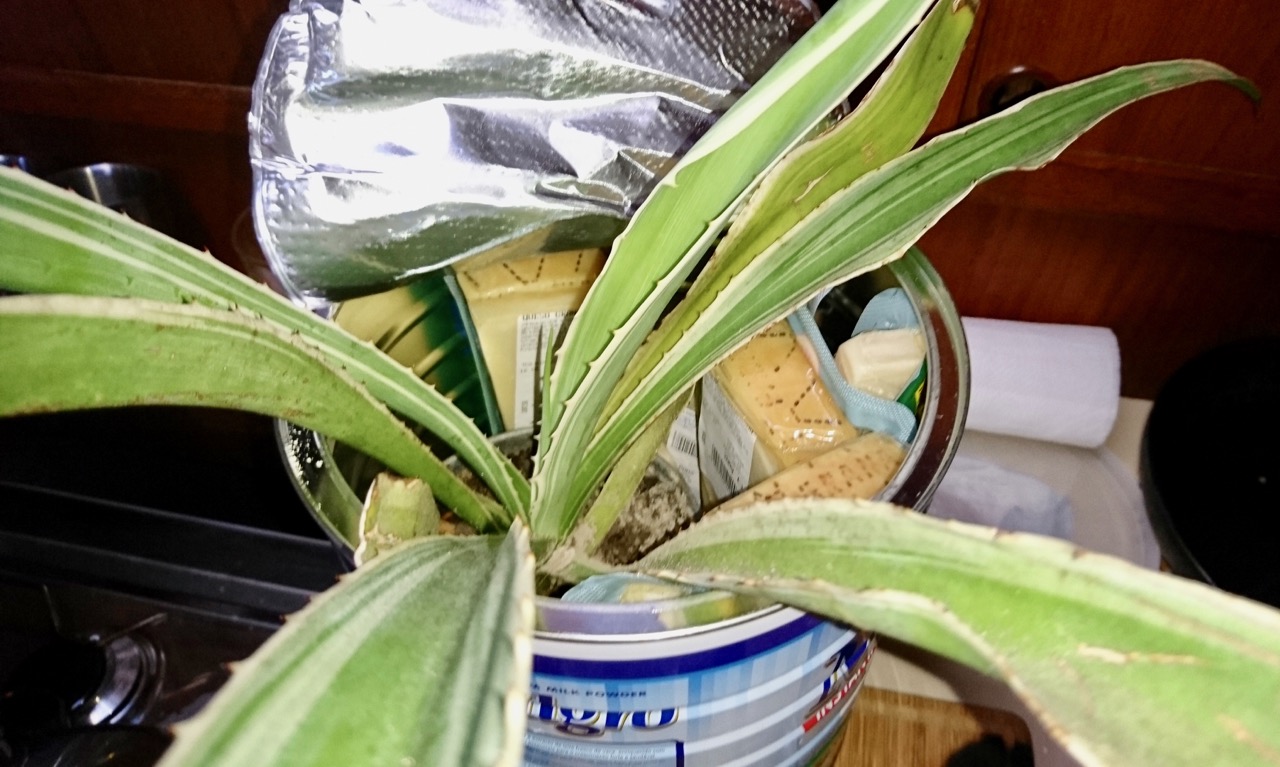
Meanwhile, our botanical pets, the Mad Hatter and Alejandro, are being sent into powdered-milk tins. Overnight, the captain read that not only animals and plants, but even cheese may not be brought into the protected area. So the first tin, containing a mournful Alejandro (what will remain of our agave after it emerges from its dungeon?), is packed tight with vacuum-packed Parmesan (strangely enough, this kind of cheese keeps for about a month without refrigeration). The Mad Hatter has been watered and sprinkled with ash, while a tin of Brie will be pressing in on her. Soon we will seal the lids on the tins and put the poor sufferers in a locker for the duration of the authorities’ visit. And no photosynthesis for them:). Better than death.
Now we’re going to fold our dear little Alejandro’s wings and lock him away in a tin with forbidden cheese
To be continued. We hope the next instalment will no longer have to be sent by satellite, which means it will be more readable and illustrated:).
The next adventure was terrifyingly funny 🙂—how we were almost attacked:
Sharks!!!