
From the Travely-Family archive · Central and South America
Conquering the World, French-Style
An original publication from the former Travely-Family website. This English translation was preserved from the technical-site archive without editorial rewriting.
Conquering the World, French-Style. An introductory—and geopolitical—chapter shedding light on why there are so many French cruisers
Let’s dispel straight away the myth that the small countries next to Brazil are all second- and third-world countries, with their dislike of gringos, criminal Golden Triangle, and battered buses full of chickens and piglets.... Ha-ha. Well, there are chickens, of course, but (!)....
Has it ever occurred to any of you that a small country north of Brazil might turn out to be... France? Not all of France, of course, but one of its regions that just happens to be on the other side of the globe. Or that France’s longest border is with... Brazil. It is about 50 kilometres longer than the Franco-Spanish border. That’s the first surprise.
Many Russian sailors have written about crossing the Pacific Ocean, and we, their readers, have already grown used to the fact that a good half of the land in the Pacific is also France (if you didn’t know, congratulations on the discovery!). But on the mainland too....
Guiana and the neighbouring countries
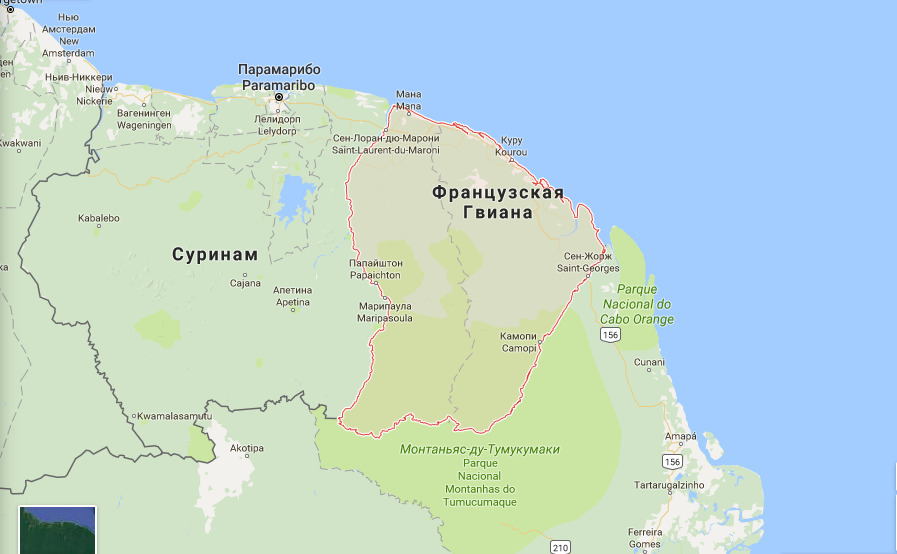
We are currently moored roughly beneath the letter “я” in the word “Французская” 🙂
France’s largest overseas department
And yet, Guiana is to France something like Buryatia is to Russia: they have no common roots, and the language group is fundamentally different. The only difference is that the indigenous population here is a more complex mix than in our republics, while the distance between the country and its overseas department runs to thousands of miles.
For comparison, thanks to Pyotr Beketov, we reached Buryatia about twenty years after Henry IV’s loyal subjects reached Guiana. And we have been together with the Altai people since 1756, whereas in Guiana, a hundred years before that, the French had already begun building their churches and oppressing slaves on sugarcane plantations.
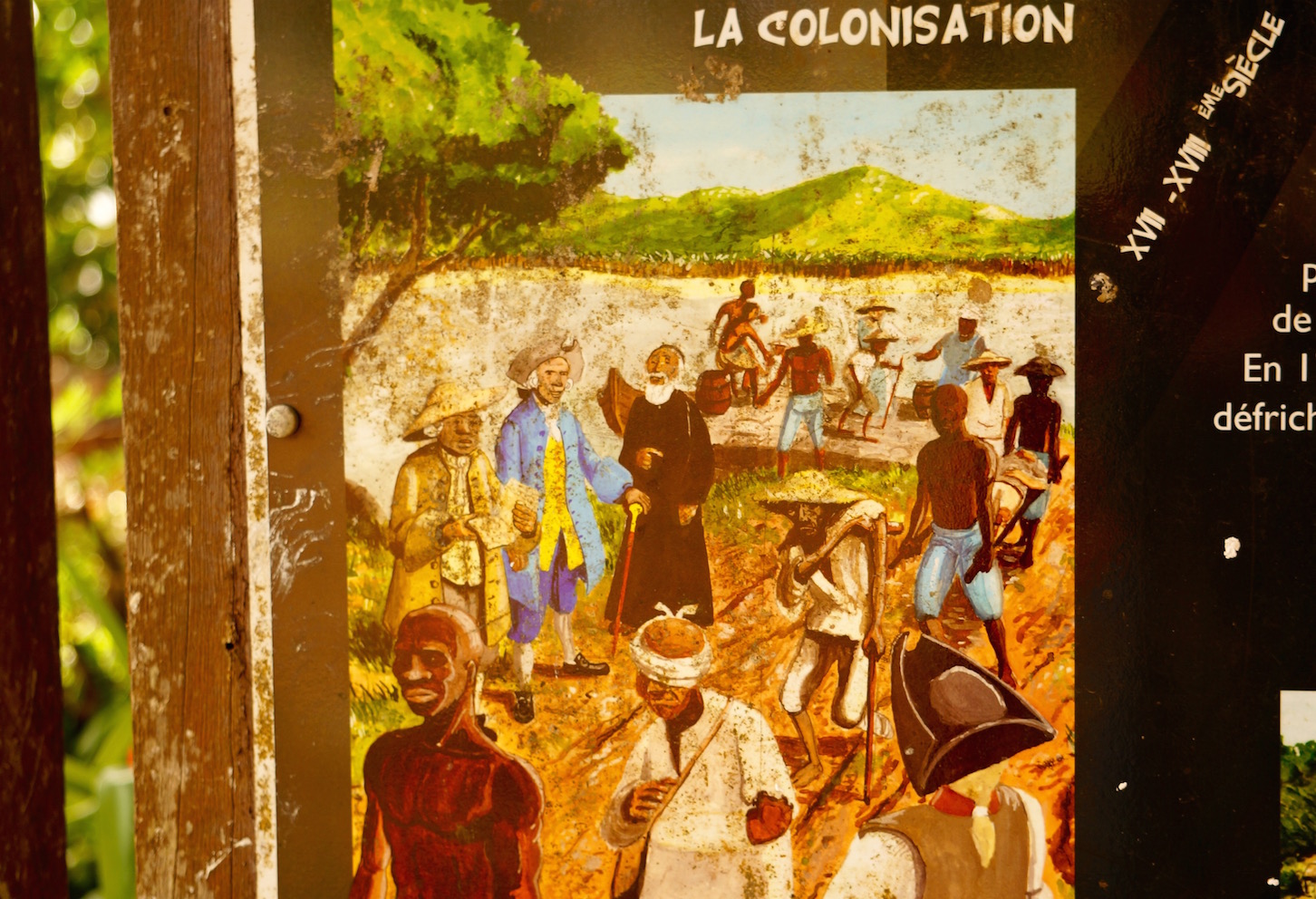
From the history of the colonisation of South America
Since then, people have become so thoroughly mixed that it is no longer clear who is more local here—the grandson of an Indigenous person and a white person, or the son of a mestizo and a Black person. The Creoles fused oppressors and oppressed into a single people, and there was not much left to divide. Except that the Netherlands and England could not resign themselves for a long time to the fact that Guiana had not fallen to them. But that is another story entirely:).
The local currency is the euro, and the flags on the boats are French without exception. We did not even know what the Guianese flag looked like until we found it online. Even after that, there was no such flag in our stores, so we hoisted the French flag beneath the starboard spreader and, without arousing suspicion, slipped into the mouth of Guiana’s Mahury River and into our berth.
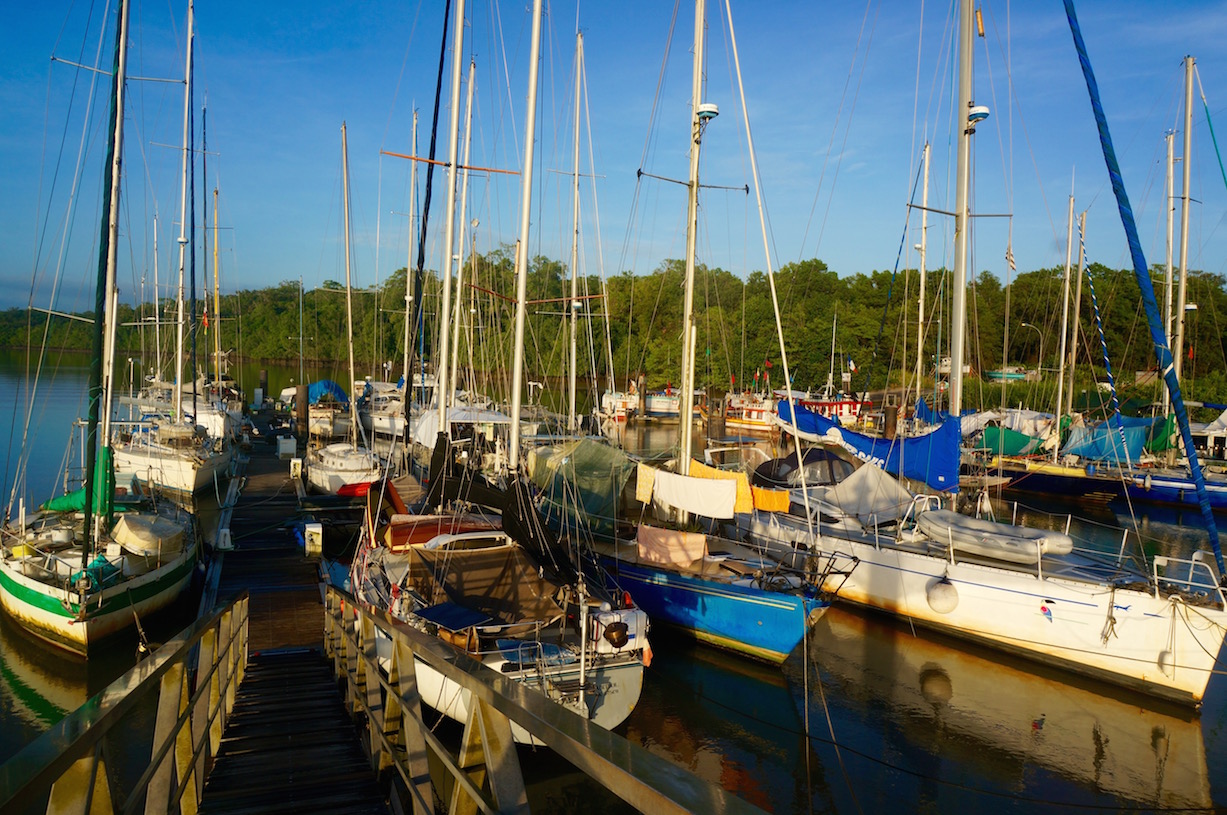
Dégrad des Cannes Marina on the Mahury River
French Guiana is almost as clean as Europe—wellll... certainly cleaner than Asia, and especially Africa:). If it seems otherwise to you, that is only because you are comparing Guiana with France, which is strictly contraindicated. Compare French Guiana with any other country in South America, and you will instantly find Zen amid the neatly mown lawns.
The supermarkets are chain stores, smelling of perfume at the entrance, with air-conditioned air in a gleaming white expanse (we still have not recovered from Africa—even supermarkets put us in a poetic mood). Cabbage, fresh herbs, wine, cinema and dominoes are brought in from France. The locals provide only rum, bananas and other exotic breadfruit produce that Provençal farmers long ago despaired of growing.
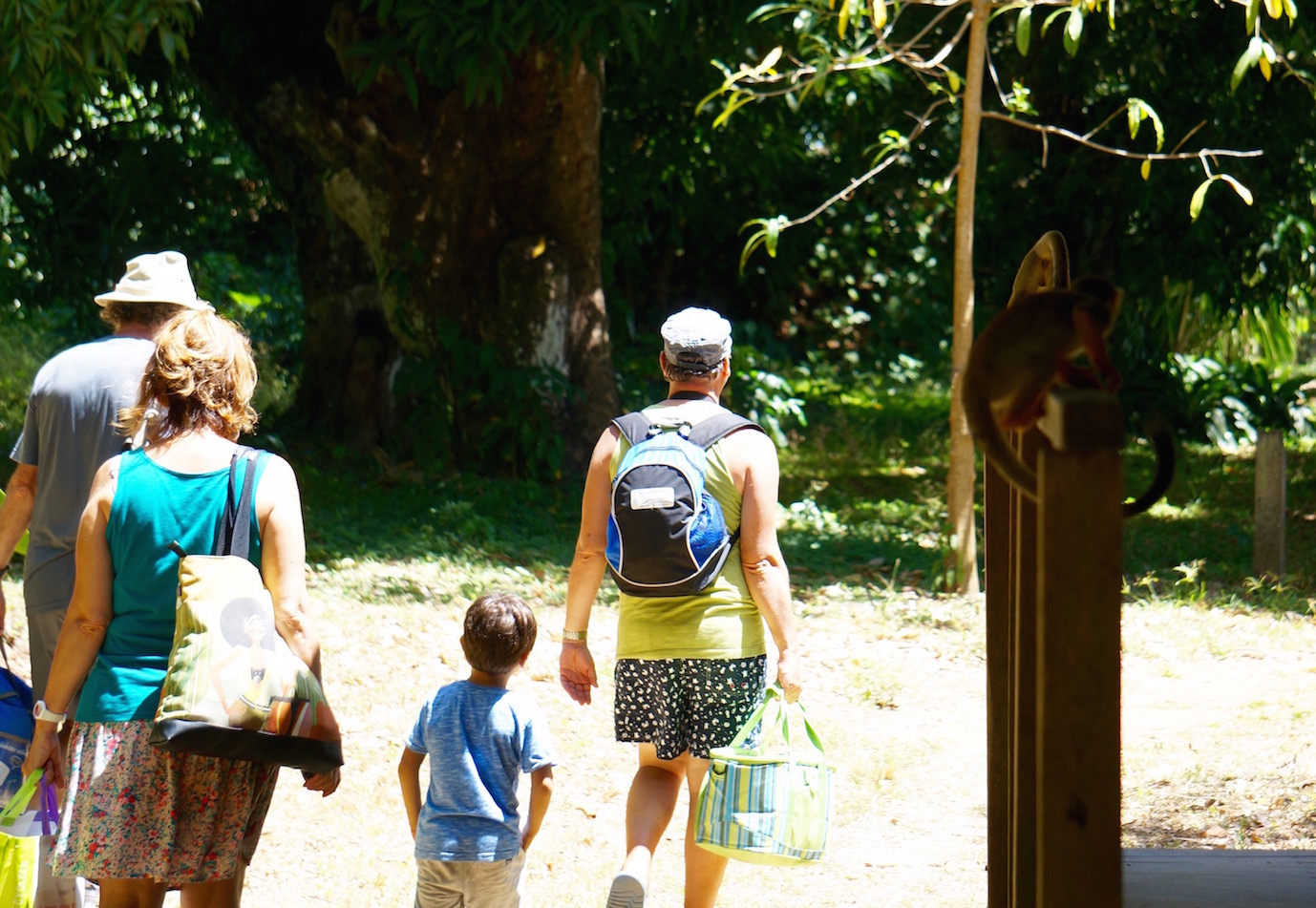
Modern colonisers seen off by green monkeys
It was in Guiana that we had an insight into why so many of those crossing the oceans are specifically French cruisers!—Guys, they have...
The Whole World Is Home
Just imagine that you arrive in Africa—say, in Senegal —and everyone there speaks Russian. You venture deeper into the continent—and it is the same thing: huge Black men in loincloths, every last one of them speaking the language of Pushkin. How would you feel?
All right, let’s move on, to South America. In Guiana we find nothing but our own people; the Creoles are ours again, and a descendant of Indigenous chiefs waves a tomahawk about—also in Russian. Oh, and everyone respects the traditional pickles with vodka, and Borodinsky bread on the side. Right, now you really ought to sit down. You set sail into the Pacific in the wake of Kon-Tiki, and there Polynesian women offer you sarongs in Russian, with a light Pacific prononciation. Serov himself painted beneath that palm tree over there, leaving behind his legacy, complete with a house museum.
And everything in it is in our own native language (actually, it was Paul Gauguin). You slip past Fiji and all those Vanuatus, and once again: “Hellooo”—almost without an accent! Congratulations, you are in New Caledonia. We will not mention Canada and the like (though we could); let’s head into the Indian Ocean. On the way to Madagascar—well, look at that!—one of the Comoros, Mayotte, is ours. And there is also the little island of Réunion—whoa, our language again! Impressed?...And now breathe out—this is not about Russia, of course.
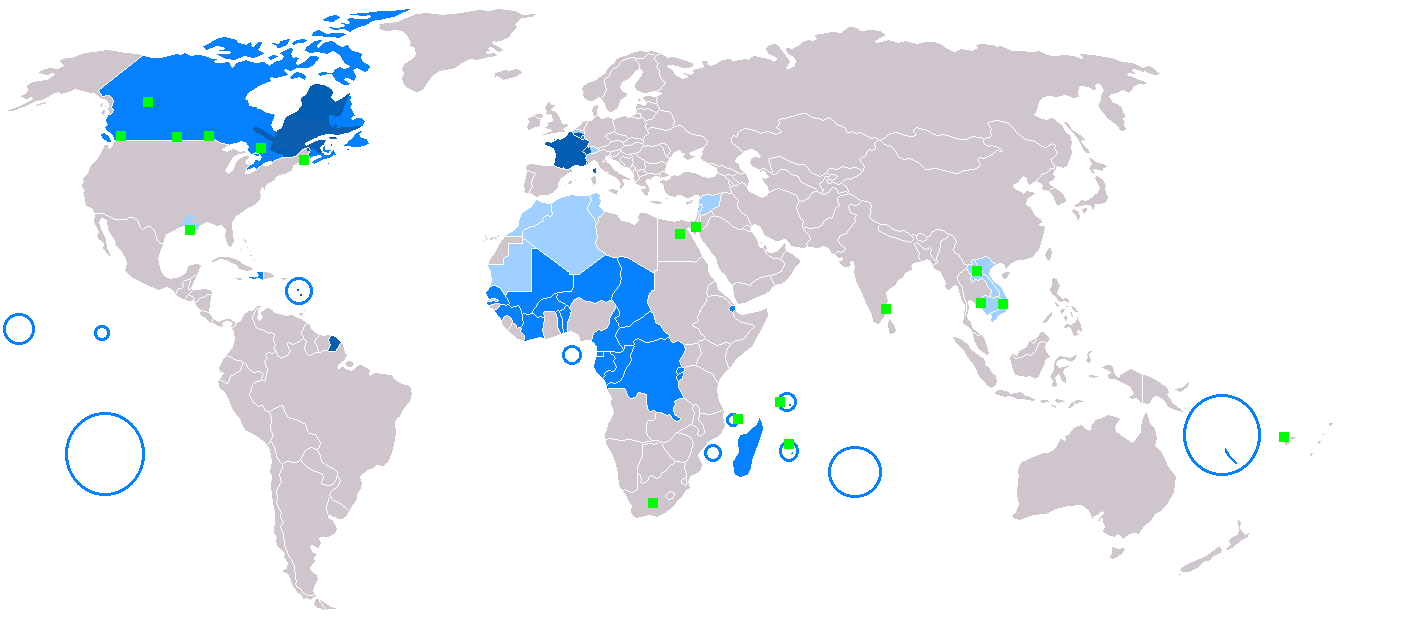
It is about France’s overseas territories, most of which, unlike the other great maritime powers, it managed to retain. Nor did anyone fight particularly hard for independence, apart from the African republics. Was there any need? Just drink your Bordeaux and nibble Provençal cabbage with it ))).
French around the world (Map from Wikipedia). Dark blue: native language; Blue: administrative language; Light blue: language of culture; Green: French-speaking minorities. All the islanders living in the circles in the middle of the ocean speak French too Instead of an Epilogue
French cruisers have an easy life in the tropics; that is why there are so many of them around the world, and why not all of them speak foreign languages—they are understood everywhere anyway.
It is curious that we used to think along similar lines about English-speaking people. Yet for some reason we denied the French this kind of worldwide coverage. Wrongly so:).
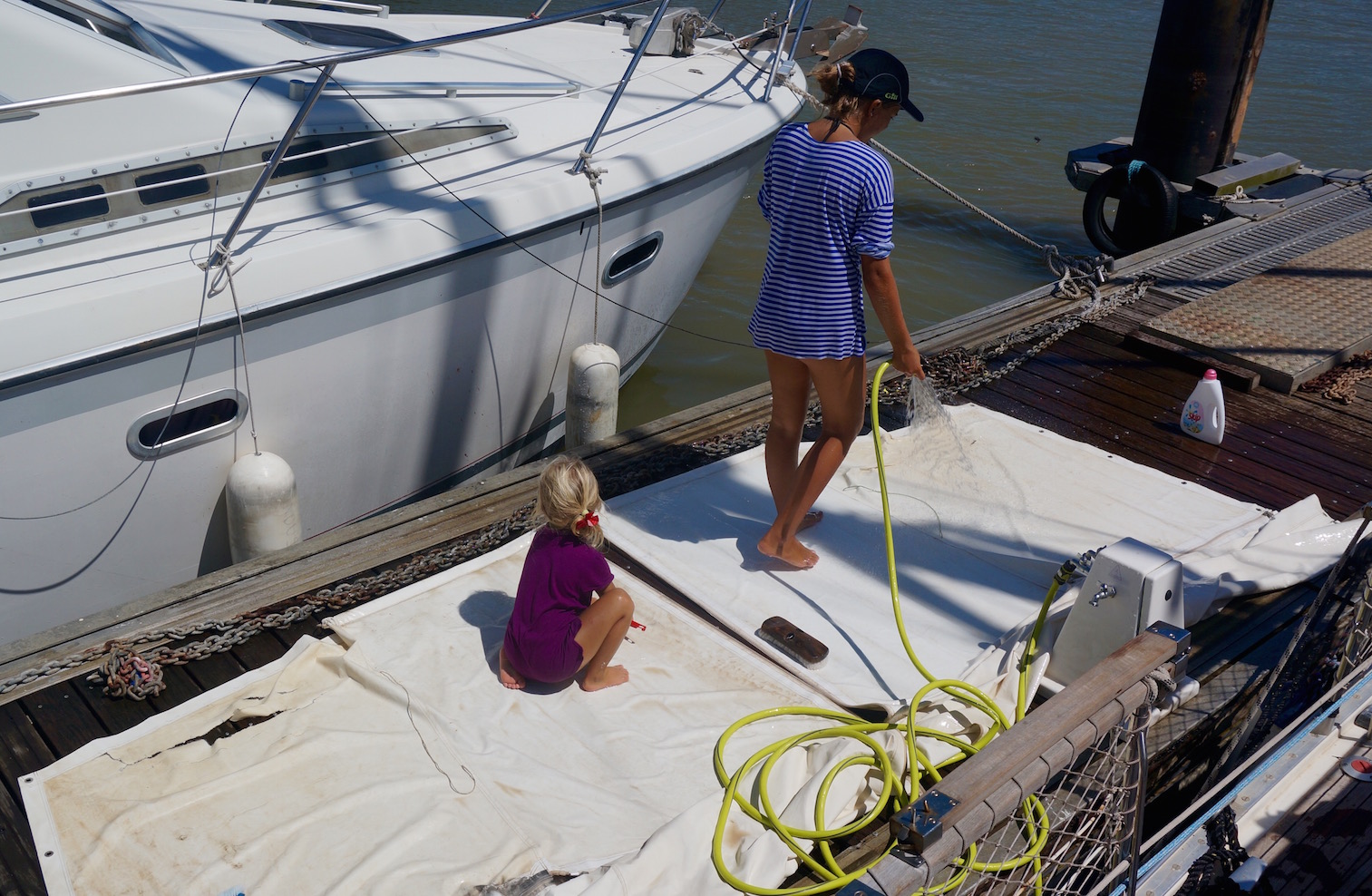
Here in Guiana, the crews around us are exclusively French or half-French. And now their children are racing around the pontoons together with ours. Children do not give much thought to language barriers. They just play:). They have just filled the toolbox with water from the hose. Oops!—and now the keyboard.... We’d better go and have a word; the computer can dry out in the meantime.
A spot of occupational therapy after a mass children-and-yachts soaking
Next time, we will write about the welcome French Guiana gave us, what good things it showed us, and whether it insisted that we complete any entry formalities.
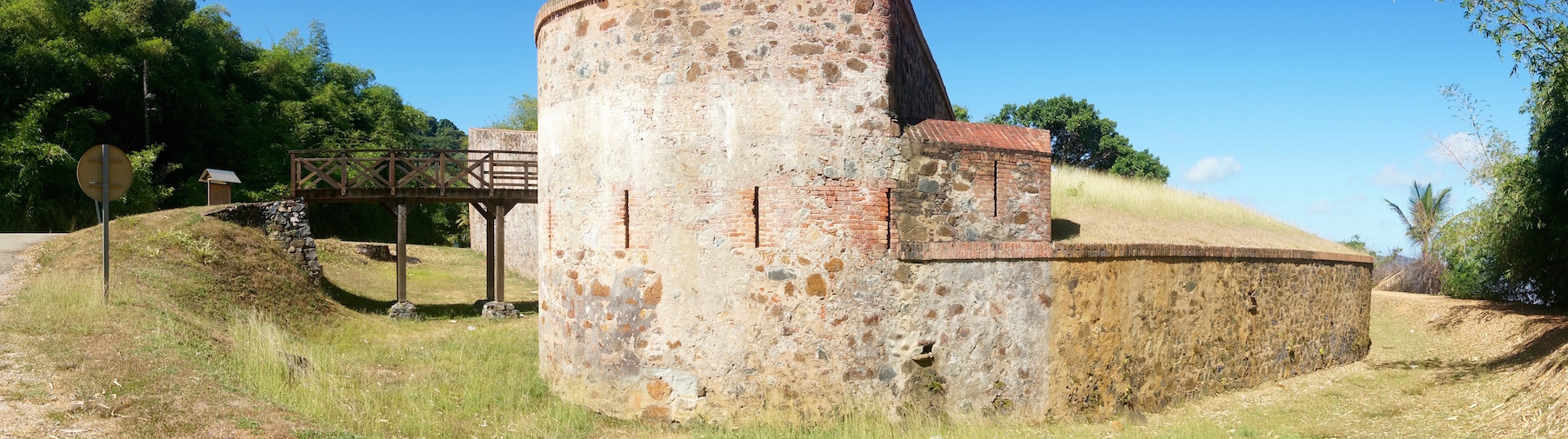
Fort Diamant, not far from Cayenne and very close to the marina. We have no idea why it is referred to everywhere on the Russian internet as “ruins.” It is a completely intact structure, with a moat and one of its two drawbridges recently rebuilt
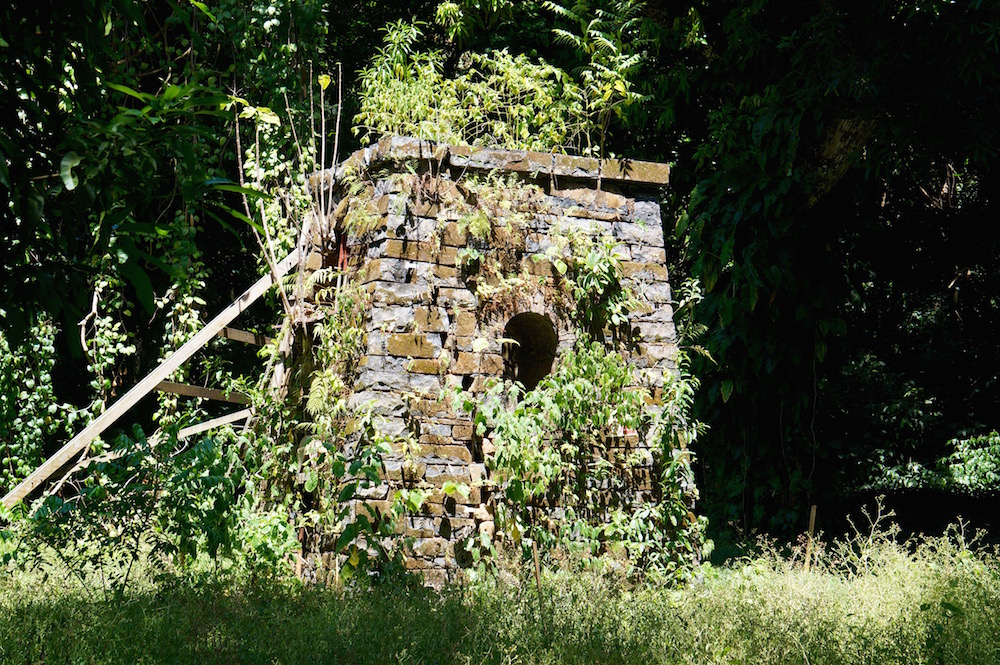
Remains of the first colonial buildings on the Îlet La Mère
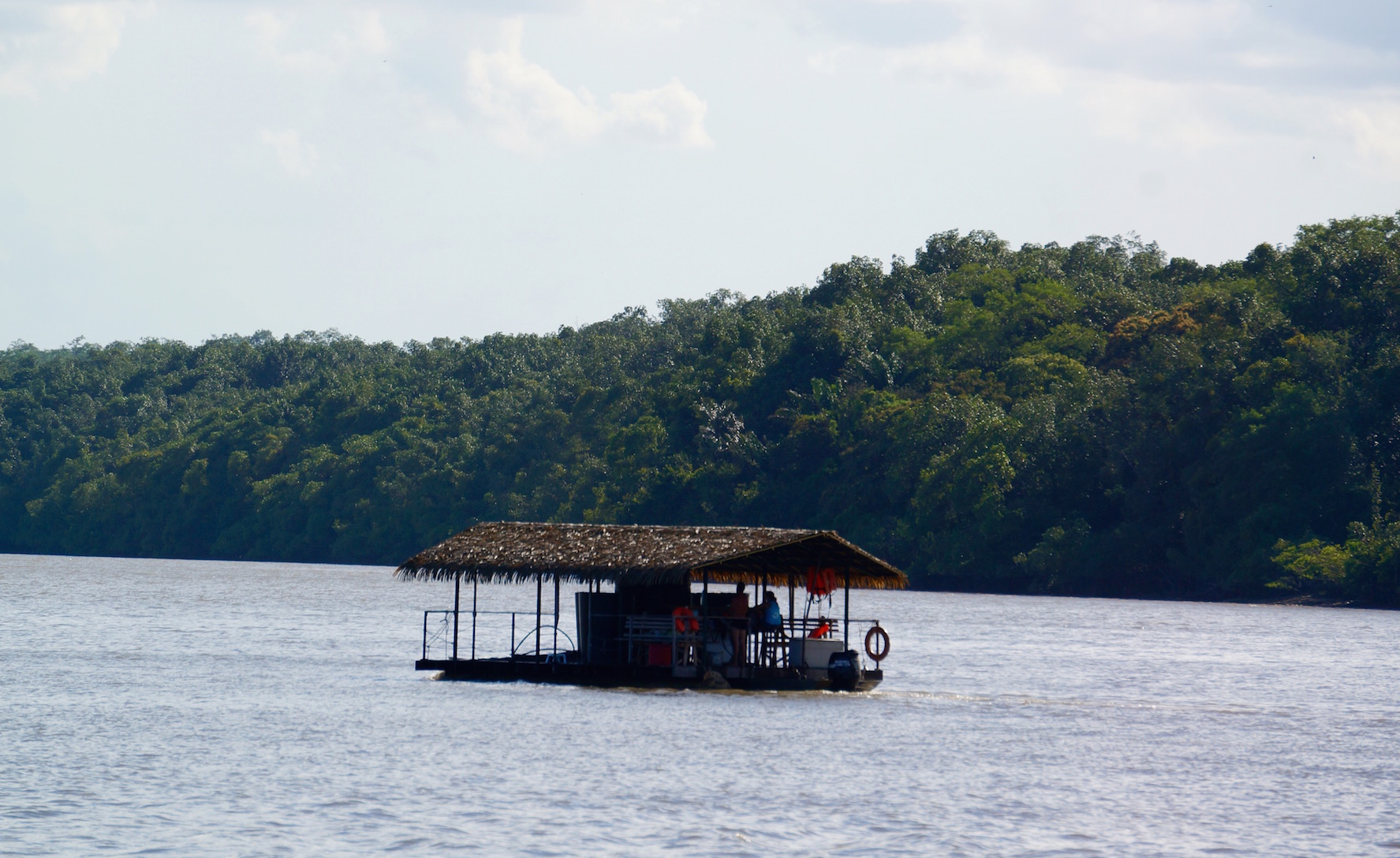
A wild but charming motorised floating contraption 🙂
You can read about the ubiquitous French—this time living in English-speaking Gambia—here:
Gambia. The Amusements of the Lamin Lodge Anchorage. A Frenchman 🙂