
From the Travely-Family archive · Yacht, Sea and Equipment
Choosing a Yacht for Family Life. How to Buy a Sailing Yacht.
An original publication from the former Travely-Family website. This English translation was preserved from the technical-site archive without editorial rewriting.
Choosing a Yacht
Lady Mary came into our lives not so long ago, in 2013. We chose the yacht after spending a year studying yacht-sale websites almost every day and corresponding with brokers and owners. We looked at various options in the 11–13 metre range, but none of them was right.
Once we had worked out our yachting concept—a boat for living aboard full-time and travelling to different parts of the world—we studied the options that fitted it. In the end, we settled on boats from two yards:
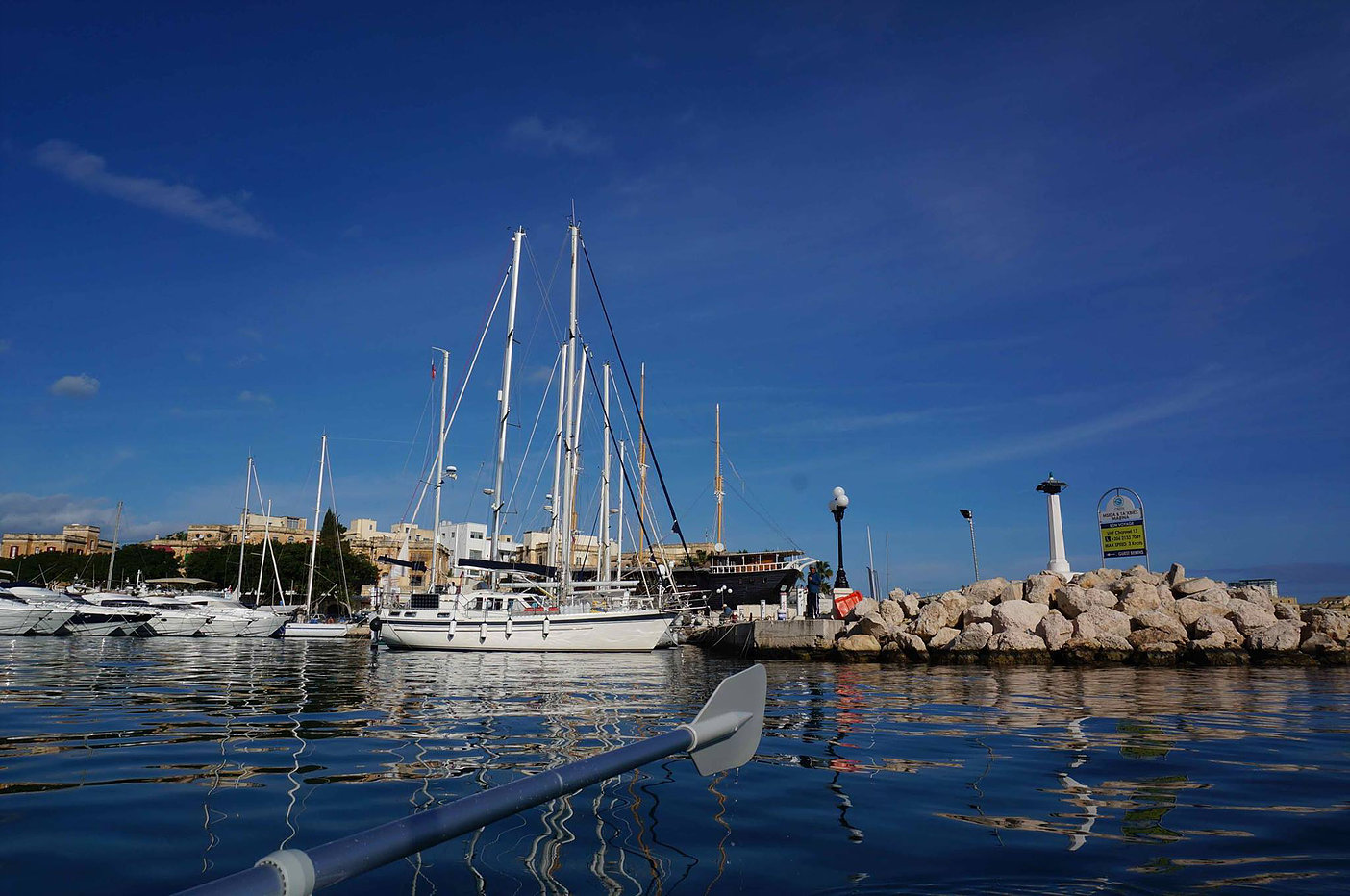
— Sweden’s Hallberg-Rassy—as our first and preferred option, — Finland’s Sitala Yachts, which builds Nauticat boats, as our second option.
We were looking for a strong, heavy boat of around 40 feet, capable of carrying large reserves of fuel, water and provisions for transoceanic passages. The yacht also had to withstand heavy loads and have a robust hull; if it was fibreglass (GRP), it had to be at least 4–5 cm thick below the waterline, with a full or fin keel and a skeg-hung rudder.
A 40-foot boat is comfortable for a family with two children to live aboard and is quite manageable in terms of maintenance and berthing in marinas, where size determines the price. Initially, we considered a centre-cockpit model, but in the end we chose one with a fully enclosed wheelhouse (or “pilothouse,” as they call it abroad) and an aft cockpit. Though with the helm positioned forward of the mizzen, it does not quite qualify as an aft cockpit anyway:).
The advantage of a centre cockpit: greater safety compared with an aft cockpit (less chance of being washed out of the cockpit and overboard) + more convenient accommodation: the aft cabin then becomes a separate space with proper headroom, where you can retreat and get some sleep without condemning the rest of the family to a vow of silence.
The purchase price of a yacht is determined by five factors: year of manufacture, model, size, condition and place of sale. The Mediterranean is considered the most expensive market for used yachts; however, that was precisely where all the other factors came together for us.
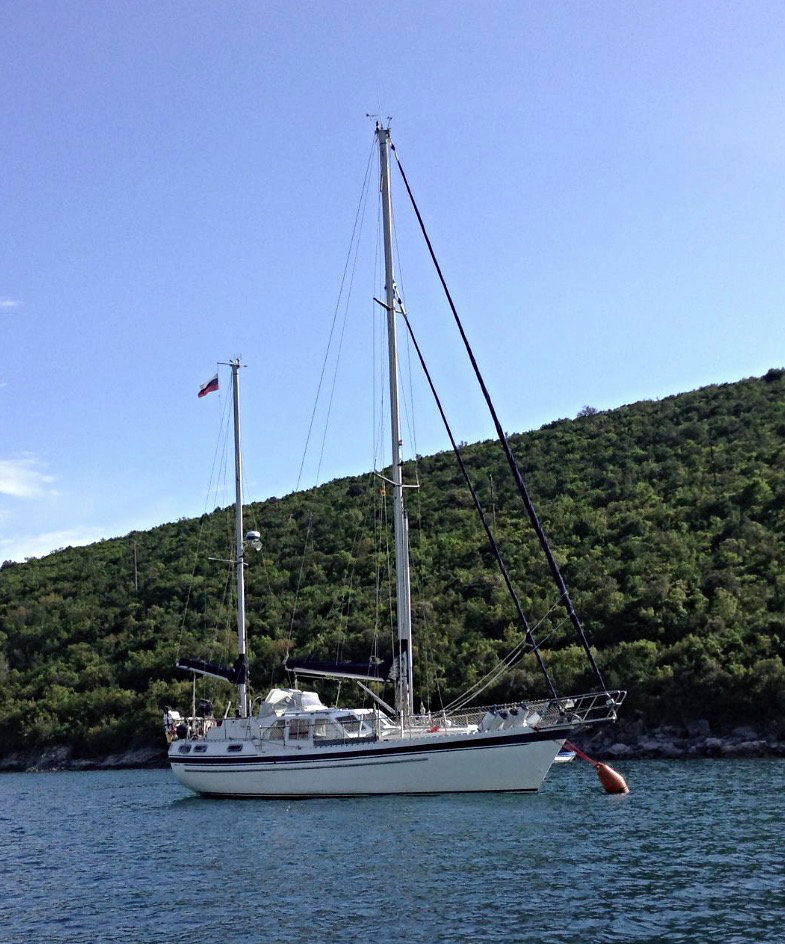
We looked through around 30 Hallberg-Rassy listings, but that one special yacht was nowhere to be found. Finally, during yet another late-night trawl through YachtWorld, we came across two 40-foot Nauticats at once. Their owners had apparently realised that they had misjudged buyer demand and suddenly lowered their prices. The Nauticats immediately appeared in our search results.
The one!
Correspondence with the sellers took two or three days. In the first case, the owner was selling the boat himself, without intermediaries, and it was lying in southern Spain. The second option was with a broker in Belgium. The captain went to inspect the first boat and arranged to view the second.
And there we were on the Costa del Sol, in Estepona. The boat was afloat, and the owner was German. A couple of years earlier, he had bought the yacht in Denmark from its ageing first(!) owner and sailed it to Estepona with two friends. Then it turned out that his family, who until then had only ever gone to sea on motor yachts, suffered from seasickness aboard a sailing yacht. His enthusiasm for sailing died away, and the owner decided to buy a motor yacht instead. And that was when we came along.
Inspection and Yacht Selection
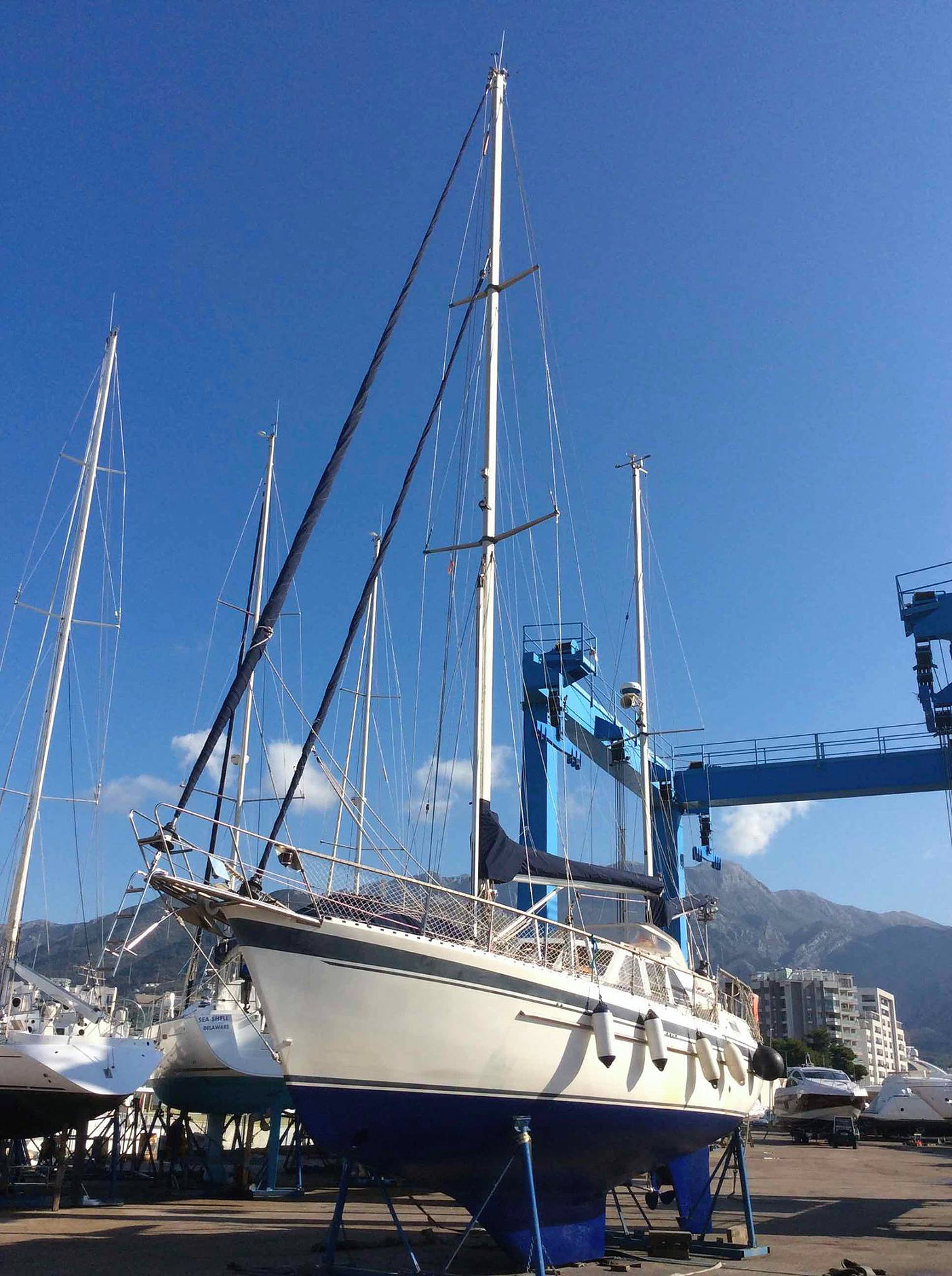
The initial inspection revealed a host of minor faults which, as racing drivers say, “don’t affect the speed,” but provided excellent grounds for bargaining. Over three days of thoroughly surveying the vessel, the captain crawled into every possible corner of the boat, added to the defect list (compiled by distilling the vast experience of yachtsmen we knew and those we did not) and presented it to the increasingly despondent owner.
In short, we did not even fly out to inspect the second Nauticat. We bought this one after bargaining the price down nicely.
So, our choice of yacht:
Nauticat 40, built in 1988.
Length 12 m, maximum beam 4 m, draught 1.77 m.
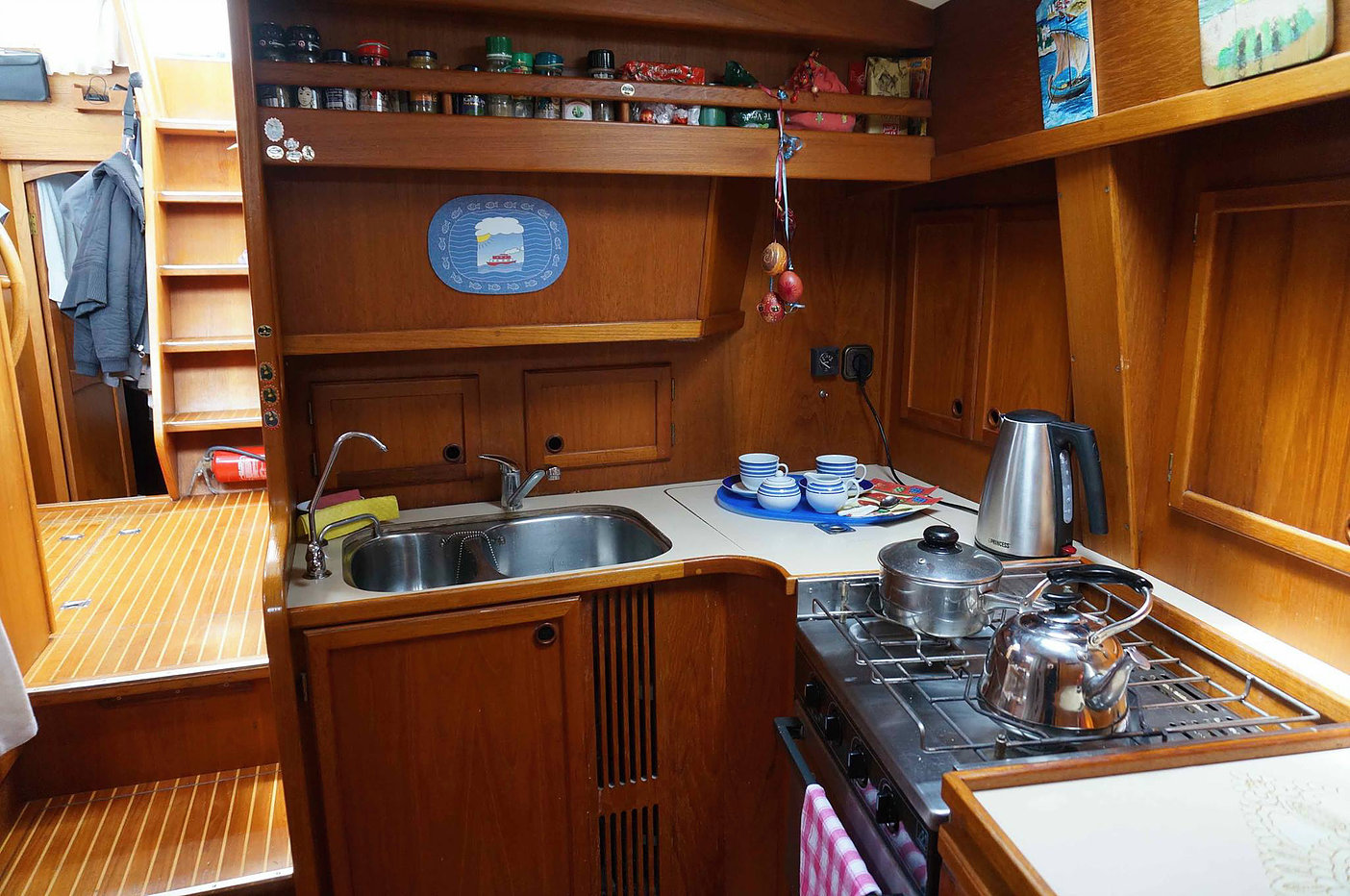
Ketch/cutter rig (two masts—mainmast and mizzen—and two headsails—a 120% genoa and a 3/4 staysail, set on two forestays).
Displacement 14 tonnes.
The sail wardrobe included an almost-new genoa and staysail, well-worn mainsail and mizzen (we have since had new ones made, and these are now spares), a fairly decent gennaker, and brand-new storm mainsail and storm staysail. Spinnaker pole.
The boat has two helm stations—one in the cockpit and one in the wheelhouse. The instruments are duplicated accordingly.
600 litres of fuel and the same amount of water.
Lehmann 90 hp engine. Diesel consumption is approximately 5 litres per hour. It is a low-revving engine, with normal operating speed at 1,200 rpm, giving a boat speed of around 6.5 knots.
Bow thruster. A very useful thing—without it, Lady Mary is extremely reluctant to steer in reverse:).
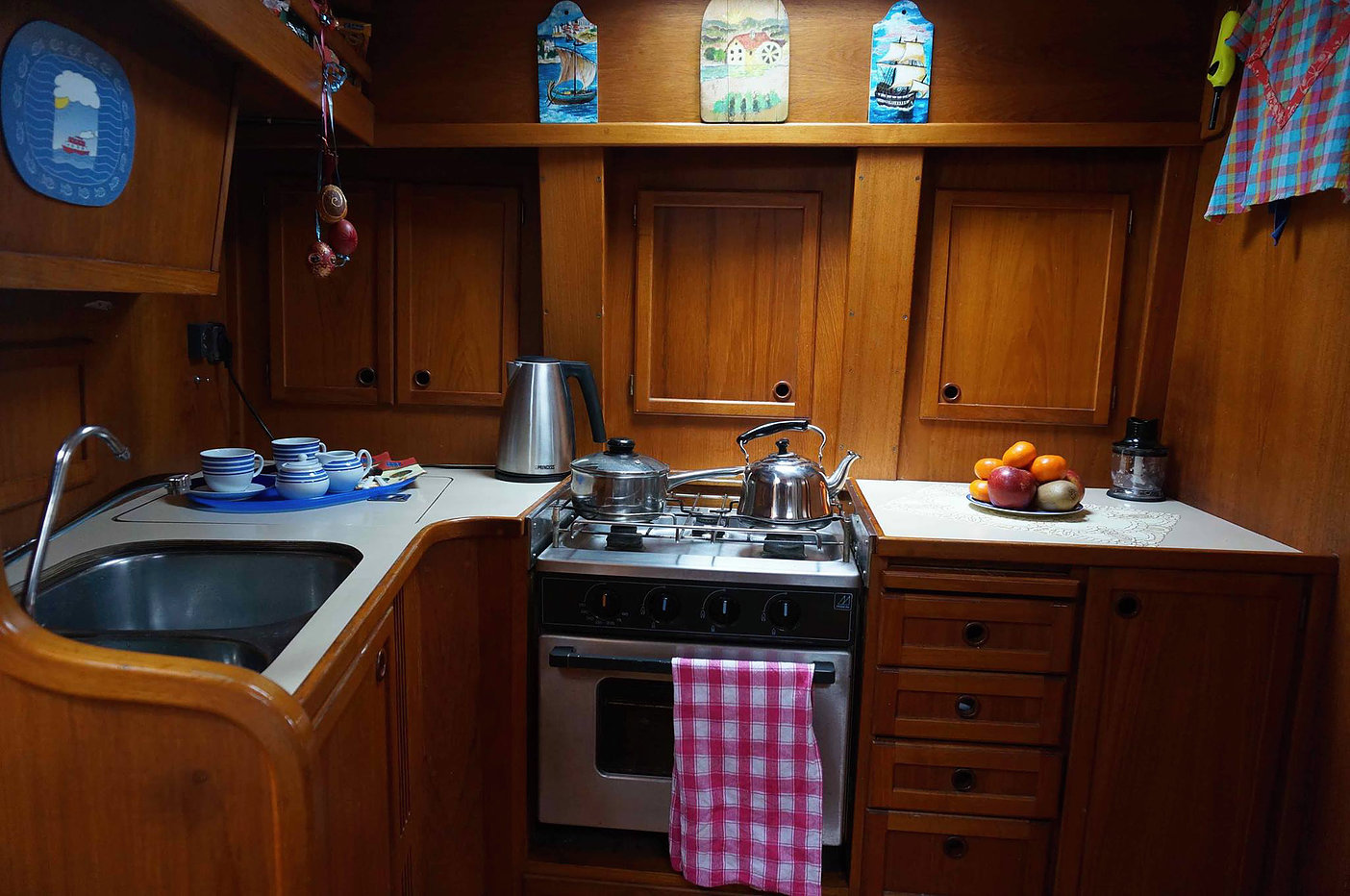
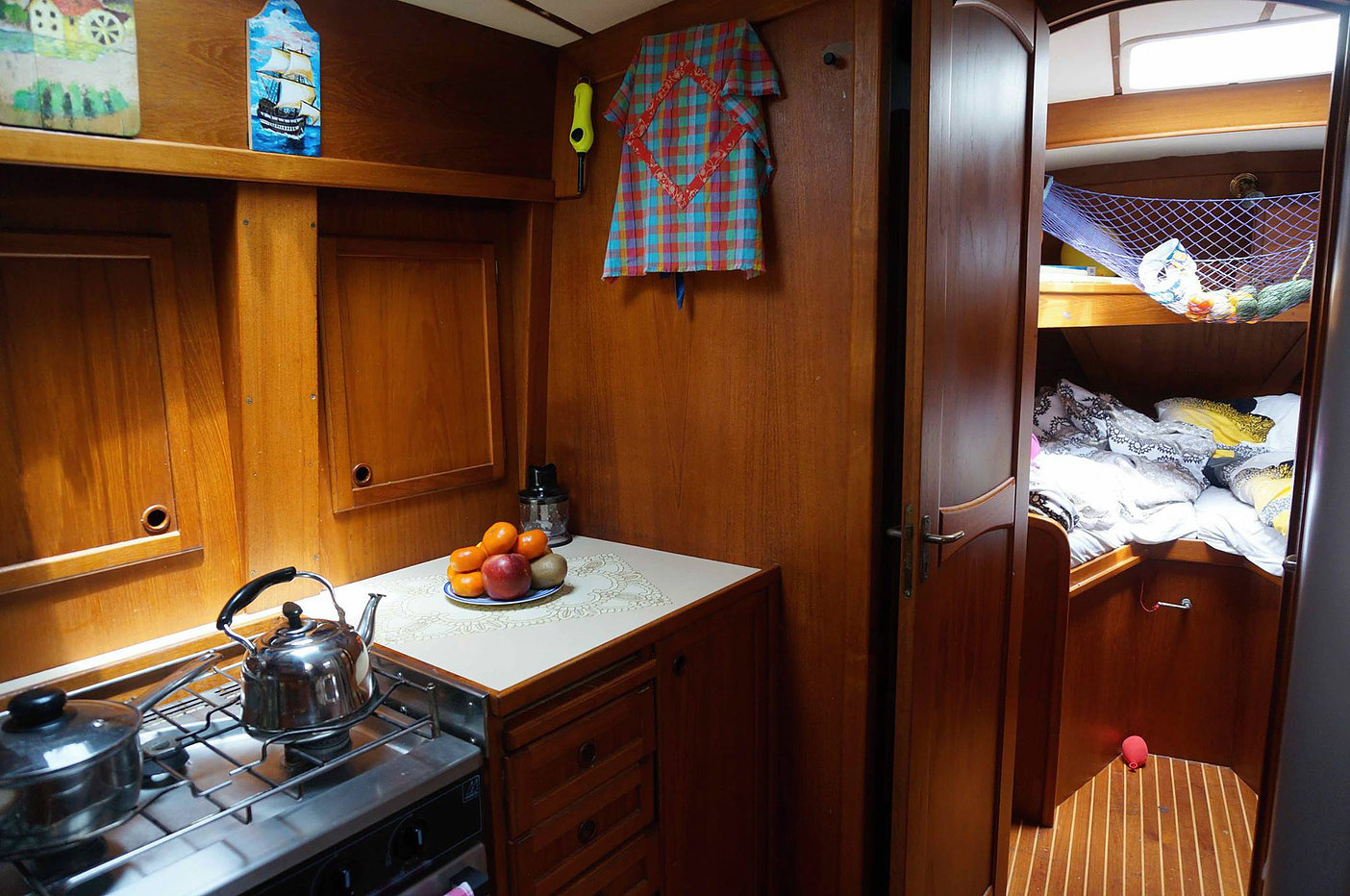
The yacht has a high stern, which makes the aft cabin feel like a proper bedroom with a high, level ceiling (something by no means found on every yacht), a compact forward children’s cabin (with room for three children), a wheelhouse, and a galley with a saloon.
It is now our second home, though currently our main one. Meanwhile, during our adventures, our first home in the Altai Mountains has miraculously transformed into the Gingerbread House® and is delighted to welcome guests, travellers and lodgers.
P.S. This post was written almost immediately after we bought the yacht. After three years of living aboard, we give a detailed tour of the yacht (lots of photos) and sum up the pros and cons of the layout:
Liveability of a Yacht for a Circumnavigation.
A few photos of the saloon-galley and its exits
If you found this article useful and would like to thank the authors but do not know how, click the button below 🙂