
From the Travely-Family archive · Other Entries
Visa for Thailand
An original publication from the former Travely-Family website. This English translation was preserved from the technical-site archive without editorial rewriting.
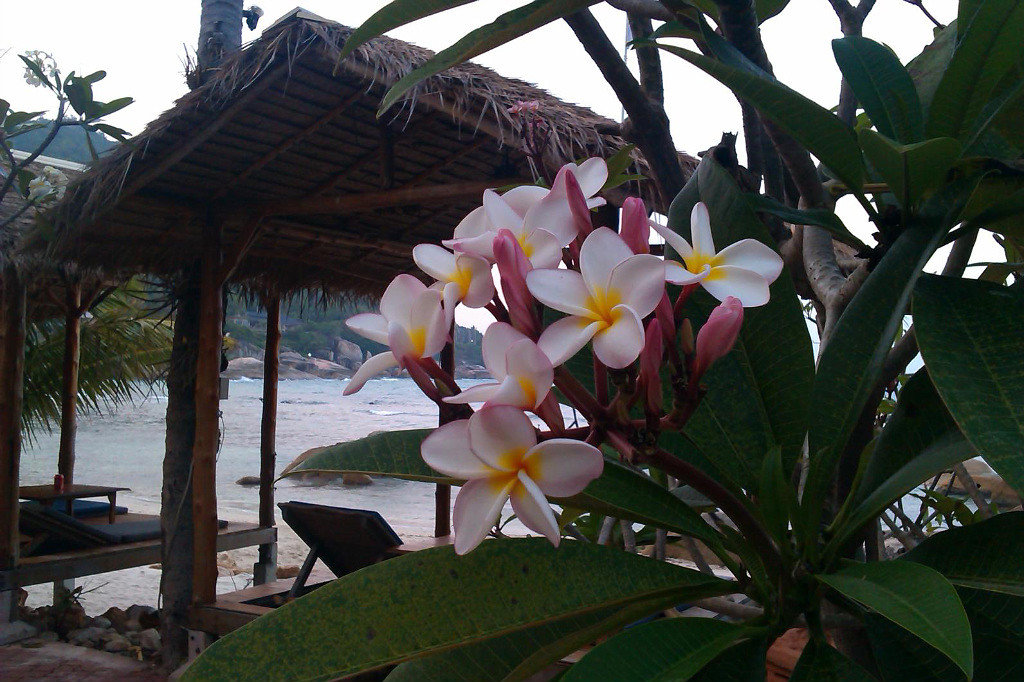
Russian citizens do not need a visa for Thailand for stays of up to 30 days. In the past, when that period expired, our compatriots spending the winter there would travel to neighbouring countries on a border run, get entry and exit stamps at the border, and immediately re-enter.
Since August 2014, that loophole has been closed. Therefore, anyone wishing to stay in Thailand for more than a month must use one of the methods described below.
When we began writing recommendations on obtaining a Thai visa, we came across an excellent, extremely detailed guide online. We see no point in rewriting the same thing in our own words.
We reproduce the text unchanged. After all, if the wheel has already been invented, why invent exactly the same thing all over again:)?
All Russian citizens receive a stamp in their passports at the border upon arrival, allowing them to stay in the country for 30 days. This stamp can be extended locally for 7 days at an immigration office for 1,900 baht. If that is enough time for you, there is no need to read any further. But if you are travelling for a longer period, make sure you read about the visa options below.
Options for staying in Thailand for more than 1 month
A 30-day stamp. This is placed in your passport when you enter the country. It used to be common practice to travel to the border with a neighbouring country every month, cross it, come back, and get a new stamp. Such a trip is commonly called a visa run or border run. However, border runs were banned in August 2014. The stamp can be extended locally for 7 days, giving you 37 days in total.
A single-entry tourist visa for Thailand for 3 months. It is issued for 60 days and can be extended for another 30 days at the local immigration office for 1,900 baht. The visa itself is obtained at the Thai Embassy in Moscow or in a country neighbouring Thailand.
A double-entry tourist visa for Thailand for 6 months. It gives you 60+30+60+30 days. In other words, you stay for the first 2 months, then extend for the 3rd month at immigration for 1,900 baht. You must then cross the border and return—do a visa run—after which you can stay in Thailand for another 2 months and extend for 1 more month at immigration for 1,900 baht. That gives you exactly 180 days in total. The easiest places to obtain this visa are Moscow and Laos.
A student visa for Thailand for 1 year. You can obtain one on the basis of studying at a language school—for example, learning English or Thai. It is obtained in a neighbouring country, preferably Laos. It is issued for the duration of your studies, but the maximum visa term is 1 year; after that, you need a new one. The visa must be extended at immigration every 3 months for 1,900 baht, and you cannot leave the country while studying—or, more precisely, you can, but there are complications. You do have to study, and with the latest tightening of the rules, dodgy schools are no longer accepted. A one-year student visa costs around 35,000 baht: 25,000 baht for the course itself, plus extensions and the initial trip to obtain the visa.
Business visa. I cannot tell you anything about business visas for Thailand yet, because the options above are enough for us. You can get one either on the basis of a real business or through a sham arrangement with one of the appropriate fixer firms.
Retirement visa for Thailand for 1 year. You must be over 50 and have 800,000 baht in a Thai bank account, with the funds having been there for at least 60 days before submitting the visa application. The visa must be extended at immigration every 3 months for 1,900 baht.
Bangkok’s Suvarnabhumi Airport offers a Re-Entry Permit service for 1,000 baht. However, this applies to non-immigrant visas—business, student, or retirement—not tourist visas. It allows you to leave and re-enter without losing your visa. Do not confuse this with visa runs.
Entering and leaving Thailand
We have discussed all the options for staying in Thailand; now let us talk about entering the country itself. If you do not have a Thai visa, you receive a 30-day stamp in your passport when you enter Thailand. It is advisable to carry 20,000 baht per person—in US dollars, for example—and a return ticket. They check very rarely—only isolated cases—but they are entitled to do so. With a clean passport, I do not think you need to worry at all; the chance of being checked is even lower.
If you obtained a visa in advance, you will enter on that visa. The same applies: they may check your cash funds and return tickets.
Return ticket
Not everyone knows that even in Russia, when boarding your flight, you may be asked for a return air ticket from Thailand or a ticket to a third country, and you may be denied boarding if you do not have one. The same thing may happen at passport control in Bangkok. But they may not ask. We were asked once at Domodedovo and in Hong Kong, but never by Thai border officers. They ask less often in Thailand; it mainly happens at flight check-in.
What can you do about a return ticket? Incidentally, one may be required not only in Russia, but in any country from which you fly to Thailand. There are various options, described in the article How to Fly to Thailand Without a Return Ticket. If you are planning to buy airline tickets, I recommend Aviasales.ru and Skyscanner.ru; we use them ourselves.
Overstay on departure
For every day you overstay your visa or stamp, you will have to pay a fine of 500 baht when leaving. If you have overstayed by more than 21 days, you may even face imprisonment and blacklisting. An overstay of a couple of days is nothing to worry about; there will be no consequences apart from the fine, and people take advantage of this if they do not want to extend their stamp or visa. But it is better not to make a habit of it.
Overstays for children under 14 are a completely different story; read more about that below, in the section on children.
What visa runs and border runs are
A visa run, also called a border run, is a trip to the border and back in order to obtain a new free 30-day stamp. Logically, the name border run is more appropriate for such trips, because you travel to the border, not to obtain a visa. But in conversation, or on the price list of a travel agency arranging such trips, the term most commonly used is visa run. This is because other foreign nationals—Ukrainians in particular—can only obtain a 15-day visa on arrival at the border for 1,000 baht.
Trips to activate the second entry of a double-entry visa are also called visa runs.
Visa runs were officially banned in August 2014—although they had been banned before; no one had simply paid any attention.
There is even a warning about the ban posted at the embassy in Moscow
However, the fuss has died down, and it is now unclear how many visa runs you can make—how many times you can enter on a stamp. I believe that if you do not merely cross the border and immediately return, but spend some time in another country—a week or a month—they may issue a second stamp, especially if you arrive by plane and your passport is not covered in stamps. You can also try getting a stamp after a visa—for example, first entering on a visa and then on a stamp. Naturally, there are no guarantees that any of this will work; the decision will be made by the officer at the border. It makes sense to keep monitoring the situation on social networks: who has made the trip successfully, how they did it, and through which border crossing. At present, there have been cases of people receiving a second stamp or a stamp after a visa.
For greater certainty, you should obtain tourist visas—even one after another—and save yourself the headache.
Extending a stamp for 7 days
I would like to point out that Russians can extend their stamp by only 7 days, not 30, as reported by some media outlets. There was some confusion: everyone was delighted by the new 30-day rule, but that information was false. So it is only 7 days, no more. It costs 1,900 baht and is done at the local immigration office.
Where to go on a visa run
You can travel to any country to activate your second entry or obtain a second stamp, since the whole point is simply to cross the border. But it is easier and cheaper to travel to visa-free countries bordering Thailand, particularly those closest to where you live. Visa-free options for Russians are Laos—a 15-day stamp; Myanmar/Burma—US$10 at the border; Malaysia—a 30-day stamp; Cambodia—a US$30 visa at the border; and Vietnam—a 15-day stamp.
From Bangkok, people go on visa runs to Cambodia—Aranyaprathet or nearby crossings.
From Chiang Mai, people go on visa runs to Chiang Khong—the border with Laos—or Mae Sai—the border with Myanmar.
From Pattaya, people go on visa runs to Cambodia via Aranyaprathet or nearby crossings, and to Vietnam.
From Hua Hin, people go on visa runs to Ranong—the border with Myanmar—or there are some closer crossings, but I do not know whether they are open.
From Phuket, people go on visa runs to Ranong—the border with Myanmar; Satun—the border with Malaysia; and Hat Yai—the border with Malaysia, via the Sadao–Padang Besar crossing.
From Krabi, people go to Satun—the border with Malaysia—and Hat Yai—the border with Malaysia, via the Sadao–Padang Besar crossing.
From Koh Samui and Koh Phangan, people go on visa runs to Ranong—the border with Myanmar—and Hat Yai—the border with Malaysia, via the Sadao–Padang Besar crossing—and less often to Satun, on the border with Malaysia.
How to do a visa run
Independently. For example, for a visa run to Burma via Mae Sai from Chiang Mai, you buy a bus ticket to the border—with a change in Chiang Rai—and back. You arrive, cross the border into Burma on foot, walk around if you wish, cross back, receive a 30-day stamp—or activate the second entry of your visa—and take the return bus to Chiang Mai. A one-way ticket costs from 400 baht.
Through a travel agency. Everything is the same, except there is no time for a stroll and you travel everywhere by minibus. They will show and explain everything to you. The service costs around 1,500–2,000 baht and is available in any tourist town.
Naturally, the cost of a border run, whether independent or through a travel agency, will vary depending on where you are travelling from.
Tourist visa
Length of stay
When you enter Thailand on a single-entry visa, you will receive a 60-day stamp in your passport at the border. You will then need to extend this visa for another 30 days at the local immigration office for 1,900 baht. That gives us 90 days in total.
The situation is similar with a double-entry visa. You enter for 60 days, extend for another 30 days, then leave the country—make a visa run to the border and back—and re-enter for 60 days, with the right to extend for a further 30 days. This gives us 180 days in total. There is also nothing to stop you from going somewhere for a while between entries—to see a new country, for example—instead of merely travelling to the border and back.
Validity period
These periods are sometimes confused, because in addition to the permitted period of stay, a visa also has a validity period—in other words, a window for entry.
As soon as you receive your visa at the consulate, it becomes valid immediately and the countdown to entry begins. So you should not obtain it too far in advance. Single-entry visas have a 3-month entry window; double-entry visas issued in Moscow have a 6-month window. In other countries it varies, but they are also most commonly issued with a 3-month window. The visa itself will say ENTER BEFORE—this is the final date by which you must enter the country. You can enter even on the very last day, and that is when the “period of stay” I wrote about above begins.
I think it is obvious that a 3-month entry window is rather short for a double-entry visa: you would have to time everything practically to the day to manage to use the second entry.
The 90-day rule
In the summer of 2014, information repeatedly surfaced that people would be allowed to remain in the country for no more than 90 days within a six-month period. But for now this rule is not in force, if it ever will be. People are entering without difficulty on the second entry of double-entry visas—in other words, for the next 90 days—and some obtain a second double-entry visa immediately after the first. I am sure that as soon as the 90-day rule comes into effect, mass hysteria about it will erupt across all social networks, so it will be hard to miss.
Nevertheless, if you intend to live in Thailand for a long time, it is better to arrange a student visa and not take the risk. Yes, you will have to study and pay tuition fees, but this approach carries the least risk. The main thing is to choose a proper language school so that the visa is issued without problems.
Tourist visas in Moscow and St Petersburg
Single- or double-entry tourist visas can be obtained at the Thai consulates in Moscow and St Petersburg. Unfortunately, the consulate in Vladivostok no longer issues visas.
Contrary to some opinions, it is worth obtaining your Thai visa in Russia. Yes, you need slightly more documentation than the Thai consulate in Laos requires, but I would recommend that Muscovites, at least, arrange everything in Moscow. It is easier and cheaper than travelling somewhere from Thailand: you only have to take the metro a couple of times, and that is it. The consulate in St Petersburg is more demanding, but all the required documents can still be obtained. Do not forget to check with the consulate which documents are required, as everything may change.
Personal experience obtaining visas:
Single-entry Thai visa
Double-entry Thai visa
At the links, you will find a list of documents, a sample completed application form, advice, and a discussion in the comments containing the latest news from the consulate in Moscow. People are constantly posting there about various details after obtaining their visas. I also have a separate post about the Moscow consulate, including directions and opening hours.
6-month visa window!
The entry window for a double-entry visa issued in Moscow is 6 months! Double-entry visas issued in Laos, meanwhile, allow only 3 months for both entries. This confirms once again that it is better to obtain your visa in Moscow if you have the opportunity.
Tourist visa at an embassy in another country
A visa for Thailand can be obtained in any country with a Thai embassy. One of the most common options is a trip from Thailand to Laos, because its consulate is the most accommodating of them all. You will not need a bank statement showing your available funds—which is almost impossible to obtain while abroad—or other complicated documents.
Websites of all Thai consulates in other countries
Personal experience obtaining visas:
Obtaining a Thai visa in Laos
Obtaining a Thai visa in Kuala Lumpur, Malaysia
Visas for children travelling to Thailand
To avoid taking risks, you can obtain a visa for your child, because it is currently unclear whether overstays by children will cause problems. So far, it appears they do not. There is information that in 2015, officials at Phuket Airport asked for a bribe over a child’s overstay, but did not really prevent the family from departing; perhaps it was an isolated case. We flew out of Phuket in 2014 and everything was fine. People fly out of Bangkok without problems.
No overstay fine for children under 14
I will add one important point that was initially omitted from the article: do children need visas for Thailand? Officially, they do, and that is what the Moscow consulate will tell you, for example—they simply cannot say otherwise. In reality, however, children under 14 can overstay without being fined. In other words, it is still an overstay, but there is no fine. This can be an overstay of either a stamp or a visa, if you decide to obtain one the first time after all. Many people spending the winter in Thailand do this, and we tested it ourselves: we lived there for six months on visas, while our son entered on a stamp—the border officers did not ask why he was on a stamp while we had visas—and left with a substantial overstay without any problems. Again, there were no questions; they simply placed an overstay stamp in his passport, and that was all. So it may not be worth obtaining a visa for your child and dragging them along on visa runs, but the decision is yours.
Overstay in Thailand—no fine for a child
Naturally, this refers to the situation where the child has their own international passport—as should now be the case, since children are no longer supposed to be entered in a parent’s passport. If the child is entered in your passport, I assume they will ask at the border where the child is, since the child entered with you. And you will be entering together the first time, either on visas or stamps.
I would also like to point out that after a six-month overstay, our son obtained a Schengen visa without any problems, so there were no consequences.
Immigration offices previously did not extend children’s visas
It is still unclear whether this is a violation of the law or simply an example of the lenient attitude Thai border officers take towards children. In other words, it may either be an offence without a fine or no offence at all. I do not know where to find the original source—the law setting all this out. People in the know say there is no need to worry: the worst that will happen is a lecture at the border along the lines of, “Tut-tut, the child has overstayed.”
On the other hand, I know that in 2013 the immigration office on Koh Samui would not extend children’s visas. You handed them the money and passport, and they said children did not need extensions. In effect, they deliberately caused children to overstay. But in 2014 they began issuing extensions after all; the military coup apparently had some effect on their internal rules.
Do Ukrainians, Belarusians, and Kazakhs need visas?
The procedure for obtaining tourist visas is the same for citizens of all countries, and it is described here. However, free 30-day stamps on arrival are issued only to Russian citizens. Citizens of CIS countries therefore need to obtain tourist visas in their home countries—if there is an embassy—or in a country neighbouring Thailand. Only citizens of Ukraine and Kazakhstan have the additional option of obtaining a 15-day visa on arrival—VOA—at the airport for 1,000 baht, although this is suitable only for a short holiday. A visa on arrival can later be extended for 7 days at an immigration office for 1,900 baht.
Belarusian citizens are a separate matter: they have no option to obtain anything on arrival, and there is no embassy in their country. They therefore need to travel to Moscow or Kyiv to obtain a visa there, or use the services of travel agencies for an additional fee. And, of course, like everyone else, they can obtain visas in countries neighbouring Thailand.
P.S.: We decided not to reinvent the wheel and took the information about Thai visas from this resource, where it is the most complete and reliable: http://life-trip.ru/viza-v-tailand-ili-kak-zhit-tut-dolgo/