
From the Travely-Family archive · Cape Horn
In the Port of Cape Town
An original publication from the former Travely-Family website. This English translation was preserved from the technical-site archive without editorial rewriting.
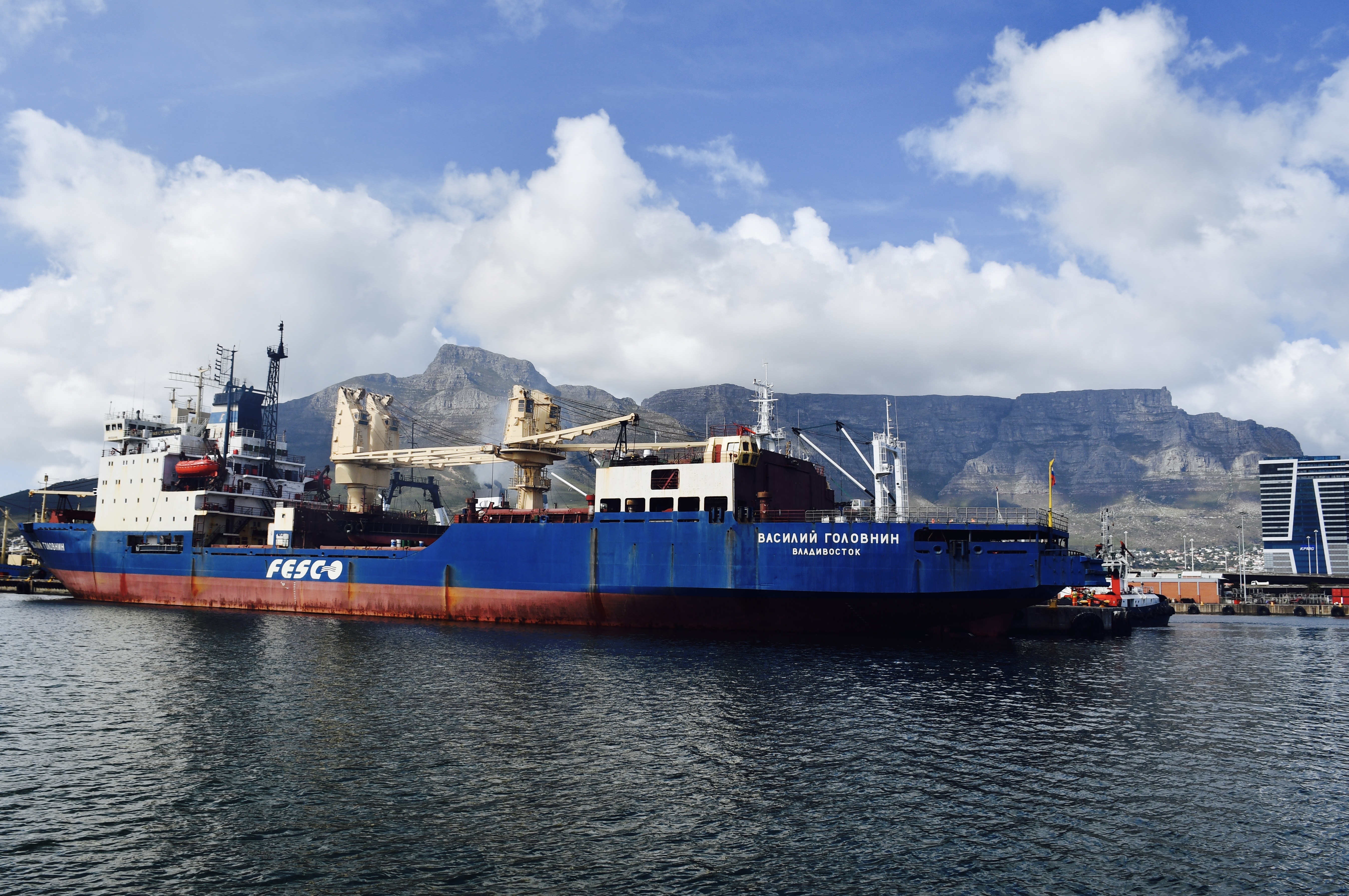
In the Port of Cape Town — “Vasily Golovnin!” we shout from the deck to the large ship. We know her. First of all, it was this very ship that was trapped in the ice off the coast of Antarctica this summer—or rather, just before winter—that is, in April.
And another icebreaker, Akademik Fedorov, delayed picking up our polar explorer friends from Bellingshausen Station to help Golovnin escape the ice. By then we had already returned from Antarctica and were following events the way everyone does who has suddenly become involved in great voyages.
And we have long known Vasily Golovnin the man, not the ship. On board the ships Diana (1807–1809) and Kamchatka (1817–1819), he was one of the first Russians after Krusenstern to circumnavigate the globe. Diana’s route from Cape Horn to the island of Tasmania is almost exactly the same line as the route drawn on Lady Mary’s chart.
— “Fellow countrymen!” they shout to us from Golovnin. We happily wave our now-grown wings at them.
And so, after 55 days at sea, Lady Mary entered that very port of Cape Town where there had been Jeannette and a hole in the hull, cocoa on board, rigging, and 14 French sailors scattered among the taverns.
Approaches
As we wrote in our last report, ships used to be mercilessly battered off the Cape of Good Hope. Perhaps the devil twisted their navigators around the bowsprit, or perhaps electronic charts had not yet been invented... Probably also because they could not see the coast in time at night, before a proper lighthouse was built. Storms, of course. They are common here, and ships still come to grief in them today.
Nowadays, in more or less normal weather, it is fairly difficult to come to grief at night. Because the coast can be seen from 40 miles away, if not 50. A few hours after sunset, the eastern edge of the sky in the west gradually fills with a glow, like a magic youth-restoring apple. You know for certain that it is not sunrise, because what sort of sunrise happens at midnight? This phenomenon is the lights of a big city. And all night long they shine for sailors more reliably than any lighthouse.
About 20 miles from the port, mountains rise out of the horizon, producing a picture worthy of an oil painting: smoky-black outlines of mountains against a “sunset” sky.
The wind behaves itself and does not rise above 25 knots. But our yacht is not tempted by this glow, so we race farther south, towards the Cape of Good Hope.
Approaching any coast is always nerve-racking, especially at night. There is no dozing on watch now; you have to monitor the horizon. And the less civilised the country you are approaching, the more vigilant you become. South Africa is a civilised country. And there are no crazy little fishing boats without identification—and sometimes without lights—on the approaches to the port. Everyone we encountered was running AIS and appeared on the monitor. Importantly, they were not towing hundred-metre nets behind them, as in Morocco, nor had they strewn nets across the entire continental shelf around the fairway, as in Senegal. So in theory, we could have taken a nap. Which the captain did while I kept watch. Although, in fact, I was the one who dozed. Everyone else was out cold.
At dawn I got the skipper up and we changed tack; otherwise we were already beginning to drift towards the Indian Ocean. It was my turn to sleep. By the time I rubbed my eyes open, we were sailing along the coast under mainsail and engine. It was rather late to shout, “Land!” And when you are alone on watch at night, somehow it is no fun to yell. We would have approached the coast in far too matter-of-fact a fashion. So we had to drink tea with jam.
We raised a huge Russian flag to the sound of our national anthem. We have two sizes of flag: very small and very large, with nothing in between. We decided to bring an important and difficult stage of our journey to a beautiful close, with the large flag. And the anthem is a long-standing sporting and naval tradition in every nation. The national anthem is played when the national flag is raised. Or sung, as it is aboard our Russian yacht Lady Mary.
Of Tables and Borders
The city’s main natural landmark at the Cape (Cape Town) is Table Mountain. There is the cape too, of course, but the city’s cape is not as famous, while the Cape of Good Hope lies some 45 kilometres south of the city. The mountain, high and flat as a table, guards Cape Town’s rear and marks the boundary beyond which it is better not to venture—not only for tourists, but for locals too. Because the locals on the other side of the mountain live a lively life, contributing to the statistics of 20,000–40,000 murders a year.
The city wakes from the morning haze into a sunny working day. A neat white waterfront; windows reflecting the glint of the sun. Large ships appear. We pick out a Greek one, some Slavic one, and ours, the Russian Vasily Golovnin. And it is to her, like an old acquaintance, that we shout from the deck: “Hurrah!”
Royal Cape Yacht Club
This is the very yacht club whose bar, according to the legendary captain Nikolay Litau (see our interview with him in Yacht Russia magazine), has one corner for hard-core yachtsmen of the “barnacles on their backsides” variety, and another for everyone else.
We call the marina on Channel 16, but the radio remains silent. Lady Mary creeps past a quay lined with neat little premises that might be workshops or might be pasty shops. Black and white lads lazily raise their eyes to look at us, one after another.
We approach a dead end crowded with yachts:
— “Royal Cape Yacht Club, Royal Cape Yacht Club! This is sailing boat Lady Mary...”
The radio remains silent. Then someone waves from shore:
— “Come over here!” Several Black yacht-repair guys take our lines.
The chocolate-coloured manager asks whether we had called ahead, or perhaps sent some sort of email.
— “No, lissen, brother, what call, what email, eh?” says the captain. “We’ve just come in from the ocean, spent eight weeks visiting the water... Y’understand.”
The manager was moved, and as soon as we had moored, he announced that we needed to shift to the pontoon opposite.
While the captain goes to the office to find out the berthing price, the children and I keep our fingers crossed that it will not be insanely expensive, as for some reason we had assumed. Someone had told us that RCYC might charge double fees—one for parking and another for using the yacht club’s amenities. In reality, everything proved quite reasonable, and the cost of parking together with the amenities for our 40-foot length came to 1,000 roubles per day. We rejoiced and paid for a week.
Sunshine, a fresh breeze, the scents of grass, the noise of the port. A beautiful yacht-club building with a rich history, showers, internet, a bar, a mountain of trophies—some gleaming, some darkened with age—gatherings of yachtsmen, and several hundred yachts.
Lord, thank you, we made it. Land!
To be continued.
Friends, thank you for being with us! Now, at last, we will be able to reply to your comments, which make us very happy.
And we also want to say a separate, enormous thank-you to our growing shore-based brotherhood. We thank Dmitry S. from Leningrad Region, and Alexander, for contributing to the expedition and replenishing the ship’s kitty through
Paypal.Me/TravelyFamily and Yasobe.ru/na/TravelyFamily!
We are sooo happy that you are with us. Hugs to you! And may everything be well.
Friends, we wish you a cosy autumn and a warm heart! Thank you for your support, your concern, and for waiting for news. Thank you for lending us your shoulder and your hand.
The third major stage of our circumnavigation via the Great Capes and Antarctica with children has officially been completed.
And together with you, we also say thank you to MVS Telecom JSC! Thanks to its tender care and steadfast support, you can see the entire winding track of our expedition through storms and calms, together with weather conditions and speeds. Based on this information, it would be possible to compile a fairly detailed history of the voyage even without the posts.
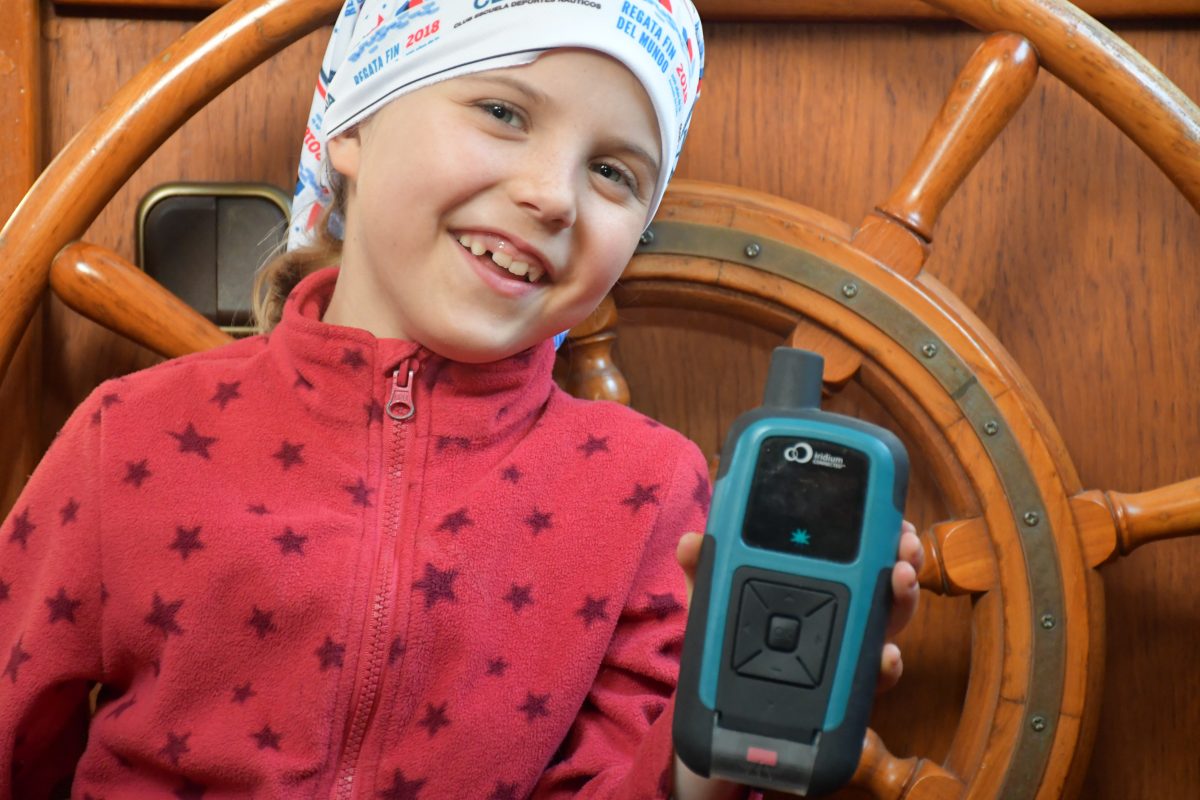
MVS Telecom and IRIDIUM are awesome. And the tracker itself—a kind of thick, latex-covered tube—is already legendary: it crossed the South Pacific with Fedor Konyukhov in his rowing boat. And now it lives aboard our Lady Mary.
Today we will bring it with us to the meeting in Cape Town.
MVS Telecom
Here is the link to the entire route from the edge of South America:
bit.ly/iridium360
About the meeting:
With the support of the Consulate General of the Russian Federation in Cape Town, we are holding a meeting with the Russian-speaking community today, 25 October, at 17:00, at 18 Queen Victoria Street. The historic colonial building, once home to the Cape Town Club, will embrace everyone with the spirit of history, while we will fill it with music, photographs, and videos that inspire people to pursue a great dream.
Hugs to you all, friends! If you are not in Cape Town, we will post a recording of the live broadcast from the meeting on our YouTube channel:
www.youtube.com/c/travelyfamily