
From the Travely-Family archive · Australia and Tasmania
Active Isolation. Where the Children Study. Russians in Australia
An original publication from the former Travely-Family website. This English translation was preserved from the technical-site archive without editorial rewriting.
Answering a frequently asked question:
what courses is our young sailor taking now, during the holidays, while in Australia? And why is she so delighted with them? Links to our schools. Sharing our experience. This is also about Russians in the world’s most isolated metropolis and the prospects for travel during our maximum-security holidays.
Last weekend flew by just as quickly as all the previous ones in Australia. If, during the first few weeks, time bounded along at the speed of a kangaroo (about 50 kilometres an hour), it has now overtaken a cheetah, which is twice as fast as a big kangaroo. One moment it was Saturday, then—bam!—it was Friday again. And our weekends are booked up three weeks ahead. And the work schedule keeps giving us a gentle kick up the backside. Tell me, is it just us, or is your space-time continuum twisting itself into pretzels too?
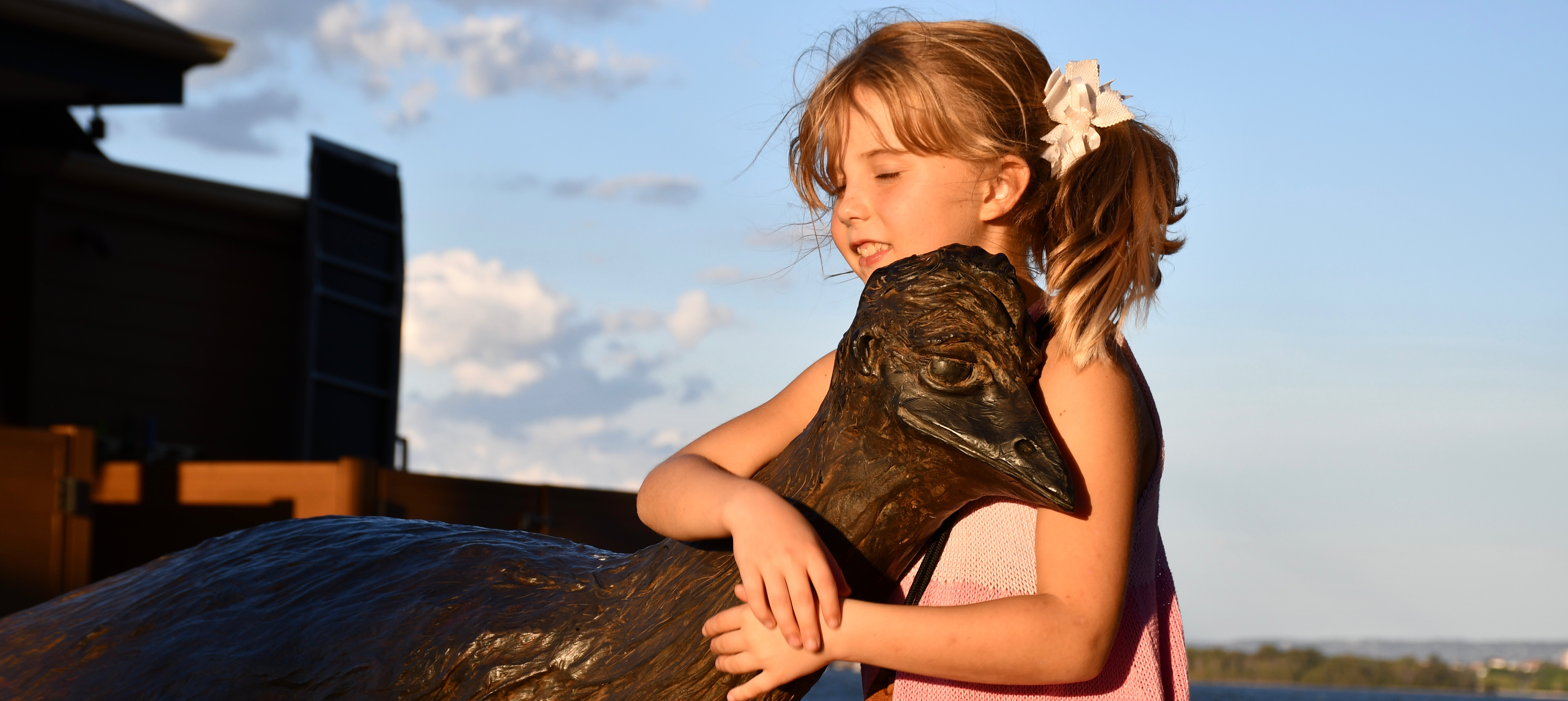
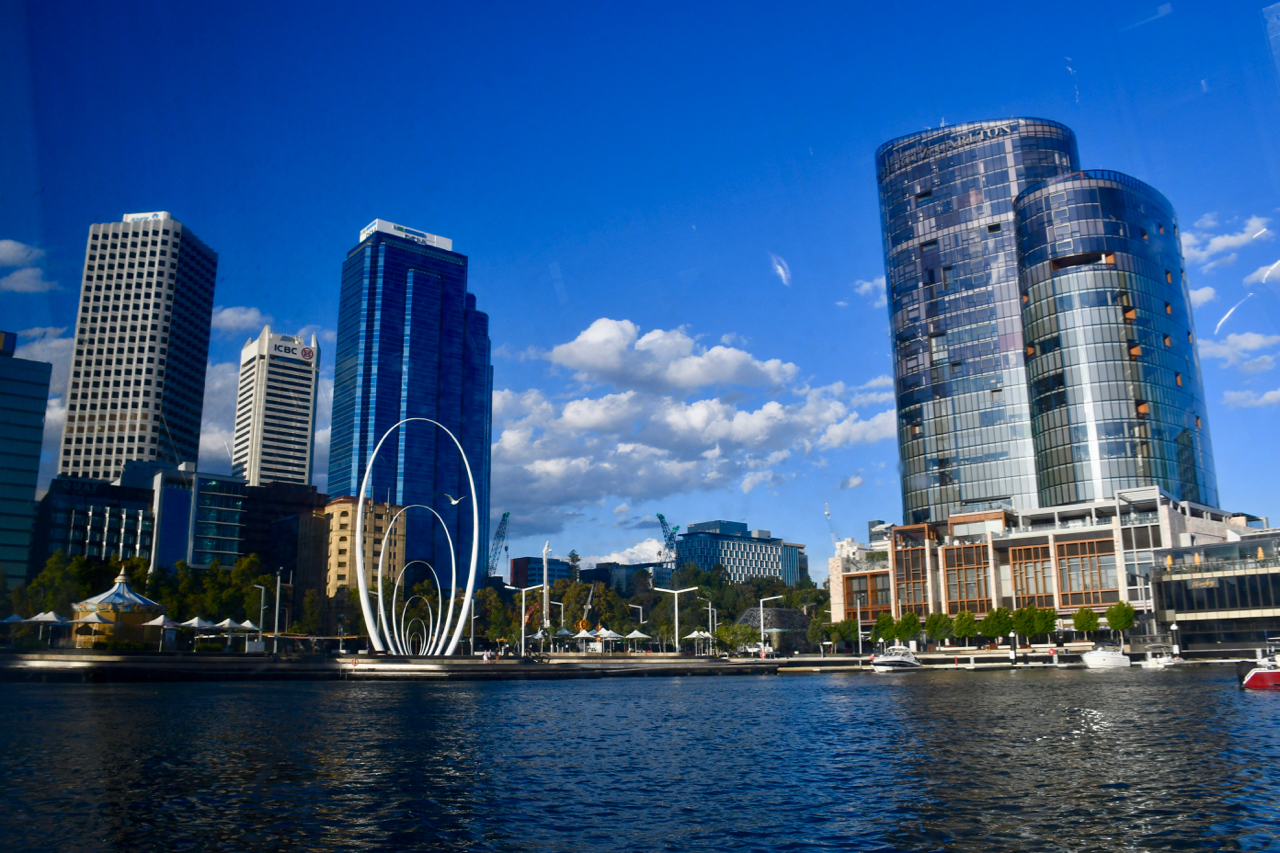
Western Australia’s Russian community is based mainly in Perth—the most isolated metropolis in the world, which sprawls across an enormous area because most of its buildings are low-rise. And our town of Fremantle is, strictly speaking, part of Perth.
Russians in Western Australia
Almost every day in the diary has someone’s name written in it—a schedule of meetings, a schedule of livestreams on different platforms, and twenty lines of tasks for each day. Our modest services to the Motherland have aroused warm interest among Western Australia’s large Russian diaspora. It really warms the heart.
There are lots of great people here, all very different. With some, a club forms around one set of interests; with others, around another. And with some, it is a kaleidoscope of microcosms. It is fascinating to make friends and talk. There are lots of talented people, and our Sunday evening at Irina and Pavel’s turned into a musical evening in their dedicated music-and-evening room, with a piano, drum kit and guitar.
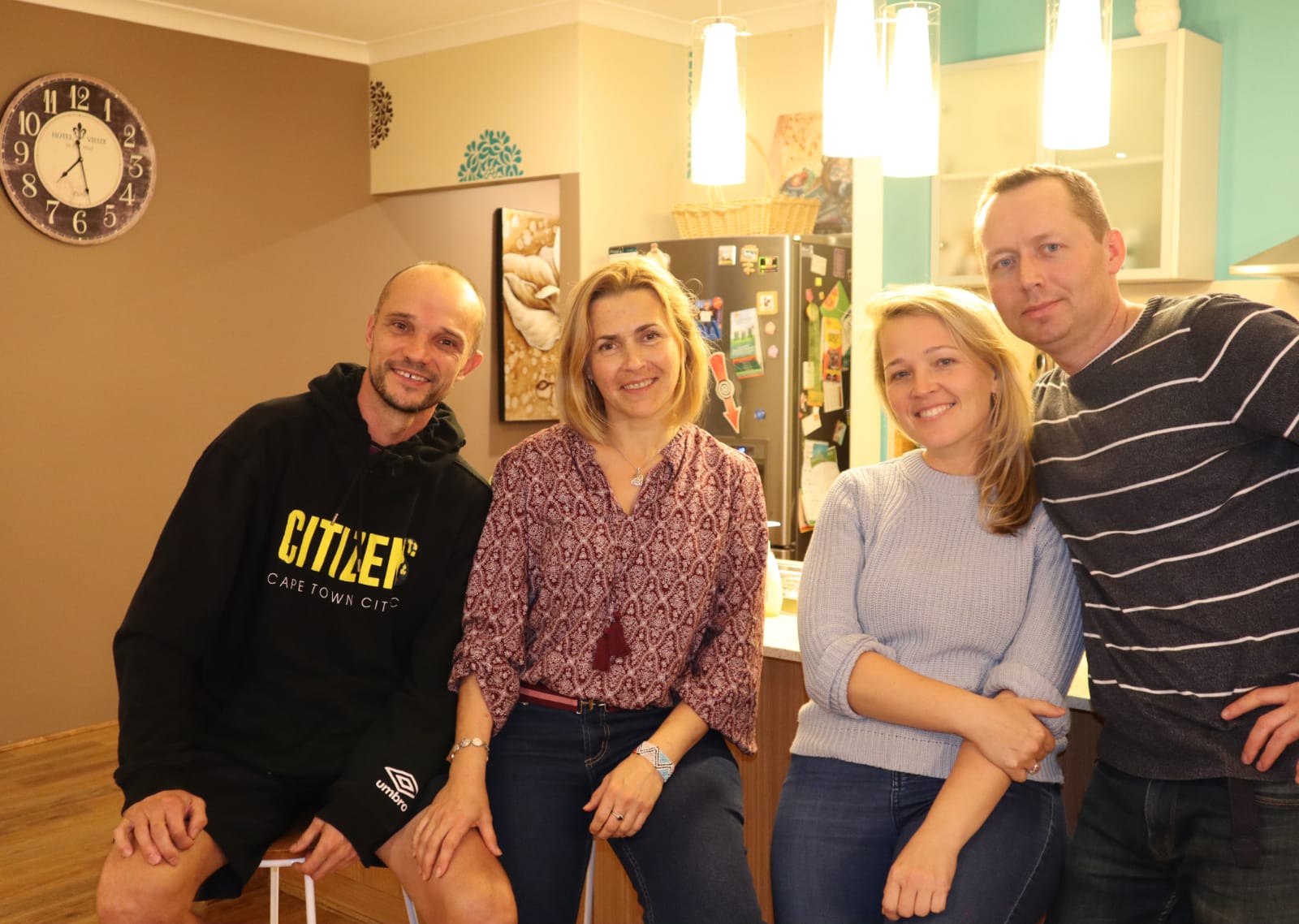
With Pavel and Irina at their home
Many people in the Russian community know Fyodor Konyukhov—they welcomed him and saw him off on his round-the-world balloon flight. They tell the story in a really fun way—how everyone peered into the sky for a tiny speck, how they ran after the balloon, how he landed in the very same place from which he had set off around the world 11 days earlier. There’s a point of connection for you:).
Incidentally, back in May we thought we might once again wait for Fyodor Konyukhov’s team right here in Perth, from where he intended to ascend into the stratosphere. But it did not work out. Now our friends over there send us photographs of Fyodor Konyukhov’s village being built, and we send greetings from Australia. Meanwhile, we keep tinkering with the Primus stove, submit our documents for a “COVID visa,” and wait for things to change.
Perth.
Hello, school
As it happens, Perth, the capital of Australia’s largest state, has several Russian schools. On 21 June, we will be holding a public meeting at the Yabloko school. We will try to livestream it from there on our YouTube channel (the meeting starts at 9:30 a.m. Moscow time).
Mosaic Russian School in Western Australia
On Saturdays, Ladunya attends full classes online at Mosaic School.
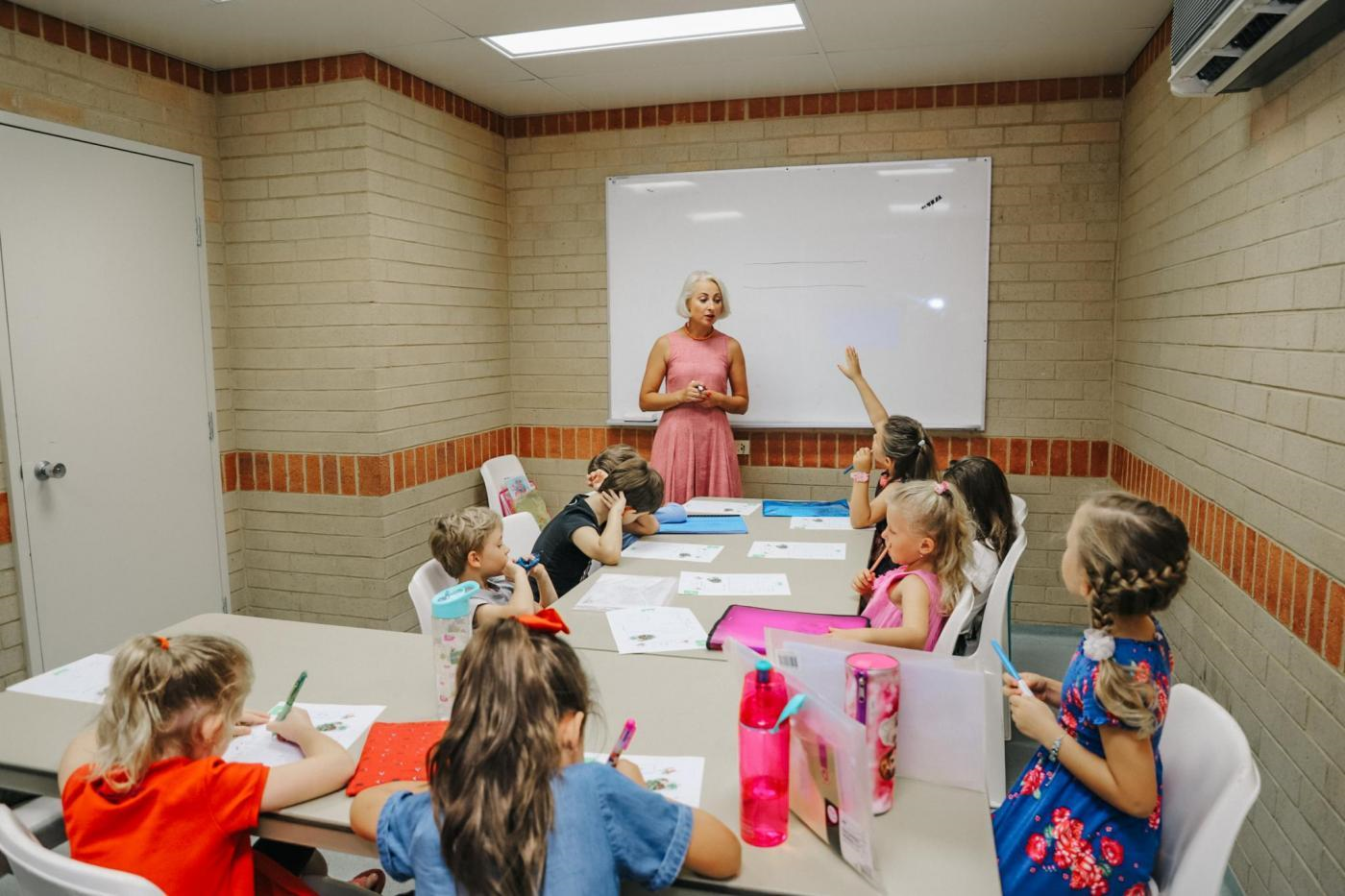
I am absolutely thrilled by how well everything is organised there. Our young sailor really looks forward to Saturdays. And before her first face-to-face meeting with the teachers and pupils, she was genuinely nervous. But everything went wonderfully: at last, Lada moved from classroom to classroom for her lessons, just as she should. She sat at a desk and munched her lunch during break. The latter was enhanced by a Russian potato pirozhok, bought right there in the school foyer. Svetlana and Andrei bring fresh baked goods from a Russian bakery. Alongside various pirozhki, their stall also had sweet cheese pastries, buns and pryaniki. Mmm... just like home.
Mosaic Russian School in Perth
During isolation and online learning at Mosaic, we held a couple of livestreams for the children and parents. In their media class, the children interviewed us and then turned it into a whole film.
For the sake of completeness, we should add that Perth also has a school called Russian School and the Lomonosov School, which works with Mosaic (Lena, the wonderful media teacher, was from there). So giving children a Russian education is not a problem, even here at the ends of the earth, where there is no embassy school (that is in Canberra, the capital of Australia).
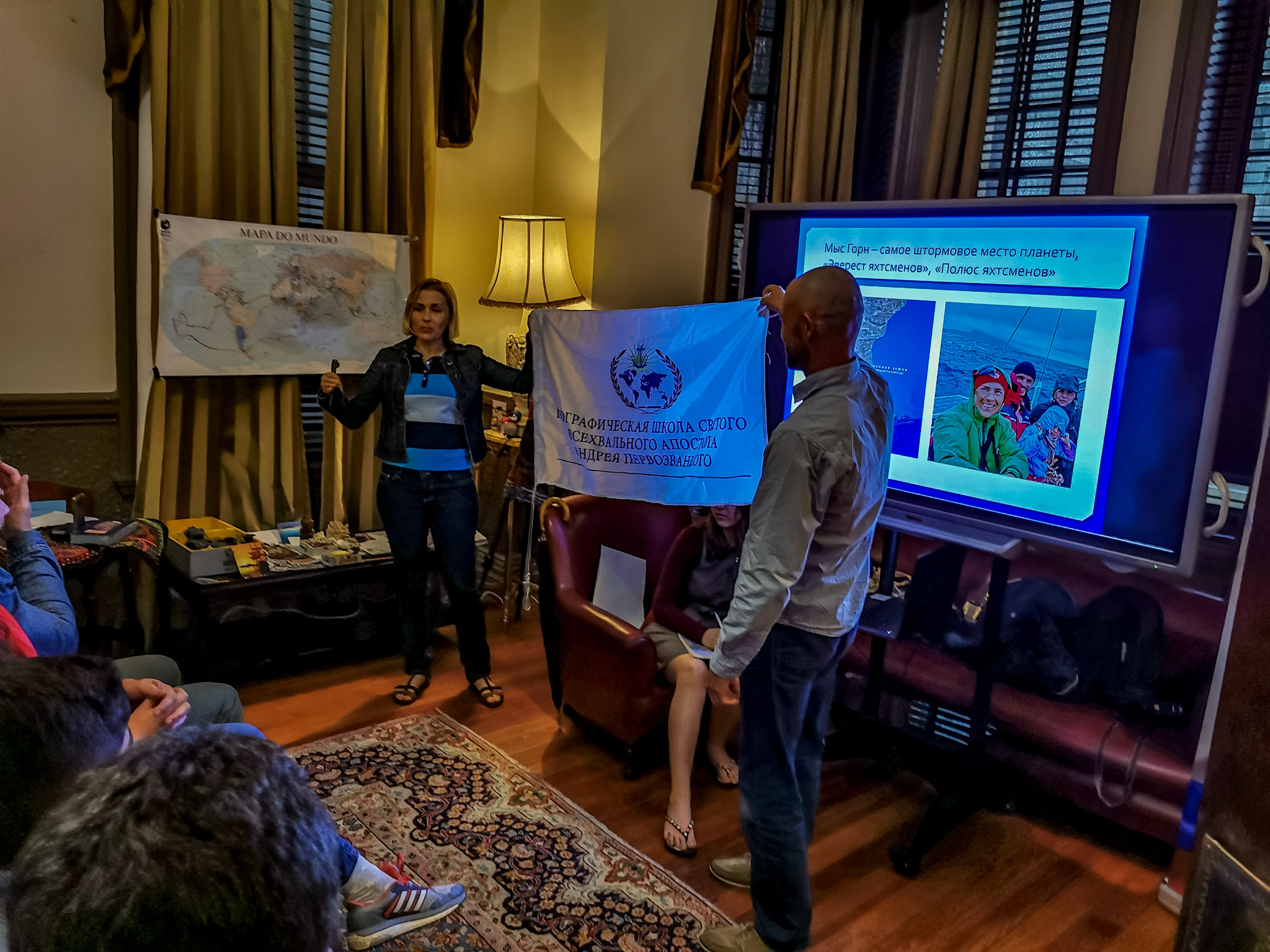
Our Russian distance-learning Geography School
On weekdays, Lada happily follows the Active Holidays programme at her distance-learning Geography School, where she has been studying for more than a year and has successfully completed Year 2. It was a great idea not to part ways for the summer. Three days a week they study English, geography and ecology, and hold a Literary Café. There they make up stories based on funny pictures from the lives of animals. If you need a distance-learning school recommendation, we wholeheartedly recommend ours.
With the flag of the Russian Geography School—at a meeting held under the auspices of the Consulate General of Russia in Cape Town Its full name is the Geography School of the Holy and All-Praised Apostle Andrew the First-Called.
The secondary-school teaching materials have been reworked by the headteacher and teacher Irina Alexandrova and her colleagues, taking the best from various programmes. The school is small, so the individual approach is almost like having a private tutor. The atmosphere in lessons is relaxed, but the progress is plain to see. And these Active Holidays, which stop them completely losing the habit of studying over the summer, are just the thing during self-isolation. I honestly want to hug the founders and teachers (thank you, dear teachers!), that’s how delighted our young sailor and I are with everything happening there. In their free time away from Active Holidays, inspired by the Literary Café, Lada and her friend and classmate are writing a story about dragons over Skype.
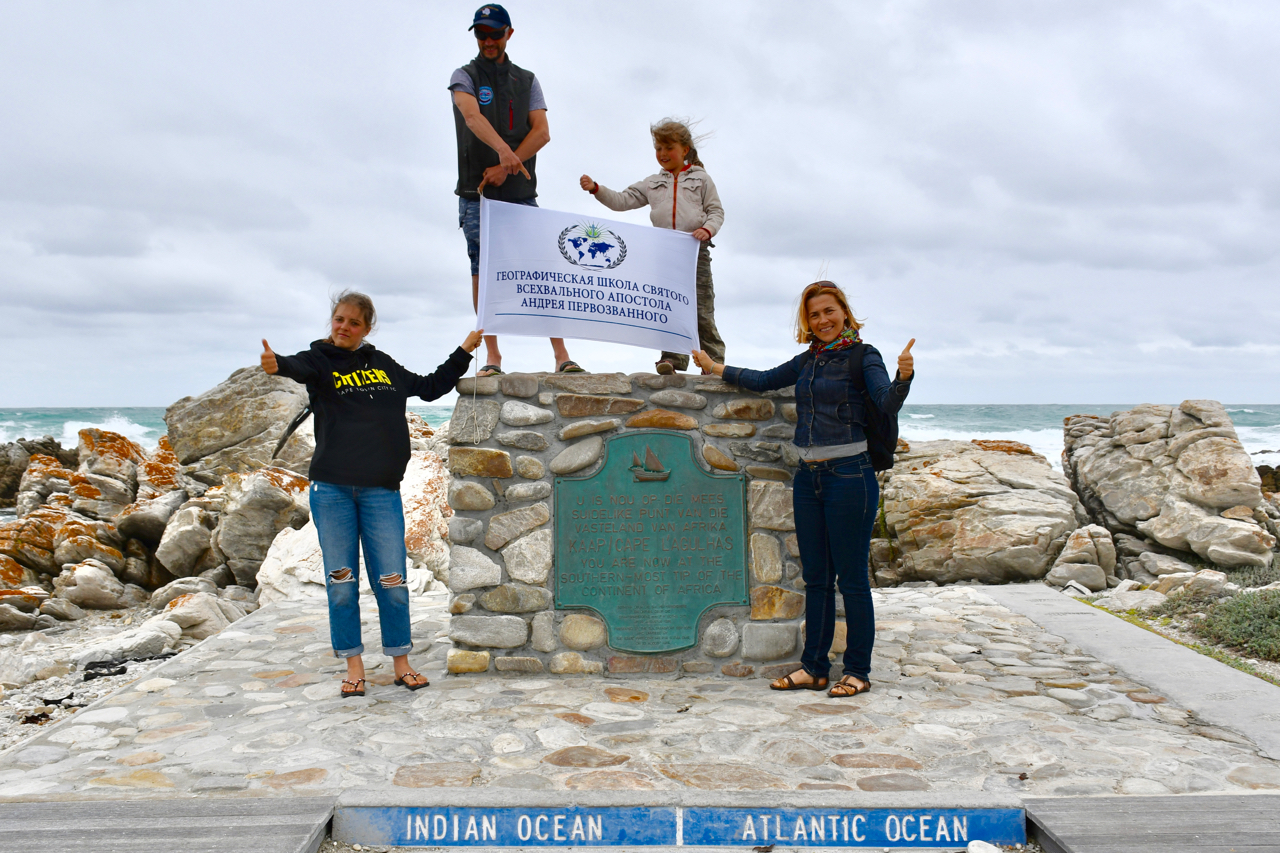
Here is the link to our school once again, as it appears online:
School, schoolgirl and family where two oceans meet, at Cape Agulhas in Africa.
Helicopter Unschool
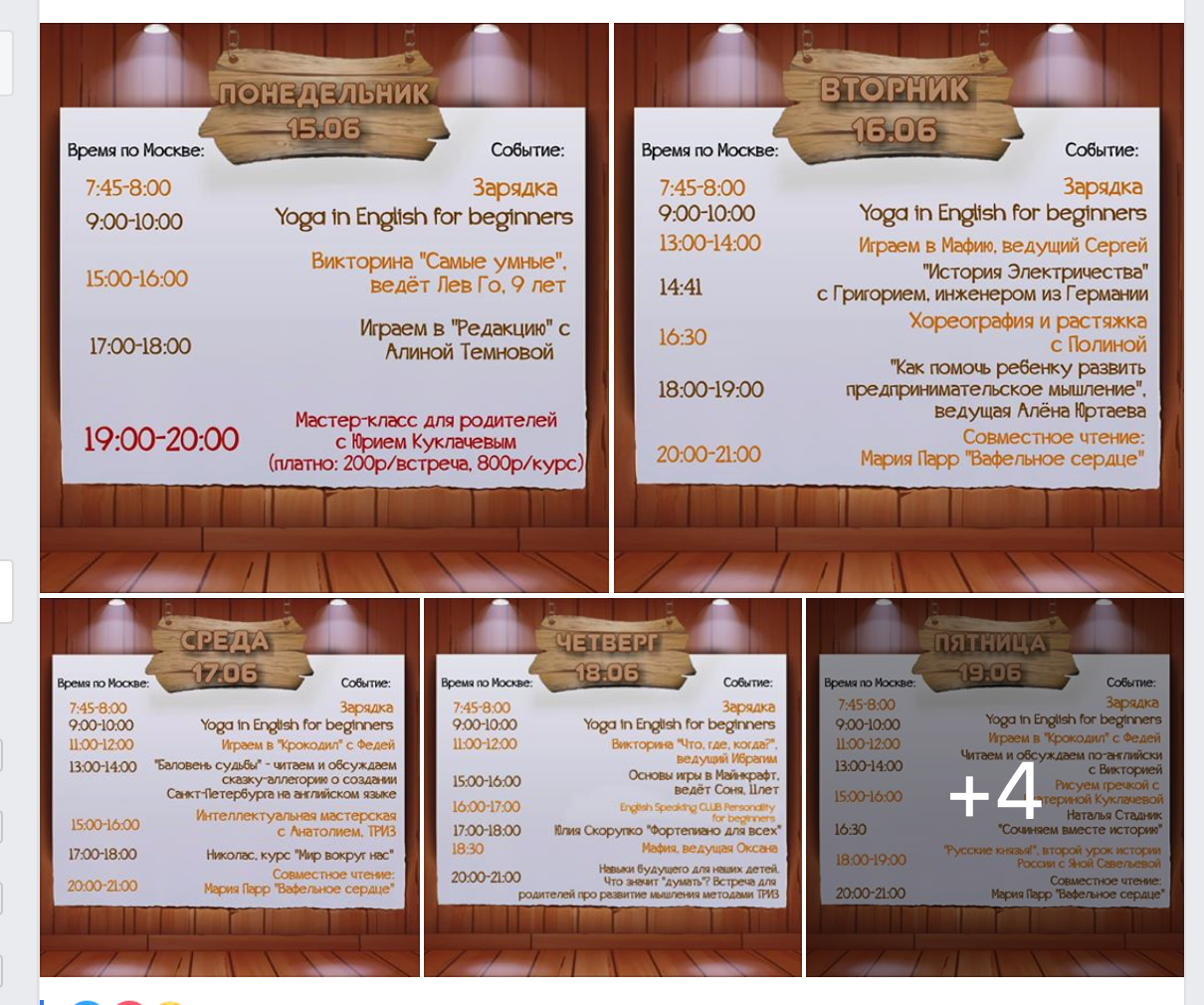
Lada now has a third school as well—or rather, an unschool. It was organised on Facebook by enthusiastic volunteers. Through Zoom, the children meet every day from 7:45 a.m. Moscow time, with one- to two-hour breaks and no pressure. They do exercises, practise yoga in English with a real Indian yogi, play Mafia, and take interesting courses in TRIZ, “What? Where? When?”, building self-confidence, and how to become a brilliant speaker. They learn new things about the world around them, electricity and prehistoric animals... There are meetings for parents too; because of the time difference, we cannot make it to them—or rather, they cannot make it to us 🙂 Helicopter Unschool, weekly timetable
Our young sailor already has lots of friends there too, and Lada eagerly looks forward to most of the classes. There are children’s and adults’ chats on WhatsApp. Next week, we will also try to hold a meeting at Helicopter with the children and their parents. We will be arranging it in the next few days.
The school’s organisers are absolutely amazing. Hats off to them for their Herculean efforts. If you would like to keep your child occupied with something useful and interesting online—and especially if you have at least an hour a week to run something yourself for your own and other people’s children—you can join this brilliant project. I do not know what it will eventually grow into, but its potential is enormous.
Here is the link to the school’s Facebook group.
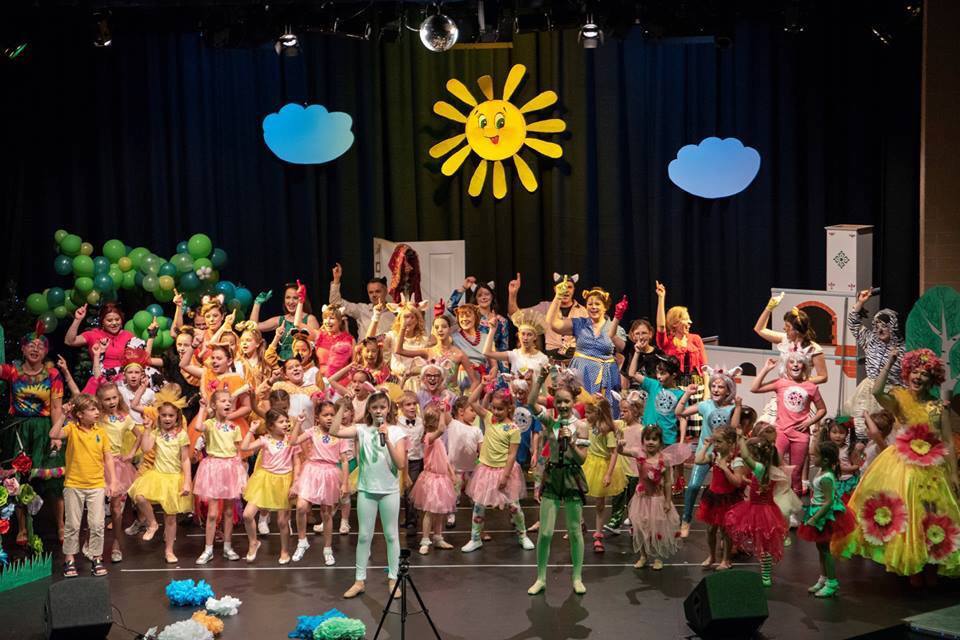
Come and have a look.
And, as always, I am curious: have your children’s schools come up with ways not to part for the summer, and do the children enjoy studying online?
A celebration at Mosaic. Still without our young sailor 🙂.
And a little about transport in Australia
Last Saturday, Mosaic Russian School in Perth emerged from the online shadows, and the “Get the Child to School” quest began. The first attempt went perfectly. Inna, the mother of one of Lada’s classmates, drove us all to school; from there, Nastya and I teleported in the deputy headteacher’s husband’s car and wandered around Perth until five in the evening. Meanwhile, Lada made her way back to the yacht by the same route. If the wonderful Inna can drive us to school on Saturdays, it will be an absolute dream. Because there is simply no way to get there from where we are in southern Fremantle.
Though we really cannot complain: public transport in Australia is excellent. The free buses named after multicoloured cats (Blue Cat & Red Cat) cover quite a large area of this city spread out across the plain. At weekends, you can buy a family ticket for all regular forms of transport for 13 dollars for four people, and ride buses and suburban trains all-inclusive. So it is even rather fun to ride around on trains and buses while Lada hits the books.
Returning from Perth to Fremantle, Nastya and I bought a train ticket (we call it the metro between ourselves, although it actually runs above ground) to Zone 2 for A$4.90. The ticket is valid for just over two hours. When we reached the tracks, we discovered that our line was closed for repairs. Dusk was falling, and there we were with metro tickets but without our navigator-captain. We asked the police where to run and discovered that our tickets were valid on the bus as well. The bus station is a ten-minute walk from the subway. And our bus was just about to leave.
To board it, you have to take an escalator underground. Then we rode for about 40 minutes to our town. And there, wonder of wonders!—we made it just in time for the last free Red Cat service. How have they managed it here? Is everything deliberately timed to connect, or does transport simply run regularly every ten minutes? Or are we just lucky?
Back home, only the metro seems to run that regularly so far. Though perhaps I am out of touch:).
Maximum-security holidays in Australia
The internet says that Australia will open on 1 July, and Russia on the 15th. The other day, we spoke to an airline employee. It is too soon to celebrate. Airports really are opening on the dates circulating online in those lists, but mass tourism is still a long way off. At least where Australia is concerned. Our plans for the next stage of our travels are still on hold. There is talk that Australia’s borders will, in reality, remain closed until January, until a vaccine is invented. Why its rollout is planned for January—which seems rather early for a vaccine—leaves plenty of room for new conspiracy theories to emerge.
The information about how long the borders will remain closed to tourists was also confirmed by the Australian Minister for Foreign Affairs. We are watching, studying and working a lot. We escape the perils of inactivity on our bikes—yesterday, our young sailor, our midshipwoman and I clocked up a full 22 kilometres despite the rain and gusty wind.
Tell us, how are things where you are? How are you coming out of quarantine, and what has changed in your life because of it?
We are off to prepare for our public meeting on Sunday, 21 June, at 9:30 a.m. Moscow time. Come to our YouTube channel for the livestream of our meeting with the Russian community.
Hugs to all of you! Everything will work out!