
From the Travely-Family archive · Other Entries
Hooray! We’re Offline Again!
An original publication from the former Travely-Family website. This English translation was preserved from the technical-site archive without editorial rewriting.
Hooray! We’re offline again! Huahine Island. To appreciate all the benefits of the internet, you need to spend a year living almost without it, then plunge into the online world for three weeks or so. To appreciate the joys of life without the internet, you need to set off on a round-the-world voyage with a somewhat limited budget...... limited just enough that you can’t afford to have the World Wide Web piped straight aboard the yacht. You can’t spend your life running from café to café, so you simply have to live without poking a finger at a keyboard or screen.
And that, let me tell you, is a completely different life! No matter how much you convince yourself that you don’t spend all your time online, that you only look at things when you need to, and that right now you simply have to reply to a message—it’s rubbish. If your device always has internet access, you periodically vanish from real life. Proven fact. During our last couple of days in Tahiti, I kept saying more and more often, “What bliss—the internet will run out tomorrow! And we’ll start seeing what’s around us again. Because for now there’s a ton of stuff we need to download, learn, ask about, write and send.”
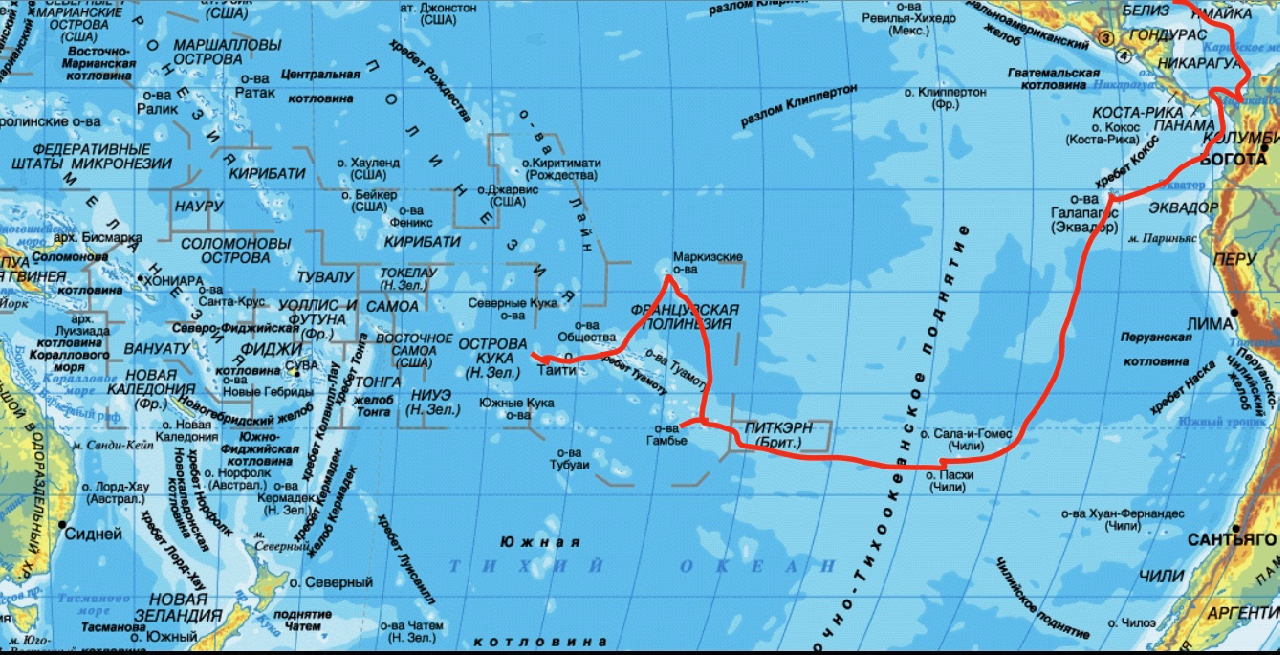
And now, for the second day running, I’m simply enjoying not having to send anything anywhere. Instead, I can do crafts with our young sailor (we’ve already made several different motanka dolls), contemplate Huahine’s lagoon, and snorkel, watching shoals of fry shimmer above the tiny coral reefs in the shallows.
They swirl above their lilac bush, seemingly oblivious to everything, until you get within three metres. Then the whole shoal is sucked inside the coral, while turquoise flashes dart about anxiously: “Has it gone? Hasn’t it gone? Ooh, did you see that?... Ooh, what is it? It’s not going to eat us, is it?!” Little conical zebras with white patches on their foreheads are less fidgety, but they too keep close to cover. And on the big coral heads, you never know what you’ll come across! A triangular scarf in striped pyjamas swam off into the unknown.
There isn’t even anything like it in the fish guide. Smoky fish grumble beside slender, smooth-branched corals the colour of baked milk, staring straight at you through the lenses of your mask and lamenting as though faced with a gang of rowdy youngsters: “What on earth is going on here! They’ve all come swimming in and muddied the water! When is someone finally going to put a stop to you lot?!!”
The other fish seem to notice you through some sort of sixth sense and disappear like lightning, while these ones first smack their lips at your shameless face and only then run away. Beside yellow hemispheres of cauliflower coral, either larger fry or fish of another species dazzle in vivid blue and turquoise. The bright-blue ones have yellow tails, while the turquoise ones look like the parrotfish the captain and I are so fond of. “Andryukha, there’s one of your favourite little parrotfish swimming over there.” “Hooray, I’m off to get the speargun!” the captain rejoices. Why not, we could spend another month flat on our backs... it’s been ages since we last had ciguatera.
Brrr—I shudder at the ghastly memories. As for how we’re feeling, the ciguatoxin still hasn’t left our systems completely: we’re still reacting to water, our muscles ache, our heads hurt more often than usual. Walking is rather hard. In short, the crew is in perfect health..
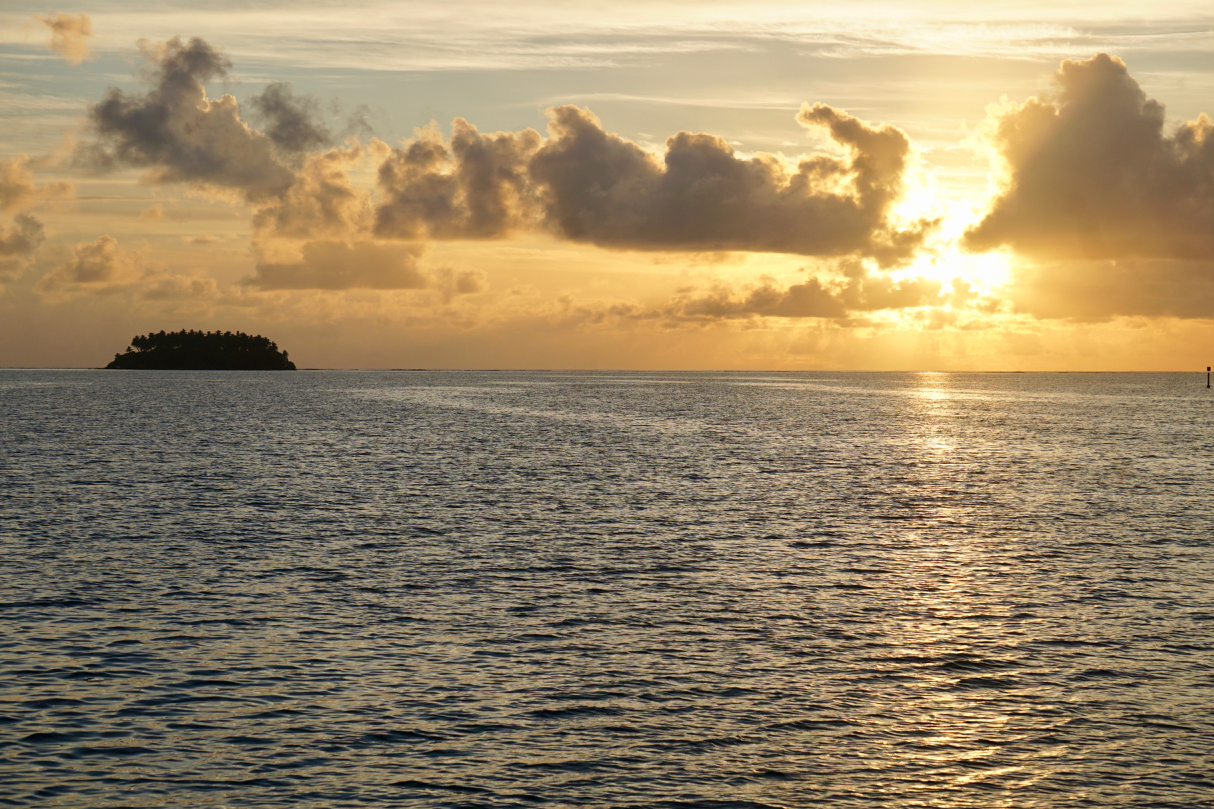
Arue, Tahiti, the previous day
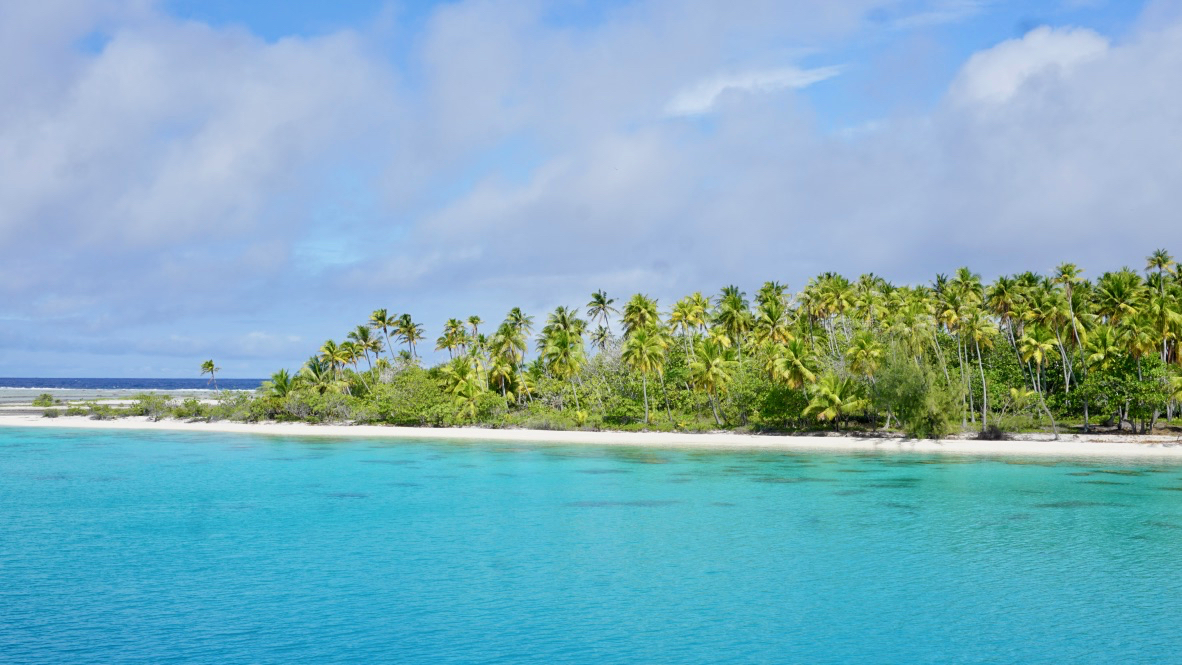
In the evening we say goodbye to the crew of the round-the-world yacht Blagovestie, hoping to leave by sunset. In the end, we postpone our departure until morning. We weigh anchor when the wind arrives—it usually kicks in around 10 a.m. and dies away by dusk. The teeth on the anchor windlass gypsy have worn so smooth that the twisted section of chain slips between them and tumbles back into the water. So weighing anchor takes a long time. We hoist the mainsail, and once clear of the reef belt, the genoa. Course: north-west. Tahiti and mountainous Moorea beyond it disappear into the mist. I wander off to watch videos of our musical get-togethers with the others: oh, how did it happen that we didn’t sing anything on our last evening? Will we ever see each other again?... The children and I feel sad..
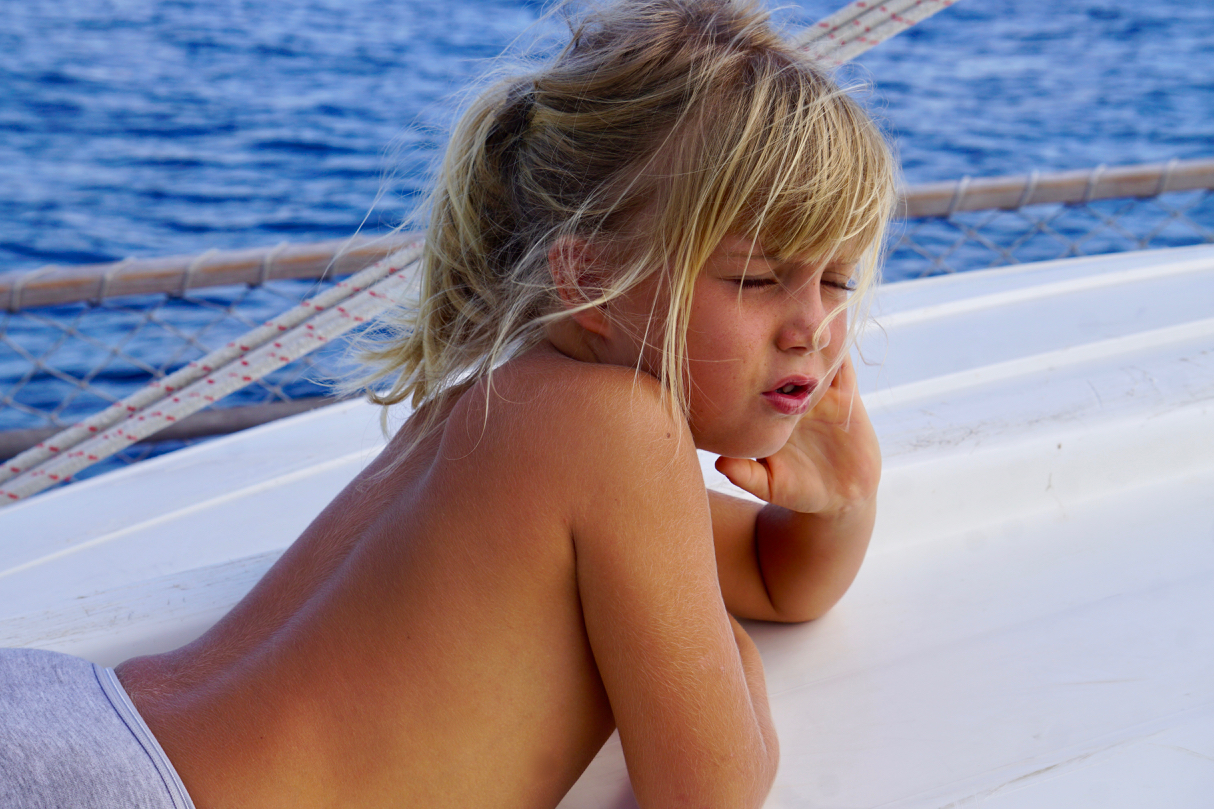
Route and plans
Huahine is another of the Society Islands. It is just over 100 nautical miles away; after that, 20–40 miles farther on, come Ra’iatea, Bora Bora and Maupiti. From there it is about 700 miles to Suwarrow Atoll (can’t foreigners preserve and spell the surname of the great Russian commander properly?). The commander, that is, is in the Cook Islands. From there it is about 500 miles to Samoa, where there is a New Zealand embassy. From there to New Zealand is roughly another 1,500 miles. That will matter if the embassy gives us visas and the weather gods don’t switch on the typhoons. So everything is still up in the air.
The passage is easy-going: Lada and the captain practise tying nautical knots, Nastya reads, and I somehow manage to shoot a quick yacht room tour on my phone. Once we’re back online, there’ll be something to upload to YouTube—it turned out to be a proper little vlogging episode. Andryukha was so reluctant to do it; I spent a year trying to persuade him. We’ll soon see how well the “I sing whatever I see” format goes down:)..
Arrival at Huahine
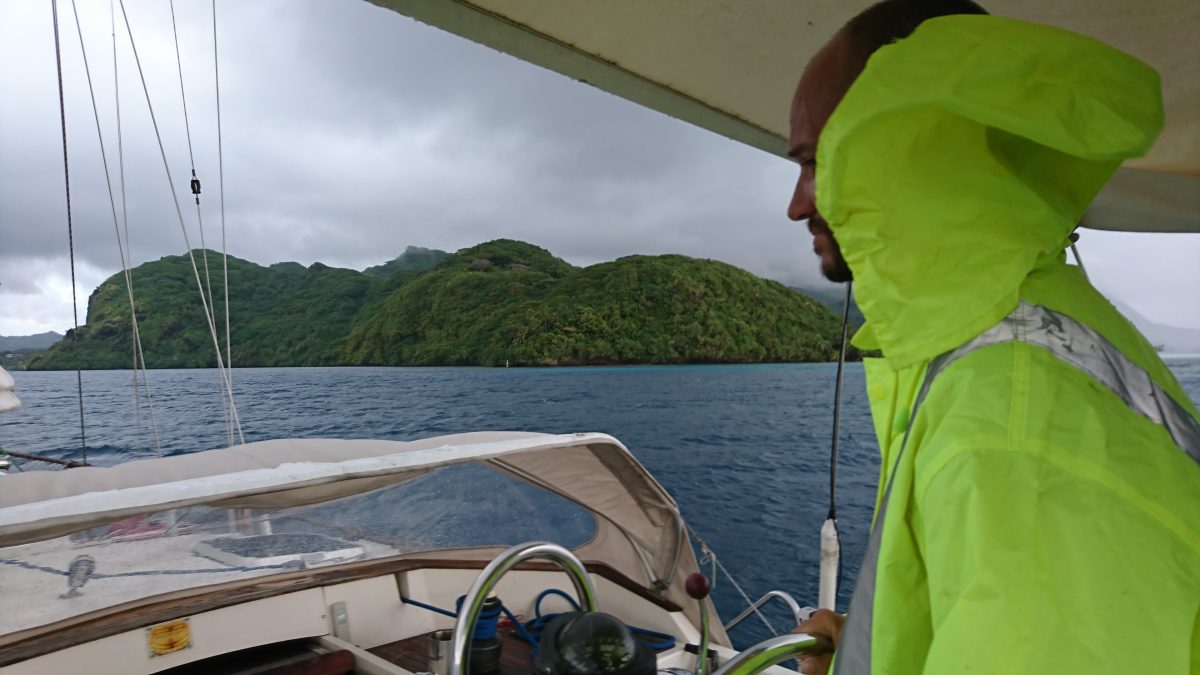
“Andryukh, go to sleep, I’ll stand watch. Huahine is six miles away,” says the captain—and stays up himself. In the morning, squalls hit us at up to 30 knots (wind speed up to 30 nautical miles per hour). The island, which had begun to appear at dawn, is swallowed by a curtain of rain. We furl the genoa in the squall. I pass Andryukha the captain’s tea and a biscuit out into the wet cockpit. We’ve put little bowls beneath the leaking windows, and onward we go. The entrance to the lagoon, between the coral reefs, islets and the main volcanic island, is marked with buoys.
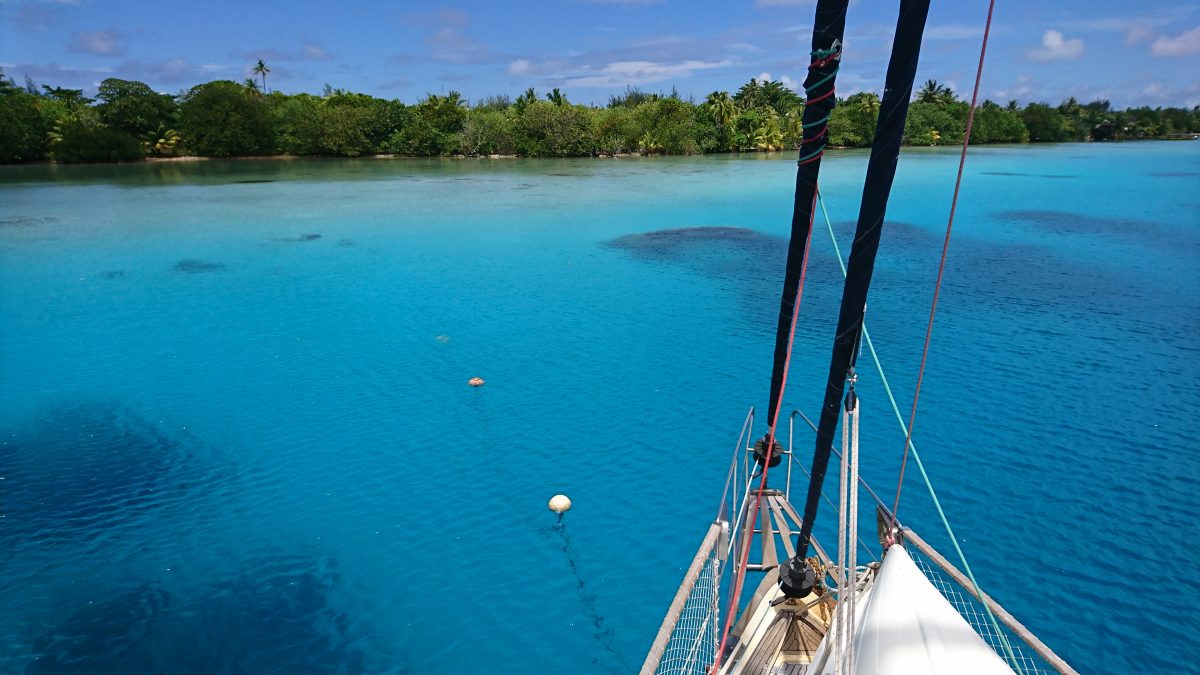
We enter under sail, then start the engine. Ha-ha. It looks as though the yacht’s resident gremlin has committed another act of sabotage: no cooling water is coming out of the engine. Not a drop. Normally, the jet should shoot out for two metres. Then, while we are already reversing into our spot, the engine suddenly comes to its senses and starts circulating water through the cooling system.
We don’t enter the main bay, but anchor in the lagoon between the atoll and the island—and it takes us quite a few attempts. Sheer cliffs, gentle hills and stone fingers jutting from them are all covered in forest. Spreading umbrella trees compose one picture more beautiful than the next. We circle among the corals, choosing a spot where we won’t ram anything with either the keel or the chain. We buoy the anchor chain so that it hangs prettily in the water instead of wrapping itself around the corals. It takes an hour before the anchor finally digs into the sand. The young sailor and I immediately dive in to see the fish. Then again. Then we do crafts on deck. Damn, can anywhere really be this beautiful?!
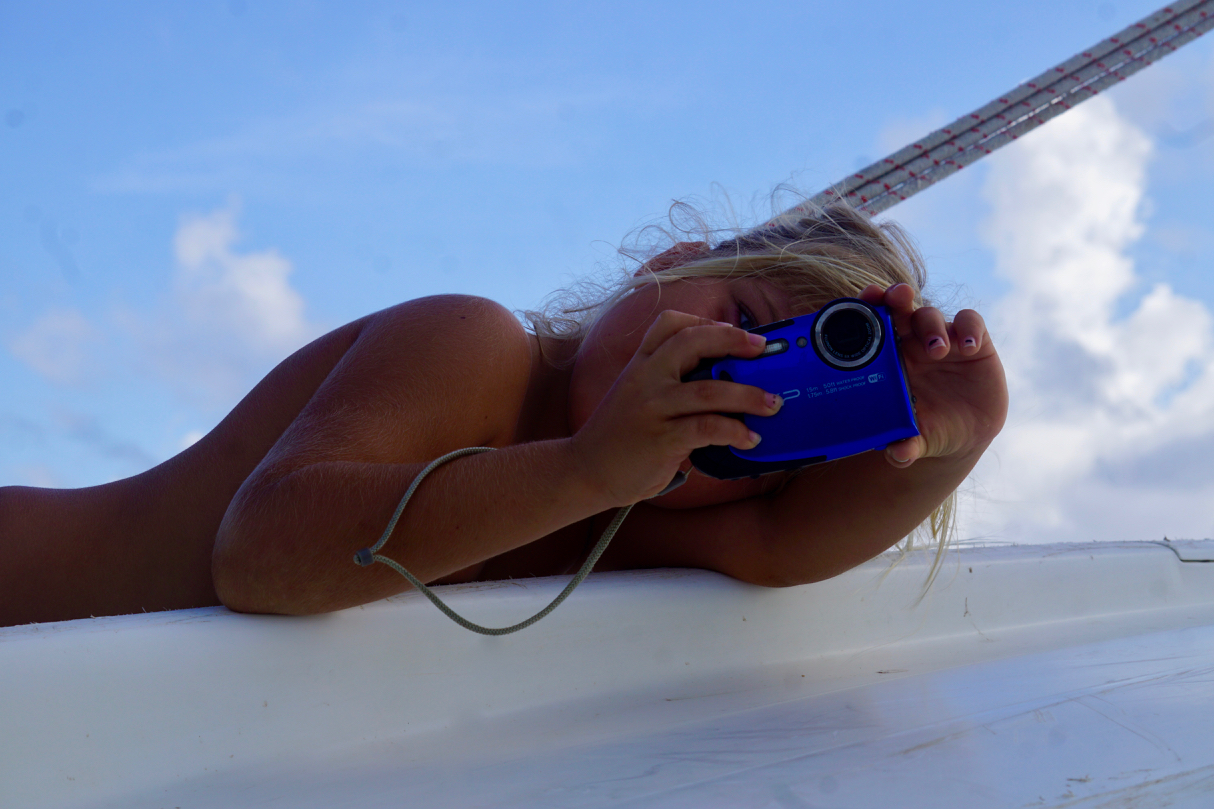
Wonder and delight to you all!
Lady Mary’s coordinates off Huahine Island: 16 deg. 45 min. south latitude, 150 deg. 58 min. west longitude.