
From the Travely-Family archive · Central and South America
Tourists Aground, Phone on the Seabed
An original publication from the former Travely-Family website. This English translation was preserved from the technical-site archive without editorial rewriting.
Tourists aground, phone on the seabed. A mixed bag of events, some fun and some not so much.
How to refloat tourists properly, and at what depth a waterproof phone ceases to be waterproof. Panamanian children and adults. San Blas—the land of the Guna Indians, the Coco Bandero reefs, lobsters and a rubbish-laden wind. An unedited diary The First Day of Winter
The captain went to bed after a sleepless night of racing away from the shoals, while Ladka and I sailed off to the beach, settled down in the shade to build sandcastles, and then walked around the island. On the opposite side, a passenger boat had just landed, carrying a crowd of Panamanians from the mainland.
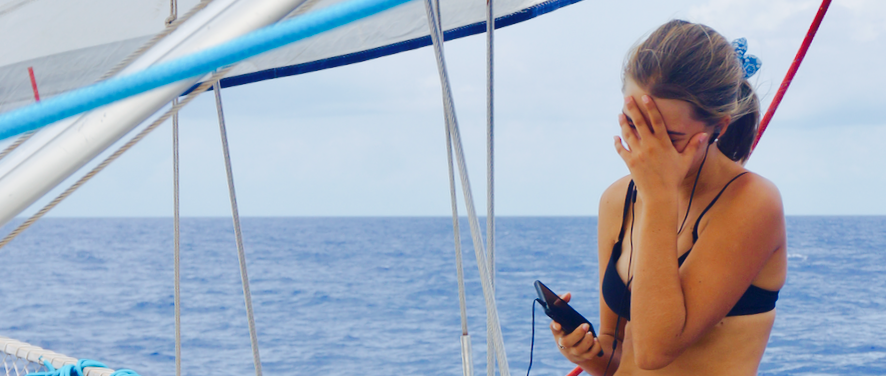
The children swarmed around Lada, and then me. They don’t speak English. The liveliest girls are called Nicole and Jeseni, and the boy is Antonio. For ages Nicole tried to explain something very profound to me with the phrase, “He like your mask,” pointing at Antonio. And I just stood there being dense: Great, I said, I like my mask too.
It later turned out that he desperately wanted to swim in the mask. So that was what all the compliments were about. And the children swam in the murky water, right in the sand by the shore, queuing up for our masks. What, had the poor things never seen a mask before?
Very bright kids. Over a couple of hours together, we figured out who was from where, that they went to school and lived on the Panamanian mainland in a small town, and that today was their day off and somebody’s birthday. We wrote unfamiliar words in the sand and drew pictures there too, Robinson-and-Friday style. Then they set about teaching me to count to one hundred and ten in Spanish. I grasped the principle easily, then almost immediately forgot the whole damn thing.
It’s funny—if I could hang around in a friendly Spanish-speaking environment like this, I’d have started speaking ages ago. As it is, my language skills are depressing.
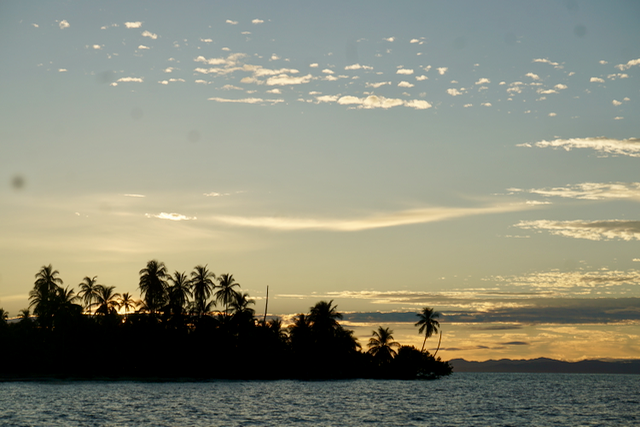
I got absolutely freezing in the water and gloomy weather and only just managed to drag Lada home. Soon the whole company piled into their boat and departed. Everyone waved goodbye, while one feisty lady showed off her language skills by shouting first “Arrivederci,” then “Bonsoir,” to general laughter....\ Our damp memory card can’t be read, so we’ll mostly have to enjoy views of San Blas \...
2 December
A wonderfully lovely day.
In the morning we all lounged together in the children’s cabin, giggling and catching Dad’s legs so he wouldn’t squash us all. So nice, with the wind coming through the hatch.
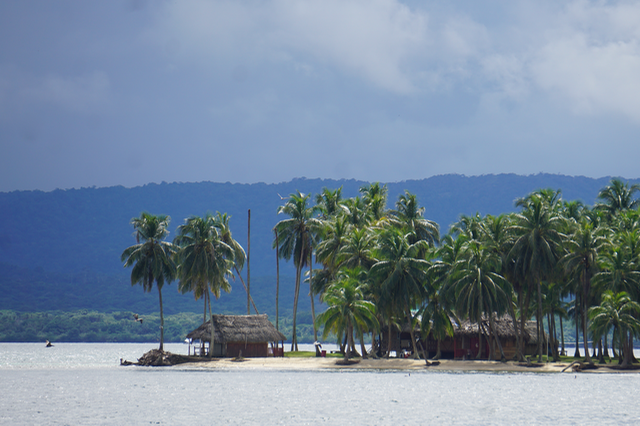
A dugout canoe came by and sold us lobsters for 5 bucks apiece. At first we left the poor things out of the water, then put them in the water for the day, though that didn’t exactly improve their fate.
Ba-da-boom
Well, today something terrible happened. I drowned our wonderful phone—Andryukha’s phone. And although it’s supposedly waterproof, the bloody pressure at a depth of 6 metres crushed all its capabilities down to erratic buzzing.
I’d put the phone on the coachroof, taking pictures of all the beauty and stuff. And then it just went and rolled off... It had been in a rubber case; it wouldn’t have rolled away in that. But it was too hot in the case, wasn’t it?:(. Well, now it isn’t hot at all.
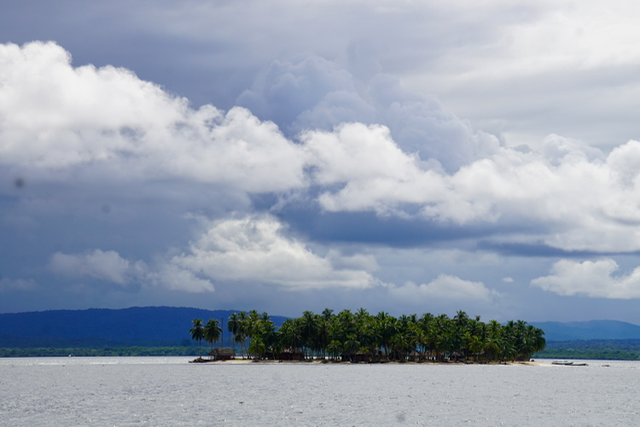
“Aaaaaah!” I yell. “Andryukha, dive quickly, I dropped the phone!”
The captain was as quick as a whirlwind, but the phone had already swallowed plenty of water. The camera was still lit up when he brought it back. For some reason I started trying to switch it off. Why the hell? Well, at that point it could neither turn on nor shut down, and began buzzing for no reason and for a long time.
My sorrow is serene. I dried it with a fan, alcohol and anything else I could lay my hands on. Sooooo... All our contacts, photos and videos, work conversations in the messengers... we’re without communications all the way to Colombia. We should be grateful it was only the phone, I suppose? 🙁.
Off to the Reefs
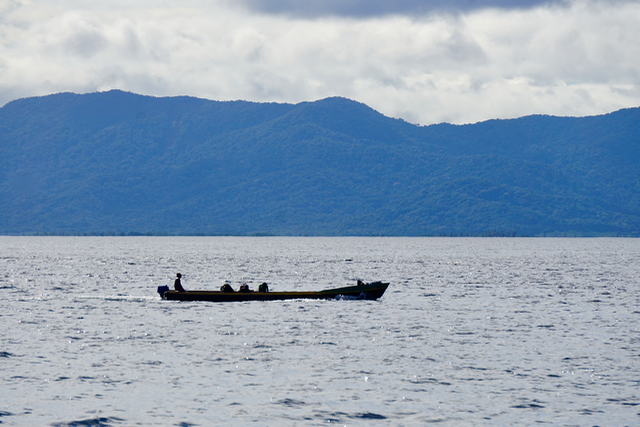
Andrei and I sailed the dinghy out to the reefs for a look, and to the triangular rock, which turned out to be a metal vessel that sank long ago.
Reefs everywhere; we clipped them with the centreboard a couple of times, and the waves were breaking right under our bow. Snorkelling was impossible. I screamed at the top of my lungs:
“Aaaaaah! Turn away from heeeere! I want to liiiive! I have chiiildren!”
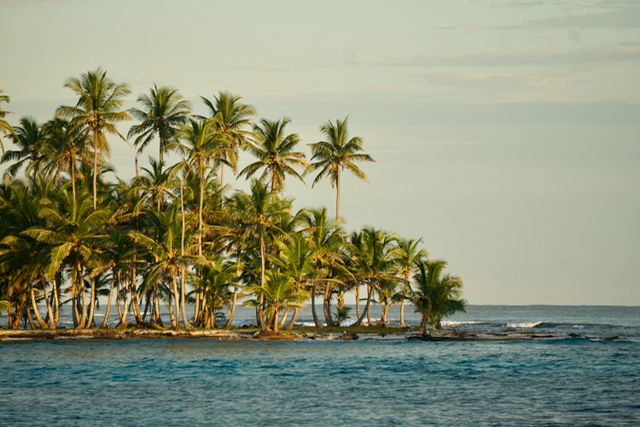
Then we headed to a tiny uninhabited island, no bigger than a coin, where a single palm tree once grew in the sand—just like in cartoons about castaways. Now its club-like trunk sticks up there. The local Indian fishermen evidently like cartoons too. So they stuck coconuts into the highest little patch of ground. Now there’ll be several little palm trees there, if they sprout.
We swim and fool around like children.
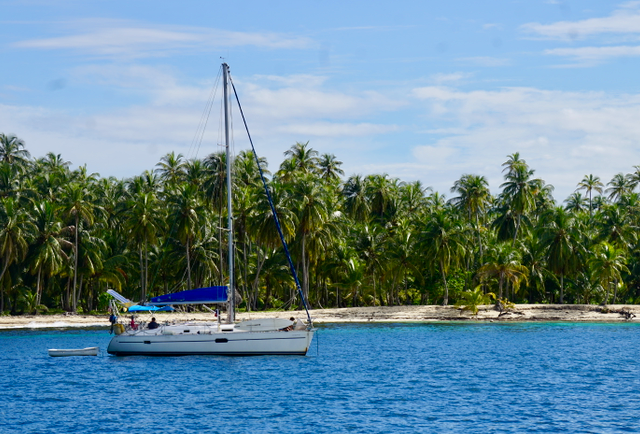
When we got home, we discovered that the actual children had swum over to the island. We landed too. I gathered the rubbish from the beach into one pile, and it immediately felt much nicer.
We walked over to the man’s hut, said hello, grinned like idiots and left without having talked about anything. Four Americans landed from a catamaran. They said they’d never seen a Russian boat before, ever.
In the evening, to mourn the drowned phone properly—and the fact that because of it I couldn’t write to Juanito by the deadline (looks as though the interview is going down the drain)—we had a barbecue with vegetables and lobsters. Andryukha was head chef, while Nastya and I were the muses, making music for him on the guitar.
If you split a lobster’s shell before grilling it, it comes out exceedingly tasty. But if you don’t split it, it tastes of pond weed. I painfully stabbed every finger while picking the food out of those rock-hard feelers.
The full moon began, bringing high tides that nearly undermined our Indian’s little house. Incidentally, he sleeps in a hammock under the roof of that hut.
It was a wonderful day today. If you disregard certain extremes... namely the dead phone and the mega-interview. Yeah..
Sunday, 3 December
For the third night running, the wind blows like fury toward dawn. I even go out to see whether we’ve dragged onto a shoal and whether our recently arrived neighbours have piled into us.
In the morning I climbed into the dinghy and spread out the clothes we’d sailed in yesterday so the showers could rinse the salt out of them. For days now Ladka has been collecting rainwater and pouring it from buckets through a funnel into the tanks. She’s our chief waterworks engineer.
We had cocoa for breakfast and then more cocoa, and when we went out into the cockpit to drink it with a view of the sea, we discovered that our charter-boat neighbours had all run aground by the next island. Almost where we had last night, only more firmly and right in the middle. We loooove rescue operations. Exactly a year ago we were rescuers and towed a lone yacht out of the open ocean; now we’d be hauling one full of people out of the sand.
Well, before the other rescuers snapped up all the interesting bits, Andrei and I jumped into the dinghy and began rowing toward them against the wind and current, out of sync, using half-oars (they were dismantled—the outboard was still hanging on the yacht). The Americans from yesterday immediately overtook us at low-flying altitude, the whole mob of them. A minute before they arrived, some Indians paddled up in a dugout. One, wearing a mask, threw himself into examining the bottom; the other kept nearby on the oars (and for the next hour or hour and a half he never once came alongside either the yacht or the island—he just kept rowing and rowing).
Andrei went aboard, while I first rowed against the wind, then gave a firm “no” to exercise and sport (sorry, Dad!), hauled the dinghy onto the uninhabited island and took up an observation post. I gathered the rubbish into a pile here too..
Rescue Operation
The intrepid American woman is called Tanya, and her husband is Stephen. Tanya nimbly jumped aboard and began directing the refloating operation like someone who knew exactly what she was doing. It turned out that as a child she’d sailed around the world on a yacht with her parents, and had lived aboard yachts her whole life; she knew how to do everything. She briskly commanded the crowd of people—about eight of them—showing them how to jump in unison. They ran to wherever they were told, then jumped to Tanya’s count. Frightened into action, the yacht tried to rock.
Andryukha took the helm and directed the proceedings from there. The proceedings were complicated by the yacht’s engine suddenly dying at the exact moment they decided to weigh anchor. So first they pulled the boat with one motor dinghy, then a second one pushed while the first pulled, while the crew and guests jumped, and the Indian reported from the bottom of the Neva.
Then everyone got fed up, attached a halyard from the masthead to a dinghy and started heeling the boat. And jumping. And reporting. And jumping again. And pushing with the second dinghy too. And pulling. And heeling....
Long story short, after two or three hours they finally dragged the poor things off the shoal. They anchored, and everyone happily began drinking beer together on their stern. And I sat and sat there on my island until my bored squirrels came to fetch me.
Monday, 4 December. We’re Leaving; Dawn Is Breaking
It began raining in the morning, and we decided to move farther through the archipelago. The dinghy was already secured for the passage, but Lada and I went ashore in the rain to see the Indian man on our island. We gave him some apples and three limes and said goodbye, telling him we were heading to Isla Verde and then onward. We shook hands; I was too embarrassed to film him properly with the underwater camera... Why am I so shy?
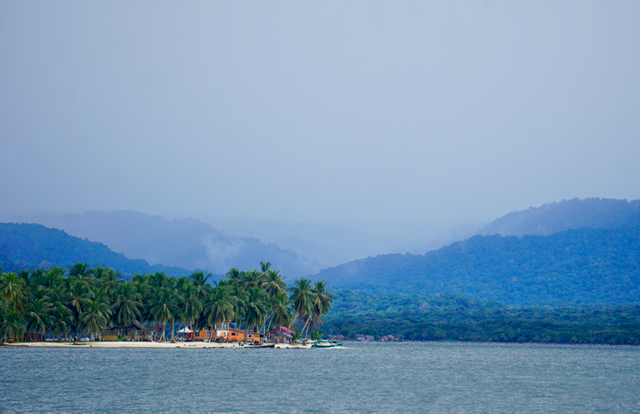
Nothing on Green Island (Isla Verde) caught our interest apart from a tiny island with a single hut, and after eating porridge oats and drinking tea, we set a course for the Dutch Cays.
Barrier reefs protect a cluster of little islands from the waves of the open sea. The inhabited island bears the pro-American name Barbecue Island; the others have Guna names: Banedup, Tiadup, Ogoppinadup, Kalugerdub, Kuipkindup. All these “...dups” are completely covered in greenery.
And here come the fee collectors. We’re approaching the more heavily populated islands of Guna Yala (the land of the Guna), so charges have appeared. And immediately gone up.
Panama, San Blas Archipelago, Coco Bandero