
From the Travely-Family archive · Central and South America
Three Modes of Life Aboard a Yacht
An original publication from the former Travely-Family website. This English translation was preserved from the technical-site archive without editorial rewriting.
Three modes of life aboard a yacht. On extended stays in port and at anchor.
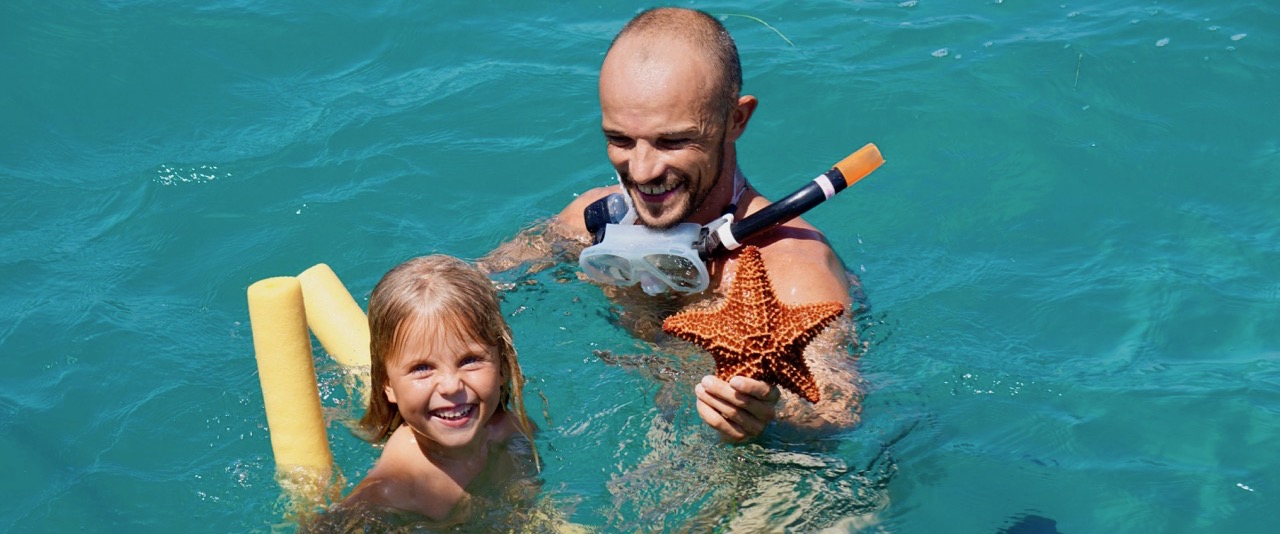
The pros, cons, and examples of everyday tropical life at anchor. Lots of photos with Mexican local colour
If you live aboard a yacht full-time, your existence, in terms of what moves and what stays put, falls into one of three states:
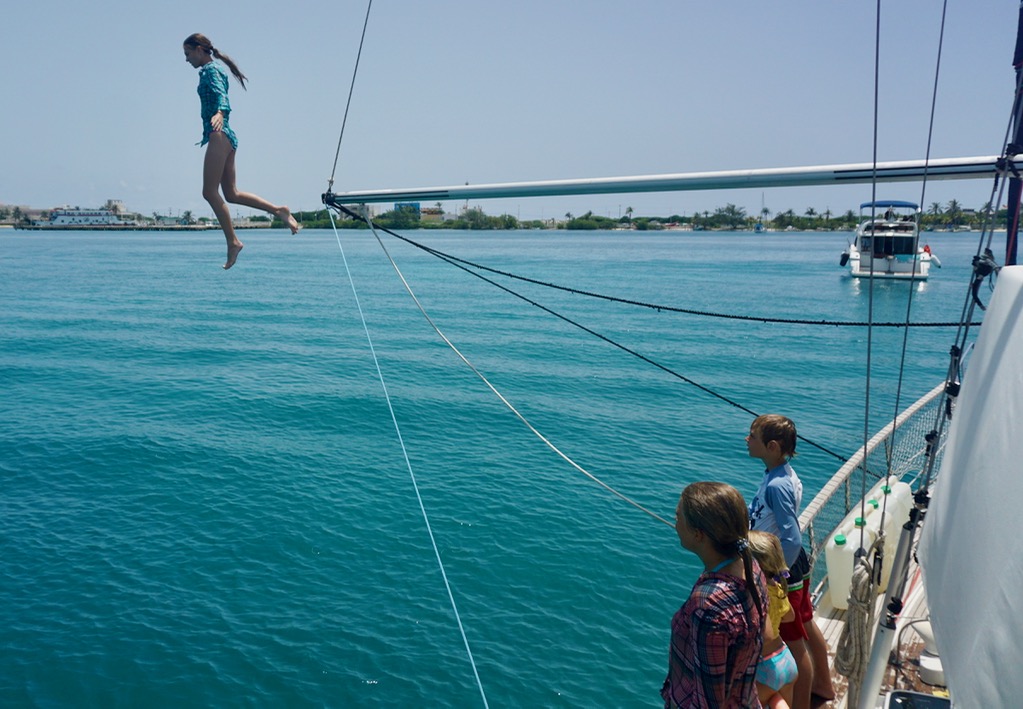
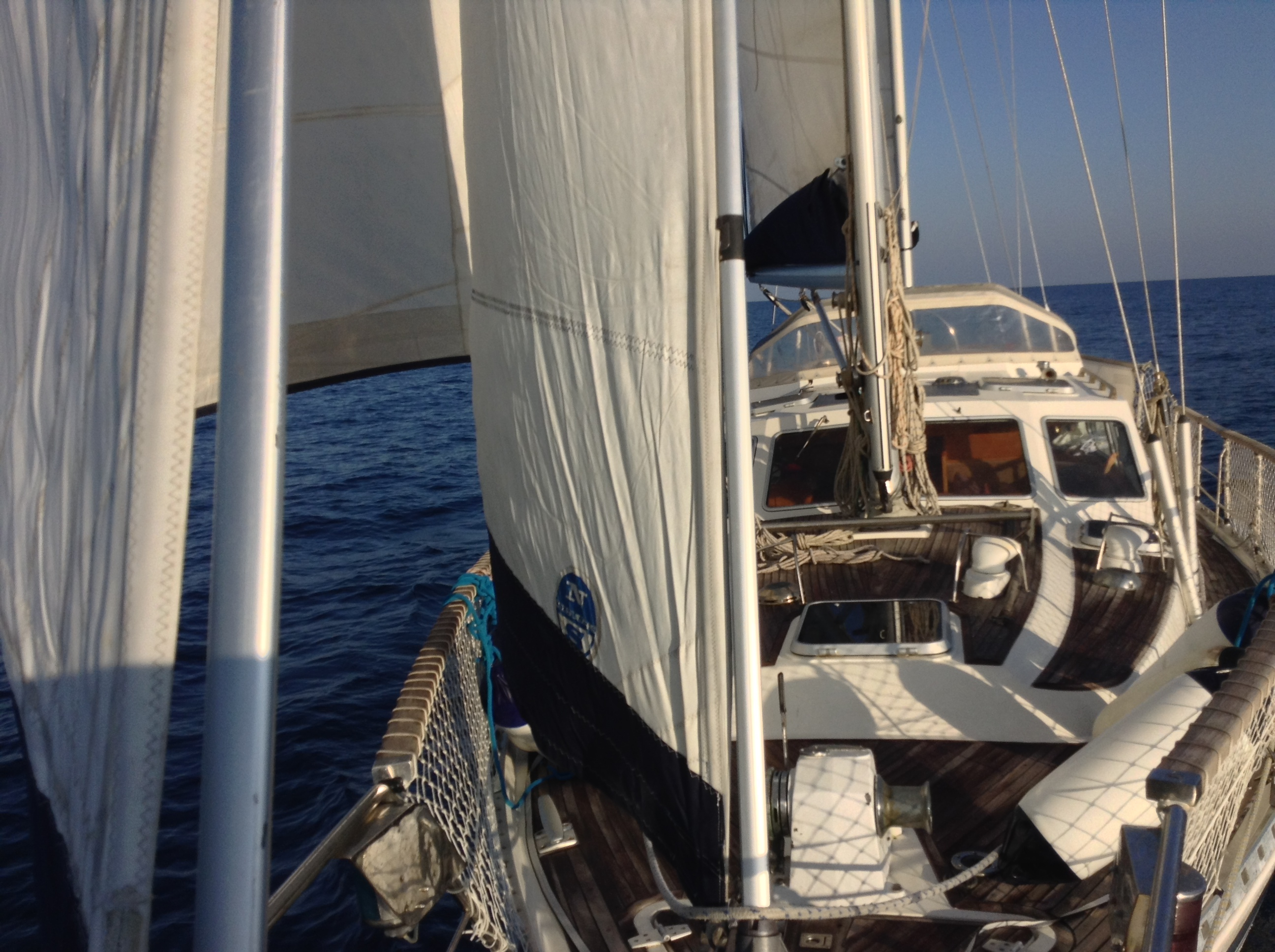
life on a sea passage life berthed in a marina life at anchor
Entertainment at anchor, and friends visiting 🙂
Yacht life is more often divided into two parts—a passage and a stop—but staying in a marina differs from staying at anchor about as much as a tiny flat in an urban high-rise differs from a cottage in the country. Or as “an island-hopping yacht holiday” differs from everyday life in the Russian backwoods aboard a yacht of the distinctly non-holiday variety.
Three modes of seaborne wandering. Pros and cons
Passage
If you are not a fan of being tossed about at sea, plunging from wave to wave, and having a salty backside, the biggest advantage of a passage is that you are moving! A mega-advantage is not getting seasick while you do it. Like a hangover, only from the motion. The downside is that very motion, the nausea and headache, as well as the fact that, for the duration of the voyage, your little home takes on a distinctly austere appearance—with the curtains tied into bundles, tablecloths and assorted aroma lamps crammed into lockers. While at anchor all these sweet little things cover up the hole in the wallpaper and make the place cosy, a passage lays bare the peeling varnish, the well-worn bulkheads, and the duct tape sealing the window to stop it leaking...
Besides, all those holes in the wallpaper can leak desperately and be flooded with salt water if the sea outside is rough. Your floating home stops feeling like a fortress, especially during a storm when all that separates you from the elements is 3 cm of fibreglass hull...
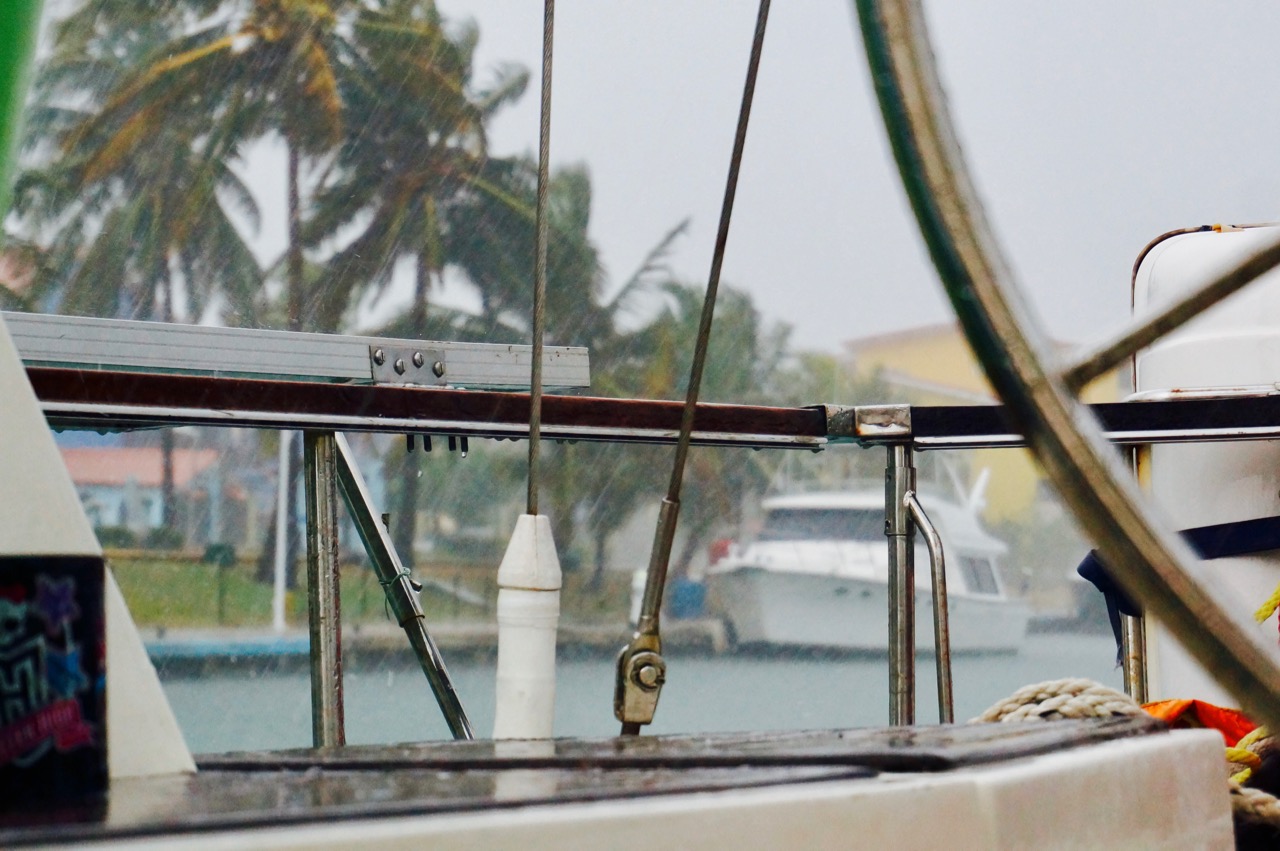
A berth in a marina
If the marina has facilities, the bliss of a hot shower can only be compared with the thrill of first requited love. Besides, 24 hours a day you can escape from your submarine and go to a restaurant, or freeze in a supermarket, or meet up with friends. Shore power and fresh water are available. You can wash and scrub the boat to your heart’s content, especially if the water pedestal has no meter. You can draw with chalk, ride a bike, and skip rope. Those are the advantages.
The downside is that marinas in the tropics are so hot you may as well lie down and die. Swimming is generally out of the question, the beach is far away and you cannot be bothered, while a boat draped in awnings looks wretched and cramped. This problem seems far-fetched only if you have a modern, fully equipped yacht with air conditioning..

At anchor
The advantages of being at anchor are obvious: a breeze, fresh air, breathtakingly beautiful views. Swimming and other water-based activities around the clock. Paradise! But, as usual, there is a fly in the ointment:
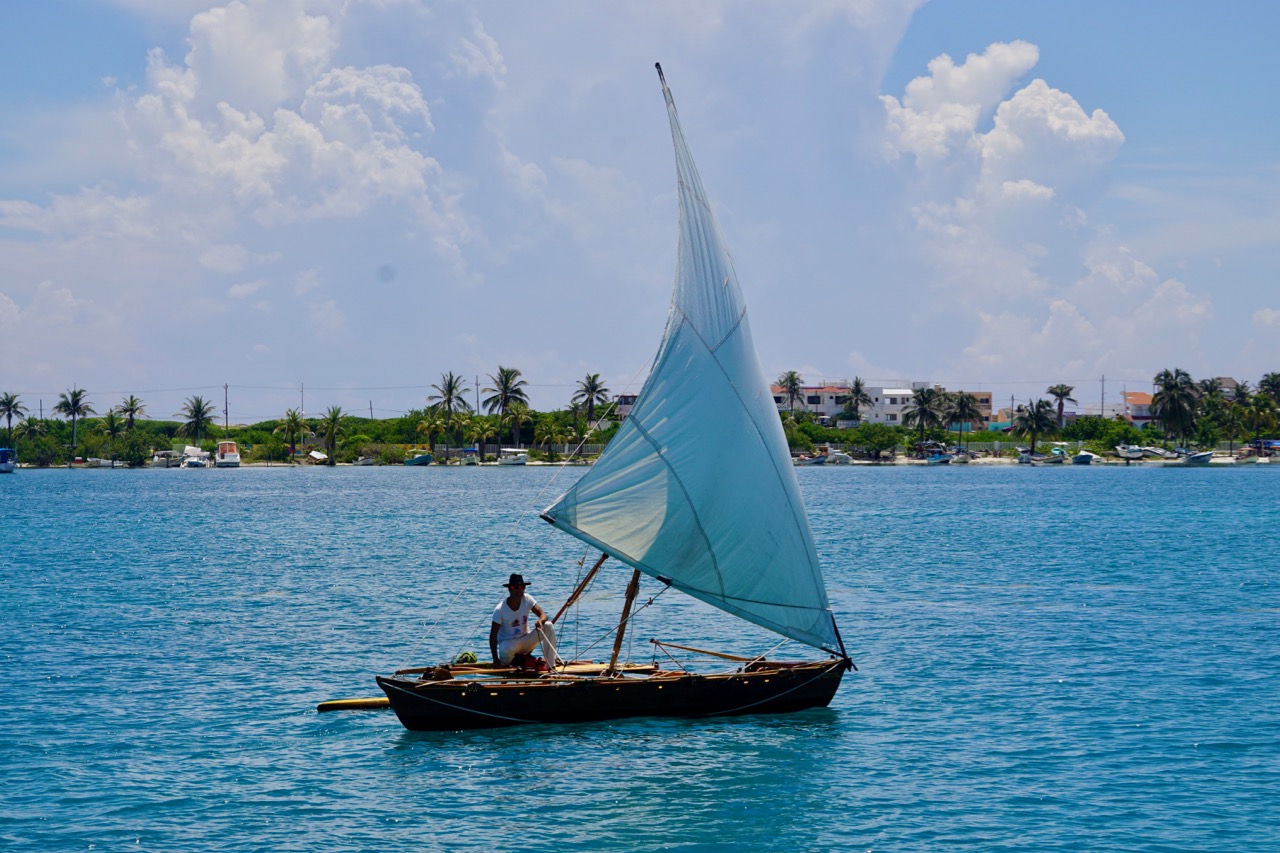
You can only get ashore by dinghy, so you do not go as often, and if the dinghy is rigged for sailing, it is not exactly easy either. There is not always somewhere to moor ashore. Sometimes the fishermen ask you not to come; sometimes the beach belongs to a military base... And while you sail ashore, your backside sits in salt water. Not every girl likes that. Especially when she feels like indulging herself a little and dressing up:). Water—we ration. Electricity is directly dependent on sunshine. But it is free.
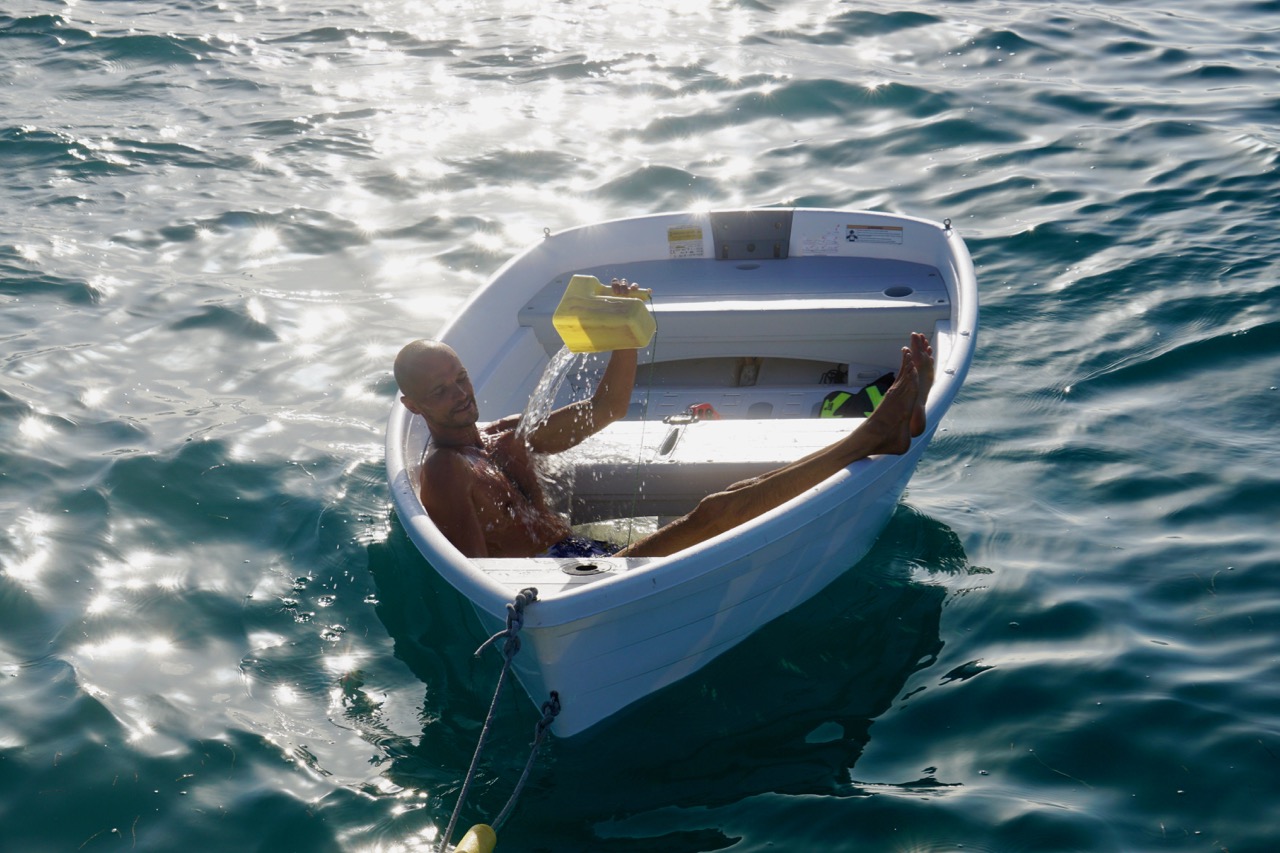
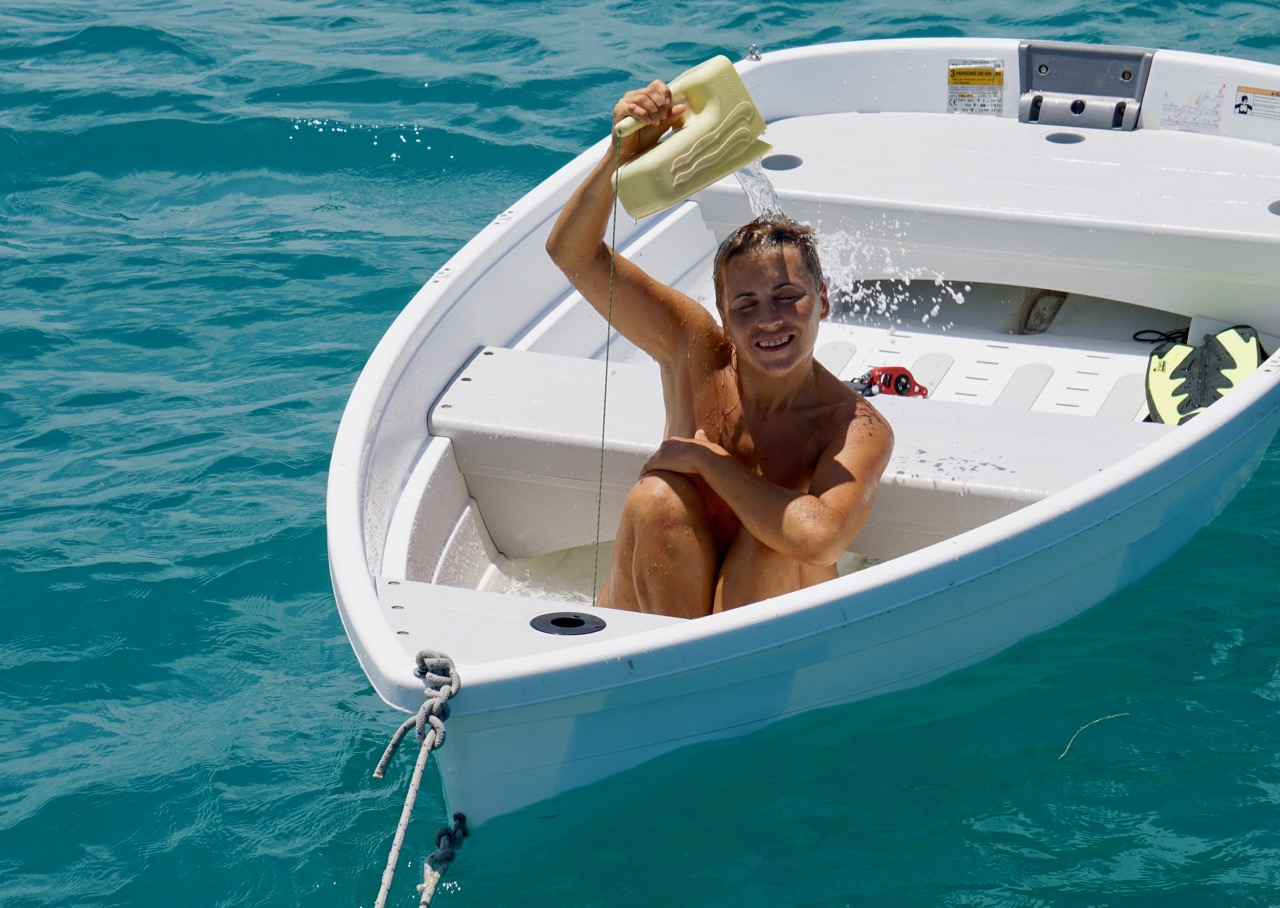
After the storm and downpours, our brave little dinghy turned into a big bath of fresh water—wonderful to plunge into after a swim in the sea
Well, and now, just like in a thesis, we move from theory to the latest practical section:).
A vivid illustration of the “extended stay at anchor” mode

Before you know it, it is already the ninth. And not of July, but August. Actually, we had planned to sail away from Mexico for good by mid-July. And yet here we are.
The viscous, almost identical days drift smoothly by. “Groundhog Day,” Nastya sighs, but to my mind these are very pleasant Groundhog Days, unlike the marina variety, when, during our stay in the wonderful Mexican marina of Puerto Aventuras, Lada sabotaged Operation Kindergarten, shattering Mum’s dreams of productive daily work in peace and quiet. After that everything somehow became sticky-hot and mindless... One acquaintance of ours called this condition tropical brain fever.
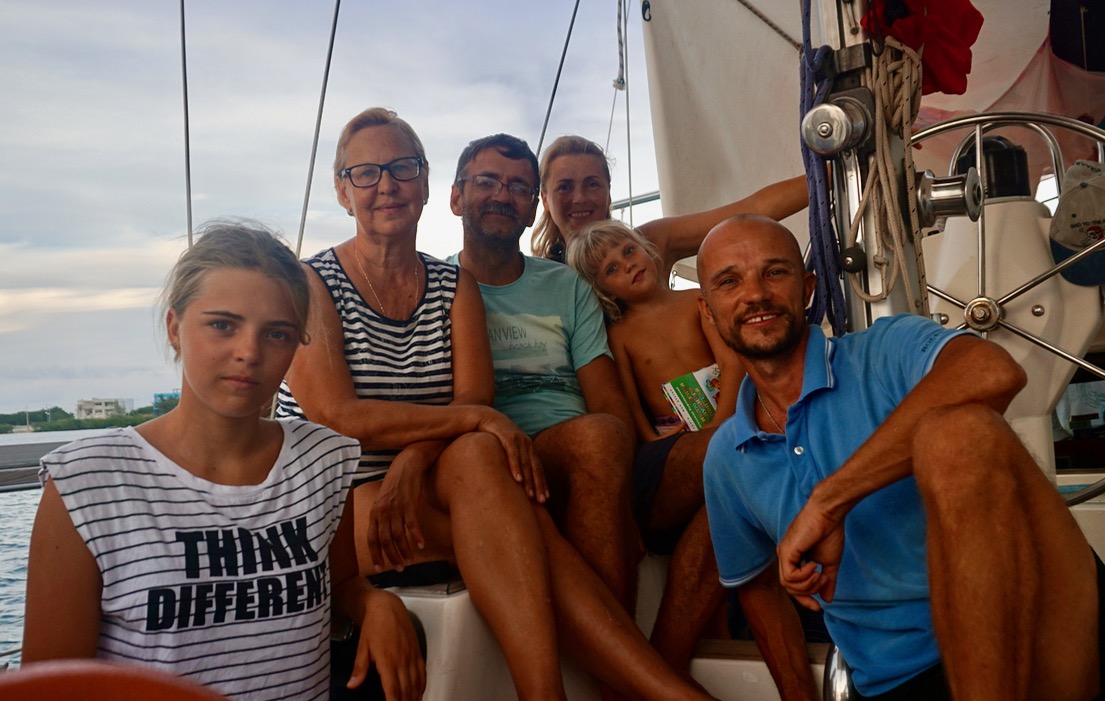
Gathering our willpower, we fled the marina for freedom out on the pampas —at anchor, where the tropical brain fever took on quite pleasant forms. Perhaps it is the wide-open sea, perhaps the winds. The whole deck is covered with awnings, and up on the breezy coachroof you can lounge around quite comfortably, read, even sew something at noon:).
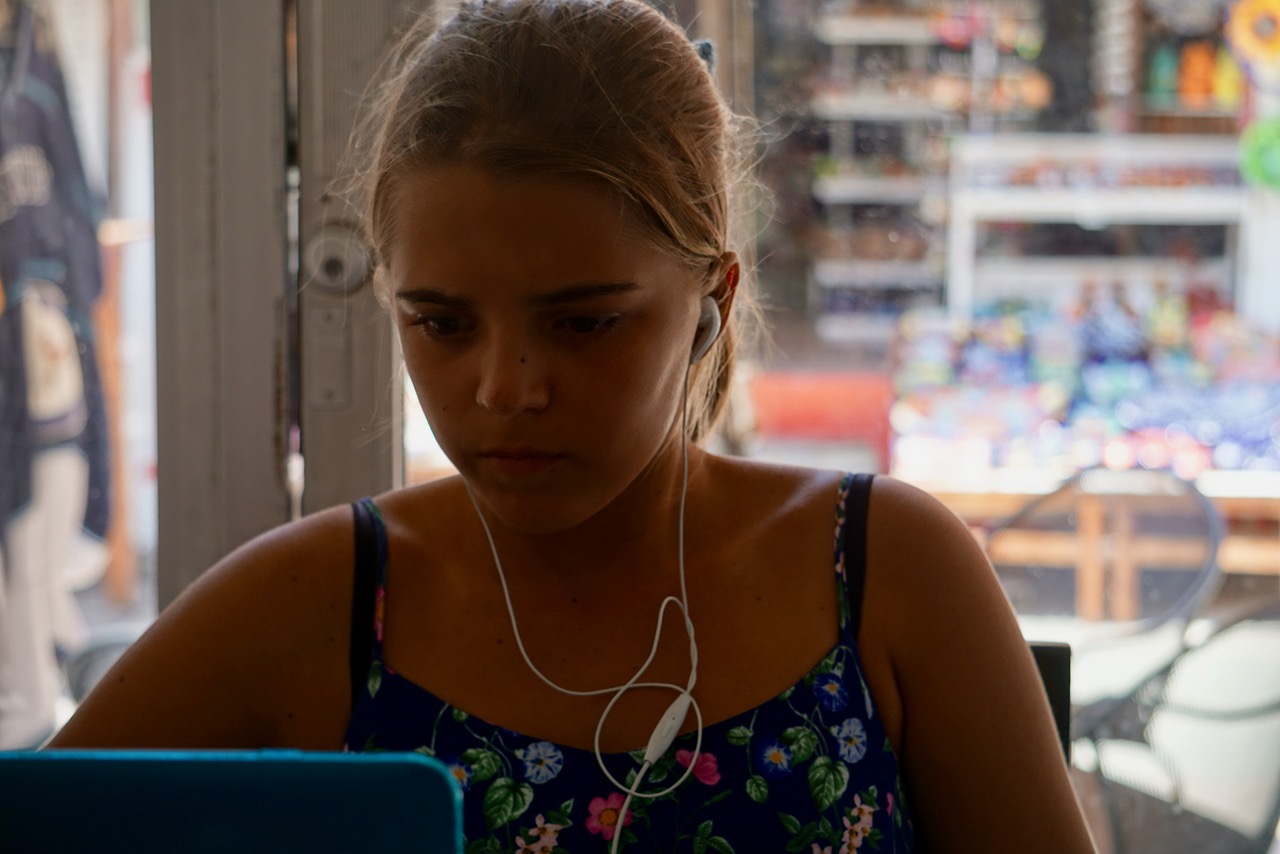
A small wind scoop in the forehatch turned the sweltering space below into a perfectly tolerable refuge. Inspired by the effect, the first mate fashioned another wind scoop from a thick linen hammock and rigged it on the boom above the companionway hatch. Now there is a spot in the saloon with a constant draught. So Nastya can do her lessons in the cool.
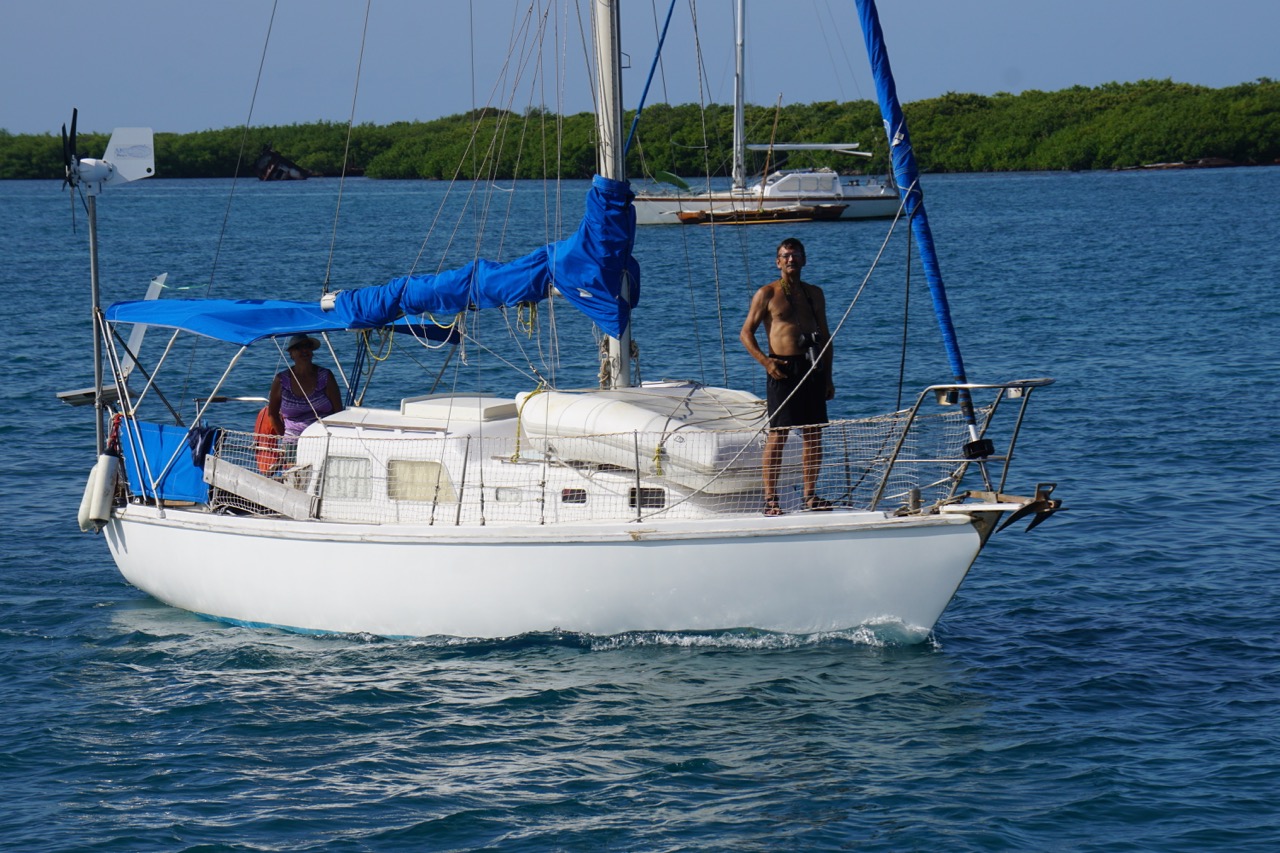
During these three unhurried weeks in the quiet bay of Isla Mujeres, the crew have settled into a very cosy routine.
Every morning they sail past, making a greeting circuit exactly a metre off our stern.
Daily routine. Notes from the first mate
The first mate is always on duty 🙂—I spend most nights on the coachroof (far from the captain, who selflessly battles the heat and stuffiness of the aft cabin night after night). My bed of settee cushions slides apart in every direction at the slightest movement. I wake before sunrise, greeting the orb of day with the silent cry, “Cloud, come!” I dodge the rays and read. Right up until the younger sailor appears directly under my nose with her customary terrifying howl of “Booo!” After three weeks I ought to be used to it, but I still jump in surprise. The elder one is supposed to wake at 7 a.m. and start her lessons, but in reality Nastya’s sleepy face appears in the hatch closer to 8, and then only so that Mum can unblock her internet access.

At about 9 a.m. the captain materialises in the saloon, and preparations begin for the crew’s breakfast. Washing fruit, making porridge and tea, and arranging assorted buns and pastries in the middle of the table. Then I put on my mask and fins and plunge into the depths for my customary morning swim ten times around the yacht. The eleventh lap is a sprint. After a month of regular training, my arms have grown stronger, and a late breakfast feels thoroughly deserved, without subjecting my mortal flesh to the heat. By the end of the swim, the youngsters are tumbling into the sea. And while the captain enjoys the news online and reads, we bawl children’s songs across the whole bay or play ball. Cities, edible-inedible, I know ten names (of cities, countries, animals)...
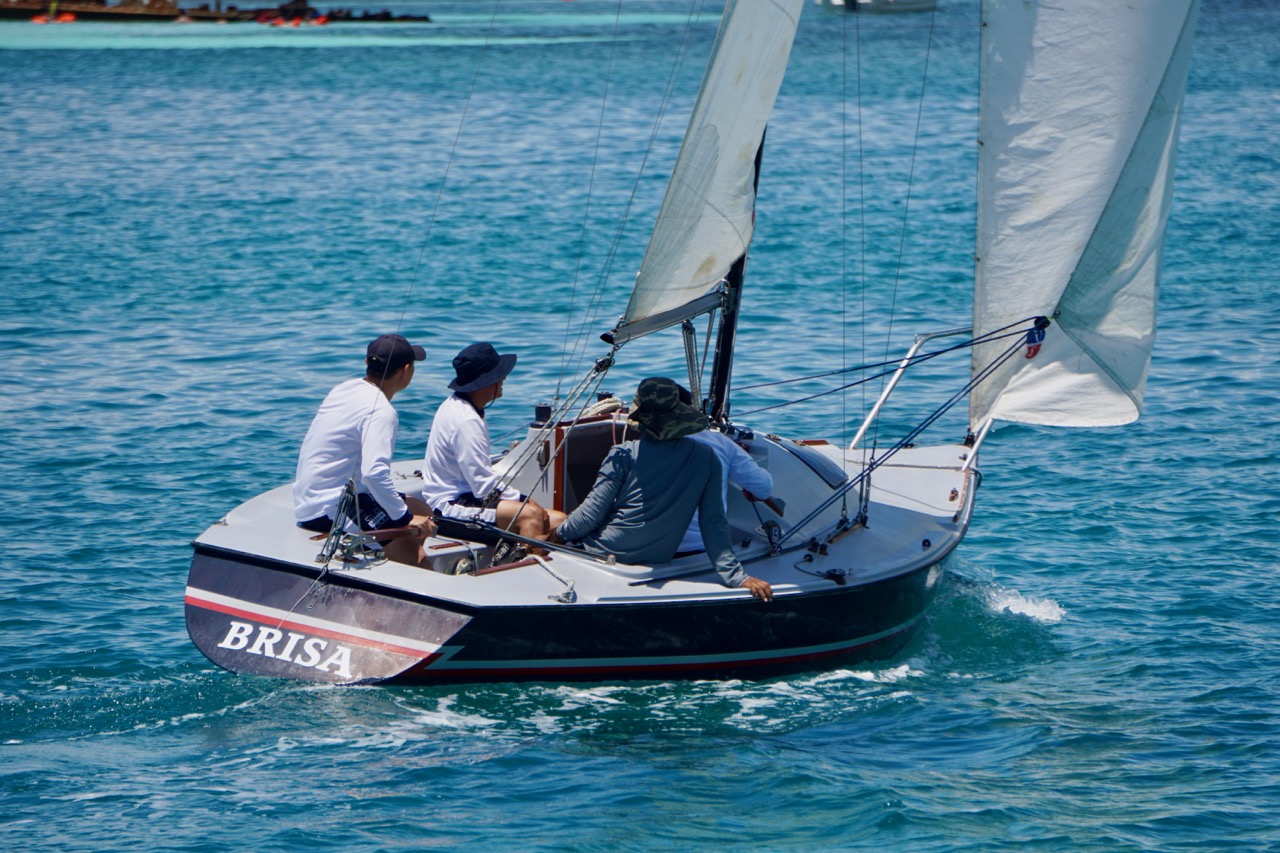
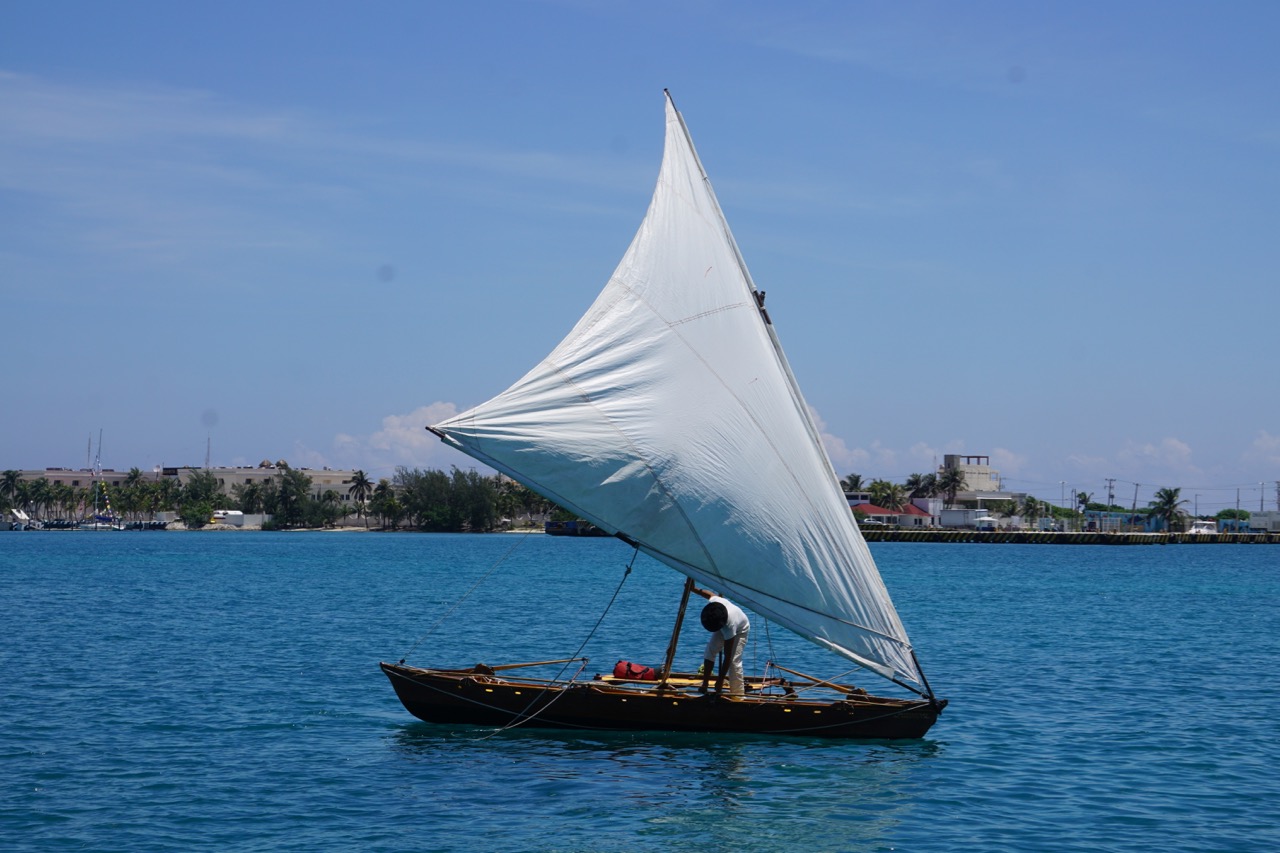
And our neighbour has a dinghy like this 🙂.
So, by half past eleven we climb out onto the deck, rinse off the salt, and happily settle down to breakfast while watching a film. The morning menu usually consists of popular-science films about nature and various discoveries, and lately TASS Is Authorised to Declare..., The Resident, and Mikhailo Lomonosov. From time to time we pause the film and launch into discussions about the roles of political figures, tsars, and scientists in history and episodes from their lives, while casually quizzing Nastya on dates and names. This is probably our favourite time of day. Well, and dinner too, which also comes with a film, though there is rather less discussion then. The proverbial “bread and circuses” remain relevant in every age and every element.

After breakfast, which ends around lunchtime, Nastya sits down to her lessons, while Lada either plays backgammon or chess with Dad, sews or draws with Mum, or gets told, “Go and find something to do; we’re busy.” Then the young sailor has to read or watch Peppa Pig in English.
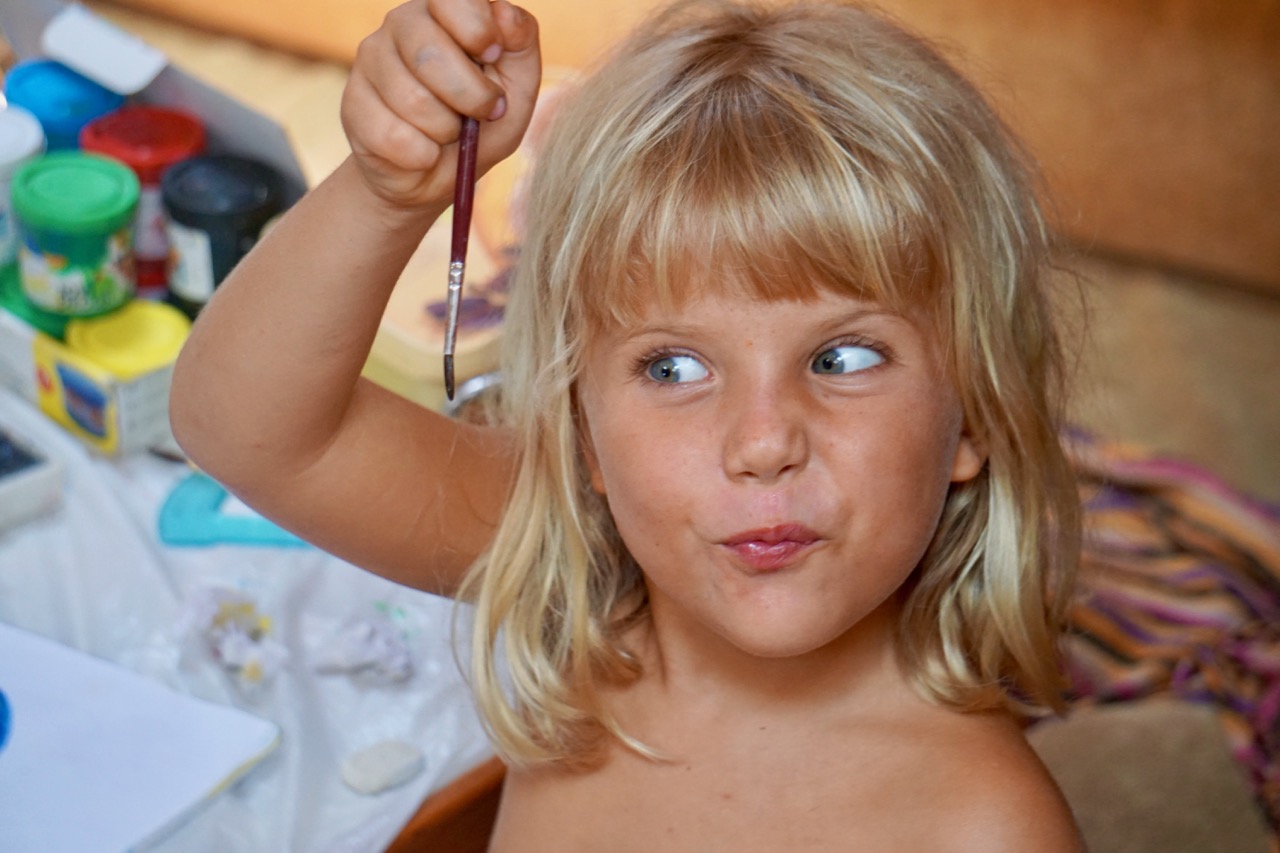
The young sailor has discovered her artistic talents
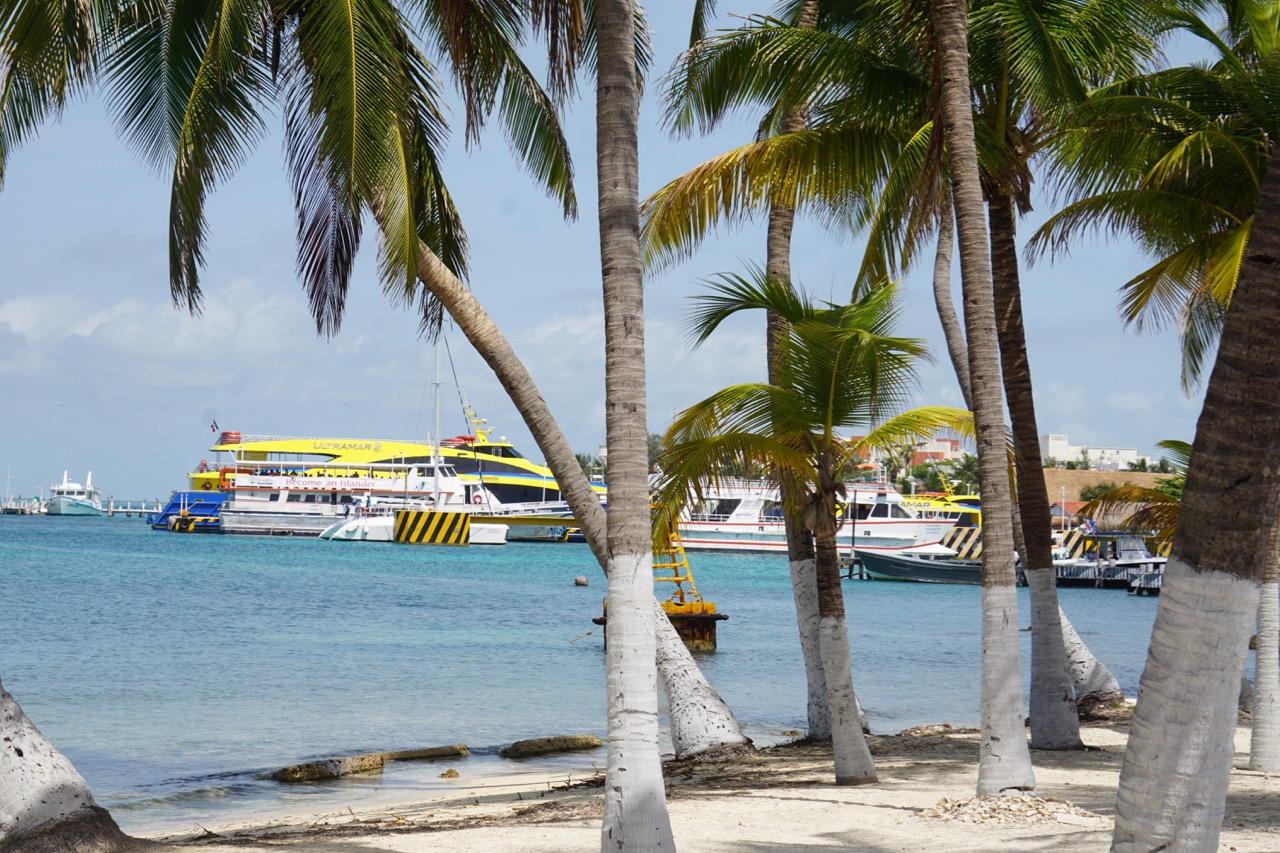
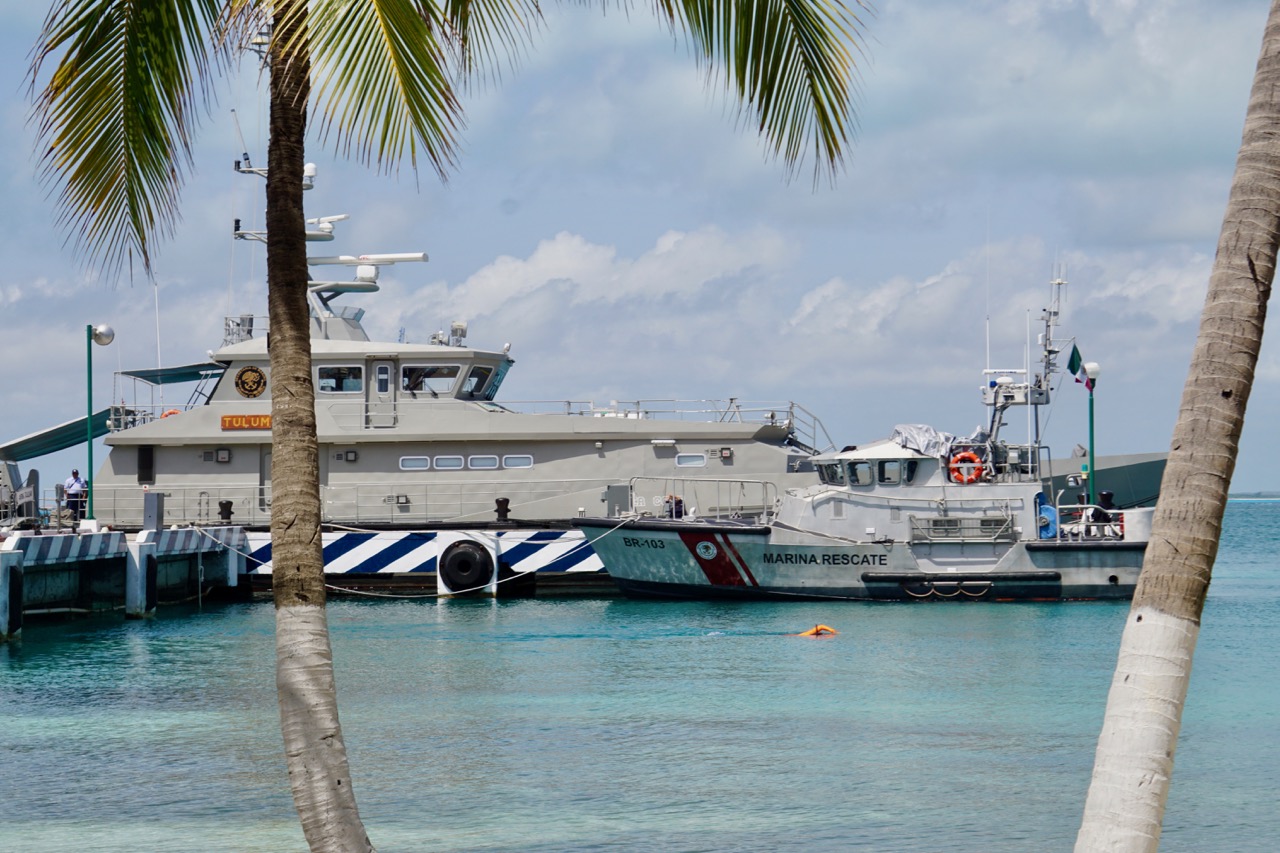
After four, we go somewhere. Sometimes we take the dinghy out sailing. Nastya and I take turns learning to handle a small sailing craft in calm water. Sometimes we go ashore for a walk and some internet. Here, at the northern tip of Mujeres, there is a beach called Playa Norte. They say it is one of the ten best beaches in the world, though I suspect that may be a slight exaggeration. In the morning we beach the sailing dinghy straight onto the sand, but in the evening, to avoid excessive curiosity from tipsy beachgoers towards a lone sailing dinghy, we moor at the pier by the military base. If you enter the little tourist centre from the beach, in the morning it puts you into a festive holiday mood, while in the evening, oddly enough, it loses some of its charm, though it remains a perfectly sweet little quarter..
In the evening, the crew returns to the boat to the grumbling refrain of “Dad, why can’t we put the engine on and go faster?” or “I’m so bloody sick of sitting in a salty puddle in a clean skirt!” plus another dozen equally melodious tirades. Back home, a freshwater shower from a bottle awaits us, along with a sink full of dirty dishes and dinner with a film. Occasionally there is a family singalong with the guitar, and if there is anyone to invite over, an evening with guests in the cockpit.
Igor Kiporuk and his wife Marina visiting us
First Vit and Ulyana were here on their yacht Chaka-Chaka; then Anya and Slava came to visit us from the mainland with their children; and recently we finally met Igor Kiporuk and Marina, his wife, in person—the very same only Russian yachtsmen who had sailed a yacht into the jungles of The Gambia in Africa.
We followed in their wake and went there ourselves last summer. And now we have even taken a photo as a keepsake for our mutual African friend Jibril, who in his lifetime has seen two Russian crews—them, and a year and a half later, us:)..
Approaching the finish

At about 10 p.m. everyone scatters to sleep in the cabins and on the roof, reads in the darkness and cool, and waits for the new day. Somewhere in between everything described above, we squeeze in repairs, cleaning, laundry, computer work, the fight for a mould-free life (Neptune damn it!), grocery trips, sorting through videos and photographs, answering emails, and calls from loved ones.
Summer time ticks by at a pleasant rhythm, and I like the dacha flavour of our island Mexico. Soon it will be time to put to sea. It seems we will not manage to wait for another Russian yacht—Lady Arisha, aboard which a great guy named Fedya Voronkov is about to set out from Guatemala for the bay at Isla Mujeres.
Yesterday and the day before, we weathered our first tropical storm on this side of the ocean. It only grazed us. Time to get moving. And soon the leisurely holiday of the four Bonifaces will come to an end, replaced by scheduled repairs and faster travelling. Winter is not so far away. The Cayman Islands, Colombia, and Panama await us. And after that, the passage into the Pacific Ocean..
A little of Mexico’s island spirit in photos 🙂

The chief creators of Mexican local colour
A freshwater bath for the first mate too 🙂

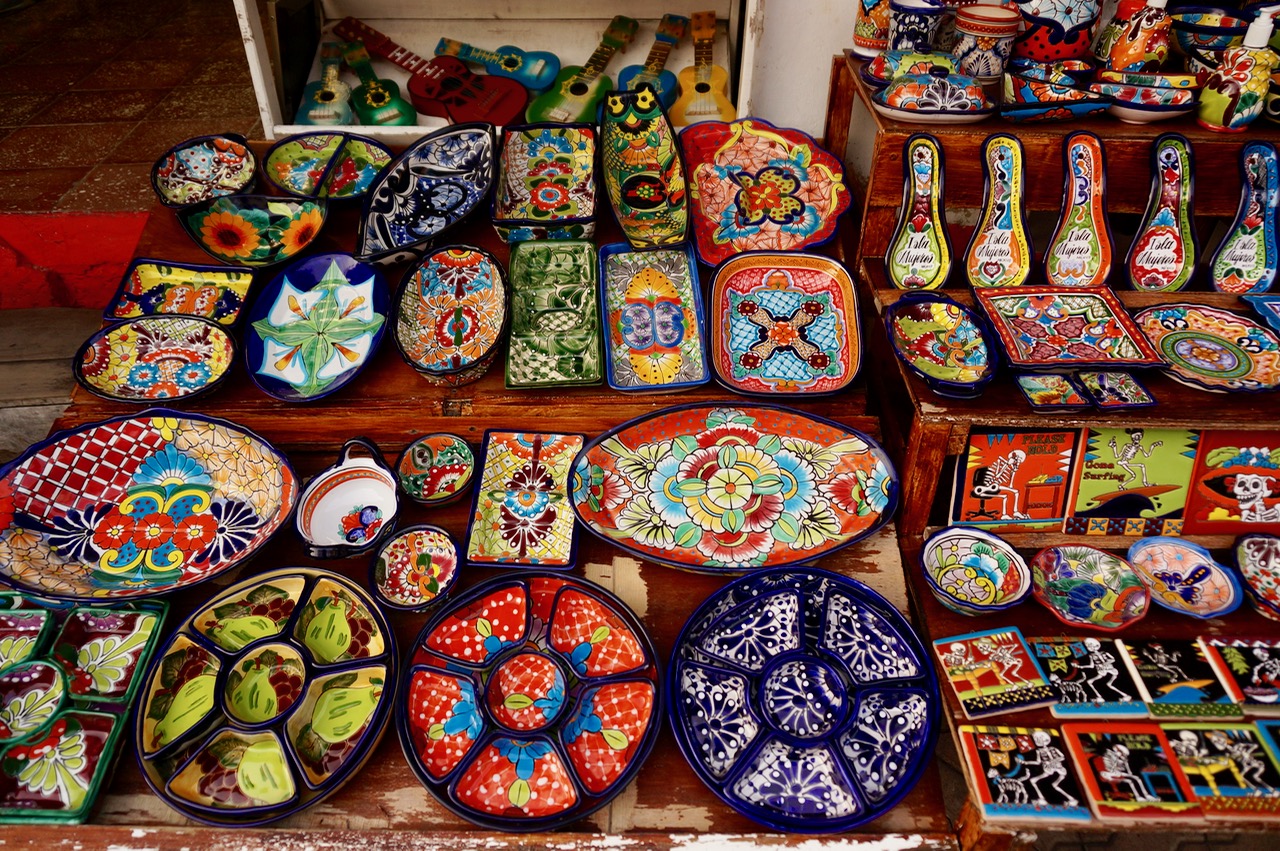
The girls would really love plates like these, but the boy knows how soon they would fly around the yacht and smash to smithereens ) The port on Isla Mujeres
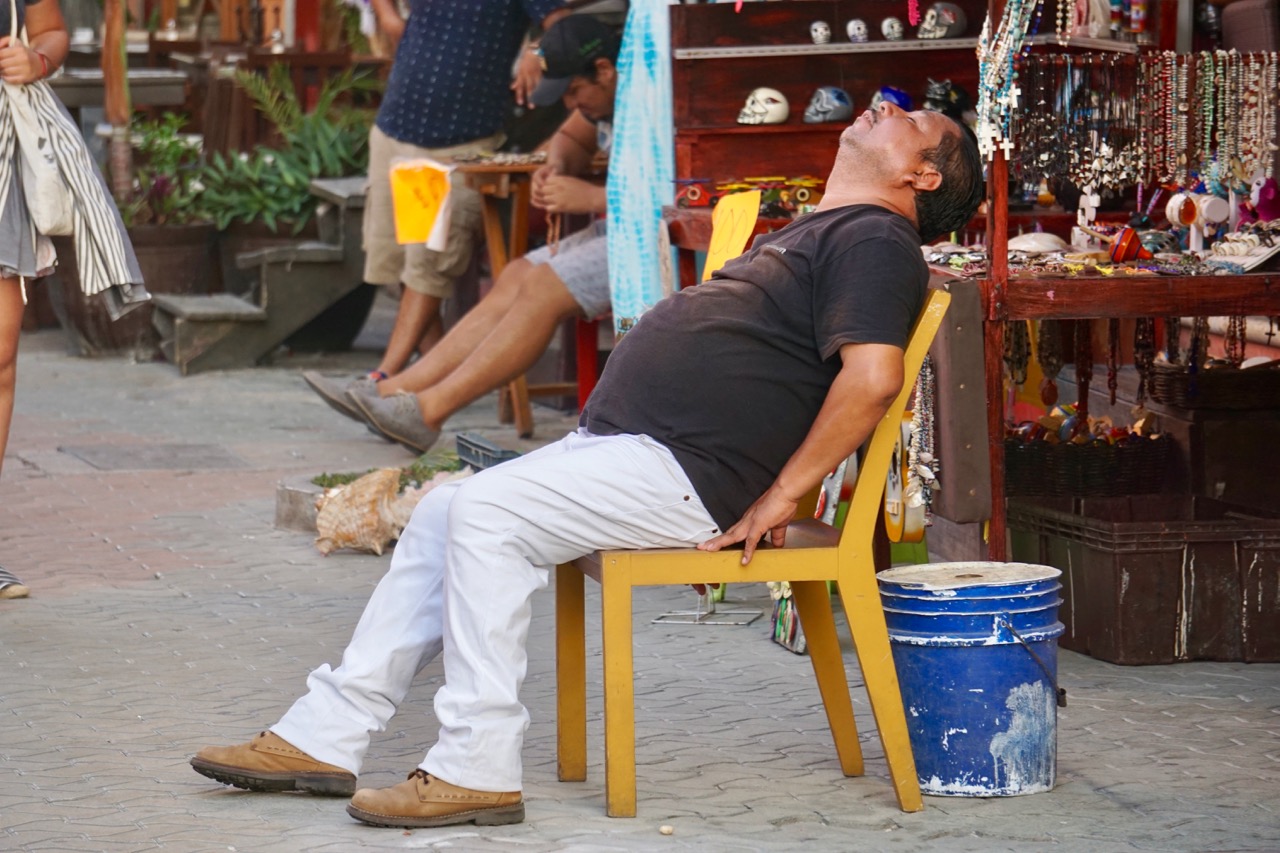
“At the height of the working day.” A souvenir vendor
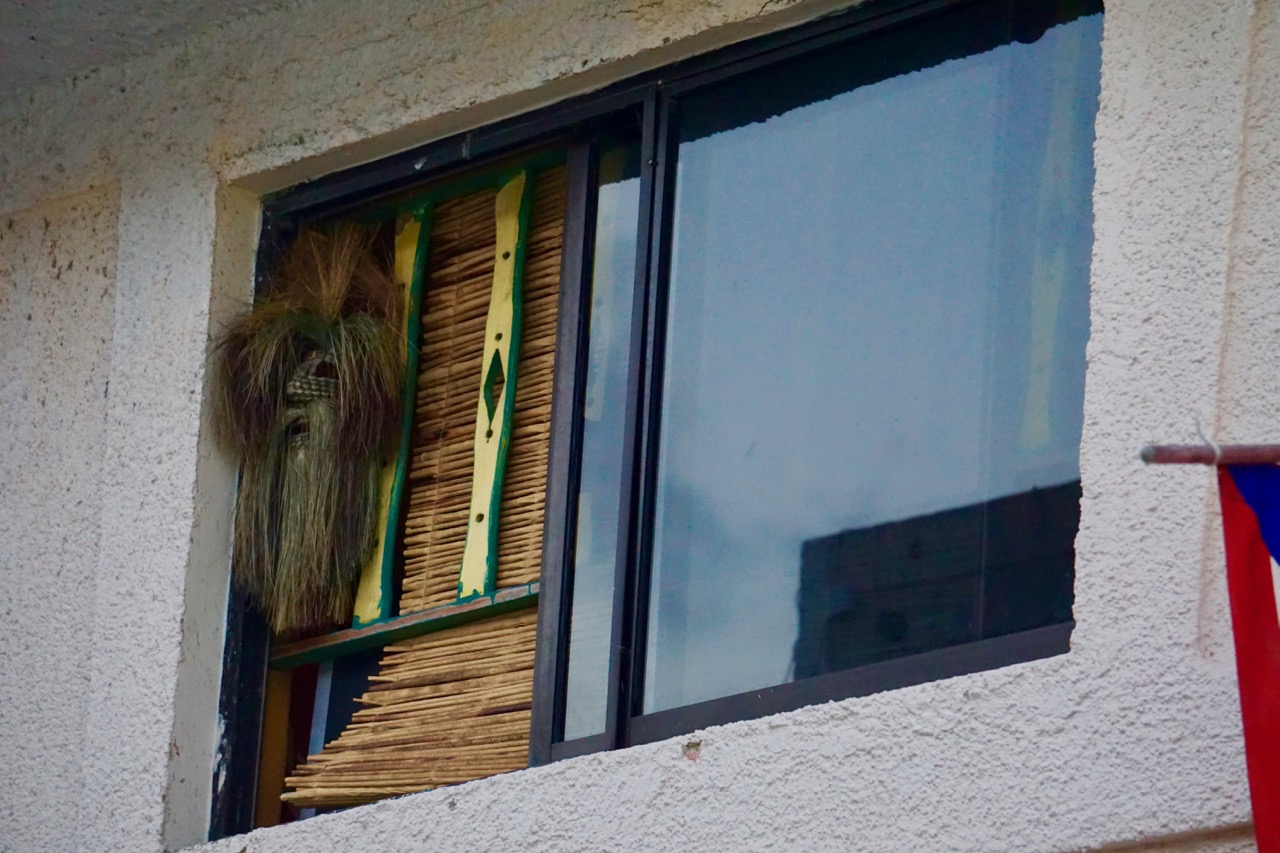
“Nafanyaaa!”—a Mexican house spirit. A view from the window )
Where is the goldfish?

Military base
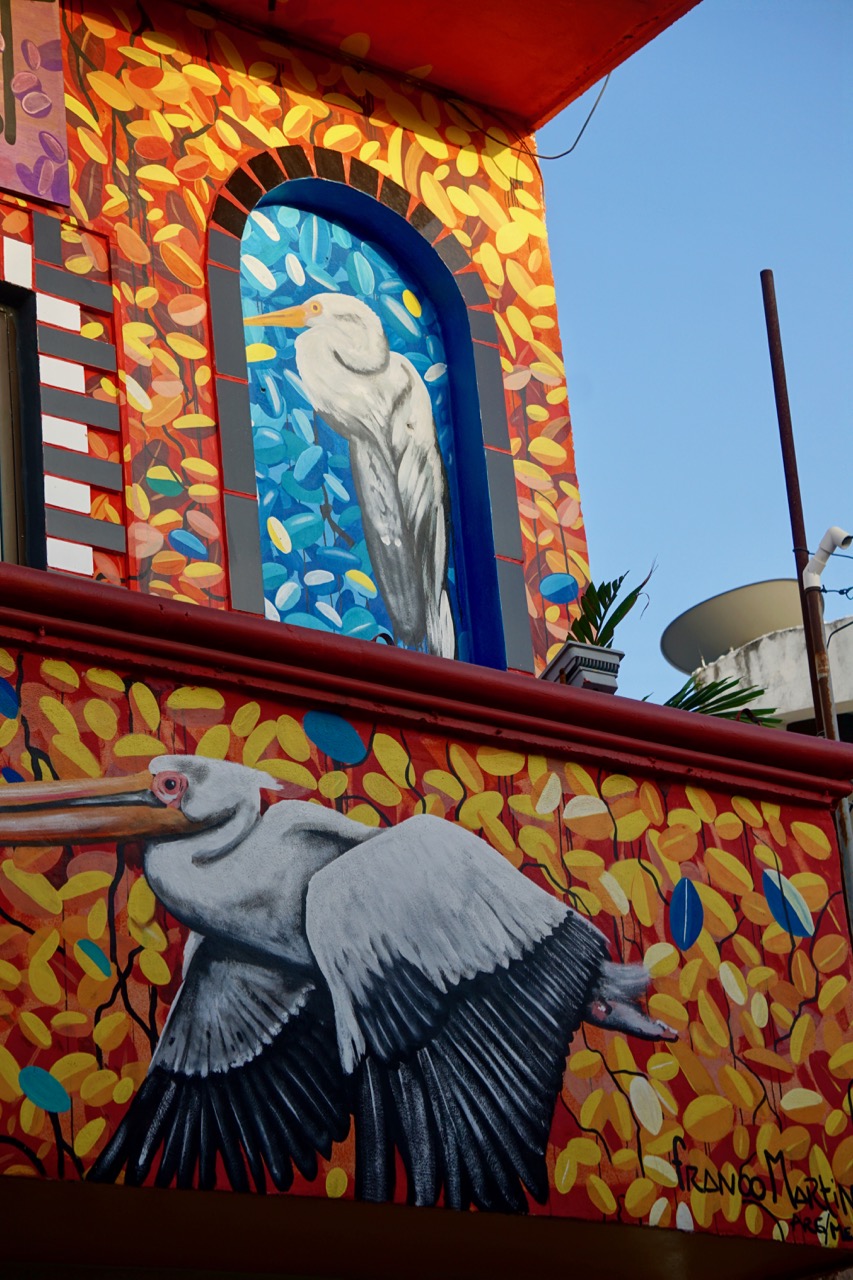
The wall of a house
Lanterns—what is there to say...
Our neighbour in his dinghy again
The living and the dead. The only nominally living one here is Frida Kahlo... who has slipped into the crowd Escaped to get online
Ceramic tableware

A couple from the state of Chiapas
If only we had graffiti like this!
To be continued. Wishing everyone a wonderful summer!